Tag: 2021

  • Wes Streeting – 2021 Comments on Postponed Operations

    Wes Streeting – 2021 Comments on Postponed Operations

    The comments made by Wes Streeting, the Shadow Health and Social Care Secretary, on 7 December 2021.

    It is not good enough for thousands of people in need of operations to have them cancelled, forcing them to wait longer, often in pain and discomfort.

    Waiting lists are already at record levels, yet the Government has no plan to address the chronic shortages in GPs, doctors, nurses and social care staff.

    Labour priority would be to ensure our health service is properly staffed to bring down waiting lists and deliver the care that people deserve.

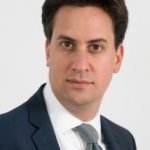
  • Ed Miliband – 2021 Comments on Power Cuts in North

    Ed Miliband – 2021 Comments on Power Cuts in North

    The comments made by Ed Miliband, the Shadow Climate Change and Net Zero Secretary, in the House of Commons on 6 December 2021.

    Communities in the North have been badly let down, not just by the power networks but by central government in its crisis response and its oversight of the system.

    Last Wednesday in the House of Commons Kwasi Kwarteng said the overwhelming majority of those still without power would have it restored by Friday. Yet this has not happened.

    People are being left in the most appalling circumstances but there has been an absence of government leadership. Communities in the North with their power cut off are being treated like second-class citizens.

    After storms in 2013, power companies and the government said lessons would be learned. But clearly not enough was done to do that, and now working people and businesses are paying the cost for the Government’s failures.

    Instead of a cosy government-led process, overseen by BEIS, we now need a proper, independent inquiry into the performance and failures of power companies, regulator and Government to make sure our country and communities are never left this vulnerable again.

  • Michael Ellis – 2021 Statement on Public Procurement

    Michael Ellis – 2021 Statement on Public Procurement

    The statement made by Michael Ellis, the Paymaster General, in the House of Commons on 6 December 2021.

    My noble Friend the Minister of State for Efficiency and Transformation, Lord Agnew Kt, has today made the following written statement:

    Public procurement accounts for around a third of all public expenditure. Now that we have left the EU we have a huge opportunity to reform how this money is spent so that it better meets the needs of this country. We can create a new, simpler procurement regime that will reduce costs for business and the public sector by reducing bureaucracy and improving commercial outcomes. Such a huge amount of Government spending must be leveraged to play its part in the UK’s economic recovery from the pandemic and unleash opportunities for small businesses and social enterprises to innovate in public service delivery.

    This Government intend to put in place a new regime that will ensure we remain compliant with our international obligations. This includes the World Trade Organisation’s Agreement on Government Procurement which gives British businesses access to £1.3 trillion in public procurement opportunities overseas. This two-way street allows us to maximise value for money for UK taxpayers, whilst ensuring that UK companies are able to compete abroad.

    In December 2020 we published the Green Paper on Transforming Public Procurement which set out the proposed new regime. We received over 600 responses with feedback from procurement professionals in central and local government, the education and health sectors, small, medium and large businesses, the charity and social enterprise sectors, academics and procurement lawyers. This, in addition to feedback from a series of workshops attended by almost 1000 stakeholders, provided us with a range of views and insight from contracting authorities, suppliers to the public sector and other interested parties.

    The analysis of feedback has been completed and I am now announcing the publication of a detailed document that summarises responses received to the consultation and provides the Government’s response to each individual question. We have considered carefully all of the comments received. Overall, levels of support for the proposed reforms were high and many responses recognised the ambition and breadth of the package of proposals. The majority of answers to individual questions were positive. In many instances, there is no change to the proposals set out in the Green Paper, however in others the Cabinet Office has clarified or amended the proposals based on the consultation feedback. I am grateful for all those who took the time to respond.

    In summary the proposals will:

    Simplify and consolidate the current legislation as far as possible into a single, uniform regulatory framework, which will remove duplication and make procurement more agile and flexible;

    provide a number of sector-specific features where necessary, including tailored rules to better suit defence and security procurement in order to protect our national interests;

    ensure that procurement supports local and national priorities, allowing public sector buyers to give more weight to bids that create jobs and opportunities for communities, and support action on climate change;

    strengthen the approach to the exclusion of suppliers from procurements, making it simpler, clearer and more focused on suppliers who pose an unacceptable risk;

    give much greater transparency throughout the procurement lifecycle;

    give new rights for subcontractors experiencing payment delays in public sector supply chains;

    put in place a new Procurement Review Unit to oversee the integrity of the public procurement system.

    We are working closely with all the devolved Administrations on the development of the new regime. On 18 August 2021, the Welsh Government published a written statement confirming that provision for Welsh contracting authorities is to be made within the UK Government’s Bill.

    The publication of the consultation response is a key milestone in delivering the ambition to create a procurement regime that better meets the needs of our country. We are currently finalising the Bill to implement these proposals and intend to introduce it as soon as parliamentary time allows.

  • Lisa Cameron – 2021 Speech on UN International Day of Persons with Disabilities

    Lisa Cameron – 2021 Speech on UN International Day of Persons with Disabilities

    The speech made by Lisa Cameron, the SNP MP for East Kilbride, Strathaven and Lesmahagow, in the House of Commons on 6 December 2021.

    As chair of the all-party parliamentary group for disability, I am delighted to take this opportunity formally to mark United Nations International Day of Persons with Disabilities here in the House of Commons. This is an annual day that seeks to promote the rights and wellbeing of persons with disabilities at every level of society, and to raise awareness of their wellbeing in all aspects of political, social, economic and cultural life.

    Margaret Ferrier (Rutherglen and Hamilton West) (Ind)

    Next year marks the 150th anniversary of the legislation that gave the right to vote in secret, but this is not the reality for many blind and partially sighted people. Does the hon. Lady agree that not only must this right be protected but work must be undertaken to ensure that there are practical options in place at all polling stations across the UK?

    Dr Cameron

    I absolutely do agree that those rights should be enshrined and that the democratic process should be open to all.

    Dr Philippa Whitford (Central Ayrshire) (SNP)

    Does my hon. Friend recognise that if we want people to vote, we want more people with disability in this House? Does she agree that it is a shame that none of the learning from the covid pandemic that might have made working here more flexible for someone with a disability or chronic illness has been kept?

    Dr Cameron

    I thank my hon. Friend. That is extremely important and I will move on to speak about many of those issues. We should continually be learning and applying best practice. It is extremely important that measures are taken to improve representation in this House for people with disabilities.

    There are 14.1 million people with disabilities in the United Kingdom—one in five people—yet despite making up one of the largest minorities, disability often fails to reach the top of the equality agenda.

    Jim Shannon (Strangford) (DUP)

    I commend the hon. Lady for bringing this forward; it is something of great interest to us all. Does she agree that watching the Paralympics has reminded us of the superior ability that so many of our disabled people possess and that their contribution to our society should be highlighted and praised not simply on this day but every day?

    Dr Cameron

    I totally agree. That is an excellent point well made. The Paralympics has shown people that those with disabilities have absolutely specialist skills and abilities that shine through. My one caveat would be that having spoken to Tanni Grey-Thompson in the House of Lords just the other week, I know that many people with disabilities now feel that one of their only options in life for employment is to become a Paralympian. While we all hope that people can achieve their full potential, not everyone can be a Paralympian, or an Olympian, so we must create other opportunities for employment for people with disabilities so that they have opportunities in everyday life.

    Over the past 18 months, in my position as chair of the all-party parliamentary group on disability, I have heard from thousands of people with disabilities who have largely felt invisible and forgotten during the pandemic. I have therefore been determined to elevate the prominence of people with disability across Parliament, having most recently tabled early-day motions 607 and 621 respectively commemorating UK Disability History Month and the International Day of People with Disabilities. I commend all Members of the House to sign these as a mark of recognition that, as has been mentioned, people with disabilities play a vital role in our society at every level.

    Debbie Abrahams (Oldham East and Saddleworth) (Lab)

    I congratulate the hon. Lady on this debate and on her stamina in making her speech at this time of night. Is she as concerned as I am that we are reflecting not just on the International Day of People with Disabilities but on getting out of covid? Unfortunately, disabled people were disproportionately affected in terms of covid deaths; they represented six out of 10 covid deaths. One of the themes of this year’s International Day of People with Disabilities is leadership. If we are going to address the inequalities that have driven the disproportionate death toll on disabled people, we will all have a role, within this place and outside, in ensuring that we do not see that in the future.

    Dr Cameron

    Absolutely. That was a fantastic intervention and well worth hearing by all, because it is so important that we take lessons from this pandemic and make sure that people with disabilities never again feel invisible, forgotten or that they are at the back of the queue in terms of service delivery. We all have a duty to work collectively to ensure that best practice is put in place across the UK. I take the opportunity today to raise awareness and offer suggestions to Government on what I hope will be at the forefront of their mind as they consider the implementation of the crucial national disability strategy.

    First, I highlight the priorities of the all-party parliamentary group in getting people with disabilities equal representation in politics and our political discourse. This year’s theme, as we have heard, is, “Leadership and participation of persons with disabilities towards an inclusive, accessible and sustainable post covid-19 world”. In line with that aim, the all-party parliamentary group has been championing social mobility and access to political mentorship. We have worked with Government and the Department for Work and Pensions to host disability-confident workshops in this House, which resulted in more than 100 of my cross-party colleagues participating and pledging to offer a variety of work experience and internship opportunities to people with disabilities in their constituencies up and down this United Kingdom. That is fantastic, and I hope to follow that up with an additional session early next year.

    We have about 24% of the House participating, but we will not stop until 100% of MPs are offering people with disabilities opportunities for work experience in their offices. I request that the Minister champion this type of inclusion across the Cabinet and with colleagues, as this initiative is entirely cross-party. It is an endeavour to ensure that no matter their background, everyone in the UK can have the opportunity to meet their full potential. We have continued to keep diversity and politics central to our work in the all-party parliamentary group and have also launched an inquiry into access to elected office, and I will be presenting its recommendations in this Chamber in 2022.

    In the past two years, we have had 17 meetings of the all-party parliamentary group, focusing on a disability-inclusive covid-19 response. Members have tabled more than 200 written questions and 400 oral questions on disability issues. We now have a membership of more than 200 MPs, making it one of the largest all-party parliamentary groups in Parliament. I encourage MPs who are not yet members to join us, but I would like the Minister to note how important working on disability issues is for people across the House and across the UK at large.

    The inequalities that people with disabilities face in everyday life have been exacerbated during this pandemic. While covid has affected us all, it has had a disproportionate impact on the lives of people with disabilities. The Office for National Statistics estimated that disabled people made up a staggering 59% of all coronavirus deaths during the peak of the pandemic. Research from Sense shows that nearly three quarters of disabled people believe their needs have been ignored and they have not received enough support. Furthermore, nearly two thirds of disabled people have said their mental health has worsened, showing that we need a holistic approach. We need not only a focus on physical health, but an approach that deals with mental health and wellbeing needs.

    Sense has launched a petition alongside our APPG calling on Government to ensure that disabled people are a key focus of next year’s pandemic inquiry. The petition has already gained more than 26,000 signatures. Echoing that, I would like the Minister and the Government to ensure that the panel leading the inquiry is representative of people with disabilities and looks closely at the issues involved.

    With almost three quarters of disabled people feeling as if their needs have been forgotten, it is vital that they are central to our recovery strategy. People with disabilities should never have to experience the lack of information and the loss of everyday practical, health and social support, as they have seen during this pandemic. Only last week, I met with local parents in my constituency who are still awaiting day services to resume after such a long time, and I heard about the negative impact on young people’s wellbeing, who are becoming introverted, losing confidence, becoming depressed and experiencing cognitive decline. I am heartened that local authorities will look afresh at the issue and we will closely monitor that to ensure it is addressed satisfactorily.

    Economic research by Scope and the Disabled Children’s Partnership shows that the experience is widespread. There remains a £2.1-billion funding gap in disabled children’s health and care. That has led to an entirely unacceptable contrast between the quality of life and opportunities available to disabled children and their families compared with those without disabilities.

    Freedom of information requests by the Disabled Children’s Partnership reveal that NHS trusts are struggling to meet targets for therapy appointments. Many local authorities have cut respite care and are struggling to meet targets for education, health and care plan assessments, which leaves many children unable to access diagnosis and vital services. As a result, nearly three quarters of disabled children surveyed saw their progress in managing their conditions regress during the pandemic.

    Remedying the disability health and care gap is crucial in our post-covid inclusive society. I request that the Minister addresses that urgently. Much has been said lately about social care, but little has been said about the social care requirements of children and adults with disabilities, who have been largely missing from the conversation.

    On employment, people with disabilities have the right to expect the same access to financial security and career satisfaction as those without disabilities. If we are to champion leadership and participation, access to work must be prioritised. In the UK, as in other countries around the world, people with disabilities face significant barriers to accessing and staying in employment. The starkest evidence of that disadvantage is the disability employment gap, which remains shockingly high at more than 28%.

    Disabled people in employment also face a stark pay gap of 19.6%, which shows that equality is far from being reached. It is clear that the Minister must take urgent action to enable people with disabilities, particularly young disabled people, to emerge into the labour market for the first time. Will the Minister consider a programme similar to the kickstart scheme that could address some of those issues, and discuss it with Cabinet colleagues?

    Not enough of the Government’s attention has been on the demand side, from the point of view of what the Government can and should do to encourage employers to ensure that their workplaces are properly accessible to disabled people, and that the barriers disabled people face are identified and removed. With that in mind, the all-party group, in collaboration with stakeholders such as Disability@Work, had several meetings with the former Minister for Disabled People and officials from the Cabinet Office Disability Unit and the Department for Work and Pensions. We outlined a package of proposals aimed at encouraging employers to engage more fully with the disability employment agenda. I would value a follow-up meeting now that we can meet in person again.

    Last week, I was delighted to visit Coca-Cola in my constituency to mark International Day of Persons with Disabilities and to encourage its steps towards disability inclusion in its workforce. It is one of the valuable 500 pledge signatories—companies that are prioritising inclusion and leading the way.

    It is fundamentally wrong that disabled adults who are unable to work, including more than 600,000 who are not expected to look for work because of their illness or disability, are left out from the announced universal credit support. That widens the equality gap for those who are most disabled and vulnerable across our society. The Government must look at that and support people into work. They should also support those who cannot work and ensure that they are not further disadvantaged.

    I also ask that the Minister looks at supporting the entrepreneurship of people with disabilities. Too often in this House, debates about disability are about the Department for Work and Pensions, but they should be about all the Departments equally, including the Department for Business, Energy and Industrial Strategy. It should be about people harnessing their skills. People with disabilities should be able to be employers and should have the support to overcome the financial barriers to doing so. They should be able to start their own businesses, employ others and mentor others into work.

    It is the International Day of Persons with Disabilities, and I would like to conclude by asking the Minister to ensure that the work of the Foreign, Commonwealth and Development Office has disability equality at its core, and that while we support girls into school, which is extremely valuable, we also support girls and boys with disabilities internationally, via our UK aid, to enter and complete education and employment.

    It is staggering that just 1% of women with disabilities across the world are literate. It is essential that education programmes fully include girls with disabilities in developing countries and provide effective, targeted support to address the barriers they face and enable them to thrive and fulfil their potential. Globally, an estimated 33 million children with disabilities are not in school, and children with disabilities are two and a half times more likely than other children never to attend school in their lifetime. The barriers they face can include schools not being accessible, teachers not being trained to properly support students with disabilities, and a lack of assistive technology and rehabilitation.

    Everyone across the UK believes that aid should reach the most vulnerable, and a focus on children and adults with disability worldwide is a focus that we can all agree on. I urge the Minister to ensure that this remains core, and is expanded across our programmes. I pay absolute tribute to staff in the Department in East Kilbride in my constituency for their fantastic, innovative disability inclusion work.

    In summary, as we join together here to mark the International Day of Persons with Disabilities in Parliament, we have the opportunity to include disabled people at the forefront of policy and policy making. No longer should disabled people feel forgotten, no longer should their needs be at the back of the queue, no longer should they be hit with the brunt of the pandemic and no longer should their services be depleted. In the summer of 2020, the Prime Minister responded to my open letter on a disability-inclusive response to the pandemic by pledging an “ambitious and transformative” national strategy for disabled people. The strategy, though broad, has a long way to go to live up to this ambitious and transformative approach. It is vital that the Minister harnesses the motivation of this Parliament, the cross-party colleagues who want to contribute, the all-party parliamentary groups and the Government to ensure that the United Kingdom is a leader in disability inclusion, and that the opportunity and ability to meet and fulfil potential is extended to all.

  • Sarah Jones – 2021 Speech on the Government’s Ten-Year Drugs Strategy

    Sarah Jones – 2021 Speech on the Government’s Ten-Year Drugs Strategy

    The speech made by Sarah Jones, the Labour MP for Croydon Central, in the House of Commons on 6 December 2021.

    I thank the Minister for advance sight of his statement. Over the last 20 years, we have seen a stark pattern of class A drug use. Between 1996 and 2011, the use of class A drugs was on a downward trend year on year. Since 2011, the use of class A drugs has increased every year. Drug deaths are at an all-time high and we have seen the emergence of increasingly violent and exploitative gangs that use technology that is way ahead of the Government to groom kids and sell them drugs.

    The question Dame Carol Black answered in her review on drugs was why that has happened, and her conclusions were damning. We have gone backwards over the last 10 years, with drug abuse up and drug treatment down. She said that

    “drug misuse is at tragically destructive levels in this country…Funding cuts have left treatment and recovery services on their knees. Commissioning has been fragmented, with little accountability …partnerships…have deteriorated. The workforce is depleted…and demoralised.”

    I could go on.

    There has never been a greater need for a 10-year plan to try to undo the 10 years of damage caused by Conservative Governments. In his statement, the Minister talked of ambitious plans, but what is missing is any recognition that the policies followed by Conservative Governments over the last 11 years have caused such damage. The truth is that the Government have dropped the ball on drugs and on crime.

    I have been going round the country over the last few weeks and I have seen the damage that has been done. Communities of good people with hopes and dreams have been invaded by serious organised crime that trashes our streets and preys on our young by offering false hope of money and a future. There are two-for-one deals on Insta: “Introduce a friend and get your drugs half price. You help us, we’ll help you.” Thousands of children at risk of abuse are taking a punt on their futures at the hands of thugs, and whole communities are having to deal with antisocial behaviour and the crime that follows drug addiction. This is Tory Britain.

    I will not join the Prime Minister’s fanfare about the biggest investment in a generation, because this Government have overseen the biggest failures of a generation; and I mourn the loss of life. Instead, today I hope that the Government mean what they say, and want to welcome the strategy—at last—and ask some questions of the Minister.

    I welcome the funding, the commitment to 54,000 new treatment places, the closure of the 2,000 lines we hope to close and the ambition to save 1,000 lives, but will neighbourhood policing be brought back to the levels we saw in 2010—so crucial for catching those who sell drugs in our communities—because we know that only 400 of the first tranche of 6,000 officers are in frontline roles? Will the 50% of police community support officers we have lost be replaced?

    Can the Minister explain why he is not funding treatment to the level that Dame Carol Black has called for? We count a shortfall of over £200 million. Will the Minister look at the new offence of child criminal exploitation, accept Labour’s suggestion of putting modern slavery offenders on a register similar to the sex offenders register, and look again at all the amendments we have tabled to the Police, Crime, Sentencing and Courts Bill to impose longer sentences for adults who involve children in criminal enterprise?

    While this Government have dithered on drugs, those selling and producing them have been working hard. They have new, exploitative ways of pushing their products around the country, and they have chilling ways of advertising them online to our children. A shocking 58% of 18-year-olds reported seeing drugs being sold online, often via Instagram and Snapchat.

    Can the Minister confirm that the statistic that the Government have shut down over 1,500 deal lines actually means they have taken or shut down an individual phone or phone number, not that they have necessarily caught the groomers and the exploiters? Most criminal gangs will keep copies of their customer list that can be sold for thousands of pounds. I have heard the police talk about using an order to force a communications provider to disconnect a device or phone number, and the line was back up in an hour. How many actual networks have been shut down?

    What is the Minister doing to recruit more analysts? What is he doing to work with social media companies, which should not allow the sale of drugs on their networks, to get ahead of the criminals online? How are the telecommunication companies involved in his plan?

    Finally, prosecutions for drug offences are down 36% since 2010 and convictions down 43%. This is alongside an overall drop in prosecutions since 2010—down 40%. Why has this happened, and what is the Minister doing about that? All around this country, people know what impact drugs are having on our communities and they want something done about it. This statement and this drugs plan, however the Minister presents them, are not about levelling up; they are compensation for cuts over the last decade, for lives lost and for communities that have had to bear the brunt of the Government’s complacency on drugs.

  • Kit Malthouse – 2021 Statement on the Government’s Ten-Year Drugs Strategy

    Kit Malthouse – 2021 Statement on the Government’s Ten-Year Drugs Strategy

    The statement made by Kit Malthouse, the Minister for Crime and Policing, in the House of Commons on 6 December 2021.

    With permission, Madam Deputy Speaker, I would like to make a statement on the Government’s new 10-year strategy for addressing illicit drug use, which has been published today.

    Illegal drugs inflict devastation on a horrifying scale. The impact on individuals, families and neighbourhoods is profound. The cost to society is colossal—running to nearly £20 billion a year in England alone—but the greatest tragedy is the human cost. Drugs drive nearly half of all homicides, and a similar proportion of crimes such as robbery, burglary and theft. More people die every year as a result of illegal drug use than from all knife crime and road traffic accidents combined. The county lines drug dealing model fuels violence and exploitation. The need for action could not be clearer. Today, we are setting out how we will turn that around. Our new strategy “From harm to hope” is a blueprint for driving drugs out of our cities, towns and villages, and for ensuring that those affected get the help that they so badly need.

    In February 2019, the Government commissioned Professor Dame Carol Black to conduct an independent review of the issues and challenges relating to drug misuse. In July, Dame Carol published the second part of her review. Both parts together formed a call to action. We accept all Dame Carol’s key recommendations, and this strategy sets out our response in full.

    The task of gripping the issue cannot be undertaken by any one Department alone. A collective effort is required, which is why we have developed a whole-system approach, with a focus on three strategic priorities: first, breaking drug supply chains; secondly, delivering a world-class treatment and recovery system; and thirdly, achieving a significant reduction in demand for illegal drugs over the next generation. It is a truly whole-of-Government effort that takes in contributions from a number of my ministerial colleagues. I thank Dame Carol Black for her thorough reviews and championing of this important agenda.

    I am pleased to tell the House that our strategy is accompanied by nearly £900 million of dedicated funding. That record level of investment will bring our total spending on drug enforcement, treatment and recovery to more than £3 billion over the next three years. That is unprecedented and a clear signal of our commitment, and that of the Prime Minister, to addressing the challenges.

    Using that funding, we will mount a relentless and uncompromising campaign against the violent and exploitative illegal drug market. That will include: further action to prevent drugs from entering the country; the disruption of criminal gangs responsible for drug trafficking and supply; a zero-tolerance approach to drugs in prisons; and a continued focus on rolling up county lines, building on the success of our efforts to date.

    The county lines phenomenon is one of the most pernicious forms of criminality to emerge in recent years, which is why we ramped up activity to dismantle the business model behind that threat. Since that programme was launched just over two years ago, we have seen the closure of more than 1,500 county lines, with over 7,400 arrests. Importantly, more than 4,000 vulnerable, often young, people have been rescued and safeguarded. Those results speak for themselves, but we will not stop there. By investing £300 million in throttling the drugs supply chain over the next three years, we will take a significant stride towards delivering the objectives of our beating crime plan and levelling-up agenda.

    Tough enforcement action must be coupled with a renewed focus on breaking the cycle of drug addiction, which is why we are investing an additional £780 million in creating a world-class treatment and recovery system. That is the largest ever single increase in treatment and recovery investment, and the public will expect to see results—and so do we.

    The strategy sets out how the whole-of-Government mission aims to significantly increase the numbers of drug and alcohol treatment places, and people in long-term recovery from substance addiction, to reverse the upward trend in drug-related deaths, and to bolster the crime prevention effort by reducing levels of offending associated with drug dependency. To achieve that, we are setting out a clear stance today that addiction is a chronic condition and that when someone has been drawn into drug dependency, they should be supported to recover. Of the £780 million, £530 million will be spent on enhancing drug treatment services, while £120 million will be used to increase the number of offenders and ex-offenders who are engaged in the treatment that they need to turn their lives around.

    Treatment services are just one part of the support that people need to sustain a meaningful recovery, so we are investing a further £68 million for treatment and additional support for people with a housing need and £29 million for specialised employment support for people who have experienced drug addiction. That enhanced spending on drug treatment and recovery will also help to drive down crime by cutting levels of drug-related offending.

    The harms caused by drug misuse are not distributed evenly across the country. Although our strategy is designed to deliver for the country as a whole, it is right that we target our investment so that the areas with the highest levels of drug use and drug-related deaths and crime are prioritised. That will be a key step in levelling up such areas and supporting them to prosper.

    Local partners working together on our long-term ambitions will be key to the strategy’s success and we will develop a new set of local and national measures of progress against our key strategic aims, with clear accountability at national and local levels. We will also continue to work closely with our partners in the devolved Administrations to embed collaboration, share good practice and strengthen our evidence base in this UK-wide challenge.

    The new strategy sets out our immediate priorities while also highlighting our longer-term goals. We want to see a generational shift in our society’s attitude towards drugs, which means reducing the demand for illegal drugs and being utterly unequivocal about the swift and certain consequences that individuals will face if they choose to take drugs as part of their lifestyle. We will improve our methods for identifying those drugs users and roll out a system of tougher penalties that they must face.

    Unlawful possession of drugs is a crime and we need to be clear that those who break the law should face consequences for their actions. That is why our commitment includes going even further in this mission with a White Paper next year to ensure that the penalties for recreational use are tougher and have a clear and increasing impact. Those penalties must be meaningful for the individual, which is why we are considering options such as increased powers to fine individuals, requirements to attend drug awareness courses, and other reporting requirements and restrictions on their movement, including—possibly—the confiscation of passports and driving licences.

    Alongside that, our strategy commits to research, innovation and building a world-leading evidence base to achieve a once-in-a-generation shift in attitudes and behaviours. A new £5-million cross-Government innovation fund and a new research fund will start that decade-long journey. That will include a review by the Advisory Council on the Misuse of Drugs on how best to prevent vulnerable people from falling into drug use. A national drugs summit will be also held in spring next year to bring together experts, educators, businesses, law enforcement and Government to discuss the issue.

    Preventing drug use is always a better route than dealing with the consequences of harms. The strategy also sets out our commitment to evaluating mandatory relationships, sex and health education in schools, and to supporting young people and families most at risk of substance misuse. The new strategy marks the start of a journey and we will publish annual reports to track progress against the ambitions contained in it.

    Illegal drugs are the cause of untold misery across our society. The Government will not stand by while lives are being destroyed. This is about reducing crime, levelling up our country and, fundamentally, saving lives. Our new strategy sets out how we will turn the tide on drug misuse, and I commend this statement to the House.

  • Bridget Phillipson – 2021 Speech on Arthur Labinjo-Hughes

    Bridget Phillipson – 2021 Speech on Arthur Labinjo-Hughes

    The speech made by Bridget Phillipson, the Labour MP for Houghton and Sunderland South, in the House of Commons on 6 December 2021.

    I thank the Secretary of State for advance sight of his statement.

    This has been a truly horrendous case. My heart goes out to everyone who knew and loved Arthur and to all those involved in investigating and bringing to justice the depraved and wicked individuals responsible for his death. I join the Secretary of State in paying tribute to the frontline workers right across children’s social care who work so hard to support families day in, day out.

    I welcome the announcement by the Attorney General’s Office that the sentences handed down on Friday will be reviewed under the unduly lenient sentence scheme, and I welcome the Secretary of State’s clear determination to get to the bottom of what has happened and his action in ordering a national review and a joint targeted area inspection. It is right to put in place as soon as possible inquiries into not merely how individual agencies acted but how they acted together.

    It is vital that whatever lessons can be learned from what happened and did not happen in Solihull are acted on as soon as possible. Searching questions must be asked about the way in which services operated locally, but questions must also be asked nationally—questions about how the services that should be keeping children safe are overseen and about why, tragically, cases such as this keep happening.

    I know that the Secretary of State takes these issues just as seriously as I do. I very much hope he will urgently review the way in which services are inspected, challenged and improved. I ask the Secretary of State, who has not been in his post for too long, also to ensure that his own Department gets its house in order.

    In 2016, the Department committed to a target, which was that by 2020

    “all vulnerable children, no matter where they live, receive the same high quality of care and support, and the best outcome for every child is at the heart of every decision made.”

    The then permanent secretary told the Public Accounts Committee that this target was delayed until 2022 because the Department did not have a detailed plan in place to deliver it. The Committee found that the Department had made only limited progress in improving the quality of children’s social care services. In 2019, the permanent secretary accepted that having nearly 60% of local authorities rated lower than “good” by Ofsted for children’s social care was “terrible”. Indeed, he told the Public Accounts Committee:

    “I am not able to sit in front of you and say that there will be no councils failing their Ofsted inspections in 2022. Clearly, there will be. Some schools fail, some hospitals fail and some councils fail.”

    Failure should never be an acceptable outcome for any public service, and that is especially true when it comes to protecting children. For too long, this Government have tolerated failing children’s services and a failure to protect children. Vulnerable children are being failed, and that cannot go on.

    The Secretary of State must now set out how he plans to tackle that culture—that failing services are acceptable in our country, acceptable for our children—in his own Department just as much as in Solihull. That is the challenge that he faces, and that is the standard by which he will be judged.

    I have one final point. We have heard a lot in recent days about the unimaginable suffering that this little boy endured at the hands of two evil individuals who brought an end to his short life. I hope that we can remember also how, in better days, Arthur lived his short life. I hope that, while we do not hesitate to learn from these tragic events, we also, as far as we can, remember Arthur for who he was, not for what others did to him or for how he was let down. I hope that when we hear his name, we think first of a gentle, caring, happy child, the little boy who was remembered so movingly by so many across our country this weekend, the little boy with the beaming smile who should still be here with us today.

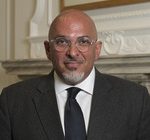
  • Nadhim Zahawi – 2021 Statement on Arthur Labinjo-Hughes

    Nadhim Zahawi – 2021 Statement on Arthur Labinjo-Hughes

    The statement made by Nadhim Zahawi, the Secretary of State for Education, in the House of Commons on 6 December 2021.

    With permission, Mr Speaker, I will make a statement following the sentencing of the stepmother and father of Arthur Labinjo-Hughes on Friday.

    The whole nation is distraught at Arthur’s tragic and horrific death. Across the House and across the country, we find it impossible to imagine how any adult could commit such evil acts against a child, particularly a parent or carer to whom the child looks for love and protection. I know colleagues and people outside this place are seriously troubled that Arthur was subjected to a campaign of appalling cruelty, and was murdered after concerns had been raised with local services.

    I assure colleagues on both sides of the House and the public that I am as determined as they are to get to the truth, to expose what went wrong and to take any action necessary to protect children. To do so, serious questions need to be asked.

    I make it clear that police officers, teachers, social workers, health workers and others go to work each day to try to make things better and to do their best at what are very difficult jobs. Those already serving our country’s most vulnerable children deserve our thanks, and I want to be extremely clear that no safeguarding professional should be the victim of abuse. The targeting of individuals is wrong and helps nobody, but that does not mean we should not seek to understand what went wrong and how we can stop it happening again.

    The public deserve to know why, in this rare case, things went horrifyingly wrong and what more could be done to prevent abuse such as this from happening again. Since the horrendous deaths of Peter Connelly, Daniel Pelka and, sadly, others, the Government have established stronger multi-agency working, putting a shared and equal duty on police, councils and health in local areas to work together to safeguard and promote the welfare of children, alongside a role for schools. I am sure hon. Members across the House will recognise that improvements have been made from previous reviews, but the question now is whether that is enough.

    In order to look at issues nationally as well as locally, we established the national Child Safeguarding Practice Review Panel in 2017 for cases such as Arthur’s. Given the enormity of this case, the range of agencies involved and the potential for its implications to be felt nationally, over the weekend I asked Annie Hudson, chair of the national panel, to work with leaders in Solihull to deliver a single, national, independent review of Arthur’s death to identify what must be learned from this terrible case.

    The review will encompass local government as well as those working in the police, health and education sectors. Officials in my Department are already in close contact with the Solihull safeguarding partnership, which is grateful for the support offered and agrees that this approach is the best way to deliver comprehensive national learning and identify any gaps that need to be addressed.

    Annie and her colleagues on the national panel, who come from the police, health and children’s services, have dedicated their lives and decades-long careers to bettering the lives of the most vulnerable children in our society. I have every faith that their review will be robust, vigorous and thorough. I have already assured Annie, as I assure you now, Mr Speaker, that she will be given all the support she needs to do the job properly.

    The review will focus specifically on Arthur’s case and identify where improvements need to be made, but I also want to make certain we have looked at how all the relevant local agencies are working now, including how they are working together. For that reason, I have also asked Ofsted, the Care Quality Commission, Her Majesty’s Inspectorate of Constabulary and Fire & Rescue Services and Her Majesty’s Inspectorate of Probation to lead a joint targeted area inspection. I have asked that each of these inspectorates be involved because of the range of local services that had been involved in Arthur’s and his family’s life during the preceding months.

    These joint inspections are well established, but a new and ambitious approach will be used, with a sharp focus on the entry point to the child protection system across all agencies. That will mean we can truly look at where improvements are needed by all the agencies tasked with protecting children in the Solihull area, so that we can be assured that we are doing everything in our power to protect other children and prevent such evil crimes.

    As part of this inspection, all the agencies tasked with protecting children at risk of abuse and neglect in Solihull will have their effectiveness considered, and be instructed on where improvements must be made in Solihull and where learnings can be applied in other areas around the country. The inspectorates met today to plan the work and the work will begin next week. I, as well as officials in my Department and across Government, could not be taking this matter more seriously. I have been working this weekend to bring everyone together to make sure the work can start immediately. Over the coming days, we will publish terms of reference and timelines for the national review and local inspection.

    More widely, we are already investing heavily to help the legions of dedicated professionals on the frontline to deliver the care that we all know every child deserves. Since the spending review in 2019, there have been year-on-year real-terms increases for local government, as well as the unprecedented additional £6 billion funding provided directly to councils to support them with the immediate and longer-term impacts of covid spending pressures, including children’s social care. Yet we have also known that the care system needed bold and wide-ranging reforms, which is why we have the independent review of children’s social care happening now. I know that Josh MacAlister, who leads that review, will make recommendations on what a decisive child protection response needs to look like, given that that sits at the core of the system he is reviewing. Importantly, the review will look at how social workers, especially those with the most experience, can spend time with families and on protecting children. We all know that social workers do their best work with families, not behind a desk.

    I look forward to receiving the review’s recommendations in due course. In any complex system, it is imperative to investigate thoroughly to learn and improve that system. My mantra continues to be that sunlight is the best possible disinfectant, because if we are to improve services where they need improving, we must share data and evidence.

    I thank the prosecuting barrister Jonas Hankin QC, his team and the jury for their service in this troubling case. As the court heard, Arthur’s tragic death was the result of the cruelty of his father and his father’s partner. No Government anywhere in the world can legislate for evil, but we will take action wherever we can to stop this happening again, because we must do more. To do more, I end my statement with a plea to everyone in our country: anyone who sees or suspects child abuse can report their concerns to local children’s services or by contacting the Government-supported National Society for the Prevention of Cruelty to Children helpline for adults or practitioners who are concerned about a child or young person. So if you see or suspect child abuse, report it. If you are worried about a child you know, report it. If something appears off, or you see something that troubles you, report it.

    As we uncover what went wrong and what led to Arthur’s tragic death, we must also strengthen our resolve to make sure that we prevent these crimes as much as they possibly can be prevented. We must make sure that those who would do wicked acts to children face justice. We must do absolutely everything in our power to protect vulnerable young children from harrowing and evil abuse. I commend this statement to the House.

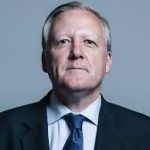
  • Kevan Jones – 2021 Speech on Storm Arwen

    Kevan Jones – 2021 Speech on Storm Arwen

    The speech made by Kevan Jones, the Labour MP for North Durham, in the House of Commons on 6 December 2021.

    First, I am disappointed that the Secretary of State is not here today to address us on this very important issue.

    There is something seriously wrong with Northern Powergrid—not with the engineers and individuals who are out restoring power but with the management and senior management of that company. The Secretary of State, during his visit, said that he met, as I know the Minister met, local managers, and I thank the Minister for his phone call on Friday morning. But in the past 10 days I have had constituents in Craghead, Stanley, High Handenhold, Edmondsley and parts of Chester-le-Street without power. Some have now had it restored, but Blackhouse, Edmondsley and parts of Craghead are still without.

    I ask the Minister to go back to the power company, as it cannot give the assurance that he has just given to those communities: it says on its own website that there is no date yet for restoring power in parts of my constituency. Constituents have had to experience sub-zero temperatures in terrible conditions. That has been made worse by Northern Powergrid.

    On the night of Friday 26 November, I understand that internally the company issued an emergency for County Durham. That was not transmitted to the local resilience forum until Wednesday 1 December, which only became apparent to the county council and other resilience forums when an enterprising council officer started plotting on a map how many homes were affected. What has made the situation worse is Northern Powergrid’s communications, which raised people’s expectations that power was coming on, so people have stayed in homes when they should not have done. Likewise, information now is still not good. I was even told last week by an employee of Northern Powergrid, “Just ignore what is on the website—it’s complete nonsense.” If they are saying that, what confidence can my constituents have in that information? The communication has been appalling and made things worse.

    The other thing that has made things worse—particularly in my constituency, parts of which are not rural, but are in towns—is the age of the components, so I will ask three quick questions. First, will the Minister do an urgent, independent assessment of the resilience of the grid, especially since we have the storm coming in tomorrow night? Secondly, what has been done since 2013? Thirdly, what can be done to force the company to pass information on to the bodies that need to know, including the resilience forums? What compensation or money will be put forward to Durham County Council and others for the money they have expended so far?

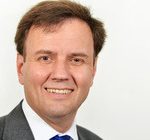
  • Greg Hands – 2021 Speech on Storm Arwen

    Greg Hands – 2021 Speech on Storm Arwen

    The speech made by Greg Hands, the Minister for Energy, Clean Growth and Climate Change, in the House of Commons on 6 December 2021.

    As the House will know, the Secretary of State updated Members last week on how we are continuing to work to ensure that power is restored to people’s homes following Storm Arwen. We have provided a named contact for MPs, on request, for each network operator, which I was delighted to do personally with the right hon. Member for North Durham (Mr Jones) on Friday morning.

    Storm Arwen was the worst storm in over 15 years in terms of the disruption and damage caused. Those most badly hit have been in northern England and Scotland, and some have now been without power for over a week. That has made life incredibly difficult and stressful for many residents, and I want to assure them that help is there.

    On Wednesday, I visited County Durham and on Friday I visited Aberdeenshire to see first-hand some of the devastation caused by Storm Arwen, and yesterday the Secretary of State was also in the north-east of England. I thank the engineers, the emergency workers and our armed forces who are on the ground for their incredibly hard work and perseverance in challenging conditions. We have removed the compensation limit to allow customers affected to claim up to £140 per day if they are without power.

    I am glad to say that 99.8% of those affected by the storm have had their power supply restored so far—but this is not good enough. It is completely unacceptable that about 1,600 of them were still in this position as of this morning, although the situation is improving each hour. The remaining areas affected are in the north-east of England, predominantly the Wear valley surrounding Eastgate, where I was on Wednesday. I have been assured by the network operators that all efforts are focused on having power restored to those households in the next days.