Tag: 2021

  • Matt Hancock – 2021 Statement on Covid-19

    Matt Hancock – 2021 Statement on Covid-19

    The statement made by Matt Hancock, the Secretary of State for Health and Social Care, in the House of Commons on 19 January 2021.

    On 5 January 2020, the Health Protection (Coronavirus, Restrictions) (All Tiers) (England) Regulations 2020 (All Tier Regulations) were amended. These amendments instructed people across England to stay at home and only to leave where they have a legally permitted reasonable excuse, as well as requiring the closure of many businesses and venues.

    Although we are getting the virus under control, the numbers of covid-19 cases, hospital and ICU admissions, and deaths remain extremely high nationally. As a result, our hospitals are now under more pressure from covid than at any time since the start of the pandemic.

    The weekly case rate in England is 520 per 100,000 for all ages and 414 per 100,000 in people aged 60 and over. There are 127 local authorities with case rates greater than 500 per 100,000. Overall positivity for England is 14.4%, with rates remaining high across all regions and continuing to increase in the north-east, west midlands and south-west. The highest positivity is in London (21.7%) and lowest in the south-west (9.5%).

    These figures are significantly higher in comparison to early December and there still remains considerable pressure on NHS systems nationwide as hospitalisations continue to increase. General and acute bed occupancy for covid-19 across England has risen by 1,786 to 31,459 from 29,673 last week. Mechanical ventilation bed occupancy for covid-19 across England has similarly risen to 3,570 from 2,310 in the previous week. Deaths within 28 days of a positive test remain high at 887 on 13 January, the last day of complete reporting.

    In line with our commitments, I have kept the measures in place for the national lockdown under ongoing review. On 19 January I completed a review of both the geographical allocations and the restrictions as required by the regulations and have determined that the measures remain necessary and proportionate for all areas in England. While there are early indications that new infections may have started to decline in those areas which have been under stricter measures for the longest, scientific advice and the latest epidemiological data is clear that lifting restrictions now would be too early. The restrictions are kept under continual review and will be lifted as soon as it is safe to do so.

    On 18 January the Government made some minor technical amendments to the all tier regulations to clarify policy and ensure consistency. The Health Protection (Coronavirus Restrictions) (All Tiers) (England) (Amendment) 2021 were laid before Parliament on 19 January and will come into force on 20 January.

  • Gavin Williamson – 2021 Statement on Covid Testing in Secondary Schools and Colleges

    Gavin Williamson – 2021 Statement on Covid Testing in Secondary Schools and Colleges

    The statement made by Gavin Williamson, the Secretary of State for Education, in the House of Commons on 19 January 2021.

    On 15 December 2020 we announced that we would be deploying the latest rapid-result coronavirus tests using lateral flow devices to secondary schools and colleges from 4 January to enable weekly screening of staff and daily contact testing of both staff and students who are a close contact of a positive case. This will help us to find those who have the virus but are not displaying symptoms and isolate them quickly.

    The asymptomatic testing programme does not replace current testing policy for those with symptoms. Anyone with symptoms, whether they are involved in the rapid asymptomatic testing programme or not, will still be expected to obtain a PCR test and follow NHS Test and Trace guidance, self-isolating until they have received their results.

    This testing programme, alongside other protective measures such as social distancing and handwashing, can support school leaders to maintain the continuity of education through the pandemic.

    We can confirm that, as planned, the rapid asymptomatic testing programme in schools and colleges is being expanded to twice-weekly testing of primary school staff. Primary schools, including attached early years settings, should expect to receive initial deliveries of home testing kits to offer regular testing to all staff from the week commencing 18 January. Deliveries to maintained nurseries will be slightly later—dates to be confirmed.

    Primary school staff will be asked to take tests at home rather than take them on-site following the recent approval of home test kits from the MHRA (Medicines and Healthcare products Regulatory Agency).

    Primary school staff will be supplied with lateral flow device (LFD) test kits, which enable self-swabbing. They will be advised to test in the morning before coming into school twice a week (3-4 days apart). The LFDs supplied do not require laboratory processing and can provide a quick result in up to 30 minutes. Staff will then upload the outcome of their test (positive, negative or void) on the gov.uk website.

    Taking part in the testing is not mandatory for staff and they will not be expected to provide proof of having taken a test, to enter the school. However, testing is strongly encouraged, and we expect all primary schools to offer tests to staff.

    Those who test positive will need to self-isolate in line with the stay-at-home guidance.

    As with all policy, this will be kept under review in light of scientific evidence, and the Government will provide further advice if necessary.

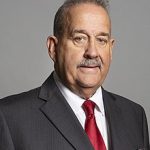
  • David Amess – 2021 Speech on Animal Charities and Covid-19

    David Amess – 2021 Speech on Animal Charities and Covid-19

    The speech made by David Amess, the Conservative MP for Southend West, in the House of Commons on 19 January 2021.

    It is no exaggeration to say that since this Adjournment debate was announced, I have been engulfed by all sorts of animal charities wishing me to raise their plight in what is a very short debate. It is not possible to mention them all, but their excellent Members of Parliament will certainly do that. My hon. Friends the Members for North Norfolk (Duncan Baker) and for Dudley North (Marco Longhi) would like to catch your eye for a minute each, Madam Deputy Speaker, although they understand that the point of these debates is to allow the Minister some time to respond to the point that is being made.

    My right hon. Friend the Member for Rayleigh and Wickford (Mr Francois) is very concerned about animal charities in his constituency. My hon. Friend the Member for Rochford and Southend East (James Duddridge) has Adventure Island in his constituency, and there is a wonderful charity there. My hon. Friend the Member for Thurrock (Jackie Doyle-Price) has some animal welfare interests in her constituency; she is very concerned. My hon. Friend the Member for Castle Point (Rebecca Harris) has Acres Way in her constituency, and she is very concerned about animal charities too.

    The coronavirus pandemic has undoubtedly changed all our lives. In the long list of businesses, individuals and organisations that have been negatively affected by coronavirus, charities can often be overlooked—especially animal welfare charities. Charities in Southend and the rest of the country work tirelessly throughout the year to provide essential support to those who are most vulnerable and are often unable to help themselves. Animal charities do much of the same work, but instead care for animals that are unable to help themselves. It is up to Members of Parliament to seize the opportunity to speak for them. It is those types of charities that this debate will focus on.

    Animal charities have been somewhat ignored during the coronavirus pandemic, and as a result they have suffered greatly, and so have the animals in their care. Animal rescue and care teams are being stretched to their absolute limits. As an industry, animal charities care for all animals, not just cats and dogs. Farm animal sanctuaries and equine charities, for example, are as important as the charities that focus on caring for more traditional pets. No charity should be discriminated against when it comes to financial support because of its size or the animals it cares for.

    Animals, and especially pets, have become very important during the coronavirus pandemic. There has been a surge in the number of households with pets. Many who purchased a puppy during the pandemic agree that their dog was a lifeline in the lockdown. Although having a pet in the house during the lockdown is an attractive idea to many, as it can inject a new sense of life and optimism into the home, not everyone knows what looking after an animal entails. When households rush into buying an animal, and subsequently fail to look after it properly, it is the animals that suffer. According to a survey undertaken by the Kennel Club between March and June last year, 38% of breed rescue organisations saw zero dogs come into their organisations. That could be because dog owners were apprehensive about going to a breed rescue because of lockdown rules.

    Many households may not be reporting animal cruelty as much because lockdown prevents them from witnessing it, and they may not be returning pets because they cannot leave their homes, but that does not that mean that animal cruelty is not happening. As such, it is very important that lockdown restrictions allow people to relinquish their pets if they cannot meet their welfare needs.

    Mr Mark Francois (Rayleigh and Wickford) (Con)

    Does my hon. Friend remember, some years ago, jointly opening with me the Dogs Trust Essex rehoming centre at Nevendon? It was a multi-million pound investment, and its sole purpose is to rehome those dogs who, unfortunately, have not been cared for as they should have been. Does he commend the Dogs Trust and everything it does?

    Sir David Amess

    I absolutely do. The wonderful Dogs Trust provided us with two rescued pugs. While I think of those good old days in Basildon, we also have the horse rescue centre there. I am pleased to see my hon. Friend the Member for West Dorset (Chris Loder) in his place. I am sure he has interests in animal welfare in his constituency as well.

    The main problems for the animal charities as a result of coronavirus can be broken down into two main categories: they have less income and they have fewer employees. The Royal Society for the Prevention of Cruelty to Animals estimates the financial loss across the animal welfare sector last year to be £101.4 million. Those charities have seen significantly reduced income due to Government restrictions to curb the spread of coronavirus resulting in shops being forced to close and face-to-face fundraising events not being allowed. While individual givers remain eager to provide whatever support they can, personal finance worries have affected how much they can afford to donate. While this problem has affected all animal charities, the smaller ones—that is what I am really speaking about—are particularly worried as, more often than not, they do not have access to reserve funds or a big organisation behind them.

    Despite the charities’ reduction in income, the number of animals needing care and attention has not decreased and, as they experience a reduction in income, they are forced to make difficult, heart-breaking cost-saving decisions. I have spoken to many animal charities, all of which have been appreciative of the coronavirus job retention scheme and have tried to furlough their employees instead of letting them go permanently. However, I say to my hon. Friend the excellent Minister responding to the debate that, unfortunately, they have lost much of the voluntary force they rely on so heavily for support.

    That, however, is just the negative effects of coronavirus on the charities’ business side. The coronavirus pandemic has also introduced massive problems for animals as a result of the charities’ loss in income and staff, but unfortunately the virus’s effect on animals has been largely forgotten. It is important to remember that animals are dying as a result of a lack of care caused by the pandemic. Because of a lack of income, charities that care for sick or injured animals with the aim of rehoming them or supplying subsidised veterinary care have not been able to purchase as much food or medicine as normal or house as many animals. More animals are therefore left to fend for themselves without access to the essential care they would have had before the pandemic.

    As a result of having fewer staff, charities have had to limit the help they can give to animals and alter the way in which they care for them. The RSPCA, which is a wonderful organisation, and Lady Stockton is a wonderful trustee, had to switch to emergency calls only, and it stopped its 24-hour inspectorate cover. That again meant that charities had less range and scope to deal with new cases, and many animals were left unattended without help. With the sudden rise in demand for pets, and unfortunately the increase in the number of households unable to properly care for their pets, there is extra pressure on animal charities. These charities have had to do a lot of damage limitation that they had not previously needed to do on such a large scale and in such a short time. That has meant that these charities have had to reduce the amount of work they can do on new cases of animal abuse.

    The development of behaviour problems in pets and animals as a result of the pandemic is not as widely reported, but can have long-lasting health impacts on animals’ lives. According to the RSPCA, owners who reported that their quality of life was poorer also had dogs with a lower quality of life. My right hon. Friend the Member for Rayleigh and Wickford mentioned the Dogs Trust; it similarly reported that many owners found increased incidents of clinginess and attention-seeking behaviours, as well as behaviour associated with fear or frustration.

    With many dog trainers unable to operate because of the coronavirus restrictions and facing many financial hardships, the behavioural issues that dogs have begun to exhibit cannot be quickly dealt with. One in five respondents to the Kennel Club survey are worried about the lack of training for their puppies, which they have not received due to lockdown restrictions, and a quarter are concerned about future behavioural problems, such as aggression with other dogs once we return to normal. That could potentially result in an increase in the number of dogs surrendered to animal rescue charities following the pandemic, due to behavioural issues, and increase the strain on animal charities further in the long run.

    The voluntary sector and animal charities are in a constant state of financial uncertainty. I am very grateful for the Government support that has relieved some of the financial pressure and enabled charities to continue to carry out essential work. However, as always, more needs to be done. The pandemic has financially ruined those charities for close to a year now, and it will have a long-lasting negative effect on animal welfare issues in the future. Too many animal welfare organisations were not eligible for support by the frontline charities relief fund in April 2019, and have therefore received no direct support other than that available through a wider scheme. One consequence of that was that a parliamentary petition, e-petition No. 314968—“Include animal charities in emergency funding due to the coronavirus pandemic”—was launched. The Government responded in July, acknowledging that the animal welfare sector had faced serious challenges, and stated that they were exploring how those challenges could be alleviated.

    I say this to my hon. Friend the Minister: I do hope that the Government act on their statement and are ready to quickly implement support packages to alleviate animal charities’ financial worries and enable them to continue to carefully care for animals. There should be support packages targeted at specific charities within the animal charity sector. That is particularly important for equine charities because, as the RSPCA revealed, 79% of equine organisations only had funds for six months or did not know how long those funds would last. Battersea plans to publish a second report in 2021, which will look at the longer-term financial and social impact of the pandemic on animal welfare and the organisations that exist to protect animals. I truly hope that the Government co-operate with those charities and implement their suggestions.

    As a patron of the wonderful Conservative Animal Welfare Foundation, I believe that Ministers and the Department need to work with the animal welfare sector to help prevent a significant increase in demand for rescue services this year. Part of the work should cover issues such as puppy farming, puppy smuggling and the unscrupulous selling of puppies and kittens by third parties, which are increasingly relevant given the sudden increase in demand for pets.

    Zoos are also a crucial part of animal welfare in this country. I was privileged to visit Chester zoo not so long ago and see the wonderful work that they are doing there; of course, we see their wonderful programmes on TV. Zoos undertake charitable work and have extensive welfare and treatment programmes for sicker injured animals. Throughout last year, zoos and animal sanctuaries were closed and then told that they could reopen and then forced to close again. That is a terrible challenge for them. Opening a zoo on such a large scale, only to have to close again, uses a lot of money, time and resources that could be better targeted at directly caring for animals. I also think of our zoo in Colchester. In an already suffering industry, zoos need governmental support to make up for lost ticket revenue. The charity Four Paws was hit especially hard when it had to close its animal sanctuaries worldwide. Without the ability to fundraise on a large scale, essential welfare services will inevitably decrease and so will the level of care that the animals receive. Many zoos and animal sanctuaries are outside, and with proper coronavirus safety measures put in place, such as mandatory face coverings, one-way systems and time slots, they can reopen safely. Keeping our zoos shut is reducing the amount of charitable work that zoos can undertake and reducing the quality of care that they can give animals. Whether or not zoos are able to reopen soon, they need financial support to purchase essential medical supplies and to feed the animals.

    The zoo support fund was warmly welcomed by the zoos and animal sanctuaries that matched the eligibility criteria, but, according to the British and Irish Association of Zoos and Aquariums, only 26 out of 300 zoos in England have been successful with the fund. That is ridiculous. Unspent funds must be redeveloped into a more accessible support mechanism for the sector, so that all zoos can benefit. A parliamentary petition, e-petition No. 308733, on providing financial help to zoos, aquariums and rescue centres during the pandemic, which received more than 135,000 signatures, was debated in June last year. The Government said that they were keeping the situation under close review. Now that the situation has changed due to the added restrictions, I hope that the Government are intending to increase the support for zoos.

    In conclusion, while coronavirus has undoubtedly created unprecedented problems for multiple industries, including the animal welfare sector, it has provided an opportunity to address key animal welfare issues concerning the link between wild animals and the spread of zoonotic diseases. This should prompt a much-needed reconsideration of our relationship with animals. This pandemic may be all about our relationship with animals. Incarcerating animals in cage systems on factory farms provides the ideal breeding ground for dangerous new strains of the virus. We have all been appalled by the huge culling of 17 million mink on industrial fur farms in Denmark over fears of a mutated form of coronavirus. Without extensive support measures directed at animal charities, the problem will continue to occur and animals will continue to suffer long after the coronavirus pandemic is over and we return to normality. We rely on our wonderful voluntary industry to selflessly help those more vulnerable than us. We must not forget about the animals. We need to ensure that animal charities have the resources and the finances to look after animals’ welfare. Now is the time to set out a new vision and a compassionate way forward.

  • Andrew Stephenson – 2021 Statement on HS2 (West Midlands – Crewe)

    Andrew Stephenson – 2021 Statement on HS2 (West Midlands – Crewe)

    The statement made by Andrew Stephenson, the Minister of State at the Department of Transport, in the House of Commons on 19 January 2021.

    Let me say at the outset that the majority of these amendments are clarifications, corrections and updated references. When a Bill has had such a lengthy passage through these Houses as this one, it is perhaps amazing that there are so few amendments that need to be made. Let me say also that the Government accept all the amendments made by the other place to this Bill.

    As you would expect, Madam Deputy Speaker, I will provide some comment on the more substantial amendments, but before I do so, I would like to thank the other place for its careful scrutiny of this Bill. In particular, I thank my noble Friend Baroness Vere of Norbiton for her very great skill and diligence in steering this Bill through the other place. I also wish to extend especial thanks to Lord Hope of Craighead and his Committee for their careful and considered approach to the petitions against the Bill in the other place and for the way they handled their processes during the global pandemic.

    Turning to the amendments, Lords amendment 2 introduces a requirement on the nominated undertaker to provide and publish annual reports on the impact of the construction of the High Speed 2 project on ancient woodland. This is a scheme-wide amendment: it applies not just to phase 2a of HS2, but to all phases, including those that the House has not yet considered. The requirement in this amendment to report is about ancient woodland, but I have also committed to wider environmental reporting on the impacts of HS2. I look forward to the first of these environmental reports being published, and I am absolutely committed to holding HS2 Ltd to account on environmental matters.

    Lords amendment 3 introduces a new requirement on the Government to undertake the consultation prior to 1 May 2021. This consultation is to be for the people of Shropshire, Staffordshire and Cheshire, and it is to seek views on various types of impacts from the HS2 works. The Government opposed this amendment in the other place, but that was on the basis that it was deemed unnecessary. There has already been considerable consultation with the people of Shropshire, Staffordshire and Cheshire. Nevertheless, I think that accepting this amendment is the right thing to do. As the Minister for HS2, I have been charged with resetting the relationship between the HS2 project and local communities. I have worked continuously with colleagues across the House who represent communities along the line of route. I am listening, and I will not stand in the way of the opportunity to listen more through further consultation. I want to reassure the House that I am taking action on what I hear, where it is needed. Further, I will do all I can to ensure that officials and those working on the project for HS2 Ltd put any consultation responses to the best possible use.

    I am acutely aware of the strength of feeling in the affected communities, and I am therefore mindful of the motivation and the sentiments of those who supported and voted for this amendment in the other place. As I have mentioned, extensive consultation has already been undertaken. It is crucial, though, that we remember that local communities are at the heart of this project. HS2 is a massive infrastructure project from which the whole nation will benefit, but there are those who will have to bear a burden for that to happen.

    I cannot move on without mentioning that there is a price tag of around £350,000 attached to the consultation. However, the costs of running a consultation are minor compared with the costs of delaying the Bill and of not listening to those who are directly affected by the impacts of these works. Let me therefore be very clear about consultation and engagement. The passing of this Bill does not mean the end of engagement with local communities. Indeed, it is only the beginning of a renewed effort to try to mitigate the impacts of the HS2 works on them. Therefore, while there has already been extensive consultation, I see no harm in there being even more.

    The last amendment to which I wish to draw the House’s attention is Lords amendment 5. It simply clarifies when a new road constructed under the powers in the Bill becomes specifically a public highway, and when a temporary highway ceases to be a public highway. This clarifies the position for local authorities and has been highlighted as necessary through learning the lessons from phase 1. The remainder of the Lords amendments—amendments 1 and 4, and 6 to 12—delete references to some specific phase 1 works that have been made obsolete by a Transport and Works Act 1992 order, delete references made obsolete by the repeal of some local Acts and update other references in relation to the Communications Act 2003.

    The Bill has already taken far longer to go through Parliament than was anticipated when the legislation was introduced in July 2017. I do not want to delay it further today. I want this section of the railway to be built so that we can hasten the benefits of HS2 to the north as soon as possible and, given all that I have said, I urge the House to agree to the Lords amendments.

  • David Davis – 2021 Statement on Freedom of Speech in Universities

    David Davis – 2021 Statement on Freedom of Speech in Universities

    The statement made by David Davis, the Conservative MP for Haltemprice and Howden, in the House of Commons on 19 January 2021.

    I beg to move,

    That leave be given to bring in a Bill to place a duty on universities to promote freedom of speech; to make provision for fining universities that do not comply with that duty; and for connected purposes.

    I commend your efficiency, Madam Deputy Speaker. The principal reason that our kingdom is a great nation can be encompassed in one word: freedom—freedom of action, freedom of assembly, freedom of thought, freedom of belief, freedom of speech and freedom under the law. Of all those freedoms, the most precious is freedom of speech. It has been fundamental to the development of our culture, our society, our literature, our science and our economy. Indeed, our national wealth today owes more to the free exchange of ideas than to the exchange of goods. Freedom of speech is fundamental to everything we have, everything we are and everything we stand for.

    Over 300 years ago, it was this Parliament that enshrined our right to freedom of speech in law. The 1689 Bill of Rights became a symbol of hope for the rights of people everywhere throughout the globe. Since then, peoples and democracies the world over have followed our example. When representatives of the globe gathered in 1948, in the aftermath of unthinkable destruction and despair, we as one people—one human race—said, “Never again.” Fundamental to this united course of humanity was article 19 of the universal declaration of human rights, which states:

    “Everyone has the right to freedom of opinion and expression; this right includes freedom to hold opinions without interference and to seek, receive and impart information and ideas through any media and regardless of frontiers.”

    Today that is under threat, and it is under threat in the very institutions where it should be most treasured: our universities.

    Freedom of speech only matters when it is controversial —when it is challenging. That is why the greatest characterisation of free speech is attributed to Voltaire by his biographer, who said:

    “I disapprove of what you say, but I will defend to the death your right to say it”.

    In one version, it was notably:

    “I may detest what you say but I will fight to the death for your right to say it.”

    Voltaire understood that creativity and progress in a society depend on acts of intellectual rebellion, dissent, disagreement and controversy, no matter how uncomfortable, but today the cancel culture movement think it is reasonable to obliterate the views of people they disagree with, rather than challenge them in open debate. They are wrong. Why? Because the unwillingness to hear uncomfortable opinion and the refusal of platforms to people they disagree with is damaging to us all. Imagine if their censorious predecessors in the established Churches had been successful in their attempts to suppress Galileo and Darwin. People would still believe that the Earth is the centre of the universe or that the human species was created on the sixth day from clay. Of course, those ideas are ridiculous, but such falsehoods were conquered only through the freedom to speak truth to power and to shine light in the dark with the ability to advocate for science and reason.

    Today, there is a corrosive trend in our universities that aims to prevent anybody from airing ideas that groups disagree with or would be offended by. Let us be clear: it is not about protecting delicate sensibilities from offence; it is about censorship. We can protect our own sensibilities by not going to the speech. After all, nobody is compelled to listen. But when people explicitly or indirectly no-platform Amber Rudd, Germaine Greer, Peter Tatchell, Peter Hitchens and others, they are not protecting themselves; they are denying others the right to hear those people and even, perhaps, challenge what they say.

    Let us repeat our thought experiment—our conjecture —in a modern context. Germaine Greer wrote the pivotal book on feminism and was its most powerful and effective advocate. Peter Tatchell was and is an unbelievably brave and very effective campaigner on gay rights and a host of civil freedoms. Peter Hitchens is a professional iconoclast who has challenged overmighty Government of all colours through the decades. Imagine what would have happened if they and their allies had been prevented from pursuing their causes in the public domain. We would have a very different society today, and not a better one. The chilling effect on free speech would be disastrous, and the impact on academic freedom would be catastrophic. Its cost is already too high.

    Before I leave this subject, what about Amber Rudd? She was no-platformed for her connection to the Government’s handling of the Windrush scandal, yet it was a whole year after she had been explicitly cleared by an investigation that found that she had not been supported as she should have been by the Home Office. In her case, it was not just speech denied but justice denied.

    Today, views expressed in a recent survey commissioned by Britain’s biggest university academic union showed that Britain has the second-lowest level of academic freedom in all Europe. Just last month, a report by Civitas found that more than a third of our universities impose severe restrictions on freedom of speech—including, I am ashamed to say, Oxford, Cambridge and St Andrews. The fact is that a number of our international allies today protect freedom of speech much better than we do. Some have it specifically written into their country’s constitution, and others put it explicitly into law. Ireland, for example, has the Universities Act 1997, which protects

    “the freedom, within the law, in…teaching, research and any other activities either in or outside the university, to question and test received wisdom, to put forward new ideas and to state controversial or unpopular opinions”.

    Although in the UK we theoretically have laws protecting freedom of speech, in practice they are buried in education Acts, resulting in the protections not being widely known and universities not always upholding their duties. That is why I am proposing this Bill.

    What does this Bill set out to do? It would, in effect, make universities responsible for upholding free speech throughout their campuses. Freedom of speech is not, of course, absolute. With rights come responsibilities, so speech that is illegal—incitement to violence, for example—would of course be forbidden, but speech that is merely unpopular with any sector of the university would not be proscribed. Controversial views and the challenging of established positions would not be proscribed.

    Although we may not agree or approve of what is being said, the right to free speech is the foundation stone of our democracy. To stand idly by while that foundation is being eroded, is a dereliction of our duty. The Bill makes it the absolute duty of every university authority to protect that most fundamental of our freedoms: the right to free speech.

  • Pete Wishart – 2021 Speech on UK Musicians and EU Visas

    Pete Wishart – 2021 Speech on UK Musicians and EU Visas

    The speech made by Pete Wishart, the SNP MP for Perth and North Perthshire, in the House of Commons on 19 January 2021.

    That is an immensely disappointing response from the Minister. Touring Europe means everything to our artists and musicians: the thrill of that first tour, crammed into the Transit van with all your gear; four to a room in a cheap hotel in Paris, Rotterdam or Hamburg; using what is left of the fee for a post-gig beer; the dream of coming back on a lavish tour bus, staying at five-star hotels—gone, all gone. Musicians and artists are mere collateral in this Government’s obsession with ending freedom of movement.

    Does the Minister acknowledge that visas and carnets will render such tours beyond the financial reach of future generations of new musicians? Does she appreciate that is not just our new musicians but the whole creative sector that will have increased costs and red tape? What will she say to the crews, the technicians, the set designers, the transport? We were promised by her predecessor that arrangements would not change. What has happened to that commitment? The EU said it was prepared to offer a 90-day deal. Why was that turned down? The Government said they were holding out for a better deal, but we have ended up with nothing. How could that happen? Given that the Minister’s approach is totally contradicted by the EU, will she provide complete transparency in all these negotiations?

    Our constituents really care about this; 263,000 have now signed the petition organised by our artists, calling for this to get sorted. We do not want any more of the EU-blaming—we have had quite enough of that in the past few years; we just want the Government to fix this. The Secretary of State has said that the door is still open, so will she walk through and fix it out? Will she restart talks with the EU immediately, to get our artists the arrangements that they need? Will she let the music tour freely once again?

  • Caroline Dinenage – 2021 Statement on UK Musicians and EU Visas

    Caroline Dinenage – 2021 Statement on UK Musicians and EU Visas

    The statement made by Caroline Dinenage, the Minister for Digital and Culture, in the House of Commons on 19 January 2021.

    This Government recognise the importance of the UK’s world-leading cultural and creative industries. We recently demonstrated that commitment by providing an unprecedented £1.57 billion package of support to help them through the covid-19 pandemic. It is therefore entirely consistent that, during the negotiations with the EU, we pushed for ambitious arrangements allowing performers and artists to work across Europe.

    Our proposals, which were informed by our extensive consultation and engagement with the UK’s cultural and creative industries, would have allowed UK musicians and other cultural touring professionals to travel and perform in the UK and the EU more easily, without the need for work permits. Regrettably, those mutually beneficial proposals were rejected by the EU. As a result, UK cultural professionals seeking to tour in the EU will be required to check domestic immigration and visitor rules for each member state in which they intend to tour. Although some member states allow touring without a permit, others will require a pre-approved visa and/or a work permit.

    It is absolutely vital that we now support our touring sectors to understand the new rules associated with working and travelling in the EU. We are delivering an extensive programme of engagement with the sector to help them understand any new requirements. That includes working with Arts Council England and various other sector bodies, to help distil and clarify the new rules.

    As my right hon. Friend the Secretary of State for Digital, Culture, Media and Sport has already made very clear, we will also look at whether we can work with our partners in EU member states to find ways to make life easier for those working in the creative industries in our respective countries. In the meantime, we will continue close dialogue with the creative and cultural sectors, to understand the ongoing impacts and ensure that that they have the right support at the right time to continue to thrive.

  • Kate Green – 2021 Speech on Remote Education and Free School Meals

    Kate Green – 2021 Speech on Remote Education and Free School Meals

    The speech made by Kate Green, the Shadow Secretary of State for Education, in the House of Commons on 18 January 2021.

    I beg to move,

    That this House believes that families need more support during school and college closures; and that those eligible should be guaranteed to receive the full value of free school meals for the duration of the school year, including during all holidays; and calls on the Secretary of State for Education to set a deadline to ensure that every learner has the resources required to learn remotely, and provide a weekly update to Parliament on implementing this.

    Today, and at least until February half-term, millions of children have not attended school and will instead be studying at home. No one wants to be in this situation—we all believe that school is the best place for children’s learning and wellbeing—but for now, faced with a rising coronavirus infection rate, we understand that many children need to study at home. They, their families and hard-working school staff deserve to know that the Government are doing all they can to support them.

    That is why we have brought forward a motion this evening that asks two fundamental questions: first, are the Government doing everything they can to support pupils to keep learning remotely; and secondly, are the Government doing everything they can to ensure that children do not go hungry when they cannot get a free meal in school? If the answer to those questions is no, which I believe it is, then Members, whatever their party, should vote for our motion.

    These should be matters on which we can all agree. I am sure there is nobody in this House who does not believe that children should receive a world-class education and that every family in this country should be able to provide their children with nourishing meals, but the reality is that the Government have not done enough—too slow to secure digital access for those who need it, while overseeing yet another scandal in delivering free school meals to children in need of them. The Prime Minister and, indeed, the Secretary of State claimed to be outraged by images of food parcels they saw on social media last week, but I and my party are outraged at Ministers’ consistent and unforgivable failure to stand with children and families throughout this pandemic. Pupils and parents deserve a Government who are on their side. They deserve better than this Government.

    I pay tribute to everyone who has gone above and beyond to keep children safe and learning throughout the pandemic—the teachers, leaders and support staff across our education system who have worked hard in extraordinary circumstances to keep children learning safely; and the parents who face the unenviable task of balancing work, educating their children and childcare, too often without the support they needed.

    At the beginning of this pandemic, 1.8 million children did not have the devices or internet connections they needed to work from home and, in that first national lockdown, many of those children struggled to access remote learning. Despite the best efforts of teachers, school leaders and support staff, some children fell behind their peers because they lacked the basic resources to continue learning when they could not be in the classroom. The Secretary of State rightly started to provide some devices to some of those children. He set a target of providing 230,000 devices by the end of June last year. Not only did that fall far short of the number of children who needed them, but he did not even deliver all those devices on time. Perhaps he could have learned a lesson from the Labour Government in Wales, which repurposed existing orders and were supporting pupils with devices by the end of May, according to the independent Education Policy Institute.

    Being less prepared than the Welsh Labour Administration may have been understandable at the beginning of the pandemic, but the Secretary of State’s inability to learn from his failures and from their success is inexcusable. Instead of redoubling his efforts to get devices to all the pupils who lacked digital access as quickly as possible, the Secretary of State waited until the new national lockdown this month to up his target and accelerate delivery, leaving hundreds of thousands of pupils not only out of the classroom, but out of learning. So I ask him: why were these laptops not being rolled out on this scale months ago? Why was he once again too slow to act to secure children’s education in the face of huge disruption?

    Today, we have reached about 700,000 devices delivered against a target of 1.3 million. It does seem that the Secretary of State is finally beginning to learn from at least one of his mistakes. This time, he has decided not to set himself a deadline that he will simply miss, but he cannot shy away from his duty to those children, so can he tell the House now when all the devices will be in the hands of the pupils who need them? Can he guarantee that when that is done, every single child who was locked out of remote learning will be able to participate fully when they are not in the classroom?

    This is not just an issue in schools. In colleges, we have heard of adult learners struggling to access remote learning and not being eligible for Government support. Universities UK, ucisa, GuildHE and Jisc have written to the Secretary of State in just the last few days to request urgent action to support the thousands of university students who are still unable to access their education online due to digital and data poverty. Will he tell us what he is doing to address this?

    I would like to move to the second part of the motion on free school meals. The images of food parcels that we saw last week were scandalous. Ministers have said that they are outraged by them, but they refused to accept that responsibility for those images is a direct result of their own policies. They pushed for a food parcel-first approach and set guidance for parcels worth only a fraction of the £15 made available to providers for families to feed their children. They cannot devise and publish a policy and guidelines and then be appalled when they are implemented. Will the Secretary of State now take responsibility for what occurred and apologise to the parents who received those unacceptable food parcels?

    The Secretary of State then managed to outdo himself, with not just one but two free school meals scandals last week. Only days after we all saw those images, it was reported that schools will not be providing free meals over the February half term. Of course, the Secretary of State voted against such a measure in October. We thought he had learned his lesson, but now he is letting down hungry children again. I know that he will cite the winter support scheme, but that scheme does not guarantee that every child eligible for a free school meal will get one every day of the holidays, and he cannot guarantee that no child will go hungry when they are out of school this half term.

    Steve Brine (Winchester) (Con)

    I am listening to the hon. Lady carefully. I am sorry that she has not picked up the tone of her shadow DWP colleague, the hon. Member for Stalybridge and Hyde (Jonathan Reynolds) —he got the tone right; she has not—but does she agree that there is clearly a long-term conversation to be had in this country about school holiday food for families in receipt of free school meals? It is something that never happened during the 13 years of the last Labour Government and that, to my knowledge, the Opposition have not pushed this Government on during the last almost 11 years of their being in office. Does she agree that there is a conversation to be had, sensibly, across the Dispatch Box and without the partisan nonsense, about the long-term provision of holiday food for some of the poorest children in our country?

    Kate Green

    I am aware that a number of organisations, representing food charities, anti-poverty organisations, educationalists and so on, have written to the Prime Minister suggesting a full review of that subject. I welcome that, and I hope that he will respond with the offer of the review that they are seeking. However, I point out that not only are we in the middle of the first global pandemic in 100 years, but that it is against the backdrop of rapidly rising child poverty. That is why the push to address the hunger that children are facing now has become more acute than ever.

    I have a simple solution for the Secretary of State to the problem of holiday hunger, one that could solve the problem at the touch of a button: sack the companies that are providing a substandard service and just give parents the money—secure family incomes by using the existing social security infrastructure and put £15 a week into the bank accounts of the parents who need it to feed their children. He should put his trust in mums and dads, because we know that parents will do the right thing.

    Anyone who has thought about these issues—I do not know about Government Members, but I have spent a large part of my career thinking about them—knows that cash transfers work. They improve outcomes for children, they remove stigma for families and they ensure that the full value of support provided goes to children. I know that there are some people—in October we discovered some of them on the Government Benches—who believe that parents cannot be trusted to use money responsibly to feed their children. That is wrong in every possible way. It is morally wrong to condemn families to insecurity and stigma. It is economically illiterate not to provide cash to families who most need it, and instead to slash their incomes in the midst of the worst recession that most of us will know in our lifetimes. And it is factually and empirically wrong to suggest that this money would not be spent by parents on food for children. So I ask the Secretary of State to do the right thing: to end the scandal of inadequate food parcels or vouchers that take days to arrive, and the scandal—in one of the richest countries in the world—of children continuing to go to bed hungry.

    I want to turn briefly to the amendment in the name of the Prime Minister. Let me begin by saying that there are some things in the amendment that I am glad to see—not least that he has finally listened to teachers and to Labour and started to move towards zero rating of educational websites, though quite why it has taken him so long, I do not know. First, the amendment asks us to note that the Government are

    “committed to supporting families to feed their children during both term-time and holidays”.

    It then mentions a voucher scheme that has been hit by repeated delays in an outsourcing fiasco, a winter grant scheme that cannot guarantee that every child will be fed and a holiday scheme that will not be in place for months. It condemns the food parcels we saw on social media, while failing to take any responsibility for the fact that they were in line with the Government’s own policies. It ignores the Government’s plans to slash more than £1,000 a year from family incomes by cutting the lifeline in universal credit, plunging hundreds of thousands of children into poverty.

    Then the amendment calls on us to note all the progress the Secretary of State has made in improving digital access. It lauds his half-delivered target of delivering 1.3 million laptops yet gives us no clear timeline for full delivery. It notes the support given to schools but ignores the fact that schools up and down the country have repeatedly reported that they have not had the support they needed from the Government throughout the pandemic, whether it is on funding, testing, exams—the list continues. I am afraid the amendment is not credible. In fact, it is insulting to schools and families across the country, who will see through this attempt to give Government Members something to vote for while failing to support the entirely reasonable motion we have tabled.

    Poverty is, sadly, endemic across our country. In every city, town and community, it blights the life chances of children, causes unimaginable hardship and insecurity to families, and weakens our economy. The pandemic has made the situation far, far worse, and it is appalling that today, we have seen with our own eyes that the Government are simply not committed to the task of ending child poverty.

    Earlier this evening, Government Members failed to support Labour’s motion calling for the £20 uplift in universal credit—a lifeline that has kept millions above water over the past nine months—to be made permanent. The consequences are simple: families and children will be plunged into insecurity, hardship and poverty. I am giving Government Members a second chance to do the right thing this evening and to put children first by voting for our motion—a motion that asks for nothing more than the chance for every child to learn and for no child to go hungry.

  • Mick Whitley – 2021 Speech on Universal Credit

    Mick Whitley – 2021 Speech on Universal Credit

    The speech made by Mick Whitley, the Labour MP for Birkenhead, in the House of Commons on 18 January 2021.

    I support the motion. The Government should hang their head in shame for leaving people on universal credit living under the shadow of a potential cut in their benefits at the end of March. We face the worst recession of any European country, to a large extent due to the Government’s shambolic handling of the covid-19 pandemic. The Prime Minister’s failure to provide a clear strategy, some economic certainty and the adequate financial support that millions of people desperately need is a failure of leadership and of Government policy.

    The scale of this crisis is massive and growing. In my constituency of Birkenhead, I represent two of the most deprived council wards in the country. Over 12,000 of my constituents claim universal credit, a 51% increase since the pandemic began. Countless others are in receipt of legacy benefits, and joblessness continues to soar. Every day, more people join the ranks of the unemployed. Even those who have kept their jobs are struggling to make ends meet; furloughed workers are forced to survive without a fifth of their pay packet each month.

    My resolve on this issue has been strengthened by the deluge of messages from my constituents. The £20 uplift is a vital lifeline; it is as crucial to people’s financial health as the vaccine is to their physical health. So many constituents have told me of their fear and despair for their very survival if it is taken from them, but still the Government have refused to make the uplift to universal credit and working tax credit permanent or to confirm that it will be extended beyond April. At the same time, I believe that those excluded from the original uplift—those on legacy benefits—should also get a £20 a week rise.

    Let me be clear: if, during the worst economic crisis in living memory, the Government go ahead and cut the £20 that has enabled so many people to get by, it will be a scandal. The Resolution Foundation estimates that if this cut goes ahead, the bottom fifth of earners will lose 7% of their income. Similarly, Citizens Advice predicts that 75% of the people it helps with debt issues will not be able to cover basic costs if the uplift is cut. It will mean more children going hungry, more families being unable to heat and light their homes, and more households facing the threat of eviction. It will mean human suffering on an epic scale in Birkenhead and across the country. By doing away with the uplift, the Government would take over £12 million from Birkenhead’s economy, with cash-strapped families spending less in our local supermarkets and independent stores.

    “Build back better”? That is a hollow phrase masking economic vandalism. We must not let this Government pave the way to a new pandemic where poverty becomes the next deadly virus.

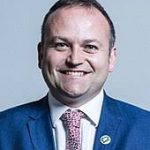
  • James Murray – 2021 Speech on Universal Credit

    James Murray – 2021 Speech on Universal Credit

    The speech made by James Murray, the Labour MP for Ealing North, in the House of Commons on 18 January 2021.

    Our country went into 2021 with soaring covid infection rates, the highest excess death rate in Europe, and having had the worst recession of any major economy. Whatever happens with the vaccination programme, we face many more months of restrictions and the economic impacts will be felt for years to come. Yet the Chancellor and the Government cannot see how wrong it is to take away £20 a week from families who, having been hit by 10 years of cuts to social security and incomes, are now struggling with the extra costs of food and bills in the middle of the worst economic crisis in 300 years. It is a disgrace that today’s debate is even necessary.

    This cut to universal credit will hit millions of the poorest families across the country. In my constituency in west London, 44% of children are living in poverty. The cut will hit thousands of families in Ealing North, where over 4,300 households with children received universal credit in August last year, up by more than 1,800 since the start of last year.

    The mother of one of those families, Clare, wrote to me on Friday night about today’s debate. She kindly agreed that I could read out a few sentences from her email. She explained that

    “the £20 weekly boost is such a lifeline for us, especially for my family. I am a single parent and have an autistic son who is extremely vulnerable.

    I also have severe COPD and this extra amount has allowed us to buy some good reading books and nice food which we could not afford without the £20 boost.

    My son needs constant care, and just for him to have the books to read gives me some free time to relax and have some time to catch up on chores, and also my sleep as my son only sleeps 4 hours max at night.

    I have also been able to bake some nice meals that are nutritious where I could not afford most of the ingredients before the extra was put in place.”

    Families such as Clare’s and others across the country need that extra help. The Government must cancel this cut, extend the uplift across legacy benefits and show that they understand the impact that their approach to social security has on people’s lives.

    The outbreak has confirmed how inadequate our social security system has become and how challenging it is for so many people to get by from one week to the next. The fact that the Government felt they had to increase universal credit by £20 a week at the outset of the covid crisis shows how insufficient it already was. Beyond the outbreak, we are clear that the system should be replaced with one that offers a proper safety net and decent support for all. Cancelling the £20 cut to universal credit will not right all that is wrong, but it will be a lifeline for millions as we come through this crisis.