Tag: 2021

  • Priti Patel – 2021 Statement on Drug Misuse and Project ADDER

    Priti Patel – 2021 Statement on Drug Misuse and Project ADDER

    The statement made by Priti Patel, the Home Secretary, in the House of Commons on 20 January 2021.

    My right hon. Friend the Secretary of State for Health and Social Care (Matt Hancock) and I have today announced the investment of £148 million to dismantle criminal gangs, reduce the demand for illegal drugs and help those in treatment and recovery, to make communities safer.

    The Government are determined to take concerted action to address drug misuse, given its associated harms and that it is a significant driver of crime. This funding, which includes the largest increase in drug treatment funding for 15 years, will see more illegal drugs taken off the street and communities made safer, delivering on our pledge to “build back safer” from the pandemic.

    This £148 million package comprises of £40 million for financial years 2021-22 to tackle drug supply and take down county lines gangs and £80 million for financial years 2021-22 for drug treatment services across the country. Additionally, £28 million over three years will be directed towards Project ADDER (addiction, diversion, disruption, enforcement and recovery), an innovative and targeted project to reduce drug-related offending, drug deaths and prevalence of drug use.

    Funding will be directed to key local areas, to help drive down the prevalence of drug misuse and drug-related deaths in the community. Project ADDER will trial a new system-wide approach to drug misuse, which combines a targeted police approach with enhanced treatment and recovery services. It brings together the police, local councils and health services, to reduce drug-related offending, drug deaths and drug use and will run for three financial years in five areas, including Blackpool, Hastings, Middlesbrough, Norwich and Swansea Bay. These areas will benefit from the £28 million funding which will allow local police to ramp up activity to target local gang leaders driving the drugs trade and enable enhanced treatment and recovery services to help those people affected by drug use.

    £40 million of the funding will be used to disrupt drug supply and “roll up” county lines. This will stop communities being blighted by drug-related crime. This funding, which doubles our investment from last year, will allow us to continue and enhance our response to county lines. That response is already delivering real results: since November 2019 more than 3,400 people have been arrested, more than 550 lines have been closed, and more than 770 vulnerable people have been safeguarded as a result of this work. The new funding will also allow us to take wider action against the highest harm criminals involved in trafficking drugs to the UK, including through enhanced work with international partners.

    And an extra £80 million will also be invested in drug treatment services across England to give more support to people struggling with drug addiction, which we know can fuel crime. This funding will increase the number of treatment places available, including to divert offenders into tough and effective community sentences, and also to make sure that prisoners get into treatment on release. By providing treatment and saving lives, former offenders will also have the chance and support to break the cycle of crime and addiction.

    Together the funding will help to drive down crime and violence in communities affected by the scourge of illegal drugs as we build back safer from the pandemic.

  • Jacob Rees-Mogg – 2021 Statement on the Electoral Commission

    Jacob Rees-Mogg – 2021 Statement on the Electoral Commission

    The statement made by Jacob Rees-Mogg, the Leader of the House of Commons, on 20 January 2021.

    I beg to move,

    That an humble Address be presented to Her Majesty, praying that Her Majesty will appoint Alexander Attwood as an Electoral Commissioner with effect from 1 February 2021 for the period ending on 31 January 2024.

    The Speaker’s Committee on the Electoral Commission has produced a report, its sixth report of 2020, in relation to this motion and it may help if I set out the key points for the record. Electoral commissioners are appointed under the Political Parties, Elections and Referendums Act 2000 as amended by the Political Parties and Elections Act 2009. Under the Act, the Speaker’s Committee has the responsibility to oversee the selection of candidates for appointment to the Electoral Commission, including the reappointment of commissioners.

    If this appointment were made, Alexander Attwood would be one of four nominated commissioners. Nominated commissioners are put forward by the leaders of registered political parties with two or more Members in the House of Commons at the time of the appointment. Three of the four nominated commissioners are put forward by the leaders of the three largest parties in the House of Commons. In the case of the fourth commissioner —the position in question today—the other qualifying parties are each invited to nominate candidates for that one post.

    This appointment is necessary because of the resignation of Alastair Ross last year. I thank Mr Ross for his service on the commission. In May last year Mr Speaker wrote to the leaders of the Liberal Democrats, the Democratic Unionist party, Plaid Cymru and the Social Democratic and Labour party asking them for their nominations to replace Mr Ross. Three candidates were put forward. The Speaker’s Committee appointed an interview panel to assess each of these candidates against agreed criteria. The panel consisted of Philippa Helme CB, the independent chairman, Sir John Holmes, then chairman of the Electoral Commission, the hon. Member for City of Chester (Christian Matheson) and my hon. Friend the Member for Lincoln (Karl MᶜCartney). The panel interviewed the candidates on 7 September. Its recommendation was that Alexander Attwood, the candidate nominated by the Social Democratic and Labour party, should go forward as its preferred candidate.

    The Speaker’s Committee on the Electoral Commission considered the panel’s report and recommendations, and agreed to recommend that Mr Attwood be appointed for a three-year term. Once the Speaker’s Committee has reached a decision, statute should require that Mr Speaker consult the leaders of political parties represented at Westminster on the proposed reappointments. The statutory consultation provides an opportunity for the party leaders to comment, but they are not required to do so. No objection to Mr Attwood’s appointment was received in response to this consultation.

    Mr Attwood has significant political experience in Northern Ireland. He served as a Belfast City councillor, representing West Belfast. He was an elected Member of the Northern Ireland Assembly between 1998 and 2017 and held ministerial office in the Northern Ireland Executive. The interview panel found Mr Attwood to be an impressive candidate who met all the essential criteria for the position.

    If the appointment were made, Mr Attwood would serve as an electoral commissioner for three years. I hope that the House will support this appointment, and I wish Mr Atwood success in this important role and commend this motion to the House.
  • Boris Johnson – 2021 Statement on Covid-19

    Boris Johnson – 2021 Statement on Covid-19

    The statement made by Boris Johnson, the Prime Minister, on 22 January 2021.

    Since the beginning of this pandemic, we have tried to update you as soon as possible about changes in the scientific data or the analysis.

    So, I must tell you this afternoon that we have been informed today that, in addition to spreading more quickly, it also now appears that there is some evidence that the new variant – the variant that was first identified in London and the South East – may be associated with a higher degree of mortality, and I’m going to ask Patrick in a minute to say a bit more about that.

    Because it is largely the impact of this new variant that means the NHS is under such intense pressure, with another 40,261 positive cases since yesterday.

    We have 38,562 COVID patients now in hospital, that’s 78 per cent higher than the first peak in April and, tragically, there have been a further 1,401 deaths.

    So, it is more important than ever that we all remain vigilant in following the rules and that we stay at home, protect the NHS and thereby save lives.

    But I also want to answer a key question that I know will be uppermost in your minds.

    All current evidence continues to show that both the vaccines we are currently using remain effective both against the old variant and this new variant.

    And so, you will also want to know that our immunisation programme continues at an unprecedented rate.

    5.4 million people across the UK have now received their first dose of the vaccine and over the last 24 hours we can report a record 400,000 vaccinations.

    In England one in ten of all adults have received their first dose, including 71 per cent of over-80s and two thirds of elderly care home residents.

    Having secured orders for hundreds of millions of doses, the U.K. government has supplied vaccines to the Devolved Administrations, according to population size.

    First doses have been administered now to 151,000 people in Northern Ireland, 358,000 in Scotland and 212,000 in Wales.

    And I am glad that the whole of the U.K. is able to assist the Devolved Administrations in deploying the vaccine and I know everyone across the country is grateful for the logistical skill of the British Army.

    There is much more to do, and the target remains very stretching indeed, but we remain on track to reach our goal of offering a first dose to everyone in the top four priority groups by the middle of February.

    And I want to thank all the doctors and nurses, especially at the GP-led sites who are vaccinating at a phenomenal rate, as well as, as I say, all those in our armed forces, our local authorities, our pharmacies and volunteers, who are making this extraordinary national effort possible.

    And I want to thank all of you who have come forward to get your jabs, because, by doing that, you are protecting yourselves, your communities and, of course, our NHS.

    And I say to everyone, when that letter arrives, please don’t hesitate to book that appointment and get this life-saving protection, because this is the best and fastest way for us all to defeat this virus and get our lives back to normal.

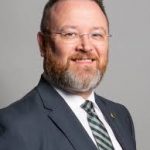
  • David Duguid – 2021 Comments on the Scottish Fishing Industry

    David Duguid – 2021 Comments on the Scottish Fishing Industry

    The comments made by David Duguid, the UK Government Minister for Scotland, on 22 January 2021.

    It is essential that we know precisely what difficulties are arising so we can tailor solutions. The excellent feedback from DFDS is massively helpful. We are working to streamline systems, while supporting exporters and partners such as DFDS, and the commitment to making the system work is clear across the board.

    The UK Government has acknowledged there have been difficulties and we want to work together to provide solutions and restore confidence within this crucial sector so that world-class Scottish seafood can be harvested at sea and sped from port to plate for customers here and abroad.

    A £23m additional support scheme for the seafood sector has been announced and the UK Government knows the urgency of rapid delivery. Meetings such as today’s allow us to take on board the industry’s concerns about the eligibility for that support fund, about making it swift and readily accessible.

    There are still issues with the supply chain and we are doing all we can to ease them. I have today written to Scottish Government’s Cabinet Secretary for the Rural Economy, Fergus Ewing, encouraging take-up of our offer of additional support for Food Standards Scotland at Larkhall and providing further detail of our direct support for businesses with the embedding of experts to help firms with paperwork required by the EU.

    We want a workable, sure-footed system so the industry can maximise the benefits of Britain’s new status as an independent coastal state, outside the Common Fisheries Policy.

  • David Lammy – 2021 Speech on Serious Criminal Cases Backlog

    David Lammy – 2021 Speech on Serious Criminal Cases Backlog

    The speech made by David Lammy, the Labour MP for Tottenham, in the House of Commons on 20 January 2021.

    We all know the numbers. The backlog of criminal cases in the Crown court has grown to more than 54,000. Including the magistrates courts, it has reached more than 457,000 cases. Serious criminal cases are being delayed by up to four years. Convictions are at by far their lowest this decade. Estimates show that the current scale of increase in the backlog would take 10 years to clear at pre-pandemic rates.

    Numbers do not tell the whole story. Behind criminal cases, there are victims: victims of rape, robbery, domestic abuse, and violent assault. Each of those victims is being denied the speedy justice that our society owes them. It has been repeated many times, but it is true: justice delayed is justice denied. This is not just the case because of the pain that delays cause victims and the wrongly accused—it is because delays to justice can affect the verdict.

    On Tuesday, four criminal justice watchdogs for England and Wales warned of “grave concerns” about the impact of court backlogs. Victims and witnesses may avoid the justice system entirely because of the delays. Witnesses may be unable to recall events properly many years after the event. As a responsible Opposition, we accept that the pandemic has caused unprecedented challenges for the justice system. However, we do not accept the Government’s presentation of the backlog as a crisis that has resulted only from coronavirus. Before the pandemic, the Crown court backlog stood at 39,000 cases.

    That figure was the result of sustained attacks on the justice system by successive Conservative Governments: an entire decade of court closures, cuts and reduced sitting days. Blackfriars Crown court was sold off by the Government in December 2019. It is now sitting empty, but it is being rented out as a film set by the developer for a new series of “Top Boy”. The Minister said “recovery”, but meanwhile the Government are paying through the nose for Nightingale courts a stone’s throw away.

    Six hundred court staff, judges, lawyers and jurors have tested positive for covid-19 in the past seven weeks. A pilot scheme of lateral flow tests has now been authorised at only two courts in London and Manchester. A pilot scheme is not good enough, and neither is the plexiglass. Why have lateral flow tests not been implemented across the court system? The Minister knows that that is a serious problem and that we are a long way from recovery. Can he tell the House why the pitiful 19 Nightingale courts that he has managed to deliver fall so short of the 200 that Her Majesty’s Courts and Tribunals Service said were needed? Can he tell the House why lateral flow tests are not being trialled across the whole country? After 11 years of incompetence and cuts, will he admit that his Government failed to fix the roof while the sun was shining?

  • Chris Philp – 2021 Speech on Serious Criminal Cases Backlog

    Chris Philp – 2021 Speech on Serious Criminal Cases Backlog

    The speech made by Chris Philp, the Parliamentary Under-Secretary of State for the Home Department, on 20 January 2021.

    The covid pandemic is truly unprecedented. It has affected every corner of our lives—from hospital operations delayed, to schools closed, to businesses struggling and even to how Parliament itself operates, we have seen covid’s effects. The court system is no different: bringing people safely into buildings for trials—especially jury trials—and hearings is a difficult thing to do. That is why so much has been done to keep delivering justice in these difficult times.

    We have invested £142 million in upgrading court buildings and technology, alongside £110 million to increase capacity, making an investment of over a quarter of a billion pounds in court recovery this year. We are hiring 1,600 extra staff. We have opened 19 new Nightingale courts, with 35 new courtrooms. As of today, we have over 290 covid-safe jury trial courtrooms—substantially more than before the pandemic. We have installed plexiglass screens in 450 courts to protect users. We have installed cloud video platform technology in 150 magistrates courts and 70 Crown courts, allowing 20,000 remote hearings per week.

    In the first lockdown, and as these measures have been put into place, backlogs have, understandably, developed. That has been the case across the world. But the fruits of our labours are now being seen. We have been faster than almost every jurisdiction to recover and we believe that we were the first country in the world to restart jury trials, back in May. Since August, the magistrates court backlog has been relentlessly reducing, month on month. Crown court jury trials are obviously much harder, for reasons of social distancing, but even there, in the last four weeks before Christmas, Crown court disposals exceeded receipts for the first time since covid began. At this very moment, as we stand here, about 230 jury trials are taking place. The joint inspectors’ report said earlier this week:

    “It is a real testament to the criminal justice system that in spite of the pandemic…service was maintained.”

    I pay tribute to the judges, magistrates, jurors, witnesses, victims, lawyers, court staff, Crown Prosecution Service staff and Ministry of Justice officials who have made that monumental effort to deliver justice in spite of covid.

    We will not rest. We are adding more courtrooms, further increasing remote hearings, and examining options for longer operating hours. We are also taking action to mitigate the impact on victims and witnesses, this year providing an extra £32 million of funding and next year an extra £25 million of funding, including for rape and domestic violence victims.

    This year has been incredibly difficult in the courts, as in so many places, but through a monumental, collective effort the system is recovering. The recovery will gather strength and pace with every day that passes, and I know that everyone in the House will support that work.

  • Lucy Powell – 2021 Comments on Licensed Premises

    Lucy Powell – 2021 Comments on Licensed Premises

    The comments made by Lucy Powell, the Shadow Minister for Business and Consumers, on 22 January 2021 when she was commenting on a report suggesting that the Coronavirus crisis has led to the closure of thousands of licensed premises.

    The Government’s irresponsible choices have meant many businesses have gone bust on their watch and left the UK with the worst recession of any major economy.

    With many businesses still struggling and facing ruin in the weeks ahead, Ministers must urgently put in place a comprehensive, long term plan to support businesses through the crisis and secure our economy.

  • Lucy Powell – 2021 Comments on Fall in Retail Sales

    Lucy Powell – 2021 Comments on Fall in Retail Sales

    The comments made by Lucy Powell, the Shadow Minister for Business and Consumers, on 22 January 2021.

    This should ring alarm bells in the Treasury. Any recovery will be built on sand if previously viable businesses are left to go to the wall through no fault of their own, by a government which has overseen the worst recession of any major economy. As we’ve long warned, the inadequate support available to businesses could lead to shuttered streets and ghost towns.

    Ministers must bring forward urgently a long term comprehensive plan which tackles the cliff edges in support businesses face, and safeguards jobs and livelihoods to secure our economy.

  • Priti Patel – 2021 Statement on Covid-19

    Priti Patel – 2021 Statement on Covid-19

    The statement made by Priti Patel, the Home Secretary, on 21 January 2021.

    Good afternoon.

    I am joined today by Dr Vin Diwakar, NHS England Regional Medical Director for London, and Martin Hewitt, Chair of the National Police Chiefs’ Council.

    The rollout of our fantastic vaccination programme continues to make good progress.

    The brilliant NHS is vaccinating people at the rate of 200 jabs per minute.

    And as of today, four million, nine hundred and seventy-three thousand, two hundred and forty-eight people have been vaccinated across the United Kingdom.

    The NHS are working as quickly, efficiently and as fairly as possible to get the vaccine to priority groups.

    And I want to take this moment and opportunity to counter some of the disinformation about the vaccine – especially any messages targeted towards those from an ethnic minority background.

    This vaccine is safe for us all.

    It will protect you and your family.

    It is our best chance of beating this virus.

    So I urge everyone across our wonderfully diverse country to get the vaccine when their turn comes to keep us all safe.

    But we are sadly not out of the woods yet, this virus remains severe and it is a deadly threat.

    Our NHS is under immense pressure and large numbers of people are still falling ill and, sadly, dying.

    So it is absolutely crucial that you stay at home to protect the NHS and save lives.

    Since yesterday, thirty-seven thousand eight hundred and ninety-two people have tested positive for coronavirus.

    As of 19 January, thirty-eight thousand, six hundred and seventy-six people were in hospital with coronavirus. That is up 4.8 per cent from the week before.

    Of those who have tested positive for coronavirus, across all settings, sadly ninety-four thousand, five-hundred and eighty people have died. That’s one thousand, two-hundred and ninety fatalities since yesterday.

    Every death is a tragedy and these numbers demonstrate, that this country remains in the grip of a pandemic.

    My thoughts go to all of those who have lost loved ones.

    The sacrifices that millions of you are making day in, day out are starting to make a difference.

    By staying at home, you are helping to keep those you care about safe, and contributing to this national effort.

    But there is still a small minority who refuse to do the right thing.

    To them, my message is clear: if you do not follow these rules, then the police will enforce them.

    Police officers are now moving more quickly to handing out fines when they encounter breaches. And they have my absolute backing in doing so.

    As we have done throughout this pandemic, we are constantly reviewing our approach to ensure that we can crack down on the most serious cases of rule-breaking.

    And today I can announce that next week we will be introducing a new £800 fine for those attending house parties, which will double for each repeat offence to a maximum level of £6,400.

    These fines will apply to those who attend illegal gatherings of more than 15 people in homes.

    The science is clear: such irresponsible behaviour poses a significant threat to public – not only to those in attendance, but also to the wonderful police officers who attend to shut down these events.

    From the outset, we have given the police the necessary powers to enforce the rules, which are in place to stop the spread of the virus.

    As this latest measure demonstrates, we will not stand by while a small number of individuals put others at risk.

    I want to take this opportunity to pay tribute to our police forces and our fire services for their extraordinary contribution throughout the pandemic.

    They are out there each and every day, supporting our communities, risking their own health to keep the rest of us safe.

    And we have seen in their own commitment during this whole response to the flooding caused by Storm Christoph.

    During such a difficult time for this country, the commitment and courage shown by our emergency services has been truly inspiring.

    Everyone has a role to play in our fight against this virus.

    So please: stay at home so we can protect the NHS and save lives.

    I will now hand over to Martin Hewitt, Chair of the National Police Chiefs’ Council.

  • George Eustice – 2021 Comments on Storm Christoph

    George Eustice – 2021 Comments on Storm Christoph

    The comments made by George Eustice, the Secretary of State for the Environment, on 21 January 2021.

    I want to echo the Prime Minister’s thanks to the Environment Agency and emergency services for the huge amount of work they’ve done to protect over 26,000 homes and properties from flooding, keeping families and communities safe.

    However, the danger has not passed. The water levels remain high and there is the risk of possible further flooding next week so everyone needs to remain vigilant, follow the advice and sign up for flood alerts.

    This Government is committed to tackling the risk of flooding and we will continue to push on with our £5.2 billion programme of investment in flood and coastal defences to protect 336,000 properties over the next five years.