Tag: 2021

  • John McDonnell – 2021 Speech on Covid Security at UK Borders

    John McDonnell – 2021 Speech on Covid Security at UK Borders

    The speech made by John McDonnell, the Labour MP for Hayes and Harlington, in the House of Commons on 1 February 2021.

    From the outbreak of the pandemic, I have taken an extreme precautionary approach, encouraging early, longer and more severe lockdowns. That is why I support the motion before the House today. With 100,000 dead we need decisive action. But yes, we also need the aviation strategy that the Chancellor promised us over nine months ago and that we have yet to see.

    To ensure that any system of border control operates effectively at our airports, we need a sufficient number of well-trained professional staff at the immigration passport control points. The team at border control at Heathrow is known for its professionalism and commitment to high standards of service delivery. Many of them are my constituents; in fact, many of them are my neighbours. They have worked throughout the pandemic with some risk. Members may recall that some months ago, tragically, a father and daughter working in this role lost their lives.

    Just at a time when we need these staff most and should respect the role they are playing, the management within the Home Office is provoking a strike. The Home Office management has decided, extraordinarily, that this is the time to rush through an imposition of new working rosters that are making it impossible for many staff to work effectively, especially those with disabilities and caring responsibilities. Staff who have been working on the new roster are all reporting that it has been chaos. It has put the operation at risk and made social distancing difficult. There are multiple examples of covid-secure bubbles being breached by managers because of a lack of staffing and the poor organisation of the new fixed rosters.

    The Public and Commercial Services union, which represents the staff, has balloted its members. On a 68% turnout, 96.4% voted for strike action. That is how angry they are. The union will now seek a return to the negotiating table to try to resolve the staff issues. No Government should be sanctioning actions by its departmental managers that force their staff to resort to industrial action in this way, especially not in the crisis we now face. I urge the Minister to look into this matter again and intervene to resolve the dispute, so that these dedicated staff can continue to provide the vital service we need to protect our community, especially as the Government, and the Opposition proposals that we are debating, require staff to work effectively and supportively, and to be respected.

  • Chris Grayling – 2021 Speech on Covid Security at UK Borders

    Chris Grayling – 2021 Speech on Covid Security at UK Borders

    The speech made by Chris Grayling, the Conservative MP for Epsom and Ewell, in the House of Commons on 1 February 2021.

    The past 12 months have been devastating for many people in my constituency and around the economy in different sectors—in hospitality, events, and entertainment. Jobs have virtually disappeared overnight. What has been particularly striking to me over that time is how many of the people in my constituency had been dependent on the travel sector for their job or their business. In a year when international travel has virtually ground to a halt, and it has by comparison with where we were before, their predicament is dreadful. While for many businesses there is some light at the end of the tunnel as the vaccination programme brings forward the day when lockdown restrictions can end, the same cannot right now easily be said for the travel sector. The issue is not about whether we can give people the chance to sun themselves on a beach; it is about the future of a sector that is crucial to our economy and that simply cannot cope with the loss of a second summer season in a row. This impact on a crucial sector is why the motion today is so poorly thought through.

    I have to say, reluctantly, that I support the measures the Government have taken to restrict access to the UK from countries most at immediate risk from the new variants of the virus. Of course it is not desirable, but it has to happen. It is right to take a precautionary approach, but imposing these kinds of border restrictions on a blanket basis would have the effect of destroying even more jobs both here and elsewhere for no apparent reason, because the reality is that virus rates are higher here than in many of the countries people are coming from.

    The challenge now is to ensure that the restrictions are as short-lived as possible and that we can reopen travel for this vital summer season without the risk of generating a resurgence of the virus in doing so. A solution to this, in my view, is before us and the Government must now take it. Last week, the Health Secretary told me that he was confident that lateral flow tests were a fit and proper way of preventing infection being imported into nursing homes, so why are they not the cornerstone of our strategy to open up airports and other means of travel, not right now, because the current restrictions are necessary, but as part of a plan to reopen the sector properly later this spring? Test people before they depart and test people on arrival. That way, we should not need to quarantine people. If a test result can show infection at the point of arrival and we can back that up with a properly policed quarantine system, there really is no reason why travel cannot reopen later this spring for a proper summer season.

    If we do not do that, the result will be waves of job losses in a sector that is vital to the future for all of us. That is why the Opposition are being so thoughtless, in my view, when they call for this blanket lockdown. The consequences will be more businesses going bust and more jobs lost. That we cannot afford any more of than we absolutely have to for health reasons.

  • Yvette Cooper – 2021 Speech on Covid Security at UK Borders

    Yvette Cooper – 2021 Speech on Covid Security at UK Borders

    The speech made by Yvette Cooper, the Labour MP for Normanton, Pontefract and Castleford, in the House of Commons on 1 February 2021.

    It is a pleasure to follow the hon. Member for Bexhill and Battle (Huw Merriman), a fellow Select Committee Chair, although I take a very different view from him, based on the evidence that the Home Affairs Committee has heard. This debate is urgent. We need to protect the vaccine programme from new variants, such as those from South Africa and Brazil. Ministers have rightly said that border measures are needed to stop the spread of those new variants, but with news today of the increase in the number of new South African variant cases in the UK, it is clear to us that those measures are not working. The Government have not done enough and we have not learned sufficient lessons from abroad and from the first wave. I urge Ministers to do more.

    For a month after the South African variant was found, the only focus was on direct flights, even though our Committee report showed that direct flights were not an issue in the first wave—only 0.1% of cases came from China, but 62% came from France or Spain where there were no restrictions in place. Even now, people returning from high-risk countries are not tested on arrival, still do not have quarantine hotels to go to, and can still go straight onto the tube or train at Heathrow. The promised new plans from the Government still have big holes. The majority of travellers will not be covered by quarantine hotels and, again, they will not be tested on arrival, even though they could have been on long and crowded journeys since their last test several days ago. All the additional police checks in the world will not make a difference if, when the police find that there is nobody home, no further enforcement action is taken.

    The UK got things badly wrong the first time round: barely any quarantine; no testing; and all restrictions inexplicably lifted on 13 March so thousands of covid cases were brought back into the country, accelerating the pace and scale of the pandemic. The countries that have controlled covid best—New Zealand, South Korea, Australia, Singapore, and Taiwan—are those that took early firm action at the borders to try to stop any covid cases at all. They are global trading nations, but they took early action and, as a result, kept schools, businesses and communities open and saved so many lives.

    There are two ways that the Government could be learning from those countries now: extend quarantine hotels to cover far more travellers, as New Zealand and Australia did, or follow the South Korean approach, which combines additional testing on arrival with a mix of quarantine hotels and designated quarantine transport, much stronger checks on home quarantine, and no trips on public transport. South Korea has lost 1,400 people to covid; we have lost 100,000. If we had our time again in the first wave and had the chance to take much stronger border action to save lives and keep our communities open, we would have done so in a shot, so please let us learn those lessons now as we deal with the new variant.

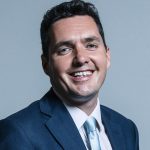
  • Huw Merriman – 2021 Speech on Covid Security at UK Borders

    Huw Merriman – 2021 Speech on Covid Security at UK Borders

    The speech made by Huw Merriman, the Conservative MP for Bexhill and Battle, in the House of Commons on 1 February 2021.

    It is a pleasure to speak in this debate. I am very disappointed with the Labour Front-Bench position on blanket hotel quarantine. Over the last year, I have worked quite collaboratively through the Transport Committee with all Opposition Front Benchers, and this seems a strange turn of events. I hope it is not based on sample opinion polling in certain seats that the Labour party lost, because it does not make any sense or feel consistent. I have a great deal of respect and time for the shadow Home Secretary, but I appeal to him to think again. The measure would decimate the aviation industry. In my couple of minutes, I want to highlight why I believe it would be so difficult.

    First, let me say that the answer is what we are doing already: vaccination. By mid-February, we should have vaccinated all the people in this country who represent 90% of the mortality risk. If things go to plan, and they seem to be, we should have taken that to 99% by a couple of months later. That is how to deal with the coronavirus situation: to vaccinate and keep everybody safe in this country, rather than trying to draw a ring of steel.

    I am concerned about the ring-of-steel argument. As the shadow Home Secretary said, there would have to be exemptions. Our hauliers, for example, would have to be exempt, and the list would be longer. As soon as we have breached that ring of steel, then, arguably, what is the point of having it in the first place? That is why we are not like New Zealand or Australia. It is much harder for us, with our position in Europe, to be able to keep our borders as secure as the shadow Home Secretary would like.

    The other point about a secure international border policy is that it could lull us into a false sense of security. In New Zealand, for example, the vaccination programme will not reach the general public until July. Compare that with this country: we have not tried to shut our doors, but left them partly open, and then started to vaccinate our people to make them safe.

    I am really concerned about what this policy would do to the aviation industry. What has become clear from New Zealand and Australia is that, once we bring in this policy, it would be difficult to move away from it. Those countries have no plans to do so for this year. The aviation industry is on its knees. This is the last thing that it needs. We look like we will come through this situation with our great vaccination programme. I urge that we do not bring in blanket approaches such as this, but keep the nuance and look at the rules depending on the risk, which is what we have done very well so far.

  • Stuart McDonald – 2021 Speech on Covid Security at UK Borders

    Stuart McDonald – 2021 Speech on Covid Security at UK Borders

    The speech made by Stuart McDonald, the SNP MP for Cumbernauld, Kilsyth and Kirkintilloch East, in the House of Commons on 1 February 2021.

    If the Government do not learn from mistakes they make during this pandemic, those mistakes will be repeated, with the same terrible consequences. Let us be clear: this Government have made significant mistakes on covid security at the border. I accept that some of those mistakes are easier to see now with hindsight, but others should have been and were apparent at the time. Indeed, the UK approach to borders stood out like a sore thumb for significant parts of last year, compared with the actions taken by even neighbouring countries. It is not just me saying that, because the Home Affairs Committee has said it. My hon. and learned Friend the Member for Edinburgh South West (Joanna Cherry) has repeatedly pointed out the flaws in the Home Office response over the past year, as one would expect from such a distinguished and knowledgeable home affairs shadow. I pay tribute to her for that work and look forward to maintaining the challenge she posed to the Home Office on this issue and on many, many others.

    Of course, the Home Secretary herself has accepted that the Government got it wrong, saying that she argued for border closures last March. That raises questions about why she stayed in post when she was overruled, rather than arguing for essential border closures from outside the Cabinet. Last week, she accepted that there were

    “still too many people coming in”—[Official Report, 27 January 2021; Vol. 688, c. 406.]

    to the country. That is a stark admission so far into a pandemic. The new measures announced last week by the Home Secretary just about amount to a step in the right direction, but, as is typical of much of the Government’s response to this crisis, it is not a decisive step; it is a hesitant half-measure, when what we needed was bold action.

    The Deputy First Minister, John Swinney, has said that the Scottish Government and the SNP believe that

    “a comprehensive system of supervised quarantine is required”.

    “Comprehensive” is certainly not how we would describe the very limited scheme that the UK Government have drawn up, so we support the Opposition motion. If the Government really want to persuade us that this tentative hotel quarantine policy will genuinely make a difference, Ministers must tell us what estimates they have made of the numbers who will be impacted by these new requirements? How many hotel rooms do they believe will be required? On the other hand, how many thousands of people will continue simply to pass straight through the airports, and out on to public transport and into our towns and cities?

    Put simply, we support a more comprehensive scheme because that is what the evidence points to. Professor John Edmunds of the London School of Hygiene and Tropical Medicine told the Home Affairs Committee:

    “The places that have had very effective quarantine measures do not ask people to quarantine in their homes.”

    So why is the UK not learning more quickly from international best practice? Instead, the UK has offered a half-baked measure that does not bring comfort to the disastrously impacted aviation industry; nor is it decisive enough to appear capable of making any real difference to covid in this country. The Government have tried to operate a timid middle-way compromise, and instead have helped neither public health nor industry. In relation to the South African strain, the stable door was closed half-heartedly, and only after the horse had well and truly bolted.

    Both the Scottish and Welsh Governments have expressed concerns that the measure does not go far enough. Although public health measures can take the devolved Governments so far, with border powers and passenger data in the hands of the Home Office, co-operation is required. The preference would be to have strong and consistent quarantine rules across the UK, so I ask Ministers and the Home Secretary to listen and engage very carefully; as and when the devolved Governments seek to go further than the half-baked UK measures, I hope that they will co-operate and provide support.

    We need a more comprehensive scheme to protect from covid arrivals at the border. At the same time, we need a bespoke and comprehensive package of support for the aviation industry. From the outset of the pandemic, it was clear that one of the sectors that would be most impacted was aviation. The UK Government clearly felt the same and promised sector-specific support, but the one Government who jumped into instant action to support the sector were the Scottish Government, who provided 100% rates relief for a full year, which has now been extended by at least three months, with the aim of extending it longer. It took the UK Government six months to do anything similar.

    With the vast majority of flights grounded, the situation facing the sector is still absolutely dire. Tens of thousands of jobs have gone in the sector, and many that remain have been forced to accept lower terms and conditions. I ask the Government again to support the Employment (Dismissal and Re-employment) Bill of my hon. Friend the Member for Paisley and Renfrewshire North (Gavin Newlands) to outlaw that practice. The sad truth is that, without further support, tens of thousands more jobs will go, so the Chancellor must deliver urgent help, including: action on furlough extension; reversing the decision on tax-free shopping; extending rates relief; and much, much more.

    Finally, it is important to emphasise that all these issues will be of increasing importance in the months ahead. As we look forward, with some guarded optimism, to getting cases back under control and as vaccines are rolled out, declining domestic transmission means that preventing transmission from international arrivals becomes more important, not less—if we really are serious about suppressing this virus. I dearly hope that the Government are serious about that. If so, they should support this motion.

  • Jo Churchill – 2021 Speech on Covid Security at UK Borders

    Jo Churchill – 2021 Speech on Covid Security at UK Borders

    The speech made by Jo Churchill, the Parliamentary Under-Secretary of State for Health and Social Care, in the House of Commons on 1 February 2021.

    I welcome today’s debate on a matter that is rightly of huge public interest. As the hon. Member for Torfaen (Nick Thomas-Symonds) said, we have had a challenging time, but I know that everybody across the House will be cheered by the news of the vaccines, and the number rolled out over the weekend—nearly 1 million, at 931,204—is quite staggering. As of today, over 9.2 million people have now received the jab, and every elderly care home resident in England has been offered the vaccine. The roll-out will accelerate in the coming months, and with the combined news that the UK today has secured another 40 million extra doses of the Valneva vaccine, in addition to the 60 million we already had on order—taking our national total to over 400 million vaccine doses—we know that, with each jab, we have clearly moved that step closer to the more normal life that people crave. It is our strong vaccine portfolio that offers great hope not only to the people of this country, but across the world, because unless we are all safe, no one is safe.

    As hon. Members recognise, however, the challenges posed by covid-19 are still here today and we must continue to make the difficult decisions to protect the whole population. There is no question but that new variants pose new threats—threats that we must overcome to protect the progress of the vaccine programme and, of course, to protect the sacrifices that everybody has been making for many months now. It has meant that we have had to take tough action at our borders, which we have done. Earlier in the pandemic, border restrictions were about stopping the onward transmission of infections from countries with higher infection rates, but the new variants from abroad pose a different and new set of risks, and we do not yet have a full picture of those risks.

    Of particular concern is a risk of having a variant that escapes the vaccine. We have a high degree of confidence in the vaccines, and confidence that the vaccine will work against the variant that was first identified in the UK, but we have also begun studies on the variants that were first identified in South Africa and Brazil in four laboratories. We will continue to work with our scientists and the UK vaccines taskforce to understand how quickly a new vaccine could be rolled out if needed.

    We have also launched our new variant assessment platform, working in partnership with the World Health Organisation, which offers genomic expertise— something we lead in—to help other countries across the world, because, as I have said, we are only safe when everyone is safe. Much of what the hon. Member for Torfaen suggested sounded a little like he wanted to shut down against the entire world. Only a few months back, he, the hon. Members for Oldham West and Royton (Jim McMahon) and for Wigan (Lisa Nandy) and the right hon. and learned Member for Holborn and St Pancras (Keir Starmer) asked us when we were going to lessen quarantine. We have to have a flexible programme, where we build a response.

    Nick Thomas-Symonds

    I am very grateful to the hon. Lady for giving way on that point, because it is absolutely right that I mentioned the blunt tool of a 14-day quarantine back in June last year. That was because the Government did not have their own test, trace and isolate system up and running to avoid the blunt tool of a 14-day quarantine. The point was about the failure of the Government, not the inconsistency of the Opposition’s position.

    Jo Churchill

    As with all science, we are learning more but, as we do, we must continue to do all we can to protect this country.

    It is right that new border restrictions are tougher. On 18 January, the UK temporarily closed all travel corridors and added a requirement for anyone coming to this country to have proof of a negative covid test taken in the 72 hours prior to departure. All travellers have had to complete a passenger locator form, which must be checked before they board and then self-isolate on arrival for 10 days. Our stay-at-home regulations are clear: it is illegal to leave home to travel abroad for leisure purposes. Going on holiday is not a valid reason for travel.

    We have also banned all direct travel from over 30 countries where there is a risk of known variants, including southern Africa, South America and Portugal. This is a ban on entry for all arrivals, except British, Irish and third country nationals with resident rights in the UK, who have been in the travel ban countries in the past 10 days. But as the Prime Minister said on 27 January, we must not be afraid to go further if necessary, and on the 27th, my right hon. Friend the Home Secretary outlined the further steps that we have been compelled to take, and I will lay them out.

    With regard to those entering the UK, first, the police have stepped up checks and are carrying out more physical checks at addresses to make sure that people are self-isolating. Secondly, we are continuing to refuse entry to non-UK residents from the countries already subject to the UK travel ban. Thirdly, we are introducing a new managed isolation process in hotels for those who cannot be refused entry, including those arriving home from countries where we have already imposed international travel bans. They will be required to isolate for 10 days, with very few exceptions and only where strictly necessary.

    With regard to those travelling out of the UK, first, we have increased our enforcement of the existing rules, because people should be staying at home unless they have a valid reason to leave. We will introduce a requirement for people to declare their reason to travel, which will be checked by carriers prior to departure and again at the border. Secondly, we are increasing police presence at airports and ports, and those without a valid reason for travel will be turned around and sent home or face a fine. Thirdly, this week we are again reviewing the list of exemptions from isolation so that only the most important and exceptional reasons are included. I am clear that our approach must be firm but flexible, and not the one-size-fits-all approach advocated by the hon. Member for Torfaen.

    Yvette Cooper (Normanton, Pontefract and Castleford) (Lab)

    The Minister referred to police checks. The data published last week showed that, when the police are doing these very minimal checks at the moment, if they find that nobody is home—so clearly nobody is self-isolating at that address—they take no further enforcement action at all. Does she not think that is crazy?

    Jo Churchill

    And that is why we are working as quickly as possible across Government and using everything at our disposal to ensure that we have an efficient method of ensuring that people are doing what the vast majority are doing. We not only have the police stepping up; we also have the isolation assurance service. The number of people sampled per day for calls is 1,500 out of those who arrive. We make a total of 3,000 IAS calls a day and send another 10,000 texts. These are repeated contacts with individuals, and it is a considerably different picture now from the one that may have been the case back in the middle of last summer. As I say, we have started, and this is a flexible, firm approach that can be stepped up and down.

    The hon. Member for Torfaen spoke about a blanket ban across all countries and for all things, but actually, with regard to making sure we are safe, it must be firm and flexible so that we can ensure not only that we keep ourselves safe in this country but, as the pandemic takes its course, that we can respond appropriately. This blanket ban from all countries that he is talking about—

    Jim McMahon (Oldham West and Royton) (Lab/Co-op)

    It’s not a ban; it’s a quarantine.

    Jo Churchill

    I apologise—the hon. Member for Torfaen is talking about a blanket quarantine from all countries. He mentioned an exemption for hauliers. What about other exemptions? What about elite sport, or medical emergencies, or the plethora of other issues, particularly around security, which I know he is extremely exercised about? He also knows, as I do, that there are specific minute details that this blanket ban—

    Nick Thomas-Symonds

    Of course we would need exceptions, but surely the Minister must agree that the starting point has to be a comprehensive position, and that that is what will secure our borders.

    Jo Churchill

    No, the right point is to work as quickly as possible across all the different Government Departments that are involved to ensure that we have the correct policy so that we are doing the appropriate thing, rather than having a blanket ban and then repeatedly coming back and saying, “What about this. What about that?” We need to ensure that we have an appropriate system that has been reviewed and thoroughly looked at by all the different Departments involved—the Home Office, the Department of Health and Social Care, the Department for Transport, the Cabinet Office and others—so that everybody has made sure that there are no gaps in the system.

    This is not just about what the Government are doing; it about what we are all doing. In so many ways, our efforts begin not at the border but at home, with the actions we take to stay at home. The hon. Gentleman spoke of how we can protect the NHS in order to save lives, and in that respect every one of us plays a vital role in driving the rates of the virus down and denying it the opportunity to mutate and give rise to new variants.

    As we take the necessary steps at the border, we recognise the challenges they present to industry. We continue to support our air transport sector, including airlines, airports and related services, and by the end of April the sector will have received some £3 billion of support through the covid corporate finance scheme and the job retention scheme. I am sure the Under-Secretary of State for Transport, my hon. Friend the Member for Witney (Robert Courts) will talk more about this, but last Friday we launched our airport and ground operations support scheme, which will support eligible businesses through this difficult time, with airports and ground handlers in England eligible to receive up to £8 million each. That will help them to continue to prepare for a future when international travel is ready to take off again, because we must have a system that fits our playing our part in the world.

    It sounds to me that by working out a policy that expects quarantine from everyone, far from looking at ourselves and far from being outward looking, Labour is proposing that we close our doors. That cannot be right if we are all going to walk together and beat this virus. I want to reflect that the Government and indeed the whole country take pride in our being global Britain, a place with a history and culture of being open, outward looking and supportive. Even as we are compelled to take tougher steps at our borders, that spirit lives on, through our leading role in COVAX, boosting global access to covid-19 vaccines; through our new variant assessment platform, bringing British expertise to the world; and through that vast, powerful network of medical and scientific communities collaborating on a worldwide scale so that we can overcome this global challenge. The hon. Member for Torfaen and I agree that medical science can bring so much to helping people in this country .We have spoken about it before, but actually the challenge is bigger now and if we are to meet that challenge, we must remain open and outward looking, while having a proportionate and measured approach to ensuring that the right restrictions are in place for people quarantining.

    Finally, even though the perilous situation we face today means we must put so much of our international travel on hold, there is no brake on our ambition to help the world become safer or to do what is our first duty: to safeguard public health, protect the NHS and keep people safe here at home.
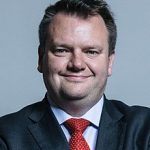
  • Nick Thomas-Symonds – 2021 Statement on Covid Security at UK Borders

    Nick Thomas-Symonds – 2021 Statement on Covid Security at UK Borders

    The statement made by Nick Thomas-Symonds, the Shadow Home Secretary, in the House of Commons on 1 February 2021.

    I beg to move,

    That this House calls on the Government to immediately introduce a comprehensive hotel quarantine system for all arrivals into the UK, thereby securing the country against the import of new strains and maximising the effectiveness of the country’s vaccination programme; to publish the scientific evidence which informed the Government’s decision not to introduce a comprehensive hotel quarantine regime to flights from all countries; and to announce a sector support package for aviation focused on employment and environmental improvements.

    I am grateful to the Minister for coming to speak in today’s debate. I think it is the first time that I have appeared opposite her in one of these debates.

    Last week, the country passed the heartbreaking milestone of 100,000 deaths as a result of this awful pandemic. I know that everyone across the House mourns all those lost, and we think today of all the families up and down the country for whom life will never be the same again.

    Our United Kingdom is a country of incredible resources and many of the world’s finest scientists. It has the dedication and brilliance of our wonderful NHS and care workers—indeed, all our frontline workers—and yet we have still ended up with the worst death toll in Europe and the worst economic hit of any major country. We have to learn the lessons fast. More than 50,000 people who died as a result of this awful virus in the UK died since 11 November. We have to ask why the United Kingdom has fared so badly, not as some sort of academic exercise, but to save lives.

    In recent days, the Government’s chief scientific adviser said:

    “You’ve got to go hard, early and broader if you’re going to get on top of this. Waiting and watching simply doesn’t work.”

    That is the lesson that he is advising the Government to draw: to go wider when they can. But are Ministers really learning that lesson?

    We are an island country. Our border protections should have been one of our strengths throughout this pandemic, unlike countries that have very long land borders that they would have had to police. Instead, it has been one of our greatest weaknesses. Our country’s doors have been left unlocked. First the virus and then its mutations have been imported to our shores. The lesson is that failing to act quickly and decisively leads only to greater pain further down the line.

    From 1 January to 23 March last year, only 273 people from four flights were formally quarantined, when over 18 million people entered the country by air. That came at a time when we all saw the terrible scenes in northern Italy of hospitals being overwhelmed, when our constituents were contacting us questioning why there were not better and more effective controls at our airports, and when our own chief scientific adviser to the Government said

    “a lot of the cases in the UK did not come from China”

    and that they

    “came from European imports and the high level of travel into the UK”

    at that time.

    I wrote to the Home Secretary in April to ask her to learn the lessons from that, but still the UK remained an international outlier. In May 2020, the UK stood with only Iran, Luxembourg and the US Virgin Islands in having no border protection measures in place. In that first national lockdown, 446,500 people—nearly half a million—arrived in the UK. It was not until 8 June last year that formal quarantining was introduced. Even when border testing was made compulsory, which was only this month—10 months after the first lockdown began—the Government still had to delay the implementation as they could not get the necessary systems in place. Where has the proper strategy on border testing been? This essential and vital strategy would have made such a difference.

    Rather than careful planning, we have experienced chaotic scenes at Heathrow, even in recent weeks. Covid is not going away. We need this strategy, and we need it now. The Government border policy has lurched from one crisis to another devoid of strategy, and we have seen that only in recent weeks with the announcement of the Government’s latest proposals on hotel quarantining. Limiting restrictions to just a small number of countries means that the protections do not go anywhere near far enough, with the threat of new variants coming in from other countries not on the red list. In the words of the Government’s chief scientific adviser, are they really going “hard, early and broader”? Absolutely not. Again, it is too little too late. Even when Ministers made the announcement, they had no date for bringing it into effect.

    Our vaccine roll-out is a source of great hope for the whole country, and great credit must go to our scientists and all those involved in the vaccine programme, but the biggest threat to the vaccine programme is from mutant strains of the virus. We know where some mutant strains have emerged because of the advanced genome sequencing that detected them, but too few countries have that expertise. We know the virus will mutate further, and we cannot risk one of those mutations undermining our vaccines. Back-Bench Conservative MPs who do not support this motion today are sending a message that they are willing to take that risk.

    The hard truth is that we have no certainty about where the next more dangerous strains of Covid will emerge. We have been warned that new strains are already potentially threatening vaccine efficacy, and yet we still have around 21,000 visitors entering the country daily. It will make no sense to people that Britain’s borders are still open while the country is locked down. That is why Labour is calling for decisive action today through a comprehensive hotel quarantine policy, and that would mean a policy of enforced quarantine restrictions on arrivals. Of course I accept that there would need to be exemptions, especially in areas such as haulage to keep the country functioning, but our starting point must be a comprehensive policy. Failing to adopt that policy risks undermining the huge gains that have been made by the vaccine roll-out, threatening life and hope.

    The existing quarantining system is not working. To see that, we have only to look at the Government’s own figures, which show that just three in every 100 people have been successfully contacted for quarantine compliance —yet another Government failure. Other figures suggest that just one in 10 passenger locator forms is checked at airports. None of that is good enough, and it has happened because the Government have failed in their duty to properly drive a consistent strategy and high performance through our measures at the border and the checks of the isolation assurance service.

    Yet those inadequate measures are still our protection against the virus for all but a limited number of countries on the red list. Devoid of strategy, the Government continue to be behind the curve, hoping for the best. It is little wonder that there seems to be such confusion and unedifying counter-briefing among the Cabinet on the policy, because frankly, it makes no sense. We do not even know at the moment when the policy will be introduced and whether the Government propose legislation for it, as has been speculated.

    I have great respect for the Minister, as she knows, and it is great to see her present for the debate, but I note that the Home Secretary is not participating in it to defend Government policy, which after all is part of her departmental responsibilities. Frankly, she has every reason not to be present, given that the Home Office has lost 400,000 police records and she still has not explained what has been lost, let alone how she will retrieve it. We also know what her personal view is of Government policy. There has been alleged briefing to newspapers that she does not agree with Government policy, but if there was any doubt about what her view was, we can all watch the video of her telling Conservative party members that she advocated for the borders to be closed back in March last year.

    We know that the Home Secretary does not support, and has not supported, the Government policy on the borders that she has had to defend in public, so who does support it? The Health Secretary, who was said to be opening the debate instead of her, is not present either. It is said that there have been briefings to newspapers that he is another Cabinet Minister who does not agree with the policy. Perhaps the Minister can outline and promise to publish the full scientific data that underpins the Government’s decision to create a so-called red list of countries, and set out not just the commencement date but what she envisages the exit strategy from the measures to be.

    How on earth can the Government be assured that the measures will prevent emerging strains from countries outside those on the red list? The truth is that the Government cannot answer that question. As a result, the policy is fatally flawed. A comprehensive quarantine policy would give us the best possible chance of preventing a new strain from undermining the astonishing collective sacrifice of the British people. It cannot be right that, with the ineffective quarantine system that is in place, 21,000 people continue to enter the country on a daily basis.

    I recognise, of course, the huge challenges to the aviation sector and its supply chains, the impact on the tourism and hospitality industry, and the number of jobs that it supports. I have heard about it in my own discussions over the past year, and when I have been able to visit our airport frontline. Let me also pay tribute to Border Force, the police and our wider law enforcement community. They have worked heroically, but the gaps in our defences that have existed and do exist are not their fault, but the failure of Ministers.

    That failure also extends to economic support. It is why the Government must come forward with the long-promised sector-specific support deal called for by my hon. Friend the shadow Transport Secretary, saving jobs and ensuring that there are environmental improvements as set out in this motion. Let me be clear: we need to see this support package, and the money needs to be properly targeted to meet its aims. We have seen appalling fire and rehire tactics, which should be outlawed. That practice has no place in our country and it is an insult to workers. Staff salaries should be protected with a clear commitment to workers’ rights, and let us see a commitment to cleaner fuels and other cutting-edge low or zero-emission technologies. Companies’ tax bases should be in the UK, and there should not be dividends paid until a company is commercially viable. UK-based suppliers must be the priority, and operators must comply with consumer rights regulations. The Government have known the need for this for months, and inaction and continuing inaction is not the answer.

    As hon. and right hon. Members cast their votes today —indeed, whether or not they choose to cast votes at all—I ask them to think back and learn the lessons. If we had introduced quarantining for high-risk countries only a year ago, what would have happened? As one Scientific Advisory Group for Emergencies member, Sir Jeremy Farrar, put it:

    “We need to learn the lessons from 2020…If we’d imposed restrictions in January and February last year we would probably have imposed them on high risk countries—China maybe. But almost all the virus that arrived came from Europe.”

    There is no point, either, in offering a false choice or a bogus dilemma between protective health measures at the border and the economy. Our best chance of breathing life back into the UK aviation and tourism industry is to be able to lift as many restrictions as possible here at home as soon as it is safe to do so with the vaccine roll-out.

    Crucially, that would all be put at risk if a new strain took hold that is resistant to the vaccine, yet the quarantine policy as it stands does precious little to stop that. It cannot predict where the next strains will emerge, and in its current form it cannot stop arrivals in the UK breaking quarantine rules. The existing quarantine system just is not effective. The Government have created an Achilles heel that undermines the heroic efforts of the British people in tackling this virus. Members across this House believe that as well—perhaps even members of the Cabinet. Now is the time to act. Lives will depend on it and our futures depend on it. I commend this motion to the House.

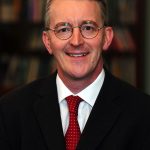
  • Hilary Benn – 2021 Speech on Unsafe Cladding

    Hilary Benn – 2021 Speech on Unsafe Cladding

    The speech made by Hilary Benn, the Labour MP for Leeds Central, in the House of Commons on 1 February 2021.

    I am pleased to follow the hon. Member for Stevenage (Stephen McPartland), whose amendments to the Fire Safety Bill I have signed. I will speak on behalf of my constituents in Leeds—they include Hayley Tillotson, whose story has moved us all—who find themselves in desperate circumstances not of their making. They saved up. They bought what they thought was the home of their dreams. It has now turned into a nightmare as the outer layers have been peeled back on each block to reveal the full horror underneath. Their homes are firetraps. They are worthless. They cannot borrow against them. They cannot sell them. They are trapped by waking watch bills, trapped by rising insurance, and trapped by the fear that they will be told they must pay to fix this, even though they are not in any way responsible.

    The impact on the mental health of my constituents is enormous, because every day they wake up and are reminded of this nightmare with no apparent way out. Today’s debate is so important, because we, together on both sides of the House, need to give them hope by calling on the Government to draw up a plan to sort the situation out.

    Ministers know that the building safety fund will not deal with the problem. Why? Because the cost of making every home safe is way in excess of the money allocated so far, and we know that Ministers are looking at a loan scheme. I am not opposed to a loan scheme in principle, provided that leaseholders are not required to pay the loans back. After all, they did not fail to put in the firebreaks or cover the blocks in unsafe cladding, so why on earth should they have to pay?

    This is a story of monumental regulatory failure and of flats being built as cheaply as possible—in many cases without even complying with the building regulations. Like the Minister, I applaud those freeholders and developers who have taken responsibility and sorted things out, but I deplore those who have tried to walk away and claim that it is nothing to do with them. Those who developed and constructed the buildings should pay, the industry as a whole should pay, and the Government should pay because they allowed it to happen. We all have a responsibility for that.

    The most important thing of all, however, is that we act now to bring this crisis to an end, because that is what the leaseholders I represent and Leeds Cladding Scandal, which has done such a great job, want. More than anything else they just want to feel safe and secure in their homes once again, so that they can get on with their lives. We have a responsibility to make sure that that now happens.

  • Stephen McPartland – 2021 Speech on Unsafe Cladding

    Stephen McPartland – 2021 Speech on Unsafe Cladding

    The speech made by Stephen McPartland, the Conservative MP for Stevenage, in the House of Commons on 1 February 2021.

    I would like to pay tribute to UK Cladding Action Group and End our Cladding Scandal for the massive work they have done, along with the Select Committee and my hon. Friend the Member for Southampton, Itchen (Royston Smith), to raise the profile of this issue and help millions of leaseholders.

    I am sorry that the Labour party, the official Opposition, has played a little bit of politics today. We are very close to having the support in the House of Commons to force our amendment into law. Sadly, the vote today makes no difference whatever to any leaseholders. However, what we can do is focus on the amendments to the Fire Safety Bill, as those votes do make a difference. I say to the Minister that we are very close to having the support in the House of Commons, and we have the support in the House of Lords to keep sending the amendments back. My hon. Friend the Member for Southampton, Itchen and I therefore urge the Minister to work with us to ensure that leaseholders do not have to pay.

    I believe that the Department has been incompetent throughout this saga. It has created a whole host of problems, especially with the consolidated advice note published in January 2020. Buildings over six storeys or 18 metres were already involved in this crisis, but the note then involved any building of any height, taking the number from around 1,700 buildings to well over 100,000. On top of that, buildings under 18 metres can still be built with combustible cladding.

    We must also focus on fire safety defects. I hear the Minister when he says that the Fire Safety Bill is not the right place for this, but I remind him that the Bill builds on the Regulatory Reform (Fire Safety) Order 2005, which tried to clear up two ambiguities around cladding and front doors. The Fire Safety Bill also ensures that costs can be recovered from leaseholders, which puts that cost on leaseholders in law. The Building Safety Bill is not in front of us, but it will also ensure that leaseholders are liable. That is not acceptable to me, and it is not acceptable to leaseholders. We have been very clear that leaseholders do not have to pay.

    The Government must provide a safety net. They must step in and help leaseholders. I will not accept loans for leaseholders. If the Government announce that, I will vote against it. We cannot have leaseholders pay 90% mortgages of £150,000 and then maybe have to repay a loan of £75,000. Building societies and banks will say that they can offer mortgages only if they are affordable, and having such a debt on a property is not affordable. I urge the Minister to work with us to deliver for leaseholders and to ensure that they do not have to pay.

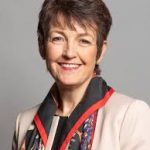
  • Seema Malhotra – 2021 Speech on Unsafe Cladding

    Seema Malhotra – 2021 Speech on Unsafe Cladding

    The speech made by Seema Malhotra, the Labour MP for Feltham and Heston, in the House of Commons on 1 February 2021.

    The Government’s handling of the cladding crisis has lacked any sense of grip or urgency. Almost four years on from Grenfell, it is heartbreaking to see the pain that families are going through. I thank The Sunday Times for its campaign.

    Residents are facing lockdown in inflammable buildings with potentially huge bills for repair work, higher insurance, and interim safety measures such as waking watch. They are also unable to sell their flats. An estimated 4,000 residents in Hounslow alone are affected. My hon. Friend the Member for Brentford and Isleworth (Ruth Cadbury) has also supported many affected constituents. They include young couples, now with children, trapped and unable to upsize to a home big enough for their growing family.

    The situation is now not just about cladding. There is also a worrying lack of transparency and speed from housing associations such as A2Dominion and FirstPort. They were slow to undertake the survey work needed on fire safety, despite residents asking for clarity a year ago. With permission, I will share part of a letter that my constituent Pamela Canales received last week from A2Dominion. It reads:

    “We wrote to you in June 2020 to let you know your building needed an ‘intrusive survey’. Our fire safety contractor carried out an intrusive survey in several different areas of your building…The results showed that there are issues with timber cladding, insulation inside the masonry walls with incorrectly installed cavity barriers between flats and cavity closers”.

    It goes on to say:

    “If you would like to re-mortgage or sell your flat, the mortgage lender involved will probably ask for an (EWS1 form). Your building received an ESW1 rating of Option ‘B2’—confirming combustible materials are present and remedial work is required. It is likely a lender will ask for more information about what work is needed, the likely timescales and the costs of carrying out the work. Unfortunately, we don’t know that information at this stage.”

    On who will pay for the remedial works, it says:

    “At this stage it is too early to say. We fully understand this is a key area of concern for residents and this is a top priority for us. We do not wish to pass cost onto leaseholders and will only do this as a last resort.”

    A2Dominion and others do not have a good track record on transparency of costs for leaseholders. This morning, residents told me:

    “We don’t know how much this is going to cost us. We don’t know if we will have to vacate the building. It’s time for us to have answers. It’s stressful enough already with the pandemic. We can’t go on like this.”

    We need a Government-led plan now to fix the cladding crisis that does not burden leaseholders with the cost. Those responsible must pay.