Tag: 2020

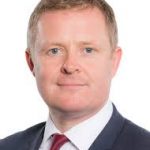
  • Jeremy Miles – 2020 Statement on Wales and the Exit from the EU

    Jeremy Miles – 2020 Statement on Wales and the Exit from the EU

    Below is the text of the statement made by Jeremy Miles, the Counsel General for Wales, on 7 May 2020.

    This statement provides members with an update on issues related to the UK’s exit from the EU, focusing on the latest position in the negotiations on the UK / EU future relationship and the implications of this for the huge and complex programme of work required by the end of the transition period given that governments in the UK and EU are rightly focused on responding to Covid-19.

    Responding to the Covid-19 pandemic continues to be the immediate priority of the Welsh Government, and we maintain that the negotiations on the future UK / EU relationship should be paused and an extension to the transition period sought. Despite the realities of the current crisis, the UK Government continues to argue that successful negotiations, and the necessary work to implement an agreement, can be concluded alongside dealing with the current national emergency. We have seen no evidence to support that position.

    EU / UK Negotiations

    Following an understandable pause in formal talks between the UK and EU as all parties rightly focused their efforts on responding to Covid-19 and keeping all of our citizens safe, the negotiations resumed in the week commencing 20 April, albeit with reduced numbers and via videoconference.

    At the end of the second full round of talks, there were clearly major differences remaining between the two sides as outlined by Michel Barnier in recent comments. The largest areas of difference include: the UK Government’s unwillingness to sign up to a ‘level playing field’ of economic, social and environmental standards which the EU insists should underpin the envisaged zero-tariff, zero-quota trade deal; the UK Government’s rejections of any role for the Court of Justice of the European Union in relation to aspects of the future relationship; the UK Government’s position that there should be multiple separate agreements as opposed to the EU’s preference for one overarching agreement; and fishing rights. There seems to have been little, if any, progress in resolving these fundamental differences despite the fact we are now half way between the publication of negotiating mandates and the critical end of June date (which under the terms of the Withdrawal Agreement is the last point at which an extension to the transition period can be agreed).

    The negotiations have to date focused on the presentation and clarification of negotiating positions. If the UK Government persists in seeking to work to the original timetable, then the negotiations need to reach agreement swiftly, which will require compromise and pragmatism. Despite best efforts there will inevitably be limitations about what can be achieved by video conference rather than face to face negotiations, especially when there are clear fundamental differences between the two sides.

    The UK Government continues to refuse to contemplate extending the end date of the transition period. This is despite requests from us and many others to pause the negotiations and extend the transition period, recognising the fundamentally changed circumstances facing the economy and society due to the Covid-19 pandemic. It is of great concern in the current circumstances that we will exit transition on 31 December 2020. The focus must be for us to work together to combat Covid-19 and the economic consequences thereafter, rather than unnecessarily compounding these issues by adding the economic shock a change in our economic relationship with the EU will inevitably entail. The UK Government must also recognise that conducting complex negotiations under these constrained circumstances is unlikely to lead to an outcome which protects our interests.

    UK Government engagement with the Devolved Governments on the negotiations remains deficient: despite the promises of improved engagement as the future relationship negotiations got underway, Ministerial engagement became even more inadequate. The UK Government has failed despite their formal commitment in the terms of reference of the Joint Ministerial Committee (EU Negotiations) to seek agreement with the Devolved Governments on the negotiations to provide us with meaningful opportunities to influence. Whilst we have made clear that the UK Government position is not one we can support since it does not represent Wales’ interests, as a responsible government, we continue to take any opportunities that we can to press our case on specific points. We will, of course, continue to speak up for what we believe is in Wales’ interests in these negotiations, both in our dealings with the UK Government and in public.

    A meeting of the Joint Ministerial Committee (EU Negotiations) is being arranged for the middle of May. This is the first meeting since January. I have also spoken bilaterally this week and last week with the UK Government’s Paymaster General, Penny Mordaunt MP. These short calls are welcome but necessarily limited in their effectiveness and therefore I continue to press for structured, collective and detailed discussions involving all three Devolved Governments and the UK Government on the negotiations, and in particular on changes to the UK Government’s negotiating position.

    EU Exit Implementation

    The uncertain and deeply concerning situation on the negotiations exacerbates the pressures and risks we face in preparing for the end of the transition period – in particular on preparedness, legislation, frameworks, policy and finance.

    In relation to preparedness overall, at the end of transition we need to be able to implement any deal reached on the future UK / EU relationship, or manage the implications if no such deal is agreed. We may not know until well into the autumn, or even later, which scenario we face.

    Covid-19 has already affected the current capacity of both the UK Government and the Welsh Government to prepare for the end of transition. More fundamentally, the scale of the immediate crisis has hugely reduced the capacity of people, businesses and other organisations to consider, let alone take action to prepare for, the end of transition. The risks of this will multiply if significant changes to trade and supply chains hit already fragile businesses which are not prepared and still suffering from the impact of the pandemic – with potentially serious implications across Wales.

    We have repeatedly pressed the UK Government to work with the Devolved Governments on the preparations for the end of the transition period, as happened – eventually – in respect of preparations for a ‘no deal’ scenario in 2019. However, at a central level the UK Government is choosing not to share information or work with the Devolved Governments on the wide range of preparedness work which we know it is seeking to carry out, including on the functioning of the Northern Ireland Protocol. As we made clear during the work on a ‘no deal’ scenario previously, it is not possible for the Welsh Government to prepare Wales for whatever situation we face at the end of transition period in isolation from the UK Government’s work in England or at a UK level. Moreover, the UK as a whole cannot be properly prepared if the UK Government does not work effectively with the Devolved Governments. As such, the UK Government’s continued reluctance to share information and to work with the Devolved Governments – and the months of time lost for joint preparedness work as a result is profoundly concerning.

    In relation to legislation, there remains a high degree of uncertainty with relatively limited information available from the UK Government on the scope and nature of the legislation needed, in particular on the implementation of the Withdrawal Agreement and related agreements, and with even less certainty regarding a possible treaty on the future relationship with the EU. We have asked the UK Government to share a credible plan for how all the necessary legislation can be passed by the end of December, but no such plan has been shared. The successful implementation of the Withdrawal Agreement requires a cross-UK approach, or at least understanding, and this cannot be achieved without input from the UK Government. We are very aware that there is likely to be a significant programme of SIs required and we will continue to press the UK Government to work with us on such legislation and to ensure that the devolution settlement is properly respected.

    Moreover, there is extensive work required in relation to ‘common frameworks’ by the end of 2020. Officials from all four administrations have been working together to consider how to deliver the most important framework areas. However, even achieving this by the end of this year will be difficult. More broadly, work in relation to common frameworks and the internal market serves to illustrate powerfully how inter-governmental relations and devolution / constitutional issues could well grow significantly in breadth and complexity in the future. There is much work to do in a short period of time to resolve potential challenges and maintain a positive economic and constitutional landscape within the UK.

    In addition to frameworks, there is a wide-ranging policy agenda which relates to EU exit, encompassing policy making in Wales (for example, in respect of future agriculture policy) and our need to seek to influence policy making at a UK level (for example, on how the UK internal market will function, and on migration policy) to ensure they meet the needs of Wales. All this will also need to be calibrated according to the progress of recovery from the Covid-19 crisis.

    Furthermore, there is an important set of issues relating to finance. Around £700m a year comes to Wales now from the EU and whereas there are short-term reassurances from the UK Government on aspects of this, we need to protect our interests in longer-term funding decisions, particularly in respect of the possible Shared Prosperity Fund (SPF) and future agricultural and rural development funding. We will hold the UK Government to promises made that Wales will not be a penny worse off as a result of leaving the EU, and that the Welsh Government will continue to be responsible for deploying these funds in Wales.

    This statement demonstrates the scale and the complexity of the work on EU exit issues facing us in the remainder of 2020 and illustrates how it links to the new realities and work arising from the Covid-19 pandemic. The Welsh Government will continue to do all we can to seek to influence the negotiations and to work on the necessary preparations for the end of the transition period. This is constrained however, by the current approach of the UK Government. I will continue to keep members up to date on developments, in particular following the anticipated JMC(EN) meeting later this month.
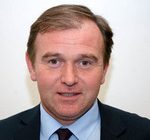

  • George Eustice – 2020 Statement on the Coronavirus

    George Eustice – 2020 Statement on the Coronavirus

    Below is the text of the statement made by George Eustice, the Secretary of State for the Environment, Food and Rural Affairs, on 8 May 2020.

    Good afternoon, and welcome to today’s Downing Street Press Conference. I’m pleased to be joined today by Steve Powis the medical director of NHS England.

    Before we give an update on the latest figures on the Coronavirus and also our work to help support the vulnerable get access to food.

    Today is of course the 75th anniversary of VE day and although many of the lockdown measures and the social distancing measures that are in place mean that many of the planned events have been unable to take place as originally envisaged, today is an important day to pause and remember and 75 years ago people poured into the streets of our scarred cities to celebrate the end of that most difficult conflict.

    Our soldiers fought around the world, there were countless acts of bravery, 450,000 British people sadly lost their lives and it was a moment when our whole country pulled together.

    As Defra secretary I would like to take this opportunity to record the efforts of those who also contributed in a non-military way, in particular our farmers who stepped up to ensure the nation was fed and the many women who responded to the call to join the Women’s Land Army.

    In a moment I am going to give an update on our work to support the vulnerable get access to food, but firstly let me give you an update on the latest data from the COBR coronavirus data file. I can report through the governments ongoing monitoring and testing programme as of today:

    1,631,561 tests for coronavirus have now been carried out in the UK, including 97,029 tests carried out yesterday;

    211,364 people have tested positive, that’s an increase of 4,649 cases since yesterday;

    11,788 people are currently in hospital with coronavirus, down from 12,688 the previous day.

    And sadly, of those tested positive for coronavirus, across all settings, 31,241 have now died. That’s an increase of 626 fatalities since yesterday. This new figure includes deaths in all settings not just in hospitals.

    We express our deepest condolences to the families and friends of these victims.

    Turning now to our work to help the vulnerable get access to food, firstly for the so called shielded cohort. That’s those who are clinically vulnerable.

    Over a million food parcels have now been delivered to these households and in addition, all those in the shielded cohort have been added to a list giving them priority access to supermarket delivery slots. So far around 400,000 people have been offered priority delivery slots by supermarkets and around 1 million orders have been placed ensuring that people can shop normally and purchase the goods that they want to buy.

    There is of course a wider vulnerable group, those who perhaps have disabilities or who are elderly and perhaps don’t have neighbours or relatives close by to help them. Or indeed those with other conditions that don’t put them in the clinically shielded group but nevertheless make them vulnerable and we have been working with local authorities, and some of the leading charities such as Age UK to put together a package of support to help these people get access to food.

    And many local authorities and charities have also been accessing the Good Samaritan app as part of the NHS responder volunteer programme and so far 79,000 shopping runs have been carried out by volunteers engaged in that programme.

    In addition we are continuing to work with supermarkets to make available additional priority slots for those in this group. But we also recognise that the economic impacts of coronavirus means that vulnerability is not about physical access to food, for some there is also financial vulnerability, so today we are announcing a new £16 million fund to support frontline food charities. The fund will be used by Fareshare and WRAP to continue and support and increase the food redistribution work that they already do and will significantly expand their sourcing capacity. They will be delivering food to around 5,000 frontline charities and these include refuges, homeless shelters and rehabilitation centres.

    Finally I am conscious that there is a great deal of speculation about what the Prime Minster might say on Sunday when he outlines the roadmap for the future and how we will evolve the current restrictions. The Prime Minister will outline any changes to the guidance on Sunday but in the meantime in spite of the sunny bank holiday it is vitally important that we continue to abide by the current restrictions, stay at home to protect the NHS and save lives.

    Concluding the press conference the Environment Secretary said:

    I would also as I have done before like to conclude by recording my thanks to all those working in the food industry; from supermarkets and food manufacturers right through to farmers, there has really been quite an extraordinary effort over the last couple of months to ensure that we keep food on our supermarket shelves.

    Thank you all very much.

  • Susan Williams – 2020 Statement on the Windrush Compensation Scheme

    Susan Williams – 2020 Statement on the Windrush Compensation Scheme

    Below is the text of the statement made by Baroness Williams, the Minister of State at the Home Office, in the House of Lords on 6 May 2020.

    My Lords, I am grateful to be able to return and have a full debate on the Windrush compensation scheme. I know that many noble Lords, including the noble Baronesses, Lady Benjamin and Lady Hamwee, were unable to participate at Second Reading of the Windrush Compensation Scheme (Expenditure) Bill on 21 April. I hope that today’s virtual debate gives them, and other noble Lords who wish to speak on this matter, the occasion to do so.​
    I hope that noble Lords will have received my letter of 30 April providing an update on the Windrush compensation scheme. As we discussed this matter two weeks ago, I will keep my opening remarks to a few important points to give noble Lords a chance to participate in this time-limited debate.

    I place on record again the Government’s commitment to ensuring that members of the Windrush generation are properly compensated for the losses and impacts they suffered as a result of being unable to demonstrate their lawful status. That is why, in April 2019, we launched the Windrush compensation scheme, with the first payment made within four months of its operation. I take this opportunity to remind noble Lords that there is no cap on the amount of compensation an individual can receive, nor a cap on the total amount of compensation that we will pay out.

    We are doing all we can to make payments to individuals as quickly as possible, and to raise awareness of the scheme. To date, the Home Office has attended or hosted over 100 engagement and outreach events and task force surgeries throughout the UK. The Home Office is working with community leaders on a digital engagement programme, to ensure that outreach can continue despite the current lockdown. The number of claims submitted to the scheme so far is, however, much lower than expected and we recognise that there is more to do.

    In March, my right honourable friend the Home Secretary announced a £500,000 community fund to enable grass-roots organisations to promote the Windrush compensation scheme and the Windrush scheme. We are committed to working with members of the community to shape the principles of the fund and intend to work with stakeholders to co-design it. The Home Secretary also announced that we will launch a national communications campaign, which will build on existing communications activities to raise awareness of the schemes and ensure that people know how to apply. We recognise that no amount of money can undo the injustice that some members of the Windrush generation have faced. We are committed to tackling those wider injustices as well.

    As the Home Secretary said on publication of the Windrush Lessons Learned Review, despite the diverse and open nature of this country, too many people still feel that they may be treated differently because of who they are or where their parents came from. That is why we are launching an expanded cross-government Windrush working group, to develop programmes to improve the lives of those affected. That may be through employment support programmes, dedicated mental health support, and specialist education and training schemes. We will continue to listen to stakeholders as we take forward establishing this group, and we are committed to ensuring that the Home Office, and wider government, protects, supports and listens to every single part of the community it serves.

    Members of the Windrush generation have given so much to this country, often working in the sectors at the forefront in the fight against Covid-19. I put on record again my gratitude to all those members of the Windrush generation, and their descendants, who are working tirelessly to tackle this dreadful virus. Many people in this country owe them their lives. As the ​noble Baroness, Lady Bull, noted at Second Reading of the Bill, it is extremely worrying that BAME individuals appear to account for a disproportionate percentage of those affected and who have sadly died during this pandemic.

    On 22 April, the National Institute for Health Research and UK Research and Innovation published a highlight notice requesting research to understand emerging evidence of an association between ethnicity and Covid-19 incidence and adverse health outcomes, and to respond to concerns that health, care and other key workers who belong to BAME groups may be particularly at risk. This call is designed to complement and add to existing work already being done by academic groups and Public Health England, which is also looking at wider inequalities.

    The Windrush compensation scheme is only one aspect of a broad range of matters to be discussed in relation to the Windrush generation and the challenges that they have faced. We know that there is more still to do, and we will work with every part of government to tackle inequality and ensure justice for the Windrush generation. I beg to move.

  • Liz Kendall – 2020 Statement on Exercise Cygnus

    Liz Kendall – 2020 Statement on Exercise Cygnus

    Below is the text of the statement made by Liz Kendall, the Shadow Social Care Minister, on 7 May 2020.

    The report on Exercise Cygnus provided clear warnings that we were not properly prepared for a pandemic.

    In particular it highlights that local plans for social care were inadequate and that social care services wouldn’t be able to cope with the number of people discharged from hospitals to ensure the NHS had enough beds to meet demand.

    These warnings have now proved all too sadly true as the unfolding tragedy in our care homes shows. Care providers confirm they were not involved in subsequent discussions on how to put these problems right.

    Ministers must be clear about why they failed to act on the report’s recommendations and what they will now do to fully protect and resource these vital services in future.

  • Keir Starmer – 2020 Speech on VE Day

    Keir Starmer – 2020 Speech on VE Day

    Below is the text of the statement made by Keir Starmer, the Leader of the Opposition, on 8 May 2020.

    Today we mark the 75th anniversary of VE Day, and we remember the millions of people from across the United Kingdom, and from across the world who came together in World War II to fight for our shared values; values of freedom, of democracy, of peace and of tolerance.

    We also pay tribute to those that rebuilt and renewed our country after the war. Based on their values they built a better future. Theirs is an incredible legacy – the National Health Service, the welfare state, the recognition of human rights.

    In normal times we would be paying tribute to their achievements in street parties, in gatherings and events at the Cenotaph. This year we can’t do that. This year we can’t be together.

    But tonight we’ll hear from the Queen at the exact same time, as in 1945, her father King George spoke to the nation from a bomb-scarred Buckingham Palace.

    He talked about what kept our country going during that crisis; the recognition that our cause wasn’t the cause of one nation alone and that we succeeded because we stood together.

    Let’s remember that message in these difficult times and take inspiration from the spirit of people like Captain Tom Moore, who served in Asia and then, 75 years later, raised £27 million for NHS charities. We owe a huge debt to Tom’s generation and we must do everything we can to show them the same commitment that they showed our country in its darkest hour.

    Today we commemorate those who stood together for a better future. We remember their service, and also their sacrifice.

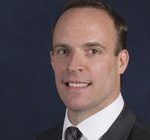
  • Dominic Raab – 2020 Statement on the Coronavirus

    Dominic Raab – 2020 Statement on the Coronavirus

    Below is the text of the statement made by Dominic Raab, the Foreign Secretary, on 7 May 2020.

    Good afternoon and welcome to today’s Downing Street Press Conference.

    I’m very pleased to be joined by Sir Ian Diamond the UK’s National Statistician from the ONS, And also by Dr Jenny Harries, Deputy CMO.

    The latest data from our COBR coronavirus data file shows that, as of today:

    there have now been 1,534,533 tests for coronavirus across the UK
    that includes 86,583 tests carried out yesterday
    206,715 people have tested positive, that’s an increase of 5,614 cases since yesterday
    And those who tested positive, very sadly, 30,615 people have now died, and my deepest condolences go out to anyone who has lost a loved one throughout this pandemic.

    Three weeks ago, before the Easter bank holiday weekend, I set out five tests for the UK to move on to the next phase in this pandemic. Then, just as now, there were calls to ease up on the restrictions. But as the science made clear, we couldn’t responsibly do that. In fact, the advice from the group of scientific experts, SAGE, who advise the government made it very clear that there weren’t any changes at all that we could confidently take, Without risking a second peak of the virus.

    That’s why we asked the public to keep going. We weren’t done yet.

    We said ‘stick to the plan’, and the British public kept going. People stuck to the rules. That meant working from home, it meant worries about money it meant adjusting to home schooling, time apart from family and friends, and just not doing many of the things which we all enjoy in life.

    At the same time, there’s been a lot of people who, despite their own personal sacrifices, have gone the extra mile. They volunteered to support the elderly and the vulnerable in their community, who have been shielded themselves away from the virus.

    And each Thursday, of course, we now come together to applaud the NHS staff, and the carers, the people who just kept going to keep our country going.

    And because of that monumental effort we have now passed the peak of the virus. The NHS hasn’t been overwhelmed. We haven’t seen hospital wards overwhelmed with patients, people left without hospital beds, people left without the ventilators that can mean the difference between life and death.

    Now I know the tragic death toll in this country and around the world has been sobering for all of us, and there have been real challenges in this country – with PPE, and with care homes.

    But, in this first stage of the fight against COVID-19, through this national team effort, we’ve prevented the number of deaths rising to even higher levels, and we’ve ensured critically that the NHS had the capacity to cope.

    Today the Cabinet was updated on SAGE’s advice on the progress that we’ve made to date. And as a result of the social distancing measures that we’ve put in place the R level, which signifies the rate of infection, is now between 0.5 and 0.9. The overall number of new cases has been steadily falling and the rate of deaths is also steadily falling.

    Now, just to be clear about what all of this means in practice. The virus is not beaten yet.

    It remains deadly and infectious, and we are working very hard right across government and with local government to bring it down in areas of concern, like in care homes, and I’m confident we can do it and we will do it.

    But, because we held firm three weeks ago, we are now in a position to start to think about the next phase in this pandemic.

    So, this weekend, the Prime Minister will set out the next steps which we can responsibly take over the following weeks, guided by the scientific advice and mindful, as we’ve said right from the word go, of taking the right decisions at the right time.

    Now, we can start setting out how we will live and work, whilst maintaining the necessary social distancing rules, we can also be clearer about those measures which are still necessary to prevent a second peak.

    The Prime Minister has been directing Ministers and our teams of officials right across government to carefully develop a road-map for the next phase.

    It contains appropriate measures to be taken at appropriate milestones, subject to very clear conditions.

    And there be detailed guidance to help inform, advise and reassure the public, businesses and other organisations.

    To get this right, we have set milestones. Some changes can confidently be introduced more quickly than others, and some of those other ones will take longer to introduce.

    And, it’s important to say this, at each point along the way when we take these decisions, they will be based on the five tests and the scientific advice that we receive.

    And as I set out in the fifth of our five tests when I spoke here at this lectern, on 16 April, the point at which we make even the smallest of changes to the current guidance will be a point of maximum risk.

    If people abandon the social distancing, if we forget the sacrifices that were made to get us through the peak, to get us to this point, the virus will grow again at an exponential rate.

    That would lead to a second peak which would threaten the NHS. It would trigger another lockdown, which prolong the economic pain, and we we’re determined to keep it temporary, to keep it as short as possible.

    So, we’ve kept the current measures in place for this long, precisely so that we can bounce back with vigour and energy as soon as possible, as soon as it is responsible to start looking at the second phase.

    And because of that, our next steps will be surefooted and sustainable. Any changes we make will be carefully monitored. If people don’t follow the new rules, or if we see that the R-level goes back up, we will tighten the restrictions again, we will always retain the option to do so. That way we can safeguard public health and we can also safeguard the economy in a sustainable way.

    So having prepared carefully, and based on the updated advice from SAGE, this weekend, the Prime Minister will set out the roadmap for the next phase, along with the conditions for reaching each milestone.

    That way we can provide the country with a better understanding of what lies ahead, we can offer reassurance that we will adjust the restrictions to the minimum necessary to prevent a second spike in the virus, and we can give people the confidence that we’re doing it in a way that will protect life and preserve our way of life.

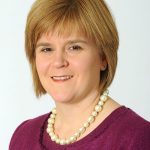
  • Nicola Sturgeon – 2020 Statement on the Coronavirus (07/05/2020)

    Nicola Sturgeon – 2020 Statement on the Coronavirus (07/05/2020)

    Below is the text of the statement made by Nicola Sturgeon, the Scottish First Minister, on 7 May 2020.

    Good afternoon. Thank you very for joining us again today.

    I want to start with the usual statistical update on COVID-19 in Scotland.

    As at 9 o’clock this morning, there have been 12,924 positive cases confirmed – which is an increase of 215 since yesterday.

    A total of 1,587 patients are currently in hospital with either confirmed or suspected COVID-19 – that is a decrease of 45 since yesterday.

    A total of 86 people last night were in intensive care with confirmed or suspected COVID-19. And that is a decrease of three since yesterday.

    I am also able to confirm today that since 5 March, 2,954 patients who had tested positive and been admitted to hospital for the virus have been able to leave hospital, and I wish all of them well.

    Unfortunately though I also have to report that in the last 24 hours, 59 deaths have been registered of patients who had been confirmed through a test as having the virus – and that takes the total number of deaths in Scotland, under that measurement, to 1,762.

    As always, let me stress that these numbers are not statistics – or just statistics. They represent real people whose loss is being felt and mourned by many. And I want again to send my deepest condolences to everyone who has lost a loved one to this virus – we are all thinking of you.

    I also want to thank again our health and care workers for the extraordinary work that you are doing in these most difficult of circumstances.

    And I want to thank all of you watching at home, for the sacrifices you are continuing to make as you follow our very clear advice to stay at home, save lives and help us to continue to protect the NHS.

    Now I have one main point that I want to update you on this afternoon.

    As I have indicated previously this week, the Scottish Government is legally required to review the regulations giving effect to the lockdown every three weeks, and the latest review falls due today.

    Our assessment of the evidence leads me to the conclusion that the lockdown must be extended at this stage. More detail of our analysis will be published alongside today’s daily statistics at 2pm. But let me say this now.

    We are – together – making really significant progress in our efforts to get this virus under control. I have reported today a further reduction in the number of patients in intensive care. And yesterday, National Records of Scotland reported the first weekly decline in the number of registered deaths related to the virus since this outbreak began.

    All of that gives us real hope and real encouragement.

    But we also know that progress remains fragile. Our estimates suggest that there are still significant numbers of people in Scotland infected with this virus.

    And we are not yet confident that the all-important R number is comfortably below 1 – and I’ve explained and set out before why it is so important to get it and keep it comfortably below 1. Indeed, we think it could still be hovering around 1 just now – which means that any significant easing up of restrictions at this stage would be very very risky indeed.

    Also, we think the R number may still be a bit higher here than it is in other parts of the UK – perhaps reflecting the fact that our first cases came later than England’s and so we may be at a different – and slightly later – stage of the infection curve.

    Now, all of that tells me that extreme caution is required, at this critical juncture, to avoid a rapid resurgence of the virus.

    Before we can judge that it is safe to begin any significant, albeit gradual, easing of the restrictions, we want to see data in the days ahead that confirms a very clear downward trend.

    In particular, I want to see what our estimates of new cases and the R number look like a week from now.

    And I will be looking very carefully, as I’m sure all of us will be, to see if next week’s NRS figures show a continued fall in the number of deaths.

    And it is to allow for such further careful assessment that we have concluded that the lockdown – and the associated regulations – must remain in place for now.

    The legal deadline for the next review of these regulations will be three weeks from now – which is the 28 May.

    But I want to be very clear again today that we can make changes to the regulations before then if the evidence suggests it is safe to do so.

    And let me say again, I am as anxious as anyone to restore some degree of normality to our lives as soon as possible and to reduce the harms that we know lockdown itself is doing.

    It is also open to us to amend the supporting guidance if we think that is possible – and indeed there is one very limited, specific change to the guidance that we are considering already, and I want to come back to that shortly.

    But, first of all, I want to address reports that you might have seen in today’s media that the Prime Minister might be planning on Sunday to announce changes to the lockdown in England. I should stress that these are only media reports – I do not know yet how accurate they are.

    And before I go any further here, I want to take the opportunity to remind you that none of the decisions I am taking just now – absolutely none of them – are driven by politics. They are driven only by doing what is right to tackle this virus and to save lives. And I believe that is true for all leaders across the UK.

    However, I have to be clear with you that the potential changes that are reported in the media today have not yet been discussed with the Scottish Government or, as far as I know, with the other devolved governments.

    I hope we will have discussions in the next few days. We had expected a COBRA meeting today or tomorrow but it seems now that it might not take place until Sunday – which of course is the day the Prime Minister is due to make his statement.

    However, in the last half hour I understand that the Prime Minister has requested a call with the devolved governments later today, and I very much welcome that.

    And if and when those discussions do take place I will make very clear – as I have all along – that it is my preference, if possible, for all four UK nations to make changes, together, at the same pace. Because that certainly helps us give clear, consistent messages to you, the public.

    However, for that approach to work, we must agree to make changes only when all four governments are satisfied that they don’t risk a resurgence of the virus.

    And – again, let me be clear – if the Prime Minister decides that he wants to move at a faster pace for England than I consider is right for Scotland – that is of course his right. I will respect that and I will not criticise him for doing that.

    But I hope you understand, and indeed I hope you agree, that I must make judgments, informed by the evidence, that are right and safe for Scotland.

    I will not be pressured into lifting restrictions prematurely, before I am as certain as I can be that we will not be risking a resurgence of infection rates.

    Now, of the changes that are floated in the media today, there is only one I may – and I would stress at this stage, may – be prepared to agree to in the immediate future – and that is a change to the guidance limiting outdoor exercise to once a day only.

    That is currently, as you know, one of the limited number of reasons that you are permitted to leave home.

    As I alluded to earlier in the week, we are already considering whether it would be possible now, without increasing the R number, to permit you to exercise outdoors more often than once a day – but on the strict conditions that you still stay within your own household group, stay two meters away from others, and stay reasonably close to your own home.

    It would – and let me stress this point – it would not change the overall message to stay at home except for the limited reasons of exercise, food and medicine.

    We will report back on our consideration and indeed any four nation discussion of that over the next few days. In the meantime however, let me be clear that the once a day rule does remain in place.

    The other possible changes that are reported in the media today – such as encouraging more people back to work now or opening beer gardens or encouraging more use of public transport – would not, in my judgement, be safe for us to make yet.

    And I particularly strongly believe that for us to drop the clear, well understood ‘Stay at Home’ message right now could be a potentially catastrophic mistake.

    Now, there’s discussion in many countries about the timing of lockdowns.

    All along we have taken the decisions we considered right and at the time we thought right. And that’s what we will continue to do. And of course, none of us have the benefit of hindsight when we make those decisions.

    But right now we do have the benefit of foresight. And what I do not want a few weeks from now is for us to see a resurgence of this virus and for you to be asking me this – why on earth did you start to ease lockdown a week, or a couple of weeks, too early?

    It’s not an exaggeration to say that the decisions we take now are a matter of life and death. And that is why they weigh so very, very heavily. And it’s why they must be taken with great care. And it is why, as I take them, I will continue to err on the side of caution.

    Now I will keep you updated of any and all discussions with the UK governments – other UK governments – over the weekend.

    For now though, the advice remains the same as it has been.

    It is easier for us to start emerging from lockdown, the lower the R number is, and the fewer infectious cases that there are.

    And so for all of us, the way in which we emerge from lockdown that bit more quickly, is to stick with the current restrictions now.

    So please, stay at home except for essential purposes such as exercise, or buying food or medicines.

    Stay more than two meters from other people when you are out, and do not meet up with people from other households.

    Wear a face covering if you are in a shop or on public transport. And isolate completely if you or someone else in your household has symptoms.

    I know that these restrictions are very tough – and I also know and worry that any talk of easing the lockdown might make it more tempting to go out that bit more often.

    But please, resist that temptation. Stick with the current rules. We must – absolutely must – protect the progress that we have all made together so far. Because it is by doing that that we will continue to slow down the spread of the virus, continue to protect the NHS, and continue to save lives.

    Thank you very much indeed for listening. I’m going to hand briefly to the Cabinet Secretary for Health before her, I, and of course the Chief Medical Officer take questions from journalists.

  • Nicola Sturgeon – 2020 Statement on the Coronavirus (05/05/2020)

    Nicola Sturgeon – 2020 Statement on the Coronavirus (05/05/2020)

    Below is the text of the statement made by Nicola Sturgeon, the Scottish First Minister, on 5 May 2020.

    Good afternoon, thank you for joining us today.

    I want to start with the usual statistical update in relation to COVID-19.

    As at 9 o’clock this morning, there have been 12,437 positive cases confirmed – which is an increase of 171 since yesterday.

    A total of 1,656 patients are currently in hospital with either confirmed or suspected COVID-19 – that is a decrease of 64 since yesterday.

    A total of 104 people last night were in intensive care with confirmed or suspected COVID-19, and that is an increase of five since yesterday.

    I can also confirm that since 5 March, 2,847 patients who had tested positive and been hospitalised for the virus have now been able to leave hospital, and that of course is positive news

    Sadly, though, in the last 24 hours, 44 deaths have been registered of patients who had been confirmed through a test as having the virus – which takes the total number of deaths, under that measurement, to 1,620.

    Now, as I always say, we must never ever think of these numbers as just statistics. They represent individuals whose loss is a source of sorrow to many, and I again want to send my deepest condolences to everyone who has lost a loved one to this virus. We are all thinking of you.

    I also want to again thank our health and care workers for the extraordinary work that you continue to do for us in the most challenging and difficult of circumstances

    Now I have one substantive issue that I want to discuss today. And forgive me if I do so at slightly greater length than normal.

    This follows my update yesterday on our plans for “test, trace, and isolate”.

    Today, I want to set out for you our latest data on the level of infection and the important R number that you have heard us talk about before, and I also want to describe the work that we are doing now to prepare for careful and gradual changes to the lockdown restrictions – I must stress only when we judge it is safe to make them, which I am afraid is not right now.

    Now you’ll find more detail on what I am about to cover today in a new document that we have just published on the gov.scot website – it updates the one we published a couple of weeks ago and, again, I’m asking you please to have a look at that.

    I also want to encourage you to use the new online tool that we are launching today, which gives you the chance to offer ideas on how we should move forward.

    I’ve said before but it is worth repeating that the decisions on how we come out of lockdown will affect each and every one of us, perhaps for some considerable time to come, and so I am determined that I and the Scottish Government make those decisions as openly and as collaboratively as we possibly can.

    Now, as I said yesterday, by Thursday this week, we have to formally assess whether any lockdown restrictions should be lifted at this stage. The other UK governments will also be making an assessment on or around that date.

    As we move forward, we will continue to discuss and, where appropriate, reach decisions on a four nations – UK – basis. It remains my intention to have UK-wide alignment where the evidence supports it, though obviously my overarching responsibility is to reach evidence based decisions that are right for Scotland.

    As I indicated yesterday, I think it is highly unlikely that the Scottish Government will be able to make any significant changes to the current restrictions on Thursday. And I think it’s important that I’m frank with you about that now.

    Today’s paper sets out in detail the data that underpins that conclusion.

    In short, we are seeing progress – real progress, particularly in the number of people admitted to intensive care – but that progress is still fragile.

    That means any increase in the physical interactions we have with other people could quickly see transmission of the virus increase again.

    We estimate that there are currently around 26,000 people with COVID-19 in Scotland. I stress these are estimates, but that is still too high a number to consider that the virus is under control.

    I have also spoken before about the vital importance – the critical importance – of keeping the R number below 1.

    Now we know the R number is higher in care homes, but our best estimate is that the R number in the community is currently between 0.7 and 1. But we cannot be sure that it’s not closer to 1 than 0.7.

    There is also some evidence that the R number in Scotland might be slightly higher at this point than in the rest of the UK – although the modelling that is based on is subject to a high degree of uncertainty.

    But in any event, the R number is not yet far enough below 1 to be confident that any changes to current restrictions wouldn’t quickly send it over 1 again – and if that happened, the virus would start to increase exponentially again.

    That could overwhelm our health service; force us to re-impose restrictions; and it would lead to many more deaths.

    Now as an illustration of this, we include in the paper a chart which is based on recent Danish data, and we are looking at experiences in other countries all the time. What this chart suggests is that that if we were to fully re-open nurseries and primary schools now, the most likely scenario would be a resurgence in the virus that would overwhelm our hospital capacity in a matter of weeks.

    Now, the fact is that any easing of restrictions, whenever we introduce them, will have an impact on the R number. But if we get our baseline lower than it is now, we will have more headroom to cope with that – and be able to avoid outcomes like the one I’ve just highlighted.

    So the hard fact is that we must see further reductions in new cases, hospital and ICU admissions and deaths to be sure that the overall level of infection and the R number are lower than they are now.

    And that means, for the moment, we do need to stick with the current lockdown restrictions .

    However I am acutely aware that the severity of restrictions we are living under now cannot continue indefinitely – we know that lockdown is doing its own damage.

    So we also need to be preparing to make changes as soon as it is safe to do so.

    The next three week period of lockdown, after this Thursday 7 May, is due to end on the 28 May.

    Now, let me stress, that doesn’t necessarily mean we can’t make any changes before then if the evidence suggests it is safe to do so. If we can, we will.

    For example, I’m particularly keen as soon as possible, for the sake of mental health and wellbeing, to enable people to be outdoors more. And obviously we are all keen to get the economy moving again as soon as we can.

    So today’s paper sets out some options that we are working on – both in terms of assessing their impact and on the practicalities of implementation – so that we will be ready to make changes when the evidence tell us that it is safe to do so.

    Now to be clear with you, because I have to make sure I am setting this out clearly, this is not a list of things we will definitely do by certain dates.

    Indeed, we might not be able to take all of these steps even at the end of May.

    This is going to be a long process with different phases along the way.

    And we will only implement these changes when we are as certain as possible that it is safe to do so – and when we can also assure you of that.

    In the meantime, it is vital that we stick rigorously to the current rules.

    But as I said a moment ago it is important that we are preparing now.

    So I want to briefly set out the options that we are working on. Though, again, I must stress that none of these are changes we are implementing as of right now.

    But we are considering, firstly, if and how we could safely change our advice on spending time outdoors – to allow exercise outside to happen more than once a day, so long as we continue to stay apart from people outside our own households.

    But second, we are also considering if a slight relaxation in the rules to allow meeting up with a small, defined group of people from other households – in a sort of bubble – might be possible, even if initially that was only possible out of doors and not indoors.

    This is, of course, one way in which we could start to interact a bit more with family or friends – which I know is so important to all of us.

    However, we also have to consider carefully the impact on the spread of the virus. And we have to think through how such an approach could be implemented in practice – and also how the limitations of it could be enforced if necessary.

    It’s also not something that would be possible for those who are currently shielding – so we have to think also about the fairness of it.

    The third area we are looking at is when and in what order we can resume some NHS and community care services. As you know, we stopped some services – for example, screening programmes and non-urgent elective procedures – to ensure that the NHS could cope with the virus. But these postponements also have implications for health, so we must consider how services can be restarted as soon as possible – and that is what we are currently doing.

    The fourth area relates to how we carefully, gradually and safely allow businesses to re-open. That is a major area of work, for obvious reasons.

    We need to work with business and with trade unions to consider the practical arrangements for different work environments to start up safely – that’s changes to working practices, physical layouts of workplaces, the appropriate use of PPE and the operation of public transport. On this, we are looking carefully at the work the UK government is doing and consulting our own stakeholders on that.

    Initially, we are giving particular consideration to businesses in the construction, retail and manufacturing sectors – and also to some outdoor and rural businesses.

    However, where home working is possible, we are very likely to insist on that for the foreseeable future.

    And I want to be very clear that as of now current guidance to business remains in place.

    Finally, I have said before that one of the hardest decisions I have ever taken was the closure of schools. I know the impact this is having on young people – and I want to thank all of you watching today again for your patience – and it also has an impact on family routine.

    The Deputy First Minister is chairing the Education Recovery Group, which is considering options for how pupils might gradually return to school.

    Now, again, I need to be clear – a return to school might not be possible at all this side of the summer holidays.

    But we are considering whether some groups of students – such as vulnerable children, children who are making the transition from primary to secondary school, or who are studying for national qualifications – could return to school ahead of others.

    And any initial return to school – when it does happen – is of course likely to require a mixture of time in school and learning at home.

    For example it’s possible that different groups could attend school part-time in blocks of a few days – or a week at a time – to enable physical distancing and deep cleaning schools between sessions. In all of this, we are trying to find the right balance between children’s educational and wider needs, and public health imperatives.

    But I want to be crystal clear that while we will of course take the greatest care in all of this, that that is particularly the case with schools. We will not compromise the safety of your children.

    Now as you will understand from the detail I have just given, and more so if you read the paper that has published today, none of these decisions are easy. There are no absolute certainties in any of this and complex judgments will have to be made.

    As I’ve said before, ‘lifting the lockdown’ will not be like flicking a switch.

    It will be a gradual process which will happen in phases.

    What we are seeking to do is find a path to a new normal – one which is less restrictive than the current lockdown, but which doesn’t risk the virus running rampant again.

    Now we have not yet put definite dates on any of what I’ve just set out. But I will update you on an ongoing basis in the days ahead as our evidence, assessments and planning develops.

    And as soon as we can start to attach even tentative dates, we will do that.

    In parallel, we will continue to build the ‘test, trace, isolate’ capacity that I spoke about yesterday.

    But let me end on this point – the most important task for all of us in the here and now is to get the virus under more control than it is right now. And I cannot stress that enough. We really are at a critical stage, and what I’ve set out today about our assessment of the R number in particular tells us how critical this stage is and also how easy it would be to go in the wrong direction.

    So that means asking you again to stick rigorously to the current rules. It means asking you to think hard about your own compliance – and tightening that if anything now, not easing up on it. If you have been going out a bit more than you should, please rectify that.

    Please stay at home except for essential purposes – and remember, at this stage, essential purposes means only essential food supplies, medicines and daily exercise.

    And you should ask yourself if, for example, going for a drive-through coffee is really an essential journey.

    Stay two metres from others when you have to be out.

    Don’t meet up with people from other households.

    Isolate completely if you or anyone else in your household has symptoms.

    Wash your hands regularly, and wear a face covering if you are in an enclosed space with other people – like a shop or public transport.

    All of this is tough – it is really tough – and I know and understand that.

    But I want to stress again – right now we are going in the right direction. If all we keep doing all of the right things, we will keep going in the right direction, and we will get there. Our light at the end of the tunnel that I keep talking about will get brighter as the days go on. And we will find a way through.

    So please keep doing the right things, and thank you for everything that you are doing to comply.

    Now I’m going to hand over to the Chief Medical Officer who is going to say a few more words about the evidence that is before us before I open up to questions.

    Was this helpful?

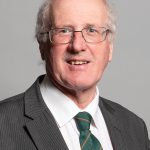
  • Jim Shannon – 2020 Speech on the Census

    Jim Shannon – 2020 Speech on the Census

    Below is the text of the speech made by Jim Shannon, the DUP MP for Strangford, in the House of Commons on 6 May 2020.

    May I first declare an interest as chair of the all-party parliamentary group for international freedom of religion or belief? I have been asked to raise an issue by a group of people within a religious minority—the Sikhs—as other Members have done, including the hon. Members for Bedford (Mohammad Yasin) and for Erith and Thamesmead (Abena Oppong-Asare). I also want to thank the hon. Member for Birmingham, Edgbaston (Preet Kaur Gill), who I call my friend, for all that she has done for the Sikhs over the years.

    Sikhs have been legally recognised as an ethnic group for nearly 40 years, since the Mandla v. Dowell-Lee House of Lords ruling of 1983. The ONS has stated that the ethnic group question was introduced in 1991 to help public bodies to assess equal opportunities and to develop anti-discrimination policies—all good stuff. Census ethnic group categories are used by 40,000 public bodies to assess legal responsibilities under equalities legislation, so the group data—not the religious data—is used by public bodies to make decisions on the allocation of resources and provision of public services.

    The Prime Minister’s last race disparity audit indicated that there were 176 datasets spanning sectors from housing and education, to employment, health and the criminal justice system—but no data on Sikhs. What does this actually mean? Well, if Sikhs do not have a ​Sikh ethnic tick-box response option, they will continue not to be properly monitored by public bodies, and to face potential discrimination in relation to schools, the health sector, where there are known disparities, housing and across the public sector.

    The covid-19 crisis has shown that there is no systematic collection of data on the number of Sikhs tested as positive or the numbers who have tragically died. That means something to this group of people, it means something to me, and it should mean something to everyone in the House. In the 2011 census, more than 80,000 Sikhs—20%—rejected the 18 existing ethnic tick boxes and chose instead to tick “Other” and write “Sikh”. I believe that this provided the ONS with the strongest indication possible that Sikhs who completed the census form in 2011 did not find the ethnic tick boxes offered acceptable and wanted an additional Sikh ethnic tick box. It is clear that there must be change and I am asking for that change.

    I have four questions for the Minister. Why was the May 2018 online quantitative survey—which had 1,412 responses and showed 93% support, from those who understood the question, for the inclusion of a Sikh ethnic tick box—not published and referred to the census White Paper of December 2018? Why was there no reference in the census White Paper and the associated equality impact assessment to research and modelling by the ONS that showed that more than 53,000 Sikhs—or 12%—were missed in the 2011 census? In the interests of data collection, honesty and evidence, this gap has to be addressed.

    Do Ministers appreciate that the management committees of 112 large and small gurdwaras across the UK, with an official membership of over 107,000 and an estimated congregation—or a sangat—of over 460,000 should be considered, as well as 53 individual Sikhs in focus groups? Can the Minister explain why the ONS has requested and received the individual returns from the all-party parliamentary group for British Sikhs in August 2018, and yet, it would appear, has made no attempt to conduct any independent validation; and why the deputy national statistician appears to have kept no notes or minutes of meetings that he attended at gurdwaras to consult Sikhs?

    I look to the Minister for an adequate, suitable and helpful response. I understand that some of my questions may not be answerable today, but I would appreciate a response. More than that, I would appreciate a change to include Sikhs in the census in their own right in order to ensure that they have protection against discrimination and the recognition that they rightly deserve. Better late than never.

  • Matt Western – 2020 Speech on the Census

    Matt Western – 2020 Speech on the Census

    Below is the text of the speech made by Matt Western, the Labour MP for Warwick and Leamington, in the House of Commons on 6 May 2020.

    It is a pleasure to follow my hon. Friend the Member for Erith and Thamesmead (Abena Oppong-Asare). Let me start by saying that I welcome the order. I am sure that there is almost universal support for a census. Although I support it, I am interested to know more about the decisions the Government have made in arriving at it.

    The purpose of the order is simply to provide direction for next year’s census on the population of England and Wales. It includes the date of the census, the area to be covered, what is required in the return, who is included and the particulars that may be requested and from whom. I remember my first census back when I was eight years old, and just how excited I got. I do not understand quite why, but I just appreciated the scale of this enormous exercise.

    Given the fact that we have one coming up next year, we must recognise the importance of this data collection in giving some snapshot, as my hon. Friend the Member for Lancaster and Fleetwood (Cat Smith) said, of the nature of our society and the people that we are. For a nation and for the purposes of good governance, I have always believed this data to be of huge importance and believed in the value of the continuity of measurement decade after decade.

    What is also important, beyond the standard information, is the ability to use the census to update it and ensure its relevance in relation to social and economic change. Ten years is a long time to wait for these changes, and I suggest that a few that are being proposed are long overdue, given that we are now in the third decade of the 21st century. Let me come to identity in a moment, but may I just say that it is good to see the introduction of a new question capturing past service in the UK armed forces, which has been added? It should go some way in recognising the lives of our fabulous forces personnel.

    On identities, I want to support the addition of two new voluntary questions on sexual orientation and gender identity. At last, LGBTQ people will be acknowledged, and that is most welcome. However, I also see there will be the continuation, for those not included in the existing tick boxes, to allow that to be expressed through the write-in option on both paper and online questionnaires. Interestingly, for the first time, an additional response option of Roma will be included under the ethnic group question, which is also welcome. In addition, the national identity question allows respondents to record multiple ​identities across the tick boxes and write-in box. But other than those changes, the proposed questions appear to be much as in the previous census 10 years ago.

    Perhaps surprisingly, there has been no inclusion of a Sikh tick box, despite the House of Lords ruling in the Mandla v. Dowell Lee case of 1983 that Sikhs are an ethnic group, not simply a religion. The Sikh community is important to the UK in every sense, and I commend the speeches by my right hon. Friend the Member for Warley (John Spellar) and my hon. Friends the Members for Bedford (Mohammad Yasin) and for Erith and Thamesmead. In my constituency of Warwick and Leamington, the community accounts for a significant and welcome share of our population and our community.

    The Minister will be aware that there has been a long-running campaign by the Sikh Federation and, indeed, the whole British Sikh community for this change to be introduced. The concerns among the community, as has been widely shared this afternoon, are that, if Sikhs do not have a Sikh ethnic tick box response option, they will continue not to be properly monitored by public bodies and face possible discrimination in schools and the health sector, where there are known disparities, as well as in housing and across the public sector more generally. As has been evidenced in the current covid-19 crisis, there is no systematic collection of data on the number of Sikhs tested as positive or the number that, tragically, have died, despite the significant number who are actually working on our frontline.

    I appreciate that this is a statutory instrument and is unamendable as such, so there will not be any opportunities to change the proposals. I simply want to ask the Minister why the decision was reached to exclude the Sikh identity as a tick box and what steps the Government will take to ensure the Sikh community is properly accounted for in data collection, ensuring the fair allocation of resources and provision of public services.