Tag: 2018

  • Helen Whately – 2018 Speech on Lorry Parking

    Below is the text of the speech made by Helen Whately, the Conservative MP for Faversham and Mid Kent, in the House of Commons on 30 January 2018.

    A few weeks ago, in the early hours of the morning, a car carrying four men crashed into a parked lorry on the edge of the A2 just south of Faversham. Three of the men were killed; the other was seriously injured. We might never know exactly what happened, and I am absolutely not blaming the lorry driver, but that stretch of the A2 is a well-known spot for what we call lorry fly-parking. Fly-parking is when lorries park in lay-bys or on slip roads, hard shoulders, pavements or verges, often at the edge of busy roads such as the A2, the A20 and the A249 in my constituency. Sometimes they also park up quiet country lanes or in industrial estates and housing estates. In general, these are places where lorries should not be parked for more than the few minutes that might be needed for a delivery or an unexpected stop. Sometimes they park legally, and sometimes illegally. Sometimes they park perfectly safely, albeit inconveniently, but at other times, unfortunately, they park dangerously.

    This was not the first fatality in my constituency involving a parked lorry. A 74-year-old woman died after crashing into a lorry parked on the hard shoulder at junction 7 of the M20 a couple of years ago. Whatever the cause of the latest crash, this horrific accident should focus our minds on the problem, focus our attention on the need for more lorry parking spaces, and focus our energies on ending lorry fly-parking. Lorry fly-parking is dangerous. There is a danger to other motorists from lorries lined up, bumper to bumper, in lay-bys, sometimes jutting precariously out into the road. There is a danger to the police officers who risk their lives walking along the hard shoulder at night with hundreds of cars speeding by as they move alongside illegally parked trucks. There is also a danger to the lorry drivers themselves when they are in charge of a heavy goods vehicle but have not had a proper rest. A busy roadside with traffic thundering past is hardly a good place to get a proper night’s sleep.

    The haulage industry is, rightly, tightly regulated. Drivers must record their hours on a tachograph and take breaks every four and a half hours. When the time comes to stop, they have to stop, but the roadside is not only a bad place to sleep, but a pretty bad place to stop off in general for a driver, as it has no security, no facilities, no showers and not even toilets. That is hardly helpful for an industry that would like to attract more women. From the point of view of most of my constituents —those who are not lorry drivers—they see extra litter and pretty disgusting other stuff on the roadside, and anyone who needs to pull into a lay-by on a main road can forget it, because they are already full.

    Jim Shannon (Strangford) (DUP)

    I thank the hon. Lady for allowing me to intervene. Northern Ireland is heavily reliant on cargo being freighted by ship and then by lorry, so this issue concerns us greatly. We must ensure that there are safe and secure areas for lorry drivers to park, not only to enable them to stay within their hours under EU legislation, but to keep them and those who come into contact with them safe. Does she ​agree that we should look into providing parking facilities so that those living in residential areas do not have to listen to idling lorries and so that those who drive the lorries can be safe?

    Helen Whately

    I completely agree that this is about making things better for residents and ensuring that lorry drivers have the facilities that they need. I thank the hon. Gentleman very much for bringing a Northern Ireland perspective to the debate.

    Lorry parking is not a new problem, but it is growing worse and it is time to fix it. So what is the answer? Everyone we speak to, including the Road Haulage Association, the Freight Transport Association, Highways England, local councillors and our constituents, will give the same common-sense answer: we must build more lorry parks. That seems deceptively simple. We know that there is demand for more truck stops. For instance, Kent County Council’s surveys show that we have around 900 lorries a night parking inappropriately. Lorry parks in Kent are turning lorries away. Ashford lorry park turned away 252 trucks in a single night last year, so the demand is clearly there. Kent County Council has been taking action by identifying possible locations for new truck stops and talking to lorry park operators to gauge their interest. Indeed, the Ashford lorry park just yesterday submitted a planning application to expand from 390 to 600 places. Those extra places will be helpful, but the number still falls far short of the 900 extra places needed in Kent. As freight volumes continue to grow with the growing economy, one can predict that that shortfall will only increase.

    However, that prompts a question: given that commercial operators run service stations and lorry parks in the UK, why have more truck stops not stepped up to serve the demand? What can we do to ensure that the shortfall in parking places is met, and quickly? What conversations has the Minister had with lorry park operators about what is stopping them expanding? What investigations has he made to determine how we can encourage planning applications for truck stops that can make their way successfully and speedily through the planning system? I recognise that fast-forwarding planning for lorry parks is difficult, given the experience in Kent with the Operation Stack holding area, but when we get that vital lorry holding area, will the Government ensure that it can also be used for overnight lorry parking? I want lorry parking to be included in all major road improvements—specifically the lower Thames crossing—not just in Kent, but across the country.

    Andrew Lewer (Northampton South) (Con)

    Just as in Faversham and Mid Kent, my constituency experiences a lot of lorry traffic and much of its economy is based on logistics. The Department for Transport focuses heavily on rail—often for good reason—but with the majority of haulage and freight travelling by road, does my hon. Friend agree that the Department needs to consider both rail and road provision? When looking at road provision, the Department needs to consider not just the infrastructure of the roads themselves, but lorry parking and good-quality facilities as a priority.

    Helen Whately

    I thank my hon. Friend for making the point that investing in road infrastructure, as we are doing in this country, goes hand in hand with planning for where lorries will park and the facilities that drivers ​will need. No major road investment should be planned without facilities for the motorists and lorry drivers who will use the roads.

    As we provide more parking places, we must ensure that drivers use them, and I welcome the signals the Government have been sending about effective enforcement. For example, they have supported the enforcement pilot that is currently under way in Ashford, where lorries are being clamped the first time they park illegally. The pilot has successfully reduced reoffending and the message is getting through, because only one lorry has been clamped twice and all fines have been paid. My hon. Friend the Minister has kindly contributed to that success by allowing the local authority to increase the fines that it can charge, meaning that the council is no longer left out of pocket when lorries are clamped, and I thank him for that. If the clamping pilot continues to get results, I hope that it can be rolled out across Kent and then throughout the country. Eventually, we should have a complete ban on lorries parking for long breaks outside truck stops. However, as drivers have told me many times, it is only reasonable to enforce a ban on lorry fly-parking if there are enough legitimate places for lorries to park.

    As I have said, Kent is disproportionately affected by lorry fly-parking because most of the UK’s road freight travels along the M20 and then across the channel or, alternatively, down the M2 and A2 and then down to the channel crossings in Kent. The Port of Dover handles 10,000 HGVs a day. Although we feel the problem so particularly in Kent, it is a national one, and I know from colleagues that there are lorries lining up on many trunk roads across the country. Perhaps at some point in the future we will have self-driving lorries, which I assume will not need to stop to sleep, but that is not going to happen for some years—probably some decades—so we must do something about the issue in the meantime. My hon. Friend the Minister gets that, as did his predecessor, my right hon. Friend the Member for South Holland and The Deepings (Mr Hayes), and I thank them for the hard work that they have put in so far.

    To conclude, may I just say to the Minister that if we are to achieve the vision of a dynamic country that is fit for the future, we need the right infrastructure to keep the economy moving? The current situation is unacceptable for lorry drivers, for other motorists, and for residents who live in the places that have become improvised truck stops. It is also dangerous. We need more lorry parks, better facilities for drivers and effective enforcement. In that way, we can end lorry fly-parking and make our roads safer.
  • Lord Ahmad – 2018 Speech on Intolerance

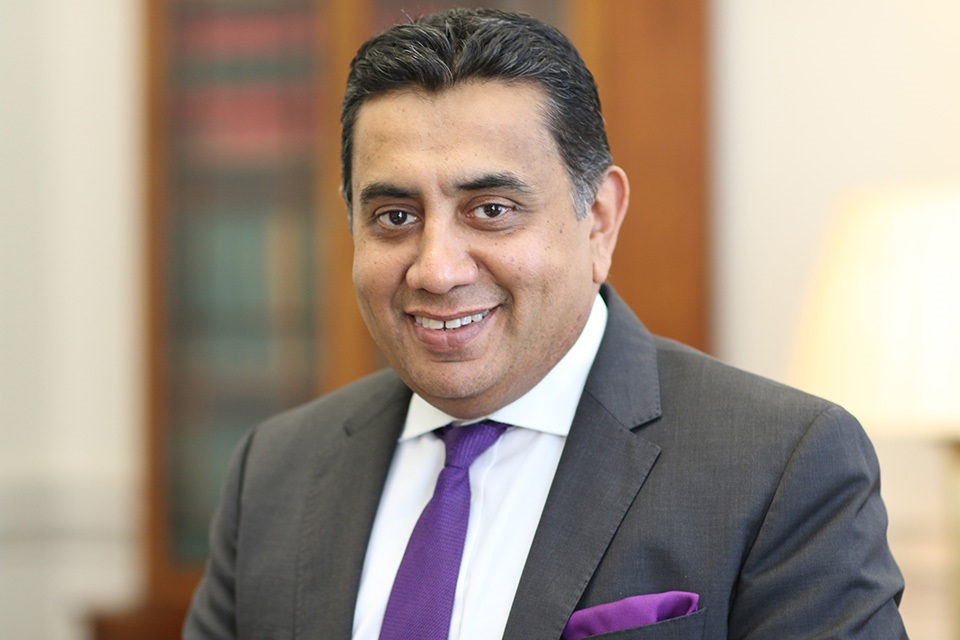
    Below is the text of the speech made by Lord Ahmad, the Minister of State for the Commonwealth and the UN at the Foreign & Commonwealth Office, in Italy on 30 January 2018.

    Introduction

    Your Eminence, Excellencies, ladies and gentlemen, good afternoon.

    May I start by saying it is an honour and a privilege to be here this afternoon and an honour to address you in this historic institution, one that boasts such distinguished alumni. For today’s students it must be an extraordinary feeling literally to follow in the footsteps of Catholic saints. But if I may, a moment of personal reflection. It is very special for me – as a man of faith, I am a Muslim, to stand here before you, in the heart of Rome, a stone’s throw from the Vatican, and speak to you of my faith.

    I cherish the freedom to practise my faith right here, just as all people of all faiths and none are free to do here in Rome and as they are free to do in my country the UK, without fear of discrimination or persecution.

    Freedom of religion or belief, including the freedom to change religion, is a fundamental human right and one that I believe passionately should be enjoyed by everyone, everywhere.

    The reason I believe it matters – why the British Government believes it matters and why our Prime Minister Mrs May believes it matters – is not just for its own sake, or even because we know that more than three quarters of the world are guided by their faith.

    It matters because where such freedoms are absent or indeed restricted, intolerance and mistrust flourishes, it splits communities down religious fault lines. Once communities are divided in this way, it does not take too much for tensions to spill over into violence.

    The connection between religious tolerance and stable societies is another reason why we think promoting freedom of religion or belief is so important. There is clear evidence to suggest that tolerant and inclusive societies are better equipped to resist extremism. And most importantly, by ensuring that everyone can contribute, it makes society as a whole better.

    Let me give you an example of what I mean.

    Just off the west coast of Scotland, not far from Glasgow, there is an island called Bute. It is just 15 miles long, 4 miles wide, and home to fewer than 7,000 people. Two years ago, the local council moved 24 Syrian refugee families to the island.

    Initially some locals were wary of these strangers. They knew nothing about them, except what they had heard on the news about the conflict in Syria, and yes some of them feared they could be traumatised or dangerous to the community. Yet this tiny community overcame their fears and opened their arms to embrace the newcomers.

    They learned Arabic and offered the new arrivals the use of their community hall, fitting prayer times around the art club and bingo. In return, they acquired a Syrian barber’s shop on the high street and they even got a taste for Syrian pastries. Today many of the new arrivals speak English, yes, with a Scottish accent…

    The UK – Strength in diversity

    The story of Bute could be the story of the UK in miniature. Over the centuries the UK has welcomed people from all over the world – I’m one of them, or my parents were: they moved to India, torn from Pakistan by dispute in the 50s and then to the UK where they first settled in Scotland too, just like those Syrian families.

    The landscape of my country the UK is no longer graced exclusively by spires and steeples, that we celebrate, but also by minarets and menorah, domes and temples.

    As you look over the tapestry that is modern Britain today, we have more than 1,700 mosques, 400 synagogues and 300 Gurdwaras, often standing side by side with churches and cathedrals.

    I am proud of our religious diversity, but it would be wrong to suggest that it is always easy to integrate religious minorities into a society where there is already a dominant religion. When we promote religious tolerance in other countries we know from experience how challenging it can be.

    Whether it is in a big multicultural city like London or a tiny community like that island community in Bute, it can require a shift in mind-set on the part of the majority – or in the case of the UK the Christian – population.

    When a temple is built on your street or a halal butcher opens in the market it forces you to accept that your religion is one of many, and not the only one. At times this can be difficult, and the battle of ideas is by no means won, even in the UK.

    Therefore it is important for governments and faith leaders to keep making the argument that we have nothing to fear from accepting other faiths into our society; that mutual respect is a sign of strength, not weakness; and that when faiths take the difficult step of defending each other’s rights, they are spreading the universal message of tolerance, respect, understanding and peace – the universal message of all religions.

    When people overcome their fears of other faiths, the whole of society benefits. And I am convinced that the mutual respect among our many different communities contributes directly to our strength as a nation. Of course we are not alone in this – many other countries strongly defend freedom of religion. In the Middle East, Lebanon stands as a model of peaceful coexistence of faiths.

    In Abu Dhabi, a third Christian cathedral – for the Greek Orthodox faith – has just opened; and a mosque beside the Catholic cathedral – which had carried the name of the Crown Prince – has just been re-named at the Crown Prince’s request the Mary, Mother of Jesus Mosque.

    Outside the Middle East, I also saw religious diversity flourishing in Ghana, with religious communities working together, when I visited last year.

    Violations of Freedom of Religion or Belief Worldwide

    Yet tragically, as we look around the world, millions of people face appalling persecution every day – why – because of their beliefs.

    Even right here in Europe, where we have some of the strongest equal rights protections in the world, tragically anti-Semitism and Islamophobia are on the rise and it is essential that they are dealt with robustly.

    Further afield, we have all been horrified by the barbarity of Daesh, including towards Christians, Yazidis and Mandeans in Iraq and Syria, and the despicable crimes of Boko Haram’s atrocities against Nigerian Christians.

    These acts by terrorist organisations are appalling – but it is not just non-state actors who are to blame.

    For too long far too many States have failed to prevent religious discrimination, or even to ensure the rights of citizens of all faiths – and none – are protected by the law.

    For example, in Egypt, Coptic Christians still do not enjoy equal citizenship rights. They continue to face social pressure that restricts their freedom to worship, build churches, and play a full role in national life.

    When legal protections are lacking, popular prejudices go unchecked, people suffer harassment, and that harassment can turn to persecution, exclusion, or even violence.

    In some cases States are going further than that and are themselves actively trampling on their citizens’ rights.

    As we look around the world today, this is the reality for Rohingya Muslims in Burma’s Rakhine state, Baha’is in Iran; and Jehovah’s Witnesses in Russia.

    In China, where there are as many Christians as there are people in the UK, churches must be approved by the state or risk demolition. In Saudi Arabia, non-Muslim religions are banned and the death penalty is imposed for apostasy, while in Pakistan, blasphemy laws are used to intimidate atheists, Christians and other minorities, and the state turns a blind eye to attacks on Christian minorities or the Ahmadiyya Muslim community.

    All are being failed by the government, the State, very people whose responsibility it is to protect them.

    Rise of Christian Persecution

    I want to draw particular attention today to the issue of Christian persecution, which appears to be on the rise. The latest report by Aid to the Church in Need found that the plight of Christians had worsened in nearly all the countries that it had reviewed, including North Korea and Nigeria.

    These findings are supported by Open Doors, whose 2018 Watch List indicates that 1 in 12 Christians have experienced persecution. Last year around the world, more than 3,000 Christians were killed, and 15,000 Christian buildings were attacked.

    This is appalling, not just are these appalling statistics, but appalling full stop. Behind every statistic is a human tragedy. I welcome the work of the Catholic Church and civil society groups in trying to protect Christians around the world, and I commend the courage of the Papal Nuncio in Damascus who chose to remain in his post, despite challenging circumstances he remained in his post, during the conflict, at great personal risk, with great personal courage.

    UK Action

    Tackling discrimination and promoting tolerance around the world is a priority for the UK Government.

    Our Prime Minister Theresa May has spoken of the need to “stand up for the rights of people of all religions to practise their beliefs in peace and safety”.

    Our action takes a number of different forms. We lobby governments directly about specific cases, yes we urge them to protect the rights of their citizens and where appropriate we press them to change legislation that discriminates against minority groups, or to introduce safeguards to protect the misuse of certain laws.

    We also work with international partners through the UN and other bodies to promote religious freedom; to build consensus on the importance of the issue; and, just as importantly, to ensure that religious persecution in itself does not go unpunished.

    We have been at the forefront of a campaign to bring Daesh to accountability and justice, committing one million pounds to help establish a UN-led investigative team to support the collection of evidence.

    And we spend millions of pounds every year on grassroots projects around the world to counter hate speech, to promote tolerance and understanding of minorities and ultimately build mutual respect between communities.

    Importance of Mutual Understanding

    Building this mutual respect is essential. As His Holiness Pope Francis rightly says, people of different faiths – and none – must – I quote – “fully understand our respective convictions” if we are to succeed in breaking down the barriers between us.

    In the words of one of my personal heroes, Mahatma Mohandas Gandhi: “If we are to respect others’ religions as we would have them respect our own, a friendly study of the world’s religions is a sacred duty.”

    That is why we fully endorse the commitments made by both the Vatican and the Church of England to strengthen inter-religious dialogue.

    We in the UK Government are strengthening our own links with faith groups, it is essential: for example I have introduced, since my appointment last summer, regular faith roundtables to discuss the pressing foreign policy issues of our time and deepen our understanding of religious perspectives on them.

    Education is also vital if we are to eliminate intolerance and break down the barriers between communities for good. As Nelson Mandela said, no child is born hating his neighbour. Intolerance is something that is learned.

    We must educate our children to understand other religions, in the hope that the next generation will be wiser than those that have come before it.

    And schools can play this role, including faith schools. I myself am a product of a Church of England School, my mother insisted on it. She believed it was essential for learning about and respecting other beliefs – so I know this from experience. And I have made the same choice as a parent myself, my eldest daughter attends a Catholic school and my son a Catholic Jesuit school. It doesn’t dilute our faith, but rather makes us more rounded. The crucial thing is that schools teach inclusivity and mutual respect: that is the key to a tolerant and peaceful future.

    Community Action

    While all these government-led efforts are important, tackling intolerance is not just about Government action: there are things that individuals can do in their communities too.

    Religion itself can be part of the solution. As his Holiness Pope Francis said during his visit to Burma last year: “Religious differences need not be a source of division and distrust, but rather a force for unity, forgiveness, tolerance and wise nation-building.”

    This positive force can help to ensure that people of all faiths and none truly feel part of the wider community, their country and their nation.

    On Christmas Day last year, non-Christian restaurant owners across the UK opened their doors to feed the lonely and the homeless. Young people from the Muslim community in my own home town of Wimbledon, some of you may know it for other reasons, spent this New Year’s Day picking up litter. Earlier this month in North London the local Jewish community raised thousands of pounds for the family of a murdered Asian shopkeeper.

    Small acts of compassion like these demonstrate that we are all part of the same community. They dispel misconceptions and prejudice, and build lasting bonds and friendships.

    Conclusion

    In his New Year message, His Holiness the Pope reminded us that 2018 is the 70th anniversary of the adoption of the Universal Declaration of Human Rights. That matters to all of us, it matters to me as Minister for Human Rights.

    Every act of intolerance, every attack by neighbour on neighbour, community on community and country on country is an attack on those rights and on society as a whole.

    Humanity cannot afford for this to continue. Too many people – man, woman, boy, girl, black, white – have suffered for too long.

    So I call on everyone gathered here today, let us all come together – diplomats and religious leaders; journalists and students; strangers and friends – and let us collectively make a pledge.

    A pledge to be intolerant of intolerance; to speak out against discrimination in all its forms; to fight impunity; and to hold States true to their international commitments.

    And let us collectively pledge today, not just tolerance, that is a basic instinct, but also to respect the beliefs of others; to tackle and debate those within our own communities who display intolerance and above all to see strength in our diversity, so that one day, people of all faiths and none may live side by side in peace. It is a hope, it is my prayer.

  • Greg Hands – 2018 Speech on Spain

    Below is the text of the speech made by Greg Hands, the Minister of State for Trade Policy, in Spain on 30 January 2018.

    Your Excellency Ambassador Bastarreche, Mr President San Basilio; distinguished and honourable friends; please allow me to thank the Spanish Chamber of Commerce for their kind invitation to attend this annual gala.

    It’s an honour and privilege to be here and to address you all.

    I was invited to give a speech on a topic of my choosing; which was fantastically exciting. But my office insisted that, given I am a Minister for International Trade and, given I would be speaking to such an esteemed audience, I should perhaps narrow my focus a little.

    So my speech on the Great Fire of London which started just a stone’s throw from here and ravaged the original version of this beautiful building, the Skinners Hall, will have to wait for another day…

    Nevertheless, the commercial relationship between the UK and Spain is something I am more than happy to discuss. And today is an opportune moment to do so.

    Today we can look back on a year when the historic visit of King Felipe and Queen Letizia demonstrated the strength of our longstanding bilateral relationship.

    Indeed, the UK and Spain share diplomatic ties going back 500 years, and commercial ties which go back even further. Even Shakespeare made reference to the joys of Spanish sherry and Canary wine. It is certainly a proud history on which to build.

    Even more tantalising than sherry or wine is the vitality of our trading relationship today, and the opportunities we can see for tomorrow.

    That is why as well as being able to celebrate the past, tonight is an opportunity to look to the future, and the chance we have not just to sustain, but strengthen our bonds of friendship.

    Spain is the UK’s seventh largest trading partner, with UK exports to Spain in 2016 amounting to an impressive £14.6 billion. Furthermore, figures show that UK exports of goods to Spain increased by more than 15% in the year to November 2017, compared to the same period a year ago.

    The statistics on our investment in one another’s economies are even more impressive.

    Spanish investment in the UK was £30.3 billion in 2016, with Spanish firms investing in our transport infrastructure, in clean energy, telecoms, automotive manufacturing and financial services. Spanish banks have the largest presence of all foreign banks in the UK, larger than Germany or the USA; indeed Santander alone employs around 20,000 people in Britain.

    Meanwhile, UK investment in Spain was £56 billion in 2016, 24% higher than in 2015. Globally renowned British brands are flourishing with the likes of Rolls Royce, GSK, Diageo, BUPA and BP, helping to generate many jobs in Spain.

    And yet, there is potential to do much more.

    When Prime Minister Rajoy visited the UK in December he wrote of his ambitions for our relationship, stating:

    The aim will be to build a strategic alliance to respond to the common challenges and goals of the 21st century. Britain can count on Spain’s loyal and sincere friendship. We want the best for the UK because it is simply another way of wishing the same for Spain.

    I believe that fulfilling that potential should be the ambition of all of us here this evening.

    This will not be without challenges. I appreciate that many of you will likely have concerns about the UK’s exit from the European Union and our future relationship with our European partners.

    But I can stress to you this evening, as I have done on many occasions, the UK’s vote to leave the EU was not a decision to turn our back on our friends in Europe, it was a vote to build a more global Britain alongside, and in partnership with, a strong Europe.

    The referendum was not driven by isolationism, nor is it an excuse for Britain to abdicate from its international responsibilities.

    We are not rejecting our European friends and allies or disowning any of the good that the European Union has done. Rather, we are looking to strengthen our ties with those nations, which will drive economic growth in the 21st Century.

    There can be no doubt that the UK and Spain are united in our ambition for a brighter, more prosperous world for both our peoples. Through our common outlook and shared values, we share a firm friendship that will only grow as we redefine our relationship with the European Union in the coming years.

    We will approach our future discussions with the EU with determination and creativity. We are working to secure the best and most ambitious agreement that will benefit us, but also, importantly, that will benefit our European partners.

    As the Prime Minister has said, to hope for anything but success for our neighbours would be truly perverse. It would be an inconceivable act of self-harm.

    And of course, we cannot overlook the continued importance of the UK to the European Union.

    Overnight, on 29th March 2019, the United Kingdom will immediately become the EU’s second-largest and most important external trading partner; a vast, £600 billion export market, rivalled only by the United States in the depth and breadth of our commercial connections to the continent.

    The EU is rightly seeking free trade agreements with the likes of the Mercosur nations, Australia and New Zealand (which we, like Spain, overwhelmingly support). But it would be absurd for the EU not to seek a comprehensive free trade agreement with almost its largest trading partner, only 30 kilometres from the coast of France – the United Kingdom.

    As we look to develop this new partnership, we start from the unique position of regulatory alignment, trust in one another’s institutions and a shared spirit of cooperation. We should, therefore, be optimistic, and ambitious, about what we can achieve.

    That is why the UK government is listening to business. We are keen to understand commercial concerns and make sure we address them where we can, giving them the certainty they need to invest and grow.

    For example just this week the Secretaries of State in HM Treasury, BEIS and DExEU issued a joint letter to businesses setting out our ambitions for an implementation period, to help businesses adapt and prepare for the UK’s exit from the EU.

    Equally, I am sure my Spanish counterparts and governments throughout the EU27 are keen to understand business concerns and how the EU’s future trading relationship with the UK will affect commercial interests.

    I would urge all businesses to use this opportunity to advocate an open, frictionless trading relationship; building on our firm partnership to prioritise investment, growth and job creation.

    We are setting out to build this new relationship at a time when we are facing the voices of economic nationalism and anti-globalisation. Growing protectionism in the world is of great concern to us all.

    Free trade has transformed the world for the better; opening up new markets, providing access to millions of potential new customers, and allowing businesses to benefit from the exchange of ideas, expertise, talent and technology, across borders.

    It is critical that the UK and Spain continue to collaborate as global advocates of free trade, for example in our shared support for the EU-Mercosur Free Trade Agreement.

    I sincerely hope that we continue to work together, to champion the cause of free trade, both while the UK remains a member of the EU and after our departure.

    I would like to close this evening, firstly, with a commitment.

    A commitment that this government will forge ahead, creating the conditions for your businesses to grow and succeed, confident that your investment is underpinned by sound institutions, the rule of law, proportionate regulation and open markets.

    And secondly, with an ask. An ask that you continue to innovate; to invest; to identify and capitalise on opportunities, and to create jobs and prosperity for all of our citizens.

    I look forward to working with you all, to build on the solid foundation of our unique and historic relationship and to realise our mutual aspirations for a more prosperous future in both of our great nations.

    Muchos gracias.

  • Theresa May – 2018 Speech in China

    Below is the text of the speech made by Theresa May, the Prime Minister, in China on 31 January 2018.

    Thank you, Premier Li.

    I’m pleased to be here in Beijing today, on my first official Prime Ministerial visit to China.

    And although I may be visiting in winter I’ve had the warmest of welcomes for which I am grateful and I welcome the opportunity we’ve had today to discuss a wide range of topics in an open way, important issues which face us both and I look forward to continuing discussion over dinner tonight and with President Xi tomorrow.

    I am pleased that we have agreed to intensify the “Golden Era” of UK-China relations.

    The UK and China are both global powers with a global outlook. You made reference Premier Li to the UK leaving the EU as we do so we become ever-more outward-looking and as China continues to reform and open up, we are committed to deepening our strong and vital partnership and that relationship.

    Our relationship is broad and deep, and it delivers real benefits for both countries. We are working together to tackle global and regional security challenges such as North Korea, modern slavery, threats to aviation security; to build sustainable economies of the future and enhance our bilateral trade and investment relationship; and to develop our strong education and societal links.

    Allow me to say a few words of detail on each of these.

    Global Issues

    As fellow permanent members of the UN Security Council and the G20, we are committed to jointly addressing global challenges, indeed steel is one of those challenges that the G20 has discussed, and protecting and promoting the Rules-Based International System.

    We have discussed North Korea, agreeing that its pursuit of nuclear and ballistic missile programmes is illegal, reckless, and poses an unacceptable threat to international peace and security.

    We have agreed the full and effective implementation of UN Security Council sanctions is vital to persuade the North Korean regime to change course and abandon its illegal activity.

    And we have agreed today new measures on aviation security, designed to improve aviation security standards in both the UK and China by sharing more information and undertaking visits to share best practice and observe standards of implementation.

    We will also do more together to tackle the scourge of modern slavery. To disrupt and prosecute the organised crime groups responsible and to protect victims. And we will begin new joint work to tackle other forms of serious organised crime, including the illegal supply of synthetic drugs.

    Trade and Investment

    We’ve discussed how our economies have complementary strengths. Trade between our two countries is already at record levels, worth over £59 billion, UK exports to China have grown by over 60% since 2010. The UK is already one of the largest European recipients of Chinese Foreign Direct Investment. The UK is the world’s largest exporter of financial services and UK firms are leaders in China’s market.

    We are determined to deepen our trading relationship even further, and are ambitious for what our future trade relationship will be.

    We will work together to explore all options to deliver a high level of ambition for the future trading relationship and have today launched a joint trade and investment review to identify priorities for promoting growth in goods, services and investment. And as Premier Li has referred to, later today we have the inaugural meeting of the new UK-China CEO Council, which will bring together business leaders and Ministers to strengthen trade and economic cooperation.

    To pave the way for this ambitious future trading relationship, we have agreed new measures to improve market access in China and remove barriers to trade, includes an agreement make progress on lifting the BSE ban on British beef exports within the next 6 months and to an agreement to allow exports of a broader range of dairy products.

    We have also agreed to open up the Chinese market to our great UK financial services expertise to reach more Chinese consumers.

    And we’ll be pleased to welcome a significant number of major new commercial deals due to be agreed during this visit expected to total over £9 billion pounds, creating and securing jobs and prosperity both here and in the UK.

    We welcome the opportunities provided by the Belt and Road initiative to further prosperity and sustainable development across Asia and the wider world. And as with the Asian Infrastructure and Investment bank, the UK is a natural partner for the Belt and Road initiative with our unrivalled expertise. And as I’ve discussed with Premier Li, we’ve discussed how the UK and China can continue to work together to identify how best we can cooperate on the Belt and Road initiative across the region and ensure it meets international standards.

    We will work together to encourage free and fair trade, ensure a transparent, rules-based multilateral trading system, and build an open global economy that works for all. And as partners committed to global free trade, but as our companies innovate and create new products they are confident that their intellectual rights and property will be fully protected including against cyber threats.

    And as Premier Li mentioned and reminded us we’ve also discussed overcapacity in global market sectors such as steel and the need to see CG20 principles adhered to and further action taken to ensure unfair trading practices are tackled.

    People-to-people

    Our societies share broad and deep cultural ties. There are already strong links between the people of the UK and China, not just between our governments.

    Chinese students already constitute the largest single source of overseas students in the UK, with the UK welcoming 155,000 students currently in the UK, who make a valuable contribution to your society, worth as well as adding an estimated £5 billion annually. There are also now some 9,000 young British people studying and interning in China, with numbers up by 60% since 2013.

    And today we have agreed to go even further on our education partnership, including by extending the pioneering Shanghai Maths Teacher Exchange primary school programme for a further two years to 2020, and expanding the programme to secondary schools.

    We have also agreed to launch a new “Global Partners 2020” programme, to build better direct links and networks between our future leaders across government, business and academia.

    Conclusion

    The UK and China are global partners for the long-term.

    We are committed to building on our deep and mature ties to promote global peace and prosperity in the 21st century.

    So Premier Li, I look forward to continuing our discussions.

    Q+A:

    Question: What do you plan to do differently on Brexit and outside of Brexit? And on international threats, Trump called China a threat? Do you agree?

    PM: On the first point that you raised, in relation to what the government is doing on Brexit and on the domestic agenda. On Brexit we’re obviously working to that future trading relationship with the EU, we achieved sufficient progress in December and we’re now taking that next step to ensure we get the best Brexit deal for the UK and that means will be a deal that takes back control of money, laws and borders and also able to maintain a good trading relationship with the EU for the future, because that is good for both the UK and EU.

    On the domestic agenda if you look at what we’ve been doing over the recent weeks and months I think that there are very many people who want that they and their families can achieve the British dream, of ensuring that each generation has a better future than the last. For a lot of young people that’s about owning their own home, being able to get their foot on the housing ladder, we’ve cut stamp duty for 95% of first time buyers and I’m pleased to say that figures out only last week show that the highest number of first time buyers in the last year for a decade. We’ve also been ensuring that young people get start the best start in life with a good education, nearly 2 million more children in good and outstanding schools now. And we also want to ensure in the work we do that we continue to cut the deficit and develop a balanced approach to economy, we are seeing good jobs being created, unemployment is at its lowest level since the 1970s and yes we do need to do more, and we need to ensure that we are talking about what we’ve already achieved to those young people who worry they’ll get their own home, to parents concerned about the education their children will be getting and about the jobs for the future for their children. And that’s what we’ll be doing, and what we’re committed to delivering on that.

    And if you talk about the role of china, what we’ve been discussing here is the excellent relations we have with our golden era of UK – China relations. But how we can be working together not just to improve those links between us which will be of benefit in the UK and in China and in delivering and working together on those global issues such as N Korea and other issues like modern slavery which have an impact around the world.

    Question: I understand a series of corporate agreements have been signed, same time witnessing rising isolationism – what measures will china and the UK take to boost globalisation and free trade? And to the UK Prime Minister, Brexit is not just an issue for British but also for Chinese people – china the best partners for the UK after Brexit – how do you see prospects of relationship with China?

    PM: Thank you and the second question to me was about Brexit and the impact that this will have. As we leave the EU we will become a country that is able to operate an independent trade policy to sign free trade agreements around the rest of the world. And that is exactly what we will be looking to do. And it is in the best interests of the people in the UK but also those free trade agreements bring benefits to the countries with whom we sign them. Also, we will be a more outward looking country, to build a global Britain that is able to sign those free trade agreements that is able to continue to play its role on the world stage in the various multilateral organisations we’re part of, working alongside china and other members for example in the United Nations.

    But I think in terms of the future for the relationship between the UK and China after we leave the EU, today we’ve agreed a joint trade and investment review which I think is a good step towards looking towards what our future trade relationship can be when we have that freedom outside membership of the EU of being able to arrange those agreements by ourselves on a bilateral basis.

    And as Premier Li has said, there are many concrete examples already of how that trade relationship is developing between our countries. And I think the message of free trade and the importance of free trade is best seen by the examples of the actual trade we see which brings jobs and investment to China and the UK.

  • Chris Bryant – 2018 Speech on Bermuda

    Below is the text of the speech made by Chris Bryant, the Labour MP for the Rhondda, in the House of Commons on 29 January 2018.

    The relationship between the United Kingdom and the overseas territories is an important but complex one. In large measure, the overseas territories are independent of the UK. They make their own decisions and draw up their own laws, which are ruled on by their own courts, but that is not the end of the story. Their constitutions have been drawn up in consultation with Her Majesty’s Government, their Governors are appointed by Her Majesty’s Government, and their external affairs, defence, internal security and policing remain the responsibility of the Governor, acting on behalf of Her Majesty’s Government.

    The UK Government often step in, sometimes with financial and military support, as happened recently in the Caribbean following the terrible hurricane season. At other times, the UK Government take a different line on a matter of important policy, such as when I, as a Minister, had to suspend the Government in Turks and Caicos because of corruption, or when David Cameron pushed the overseas territories to implement public registers of preferential ownership so as to end some of the secrecy that attends the financial provisions in those territories, which have sometimes brought the British financial system into disrepute.

    That is as true for Bermuda as it is for any of the other overseas territories. I honestly have no desire to upset the delicate balance, but it is my firm belief that British citizens should enjoy the same freedoms in Bermuda as in England or Wales or, for that matter, Northern Ireland.

    Bermuda has made significant strides in recent years on lesbian, gay, bisexual and transgender rights. Immigration law has been changed to allow immigration rights for non-Bermudian same-sex partners of Bermudians. Gays and lesbians, either by themselves or as a couple, are now able to adopt, and its anti-discrimination legislation includes protection on the basis of sexual orientation.

    Another positive step came last year. On 5 May, the Supreme Court in Bermuda ruled in a case brought by Winston Godwin and his Canadian fiancé, Greg DeRoche, that

    “the Applicants were discriminated against on the basis of their sexual orientation…when the Registrar refused to process their Notice of Intended Marriage…The Applicants are entitled to an Order of Mandamus compelling the Registrar to act in accordance with the requirements of the Marriage Act; and…A Declaration that same-sex couples are entitled to be married under the Marriage Act”.

    It was clear that the then Bermudian Government were not very happy with the ruling. They had held a very poorly attended referendum on the matter the year before, on 23 June 2016—that was quite a day for referendums. It was a referendum that no lesbian or gay organisation or individual had ever called for, but which the Government insisted on. That referendum suggested, on a turnout of less than 50%, that Bermudians opposed both same-sex marriage and same-sex civil unions by roughly two to one, which was why Justice Charles-Etta Simmons made the following clear in her summation:

    “The politicians failed, the referendum failed, so I will step in and protect the rights of a minority”.​

    Many people in Bermuda, and in many other overseas territories and countries around the world, rejoiced at that moment.

    There were two sensible, non-confrontational courses that the Bermudian Government could have taken: abide by the ruling of the Court; or appeal to the Privy Council in this country—that is the standard process for appealing a decision. In fact, the Minister of Home Affairs announced on 9 May that the Government would not appeal, and on 31 May, the first same-sex marriage took place in Bermuda. There have now been eight such marriages in total and four further publications of banns of marriage.

    Then came a new Government, after an election, who decided to draft a law to abolish same-sex marriage and replace it with “domestic partnerships”, albeit allowing those same-sex marriages that had already been celebrated to stand, rather in a position of limbo. It is a deeply unpleasant and very cynical piece of legislation. It sounds quite nice on the face of it, as if it is just the same as civil partnerships in this country, but it is not. It seeks to keep marriage officers separate from domestic partnerships officers, as if to protect them from some kind of infection. It allows a domestic partnership to be voided on the sole grounds of “venereal disease”. It was introduced by a Government whose members have openly declared that they are opposed to civil unions of any kind whatsoever and pretended not even to know that same-sex couples have regularly been denied the right to make important medical decisions on behalf of their sick and dying partners in Bermuda.

    Section 53 of the law states:

    “Notwithstanding anything in the Human Rights Act 1981, any other provision of law or the judgment of the Supreme Court in Godwin and DeRoche v The Registrar General and others delivered on 5 May 2017, a marriage is void unless the parties are respectively male and female.”

    In all the history of legislation, I have never seen a measure that so clearly declares from the outset that it is inconsistent with all the other laws in the land, including the Human Rights Act, the constitution and the judgment of the Supreme Court. It is almost begging the Supreme Court to come to exactly the same decision as it did last year. Unfortunately, this Bill was agreed by both Houses in Bermuda on 8 December, but it cannot become law unless and until the UK-appointed Governor, John Rankin, signifies Royal Assent on behalf of the Government, which so far he has not done.

    I believe that the Governor is entirely within his rights to delay a final decision or, if he chooses, to refuse Royal Assent, as the Bermudian constitution states at section 35:

    “unless he has been authorised by a Secretary of State to assent thereto, the Governor shall reserve for the signification of Her Majesty’s pleasure any bill which appears to him, acting in his discretion—

    (a) to be inconsistent with any obligation of Her Majesty or of Her Majesty’s Government in the United Kingdom towards any other state or power or any international organisation;

    (b) to be likely to prejudice the Royal prerogative;

    (c) to be in any way repugnant to or inconsistent with the provisions of this Constitution;

    (d) to affect any matter for which he is responsible under section 62 of this Constitution; or

    (e) to relate to currency or banking.”

    On the basis of least two of those limbs, the Governor has very good cause not to grant Royal Assent.​

    As section 12 of the constitution expressly guarantees freedom from discrimination and the Bermudian Human Rights Act 1981 also expressly prohibits discrimination on the grounds of sexual orientation on at least seven different points, it is difficult to disagree with the Supreme Court, and therefore equally difficult to see how the Governor could agree Royal Assent. There are other reasons why the Governor should withhold assent. It would have been one thing if the Bermudian Government had introduced civil partnerships as a forward step when there was no such provision in law in Bermuda, but this is a retrograde step—it is taking a step backwards—that deliberately limits the rights currently enjoyed by many Bermudians.

    Incidentally, this is not just a matter of marriages contracted in Bermuda. The law also applies to Bermuda-registered ships, including many cruise liners that used to be registered out of the United Kingdom, so the service of marriage at sea that Cunard and P&O offer, such as on the Queen Mary 2, the Queen Victoria and the Queen Elizabeth—there is some irony in this—is currently available to same-sex couples. I understand that there was a great big party on one P&O liner when the Supreme Court decision was announced—considerable amounts of champagne were drunk—and there have since been three same-sex marriages on board P&O cruise liners. If the proposed law goes ahead, those marriages will cease. Cunard believes it is likely that Bermudian law will not permit a same-sex wedding ceremony on board its ships after the end of this month, adding:

    “We are very unhappy about this decision and we do not underestimate the disappointment this will cause those guests who have planned their weddings.”

    I am certain that those people will be taking new cases to the Supreme Court in Bermuda.

    I have received a great number of emails, tweets and messages about this issue. Some of them have been quite pleasant, but others have not. Some have told me in very robust terms to butt out, saying this should just be up to Bermuda, but I disagree. This matter impinges on how Britain is viewed around the world, and I take just as active an interest in the human rights of LGBT people in Moscow, Tehran and Beijing as I do in the human rights of those in Hamilton, because the thing is that human rights are, to use a Biblical phrase, a seamless garment. We cannot divide them up. As one Bermudian put it in an email to me,

    “all people have the right to be equal under the law and the right to exercise their full range of human rights, without exception. This is how I live my life and this is what I encourage others around me”

    to do.

    Black and white, man and woman, gay and straight, Russian, Iranian, American, Canadian and Bermudian—it is all exactly the same. We are all human beings and our human rights should not differ. To the person who told me not to interfere because we have not yet sorted out Northern Ireland, I should add that when the Labour Government legislated in favour of LGBT rights in England and Wales, we decided to advance that legislation in Northern Ireland as well, even when Northern Irish politicians objected. The Government here in Westminster need to look hard at the situation in Northern Ireland and implement equality. It is unfair that our Northern Irish brothers and sisters are unable to enjoy the same rights as everybody else.​

    Some people say, “You change hearts and minds first, and then you change the law.” I profoundly disagree with that. There is clear evidence that changing the law helps to change people’s hearts and minds. For two centuries and more, people—including people who considered themselves to be good upstanding Christians—considered slavery to be just part of the natural order. It was laid down and allowed. Indeed, many bishops had large plantations and many slaves. We now know that that was a cruel and despotic belief. Today, we find it unthinkable that people could conceive of slavery as acceptable.

    It is my profound belief that in 100 years’ time, people will wonder what on earth people were thinking when they condemned homosexuality as a sin, when they barred gay and lesbian couples from declaring their love for one another in marriage, and when they fought tooth and nail to say that marriage had to be exclusively between a man and a woman. Because, really, what harm does it do anyone else if two men are allowed to marry? Has the sky fallen in in Bermuda? Have straight husbands suddenly abandoned their wives, or have heterosexual wives run off with each other? Have straight marriages lost their sparkle? Of course they have not.

    If anything, straight couples should be rejoicing that so many people want to form long-lasting, stable relationships and to get married, because marriage is a thing of beauty. The public declaration of love between two people—from this day forward, for richer, for poorer, in sickness and in health, to love and to cherish, till death us do part—binds people and families together. It gives a safe home to thousands of children and to elderly parents as well. It enriches life and gives hope, and often it banishes the loneliness that for generations and generations gay men and lesbian women thought would be their lot.

    For many gay men and lesbian couples, same-sex marriage provides a public affirmation that chases away the ghosts of shame and self-loathing that so many grew up with thanks to the hateful judgmentalism of others. Why on earth would anyone want to deny that to anyone else? Why on earth would a Christian want to deny that to anyone else? Why on earth would we perpetuate the homophobia that has left youngsters emotionally bruised by hateful taunts in the playground, or physically battered almost to death outside gay bars because they were in the wrong place at the wrong time?

    Of course I would much prefer it if the Governor did not sign the Domestic Partnership Bill into law—if he did not grant assent. I hope he does not, and I hope that the Foreign Secretary does not instruct him to do so. If necessary, I hope he just lets it lie on the table until the Supreme Court has another go, as it almost certainly will. What would be even better, if I am honest, would be if the Bermudian Government thought again, respected all their fellow citizens, embraced the principle that the first rule of equality is to protect minorities, and withdrew the Domestic Partnership Bill. I say to the Minister for Home Affairs in Bermuda, the honourable Walton Brown, “If you withdraw the Bill, it will one day be the single action in your political career of which you will be most proud. One day it will be, and your children, grandchildren and great grandchildren will say, ‘That is what he did.’”

    To the Premier, the honourable David Burt, I would add, “You are a very clever man. You graduated cum laude from George Washington University and you led ​the Progressive Labour Party very successfully to power in the elections last year. You have said publicly that homosexuality is not a lifestyle choice, and that this is not really about your religious beliefs, and yet you hold that same-sex marriage is just not culturally acceptable. Those are your words.” I am sorry, but that is just cruel. If this is an innate part of some people’s personality—some would say that God created them that way—it is simply cruel to deny an opportunity that everybody else would want for themselves. It is not rational and it is not progressive—it is just naked prejudice.

    The Labour party of which I am a member has always supported LGBT rights, even in the dark days of the Victorians, the Edwardians and the Georgians, right up to legislating to get rid of the horrible legislation in the 1960s. I say to Bermuda and to the Premier of Bermuda, “I hope you change your mind.” I hope Bermuda changes its mind, and I hope the Government do not sign this legislation into law.

  • Steve Baker – 2018 Statement on Leaving the EU

    Below is the text of the statement made by Steve Baker, the Parliamentary Under-Secretary of State for Exiting the European Union, in the House of Commons on 30 January 2018.

    I will begin by setting out our approach to publishing economic analysis, I hope once and for all.

    I can confirm that—I think the right hon. and learned Member for Holborn and St Pancras (Keir Starmer) will want to listen to this. I can confirm that when we bring forward the vote on the final deal that we agree with the European Union, we will ensure that the House is presented with the appropriate analysis that the Government have carried out, so that the House can make an informed decision. All Members must surely agree, however, that the Government cannot be expected to put such an analysis into the public domain before it has been completed. That would misrepresent our views. Furthermore, the Government cannot be expected to publish the analysis while the negotiations continue, which would surely harm the national interest. Parliament has rightfully agreed that Ministers have a duty not to publish anything that could risk exposing our negotiating position.

    Let me now turn to the article that prompted the urgent question. It is a selective interpretation of a preliminary analysis. It is an attempt to undermine our exit from the European Union. As I have told the House before, the Government are undertaking a wide range of analysis on our exit from the EU. The next stage of that analysis, summarised in a draft paper presented to Ministers this month, has been a cross-Whitehall effort to support our negotiating priorities. It has not been led by my Department, and it is not yet anywhere near being approved by Ministers. Even the ministerial team in my Department has only just been consulted on the paper, in recent days, and we have made it clear that it requires significant further work. In fact, I saw this report myself only this morning. The analysis to which I believe this article refers is a preliminary attempt to improve on the flawed analysis around the EU referendum. It is there to test ideas and to design a viable framework for the analysis of our exit from the EU. At this early stage, it only considers off-the-shelf trade arrangements that currently exist; we have been clear that these are not what we are seeking in the negotiations. It does not yet consider our desired outcome: the most ambitious relationship possible with the EU, as set out by the Prime Minister in her Florence speech.

    Such an agreement is in the interests of both the UK and the EU. Therefore, the scenarios in this analysis continue to suffer from the flaws we have seen in previous analyses of this type. Such analyses have been proved to be wrong in the wake of the referendum, not least because there is huge uncertainty around any forecast, especially in the long run and especially in the context of a major strategic choice.

    It is the Government’s job to improve on this analysis, but to do so we first have to understand where it went wrong previously. That is what the analysis to which this article refers is: it is not a forecast for our preferred outcome of the negotiations; it does not yet properly take account of the opportunities of leaving the EU.

    Finally, on 23 June 2016 the people of this country took a decision to leave the EU in the context of a wide range of economic information. The purpose of this analysis is not to question that decision, which this House voted overwhelmingly to uphold. I hope all Members of this House will agree that we should continue to respect the result of the referendum.

  • Gavin Williamson – 2018 Speech on Modernising Defence

    Below is the text of the speech made by Gavin Williamson, the Secretary of State for Defence, in the House of Commons on 25 January 2018.

    I undertook to return to the House at the earliest possible opportunity to update hon. and right hon. Members on the programme to modernise defence, which the Ministry of Defence will be conducting in the months ahead.

    Following agreement of the high-level findings of the national security capability review by the National Security Council, I have agreed with the Prime Minister and Chancellor that we should take forward its recommendation for a programme of further work to modernise defence to deliver better military capability and value for money in a sustainable and affordable way. This is essential if defence is to make its full contribution to national security.

    The 2015 national security strategy and strategic defence and security review set out a clear ambition to ensure that the armed forces can tackle the threats that we face. It also proposed important new policy initiatives, including a stronger international approach, pursuit of innovation, modernised personnel policies and defence making a bigger contribution to our national prosperity, and we are making real strides to unlock greater efficiency and productivity.

    Protecting the United Kingdom and our people remains our first priority and responsibility. As the threats we face become more complex and intertwined, we will need to work ever more closely with our NATO allies. We can also expect to remain actively involved with our partners in the Gulf in tackling shared threats to our security, and the Asia-Pacific region will become more important to us in the years ahead. The Ministry of Defence is making a major contribution to our prosperity as we procure the equipment our armed forces deserve and support defence exports, in which there have been recent successes, most notably the £6 billion Typhoon contract agreed with Qatar.

    Significant events last year—the callous terrorist attacks in London and Manchester, and the major storms that ravaged British dependencies in the Caribbean—are reminders of our wider responsibilities. We need to contain threats that have their origin overseas and be prepared to react swiftly and effectively when crises arise. As we identified in 2015, this will require the joint force we are building to be versatile and agile. It will need to be capable of operating in all five domains: land, sea, air, space and cyber. It will need to be international by design, routinely exercising and operating with allies and partners. It will need to be credible and capable of operating against state and non-state threats—normally not alone but with NATO allies and other partners, but we must also be able to act on our own if and when required. It must be able to contribute to our national security at home, working with the police and other national security organisations.

    While the major elements of our plans for Joint Force 2025 remain the right ones, in order to secure competitive advantage over our potential adversaries we need to ensure that we can move quickly to strengthen further our capabilities in priority areas and reduce the resources we devote elsewhere.​
    The Government commissioned the national security capability review to ensure that we have the policy and plans to implement our national security strategy, so that our investment in national security capabilities is as joined-up, effective and efficient as possible to address current national security challenges. A report will be published later in the spring.

    As my right hon. Friend the Prime Minister said in her recent Lord Mayor’s banquet speech, the threats, risks and challenges have become more complex and intertwined and have developed in areas and ways that we broadly expected, but at a much greater pace than was foreseen. The defence budget is £36 billion this year—the fifth largest defence budget in the world—and it will increase by £1 billion each year so that it will be almost £40 billion by 2021. The UK remains one of the few countries to exceed NATO’s 2% spending target, and this Government have committed to continue to increase the defence budget by at least 0.5% above inflation every year. However, we must do more to ensure that we use our resources effectively and deliver the efficiencies that the Department has committed to, so that they can be reinvested in the capabilities we require for our armed forces.

    It is for these reasons that I have agreed with the Prime Minister and the Chancellor to launch the modernising defence programme so that we can strengthen and modernise the armed forces to meet the threats that the NSCR identified. Modernising defence will allow us to deliver better military capability and value for money in a sustainable and affordable way, and it will allow us to ensure that defence capabilities complement other national security capabilities in the most effective way. I am determined to realise this goal through a modernised, more productive and more effective joint force that can deter threats more effectively and ensure that we can deliver what is required of defence today and succeed in any future conflicts. Turning this approach into reality will be my key goal for the modernising defence programme.

    This programme will involve four strands of work. The first three will optimise how the MOD is organised and is operating, identify further efficiencies and ways to be more productive, including through an aggressive programme of business modernisation, and improve our performance on the commercial and industrial issues. The fourth strand will look at the capabilities that defence requires to contribute to our three national security objectives today and in the future, but also, most importantly, to understand the ever-changing threats that this country faces. I am determined to use the modernising defence programme to ensure that defence can make its full contribution to our national security on a sustainable basis.

    I will speak to right hon. and hon. Members about this programme of work on a very regular basis, and I will keep the House updated as decisions are made. In the meantime, I would warmly welcome any contributions that right hon. and hon. Members would like to make. My Department and I will be consulting beyond the House as this programme of work gets under way in the weeks ahead.

    Protecting our national security and the safety of the British people both at home and abroad remains the Government’s first priority. Let us make no mistake—the world is becoming a more dangerous place. We cannot afford to shy away from this reality, nor can we take our ​security for granted. But even more than that, in a post-Brexit world Britain must continue to champion the global good. It must continue to reach out to seize global opportunities and deal with global threats. Our history teaches us that we cannot have prosperity without security. To protect that prosperity we must have armed forces primed and ready to tackle the challenges to come.

  • Chloe Smith – 2018 Speech at SOLACE

    Below is the text of the speech made by Chloe Smith, the Minister for the Constitution, on 25 January 2018.

    I’m extremely pleased to be here before you today and it’s an important part of my role to speak to the people charged with the responsibility for the effective running of the electoral processes that underpin our overall democratic system.

    As some of you might be aware, I was the Minister for Political and Constitutional Reform five years ago and being able to look back at the work I was leading then gives me an opportunity to acknowledge just how much has been achieved by you all.

    We have much new work in train, such as changing the provisions relating to overseas electors, responding to the recommendations in the report on electoral fraud by Sir Eric Pickles – including the piloting of ID in polling stations and changes to postal voting that will be tested at the elections in May – and plans to reform the position on the annual canvass.

    Change has not stopped whilst I have been away from the elections brief and I hope to take forward further change for the better in the coming years also. That is a journey we will want to make together, taking account of our various needs and views and involving other major partners such as the AEA and Electoral Commission.

    We have had, on a UK-wide basis, two General Elections, a European Parliamentary election and a referendum, plus the whole range of more local level polls that happen on a regular basis – and that these have been successfully delivered. That is an impressive track record and I thank you for your role in delivering those polls alongside substantive system changes.

    Modernising registration to build on IER

    First I’d like to deal with IER, familiar to us all. IER represents the biggest change to electoral registration in over 100 years and has brought some aspects of registering to vote into the 21st century. The introduction of IER was managed in such a way that register completeness remained stable – thanks to a major effort by government and EROs during the transition – while register accuracy improved considerably. IER has also significantly reduced the risk of registration fraud.

    Making registration more digital was also transformative. More than 30 million people have used our digital service, most of them directly through the website which continues to receive very high user satisfaction. Use of the website peaks around an election and whilst this has an impact on your administration teams which we are keen to address, we need to recognise that our registers are more complete because of this. The availability of the website until midnight on the deadline day far surpasses the use of Household Notification Letters or other means of trying to get people to register ahead of an election.

    But our public service reform agenda does not end with the introduction of IER and the digital service. There are further changes we can make to improve service effectiveness and efficiency. As with IER, our reform programme will work best if it is a collaboration, involving all key delivery partners with a focus on the practical changes we can make now.

    We need EROs and their teams to be open to change if our reform programme is to have the benefits we all want. We have already made changes to allow more of the registration process to take place digitally – for example, allowing the e-mailing of Invitations to Register.

    Take up of these new flexibilities has been much slower than expected. When so many other elements of local services are online or digital, why should so many teams continue to use so many paper forms? Especially when citizens’ expectations around communication have shifted so radically.

    I am keen to work with you to understand delivery barriers and to promote good practice – but there will also be a need for leadership within your organisations to build capability in your electoral teams in the same way you have met the challenge of modernisation in other services.

    Reforming the canvass

    So of course, there is a clear role for government to make changes that only we can make to allow you to deliver more modern services. That is why we have put reforming the annual canvass, through legislation to support innovation, at the heart of our modernising registration agenda.

    We recognise that by law the current process is very paper-based, with EROs under a duty to issue sometimes several copies of the same forms to the same households, with inevitably diminishing returns.

    We also know there is a huge opportunity cost here, with much statutory activity involving the pursuit of information from households where there has been no change.

    Of course, we must make changes to the annual canvass only with care. It matters that we give people an opportunity to register to vote as circumstances change and it matters that we keep our registers updated. That’s why we have been piloting changes to the canvass through which we can properly understand the effect of doing things differently and be confident that any changes we make will be not just more economically sustainable but also support high quality registration.

    Our latest pilots ended in December and we are currently evaluating them. The Electoral Commission is also conducting an evaluation. We are confident the pilots will help us make the case for canvass reform to benefit all EROs and their teams. It is too early to say exactly which changes we will make as a result of this process, but we believe there will be ways of harnessing the power of government data, supplemented by your local data, to focus the canvass on areas of change, significantly reducing overall activity without affecting the quality of the register. I very much look forward to working with SOLACE colleagues, the Electoral Commission and the AEA and others as we seek to roll out ideas developed following the pilots.

    Democratic Engagement Plan

    One of the opportunities we want to explore linked to canvass change is refocusing current activity away from form processing to engagement with those people who have been persistently under-represented on the register.

    As I said in Parliament recently, my predecessor, Chris Skidmore, did excellent work in the Every Voice Matters project where he visited every region and nation across Great Britain.

    During this tour he met more than 100 organisations, including representatives of the electoral community to understand some of the barriers to registration for certain groups and how they might be overcome. There was a lot of great activity underway, but also evidence that innovation and engagement could be more widespread.

    In December, the government published its first democratic engagement plan which sets out how we plan to tackle democratic exclusion and increase participation among under registered groups, over coming years. The plan sets out the evidence on registration levels. But it also shows that there is more we can do to understand the picture of registration across the country.

    As part of this, we are going to launch an Atlas of Democratic Variation. Made up of interactive maps, this will bring together a lot of different sources of information on registration, the use of the online service and population data.

    The Atlas will help complete our understanding of what the registration picture is like across the country. And we expect it to inspire activity across the country to plug gaps or build on positive action already under way. I have no doubt that EROs should be among the first users of the Atlas so that you can understand the impact of your activity and judge your success in maintaining a complete and accurate register.

    National Democracy Week

    One other aspect of our democratic engagement work I want to touch on is National Democracy Week. Our inaugural week at the beginning of July 2018 is timed to link in with the Suffrage Centenary celebrations. The overarching aim for the week is to bring together organisations from across the public, private and charity sectors for a week of unified national action.

    A National Democracy Week council has been formed in order to shape and deliver the main focus and format of the event in July and I really welcome the involvement of a SOLACE representative on the Council.

    The government will work with this council and other partners to develop a full programme of events and activity, which will include stakeholder owned activity to promote and encourage engagement in democracy.

    And we are encouraging all local authorities to plan early so that they are able to deliver activity during National Democracy week.

    The aim of that is to inspire people about UK democracy and its importance. Much suffrage-linked activity is aimed at inspiring young people in particular, as well as encouraging more women to get into political and public life. These are both priorities I hugely endorse and I very much hope you will all start putting in place plans to mark National Democracy Week and the Suffrage Centenary in your local area if you do not already have things arranged.

    Elections and other areas

    I will move on now from the package of registration measures now to look at other areas of our work where we want to drive forward positive changes

    Integrity of elections

    Given that you have already heard from Mark Hughes this morning, I will just touch on the area of electoral integrity and tackling fraud, the potential for fraud and, importantly, the perception of fraud.

    We have a clear path for building a democracy that is clear and secure. Over the coming months and years we will be working closely with key partner organisations to deliver a comprehensive programme of work for reforming our electoral system and strengthening electoral integrity.

    This work is guided by Sir Eric Pickles’ comprehensive review, which made a number of recommendations for strengthening the integrity of the electoral process. Mark has already updated you on the progress of these recommendations which will include our plans to trial forms of identification at polling stations in five local authority regions across the country at this years local elections.

    But introducing Voter ID is just one strand of the government’s commitment to improve the security and resilience of the electoral system that underpins our democracy and will ensure that people have confidence in our democratic processes.

    Intimidation in Public Life

    Related to integrity, the Committee on Standards in Public Life has recently published its report on intimidation in public life. If we are to have a strong and effective democracy we need to attract capable people to stand for public office at all levels and we need to ensure that they are supported to be able to get on with their jobs when in office. That report makes a number of recommendations in relation to elections and which we will want to look at carefully.

    Accessibility of Elections

    And just as we need to support those willing to take office, we need to support eligible electors who face challenges in choosing whom they want to represent them. As the Minister responsible for elections it is important to me that everyone in society can participate in our democratic process, and the government is committed to improving the accessibility of future elections, including for disabled people.

    As a government we have taken action to address the challenges disabled people face by ensuring that the register to vote website is compatible with assistive technology, in supporting the production of Easy Read guidance in partnership with the Royal Mencap Society and in working with the Department of Health to bring elections within the remit of the Certificate of Vision Impairment so that people with visual impairment can be more readily informed of support available to them.

    But I do recognise that more needs to be done, as reflected in the 256 responses to the recent Call for Evidence on accessibility of elections. We will use the information and evidence they provide to enhance the government’s understanding of the experiences of disabled people in registering to vote and in casting their votes. In partnership with the Accessibility of Elections Working Group, the government will be publishing a report in Spring of key findings and recommendations to be taken forward.

    The group which includes representatives from SOLACE, the Association of Electoral Administrators, the Electoral Commission and leading charities, is also providing valuable input to the ID pilots, as it is important to the success of those pilots that anyone with a right to vote is able to so.

    Citizen focus

    The citizen focus is something I am keen to promote. I want us to think of the citizen in all aspects of the changes we bring about going forward. The Register to Vote website is a recent product of that kind of thinking, and whilst it may bring some issues in terms of processes, I think it is undeniable that it provides a better and more accessible service for the citizen.

    Law Commission work

    That said, I do appreciate that you and your teams face hurdles in delivering elections also, not least in the actual legislation itself.

    I mentioned the work of the Law Commissions earlier and their review of the legislation and I am pleased to say that this work continues with the support of Cabinet Office as well as the Electoral Commission, the AEA and SOLACE.

    We are hopeful that in the absence of any primary legislative slot, we can find a way to make changes through secondary legislation which brings a reduction in the volume of legislative instruments and consistency to the processes applicable to all polls.

    I recognise that this is also part of removing risk from the delivery aspect of elections. That simplification and consistency can help to avoid errors and helps to reduce demands on resources that are ever more pressured in the context of savings within local authorities and a continuing loss of experienced staff.

    Resilience of electoral services and future planning

    Those demands are something we want to continue to look at, despite the change of the scheduled General Election from 2020 to 2022. 2020, of course, still poses a challenge with the range of elections planned including the new Combined authority mayors alongside PCC and the GLA polls as well as local elections.

    I’m keen to see you, as Returning Officers with personal responsible for delivery, play a role in discussions on this area, whether through SOLACE or individually, in order to get the strategic perspective from within local authorities on how we can best tackle resource and planning issues.

    Overseas electors

    Many British citizens who have moved overseas wish to continue to vote in parliamentary elections in the UK. The government is committed to scrapping the rule that bars British citizens who have lived abroad for more than 15 years from voting. We will shortly publish further details about what we intend to do before the next scheduled General Election in 2022.

    I look forward to continuing to work closely with the electoral community in order to introduce votes for life for British citizens overseas.

    European Parliamentary elections and EU citizens
    The Prime Minister has made clear her intention that the UK leaves the European Union in March 2019.

    Subject to Parliamentary confirmation, we intend to remove the requirement to hold by-elections for the European Parliament where existing party lists are exhausted in the near future, which should remove a previously ever-present risk of resource demands and cost.

    Given that intention to leave, the government is exploring the voting and candidacy rights of EU citizens resident in the UK once we leave the European Union.

    There are many other ongoing initiatives and challenges that face us that I have not included in this speech.

    I repeat my thanks to you for your work.

    I am keen that we most definitely – and collectively – look forward.

    We still have much to do that can improve the electoral process for the public both in terms of registration and the conduct of polls.

    There will be challenges in doing this work as there always are and I look to you, both as SOLACE the organisation and each of you as Electoral Registration and Returning Officers, to play a significant role in helping us to achieve change for the better.

  • Penny Mordaunt – 2018 Speech at Edinburgh University

    Below is the text of the speech made by Penny Mordaunt, the Secretary of State for International Development, at Edinburgh University on 26 January 2018.

    Thank you. I am delighted to be here with you today.

    Ladies and gentlemen, our global food system is failing us. One seventh of the population are going hungry.

    The threats to our food supplies from droughts, floods and other climate shocks are increasing.

    Emerging food crop and infectious livestock diseases threaten human, animal and plant health globally.

    Migration and conflict magnify the challenges for our humanitarian system.

    Put this against the backdrop of a rapidly rising world population, and the urgency of the task is clear.

    Science and technology has a vital role to play in meeting these global threats, and can transform development challenges into opportunities.

    The good news is that we are making progress. The support that the Department for International Development gives to cutting-edge research in the UK, is saving and transforming lives all over the world – from drought tolerant maize, to speeding up tuberculosis diagnosis, to affordable energy paid for through mobile phones.

    Technology and innovation are already transforming our humanitarian responses. I am proud to be standing alongside Bill Gates today. Bill and Melinda’s foundation has been at the forefront of championing innovative approaches to tackling poverty for years, and it is a pleasure to be working alongside them.

    Drones and satellites are helping us map affected areas after disasters such as earthquakes and floods. New digital technologies are helping track emerging diseases which threaten food crops.

    But, with our humanitarian and food systems stretched to breaking point, we must resolve to do more.

    My Department is committed to supporting outstanding science and innovation. We recognise its value in building a more secure, stable and prosperous world for us all.

    This is why DFID is committed to investing 3% of our budget to research that will continue to drive global progress.

    Our Research Review, published just over a year ago, sets out our plans to target our research funding on addressing the greatest global challenges of the 21st century.

    Our aim is to help communities and governments build their own capability and become dynamic vibrant economies. As our trading partners of the future, this is very much in the UK’s interests.

    In Rwanda, by using digital technology, DFID has helped the revenue authority raise taxes, so supporting a sustainable route out of poverty.

    Our commitment to research will mean we can act faster, reach more people – and get the most out of every pound we spend on behalf of the UK taxpayer.

    It is UK science that has been at the forefront in many of our biggest successes.

    A British vet, Walter Plowright, won the 1999 World Food Prize for his work developing a vaccine to help eradicate the global threat of the deadly cattle virus rinderpest – responsible for impoverishing millions of poor farmers around the world.

    Cambridge University works with the UK Met Office and international scientists to track and prevent deadly outbreaks of wheat rust. This disease can have a devastating impact on food supply in some of the world’s poorest places.

    Our scientists, including those I met today from Glasgow and Edinburgh Universities and from GALVmed – are at the forefront of efforts to help some of the world’s poorest people. This is something British people can take pride in.

    Agricultural development

    Agricultural research is one of the most effective investments we can make in development.

    But millions of farmers still lack access to the modern technologies that we take for granted here in the UK. This stifles the potential of African farming. It means that farmers can produce only a fraction of the food they could produce.

    Without cattle that are protected from preventable illnesses and wheat that can withstand the threat of plant diseases – the lives and livelihoods of millions around the world are in jeopardy.

    If we are to feed our world – in the nutritious way that enables people to thrive – we must speed up the pace of agricultural innovation. This will transform lives and economies all over the world.

    That is why I’m proud to announce today new support from DFID to the global agriculture research system, the CGIAR.

    New UK funding to the CGIAR will deliver crop varieties that are more productive, more nutritious and more resistant to droughts and flooding.

    It will help poor farmers improve the health, wellbeing and productivity of their cattle and poultry.

    Ultimately, UK Aid will help farmers put food on the table, educate their children and improve the climate resilience of their crops and livestock.

    Importance of livestock

    Millions of poor people around the world rely on livestock to feed their families, earn a living and send their children to school.

    And Africa is changing fast. Urbanisation is driving great demand for livestock products. This provides wonderful opportunities for livestock producers.

    But these new opportunities are currently hampered by untreatable livestock diseases. The sickness and death that results can devastate the livelihoods of farmers and their families and cause great suffering in livestock.

    Not only that, but many of these diseases can pass to humans, and pose serious threat to the lives of the world’s poorest people.

    DFID’s lasting commitment to research will continue to ensure rising demand for livestock is met in a way which benefits the poor, and protects and improves animal welfare and the environment.

    Partnership with BMGF in agriculture and livestock research

    To succeed, we must continue to work with our partners. That is why my Department joined forces with the Bill & Melinda Gates Foundation in 2010 to tackle the most pervasive risks affecting poor farmers.

    Together, we have supported a new drug for sleeping sickness in cattle – a disease which still kills three million animals each year and impoverishes farmers.

    We are bringing cassava diseases under control, ensuring that the millions of people who depend on cassava can live secure and healthy lives.

    And this morning I was impressed to see how we are working with the Foundation to develop a new and improved vaccine to combat brucellosis. This terrible livestock disease leads to huge economic losses every year – and is a danger to humans as well.

    And we’re not stopping there.

    Today, at Edinburgh University, we are delighted to announce UK funding for the newly established Centre for Tropical Livestock Genetics and Health.

    Over the next three years, scientists working here in Edinburgh will be transforming the lives of dairy and poultry farmers in Africa.

    They will advance the science of cattle and poultry breeding to ensure that the livestock sector meets its potential as a source of wealth and prosperity for many developing countries.

    We will also support research to control bovine tuberculosis and other damaging livestock diseases.

    Make no mistake – research investments like these are not only in the interests of some of the world’s poorest. Tackling damaging livestock diseases is firmly in the national interest too. Diseases do not respect national borders.

    They not only shatter the lives of poor farmers in Africa and Asia, but pose real risks to our own food supply. Tackling the spread of African Swine flu or better control of bovine TB for example, can only benefit UK farmers and consumers.

    In this, and across all of my Department’s work, we will actively ensure that animal welfare is protected and improved – recognising that animals are sentient, conscious beings worthy of moral consideration.

    Conclusion

    The UK is, and will remain, an outward-looking global research super-power.

    We are proud of our outward-looking research culture here in the UK – and this government is committed to maintaining our position as a global leader in this field.

    But no one country has all the answers today. We need to work across continents on bold, innovative solutions that harness the best of human ingenuity.

    We know we can deliver spectacular results when we pool our resources and expertise.

    To do this, we will continue to drive innovation through our strong partnerships – with UK academia, with the private sector and with our friends at the Gates Foundation.

    Harnessing UK technology and innovation will help us reduce poverty and alleviate suffering and delivers a safer, more secure world for Britain too.

  • Claire Perry – 2018 Speech on Energy Innovation Investment

    Below is the text of the speech made by Claire Perry, the Energy and Clean Growth Minister, on 25 January 2018.

    Since I last spoke to you, just starting out at the department in June, a great deal has changed, and we have made real progress towards the goal of an economy built around clean growth.

    We launched the Clean Growth Strategy in October, discussing carbon budgets and the gap that has opened over time, we are now estimating that we are just a couple of percentage points off our 4th and 5th budgets, which end in 10-15 years time. Given the pace of change, and the work in R&D and the help of so many of our innovators, I am confident that those gaps will be closed.

    And the following month we published the white paper of our modern Industrial Strategy, which works to link up what we are doing in government, with what we would like to see industry doing, and change the game, to make the conversation between government and industry to drive productivity gains. You will see in there some of the highlights of sector deals and examples of how we will work together going forward. Also included are four big Grand Challenges, things that we know we have to do both to solve our own economic transitional challenges, but also to grow and prosper in a global economy, and one of those challenges is the Grand Challenge of Clean Growth. What is exciting about the past few months is that not only have we put forward 15 policies of how we will get our own carbon budgets, we’ve put that firmly in front of the way in which we want business and government to work together. And this is probably the first time that clean growth and technology has been prioritised as a challenge and opportunity right across government. It is important for clean tech and growth to have a voice at the cabinet table because so much we do works right across government.

    What has also struck me, taking on this portfolio, is that we have focused on delivering on our low carbon budget targets and being one of the first countries to pass our climate change act but we have been a bit shy to celebrate this.

    Since 1990 we have led the G7 group, in cutting emissions in our economy, without sacrificing growth, in fact we have had the fastest growing economy in the G7 over that time. Last year, the PWC report said there were only two countries in the world that were doing enough in terms of decarbonisation to meet the 2 degree global target, and that was China and the United Kingdom so we have been rather shy to celebrate what we have achieved.

    There is a triple test for anything that we do in the green tech space. Does it reduce carbon emissions? Can we see a cost effective pathway for deployment so that we are not overburdening consumers? And does it create a competitive advantage that we can effectively invest in and grow in the UK so that we can be part of this global shift to green technology?

    By setting out what we’ve done and setting out our progress and great successes to date, we have created a much stronger environment for business investment. And for investment in different forms of local technologies.

    I was also struck by successes in renewable energy in the UK, I think it is a strength that the UK has chosen to have a diverse energy mix. There is a role for nuclear at the right cost going forward, we will continue to investigate the scientific truisms of fracking, does it make sense to frack, does it deliver what we want, can it be done in the right way?

    We have also done a lot to bring on the renewables portfolio, buying offshore wind at unimaginably low prices. Building the largest installed offshore wind base in the world and we want to replicate that across the economy, taking the partnership between government and business setting out early stage investment, using tax payer’s money, co-investing with the private sector, using auction mechanisms to drive costs down and continuing to commit to those technologies moving forward.

    So this momentum needs to translate into long term commitments. That is why we were clear in our Clean Growth Strategy about our big R&D investment, hopefully to show that government is making the largest investment of public funds ever into R&D and £2.5 billion of that will do into clean tech.

    Whether it is through the transport sector, through the Faraday Challenge where we want to lead the world in the creation of the next generation of battery technology and use that technology to support what we need in terms of better storage and renewable energy generation.

    We must use these opportunities is to create opportunities with other countries to deliver maximum take up of new technologies, and make them low cost. We want to work with other countries to work together, to drive down costs and create productivity in the UK. Global appetite is huge, in spite of the US pulling out of Paris, all the other countries have worked hard to continue to deliver on the Paris commitments. There is an unstoppable force happening in the world which is a global effort to reduce emissions output and a global effort to collaborate and cooperate in solving some of these low carbon problem solving technologies. We talk a lot to our friends in Norway and removing hydrocarbons from the north sea basin it seems obvious we should work together on carbon capture storage.

    UK-Republic of Korea Smart Energy Innovation Partnership

    It is my pleasure to have Ambassador Hwang joining me today to announce an agreement of £3 million to support a bilateral innovation programme, with just over £3 million in matched funding from the Republic of Korea. This exciting programme will support development and demonstration projects on innovative smart energy technologies and business models, each one involving companies from both the UK and Republic of Korea. Our countries are natural allies in this – we have similar population sizes spread across similarly-sized countries, and we are at similar stages in our development and deployment of smart systems, including the rollout of smart meters.

    Both countries are members of the Mission Innovation Smart Grids Challenge, and actively support innovation in smart energy technologies like storage and demand-side response, accelerating clean energy innovation around the world. As well as learning from one another, we can develop new approaches and, potentially, new technologies together. And we can decarbonise our countries together as a result of this cooperation.

    This partnership will have tangible benefits, including reduced costs for designing and implementing smart systems and technologies. For the UK we can expect accelerated adoption of smart, flexible energy systems, which will save money by reducing deployment time, while our understanding of, and access to, Korean markets will increase, presenting great opportunities for UK businesses. We expect similar acceleration in Korea, again leading to savings, while Korean businesses and policy makers can gain experience of the British system, from regulation to incentives.

    Developing a new platform

    Where government can help we will use all the tools at our disposal to support clean growth and low carbon innovation in our economy, including market design, taxation and regulation, as well as the funding of £2.5 billion we are providing. But as ever it will be industry which leads the way.

    After the last event in June, I asked what more we could do to help the companies we have been supporting to get to market and that’s why today I am delighted to announce the first stage in the development of a new GOV.UK portfolio list bringing together all of the companies we have invested in since 2012. It’s a great first step in terms of showcasing what we are doing and how government is investing.

    This is part of the commitment, made in our Industrial Strategy, to promote overseas investment into the UK’s clean economy, and strengthen our support for UK exporters. It will also be a showcase for our clean tech investments at home and abroad.

    The first iteration of the platform will exist in the GOV.UK energy innovation pages and will include a trial version of the database, providing detailed information on the innovation projects and organisations which have benefitted from government funding since April 2012. This will bring greater transparency to the actions of government, but also highlighting the support on offer, and the types of projects which we in government want to encourage. Ceres Power and Anvil Semiconductors are two such companies, and I am pleased to see them here today.

    Through this platform, we want to engage with investors interested in UK businesses and the level of R&D support available; with UK businesses looking for partnerships and export opportunities; and with colleagues abroad looking for international opportunities. This is just the first stage, and we are inviting feedback from all users – including you, I hope – on how we can expand and perfect the information we provide in time for launching the final site at our Green Britain Week, an annual event that we will be launching to happen every October, where we will be showcasing progress we have made and challenges we need to focus on. I look forward to that, and to hearing your thoughts.

    Ultimately I am here to say thank you, because we can set the mission, the laws that hold our collective parliamentary feet to the fire, when it comes to carbon reduction, we can say the right things in terms of productivity and improvements, but ultimately it comes down to where is the technical excellence, where is the investment, how can we best work together, in solving the challenges that we face and to me it is exciting that clean growth is at the forefront of the government’s Industrial Strategy.

    The opportunity it gives with the unstoppable momentum that the globe is on towards a low carbon future is absolutely huge and I feel privileged to have a chance to work on this portfolio and to meet so many people who are working together on this journey.