Tag: 2018

  • Kelly Tolhurst – 2018 Statement on the Retail Sector

    Below is the text of the statement made by Kelly Tolhurst, the Parliamentary Under-Secretary of State for Business, Energy and Industrial Strategy, in the House of Commons on 13 September 2018.

    The UK’s retail sector is a driving force in our economy and plays an important social role in communities across the UK. The industry employs 3.1 million people and generated £93 billion of gross value added in 2017—5% of UK GVA.

    Change has always been an inherent part of the UK’s dynamic retail sector and the Government are clear that we want all types of retail to thrive now and in the future. We are supporting the sector as it undergoes structural change and responds to changing consumer expectations, embraces new technology and prepares for EU exit.

    Government and industry have recognised that positive action is needed to ensure the sector thrives in the future. To achieve this, and as part of the industrial strategy, we established the Retail Sector Council in March.

    The council is jointly chaired by the Minister for Small Business, Consumers and Corporate Responsibility and Richard Pennycook (chair of the British Retail Consortium). All retail activity in the UK is represented: large and small; independents; and traditional and online or disruptive retailers. Through the council the Government are helping the retail industry to come together to develop sector-led solutions to support its productivity and growth. The council has now met twice and is identifying its priorities and actions to be agreed at the next meeting later this year.

    In addition, the Government are also committed to supporting the retail sector through a range of measures.

    In July the Under-Secretary of State for Housing, Communities and Local Government, my hon. Friend the Member for Rossendale and Darwen (Jake Berry) appointed a panel of experts to diagnose issues that currently affect the health of our high streets and advise on the best practical measures to help them thrive now and in the future. Chaired by Sir John Timpson (chairman of Timpson—the multiple service retailer) the panel will focus on what consumers and local communities want from their high streets. They are holding a series of evidence sessions across the country to hear directly from communities. The panel will look at the current challenges and work out options to ensure our town centres remain vibrant. The panel of experts have a wealth of experience and include representatives from the retail, property and design sectors.

    We have taken action to reduce the business rates burden faced by some businesses, with reforms and reductions worth over £10 billion by 2023, and the ​Government are currently reviewing the wider taxation of the digital economy to make sure all businesses pay their fair share.

    The Government understand the concerns of those affected by job losses in the sector, and the uncertainty this can cause. Where job losses occur, Jobcentre Plus, along with other Government Departments, works with the companies affected to understand the level of employee support required to get people back into employment as soon as possible.

    British retailing is transforming and the Government are committed to doing all they can to ensure the sector continues to thrive.

  • Penny Mordaunt – 2018 Speech on Modern Slavery

    Below is the text of the speech made by Penny Mordaunt, the Secretary of State for International Development, in New York, United States, on 24 September 2018.

    Good morning and thank you all for being here. I’m Penny Mordaunt and I’m the UK Secretary of State for International Development and it’s my privilege to be chairing the session today.

    A year ago, the UK Prime Minister was joined by world leaders to launch a Call to Action to eliminate the scourge of forced labour, modern slavery and human trafficking from our societies once and for all. It is fitting that they came together here at the United Nations General Assembly because the UN is the centre of this fight.

    We are making progress. But we need more urgency. As the Secretary General has said, we need to respond to people trafficking with the same speed and sense of purpose as we do with drug and gun trafficking.

    The Call to Action is not meant to replicate existing frameworks like the Palermo Protocol to counter Human Trafficking, the Forced Labour Protocol or initiatives such as Alliance 8.7. It is here to energise all of them. To put combatting modern slavery at the top of our political agendas and to spur countries to increase their efforts. To demonstrate our collective will to deliver on our agenda and the 2030 commitment.

    I’m pleased to stand before you today to report that 77 countries, well over a third of the UN membership, have now endorsed this Call to Action. And I encourage those who have not yet done so to join us in this visible statement of intent, which will now be housed on a new knowledge platform that is being launched by the UN University today.

    I am also delighted to be joined by my esteemed co-hosts from Argentina, Australia, Bahrain, Bangladesh, Canada, Nigeria and the United States, countries who have been championing this agenda. It is a true demonstration of the need to tackle this crime in every region of the world. Shortly you will hear from them on the steps they have taken over the last year to turn that political will into action.

    Because whether it’s young girls affected by trafficking across borders for sex, men and women forced to work in factories and fields, or the child labour that goes into our smartphones, no nation is free from the terrible abuses and violence that go hand in hand with these human rights violations.

    The statistics are shocking. At least 40 million victims of modern slavery, 25 million victims of forced labour, and perhaps the most troubling – one in four victims of modern slavery is a child. And beyond those statistics are real people, enduring real suffering.

    Child slavery is truly one of the most heinous crimes imaginable . It has no place in any society. We must do more to protect and support all those at risk of falling into the clutches of people traffickers and organised criminals, but particularly those children who are most vulnerable. Children caught up in conflict, many of those who have lost parents or carers, children displaced from their homes because of war, child refugees trying to escape along the dangerous routes on their own.

    And that is why the UK is stepping up its support. Last year, our Prime Minister vowed to double the amount the UK spends on combatting modern slavery up to £150 million. And today, I can report that we are, in fact, increasing our funding to over £200 million so we can reach those most in need of our help.

    £10 million of that will go to UNICEF to protect more than 400,000 boys and girls at risk of violence and slavery in the Horn of Africa and along migratory routes in Somalia, Sudan and Ethiopia. UK Aid, working with UNICEF, will provide birth registration services so children can legally prove their age, identity and nationality. Giving them protections against forced labour and underage marriage. Our support will also educate vulnerable children against the dangers of trafficking, support social workers and carers to respond to the needs of vulnerable people, and help reintegrate victims back into society.

    And we are investing £26 million in a new regional programme to tackle child labour in South Asia. This will be alongside a £5 million to support the Government of Bangladesh fulfil its ambitious commitment to end hazardous Child Labour by 2021.

    As our Prime Minister said on her recent visit to South Africa, we have to tackle the root causes of instability and extremism that fuel people trafficking.

    That means promoting political stability and economic growth. Creating the quality jobs to meet the needs and aspirations of a growing and young population, and helping lift people out of poverty themselves.

    The UK has committed £21 million to support the Government of Nigeria in their efforts to combat trafficking, £3 million of which will provide 30,000 improved livelihoods in Edo State, a known trafficking hotspot. By providing better jobs than those traffickers and criminals promise, we hope to reduce the number of people who end up being duped and exploited.

    Traffickers thrive in fragile and conflict-afflicted states. That is why we are pledging up to £12 million, through UK Aid Connect, in areas of concern in Africa, to equip thousands of girls and boys with the knowledge and skills to help them avoid falling victim to traffickers. As well as improving livelihoods opportunities for families this funding will also support businesses to improve their supply chains to ensure child labour is eradicated.

    These are just some of the steps that the UK is taking with our partners. Working together to end trafficking is firmly in the interests of all our nations. As well as acting individually to stop abuses, we must have a more joined-up approach. That means better co-ordination between governments, UN agencies, civil society and the private sector. And it also means greater action from the development community.

    This is why the UK, alongside the US, has committed £20 million to the Global Fund to End Modern Slavery, which aims to develop new and innovative approaches to tackling slavery. The fund aims to be transformative and we hope that other donors will invest.

    Because delivering true change can only happen if we act in partnership and at scale. And this also means getting the private sector on board.

    It is shocking that forced labour is embedded in almost every supply chain. It has become ‘normalised’. When so little value reaches the people working at the end of our supply chains, it is not surprising that slavery is so widespread. It is not good enough for businesses to turn a blind eye or say they did not know.

    We need every CEO in every company to recognise this reality and place at the heart of their business plans this issue. And some companies and investors are leading that change.

    In our second panel today, you will hear more about the innovative solutions and approaches that companies are championing, such as Blockchain technology, to trace the origin of a product and its journey from source to sale. And we need more of these leaders, and to tap into the expertise of those at the forefront of technological innovation, if we are going to be successful in this fight.

    But as we do this, must also ensure our own house is in order. That is why I can announce that the UK will take action to eliminate slavery from our own public procurement practises alongside a review of our Modern Slavery Act to ensure that our legislation is as strong and effective as it can be. And the message here is clear. Doing business with the UK requires you to act responsibly.

    I hope this event today will shine a light on the encouraging progress, innovative solutions and lasting partnerships we are making, as well as the extra steps that we must take.

    Because we must not forget that as we speak, millions of men, women and children are living and working in unimaginable conditions, facing violence, abuse, exploitation on a daily basis.

    We owe it to them to put our strong words into even stronger actions, to hold ourselves accountable for our commitments, and to ensure that each day is a day closer to ending this injustice.

    And now I would now like to introduce Rani Hong – a survivor of child trafficking and a leading voice in the fight against modern slavery. Her dedication to this injustice is truly inspirational and I am delighted that she has been able to join us here today.

  • Jeremy Wright – 2018 Speech at Royal Television Society Conference

    Below is the text of the speech made by Jeremy Wright, the Secretary of State for Digital, Culture, Media and Sport on 18 September 2018.

    Good afternoon everybody and thank you to the Royal Television Society for inviting me here today.

    I feel very fortunate to have been in this wonderful role for three months.

    One of the many brilliant things about heading up DCMS is it provides an opportunity to play a part in the blistering advances in technology that are transforming all of our lives.

    As leaders in the media and creative industries you know about these advances better than most.

    In this rapidly changing and increasingly polarised world, the role of the media is evolving, and in my view becoming more important than ever.

    For the media, and for the television industry in particular, trust is a vital commodity.

    It may not capture the imagination in quite the same way as a new drama; be as immediately celebrated as an overnight BARB rating; or even be treasured quite as much as new revenue..

    But all broadcasters need trust to succeed.

    In an era of rapid technological change, infinite consumer choice, and spectacularly-resourced international competition – trust is something that is vital to the success of British media.

    So I want to talk today about what the TV industry – and public service broadcasters in particular – can do to maintain that trust, and help us address some of the most pressing issues in our society and democracy.

    Disinformation

    The most obvious aspect of trust is in relation to the accuracy of news.

    Disinformation, and misinformation, is one of the most significant issues of our age.

    We have all seen how it can sow discord and pose a risk to free and fair elections.

    And in my previous role of Attorney General, I saw firsthand how it can jeopardise our criminal process.

    As the digital revolution continues to transform our lives, the potential to disrupt our civil society and democratic institutions becomes greater than ever.

    An emerging example is how artificial intelligence can be used to manipulate audio and video content quickly and in ways that make it very hard for consumers to detect.

    Now while this has many potentially exciting benefits for the creative industries – such as re-dubbing films and television in different languages – it can also be employed in the creation of what are called ‘deepfakes’.

    That is to say very realistic, but nonetheless fake, audio and video content – for example the widely cited video of President Obama that I know you saw earlier.

    Given the speed of technological change, it is perhaps no wonder that according to Reuters, only 42 per cent of people trust the news they read.

    Crucially, however, 70 per cent of viewers consider television a trustworthy source of news.

    This is something for the industry to be proud of. But while TV is still where most adults in the UK turn for their news, this is not true for younger audiences. Indeed Ofcom found that for 82 per cent of 16 to 24 year olds, the Internet is their first port of call.

    And yet while people are increasingly turning to the online space for news, less than a third of people believe that most news apps and websites are trustworthy.

    As we all know, the Internet, once described by a former executive of Google as “the largest experiment in anarchy” – is not a place where fact and fiction can be easily distinguished.

    In our Digital Charter we set out a clear goal to tackle disinformation and misinformation here in the UK. One of the ways we will do this is by giving people the digital literacy and critical thinking skills needed to properly assess online content.

    This will add to the important work that has been done by The Times, the Guardian Foundation, the BBC and others in launching projects to improve media literacy.

    We are also developing a range of regulatory and non-regulatory measures to improve transparency and accountability online, and thus tackle a range of online harms.

    I would like to take this opportunity to spend a moment on one of the most egregious examples of inaccurate information online.

    Following the Salisbury incident, Russia has begun a blatant disinformation campaign: with misleading procedural questions and over 40 different official narratives, all false. Many of these were carried and promoted on Kremlin-backed media.

    Russia Today, funded by the Russian state, is a major concern.

    Ofcom has repeatedly found that RT has been in violation of standards; these include cases when Ofcom say RT’s coverage has been labeled “materially misleading”.

    Ofcom currently has 10 investigations into the impartiality of RT’s news and current affairs programmes. I welcome these investigations and I await their conclusions with great interest.

    It is true, the tech sector has been taking action, especially Twitter, to make mounting disinformation campaigns more difficult and costly.

    This has included the development of algorithms to spot fake accounts and the deletion of hundreds of thousands of suspect accounts, many linked to hostile states such as Russia.

    But of course, they can and should do more in this battle. Our democracy depends on it.

    And as well as tackling sources of inaccurate information, we want to strengthen and support high quality sources that people can trust. High quality and properly researched journalism is the best possible weapon in our battle against fake news.

    And so the sustainability of our high quality media is something that should concern us all.

    In March we launched an independent review, chaired by Dame Frances Cairncross, to look at how the production and distribution of high-quality news journalism can be sustained in a changing market, with a particular focus on the online space.

    The call for evidence closed just two days ago, and I look forward to Dame Frances’ report and recommendations early next year.

    Similarly, the PSBs and other trusted broadcasters have a vital role to play.

    As well as continuing to provide high quality news on linear TV, PSBs must also work to reach a wider audience.

    And we have seen a lot of success here – for example Channel 4 News: on Facebook they get sixty million views per month – the largest of any British news programme. And last year they had two billion video views across Facebook and YouTube.

    It is not for me to tell PSBs, or other major broadcasters, how to operate but I welcome these developments and I am sure we will see more of them in the coming years.

    Representation

    Of course, the accuracy of news is not the only way for PSBs to generate trust.

    Our public service broadcasters are national institutions. For decades, they have entertained, informed and educated; establishing a trust which was inherited from generation to generation.

    For a long time this was never in doubt – until 1997 most people only had access to four television channels.

    But, of course, the market is now changing rapidly.

    Competition for eyeballs, subscriptions, and most importantly time has never been more intense.

    Data has become key in the battle to produce the next hit – global media giants with vast audience analysis budgets are operating at a significant advantage.

    We often hear how our PSBs struggle to compete against these leviathans – and that may be true in part when it comes to some budgets.

    But for the same money that Netflix spent on the first two series of the Crown, the BBC made eighteen series, which were seen by 74% of the population.

    Our PSBs have so many unique advantages that they need to exploit to the full.

    But as national institutions in a multichannel world, they must also work to secure the trust of the whole UK.

    One example is making younger viewers just as engaged in PSB programming as their parents were.

    Younger viewers are more open to new technology and more receptive to new brands than any generation before them.

    This change in consumption habits is showing no sign of slowing down. So you must reach them where they want to be reached. And they must find you where they expect you to be found.

    I want to see the PSBs being nimble, working across platforms, innovating and collaborating. Internationally this has been a success: Britbox is showing the best of British to viewers in the US and Canada. PSBs should not be afraid of building on this success at home.

    To support this, we are launching a Contestable Fund pilot, of up to 60 million pounds, to stimulate the provision and plurality of original UK content for young audiences, both on linear TV and on demand.

    This will help create new funding avenues for creators of original content and bring new voices to the market.

    We will be publishing a policy paper shortly on the final design, and I strongly encourage the commercial PSBs and other free-to-air broadcasters to demonstrate their commitment to young audiences by supporting the fund once it is launched April next year.

    PSBs are national institutions and at their best, they have an innate ability to tap into the mood of the nation. This is their competitive edge.

    And so it is crucial that these organisations are made up of the people that they serve – both on and off screen.

    We all know that people want content that speaks to them and their experiences – this means people from different regions, ethnic backgrounds and social groups. Proper representation is vital to maintaining the trust of different audiences.

    83 per cent of viewers think it is important that PSBs portray their region fairly, however only 63 per cent think that they do.

    I am very pleased that the BBC and Channel 4 have agreed to increase their regional impact, and I hope other broadcasters will continue to do more.

    More than half of black viewers felt that there weren’t enough black people on TV, and when they are, 51 per cent feel that they are portrayed negatively.

    This means asking some searching questions too about the makeup of our media organisations. Because to know how to evolve to meet the needs of younger, more diverse audiences as they get older; it is easier if you employ them.

    This means providing genuine opportunities for those who have talent but may not yet be the finished product, or might not know the right people.

    Michaela Coel talked compellingly in Edinburgh just a few weeks ago about how in her early years in the TV industry she felt like a misfit or an outsider.

    As national institutions it is your job to invite people in. By doing so, you will not only create and solidify that trust: you will secure it for generations to come.

    So today I am asking you to go further in your efforts.

    By doing more to build trust in the accuracy of news through high quality journalism and reporting;

    By doing more to provide for diverse, young and UK-wide audiences, and exploring innovative ways to reach them;

    And by providing opportunities for under-represented groups both on and off screen.

    In exchange, the government will support PSBs to ensure they continue to thrive, and stay prominent, as part of a healthy, sustainable and dynamic media landscape.

    So I can assure you I will be looking closely at the results of Ofcom’s work on Prominence, and will work with the PSBs and the whole sector, to ensure the government is playing our part in supporting the future of public service broadcasting at the very heart of our vibrant media sector.

    Conclusion

    Broadcasting is one of this country’s greatest success stories. Our extraordinary content and talent are respected around the world.

    Indeed, the UK recently reclaimed top position in the Global Soft Power Index, driven in large part by our culture and creative industries, not least our superb broadcasting sector.

    Shows and formats such as Doctor Who and Bake Off are known and admired the world over, and one study found that among US readers four of the 10 most trusted sources of news are based in Britain.

    We need to build on this.

    Because a strong media means a strong democracy and a strong nation.

    And we cannot be complacent.

    Those sowing discord want to undermine this trust and the institutions upon which our liberal democracy relies.

    Trust is a precious commodity and bolstering it is vital to our future.

    Thank you for the part that you play in this and that you will continue to play; I will be on your side as you do so.

    Thank you very much.

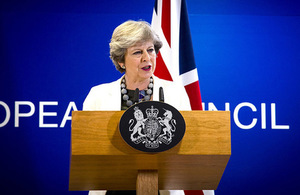
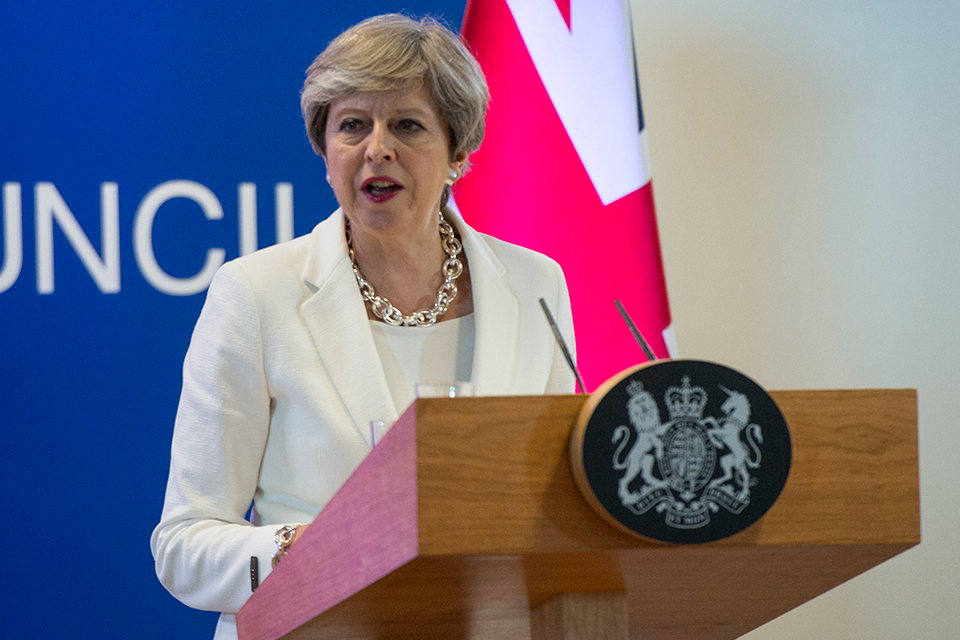
  • Theresa May – 2018 Speech at London Fashion Week

    Below is the text of the speech made by Theresa May, the Prime Minister, during London Fashion Week on 18 September 2018.

    Thank you Stephanie and welcome everyone. I am truly delighted to be hosting this reception to celebrate London Fashion Week.

    I want to thank Stephanie Phair, Caroline Rush – and everyone at the British Fashion Council – for their fantastic work in championing British fashion and London Fashion Week. And of course the designers, the models, the assistants, the set designers and all those without whom it would not be such a success.

    For years – London Fashion Week has showcased not just the big well-known names in British fashion, but also the – often brilliant – up and coming talent.

    That is what has always made London stand out. That is what has always given this city’s fashion business the leading edge.

    And I am delighted that this year we have designers such as Malene Oddershede Bach and Victoria Beckham showing in London for the first time.

    British fashion, as Stephanie just said, is serious business. Some of our biggest names are known the world over – Stella McCartney, Burberry, Mulberry. The industry as a whole contributes £32 billion to our economy, employs over 890,000 people, and totals billions of pounds worth of exports.

    But if I am honest, we have all got a job to do, which is about getting that message out to people – about how valuable fashion is to the British economy as a whole, about how many jobs are involved in the British fashion industry and what it means to our economy.

    We are home to some of the world’s finest fashion colleges. Our designers sit at the helm of global brands. And we lead the world in design and digital innovation – with names such as MatchesFashion, Net-a-Porter, ASOS and Farfetch launched in the UK.

    And of course – this year there was the live streaming of London Fashion Week shows to millions of fashion watchers in China.

    But it is also London’s reputation as a thriving, diverse city that makes this such a great place to do business. And I am delighted to hear that Chanel – one of the grand dames in the fashion business – has announced it is relocating its global headquarters here to London.

    I want to see us continue this success – I want Britain to continue being a place where talent is nurtured and supported, and where fashion can thrive and do business.

    And as we look to build a new future for a global Britain, as an open, outward-facing country outside of the EU – I want to ensure that our fashion industry – an industry in which we have so much pride – can build upon its success. That is why our exceptional talent visa will ensure that the world’s leading fashion designers can live and work here. It is why we are backing the industries of the future through our modern Industrial Strategy – supporting innovation, technology and encouraging jobs and growth in every part of the country.

    And it is why through the Creative Industries Sector Deal we – along with industry – are investing £150 million in creative businesses, including design and fashion.

    But today – as London Fashion Week draws to a close – let me congratulate you all once again.

    As I say, let’s work together to make sure everybody realises what an important part London fashion does and British fashion plays in our economy and employing people up and down our country. Let’s get the message out there of the fantastic talent we’ve got – not just the big names but all the people who are behind those big names and every aspect of the industry which leads to its enormous success.

    And I wish you all every success for the season ahead. Thank you.

  • Theresa May – 2018 Speech at National Housing Federation Summit

    Below is the text of the speech made by Theresa May, the Prime Minister, at the National Housing Federation Summit on 19 September 2018.

    Thank you, Diane, and good morning everyone.

    It is a pleasure to be here with you all today at what is an event of firsts and lasts.

    I will start with the lasts…

    Reference has already been made to the fact this is David Orr’s final annual conference as Chief Executive of the National Housing Federation.

    In his 12 years at the helm David has done much to refocus and reinvigorate the housing association sector, and has been a worthy champion for your cause.

    David, it has been a pleasure working with you since I became Prime Minister, and I am very sorry to see you go.

    But I know that, in Kate Henderson, the NHF has found a worthy successor and the right person to take the Federation on the next stage of its journey.

    And, Kate, I am very much looking forward to getting to know you and working with you to tackle what remains one of the great challenges of our time.

    While this may be David’s last NHF conference, I have to admit it is my first.

    In fact I was shocked to discover that this is the first time in history any Prime Minister has spoken at what is the biggest event on the housing association calendar.

    To me, that speaks volumes about the way in which social housing has, for too long and under successive governments, been pushed to the edge of the political debate.

    At best taken for granted, at worst actively undermined.

    Well, I’m very pleased to say that is no longer the case.

    Because, since my very first day in Downing Street, I have made it my personal mission to fix our broken housing system.

    Doing so underpins so much of what this government is working to achieve, from tackling loneliness to supporting the industries of the future.

    And housing associations have a huge role to play in making sure that vision becomes a reality.

    We are already making good progress.

    Doing all we can to get more of the right homes built in the right places, so we can help more people onto the housing ladder – and ensure that those who cannot afford to own their own home also have a decent place to live.

    We have committed tens of billions of pounds to getting homes built, including creating the infrastructure that unlocks sites where they are needed most.

    Our new National Planning Policy Framework has removed unnecessary barriers to homebuilding and made it harder for commercial developers to dodge their affordable home obligations.

    We are gearing up Homes England to be more proactive and interventionist, so that it can drive more and better development.

    The Affordable Homes Programme is supporting the delivery of a quarter of a million affordable homes right across the country, with thousands of them available for social rent.

    And the Land Assembly and Small Sites funds, together worth more than £1.9 billion, are now available.

    They allow us to make positive interventions in the land market, bring more sites to market, and capture more of the land value for the benefit of local communities.

    Just this morning we have heard the NHF calling for more of the value generated by public investment and the planning system to be captured and invested in affordable homes, public services and local infrastructure.

    It is an important issue, which is why the government consulted on it recently.

    We will be responding in full in the near future.

    But in the meantime let me assure you that we share your commitment to giving communities a fairer share of the value created by development.

    Land is an irreplaceable natural resource, and we must make sure its use benefits us all.

    As well as boosting housing supply, we are taking action to protect and support homeowners and tenants.

    Banning letting agent fees for people who rent their homes.

    Clamping down on rogue landlords and unscrupulous managing agents.

    And bringing an end to unjustified use of leasehold.

    I am sure many of the people in this room will have responded to our consultation on making longer, more family-friendly tenancies the norm – the results of that will be published shortly.

    And our Green Paper on Social Housing, which was of course announced at last year’s NHF conference, offers a landmark opportunity for major reforms to improve fairness, quality and safety for all residents living in social housing.

    James Brokenshire, Kit Malthouse, and ministers and officials right across government are pulling out all the stops to make sure everyone in this country has a safe, secure and affordable place to call home.

    And already we are seeing the results.

    In 2016/17, more than 217,000 additional homes were added across England.

    That represents a 15 per cent increase on the previous year.

    In fact, with the exception of one year, the last time we saw net completions this high Lady Thatcher was in Downing Street.

    Yet we should not lose sight of the fact that the housing crisis we face today did not come about overnight.

    It is the result of decades of neglect.

    Year after year in which housebuilding of all kinds fell even as demand rose.

    So, while the steps we are taking are already making a real and lasting difference to millions of lives, we should not pretend that our broken housing system can be fixed at the flick of a switch.

    And nor should we see it as a challenge for central government alone.

    Rather, it is a challenge we must rise to together.

    One that can only be tackled by many different parties working together in partnership.

    That is why, when local authorities asked us for a more robust planning framework and greater clarity over local plans and viability assessments, we made sure they got it.

    When developers told us they needed greater investment in infrastructure and a reliable pipeline of skilled construction workers, we set about securing both.

    And we have also been listening to housing associations.

    After Sajid Javid told last year’s NHF conference that the government wanted to do more to support your sector, you asked us to do three things.

    First, you said that to plan ahead and secure future investment, you needed long-term certainty on rents.

    We have given you that long-term certainty.

    Second, you said that to keep your properties affordable for all, the Local Housing Allowance cap should not be extended to the social sector.

    We have not extended that cap.

    And third, you said that if you were going to take a serious role in not just managing but building the homes this country needs, you had to have the stability provided by long-term funding deals.

    Well, eight housing associations have already been given such deals, worth almost £600 million and paving the way for almost 15,000 new affordable homes.

    And today, I can announce that new longer-term partnerships will be opened up to the most ambitious housing associations through a ground-breaking £2 billion initiative.

    Under the scheme, associations will be able to apply for funding stretching as far ahead as 2028/29 – the first time any government has offered housing associations such long-term certainty.

    Doing so will give you the stability you need to get tens of thousands of affordable and social homes built where they are needed most, and make it easier for you to leverage the private finance you need to build many more.

    The offer is typical of the positive approach this government has taken with the housing sector since I became Prime Minister.

    You asked, we delivered.

    Now, I have something to ask of you.

    Last year I told the big commercial developers that we would give them the support they asked for – but that, in return, we expected them to do their duty by getting homes built.

    Today, I’m asking housing associations to use the tools we have given you.

    Not just to build more homes, though of course more homes are needed.

    But to take the lead in transforming the very way in which we think about and deliver housing in this country.

    Rather than simply acquiring a proportion of the properties commercial developers build, I want to see housing associations taking on and leading major developments themselves.

    Because creating the kind of large-scale, high-quality developments this country needs requires a special kind of leadership.

    Leadership you are uniquely well-placed to provide.

    Your close ties with local communities give you an unparalleled insight into what a community needs in a development.

    A clear vision for the whole site and how it can complement existing places, not just a narrow focus on fitting in the maximum number of units and the bare minimum of social homes.

    Your social mission can ensure developments are rooted in a conception of the public good, rather than in a simple profit motive.

    That means creating genuinely mixed communities with the right infrastructure and truly affordable housing.

    Your unique status as public interested, non-profit private institutions allows you to attract patient investment and deploy it to secure long-term returns on quality rather than short-term speculative gains.

    Your expertise as property managers means you can nurture attractive, thriving places for decades to come.

    You are capable of riding out the ups and downs of the business cycle, as we saw in the years after the economic crash when housing associations carried on building even as private developers hunkered down.

    And you do all this with the discipline, rigour and management qualities of the serious multi-million pound businesses that many of you are.

    This combination of qualities allows housing associations to achieve things neither private developers nor local authorities are capable of doing.

    And to see what that means on the ground, you need simply look at two major developments either side of the River Thames.

    For years, the private sector struggled to make a success of Barking Riverside.

    Lacking a guiding vision for the site and constrained by short-term business cycles, its huge potential went untapped.

    Today, under the leadership of L&Q, the build-out rate has quadrupled.

    The project is finally beginning to deliver on its potential, and is on course to become a thriving, growing community.

    On the opposite bank, two local authorities had similar problems dealing with the unique challenges and opportunities of the Thamesmead estate.

    Now, thanks to the commitment and insight of Peabody, there are ambitious plans for up to 20,000 new homes in one of the UK’s most over-subscribed cities.

    Making complex projects like this work requires vision, determination and the courage to do development differently.

    Housing associations possess that.

    Given the right tools and the right support, you can act as the strategic, long-term investors in the kind of high-quality places this country needs.

    To put it simply, you get homes built.

    And I want to work with you to transform the way we do so.

    But the unique status, rich history and social mission of housing associations mean you also have a much broader role to play.

    A role that includes changing the way tenants and society as a whole think about social housing.

    Midway through oral historian Tony Parker’s The People of Providence, the author recounts a conversation with a woman who lived on Southwark’s Brandon Estate, not far from where we are this morning.

    “I wouldn’t want to be thought of as an estate person, not in any way at all,” she tells him. “I live here, but I’d never say to anyone my home is here.”

    That conversation took place almost 40 years ago, but it could just as easily have happened today.

    Because, for many people, a certain stigma still clings to social housing.

    Some residents feel marginalised and overlooked, and are ashamed to share the fact that their home belongs to a housing association or local authority.

    And on the outside, many people in society – including too many politicians – continue to look down on social housing and, by extension, the people who call it their home.

    Part of the problem is physical, in the buildings themselves.

    Whether unintentionally or by design, the decisions we make about the homes we build for social rent – their location, quality and appearance – can all too easily make them distinct from the community in which they stand.

    This, in turn, can cement prejudice and stigma among those who live in them and wider society, leading to lowered expectations and restricted opportunities.

    It shouldn’t be this way.

    On a new mixed-tenure development, the social housing should not be tucked away behind the private homes, out of sight and out of mind.

    As you look from building to building, house to house, you should not be able to tell simply by looking which homes are affordable and which were sold at the market rate.

    The quality of aesthetic, design and build should not be any lower just because a property is to be managed by a housing association.

    Some say that quantity, quality and affordability must always be traded off against one another.

    Well to them, I say look at the Nansledan development outside Newquay.

    A whole new community being built to meet local needs and with the support of local people.

    Thousands of homes of all types and tenures.

    All of the highest quality, in keeping with traditional local styles, and with no way of telling from the outside which properties are being built for housing associations and which are destined for the private market.

    As builders yourselves and as large-scale buyers of homes, you have the power to deliver or demand the quality of social homes the people of this country deserve.

    We should never see social housing as something that need simply be “good enough”, nor think that the people who live in it should be grateful for their safety net and expect no better.

    Whether it is owned and managed by local authorities, TMOs or housing associations, I want to see social housing that is so good people are proud to call it their home.

    Proud to tell people where they live.

    Proud to be thought of, in the words of Parker’s interviewee, as “an estate person”.

    Our friends and neighbours who live in social housing are not second-rate citizens.

    They should not have to put up with second-rate homes.

    And that applies to management every bit as much as design and construction.

    In 2018, most housing associations are not in the business of building houses.

    Rather, you manage them, maintain them and take care not only of the buildings themselves but of the people who call them home.

    It is work that is every bit as important as building and development and, when done badly, the impact can range from upsetting to catastrophic.

    While it would not be right for me to pre-empt the findings of the public inquiry into the Grenfell tragedy, it is clear that many of the tower’s tenants felt ignored, patronised and overlooked by the TMO responsible for their homes and their safety.

    Over the past year the issues they raised have been echoed by social housing tenants across the country.

    Repairs botched or neglected.

    Problems not dealt with.

    Complaints ignored.

    Again, it does not have to be this way.

    Housing associations, with their historic social mission and focus on the civic good, can be at the forefront of showing what good property management looks like.

    Across England, housing associations manage almost three million properties.

    That gives you tremendous influence, the power to raise the standards of millions of homes and, in doing so, do much to shift perceptions of social housing.

    And you can go further still, making a real and lasting difference to the lives of your tenants.

    In my Maidenhead constituency I recently met a single mother whose housing association – Housing Solutions – hadn’t just provided her with a new home but opened up a whole new life for her.

    Rather than simply managing her property, Housing Solutions connected her with the training and support she needed to start her own business.

    That business is so successful she has been able to move from a social rented home into shared ownership, getting that vital first foot on the property ladder for her family.

    Elsewhere, housing associations are helping some of society’s most vulnerable people: those without a home at all.

    Here in London, more than 50 associations are working with St Mungo’s and other organisations to deliver the Clearing House project, helping to get rough sleepers off the streets, out of danger, and on the road to a safe and secure future.

    They are all wonderful examples of the work that housing associations can do above and beyond simply building and managing properties.

    And they show how it is possible for the housing associations of 2018 to carry forward the social justice mission of the pioneers who created the sector in Victorian times – and their descendants who stepped up half a century ago in the wake of Cathy Come Home.

    The rise of social housing in this country provided what has been called the “biggest collective leap in living standards in British history”.

    It brought about the end of the slums and tenements, a recognition that all of us, whoever we are and whatever our circumstances, deserve a decent place to call our own.

    Today, housing associations are the keepers of that legacy.

    The bearers and protectors of a precious idea that has already made an immeasurable difference to tens of millions of lives and has the potential to transform countless more.

    For too long, your work has gone unrecognised and under-appreciated at the highest levels.

    But no longer.

    This government values housing associations.

    Over the past two years we have worked with you, listened to you, and responded to you.

    You asked for our support, and you have our support.

    Not mere lip service, but real policies, real change, real action.

    Now it is your turn to act, building the homes we need and challenging the attitudes that hold us back.

    Fixing our broken housing market will not be quick or easy.

    But it can be done.

    And, with this government’s support, housing associations can be at the centre of making it happen.

    Building on more than a century of history, and carrying forward the torch of high-quality, affordable housing for generations to come.

  • James Brokenshire – 2018 Speech at National Housing Federation Summit

    Below is the text of the speech made by James Brokenshire, the Secretary of State for Housing, Communities & Local Government, at the National Housing Federation Summit on 20 September 2018.

    Thanks to Baroness Warwick for that kind introduction.

    It’s a great pleasure to be here – albeit on a site that I understand once housed one of Britain’s so-called ugliest buildings.

    Some of you may remember – and even mourn – the County Hall Island Block apartments that stood empty here for 20 years before a 6-year old boy got his wish to set the bulldozers in motion.

    Now we may all have our different views on architecture and design.

    But I think we can agree that you know you’ve succeeded when you’re not constructing buildings that 6-year-olds want to demolish!

    It’s also genuinely a great privilege to be speaking before we hear from David [Orr] for the final time in his role as the National Housing Federation’s (NHF) Chief Executive.

    Though, I understand, it’s not just his speeches which are much much-anticipated.

    I hear his performances at NHF karaoke nights, too, are also quite a draw.

    And while I can’t promise to match David’s musical talents, I’ll do my best as the warm-up act!

    Before I go on, I want to firstly applaud the tremendous leadership and public service David has shown through a long and distinguished career.

    I also want to welcome your successor, Kate Henderson, and say how much I’m looking forward to working with Kate.

    I know you’ll be putting your own stamp on the role, but what a great legacy to build on.

    David, you have transformed the housing association sector and inspired and challenged us all to raise our game for people living in social housing and, indeed, all parts of our community, including the most vulnerable.

    I think that’s the thing I have been most struck by, David’s passion, leadership, and humanity too – it comes from the heart and we have all been strengthened by it.

    And I’m especially grateful for your contribution to the Rough Sleeping Advisory Panel which helped develop the Rough Sleeping Strategy we published recently – an issue that I know matters greatly to us both.

    This Strategy – and, indeed, all our work on housing – is driven by the belief that everyone must have the security, dignity and opportunities they need to build a better life.

    As the Prime Minister said yesterday, this mission is absolutely central to this government’s priorities – and very much in keeping with your founding ideals as a sector.

    And, working with you, we’re delivering on it.

    Housing associations played a big role in helping us deliver 217,000 homes in 2016 to 2017 – the highest level in all but one of the last 30 years. And I’m hugely grateful for all of your efforts.

    But we know you can and want to do more.

    Which is why we’ve listened to what you’ve told us – about wanting more certainty and stability to be able to protect and boost supply – and have responded.

    We’ve put billions into affordable housing, including homes for social rent, and given housing associations a leading role in delivering this through long term funding deals.

    We’ve given you more certainty over your rental income.

    We’ve retained the funding for supported accommodation within Housing Benefit.

    We’ve enabled councils to borrow more to build more.

    We’re supporting Homes England to take a more strategic, assertive approach – putting more certainty into the system – and reforming planning to get Britain building.

    We’re also taking action on other issues that you’ve raised such as doing more to capture increases in land value for the public good through:

    changes to the National Planning Policy Framework (NPPF),

    Section 106 planning obligations,

    and the Community Infrastructure Levy (CIL)

    But I know there is more to do.

    And as the Prime Minister said yesterday, we’ll be responding shortly to a consultation on developer contributions that includes proposals to help councils capture land values more effectively.

    So the sector has never been better placed to really step up and help deliver the homes our country needs.

    But this isn’t just about getting the numbers up.

    It’s also about changing the false attitudes towards social housing.

    Challenging the mistakes and flawed perceptions about people living in social housing.

    About improving the experience of tenants – and rebalancing their relationship with landlords through stronger regulation.

    And following the terrible tragedy at Grenfell Tower, ensuring, above all, that homes are decent, safe and well-maintained.

    Which is what the social housing green paper published last month aims to do.

    My thanks to David and housing associations for their enthusiasm and support for the extensive engagement that we carried out with residents that helped inform this work.

    Yes, the Paper reminded us of the challenges that people living in social housing face.

    Stigma.

    The need for landlords to be more transparent and accountable.

    Concerns about how complaints are handled.

    To quote one resident we spoke to: “I feel privileged and lucky to be a housing association tenant. Having an affordable secure and quality home means everything and has helped me into employment. And the security has also helped my children be happy and successful.”

    As the Prime Minister said, we need to do more to reinforce that pride in social housing.

    That sense that it can be both a safety net and a springboard to a better life

    Something we treasure in the way we do our NHS.

    That’s why we’re investing in the sector and giving you the longer-term certainty that will help you build more, faster – both now and into the future.

    In July, I announced 8 longer-term strategic partnerships between housing associations and Homes England worth around £590 million which will yield about 14,000 new affordable homes, including for social rent.

    And which will see us championing modern methods of construction and more small and medium sized builders playing their part in a more diverse market.

    And I want to thank both the NHF and Homes England – under David and Nick Walkley’s leadership respectively – for their valuable work on making this happen.

    The Prime Minister’s announcement, yesterday, of the £2 billion initiative – enabling the most ambitious housing associations to apply for funding over the next decade – takes this to the next level.

    This bold, new scheme is the first time any government has offered you this kind of long-term funding certainty and stability.

    As such, it promises to be a game-changer – not just because it will help you get tens of thousands of new affordable and social homes built and provide a strong impetus for you to go further.

    But because the certainty and stability that underpins it signals a new approach to the way we invest in and deliver housing in this country.

    An approach that is a real vote of confidence in housing associations and places you firmly in the driving seat – to be industry leaders in building more and better, in driving innovation and setting higher standards for the way social housing is managed and the people who live in it are supported.

    With your – as Diana put it yesterday – special combination of a “core social purpose” and “good business sense” you are uniquely well placed to pick up this baton.

    So I urge you to make the most of this opportunity to help us deliver a new generation of social housing and help secure the high quality homes that people who can’t afford to buy or rent privately deserve.

    These have to be homes that meet their needs.

    And having listened to residents, we’ve decided, for example, not to implement the provisions in the Housing and Planning Act to make fixed term tenancies mandatory for local authorities at this time.

    We understand that lifetime tenancies are, for some people, for some communities, essential for providing the security and stability they need to make a place truly feel like home.

    That’s why it’s right that all social landlords should have the freedom to offer them.

    Now, it’s also right and fair that social housing can be a springboard to home ownership.

    And I want to commend the vital work by David and the NHF with this government on the Voluntary Right to Buy agreement.

    This has already helped hundreds of housing association tenants to buy their homes and thousands more are set to benefit from the latest, large-scale Midlands pilot that launched last month.

    We will be monitoring this closely; in particular in relation to replacing homes that are sold.

    This groundbreaking partnership between government and the sector is an important step towards extending the dream of home ownership.

    With that in mind, we have to challenge what I believe to be false choices.

    In particular that you can either boost the supply of rented properties or support home ownership – that you can’t do both.

    This doesn’t have to be the case.

    Whilst championing better standards for renters, we should not apologise for backing the aspiration around home ownership.

    Two thirds of social housing residents would like to be home owners.

    These people – who run our businesses, keep our public services going, contribute to society in countless ways – are just as hard-working, ambitious and keen to improve their communities as anyone else.

    We should recognise that ambition and provide that opportunity to which they aspire.

    The social housing green paper sets out how we can do this, whilst also ensuring that councils can replace homes sold.

    There’s nothing contradictory about this – about building more affordable homes and helping people meet the aim of home ownership.

    I believe to say otherwise, is a false choice.

    We have to do both.

    And nor is there anything contradictory about promoting ownership and tackling stigma – another all too common false choice.

    To do otherwise would be to ignore the ambition of the vast majority of social housing tenants.

    All I want is to help each person living in social housing to make the right choice for themselves – not have it made for them.

    And the same goes for another false choice that pits building more homes against building better homes.

    We’re determined to deliver 300,000 homes on average a year by the middle of the next decade, but not at any price.

    These are not just a roof over our heads. They are the foundations on which our lives and communities are built.

    As the philosopher Sir Roger Scruton put it: “We are needy creatures and our greatest need is for home…All our attempts to make our surroundings look right – through decorating, arranging, creating – are attempts to extend a welcome to ourselves and to those whom we love.”

    So good design and style matter – arguably more, not less, for people living in social housing and combatting the stigma that surrounds it.

    It’s not our job in government to dictate what this looks like, but we all know how it feels.

    Good design produces places that people have helped shape and are proud to call home.

    It protects and strengthens the beauty of our natural environment.

    It adds to the value of existing settlements for years to come, making it more likely that new development will be welcomed rather than resisted.

    Therefore, building better will, in fact, help us build more – something that our social housing green paper recognises and how that must apply to social and affordable homes as it does to any other types of housing.

    So it’s time we rejected these false choices.

    Accept we can and should extend home ownership as well as deliver more quality affordable rented homes.

    Accept that there is nothing incompatible or contradictory about these goals which, after all, have the same end: more people having decent, secure, comforting places they call home.

    Accept that they are goals which are within our grasp.

    The truth is that the best communities; the most interesting and successful communities, where most people want to live, tend to be mixed and diverse.

    Places where people from all backgrounds, living in all types of housing, can come together, bound by a strong sense of belonging and identity.

    Yes, we are facing a huge challenge.

    But I know that there’s no sector better placed than you to meet it.

    As the Prime Minister said, you have blazed a trail for many high quality and, yes, beautiful homes that have stood the test of time and served the public good.

    That make a mockery of arguments that high density and affordability have to equal low quality and a lack of character.

    This is the difference that I know we all want to see as we look forward.

    As David said in the aftermath of the Grenfell fire, we have an “obligation…to make this a moment of change”.

    It’s clear that, to do this, to make this difference, to meet that obligation, we need all parts of the sector to pull together.

    We’ve responded to your calls for more support.

    And I’m looking forward to seeing housing associations; with your unique and impressive track record, seizing this unprecedented opportunity and leading the charge.

    To deliver the homes we need and the brighter future our people deserve.

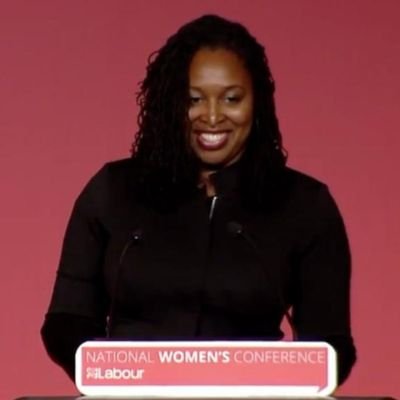
  • Dawn Butler – 2018 Speech at Labour Party Women’s Conference

    Below is the text of the speech made by Dawn Butler, Labour’s Shadow Minister for Women and Equalities, at the Labour Party Women’s Conference in Liverpool on 22 September 2018.

    Good morning conference. What a year it’s been for us.

    Sadly, we have lost the wonderful Tessa Jowell. But in her memory we have marched in our thousands against Trump, said enough is enough to sexual harassment, fought for the reproductive rights of women in Northern Ireland, called for an end to period poverty.

    And all this – in the centenary year of when some – but not all – women got the vote.

    This reminds us that – no woman should ever be left behind.

    You are phenomenal women – and you are vital to Labour winning the next election.

    We are the many, literally 51% of the UK population. We truly are the many.

    This Conservative Government has shown us their true colours – they have created a hostile environment for the Windrush generation and others – disabled people; the LGBT+ community; older women; BAME people.

    86% of the cuts have fallen on the shoulders of women – your shoulders – and now is time for the many to rise up.

    We need innovation and transformation on a scale like we have never seen before – transformation that works for working people – and for those who need a government that cares for them.

    Only a Labour Government will deliver for the many not the few.

    This Tory Government simply does not care – in fact almost every single policy they implement makes the lives of women worse.

    Women are poorly and under-paid – whether it is as a result of the gender pay gap or the unpaid caring responsibilities –  this underpayment means that women can find it hard to care for themselves and their families.

    Women’s refuges are in crisis, foodbanks on the rise – period poverty, all cuts have consequences.

    Local councils, have seen nearly 50% of their funding cut – I want to give a shout out to all the councillors fighting everyday against these Tory cuts.

    Conference, we are in Liverpool where over 30 years ago the council stood up to Thatcher and said-better to break the law than break the poor.

    Councils today should not have to consider cutting funding for women refuges, a lifeline to the most vulnerable.

    Labour alongside women’s aid – has called for sustainable long-term funding and national oversight to set quality standards.

    But you know what conference, the woman at the head of Government – refuses to accept her failings – every Wednesday Jeremy highlights the consequences of her damaging policies but she refuses to listen – instead she feigns ignorance and spouts half-truths.

    Only a Labour government will deliver for the many not the few.

    Far from dealing with the “burning injustices” of society, we have a Government that pours petrol all over them.

    Martin Luther King said, ‘our minds are being invaded by half-truths prejudice and false talks – there is little hope for us until we become tough-minded enough to break loose from these shackles.

    So break loose conference – break loose – hold your heads high – stand tall and believe in our traditional Labour values – and our ability to win with our socialist values – and our ability to make our country a better and fairer place for all.

    OK we are in opposition but with your help and with the phenomenal work of the trade unions we have had victories; scrapping employment tribunal fees;  universal credit waiting time reduced; the resignation of Toby young.

    Just imagine what we will achieve in Government.

    We want to build a society where no one is held back v we can’t carry on just tinkering around the edges – with equality an afterthought.

    The Conservatives have had seven different equality ministers tagged onto four different departments and a budget that’s almost been halved.

    This proves the Tories are not taking equalities seriously.

    That’s why the next Labour government will create a standalone department, headed by a secretary of state to reduce discrimination and inequality.

    The next Labour government will put equality centre stage.

    The next Labour government will protect all women

    Domestic abuse is a hidden killer and remains at epidemic levels.

    The most recent ONS survey shows 1.2 million women have experienced domestic abuse in a year. The impact on the victim and those around them is devastating.

    So it’s time domestic abuse becomes everyone’s business.

    Employers have a duty of care to employees experiencing domestic abuse.

    It can be done. We have already seen new employment laws introduced in the Philippines, Australia and most recently New Zealand granting victims the right to paid leave.

    So today I am proud to announce that Labour will require employers to have a domestic abuse employment policy and provide up to 10 days paid leave.

    This crucial time will allow women and men to leave their abusive partners safely – get the help – protection and support they need knowing their livelihood is secure.

    On average 2 women a week are murdered by a current or former abusive partner. These 10 days could literally help save the lives of those women.

    Only a Labour government will deliver for the many not the few.

    Under Labour we will help good businesses succeed; we want businesses to pay staff the real living wage; strive to end the gender pay gap; encourage paternity leavers.

    Under Labour, government contracts will go to companies who treat employees well.

    Only a Labour government will deliver for the many and not just the few.

    And conference, I have another announcement-planning for Government is quite empowering.

    For too long our laws have allowed discrimination to go unchallenged; conference, a Labour Government will change that; we will acknowledge intersectionality.

    Intersectionality is about how different layers of discrimination interact with each other – for example – our laws do not recognise the fact that black women can be discriminated against because they are both black and a woman; or a woman being discriminated against because of her age and gender; or disability and gender.

    A Labour government will change that and enact section 14 of the equality act, so people can bring forward cases on multiple grounds of discrimination.

    A Labour Government will create an environment – at home – at work and in public spaces, which will encourage people to be their true authentic selves.

    Conference just imagine if all the men fought for the rights of women, equal pay would be achieved overnight.

    Just imagine if all white people fought for the rights of black people – racism would no longer be so prevalent in our society – and just imagine if all of the straight people fought for the rights of the LGBT+ community – homophobia would be a thing of the past.

    And I could go on.

    But imagine our society, truly a place for the many and not the few, we have to be that society we have to be the change we seek.

    Only a Labour Government will deliver for the many not the few.

    We will rebuild our country for the many not the few.

    This is not an easy battle to fight – or win – they will throw everything at us. But we have to be tough-minded – we have to be steadfast in our vision – and we have to be our true authentic selves.

    We have to be the flood of positivity to drown out all of the negativity.

    Because we are the many;

    When the sharpest words wanna cut me down,

    I’m gonna send a flood, gonna drown them out.

    I am brave, I am bruised.

    I am who I’m meant to be, this is me.

    Look out ’cause here I come.

    And I’m marching on to the beat I drum.

    I’m not scared to be seen.

    I make no apologies, this is me.

  • Theresa May – 2018 Speech in Cape Town

    Below is the text of the speech made by Theresa May, the Prime Minister, in Cape Town, South Africa, on 28 August 2018.

    Good morning everyone, and thank you all for joining us today. It’s a pleasure to be here in Cape Town, a city whose recent past lends it a special resonance for many around the world, and which symbolises the transformation experienced by South Africa.

    Out in the bay lies Robben Island, where for so long so many were unjustly imprisoned for dreaming of a country in which the colour of your skin made no difference to your rights and opportunities.

    Foremost among them was, of course, Nelson Mandela. As the world marked the 100th anniversary of his birth earlier this year, a memorial to the great man was unveiled in Westminster Abbey. There it sits alongside tributes to the kings and queens, poets and scientists who have shaped my nation’s history – a fitting recognition of the lasting impact Mandela made on the world.

    Mandela’s walk to freedom – and that of South Africa – was long and arduous. But 28 years ago, barely a mile from here at Cape Town City Hall, he spoke for the first time following his release from decades behind bars.

    Four years later, on Grand Parade, the newly inaugurated president of South Africa spoke of his election not as a victory of party, but of people. Of the power of democracy, and the necessity of unity, of equality, of universal rights.

    He spoke of the need to transform not just the culture and politics of South Africa, but its economy too. Of his desire to “change South Africa from a country in which the majority lived with little hope, to one in which they can live and work with dignity, with a sense of self-esteem and confidence in the future … building a better life of opportunity, freedom and prosperity.”

    It was a bold vision, one shared not just by millions of South Africans but hundreds of millions of people across the world.

    People including Kofi Annan. His unlikely journey from Ghanaian suburbs to global leadership took a very different route to that of Mandela. Yet, like your former president, Annan’s impact, influence and values spread well beyond the borders of his beloved homeland. And, like Mandela, the world is a poorer place for his passing – but all the richer for his legacy.

    The life stories of these two great men encapsulate the ebbs and flows of history. They demonstrate just how much can be achieved over the course of a lifetime. But also that progress can never be taken for granted – the fight to secure our gains is constant.

    Mandela was born in 1918 with the world on the brink of peace from a war that was meant to end all war. But when Annan was born just twenty years later, those dreams of a lasting peace were about to be shattered once again, claiming millions of lives, including many from this continent.

    It was in the aftermath of this devastation that the United Nations – the organisation that half a century later Annan would go on to lead – was founded. And despite false starts and mistakes along the way, global institutions and co-operation established in this period have delivered great gains for development.

    It was at the same time, that independence movements of a generation of new nations, took on a renewed urgency. People across the world won the right to self-determination, constitutions were written and countries were born.

    And the embrace of free markets and free trade, which accelerated further with the end of the Cold War, has acted as the greatest agent of collective human progress the world has ever seen. In those countries that have successfully embraced properly regulated market economies, life expectancy has increased and infant mortality fallen. Absolute poverty has shrunk and disposable income grown. Access to education has widened, and rates of illiteracy plummeted. And innovators have developed technology that transformed lives.

    The progress that we have made over the past century is remarkable. The opportunities for the next generation even more so. But to deliver on that promise we need to recognise new challenges.

    As war and state-based conflicts have declined, it has been replaced by new threats. In the past five years, terrorists have killed around 20,000 people in Africa – from the 2013 siege in Nairobi’s Westgate shopping centre to last year’s horrific truck bombing in Mogadishu and March’s al-Qaeda attacks in Burkina Faso. Whether in Europe or Africa, non-state actors are threatening our lives and radicalising our people.

    And today, malign state activity is on the rise – from cyber attacks on national infrastructure and institutions, to the use of chemical weapons on the streets of the UK and Syria.

    While free trade and globalisation have brought huge benefits, they have not been felt by everyone and too many of our citizens fear that they will be left behind. From the great Financial Crisis of 2008, to the advent of artificial intelligence replacing human labour, people are questioning the model of economic development we seek to defend.

    And as we face such troubling questions, the capacity for governments old and new to provide the answers is being challenged.

    For some, the solution lies in seeking to halt or reverse change. Undermining the institutions of global co-operation, rebuilding the barriers to trade, viewing global competition as a zero sum game.

    I disagree.

    Because these are not challenges faced by a single nation alone.

    The ideology that inspires vicious terrorist attacks does not respect borders. A chemical weapons attack does not only harm its victims but weakens the rules that protect us all from such behaviour. In a more connected world we must all deal with the consequences, for good and ill, of increased mobility – not just of people through migration flows, but also of money, of data, of ideology. And we should recognise that competition and cooperation are not opposites. They can be mutually reinforcing.

    So now is the time for the nations of the world to come together. To co-operate. To view international competition as a process through which both sides can benefit. To work as partners, sharing our skills, our experience and our resources to tackle the challenges we face, to contain and direct the forces shaping the world and to deliver prosperity, security and success for all our people.

    This week I am visiting three countries – South Africa, Nigeria and Kenya – that I regard as key partners in achieving this goal. With thriving democracies, strong international ties, including through the Commonwealth, and fast-changing economies, they are typical of 21st century Africa. An Africa very different to the stereotypes that dominated previous centuries, and that some people still believe even today.

    In 2018, five of the world’s fastest-growing economies are African. The continent’s total GDP could well double between 2015 and 2030. By 2050, a quarter of the world’s population and a quarter of the world’s consumers will live here.

    From the Western Cape to the Mediterranean come stories of increasing stability, growth, innovation and hope.

    South Africa, for so long blighted by the evils of Apartheid, is free, democratic, and home to one of the continent’s largest economies.

    In Cote D’Ivoire, United Nations peacekeepers have gone home and GDP is growing three times faster than in Europe.

    And Ethiopia – for a generation of British people often associated only with famine – is fast becoming an industrialised nation, creating a huge number of jobs and establishing itself as a global destination for investment.

    Yet, in a situation familiar to nations around the world, progress has not been uniform.

    As well as emergent democracies and growing economies, Africa is home to the majority of the world’s fragile states and a quarter of the world’s displaced people.

    Extremist groups such as Boko Haram and al-Shabab are killing thousands. Africa’s ocean economy – three times the size of its landmass – is under threat from plastic waste and other pollution.

    Most of the world’s poorest people are Africans. And increasing wealth has brought rising inequality, both between and within nations. For example, much of Nigeria is thriving, with many individuals enjoying the fruits of a resurgent economy. Yet 87 million Nigerians live on less than $1.90 a day – making it home to more very poor people than any other nation in the world.

    Achieving not just growth but inclusive growth is a challenge faced by governments in the UK, Europe, North America and beyond. And as African economies become more successful it is an issue that is being confronted here too.

    Because, in the years ahead, demographic change will present further economic challenges and opportunities for this continent. Before arriving here this morning I visited the ID Mkize Secondary School in Gugulethu. The teenagers I met there were an inspiration, full of ideas and enthusiasm about their own futures and full of pride about the future of their country and their continent.

    It’s an outlook they share with so many Africans, 60 per cent of whom are aged under 25. Such a young population represents a phenomenal level of human capital and potential. With their innovation, dynamism and creativity, Africa’s young people could enrich not only this continent but the world economy and society at large.

    But to make the most of this promise it needs to be properly harnessed. Between now and 2035, African nations will have to create 18 million new jobs every year just to keep pace with the rapidly growing population. That’s almost 50,000 new jobs every single day, simply to maintain employment at its current level.

    That would be huge challenge for any continent, let alone one where economic growth is still fragile and markets are still developing.

    And it is indicative of the need to redouble our efforts to ensure the forces shaping our world deliver for all our people. Because the challenges facing Africa are not Africa’s alone. It is in the world’s interest to see that those jobs are created, to tackle the causes and symptoms of extremism and instability, to deal with migration flows and to encourage clean growth.

    If we fail to do so, the economic and environmental impacts will swiftly reach every corner of our networked, connected world. And the human impacts – from a loss of faith in free markets and democracy as the best way to secure global growth and human rights, to greater conflict and an increased susceptibility to extremism – will be similarly global.

    That is why I want to create a new partnership between the UK and our friends in Africa, one built around our shared prosperity and shared security.

    As Prime Minister of a trading nation whose success depends on global markets, I want to see strong African economies that British companies can do business with in a free and fair fashion. Whether through creating new customers for British exporters or opportunities for British investors, our integrated global economy means healthy African economies are good news for British people as well as African people.

    That’s why I’m delighted that we will today confirm plans to carry over the European Union’s Economic Partnership Agreement with the Southern African Customs Union and Mozambique once the EU’s deal no longer applies to the UK.

    As a Prime Minister who believes both in free markets and in nations and businesses acting in line with well-established rules and principles of conduct, I want to demonstrate to young Africans that their brightest future lies in a free and thriving private sector. One driven and underpinned by transparency, high standards, the rule of law and fairness. Only in such circumstances can innovation truly be rewarded, the potential of individuals unleashed, and societies provided with the opportunities they want, need and deserve.

    And as Prime Minister of a global nation, I’m all too aware that our domestic security is reliant on stability worldwide, not just in our immediate neighbourhood. From reducing drivers of illegal migration to denying refuge to terrorists who would strike our shores, in 2018 African and British security are inextricably linked and mutually dependent. That’s one of the reasons why I continue to support calls for a permanent African presence on the UN Security Council.

    So of course there is an element of national self-interest in what I’m proposing. I want to do what’s right for my country, just as President Ramaphosa wants what’s best for South Africa.

    And I see no distinction between national self-interest and global co-operation. For when the multilateral system works, it does so on behalf of nation states and our people, allowing us to harness the best we each have to offer, preventing the large dominating the small, and reinforcing fairness, transparency and the rule of law.

    It is not about extending geopolitical influence or creating lopsided dependent relationships. It is about the UK seeking to work more closely with the more than 50 nations of Africa to deliver our shared security and prosperity, and through this strengthening a global system that is capable of delivering lasting benefits for all.

    At the very heart of that partnership should be job creation. Every African leader I speak to identifies jobs as the number one demand of their people and their greatest political priority. Indeed, it is also at the centre of my agenda in the UK.

    It is the private sector that is the key to driving the growth that will deliver those jobs – transforming labour markets, opening up opportunity and unleashing entrepreneurial spirit. And the UK has the companies that can invest in and trade with Africa to do just this.

    However, for a variety of reasons the private sector has not yet managed to deliver the jobs and investment that many African nations need.

    So I want to put our development budget and expertise at the centre of our partnership as part of an ambitious new approach – and use this to support the private sector to take root and grow.

    And I can today announce a new ambition: by 2022, I want the UK to be the G7’s number one investor in Africa, with Britain’s private sector companies taking the lead in investing the billions that will see African economies growing by trillions.

    We have the tools to do so. The City of London makes the UK the unrivalled global hub for international investment, with more than £8 trillion of assets under management. We are home to cutting-edge science and technology and world-class defence, diplomacy and development. We are a trusted and trustworthy partner: our legal system is second to none, including some of the toughest anti-corruption laws in the world. Where our companies fall short, they are held to account, in the courts if necessary. And our commitment to free and open trade under the rules-based order means our international partners know they will be treated fairly.

    So a driving focus of our development programme will be to ensure that governments in Africa have the environment, knowledge, institutions and support to attract sustainable, long-term investments in the future of Africa and Africans.

    And to help bring those investments about, I can today announce an additional £4 billion programme of UK investment in African economies that will pave the way for at least another £4 billion of private sector financing.

    This includes, for the first time, an ambition from the UK government’s Development Finance Institution, CDC, to invest £3.5 billion in African nations over the next four years. And next year London will host an Africa Investment Summit, helping investors and African governments forge closer ties with one another.

    And because markets and economies need people as well as capital, we will also be sharing our expertise – supporting partner countries in developing their business environments and institutions, integrating into global value chains, building ties with investors and tackling barriers to growth.

    To do so, we will radically expand the UK government’s presence in Africa, opening new missions and bringing in trade experts, investment specialists, and other policy experts.

    We will continue to invest in the human capital that underpins future prosperity, ensuring that young African men and women have access to the quality education, healthcare and skills they need to fulfil their potential.

    And we will use our influence and global standing to encourage other developed nations, and the global institutions of which we are a leading member, to take the same approach.

    The ability to do this – to bring so much more to the table than just government funding – is what marks out the UK’s development programme as so effective.

    Aid is a crucial part of the equation, but it is accompanied by our ability to leverage huge sums of private sector investment from our capital markets. By our world-class professional services. By our unrivalled expertise in financial services and education. By our investment in science and research and the experience of some of the world’s most innovative companies.

    And it is all underpinned by our respected legal system, regulatory standards and values: British investors respect ethical practices, comply with local laws, contribute to local economies and build long-term local capability.

    So while we cannot compete with the economic might of some foreign governments investing in Africa, what we can offer is long-term investment of the very highest quality and breadth. Something that will deliver more for Africans for longer, and which can only be achieved when the government and private sector work together.

    At the same time, investment cannot be attracted nor growth achieved in the absence of security and the stability it brings. So, we also need to target our development assistance to build that stability and tackle the drivers of fragility.

    By 2030, 80 per cent of the world’s extreme poor will live in fragile states. Even in countries considered relatively stable and prosperous, pockets of fragility persist.

    The UK is already providing support for African governments that are meeting this challenge head-on. Nigerian troops on the frontline against Boko Haram have received specialist training from Britain. Counter-terror operations in Mali are being supported by British Chinook helicopters. British troops in Kenya have trained African Union peacekeepers heading for Somalia, while also working with international partners to reform the Somalian security forces for the long-term.

    UK law enforcement works hand in hand with their counterparts across Africa to tackle the destabilising menace of organised crime, from people traffickers to drug smugglers.

    But the answer to security challenges is not purely military or operational – it is also political. The new partnership I am proposing means working with African leaders who are driving progress, taking on the political challenges and vested interests to ensure that benefits flow to all their people. And it means building strong institutions, and helping to build trust between those institutions and the people who are governed by them.

    Because it is from those institutions – the building blocks of nation states – that all the benefits I have described today ultimately flow. Without the stability and certainty provided by reliable legal systems, enforceable contracts, recognised standards and so on, it is impossible for responsible private sector companies to make long-term investments. It is impossible for economies to create sufficient numbers of skilled, jobs. And growth cannot be fair and inclusive if markets, whether domestic or international, are not governed by transparent and effective rules that are actively enforced.

    This is particularly important in the fight against corruption and dirty money, both of which have the potential to push development off course by undermining the rule of law and diverting money out of the economy. That’s why, later this week, the UK will be signing a new agreement to repatriate huge sums of money that have been illegally removed from Kenya – allowing this money to be returned to its rightful owners and invested in the future of their country.

    And we must also support governments as they work to ensure development is not stalled by other threats. This includes boosting resilience against climate change and tackling demographic challenges by empowering women and girls with access to safe, voluntary modern family planning, enabling access to education and skills.

    In setting out this new partnership with Africa, I am making a broader proposition for how we will use our development assistance across the world, led by my excellent International Development Secretary Penny Mordaunt.

    And as we reorient our development programme, I want to be clear: foreign aid works. Since 2015, UK aid in countries around the world has paid for more than 37 million children to be immunised, saving more than 600,000 lives. We’ve helped almost 11.5 million young people get an education, and given more than 40 million people access to clean water or proper sanitation. As I stand here today, people in the Democratic Republic of Congo are being treated with an Ebola vaccine developed with support from the UK.

    The UK’s role in international development is something of which I am immensely proud, as I believe the nation as a whole should be. We will remain a global champion for aid spending, humanitarian relief and international development. We will continue our commitment to spend 0.7 per cent of gross national income on official development assistance. And we will not falter in our work to deliver the Sustainable Development Goals.

    But I am also unashamed about the need to ensure that our aid programme works for the UK. So today I am committing that our development spending will not only combat extreme poverty, but at the same time tackle global challenges and support our own national interest. This will ensure that our investment in aid benefits us all, and is fully aligned with our wider national security priorities.

    In practice, this will mean helping fast-growing frontier markets like Côte d’Ivoire and Senegal to sustain their development progress and create opportunities for investors, including British companies.

    It will also mean supporting countries and societies on the front line of instability in all of its forms. So we will invest more in countries like Mali, Chad and Niger that are waging a battle against terrorism in the Sahel – including by opening new embassies in Niger and Chad and having a much larger presence in Mali.

    We will do more with countries like Jordan, who are facing the threat of Daesh’s dispersal and the burden of the tragic conflict on their border with Syria, and to reinforce democracies facing state-based threats, as we recently did through our Western Balkans summit.

    We will use our aid programme to support a major new crack down on illicit finance and organised crime, deploying expertise in financial centres around the world and increasing our work with law enforcement to return more of the billions of dollars that have been stolen from countries in Africa and elsewhere.

    And we will invest more resources into countering illegal migration, modern slavery and trafficking in people.

    These new priorities will represent a fundamental strategic shift in the way we use our aid programme, putting development at the heart of our international agenda – not only protecting and supporting the most vulnerable people but bolstering states under threat, shaping a global economy that works for everyone, and building co-operation across the world in support of the rules-based system.

    We will use our future spending plans to set out these proposals in more detail.

    True partnerships are not about one party doing unto another, but states, governments, businesses and individuals working together in a responsible way to achieve common goals.

    Delivering such long-term success will not be quick or easy. But I am committed to Africa, and committed to using every lever of the British government to support the partnerships and ideas that will bring benefits for generations to come.

    When President Mandela addressed the Cape Town crowds in 1994, he spoke not only of the immense challenge facing South Africa, but also of his certainty that the people of this country would rise to meet it.

    As the world once again faces great uncertainties, I am confident that all our peoples can rise to the moment. That, together, we will tip the balance of change from challenge to opportunity. And that – as friends, partners and equals – we will secure a more prosperous future for all our people.

  • Jeremy Hunt – 2018 Statement on Daesh

    Below is the text of the speech made by Jeremy Hunt, the Foreign Secretary, at the UN Security Council on 23 August 2018.

    I shall now make a statement in my capacity as the Secretary of State for Foreign and Commonwealth Affairs of the United Kingdom, of Great Britain and Northern Ireland. I’d like to open the session by thanking Mr Voronkov and Ms Coninsx for their briefing on the Secretary-General’s report on the threat posed by the Daesh to international peace and security. I’d also like to welcome Dr Joana Cook. Thank you for sharing the key findings of your report on Daesh women and minors which shows the value of inviting civil society and researchers to inform our discussions.

    In the summer of 2014 Daesh swept down the Tigris and Euphrates valleys capturing thousands of square miles of Iraq and Syria and imposing its pitiless rule on millions of people in an area that was once the cradle of civilization. Over the next 3 years, attacks that were directed, inspired or enabled by Daesh would claim more than 30,000 lives including 181 attacks outside Iraq and Syria.

    The world responded by forming a Global Coalition to defeat this threat and military action by many countries including my own has driven Daesh from almost all of its domain and liberated millions from its oppression.

    But the point I wish to emphasise today is that this has not been vanquished and the root causes of its emergence have yet to be resolved. Britain shares the assessment of the Secretary-General’s report that Daesh is responding to the loss of territory by evolving into a covert terrorist network that branches as far apart as Afghanistan, Libya and Yemen.

    Daesh takes advantage of ungoverned space and weak states. Its terrorists do not necessarily require a central direction and they’ve demonstrated their ability to strike in Europe and Southeast Asia. The Secretary-General’s report estimates that as many as 20,000 Daesh fighters remain in Syria and Iraq, including the citizens of many countries. About 900 people with links to the United Kingdom have travelled to join the conflicts in Syria and Iraq. About 40% returned to the UK in the early days of Daesh’s so-called Caliphate and some 20% are believed dead. The rest are still in Iraq, Syria or elsewhere.

    Our response to this enduring threat should fall into 2 parts. First we must press on with military operations against Daesh. British forces continue to play their part as members of the global coalition and UK leads in a vital area of strategic communications against Daesh. This year the British government has committed another £20 million to counter-terrorism projects in countries we assessed to be most at risk from returning foreign fighters.

    Second, we should renew our focus on prevention. By addressing the root causes of the emergence of Daesh. This means doing more to support peace and reconciliation in Iraq and a lasting political settlement in Syria. It also means responding to specific humanitarian problems. For example, up to 20% of foreign fighters globally are women and girls. Almost 10% of the 40,000 individuals who travelled to join Daesh were minors. Many of whom have witnessed or experienced horrific violence and been exposed to radicalization. Some will be suffering from Post-Traumatic Stress Disorder. We need to act to prevent these minors from becoming the next generation of terrorists. The UN has a vital role in the struggle against Daesh consistent with the responsibility of this Council to address threats to international peace and security. This Council made air travel more secure by passing Resolution 2309 – the first ever Resolution on aviation security. And it addressed the threat from foreign fighters in Resolutions 2178 and 2396. Earlier in 2005, this Council passed Resolution 1624 condemning incitement and repudiating all attempts to justify or glorify acts of terrorism.

    The Council should be willing to consider further action in order to counter the use of the internet by terrorists for propaganda and fundraising. Prevention is a key pillar of the UK’s approach to counter-terrorism. Our aim is to identify anyone at risk of radicalization and seek to reintegrate them into society. Agencies and local governments from health education social services and the police routinely meet to identify individuals at risk and refer them to programs run by specialists in de-radicalisation. This approach focused on prevention rather than prosecution after a crime has been committed has turned more than more 500 people away from terrorism in the UK.

    Over the years we’ve learned lessons and refined our Prevent programme. We stand ready to share our experiences with countries that face similar problems. Societies that are confident about their beliefs and values and hold governments to account are societies that are resistant to the virus of terrorism. The key to success is partnership between many nations. We mustn’t lose sight of the importance of those partnerships even as Daesh loses its grip on Syria and Iraq. I look forward to our discussion today on how we can act together to prevent and counter the evolving threat from Daesh. Thank you.

  • Jeremy Wright – 2018 Speech to Edinburgh TV Festival

    Below is the text of the speech made by Jeremy Wright, the Secretary of State for Digital, Culture, Media and Sport, in Edinburgh, Scotland on 22 August 2018.

    It is an honour to be here at this very prestigious festival.

    As you say, I’m fairly new to this job and I recognise that I have a lot to learn, but I hope you will indulge me if I offer some preliminary thoughts on some of the things I have noticed so far.

    Today’s discussion is an important one. It is quite clear that the world of broadcasting is changing, with new channels and content producers transforming the media landscape.

    For me one fact brings this home loud and clear. Young people in Britain now recognise the name YouTube more than they recognise the name of the BBC.

    In these changing times, we must look at what our British broadcasters can do to adapt and thrive.

    One way to do this is to become more transparent, as the recent BBC Charter Review demonstrated with a huge step forward.

    Another way is to become more national.

    A media that is clustered in the capital can’t possibly reflect and represent the rich and diverse tapestry that is the United Kingdom.

    It is clear that the development of Media City Salford has been great for the BBC, great for ITV and great for an exciting cluster of tech and production companies in the region.

    But it has also been great for the UK as a whole, ensuring greater diversity and representation both on and off screen.

    I am delighted that Channel 4 has recently agreed to move 300 staff out of London, with more to come, and to increase spending on programmes outside London to 50 percent of what they do.

    I am looking forward to hearing the location of the new national HQ and creative hubs in October and I hope all broadcasters and producers will follow their lead and encourage the spread of jobs, prosperity, and opportunity beyond London.

    British broadcasting is having an increasing impact not just across the UK but across the world. UK TV programming sales are now at around a billion pounds a year.

    And Planet Earth 2, Midsomer Murders, and Sherlock have been sold to over 200 territories, with Sherlock, for example, being seen by 17 million viewers in China alone.

    From Baker Street to Beijing the reach of UK broadcasting is so wide. And it is getting wider.

    And although British television is changing, there are some long established characteristics that make it so impressive and important. Television, for example, has always been able to bring us together.

    It creates truly national moments through programmes like Planet Earth, Bake Off and even Love Island, helping to create common experiences and bind our communities.

    And public service broadcasters remain a vital part of the broadcasting landscape, with 85 percent of people in this country still watching them every week.

    Nine out of ten people in the UK think that programming and news coverage from Public Service Broadcasters is trustworthy, a vital asset in the era of fake news.

    And strong public service broadcasters mean a strong broadcasting sector as a whole.

    For example, they are vital in helping all broadcasters find talent, and one of the things I have heard loud and clear already is how important it is to find the right talent in this industry.

    This festival has recognised that for a long time – with the proceeds of ticket sales going to help provide an entry level route into the industry and to give talented individuals in the early stages of their careers a step up.

    I pay tribute to that work in helping so many people to have a brighter future in this industry.

    And talking about the future, I wanted to finish by saying just a few words about Brexit, which I know is on the minds of many people here.

    I know that there is concern about how talent will be able to move between the UK and the EU after our exit from the European Union.

    Although you will understand that the final outcome is still subject to negotiation, I can say that the government fully understands how important mobility is for this sector.

    As outlined in the recent White Paper on our future relationship with the EU, we are seeking to agree a framework for mobility with the EU.

    This will include reciprocal arrangements to allow UK nationals to visit the EU without a visa for short term business reasons, with equivalent arrangements for EU citizens coming to the UK.

    And we are working on a broader accord with the EU on culture and education that will, among other things, allow for the temporary movement of goods for major events, tours, exhibitions, and productions.

    Beyond that, as you know we have already reached an agreement with the EU on citizens’ rights, which will provide certainty to EU citizens currently living in the UK.

    And we will be developing a future immigration policy to welcome the people that we need and that we want to come here.

    We understand the importance of retaining European Works Status for the sector, and we were able to confirm this earlier in the year.

    I recognise of course that there are still issues to be resolved in this process and you have my assurance that I will make the case for the interests of this sector as we seek to resolve them.

    But regardless of our settlement with the EU, broadcasting will remain a vital part of what Britain offers the world.

    Because we have a broadcasting sector that’s really worth shouting about.

    Thank you for what you do to contribute to that, and I hope that you enjoy the rest of the festival.