Tag: 2018

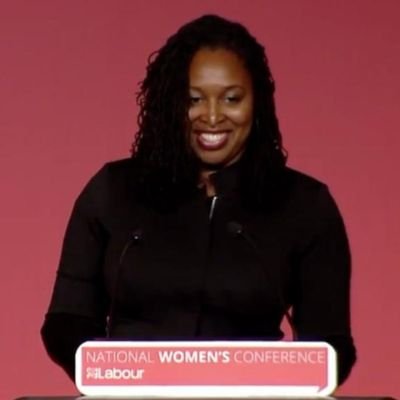
  • Dawn Butler – 2018 Speech at Labour Party Conference

    Below is the text of the speech made by Dawn Butler, the Shadow spokesperson for Women and Equalities, at the Labour Party conference held in Liverpool on 26 September 2018.

    Chair, conference, I’d like to thank my equalities team. Carolyn Harris, Naz Shah and Baroness Anita Gale for the great work they do in the Women and Equalities team holding this Tory Government to account.

    Rebuilding Britain for the many not the few, we know this is our vision, but what will this look like under the next Labour government?

    Almost all of our current equality laws have been made under previous Labour governments.

    This Conservative Government continues to destroy hard won equality rights, that Labour and the trade unions have fought for.

    Everywhere we look your rights are being eroded or removed.  For far too long, the Tory Government has treated equality as an add on, an afterthought.

    The Tories have had 7 different equality ministers, tagged onto 4 different departments and a budget that has been almost halved.

    2018 has been a year where the Tory governments institutionally racist policies have been exposed. The hostile environment and the damage they have done to the Windrush generation will never be forgiven nor forgotten – nor should it be.

    My parents were invited here from Jamaica. They were confronted with signs saying no blacks – no Irish – no dogs. My parents worked so hard, with my dad never taking a day off sick. They paid their taxes and raised their children well.

    Now the Windrush generation in their twilight years, when they should be enjoying retirement, are confronted with go home – you’re no longer British – you are surplus to requirements This could have been my parents. After giving their blood sweat and tears to rebuild Britain they are disguarded like trash.

    This was no mistake or unintended consequences by Theresa May – her hostile environment was by design.

    Sadly this hostile environment has not been reserved just for the Windrush generation. Under universal credit women lose £1,400 a year and if you are a black woman you lose even more. Older people have seen a reduction in services, with home visits lasting as little as 15 minutes.

    How many in this conference can wash, eat and get dressed in 15 minutes?

    And don’t forget the 1950’s women who were cheated out of their pensions.

    Disabled people you have been treated so badly by this government’s austerity policies that the united nations has said it is a systematic violation of your rights.

    Black, Asian minority ethnic people, the government’s own race disparity audit highlighted that its policies have had a detrimental effect on you, from the justice system to education and employment, and yet they still refuse to rectify it.

    People of faith, since Brexit we have seen faith hate crime increase by 29% and the LGBTQI+ community in the last 12 months has seen hate crime increase 5 fold – with 45% of trans students attempting suicide.

    I could go on talking about so many things that mitigate against a fairer society but I want to talk about what a Labour government would do.

    A labour government will put equality centre stage. It will be the central thread across all of government.

    We will create a standalone women and equalities department which for the very first time will be headed by a Secretary of State.

    We will:

    – develop and deliver a national equalities strategy

    – lead on reducing discrimination and inequality

    – ensure this is enforced through all machinery of government

    Labour will deliver a fairer society for the many. We will equality proof all legislation before, during and after implementation, ensuring no individual or group is unfairly discriminated against by our laws. This would prevent another Windrush scandal ever happening again.

    Labour’s new Equality department will work alongside other departments to:

    – implement up to 10 days paid leave for those suffering from domestic abuse

    – change the law so that people can bring forward cases on multiple grounds of discrimination

    – strengthen the Equality and Human Rights Commission

    – integrate the UN Convention on rights for people with disabilities

    – ensure British sign language is given full legal status

    – re-establish a women’s national commission

    – launch the emancipation educational trust

    – supply free sanitary products in schools, colleges and homeless shelters to end period poverty

    And conference all this will commence in our first term of office. I know what you’re thinking – when will we find time to sleep?

    But who needs sleep when the next Labour government will be the most progressive, aspirational government in this country’s history.

    The privileged few and the mainstream media try to tell us it can’t be done. Don’t believe them – it can.

    In reality what is wrong with those at the very top getting a little less so that those at the bottom can get a little more? I wouldn’t class that as radical, would you?

    A labour government will rebuild Britain for the many not the few.

    Conference, there are many people in our country who want to revolt against the cruel injustices of the Conservatives, but there are so many obstacles. They want their voices to be heard but unfair obstacles overpower them. They want a better life but at every turn there’s a different obstacle to overcome.

    Conference I am Labour because Labour made my parents feel welcome when they arrived from Jamaica. Labour stands for fairness, equality and justice. It is imperative that we are united and keep people like my parents and the many who desperately need a labour government at the forefront of our minds, and the many more who need us to overcome the obstacles the Tories have put in their way.

    This isn’t just a question of spending money but a question of fairness. To build that fairer society we must tackle all of those injustices. A fairer society should be judged on the basis that “we measure success by the obstacles we overcome”.

    Conference the time to overcome is now. It is time that we overcome those obstacles if we are to fulfil our vision for the many, not the few.  And conference I believe we can overcome together – united, we shall overcome, we shall overcome some day – deep in my heart I do believe we shall overcome some day. And someday soon.

    Conference look around you. We are the many and there are many many more, and they need Labour to make our country fairer to level the playing field. To empower them, to break down the obstacles for them.

    Conference let’s be united and fight for a Labour government for the many, not the few.
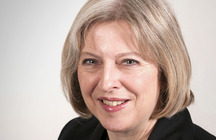
  • Theresa May – 2018 Speech at Bloomberg Global Business Forum

    Below is the text of the speech made by Theresa May, the Prime Minister, in New York, United States, on 26 September 2018.

    This week political leaders have come to New York to discuss how we can work together to ensure the future prosperity and security of our people.

    And it’s right that many of these discussions are taking place at the United Nations.

    But it is also right that I have come here to this Bloomberg forum, because we will only succeed if we also work in partnership with you, some of the most pioneering business leaders in the world today.

    It is businesses like yours which have been great engines of job creation and growth – in my country, here in America and right around the world.

    And it is the embrace of open economies and free trade as drivers of innovation and growth that has underpinned your success and acted as the greatest agent of collective human progress.

    Where free markets have been properly regulated, and trade and investment unleashed, we have seen unprecedented levels of wealth and opportunity, rising life expectancy, greater access to education, falling infant mortality and reductions in absolute poverty on a scale which would once have been hard to imagine.

    And as governments we have played our part in helping to make this possible by agreeing and abiding by a global framework of rules, and by opening up our economies to competition.

    But today new challenges – including the rapid pace and breadth of technological change – are causing some to question their faith in the institutions of global co-operation and the framework of rules which has brought us to this point.

    They look at who gains from free trade and ask whether this global economic system is fair and whether it can really be made to work for everyone.

    They look at the growth of artificial intelligence and ask whether their children and grandchildren will have the skills to succeed in the new economy.

    And they look at some of the tensions in global trade today and ask whether the rules based system can be really adapted to reflect the realities of the modern world.

    My answer to all of these questions is a bold and optimistic yes.

    And my message today is that a post-Brexit Britain will be an unequivocally pro-business Britain – and a global partner that will help to lead the international response to those challenges.

    Through our Modern Industrial Strategy at home we will create one of the most dynamic and business-friendly economies in the world – driving investment opportunities for your businesses and spreading the benefits of new sectors and technologies to every part of my country.

    And internationally – as a Global Britain – we will champion our vision for the future of the global economy: a vision that is based on openness, innovation, competition, high quality and intelligent regulation.

    And we will be at the forefront of sustained international efforts to address the challenges facing global trade and to build a dynamic and competitive global economy that can truly work for everyone.

    I have always been clear what the United Kingdom stands for and what we want to achieve as we leave the European Union.

    Our relationship with the EU will change with Brexit. But we will still be neighbours, we will still be part of the European family of nations, and we will continue to champion the same beliefs – standing for freedom, democracy and the rule of law, underpinned by a rules-based global order.

    And that is why I am confident we can reach a deal about our future relationship that is built in this spirit.

    We have put forward a plan for a new, but still close relationship, with frictionless trade at its heart.

    There is no other plan that protects jobs and livelihoods and also meets our commitments in Northern Ireland, while respecting how people voted in the largest democratic exercise in our history. And I believe that behind the noise of the headlines and the chattering of the commentators, there is much common ground in these objectives.

    We know that the other models on offer would not deliver for business, who would face either increased bureaucracy, additional border checks, or both. And so I have urged the EU to engage with our proposals so that we can move forward.

    To be clear, we are not seeking partial membership of the Single Market, or in any way trying to undermine it. But we are looking to achieve the frictionless trade that I believe is in all of our interests.

    There is clearly a lot further to go in the negotiations and the coming weeks will be critical.

    For the prize is great: with the conclusion of the negotiations over the coming weeks, the certainty of an Implementation Period in which to adapt to the new arrangements, and the guarantee of frictionless trade with the EU in the future, businesses can look forward to the post-Brexit world with confidence.

    At the same time, looking beyond the EU, we are absolutely committed to delivering continuity in terms of relationships with existing bi-lateral partners – and we want to forge the most dynamic and ambitious Free Trade Agreements with old friends and new allies alike.

    Crucially we also have a plan to deliver an economy that is knowledge-rich, highly innovative, highly skilled and high quality but with low tax and smart regulation.

    So let me say this very clearly.

    Whatever your business, investing in a post-Brexit Britain will give you the lowest rate of Corporation Tax in the G20. You will access service industries and a financial centre in London that are the envy of the world, some of the best Universities in the world, strong institutions, a sound approach to public finance and a consistent and dependable approach to high standards but intelligent regulation.

    And yes, locating in the UK, you will also be able to access the talent you need. Freedom of movement will end when we leave the European Union. But we will put in place a new immigration system that will allow businesses and universities to attract the brightest and best to the UK.

    Furthermore, through our Modern Industrial Strategy we are bending the power of the state and the ingenuity of the private sector to solve four Grand Challenges of the future which are enormous areas of potential for growth, jobs and investment across our whole country.

    These are the challenges of Clean Growth; Our Aging Society; the Future of Mobility; and the challenge of Artificial Intelligence and Data – where we have already seen more investment in the UK over the last 3 years than in the rest of Europe combined.

    We are contributing the UK’s biggest ever increase in public investment in research and development, which will help develop new technologies in these four areas.

    And we have set a goal of total public and private investment in research and development reaching 2.4 per cent of GDP by 2027.

    We will educate and train our young people for the opportunities that meeting these four Grand Challenges will bring.

    And we will ensure that we have smart, agile regulation and dynamic institutions which promote innovation, but also protect people’s rights. Just as we are doing, for example, with AI – where our Centre for Data Ethics and Innovation will make us a global leader in helping to ensure the safe, ethical and innovative deployment of this new life-changing technology.

    At its heart, our Modern Industrial Strategy is about creating a different kind of economy for the future.

    It’s not about seeing business and society as separate entities, where business generates a surplus and government then invests it to handle the social consequences of economic change.

    But instead it is about harnessing the enormous power of business as a partner in tackling some of the greatest social challenges of our time.

    It is not about telling business what to do, but instead genuinely listening to business and working in partnership with you.

    It’s about understanding what you need and working together to shape our economy in a way that will help us make the UK one of the most attractive countries in the world in which to establish and grow a successful business.

    Just as we work with you to create the best possible environment in which to invest in the UK, so I am also determined that a post-Brexit Britain will be a trusted partner at the forefront of efforts to address the real challenges facing the future of the global economy.

    This means playing a leading role in tackling the root causes of the current tensions in global trade – where the rules have not kept pace with the modern world.

    If a global system is going to function properly, the participants in that system need to believe that the rules and the commitments they make to one another are fundamentally fair.

    They need to believe that others are playing by both the spirit and the letter of those rules, whether that be in terms of declaring what subsidies are provided or respecting intellectual property rights.

    They need to believe that any disputes will be dealt with fairly and efficiently.

    And the rules themselves need to remain relevant by keeping pace with the changing nature of trade and technology.

    So we need to give the WTO a broad, ambitious and urgent mandate to reform, to address the areas where it is not functioning effectively, to deal with issues that are not currently covered and maintain trust in the system.

    For example, we need to see new rules in areas such as digital trade and services, including e-commerce that can boost growth across these dynamic sectors.

    We need WTO reforms to increase fairness for all participating countries; and to enhance global legitimacy and public support for the multilateral trading system, including through greater transparency.

    We support the EU’s efforts in this area and, as we leave the EU, we will want to work with them and all our partners around the world, to push this forward and deliver a mandate for change.

    As a global and independent trading nation, we will use all the means available to us – including our positions in the G7, G20, OECD, IMF and FSB to pursue this agenda in partnership with others committed to the same end.

    And crucially we also want to make business central to the conversation because at the end of the day governments set the framework, but it is businesses that create wealth and drive innovation.

    These challenges facing the global economy are serious – but a Global Britain will be a fully engaged and ambitious partner at the forefront of international efforts to drive reform.

    And I look forward to hearing from you this morning and to discussing with you what more we can do – so that together we can shape the future of the global rules based system to work for the modern world.

    And together we can harness the global power of open economies and free markets to deliver prosperity and opportunity for all – now and for generations to come.

  • Diane Abbott – 2018 Speech at Labour Party Conference

    Below is the text of the speech made by Diane Abbott, the Shadow Home Secretary, at the Labour Party conference held in Liverpool on 25 September 2018.

    Thank you Chair. Thank you Conference. It’s great to be back in Liverpool. The party is the largest Social democratic party in Europe and we are still growing. I’m still here. And our Leader Jeremy Corbyn is emphatically still here.

    We are here to discuss the safety and security of the whole country. This, like so many social issues, is a collective endeavour. It cannot be done individually. You are not safe if your neighbour isn’t safe. And we know who suffers from crime the most: it’s the most vulnerable; women; the elderly; children; all of our ethnic minority communities; the LGBTQ community and disabled people.

    So, it is has always been wrong to say ‘Law and Order’ is somehow a Tory issue. Fighting crime and upholding the law are key issues for our communities and therefore they are key issues for Labour.

    The truth is the Tories have cut over 20,000 police officers. Support staff have been decimated. And we can see the consequences of this in our communities. Response times to 999 calls are increasing. Violent crime is increasing. But arrests are falling.

    The government however is in denial.

    Tory austerity has damaged all our public services. All Tory cuts have consequences too. And their police cuts have consequences. You cannot keep people safe on the cheap.

    In Labour’s 2017 Manifesto, we said we would add 10,000 police officers. We will focus on rebuilding community policing. Because they are the frontline against crime, including terrorism.

    We also intend to recruit more fire officers and more border guards. The next Manifesto is not yet written but obviously I will be having friendly chats with the Shadow Chancellor John McDonnell about the exact numbers. But I’m sure we’re agreed on where we want the funding to go.

    The tragic fire at Grenfell reminds us of the courage of our fire fighters. The government refuses to accept that their cuts to fire services are responsible for longer response times. They refuse to accept that privatisation and deregulation, led inevitably to disasters like Grenfell. More than a year later they have not produced a single initiative that would prevent a repeat of Grenfell. The government is failing to protect communities and ensure their safety.

    The government is big on rhetoric about security, policing and borders. But talk is cheap. Action costs money. And they have slashed the border guards just like they slashed the police and the fire services. Not Labour. It was the Tories that cut them all.

    Real border security – to stop drug traffickers, sex traffickers, gangsters and terrorists – that is what Labour stands for.

    False rhetoric on protecting our borders and immigration led directly to the Windrush scandal. Can you imagine living in a country which indefinitely detains its own citizens? Which deports them? Which refuses them cancer treatment even when they’ve lived in the country all of their adult lives? Well, under this government we saw this happen to the Windrush generation. These were people that came to help rebuild this country after the war. And the Tories treated them like this.

    We had Theresa May with her ‘Go Home’ vans. She was the Home Secretary who announced that she would ‘deport first, appeal later’. The whole Tory party and the Lib Dems voted for the 2014 Immigration Act and implemented their ‘hostile environment’. They are the ones responsible for Windrush.

    And it is no use the current Home Secretary, Sajid Javid, trying to evade responsibility. He claims to have ended the ‘hostile environment’ but that isn’t true. Last Friday he snuck out an announcement showing they were still treating the Windrush generation as second class citizens.

    We will not rest until there is justice for the Windrush generation. Until the hostile environment is ended. Until Yarl’s Wood and Brook House detention centres are gone.

    We won’t rest until this Prime Minister and this government is gone.

    Recently, I set out Labour’s new immigration policy. It is based on our Labour values and the needs of society. It is not based on demonising migrants.

    We will always uphold our legal and moral obligations to Commonwealth citizens. We will not use the three million EU citizens currently resident here as bargaining chips. We will uphold their rights and the rights of British citizens resident in Europe.

    We will also be striking deals with the EU and other countries. Those trade deals can benefit us all. Migration may well be part of those deals. Our immigration system fits into that. Not the other way round.

    We won’t have bogus numerical targets. The Home Affairs Select Committee, the Migration Advisory Committee, and a former Home Office Permanent Secretary, all say that those numerical targets don’t work. It’s only Theresa May that believes in them.

    Instead we will have clear criteria. After the Brexit deal, after the trade deals, we may still have key skills gaps, such as the shortage of doctors and nurses. So, first we’ll increase training, education and apprenticeships for people here, and insist companies do the same. We will drive up wages with the National Minimum Wage. And we will increase employee rights and clamp down on exploitation.

    But we can’t expect increased training to plug the shortage of workers like Doctors in the short-term. We will need some migrant workers. But we should always remember that immigrants don’t drive down wages. It is predatory employers, weakened trade union rights, and an austerity government – that do that.

    And, once people are here, we will treat our brothers and sisters from overseas fairly and equally. That is Labour’s new immigration policy.

    I can’t leave the stage without reminding this audience, here in Liverpool, that Labour is committed to releasing all the papers in relation to the 37 Cammell Laird shipyard workers. And the Shrewsbury 24 trials. We will provide full disclosure. We want justice.

    We will also open inquiries into Orgreave and into the blacklisting of trade unionists. When workers are in legitimate disputes they too need to be safe and secure, from intimidation, from threats and from media frame-ups.

    We know that in this country you generally need a warrant to enter someone’s home or intercept their telephone calls. So we will insist on time limited, judicial warrants for any undercover policing.

    And finally, I could not let my conference speech end without thanking my fantastic Shadow Home Affairs team. They are formidable at holding the Tories to account and will be fantastic in government.

    And I wanted to thank you all who have supported me and the leader of our party Jeremy Corbyn through thick and thin.

    This country has never needed a Labour government more. We must repair the ravages of the Tory years. The country needs a Jeremy Corbyn led Labour Government.

    And, as our former leader the great John Smith said: “The chance to serve is all we ask.”

    Thank you conference.

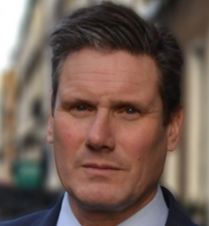
  • Keir Starmer – 2018 Speech at Labour Party Conference

    Below is the text of the speech made by Keir Starmer, the Shadow Brexit Secretary, at the Labour Party conference held in Liverpool on 25 September 2018.

    Conference, it’s great to be back here in Liverpool.

    A city of great energy and passion.

    And we need both of those as we debate Brexit today and in the coming weeks.

    But first let me start by saying thank you to my fantastic shadow Brexit team:

    Jenny Chapman. Paul Blomfield. Matt Pennycook. Dianne Hayter. Emma Hardy and Jess Morden.

    Thanks also to a special group of colleagues. Our Labour MEPs.

    These past two years have been especially difficult for you. But you’ve served our Party and our country with distinction.

    _____________________

    Conference, the last two years have not been easy.

    Like many of you, I was devastated by the referendum result.

    Like many of you, I’d campaigned passionately to stay in the EU.

    Not for the technical benefits – important though they are.

    But because I’m an internationalist.

    Because I believe that nations achieve more together than they do alone.

    I believe that the greatest challenges facing our nation – armed conflict, terrorism, climate change or unchecked globalisation – can best be met together with our EU partners.

    And the greatest opportunities – medical research, scientific advancement, art and culture – can only be realised together with our EU partners.

    Those values did not die on 23 June 2016.

    And those values must guide our every step as we move forward.

    We cannot allow Brexit to be driven by narrow and divisive Tory ideology.

    That’s why we have not ducked the challenge of Brexit.

    We could have wished away the result.

    But instead we stepped up. We stuck together and fought the government tooth and nail.

    That was the right thing to do.

    We were right to say that jobs and the economy should come first.

    We were right to say that EU citizens aren’t bargaining chips.

    We were right to argue for a transitional period to prevent a cliff-edge.

    We were right to argue for a customs union with the EU and a strong single market deal.

    And we were right to insist that Parliament should have a meaningful vote on the final deal.

    ____________________________________

    Over the coming weeks and months, we will be tested again.

    Hugely important decisions will have to be made on Brexit.

    Decisions that will affect each and every one of us.

    The Prime Minister says that we should “trust her” to deliver Brexit but how can we trust a Prime Minister whose first choice for Foreign Secretary was Boris Johnson?

    And whose second choice was the man who spent the last few years running down our NHS?

    How can we trust the person responsible for the hostile environment. And for appointing a Northern Ireland Secretary who doesn’t even understand the basics about Northern Ireland, let alone the complexities.

    Conference, this Prime Minister doesn’t deserve our trust.

    Just when we need a strong government, what do we see?

    Division. Chaos. And failure.

    No credible plan for Brexit, no solution to prevent a hard border in Ireland and no majority in Parliament for the Chequers proposals.

    A Tory civil war that has gone on for years, now threatens our prosperity.

    The party that once promised that it would fix the roof while the sun was shining is now intent on burning the whole house down.

    So I’ve got a message for the Prime Minister.

    ‘If your party wants to tear itself apart, that’s fine… but you’re not taking our country with you.’

    _________________________________________

    That’s why I set out six tests for the final Brexit deal.

    Not just technical tests, but tests that spell out what kind of country we want to live in.

    Where the well-being of all our communities matters.

    Those tests were not plucked from thin air. They were based on the promises the Tories made about the Brexit deal they would deliver. They are tests Theresa May said she was “determined to meet”.

    Well she may have lowered her expectations, but I haven’t lowered mine.

    Conference, I know that you want clarity on where we stand on the deal now.

    Because some have said Labour could vote for any deal the Tories reach.

    Some have said we may abstain.

    Some have said we may support a vague deal – a ‘blind Brexit’ – that gives no detail about the terms of our future relationship. So, let me be very clear – right here, right now:

    If Theresa May brings back a deal that fails our tests – and that looks increasingly likely – Labour will vote against it.

    No ifs, no buts.

    And if the Prime Minister thinks we’ll wave through a vague deal asking us to jump blindfold into the unknown she can think again.

    You can’t meet Labour’s tests by failing to provide answers.

    We will vote down a blind Brexit.

    This isn’t about frustrating the process.

    It’s about stopping a destructive Tory Brexit. It’s about fighting for our values and about fighting for our country.

    ________________________________________

    And when it comes to the vote in Parliament we do not accept that the choice is between whatever deal Theresa May cobbles together or no deal.

    That’s not a meaningful choice.

    No deal would be a catastrophe and no government has the right to plunge this country into chaos because of its own failure.

    So, if Parliament votes down the Prime Minister’s deal or she can’t reach a deal that’s not the end of the debate.

    Labour must influence what happens next.

    And we must keep all options on the table.

    Our preference is clear:

    We want a general election that can sweep away this failed Tory Government.

    And usher in a radical Labour Government that would put jobs and living standards first.

    But if a General Election is not possible then other options must be kept open. That includes campaigning for a public vote.

    It is right for Parliament to have the first say but if we need to break the impasse, Labour campaigning for a public vote must be an option.

    That’s why I’m happy to throw our full weight behind the motion being debated this morning.

    In particular I want to thank the several hundred delegates who spent their Sunday evening in a compositing room.

    It was a long meeting! But we reached consensus.

    And conference, fast forward a week and contrast that to what you’ll see at Tory conference.

    ______________________________

    Conference, there’s one final point I want to make.

    Whatever happens in the coming weeks, whatever deal this Prime Minister delivers or does not deliver. The terms of the Brexit deal are only part of the much wider debate we need.

    Because the referendum result was about something much deeper than the technical question of EU membership. It was a vote on the state of the nation.

    About the way our economy and politics work – or don’t work.

    And the message from millions of people was clear.

    We need to transform our economy. We need to rebuild our public services. We need to bring power back to our communities and back to people’s lives.

    There can be no adequate response to the referendum unless the right deal with the EU is matched by a new deal for Britain.

    That’s the other side of Brexit.

    __________________

    Conference, I’m under no illusion about the challenge ahead. These are uncertain times.

    Brexit has divided this country.

    We must remain united in the fight for our values.

    The values that hold our party together.

    Values that can bring our country back together.

    That is our challenge.

    We must rise to it.

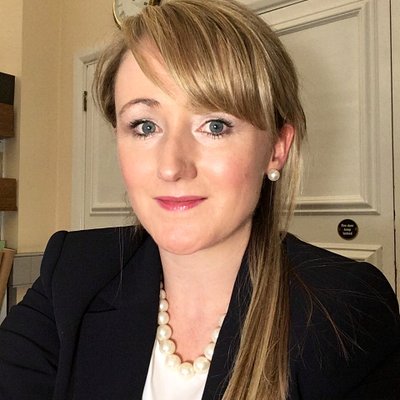
  • Rebecca Long Bailey – 2018 Speech at Labour Party Conference

    Below is the text of the speech made by Rebecca Long Bailey, the Shadow Business, Energy and Industrial Strategy Secretary, at the Labour Party conference held in Liverpool on 25 September 2018.

    Conference. There’s a saying that “if Liverpool did not exist, it would have to be invented.”

    I think that captures the energy, the creativity, eternal pride and solidarity of this city.

    But in today’s Britain that energy is being held back. I don’t need to tell you in Liverpool about the Tories and “managed decline”. But it sometimes feels as if managed decline is the Tory’s plan for the entire country.

    We have a government overwhelmed by the process of Brexit – with no idea about the type of country they actually want to live in.

    On all the big questions – the economy, climate change, inequality, what our working lives will look like – this government has simply nothing to offer.

    Time and time again they have ignored the concerns of businesses, such as Jaguar, Land Rover and Airbus, who know the looming catastrophe we face if we crash out without securing a good deal.

    We also know the Tories can’t be trusted, we know that they will use Brexit as a cover to roll back on our hard won workers’ rights.

    Eight years of Tory government has seen insecurity in the workplace become the norm and many workers now don’t have access to basic employment rights.

    Laura Pidcock our Shadow Minister for Labour Rights and Justin Madders, her maternity cover, have forensically held this Government to account but they don’t care.

    They don’t care about the tragic stories of gig workers, sick, stressed and under paid. They don’t even care about staff in their own departments of justice and business, campaigning simply for basic protections and a living wage.

    We care: workers under Labour will get full legal rights – such as sick pay, holiday and parental leave and protection from dismissal from day one, even those working in the gig economy.

    But, this precariousness extends beyond employment rights. Over three years there have been 100,000 job losses in retail alone, our biggest employment sector.

    Thriving high streets were once the centre of communities, somewhere local people were proud of but once flourishing businesses are now replaced by boarded-up shops with almost 25,000 vacant retail and leisure premises across Great Britain. Household names such as Toys R Us and Maplin have disappeared and big brands like New Look and M&S are closing stores across the country.

    The move to online retail and the changing nature of the way we shop doesn’t need to mean empty high streets and job losses. It can mean a vibrant community space, with local independent shops, cafes and restaurants.

    But that will require Governmental action to reinvigorate our high streets.

    Some of that action will be long-term changes, such as addressing the imbalance of tax treatment between traditional retailers and online sellers. That is why my colleague Bill Esterson is convening a cross-departmental taskforce to look into these complex issues.

    And Roberta Blackman-Woods will be leading a planning commission which will enable Labour to create policies that will revitalise our high streets, tackle climate change and environmental protection, as well as giving communities a stronger voice to shape their areas.

    Together these working groups will develop a long-term strategy for our high streets. But some actions can be done immediately.

    Today I am announcing Labour’s emergency 5-point plan to save Britain’s high streets.

    The next Labour government will ban ATM charges and stop Post Office and bank branch closures.

    We will provide free bus travel for under 25s.

    Deliver free public Wi-Fi in town centres.

    Establish a register of landlords of empty shops in each local authority.

    And finally, on one of the most pressing issues, business rates we will introduce annual revaluations of rates, exempt new plant and machinery from revaluations, ensure a fair appeals system and fundamentally review the business rates system to bring it into the 21st century.

    You see, it is only Labour that has the energy, the ideas and the courage to challenge the big issues and shape the world as we would like to see it.

    We just don’t accept that decline is inevitable, that productivity and wage stagnation is normal, that critical industries such as steel and manufacturing don’t need support or that it’s acceptable for public and private investment to be around 4 per cent below the developed country average.

    My brilliant colleagues Chi Onwurah and Gill Furniss have already championed necessary investment to support industry from research and development through to infrastructure and skills.

    We have stated that under Labour public procurement will support home grown supply chains and support strategic industries.

    And while we’d love to bring as many public contracts back in-house as possible, we cannot reverse overnight the Tories’ devastating cuts to the capacity of the civil service and local government. We must, and we will, rebuild our public services.

    And we must, and we will, set out a bold industrial strategy with ‘missions’ to deal with the big societal issues of our time.

    Perhaps one of the biggest issues we face, which the market has proven uniquely incapable of addressing – is climate change. The debate is over. The super-storms of the last fortnight are further evidence that the climate is changing, and the consequences are severe.

    Ten years ago a Labour government passed the Climate Change Act. World leading legislation binding the Government to reduce greenhouse gas emissions by 80% by 2050.

    But ten years later, the science is clear. We need to go further and faster to avoid dangerous climate change. My colleagues Alan Whitehead and Barry Gardiner magnificently show up the Tories’ rhetoric. The truth is the Tories are off track to meet our current targets.

    We acknowledge that the UK needs to do much more to meet the Paris Agreement goal of limiting warming to 1.5°C. So today I state firmly that A Labour government will back a target for net zero emissions by 2050.

    And that’s just the start because targets aren’t enough. We need a plan of action.

    And we’ve got one. We’ve been working with an expert team of energy professionals and engineers supported by leading academics. They have looked at Labour’s mission to provide 60 per cent of the UK’s energy demand from renewable or low-carbon sources within 12 years. They have asked – can it be done? How can it be done? And with what consequences for our climate and economy?

    And yes, it can be done! Offering a profound economic opportunity to revive our productivity and reshape our economy.

    Now this is just a taster in the time I have.

    The report recommends a diverse energy mix, one part, harnessing the best offshore wind prospects in the world to deliver a seven-fold increase in offshore wind power. That’s over 7000 turbines, a massive 52 gigawatts – enough to power 12 million homes.

    They propose doubling onshore wind power, and almost tripling solar power. Together, that’s enough to power over 7 million homes.

    And the report proposes making every single house in the UK a warm, dry, energy efficient home – eliminating fuel poverty.

    Conference, George Harrison once said “it’s being here now that’s important. We can hope for the future, but we don’t know if there is one.”

    So this is not the time for piecemeal measures. We do not have to settle for whatever the market can deliver, and sleep walk into catastrophe.

    Because we can unleash the energy of the wind and the waves, and of our people, who have been criminally neglected through this country’s long deindustrialisation.

    Because for Labour, this is about boosting the fundamental quality of life for millions of people. This is about reinvigorating our towns and communities so that they truly symbolise local pride and prosperity. This is about kick-starting an industrial revolution with workers and unions at its heart, one that is built in Britain, and that can rebuild Britain.

    And by doing so, we can reclaim the future.

  • Emily Thornberry – 2018 Speech at Labour Party Conference

    Below is the text of the speech made by Emily Thornberry, the Shadow Foreign Secretary, at the Labour Party’s conference in Liverpool on 25 September 2018.

    Chair, Conference, it’s a privilege to be opening this debate on behalf of my good friends Nia Griffith and Kate Osamor, their shadow teams, including Liverpool’s own Dan Carden, and my own superb ministerial team: Liz McInnes, Khalid Mahmood, Fabian Hamilton, Helen Goodman, Ray Collins, and my PPS Danielle Rowley.

    And it’s wonderful to be back in Liverpool: a city we really thought couldn’t get any more Labour, but where last year, we won 37,000 more votes than in 2015, our biggest ever vote in this city. And next time round, under the inspirational leadership of Jeremy Corbyn and John McDonnell, we’ll go one better.

    It’s been 35 years since we kicked the last Tory MP out of Liverpool. And next time round, we’ll win Southport as well, and kick the Tories out of Merseyside for good.

    ———–

    Conference, as we all know, this is a year of important anniversaries in the history of the socialist movement – a movement always based on the unstoppable momentum of the masses, the incredible inspiration of courageous individuals and a core belief that injustice done to any of us is injustice done to all of us wherever we are in the world.

    And in this year of anniversaries, we start by celebrating 150 years of the TUC: 150 years spent fighting for workers, not just in Britain but all across the globe, and stronger than ever today thanks to the leadership of Frances O’Grady, and thanks to a Labour leadership which now respects the representatives of our workers, rather than treating them with deliberate contempt.

    And in this year of anniversaries, Conference, let’s recall it’s 130 years since a thin, humble, bearded socialist – it’s funny how those men can change the world – a Frenchman called Pierre De Geyter sat down and wrote a new melody for some old lyrics, and created the song we know as ‘The Internationale’, which inspired the working class of Europe and shook the ruling class, because it rejected war, rejected exploitation, and urged the human race to unite.

    And of course, conference, it’s 100 years since the first women in our country won the right to vote and won the right to stand for Parliament. And don’t let anyone ever say that we were ‘given’ those rights, because the women who came before us weren’t given anything! They fought for those rights, they suffered for those rights, and some died for those rights. And everything we now enjoy was won for us by those brave, brilliant women.

    But it’s also 100 years, Conference, since a young woman who never got the right to vote gave birth to her only son: a son who was refused permission to attend her funeral 50 years later because he was in a prison cell on Robben Island. Nosekeni Mandela never got to see her son freed. She never got to see him change his country and inspire the world. But he called her “the centre of his universe” so we owe it to her that he did.

    And Conference, we also this year celebrate the anniversaries of some of Labour’s greatest achievements: 70 years since the Attlee Government created the NHS; 50 years since the Wilson Government helped create the Nuclear Non-Proliferation Treaty; and 20 years, Conference, since Gordon Brown brought in the Tax Credits which the Tories are trying to dismantle; 20 years since Tony Blair secured the Good Friday Agreement which the Tories are trying to jeopardise; and 20 years since a Labour government started the Devolution Revolution which the Tories are trying to ignore as they hurtle towards a false choice between the ‘Chequers Deal’ and ‘No Deal’, either one of which will kill jobs and growth all across our country, and neither one of which we will accept.

    ————-

    But Conference, it is also a year of solemn anniversaries.

    100 years since the end of the First World War, when young men from every corner of the human race united across Europe, Africa, The Middle East and Asia, not in the spirit of The Internationale, but – in the words of Keir Hardie – “to fill the horrid graves of war” in the name “of selfish and incompetent statesmen” who had failed to preserve peace.

    And it is 70 years too Conference, since the assassination of Gandhi and 50 years since Martin Luther King and Robert Kennedy: three men of peace, three men of hope, all shot dead because they believed in an alternative to violence and hatred and war.

    And there is a final anniversary we must pause and remember today. Because Conference, it was 80 years ago this very week that the International Brigades were disbanded after their brave struggle against fascism in Spain, and their heroic final stand at The Ebro. And we pay tribute today to those brave men and women, including one of this city’s greatest sons, the legendary Jack Jones, who were prepared to sacrifice their youth, their futures and their lives to try and stop the rise of fascism in Europe.

    And we need that same spirit today, Conference, because make no mistake, those dangerous forces are on the rise again in our world on a pace and scale not seen since the days of the International Brigades.

    And it is not just the scenes from Charlottesville to Stockholm of masked thugs marching under Neo-Nazi Banners. It is also – far more dangerously – the rise of leaders projecting a form of nationalism not defined by love of one’s country and one’s people, but by hatred towards everyone else; by the erosion of democracy and free speech; and by the demonisation of any minority, any religion, and indeed any media outlet deemed to be ‘the enemy’.

    And everywhere we see those governments today, we know they are contributing to the creation of a world which is the opposite of The Internationale’: a world where the human race is more divided, more drowning in hatred than at any time since the 1930s. And a world which is therefore utterly unable to deal with the problems that we all collectively face.

    That is why our world leaders shrug their shoulders as the Climate Change crisis reaches the point of no return. That is why governments like ours continue to sell arms to Saudi Arabia even when it is proven that those weapons are being used to murder innocent children in Yemen. That is why the war in Syria too remains so intractable and destructive, with the dozen major countries involved not striving to stop it, but playing their own lethal power games with other peoples’ lives.

    That is why North Korea can happily continue developing their bomb; Iran can keep Nazanin jailed for a third year; Myanmar and Cameroon can slaughter their own citizens at will; Russia can act with impunity not just in Syria but in Salisbury; and Donald Trump can tear up treaties it took other leaders years to agree.

    All because Conference, the world order has been turned into a global free-for-all, and the leadership to fix it is simply not there. But Conference, it’s here in this hall, it’s here on this stage, it’s here in Jeremy Corbyn. And we as the Labour Party in government must strive to lead the world in a different direction.

    So with Nia Griffith’s leadership, we will support our forces, maintain 2 per cent spending on defence, invest more in peacekeeping, respect our international treaties, and never hesitate to defend ourselves, our allies, and our citizens abroad. But equally, we will never as a party go back to supporting illegal, aggressive wars of intervention with no plans for the aftermath, and no thought for the consequences, whether in terms of the innocent lives lost or the ungoverned spaces created within which terrorist groups can thrive.

    And with Kate Osamor’s leadership, we will also rise to the challenge that Nelson Mandela set this Conference eighteen years ago when he told us that “one of Labour’s major political and moral tasks in the 21st century” was to “become once more the keepers of our brothers and sisters [all around] the world.”

    And with Jeremy Corbyn’s leadership, we must and will lead the world in promoting human rights, in reforming the arms trade, in pursuing an end to conflict, in supporting not demonising refugees, and in turning the promise of a nuclear-free world from an impossible dream to a concrete goal.

    And with the leadership of every single one of us, Conference, we must also honour the memory of the International Brigades, and lead the fight against the forces of fascism, of racism, and prejudice, and anti-semitism. Because that is what we have always done both at home and abroad, and that is what we must always do.

    ————–

    We were there in Spain fighting Franco in 1936. We were there in Cable Street that same year fighting alongside the Jewish community to stop the Blackshirts. We were here in Liverpool a year later, when Oswald Mosley tried to speak in this great city and was forced out without saying a word. And we were there in the 1980s – I was there myself – when we marched against the National Front.

    And let’s remember Conference, we won all those battles! We beat the Blackshirts, and the NF, and the BNP, and the EDL, and whatever they call themselves today, however they dress up their racial hatred, we are there in the same streets telling the fascists: ‘No Pasaran’.

    And when we look back on all those battles, stretching back 80 years, I make a simple point, it hasn’t been thousands of Tories assembling in the streets to fight the forces of fascism. It’s been the men and women in this room. It’s been Jack Jones and Jeremy’s parents. It’s been Jon Lansman and Len McCluskey, Diane Abbott and Dawn Butler, Jeremy Corbyn and John McDonnell. So while I make a point of never disagreeing with John on anything, I disagree with him on this: we don’t need a new Anti-Nazi League, because the Anti-Nazi League is in this hall and on this stage.

    ————

    But Conference, let me speak to you from the depths of my heart and my soul and say something I never thought I’d have to say in my lifetime as a Labour member and activist, and it is simply this: that if we want to root out fascism and racism and hatred from our world, and from our country, then we must start, we must start, with rooting it out of our own party.

    We all support the Palestinian cause, we are all committed to recognise the Palestinian State, and I stand here with no hesitation when I condemn the Netanyahu government for its racist policies and its criminal actions against the Palestinian people.

    But I know as well, and we must all acknowledge, that there are sickening individuals on the fringes of our movement, who use our legitimate support for Palestine as a cloak and a cover for their despicable hatred of Jewish people, and their desire to see Israel destroyed. Those people stand for everything that we have always stood against and they must be kicked out of our party the same way Oswald Mosley was kicked out of Liverpool.

    —————

    And Conference, there is something more. Because if we truly want to realise the dream of The Internationale to unite the human race, and re-unite our country, then again we must start with uniting our own party, and ending the pointless conflicts which divide our movement, which poison our online debate, and which distract us from fighting the Tories.

    Because as Gandhi said: “We but mirror the world so if we could change ourselves, the world would also change.” But if we can’t show the strength to change ourselves to change the way we behave to each other, how can we ever hope to change the country, and aspire to change the world?

    But if we can do all that, just think what we’re capable of. Think what history we can create in government. Think what we can achieve that future Labour Conferences will remember as great anniversaries.

    ————–

    And I want to close with a story told by Dolores Gomez about the siege of Madrid in 1936, when every day she and her fellow citizens expected their streets to fall to the fascist forces surrounding the city. And sure enough, one day, they heard a huge army on the march

    “Iron clad boots”, she said, “Men marching silent, severe, with rifles on their shoulders and bayonets fixed, making the earth tremble under their feet.” She and others crouched on balconies overlooking the street, rifles cocked and grenades ready to be thrown, just waiting for the order to attack.

    But then she said, the army began to sing. “A thrill goes down the spines of the people, `Is this a dream?’ ask the women, sobbing.” But no, it was not. The men marching down the street had begun singing ‘The Internationale’, each in their own language – French, Italian, German, and English – the men of The International Brigades, all singing different words, but all with the same meaning, that when any of us is under attack from the forces of hatred, prejudice and exploitation, we are all under attack and we must unite and fight back together.

    And if we can show that same unity today in our party, if we can root out prejudice and end division in our own ranks, then we can heal our divided country, we can unite our fractured world, and we can show that the greatest achievements of our socialist movement lie not in our past, but in our future. That is the kind of government we need for our country and that is the kind of Britain we need for our world.

  • Sajid Javid – 2018 Speech on Security Relationship with the EU

    Below is the text of the statement made by Sajid Javid, the Home Secretary, in Madrid on 25 September 2018.

    Good afternoon.

    Estoy encantado de estar hoy aqui en Madrid! (Translation – I am delighted to be in Madrid today.) I’d like to thank the organisers, EFE, for hosting this event.

    I’ve been lucky enough to hold various posts within the British government.

    But one similarity between them all is that I spend a lot of time trying to convince people to have a warm, open and productive relationship with Britain.

    But I’m pleased to say that with Spain, the UK already has a strong and valuable relationship.

    We have a proud history of working together…

    And I’m not just talking about Gareth Bale helping Real Madrid win the Champions League and David Silva helping Manchester City win the Premier League!

    There are strong ties between our nations.

    More than 180,000 Spaniards live in the UK, and 2 million visit every year.

    19 million Brits holiday in Spain each year and around 300,000 have made their homes here.

    We have 5,000 Spanish people working in our National Health Service…

    …and another 5,000 working in scientific research, including trying to find cures for illnesses like Alzheimer’s and cancer.

    There are also 12,000 Spaniards studying in UK universities and 55,000 students are in British schools in Spain.

    That means that British schools have more of a footprint here in Spain than anywhere else in Europe.

    We are also allies in business.

    Spain is now the UK’s seventh largest trading partner and our total bilateral trade was up 5% last year.

    The UK is Spain’s top destination for foreign direct investment.

    But perhaps it is our security relationship that is the real jewel in the crown.

    Whether it be against Daesh, drugs runners, or human traffickers, we could not ask for more from Spanish law enforcement and intelligence agencies in terms of commitment and collaboration.

    Our 2 countries regularly work together to protect our people.

    We share tools to crack terror cells.

    We stop murderers and rapists slipping over our borders.

    We end exploitation by organised crime gangs.

    And we bring these monsters to justice.

    It’s a sad fact that our countries share many of the same security threats and challenges.

    We have a shared history of fighting terrorism – be that in the form of the IRA or ETA.

    Our countries have both also been victims of terrorist attacks in recent years.

    Last year, the UK was rocked by terror attacks in Manchester and in London.

    In Spain, innocent people were mown down on Las Ramblas.

    Our countries shared the pain of these attacks.

    During the London Bridge attack, it was a Spanish national – Ignacio Echeverría – who sadly lost his life when he confronted terrorists with only his skateboard to try to save others.

    He was posthumously awarded Britain’s highest honour – the George Medal last year…

    …and I’m pleased to say that his father will collect his posthumous George Medal in Buckingham Palace next month.

    In Barcelona, one of the victims was a 7 year old boy with dual British-Australian nationality.

    I will pay tribute to all victims of this mindless terrorism later today in the Bosque del Recuerdo.

    Both our countries face an enduring threat from Islamist terrorism, which we work together to combat on a daily basis, wherever it manifests itself – be that on our streets or online.

    There are other threats which our countries face together too.

    For instance, the threat from large scale cybercrime is growing as digital technologies advance.

    Cybercrime does not respect borders and this was shown with devastating effect when the WannaCry ransomware attack impacted more than 100 countries around the globe.

    We also both face the threat of hostile state activity.

    We both have a watchful eye on Russia following on from the despicable nerve agent attack in Salisbury, which left 4 people fighting for their lives and one innocent woman dead.

    Following this attack, many European countries stood with the UK to take decisive action, with Spain expelling 2 Russian diplomats in response. We are grateful to Spain for standing with us.

    When it comes to our security, we know that when we collaborate we are at our strongest.

    We know that sharing tools, sharing data and expertise keeps people safe in Spain, in Britain – and across Europe too.

    And that’s exactly what we’re doing.

    We’re working together through the EU, through NATO and bilaterally in all sorts of different ways.

    For example, in March this year, 39 women were freed from sexual exploitation at the hands of an organised criminal gang here in Spain…

    …as a result of a joint operation between the UK’s National Crime Agency and Spanish and Nigerian law enforcement.

    In April, the National Crime Agency again worked with Spanish law enforcement to seize nearly 9 tonnes of cocaine in Algeciras … the largest ever haul from a single container in Europe.

    And, of course, nowhere is Anglo-Spanish co-operation stronger or more visible than in the joint operation called the Captura campaign … which has seen 81 dangerous British fugitives successfully tracked down and arrested.

    Without cooperation between our agencies, these dangerous fugitives, these 81, could still be at large…

    …these people traffickers could still be lurking in our communities…

    …and these drugs still flooding our streets.

    This co-operation is often underpinned by EU law enforcement and criminal justice measures, which we both make use of to our mutual benefit.

    In particular, I welcome the strong co-operation and leadership that the UK and Spain have shown within Europol to drive forward the EU’s efforts to tackle illicit firearms trafficking.

    We make extensive mutual use of European Arrest Warrants to arrest criminals, helping to fight trafficking and so much else.

    For example, in the last 5 years, the UK arrested over 200 people on behalf of Spain, and the Spanish authorities have arrested over 180 on our behalf.

    We are also both a part of the Schengen Information System, which enables the sharing of real-time automated alerts on missing and wanted people with law enforcement agencies across Europe.

    We’re working together to tackle child sexual abuse.

    Just last year, our Spanish partners assisted in the arrest of one of the UK’s most wanted sex offenders.

    This twisted paedophile had been hiding in Spain for nearly 2 years and if he hadn’t been caught, he may well be preying today on more children.

    The European Arrest Warrant enabled Spanish authorities to locate him and return him to face justice in the UK where he is now behind bars.

    These are just some examples of the collaborative security work that is going on every single day.

    In all areas – from counter-terrorism to serious and organised crime, we are working together to keep our citizens safe.

    That’s in both our interests.

    The nature of the current threat from serious organised crime, cybercrime, terrorism and hostile state activity is truly global.

    And it constantly changes, as geopolitics and technology evolve.

    To keep pace with this and to ensure we are able to respond effectively, we must continue to work together.

    Criminals who seek to harm our citizens, exploit vulnerable people, damage our economies, and challenge our values, are finding new ways to do so – regardless of borders or geography.

    We must continue to find new ways to fight back.

    That means having seamless operational co-operation, real-time sharing of data, and state of the art technology.

    It means ensuring those who would cause us harm know that they cannot escape justice by crossing from the UK into Spain or vice versa.

    It means sharing our expertise, experience and intelligence, so we can stay one step ahead.

    The UK Prime Minister said earlier this year that the UK is unconditionally committed to European security.

    And I want to reiterate that message today – that deal or no deal – we remain committed to ensuring the security of Europe.

    I’m pleased that Minister Grande-Marlaska has taken the time today to discuss with me the future of our security co-operation.

    Because the benefits of our security cooperation – and its importance – are clear.

    And this co-operation is facilitated and enhanced by access to EU tools and measures to the benefit of citizens in both our countries and across Europe.

    We want an ambitious security relationship going forward after Brexit, which we have clearly set out.

    We accept that outside the EU, our relationship must of course be quite different. But it does not have to be weaker.

    We accept that things will need to change.

    We will not be carrying on as if we were a member state.

    We will be leaving all the various EU institutions.

    We will no longer be involved in EU decision-making.

    But the point is, we can make these changes and others without undermining the day-to-day operational co-operation which plays such an important role in keeping European citizens safe.

    We want our security relationship with Spain – indeed with all our European partners – to be as strong and effective as ever once we have left the European Union.

    That’s why the UK government has proposed a comprehensive treaty between the EU and the UK which will allow security co-operation to continue and lives to be saved.

    And I will keep putting forward the case for this continued co-operation.

    The kind of model we are proposing is one the EU is familiar with.

    It’s relatively simple.

    But we need the political will to make this happen.

    The alternative – abandoning EU co-operation tools – would lead to a damaging reduction in our ability to work together, despite our best efforts.

    While we have had some initial conversations with the Commission, we now need to go further and faster to help make sure that all our citizens stay safe and that crooks can’t prosper.

    I’ve spoken a lot today about the importance of working together.

    Working together in all sorts of different areas.

    Indeed, it’s something our 2 countries have been very good at for a great many years.

    In fact, UK and Spanish diplomatic ties go back 500 years.

    Commercial ties go back even further.

    As I’ve said, the security links between the UK and Spain have been going from strength to strength.

    But we are now facing an intensive period of negotiations which will define the future relationship between the UK and the EU.

    That will of course have implications for our security co-operation in the future.

    I very much hope that the negotiations will reach a conclusion which ensures we are able to continue to co-operate effectively with our European partners to keep our people safe.

    We have made the UK’s commitment to Europe’s security very clear.

    Setting out what we think is the best way to guarantee it.

    Today I want to promise you this.

    That I will continue to do all I can to make sure that the relationship between our two great nations remains strong…

    …that our citizens are kept safe…

    …and that we continue to face our common threats and challenges together, long into the future.

  • John McDonnell – 2018 Speech to Labour Party Conference

    Below is the text of the speech made by John McDonnell, the Shadow Chancellor of the Exchequer, to the Labour Party conference in Liverpool on 24 September 2018.

    I want to start by thanking the Treasury Team: Peter Dowd, Shadow Chief Secretary, Jonathan Reynolds, Anneliese Dodds, Clive Lewis, Lyn Brown, Lord Dennis Tunnicliffe, Lord Bryan Davies and PPS Thelma Walker who won back Colne Valley from the Tories last year.

    This month is the 10th anniversary of the financial crash. J.K.Galbraith in his book on the 1929 crash said sure you can try to create institutions to avoid crashes in the future but the best protection is memory. So it’s worth remembering. The causes of the crash were:

    Yes, greed; yes, the deregulation that turned the City into a multibillion pound casino, but more importantly it was caused by the power of a small, financial elite who exercised too much power over our political system.

    That power meant the bankers and speculators who caused the crisis wouldn’t be the ones who’d pay for it. It would be our families, working people, our businesses, our young people and especially the most vulnerable in our society.

    It’s been 8 hard years of austerity and economic failure. In the 6th richest country in the world it cannot be right that 5000 of our fellow citizens are sleeping on our streets and that 4 million of our children are living in poverty, two thirds of them in households where someone is in work.

    That tells you that wages are so low, still below 2010 levels. They are not sufficient to provide a decent life for many of our people. The Tories have created an age of insecurity where people have little if any power or control over their lives. It’s no wonder so many people voted for Brexit. They voted for any form of change. It was an anti-establishment vote.

    So I believe it’s time. It’s time to shift the balance of power in our country. It’s time to give people back control over their lives.

    Another Anniversary

    You know, there’s another anniversary this year. One hundred years ago in 1918 the Labour Party adopted Clause Four as part of our party’s constitution. Let me remind you what it said: “to secure for the workers, by hand or by brain, the full fruits of their industry.”

    I say the Clause 4 principles are as relevant today as they were back then. Fair, democratic, collective solutions to the challenges of the modern economy.

    The Labour movement has always believed that democracy should not stop when we clock in at the factory gate, in the office lobby, or – like my Mum in BHS – behind the counter.

    Democracy is at the heart of our socialism – and extending it should always be our goal. Our predecessors fought for democracy in Parliament, against the divine right of kings and the aristocracy. They fought for working people to get the franchise.

    Our sisters fought for women’s suffrage in the teeth of ferocious opposition and our movement fought for workers to have a voice at work. The trade unions founded this party to take that democratic vision even further. So in 2018 I tell you that at the heart of our programme is the greatest extension of economic democratic rights that this country has ever seen.

    It starts in the workplace.

    It’s undeniable that the balance of power at work has been tipped against the worker. The result is long hours, low productivity, low pay and the insecurity of zero hour contracts.

    I want to thank the IPPR for its recent report. It was a brilliant critique of the inequality embedded in today’s economy.

    Archbishop Welby took some stick in the media and from some in the establishment for his support for the report. He wasn’t engaging in party politics. He was simply speaking the truth as a moral leader in our society. Just a few words of advice though Archbishop, when they get round to calling you a Marxist, I’ll give you some tips on how to handle it.

    So let’s be certain. We will redress the balance of power at work. We will be proud to fulfil John Smith’s, our late leader’s promise, that workers will have trade union rights from day one whether in full time, part time or temporary work.

    We’ll ban zero hours contracts. We will lift people out of poverty by setting a real living wage of £10 an hour. Wages will be determined by sectoral collective bargaining. And yes we will tackle the continuing scandal of the gender pay gap.

    Corporate Governance

    Real power comes from having the right to a collective say at work. Large corporations play a huge role in our lives, yet the decisions about running them are in the hands of a tiny few. Employees who create the wealth have no say in the key decisions that affect their future. After decades of talking about industrial democracy, Labour in government will legislate to implement it. As Jeremy announced yesterday, a third of the seats on company boards will be allocated to workers.

    Power also comes from ownership. We believe that workers, who create the wealth of a company, should share in its ownership and, yes, in the returns that it makes.

    Employee ownership increases a company’s productivity and encourages long term decision making. Let me thank the Co-op Party for its work on this and Gareth Thomas MP in particular for his ideas.

    We will legislate for large companies to transfer shares into an “Inclusive Ownership Fund.” The shares will be held and managed collectively by the workers. The shareholding will give workers the same rights as other shareholders to have a say over the direction of their company. And dividend payments will be made directly to the workers from the fund. Payments could be up to £500 a year. That’s 11 million workers each with a greater say, and a greater stake, in the rewards of their labour.

    Societal Dividend

    But we all know it’s not just the employees of a company that create the profits it generates. It’s the collective investment in infrastructure, education and research and development that we as a society make that enables entrepreneurs to build and grow their businesses.

    So we believe it’s right that society shares in the benefits that investment produces. That’s why a proportion of revenues generated by the ‘inclusive ownership funds’ will be transferred back to our public services as a social dividend. Over time, this will mobilise billions that could be spent supporting our public services and social security system.

    Public Ownership

    We are extending economic democracy even further by bringing water, energy, Royal Mail and rail into public ownership. Some press said the voters would be horrified. They couldn’t have been more wrong.

    Public ownership has proved its popularity in opinion poll after opinion poll. It’s not surprising, look at the scandal of the privatisation of water. Water bills have risen 40% in real terms since privatisation. £18 billion has been paid out in dividends. Water companies receive more in tax credits than they pay in tax. Each day enough water to meet the needs of 20 million people is lost due to leakages. With figures like that, we can’t afford not to take them back.

    But be clear, nationalisation will not be a return to the past. We don’t want to take power away from faceless directors to a Whitehall office, to swap one remote manager for another.

    Today, Rebecca Long Bailey and I are launching a large scale consultation on democracy in our public services. We are also setting out our plans for a new publicly-owned water system that puts this essential service back in the hands of local councils, workers and customers.

    There will be an unprecedented openness and transparency in how the industry will be managed. We are ending the profiteering in dividends, vast executive salaries and excessive interest payments.

    Surpluses will be reinvested in water infrastructure and staff, or used to reduce bills. Real investment will allow the highest environmental standards.

    Public and Community Ownership Unit

    People have had enough of being ripped off by privatisation. That’s why we’ve said no more PFIs and we’ll bring the PFIs back in house. Through our public ownership programme we will set up a ‘Public and Community Ownership Unit’ in the Treasury. It will bring in the external expertise we will need.

    Let me make it absolutely clear that the full weight of the Treasury will be used to take on any vested interests that try to thwart the will of the people. Some said our manifesto was a fantasy or a wish list, attractive but ultimately not deliverable. I’m telling you today that we are planned, ready and prepared.

    Not just to fight another election campaign but to implement our programme when we win.

    Green Book

    For too long that establishment has used the Treasury as a barrier against putting power back into the hands of the people. So we will reprogram the Treasury, rewriting its rule books on how it makes decisions about what, when, and where to invest.

    We will end the Treasury bias against investing the regions and nations. And we’ll make sure it assesses spending decisions against the need to tackle climate change, protect our environment, drive up productivity and meet the investment challenges of the 4th industrial revolution.

    Fair Taxation

    We need to exert some people power over our tax system. There are millions of businesses out there which deserve our respect and we will always support them. They are responsible, ethical entrepreneurs, who pay their taxes and support our community. They should know that we are proud of them.

    But there is a minority that don’t live up to those standards. They avoid paying their taxes on an industrial scale. They are denying our hospitals, our schools and carers the resources they need.

    The Tories record on tackling tax avoidance and money laundering has been a disgrace. We can’t trust the Tories on this but we shouldn’t just wait until we get into government. We should act now.

    One way is to mobilise shareholder power to demand companies uphold basic tax justice standards. Numerous institutions from churches to trade unions and pension funds have large scale shareholdings in many of the companies that avoid taxes.

    So today, I’m announcing my intention to bring together these organisations to launch a shareholder campaign. We’ll be demanding companies sign up to the Fair Tax Mark standards, demonstrating transparently that they pay their fair share of taxes.

    So fair warning to the tax avoiders, we are coming for you.

    Global Dialogue

    Gordon Brown recently expressed his concern at the current weaknesses in global relationships to deal with any future economic crises. With major nations on the brink of a trade war, and with climate change accelerating, we can’t risk the kind of international breakdown that led to the Great Depression. Just as at the Bretton Woods conference in 1944, there is an urgent need to work out if the current international system can cope with these threats.

    Over the past few decades that system has concentrated power in the hands of an international financial elite. Individuals, communities, and even nation states have been made increasingly powerless. It isn’t working for the Western world, where stagnant wages have helped feed the rise of the racist right. And it isn’t working for the developing world, whose wealth is plundered by multinational corporations or stashed in Western banks.

    We will be convening in the spring an international social forum to bring together leading economists, politicians and civil society representatives, launching a dialogue on the common risks we face and the actions we need to take.

    I am pleased to announce that Nobel Prize winning economist, Joseph Stiglitz, has agreed to lead this discussion for us.

    Brexit

    This leads us inevitably to the urgent question of Brexit. I don’t have to repeat the criticisms we all have of the Tories’ behaviour over this echoed in the earlier conference debate. Their failures are in plain sight.

    I just say to the Tories, in the interests of our country get out of the way and let us get on with securing a way forward. A way forward that will protect our economy, our jobs and standards of living for our people. If they won’t do that then, you know my preference, let’s have a general election.

    We are keeping all the options for democratic engagement on the table. But look, I feel so strongly that these Tories should face the people. Face the people for the way they have recklessly put our country’s future at risk over the last two years.

    On so many fronts you know the scale of the mess we will inherit from the Tories. A society whose social fabric has been run down to the point of dereliction. A struggling, mismanaged economy vulnerable to another crisis.

    Past Shadow Chancellors have come to conference with warnings about how bad the situation is to reduce people’s expectations of what can be achieved when we go into government. This Shadow Chancellor is different.

    Real change

    I want you to know that:

    The greater the mess we inherit, the more radical we have to be; the greater the need for change, the greater the opportunity we have to create that change and we will.

    The Tories’ austerity has been brutal. But what I have resented most is that they try to take away the dreams, the hope and optimism our people, especially our young people, that dream of building a better world.

    But they fail to understand that we have an unwavering faith that together people can change the world. We will not settle for anything less.

    Yesterday the press reported the Tories were drawing up secret plans for a quick general election. So the message from this conference is bring it on.

    Whenever the general election comes, we are ready. Ready to campaign for victory, ready for Government, ready to build the future.

    And you know, like Bill Shankly, we’ll be proud to call that future, socialism. Solidarity.

  • Penny Mordaunt – 2018 Statement on Humanitarian Situation in Idlib

    Below is the text of the statement made by Penny Mordaunt, the Secretary of State for International Development, in the House of Commons on 13 September 2018.

    The Syrian regime’s systematic and blatant disregard for international humanitarian and human rights law during the eight years long civil war has resulted in the worst humanitarian catastrophe of this century so far. An estimated 400,000 people have been killed, 13 million people are in need of humanitarian assistance, 6.2 million have been internally displaced and 5.6 million refugees have fled to neighbouring countries.

    The UK remains extremely concerned over escalating military action in the north-west of Syria by the Syrian regime and its international backers, putting at risk almost 3 million people, many of whom have fled to the region to seek shelter. The last few days has seen dozens of Russian and regime airstrikes against areas of Idlib. Last weekend, we received reports of three hospitals, two White Helmets offices and three ambulances being attacked and put out of service, leaving thousands with no access to medical care. Last month alone there were over 100 civilian fatalities, and since the start the start of this month, already 30,500 people have been displaced.

    A disaster in Idlib is still avoidable. It is not too late for the Syrian regime and Russia to change tack. The British Government continue to call on them to work with Turkey, the UN Security Council and the rest of the international community to find a negotiated way forward to avoid the needless loss of human life. If they were genuinely concerned about the presence of terrorist groups, this is what they would do. Sadly, the experience of Aleppo, eastern Ghouta and elsewhere is that this is just a pretext, and that their real intention is to reimpose regime control through brutal military means regardless of the cost.

    So, in addition to our diplomatic efforts, we are working with the UN, Turkey, humanitarian agencies and our international partners to undertake contingency planning in case the regime and Russia indeed launch a full-scale offensive against Idlib in the coming days and weeks. Our aim is to ensure that the lives of innocent Syrian civilians are saved.

    For this reason today I announce that the UK will provide additional aid funding of up to £32 million for north-west Syria. This money will help to provide shelter, clean water and sanitation, mental health services, and support heath workers and facilities. This is our second uplift of emergency funding for northern Syria in recent ​weeks. On 17 August I announced a £10 million package of support, including the provision of emergency assistance and vital support for medical centres and mobile medical clinics.

    Sadly, north-west Syria is just the latest target for the regime in eight years of devastating civil war. Over that time the UK has been at the forefront of the international response, providing life-saving and life-changing support for millions of people in places like Idlib, Aleppo, eastern Ghouta and most recently south-west Syria. We are the second largest bilateral donor and have pledged £2.71 billion to date, our largest ever response to a single humanitarian crisis. Last year our support in Idlib governorate provided approximately 653,000 people with access to clean drinking water, immunised 1,335,000 children under five, helped 321,000 children access education and provided 398,000 medical consultations.

    But money alone is not enough. We are working with the UN to ensure robust planning and preparation for north-west Syria. With our international partners, the UK continues to use our position in the UN Security Council and the International Syria Support Group to advocate above all else for the protection of civilians, and calls on all parties to allow humanitarian agencies unfettered access to deliver aid to those most in need.

    Regardless of what happens in Idlib, this sadly will not be the end of the suffering of the Syrian people. To achieve that requires a political solution, leading to an inclusive, non-sectarian Government which can unite the country and protect the rights of all Syrians. That is why we continue to support the UN-led Geneva process aimed at reaching a negotiated settlement.

  • Caroline Nokes – 2018 Statement on Calais Migration

    Below is the text of the statement made by Caroline Nokes, the Minister for Immigration, in the House of Commons on 13 September 2018.

    As part of the clearance of the Calais camp in October 2016, the Government transferred 769 unaccompanied children to the UK, all of whom claimed asylum in the UK. The Government acted decisively at this time to remove vulnerable children from a dangerous situation where they were at risk of violence and abuse. The unique situation in Calais and unprecedented action we took to safeguard children demonstrated the Government’s commitment to supporting the most vulnerable children affected by the migration crisis.

    Of the 769 cases, 220 cases were transferred in accordance with section 67 Immigration Act 2016 (the Dubs amendment), and formed the first tranche of these cases. Some of these cases did not qualify for refugee or humanitarian protection under the existing rules; as such, in June 2018 we introduced a new form of leave (section 67 leave) for these cases.

    The remaining 549 cases were transferred to reunite with family members already in the UK. These cases have been considered carefully and on their individual merits, and a large proportion of these cases have been recognised as refugees.

    It is our view that all those 549 transferred from Calais to the UK to reunite with family should be able to remain here with their family members. In keeping with our commitments to family unity, we do not consider that it would be in their best interests to separate children from their families, having received significant support from UK authorities to reunite and integrate.

    It is our intention to introduce, by laying a new immigration rule, a new form of leave for any of these cases that have not already been considered refugees. This leave will only be available for those that were bought over as part of the Calais clearance exercise in October 2016, who were under the age of 18 at this time, and who had recognised family ties in the UK. Individuals who qualify for this leave will have the right to study, work, access public funds and healthcare, and can apply for settlement after 10 years.