Tag: 2017

  • Stephen Twigg – 2017 Speech on Syrian Refugee Crisis

    Below is the text of the speech made by Stephen Twigg, the Labour MP for Liverpool West Derby, in Westminster Hall on 23 March 2017.

    I beg to move,

    That this House has considered the First Report of the International Development Committee of Session 2015-16, Syrian refugee crisis, HC 463, and the Government response, HC 902.

    It is a pleasure to serve under your chairmanship, Mr Stringer. In January last year, the International Development Committee released our first report of this Parliament, which focused on the refugee crisis that has arisen from the conflict in Syria. On 15 March, the Syrian conflict marked its sixth anniversary. The scale of the conflict has been well documented: it is enormous, in terms of both the humanitarian challenge and the number of lives lost. The Syrian Observatory for Human Rights estimates that since the start of the conflict, 450,000 people have lost their lives. Last year, the United Nations identified 13.5 million Syrians requiring humanitarian assistance, almost half of whom—6 million —are internally displaced in Syria. In January 2017, the United Nations High Commissioner for Refugees estimated that there are 4.8 million registered refugees.

    I refer to my relevant entry in the Register of Members’ Financial Interests: in 2015, I visited Jordan with Oxfam. A third of Jordan’s population are refugees. When I visited the Zaatari refugee camp alongside my right hon. Friend the Member for Leeds Central (Hilary Benn), we heard the same message repeatedly from the refugees: all they want is the opportunity to return home to a peaceful Syria.

    We have seen six years of repeated atrocities. Let me highlight two examples. Last September, the Syrian Government bombed a UN aid convoy, killing 14 aid workers. The convoy had been organised by the United Nations and the Syrian Arab Red Crescent, and was carrying food, medicine and other humanitarian supplies destined for families in areas of the country controlled by the opposition. A UN report released earlier this month said that the attack was deliberate, meticulously planned and ruthlessly carried out. Then, of course, there was the long siege of Aleppo, which the same United Nations report called a war crime. It was reported that the Syrian Government and their allies were carrying out attacks on areas packed with civilians while the city faced chronic shortages of food, medicine and fuel. We have seen all those events unfold in real time on our television screens. We saw the shocking image of Omran Daqneesh, the five-year-old Syrian boy sitting in the back of an ambulance. We need to work together to bring an end to this conflict as soon as possible.

    As with all conflicts, there are many parties acting for good in both Syria and the surrounding region. I want to draw particular attention to and praise the work of the White Helmets—the 3,000 members of the Syria Civil Defence—who work tirelessly to protect civilians ​caught up in the conflict and are often the first on the scene after bombings. We should also praise the work of the various non-governmental organisations and United Nations missions that deliver aid on the ground in some of the most challenging conditions ever seen.

    Our Committee’s report made a number of recommendations to the Government, and principally to the Department for International Development, including on increasing the opportunities for cash-based assistance to the region, identifying and developing opportunities for investment and job creation in Jordan, ensuring that vulnerable refugees outside camps receive appropriate levels of support, and pressing the Lebanese Government to resume the registration process for new refugees. We urged the Government to come to a quick decision on Save the Children’s proposal that 3,000 unaccompanied children from Europe be resettled in this country.

    DFID has led the way with its efforts to alleviate the suffering and the ongoing humanitarian crisis that still grips Syria and the surrounding region. The UK plays an active role in encouraging other countries to pledge money and resources to the region. A year ago, in February 2016, the Government hosted the “Supporting Syria and the Region” conference, in which nearly $6 billion was pledged to help the UN co-ordinated appeals. An additional $5.4 billion was pledged up until 2020, bringing the total to more than $11 billion. That was followed up with an event this January, co-hosted by Finland and the United Nations, which launched a further appeal for $8 billion to relieve the humanitarian crisis. I would be grateful if the Minister could tell us what progress was being made towards achieving that, and what the United Kingdom’s contribution is.

    In our report, we made it clear that we welcome DFID’s cash-based assistance efforts in the region and want them developed further. Many refugees exhaust their savings just to get out of the country, and many are heavily in debt. That is exacerbated by the fact that they are often not allowed to work in the country in which they have refuge. Cash-based assistance has proven to be a value for money approach to humanitarian assistance. I welcome the fact that DFID has already distributed nearly 1 million vouchers in the region.

    Job creation, investment and economic growth are vital factors in ensuring that refugees in the countries around Syria are able to regain a sense of normality when the conflict eventually ends. During the Syria conference in London last year, Jordan, Turkey and Lebanon—the main recipient countries of refugees—promised to open up their economies to help generate job growth, for both refugees and, very importantly, their host communities. I want to put on the record that the Jordanian Government and people have responded particularly positively to that. Syrian refugees are now able to apply for work permits in Jordan in sectors of the economy in which Jordanian participation is low— for example, construction, agriculture and other service industries. Those changes have allowed roughly 37,000 Syrian refugees to gain employment in Jordan—up from 4,000 at the time of the London conference. Jordan has also gained preferential access to European Union markets, which will give designated development zones the potential to provide more than 100,000 jobs to both Jordanians and Syrians in the future.

    The United Kingdom is the second largest bilateral donor to Syria and the surrounding countries. As a result of the funding that humanitarian organisations ​have received, we are able to keep refugees close to home, so that when the conflict comes to an end they can return to Syria. Providing basic humanitarian assistance is vital, but it is not enough. There needs to be a sense of hope for a better future.

    The UK Government, and DFID in particular, have taken some very positive steps to ensure that the humanitarian situation in Syria and the surrounding countries is well managed and well funded, but there are some areas where our Committee feels DFID could and should do more. In our report, we recommended that the Department make use of the Commonwealth Development Corporation’s expertise in that regard. We believe that the Government already have a good story to tell on job creation and investment, particularly in Jordan, but more could be done to provide sustainable job opportunities for both refugees and host communities if CDC’s expertise were engaged. Legislation has now gone through Parliament to increase significantly the amount of capital available to CDC. I urge the Government to look again at the question of whether CDC can invest in at least some economies in that region, particularly in the run-up to the forthcoming publication of the corporation’s five-year strategy.

    Other outstanding issues were addressed in our report. The Syrian conflict has disproportionately affected certain minority groups, especially ethnic and religious minorities and disabled people. The best solution for them is often resettlement in other parts of the world, but for reasons of stigma or fear of persecution, many do not register, so they fall through the net. Only 23% of Syrian refugees live in formal camps, and there are no such camps for them in Lebanon or Egypt. There is the tragic situation in the berm, the area between Jordan and Syria, where a large number of refugees live, in often very desperate circumstances, in a state of limbo, unable to get out.

    As the conflict has worn on, more people have sought out support from the UN High Commissioner for Refugees. I am keen to hear from the Minister what the Government are doing with UNHCR and civil society to ensure that support reaches everyone who needs it, whether they are registered or not. Registration is an important step, but more needs to be done to ensure that all those eligible for resettlement, either here in the UK or elsewhere, are granted it.

    On 9 February, The Independent reported that the Home Office wanted a “temporary limit” on requests from people with mobility problems and learning disabilities because of a lack of “suitable reception capacity” for them in the UK. Will the Minister include in his response the Government’s position on the temporary limit, and will he say whether they are planning to lift it? I simply make the point that the most vulnerable are those who need our support the most.

    There is also long-standing concern about a policy in Lebanon that has inhibited UNHCR’s ability to register new refugees in that country. DFID has allocated £46 million to UNHCR’s efforts in Lebanon, but I am concerned that the policy may prevent people from accessing basic services. The Lebanese Government say that there are more than 500,000 unregistered Syrian refugees in Lebanon, and that more than two thirds of the Syrian children born in Lebanon have not even had their births registered. Will the Minister update us on ​that Lebanese policy? Is it still in place, and if so, what is the United Kingdom doing to work with the Lebanese Government to make progress, so that, ideally, all refugees in Lebanon are registered?

    Last December, the UK Government co-sponsored a UN General Assembly motion that sought to establish an independent mechanism to assist in bringing to justice those responsible for the most serious crimes in Syria. The UK has also worked closely with the French and American Governments on a motion to hold Daesh and the Assad regime to account for their use of chemical weapons. Unfortunately, the motion was vetoed by Russia and China. Will the Minister update the House on that, and in particular on the potential for an independent UN mechanism that would enable us to make progress in bringing to justice all those who have used illegal weapons in Syria?

    The UK clearly has an important role to play in diplomatic efforts to bring an end to the Syrian conflict. It is promising to see that the UN-mediated political talks between the Syrian parties resumed in Geneva last month, and the next round is due to take place later this month. There have been calls for the 30 December ceasefire to be strengthened, so will the Minister tell us what role the UK will play in ensuring that the ceasefire holds and that we can make progress through diplomatic means?

    The final issue from the report has probably attracted the most attention and public debate, and that is the Save the Children recommendation on 3,000 unaccompanied children. Last year, before the Government had an opportunity to respond to our report, Lord Dubs put forward an amendment to the Immigration Bill that would have legally bound us to resettle 3,000 unaccompanied children from Europe. Ahead of the vote, the Government announced that they would resettle 3,000 vulnerable people from the middle east and north Africa over the course of the Parliament. Those people would not solely be unaccompanied children, but that was nevertheless very welcome.

    When the Bill became an Act, it stated that the number of children to be resettled

    “shall be determined by the Government”.

    By September last year, no child had been brought to the UK as a result of the provision, which is still known as the Dubs amendment. By November, according to what the Home Office’s Minister for Immigration told the International Development Committee, about 140 children had been resettled, including 80 from France. We welcomed the progress. Last month, however, the Government announced that a total of 350 children would be resettled over the course of the Parliament, with 200 already in the UK. The Immigration Minister told the House in a written statement that the 350 number met

    “the intention and spirit behind the provision”.

    That figure is of course a fraction of the 3,000 proposed by Save the Children, a figure that was based on an estimate of the UK’s fair share of the 30,000 unaccompanied children who had made their way to Europe by 2015—and estimates suggest that the figure has since trebled. The Government can do more to ensure that children who have made the journey to Europe alone are protected. In 2014, an estimated 13,000 unaccompanied children arrived just in Italy, about 4,000 of whom have gone missing. There is real concern that some of those children ​might have become the victims of people traffickers and been forced into prostitution, child labour or the drugs trade. We cannot stand by while that happens on our doorstep.

    Meanwhile, in the past two months, President Trump has signed two executive orders that prevent Syrian refugees from claiming refuge in the United States. The US has a positive and progressive track record of resettling refugees from many conflicts around the world; President Trump has broken with that. He said that European countries had made “a tremendous mistake” by admitting millions of refugees from Syria and other middle eastern “trouble spots”. How can giving people refuge from conflicts that are destroying their country be described by the President of the United States as a mistake? President Trump’s executive order does nothing but further complicate the humanitarian situation in the region. It is vital that the United Kingdom does not follow the Trump Administration’s lead.

    Paul Scully (Sutton and Cheam) (Con)

    Would the hon. Gentleman, like me, welcome clarification of whether the Dubs amendment scheme is in fact closed? There seems to be uncertainty about that. Will the Government welcome any additional contributions offered by local authorities that feel that they may have more capacity in future?

    Stephen Twigg

    The hon. Gentleman is a relatively new member of the International Development Committee but already an active and committed one. I thank him for his work on it. I absolutely agree with him. If the Minister could respond to that point, I would be delighted. I agree that it is not entirely clear whether the scheme has been completely closed. I hope that it has not, and that there will be further opportunities for unaccompanied children to be resettled, beyond the 350 to which the Government have already committed.

    I am grateful to the Liaison Committee for the opportunity to debate our report and the Government response. I thank fellow members of the International Development Committee for their work—a number of members from all parties are present for the debate—and I put on record my appreciation of the fantastic team of staff who support the work of the Committee. I look forward to listening to all contributions to the debate, which—this is my final point—we are holding in the context of great public and media concern about, and scrutiny of, international aid and development. I and other members of the Committee from different parties have argued consistently that those of us who believe in UK aid, and who defend the 0.7% target and DFID as a stand-alone Department, have a particular responsibility to demonstrate that that aid is being delivered and makes a real difference to the most vulnerable—that we truly have value for money.

    In her statement to the House last week on the counter-Daesh strategy, the Secretary of State for International Development said that our work in Syria and the region

    “shows Britain at its best and exactly why we have UK aid. It shows not only how the British Government lead across the world, but how we influence security and stabilisation”—[Official Report, 15 March 2017; Vol. 623, c. 448.]

    in many of these areas. I echo her remarks; she is absolutely right. The investment that this country has made in aid to Syria and its neighbouring countries in ​recent years is one of the finest examples of how humanitarian aid can make a real difference in a crisis. Our aid is crucial, but it is equally important that we redouble our efforts to find a diplomatic solution, so that the people of Syria can at last have the peace and justice that they deserve.
  • Jim Fitzpatrick – 2017 Speech on Cochlear Implantation

    Below is the text of the speech made by Jim Fitzpatrick, the Labour MP for Poplar and Limehouse, in the House of Commons on 24 March 2017.

    I am grateful for the opportunity to raise the question of the funding and assessment of cochlear implantation, and I do so as chair of the all-party group on deafness. I am pleased to see the Health Minister in his place; I know he has this issue on his radar.

    The starting point is a petition calling for a review of the tests for implants approved by the National Institute for Health and Care Excellence. I have been contacted by my right hon. Friend the Member for Wolverhampton South East (Mr McFadden) and my hon. Friend the Member for Rotherham (Sarah Champion) on behalf of their constituents Lamina Lloyd and Diane Matthews respectively.

    Both constituents fall foul of the Bamford-Kowal-Bench test—the BKB test. It is this aspect that concerns them and their MPs, and they want it reviewed and changed. I will come back to that later, as well as to the case of Robert Gee, a constituent of the hon. Member for Daventry (Chris Heaton-Harris), who I am pleased to see in his place on the Treasury Bench. I want to register my appreciation for Action on Hearing Loss, the Action Group for Adult Cochlear Implantation, Professor Chris Raine and the Ear Foundation for their assistance with briefings for this debate.

    I shall start with papers sent to me by the Ear Foundation. Sue Archbold writes:

    “I was at the World Health Organisation in Geneva for the meeting on World Hearing Day, 3rd March…with WHO for the first time confirming that cochlear implants and hearing aids are cost-effective and should be made more widely available globally”.

    The WHO has produced two documents: “Global costs of unaddressed hearing loss and cost-effectiveness of interventions” and “Action for hearing loss”. I am sure the officials at the Department will have brought them to the Minister’s attention.

    Professor Chris Raine, who I believe is one of the UK’s leading clinicians in this field, emailed me and wrote:

    “CIs”—

    cochlear implants—

    “are funded for health and NICE only look at this aspect. What needs to be addressed is, value for the taxpayer. For example, in education: children with CIs are now going into the mainstream sector which results in a significant saving of education funding of special classes. We have a generation now going through higher education, and this means better employment prospects and more people paying more tax. Adults who go deaf can expect better health outcomes with CIs. Deafness is associated with illness and unemployment. Also, studies in the USA and France have shown improvement and reduction in dementia in the elderly. We are spending £13 billion on dementia.”

    Professor Raine concludes with the recommendation that

    “we need adult hearing screening”.

    The Ear Foundation has produced a document, “Improving access to cochlear implantation: Change lives and save society money”, written by Brian Lamb OBE, Sue Archbold, PhD, and Ciaran O’Neill, PhD. It recommends, for instance,​
    “That NICE urgently conducts a formal review of its current guidance on cochlear implants”,

    and that the review

    “considers lowering the current audiological threshold for candidacy…That any cost benefit analysis done…ensures…real world benefits are taken into account”,

    including those relating to social care. It also states:

    “A screen for candidacy for cochlear implants should be built into routine audiological appointments.”

    Action on Hearing Loss writes:

    “More adults could benefit from cochlear implantation than are currently doing so. NICE…should review and update its current guidance on cochlear implantation”.

    It also writes:

    “74% of children who could benefit from cochlear implantation aged 0-3 have received them, increasing to 94%, by the time they reach 17 years of age. The comparable figure for adults who have severe or profound hearing loss is only around 5%.”

    I am sure that the Minister is aware of that.

    “Research is also currently underway to see whether the BKB…sentence test… could be excluding adults who could benefit.”

    The document recommends a review of guidelines, as well as the raising of awareness of cochlear implantation among the public and NHS organisations and professionals.

    Brian Lamb also writes, this time on behalf of the Adult Cochlear Implant Action Group:

    “Hearing loss is one of the most challenging health and social issues facing the UK…Those with hearing loss have higher rates of unemployment and underemployment.”

    Hearing loss is associated with the risk of developing dementia:

    “Those with severe hearing loss are at five times the risk of developing dementia as those with normal hearing”.

    I remind the Minister again of the billions that we are spending on dementia.

    “In older age people with hearing loss are at greater risk of social isolation and reduced mental well-being”.

    Yet we have never had better solutions to address hearing loss.

    The ACIAG states:

    “Hearing aids can make a huge difference to the majority of people, but for those who are severely or profoundly deaf cochlear implantation offers the main way of hearing spoken language again. We now have world-leading technology in cochlear implants to address hearing loss, but many more people could benefit from this transformative technology than currently do.”

    It also states:

    “There are an estimated 100,000 people with a profound hearing loss and 360,000 with a severe hearing loss who might benefit from implantation at any one time. Yet”

    —as I said earlier—

    “only 5% receive CIs.

    The UK currently has one of the most restrictive tests across the whole of Europe…In this country it is not until the hearing loss is over 90 dB that people qualify, while in Europe the majority of clinics use a measure between 75-80 dB.

    We also use a word test, the BKB test, which is no longer fit for purpose according to a recent review by experts in the field who concluded, ‘use of this measure… alone to assess hearing function has become inappropriate as the assessment is not suitable for use with the diverse range of implant candidates today’.

    The guidelines have been in place since 2009 and not reviewed since 2011.

    The Action Plan on Hearing Loss, published by DoH”

    —the Department of Health—​
    “and NHS England in 2015, made clear that there should be ‘timely access to specialist services when required, including assessment for cochlear implants’.”

    That action plan was widely welcomed when it was published, and I, along with others, commended the Department, Officials and Ministers at the time, but much of it seems to be being ignored by a number of clinical commissioning groups. Indeed, some are following policies that contradict the plan. The ACIAG requests more research on the links between hearing loss and dementia, and mental health issues. In conclusion, it writes:

    “The NHS has been a leader on cochlear implant technology and helped transform many people’s lives. The NICE guidance was welcome when originally produced in 2009, but we are now falling behind the access available in many developed countries. It is our health and social care services which will pay the cost of not intervening early for those who could benefit.”

    I wear two hearing aids, primarily because of damage to my ears sustained while I was in the fire service, although I am sure that age has now added to the problem. I am one of the 11 million people in the UK—one in six of the population—who suffer from hearing loss. Despite the annoyance I cause friends and family by asking them to repeat things, the use I make of the House of Commons loop system, and the assistance I seek here from the sound engineers and technicians, who are always very helpful, I still rely on my hearing aids because they work for me, despite sometimes having limitations. However, I have listed the problems for people suffering profound hearing loss, which are much more serious. We can do something about this; we have the technology, and it is not a matter of costs, because it should save money. It should save the NHS and the taxpayer money, as well as allowing profound hearing loss sufferers to live more complete and productive lives.

    In conclusion, I return to the emails from the constituents of my colleagues. One of them writes:

    “Lamina passes the pure tone threshold for a cochlear implant, but had to take a speech recognition test in what she regarded as a ridiculously false atmosphere of a soundproof booth with very simplistic sentences in an environment totally different from real conversation or the normal outside world. She is, in her own words, too deaf to hear, but not deaf enough for an implant.”

    Robert Gee, the constituent of the hon. Member for Daventry, writes similarly, but gives more details of what 70 dB actually is. He says:

    “Now just to give you some benchmarks: 60 dB equates to the volume of conversation in a restaurant. 70 dB is twice that volume (busy traffic). 80 dB is 4 times that volume (an alarm). And 90 dB is 8 times (factory machinery etc).”

    He then refers to the sentence comprehension test:

    “A candidate qualifies if they can only hear (with hearing aid fitted) and repeat less than 50% of the sentences which are played over speakers. The problem with this test is that it is conducted in a soundproof booth with the sentences played at 70 dB…double the volume level of standard conversation. This test does not represent reality at all.”

    I give the last word to Mrs Diane Matthews, who started the petition to ask NICE for a review. She writes:

    “I started a petition for NICE to revise their cochlear implant tests after refusal again for a CI in January this year…The tests are in a soundproof room at a sound intensity of 70 dB. Whilst I understand there has to be set parameters, this does not mirror the real world. There should be a test with background noise and the sentences should be comparable with adult conversation…A ​CI is life-changing and whilst it’s not a cure, it’s the best option. To know there is something to help and be denied is heart-breaking when you want to work and contribute to society.”

    I hope that NICE will accept the requests from individual patients, professional clinicians and campaign organisations, and I hope that the Minister in his response can articulate something in the way of support, or at least acceptance and understanding that there is a major issue out there, and obviously write to NICE directly as well.

    We have a solution. It is at worst cost-neutral, and in reality offers huge cost benefits both in productivity and economically, and in human wellbeing. I am looking forward to hearing the Minister’s response.

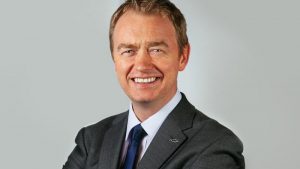
  • Tim Farron – 2017 Statement on Westminster Terror Attack

    Below is the text of the statement made by Tim Farron, the Leader of the Liberal Democrats, on 23 March 2017.

    I thank the Prime Minister for her statement and for early sight of it. I also thank her for her words from the steps of 10 Downing Street last night, which were both ​unifying and defiant, and in which she really did speak for us all. We always know that the police keep us safe, but yesterday, in the most shocking of ways, we saw how true that really is.

    In my prayers are Keith Palmer, his family and all the victims of yesterday’s outrage, and they will continue to be there. I am, and we are, beyond thankful to the police, the NHS, the emergency services and the staff of this House for keeping us safe and being so utterly dedicated to their roles. Those who attack us hate our freedom, our peaceful democracy, our love of country, our tolerance, our openness and our unity. As we work to unravel how this unspeakable attack happened, will the Prime Minister agree with me that we must not, either in our laws or by our actions, curtail these values? Indeed, we should have more of them.

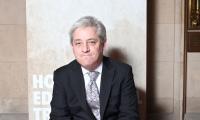
  • John Bercow – 2017 Statement on Westminster Terror Attack

    Below is the text of the statement made by John Bercow, the Speaker of the House of Commons, on 23 March 2017.

    After yesterday’s shocking events, I know that the whole House will want me to express our heartfelt condolences to the families and friends of the victims of this outrage. A police officer, PC Keith Palmer, was killed defending us, defending Parliament and defending parliamentary democracy. Arrangements have been made for books of condolence to be placed in the Library and Westminster Hall. Our hearts go out to all those directly and indirectly touched by yesterday’s events.

    I should like to thank all colleagues, staff of the House and Members’ staff for their forbearance in very stressful circumstances yesterday. Naturally, the parliamentary security authorities have already taken measures to ensure that Parliament is safe in the light of the attack. In due time, the Commission, which I chair, will consider, together with our Lords counterparts, what sort of review of lessons learned would be appropriate. However, let the security personnel who protect us—police, security officers and Doorkeepers—be in no doubt whatsoever of our profound appreciation of the way in which they discharged their duties yesterday, matched by other staff of the House. That means that this morning the House has been able to resume its business undeterred.

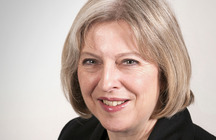
  • Theresa May – 2017 Statement on Westminster Terror Attack

    Below is the text of the statement made by Theresa May, the Prime Minister, in the House of Commons on 23 March 2017.

    Mr Speaker, yesterday an act of terrorism tried to silence our democracy.

    But today we meet as normal – as generations have done before us, and as future generations will continue to do – to deliver a simple message: we are not afraid. And our resolve will never waver in the face of terrorism.

    And we meet here, in the oldest of all Parliaments, because we know that democracy, and the values it entails, will always prevail.

    Those values – free speech, liberty, human rights and the rule of law – are embodied here in this place, but they are shared by free people around the world.

    A terrorist came to the place where people of all nationalities and cultures gather to celebrate what it means to be free. And he took out his rage indiscriminately against innocent men, women and children.

    Mr Speaker, this was an attack on free people everywhere – and on behalf of the British people, I would like to thank our friends and allies around the world who have made it clear that they stand with us at this time.

    What happened on the streets of Westminster yesterday afternoon sickened us all.

    While there is an ongoing police investigation, the House will understand that there are limits to what I can say.

    But having been updated by police and security officials let me set out what at this stage I can tell the House.

    At approximately 2:40pm yesterday, a single attacker drove his vehicle at speed into innocent pedestrians who were crossing Westminster Bridge, killing 2 people and injuring around 40 more.

    In addition to 12 Britons admitted to hospital, we know that the victims include 3 French children, 2 Romanians, 4 South Koreans, 1 German, 1 Pole, 1 Irish, 1 Chinese, 1 Italian, 1 American and 2 Greeks.

    And we are in close contact with the governments of the countries of all those affected.

    The injured also included 3 police officers who were returning from an event to recognise their bravery. Two of those 3 remain in a serious condition.

    Mr Speaker, the attacker then left the vehicle and approached a police officer at Carriage Gates, attacking that officer with a large knife, before he was shot dead by an armed police officer.

    Tragically, as the House will know, 48-year-old PC Keith Palmer, was killed.

    PC Palmer had devoted his life to the service of his country. He had been a member of the Parliamentary and Diplomatic Protection Command for 15 years, and a soldier in the Royal Artillery before that.

    He was a husband and a father, killed doing a job he loved.

    He was every inch a hero. And his actions will never be forgotten.

    I know the whole House will join me in sending our deepest condolences to his family – and to the families and friends of all those who have been killed or injured in yesterday’s awful attacks.

    I know also that the House will wish to thank all those who acted with such speed and professionalism yesterday to secure this place and ensure we are able to meet as we are doing today.

    Mr Speaker, at 7:30 last night, I chaired a meeting of the government’s emergency committee COBR and will have further briefings and meetings with security officials today.

    The threat level to the UK has been set at ‘severe’ – meaning an attack is highly likely – for some time.

    This is the second highest threat level. The highest level ‘critical’ means there is specific intelligence that an attack is imminent.

    As there is no such intelligence, the independent Joint Terrorism Analysis Centre has decided that the threat level will not change in the light of yesterday’s attack.

    Mr Speaker, the whole country will want to know who was responsible for this atrocity and the measures that we are taking to strengthen our security, including here in Westminster.

    A full counter-terrorism investigation is already underway.

    Hundreds of our police and security officers have been working through the night to establish everything possible about this attack – including its preparation, motivation and whether there were any associates involved in its planning.

    And while there remain limits on what I can say at this stage, I can confirm that overnight the police have searched 6 addresses and made 8 arrests in Birmingham and London.

    Mr Speaker, it is still believed that this attacker acted alone, and the police have no reason to believe there are imminent further attacks on the public.

    His identity is known to the police and MI5, and when operational considerations allow, he will be publicly identified.

    What I can confirm is that the man was British born and that some years ago, he was once investigated in relation to concerns about violent extremism. He was a peripheral figure.

    The case is historic – he was not part of the current intelligence picture.

    There was no prior intelligence of his intent – or of the plot. Intensive investigations continue.

    And as Acting Deputy Commissioner Rowley confirmed last night, our working assumption is that the attacker was inspired by Islamist ideology.

    Mr Speaker, we know the threat from Islamist terrorism is very real. But while the public should remain utterly vigilant they should not – and will not – be cowed by this threat.

    As Acting Deputy Commissioner Rowley has made clear, we are stepping up policing to protect communities across the country and to reassure the public.

    And as a precautionary measure, this will mean increasing the number of patrols in cities across the country with more police and more armed police on the streets.

    Since June 2013 our police, security and intelligence agencies have successfully disrupted 13 separate terrorist plots in Britain.

    Following the 2015 Strategic Defence and Security Review, we protected the police budgets for counter-terrorism and committed to increase cross-government spending on counter-terrorism by 30% in real terms over the course of this Parliament.

    And over the next 5 years we will invest an extra £2.5 billion in building our global security and intelligence network, employing over 1,900 additional staff at MI5, MI6 and GCHQ and more than doubling our global network of counter-terrorism experts working with priority countries across Europe, the Middle East, Africa and Asia.

    Mr Speaker, in terms of security here in Westminster, we should be clear first of all that an attacker attempted to break into Parliament and was shot dead within 20 yards of the gates.

    If his intention was to gain access to this building, we should be clear that he did not succeed.

    The police heroically did their job.

    But as is routine, the police together with the House authorities are reviewing the security of the Parliamentary estate, co-ordinated with the Cabinet Office, who have responsibility for the security measures in place around the government secure zone.

    All of us in this House have a responsibility for the security and safety of our staff and advice is available for Members who need it.

    Mr Speaker, yesterday we saw the worst of humanity, but we will remember the best.

    We will remember the extraordinary efforts to save the life of PC Keith Palmer, including those by my Rt Hon Friend the Member for Bournemouth East.

    And we will remember the exceptional bravery of our police, security and emergency services who once again ran towards the danger even as they encouraged others to move the other way.

    On behalf of the whole country I want to pay tribute to them for the work they have been doing to reassure the public, treat the injured and bring security back to the streets of our capital city.

    That they have lost one of their own in yesterday’s attack only makes their calmness and professionalism all the more remarkable.

    Mr Speaker, a lot has been said since terror struck London yesterday. Much more will be said in the coming days.

    But the greatest response lies not in the words of politicians, but in the everyday actions of ordinary people.

    For beyond these walls today – in scenes repeated in towns and cities across the country – millions of people are going about their days and getting on with their lives.

    The streets are as busy as ever.

    The offices full. The coffee shops and cafes bustling.

    As I speak millions will be boarding trains and aeroplanes to travel to London, and to see for themselves the greatest city on Earth.

    It is in these actions – millions of acts of normality – that we find the best response to terrorism.

    A response that denies our enemies their victory. That refuses to let them win. That shows we will never give in.

    A response driven by that same spirit that drove a husband and father to put himself between us and our attacker, and to pay the ultimate price.

    A response that says to the men and women who propagate this hate and evil: you will not defeat us.

    Mr Speaker, let this be the message from this House and this nation today: our values will prevail.

    And I commend this statement to the House.

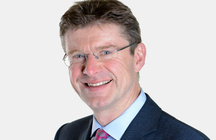
  • Greg Clark – 2017 Speech at Opening of London Taxi Factory

    Below is the text of the speech made by Greg Clark, the Secretary of State for Business, Energy and Industrial Strategy, in Coventry on 22 March 2017.

    Introduction

    Thank you, it’s a great honour to be here for the opening of such an impressive new factory.

    50,000 square feet.

    An annual production capacity of 20,000 vehicles.

    Up to a thousand new jobs.

    A £325 million investment in an icon of British culture.

    Over the last 60 years, more than 130,000 London Black Cabs have been produced here in the West Midlands.

    However, the history of motorised taxi manufacturing in the UK is twice as long as that.

    The first purpose-built motorised taxi was manufactured in 1897 – and remarkably it was an electric vehicle.

    Because of their bright livery and the sound of their engines, these were known as Hummingbirds – and, for a few years, were a familiar sight on the streets of London.

    Sadly, the battery technology of the time could not compete against the petrol engine – and, in the 20th century, electric vehicles were pushed off the road.

    However, in this century, we can expect the opposite to happen.

    Indeed, we stand on the brink of a road transport revolution: a new age of ultra low emission vehicles that might just well save the world.

    This factory is where a better future will be made, while at the same time continuing a great British tradition.

    London black cabs not only keep our capital moving, but they help represent our country far and wide.

    In 2013, that proud legacy was secured when the London Taxi Company was acquired by Geely.

    And, now with vital investment from its parent company, LTC goes on to even greater things.

    I’m delighted that the founder and chairman of Geely is with us today.

    Li Shufu is one of China’s great business leaders – and, therefore, one of the world’s great business leaders.

    Mr Li, on behalf of the Prime Minister and the whole Government, I would like to express our gratitude for your commitment to this company and also to our country.

    I greatly look forward to our continued cooperation – and to strengthening the partnership between our nations.

    Electric vehicles

    Ladies and gentlemen, all relationships, all partnerships, are deepened through shared interests.

    Trade is one such interest; another is the fight against climate change.

    It is a global endeavour in which China is now playing a leading role.

    Not least, in the contribution made by Chinese manufacturers.

    By driving down the price of key technologies we are making possible a low carbon future in which energy is not only used efficiently but produced cleanly and cheaply.

    Of course, to achieve our climate objectives we also need low carbon transportation – and for that we need low emission vehicles.

    After a century in which the internal combustion engine has ruled the roads, we need to persuade consumers that a shift to electric engines and other forms of low emission vehicles is both desirable and achievable.

    Electric vehicles must be seen as a reliable, mainstream option.

    I can think of no better demonstration than the electrification of the taxi – and not just any taxi, but the London black cab.

    Here we have the very image of tradition, comfort and reliability – and one that millions of Londoners, commuters and tourists can experience for themselves.

    If people see black cabs go green then they will know that all cars can do the same.

    It’s not just the evidence of their eyes that will count, but also the evidence of their lungs.

    The global problem of climate change runs alongside the local problem of air pollution.

    LTC has already shown it is possible to cut harmful emissions with better diesel engines.

    And the vehicles produced in this factory will show that we can cut emissions altogether.

    For busy cities, not just in this country but all around the world, that is truly welcome news.

    So for all of these reasons the UK Government has identified the continuation of innovation in electric and other low emission vehicles as a key priority for our Industrial Strategy.

    And that is why today we’re announcing today £50 million to encourage taxi drivers to switch to cleaner greener vehicles; cabbies here amongst us I’m sure will be pleased to know that there will be up to £7,500 off the price of a new cab and £14m worth of investment in dedicated charge point for electric taxis not just in London but in ten councils.

    Ultimately, progress depends on the expertise and commitment of advanced automotive companies like LTC and Geely – but Government can play, and will, play an important supporting role.

    Industrial strategy

    Unlike the failed policies of the past, a modern industrial strategy does not mean government telling business what to do.

    Rather it’s about public investments helping them support their own long-term investment decisions that companies are making.

    For instance, Government can nourish the roots of innovation through our funding of science.

    This country has many of the world’s top universities and research institutions – and we will maintain and extend this advantage.

    That is why, last November, we announced the biggest increase in public research and development funding since 1979.

    This will include funding for research that is of direct relevance to the automotive sector – for instance, research into better batteries.

    Skills provision is another area in which the government can play a vital role.

    If we want British industry to manufacture the next generation of products, then we must nurture the next generation of engineers, mechanics and designers.

    We are determined to build on our strengths and to build a system of technical education that can beat any in the world.

    And we will continue to invest not just in the quantity but the quality of apprenticeships – of which the training schemes offered by LTC are an excellent example.

    We are providing the funds required to achieve these goals – with the Spring Budget described by the Confederation of British Industry as “a breakthrough budget for skills.”

    Infrastructure is focus of further action.

    We’ve given the go-ahead to a string of major upgrades.

    We can’t expect industry to make long-term investment decisions if the government refuses to do the same, which is why we are determined to make these big decisions as part of our Industrial Strategy.

    The automotive sector

    Just as important as the scale and seriousness of public investment is the care by which it is coordinated.

    This requires that decisions are made at the right level and through the right institutions.

    For example, to support our diverse local economies we need to empower local decision makers.

    That’s why, as part of devolving power from Whitehall, we’ve created local institutions capable of using it – such as the Coventry and Warwickshire Local Enterprise Partnership which continues to be such a big champion of the development of advanced manufacturing in this area.

    This £325 million investment was supported by a £16 million investment through the Regional Growth Fund.

    In other cases, the most appropriate context for decision making is not geographical, but sectoral.

    By creating its own shared institutions, each sector can play an active role in the development of industrial policy – working not just for the benefit of a few incumbents that exist already but for the whole sector including the supply chain.

    In this respect the UK automotive sector serves as a beacon of success.

    Sector-wide institutions like the Automotive Council and the Advanced Propulsion Centre have played a pivotal role in the coordination of public investment as well as private investment – whether in research, skills or the other foundations of productivity.

    Today, our UK automotive sector is the most productive in Europe – a testament to what can be achieved.

    A testament also to the benefits of inward investment.

    Back in the 1970s, car making in the UK had become emblematic of our post-war decline – but, through partnership with overseas manufacturers, as well as domestic ones, the industry was transformed.

    From the North East to the West Midlands advanced automotive engineering and cutting edge vehicle design is a key strength of the modern British economy.

    And today, we open the latest compelling chapter in this story of success.

    A story in which this Government is proud to play a supporting, but steadfast, role.

    It is an honour and a privilege to be with you today at this most auspicious event.

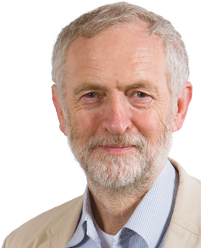
  • Jeremy Corbyn – 2017 Statement on Westminster Terror Attack

    Below is the text of the statement made by Jeremy Corbyn, the Leader of the Opposition, on 23 March 2017.

    What happened yesterday was an appalling atrocity.

    Today, we are united by our humanity, by our democratic values and by that human impulse for solidarity to stand together in times of darkness and adversity.

    I express my condolences to the family and friends of PC Keith Palmer, who gave his life yesterday in defence of the public and our democracy – and to the loved ones of those still in a critical condition including the French schoolchildren visiting our capital from Concarneau in Brittany. The injured include people of ten nationalities. Innocent people were killed yesterday walking across Westminster Bridge as many millions of Londoners and tourists have done before them.

    I thank all the dedicated NHS staff working to save lives, including those from St Thomas’ Hospital who rushed out to help those in need. We are grateful for the public service workers who yesterday, today and every day they pull on their uniforms.

    It behoves us all not to rush to judgement, but to wait for the police to establish the facts. We must stay united in our communities and not to allow fear or the voices of hatred to divide or cower us.

    It is by demonstrating our values of solidarity, community, humanity and love that we will defeat the poison and division of hatred.

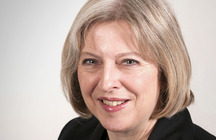
  • Theresa May – 2017 Statement After Meeting Enda Kenny

    Below is the text of the statement made by Theresa May, the Prime Minister, after meeting Enda Kenny, the Irish Taoiseach, in Dublin on 30 January 2017.

    I am delighted to be in Dublin today. It is the third time I have met the Taoiseach since I became Prime Minister, and indeed the third time we have spoken in the past month.

    This is testament to the unique relationship between the UK and Ireland. Family ties and bonds of affection unite our 2 countries and I am personally committed to strengthening our relationship as the UK prepares to leave the EU. We are leaving the EU but not Europe.

    We will stay reliable partners, willing allies and close friends with our neighbours, when we have so many values and interests in common.

    I know that for the people of Ireland and Northern Ireland the ability to move freely across the border is an essential part of daily life, which is why the Taoiseach and I have both been clear that there will be no return to the borders of the past.

    Maintaining the common travel area and excellent economic links with Ireland will be important priorities for the UK in the talks ahead. Together we trade €1.2 billion worth of goods and services every week. No one wants to see this diminished.

    The Taoiseach and I both reaffirmed our commitment to the Belfast Agreement and its successors, including Stormont House and Fresh Start. An explicit objective of the UK government’s work on Brexit is to ensure that full account is taken of the particular circumstances of Northern Ireland.

    I am pleased that already, our European partners have demonstrated a clear understanding of the acute need to find a solution for Northern Ireland and Ireland so that thousands of our citizens can continue to move freely across Ireland every day. I want the reciprocal rights that our citizens enjoy in both countries to continue, including the rights guaranteed under the Belfast Agreement.

    But I also recognise that when the UK leaves the EU, Ireland will remain a member state and it is something I fully respect. It remains overwhelmingly and compellingly in the UK’s national interest that the EU, with Ireland in it, should succeed and prosper.

    Today we have committed to building on the track record of strong co-operation generated by our bilateral work programme. It’s important to me that, while we have plenty of work to do to deliver a smooth exit for the UK from the EU, we do not lose sight of the close links that benefit citizens in both countries.

    And so we have agreed to continue our bilateral work programme on a wide range of issues some of which have been mentioned by the Taoiseach.

    And of course discussed the political situation in Northern Ireland. Both the Taoiseach and I have been unequivocal in our support for the political process as the Northern Ireland parties navigate this electoral period. The difficulties we face today are serious and it is fundamentally important that we work with Northern Ireland’s political leadership to seek a solution.

    The Northern Ireland Secretary will be fully engaged over the next few days and months with the aim of ensuring that, once the election is over, a stable devolved government is established that works for everyone. I welcome the commitment of the Irish Minister for Foreign Affairs and Trade, Charlie Flanagan, in supporting that objective.

    Our discussions here in Dublin today have been very constructive. And I’m sure we will continue the close level of cooperation and friendship between the UK and Ireland in the coming months and years ahead.

  • Rosie Winterton – 2017 Speech on Withdrawal from the EU

    Below is the text of the speech made by Rosie Winterton in the House of Commons on 31 January 2017.

    I am rather nervous about following that extraordinary double-act.

    The debate has shown once again how important it is for Parliament to scrutinise properly the Government’s approach and actions in respect of leaving the European Union. It has made the Government’s attempts to thwart that scrutiny through the Supreme Court look even more ludicrous.

    I want to make four points. First, I shall support the Bill. I did not want us to leave the European Union, but the majority of those who voted in the referendum thought differently, including nearly 70% of people in Doncaster Central. It is important that we respect that decision, as was stated so eloquently by my right hon. Friend the Member for Leeds Central (Hilary Benn) and the shadow Secretary of State.

    Secondly, we must do all that we can to get the best deal for Britain from the negotiations. That deal must benefit all parts of the UK. The Government have focused on strategies for Scotland, Wales, London and Northern Ireland, but we need to make sure that all our regions have input and a proper analysis of the effects of leaving the European Union.

    People in Yorkshire and Humber want to know what the effect will be on our businesses—small and large—universities, science and technology sectors, local authorities, trade unions, representatives of the third sector and others in our region. During proceedings on a recent statement, the Secretary of State said that the other nations would of course be involved in those discussions, adding that he would also be inviting representatives from the regions to a meeting in York. I hope that the Minister will be able to give us more detail about exactly how that will work. Who will represent the Yorkshire region? Will any analysis be done of the effect of Brexit on Yorkshire, what we will need to see from any deal, and how an ongoing dialogue will be maintained? Each nation and region will have an interest not only in trade deals, but in the Government’s so-called great repeal Bill.

    My third point is about employees’ rights and conditions. The Government have said that they will guarantee that current employment rights will be incorporated into UK law once we have left the EU, but they need to go further by strengthening UK employment law if they are to deal with the issues of undercutting and exploitation. British manufacturing, the agricultural industry and our public services, especially the NHS, will need workers—skilled and unskilled—from European Union countries.

    Concern about immigration was a key factor in many people’s minds during the referendum. A lot of that concern revolved around a feeling that workers’ wages and conditions were being undercut by migrants, especially those from eastern Europe. I know from my constituency that many of those workers are on zero-hours contracts, often being offered only about 10 hours’ work a week even though they want to work for longer, and at the minimum wage—sometimes even below it. The employers are not just about breaking even; they are big companies that often use agencies to supply their workers and effectively use the state—through housing benefit, for example—to subsidise cheap labour while seeing big profit margins.

    Some call some of that a form of modern slavery. We need to use the opportunity before us to look again at how the labour market operates. If the Government are to address the concerns that I have set out, they will have to improve the whole way in which our labour market works. I believe that countries across Europe have concerns about this issue and we will be discussing it at the Labour party conference on Brexit in a few weeks’ time. It would help if we could talk to our European neighbours about the issue in respect of gaining as much access as we can to the single market.

    My final point is that, as we saw yesterday, huge concern has been expressed in this country and throughout the world about the actions of President Trump. That has shown how essential it is that the UK does not withdraw from the world stage because of Brexit. I am a member of the Parliamentary Assembly of the Council of Europe. Last week, I saw at the Assembly how valuable it was to show that the UK has not withdrawn into itself, and that we understand the importance of working with our European neighbours and advancing our common cause on human rights. I know that Government Members feel strongly about that issue as well.

    I hope that the Minister will reassure the House, once and for all, that the Government will not be withdrawing from the European convention on human rights and the Council of Europe. We need to lead the debate on how we leave the European Union, and the Bill should be an opportunity to do that.

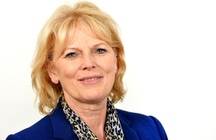
  • Anna Soubry – 2017 Speech on Withdrawal from the EU

    Below is the text of the speech made by Anna Soubry in the House of Commons on 31 January 2017.

    It is with a heavy heart, and against my long-held belief that the interests of this country are better served by our being a member of the European Union, that I shall support the Bill. In 2015, I promised the good people of Broxtowe that, if I was elected to represent them for another term, and in accordance with my party’s manifesto, I would vote for an in/out referendum on our EU membership, agreeing, in the words of David Cameron, that the people would “settle the matter”. I promised to respect and honour the vote. On 9 June 2015, along with 544 Members of this place, I agreed to that referendum, and in so doing I agreed to be bound by the result.

    My right hon. and learned Friend the Member for Rushcliffe (Mr Clarke) was not in favour of that referendum and did not vote for it, so he is, of course, free and able to vote against the Bill. I am sure it is no coincidence that he happens to enjoy a considerably large number of people in his constituency who voted remain, and that he has—quite wrongly, in my view—announced that he will not be standing again in 2020. I say to Opposition Members, though, that you cannot go back on your word because you do not agree with the result.

    I believe that history will not be kind to this Parliament, nor, indeed, to the Government I was so proud to serve in. How on earth did we ever come to put to the people an alternative that we then said would make them worse off and less safe and would weaken our nation? I echo the wise words of some of the speech by my new friend, the right hon. Member for Sheffield, Hallam (Mr Clegg), when I say that I greatly fear that generations that either did not vote or are yet to come will not thank us for our great folly. Neither will they forgive those who since 23 June have chosen not to be true to their long-held views—those who have remained mute as our country has turned its back on the benefits of the free movement of people, a single market and the customs union, without a debate, far less any vote in this place. Why is that? It needs to be said and recorded that our Government have decided that the so-called control of immigration, which actually means the reduction in immigration—that is what so many people in our constituencies believe—is worth more than the considerable benefits of the single market and the customs union.

    What has been even more upsetting is the fact that Members on the Labour Front Bench have connived with the Government. The Government were never going to give us the opportunity to debate these important matters, for reasons that I genuinely understand and, indeed, respect, but for the Labour party to go against everything it has ever believed in is really quite shameful. It is a combination of incompetence on its Front Bench and a deep division among so many, with a few honourable exceptions—among whom I of course include the right hon. Member for Leeds Central (Hilary Benn). They have turned their backs on their long-standing belief in the free movement of people and failed to make the positive case for immigration.

    The referendum vote exposed a deeply divided Britain, and that has been exposed in no place better than in the Labour party. Labour Members have been petrified—literally frozen to the spot—looking over one shoulder and seeing that their constituency Labour parties have been taken over by the extreme left, and beyond that, in many instances, that up to 70% of their own voters voted leave.

    What has happened to our country? Businesses have fallen silent, scared to speak up and to speak out. I think they believe it is all going to be fine—that we are not really going to leave the EU, we will not really leave the single market and we will not really leave the customs union. They are going to get a sharp shock.

    Alberto Costa

    Does my right hon. Friend agree that when she, I and other Members of this House voted, rightly, to give the British people the ultimate say in this matter, we did not vote to take away the rights of EU citizens like my parents who live in this country? It is disgraceful that, as it stands today, we are not honouring their rights.

    Anna Soubry

    I completely agree with my hon. Friend, whom I include among those many brave souls on the Government Benches who, in the face of abuse and even death threats, have stood up and been true to what they believe in.

    Why has there been this outbreak of silence? I quote the wise words of Edmund Burke:

    “Because half a dozen grasshoppers under a fern make the field ring with their importunate chink, whilst thousands of great cattle, reposed beneath the shadow of the British oak, chew the cud and are silent, pray do not imagine that those who make the noise are the only inhabitants of the field.”

    That is what has happened, but now it must stop. We must now make sure that everybody is free and able to stand up and say what they believe, and that people no longer cower in fear of four newspapers and this never-ending chorus, which I do not believe represents my constituents.

    Chris Bryant

    We are very grateful on the Labour Benches for all the advice the right hon. Lady is giving us. I am sure her own Back Benchers are grateful as well, sometimes.

    Was the right hon. Lady a member of the Government who tried to cut net migration to tens of thousands? Did she stand as a Conservative Member in the most recent general election and the one before on a manifesto that pledged to cut net migration to tens of thousands? I just ask.

    Anna Soubry

    I do not think anybody would say that I have not been forthright in putting forward my views about the positive benefits of immigration to our country. The best way that the Government can reduce those figures is, of course, to take out overseas students. If only they would do that; it would be the right thing to do.

    Notwithstanding the considerable abilities and efforts of our Prime Minister and Government, as we embark on these negotiations I remain far from convinced that we will get any good deal. Like the right hon. Member for Derby South (Margaret Beckett), I do not believe that in two years we will secure a good bespoke deal on trade, the customs union and our nation’s security. I hope very much to be proved wrong, and I will, of course, support the Prime Minister and our Government as they embark on the most important and difficult set of negotiations in decades, with consequences for generations to come.

    What happens if no deal is secured? It is difficult to see how any Government could put to this place a deal that they believe to be inadequate in some way. I want, please, assurances from the Government that, in the event of no good deal being reached, all options will be placed before this House, and that we, on behalf of all our constituents and our businesses, will decide what happens next. We may need more time. We certainly do not want to jump off the cliff into World Trade Organisation tariffs when we are out of the single market and the customs union as that would be dangerous for our businesses in all sectors and of all sizes.

    Let us now begin to heal the wounds and the divides, so that we can come together to get the best deal for our country as we leave the European Union.