Tag: 2017

  • Simon Kirby – 2017 Speech at the Asian Financial Forum

    Simon Kirby – 2017 Speech at the Asian Financial Forum

    The speech made by Simon Kirby, the then Economic Secretary to the Treasury, in Hong Kong on 16 January 2017.

    Good morning.

    I’m honoured to be here today.

    Not only because Hong Kong is such a beautiful and vibrant city.

    But because this is a forum that brings together some of the finest expertise in our financial community – from across Asia, and from across the rest of the world too.

    This is all the more important as we meet in the context of economic and financial uncertainty, and profound political change.

    Change and uncertainty require global dialogue, so it is a real privilege to be given the opportunity, on behalf of the British government, to contribute to that dialogue here today.

    The theme of this year’s forum is ‘Driving change, innovation and connectivity’.

    And I want to talk about each in turn.

    Let me start with change.

    Because as you may have noticed, that’s something we in Britain had quite a lot of in 2016!

    Not only did we get a new Prime Minister – and, I’m proud to say, the second female Prime Minister in our history.

    But we also took the historic decision to take a new direction and to leave the European Union.

    I know that for many of you, this will raise some questions about how things will change in the future.

    But let me provide some reassurance.

    The Prime Minister has made it clear that the process of leaving the European Union will begin by the end of March this year, meaning no unnecessary delays.

    Most importantly of all, our economy is growing, our banks are well capitalised, and we are well equipped to deal with any ongoing risks.

    So it is clear Britain is in a strong position to make this adjustment.

    I also want to be clear that the UK government sees this as a huge opportunity for Britain.

    We are not turning our back on the international stage.

    We see our relationships with countries across Asia and the rest of the world as more important now than ever before.

    And, working closely with our international partners, we will continue to advocate passionately for free trade and free markets.

    But it’s not all change in the UK.

    When it comes to Financial Services, the UK remains home to one of the most international and the most experienced financial capitals in the world:

    we’re the largest exporter of financial services in the world

    we’re home to over 250 foreign banks – more than any other financial centre

    we account for close to 40% of global FX trading – more than anywhere else in the world

    and with an unrivalled pool of investors, we’re also Europe’s largest asset management centre – with almost £7 trillion pounds under management

    and all this is supported by world-leading legal and professional services

    So the UK is a leading global financial centre, and the natural partner of choice for Asian companies looking to go global.

    And we’re determined to keep it that way as we navigate our exit from the European Union.

    Because we don’t rest on our laurels in Britain, which leads me on to our second watchword of this forum – innovation.

    What’s clear is that if you don’t keep moving, you don’t keep your reputation for excellence.

    The City of London can look back on centuries of success – but we know our future success depends on making the most of opportunities to come.

    And these are exciting times in global finance.

    In the UK, we are embracing innovation – and I’m pleased to say we’re doing it in partnership with countries across Asia.

    Take FinTech.

    Domestically, we’re doing many things to support the development of this important sector.

    But we’re also co-operating with other leaders in FinTech.

    We’ve agreed partnerships – we call them ‘FinTech Bridges’ – with Singapore, the Republic of Korea and the People’s Republic of China.

    I’m delighted that we’ve taken the first steps towards agreeing a Bridge with Hong Kong too.

    And in a few months’ time, we’re going to hold the first ever International FinTech Conference to promote the UK’s world-leading FinTech sector to investors from across the world – and I hope to see many of you in this room there.

    We’re also leading the way in developing new capital markets.

    We’re collaborating with countries across the world, in particular here in Asia, to develop the market for green finance to meet our collective commitment to stop climate change in its tracks.

    The UK is also the leading western hub for the Islamic Finance, and we continue to work closely with countries like Malaysia and Indonesia, and with the Gulf Cooperation Council, to drive innovation in this important market.

    And we’re also supporting others – in particular India and China – to internationalise their currencies, helping them to connect and integrate their financial markets with the global financial system.

    And this brings me to the final theme of this conference: connectivity.

    Because, as the examples I have mentioned show, in the UK we believe the best way to tackle the big issues, and the best way to raise prosperity for all, is through partnerships across borders.

    We place huge importance and value on the connections we have here in Asia.

    It’s telling, for example, that the Prime Minister’s first bilateral visit outside Europe was to India.

    And that the British Chancellor’s first foreign trip was to Beijing and Hong Kong.

    The UK has always had a special relationship with this part of the world.

    But it’s about much more than shared history.

    It’s about common values and cultural links.

    It’s about the thousands of people from this part of the world that come to study and work in the UK; and the thousands of British citizens that choose to make their living here.

    And of course, it is about the close connections between the UK and Asian economies.

    Those connections matter because we have so much to offer each other.

    I saw this first-hand when I took part in the recent UK-China Economic and Financial Dialogue – where we not only made substantial progress to boost our cooperation on financial services, but also cemented ties on energy, trade and investment.

    I saw this too on my recent visit to Malaysia, Singapore and Indonesia, where I discussed with my counterparts, and with industry, the many ways in which we can collaborate further on Financial Services.

    In Britain, we believe passionately in the power of working in partnership with countries right across the globe.

    And we will continue to work tirelessly to strengthen those partnerships in the future.

    So – we are living in times of change.

    But we should be optimistic – both at home in the UK, and across Asia – that we will also be in times of great opportunity and progress.

    Because, ladies and gentlemen, by embracing change…

    By empowering innovation…

    And by working in partnership…

    We will all become more prosperous as a result.

    Thank you.

  • Justine Greening – 2017 Comments on the New Institute for Teaching

    Justine Greening – 2017 Comments on the New Institute for Teaching

    The comments made by Justine Greening, the then Secretary of State for Education, on 2 November 2017.

    It is an honour to launch the Institute for Teaching and see first-hand how thousands of teachers will benefit from these new training opportunities. We want to ensure every child can reach their potential, wherever they are growing up and great teachers are at the heart of this.

    I want high-quality professional development to be a fundamental part of a teacher’s career and these new programmes – backed by government funding – will give them the skills, confidence and knowledge they need to provide a world class education for all children.

  • Michael Fallon – 2017 Comments on Diversity in the Armed Forces

    Michael Fallon – 2017 Comments on Diversity in the Armed Forces

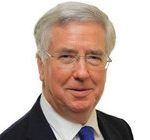
    The comments made by Michael Fallon, the then Secretary of State for Defence, on 26 October 2017.

    We are working hard to ensure the Armed Forces, like our cadets, better represent the society they serve but there is still much more to do. We want more sailors, soldiers and airmen to come from minority and ethnic communities. More diverse armed forces are a stronger armed forces; that has to start amongst the junior ranks and work all the way up to chief of the defence staff.

  • Michael Fallon – 2017 Comments on A&P Tyne

    Michael Fallon – 2017 Comments on A&P Tyne

    The comments made by Michael Fallon, the then Secretary of State for Defence, on 30 October 2017.

    It is very encouraging to witness the renaissance of shipbuilding around the UK first hand. Having helped build our new aircraft carriers and the Astute Class submarines, A&P Tyne have the skills and expertise to bid for our brand new class of frigates.

    The whole industry is clearly excited about the opportunity to build cutting-edge ships for our growing Royal Navy, which will protect our nation and interests across the world.

  • Michael Fallon – 2017 Comments on Flexible Working in the Military

    Michael Fallon – 2017 Comments on Flexible Working in the Military

    The comments made by Michael Fallon, the then Secretary of State for Defence, on 30 October 2017.

    Keeping Britain safe means investing in our personnel as well as in new equipment. More flexible working is essential to a modern military, allowing us to recruit the best talent and retain those already serving, while always being ready to deploy as commanders require.

    The military must offer conditions of service that keep up with those available in other lines of work. This change will significantly make it easier for women with children.

  • Michael Fallon – 2017 Comments on British Soldiers in Estonia

    Michael Fallon – 2017 Comments on British Soldiers in Estonia

    The comments made by Michael Fallon, the then Secretary of State for Defence, on 30 October 2017.

    Nobody should be in any doubt of our unwavering commitment to the security of Europe through NATO in the face of Russian belligerence.

    In the face of intensifying threats, the UK has stepped up across Europe, with soldiers, tanks and Typhoons deployed from Estonia to Romania.

    Our enhanced Forward Presence is a strategic tripwire that we will maintain on an enduring footing.

  • Priti Patel – 2017 Personal Statement Apologising for Conduct

    Priti Patel – 2017 Personal Statement Apologising for Conduct

    The statement made by Priti Patel, the then Secretary of State for International Development, on 6 November 2017.

    This summer I travelled to Israel, on a family holiday paid for myself.

    While away I had the opportunity to meet a number of people and organisations. I am publishing a list of who I met.‎ The Foreign and Commonwealth Office was aware of my visit while it was underway‎.

    In hindsight, I can see how my enthusiasm to engage in this way could be mis-read, and how meetings were set up and reported in a way which did not accord with the usual procedures. I am sorry for this and I apologise for it.

    My first and only aim as the Secretary of State for International Development is to put the interests of British taxpayers and the world’s poor at the front of our development work.

  • Queen Elizabeth II – 2017 Christmas Broadcast

    Queen Elizabeth II – 2017 Christmas Broadcast

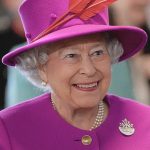
    Below is the text of HM Queen Elizabeth II’s Christmas Broadcast which was shown on 25 December 2017.

    Sixty years ago today, I spoke about the speed of technological change, in what was my first televised Christmas broadcast. At the time, it felt like a landmark.

    Television has made it possible for many of you to see me in your homes on Christmas Day. My own family often gather round to watch television as they are at this moment, and that is how I imagine you now.

    Six decades on, the presenter of that broadcast has ‘evolved’ somewhat, as has the technology she described. Back then, who could have imagined that people would one day be following this Christmas message on laptops and mobile phones? But I’m also struck by something that hasn’t changed. That, whatever the technology, many of you will be watching or listening to this at home.

    We think of our homes as places of warmth, familiarity and love; of shared stories and memories, which is perhaps why at this time of year so many return to where they grew up. There is a timeless simplicity to the pull of home.

    For many, the idea of “home” reaches beyond a physical building – to a home town or city. This Christmas, I think of London and Manchester, whose powerful identities shone through over the past twelve months in the face of appalling attacks. In Manchester, those targeted included children who had gone to see their favourite singer. A few days after the bombing, I had the privilege of meeting some of the young survivors and their parents.

    I describe that hospital visit as a “privilege” because the patients I met were an example to us all, showing extraordinary bravery and resilience. Indeed, many of those who survived the attack came together just days later for a benefit concert. It was a powerful reclaiming of the ground, and of the city those young people call home.

    We expect our homes to be a place of safety – “sanctuary” even – which makes it all the more shocking when the comfort they provide is shattered. A few weeks ago, The Prince of Wales visited the Caribbean in the aftermath of hurricanes that destroyed entire communities. And here in London, who can forget the sheer awfulness of the Grenfell Tower fire?

    Our thoughts and prayers are with all those who died and those who lost so much; and we are indebted to members of the emergency services who risked their own lives, this past year, saving others. Many of them, of course, will not be at home today because they are working, to protect us.

    Reflecting on these events makes me grateful for the blessings of home and family, and in particular for 70 years of marriage. I don’t know that anyone had invented the term “platinum” for a 70th wedding anniversary when I was born. You weren’t expected to be around that long. Even Prince Philip has decided it’s time to slow down a little – having, as he economically put it, “done his bit”. But I know his support and unique sense of humour will remain as strong as ever, as we enjoy spending time this Christmas with our family and look forward to welcoming new members into it next year.

    In 2018 I will open my home to a different type of family: the leaders of the fifty-two nations of the Commonwealth, as they gather in the UK for a summit. The Commonwealth has an inspiring way of bringing people together, be it through the Commonwealth Games – which begins in a few months’ time on Australia’s Gold Coast – or through bodies like the Commonwealth Youth Orchestra & Choir: a reminder of how truly vibrant this international family is.

    Today we celebrate Christmas, which itself is sometimes described as a festival of the home. Families travel long distances to be together. Volunteers and charities, as well as many churches, arrange meals for the homeless and those who would otherwise be alone on Christmas Day. We remember the birth of Jesus Christ whose only sanctuary was a stable in Bethlehem. He knew rejection, hardship and persecution; and yet it is Jesus Christ’s generous love and example which has inspired me through good times and bad.

    Whatever your own experiences this year; wherever and however you are watching or listening, I wish you a peaceful and very happy Christmas.

  • Fiona Onasanya – 2017 Maiden Speech in the House of Commons

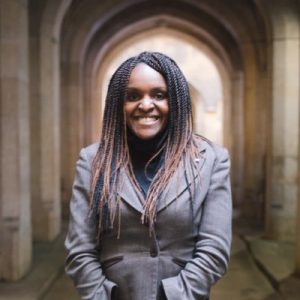
    Below is the text of the maiden speech made in the House of Commons by Fiona Onasanya, the then Labour MP for Peterborough, on 5 July 2017.

    It is with both a humble heart and abiding pride that I stand to make my first speech in the House of Commons. As is customary, I would like to pay tribute to my predecessor. There is nothing that highlights a person’s character more than when they are faced with adversity, and I will never forget the grace, kindness and authentic good wishes that Mr Jackson expressed to me on the night of the election. I hope that his life beyond Parliament is as fulfilling as he intends.​

    Also, I would like to speak briefly about my home constituency of Peterborough. It is rich in history. Its cathedral is a true gem: it was a temporary resting place for Mary Queen of Scots, and it is also where Catherine of Aragon, Henry VIII’s first wife, is buried. One could say that Peterborough attracts its share of powerful women!

    But when I look at Peterborough, my home, I see so much more than the legacies and treasures of its past; I see a city that cherishes its diversity. People have come to Peterborough from every corner of the globe, and many nations are represented. My presence here may be a symbol of this increasing diversity: I am the first black female MP ever elected by my constituency. In Peterborough, I see a place that has much to be proud of. Our major employers, like Perkins Engines and Peter Brotherhood, are world class. We also have entrepreneurs that are cutting edge, and our local newspaper, the Peterborough Telegraph, is dynamic and well read. Peterborough is also notable for its beauty, and there are rural parts of the constituency that serve as our own Gardens of Eden.

    Peterborough has a bright future and so much going for it, but my constituency and our country also have their share of challenges, which I intend to address as a Member of Parliament. When I began my campaign, one of the very first issues I said I wanted to tackle was housing. We all need a decent place to live. Never in my darkest nightmares did I expect to see this proposition so starkly illustrated as it was by the Grenfell Tower fire. It still seems incredible that such a disaster could happen in one of the richest parts of one of the richest cities in one of the richest countries in the world. It is incumbent upon the Government and Members of this House to do their utmost to ensure that such a tragedy can never happen again. With this in mind, the Government must ensure that adequate funding is provided to those councils that require it. Fine words and opaque promises of support are insufficient.

    We must also help those who do not have a home. According to Shelter, in December 2016 some 600 people in Peterborough were without a place to live. Homelessness is an increasing problem for the country as a whole. Shelter estimates that 150 British families become homeless every day. Far from any stereotype, these are often people who work or are willing to work. Some are veterans who have served our country with distinction. Some have physical and mental health problems. All deserve decent treatment.

    I am also very concerned about education. Peterborough had amongst the lowest SATs results in the country. Our schools are trying very hard to make do with ever-shrinking resources that have been tied up in experiments such as free schools. Beyond improvements in primary and secondary education, Peterborough needs a university. So many bright and talented young people in my city feel they have to leave home to achieve their dreams, which is why I am pleased to note that some progress has been made in that area.

    The NHS is also one of my key concerns. Cuts to the health service have left my constituents facing long waiting times for appointments. The healthcare “reforms” as implemented by this Government led to the fiasco of the UnitingCare Partnership, which collapsed in 2015 after only eight months. Attempts to marry up public service ​and private profit have tended to favour the latter over the former, which leads me to a final observation: we need balance in our policies, placing people at the centre. We need to acknowledge that there is a role for Government and regulation, as the markets we create are not necessarily compassionate, understanding or even humane.

    We need not only to hear but to listen to the voices of those we were elected to serve and we need to look around us. Those at the top continue to get wealthier, while those at the bottom are seeing their living standards eroded. Contrary to what some may think, austerity is expensive. Cutting budgets does not always save money, let alone lives. We cannot make a rich country out of one that makes the majority of its people poorer.

    I am motivated in all that I do by my abiding faith in God. As we look at the issues facing Palestine and Israel, there is the temptation to see religion as something that divides rather than unites people, but I believe that it is mankind’s frailties that cause conflict and strife, not one’s faith. I sincerely hope for a future in which the peoples of the middle east live in the harmony that God intends for them.

    It is on this note of faith that I would like to conclude my speech. Hon. Members who have encountered my acronyms will know that I refer to myself as MP FI because I endeavour to “Make People Feel Inspired” and my acronym for faith is “For All In This House”. As stated on the floor in Central Lobby:

    “Except the Lord build the House, they labour in vain that build it”.

    With His help, Mr Deputy Speaker, I intend to do right.

  • Lord Adonis – 2017 Speech on High Speed Rail

    Below is the text of the speech made by Lord Adonis in the House of Lords on 31 January 2017.

    My Lords, this is a huge investment and the noble Lord, Lord Framlingham, need not apologise for putting down his amendment or opening this debate. Given the views that he holds, I think he is absolutely right to require the House to come to a decision after a debate and without simply proceeding straight to a vote before such an investment is made involving an important strategic departure from our transport policy.

    The noble Lord and my noble friend Lady Mallalieu made two claims: first, that this project is somehow undemocratic because it has not properly been considered by Parliament and the people; and, secondly, that I and those who followed me were somehow bewitched by trains doing what they seem to do in most of the rest of the world—that is, running at 200 miles per hour and linking up the principal cities of countries with economic geographies similar to our own. Perhaps I may deal with those two points in turn.

    I was responsible for publishing the Command Paper that began the process for HS2 in March 2010. I can tell the House frankly that there was a debate inside the Government at the time as to whether we should publish the Command Paper before or after the election. I can also tell the House frankly that a key factor in that discussion was whether the route should be published before the election or after it. The route had been prepared in detail by High Speed 2 (HS2) Ltd and indeed, following all the scrutiny since 2010, it has survived with hardly any variation, except for the addition of a considerable number of tunnels.​

    I was very firmly of the view—and the Prime Minister at the time, Gordon Brown, came to the same view—that it would be profoundly undemocratic to announce an intention to build such a major infrastructure project as HS2 knowing what the route would be but hiding it until after the election from the people and, in particular, from those who lived in the constituencies affected. So we published the route before the election.

    All three major parties had a commitment to HS2 in their manifestos for the 2010 election. Because of the public meetings that I conducted in the 2010 election, I know that it was—how can I put it?—a very live issue in that election. I remember addressing one meeting where I said that I thought that HS2 would be on my tombstone and somebody from the back shouted out, “Not soon enough”. So there is no way that this scheme was disguised from the people in the 2010 election, and an overwhelming majority was returned supporting HS2.

    That then led to exhaustive consideration by the House of Commons and a Select Committee of the House of Commons. There were thousands of petitions against the scheme and the Select Committee considered the Bill in detail for the best part of two years. When the House of Commons had considered the report of that committee, it voted by 399 votes to 42 in favour of the passage of the high-speed 2 Bill. After another general election, HS2 was in the manifestos of the major parties, and all the detail relating to it, including the detailed parliamentary consideration, could be considered by voters

    It is hard to see how the noble Lord, Lord Framlingham, can sustain a charge of a lack of democracy in this process. It has been almost a model of democratic engagement: there have been two general elections; two parliamentary committees; thousands of petitions, which were considered patiently by Members of a Select Committee in both Houses; and two votes in the House of Commons—on Second Reading and Third Reading—in which the Bill passed 10 to one, with very large numbers voting.

    We now come to my bewitchment. To clear up one factual error, it has been stated that at the beginning HS2 was about trains running very fast and that it became about capacity when that argument fell apart. That is completely untrue. The opening words of the 2010 Command Paper which launched HS2 are:

    “the Government’s assessment is: … That over the next 20 to 30 years the UK will require a step-change in transport capacity between its largest and most productive conurbations”,

    that is, London, West Midlands, the north-west, and Yorkshire. It continues that alongside such additional capacity—let me repeat those words—

    “alongside such additional capacity there are real benefits for the economy and for passengers from improving journey times and hence the connectivity of the UK”.

    The argument could not have been clearer. Capacity was the first and overriding consideration. But because a new railway was being built it was clearly sensible and right that Parliament authorised it to be built with 21st-century technology not 19th-century technology, the cost difference between the two not being great in any event.​

    The noble Lord and my noble friend spoke as if there might be a free lunch—if we do not build HS2 we will save large sums of money. I freely confess that constructions costs are high. If someone could wave a magic wand and reduce them I would be glad to hear from them and I think the House and Parliament would be well served. The two key points in relation to the costs are these. First, if HS2 is not built then other, very expensive interventions, which will probably end up costing about the same amount of money, will be needed to systematically upgrade the west coast main line to meet the requirements of the next generation. Those upgrades will not produce anything like the capacity that could be produced by building a new railway to 21st-century specifications.

    The first function I performed as Minister of State for Transport was opening the refurbished west coast main line. That line is often described as Victorian. It is in fact pre-Victorian; it was opened for the coronation of Queen Victoria in 1838. Only four miles of the line—between London and the extension north from Birmingham, built after the coronation—are straight, because it had to be built around the estates of Members of your Lordships’ House. I can assure the House that in earlier hybrid Bill Committees, noble Lords were extremely good at getting compensation for the building of the line—much greater in real terms than is available to those affected now, which is of course part of the reason that the project is controversial. They were also good at making the line take detours.

    Upgrading a pre-Victorian railway is a very difficult task. It has been described to me as like performing open-heart surgery on a moving patient. It is also very expensive and complex. The completion of the last upgrade of the west coast main line, which produced only a fraction of the additional capacity that HS2 will produce, cost, in pre-2010 prices, £10 billion—in post-2010 prices that figure would be significantly higher. Of that £10 billion, £1 billion alone was for paying the railway company not to operate services at all in compensation for the disruption. For HS2, with the scale of the work that would be required, the proportionate figure would be larger still.

    If an alternative scenario to HS2 were to be carried out—upgrading the existing railway—the estimate that was made for me by officials in 2010, and which has been done again since, is that you would have to spend half as much as on HS2 for a quarter of the capacity, and of course the sum is a moving target because of construction costs and inflation. The idea that this is good value for money is for the birds. It is good value for money only if the limit of our horizons for the modernisation of this country and of the transport links between our major conurbations stops in 10 or 15 years’ time. If we are doing what I regard as our job as parliamentarians—looking to the longer term—then it is very poor value for money.

    I should add that the alternative scheme involved the complete rebuilding of Euston station, which will need to be done anyway. The great monstrosity that is Euston station was built for half its current capacity in the 1960s. I am glad to say, for those with a sense of history, that the Euston arch will come back when the station is rebuilt. The scheme also required hugely ​difficult and expensive work that would involve weeks on end of closures to realign tracks and signalling, extend platforms at all the main stations going north from Euston and so on. Those of your Lordships who used the west coast main line when the last work was being conducted will know that the disruption was chronic for the best part of a decade. We would be looking at something significantly worse than that if we were to seek to modernise the west coast main line on the scale required for the additional capacity.

    It is not just the west coast main line that would be affected. In order to provide that 25% extra capacity, the Chiltern line would need to be substantially four-tracked throughout. I am not the most popular person when I appear in the Chilterns to explain the benefits of HS2. However, I can tell your Lordships that if you were to go the Chilterns to suggest that the existing railway be four-tracked, all of which goes above ground and which would have a significantly worse impact on the environment than HS2, I wish you luck in conducting those public meetings.

    The choice that we faced was between building a new line between the major conurbations of the country to provide three times the existing capacity and the essential economic backbone for interchange between those great conurbations for the next generation, or conducting yet another patch and mend of a pre-Victorian railway at huge expense and offering a fraction of the capacity. I believe the decision that we took, which the coalition Government and now the existing Government have stood by, was exactly the right one, looking to the long term. The big mistake that has been made was the failure over the previous 40 years to adequately modernise the railways and, instead, to make do with patch-and-mend solutions that were hugely expensive and did not meet the exigencies of the case.

    Let me make one final comment. My noble friend said that there were other pressing investment requirements for the railways, and she is correct. The London to Brighton mainline, which was mentioned earlier, is one among many lines that have huge capacity constraints, and I am entirely supportive—as is the National Infrastructure Commission, which I chair—of what has been called the east-west Crossrail of the north; that is, the upgrading of the lines between Liverpool, Manchester, Leeds and Hull. But these are not choices. We can actually manage, as a country, to conduct more than one big infrastructure project at a time—most other developed countries have been managing it for the past 50 years. The idea that it should be an ambition beyond the reach of this great country that is now looking to forge a path in the world on its own as a great economy is, of course, nonsense. It is perfectly possible for us to carry through and pay for HS2 over the next 15 years, the completion of Crossrail, the next Crossrail scheme, the Crossrail of the north and other essential modernisations. What we need is proper planning, the right level of ambition and to stand by our duty to the country to see that we do not have to put up with, in the next generation, second-rate infrastructure that holds back the economy in the way that we did for too much of the post-war period. That is the issue that faces us, as a House and as Parliament. I hope that your Lordships will rise to the challenge.​