Tag: 2017

  • Jo Johnson – 2017 Speech on Higher Education

    Below is the text of the speech made by Jo Johnson, the Minister of State for Universities, Science, Research and Innovation, at the UUK annual conference on 7 September 2017.

    Thank you for inviting me to join you again at the Universities UK (UUK) annual conference – I am particularly glad to have a chance to visit Brunel University, here in my brother’s wonderful Uxbridge constituency.

    Much has happened in the world of UK Higher Education since I spoke at last year’s conference.

    A General Election, of course, and I note that Uxbridge, like some other university seats, now has a rather smaller Conservative majority.

    Sorry about that.

    But happier milestones too, in the higher education reforms that we launched following the election before last, in 2015:

    The Higher Education and Research Bill completed its journey through Parliament, passing into law on the last day before Parliament dissolved.
    We published the first Teaching Excellence Framework, highlighting the quality of teaching and graduate outcomes throughout the system.
    We announced in the Autumn Statement an additional £4.7bn funding for science, the biggest increase in public R&D funding since 1979
    We charged the Migration Advisory Committee with the task of undertaking a very welcome review of the economic impact of international students
    And we have great leadership in place for the two bodies that will drive our reforms, the Office for Students (OfS) and UK Research and Innovation, in Sir Michael Barber; Nicola Dandridge; Sir John Kingman; Sir Mark Walport
    In all of these undertakings, I am profoundly grateful for the support, advice and cooperation I have received from UUK and its members.

    The election may now be two months ago, but Higher Education remains in the political spotlight.

    As Alistair Jarvis recently observed in his first speech as your new chief executive, UK universities are under intense scrutiny.

    Student finance, of course, played a prominent role in the General Election campaign.

    Since then, the question of whether universities are providing students with a fair deal has become ever more pressing. We all see it in the media; I hear it from constituents and parliamentary colleagues, and you I am sure hear it from your students.

    Today, I would like to examine these criticisms and ideas, and discuss with you what you as sector leaders need to do to ensure it sustains public support.

    Two critiques of Higher Education

    Recent criticisms of higher education in the UK fall into two distinct camps: we might call them the Statists and the Pessimists.

    The Statists direct their criticism at student finance. They argue that the most important thing we can do is to abolish tuition fees.   As I said in my recent speech to Reform in July, this belief is not just wrong; it is 180 degrees out. By sharing the costs of HE between students and taxpayers and consequently putting ourselves in a position in which we could remove student number controls, we have in fact started to transform access.

    There is more to do to bridge a still yawning participation gap and we always keep the system under review to ensure it remains fair and effective, but young people from the most disadvantaged areas were 43 per cent more likely to go to university in 2016 than they were in 2009 and 52 per cent more likely to attend highly selective universities.

    Make no mistake: if fees were abolished, we would soon see the reintroduction of student number controls. And the return of rationing demand for ‘free’ higher education would see the poorest and most disadvantaged would miss out.

    Life chances would be irreparably damaged, social mobility thrown into reverse.

    We’ve also seen before what full public funding means for our universities when they have to compete against other public spending priorities in annual budgeting rounds: dramatic fall in per student funding of the kind we saw in the UK in the decades before fees – when per-student resource fell by over 40 per cent.

    This would lead to the humbling of currently world-class institutions, and widespread closures of departments and even whole universities.

    And we’ve seen what this means for taxpayers, including those who have not had the chance to go to university, who have to pay in full for the cost of degrees that will increase the income of what, under a reimposed student numbers cap, will be an increasingly privileged cohort of students.

    That is the Statist proposition – bad for social mobility, bad for university funding, bad for taxpayers.

    The second group of critics, the Pessimists, have an altogether bleaker view of Higher Education.

    They argue that university is inappropriate for many students, that student numbers should be significantly reduced and that students should pursue other types of post-18 education.

    The pessimists’ desire to improve alternatives to university is laudable: indeed, it is a core goal of this government’s education policy.

    That’s why we have instituted the Apprenticeship Levy, which will raise £2.8 billion to fund 3 million apprentices over a five year period

    And it is why we are pushing ahead with an ambitious post-16 Skills Plan that will bring in the new T-level qualifications.

    Post-18 education is not a zero-sum game, where to improve further education we must restrict and ration higher education to a privileged few; the Government’s aim is that both must be excellent, and that students should have reliable information to allow them to make the choice that is right for them.

    But the Pessimists’ broader charge against Higher Education is weak.

    The pursuit of knowledge is the hallmark of a civilized society and for many people a sufficient end for the higher education system in and of itself.

    That said, we must accept that the transition from an elite to a mass system of higher education brings with it an expectation of a strong economic return too.

    We must be vigilant for signs of diminishing returns from the expansion of the sector.

    This government has no target for the proportion of young people it wants to see entering higher education – rather it wants the size of the sector determined by the needs of learners and the demands of employers for graduates with the skills acquired through higher education.

    Indeed, as we invest in and improve other forms of post-18 education and training, we may well see that the percentage of 18 year olds choosing to go to university falls. This outcome should not in itself trouble us.

    But it is true that we are today approaching the 50 per cent proportion of 18-30 year olds targeted by Labour 15 years ago and it is a good moment to pause to assess the evidence.

    Overall, it is clear that the contribution higher education makes to individual lives and society today remains formidable and far-reaching and that limiting access to these benefits to a narrow elite would deprive thousands of young people routes into fulfilling careers.

    Graduates on average have better paid jobs. They are more likely to be a source of innovation and growth. And they have both greater promotion prospects and a lower risk of unemployment.

    The benefits to the individual of university study go beyond the financial. Graduates also enjoy better health, longer life expectancy, and higher levels of civic participation.

    Some pessimists argue that the benefits graduates receive from higher education are being eroded as the sector has expanded. We monitor this exceptionally carefully.

    In fact, even as the sector has grown and more young people have entered higher education, the direct wage benefits have endured. Graduates on average still enjoy a large wage premium, worth some £170,000 additional earnings over a lifetime for a man, and £250,000 for a woman.

    Other pessimists accept the evidence that graduates enjoy higher average wages, but argue that these benefits have little to do with what students learn at university.

    A university degree, they claim, acts as an expensive badge to show employers which young people are most likely to succeed, rather than providing training that improves graduates’ ability to do their jobs. (In the language of economists, they argue that the value of a university degree consists mainly of signalling.) The implication is that society as a whole would be just as productive with much less higher education and could spend money better elsewhere.

    A range of evidence suggests the pessimists are wrong, and that economies with more university graduates enjoy higher rates of economic growth overall.

    A recent LSE study examining 15,000 universities across 78 countries found that doubling the number of universities per capita increased GDP by over 4 per cent, with a significant part of the effect coming from the benefits of having more educated graduates in the workforce.

    A study from the National Institute of Economic and Social Research showed that 20 per cent of UK economic growth over a two-decade period came from graduate skills accumulation, and that a 1 per cent increase in the share of the workforce with a degree raises long-run productivity growth by between 0.2 per cent and 0.5 per cent.

    These productivity uplifts are a sign that university degrees provide a real economic benefit, not just a prestigious credential.

    A third argument I hear from pessimists is that because our productivity as a country has stagnated even as numbers in higher education have increased, higher education cannot be economically useful; this is not infrequently cited as a knockout argument to justify the reimposition of student number controls.

    The logical flaw in this argument is I hope clear: it ignores the myriad factors impacting national productivity and fails to make any assessment of how we would perform as an economy with fewer graduates.

    If we took this argument seriously, we would cease investing in roads, rail and any form of infrastructure, or indeed in any other bit of our education system, on the grounds there has been no uplift in our productivity coinciding with it.

    A patently absurd proposition.

    The idea that higher education provides real and significant benefits is consistent with what we hear from employers across the country: that the economy of the future will continue to require graduates, and lots of them.

    The steady rise in the level of formal qualifications held by those in employment does not simply reflect qualification inflation caused by large increases in the supply of graduates, as Pessimists maintain.

    It is happening as a result of more fundamental changes in the occupational structure of the UK as a knowledge economy. Some 1.8 million new jobs will be created between 2014 and 2024, and 70% of them will be in the occupations most likely to employ graduates

    What is more, international comparisons confirm we are on the right track.

    Only 42 per cent of young people in the UK are expected to graduate from university in their lifetime, according to the OECD, which is lower than the average of 45 per cent, and significantly lower than Japan at 58 per cent, the US at 53 per cent and New Zealand at 58 per cent.

    The idea that cutting numbers of people with higher levels of education is the route to a more competitive economy simply does not stand up to scrutiny.

    A Realist take on HE: accountability & value for money

    But if we take one thing away from the critics of the sector, it should be that now is no time for complacency. For the avoidance of any doubt, I am staunchly and unswervingly on your side.

    But it’s my duty to tell you that legitimacy is at risk of draining away from a university system that may be excellent for a clear majority but nonetheless delivers poor or questionable outcomes for a significant minority.

    I am deeply concerned that for a second year, the Higher Education Policy Institute Student Survey has shown more students in England (37 per cent) believing they have received poor value than good value (32 per cent).

    This risk to the sector from poor value for money was disguised when fees were absorbed in general taxation but is now a clear danger at a time when each and every student and graduate is aware of the cost of fees and of repaying loans.

    Universities must be honest with themselves about what they are offering and more willing to make the reforms necessary for its future success.

    We must address the weaknesses wherever they are in the system. Dame Minouche Shafik, the new Director of the LSE, was right when she observed that “too many of the messages coming out of universities sound self-serving.”

    This means taking urgent steps to ensure that a higher proportion of students feel their time and money was well invested.

    If universities offer patchy teaching that does not seem to justify students’ fees or degrees courses that end up with significant numbers of graduates in non-graduate jobs, those critics who mistakenly call for big reductions in student numbers will feel the wind in their sails.

    To rise to this challenge, universities must embrace accountability to their students and to the taxpayer, and show that they are providing excellent value for money.

    Our HE reforms hold unis to account for outcomes & value for money
    Holding universities to account for performance and value for money has been the key objective of the HE reforms we set out in the 2016 White Paper and enacted in this year’s Higher Education & Research Act – and it continues to guide our work as we launch the Office for Students and consult on the new regulatory framework.

    I note that the recent report from UK 2020 that raised concerns about the university system was positive about HERA, but worried that its reforms would be watered down as they were implemented.

    I’d like to take this opportunity to assure the authors – and the HE sector, and most importantly students – that no watering down will take place. An Order has been laid in Parliament bringing the OfS into existence three months ahead of schedule.

    We will shortly be consulting on the new regulatory framework that will enable us to implement the Higher Education and Research Act in full.

    With this in mind, I would like to discuss five particular measures we must take to make sure we are delivering all we can for students and for taxpayers.

    The next phase of the TEF

    The Teaching Excellence Framework (TEF) is an increasingly essential means of holding universities to account for the teaching and outcomes they deliver for students. That is why it is so central to our reforms.

    The TEF is already transforming learning and teaching across the HE sector, with, for example, Imperial’s vice-provost for education describing it as a ‘godsend’ for teaching in our system.

    I’m pleased UUK’s comprehensive survey of providers found that:

    73% believe that TEF will raise the profile of teaching and learning in universities.

    81% have undertaken additional investment in teaching, with almost half saying the TEF had influenced their decision to do so.

    And there is general confidence that the overall process was fair.

    I would like again to place on record my thanks to TEF Panel Chair, Chris Husbands, all the HEFCE staff involved, all the assessors and especially the student representatives, whose valuable role on TEF panels will continue.

    Today, we are publishing a policy paper setting out the principal changes we are making as a result of the lessons learned exercise. We will be publishing the full document, alongside the updated TEF Specification, later this month.

    We are making no changes to the overall approach, but we will be making a small number of refinements to ensure that excellence is fully recognised for all types of provider and student. These include:

    Firstly, halving the weighting of the NSS metrics. The NSS remains an extremely valuable source of information, but the new weighting will give it a more proportionate place in the assessment.

    Secondly, adapting the assessment procedure for providers with large numbers of part-time students so that we recognize excellent in part-time provision appropriately.

    And thirdly, although benchmarking will remain at the heart of TEF assessment, we will be explicitly indicating where providers have very high or very low absolute values, and allowing this to inform initial hypotheses where there are no flags.

    We are also introducing a number of important new supplementary metrics.

    These include:

    A new measure designed to tackle grade inflation.

    A new measure designed to take account of student labour market outcomes based on the powerful LEO datasets.

    Alongside this, as I announced in July, we will be moving ahead with the subject pilots, including the piloting of a new metric on weighted contact hours. As I’ve said before, the purpose of these pilots is not to test whether to proceed to subject assessment, but to determine how best to do so.

    Together, these changes demonstrate that we are willing to listen to suggestions from the sector about genuine improvements, but at the same time we will not step back from robustly holding universities to account for the outcomes they deliver.

    Grade Inflation

    I mentioned that a new supplementary metric of the TEF would relate to grade inflation. I would like to focus on this important problem.

    A degree is one of the most important investments most graduates will make in their lifetimes.

    They rightly want hard work at university to be recognised and for their degree to be a currency that carries prestige and holds its value. At the same time, businesses need a degree classification system that will help them identify the best applicants for their firms.

    There has been a significant increase in the proportion of people receiving firsts and 2:1 degrees over the past five years that cannot be explained by rising levels of attainment.

    Grade inflation is tearing through English Higher Education.

    On the face of it, the facts are shocking.

    On average across the sector, there has been a threefold increase in the percentage of firsts since the mid-1990s.

    In the last five years alone, HESA figures show the proportion of students who gained a first class degree has increased by over 40 per cent, with almost a quarter of students now securing the top grade, up from 17 per cent in 2011/12.

    With a huge and fast-expanding 2.1 class, almost three-quarter of students now secure a first or upper second, compared to 66 per cent in 2011/12 and fewer than half in the mid-1990s.

    This is a general phenomenon, but some institutions are seeing a more rapid degree inflation than others.

    Over the summer, we read reports that several institutions had seen the proportion of their students securing top honours more than double between 2010/11 and 2015/16.

    Meanwhile, five institutions have seen the proportion of top honours rise by at least 20 percentage points over the last five years, while 40 have seen at least a 10-point hike. Just seven institutions have lowered the proportion of firsts.

    The Higher Education Academy has found that nearly half of institutions had changed their degree algorithms to “ensure that their students were not disadvantaged compared to those in other institutions”.

    I made similar observations over two years ago, in my first speech to UUK, and I am disappointed that the sector seems to have made so little progress in tackling this urgent and continuing problem.

    I understand that the incentives on individual providers to award more 2:1s and firsts are strong. That the proportion of ‘good degrees’ counts towards performance in league tables is a good example.

    And I am aware that many employers use the 2:1/2:2 border as a cut-off, which also significantly increases the pressure on providers to minimise the numbers of 2:2s and below that they award.   The OfS will work with the sector to deliver a solution.

    Unchecked, grade inflation will undermine the reputation of the entire UK HE sector, creating a dangerous impression of slipping standards, undermining the efforts of those who work hard for their qualifications and poorly serving the needs of employers.

    Grade inflation can fuel disengagement on both sides – if students know that 80-90 per cent will get a 2:1 or first from a high-reputation provider, there is less incentive to work hard – and less incentive by the provider to focus on teaching.

    The challenge then is clear: we need to stop grade inflation.

    I promised in July 2015 that the TEF would evolve to include incentives for the sector to tackle degree inflation and ensure that hard-won qualifications hold their value. And this is what will now happen.

    As a first step, the forthcoming Regulatory Framework consultation will propose that the OfS will analyse and routinely publish annual data on the number of degrees awarded at different classifications – at the sector and provider level, and the changes that occur over time – and the OfS will challenge providers to explain data that suggests that students’ degree classifications are being inflated.

    This approach will, as I have said, be replicated in the Teaching Excellence Framework, which will include a new grade inflation metric that will recognize providers who are genuinely tackling grade inflation, and hold to account those who are not.

    The TEF will therefore provide a counterweight to traditional ranking systems, some of which inadvertently encourage grade inflation by giving universities credit simply for the number of high-class degrees they award.

    But it cannot fall to the OfS to solve the issue of grade inflation on its own – the sector itself has a clear responsibility to take ownership of this issue, and for driving forward developments to ensure that the interests of their students are, and remain, well protected.

    At the very heart of this issue is a lack of sector-recognised minimum standards for all classifications of degrees. Although I have been clear that it is not for the OfS to attempt to develop new minimum standards for all classifications of degrees, I am equally clear that the sector itself has a responsibility to grip this issue.

    So I am today calling on you to take swift action to define and agree sector recognised standards for all classifications of degrees – my challenge to the sector is to start that work now, and to reach sector wide agreement over the next 12 months.

    Student Contracts

    I have long believed that students deserve clear and accurate information about their course – including methods of assessment, expected workload, and contact hours – and information about how their fees will be spent.

    We believe that universities can – and should – do more to make themselves accountable to students through the systematic use of the kind of student contracts already used in various forms by a number of institutions.

    Guidance from the Competition and Markets Authority already sets out what information universities should provide in order to comply with consumer law. But it is only patchily observed across the system.

    I want the OfS to play a central role in pressing institutions to comply with consumer law consistently across the sector. The aim is to embed in the system student contracts that are clear, quantifiable and fair.

    We will therefore consult on making it a condition of joining the register of higher education providers that institutions clearly set out in this way how they will provide their courses so that there is full compliance with consumer law.

    Accelerated Degrees

    Providing excellent value for money also involves offering the right mode of study for every student.

    Accelerated courses are a means of giving students the opportunity to study for a qualification over a shorter period of time by increasing the intensity of study. They compress equivalent content into at least one year less than a standard degree course, but lead to the same or equivalent higher education qualification.

    Evidence suggests that accelerated degrees particularly appeal to those students who have not been attracted by the prospect of three years of higher education. They include mature students – for example, those wanting to re-train – and those simply keen for a more rapid route into the workplace.

    Responses to our 2016 call for evidence on accelerated degree courses indicated high interest from HE providers: 73 per cent reported seeing a demand for such degrees from students or employers.

    But only a small handful of providers currently offer accelerated degrees, across a too narrow range of subjects. This must change – and we will help the sector to deliver a wider range of high quality two-year degree programmes.

    Providers responding to our call for evidence indicated current in-year tuition fee caps are a significant barrier to growth, as those wishing to offer accelerated courses can only charge two ‘standard’ years of fees for three years’ worth of tuition.

    The Higher Education and Research Act 2017 includes powers to set the annual tuition fee cap – for accelerated courses only – at a higher level than their standard equivalent. This should incentivise more providers to offer accelerated courses, increasing choice for students.

    Our intention is that the overall cost to students of accelerated courses will still be less than an equivalent standard course. Students on accelerated courses will incur living costs for fewer years, and HEI providers will charge the same or less in tuition fees.

    I will shortly be launching a consultation on the best way to set and implement the new fee cap. We hope these changes will encourage many universities to launch high quality accelerated degree programmes, leading in turn to greater choice for students and better value.

    VC Pay

    Value for money is not just a function of the quality of education offered; it also requires universities to be good stewards of their resources.

    No one in the room will be unaware of the prominence of the recent public debate over levels of vice-chancellor pay.

    It is of course true that many of our universities are large and complex organisations, requiring highly skilled individuals to run them effectively. Some will be competing for managerial talent in a global market.

    But it is important to remember that universities are generally still charities with a not for profit public service mission and that, when it comes to VC remuneration, finding the right benchmarks is essential.

    I have heard in recent days one prominent VC noting she was paid less than footballers or bankers. If university managers want those kinds of wages, they are simply in the wrong business.

    It’s not obvious that the remuneration of chief executives in the private sector is a useful guide either. This is not just because corporate governance arrangements have conspicuously failed to deliver proportionality in pay in the private sector but because the risk profiles are so different.

    While universities do operate in a competitive market, they are unlike most businesses in their dependence on Government for funding.

    No FTSE-350 business enjoys the certainty that the higher education system benefits from in knowing that it has an uncapped flow of new customers coming to it each and every year, bearing £9,000 vouchers from the Government.

    So that’s why, although universities rightly enjoy autonomy, Government has a legitimate interest in questions around institutional efficiency, both in our role as stewards of the higher education system and as its most significant single funder.

    I do not want to read about VC pay in the newspapers any more than you do.

    These headlines raise fears that students’ fees are not being used efficiently and that governance processes, including but not limited to remuneration committees, are not working effectively.

    This is why I have repeatedly urged the sector, through guidance to the regulator, to show restraint in levels of senior pay.

    We need demonstrable action now to protect value for money for students and taxpayers in the future, to ensure that vice chancellor pay levels are fair and justified, and that governance arrangements around remuneration are up to date.

    To this end, I am asking the Office for Students (OfS) to:

    Introduce a new ongoing condition of registration requiring the governing bodies of [Approved and Approved (fee cap)] providers to publish the number of staff paid more than £100,000 per year and to provide a clear justification of the salaries of those paid more than £150,000 per annum.

    Use its powers, which include monetary penalties, to take action if providers fail to meet these requirements.

    Issue new guidance to help Higher Education providers meet these requirements.

    Compile and publish data on the levels of HE senior staff remuneration beyond what is required under the registration condition, with a particular focus on protected characteristics such as gender and ethnicity

    Use its power to investigate further the governance of an institution through assessments of management effectiveness, economy and efficiency where there are substantiated concerns.

    I am also today calling on the sector to work through the Committee of University Chairs to develop and introduce their own Remuneration Code.

    This should encourage greater independence of remuneration committees, the publication of the pay ratio of top to median staff pay, and explanations of top pay increases that are greater than increases in average pay.

    In addition to this new Remuneration Code, leadership and restraint is key to public confidence. I am delighted to see that an example has been set in this respect by the OfS itself.

    Without any suggestion on my part, and setting an example for the sector, the new Chief Executive of the OfS, Nicola Dandridge, and Chair, Sir Michael Barber, have chosen voluntarily to cut their own annual salary by 18 and 10 per cent, respectively, which equates to a combined reduction of more than £40,000.

    This kind of leadership will be crucial to the credibility of the HE sector, and to our shared commitment to accountability and value for money.

    Conclusion

    To conclude, the university sector is under considerable public scrutiny.

    Some critics focus on student finance, calling for the abolition of fees and a return to 100 per cent state funding; a route that no matter how well intentioned would, by bring about the reintroduction of number controls, be a huge backward step for access, to say nothing of its vast cost to the taxpayer and corrosive effect on the sustainability of university finances.

    Others call explicitly for severe restrictions on student numbers, in the pessimistic belief that higher education provides little benefit for many students.

    We can with confidence rebut these arguments, pointing to the significant benefits that graduates receive from their education, benefits which are not just financial but social and intellectual, and which accrue not just to students themselves but to the economy as a whole.

    But even while we reject the arguments of the statists and the pessimists, we should welcome the scrutiny and embrace accountability.

    This scrutiny is not going to go away.

    The Higher Education and Research Act sets an entirely new regulatory framework for the HE sector, and marks the start of a new era.

    We have the opportunity to build on the achievements of the last 25 years and create a high-quality, diverse, innovative, inclusive and sustainably funded HE system for the next generation.

    It will be a system that embraces accountability and can confidently stand up to the most acute scrutiny. It could be the envy of the world.

    It is vital that we address the concerns I have raised if we are to grasp that prize, so essential for the future of Britain.
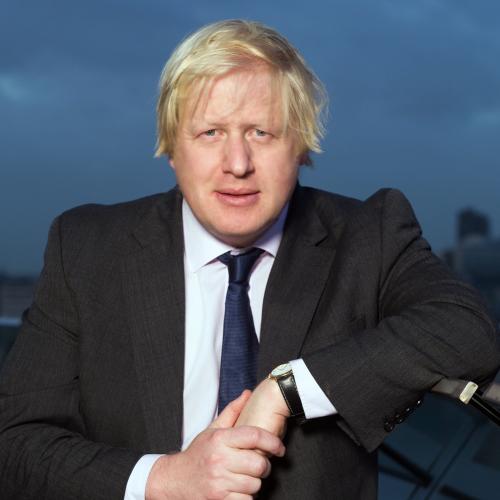
  • Boris Johnson – 2017 Speech on Hurricane Irma

    Below is the text of the article written by Boris Johnson, the Foreign Secretary, in the Sunday Mail on 10 September 2017. It was re-issued by the Government as a news release on the same day.

    On a screen in the Foreign Office Crisis Centre, Hurricanes Irma and Jose are being tracked across the Caribbean – mile by devastating mile.

    Britain would help any human being caught up in these forces of nature. But we have a special responsibility today because Hurricane Irma inflicted its most powerful blows upon British Overseas Territories, inhabited by 75,000 British citizens.

    First was Anguilla, where Irma knocked out the power and cast the island into darkness, then came the British Virgin Islands – which have borne the brunt of the storm – followed by the Turks and Caicos.

    I watched the 2 hurricanes swirl across the screen in the Crisis Centre where dedicated staff from the Foreign Office and the Department for International Development have been working around the clock since Wednesday.

    They’ve been dispatching emergency supplies, mobilising ships and planes and trying to second guess nature by anticipating exactly what help would be needed, where and when.

    Their task is complicated by the fact that they are dealing with not 1 storm but 2. Following closely behind Irma is Hurricane Jose – the first time that 2 category 4 or above hurricanes have struck in such quick succession since records began in 1851. To all intents and purposes, this is an unprecedented situation.

    The Crisis Centre got through to Tim Foy, the Governor of Anguilla, who briefed me in calm and measured tones. The power station on his island had survived, he said, but 70 or 80% of the transmission poles had been toppled, depriving everyone of electricity.

    I thought of the 15,000 Brits living in darkness on Anguilla, with destroyed homes and schools all around them, having endured one hurricane and now in the path of another.

    But the Governor was full of praise for the immediate help provided by the men and women on RFA Mounts Bay. The government dispatched this 16,000-ton naval supply ship to the Caribbean in July in preparation for the hurricane season. She carries her own floating dock, a Wildcat helicopter and a special disaster relief team.

    And the Governor described how these skilled personnel had managed to restore power at Anguilla’s hospital, rebuild the emergency operations centre and – perhaps most valuable of all – clear the runway and make the island’s airport serviceable.

    RFA Mounts Bay has now been repositioned to do everything possible to help the British Virgin Islands. But we must be humble in the face of the power of nature. Whatever relief we are able to provide will not be enough for many who have lost so much – and their ordeal is not over.

    A crisis like this brings out the best in Britain’s public servants. We can all take pride in people like Tim Foy and the other Governors of the stricken islands, the staff of the Foreign Office Crisis Centre, and the crew of RFA Mounts Bay. All are striving tirelessly to help those in need.

    And so they must because the people of Anguilla, the British Virgin Islands and the Turks and Caicos are British. Our obligation to them does not depend on the happenstance of geography: we will help just as surely as if the hurricane had struck Inverness or Dover or St Ives.

    It is precisely because of this overriding sense of obligation that the government has ordered the flagship of the Royal Navy, HMS Ocean, to head the Caribbean. Our biggest warship in service – carrying eight helicopters including 2 giant Chinooks – has left its NATO tasking in the Mediterranean and begun steaming westwards with all dispatch. HMS Ocean will cross the Atlantic and reach the Caribbean in about 10 days.

    There is, of course, a desperate need for aid in the meantime. On Friday a giant C-17 transport aircraft from the RAF took off for the Caribbean, laden with enough emergency shelters for almost 1,000 people. In total, almost 20 tonnes of aid has already been sent by air, including rations, water purification kits and emergency lighting.

    Expertise matters just as much as materiel, so 250 Royal Marines have been deployed in the region, including military engineers and medics.

    They will reinforce the 40 personnel of the humanitarian and disaster relief team on board RFA Mounts Bay, whose excellent work has made such a difference in Anguilla.

    In a situation where roads are blocked and communications disrupted, helicopters are essential assets. So a second C-17 left the UK on Friday carrying 2 Puma transport helicopters. They will join the Wildcat already deployed by RFA Mounts Bay.

    We can be reassured that a great deal of aid has either arrived or is en route. But heartbreaking damage has been inflicted and no-one should assume that everything will go smoothly in the crucial days that lie ahead.

    We are working alongside our friends, including France and the Netherlands, whose Caribbean territories have also suffered terribly, and the United States.

    And the government has promised to match what I know will be the generous donations of the British public pound for pound.

    We must now look ahead to where Irma will strike next. On Sunday the hurricane is expected to make landfall in Florida, where hundreds of thousands of Britons either live or go on holiday. Our Consul General in Miami is making every preparation.

    In the coming days, our fellow Britons will be caught in the pathway of these forces of nature. We will not relent in our efforts to give them every possible help.

  • David Davis – 2017 Statement on Brexit Negotiations

    Below is the text of the statement made by David Davis, the Secretary of State for Departing the European Union, in the House of Commons on 5 September 2017.

    Mr Speaker, I will now update the House on the two rounds of negotiations with the EU which took place in July and August.

    While at times these negotiations have been tough, it is clear that we have made concrete progress on many important issues.

    I would like thank all our officials who have been working hard both at home, as well as out in Brussels, to make this happen.

    Colleagues will have received my letter following the July negotiating round dated 9 August. I set out the dynamics of that round in some detail.

    These rounds were not at this stage about establishing jointly agreed legal text. They were about reaching a detailed understanding of each other’s position, understanding where there might be room for compromise and beginning to drill down into technical detail on a number of issues.

    During both rounds discussions took place on all four areas including the specific issues relating to the rights of citizens on both sides, Northern Ireland and Ireland, the question of a financial settlement and a number of technical separation issues.

    I will speak briefly about each in turn.

    Citizens’ rights

    Making progress on citizens’ rights has been an area of focus for both negotiation rounds and we took significant steps forward in both July and August.

    We have published a joint technical paper which sets out our respective positions in more detail, updated following the August round. This underlines both the significant alignment between our positions and also provides clarity on areas where we have not as yet reached agreement.

    In July we achieved a high degree of convergence on:

    • The scope of our proposals on residence and social security;
    • The eligibility criteria for those who will benefit from residence rights under the scope of the withdrawal agreement;
    • A shared commitment to make the citizens’ rights application process as efficient and streamlined as possible.

    In August we agreed:

    • To protect the rights of frontier workers;
    • To cover future social security contributions for those citizens covered by the Withdrawal Agreement;
    • To maintain the right of British citizens in the EU27 to set up and manage a business within their Member State of residence, and visa versa; and
    • That we should at least protect existing healthcare rights and arrangements for EU27 citizens in the UK and UK nationals in the EU. These are the European Health Insurance or ‘EHIC’ arrangements.

    These areas of agreement are good news. They may sound technical but they matter enormously to individuals.

    The agreement on health care rights, for example, will mean that British pensioners living in the EU will continue to have their health care arrangements protected, both where they live and when they travel to another Member State, where they will still be able to use an EHIC card.

    On mutual recognition of qualifications, we have made progress in protecting the recognition of qualifications for British citizens resident in the EU27 and EU27 citizens resident in the UK. In fact, each one of these areas of agreement is reciprocal, they will work for Brits in the EU and the EU27 in the UK.

    These areas of agreement help provide certainty and clarity for EU27 citizens in the UK and UK citizens in the EU27. They will make a tangible difference to these people’s lives. I hope everyone recognises the importance of that.

    The outcomes of these discussions demonstrate that we have delivered on our commitment to put citizens first and to give them as much certainty as early as possible in this process.

    Of course, there remain areas of difference which we continue to work on.

    For example, we will need to have further discussions on the specified cut-off date, future family reunion and the broader issue of compliance on enforcement. Progress on these areas will require flexibility and pragmatism from both sides.

    During the Summer negotiating rounds a number of issues emerged in the EU offer that will need further consideration.

    For example, the EU does not plan to maintain the existing voting rights for UK nationals living in the EU. We have made it clear that we will protect the rights of EU nationals living in the UK to stand and vote in municipal elections.

    Similarly, the EU proposals would not allow UK citizens currently resident in the EU to retain their rights if they move within the EU.

    Even in areas where there has been progress, more is needed. While the EU has agreed to recognise the qualifications of UK citizens resident in the EU, and vice versa, we believe this should go much further.

    This recognition must extend to students who are currently studying for a qualification, it must apply to onward movement by UK citizens in the EU and it should extend more broadly to protect the livelihoods of thousands of people which depend on qualifications which will be gained before we exit the EU.

    In these areas the EU’s proposals fall short of ensuring UK citizens in the EU and EU citizens in the UK can continue to live their lives broadly as they do now.

    Separation issues

    On separation issues, a very technical area, we have established a number of sub-groups. They made progress in a number of specific areas, and drew on papers the UK published ahead of both rounds.

    I am pleased to say that we are close to agreement on our approach to post-exit privileges and immunities – on which we have published a position paper – which will benefit both the UK and EU to maintain after we leave.

    We have agreed on our mutual approach to confidentiality requirements on shared information post-exit.

    With respect to nuclear materials and safeguards, we held discussions on the need to resolve issues around the ownership of special fissile material and the responsibility for radioactive waste and spent fuel held both here and there.

    We reiterated a strong mutual interest in ensuring that the UK and Euratom Community continue to work closely together in the future as part of comprehensive new partnership.

    With respect to legal cases pending before the Court of Justice, the ECJ, the parties discussed and made progress on the cut-off points for cases being defined as ‘pending’. There was also progress in discussions concerning the UK’s role before the Court whilst these pending cases are being heard.

    With respect to judicial cooperation in civil and commercial matters, and ongoing judicial cooperation in criminal matters, we made good progress on the principles of approach and the joint aim of providing legal certainty and avoiding unnecessary disruption to courts, businesses and families.

    With respect to goods on the market, both parties reiterated the importance of providing legal certainty to businesses and consumers across the EU and UK at the point of departure.

    In this area, in particular, we emphasised that the broader principles outlined in the UK’s position paper seek to minimise the type of uncertainty and disruption for business which we are all working to avoid.

    We remain committed to making as much progress as possible on those issues which are solely related to our withdrawal, but our discussions this week have exposed yet again that the UK’s approach is substantially more flexible and pragmatic than that of the EU as it avoids unnecessary disruption for British business and consumers.

    I have urged the EU to be more imaginative and flexible in their approach to withdrawal on this point.

    Ireland/Northern Ireland

    On Northern Ireland and Ireland, I’m pleased to report there has been significant, concrete progress in this vital area. The negotiation Coordinators explored a number of issues, including both the Belfast or Good Friday Agreement and the Common Travel Area. In August, the group also had detailed discussions on the basis of the UK position paper.

    As both Michel Barnier and I said at last week’s press conference, there is a high degree of convergence on those key issues, and we agreed to work up shared principles on the Common Travel Area.

    We also agreed to carry out further technical work on cross-border co-operation under the Belfast Agreement.

    Of course, as I have said all along, the key issues in relation to cross-border economic co-operation and energy will need to form an integral part of discussions on the UK’s future relationship with the EU.

    Financial settlement

    Finally on the financial settlement.

    We have been clear that the UK and the EU will have financial obligations to each other that will survive our exit from the EU.

    In July the Commission set out the European Union position. We have a duty to our taxpayers to interrogate that position rigorously. That is what we did, line by line.

    At the August round we set out our analysis of the EU’s position. We also had in-depth discussions on the European Investment Bank and other off-budget issues.

    It is clear that the two sides have very different legal stances. But as we said in the Article 50 letter, the settlement should be in accordance with law and in the spirit of the UK’s continuing partnership with the EU.

    Michel Barnier and I agreed that we do not anticipate making incremental progress on the final shape of a financial deal in every round.

    Generally we should not underestimate the usefulness of the process so far. But it is also clear that there are still significant differences to be bridged in this sector.

    Governance and dispute resolution

    Initial discussions were also held on governance and dispute resolution.

    These provided an opportunity to build a better, shared understanding of the need for a reliable means of enforcing the Withdrawal Agreement and resolving any disputes that might arise under it.

    The Future Partnership

    Alongside the negotiations, we have also published a number of papers which set out our thinking regarding our future special partnership with the EU.

    These future partnership papers are different from our papers that set out our position for the negotiations under our withdrawal agreement.

    Our future partnership papers are part of a concerted effort to pragmatically drive the progress we all want to see.

    All along, we have argued that talks around our withdrawal cannot be treated in isolation from the future partnership that we want.

    We can only resolve some of these issues with an eye on how the new partnership will work in the future.

    For example, on Northern Ireland it would be helpful to our shared objectives on avoiding a hard border to be able to begin discussions on how future customs arrangements will work.

    Furthermore, if we agree the comprehensive free trade agreement we are seeking as part of our future partnership, solutions in Northern Ireland are of course then easier to deliver.

    A second example is on financial matters.

    As I have said, the days of making vast yearly contributions to the EU budget will end when we leave.

    But there may be programmes that the UK wants to consider participating in as part of the new partnership that we seek.

    Naturally we need to work out which of those we want to pursue. We need to discuss them as part of talks both on our withdrawal from the EU and our future as their long-standing friend and closest neighbour.

    A third example is on wider separation issues.

    While we are happy to negotiate and make progress on the separation issues, it is our long-term aim that ultimately many of these arrangements will not be necessary.

    With the clock ticking Mr Barnier, it would not be in either of our interests to run aspects of the negotiations twice.

    Last week, as we turned our heads to the next round of talks, my message to the Commission was: Let us continue to work together constructively to put people above process.

    To that end my team will publish further papers in the coming weeks – continuing to set out our ambition for these negotiations, and a new deep and special partnership the UK wants to build with the EU.

    Ultimately, businesses and citizens on both sides want us to move swiftly on to discussing the future partnership, and we want that to happen after the European Council in October if possible.

    As colleagues know, at the start of these negotiations, both sides agreed that the aim was to make progress on four key areas: citizens’ rights, the financial settlement, Northern Ireland and Ireland, and broader separation issues.

    We have been doing just that.

    No one has ever pretended this will be simple or easy. I have always said this negotiation will be tough, complex and, at times, confrontational.

    So it has proved.

    But we must not lose sight of our overarching aim — to build a deep and special new partnership with our closest neighbours and allies, whilst also building a truly global Britain that can forge new relationships with the fastest growing economies around the world.

  • Boris Johnson – 2017 Statement on North Korea

    Below is the text of the statement made by Boris Johnson, the Foreign Secretary, in the House of Commons on 5 September 2017.

    Mr Speaker, with your permission, I should like to make a statement about the situation on the Korean Peninsula.

    At noon on Sunday, local time, North Korea tested the most powerful nuclear device ever detonated in the history of the regime’s quest for an illegal arsenal.

    The underground explosion in a testing site only 60 miles from the Chinese border triggered an earthquake measuring up to 6.3 on the Richter scale – 10 times more powerful than the tremor created by the last detonation.

    The regime claimed to have exploded a hydrogen bomb capable of being delivered on an intercontinental ballistic missile.

    We should treat that claim with scepticism, but the House must be under no illusion that this latest test marks another perilous advance in North Korea’s nuclear ambitions.

    In a country blighted by decades of communist economic failure – where, in the 1990s, hundreds of thousands of people died of starvation or were reduced to eating grass and leaves to survive – the regime has squandered its resources on building an illegal armoury of nuclear bombs.

    The House will wish to join me in condemning a nuclear test that poses a grave threat to the security of every country in East Asia and the wider world.

    Earlier today, the North Korean ambassador was summoned to the Foreign Office to receive a formal protest. Honourable Members will recall the steady drumbeat of provocative and dangerous actions by Kim Jong-un’s regime.

    Last year North Korea tested two nuclear weapons and launched 24 missiles; so far this year, the regime has fired 18 missiles – including two of intercontinental range; indeed three tests have taken place since the House rose in July, and on Monday last week, a missile flew over Japan, causing sirens to sound on Hokkaido and forcing thousands of people to take cover.

    The regime has threatened to launch more missiles towards the US Pacific territory of Guam, which is home to 180,000 people and two military bases.

    I will commend the dignity and restraint shown by South Korea and Japan, the countries that find themselves in the firing line of Pyongyang’s reckless ambitions.

    North Korea’s brazen defiance has brought universal condemnation.

    When the UN Security Council met in emergency session yesterday, every member – including China and Russia – denounced the latest nuclear test.

    Britain has been at the heart of mobilising world opinion with the aim of achieving a diplomatic solution.

    Last week, I spoke to my Chinese counterpart, Wang Yi, and the Japanese foreign minister, Taro Kono.

    A few hours after the nuclear test on Sunday, I spoke to the South Korean foreign minister, Kang Kyung-wha, and I have of course been in regular contact with Secretary Tillerson of the United States.

    During her highly successful visit to Tokyo last week, my Right Honourable Friend the Prime Minister made clear our solidarity with Japan as it faces this grave threat.

    Just as North Korea has pursued nuclear weapons with single-minded determination, so the international community must show the same resolve in our pursuit of a diplomatic solution.

    And we should not be diverted by arguments that equate the illegal and aggressive actions of Pyongyang with the legitimate and defensive military exercises of South Korea and the United States.

    North Korea has caused this crisis and the onus rests squarely on Kim Jong-un’s regime to obey international law and meet their obligations to disarm.

    All hopes for progress rest on international co-operation – and there are some encouraging signs.

    On 5 August, the Security Council unanimously adopted Resolution 2371, including the toughest sanctions ever imposed on North Korea, banning exports of coal, seafood, iron ore and lead.

    If fully enforced, these new measures will cost Pyongyang about $1 billion – one third of the country’s total export earnings – reducing the resources available for nuclear weapons.

    We are now pressing the Security Council to pass a new Resolution as swiftly as possible, imposing further sanctions and showing the unity and determination of the international community.

    China, which accounts for 90% of North Korea’s overseas trade, has a unique ability to influence the regime – and the House can take heart from the fact that Beijing voted in favour of the latest sanctions resolution and condemned Pyongyang’s actions in the most unsparing terms.

    North Korea’s nuclear device was not only tested near China’s border, it was also detonated on the day that President Xi Jinping opened a summit in Xiamen with the leaders of Russia, India, Brazil and South Africa.

    I call on China to use all of its leverage to ensure a peaceful settlement of this grave crisis.

    Kim Jong-un claims to want security and prosperity for North Korea’s people.

    The only way to achieve this goal would be for North Korea to obey the UN and halt its nuclear weapons and ballistic missile programmes, disarming in a complete and verifiable manner.

    Britain stands alongside our allies in striving to achieve this goal. I commend this statement to the House.

  • Sir Philip Jones – 2017 Speech of Naming of HMS Prince of Wales

    Below is the text of the speech made by Admiral Sir Philip Jones, First Sea Lord on 8 September 2017.

    Your Royal Highnesses, my Lords, ladies and gentlemen, honoured guests, 3 years ago, the naming of HMS Queen Elizabeth was a strategic awakening for the United Kingdom.

    The moment when we proved to the world, and to ourselves, that we still have what it takes to be a great maritime industrial nation.

    Today, we return to Rosyth, to the cradle of modern British sea power, to dedicate HMS Prince of Wales.

    We are honoured by the presence of Their Royal Highnesses the Prince of Wales and the Duchess of Cornwall; of course, as we are in Scotland, more appropriately the Duke and Duchess of Rothesay.

    We are also joined by representatives from across government, the armed forces, together with veterans and some of our vital international partners.

    This ceremony, and all that it represents, demonstrates the United Kingdom’s determination to see through our strategic intent and to fulfil the promise of our maritime renaissance.

    For though she is the second of her class, HMS Prince of Wales has a strategic significance all of her own.

    If building one carrier is a statement of national ambition; then building 2 is an unmistakable sign of commitment, to our own defence and that of our allies.

    Atlantic Charter

    Today, HMS Prince of Wales is the newest and most advanced vessel of her kind.

    In the half century of service that lies before her, she will assimilate astonishing developments in technology, from unmanned vehicles on the seas and in the skies, to the all encompassing, all pervading, tide of data that is shaping modern warfare.

    And yet the name Prince of Wales is a historic one. It is emblematic of many centuries of loyal service to crown and country.

    Of the many ships that have borne this princely title, none better demonstrates the importance of our continuing strategic responsibility than the seventh and last.

    In the darkest period of the Second World War, the battleship HMS Prince of Wales was the venue for Winston Churchill’s first meeting with President Roosevelt.

    During a church service off the coast of Newfoundland, the 2 leaders sat beneath her great guns, amid a congregation of sailors and marines from both nations.

    Until that point Britain had stood alone. But on that Sunday morning, onboard that ship, the New World joined the Old in common cause.

    Of all the many legacies borne out of that extraordinary partnership, few have been more significant than the Atlantic Charter.

    It pledged economic and social progress for the benefit of all. At its heart was a commitment to self determination, freedom of the seas and the rule of law in the world.

    This settlement was the inspiration for the United Nations and has been the basis of security and progress in the world since 1945.

    It is a settlement under which our own nation has enjoyed 7 decades of comparative peace and rising prosperity.

    But today the principles upon which it is founded are being tested.

    From the Baltic to the Black Sea, hybrid warfare seeks to undermine democratic governments and sovereign borders.

    In the Mediterranean, a sorry tide of human suffering has exposed once again the inequality borne out of conflict and repression.

    And in the South China Sea, growing regional competition highlights the continuing importance of freedom of navigation to global stability and prosperity.

    The United Kingdom holds positions of international responsibility: other countries look to us for leadership, partnership and example.

    So the biggest test of all comes from within.

    Do we still have the necessary belief to stand by the principles under which we have prospered?

    Are we still prepared to do what it takes to defend them and to lead others in doing the same?

    And, most importantly, are we prepared to match our words with the tools to do the job?

    Modernised Royal Navy

    Today we are gathered in this great dockyard to answer those questions.

    Standing in the shadow of a new Prince of Wales, and in the company of our most important allies, we rededicate ourselves to this historic cause, and to the obligations it brings.

    With 2 Queen Elizabeth class carriers in Royal Navy service, one will be available for operations at all times.

    In the United States, aviators from the Fleet Air Arm are working hand-in-glove with their Royal Air Force counterparts to bring the F35B Joint Strike Fighter into UK service, and the first operational squadron moves to Marham next year.

    This combination of ships and jets will provide our nation with a continuous carrier strike capability, a powerful conventional deterrent in a dangerous and uncertain world.

    Alongside this new undertaking, the Royal Navy will deliver the UK’s nuclear deterrent, as we have done every hour of every day for nearly half a century.

    These 2 strategic responsibilities will sit at the heart of a modernised and emboldened Royal Navy.

    On the River Clyde, steel has been cut for the first city-class frigate, HMS Glasgow. She and her sister ships will carry names from all parts of our United Kingdom, renewing the bond between the nation and its navy.

    Meanwhile, after the long years in Iraq and Afghanistan, the Royal Marines have returned to sea, and to the environment in which they have demonstrated such unswerving professionalism and adaptability across 3 and a half centuries.

    And finally, the Royal Fleet Auxiliary will continue to be found where they’ve always been in times of peace and war: right by our side.

    But this is not a journey our sailors and marines make by themselves.

    Working with the Army and the Royal Air Force, the UK Carrier Strike Group will project British power and influence at sea, in the air, over the land and in cyberspace.

    And working with our international partners, it represents a new and substantial commitment to NATO and to all the UK’s alliances throughout the world.

    We could not have reached this point without the substantial and ongoing support of the United States Navy, the US Marine Corps and the Marine Nationale, and I pay grateful tribute to them today.

    We will repay the military and political capital they have invested in us by delivering a comprehensive, credible capability that opens the way for closer carrier cooperation between us.

    So the advent of the Queen Elizabeth class carriers truly represents the start of a new era of strategic responsibility for the Royal Navy and the nation.

    Conclusion

    In drawing to a close, I would like to pay tribute to all those who have dedicated their efforts to this great national endeavour.

    In the few short months since she put to sea, HMS Queen Elizabeth has become an icon of British engineering and British innovation, and it was a joyous occasion to welcome her into her home port of Portsmouth just over 3 weeks ago.

    The same will be true for HMS Prince of Wales. Wherever she travels, at home or overseas, she will draw crowds to the water’s edge where they will marvel at your achievement.

    Alone, either one of these vessels would be a formidable expression of military might. But together, HMS Queen Elizabeth and HMS Prince of Wales send a powerful message to friend and foe alike.

    We may live in uncertain times, but the United Kingdom has lost none of its famous resolve. We will protect our interests, we will support our allies, and we will shoulder our responsibilities, wherever in the world they are at stake.

    As I consider all that has been accomplished, and that which is yet to come, I am drawn to the words of the poet Longfellow, sent by Roosevelt to Churchill after their historic meeting onboard the last Prince of Wales 76 years ago, words that find new meaning in the vessel before us, and the responsibilities that await the young men and women who will take her to sea:

    Sail on, O Ship of State!

    Sail on, O Union strong and great!

    Humanity with all its fears,

    With all the hopes of future years,

    Is hanging breathless on thy fate!

  • James Brokenshire – 2017 Speech to British Irish Association Conference

    Below is the text of the speech made by James Brokenshire, the Secretary of State for Northern Ireland, at the British Irish Association Conference at the University of Cambridge on 8 September 2017.

    It’s a great pleasure to address my second British-Irish Association Conference since being appointed Secretary of State for Northern Ireland in July last year and I’d like thank Hugo MacNeill and his team for their kind invitation.

    I would also like to pay a special tribute to Francesca Kay who once again has done such a brilliant job in organising the conference and putting together the programme.

    As I discovered last year, the BIA Conference really is one of the must-attend events of the year for anyone interested in the affairs of Northern Ireland and relationships between the United Kingdom and Ireland more broadly.

    It really is a unique opportunity for politicians, civil servants, journalists, academics, church leaders and people from the business world to come together under the relative safeguard of the Chatham House Rule to exchange views, share ideas and to help shape the political, economic and security agendas.

    And in doing that the I believe that the BIA is as relevant today as it was when you were formed in what was, in terms of loss of life, the darkest year of the troubles, 1972, when over 470 people were killed.

    At that time, Northern Ireland was in the grip of terrorist campaigns that were to last for around another quarter of a century.

    In that year devolved government was suspended and it was to take some 35 years for it to be re-established on anything like a sustainable basis.

    As I was reminded the other day there was no irony intended that the legislation providing for the long years of Westminster control was actually called the Northern Ireland Temporary Provisions Act.

    Also at that time relations between the UK and Ireland were frequently strained, beset by crises over issues like security and extradition, and often characterised by what was described as megaphone diplomacy across the Irish Sea.

    We have, of course, come a tremendously long way since then.

    Today, Northern Ireland is a vastly different place from when the BIA was founded.

    The post Belfast Agreement generation has grown up without the daily threat of large scale terrorism and the security apparatus that was necessary to counter it.

    Until the beginning of this year Northern Ireland had enjoyed ten years of power sharing, the longest period of unbroken devolved government since the 1960s.

    Events that years ago would have been unthinkable now take place in Northern Ireland, including this year the final stages of the hugely successful Womens’ Rugby Union World Cup.

    Relations between Northern Ireland and Ireland, and between the United Kingdom and Ireland, are at their strongest ever.

    And on that note I would like to extend the warmest welcome to the Irish Foreign Minister, Simon Coveney, to Cambridge this evening and to recognise Charlie Flanagan for his outstanding contribution previously in that role. Economically, too, Northern Ireland continues to move forward with solid growth, unemployment significantly down on seven years ago and in the past year levels of employment hitting record levels.

    Northern Ireland, which for years against a backdrop of terrorism and instability struggled to attract investment and jobs, is now one of the most popular locations in the UK outside of London for foreign direct investment.

    We have some world-beating businesses exporting right across the globe.

    And just think how much better we could do if we had an Executive in place and could devolve Corporation Tax powers to enable them to lower it to the same levels south of the border.

    All of this paints a picture of a Northern Ireland that would have been unrecognisable a generation or so ago.

    And I’m convinced that we have the potential to do even better.

    But to achieve that we have to get right what I believe are the three great political challenges we face today.

    The need to see a fully functioning, power sharing devolved government at Stormont as set out in the Belfast Agreement and its successors, our support for which remains steadfast.

    The need to address legacy issues by implementing in full the proposals in the Stormont House Agreement and reforming the inquest system.

    And of course the necessity of making a success of Brexit, to which the UK Government is fully committed.

    It’s those these issues that I want largely to speak about this evening.

    Getting Stormont back to work

    First let me deal with devolution and let me be very clear.

    As our manifesto set out at the General Election this year, this Government believes firmly in devolution and the associated political institutions so carefully negotiated in the Belfast Agreement.

    Decisions over local services are best taken by local politicians democratically accountable to a local Assembly. And we believe in the closest co-operation between both parts of the island of Ireland and between the United Kingdom and Ireland.

    These are the so-called three strands of the Belfast Agreement.

    Yet after a ten year uninterrupted run of devolved government from 2007, Northern Ireland has now been without a properly functioning Executive and Assembly for the past nine months.

    Throughout that period government has effectively been in the hands of civil servants rather than politicians who are rightly accountable to the public for the decisions they make.

    Under the Northern Ireland Act 1998 in the absence of devolved government passing a Budget, civil servants can only spend up to 75 per cent of the previous year’s financial allocations rising to 95 per cent after three months.

    I have sought to relieve immediate pressures by intervening to publish ‘indicative’ budget statements in April and July.

    But this is only a short term fix.

    The longer-term problem is that the fundamental challenges of reform and transformation of critical public services, such as health, education, transport and justice are not taken forward.

    Civil servants cannot provide the political direction to tackle these issues.

    As a result, public services such as health, education and transport are coming under increasing strain with the people of Northern Ireland suffering as a consequence.

    Without devolution other aspects of the Belfast Agreement also cease to function, including North-South bodies and those covering broader relationships such as the British-Irish Council.

    And of course without devolution, there is no Northern Ireland Executive to put its views directly on Brexit.

    The situation simply is not sustainable and if it is not resolved within a relatively short number of weeks will require greater political decision making from Westminster.

    This would have to begin with legislation to give Northern Ireland a Budget.

    That is profoundly not where the UK Government, the Irish Government and I believe the Northern Ireland parties want to go.

    I cannot overstate this point.

    It would be a hugely retrograde step, a massive setback after so many years of progress and hope.

    But in the continuing absence of devolution the UK Government retains ultimate responsibility for good governance and political stability in Northern Ireland as part of the United Kingdom and we will not shirk from the necessary measures to deliver that.

    At the same time we will need to consider carefully a range of other issues reflecting public concern, including whether it can continue to be justified to pay Assembly members who have not met for several months now.

    If things don’t change we are on a glide path to greater and greater UK government intervention.

    But we can still change course.

    And I have been keen to support the exchanges that have taken place in recent days and which will continue next week.

    On Monday I will be holding further bilaterals with the parties.

    And for the rest of the week further intensive dialogue between the DUP and Sinn Fein will continue.

    You will understand that I am not in a position this evening to give a running commentary on the details of the current discussions.

    But the issues remain relatively small in number and are clearly defined.

    Both the Irish Foreign Minister Simon Coveney and I believe that a resolution is possible and that with political leadership it can be achieved.

    But there is still work to do.

    For our part the UK and Irish Governments can support and work with the parties towards that end, in accordance with and fully respecting the three stranded approach.

    But ultimately we cannot force an agreement.

    That has to come from the parties themselves.

    So it’s vital that they continue to work together to find a solution to their differences.

    And it is my belief that they are committed to doing so in the interests of everyone in Northern Ireland. And the time to make progress is now.

    Legacy of the past

    I also know that we need to make progress on addressing the legacy of Northern Ireland’s divided past.

    The current mechanisms for addressing the past and helping victims and survivors simply are not working as they should.

    Not least for the victims and survivors of the troubles, whose pain and suffering today is often every bit as raw as it was decades ago.

    That is why, at the election, the UK Government restated its support for the full implementation legacy bodies set out in the 2014 Stormont House Agreement.

    They will operate in ways that are fair, balanced, transparent and crucially proportionate and will be fully consistent with the rule of law.

    We also reiterated our backing of reforms to the legacy inquest system to ensure that the UK Government complies with its international obligations.

    These are clear manifesto commitments and we fully intend to deliver them.

    And as the Stormont House Agreement set out we will provide up to £150 million to help fund them.

    I’m fully aware that it’s a year since I told this conference that the Government said that the process would benefit from a public phase.

    And I deeply regret the fact that it has yet to happen.

    Over the past year we have continued detailed work with the parties and with the Irish Government.

    And much genuine progress has been made.

    Discussions with the parties have been constructive and changes have been made to the detailed structure of the mechanisms.

    The structure has been improved as a result of these discussions.

    Again, we cannot continue this process indefinitely.

    We have also had extensive discussions with victims and survivors. In these meetings, we increasingly hear that victims want us to get on with it – to move debate out from behind closed doors and into a public discussion with the people who will be most affected by how we address the past.

    So I intend to be in a position to bring forward a formal consultation as soon as possible.

    Making a success of Brexit

    The third great political challenge and a key theme of this conference is of course Brexit, and in that context UK-Irish relations.

    As a Government our goal is to secure a deal that works for the whole of the United Kingdom, including Northern Ireland, as we leave the European Union.

    But let me be clear on this point.

    Just as we joined the Common Market in 1973 as one United Kingdom, we will leave the EU in 2019 as one United Kingdom.

    And as the Prime Minister has made clear the United Kingdom will be leaving both the single market and the customs union, enabling us to strike new trade deals with the rest of the world.

    Throughout, however, we have also been clear that we need to recognise and address the particular circumstances of both Northern Ireland and Ireland.

    We might be leaving the EU but we are not turning our backs on our friends and partners in Europe and nowhere is that clearer than with our closest neighbour, Ireland.

    The Article 50 letter itself sets out the absolute priority we give to preserving the unique relationship between the UK and Ireland and protecting the peace process in Northern Ireland.

    This was reiterated in our manifesto at the General Election and in August, as part of a series of position papers, the Government published its paper on Northern Ireland and Ireland setting out in more detail how we might achieve our objectives.

    It makes a series of concrete UK proposals for provisions that should be enshrined in the Withdrawal Agreement.

    Specifically it proposes that we; affirm the ongoing support of the UK Government and Irish Government, and the European Union, for the peace process; formally recognise that the citizenship rights set out in the Belfast Agreement will continue to be upheld; agree to the continuation of PEACE funding to Northern Ireland and border counties of Ireland; agree text for the Withdrawal Agreement that recognises the ongoing status of the Common Travel Area and associated reciprocal arrangements following the UK’s exit from the EU; agree nine key principles and criteria that could be used to test future models for border arrangements, including the need to avoid a hard border between Northern Ireland and Ireland and any physical border infrastructure and agree a common understanding of the principles of North-South and East-West cooperation including key principles for the new energy framework in Northern Ireland and Ireland that highlight the need for the continuation of a single electricity market .

    In the Government’s view the publication of this paper marks a real and positive step forward in our negotiations with the EU.

    And it outlines serious proposals for tackling one of the most challenging parts of our future relationship.

    So far as the negotiations themselves are concerned, the Brexit Secretary, David Davis, updated the House of Commons on Tuesday on the two rounds that took place in July and August.

    He was able to report significant and concrete progress the issue of Northern Ireland and Ireland

    In August, there were detailed discussions on the basis of the UK position paper.

    We agreed to work up shared principles on the common travel area, which in the Government’s view is concrete and welcome progress.

    In addition we agreed to carry out important further technical work on cross-border co-operation under the Belfast Agreement.

    As both David Davis and Michel Barnier said at last week there has been real progress.

    The UK also welcomes the publication of the EU Commission position paper yesterday.

    It shows the close alignment between the UK, the Irish Government and the EU on our objectives.

    In particular the clear commitment to avoiding physical infrastructure at the border is very welcome.

    Of course many commentators are still focused on the detail of how we address the critical issue of avoiding a hard border for the movement of goods.

    The UK and EU position papers show that there is alignment on the objectives.

    The UK’s overarching approach to this challenge is clear.

    We are considering first the nature of the border, its history, and the wishes of people in Northern Ireland and living in border communities.

    As the Irish Government have said, technical solutions need to follow from the right political objectives.

    The wrong approach is to focus first on existing customs and other regulations and then try to work out the technical solution within those extremely narrow parameters.

    That would absolutely not represent the flexible and imaginative approach that the UK, Ireland and the EU all agree is required.

    Of course any imaginative approach requires painstaking creative work.

    And I make no apology that the initial proposals the UK has put forward are creative and go beyond existing precedents.

    For example, as we set out in our paper small traders operating across the invisible border that exists now are often engaged in local trade in local markets.

    So the right approach is not to work out how existing template customs rules for ‘third countries’ should apply to those traders, but to protect their trade and livelihoods on both sides of the border.

    The technically easier but entirely wrong approach is to say it’s all too difficult and to get to work applying template regulations and customs laws.

    Or to say that the UK should simply accept all EU customs and single market laws permanently as the solution.

    Or to say that the answer to this issue is to simply create a new border between Northern Ireland and Great Britain.

    None of those approaches would be acceptable to the UK, and none of them is the ‘flexible and imaginative’ approach that the European Council has mandated.

    But with the right overall approach to this issue, and the clear commitment that we all have to work on flexible and imaginative solutions to avoid a hard border, then I believe that the technical solutions can and should be agreed in a way that can work for the UK, Ireland and the European Union as a whole.

    Of course there is a long way to go and nobody pretends this was ever going to be easy but nobody should be in any doubt about the UK Government’s determination to secure a successful outcome.

    Conclusion

    Next year we will mark the 20th anniversary of the Belfast or Good Friday Agreement, an Agreement intended to herald a new beginning for relationships in these islands, within Northern Ireland, between Norther Ireland and Ireland and between the United Kingdom and Ireland.

    And there is no doubt in my mind that as a consequence of that historic Agreement and its successor’s life for so many people has changed considerably for the better.

    The Agreement is the bedrock of the political settlement in Northern Ireland and the political progress we have seen over the past twenty years, which is why it is so vital that through our collective efforts we get it back on track.

    For this Government, as our manifesto stated, our commitment to the Belfast Agreement and its successors remains steadfast.

    That includes the constitutional provisions they set out the full range of political institutions they establish and those matters relating to rights, culture and identity.

    So, in coming days we must grasp the opportunity to make progress.

    To re-establish devolved government.

    To continue the positive progress which has been made over nearly two decades.

    And to build a stronger and more prosperous future for everyone.

  • Sarah Newton – 2017 Speech at Mental Health and Policing Conference

    Below is the text of the speech made by Sarah Newton, the Parliamentary Under Secretary of State for Crime, Safeguarding and Vulnerability, on 5 September 2017.

    Thank you for inviting me to join you today.

    First of all, I would like to pay tribute to Mr Herbert, I can’t believe I’m the only person in the room that thought that was an incredibly powerful and moving account, which starkly brings home the devastating consequences for both the person in a mental health crisis, their loved ones and the professionals working in that environment, when systems just don’t get it right and work as we all would wish.

    And also to our keynote speaker, His Royal Highness, Prince William. Both himself, and his brother, have been highly influential in breaking taboos by speaking out about mental health and I think their willingness to talk openly about mental health issues is illustrative of a wider trend in society to tackle misplaced stigmas; helping individuals to seek help; and galvanising all of our commitment to improving responses to all those people suffering mental ill health.

    I also commend the organisers of this event, for their hard work in putting all this together, enabling us to reflect on recent developments and some successes, but clearly as we heard so well this morning, there remains many challenges I know we would all want to face honestly, openly with vigour and work together to take on.

    Now every day I know there are many, many police officers who refuse to turn their backs on those in need. I have seen this for myself out on the beat with officers in my own constituency. They work professionally and humanely to help individuals to the best of their ability – often going well beyond what might reasonably be expected of traditional police

    Sometimes police will have to be involved in incidents involving mental ill health. Mental health conditions, often in combination with other issues such as substance misuse, can cause people to act irrationally and out of character, and it is very difficult for the police in that situation to identify what is going on and that at the root of that behaviour that person is actually very unwell. And it is very difficult for police officers to know what to do for the best in such circumstances both to protect the individual and the community.

    It is not necessary to be an expert in this field to be aware of the very high, and increasing, demand for mental health services of all types. Members of this audience will know only too well, that the police can be asked to deal with a wide variety of cases involving people who are unwell and in distress.

    We have taken a number of steps to better equip the police and criminal justice system in this regard – we’ve heard this morning of improvements to the Liaison and Diversion schemes for example. But the pressures on front line officers to make quick judgements and act appropriately cannot be overestimated.

    As the Prime Minister has repeatedly said – we are clear that the police should not be expected to act in the stead of health professionals. They cannot be expected to do that satisfactorily – and it takes them away from their primary function of tackling crime. Nor can it be in the best interests of the people affected, who need quick access to professional mental health assistance.

    There clearly remains much more to do to get this balance right. However, recent years have seen huge progress in the way in which we respond to those in crisis. In many cases the police have acted as a catalyst for changes that have occurred. And at local level they are often at the vanguard in driving innovation and solutions to local issues.

    We’ve seen for example, seen dramatic reductions in the use of police cells as places of safety in the last few years, and a commensurate rise in the use of health based places and this has largely been achieved through determined, joint working at local level between the police and health partners. According to the 2015/16 police figures on the use of section 136, a handful of police areas have already managed to eliminate entirely, or almost so, reliance on police cells as places of safety and we expect further encouraging progress when the 2016/17 figures are published later this autumn.

    To help maintain this, the government has already provided some £15 million of funding to 88 projects in local areas to invest in increasing the numbers of suitable places of safety. We have committed a further £15m to continue this work, and to explore innovative local ideas for maximising the provision of suitable safe places, working with a range of partners, including community and voluntary groups.

    Changes to mental health legislation in the Policing and Crime Act – which we expect to come into effect before the end of the year – are also designed to further improve our response to those in crisis. They offer local areas greater flexibility to adapt and cater to local needs, while reinforcing good practice. The goal is simply to ensure the most appropriate course of action in each case, and to achieve better outcomes for those in crisis as a result.

    As we have heard today, amongst the more significant changes are the banning of the use of police cells as places of safety for those under 18 years of age, and there will be severe restrictions on their use in the case of adults.

    We are also reducing the periods for which people may be detained pending a mental health assessment. And we are making more explicit the freedom of local areas to work creatively and in collaboration with a range of partners to develop networks of suitable places of safety – including outside traditional health settings.

    We have heard of some great examples today of innovation and all local areas will need to take a careful look at their local provision, in the light of the new legislation, to ensure that it is good enough. They may also need to refresh their local joint working practices to reflect the need to act more quickly and collaboratively to provide the most appropriate help for people in crisis.

    In the meantime, we do not count this as a ‘job done’. The government has made a clear commitment to continuing to improve mental health services – including but not limited to:

    – investing a billion pounds in mental health services by 2020 to improve mental health support in the community; in Accident and Emergency Departments, and in crisis provision and treatment options both for adults and children

    – implementing the recommendations of the Mental Health Taskforce review and its five year forward look

    – and, will be reviewing the Mental Health Act as committed to in the Queen’s speech

    As we all know, legislation alone is not the answer to the complex series of challenges posed by mental ill health. Nor can these be dealt with by any single organisation. In addition to personal health and well-being issues, mental ill health can affect matters as diverse as employment, having a decent home, education and family life. It can also increase an individual’s vulnerability to crime, illness, and social isolation.

    Providing effective interventions and support in that context can be challenging, and they demand a partnership approach.

    Effective multi-agency working is therefore vitally important in seeking to identify and iron out problem issues. Meaningful change is achieved by committed and dedicated leaders at local level being willing to grapple with the challenges, and work collaboratively to overcome them. I have said before that ‘leaders’ are not just the people in charge, not just the people at the top of organisations. Anyone in an organisation can be a systems’ leader and effect change from within, and often in my experience this comes from those closer to the front line.

    Now the Crisis Care Concordat has been mentioned several times this morning, and it has proved to be a really strong way of driving better change and led to far better working between the police and mental health professionals. I can assure you that it remains an important body. We will continue with this work, which is looking at what works locally as well as sharing practice, but also looking at what more we need to do at a national level.

    To conclude, I would like to assure you that I and the government will continue to do all that we can to ensure that you are properly supported in this vital area of work. And that we will move to a future where the response to those with mental health issues are delivered by the right agency at the right time.

    In the meantime, I would like to extend my most sincere appreciation and gratitude for all that you do. Whether responding to individual cases; challenging the status quo; or driving innovation and change – you are consistently setting the highest standards of public service and I thank you.

  • Theresa May – 2017 Speech in Japan

    Below is the text of the speeches made by Shinzō Abe, the Japanese Prime Minister, and Theresa May, the Prime Minister, in Japan on 31 August 2017.

    Shinzō Abe

    Good afternoon. My name is Shinzō Abe. With Prime Minister May today we are able to make this address at this Business Forum between JETRO and DTI of – DIT of UK are to sign this memorandum of cooperation. We’re very happy to be able to witness this.

    For Japan, the UK is freedom, democracy, and human rights and rule of law. We share these universal values with the United Kingdom. We are global strategic partners. Security and economy are the two wheels supporting this relationship. Active trade and investment relationship between the two countries is the solid foundation of our relationship.

    This time around, Prime Minister May, out of her very busy schedule, has come to Japan, and we are very, very pleased to receive her. Yesterday, we met in Kyoto. We had a chance to familiarise Prime Minister May with the tea ceremony, and we had dined in Kyoto, and we had a discussion on a number of issues in front of us.

    Normally, we could have asked her to stay in Kyoto for one night, and I could have had more time – relaxing time in Kyoto, but Prime Minister May took a bullet train back to Tokyo, and this morning, a vessel – Japanese Maritime Self-Defence Force vessel Izumo, she went aboard. Initial Izumo was built in the United Kingdom, this vessel, so from the olden times, Japan and the UK had this bond in the area of security. This is something that I want to make mention of here.

    For Japanese businesses, the UK, for manufacturing and sales and R&D in Europe, this is a very important base, this country United Kingdom. And currently in the UK, about one thousand Japanese companies have outlets, and more than 160,000 people are being employed. These activities by Japanese companies with leading-edge technology, innovation is being created, and through technological transfer, domestic skill base is being enhanced and productivity – and export capability is being strengthened. And with the vitalisation of local economies, Japanese businesses are making great contribution to the UK economy, supporting UK systems or society through provision of various systems, including, in the manufacturing sector, annual auto production units. There is by 1.7 million and three Japanese companies’ share is about 50% of this total production.

    In June of this year, Queen Elizabeth – 175 years ago, Queen Victoria for the first time in the royal family took a train trip between Slough and Paddington. High-speed rail, new rolling stock was used for her travel, and that rolling stock was produced by a Japanese company. In 2014, when I visited the UK, Japanese companies manufactured high-speed rail, I took a ride on that high-speed rail, and I was able to appreciate that Japanese companies’ technology into the daily lives of the British people. I witnessed that with great pleasure.

    With the UK leaving the European Union, the UK is in the midst of change, great change. UK’s departure from the EU has to be successful for UK, European Union and global economy. This is going to be quite important that this exit is going to be a successful one. After Brexit, the UK economy, I have trust in the UK economy after Brexit. Many Japanese companies, even after the Brexit vote, they have decided on new investments into the United Kingdom. This is testimony of Japanese companies’ expectation for the United Kingdom.

    From the UK, in the EU exit negotiation, there has to be transparency and predictivity, to minimise any damage on the businesses. We have received that commitment, and we value this greatly. Even after Brexit, the UK, for business people, it will continue to be an attractive place, a compelling place. I am convinced of that.

    So today, in this Business Forum, there are many people attending this Business Forum from businesses both from Japan and the UK. This is a reflection of the high level of interest and expectation in each other. I do hope that this is going to be a great opportunity, under the participation and attendance of Secretary of State Fox. I do hope that there is going to be further development for trade and investment between the two countries, and I do hope that there’s going to be a lot of discussion today in this forum. There’s going to be a summit meeting with Prime Minister May this evening, and I do hope that there’s going to be a strengthened economic relationship between the two countries. We will talk about some concrete matters about such cooperation between the two countries. I look forward to that meeting. Thank you very much.

    Prime Minister

    Thank you. And I am delighted to be here today, together with so many leading Japanese and British businesses whose trade and investment is fundamental to the jobs and growth that underpin our shared prosperity. And I want to thank the Japan External Trade Organization for co-hosting this event, and Prime Minister Abe for his speech and for the deep and continued commitment that he is showing to the partnership between our two countries.

    This is a formative period in shaping the future of my country and as we leave the European Union, so I am determined that we will seize the opportunity to become an ever more outward-looking Global Britain, deepening our trade relations with old friends and new allies around the world. And there are few places where the opportunities of doing so are greater than Japan, the third-largest economy in the world.

    Japanese companies already invest over £40 billion in the United Kingdom, making the UK second only to America as Japan’s top investment destination, while over 1,000 Japanese companies already employ over 140,000 people in Britain. And, as Secretary of State Fox said, the last 12 months have seen our bilateral trade increase by more than 12% and I very much welcome the commitment from Japanese companies – such as Nissan, Toyota, SoftBank and Hitachi – whose investments over the last year represent a powerful vote of confidence in the long-term strength of the UK economy.

    And on Hitachi, I’m very pleased that the Chairman, Mr Nakanishi, is delivering a speech here today. Hitachi’s relationship with the UK, in particular their investments into rail, nuclear and a range of other sectors, are truly impressive.

    So, I am here together with a business delegation representing some of Britain’s biggest investors in Japan because we want to build on that momentum and because I believe that this is a good moment for like-minded partners such as Britain and Japan to be doing more together. For as we become a Global Britain – a European nation still, but one that is outside the European Union – so we will be free to engage more actively and independently, particularly in key Asian markets like Japan. And against the backdrop of a more uncertain world, it is dependable and like-minded partners such as the United Kingdom who will stand with Japan in defending the rules-based international system and the open markets on which so much of our business is based.

    So, I come to this forum today seeking to lay the foundations to take our trade and investment relationship to a whole new level as we leave the European Union, and I’ve agreed with Prime Minister Abe that we will develop an ambitious programme of joint working to help achieve this.

    So, we’re instructing our ministers responsible for trade, investment and business to develop a new framework, to realise our shared long-term vision, to deepen our bilateral prosperity relationship. This will be supported by business-to-government engagement to ensure it serves the needs of businesses like yours, and it will include a new Trade and Investment Working Group to deliver across our trade and innovation relationships.

    Government dialogues will be established on a range of key industrial policies where we share great strengths, such as aviation, space, life sciences and advanced manufacturing. And the UK is also providing £700,000 of new funding to promote opportunities for UK businesses around Japan. And we will continue to collaborate on research and development, deepening our cooperation in this vital area and seeking to spread jobs and prosperity across all regions of our countries.

    During the period before we leave the European Union, the UK will continue to champion the early signature and implementation of the Japan-EU Economic Partnership Agreement. This will be our immediate priority, but as we leave the EU, so we will also work quickly to establish a new economic partnership between the UK and Japan based on the terms of this EU agreement.

    We will also seek to ensure the freest and most frictionless trade possible between the UK and the EU, and this includes the imperative of a smooth and orderly transition for people and businesses in the UK and in Japan, in the remaining 27 Member States and for all our partners around the world.

    Through all these steps, we will ensure the greatest possible confidence in our economy and we will build the closest, freest trading relationship between our two countries for when the UK leaves the European Union; that is the magnitude of our ambition and the scale of our commitment to it. And Prime Minister Abe and I look forward to working with you in the months and years ahead as we strive to achieve it, and with it to secure the jobs and investments that will bring prosperity to our peoples for generations to come.

    Thank you.

  • Nicola Sturgeon – 2017 Speech on Programme for Government

    Below is the text of the speech made by Nicola Sturgeon, the Scottish First Minister, in the Scottish Parliament on 5 September 2017.

    Over the past 10 years, this Government has expanded free childcare, removed university tuition fees for students and abolished business rates for 100,000 small businesses. We have invested in the national health service, scrapped prescription charges and protected free personal care. We have built social housing at a faster rate than any other part of the United Kingdom and we have placed Scotland firmly at the forefront of the global fight against climate change. Today, our unemployment rate is close to a record low, youth unemployment is half what it was 10 years ago, our hospital accident and emergency departments are the best performing anywhere in the UK and crime is now at a 42-year low. In addition, as was illustrated by yesterday’s official opening of the new Queensferry crossing, the nation’s infrastructure has been transformed.

    That is good progress, but it is time to take stock of our achievements, refocus our efforts and refresh our agenda. We live in a time of unprecedented global challenge and change, with rapid advances in technology, a moral obligation to tackle climate change, an ageing population, the impact of continued austerity and deep-seated challenges of poverty and inequality, and an apparent rise in the forces of intolerance and protectionism. Those challenges are considerable, but in each of them we must find opportunity. This programme for government is our plan to seize those opportunities and to build the kind of Scotland that we all seek—an inclusive, fair, prosperous, innovative country that is ready and willing to embrace the future. It is a programme to invest in our future and shape Scotland’s destiny.

    Ensuring that we have a highly educated and skilled population that is able to adapt to the needs of a rapidly changing economy is vital to our future prosperity and our wellbeing. That is why improving education—including by closing the attainment gap—is our number 1 priority.

    As of this summer, parents of all newborn children now receive a baby box. The box encapsulates an important principle, which is that all children, regardless of their parents’ circumstances, deserve the best possible start in life. That principle is one that will follow the baby box generation as they grow up. They will be the first to benefit from our next transformation in childcare. We have already expanded early years education and childcare, but by the time the baby box generation reach nursery, we will have almost doubled the amount of free nursery education that children receive.

    Over the next year, to lock in that expansion, we will guarantee a multiyear package of funding for local authorities to support the recruitment and training of staff and the delivery of new premises, and to support private and third sector providers of childcare, we will introduce rates relief for day nurseries.

    The massive expansion of nursery education is the first strand of our transformation of Scotland’s education system. The second is school reform. A new education bill will deliver the biggest and most radical change to how our schools are run that we have seen in the lifetime of devolution. It will give headteachers significant new powers, influence and responsibilities, formally establishing them as leaders of learning and teaching. Our premise is simple but very powerful: the best people to make decisions about a child’s education are the people who know them best—their teachers and their parents.

    Our reforms will be matched by resources. We will build on the early success of the new pupil equity funding so that, over time, more of the money that funds our schools will go directly to those in our classrooms.

    Of course, we know that the whole education system must work together if we are to see the kind of improvement in schools that we all want to see, so new regional improvement collaboratives will be established to provide support to teachers, including access to teams of attainment experts and subject specialists. We will also reform the way in which teachers are recruited and educated throughout their professional careers. We will introduce new routes into teaching to attract the highest quality graduates into priority areas and subjects, and to broaden the pool of talent that is available to our schools.

    Those changes will be underpinned by the new standardised assessments that will be taken by pupils in primaries 1, 4 and 7 and secondary 3 from this autumn. Those assessments will not raise standards in and of themselves, but they will help to ensure that parents, teachers, policy makers and the wider public have access to high-quality and reliable information about the performance of our schools.

    The third strand of the transformation in education comes beyond the school years. We are determined to open up university to all who have the talent to attend. We will therefore take forward the recommendations of the commission on widening access to ensure that young people, regardless of their background, have an equal chance of going to university. To make sure that they get the help that they need, we will set out plans to reform student support based on the findings of the independent review that is due to report in the autumn.

    We will also ensure that those who take vocational qualifications have the opportunities that they need. In particular, we will continue to increase the number of modern apprenticeships to meet our objective of 30,000 a year by 2020.

    Across all three strands of reform—in our nurseries, in our schools and in our colleges and universities—we are driving change. Our clear purpose is to ensure a first-class education for all young people, no matter the disadvantages that they might face. That is my top priority, and I recommit to it today.

    A good education is important for its own sake—it contributes to the health, the happiness and the fulfilment of all of us as individuals—but it is also vital to building a modern, successful, dynamic economy. Last week, I set out our vision for the economy that we want to build. To succeed, Scotland must lead change, not trail in its wake. We must aspire to be the inventor and the manufacturer of the digital, high-tech and low-carbon innovations that will shape the future, not just a consumer of those innovations.

    To support innovation, we will increase Government investment in business research and development by 70 per cent, which it is estimated will generate £300 million of additional R and D spending overall over the next three years.

    To help businesses to increase their exports, we will appoint, this autumn, a network of trade envoys to champion our businesses’ interests in key markets overseas. Our network of investment hubs, currently confirmed in London, Dublin, Brussels and Berlin, will be expanded to include Paris, maximising opportunities in France, our third biggest export market.

    The support that we provide for innovation and internationalisation will be backed up by help for key growth sectors. Scotland has the potential to be a world leader in advanced manufacturing. Right now, we are investing £9 million in a new lightweight manufacturing centre in Renfrewshire to help companies develop a global competitive advantage in the manufacture of lightweight, environmentally friendlier materials such as titanium and carbon fibre. That centre is just the first step. Later this year, we will take the next step by confirming the location and key partners for the new national manufacturing institute for Scotland, with work starting on site in 2018. That is a clear demonstration of our conviction that advanced manufacturing will be central to our modern economy.

    We will also support financial technology—or fintech—as a key growth sector. Our ambition is for this city of Edinburgh to become one of the top 10 global fintech centres, so we will invest in the establishment of fintech Scotland, an industry-led body that will champion, nurture and grow our fintech community.

    We will continue to champion clean energy. The North Sea is potentially the largest carbon storage resource anywhere in Europe, but the UK Government’s withdrawal of support for key carbon capture and storage initiatives risks that potential. As Westminster holds the key levers, we will continue to press for the right policy and financial framework to be put in place, but we will do more than that. I can announce today that we will provide direct Scottish Government funding for the feasibility stage of the proposed acorn project at St Fergus in Aberdeenshire.

    Today’s programme sets out the range of actions that we will take to support other highly successful growth sectors from food and drink to tourism and life sciences that through their determination and innovation are securing jobs now and for the future. However, I want to make specific mention of creative industries, which is a sector that is important both for our economy and our cultural wellbeing. We live today in a golden age of film and television production, and over the next decade, the opportunities for attracting investment to Scotland will be considerable. We have already increased support for the screen sector, and last month I was delighted to announce that the National Film and Television School is setting up a base in Glasgow, the first of its kind outside London. I can announce today that we will go further and do what those working in the sector have asked of us: in next year’s budget, we will provide an additional £10 million to bring screen development, production and growth funding to £20 million a year.

    As well as supporting key sectors, we must support those whose ideas and ingenuity create new products, services, jobs and wealth. The entrepreneurial spirit that forged Scotland’s reputation in the past must drive our success in the future. That means not just helping young innovators start their businesses, but helping those businesses scale up, and organisations such as Entrepreneurial Scotland, Elevator and CodeBase are building the innovative culture and leadership ambitions of our people and entrepreneurs. To complement that work, we will establish and fund a new unlocking ambition challenge. Each year, we will offer intensive support for up to 40 of the most talented and ambitious entrepreneurs to help them bring their ideas to market and create jobs. Candidates will be chosen and supported by established entrepreneurs who will give their time and commitment.

    Across the economy, we are determined to have a supportive business environment. To promote that, we have reformed our enterprise and skills agencies. Next month, we will establish the new strategic board; it will be led by Nora Senior, former chair of the Scottish Chambers of Commerce, and its task will be to ensure that the £2 billion each year that we invest in enterprise and skills delivers exactly what our economy needs to grow and succeed. Highlands and Islands Enterprise has been successful in taking account of the needs of the north of Scotland, and we will establish a new South of Scotland enterprise agency to champion the needs of that area, too.

    To ensure competitive taxes for business, we will quickly take forward the Barclay review of business rates. Initial steps are included in this programme and an implementation plan will be published by the end of this year. We will also introduce a new planning bill to support the efficient delivery of the development our communities need, including vital infrastructure.

    Of course, a significant—often very significant—constraint faced by many businesses with growth potential is access to long-term, patient capital. The Council of Economic Advisers has made clear the importance to our future economic success of continued infrastructure development, adequate finance for high-growth businesses and strategic investments in innovation. We have already taken steps to improve access to finance through, for example, the establishment of the Scottish growth scheme.

    However, if we are to succeed in raising our ambition even further, this is a challenge that we must do more to address. We believe that the time is now right to take a new approach on capital investment. I can therefore announce today that we will begin work to establish a Scottish national investment bank. Benny Higgins, the chief executive officer of Tesco Bank, has agreed to lead work on developing the bank’s precise remit, governance, operating model and approach to managing financial risk—vital steps that will see the new bank up and running and providing the patient capital investment that the Scottish economy needs for the future.

    Alongside that commitment, we will provide the infrastructure that is needed for Scotland to be a world-leading economy. We will complete the Aberdeen western peripheral route, deliver the electrification of the railway between Edinburgh and Glasgow, bring on stream new and refurbished trains and continue to push ScotRail to meet the highest standards of performance. We will also do what Conservative and Labour Governments have failed to do over so many years: we will identify a public body that will be able to make a robust, public sector bid for the next ScotRail franchise. Those and many more transport plans across the country will benefit our people and our economy.

    They will be matched by infrastructure investment for the digital age. Later this year, we will procure the latest phase of our project to deliver, by 2021, next-generation broadband to 100 per cent of residential and business premises—an investment that will be transformational for our economy in general, and for rural Scotland in particular. That is a significant step, but we are determined to do even more.

    To encourage others to see Scotland as the place to research, design and manufacture their innovations—for us to become a laboratory for the rest of the world in the digital and low-carbon technologies that we want to champion—we must also become early adopters of them. We must be bold in our ambitions, just as we have been in renewable energy. Let me set out today one area in which we intend to do just that.

    The transition from petrol and diesel cars and vans to electric and other ultra-low-emission vehicles is under way and gathering pace. We intend to put Scotland at the forefront of that transition. I am announcing today an ambitious new target. Our aim is for new petrol and diesel cars and vans to be phased out in Scotland by 2032—the end of the period that is covered by our new climate change plan and eight years ahead of the target that was set by the UK Government.

    As members are aware, we do not currently hold powers over vehicle standards and taxation. However, we can and will take action. Over the next few months, we will set out detailed plans to massively expand the number of electric charging points in rural, urban and domestic settings; plans to extend the green bus fund and accelerate the procurement of electric or ultra-low-emission vehicles in both the public and the private sectors; plans for pilot demonstrator projects that encourage uptake of electric vehicles among private motorists; and plans for a new innovation fund to encourage business and academia to develop solutions to some of our particular challenges, for example charging vehicles in areas with a high proportion of tenements. We will also make the A9—already a major infrastructure project—Scotland’s first fully electric-enabled highway.

    That is an exciting challenge, which I hope that all members and the whole country will get behind. It sends a message to the world: we look to the future with excitement, we welcome innovation and we want to lead that innovation. That ambition will help stimulate economic activity, but it is also part of our plans to improve our environment and the quality of the air that we breathe. In the coming year, we will introduce a new climate change bill that will set even more ambitious targets for the reduction of greenhouse gas emissions and ensure that we meet our obligations under the Paris accord.

    Air pollution is a significant risk to public health. It is particularly harmful to vulnerable groups, such as the very young and the very old. We have already committed to the introduction of a low emissions zone in one of our cities by the end of next year and we will confirm its location shortly. However, I can announce today that we will go further. We will work with local authorities to introduce low emission zones in each of our four biggest cities by 2020 and in all other air quality management areas where necessary by 2023.

    We will also do more to support the circular economy and reduce waste. I can confirm today that we will design and introduce a deposit return scheme for drinks containers as an important part of our determination to tackle litter and clean up our streets.

    For the sake of our environment and our health, we will also take further steps to support walking and cycling—active travel—by doubling the amount spent on it in Transport Scotland’s budget from £40 million to £80 million a year. We will also introduce a new transport bill, which will include measures to improve public transport, from provisions on smart ticketing to giving local authorities a range of options to improve local bus services.

    I have spoken a lot today about measures to support the economy. A successful economy also needs strong public services. The quality of our schools and hospitals, the safety of our streets and communities, the supply of skills, and good housing and infrastructure are just as important as rates of tax in growing our economy and attracting investment to Scotland.

    Our most cherished public service is the national health service. In the past 10 years, the budget of our NHS has increased by £3 billion and its workforce by about 12,000. To equip the NHS for the challenges that are ahead, we will ensure that its budget continues to grow. We will deliver at least a real-terms increase in the revenue budget next year as part of our commitment to increase funding by a further £2 billion by the end of this parliamentary session. We will continue to develop the NHS workforce plan and we will introduce a safe staffing bill to make sure that we have the right staff in the right places.

    Increasing funding for the NHS is vital, but it is not enough on its own; we must also reform how the NHS delivers care. We have integrated health and social care and, during the next year, we will take forward our health and social care delivery plan and continue to support a shift in the balance of care and resources towards primary, community and social services. That will not always be easy, but it is right and necessary.

    We will expand our focus on the prevention of ill health. During the next year, we will deliver a refreshed framework that sets out the next steps in our work to tackle alcohol misuse. We must also match our actions on smoking and alcohol with bold initiatives in other areas. In addition to our plans to tackle air pollution and boost active travel, we will take forward a new strategy to tackle obesity, including measures to restrict the marketing of foods that are high in fat, sugar or salt.

    In the year ahead, we will progress the implementation of our new mental health strategy, with its focus on prevention, early intervention and access to services.

    Part of the challenge for health services the world over is to reduce unnecessary admissions to hospital. Providing more of the care that people need in their own homes or in a homely setting is key to meeting that challenge. One of the Parliament’s flagship policies—free personal care for over-65s—was designed with precisely that purpose in mind. However, some people under the age of 65 also need personal care, such as those who have early-onset dementia or conditions such as motor neurone disease.

    The campaign for what has become known as Frank’s law—named after Frank Kopel—advocates the extension of free personal care to under-65s. The Scottish Government undertook to carry out a study into the feasibility of making that change. That study was published today and I am pleased to announce that we will now begin work to fully implement Frank’s law.

    We will introduce one further piece of health legislation in the next year. The organ and tissue donation bill will establish—with appropriate safeguards—a soft opt-out system for the authorisation of organ and tissue donation, to allow even more lives to be saved by the precious gift of organ donation.

    Keeping people and communities safe is one of the most important responsibilities of any Government. In Scotland today, crime is at a 42-year low, but the nature of crime and people’s expectations of the police are changing. We will continue to ensure that our police and fire services are equipped for the challenges of the future. In particular, we will protect the front-line police budget and support the police as they modernise the way in which they work. During the next year, we will also create a new criminal offence of drug driving, which will come into force in 2019.

    For some people, a period in prison—sometimes a lengthy period—is the only appropriate sentence. However, we also know that community sentences, where appropriate, are much more effective in reducing reoffending. As a result of decisions that we took 10 years ago to reform our justice system and as a result of more community-based alternatives to prison being available, the reconviction rate is now at an 18-year low.

    However, we must be even bolder in our efforts to keep people out of prison and reduce reoffending further. Although sentencing is always a matter for the judiciary, I can announce today that we will extend the presumption against short-term sentences from sentences of under three months to sentences of under 12 months. We will commence that change once the relevant provisions of the Domestic Abuse (Scotland) Bill are in force, to ensure proper protection for those who are victims of domestic abuse.

    We will introduce a new management of offenders bill to extend the use of electronic monitoring in the community and to enable the use of new technology where appropriate. In the coming year, the vulnerable witnesses and pre-recorded evidence bill will be introduced to reduce further the need for children and other vulnerable witnesses to give evidence live in a courtroom.

    A further piece of justice legislation that we will introduce this year is the sexual offences (pardons and disregards) bill. I confirm that it will ensure that people who were convicted of offences that related to same-sex sexual activity that is now legal will receive an automatic pardon. The bill will also enable those who have been pardoned to apply to have such convictions removed from criminal records. Above all, the bill will right a historic wrong and give justice to those who found themselves unjustly criminalised simply because of who they loved.

    Ensuring justice for the victims of crime is an essential element of a fair society, and so too is delivering social justice for everyone. Our aim is to make Scotland fairer and more equal. Over the next year, we will continue our work to build a Scottish social security system that is based on dignity and respect. The Social Security (Scotland) Bill will complete its passage this parliamentary year; in the next few weeks, we will confirm where the new social security agency will be based. Next summer, we will deliver the first of the new devolved benefits—an increased carers allowance, with the increase backdated to April 2018. We will also prepare for the delivery of the new funeral expense allowance and the new best start grant by summer 2019. The best start grant is particularly important, as it will provide additional help for low-income families at key transitions in their children’s lives and help to tackle child poverty.

    Our Child Poverty (Scotland) Bill, which sets statutory targets to tackle child poverty, will complete its parliamentary passage later this year. We recently established the Poverty and Inequality Commission to advise and challenge the Government on further actions to reduce poverty. We will now consider options to place the commission on a statutory footing.

    Among other things, we will seek the commission’s advice as we establish a new tackling child poverty fund. The fund will be worth £50 million over the next five years and will enable new approaches to be piloted or scaled up in the short term. Over the next year, we will also introduce a financial health check for low-income families and bring forward a new package of support for young carers.

    Tackling poverty involves many different approaches. I am extremely proud that Scotland is one of the first countries in the world to tackle so-called period poverty through the current pilot scheme in Aberdeen and I welcome the cross-party support for that approach. We will consider further action to help women on low incomes across Scotland in the light of our learning from the pilot, but I confirm today that we will provide free access to sanitary products for students in schools, colleges and universities. Some local authorities have already made that commitment for schools, so we will work through the Convention of Scottish Local Authorities and with other partners to consider the options for delivery. The Parliament is providing global leadership on the issue and we should all be proud of that.

    Although we must take a range of actions now to tackle poverty, we should also consider options for more fundamental reform in the longer term. One idea that is attracting interest, not just here but internationally, is that of a citizens basic income. Contemplating such a scheme inevitably raises a number of practical issues and questions, not least around the Parliament’s current powers, and undoubtedly there are arguments for and against. However, as we look ahead to the next decade and beyond, it is an idea that merits deeper consideration. I therefore confirm that the Scottish Government will work with interested local authorities to fund research into the concept and the feasibility of a citizens basic income, to help to inform Parliament’s thinking for the future.

    One of the most important contributors to a good quality of life is housing. Good-quality, warm and affordable housing is vital to ensuring a Scotland that is fair for this and future generations. Over the next year, we will make further progress towards our target of delivering 50,000 affordable homes by the end of this parliamentary session. Our new planning bill will also help to secure the housing development that the country needs.

    We will continue work to improve the quality of our housing stock. A new warm homes bill will set a statutory target for reducing fuel poverty, and we will introduce new energy efficiency standards for the private rented sector to improve the quality of accommodation and help to lower fuel bills for those who rely on privately rented accommodation, many of whom are young people.

    Scotland has a good record on housing. We are building social housing at a faster rate than any other part of the UK and we have protected social housing by removing the right to buy. However, as Westminster austerity and welfare cuts take their toll, we are seeing worrying signs of an increase in homelessness and rough sleeping. We are not prepared to tolerate that. I restate today a conviction that I hope will unite us all: it is not acceptable for anyone to have to sleep rough on our streets. We must eradicate rough sleeping.

    However, in setting that national objective, we must recognise that it requires more than just housing. Every individual has unique needs and challenges. We will therefore establish a short-life expert group to make urgent recommendations on the actions, services and legislative changes that are required to end rough sleeping and transform the use of temporary accommodation. To support the group’s recommendations, we will establish a new £10 million a year ending homelessness together fund, and we will invest an additional £20 million a year in alcohol and drug services to help to tackle some of the underlying problems that so often drive homelessness.

    In tackling the challenges of building a fairer Scotland, national Government can do a great deal, but often the best solutions are found by communities. That is why we will continue work to empower communities across the country. Next year, we will launch a comprehensive review of local governance ahead of a local democracy bill later in this session of Parliament. We will continue to work with local authorities to ensure that at least 1 per cent of council budgets is controlled by communities. We will introduce a Crown estate bill to establish a framework for the management of assets and ensure that local communities benefit from the devolution of the powers.

    We will continue to implement the Land Reform (Scotland) Act 2016 and will shortly approve the first strategic plan of the new Scottish Land Commission, which will outline a programme of research to inform options for future change, such as possible measures to tackle constraints on the supply and cost of land for housing and possible tax and fiscal reforms, including the potential for some form of land-value-based tax.

    Scotland has a well-earned reputation as a leader in human rights, including economic, social and environmental rights. We will therefore oppose any attempt by the UK Government to repeal the Human Rights Act 1998 or to withdraw from the European convention on human rights. I intend to seek independent advice to help us to ensure that all existing and, where appropriate, future rights that are guaranteed by European Union law are protected in Scotland after Brexit.

    We will take forward the actions in our strategy “A Fairer Scotland for Disabled People”; publish a new race equality action plan; progress the Gender Representation on Public Boards (Scotland) Bill; work with the time for inclusive education campaign to tackle lesbian, gay, bisexual, transgender and queer bullying in schools; and consult on reforming the gender recognition laws.

    Next year is our year of young people. Scotland has always taken a progressive approach to the welfare of children and young people in the criminal justice system. The children’s hearings system remains a jewel in the crown. However, in the year of young people, we will go further. We will introduce a minimum age of criminal responsibility bill to increase the minimum age of responsibility from eight to 12, in line with international norms.

    I also confirm today that, although it is not our proposal and parties might give their members a free vote on the issue, the Scottish Government will not oppose John Finnie’s proposal to prohibit the physical punishment of children. It is worth noting that approximately 50 countries around the world—including France, Germany, Sweden, Norway, Denmark and the Republic of Ireland, to name a few—have already successfully made that change.

    Over the next year, we will consider how to further embed the principles of the United Nations Convention on the Rights of the Child into policy and legislation, including the option of full incorporation into domestic law.

    Brexit will provide the backdrop to much of what we do over the next year. We are determined not to allow it to stand in the way of the ambitious programme that I am outlining today. However, we are equally determined to protect Scotland’s interests.

    The UK Government’s European Union (Withdrawal) Bill represents a power grab. It seeks to replace EU law in devolved areas with unilateral Westminster decision making. That is simply unacceptable. The Scottish Government will not recommend to this Parliament that we approve the bill as it stands. We will continue to seek the UK Government’s agreement to amendments that will address our concerns. However, in case that proves impossible, we are also considering the option of legislation in this Parliament to secure the necessary continuity of laws in Scotland.

    We will continue to argue the case for continued UK membership of the single market and customs union. Leaving either will have deeply damaging consequences for our economy and wider society.

    As I said in June, we will consider again the issue of a referendum on independence when the terms of Brexit are clear. In the coming months, we will publish a series of evidence-based papers that set out how enhanced powers for this Parliament in some key policy areas will allow us to better protect our interests and fulfil our ambitions for the country. Those papers will cover immigration and its importance to our economy; welfare; employment and employability; and trade. We will seek to work with other parties and with civic Scotland to build a consensus on the powers that the Parliament needs.

    Later this year, we will publish our draft budget bill. The detail of our spending plans for next year will be set out then. However, I will address two issues today.

    First, I confirm that we will lift the 1 per cent public sector pay cap. The pay cap, although never desirable, was necessary to protect jobs and services. However, with inflation on the rise, it is not sustainable. Our nurses, teachers, police officers and firefighters deserve a fairer deal for the future. The need to recruit the staff on whom our public services depend also demands a new approach. We will therefore aim to secure from next year pay rises that are affordable but which reflect the real-life circumstances that our public servants face and the contribution that our public services make to our country’s overall prosperity.

    The budget bill process will set income tax rates for next year. We will always exercise the utmost responsibility in setting tax rates and will not simply transfer the burden of austerity to the shoulders of those who can least afford it. However, I am mindful that, as a minority Government, we must build alliances across Parliament in support of our budget. For all of us, the interests of our public services, households and economy must drive our decisions. We know that continued Westminster austerity, the consequences of Brexit and the impact of demographic change will put increasing pressure on our public services and our ability to provide the infrastructure and support that our businesses need to thrive. The time is therefore right to open a discussion about how responsible and progressive use of our tax powers could help to build the kind of country that we want to be—one with the highest-quality public services, well-rewarded public servants, good support for business, a strong social contract and effective policies to tackle poverty and inequality.

    Ahead of the budget, we will publish a paper that sets out the current distribution of income tax liabilities in Scotland; analyse a variety of options, including the proposals of the other parties across Parliament; explain the interaction between tax policy and the fiscal framework; and provide international comparisons. The purpose of that paper will be to inform the discussions that we have with other parties ahead of the budget. I give an assurance that the Scottish Government will go into those discussions with an open mind and with the best interests of the country as a whole as our guiding principle, and I invite other parties to do likewise.

    Three bills of a more technical nature—the damages bill, the land and buildings transaction tax bill and the prescription bill—will complete the 16 bills that make up our legislative programme for the year ahead.

    The programme that I have set out today—the policies and the legislation—is fresh, bold and ambitious. Because of that, aspects of it undoubtedly will be controversial. That is inevitable—indeed, it is necessary. No one has ever built a better country by always taking the easy option.

    As we debate the programme in the days, weeks and months ahead, members will focus on and scrutinise individual aspects of it. That is right and proper, but I invite Parliament—and the public—also to see the programme in the round. It is about equipping Scotland not just for the next year but for the next decade and beyond. At its heart is the ambition to make our country the best place in the world in which to grow up and be educated; the best place to live in, work in, visit and do business in; the best place in which to be cared for in times of sickness, need or vulnerability; and the best place in which to grow old.

    I commend the programme for government to Parliament.

  • Sajid Javid – 2017 Speech at Holocaust Memorial Foundation Survivor Consultation

    Below is the text of the speech made by Sajid Javid, the Secretary of State for Communities and Local Government, on 4 September 2017.

    Thank you all for joining us here today at what is a truly remarkable gathering of truly remarkable people. I’ve had the privilege of meeting with a number of you in the past. And one thing I’ve learned from that is that no two survivors are alike, no two stories are the same.

    But those unique experiences, those unique views, are precisely why you’ve been invited along today.

    There are deeply moving monuments to the murdered Jews of Europe in cities around the world. The thousands of concrete columns that comprise the vast memorial in Berlin. The heart-wrenching bronze shoes that line the banks of the Danube in Budapest. The symbolic glass towers that stand opposite City Hall in Boston.

    They are all ideally suited to the cities and countries they are in.

    But we want a UK memorial that is truly national, one that speaks to the thoughts and feelings and experiences of British survivors.

    And that’s why your opinions – your honest, open opinions – are so important.

    If you think one of the designs is head and shoulders above the rest, don’t be embarrassed about saying so. But if you don’t rate a design, we want to hear that too. And if you can think of ways to improve a design, share those thoughts too. These are just initial ideas, there’s a lot of work still to be done.

    I can’t promise that the jury will pick your personal favourite. I can’t promise that we won’t pick your personal least favourite, for that matter! But I can promise that your opinions will carry a great deal of weight.

    We have a once-in-a-lifetime opportunity to build a stunning, inspiring, sobering memorial in a jaw-dropping location. And it’s so important that we get the design right.

    It’s not just important to me, or to the jury. But to the whole country.

    Because there are voices out there saying we don’t need another reminder of the Holocaust. That it’s enough to let it be noted in the history books and the museums. That we should move on.

    Such voices couldn’t be more wrong.

    In recent weeks we’ve seen people proudly marching through an American city with swastika flags held high. We’ve seen Jewish children as young as eight being chased through London by a man shouting the foulest anti-Semitic abuse. We’ve read report after report about the steadily swelling ranks of neo-Nazis and their efforts to become almost respectable by denying or belittling the crimes of their predecessors.

    That’s why, as the Shoah slides towards the edge of living memory, it becomes ever more important that we refuse to forget it.

    That we stand up as a nation and say “No, we will not let the past be airbrushed. We will not allow this country forget what happens when hatred and ignorance and bigotry are allowed to flourish unchecked.”

    The UK Holocaust Memorial and Learning Centre will stand as a permanent reminder of what happened.

    Constructed right in the heart of our democracy, it will be impossible to ignore or overlook. It will be a lasting tribute both to those who died and to those who survived. And it will be a focal point for reflection and education that will ensure the Holocaust is remembered long after all of us in this room are gone.

    And I hope that, with your help, we can choose a design worthy of the six million men, women and children who must never be forgotten.