Tag: 2016

  • John Glen – 2016 Speech on the Advertising Standards Authority

    Below is the text of the speech made by John Glen, the Conservative MP for Salisbury, in the House of Commons on 23 May 2016.

    This evening, I want to raise an ongoing challenging issue with the Advertising Standards Authority Ltd, commonly known as the ASA, and related companies, including the Committee of Advertising Practice Ltd, the author and publisher of the CAP code.

    I have been involved with two separate cases relating to the ASA on behalf of constituents. I intend to spend the balance of my time on the second, but the first is the case of Innovate Product Design, an excellent Salisbury company that provides a complete service to inventors, from patent search and product protection to design and prototyping and advice on marketing. It has had six complaints, not upheld, against it but still has outstanding concerns about the material subject to the ASA’s ruling and whether it was within the scope of the advertising code. I hope to resolve this with a meeting that I have asked Craig Jones of the ASA to convene with ASA representatives, but for now it would be helpful if the excellent Minister could confirm that Innovate has no outstanding ASA complaint against it and that it has never had a complaint upheld against it. It is a company that offers a first-rate service and there is nothing to suggest that it has misrepresented anything in its promotional literature.

    The second of the two cases, which I will speak about in some depth, relates to my constituent Dr Alyssa Burns-Hill, PhD, MSc, fellow of the Royal Society for Public Health and member of the Institute of Health Promotion and Education. Dr Burns-Hill first came to see me on 13 November 2015 and explained that in November 2012 the ASA had upheld one complaint made against her. The first part of the complaint was that she was making misleading claims about saliva testing being able to detect hormone levels. My constituent believes that the study submitted as evidence was cited inappropriately in the ruling, demonstrating a lack of deep expertise in interpreting health-related data. The second part of the complaint was that she was being misleading in using the academic title “Dr”, as while she had a PhD, she was not a medical doctor.

    Following the ruling, Dr Burns-Hill was told in an email from the ASA to change her website, business cards and publications to say only her name followed by “PhD” and then the phrase “doctorate in healthcare”, followed by the rest of her post-nominals, including her MSc and professional memberships. Dr Burns-Hill refused to comply as she felt it conveyed that she was the holder of two doctorates, a PhD and a doctorate in health. After being rebuffed by Lord Smith of Finsbury and Guy Parker, managing director of the ASA, she went through the extended process of an independent review at her request, while the original judgment was still published on the ASA website. After the independent review, the ASA partially admitted its mistake but still insisted that she had to qualify that she was not a medical doctor next to any listing of her qualifications. She had already made it absolutely explicit on her website’s “About” page that she was not a medical doctor as well as issuing substantial information on her qualifications and work practice, as was acknowledged in the ruling. Yet Dr Burns-Hill is held up by the ASA as a misleading advertiser, and is even referenced in the CAP advice and guidance.

    Dr Burns-Hill refused to comply with this ruling, as she felt that the proposed remedy was still inconsistent with established conventions of listing academic qualifications and served only to justify the ASA’s initial ruling. In response, the ASA imposed sanctions on her, including taking out Google adverts claiming she was a misleading advertiser, which she claims has damaged her business and reputation in what is a narrow and specialist field. She also contends that, as a means of persuasion or sanction, the ASA is itself in breach of the Consumer Protection from Unfair Trading Regulations 2008. She was also advised that to pursue the case through judicial review would cost at least £20,000—a prohibitive cost by any estimate.

    Since first speaking to Dr Burns-Hill about her case, I have been in contact with the ASA and have been very grateful to have had an in-depth phone conversation just before Christmas last year. I subsequently received a detailed letter from Craig Jones, the director of communications at the ASA. None the less, my constituent still feels aggrieved, as she feels that the underlying issues surrounding her case have not been adequately addressed or remedied.

    First, there are legitimate concerns about the transparency of the ASA in terms of its processes and in particular with regard to its status and relationships to trading standards. I have looked into the legal framework within which the ASA operates, and I realise that it will always be complex for a self-regulatory body with a legal backstop. I understand that the ASA is recognised by the courts and the Government as the “established means” for the purposes of section 19(4) of the Consumer Protection from Unfair Trading Regulations 2008. Judicial review is therefore possible because the ASA is recognised as a public body. However, the advertising codes it enforces are not enshrined in law; it is funded by industry and its council is appointed by industry, so it is also a self-appointed, regulatory body. I do not doubt that the legal status of the ASA is sufficiently robust, but it is extremely complex, and was certainly opaque to my constituent, a well-educated professional.

    In preparing for this debate, I have even heard differing views from the ASA and from the House of Commons Library on the ASA’s legal position and authority, which I think suggests that there is unacceptable and misleading uncertainty. This has fuelled Dr Burns- Hill’s sense that the ASA is not operating legitimately and is not accountable in the way that statutory bodies are.

    I am aware that similar concerns about the ASA have been raised previously in the other place by Baroness Deech. My constituent also feels that the recent South African High Court judgment against ASA Ltd reflects some of these concerns, and I understand that barrister Richard Eaton is raising questions with regard to the Competition and Markets Authority and its relationship to the ASA. I believe that there are some genuine transparency concerns here. The reasoning of the independent reviewer is not publicly available, and nor are the details of any original judgments that have been subject to revision, although it is noted when a judgment has been revised.

    Holly Lynch (Halifax) (Lab)

    I, too, met the ASA in relation to a case raised in my constituency. Does the hon. Gentleman agree that there are inconsistencies regarding transparency in the ASA? One of the challenges is that where complaints have been made but not upheld, parts of the investigation are still published online, yet other evidence is not published and is withheld from the public.

    John Glen

    I am grateful for the hon. Lady’s intervention. She raises other issues, which I hope the Minister will pick up on in his response.

    To return to my case, after the independent review process, the only avenue remaining is expensive judicial review. Dr Burns-Hill was referred to trading standards in January this year, three and a half years after the ruling, but only heard from trading standards today— as a result, I believe, of the tabling of this debate. That referral is only on grounds on non-compliance, despite my constituent asking to be referred since the original ruling in 2012 and reiterating that request to them in January and September 2013. Would the Minister consider an option for an advertiser to require a referral to trading standards after independent review, who would then conduct their own investigation?

    Secondly, I am concerned about the depth of the ASA’s technical expertise. In October 2015, Lord Smith of Finsbury, the chair of the ASA, said in the other place that in 2014 the ASA had used expert support in only 16 out of 900 cases. My constituent strives to reach the highest professional standards, and is a member of several professional bodies. Because of her significant experience in the healthcare sector, she is well aware that individuals with PhDs can call themselves “Dr” without having to qualify expressly that they are not medical doctors. That is true even in hospital settings, where, for example, holders of PhDs in public health and psychology often work.

    I believe there is a concern that the ASA did not pay sufficient attention to established academic practice, and, indeed, to the codes of professional healthcare bodies. I was told only recently that it consulted such bodies. That fact appears nowhere in the public ruling, and the evidence from the consultations has not been published. My constituent was put in the invidious position of respecting the authority of those bodies in relation to how she presented her professional and academic qualifications, and being confronted with the opaque authority of the ASA, which initially demanded that she use a completely non-standard way of conveying her qualifications and did not use the title “Dr”, as was her right.

    An advertiser without the tenacity of my constituent would probably have passively accepted the substandard—and subsequently adjusted—ruling of the ASA, the suggested remedy of which was to include the phrase “doctorate in healthcare” throughout her website and on her business cards. If the ASA did consult on the established professional and academic conventions for displaying qualifications, why was the evidence of those consultations not made available and cited specifically in the judgment? If the ASA is not seen to make use of readily available expertise in such an important area as academia, it is difficult for it to retain its full credibility as a self-regulating body. Will the Minister require the ASA to publish when it has drawn on external advice, what that advice is, and by whom it was provided? That would surely be a sensible step to improve the authority and credibility of the ASA in such specialist matters.

    Jim Shannon (Strangford) (DUP)

    I thank the hon. Gentleman for raising what is clearly an important personal issue in his constituency. Many of us have had cause to have dealings with the ASA, and, all too often, have seen it go far beyond its intended reach. No doubt it does good work in rooting out misleading advertisers, but are there not occasions on which it goes too far? I hope that the Minister will assure us tonight that it possible to achieve a balance between credibility and responding to constituents’ concerns. If we can achieve that balance, we can do better.

    John Glen

    The purpose of this debate is not to undermine the ASA—obviously, I am raising a very specific case—but I believe that its credibility is at stake, and that there are sensible steps that it can take to improve the transparency of its decisions and the way in which it represents them.

    For my constituent Dr Burns-Hill, it is too late. She is left feeling aggrieved, because she had an uncertain basis for action given the opaque authority of the ASA, which required a remedy that did not fit her understanding of established academic and professional conventions. It is very difficult for her to have confidence in the ASA, given its apparent lack of relevant expertise in its dealings with her. I recognise that there is a difference between the academic recognition of a qualification and the implications of the marketing of that qualification to lay prospective consumers, and I recognise that the ASA’s role is to examine those matters. However, my constituent does not recognise the right of the ASA unilaterally to require an individual to adopt a non-standard use of post-nominals, when someone could work in a hospital and use the title “Dr” without the need to qualify it, if they were the holder of a PhD.

    I am grateful to the ASA, and in particular to Craig Jones, the communications director, for their engagement with me and my constituents and for their detailed responses to date. They have sought to answer my questions and address the case as far as possible. However, I have raised this matter today on the Floor of the House as my constituent still feels aggrieved and besmirched. I want to give satisfaction to my constituent on this matter and I sincerely hope that the Minister will be able to address the specific points I have raised. I would also be grateful if he would use the authority of his office to facilitate a meeting between the ASA and Innovate, the first set of constituents. I very much look forward to hearing his response.
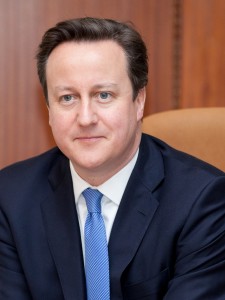
  • David Cameron – 2016 Speech on the EU Referendum

    davidcameron

    Below is the text of the speech made by David Cameron, the Prime Minister, at B&Q in Eastleigh on 23 May 2016.

    Thank you very much, thank you. Well, thank you for that and a very good morning. Great to be back at B&Q, and thank you all for coming today.

    This country has worked incredibly hard to recover from the recession of 7 years ago. Businesses have invested, people have taken risks, companies have come to this country, but above all the people of Britain have worked incredibly hard to get over that recession. And the 2 of us have worked together to try and put the right framework in place. Now we haven’t got every decision right, but the deficit is right down, the economy is growing, we’re creating jobs. Britain is making things again, and making its way in the world again. 2.4 million more people in work. We’ve got low inflation. We’ve almost got a million more businesses than when we first got our jobs in 2010. But yes, we still have a long way to go; yes, there is more to do. But I think there can be no doubt: Britain is on the right track.

    Now I don’t want us to do anything that sets us on the wrong track. After all, that’s really the job description of a Prime Minister: to safeguard the nation’s security. Exactly a month from today, we’re going to make a decision that will determine our future security. I believe that leaving the EU would put our security at huge risk, that it would be the wrong track for Britain.

    Why? Because, as we know, and as even Leave campaigners now freely admit, we’d lose full access to the European single market. We’d be abandoning the largest marketplace in the world, half a billion people. It’s a market which Britain helped to create, and which is the source of so much of our economic security. Inside that market, our businesses can trade freely and investors can invest here easily. That keeps our economy growing. That keeps our jobs safe, keeps the pounds strong, keeps our families secure. It means that a business from here in Eastleigh can get their goods to market anywhere in the EU, and get better access to all the places with which the EU has trade deals. So no Spanish importers saying to our manufacturers, ‘That doesn’t fit our regulations.’ No French minister saying to our farmers, ‘We don’t buy British beef.’ No tariffs, no barriers, just Britain doing what we need to do, getting out there and trading with our neighbours.

    Now leaving this arrangement, our special status in the EU, is a leap in the dark, because no one has said what we’d have in its place. Now we already heard last month, from the Treasury, that the long-term impact of leaving would be a cost to every household equivalent to £4,300. Today we publish analysis of what would happen in the short term, in the immediate months and years after a British exit. As businesses freeze up, confidence drains, uncertainty clouds over, and an economic shock shakes our nation.

    Now, the Chancellor will go into the details shortly, but I just want to focus on the impact it would have on your life, the job you do, the home you live in. Your weekly shop, your monthly bills. These things are all at risk. As the Bank of England has said, as the IMF has underlined, and as now the Treasury has confirmed, the shock to our economy after leaving Europe would tip the country into recession. This could be, for the first time in history, a recession brought on ourselves. As I stand here in B&Q, it would be a DIY recession. And it really matters to everyone.

    Someone actually asked, in this debate, the other day, you know, “That’s the economic case. What about the moral case?” But don’t they realise that the economic case is the moral case? The moral case for keeping parents in work, firms in business, the pound in health, Britain in credit. The moral case for providing economic opportunity rather than unemployment for the next generation. Where is the morality in putting any of that at risk for some unknown end? This government was elected just over a year ago to deliver security at every stage of life, to build a greater Britain out of a great recession, and, after all the pain, all the sacrifice of the British people, why would we want to put it at risk again? It would be like surviving a fall and then running straight back to the cliff edge. It is the self destruct option.

    So much of this debate is muddied and overshadowed by speculation about who says what about whom, and who’s in this camp or that camp. We need to strip away the drama, and focus on real life, because this isn’t about political parties or personalities or Prime Ministers. It’s about you, about your money and your life. The stakes couldn’t be higher, the risks couldn’t be greater, and, in my view, the choice couldn’t be clearer. Leave Europe and put at risk what we’ve achieved; stay in Europe, and stay on the right track.

    And now it’s time to hear that analysis of the short-term impact. So over to you, Chancellor.

    [The Chancellor’s speech is available here.]

  • George Osborne – 2016 Speech on HM Treasury Analysis of Leaving the EU

    gosborne

    Below is the text of the speech made by George Osborne, the Chancellor of the Exchequer, at B&Q in Southampton on 23 May 2016.

    Prime Minister, thank you very much.

    The Treasury has already published detailed analysis of what a vote to leave would do to Britain’s economy over the long term.

    And the results showed that Britain would be permanently poorer to the tune of £4,300 per household – £4,300 each and every year.

    That’s the long term bill for leaving the EU.

    But what about the immediate impact on our economy? What will it mean next month, next year? And what will it mean for you?

    Today the Treasury is publishing its detailed and rigorous analysis of the immediate impact of leaving the EU on growth, jobs, prices, wages, house prices and our nation’s finances.

    And the conclusion is that all would be hit.

    Why is that?

    Well, first households and businesses will know that Britain is going to be poorer in the future, so they’ll start cutting back on spending now, and avoiding big investments.

    And that has an effect on the economy now.

    Second, leaving the EU creates a huge amount of uncertainty.

    We’d have just two years to work out how to leave the EU; two years to find a new working relationship with our neighbours; two years to do trade deals with over 50 other non EU countries; two years to introduce a load of new regulations here at home.

    In other words, two years at the very least of complete uncertainty – and probably more.

    And what will British businesses be doing during those two years?

    They will be watching and waiting nervously.

    They will delay purchasing new machinery, put on hold making plans for new premises.

    They won’t take new people on; some will let existing people go.

    And what about families – how are they likely to respond?

    Families will also be uncertain about what is coming next.

    If you don’t know what’s going to happen to your job, your partner’s job, your pay or the fortunes of the firm you work for – it would make sense to delay spending on things.

    People will put off trying to buy a home, or starting their own business.

    Put together millions of individual decisions like that and there is real damage to the economy.

    And then there’s the impact on financial markets – and we’ve all learnt to our cost during the financial crash how that can affect us all.

    Markets would be volatile, banks would be more cautious, the value of things like shares would likely fall.

    So stack all these things together…

    the fact we’d be heading towards a poorer Britain,

    the fact we’d be surrounded by uncertainty,

    the fact the financial system would be volatile,

    and it builds up to a profound economic shock if Britain leaves the EU.

    The Treasury asked one of the country’s leading economists and a former Deputy Governor of the Bank of England, Professor Sir Charles Bean to review the work, and he concludes that it “provides reasonable estimates of the likely size of the short term impact of a vote to leave on the UK economy”.

    So what are the numbers from the Treasury analysis?

    Economists looked at two scenarios – one where Britain experiences a shock, the second where it’s a severe shock. Under both scenarios here are the results.

    This is what happens if Britain leaves: the economy shrinks,

    the value of the pound falls,

    inflation rises,

    unemployment rises,

    real wages are hit,

    so too are house prices,

    and as a result – government borrowing goes up.

    The central conclusions of today’s Treasury analysis are clear – a vote to leave will push our economy into a recession.

    Within two years the size of our economy – our GDP – would be at least 3% smaller as a result of leaving the EU – and it could be as much as 6% smaller.

    We’d have a year of negative growth – that’s a recession.

    The pound would fall in value – by between 12% and 15%.

    That doesn’t just mean it’s more expensive when you have a holiday abroad.

    It means everything we import becomes more expensive, which increases inflation and hits family budgets.

    Within a year of the Referendum, inflation would be over 2% higher.

    And let’s be clear who that would hit the most: the lower income families who spend the largest proportion of their income on things like food and energy bills.

    In the financial markets, tougher conditions would lead to higher mortgage costs for families.

    By 2018 house prices would be hit by at least 10% and as much as 18%.

    So that’s what it means to vote to leave the EU.

    Incomes fall.

    Mortgage rates go up.

    And the value of the family home falls too.

    Behind all this – what people can afford to buy, where they can afford to live – are people’s jobs.

    And so I want to talk to you about the impact on jobs too.

    The Treasury’s analysis published today finds that a direct consequence of a vote to leave the EU would be significant job losses across the UK.

    Within two years, at least half a million jobs would be lost.

    That’s 80,000 jobs in the Midlands.

    Over 100,000 jobs across the North.

    Over 40,000 in Scotland; over 20,000 in Wales; almost 15,000 in Northern Ireland.

    In London over 70,000 jobs would be lost.

    Here across the South, almost 120,000 jobs would go.

    And that’s the lower end of the estimates – across Britain as many as 820,000 jobs could be lost.

    As always, it would be young people leaving school and college, and those already in insecure work who would be hit hardest.

    Youth unemployment would rise by over 10%.

    And for those that stay in work, wages will be hit too as firms see their profits fall.

    The Treasury’s analysis finds that real wages will fall by almost 3% in the first two years compared to where they’d be if we remain in the EU.

    To put it in perspective – that’s a pay cut worth almost £800 a year to someone working full time on the average wage.

    The analysis today is clear: the uncertainty that would be caused by a vote to leave would put the brakes on investment, would cost over half a million people in our country jobs, and would cut people’s wages too.

    And of course, all of this would have a big impact on the nation’s finances and how much we have to spend on things we value like our NHS and schools.

    If we vote to leave, evidence shows that the deficit would be higher than it would be if we remain.

    The borrowing bill for leaving the EU would be between £24 billion to £39 billion a year.

    Let me end by saying this: it’s only been 8 years since Britain entered the deepest recession our country has seen since the Second World War.

    Every part of our country suffered.

    The British people have worked so hard to get our country back on track.

    Do we want to throw it all away?

    With exactly one month to go to the referendum, the British people must ask themselves this question: can we knowingly vote for a recession?

    Does Britain really want this DIY recession?

    Because that’s what the evidence shows we’ll get if we vote to leave the EU.

    And to those who say we should vote to leave I’d say this: you might think the economic shock is a price worth paying.

    But it’s not your wages that will be hit, it’s not your livelihoods that will go, it’s not you who’ll struggle to pay the bills.

    It’s the working people of Britain who will pay the price if we leave the EU.

    None of this needs to happen if we vote to remain.

    Yes, we’ve got improvements to make to the EU – but we know what they are and we’re clear about what the future holds.

    If we remain, major British car manufacturers will go on selling hundreds of thousands of cars to Europe tariff-free. If we remain, British farmers will go on selling their beef and lamb to Europe tariff-free.

    If we remain, British building firms will go on building homes, and people will have the confidence to do-up their own homes and shop with companies like yours.

    And if we remain, our economy won’t lose half a million jobs, but instead we’ll create more than a million jobs over the coming years.

    That is the brighter future on offer for our country.

    We’ve spent 6 years dealing with what happens when recession hits this country – we’ve got one month to make sure we don’t do it to ourselves all over again.

    One month to avoid a DIY recession.

    The Treasury analysis shows Britain will be stronger, safer and better off if we vote to remain in the EU on 23 June.

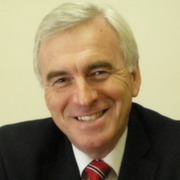
  • John McDonnell – 2016 Speech on the Economy

    John McDonnell GB Labour MP Hayes and Harlington

    Below is the text of the speech made by John McDonnell, the Shadow Chancellor, in London on 21 May 2016.

    Thank you very much for coming here today…

    I think this is the first event of its kind organised by a shadow chancellor.

    I wanted to lay out, briefly, our strategy on the economy.

    As Jeremy made clear this week, speaking at the Ralph Miliband lecture, Labour is not a party only of protest.

    Protest matters, and protests make a difference.

    I hope we’ve shown, over the last eight months, how an effective Opposition can make a difference.

    We’ve helped win U-turns on cuts to tax credits, cuts to disability payments.

    We’ve won U-turns on forced academisation.

    The government has U-turned on cuts to solar panel subsidies, and on the tampon tax.

    They’ve U-turned on Sunday trading, and on taking child refugees, and now even on the inclusion of the NHS in TTIP.

    It’s almost dizzying, watching them from the opposite benches.

    That’s what an effective Opposition can help do, alongside the protests and the movements outside of Parliament.

    But it’s not enough to block and protest.

    If we want to make a lasting difference to people’s lives, we have to offer an alternative.

    So Labour is not only a party of protest.

    It is a party of government.

    The Tories may be in disarray. But even as they fight like rats in a sack over Europe, they will agree on one thing.

    That is the need to tear up hard-won rights, and smash up the civilising institutions previous generations have won.

    From the BBC to the NHS, from our schools to the welfare state, nothing remains safe whilst they are in power.

    That means we have a responsibility to show the British people how Labour is not just an effective opposition, but a credible alternative government.

    We will defend the good that has been won already.

    But we can go further than this.

    We should aim to show how we can improve on what we have.

    Labour’s great reforming governments have always had a vision, whether in creating the NHS, or introducing the first national minimum wage.

    When we return to government, we must aspire to be another great reforming administration.

    I want us to surpass even the Attlee government for radical reform.

    The situation demands nothing less. Simply undoing the damage inflicted by David Cameron and George Osborne will be a huge task.

    But we should aim higher than this.

    Not just cleaning up the mess and addressing the challenges, whether that is inequality or climate change.

    But making the most of the opportunities that could be opened up.

    New technology and new ways of working could help create a better, more prosperous society.

    Our whole society could do so much better than we are.

    What we’ve attempted, over the last eight months, is to lay out the framework by which Labour can win the next election and then set about the fundamental business of transforming capitalism.

    We should aim at nothing less than that.

    It’s important that we state our objective clearly.

    Our aim is that is that in the life of one Parliament we lay the foundations of a new society that is radically fairer, more equal and more democratic, based upon a prosperous economy which is economically and environmentally sustainable and where that prosperity is shared by all.

    And we aim to introduce a new era of transformative economics to achieve that goal.

    That means we have to be ambitious. We have to “rewrite the rules” of the economy, in the words of Economic Advisory Council member Joseph Stiglitz.

    The old rules have failed too many.

    They have meant rising inequality, and wasted talent.

    Prosperity has become too concentrated in the hands of too few, and the best opportunities in life restricted to a gilded set at the top of society.

    We have trampled all over the natural world, and squandered its resources.

    This is a bigger project than offering just a few appealing policy tweaks here and there.

    It means striving for a transformation in how capitalism in Britain operates.

    That means a fundamental shift in how future governments relate to the economy.

    We are a long way from the election. But in outline this rewriting of the rules has three parts.

    First, we need to make an absolute commitment to responsible financing by a future Labour government.

    Let me spell out what that means.

    The old rules meant the last Labour government relied too heavily on tax revenues from financial services, and too heavily on off-balance sheet spending through the Private Finance Initiative.

    It didn’t do enough to clamp down on tax evasion and avoidance.

    It helped create an unfair tax system.

    In Opposition today we are doing all we can, here and at an EU level, to hold this government of tax dodgers to account.

    This country will no longer act like a tax haven for the super-rich under Labour. And nor will those other places it exercises jurisdiction over.

    And on the other side, it means every penny of government spending will be accounted for.

    Unlike the current government, we won’t gamble with the nation’s finances, setting unachievable targets and leaving black holes in their accounts.

    If we don’t show that we are responsible custodians of the people’s money, they will not give us the right to govern.

    We can reject the dreadful choice of austerity and maintain solid government finances.

    We’ve enshrined these commitments in our Fiscal Credibility Rule, drawn up with help from the world-leading economists on our Economic Advisory Council.

    This Rule says we will close the deficit on day-to-day spending over a five year period, but we’ll make sure government has the capacity to invest in the future.

    If there was a single biggest failure for George Osborne, it has been his failure to invest.

    But he is the worst of a long tradition of weak investment by British governments. We want to break with that.

    Investment is the key to shared prosperity now, and in the future.

    We’re not just a Party that thinks how to spend money.

    We need to be a Party that thinks how to earn money.

    The clue is in our name. We are the party of labour – the party of the wealth creators, of technicians, designers, machinists, entrepreneurs, the self-employed – the party of workers and small businesses.

    Second, we need to reshape how government and the economy relate to each other.

    Another Economic Advisory Council member, Marianna Mazzucato has written about how what she calls the “entrepreneurial state” can help support new industries and technologies.

    This breaking with the failures of the hands-off approach.

    We’ve seen, just in the last few months, what happens when a government thinks a vital industry like steel can be left to the mercies of the market.

    It means plant closures and job losses, devastating communities.

    It means a key industry for the future left on the brink of disappearance.

    We responded rapidly to the steel crisis, arguing that government had to step in.

    To nationalise to stabilize the industry.

    Use government spending to buy steel from British plants, protecting jobs here.

    And work with, not against, our European partners to stop the dumping of cheap steel.

    I’m pleased to see our do-nothing Business Secretary has been forced to respond to pressure to act.

    But we need to think beyond crisis management.

    If, for instance, we’re serious about seeing a shift towards a low-carbon economy, we’ll need to transform how we produce and use electricity.

    More public transport and more renewables have to be a part of the mix.

    And that has to mean supporting a steel industry here.

    So we’re not just seeing industrial policy as a response to crisis.

    Too many governments in the past, and not just this one, thought government should only intervene when something goes wrong.

    We think government intervention should be there to make sure things go right.

    The swift actions taken by the previous Labour government, for instance, to support the car industry in the aftermath of the 2008 crash mean that, today, Britain exports more cars than ever before.

    So we know intervention can work. We have to apply it properly.

    Jeremy has argued before for a National Investment Bank.

    This could supply the investment needed for the big infrastructure projects, like high speed rail, that form the backbone of a modern economy and in which Britain is sorely deficient.

    It can help local and regional institutions provide the financing for our small businesses, still starved of funding by our existing banks.

    And we’ll look for ways to ensure new technologies get the funding they need not just for research but for dissemination and adoption.

    Renewables in particular need attention.

    As we develop our policies, we’ll be drawing on the best research and expertise to show how this new institution could work

    We must overcome the arrogance and isolation of government.

    Civil servants do not always know best. Nor do politicians.

    Too many governments in the past have believed that they do.

    But it should be fundamental to a genuinely democratic approach to economic policy that governments are there to bring people together, to facilitate discussion and to listen.

    Not to impose, but to seek consensus.

    When we return to government, I’ll be looking to set up an Economic and Innovation Forum which will provide a space where representatives of businesses, unions, and wider civil society can come together with government at a national level.

    We’ll create a real partnership in policymaking.

    We will restore that line of communication right from the shop floor, the office, the studio and the R and D department to the heart of government.decision making.

    We think we are far more effective when we work together, when we co-operate.

    But intervention can take place not only at the national level.

    Pioneering councils, under the cosh of Tory austerity, are having to think creatively about how to deliver local services and secure the local economy.

    Transformative councils like Preston in Lancashire are developing a “local entrepreneurial state”. The council there is working with major local institutions, like the university, to help support the local economy.

    Procurement spending is being rerouted back into local businesses. They’ve provided a multi-million pound boost to the economy in Preston and beyond.

    Alongside that, they’re helping workers set up co-operatives to sustain local employment.

    We think this bottom-up approach can be applied more widely.

    Take the scandal of the housing crisis.

    At the national level, Jeremy has made the shadow housing minister a fully-fledged shadow cabinet post for the first time in years.

    This reflects the high priority we are giving to housing and solving the serious housing crisis.

    Sadiq Khan has rightly highlighted the issue of housings costs in London.

    The cost of housing in London is arguably the biggest single blight on this city.

    Many, particularly young people, who are unable to get onto the housing ladder are then at the mercy of an unforgiving, unrestrained housing market.

    Other urban areas are suffering from skyrocketing rents.

    We’ll look to give local authorities the powers to impose rent regulation to secure fair rents where these are needed as Labour committed itself to at the last election.

    We know the supply of housing is simply not sufficient to meet demand.

    My colleague the shadow housing minister John Healey has set out his plans to build 100,000 new council houses a year, funded from savings in the Housing Benefit bill.

    With fewer new social rented homes built last year than at any time in over two decades, it will be a top priority for a Labour government to reverse the short-term and counter-productive cuts in housing investment made by George Osborne.

    But we have to also meet the aspirations of people to own their own home.

    We are also looking at how we can reverse the freefall decline in home-ownership amongst young people.

    There are now a third of a million fewer home-owners under 35 than when David Cameron became PM, and the biggest drop is among working class young people.

    We know that part of the reason why the Tories are failing on home-ownership is that their support is not targeted at those who need help the most.

    Thousands of households earning over £100,000 a year have benefited from the government’s ‘help to buy’ scheme, while their so-called ‘starter homes’ will cost up to £450,000 each.

    So Labour would make it a mission to ensure families and young people on ordinary incomes aren’t locked out of home-ownership as they are under the Tories.

    It is Labour councils providing innovative solutions to the housing crisis.

    Councils in Manchester, Warrington and Sandwell, offering cheap, local authority-backed mortgages to first-time buyers in particular.

    With too many first-time buyers excluded from the housing market by high-street banks, we’ll be looking at ways to securely expand local authority mortgage lending.

    We need action now to solve the housing crisis.

    With Mayors elected across major cities in this country, and more Mayoral elections to follow, there is a new enthusiasm and capacity to take the initiative locally.

    Bristol’s new Mayor, Marvin Rees, and his administration have announced plans to build 2,000 new homes every year.

    They’ve immediately released land the size of 80 football pitches for new building.

    Along with Jon Trickett, our Shadow Secretary of State for Communities and Local Government, I will be convening a Mayors’ Economic Forum to bring together local leaderships to participate in the development of economic policy making.

    For the first time, national economic policy making will be influenced directly by local decision makers representing their metropolises and local communities.

    Clearly one of our first agenda items will be solving the housing crisis.

    We can all learn from each other in this, but we need mechanisms to make it happen.

    This leads to the third policy area.

    We need to unlock the potential of the whole economy, and society.

    The economic institutions that we have were developed in an earlier age.

    Too many of them are not fit for purpose in the 21st century.

    Our banking system failed in 2008 and still fails too many small businesses today.

    As Lord Turner has detailed, it pumps lending into the property market, but fails to invest in the productive economy.

    No other major developed economy has a banking system so dominated by a few corporations.

    We need to end that domination, developing a range of new institutions including the National Investment Bank.

    We need to make sure every part of our economy has access to the financing it needs, not concentrate it in one sector and in one place.

    Similarly, the fixation on shareholder value and short-term results means that our giant corporations are sitting on giant cash piles – perhaps up to £700bn.

    Instead of investing money productively, creating new jobs and opportunities, our corporations are hoarding cash.

    And those responsible for running them are paying themselves obscene amounts of cash.

    Shareholders have risen in revolt against excessive executive pay.

    I think we need to open up the whole question of how our major corporations are structured.

    Put an end to the short-termism. End the fixation with shareholder value. Start to think how employees and customers can be brought into the decision-making process.

    These aren’t just good in themselves. There is a hard-nosed economic case for addressing these questions.

    We know that there is a clear boost to the economy from worker ownership and management.

    One recent academic literature thinks worker-managed companies enjoy a productivity bonus of 6-14%.

    I’ve said I want to at least double the size of the co-operative sector in Britain.

    Similar economies like the US and Germany make far more use of co-operatives than here.

    There is a long labour movement tradition in Britain of support for grassroots ownership and decentralized economies, from the Rochdale Pioneers onwards.

    That tradition has been buried for too long. After the Second World War, Labour adopted a model of centralized ownership and control for the economy.

    This model worked well enough, for a time. But it always had problems.

    Today, the proliferation of small-scale and digital technology can grant a new lease of life to the tradition.

    From community-owned renewable generation to open source software, collective and shared forms of ownership can provide fairer and more efficient ways of working than the older business models.

    So the future has an ancient heart.

    I’ve said before that democracy and decentralization must be the centerpiece of our economic policy.

    From the ground up, we can start to transform how capitalism in Britain works.

    Previous Labour governments were content to only think about how to redistribute income.

    Today, technological change means we have to think more closely about ownership.

    I’ve spoken before of moving beyond the Tory Right to Buy and creating a Labour Right to Own.

    This can be at the centre of our offer to Britain.

    A radical decentralization of economic power and authority back to working people and local communities.

    If we are to make all this work, we have to go beyond simply thinking we can pull the levers of government, and expect to deliver results.

    The machinery of government that we have for overseeing the economy is looking increasingly rusty.

    Those levers cannot be relied on.

    We have an HMRC that, time and again, lets major corporations off the hook when it comes to their taxes – whilst hounding hard-pressed small businesses.

    I want to pay tribute to the staff of Revenue and Customs, who have been cut and cut again by Osborne.

    Staff at HMRC generate revenues. Cutting their numbers is self-defeating.

    But serious questions have to be raised about its management.

    Economists from across the political spectrum are questioning whether, after 2008, we need a new way of making monetary policy.

    Andy Haldane, chief economist at the Bank of England, has raised interesting future possibilities for monetary policy, including more quantitative easing and even negative interest rates.

    The current architecture was established in 1997. We can raise a legitimate question as to whether the Monetary Policy Committee’s remit still fits changed circumstances.

    And then at the heart of economic policymaking in Britain sits the Treasury.

    Its powers, already expansive under Gordon Brown, have grown hugely under Osborne.

    It dominates not just economic policy, but the whole of domestic policymaking in Whitehall.

    Its staff are talented and dedicated. But, time and again, it has faced serious questions about its own role.

    Is it too short-term in its outlook? Too focused on London? Too unimaginative in its approach?

    Iain Duncan Smith has even gone so far as to call it “the worst thing in Britain”.

    I’ve commissioned a series of reviews, led by experts, to report on the functioning of these three critical institutions.

    Lord Kerslake, former head of the civil service, is reviewing the Treasury.

    Professor Prem Sikka is reviewing HMRC.

    And Professor Danny Blanchflower is conducting a review of the Monetary Policy Committee.

    All three will report back over the next period, and make recommendations that will feed into our own policymaking.

    We are creating our own architecture for sound economic policy making and implementation.

    Even in outline, this is a bold programme.

    But economics isn’t a spectator sport.

    I’m heartened to see so many here today, just as hundreds upon hundreds have turned out across the country for the lecture series.

    Everyone here has a critical role to play.

    Fundamentally, we have to reshape the narrative on the economy.

    It’s been dominated for too long not only by the ludicrous claims of the austerity-mongers.

    Going back further, it’s been the dominated by a particular belief that free markets are fundamentally always right, and that free market outcomes are always the best.

    We have to break with that.

    But that means winning the argument.

    It means all of us being prepared to take on and challenge the arguments when they arise.

    It means we’re all ready to make the case for a different way of doing economics, based on the best possible expert advice and with a clear vision for the future.

    So the debates and discussion we hear today aren’t supposed to stay on this campus.

    They need to be taken to every town and village in the country.

    If we want to realise the kind of programme I’ve laid out, we need to be prepared to take that message to every corner of the country.

    I’m convinced there’s a real thirst out there to see something new.

    You don’t need to spend too long convincing most people that things aren’t working as they should.

    But unless we have a credible alternative, and the people prepared to make the case for it, we won’t be able to change how things work.

    It doesn’t mean shouting and berating those who disagree with us, but patiently explaining how we can do things better.

    So I think this conference should be the first of many.

    Slowly but surely, we need to reshape the discussion.

    Each one of us has an important role to play in this.

    We need you all to help raise the quality of economic discourse in this country.

    We need you all to be the advocates of the transformative economics we are developing to achieve that fairer, more equal, more democratic, sustainable prosperous society we aspire to.

    And as we approach the election, we will work together to sharpen and develop our ideas collectively.

    If the Tories are the party of a failing past and present, Labour must be the party of the future.

    If the Tories are the party of fear, Labour must be the party of hope.

    That’s what this conference today is all about.

    Let’s go to it.

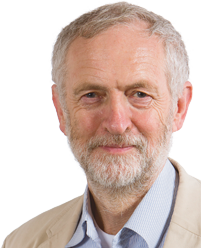
  • Jeremy Corbyn – 2016 Speech on the Economy

    jeremycorbyn

    Below is the text of the speech made by Jeremy Corbyn, the Leader of the Opposition, in London on 21 May 2016.

    Thank you all for coming today to Labour’s inaugural State of the Economy Conference … Thank you to John and his Shadow Treasury Team for organising

    Thanks in particular to Ha-Joon Chang … for his terrific speech on building a balanced and sustainable economy.

    And to Sue Himmelweit, Paul Mason, Linda Yueh, Adam Marshall and Len McCluskey for their engaging discussions …

    And thank you … most of all … to all of you who took part in the various workshops this afternoon … Debating some of the most important issues facing our economy and our society.

    These discussions are invaluable.

    It is only through active debate – like we’ve had today – between politicians and businesses … employers and employees … thinkers and educators … that we can build an economy for the future that delivers for all.

    I’ve said before that we must change the way our party makes policy.

    When politicians and their advisers sit round a table and devise policy … they rarely succeed in getting to grips with the real problems our country faces.

    We need to involve more people in decision-making and consult far more widely outside politics.

    I believe it’s essential to listen:

    To the growing army of the self-employed … often struggling to make ends meet, and falling through the cracks in our social security system;

    to entrepreneurs seeking to innovate and create wealth;

    to trades unions who stand up for workers’ rights;

    to our friends from progressive movements in countries across the world;

    to academics; and

    to business people shaping a more dynamic, responsive economy.

    Only by engaging and debating these crucial issues … as we have done today … can we develop a comprehensive plan … to forge a new economy and the kind of Britain we want to live in.

    I think we’ve come a long way already in the eight months since I became leader … John McDonnell, has started to lay out the framework of a new economics.

    As John repeated today … an economy that allows people to flourish and prosper in the 21st century will be a very different kind of economy from that of the 1990s … let alone the economy of the 1940s or 1960s.

    Building an economy for the future requires bold ambition … A New Economics … And that’s what today has been about.

    Looking forward … And tackling – head on – the reforms necessary to build a fairer, more equal, more just society.

    Today we’ve discussed the state of the economy. And the sad truth is… the economy is in a bad state.

    What’s clear is that this government is not creating the economy of the future we need … Six years ago George Osborne said austerity would wipe out the deficit and cut the debt.

    That’s the wonderful thing about George Osborne’s five year plans … they’re always five years away.

    What we have instead is an economy that works for the few, not for the many.

    Inequality is rising … And food bank queues are growing.

    We’ve seen an explosion of zero hour contracts … and a race to the bottom on pay, job security and workplace rights.

    A gender pay gap that is still wedged at 19 per cent.

    Despite George Osborne’s promises of a ‘March of the Makers’ … we have a government that won’t stand up for key strategic industries … like steel.

    Instead, they sought to abdicate their responsibilities when it came to the crisis in the steel industry …

    And it was only concerted pressure from the trade unions, from Labour MPs and from the steel communities that forced the government … kicking and screaming … into a change in position.

    The security of home ownership is moving further and further away for so many people.

    We have a government that … despite the growing economic consensus against austerity …. despite the fact the Prime Minister tells us we now have a ‘strong economy’ … is continuing to pursue spending cuts.

    A government that is failing to invest in our public services … leading to a crisis in our NHS.

    A government that is failing to invest in critical infrastructure.

    A government that is failing to invest in the skills that our young people want … and our businesses need.

    And let’s be clear. Austerity is a political choice not an economic necessity.

    Even Iain Duncan Smith is now parroting our mantra … saying after the Budget that Osborne’s cuts were … “distinctly political rather than in the national economic interest”.

    The Chancellor has utterly failed against every single one of its economic targets …

    · They have failed to eradicate the deficit

    · Failed to meet their target on the debt

    · Failed to rebalance the economy

    · Failed to address the productivity crisis

    This government has consistently made the case for austerity … George Osborne has staked his economic credibility on his austerity economics … and they are failing to deliver.

    But worst of all, this government does not seem to understand … that their cuts have consequences

    … when you cut adult social care … it means isolation and a loss of dignity for older and disabled people… and it piles pressure onto an NHS that is already being overstretched

    … when you saddle young people with more debt … you impede their ability to buy a home or start a family

    … when you fail to build housing and tackle sky-high rents … then homelessness increases and the number of families in temporary accommodation increases.

    … when you slash the budgets of local authorities … then leisure centres close … libraries close … children’s centres close

    … when you close fire stations and cut firefighters … then response times increase and more people die in fires.

    These are the very real consequences of the politics of austerity.

    Being in opposition can be frustrating … but Labour has proved you can still have influence and make a difference.

    We have forced the government to back down in a number of important areas … from tax credits to disability payments … and, most recently, to forced academisation.

    Together as a country … we must continue to stand up against the Conservative six year record of mismanagement of the economy …and stand up for the vital services on which we all depend.

    But what Labour stands for is far more than stopping the damage being done by this government.

    We want to see a break with the failed economic orthodoxy that has gripped policy makers for a generation … And set out a clear vision for a Labour government … that will create an economy that works for all, not just the few.

    We must be ambitious and bold to win the next election … and deliver the new economy that Britain needs.

    … An economy that tackles the grotesque inequality that is holding people back.

    … An economy that ensures every young person has the opportunities to maximise their talents … And that produces the high skilled, high value and secure jobs, they need.

    … An economy that delivers new, more democratic forms of ownership.

    … A zero-carbon economy that protects our environment.

    … A balanced and broad-based economy … supported by investment and a proactive industrial strategy that devolves decision-making to where it needs to be.

    We want to see a genuinely mixed economy of public and social enterprise … alongside a private sector with a long-term private business commitment … that will provide the decent pay, jobs, housing, schools, health and social care of the future.

    An economy based on a new settlement with the corporate sector that, yes … involves both rights and responsibilities.

    Labour will always seek to distribute the rewards of growth more fairly … But, to deliver that growth demands real change in the way the economy is run.

    Change that puts the interests of the public, the workforce and the wider economy … ahead of short-term shareholder interest.

    Wealth creation is a good thing: we all want greater prosperity.

    But let us have a serious debate about how wealth is created … And how that wealth should be shared.

    It is a co-operative process between workers, public investment and services, and, yes … often very innovative and creative individuals and businesses.

    So if wealth creation is a shared process … then the proceeds must be shared too.

    Technology is changing the way we work … Digital technology and robotics are transforming jobs and whole sectors of the economy.

    Globalisation means that greater international trade is altering where jobs are based … and where workers are in demand.

    Work for many has become insecure … and we want to change that because we believe that a happier, more secure workforce is a more productive workforce.

    That’s why I was at Ecotricity in Stroud on Thursday … launching Workplace 2020 alongside our shadow Trade Union minister Ian Lavery … and our shadow Business Secretary Angela Eagle … to kickstart a national conversation about what the world of work should look like in 2020.

    Only an economy that is run for all wealth creators … the technicians, entrepreneurs, designers, shopfloor workers, and the self-employed … and that puts them in the driving seat … is going to deliver prosperity for all.

    John McDonnell talked this morning about rewriting the rules of the economy … Because the old rules have failed.

    The old rules – Tory rules – have led to a lack of investment in our economy, which is failing our communities.

    They’ve led to a government that has failed to tackle our unbalanced economy … They are failing to support key strategic industries … like our steel industry.

    They have failed to invest in the infrastructure that communities across the country desperately need.

    They have failed to invest in housing … The government says it aspires to build a million new homes … The reality however is that housebuilding has sunk to its lowest level since the 1920s.

    They have failed to invest in developing the skills our young people deserve and our businesses need.

    The old rules mean failing to invest in Britain’s future.

    A Labour government will make different choices.

    If we want to create the economy of the future … then government has a vital role to play in making the long-term, patient investments … that are the foundations of long-term prosperity.

    We want to see the reindustrialisation of Britain for the digital age … That means putting public investment front and centre stage …. driven by a National Investment Bank as a motor of economic modernization … based on investment in infrastructure, transport, housing and the technologies of the future.

    John also talked this morning about the need for greater democratisation and decentralisation.

    This includes the contribution that co-operatives can make to our economy … to empower people to come together to take control of their own lives

    This is the complete opposite of the Conservative devolution plans … passing responsibility without the support and resources to enable people to take control.

    John has rightly talked about establishing a “right to own” for workers … to stop jobs and companies being treated like possessions on a Monopoly board … and to give workers the first refusal on taking over a company when it changes hands.

    The New Economics is also about economic justice.

    People expect companies that trade in this country … and people who live in this country … to pay their tax in this country … It funds our public services.

    Aggressive tax avoidance and tax evasion are an attack on the NHS, on schools our care for elderly and disabled people and the social security system that prevents poverty, homelessness and destitution

    So I’m very grateful to Professor Prem Sikka who is reviewing HMRC for us to ensure it has the resources it needs to tackle this endemic problem … and to our Labour MEPs who are leading the tax justice fight in Brussels.

    I’m equally grateful to Danny Blanchflower for the work he’s doing to review the Monetary Policy Committee … and to Lord Kerslake who is reviewing the Treasury

    The machinery of government overseeing the economy must be fit for the reality of today’s economy.

    We believe that economic justice and economic credibility must go hand-in-hand … Which is why all our plans are underpinned by Labour’s Fiscal Credibility Rule … agreed following discussions with the world-leading economists on our Economic Advisory Council.

    Our rule makes clear that we will ensure solid public finances … while rejecting the politically motivated austerity that is strangling investment … and choking prosperity.

    We need a Labour government that will put investment, productivity and sustainable growth first … alongside a 21st century industrial policy.

    That is how we will provide the economic security that the Tories are failing to deliver.

    … Security and investment in jobs and skills.

    … Security and investment in housing.

    … Security and investment in our NHS and our schools.

    … And, yes, security and investment in our public finances too.

    We have the opportunity to build a fairer, more equal, more prosperous economy.

    But we must be bold and ambitious in our approach.

    It was the radical Labour government of 1945 that delivered so many of the social achievements of which we Labour members are so proud … the National Health Service, the welfare state, council housing, comprehensive education … institutions that were about the collective improvement of all.

    And we must harness that radical spirit to build an economy for the 21st century.

    This morning John laid out the framework developed over the last eight months … by which Labour can win the next election.

    It is a bold and ambitious programme.

    I don’t underestimate the scale of the task in front of us.

    There is no point being in politics if you are not ambitious not for yourself but to make your community your country and our world a better and more just place.

    And it’s a programme that we will continue to refine … With your help.

    As I said at the start … we need to involve more people in decision-making … and consult far more widely outside politics.

    It is essential that we continue a rich and diverse debate on these fundamental issues … To continue to build the New Economics from the ground up.

    So I hope you will all continue to engage in these important discussions and to contribute to this debate … to continue building a platform for economic and social justice.

    Thank you for your contributions today … and in the future.

  • Richard Holt – 1984 Speech on Alzheimers

    Below is the text of the speech made by Richard Holt, the then Conservative MP for Langbaurgh, in the House of Commons on 9 April 1984.

    One thing that all hon. Members would agree, irrespective of politics, is that we wish each other long and healthy lives. In doing so, we always regard our responsibilities and duties to society.
    There is today a slowly growing awareness of a disease called Alzheimer’s disease, which was first diagnosed in 1907 and which has taken 75 years to become the subject of comment in the House. Alzheimer’s disease is the most common form of dementia. It is incurable and irreversible. Dementia is a progressive decline in the ability to speak, to think, to remember and to learn, with an accompanying loss in the capacity for deliberate actions and movement. A once active and responsible adult will no longer remember his spouse and children, will not be able to maintain even a simple conversation, will become disoriented, even in the familiar surroundings of his home, and completely incontinent. In short, as an adult, he will revert to infancy.

    Dementia is not a normal part of the ageing process. Rather, it is a disease with a variety of causes and a wide range of symptoms. The likelihood that an individual will be affected by a dementing disorder increases with age, but this does not mean that it is inevitable.

    Alzheimer’s disease and stroke-associated or multi-infarct-dementia, which together account for 85 per cent. of all the incurable dementing illnesses, should be diagnosed only after the exclusion, by a series of tests, of other causes of the problem, such as poor nutrition, metabolic disorders, side effects of drugs, chronic alcohol abuse and so on. Diagnosis of AD, with all its catastrophic implications for both sufferer and family, is too often made without adequate investigation.

    It is late and we have had a long day, but I would not be doing full justice to the sufferers of Alzheimer’s disease, and more importantly to those who will suffer in future, if I did not to some extent underline the problems by referring to case histories. It would, of course be wrong in any way to identify the affected people. In one instance a man aged 38 —Mr. D, a qualified architect with a large well-known company — contemplated group and individual suicide on learning that he had AD. His wife is totally unable to cope with the change in her family life. That is an unusual and rare case, because it affects someone in a younger age group. Normally, the disease is found in older people. Obviously, the greatest stress affects not only the sufferers but their loved ones.

    I have a short letter that I wish to place on record. It states: I am very sorry but your wife has Alzheimer’s Disease. Unfortunately there is no cure. A lot of care will be needed. A simple statement. I had stopped work because I could not cope. My wife had shown a lack of interest in household affairs which was quite out of character. After a few months she lost the ability to carry out the most simple household tasks. Any attempt to teach anew was met with anger and tears. Dressing became very difficult, but when assistance was given, she replied with anger and not thanks. This was very perplexing after years of close relationship.

    As the disease had progressed, toilet and bathing became a problem. The use of the toilet was forgotten, and I had to insist on regular visits. When assisting with the removal of clothing extreme anger was displayed. The problem is worse when a wife is required to deal with her husband; the stronger and aggressive male usually wins, making the toilet problem a nightmare. My efforts to see to my wife in the bath were frantically resisted. Hair washing was a particular problem, and rinsing off shampoo was rewarded with screams as the water flowed over her face. This was a very frightening experience and had to be handled with care. Toilet problems were at their worst when away from home. My wife quite often entered the conveniences and refused to allow anyone to help her to use the toilet, usually with disastrous results. Such events continue until finally the person ebbs away and dies. That report was written not by an emotional, unrealistic person, but by a senior police officer who had to retire from the police force to look after his wife in this sad and demented state.

    The cause of this condition is not known. It is only after a person has died, when there is a post-mortem, that it can be shown absolutely for sure that he has suffered from Alzheimer’s disease, but the likelihood is that when the symptoms manifest themselves, the person has begun on a course that ultimately results in death.

    There is the mild period, followed by the moderate period, followed by the severe period. The average length of life after the disease has been diagnosed is about two and a half to five years. Some people have been known to live longer, but that means that the deteriorating period is more severe and, equally, that the strain on those responsible for the individual’s care is even greater.

    In Cleveland, in my constituency, we have today a branch of the Alzheimer’s Disease Society which is working wonders in providing a form of adult creche to enable those suffering from the dementia to be brought in and looked after on a daily basis, thereby enabling the carers themselves to have time off, for surely when the disease strikes one member of the family it equally strikes another.

    I have known of people who have suffered from dementia and have seen for myself how they have deteriorated and died in a most miserable way. Twelve months ago, before I came to this House, I had never heard of Alzheimer’s disease and did not know what it was. It has only recently been brought to my attention. During the past week, since my name appeared for an Adjournment debate on the subject, I have been spoken to by many colleagues, some with knowledge of relatives who have suffered and died from Alzheimer’s disease, and others who were totally unaware of what the disease was and what its manifestations caused. It is because of that latter group of people that I have taken the opportunity of an Adjournment debate to bring to a wider audience the need for an understanding of it.

    Everyone in society today, I believe, understands what multiple sclerosis is and what the initials MS stand for, and can recognise symptoms in people and know the care that is required. Regrettably, there has been far too much confusion historically between the normal ageing process and Alzheimer’s disease, to such an extent that we as a society have failed so far to provide sufficient care, to obtain sufficient knowledge, or to do sufficient research into the subject.

    I do not make a special plea for additional funds and resources for Alzheimer’s disease over and above the many other worthy causes which require as much funding as they can be given, but I urge upon the Government, upon all hon. Members of this House, and upon people beyond this House, a greater understanding and awareness of the problem. It is one which can and will affect as many as one in 10 of our population. We have an aging population. Therefore, the manifestations will become greater. It is an incurable disease as things stand at the moment. Research is being carried out and many people are now turning their attention to seeing whether there is any way in which there can be a diagnosis in the first instance and a cure in the second. But until such time as either of those things come to pass, it is incumbent upon us to make sure that all people become more widely aware of the problems of Alzheimer’s disease and the associated problems for the people who have to care for those who are suffering from that disease.

  • Sajid Javid – 2016 Speech on Manufacturing

    CBI Conference

    Below is the text of the speech made by Sajid Javid, the Secretary of State for Business, Innovation and Skills, in Sheffield on 19 May 2016.

    Master and Mistress Cutler.

    Lord Lieutenant.

    High Sheriff.

    Lord Mayor.

    My lords, ladies and gentlemen.

    Let me start by thanking the Senior Warden for being so forthright in his remarks.

    I always knew Yorkshiremen were direct!

    But I was genuinely interested in what John had to say.

    Because I’m not just here tonight to talk.

    I’m here to listen.

    After all, good friends are open and honest with each other.

    And I hope that, 20 minutes from now, you’ll appreciate that I’ve been candid with you too.

    I know that might not be easy for all of you.

    I can think of a few reasons why not everyone in Sheffield will be delighted to hear from me this evening!

    For one thing I’m a proud member of the Conservative Party.

    It’s OK, you can boo if you want.

    I’m also a big fan of the late Lady Thatcher.

    When she spoke at this dinner 33 years ago she was greeted by 2,000 protesters being held back by mounted police.

    It was one of the warmer welcomes she received in the north of England!

    But if all that wasn’t bad enough, I have one more sin to confess to the good people of Yorkshire.

    I come, originally, from a distant, foreign land.

    A place many of you will find strange.

    A little primitive.

    Even a little scary.

    That’s right.

    I’m a Lancastrian.

    I was born under the Red Rose, in Rochdale.

    And the highlight of my year as Secretary of State for Sport was walking out from the pavilion at Old Trafford.

    For that, I can only beg your forgiveness.

    More than 400 years ago, calligrapher Peter Bales wrote that “for a good knife … Sheffield is best”.

    That was back in 1590, half a century before the Cutlers’ Feast became an annual event.

    Yet even then Sheffield’s name was forged into the public imagination as a byword for quality in manufacturing.

    In 2016 that’s still the case.

    The companies represented in this hall tonight are some of the finest engineers and metalworkers not just in Yorkshire or Britain but in the world.

    But that doesn’t mean Sheffield itself has remained unchanged for half a millennium.

    Ask many young people what this city means to them and they won’t mention heavy industry at all. They’ll talk about the offbeat nightclubs. The Devonshire Quarter. Warp Records.

    Business leaders will talk about the cutting-edge R&D and world-class universities.

    Elite sportsmen and women will tell you about Ponds Forge or the Olympic Legacy Park.

    Sheffield’s story has always been one of regeneration, reinvention and renewal.

    Not forgetting the past or ignoring it, but building on it.

    Learning from it.

    Shunning conventional wisdom and focusing on what works.

    That’s what makes this city so successful.

    That’s what makes your businesses so successful.

    And at risk of blowing my own trumpet, that’s what’s made our government’s support for industry so successful too.

    That’s why I was slightly puzzled by the Senior Warden’s suggestion that Britain is crying out for an industrial strategy.

    Because we already have one.

    You can argue about what it should contain, what it should seek to achieve.

    But you can’t deny that it exists.

    My department has had a fully functioning industrial strategy for several years now.

    Working with business we’ve taken real action to put in place the strategic support that British industry needs.

    We’ve set up the Aerospace Technology Institute.

    The Advanced Propulsion Centre.

    The Automotive Investment Organisation.

    The Infrastructure and Projects Authority.

    Today I visited the Advanced Manufacturing Research Centre, which we’ve supported with hundreds of millions of pounds.

    There’s the Nuclear Industry Council and the Offshore Wind Investment Organisation.

    We’ve launched Catapult Centres, Innovation Centres and Catalyst Funds.

    A short walk from Cutlers’ Hall stands the headquarters of the British Business Bank.

    That is what an industrial strategy looks like.

    And the results are clear to see.

    Manufacturing employment is up.

    Manufacturing exports are up.

    Manufacturing output is up.

    All that in the face of an intensely competitive global market.

    So I believe in industrial strategy all right.

    I just think one that delivers growth and jobs is better than one delivers stagnation and decline.

    And that applies to ALL industries, not just a chosen few.

    Sheffield is still a manufacturing city in the UK’s manufacturing heartland.

    But it’s also a city of vibrant, thriving cultural industries.

    It’s home to a rapidly growing tourist industry.

    To a retail sector that, from Meadowhall to Fargate to Division Street, employs tens of thousands of people.

    And all those sectors deserve our support too.

    So the old industrial strategy’s closed shop has been replaced with an open door.

    We’re still supporting the 11 key sectors Vince Cable identified, that’s not changed.

    But I’m not going to ignore a multi-billion pound part of the economy simply because its name’s not on the list.

    Britain’s business leaders deserve a strategy as wide-ranging as the economy you serve so well.

    A strategy of deeds, not words.

    And that’s exactly what you’re getting from this government.

    We’re cutting Corporation Tax to the lowest level of any major industrialised nation.

    So more of your hard-earned profits stay right here in Yorkshire rather than being sent off to Whitehall.

    We’ve raised the investment allowance to its highest-ever permanent level.

    So you don’t get penalised for putting money back into your businesses.

    We’ve lifted thousands of smaller companies out of Employer National Insurance Contributions.

    So you don’t get taxed for creating jobs.

    We’ve passed the Enterprise Act, cut billions of pounds of red tape and protected funding for science technology, innovation and the future of manufacturing.

    And we’re continuing to take serious, sustained action to support the British steel industry.

    Of course, there are some things no national government can do.

    We cannot change the global steel price.

    But that doesn’t mean we’re standing by and doing nothing.

    We were the first government to implement new guidelines making it easier for the public sector to buy British steel.

    We have paid out tens of millions of pounds to compensate energy intensive industries, and we will be exempting them from renewable policy costs.

    We’re working hard to help Tata find a buyer for its strip products and speciality steel division – I was at Stocksbridge just today.

    We’ve made it clear that we’ll offer financial support to help secure a deal.

    And, despite what some political point-scorers would have you believe, we are consistently fighting for British steel in Europe.

    I pushed for and secured an emergency meeting of the EU Council to co-ordinate a continent-wide approach.

    I secured flexibility over new emissions rules so that steel companies aren’t faced with even higher bills.

    I have led calls for the speeding up of trade defence investigations.

    And I have repeatedly supported tariffs on unfairly traded steel.

    All have led to a significant drop in Chinese imports.

    I’m not a fan of tariffs and duties.

    I certainly don’t believe in protectionism.

    But I’m even less keen on unfair trading.

    And where the rules of the free market are being flouted, I won’t hesitate to step up and demand action.

    Because I am a Business Secretary who is not afraid to fight for British industry.

    Yes, I believe in the transformative power of capitalism.

    Yes, I believe in free markets.

    But, unlike some, I’m not bound by ideology.

    I’m interested in doing what works, even if it means government stepping in to help.

    That’s why I’m proud to have introduced the National Living Wage.

    That’s why I’m proud to be introducing the Apprenticeship Levy.

    And that’s why I’m proud to play a role in creating a Northern Powerhouse.

    I’m committed to it, and the government is committed to it.

    It’s not just rhetoric.

    It’s not just some short-term marketing campaign.

    It’s a serious vision for the future of the North.

    And it’s a vision that we’re working hard to turn into reality.

    For too long, the north was neglected by successive governments.

    As a result, productivity is lower than average.

    Skill levels are lower.

    In the region that gave the world the railways, transport infrastructure has been allowed to decay.

    Repairing that damage will take time.

    It won’t happen overnight.

    But we’re in this for the long-haul.

    Last autumn we pledged to invest £13 billion in northern transport over the course of this Parliament.

    Sheffield will be connected to Britain’s new high speed rail network, linking this great city to its counterparts in the north, south and Midlands.

    One of the National Colleges for High Speed Rail will be based in Doncaster.

    Last year I took 50 companies to Singapore and Malaysia in the first-ever Northern Powerhouse overseas trade mission.

    It was a huge success, helping employers from across the region build business links that will pay off for years to come.

    Now the Senior Warden raised the Master Cutler’s forthcoming trade mission to Canada.

    I can promise that I’ll be looking into that. What we can still do to help, both before you set off and once you’re on the ground.

    It’s the kind of project the government should be supporting.

    And it’s exactly the kind of thing we have supported in the past.

    Since 2012 we’ve offered financial assistance to at least 3 South Yorkshire International Trade Forum trips.

    Back here at home we’re investing £14 million in Sheffield’s Advanced Wellbeing Research Centre.

    We’re investing £11 million in tech incubators here and in Manchester and Leeds.

    £250 million will help support the region’s Centre of Nuclear Excellence.

    More than £300 million is coming to the Sheffield City Region through the local growth deal.

    There’s £8 million to build the digital infrastructure that all 21st century businesses rely on.

    £14 million for the Enterprise Zone at Markham Vale.

    All this is possible because we believe that government should be investing in business, not in more government.

    That we can’t go on spending and borrowing, manufacturing nothing but an ever-larger public sector.

    That we cannot and should not leave a huge burden of debt for our children and grandchildren to pay off.

    That’s why I told my department to find £350 million of savings over the next 5 years.

    I want BIS to be leaner.

    I want it to be more efficient, more flexible, more focussed, just like the businesses it serves.

    I want us to be spending money where it can really make a difference.

    Those £350 million savings are being found in lots of ways.

    We’re cutting our headcount related to operating expenses by up to 40%.

    We’re halving the number of public bodies.

    And we’re reducing our number of offices.

    The proposal to close our Sheffield office is one part of that.

    This hall is full of business leaders.

    You know that no employer ever takes pleasure in proposing redundancies, however necessary they may be.

    It’s painful, it’s difficult.

    And it’s certainly not a reflection of the quality of work being done at St Paul’s Place.

    Nor is it a sign that we’re turning our backs on the north and hunkering down in London.

    Even if all of the proposed restructuring goes ahead, more than 80% of BIS staff will still be based outside the capital.

    We’re also reducing the size of our London footprint, both in terms of office space and headcount.

    Above all, we’re doing more with less so that we can really focus on what matters most.

    Delivering for businesses across the country, across Yorkshire, and right here in Sheffield.

    But the Northern Powerhouse has never been just about investment in infrastructure.

    It’s about giving the people of the north the tools they need to succeed, and the freedom they need to do so.

    Nobody knows this part of the world better than you, and nobody is better-placed to build a better future for it.

    That’s why a core plank of the powerhouse is devolution.

    Next year the people of the Sheffield city region will vote for their first ever directly elected mayor.

    Breaking down barriers between counties, cities and local authorities, allowing the people of the region to come together and work together to deliver success.

    London, Bristol and Liverpool have been revolutionised by single elected mayors.

    Now it’s your turn.

    Of course, it’s not the only vote that’s coming up.

    As you may have noticed, there’s the small matter of the EU referendum to deal with too!

    As the Senior Warden said, the uncertainty is already causing problems for businesses here in Sheffield.

    That’s something I’m hearing from businesses right across the UK.

    But if on the 23 June we vote to leave the EU, we won’t wake up the next morning and find the uncertainty has evaporated.

    British businesses will be looking at years of it while we unpick existing trade agreements and negotiate new ones.

    I spent enough time in business to know that uncertainty, doubt and fear stops investment and kills jobs.

    That’s the last thing Sheffield needs right now.

    I recognise that the EU is a long way from perfect.

    I share the Senior Warden’s concerns about the gold-plating of directives, something I’m personally leading the fight against in Whitehall.

    So I’m certainly not some born-again Europhile.

    But I do love British business and British industry.

    I want them to succeed, I want them to thrive.

    And that’s why I’d urge you all to head to the polling stations next month and vote for Britain to remain a member of the European Union.

    Master Cutler, in centuries past this feast used to go on for up to two weeks.

    I can’t imagine what that did to local productivity levels!

    But times have changed, and I fear I’ve already spoken for too long.

    So let me finish by saying this.

    These are exciting times for Sheffield.

    And I’m not just talking about Wednesday making the play-off final!

    Thanks to your ceaseless efforts and this government’s unstinting support, the number of jobs in and around Sheffield has risen by 60,000 since 2010.

    More people are working, fewer are claiming benefits.

    The city region has got more productive.

    More than 20,000 young people have started an apprenticeship.

    The challenges facing business are many.

    However, Sheffield is responding by doing what it has always done.

    Adapting, innovating, doing things nobody else can do.

    And as long as you do that, as long as you strive to succeed through honest endeavour, I will be proud to stand alongside you.

    I will do everything I can to help nurture and support that success.

    And I will always be ready to listen.

    300 years ago Sheffield steelworkers kept trying to take their trade secrets and set up shop on the continent.

    I’m told the company spent a small fortune stopping them.

    But the fact is that Europe and the world wanted the ideas and the products that only Sheffield could produce.

    That’s what made ‘Made in Sheffield’ a badge of honour in the first place.

    And that’s why this city continues to thrive today.

    So I’m not going to stand here and say “Sheffield was great and can be great again”.

    Because I know that Sheffield IS great.

    And together we can make it greater still.

    My lords, ladies and gentlemen: “The manufacturing industries of Hallamshire”.

  • Nick Gibb – 2016 Statement on Term-Time Holidays

    nickgibb

    Below is the text of the speech made by Nick Gibb, the Minister for Schools, in the House of Commons on 19 May 2016.

    The High Court oral judgment represents a significant threat to one of the Government’s most important achievements in education in the past six years: improving school attendance. For this reason, the Government will do everything in their power to ensure that headteachers are able to keep children in school.

    There is abundant academic evidence showing that time spent in school is one of the single strongest determinants of a pupil’s academic success. At secondary school, even a week off can have a significant impact on a pupil’s GCSE grades. This is unfair to children and potentially damaging to their life chances. That is why we have unashamedly pursued a zero-tolerance policy on unauthorised absence. We have increased the fines issued to parents of pupils with persistent unauthorised absence, placed greater emphasis on school attendance levels in inspection outcomes and, crucially, we have clamped down on the practice of taking term-time holidays. Those measures have been strikingly successful: the number of persistent absentees in this country’s schools has dropped by over 40%, from 433,000 in 2010 to 246,000 in 2015, and some 4 million fewer days are lost due to unauthorised absence compared with 2012-2013. Overall absence rates have followed a significant downward trend from 6.5% in the academic year ending in 2007 to 4.6% in the academic year ending in 2015.

    These are not just statistics. They mean that pupils are spending many more hours in school, being taught the knowledge and skills they need to succeed in life. It is for this reason that we amended the 2006 attendance regulations in 2013. Previously headteachers were permitted to grant a family holiday during term time for “special circumstances” of up to 10 days per school year. Of course, the need to take time off school in exceptional circumstances is important, but there are no special circumstances where a 10-day family holiday to Disney World should be allowed to trump the importance of school. The rules must apply to everyone as a matter of social justice. When parents with the income available to take their children out of school go to Florida, it sends a message to everyone that school attendance is not important.

    The measure has been welcomed by teachers and schools. Unauthorised absences do not affect just the child who is absent; they damage everyone’s education as teachers find themselves having to play catch-up. Because learning is cumulative, pupils cannot understand the division of fractions if they have not first understood their multiplication. Pupils cannot understand why world war one ended if they do not know why it started, and they cannot enjoy the second half of a novel if they have not read the first half. If a vital block of prerequisite knowledge is missed in April, a pupil’s understanding of the subject will be harmed in May.

    The Government understand, however, that many school holidays being taken at roughly the same time leads to a hike in prices. That is precisely the reason that we have given academies the power to set their own term dates in a way that works for their parents and their local communities. Already schools such as Hatcham College in London and the David Young Community Academy in Leeds are doing just that. In areas of the country such as the south-west, where a large number of the local population are employed in the tourist industry, there is nothing to stop schools clubbing together and collectively changing or extending the dates of their summer holidays or doing so as part of a multi-academy trust. In fact, this Government would encourage them to do so.

    We are awaiting the written judgment from the High Court and will outline our next steps in due course. The House should be assured that we will seek to take whatever measures are necessary to give schools and local authorities the power and clarity to ensure that children attend school when they should.

  • Patrick McLoughlin – 2016 Statement on Transport and Infrastructure

    Patrick McLoughlin
    Patrick McLoughlin

    Below is the text of the speech made by Patrick McLoughlin, the Secretary of State for Transport, in the House of Commons on 19 May 2016.

    Mr Speaker, before I introduce the debate I would like to make a brief statement about the loss of Egyptair air flight MS804.

    The aircraft – an Airbus 320 was carrying 56 passengers and 10 members of crew between Paris and Cairo – disappeared from radar at approximately 01:30am UK time, over the waters of the Eastern Mediterranean.

    We understand that one of those passengers on board is a UK national and that consular staff are in contact with the family and are providing support.

    I know that the House will want to join me in saying that our thoughts are with the family and friends of all those on board.

    The government is in touch with the Egyptian and French authorities and has offered full assistance.

    The Air Accidents Investigation Branch has offered to assist with the investigation in any way it can.

    Mr Speaker, it is a pleasure to open this debate on Her Majesty’s gracious speech.

    I welcome this opportunity to talk about our plans for transport and infrastructure.

    Yesterday’s speech was all about building a stronger, more resilient, more modern economy.

    Which provides security for all people.

    And opportunity at every stage of life.

    A country fit for the future.

    No matter what challenges it faces.

    Because if we’ve learned anything from the past decade.

    It is that we need to be better prepared.

    More responsible during times of plenty.

    So we can weather the more difficult times.

    In the last Parliament we had to make some tough economic decisions.

    But they were the right economic decisions.

    We earned a hard-fought recovery from the recession and the financial crisis.

    In 2014 Britain was the fastest growing major advanced economy in the world.

    In 2015 we were the second fastest after the United States.

    And in 2016 the employment rate hit yet another record high.

    More families are benefitting from the security of a regular wage.

    And unemployment has fallen once again.

    The deficit is down by two thirds as a share of GDP.

    And the OBR forecasts that it will be eliminated by 2019-20.

    So, that recovery is still going on today.

    And with the global economy slowing, it is even more vital that we stick to our long-term economic plan.

    But it is not just a responsible fiscal strategy that we need.

    We also need to invest for Britain’s future.

    To create the capacity and space we need to grow.

    For decades, we have been slipping down the global infrastructure league table.

    If I take an example from recent history, let’s say the period between 1997 and 2010, Britain slipped from 7th to 33rd in the world.

    The result?

    We’ve watched as our roads have grown increasingly congested.

    Our railways overcrowded.

    And our town centres choked with traffic.

    But if we can’t move people or goods efficiently from one place to another, how can we expect businesses to invest in Britain?

    Building the infrastructure that Britain needs to compete is one of the defining political challenges of the age.

    So we have spent the past 6 years in government turning things around.

    Climbing up the global infrastructure investment league table – and now in the top 10 ahead of France, Japan and Germany.

    And action is underway.

    New wider roads.

    Faster new trains.

    Better urban transport.

    In the south-west: widening the A30 and the A303. Brand new express trains on order.

    In the north-west: Manchester Victoria station transformed, electric trains on the northern hub, motorways widened.

    In East Anglia: the A11, open; the Norwich Distributor Road, under construction; finally taking action on the A47 and the A14.

    In the Midlands: a transformation at Birmingham New Street; the M1, partly converted to four lane running.

    I could go on. Crossrail in London. Action right around the country.

    A Treasury report last year revealed that over £400 billion of infrastructure work is currently planned across the country.

    And the biggest slice of that is transport.

    Overall, transport infrastructure spending will rise by 50% this Parliament.

    That means we can invest £15 billion to maintain and improve our roads.

    The largest figure for a generation.

    £6 billion for local highways maintenance.

    And giving local authorities multi-year funding settlements, for the first time ever.

    With an additional £250 million fund to help tackle potholes.

    We’re adding over 1,300 lane miles to our motorways.

    We are delivering the most ambitious rail modernisation programme since the Victorian era, a £40 billion investment.

    Crossrail, Thameslink, electrification, Intercity Express Programme.

    New carriages being built in a new factory, opened by the Prime Minister, in the north east by Hitachi.

    A company that’s now moved its global rail HQ to Britain.

    And of course HS2, which starts construction next year.

    This is a new start for infrastructure that will make Britain one of the world’s leading transport investors.

    And the gracious speech also supports legislation to back the Infrastructure Commission.

    The commission’s influence is already being felt.

    Following its recommendations, we’ve invested an extra £300 million to improve northern transport connectivity.

    On top of the record £13 billion already committed across the north.

    Given the green light to HS3 between Leeds and Manchester.

    And allocated £80 million to help fund the development of Crossrail 2.

    This all adds up to an ambitious pipeline of schemes, that will not only free up capacity, boost freight, and improve travel.

    But that will also help us attract jobs, rebalance our economy, and make us a more prosperous country.

    Now of course while some of this is happening there will be disruption.

    There will be inconvenience.

    We need to plan for it and get it right.

    And when the work’s done you get the benefit: as at Reading station, or the new Wakefield station, or Nottingham station.

    Infrastructure that will prepare Britain for the future.

    That’s what’s behind the Modern Transport Bill.

    A bill to pave the way for the technologies and transport of tomorrow.

    We are already developing a charging infrastructure for electric and hybrid vehicles.

    Now, driverless cars and commercial space flight may seem like science fiction to some.

    But the economic potential of these new technologies is vast.

    And we are determined that Britain will benefit by helping to lead their development.

    Driverless cars will come under new legislation so they can be insured under ordinary policies.

    These new laws will help autonomous and driverless cars become a real option for private buyers and fleets.

    The UK is already established as one of the best places in the world to research and develop these vehicles.

    Just as we are leading the way with real world testing to ensure cars meet emissions standards, cleaning up the air in our cities.

    Through this bill, we will strengthen our position as a leader in the intelligent mobility sector, which is currently growing by an estimated 16% a year.

    And which some experts have said could be worth up to £900 billion worldwide by 2025.

    This bill will allow for the construction of the first commercial spaceport.

    A full range of viable options have been put forward and we support those bids.

    This bill will create the right framework for the market to select what the best locations will be.

    We will also legislate to encourage British entrepreneurs to make the most of the commercial opportunities of space.

    This will form part of wider government support for the UK space sector, aimed at raising revenues from almost £12 billion to £40 billion by 2030.

    That is around 10% of the global space economy.

    We are also preparing for HS2.

    The biggest infrastructure scheme this country has seen for a generation.

    To transform railway travel across Britain.

    To free up capacity on the rest of the network

    And to rebalance our economic geography.

    Already before a single track is laid the “HS2 Factor” is having an impact.

    We’ve seen blue chip companies like Burberry choosing to move to Leeds.

    While HSBC has relocated its retail banking headquarters from London to Birmingham.

    And cited HS2 as a significant factor in its decision.

    We’ve seen ambitious regeneration plans around places like Curzon Street station in Birmingham and Old Oak Common.

    And cities like Leeds, Manchester, Crewe and Sheffield are preparing for Phase 2.

    For businesses, HS2 means they can access new markets.

    Draw their employees from a much wider catchment area.

    And – perhaps for the first time – consider moving offices away from London.

    So when HS2 construction begins next year, we will be building something much bigger than a new railway.

    We’ll be investing in our economic prosperity for the next half a century and more.

    We’ll be training a new generation of engineers.

    Developing skills for a new generation of apprentices.

    Rebalancing growth that for far too long has been concentrated in London and the south-east.

    And we’ll be firing up the north and the Midlands to take full advantage of this transformational project.

    After overwhelming support in this house, the bill has now moved on to the other place.

    And I look forward to the Lords Select Committee.

    Mr Speaker I am a strong supporter of remaining in the European Union.

    But I am glad that we will no longer only be able to get a high speed train from London to Paris or to Brussels but we will also be able to get them to Manchester, to Leeds, to Sheffield, and to Birmingham.

    But no matter how big the scheme.

    And how vital for Britain’s national infrastructure.

    We always remember that the vast majority of journeys people make are local in nature.

    So local transport, and the local infrastructure, is no less crucial to preparing Britain for the future.

    Backing safer routes for more cycling and better buses.

    So we’re devolving power out to cities and regions.

    To give communities a much bigger stake in local planning.

    Transport is just one aspect of that.

    But as we heard yesterday, the Neighbourhood Planning and Infrastructure Bill will also give communities a much stronger voice.

    To make the local planning process clearer, easier and quicker.

    To deliver new local infrastructure.

    And support our ambition to build one million new homes.

    While protecting the areas we value most, such as green belts.

    Our reforms have already resulted in councils granting planning applications for more than a quarter of a million homes in the past year.

    But our plans go much further than that.

    To become a country where everyone who works hard can have a home of their own.

    The gracious speech also featured the Local Jobs and Growth Bill.

    Which will allow local authorities to retain 100% of local taxes to spend on local services by the end of this Parliament.

    That is worth an extra £13 billion from business rates.

    Councils have called for more fiscal autonomy.

    Now they’re getting it.

    A real commitment from central government.

    Real devolution.

    And real self-sufficiency for regions across England.

    Arguably the biggest change in local government finance for a generation.

    The bill will give authorities the power to cut business rates, to boost enterprise, and grow their local economies.

    As announced in the Budget, we will pilot the new system in Greater Manchester and Liverpool.

    And increase the share retained in London.

    Yesterday also illustrated how we’re devolving responsibility for local transport services.

    The Bus Services Bill will provide new powers to local authorities to improve bus services and increase passenger numbers.

    It will deliver for passengers, local authorities and bus companies.

    All working in partnership together to improve services.

    Stronger partnerships will allow local authorities to agree a new set of standards for bus services.

    Including branding, ticketing, and how often buses run.

    Passengers want to know when their next bus is going to turn up.

    And how much it is going to cost.

    So the bill will mandate the release of fares, punctuality, routes, and real time bus location information.

    This will help the development of transport apps.

    As it has already in London, now right across the country.

    New journey planners, and other innovative products, to help passengers get the most out of buses.

    This is about delivering for customers, and empowering local communities.

    New powers to franchise services will be available to combined authorities with directly elected mayors.

    Just as they are in London.

    And private operators will be able to compete through the franchising system.

    Together these measures demonstrate government’s ambition to deliver transport that helps the public to get around and get on.

    Conclusion

    Madam Deputy Speaker, the government has a record to be proud of.

    Investment. Up.

    Projects. Underway.

    Journeys. Getting easier.

    Backing growth, jobs, new technology.

    Helping local people get the homes and the infrastructure they need.

    Striking a fairer deal for local government.

    Giving devolution to local regions

    Making Britain a leader.

    A stronger economy is at the heart of the gracious speech, and transport infrastructure is playing its part.

  • Jeremy Hunt – 2016 Statement on Junior Doctors Contracts

    jeremyhunt

    Below is the text of the speech made by Jeremy Hunt, the Secretary of State for Health, in the House of Commons on 19 May 2016.

    Mr Speaker, for the last 3 years there have been repeated attempts to reform the junior doctors contract to support better patient care 7 days a week, culminating in a damaging industrial relations dispute that has lasted over 10 months.

    I am pleased to inform the House that after 10 days of intensive discussion under the auspices of ACAS, the dispute was resolved yesterday with a historic agreement between the government, NHS Employers (acting on behalf of the employers of junior doctors) and the BMA that will modernise the contract making it better for both doctors and patients. The new contract meets all the government’s red lines for delivering a 7 day NHS and remains within the existing pay envelope. We will be publishing an equalities analysis of the new terms alongside publishing a revised contract at the end of the month. It will now be put to a ballot of the BMA membership next month with the support of its leader, the Chair of the Junior Doctors’ Committee of the BMA, Johann Malawana.

    Mr Speaker, I would like to first of all express my thanks to the BMA for the leadership they have shown in returning to talks, negotiating in good faith and making an agreement possible. I would also like to put on record my thanks to Sir Brendan Barber, the Chairman of ACAS, for his excellent stewardship of the process, and to Sir David Dalton for his wisdom and insight in conducting the discussions on behalf of employers and the government both this time and earlier in the year.

    Reforming an outdated contract

    This agreement will facilitate the biggest changes to the junior doctors’ contract since 1999. It will allow the government to deliver a 7 day NHS, improve patient safety, support much-needed productivity improvements, as well as strengthening the morale and quality of life of junior doctors with a modern contract fit for a modern health service.

    The contract inherited by this government had a number of features badly in need of reform, including:

    – low levels of basic pay as a proportion of total income, making doctors rely too heavily on unpredictable unsocial hours supplements to boost their income

    – automatic annual pay rises even when people take prolonged periods of leave away from the NHS

    – an unfair banding system which triggers payment of premium rates to every team member even if only one person has worked the extra hours

    – high premium rates payable for weekend work which make it difficult to roster staff in line with patient need

    – risks to patient safety with doctors sometimes being required to work 7 full days or 7 full nights in a row without proper rest periods

    Seven day NHS

    This government has always been determined that our NHS should offer the safest, highest quality of care possible – which means a consistent standard of care for patients admitted across all 7 days of the week. So the new contract agreed yesterday makes the biggest set of changes to the junior doctors’ contract for 17 years including:

    – establishing the principle that any doctor who works less than an average of one weekend day a month (Saturday or Sunday) should receive no additional premium pay compensated by an increase in basic pay of between 10 and 11%

    – reducing the marginal cost of employing additional doctors at the weekend by about a third

    – supporting all hospitals to meet the 4 clinical standards most important for reducing mortality rates for weekend admissions by establishing a new role for experienced junior doctors as ‘senior-clinical decision makers’ able to make expert assessments of vulnerable patients who may be admitted or staying in hospitals over weekends

    – removing the disincentive to roster sufficient numbers of doctors at weekends by replacing an inflexible banding system with a fairer system that values weekend work by paying actual unsocial hours worked with more pay to those who work the most.

    A better motivated workforce

    The government also recognises that safer care for patients is more likely to be provided by well-motivated doctors who have sufficient rest between shifts and work in a family-friendly system. So the new contract and ACAS agreement will improve the wellbeing of our critical junior doctor workforce by:

    – reducing the maximum hours a doctor can be asked to work in any one week from 91 to 72

    – reducing the number of nights a doctor can be asked to work consecutively to 4 and reducing the number of long days a doctor can be asked to work to 5

    – introducing a new post, a Guardian of Safe Working, in every trust to guard against doctors being asked to work excessive hours

    – introducing a new catch up programme for doctors who take maternity leave or time off for other caring responsibilities

    – establishing a review by Health Education England to consider how best to allow couples to apply to train in the same area and to

    – offer training placements for those with caring responsibilities close to their home by giving pay protection to doctors who switch specialties because of caring responsibilities

    – establishing a review to inform a new requirement on trusts to consider caring and other family responsibilities when designing rotas.

    Taken together, these changes show both the government’s commitment to safe care for patients and the value we attach to the role of junior doctors. Whilst they do not remove every bugbear or frustration they will significantly improve flexibility and work life balance for doctors, leading we hope to improved retention rates, higher morale and better care for patients.

    Reflections on industrial action

    But whatever the progress made with today’s landmark changes, it will always be a matter of great regret that it was necessary to go through such disruptive industrial action to get there. We may welcome the destination but no one could have wanted the journey: so today I say to all junior doctors whatever our disagreements about the contract may have been, the government has heard and understood the wider frustrations that you feel about the way you are valued and treated in the NHS.

    Our priority will always be the safety of patients but we also recognise that to deliver high quality care we need a well-motivated and happy junior doctor workforce. Putting a new, modern contract in place is not the end of the story in this respect. We will continue to engage constructively with you to try to resolve outstanding issues as we proceed on our journey to tackle head on the challenges the NHS faces and make it the safest, highest quality healthcare system anywhere in the world. Today’s agreement shows we can make common cause on that journey with a contract that is better for patients, better for doctors and better for the NHS and I commend it to the House.