Tag: 2016

  • Boris Johnson – 2016 Statement on Libya

    borisjohnson

    Below is the text of the statement made by Boris Johnson, the Foreign Secretary, at the UN Security Council on 22 July 2016.

    Thank you very much Mr President.

    This is my first visit to the United Nations as Foreign Secretary and I am delighted that it coincides with the unanimous adoption of a resolution that marks an important step forward for international peace and security.

    I recognise that this excellent work goes on day in, day out, and I’m delighted today to be a part of it.

    This resolution marks the beginning of the end of the Libyan chemical weapons programme. It grants the legal authorisation necessary for the Organisation for the Prohibition of Chemical Weapons to remove the chemical precursors of those weapons from Libya so that they can be destroyed in a third country. In doing so, we have reduced the risk of these weapons falling into the hands of terrorists and fanatics.

    I would like to thank Council members for their role in making this resolution possible. It’s a sign of the strength of international cooperation on Libya that we were able to come together so quickly to agree it.

    Together, we have shown our collective commitment to the people and authorities of Libya, and, ultimately, to all of us who want to live in a world free from chemical weapons. The UK is committed to making this world a reality, including through our permanent seat here in the UN Security Council.

    What we have done today is a good example of the role of the UN in tackling the global challenges. It is also an example of the United Kingdom’s continued determination to play a leading role through the UN, together with you, our partners in the Security Council.

    Thank you very much.

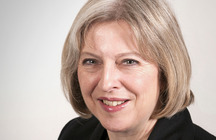
  • Theresa May – 2016 Press Statement in Slovakia

    theresamay

    Below is the text of the statement made by Theresa May, the Prime Minister, in Bratislava, Slovakia, on 28 July 2016.

    Thank you, Prime Minister, for welcoming me to Bratislava today. This is my first visit to your country.

    As a close partner and current holder of the Presidency of the European Union, I wanted to come to Slovakia early on so that we could discuss how we make a success of Brexit and ensure an orderly departure.

    It’s important to underline that while the UK is leaving the EU, we are not leaving Europe or withdrawing from the world. Britain will remain an outward-looking nation – a strong voice for liberal, free market principles and democratic values.

    While we remain in the EU, we will continue to fully respect the rights and obligations of membership. And we will continue to be an active player, particularly on your Presidency’s priorities to advance the single market, and on security and foreign policy issues.

    Once we have left the EU, we will continue to work with our partners across Europe, indeed Brexit is an opportunity to intensify those relations.

    And just as we want Britain to succeed outside the EU, we want the EU to be strong and successful after we depart.

    Today, we have talked about the bilateral relationship, our economic and security co-operation, and a range of international issues.

    The trade and investment between our 2 countries is flourishing. UK exports to Slovakia rose 37% last year and companies like Jaguar Land Rover and Tesco are all investing here.

    So, it matters to both of us that we maintain the closest possible economic relationship once the UK has left the European Union.

    Of course, it will take time to define the nature of that relationship, which is why I have said that we will not trigger Article 50 before the end of the year.

    We need to find a solution that addresses the concerns of the British people about free movement, while getting the best possible deal on trade in goods and services. We should be driven by what is in the best interests of the UK and what is going to work for the European Union, not by the models that already exist.

    We also want to strengthen our security and defence co-operation.

    Our armed forces have served alongside one another in Cyprus and Afghanistan and we will remain strong partners in NATO.

    And the UK will continue to stand up for our eastern allies. Earlier this month, we agreed to deploy UK troops as part of an increase in the number of NATO troops present along our eastern flank.

    And we will continue to send thousands of troops to train with Slovakia and our other NATO partners on a regular basis.

    We’ve also discussed how we can work together with our European partners to respond to the migration crisis.

    The EU’s collective approach in the Eastern Mediterranean has delivered a significant reduction in the numbers arriving on that route. It shows that returning illegal economic migrants to where they come from does have a deterrent effect and helps to break the business model of the people smugglers and traffickers.

    But we both believe that the long term answer to this problem means doing more to tackle the root causes of migration, by working upstream in source and transit countries.

    As part of the EU’s response, we’ve worked closely with Turkey. Their co-operation has been crucial, as indeed it is on counter-terrorism. And it is vital that this practical work continues.

    Today, we have discussed the recent events there. The UK has condemned the attempted coup and called on everyone to respect and uphold Turkey’s democratic institutions. We continue to call for calm, for due process to be followed and for human rights to be respected.

    In conclusion, this has been a valuable meeting.

    It has underlined the importance of the UK’s relationships with member states from across the EU – whether large or small, new or old, east and west.

    Our common interests and shared values will outlive the UK’s membership of the European Union. And together we must work to advance them, across Europe and around the world.

    Robert Fico’s statement

    Madam Prime Minister, welcome to Slovakia. I do hope that you will have lasting good memories from your short visit here to our country. Ladies and gentlemen, we just had a discussion which, quite obviously, dealt mainly with the issue of Brexit. Madam Prime Minister, I highly appreciate and value the fact that you took the trip to our small country on the occasion of holding the rotating presidency of the Council of the European Union and that, on the same day, you will visit Poland, which is holding the presidency of the Visegrad Group of countries.

    I would like to assure you firmly that we fully respect the decision that British voters have taken during the Brexit referendum. We take note of the decision, and we also understand that we have to face this decision and not turn our back against it. I think this is an opportunity; an opportunity for both sides to reimagine and redesign a new project of mutual relations, a project that will be equally attractive both to the citizens of the United Kingdom and the European Union.

    As the country holding the rotating presidency of the Council of the European Union, we take note of the fact that the United Kingdom will not launch Article 50 before the end of the year, and we understand that this procedure takes a certain time. We also take good note, and we positively respond to the decision of the United Kingdom to continue with its active involvement in EU affairs, and to continue to be an active member of the EU, until the last day of its membership in the community. I do hope that both the United Kingdom and the European Union will make the best use of the remaining time before triggering Article 50. We hope and we see that the United Kingdom will use this time before triggering Article 50 for redefining and also formulating a vision of its relations with the European Union.

    On the other hand, as the country holding the rotating presidency, we hope to make the best use of the time before triggering Article 50 to redefine the vision for Europe, for the future for the remaining 27 member states, and also to offer a vision to our citizens. We simply have to offer a new vision to our people, otherwise we will see a further fragmentation and destabilisation of European political systems.

    I tried to make the best use of the personal meeting we had today and I informed Madam Prime Minister about our intentions for the upcoming Bratislava summit in September. Namely, that we would like to focus especially on the issues of migration and safety, new forms and methods of communication between the European institutions and the general public. We also have to seriously reconsider how the European Union is acting as a global player. And also, we have to offer new projects and new schemes in the economic and social sphere. I’ve always said, and I would like to repeat it again, that the European Union seems to be falling in love with itself. We wanted to be the best in the world, but it seems that many regions in the world are far ahead of us. Let’s use Brexit as a good occasion for revaluating this development.

    I’ve also had a chance to discuss with Madam Prime Minister the main topics of interest, the main strategic areas that Britain would like to discuss within its negotiations with the European Union. Quite clearly it’s going to be the issue of migration, although the perception British voters have is slightly different than how we perceive migration on the continent. So, then, the issue of migration is especially the issue of migrant workers from the EU in the United Kingdom. I’ve asked Madam Prime Minister to dedicate a special level of attention to Slovak nationals and citizens who work currently in the United Kingdom. The second area for discussions is obviously the access to the single market and the third area for discussion is the area of safety and security. The EU and the UK have to work together in the future in this field.

    To conclude, I’d like to say that the meeting today only reconfirmed my opinion. There is a joint interest to create such a vision of the new relationship between the United Kingdom and the European Union that will be attractive for both sides, for the United Kingdom and for the European Union. I’d like to thank Madam Prime Minister for this endeavour and also for this vision.

    Question

    On our armed forces. Only last week you have discussed at a possible nuclear deterrent in the Lower House of your Parliament. Are you ready to use nuclear weapons as a deterrent against the threat from Russia?

    Prime Minister Theresa May

    We have indeed, as you say, discussed the issues of our defence co-operation. I think that is very important and as I indicated, we want to continue with that co-operation. We have indeed had a significant vote recently in the House of Commons in our UK Parliament, to continue to renew our nuclear deterrent. I was asked in that debate whether I was prepared to use the nuclear deterrent, and my answer was yes.

    Question

    There are an estimated 90,000 Slovaks living and working in Britain and obviously free movement is one of the most crucial aspects of this country’s membership of the EU. Yet you said on several occasions that the British people have made their voice absolutely clear on free movement via the Brexit vote. It seems like this is a red line for both sides. Do you see any area for compromise?

    Prime Minister Theresa May

    Well, I think you’ve raised 2 issues there. First of all, yes, you’re correct. There are several tens of thousands Slovakian citizens living and working in the United Kingdom and I’ve been clear that I expect to be able to guarantee and protect the rights of Slovakian citizens and other EU citizens living in the UK, and would intend to be able to protect those rights. The only circumstances in which that wouldn’t be possible, would be if the rights of British citizens living and working in other parts of the European Union were not protected. I’m grateful we had a discussion over lunch and that concept of reciprocity, I think, is recognised.

    On the question of free movement, there was a very clear message from the British people in the Brexit vote that they did not want free movement to continue as it had done previously. They do want some control in the movement of others coming from the European Union into the UK, and we will be obviously looking to deliver that as part of our negotiations as well as looking for the best possible deal in trade and goods and services. And I think it’s in the interest of both the United Kingdom and the European Union that we’re able to see a smooth and orderly process of negotiation, leading to a smooth and orderly exit for the UK. And that we do see that we get maximum benefit in economic terms when the UK has left the European Union.

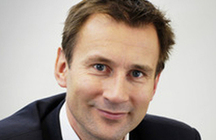
  • Jeremy Hunt – 2016 Statement on NHS England Annual Assessment

    jeremyhunt

    Below is the text of the statement made by Jeremy Hunt, the Secretary of State for Health, in the House of Commons on 21 July 2016.

    Today, I am laying before Parliament my annual assessment of the NHS commissioning board (known as NHS England) for 2015-16. I am also laying NHS England’s annual report and accounts for 2015-16 (HC311). Copies of both documents will be available from the Vote Office and the Printed Paper Office.

    NHS England’s annual report and accounts includes a self-assessment of performance which describes an organisation that has experienced a year of both progress and challenge. NHS England continues to deliver high-quality care as it progresses with implementing the vision set out in the five year forward view delivering constancy of direction, consistency of leadership and effectiveness of delivery.

    In response, my annual assessment welcomes the good progress that NHS England has made against many of its objectives including managing the commissioning system. Additionally it has continued to deliver the specialised services and primary care commissioning systems and improved the operation and management of the NHS. There does, however, remain much to do in order to achieve our agreed goals by 2020. In particular, I have drawn attention to the need to address year-round performance against the standards reflected within the NHS constitution, many of which have been routinely missed this year, as well as the need to make further progress on achieving parity of esteem between physical and mental health.

    Although NHS England met its objective to deliver financial balance in the commissioning system this year, the provider sector remains financially challenged. To achieve its financial objective in 2016-17, NHS England must work with its system partners and the Department of Health to jointly deliver a balanced budget across the NHS as well as delivering its share of the productivity and efficiency savings identified in the NHS five year forward view.

    Overall NHS England has made progress during 2015-16 but there remains much more to do. The extra real-terms investment of £8.4 billion agreed as part of the 2015 spending review is evidence of this Government’s continuing commitment to the NHS. My Department and I will continue to work with NHS England and its partners to ensure that this investment is used to build on the good work seen so far and to deliver an NHS that provides safe, compassionate and reliable care for those who need it while living within its means.

  • Ian Murray – 2016 Speech on EU Exit for Devolved Governments

    Below is the text of the speech made by Ian Murray, the Labour MP for Edinburgh South, in Westminster Hall on 21 July 2016.

    I beg to move,

    That this House has considered devolved governments and negotiations on the UK leaving the EU.

    It is a great pleasure to serve under your chairmanship, Mr Bailey. One of the great privileges of being back on the Back Benches is that I can not only participate in these debates, but apply for them. I am grateful to the House for allowing me this debate. It follows on the back of early-day motion 325. One of the other unenviable privileges of being on the Back Benches is that I can now table early-day motions. I hope that all Members will sign my EDM once they have heard this debate.

    Normally, I would say it is a great pleasure to hold this debate, but in many ways I would rather we were not. The repercussions of our vote to leave the EU will be profound and far-reaching in Scotland and across the United Kingdom and the European continent as a whole. We are already beginning to see the impact on our economy. The value of sterling has fallen against the euro, the dollar and most other international currencies, and remains highly volatile. Many businesses have predicted that Brexit will have a negative impact on their fortunes. The International Monetary Fund has revised down its forecasts for UK growth and said that Brexit risks throwing

    “a spanner in the works”

    of the global economy. Those of us who campaigned to remain in the EU warned of those obvious consequences and others as a probable outcome of our vote to leave. What was dismissed as “Project Fear” by many, we are now seeing as “Project Fact”, emphasised by today’s survey of German businesses, which concluded that 56% of them would want a hard bargain when negotiating with the UK.

    We have to deal with what is in front of us and get the best possible solution for the UK and, for the purposes of this debate and my responsibilities, for Scotland. The evidence suggests that support for leaving was strongest in the most deprived areas of our country. I witnessed that myself at the Glasgow counting centre. In my constituency, the more affluent the area, the larger the remain vote. We have a responsibility and a duty as politicians to reach out to those who voted leave to strive to understand why and to respond to their concerns. I suspect that increasingly they feel that they have no stake in society. In general terms, although this is not necessarily always true, these are communities where the ravages of deindustrialisation have hit the hardest and where the economic recession has bitten deepest.

    In many ways, there are pronounced similarities with the Scottish independence referendum in 2014, where some of the most deprived communities in Scotland voted to leave the UK. They also felt disillusioned and disfranchised in large numbers. Many of them had not cast a vote in many years, if at all. There is a clear problem for us to address, and we must find an amicable solution that reconnects communities to the political process and proves that politics can and will be a power for good in their lives. We must not let the Conservative Government or the Scottish Government—or any Government, for that matter—abdicate their responsibilities and abandon those who need help the most.

    Immigration is an issue that came to dominate the EU referendum debate, and that concern must be addressed, but is immigration the true cause of the deep dissatisfaction felt in communities, or is it other things? There are six years of public sector austerity, the lack of a proper house building strategy, the failure to recruit adequate numbers of GPs, a dearth of well-paid, progressive, highly skilled work and crushing pressure on schools and hospitals. Those are failures not of the EU, but of national Governments north and south of the border. As such, they can all be resolved by a sea change in UK and Scottish Government policy. We should not allow the UK Government in particular to hide behind the EU over those public policy failures.

    Ian Blackford (Ross, Skye and Lochaber) (SNP)

    We in Scotland have a demographic challenge that can only be aided by people coming to live and work in Scotland, and we need to encourage people to do so, perhaps with the post-study work visa, and there are EU citizens who still wish to come. We need to talk about how immigration enriches us and not demonise those who wish to come here to live, work and make a contribution to our society.

    Ian Murray

    That is precisely my point: immigration enriches society. Politicians have to be much braver about making the positive case for immigration. The arguments are not mutually exclusive; they all have to be set alongside the fact that if we have an influx of people, whether through migration or for other purposes such as work, public policy has to respond. The previous Labour Government had the migrant impacts fund, which was precisely that kind of response for local communities in need of additional resources to deal with the impact of the movement of people, whether immigrants or otherwise. That was scrapped in 2010 by the Tory Government, and we should look seriously at bringing it back. None of these issues is mutually exclusive, and I absolutely agree with the hon. Gentleman. He was not only wonderful at intervening, but has successfully made me lose my place. I will get used to being back on the Back Benches shortly.

    I was saying that we should reassure those who voted to leave and those who voted to remain that we are listening to them by demonstrating not just through speeches, but by our actions, that we are firmly on the side of everyone who voted in the EU referendum. In doing so, our first priority—it is a priority that needs to serve the interests of people across the entire country—should be to secure the best deal possible in the Brexit negotiations. That means adopting a negotiating stance that takes into account all views: those of people who voted to leave and those of people who voted to remain. The building blocks for the negotiations must be what we want to retain from the European Union.

    As Scottish Labour’s Westminster spokesperson, my focus today is obviously on Scotland, but I am sure many people from the other devolved Administrations, such as Northern Ireland, which voted to remain, and Wales, which voted to leave—my hon. Friend the Member for Llanelli (Nia Griffith) is here—will have their say in the negotiations. I am sure Members from Wales and Northern Ireland will make those points.

    Let us reflect on the vote in Scotland for a moment. Some 62% voted to remain, and 38% voted to leave. In my constituency, 78% voted to remain. I assume that was in no small part due to the contribution of the significant financial services sector to the economy in Edinburgh, the large number of businesses that export and the world-class universities that rely on EU funding for some of their world-leading research. Those factors all have to be taken into account as we set out our negotiating stance, so I will go through Labour’s priorities and principles.

    Hannah Bardell (Livingston) (SNP)

    The hon. Gentleman mentions his voters and the financial sector in Edinburgh. Does he accept that Scotland remaining within the EU would provide an opportunity for businesses to look north to Scotland, particularly in the financial sector? For those who are considering leaving London, there is an opportunity for his constituents, for Edinburgh, other cities in Scotland and Scotland overall.

    Ian Murray

    When I conclude my remarks, I will say that we should be looking at this as an opportunity, not only for Scotland, but for the whole United Kingdom. We are where we are. We need to ensure that the Government’s negotiations reflect what has happened, not only in Scotland but across the component parts of the UK, and make those arguments. I hope the financial services sector in the UK and in particular in Edinburgh reflects on where we are and makes those decisions accordingly. The uncertainty brought about by the decision to leave the EU is similar to the uncertainty that comes from any constitutional change that we have to deal with. I am delighted that the hon. Lady intervened, because she gave me an opportunity to mark my paper when I sat down. I am getting the hang of it.

    I will go through the founding principles from which everything else in these negotiations should flow. We must be mindful of respecting and upholding the will of the Scottish people, not just in this referendum, but in the 2014 independence referendum. Those results have shown that Scots wish to remain part of the United Kingdom and retain the advantages of European Union membership. I understand that that is not a particularly easy thing to achieve, but they should be the founding principles of what we want to achieve in these negotiations. That is Labour’s starting point and forms the basis of what we believe should be Scotland’s negotiating platform.

    That platform is informed by an excellent and aptly named paper written by Professor Jim Gallagher of Nuffield College, Oxford, entitled “The Brexit shambles: charting a path through the rubble.” Hon. Members can probably guess from the title where he is coming from on the issue. The paper identifies and delineates four priorities that should guide the Scottish and UK Governments—I have added one to make it five, because it does not mention the role of EU nationals and it is important to put that on the record as well.
    As matters stand today, Scotland belongs to two Unions and gets significant advantages from both. The people of Scotland recognise that and have recently voted overwhelmingly for both Unions to be continued. The result of the referendums should be respected, but instead, they are being ignored. The political context in Scotland at the moment is that the Conservatives want Scotland in the UK but out of the EU, and the Scottish National party want Scotland in the EU but out of the UK. Only the Scottish Labour party is clear that we want Scotland to remain in the EU and in the UK. The UK and Scottish Governments have an obligation to pursue every avenue in pursuit of that outcome, and to facilitate that, we should look at the priorities that should be put in place. Scotland’s first priority should be to urge the UK Government to accept a Norway-type option, if I can use that terminology.

    Stewart Malcolm McDonald (Glasgow South) (SNP)

    I am very grateful to the hon. Gentleman for giving way—he is a decent man. He said that he does not want to see referendum results ignored but went on to state that Scottish Labour’s position is to keep Scotland in the UK and the UK in the EU. Given that that is not what people voted for across the UK, does he perhaps consider that his party is behind the curve on the issue?

    Ian Murray

    When giving way, I should have asked the hon. Gentleman whether he would sign my early-day motion—he probably will not, given its content. If he had been listening properly, he would have heard me say that what the people of Scotland have voted for in the two referendums is a position where Scotland is in the UK and retains the advantages of being in the EU. I did not say that the UK will remain in both, because that is quite obviously not so.

    Hannah Bardell rose—

    Ian Murray

    I will give way to the hon. Lady if she will confirm whether she will sign my early-day motion.

    Hannah Bardell

    I will need to read the hon. Gentleman’s early-day motion before I make a decision; it would not be appropriate to make a comment either way without prior knowledge. I have a brief point. Does he not recognise that many people in Scotland voted for independence on the basis that his party and other UK parties said that the only way to retain Scotland’s place within the EU was to vote against independence?

    Ian Murray

    I am sure that you will rule me out of order, Mr Bailey, if we rehearse the well-trodden paths of the arguments about the Scottish referendum. If the hon. Lady does not mind, I will touch on some of them as we go through my contribution. Knowing the time, that it is the last day of term and that everyone is desperate to head to the shores of Spain—without a visa—to enjoy the sunshine with their families, I will get on to that as we go through.

    The first priority—the Norway-type option that I referred to—is that we would have membership of the European economic area. UK, and hence Scottish, membership of the EEA would mean maintaining much of the same conditions of trade and freedom of movement as currently exist. I am not sure whether the Government’s position in the negotiations is to maintain the free movement of people, but the Norway-style option would allow that to continue. It is worth putting in context why that is important.

    The value of Scotland’s unfettered access to the EU single market is well established. The Scottish Government’s figures value Scottish exports to EU member states at around £12 billion annually, but it is worth reflecting on similar figures that show Scottish exports to the rest of the UK, which is why this is such an important debate. Those exports are worth four times that amount at £49 billion a year, which is why I think that the Scottish people have voted twice to stay with the advantages of being in both Unions. It makes scant economic sense to prioritise the EU market over the UK market. In this debate, it cannot be an either/or—we should strive to maintain full access to both.

    UK membership of the EEA would allow Scotland to continue trade undisrupted with both the EU and the UK. If that becomes impossible, a separate trading deal would have to be negotiated and nobody knows what that would look like. The other option at the other end of the spectrum, which I think unpalatable, would be to abide by World Trade Organisation rules. That would have significant impact on UK and Scottish trading capacity.

    The second priority should be to protect Scotland’s public services and public spending by securing a continued fiscal and political union with the UK. These are the building blocks for the negotiations. The Scottish Government attach huge importance to the fiscal relationship with the UK; in his own words, the former Finance Secretary strained “every sinew” to protect it during the negotiations on the fiscal framework underpinning the Scotland Act 2016. The Scottish Government’s accounts and independent analysis show that Scotland is carrying a substantial budget deficit. It is incredibly important that Scotland’s position in the UK is maintained through the block grant and the Barnett formula.

    Without those mechanisms, the Scottish Government would have to undertake dramatic spending cuts or increase taxes to balance the books, based on their current annual accounts. That point was reflected on by the hon. Member for East Lothian (George Kerevan), the SNP’s representative on the Treasury Committee, who said that not having those fiscal transfers would be incredibly difficult—I think that the word he used was “catastrophic”—for Scottish public services.

    The third priority is the protection of Scotland’s currency union with the rest of the UK. Many of these arguments were covered in 2014, as we have just discussed in the intervention by the hon. Member for Livingston (Hannah Bardell), but it is worth revisiting them in this context, because it is incredibly important for the debate on how the negotiations with the EU proceed. If the first principle is to ensure that Scotland remains in the UK and with the benefits of the EU, we know that the euro is a non-starter, so that should come off the table—we owe the former Prime Minister and Chancellor Gordon Brown a debt of gratitude for keeping us out of that—but what of the other currency options that may be available? We know that the best available currency option at the moment is the current settlement. As part of the Scottish and UK Governments’ Brexit negotiations with the EU, we must make sure that Scotland’s position in the UK is protected, because Scotland’s fiscal and economic union with the rest of the UK is beneficial for the currency argument. I am conscious of the time, so I will not go through the currency arguments, but they are all on the record. The preferred arrangement in terms of Scotland’s fiscal, currency and economic position is the current arrangements, and the negotiations must underpin that point and reject all other arrangements.

    I will quickly skirt through the fourth priority, which is to explore all options for Scotland’s future relationship with the EU. If we view this positively, it could turn the Brexit negotiations on their head, transforming a vexatious trial into an unprecedented opportunity. The hon. Lady mentioned that earlier. No one has ever suggested that the EU is a tremendous success and there are elements that Scotland may wish to relinquish. Equally, there are parts that Scotland may wish to retain. One aspect of the Brexit debate rarely mentioned is that it will greatly empower the Scottish Parliament. Many of the competencies, such as control over fisheries, agriculture, university research funding and environmental policy, will transfer directly to the Holyrood Parliament.

    Hannah Bardell

    I am grateful to the hon. Gentleman for being so generous; I promise this will be the last intervention. He makes the point about the EU not being perfect. Does he accept that, with a seat at the top table, Scotland could have a greater voice and influence in reforming the EU as an independent country within the European Union?

    Ian Murray

    That flies in the face of the arguments of economic, currency and political union with the United Kingdom; that is essentially Scotland turning its back on a much more successful Union, to be part of the European Union. What people have said quite clearly is that they want Scotland to be part of the UK and part of the EU. If where we want to get to in the negotiations is an independent Scotland—I am sure that it is for the hon. Lady; if it was not, I would be incredibly surprised—the journey and the pathway to get there is slightly different from the pathway and journey towards an outcome that keeps the UK together and keeps Scotland with many of its current advantages within the UK as a member state of the EU. That should be the genesis of the negotiations. I appreciate that the Labour party perspective and the Scottish National party perspective on the outcome of that journey are different, but my contention is that it has to be about keeping both Unions together.

    Michael Keating recently observed that, given the new powers that will fall within the competence of the Scottish Parliament, the Scottish Government could choose to align themselves with the EU and the directives that currently exist, rather than the UK, and that they can have either an informal or a formal relationship. The key thing is that there will be new and interesting opportunities. For example, the responsibility for delivering air quality lies with the Scottish Parliament but falls under the EU directive. The inter-governmental working between the UK and Scottish Governments means that the English and Welsh policy and the Scottish policy to deliver that directive can be different, but they are under the same umbrella. Strong inter-governmental working will be needed to ensure that example and many others are delivered across the UK.

    Lord Falconer, the former Secretary of State for Constitutional Affairs, commissioned a piece of work in the other place to set out options for a federalised membership structure. Many people say that that is impossible to achieve, but we are in uncharted territory and everything should be on the table when we examine the possibilities for protecting the component parts of the UK and the advantages they get from membership of the EU.

    The fifth and final principle that should guide these negotiations, particularly from a devolved perspective, is that we must protect the rights of EU nationals who live, work and contribute to the UK. Conversely, we must protect the right of UK nationals to work, study and live in other EU countries.

    The UK’s political landscape is changing rather rapidly. A week is certainly a long time in politics these days. Brexit is perhaps the reckoning that the political system has been needing for a long time. It enables us to readdress where we are in the political landscape and think about how we respond to the big issues for communities. There is no doubt that the basic things that people took for granted—a job, a decent wage, a home of their own, a secure pension in old age and the idea that the next generation will do equally well if not better than the current generation—are increasingly becoming unattainable. Whether that is fact or perception, it is what people tell us. They are working harder and doing the right thing, but they are not receiving the benefits. I think that is the genesis of why the UK voted to leave. That is a failure not of the EU but of national Government.

    Let us reflect on where we are. I would like the Minister to address some of these issues. The principle that the UK should come out of the EU but Scotland should stay in the UK and retain many of the advantages of being in the EU should guide the Government’s negotiations with the devolved Administrations and the EU. The Minister has the opportunity to set out the UK Government’s position on the devolved nations and Administrations today and be clear that the Brexit negotiations will protect their interests. He should reaffirm that the UK Government will recognise that Scotland voted to be in the UK and to keep the advantages of the EU. Those will be the foundation stones and building blocks for the negotiations. If we are optimistic about this, and if we all want the same journey and outcome, those should be the conclusions that we seek.

    The former leader of the Labour party, my right hon. Friend the Member for Doncaster North (Edward Miliband), said last week in his Tony Benn memorial lecture:

    “This can be a progressive moment. In any case, there is no point in the left sinking into gloom. The only answer is to rise to the challenge. The optimists have always been the people we need at times of greatest adversity. Today we need them more than ever.”

    I hope the Minister is indeed an optimist and will respond positively to this debate.

  • Theresa May – 2016 Statement in Ireland

    theresamay

    Below is the text of the statement made by Theresa May, the Prime Minister, in London on 26 July 2016.

    Let me start by offering my condolences to the French people following the sickening attack in Northern France this morning. Our thoughts and prayers are with all those affected.

    I am delighted to welcome the Taoiseach here today.

    It is testament to the importance of the relationship between the United Kingdom and Ireland that Enda is amongst the first leaders that I have met since I took office. In recent years the relationship between both our countries has gone from strength to strength, building on the success of Her Majesty the Queen’s historic visit to Ireland in 2011.

    Now, as we contemplate the nature of our bilateral co-operation once the United Kingdom has left the European Union, I want to underline my personal commitment to nurturing this relationship.

    We must make a success of Brexit and together ensure that we maximise the opportunities for both our countries. That’s why our discussions today have focused on Brexit; the particular impact on the Republic of Ireland and what this means for our economic relationship, travel between our countries and the peace process.

    And let me say a few words on each.

    Economic relationship

    First, the economic relationship. Trade between the United Kingdom and Ireland is worth almost £1 billion each week, supporting 400,000 jobs across our islands.

    These economic benefits matter to people across both countries. That’s why we have agreed today that we both want to maintain the closest possible economic relationship in the future.

    Of course this means there will be a number of complex issues to address. We should take time now to study the options and to strive for practical solutions.

    And I have reiterated to the Taoiseach my commitment to involving the Northern Ireland Executive fully in those preparations.

    Common travel area

    I recognise that one of the biggest concerns for people is the common travel area. As I said yesterday, we benefitted from a common travel area between the UK and the Republic of Ireland for many years before either country was a member of the EU.

    There is a strong will on both sides to preserve it and so we must now focus on securing a deal that is in the interest of both of us.

    And alongside this, we should continue our efforts to strengthen the external borders of the common travel area, for example through a common approach to the use of passenger data.

    Peace process

    Finally, we talked about the peace process. It is in all our interests to work together to safeguard our national security and the outcome of the referendum will not undermine it.

    We are both fully committed to working together in support of the Northern Ireland Executive to build a better, stronger, safer future for the people of Northern Ireland. Indeed, it is vital that that we keep up the momentum on tackling paramilitary groups and building a shared future.

    And today we have reaffirmed our commitment to establishing a new Independent Reporting Commission by the end of this year, which will support these efforts.

    Conclusion

    In conclusion, these have been constructive discussions.

    We have agreed we will continue to hold annual bilateral summits to strengthen our co-operation.

    And it is precisely because the relationship between the United Kingdom and Ireland is so deep and so important that there are many issues to resolve as the UK leaves the European Union. But I firmly believe that we can make a success of Brexit and take our relationship forwards not backwards.

    And I look forward to working closely together in the weeks and months ahead to make the most of the opportunities ahead.

    Enda Kenny

    First of all, may I concur with the words of the Prime Minister in saying that our hearts are once again with the French people. For centuries a church has always been a place of sanctuary, and it’s particularly brutal that terror and murder have been visited upon innocent people at a time when they’ve been so physically vulnerable and so spiritually hopeful. I concur with your words, Prime Minister.

    And may I say that I extend my congratulations to Prime Minister Theresa on her recent appointment. It is of course a great personal achievement for her and comes at a time of great challenge for all the people of Europe and indeed for the people of the world. Can I say that we had a very good meeting today. And I am delighted that we have agreed to work together on continuing to build on the strength and the closeness of the UK–Ireland relationship. And I look forward very much indeed to working with the Prime Minister on the many issues where we share a mutual interest.

    Now we had a good discussion today on the progress that the two governments have made in recent years following on from the Joint Statement of 2012 on British–Irish Relations: the Next Decade. I’m delighted that the Prime Minister has affirmed again the UK government’s commitment to this comprehensive programme of engagement between the two governments and officials. This will allow us to continue to work together on a range of issues that are of benefit to the British people and the Irish people, like jobs and trade and tourism and energy and so on, as part of our joint Irish–UK work programme.

    Today’s meeting also gave us the opportunity to discuss developments in Northern Ireland to which the Prime Minister has referred. And we did repeat and reiterate the importance of the partnership between our two governments as co-guarantors of the Good Friday Agreement, and in supporting the peace process, and in contributing to stability and continued progress in Northern Ireland. We are both very much committed to the 1998 Good Friday Agreement and the successive agreements of St Andrews and Fresh Start, and we will continue to work for a prosperous and peaceful Northern Ireland in the time ahead.

    We also discussed the many issues that arise in the context of the outcome of the EU referendum on EU membership. It’s not an outcome that we wanted in Ireland, but we respect the decision of the UK electorate, and we now must work out the consequences of that. So we intend to work with the Prime Minister, and all our partners in the EU and in the Northern Ireland Executive, to make sure that we can achieve the best outcome in the forthcoming negotiations.

    So we have agreed, as the Prime Minister has reiterated, that we would work together to ensure that the benefits of the peace process are preserved in any new arrangements which might emerge regarding the United Kingdom’s future relationship with the European Union. In particular, we both recognised that Ireland is the only EU member state that shares a land border with the United Kingdom. We are in full agreement that we do not wish to see any return to the borders of the past on the island of Ireland.

    So today’s meeting also gave us the opportunity to have a broader discussion on the common issues of concern in the context of the referendum result, such as our close trading relationship and the benefits of the common travel area already referred to by the Prime Minister.

    For our part, we’ve already made very clear our view that Ireland is very much committed to staying a member of the European Union, and we want the upcoming negotiations and the process of those to end with a prosperous and outward looking United Kingdom which retains a close relationship with the European Union. That is very much in all our interests.

    Neither I nor Prime Minister May are in any doubt about the range and the many complexities of the negotiations that lie ahead of us all, nor do we underestimate the importance of the issues involved for all our citizens in the UK, Northern Ireland, Ireland and the European Union. But we face the future together, in the knowledge that relations between Ireland and the United Kingdom have never been better, and that the spirit of partnership and friendship will guide all of our actions and our work together in the time ahead.

    Thank you, Prime Minister Theresa, for the early opportunity to come and have this first of many meetings with you. I’ve commended the Prime Minister for her speech outside Downing Street, in terms of the opportunities that present themselves to deal with the many issues of inequality and social disadvantage that abound. I’ve also invited the Prime Minister, when the time is opportune and appropriate, when she’s settled into her job, to come over to Dublin and have an engagement, as all of her predecessors for many years have done. Thank you very much indeed.

    Question

    Taoiseach, Prime Minister, how concerned are you by the wave of IS inspired violence that we’ve seen across Europe in recent days? How concerning is it?

    And secondly, Taoiseach, the prospect, with a Brexit, of a potentially united Ireland seems more likely. Is that a prospect you agree with, and one that you’d welcome?

    Prime Minister

    First of all, on the terror threat that we face, we all face a terror threat. If you look at the national threat level here in the United Kingdom, it is at severe. That means that a terrorist attack is highly likely. I think what is necessary is for us all to work together: we stand shoulder to shoulder with France, we offer them every support we can in dealing with this issue and this threat that they and the rest of us are facing.

    But of one thing I think we are all absolutely clear, and that is the terrorists will not prevail. They are trying to destroy our way of life, they are trying to destroy our values; we have shared values, and those values will win through, and the terrorists will not win.

    Enda Kenny

    We’ve been working with former Prime Minister Cameron and now with Prime Minister May in respect of security issues, information in respect of passengers, European Arrest Warrant and other communications data which might include information in respect of terrorist activities.

    Obviously on Brexit, the decision has been made to leave. It’s a decision I didn’t like, but obviously I have full respect for the decision made by the UK electorate. So our job now is to work through this process in as practical and as imaginative and as creative a manner as is possible, to ensure, as I said, that the UK remains prosperous and outward looking; that Ireland retains its interests that I’ve already outlined in terms of trade, common travel, border, Good Friday Agreement; and that we bring to the table the close relationship in discussing these negotiations, both for the future relationship of the European Union with the UK, and what that actually means in the time ahead.

    So there are many obstacles that lie upfront, but I do believe that the basis of our friendship and connections between the 2 countries are a great basis upon which to move forward.

  • Theresa May – 2016 Statement in Rome

    theresamay

    Below is the text of the statement made by Theresa May, the Prime Minister, in Rome, Italy on 27 July 2016.

    Thank you very much Matteo and thank you for such a warm welcome in every sense of the term.

    It reflects the close friendship between both our countries. I wanted to come to Rome today to underline Britain’s commitment to this relationship.

    As we make a success of Brexit, it is crucial that we work with important member states like Italy to strive for a solution which respects the decision of British voters, recognising that while the UK is leaving the European Union, it is still very much part of Europe.

    This means we will continue to work together on a range of things.

    And that’s why here today, we have talked not just about a successful Brexit but also about how we work together as you have said to respond to the complex global challenges we face, Italy and the UK, such as terrorism and migration.

    I’d like to say a few words on each.

    First, Brexit.

    We have agreed on the importance of maintaining the closest possible economic ties once the UK leaves the EU.

    Italy is the UK’s eighth largest export market and trade in goods alone was worth £24 billion last year. We want that trade to continue, but of course it will take time to work out the nature of our relationship.

    And that’s why we should take time to prepare for these negotiations, so that both sides can identify their objectives.

    We have already begun that work in the UK and yesterday I chaired the first meeting of the Cabinet Committee on exiting the European Union to prepare and plan for an orderly departure.

    Of course, as long as we remain in the EU we will respect the rights and obligations of EU membership, and I have assured the Prime Minister today that the UK will continue to be a strong voice for international free trade.

    Prime Minister Renzi and I have also discussed our joint efforts to fight terrorism.

    Yesterday’s attack in Northern France on an innocent Catholic priest in a place of sanctuary and peace was yet another brutal reminder of the threat that we all face. Following on from the atrocities in Nice and Germany, it reinforces the need for action both in Europe and on the wider global stage.

    In Europe, we must increase further our intelligence co-operation and share vital information swiftly and effectively, enabling us to better protect ourselves from these terrorists who seek to destabilise us.

    In Iraq and Syria, the UK and Italy are already leading players in the coalition to counter Daesh.

    And I think we agree on the importance of reinvigorating the political process in Syria, securing a genuine ceasefire and unlocking humanitarian access.

    As Italy takes a seat on the United Nations Security Council next year, this is another issue on which we will work together.

    We have also discussed the situation in Libya where both Italy and the UK are at the forefront of international efforts to support the new government. And it is in all our interests to help Prime Minister Serraj to restore stability and rebuild the economy.

    And that is the best way to prevent Libya becoming a base for Daesh and to tackle the criminal gangs that continue to exploit illegal migrants and traffic innocent men, women and children for profit.

    Ninety per cent of migrants crossing the Central Mediterranean set off from Libya, so both our countries have urged our European partners to do more to stem the flow of illegal migration from there.

    Together we secured agreement to extend the EU’s naval operation to include capacity building of the Libyan coastguard and we hope that training will get underway in September.

    We also agree on the need to do more upstream in the countries where migrants are coming from, particularly in the Horn of Africa and West Africa.

    Today has been a useful and constructive meeting here in Rome.

    The UK is leaving the EU but we will continue to strengthen ties with our European friends.

    Outside of the EU, the UK and Italy will continue to co-operate through NATO, the G20 and the G7; and I look forward to attending next year’s summit in Sicily.

    Our common interests in promoting economic growth, fostering stability around the world and tackling social injustice will drive us to work together. That is in the interests of everyone here in Italy, back home in Britain and the rest of the world.

    And as we begin this new chapter in our relationship, I look forward to working with you, Prime Minister, to make the most of this partnership.

    Matteo Renzi’s statement

    I’m really privileged to pay homage to Theresa May, the Prime Minister of the United Kingdom, here in Rome. I would like to thank her for being here today with us in such a beautiful place and you can see the Vatican St Peter’s at the back, and the sunshine is a bit hot and high in the sky, but we are really happy and privileged to have this opportunity. I would like to extend my warm welcome to the entire delegation and the new ambassador of the United Kingdom who has took office 2 days ago, on Monday. She’s now on her third day.

    I’m really privileged and happy for this opportunity after the decision of the British people to leave the EU. Of course, we are sad about this decision, because somehow, it affects 600,000 Italian citizens living in the United Kingdom, in England. However, it is a decision of the British people which we fully respect, as should be the case, and which requires a lot of common sense, clarity and the certainty of a clear-cut path. The Italian government is interested in working together to collaborate [inaudible] and something good might come from it, not only for the United Kingdom, for Italy, but also for European Union institutions.

    This meeting gave us the opportunity to discuss these issues and also the importance to continuously collaborate on my policy for Africa, as well as the importance we attribute to migration. We sincerely believe that we should be extremely attentive to human aspects and saving lives. We do need a European policy where rules are complied with, in the respect of the fathers of the European Union, but at the same time, to contribute with aid [inaudible]. We are truly happy to welcome Prime Minister Theresa May and her delegation in the coming multilateral meeting, the G7, which will be held in Taormina, in May 2017, when we will try to focus in particular on aspects about education, culture and identity, defending identity, defending our values as a tool to be credible in this ever-changing world.

    We also spoke about bilateral issues among which some are maybe not at the forefront for public opinion. I’m thinking about university aspects, collaboration in this field, and the many other aspects we are aiming to solve jointly in the field of defence, for example, with Finmeccanica today renaming itself Leonardo, and the United Kingdom, is a win-win solution, because we are the same family, but we are now producing engineering defence and many other services. And I also am referring to the many challenges up ahead for the international community, and I believe it will be fundamental to convey a message of solidity and clarity.

    [Inaudible] I think it is a crucial moment so we can jointly create a new partnership. The fact that we won’t be members of the same union certainly does not deprive us of the importance and the solidity of this relationship, which is familiar not only to Rome, but to all the Italian cities, because the cultural, political, institutional and humanitarian and value links between Britain and Italy are extremely solid and sound, and which dates back to centuries, and which I believe will continue for the coming months and years. We are truly convinced, and for all these reasons, I would like to thank Theresa for having chosen to be with us today.

    Question

    Andrea Bonini, Sky TG24. The question is for Prime Minister. There are thousands of Italians living and studying in London, and today, after the Brexit, are scared and concerned. Can you reassure them somehow?

    And also, in terms of security, do you believe that Brexit can represent an element of vulnerability and of chaos? I’m thinking about the long lines that we have seen in Dover last week.

    Now, as regards the terrorism, President Mattarella has underlined this morning that we certainly cannot give in to fear. But what happened yesterday in France makes this kind of feeling difficult to resist, and often Europe is not very solid. It’s difficult to have a common position, a common stand, also in terms of intelligence co-operation. I’m thinking about the coming elections in Germany and France, and the referendum in Italy. Do you believe that they can slow down this kind of division?

    Prime Minister

    Thank you. On the issue that you raise of Italian and other EU citizens who are living in the UK, I want to be able to guarantee their rights in the UK. I expect to be able to do that. I intend to be able to do that to guarantee their rights. The only circumstances in which that would not be possible would be if the rights of British citizens living in other EU member states were not guaranteed. But I hope this is an issue that we can address early on.

    In relation to the question about security, no, I think that the security relationships that the UK has bilaterally and collectively with the member states of the European Union are very important to all of us. We all face the threat from terrorism that we have seen result in the terrible incidents that we saw only this week in northern France, but also, as I said, previously in France and Germany and, indeed, previously in Belgium.

    In addressing that, it is important that we continue to cooperate on security matters. That’s why, as I said in my remarks, I think cooperating on intelligence sharing, ensuring that vital information is shared quickly and effectively is one of the best ways in which we can work together to ensure that we deal with this threat to protect our citizens, but also to ensure that the terrorists do not win. They are trying to attack our values. They are attacking our way of life. They will not prevail.

    Matteo Renzi

    Allow me as well to share – to fully share the consideration and the remarks of Prime Minister. I am perfectly aligned that we should continue to work jointly. There is no change and we will continue to work with the same resolve in our fight against terrorism.

    I have nothing to add to the very wise and clear words of the President of the Republic this morning, Sergio Mattarella and as the President has said, we should not be afraid. We should not give in to fear. We have to be able to react in a strong, determined way against terrorism, against this feeling of terror. And to be able to react with a lot of determination.

    This, first of all, we owe it for those who died, Father Jacques, who lost his life while he was celebrating the Eucharist, and to the many victims in Europe, and also the many victims of our citizens throughout the world. I’m thinking about those British who died in Tunisia just a year ago, and the Italians who died in Dhaka just a few weeks ago.

    Terrorism is trying to disintegrate our lives and when they’re enabled to do that, they try to create fear and terror [inaudible]. We have to reaffirm our values, our identity, and we have to continue fighting, aware that our first challenge is not to give in. We have to remain strong and solid, believing in our culture. No democratic change, be it the Brexit or any other change – referring to France, Germany, Italy – will be able to change and to modify these principles. You can change governments. You can change political parties. You can change memberships, as will happen with the Brexit. But you will not change anything in terms of fight against terrorism and values and identity, which our people have always represented.

    And I would truly want to thank Prime Minister Theresa May. She has served for many years before becoming Prime Minister, she has been Home Secretary for her country. She has collaborated very effectively with our Home Minister Alfano with great resolve and collaboration.

    Question

    James Mates from ITV News. On your talks in Europe, are you detecting any flexibility on this issue of restrictions of freedom of movement whilst retaining single market access? And is it still your government’s wish to maintain access to the single market in the light of Liam Fox’s remarks in Washington.

    And can I ask you too, Prime Minister Renzi, do you see any grounds at all for compromise on this issue between freedom of movement and single market?

    Prime Minister

    First of all, James, in relation to obviously the comments that Liam Fox made, he was setting out very clearly what is a technical and legal position in relation to the interaction between customs, unions and free trade agreements. We had a very clear message from the British people in the Brexit vote, that they want us to bring in some control on free movement; they don’t want free movement rules for movement of people from the European Union member states into the UK to operate as they have done in the past. And we will deliver on that.

    But on the other side, we do of course need to ensure that we get the best possible deal in relation to trade in goods and services. And I’m looking at this with an open mind. I think we should be developing the model that suits the United Kingdom and the European Union; not at opting necessarily a model that’s on the shelf already, but saying: what is going to work for the UK and what is going to work best for the European Union; in ensuring that we can maintain that economic relationship which has been of benefit to us in the past, and we want to ensure that we can continue and build on in the future.

    Matteo Renzi

    All the political life is a life of compromise, but I think it is a very delicate point for the reason Theresa explains very well now. So, English leaders – Britain leaders explain very well the point: Brexit is Brexit. Now the priority is work together to give a message of co-operation, friendship and future. But the debate about the results in Britain is a great debate for the history. Brexit is Brexit. We cannot open again the discussion, because if we open again the discussion, we give a message against the idea of democracy. If we vote and then we don’t see the consequences about the points of discussion in the vote this is a problem for credibility in entire leadership. So we will work together very closely with great determination.

    For us it’s important to give a message of clear timeline to avoid the risks also because I think the next months, the next year will be a great opportunity also for Europe to discuss about the future of this institution. This institution was a miracle after 60 years of peace and of prosperity. We are really proud for the great results, but now it’s time to build a vision. On terrorism, we will work strongly with the UK government and together, give a message of co-operation respecting the results of the vote and the decision of the Britain people.

    Thank you very much also for resisting under this hot sunshine. I apologise for the sun but I believe this is really an opportunity for everybody.

  • Theresa May – 2016 Press Statement in Poland

    theresamay

    Below is the text of the speech made by Theresa May, the Prime Minister, in Warsaw, Poland on 28 July 2016.

    I am delighted to be here in Warsaw today, in such a momentous week with the visit of Pope Francis and the celebration of World Youth Day.

    I wanted to come here early on to tell you, Beata, and the people of Poland that Britain attaches a huge importance to the relationship between our 2 countries.

    It is a partnership that goes back a long way, we will never forget the Polish pilots who braved the skies alongside us in World War II to stand up for freedom and democracy across Europe.

    And it is a partnership that will endure long after the UK has left the European Union.

    Indeed, today we have discussed how we can continue to deepen our co-operation, following on from the agreement late last year to work more closely together.

    Let me say a few words on Brexit, the bilateral relationship and our security and defence co-operation.

    First, we have discussed how we make a success of Brexit and work together to maximise the opportunities for both our countries.

    The UK and the EU need to take time to work out our objectives for the negotiations on the UK’s departure and the future relationship.

    As Prime Minister, I will seek to address the concerns of the British people about free movement, while recognising the importance of a close economic relationship between the UK and the EU.

    Of course, there will be different interests and complex issues to resolve but I firmly believe that if we approach this in a constructive and positive spirit then we can pave the way for a calm and orderly departure.

    In that context, I want to be clear that Poles living in the UK continue to be welcome and we value the contribution that they make to our country.

    We condemned the shameful and despicable attacks against Polish communities and others in the wake of the referendum result.

    Hate crime of any kind, directed against any community, race or religion, has absolutely no place in British society.

    I understand that Poles currently living in the UK want to know whether they will retain their rights once the UK leaves the EU.

    I want and expect to be able to guarantee their rights in the UK. The only circumstances in which that would not be possible would be if the rights of British citizens living across the EU were not guaranteed.

    As I’ve said, the UK’s exit from the EU should not weaken our relationship with Poland, indeed we should strengthen it.

    Last year, the UK was Poland’s second largest trading partner, and UK exports to Poland were worth more than £3 billion pounds.

    We should keep up our broader co-operation on science, innovation and energy.

    And we have agreed today that we will press ahead with annual bilateral summits to drive forward our relationship. And I have offered to host the first of those in the UK.

    Co-operation on security and defence is one of the most important areas of our growing strategic relationship.

    Britain and Poland are leading players in NATO and we both meet the commitment to spend 2% of our GDP on defence.

    The United Kingdom will always stand by its NATO obligations, including ensuring the security and safety of Poland.

    Only this month, at the NATO summit here in Warsaw, the UK committed to increasing the number of troops present along NATO’s Eastern flank, with the deployment of an infantry company here to Poland.

    We are also working closely together to fight wider threats to global security.

    Poland has played a leading role in international efforts to secure peace and stability, from Afghanistan to Ukraine.

    And in the face of the ongoing terrorist attacks in Europe, it is vital that countries like the UK and Poland continue to counter Daesh in Iraq and Syria.

    Working together is the best way to protect our way of life and our shared values from those who are intent on destroying them.

    To conclude, Britain will continue to stand by our European partners and stand tall in the world.

    Leaving the EU presents an opportunity to strengthen our relations with countries around the world.

    And that is firmly what I intend to do.

    I am looking forward to developing the strongest possible relationship with Poland, to working with you to make Brexit a success, and to safeguarding the security of all our people.

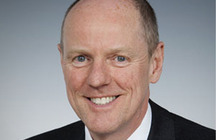
  • Nick Gibb – 2016 Speech on Mathematics Teaching

    nickgibb

    Below is the text of the speech made by Nick Gibb, the Minister of State for Schools, in London on 12 July 2016.

    Can I start by thanking you for inviting me to join you at your conference today. I hugely appreciate the work that ACME have done to inform both government policy and classroom practice since its foundation in 2002.

    Since I first became Shadow Schools Minister in 2005, I have visited several hundred schools. During my visits, particularly to primary schools, I often ask whether I can speak to the class as a whole. Over the years, I have developed something of a lesson routine: I explain to pupils the job of a government minister; a little bit about how Parliament works; and a few titbits of British history. And I also quiz pupils on their general knowledge, in particular on their times tables. And I think it is becoming general knowledge that I do this, and it deters schools from inviting me.

    And over the years I have noticed a change. When I ask pupils, “Do you know your times tables?” I am increasingly greeted, not with downward looks and shuffling feet, but with confident classroom cheers of “Yes!” Last month, I was in Chacewater Community Primary School in Cornwall, and every year 3 and 4 pupil I quizzed had automatic recall of all their times tables, even the tricky 7 times table, and all the way up to 12 times 12.

    Now, some of you may be thinking, “The Schools minister is talking about times tables again. When will he realise that mathematics is about so much more about this?” I willingly accept that immediate recall of basic number facts is not the totality of mathematics education. Conceptual thinking and real world problem-solving are – ultimately – what we need our pupils to be able to perform once they leave school.

    But, as recent and rigorous research into cognitive psychology has shown, number knowledge and fluency in written calculation are not the antithesis of problem solving in mathematics. Rather, they are the royal road by which complex mathematical thinking is achieved.

    And that is why I am so delighted to see increased evidence on the ground of schools ensuring their pupils master these basics, before more complicated mathematics is introduced.

    Today, I want to celebrate a renaissance in mathematics teaching that is taking place in our schools. Currently happening on a small scale, it has the potential to revolutionise the teaching of the subject in this country.

    Before I was elected to Parliament, I worked as a chartered accountant. As such, I belonged to a select group of people for whom it is not socially acceptable to claim “I can’t do maths.” For decades, this phrase – “Can’t do maths” – has been a common refrain in British culture. It is extraordinary that in a country which produced Charles Babbage and Bletchley Park, a deficiency at mathematics has come to be seen as a defining national characteristic.

    But there are high-performing jurisdictions abroad, as well as exceptional schools at home, which demonstrate that the vast majority of children, if taught well, can achieve at mathematics. See for example King Solomon Academy, a non-selective school in central London.

    This school places a strong focus on depth before breadth in numeracy and literacy, and in 2014, all but 5% of King Solomon Academy pupils achieved a GCSE in mathematics at grade C or above, and in fact 82% achieved at grade B or above. This is an astonishing achievement for any non-selective school, let alone an inner-city school with a proportion of disadvantaged pupils over 3 times the national average.

    And King Solomon Academy is not alone: Bethnal Green Academy in east London, Thomas Telford School in the West Midlands, Emmanuel College in Gateshead, are all comprehensive schools, serving socially mixed populations, where well over 90% of pupils get a good GCSE in mathematics.

    Of course, the expert mathematics teaching we see in the best of our schools does not yet characterise all of our schools. According to the international PISA tests carried out by the OECD, 22% of 15-year-olds in this country performed at the lowest level of mathematics proficiency in 2012. This means they were unable to carry out simple tasks such as recognising that travelling 4 kilometers in 10 minutes means going at the same speed as travelling 2 kilometers in 5 minutes.

    In countries such as Korea and Singapore, and cities such as Hong Kong and Shanghai, the percentage of low-performing 15-year-olds is below 10%. There is nothing different about children in these countries, but there is something different about their approach to teaching maths.

    To learn more about maths teaching in these countries, the government founded the maths hubs programme in 2013. Thirty-five maths hubs have been established in schools or groups of schools throughout England, to become centres of expertise in south-east Asian mastery teaching.

    Over the past 2 years, we have arranged for 127 teachers from Shanghai to teach in English schools for 3 weeks, and 131 teachers from England to teach in Shanghai. This partnership will continue over the next 2 years, with many more teachers from England and China benefiting from the exchange programme and the opportunity this offers to strengthen the teaching of maths in primary schools.

    According to an independent evaluation by academics from Sheffield Hallam University, based on data collected between February and July last year, early indications are that the exchange has the potential to foster a radical shift in mathematics teaching in participating primary schools.

    One primary school profiled in the report had implemented many aspects of Shanghai teaching, such as: additional lessons for pupils needing more support; 35 minute lessons, with the first focused on developing conceptual understanding, and the second on practice and consolidation of new content; and a change of classroom organisation from small groups of tables based on attainment, to rows of children facing the front – leading to more whole-class engagement. The school reports that pupil results have already seen an increase in that school.

    The report also stated that across all 48 schools in the hub network, most teachers reported that the changes implemented had led to positive outcomes for pupils, which included an “increased enthusiasm for mathematics, deeper engagement, increased confidence, and higher levels of attainment”. The report cited examples of schools’ improved outcomes, including, and I quote, “in one school, year 3 pupils who followed a mastery approach achieved higher scores than year 4 pupils who had been taught in the usual manner on the same assessment task”.

    I had the great privilege of travelling to Shanghai in March to witness their maths teaching. Of course, there was an admirable emphasis on mastering the basics. But I was also greatly impressed by the emphasis placed on ensuring mathematical procedures and knowledge are underpinned by strong conceptual understanding, often through visual representations. In addition, a great emphasis was placed in these schools on ensuring that pupils use clear and precise mathematical language from an early age to articulate the procedures they perform.

    But perhaps most crucially, the knowledge, examples and questions which underlie successful teaching across south-east Asia are embodied in detailed curriculum, and high-quality textbooks.

    I have frequently spoken about my belief that pupil outcomes in Britain have been held back, significantly held back, by an anti-textbook ethos in our schools. This ethos is based on a longstanding prejudice that equates textbooks with unimaginative teaching. It is clearly reflected in international surveys of teaching practice. According to the 2011 TIMSS international survey, 70% of Singaporean pupils in year 5 are taught by teachers who use textbooks as a basis for instruction in lessons. In Finland, the figure was 95%. But in England, the figure was 10%.

    A similar finding exists in the OECD’s Equations and Inequalities report published last month. Of all 64 participating countries, the UK had the third lowest proportion of pupils taught in schools with a formal mathematics textbook policy. According to the survey, only 2% of UK pupils attend schools where either heads, local authorities, or national government choose textbooks. This was the fourth lowest proportion in the OECD. Together, these figures suggest that schools in the UK, almost uniquely, have not seen textbook choice as an area for strategic school improvement.

    By contrast, in Shanghai and Singapore, an enormous amount of thought and care goes into the construction of maths textbooks, planning in great detail the sequence of teacher exposition. No pupil’s understanding is left to chance or accident: every step of a lesson is deliberate, purposeful and precise.

    Contrary to what many critics suppose, the common curriculum and textbooks in south-east Asia do not constrain teacher creativity. Quite the opposite: high-quality resources provide a foundation upon which creative and imaginative teaching can be built.

    In the spirit of learning from the best jurisdictions in the world for teaching mathematics, I am delighted that England’s maths hubs are currently trialling 2 English adaptations of Singapore mathematics textbooks, entitled ‘Maths No Problem’ and ‘Inspire Maths’. The feedback we are getting from teachers and pupils so far is overwhelmingly positive, not least due to the workload savings that a well-designed textbook can provide.

    In addition, maths hubs are learning that south-east Asian teaching methods depend upon whole-class instruction from the teacher. As Charlie Stripp from the National Centre for the Excellence in the Teaching of Mathematics has observed, this does not mean reducing pupils to being passive recipients of boring lectures, as some caricatures of south-east Asian teaching suggest. Teaching there is teacher-led, but not teacher-dominated, with constant questioning and interaction between the teacher and the pupils in the class.

    In 2014, a fascinating piece of research was published by Professor David Reynolds of Southampton University, and his Chinese postgraduate research student Zhenzhen Miao. They videoed lessons in both countries, to find out what teaching methods were being used to such great success in the Chinese classroom. The answer was clear: in Chinese classrooms, whole-class interactive teaching made up 72% of lesson time, compared with only 24% of lesson time in England. In England, almost half of the time – 47% – was used up on pupils working individually or in groups, compared with only 28% of the time in China.

    But perhaps most importantly of all, mastery mathematics teaching is based upon the principle that, if taught well, all pupils can master the content of a lesson. According to the OECD’s Teaching and Learning International Survey, differentiated teaching is not common in high-performing south-east Asian countries. This is because it reinforces the performance gap between high and low attaining pupils. Across the OECD as a whole, the practice of differentiating work by ability whilst teaching has a negative relationship with pupil outcomes – an insight provided by the maths teacher and education blogger Greg Ashman.

    Through visiting maths hubs and talking to their teachers, I have been consistently impressed by how positively teachers have engaged in the project. Over the next 4 years, we will spend up to £41 million cascading south-east Asian mastery teaching to primary schools throughout the country via our maths hubs network. This money will subsidise new mastery textbooks in thousands of primary schools, train a cadre of 700 specialist mastery teachers, and fund teacher release so that more teachers can – in turn – be trained by them.

    Supporting maths hubs in delivering this ambitious vision will be the National Maths Education Centre, which I am launching the tender for today. The centre will provide leadership to our maths hubs in transforming primary mathematics, through training teachers in south-east Asian mastery methods.

    Such measures will ensure that, in time, mastery methods are the default approach for teaching mathematics in primary schools throughout the country.

    Today also marks the publication of Stephen Munday’s report into core content for initial teacher training, and David Weston’s new standard for professional development. Both Stephen and David have worked hard, canvassing a broad and varied set of opinions, yet still managing to find some clear and well expressed principles to guide both the initial and the continuous training of classroom teachers.

    I am particularly pleased that both Stephen and David’s reports emphasise the importance of subject knowledge, and pedagogical subject knowledge. Much of teaching is, of course, a craft. But it is a craft that is underpinned with concrete knowledge about what to teach, and how best to teach it. Both reports emphasise that high-quality professional development does not end with becoming a qualified teacher, but should continue throughout a teacher’s career.

    Nowhere is this more the case than in mathematics. A good maths teacher will know precisely how best to explain ratio, prime numbers, and expanding brackets in an algebraic equation, and will be able to anticipate the common misconceptions that can occur. These reports, along with the expanded funding of the maths hubs project, should ensure that high-quality subject-based training will be available for teachers for years to come.

    This government has also pledged to introduce a computerised multiplication check to ensure that basic number facts are being mastered by pupils before they leave primary school. The announcement was received positively by many parents and teachers. But I am disappointed that some influential voices within maths education remain opposed.

    One English educationist, now residing at an American university, appeared in the TES in December arguing she would “ban” times table tests, and told the Telegraph that they have nothing to do with mathematics. Earlier last year, Conrad Wolfram wrote in the Financial Times that calculation is an “obsolete skill”, thanks to technological advances of the 21st century.

    That last comment reminded me of an influential pamphlet about the future of mathematics entitled ‘I do, and I understand’. This pamphlet suggests that in the age of the computer and the “simple calculating machine”, mental arithmetic has become a thing of the past. It was written in 1967. Such a romantic view was wrong then, and I believe it is wrong today.

    Five decades of research into cognitive science, as reviewed by the American psychologists James Royer and Loel Tronsky, shows that there is a positive relationship between computational automaticity and complex mathematical problem-solving skills.

    Of course, mathematics is not limited to number knowledge, just as reading is not limited to decoding words. But fluent number knowledge is an unavoidable gateway to pass through before achieving the more valuable prize of complex problem-solving. When your working memory is freed of having to make simple calculations, it can think more fully about the conceptual underpinnings of a problem. As the American cognitive scientist Daniel Willingham has written, “This automatic retrieval of basic math facts is critical to solving complex problems, because complex problems have simpler problems embedded in them.”

    A lovely example of this was provided by the mathematician Hung-Hsi Wu, in the magazine American Educator. In order to illustrate to pupils the concept of a repeating decimal sequence, teachers may want to ask pupils to carry out a long division sum such as 1 divided by 3. But in order to carry out that long division, pupils will need to have automatic recall of some simple addition and subtraction sums. Thus, a fluency in number facts, and a knowledge of the long division procedure, are necessary for pupils to understand the concept of a repeating decimal.

    Whilst I believe that significant mistakes have been made in the fashions of mathematics teaching in the past, there are many reasons also to be optimistic about the subject’s future. Pupils themselves are increasingly recognising the benefits of studying mathematics past GCSE. Since 2010, the proportion of pupils entering mathematics A level has increased by 18%, the proportion entering further maths A level has increased by 27%, and the proportion entering physics A level has increased by 15%.

    In addition, we have encouraged many more pupils to continue studying maths beyond the age of 16 through developing the new core maths qualification. Pupils who achieve a good GCSE in maths are now able to keep the subject fresh in their minds through studying the application of mathematics in real life situations. In the data-rich world in which we live, many, many more academic subjects require a basic facility with numbers and statistical analysis, and the core maths qualification will help pupils achieve this.

    However, we need to go even further. This is why the government has commissioned Professor Sir Adrian Smith to review the case and feasibility for more or all students continuing to study maths to 18 in the longer-term. His review, the terms of reference of which we have published today is looking at how we can build on recent rises in participation and the introduction of vital new qualifications to ensure that as many pupils as possible learn the skills they will need to succeed in the modern economy.

    Not enough pupils currently leave education with these skills, but where pupil outcomes at mathematics in this country are low, I do not believe it is because of a lack of good teachers, or good schools, or good parents. I believe it is because of a lack of good ideas.

    The current renaissance in mathematics teaching is enlivening our classrooms with good ideas about mathematics teaching from around the world. Through the government’s maths hubs programme, the evidence of cognitive scientists, and the innovation brought about by increased school autonomy, teaching methods in mathematics are improving year on year.

    Methods that were once castigated as ‘outdated’ and ‘bad practice’, such as memorisation, frequent assessment, and the use of textbooks, are being rehabilitated in English classrooms. For someone who visits schools across the country every week, this change is palpable.

    With such developments continuing, I am confident that we will one day have a country where mass innumeracy, and the phrase “Can’t do maths,” are things of the past. The demands of the working world in the 21st century are such that all pupils – and not just the future accountants of this world – must have it within them to “Do maths.”

  • Lord Price – 2016 Speech in New York

    lordprice

    Below is the text of the speech made by Lord Price, the Minister of State for Trade and Investment, in New York on 26 July 2016.

    I am delighted to be in the United States.

    My meetings started yesterday in Washington, including with Michael Froman – the US Trade Representative – to talk about the possible shape of UK/US trade deals.

    I am also pleased to be in New York. The purpose of my visit here is to reassure investors. I started with an appearance on Bloomberg GO this morning.

    And now I am here in this iconic building to speak to you.

    Thank you Thomson Reuters for hosting us today.

    Paul Reuter, who founded Reuters News Agency was actually quite the pioneer in his day. He famously used carrier pigeons to fly stock prices between Aachen and Brussels in the 1840s. As telegraph cables grew in popularity, sadly, but rather inevitably, the pigeons faced redundancy.

    However, there is a serious point here. The need to adapt to changing external circumstances is a theme I will return to later in this speech.

    Essential as well as special

    But first I’d like to touch on the relationship between the UK and America.

    Our ties have been forged over hundreds years of shared struggle and sacrifice but also of huge economic and cultural progress.

    We do business together – as you can see from the audience here today; we collaborate in music, art, and film – think Alfred Hitchcock and James Stewart; our diplomatic and intelligence teams work hand in glove to safeguard our mutual interests; and we both believe in democracy, rule of law and free trade.

    Churchill was absolutely right when – in 1946, at the appropriately named Westminster College, Missouri – he proclaimed our special relationship to the world. And it is still as relevant now as it was 70 years ago.

    President Obama, on his most recent trip to the UK, reiterated that Britain ‘remains a friend and ally to the United States like no other.’

    However, what I want to tell you all today is that, in my eyes, the relationship is now even more ‘essential’ as well as ‘special’.

    Let me explain why.

    UK/USA

    It is essential that we build on our already strong economic ties.

    And the UK’s new Secretary of State for International Trade – Liam Fox – and I are both here in the United States to ensure we work with our American counterparts to lay the groundwork for the future.

    Nearly USD 1trillion worth of mutual investment makes us each other’s largest investor, and each other’s largest foreign job creator.

    We are the single most popular destination for US overseas investment. And UK companies here in the US support around 1 million American jobs.

    The US is the UK’s largest single trading partner and is the destination for 20% of all UK exports.

    What I am particularly proud of is the success of our gin, wine and beer exports. It seems the Americans, like us Brits, like nothing more than kicking back with few gin and tonics or a pint of Yorkshire ale.

    Exports of our favourite beverages to the US reached a record £361 million last year, as Americans guzzled down more than 220 million pints of ale, including from Yorkshire’s Ilkley Brewery and Aberdeenshire’s Brew Dog.

    Business is a force for good

    This is important because I believe there is an inextricable link between the success of people in this room and the strength of our society and economy.

    When UK businesses export more and more investment flows to the UK, jobs are created and livelihoods are transformed.

    In fact it is business that collects the majority of taxes for the government that go onto fund our schools, hospitals and national defence.

    I truly believe that business is a force for good. That is the main reason why I joined government – to help create the conditions so businesses can flourish.

    And government is doing some exciting things to show that when it comes to trade and investment – the UK is open for business.

    Investment

    Let’s take investment first.

    I want to thank the investors in the room here today for your continued support of UK economy. Since 2010, investment such as yours has created over 300,000 jobs in the UK.

    We have a strong rule of law, which is essential for businesses that want stability to plan for the future.

    Our financial services sector has seen £100 billion worth of investment poured in since 2007.

    Our corporate tax rates are among the lowest in the G20 and are set to get even lower. And the relaxing of our previous fiscal rules will mean we can invest even more to create a competitive business environment.

    And hailing from the north myself, I am a big champion of the potential and talent of our great northern cities. People rightly see London as a financial and cultural powerhouse – but when we say the UK is open for business, we’re talking about all of it.

    Exports

    On exports, government is transforming the way we are helping UK companies seize the world of opportunity out there.

    Our targets are ambitious. But the thing about bold goals is that they help focus the mind and challenge the way you’ve always done things. This is important because the UK is currently the sixth biggest exporter in the world – behind countries like China, the US and Germany.

    We want to change this.

    For the really high value export campaigns we have, for the first time, prioritised nearly 200 around the world. These could be worth up to £70 billion a year by 2020.

    We will bring together the whole of government, industry and our extensive overseas network to help UK businesses win these deals.

    For example, there are around 14 big ticket export campaigns forecast here in America we will focus on – including in defence, aerospace and life sciences.

    We are also aiming to get 100,000 additional businesses exporting by 2020. To help us achieve this we are adopting a digital first approach.

    This will build on our fantastic existing Exporting is GREAT campaign, which shows UK companies thousands of live export opportunities for which they can apply through a dedicated website.

    For example, right now, New York is looking for British expertise to develop a city wide advertising programme; California wants our financial advisory services, and in Georgia, a company needs help to reduce its carbon footprint.

    My message to all UK companies is that the demand really is out there …. and you’re only a click of a mouse away.

    And the great news is that in November, we are taking this digital offer to the next level – creating a one stop shop for exporters in the UK.

    Last week I met with 5 of the UK’s biggest banks to launch a unique UK Directory of Exporters. Potential customers and buyers from around the world will be able to search for UK companies which are ready to supply the products, services and skills they need. It is a world first.

    Companies can register on this directory now via Exporting is GREAT website.

    We are also partnering up with the world’s biggest e-market places so you can sell your products to customers around the world easily and our 50 campaign partners stand ready to help you with everything from logistics to insurance.

    My point here is that strengthening trade and investment between our two countries is vital for both our economies. That is why our relationship is essential.

    Referendum

    You will have heard of the British people’s decision to leave the European Union (EU) and the subsequent change in government. This is another example of why our relationship is essential. Again, let me explain why.

    I am conscious that there are people in this room who will be affected in some way by a UK exit, so I want to be as clear as possible.

    Nothing changes immediately. For now, we are still full members of the EU, so goods and services will flow as freely as before.

    Our economy has strong foundations. Over the past 6 years, we’ve worked hard to make Britain one of the best places in the world to start and grow a business. And we have no intention of seeing that change

    The imperative now is to ensure we have a collective and unified view of the Britain we want in the future.

    Firstly, we will need to negotiate a new deal with the EU. I want us to maintain as close a relationship as possible on trade with our European partners. We will also look to secure free trade agreements (FTAs) with countries around the world.

    We have and will continue to engage UK businesses and American investors to help draw up the blueprints for what the UK’s future relationship with the EU and the rest of the world looks like.

    I am eager to hear your views and work together so we can get the best possible deals for the UK and our international partners.

    Above all, we need to see this as an exciting opportunity. In essence, we are starting from a blank piece of paper when it comes to trade deals. Freed from Brussels’ more bureaucratic tendencies we will be able to tackle any excessive red tape that can choke small businesses.

    We will also be able to make our tax system even more competitive, helping local businesses to grow and attracting investment from overseas.

    Awaiting us is an exciting prospect of continued trading relations with Europe, enhancing ties with our partners East and West, and using our geographical position to make the UK a super connected trading hub.

    And it is by drawing on our essential relationship that the UK and the United States will lead the way in helping secure a more stable and prosperous world – through trade.

    Department for International Trade

    And I am delighted that our vision is already starting to take shape.

    Governments are not usually known for being fast movers, but in the space of 4 weeks, the UK’s government structure has pivoted to ensure that trade is given the prominence it deserves – right at the heart of government.

    The new department for International Trade will coordinate and implement trade and investment policy as well as negotiating free trade and market access deals around the world.

    We will provide operational support for exports and facilitate inward and outward investment.

    By bringing together trade promotion with policy, we will be able to better champion British business around the world.

    And I will work closely with my cabinet colleagues in the Foreign Office and in the new Department for Exiting the EU, to ensure we take a whole of government approach in maintaining Britain’s status as a great trading nation.

    Conclusion

    Before I close, I want to leave you with this thought.

    The UK has a strong economy: we remain a fantastic place to invest, and have plenty of innovative, successful businesses all of whom can draw on the support of the entire British government to help them succeed.

    As we breakout on our own – forging a future that is centred on open trade – it is essential that we draw upon the support of our closest partner in the United States of America.

    We have an opportunity here to forge even deeper ties between our 2 great nations and to do more business between ourselves and the rest of the world.

    This opportunity to collaborate is similar to the one Churchill referred to in his 1946 Missouri speech.

    He said: ‘Opportunity is here now, clear and shining for both our countries. To reject it or ignore it or fritter it away will bring upon us all the long reproaches of the after-time.’

    That is why our relationship is not just special, but essential.

    Thank you.

  • Liam Fox – 2016 Speech in Chicago

    liamfox

    Below is the text of the speech made by Liam Fox, the Secretary of State for International Trade and President of the Board of Trade, in Chicago on 26 July 2016.

    I am delighted to be here at the Sage Summit talking to so many exciting and innovative businesses.

    Sage’s story is nothing short of inspirational.

    Beginning as a start-up 30 years ago in the great northern city of Newcastle, it has now 14,000 employees serving millions of businesses across 23 countries.

    In fact, employees in over half of all UK businesses get paid thanks to Sage.

    A big responsibility if ever there was one.

    I wonder if I am actually one of them!

    And I am also delighted to be here in Chicago. There is actually much in common between the UK and Illinois’ most famous son – Abraham Lincoln.

    The stovepipe hat, which Lincoln popularised, was actually designed on the streets of London in the 1790s; and he famously wrote to workers in Manchester saying, “the peace and friendship which now exist between the two nations will be, as it shall be my desire to make them, perpetual.”

    And I’m here, in my first overseas visit as Secretary of State for international trade, to draw on this enduring friendship.

    To ensure the UK and the United States strengthen our already close trading ties.

    So today, my message to you is simple: the UK is open for business like never before.

    They say a week is a long time in politics.

    The last month has seemed like a lifetime, but it has been transformative for the UK.

    A vote to leave the European Union and a change in government means we now have a golden opportunity to make Britain a truly global trading nation: a nation that businesses around the world want to do business from and with.

    And there are 3 key reasons why I am confident we will achieve this, which I will explain.

    Firstly, I want to talk about investment, and why the UK is and will remain one of the world’s most attractive destinations for foreign direct investment (FDI).

    Secondly, I’ll address the British people’s historic decision to leave the EU and the exciting opportunity now facing us.

    And finally, I’ll talk about my new department for International Trade and the role we will play in boosting exports and attracting investment.

    Since 2010, 300,000 new jobs have been created by companies that have chosen to locate in the UK.

    Last year saw Britain achieve a record share of the EU’s foreign direct investment.

    Why should a country that represents only 13% of the EU’s population succeed in getting 21% of the total investment?

    The answer, as is so often the case, lies in strong underlying economic fundamentals.

    In Britain, we have seen numbers in employment rise to an all-time high and unemployment fall to an 11-year low of below 5%.

    These are the result of levels of growth that, even post Brexit, the International Monetary Fund (IMF) expects to be the highest in the EU.

    We have a system of contractual law that gives investors the highest possible levels of confidence, overseen by an internationally respected and totally independent judiciary.

    We have a skilled workforce and low levels of industrial disruption.

    People rightly talk about London as an international financial and cultural powerhouse but how many people know that the north-east of England, as a region, now exports more cars than the whole of Italy?

    We have a low tax economy with some of the lowest business taxes in Europe and have one of the least regulated economies.

    Our corporate tax rates are among the lowest in the G20 and are set to get even lower.

    We have an internationally respected research base and some of the best universities in the world.

    We are home to 18 of the world’s top 100 universities, and 4 of the top 10.

    In areas such as financial services we have an unrivalled professional class able to give support.

    We have the natural advantage of speaking English and we are in the perfect time zone for global trade – we can conclude business with China in the morning and resume business with the US in the afternoon.

    None of these elements is dependent on our membership of the European Union and this is before taking into account the quality of life issues that make living in the United Kingdom so attractive to those outside.

    These are the UK’s unique selling points (USPs) and if we continue to harness these properly, investment will keep flowing to our shores.

    Last week’s record inward investment of £24 billion by Japan’s Softbank was a resounding vote of confidence in Britain as a future hub of open trade, prosperity and stability.

    On my first full day as Secretary of State for International Trade, I visited Farnborough International Air Show: 6 years after my last visit as Defence Secretary.

    And on the opening day we saw Boeing pledge to double its workforce in the UK, and Virgin announce a multi-billion pound deal to buy 12 planes from Airbus, which makes wings in the UK.

    Further afield in China, we have heard incredibly bullish sentiments from companies like Fosun, Wanda Group and JD Mall – who are not only committed to continuing their business in the UK, but in some cases considerably ramping it up.

    Just last week, a leading Chinese building company announced it would invest £220 million in several significant development projects in Sheffield.

    But what is important to realise is that investment is a two-way street.

    We welcome foreign direct investment for the jobs it creates and the societies it transforms, but we must not forget that the UK is a significant global investor in its own right.

    Between the UK and US, nearly $1 trillion worth of investment flows across the Atlantic: making us each other’s largest investor, and each other’s largest foreign job creator.

    UK companies employ one million people in America and US companies employ a similar figure today in the UK.

    Our hosts Sage are a wonderful case in point, employing 2,000 people across the US.

    And here in Illinois, over 55,000 people go to work everyday for British companies – with BP, First Group and WPP being among the biggest employers.

    Sectors in the US which receive the most UK investment are Business and Financial Services; software and IT; and pharmaceuticals.

    In 2013, the UK invested $7 billion in research and development (R and D) as well as helping the US export over $55 billion worth of goods.

    This is what open trade is all about, something I’d like to hear more of in the current American electoral cycle.

    It’s about countries coming together to set the conditions so that businesses, skilled people, goods and services can move easily. This creates stability, enriches our cultures, and spreads prosperity.

    I want the UK and USA together to lead the world as shining beacons of open trade.

    The second reason I am confident of our future is the opportunity awaiting us as we prepare to exit the European Union.

    The British people made by historic and brave decision to take back control of our own destiny and we must honour it for the instruction to government that it represents.

    I am delighted that our new Prime Minister has affirmed that “Brexit means Brexit”.

    There will be no backtracking.

    No second guessing and no second referendum.

    There are many issues that affected the referendum outcome on 23 June.

    Sovereignty or governance was certainly one, immigration was another and the economics and trade played a part.

    In terms of trade, if we look at the top 10 export markets where the United Kingdom has a trade surplus only one, Ireland, is in the EU.

    If we look at the 10 export markets with the United Kingdom has a trade deficit 7 out of the 10 are in the EU.

    Why should this be?

    Well, with growth in the UK having been much more robust than the rest of the EU we have been an expanding market to the extent that the EU as a whole sells nearly £70 billion worth of goods and services more to the UK than we do to them.

    Germany alone has a £30 billion trade surplus with the UK.

    That is why it is in the interests of fellow European Union members that we leave in a way that creates minimal disruption for the Continent as a whole.

    While we are still members over the next 2 years we will continue to support Transatlantic Trade and Investment Partnership (TTIP) and Comprehensive Economic and Trade Agreement (CETA) and encourage an ever more liberal approach to the service sector, including financial services.

    As we enter a new era, however, we need to take account of the changing patterns of trade across the globe.

    We are moving away from an era when multilateral agreements dominate the landscape to one where bilateral free trade agreements (FTAs) and plurilateral agreements between small numbers of countries are becoming more common.

    In the last 20 years, the number of free trade agreements in place has increased more than four-fold.

    As we leave the European Union, the United Kingdom will want to play a full part in global trade liberalisation utilising all the tools and arrangements available.

    Flexibility and agility will be the key to economic success in the 21st-century.

    We will need to seek out markets that are functionally similar rather than geographically proximate in an increasingly globalised environment that will make geographical blocks increasingly less relevant.

    I have often thought that if Francis Fukuyama had called his book ‘the end of geography’ rather than ‘the end of history’ it would have provided a better description of the era in which we now find ourselves.

    Leaving the EU gives us back control of our trade policy to set our own terms with the rest of the world.

    We will have the opportunity to make our tax systems even more competitive, take an axe to red tape that can hinder businesses, and shape a bright future for the UK as a beacon for open trade.

    And in due course, we will set out a very ambitious programme of free trade areas (FTAs) with some of the most important and growing economies.

    I have already had conversations with foreign counterparts who are keen to strike deals with the UK as soon as possible.

    And we will recruit and train many more trade experts so we are match fit to negotiate the best for Britain.

    What will also continue is our dedication to providing market access to some of the world’s poorest economies.

    And our ability to change external tariffs will enable us to help some of the world’s poorest countries to trade their way out of poverty.

    A world of open trade will not only generate prosperity, but also peace and stability.

    Throughout all of this, we will draw on the quintessential British values of democracy, freedom and the rule of law which have already transformed much of our world.

    And finally, I am delighted that our ambitious vision for an open and outward looking UK economy is now reflected in a new government structure in Whitehall.

    I am honoured to be the Secretary of State for the new department for international trade.

    We will coordinate and implement trade and investment policy as well as, in time, negotiating free trade and market access deals around the world.

    We will provide operational support for exports and facilitate inward and outward investment.

    And that includes growing our footprint in the most important markets around the world.

    Which is why I am pleased to announce today that the UK government plans to open 3 new offices right here in the United States, in Minneapolis, Raleigh and San Diego.

    Renowned for their economic productivity and well-established research and development institutions, these 3 cities offer exciting opportunities to boost trade and investment.

    Each office will work to promote UK business, economic and political ties in support of the Consulate General in the region, building on a model has been shown to work well in Denver and Seattle.

    The Seattle office alone has supported delivery of approximately £8 million in capital investment and 1,000 UK jobs in the past year.

    By bringing together trade promotion with policy, we will be much better able to champion British business around the world.

    And I will work closely with my cabinet colleagues, in particular the Foreign Secretary and the Secretary of State for Exiting the EU, to ensure we take a whole of government approach in maintaining Britain’s status as a great trading nation.

    Before I close, I want to reiterate that we have nothing to fear from forging our own free-trade environment and breaking out on our own.

    We can start afresh, and use our unique attributes to create a fairer, prosperous and more open trading future for the UK and the rest of the world.

    The UK will remain a fantastic place with which to do business: investment will continue to flow and British goods will still adorn the supermarket shelves and homes of customers around the world.

    We can be a beacon of hope for open trade….

    …We will seize the world of opportunity out there waiting for us…

    …And we are very much open for business.

    We are optimistic, and we are confident.

    Thank you.