Tag: 2015

  • Robert Goodwill – 2015 Speech on Air Travel and Alcohol

    robertgoodwill

    Below is the text of the speech made by Robert Goodwill, the Parliamentary Under Secretary of State for Transport, at the Hilton Metropole Hotel on the Edgware Road in London on 23 November 2015.

    Introduction

    Thank you.

    I would like to start by paying tribute to the response of the UK aviation industry to the tragic loss of 224 lives aboard the Russian Metrojet flight 9268.

    In difficult circumstances, over 16,000 British travellers and their belongings were safely repatriated.

    The government’s first priority is the safety and security of the British people, and so as in Sharm el-Sheikh we will act wherever we need to.

    Last week, the Prime Minister announced a doubling of our spending on global aviation security.

    We know that our airports will maintain their vigilance in the face of the continuing terrorist threat.

    Airports Commission

    Last time I spoke at an AOA gathering, it was the 30 of June; the eve of the publication of the final report of the Airports Commission.

    In my speech that day I maintained a disciplined and principled silence over the contents of the report, despite pleas from some in the audience that I lift the veil of secrecy just a little.

    But the truth was that there wasn’t much chance of a give-away, because I didn’t know what was in the report either.

    And for the avoidance of doubt all I will say on the matter today (23 November 2015) is that the Airports Commission report is being very carefully considered by the government.

    Disruptive behaviour on planes

    So I won’t be drawn on the taboo of airport capacity this afternoon.

    I will, however, address an altogether different taboo.

    Not as high-profile.

    But I believe a matter on which there is need for an open, public debate.

    And that is the problem of passengers who become disruptive on flights, particularly after drinking alcohol.

    Several airlines have recently written to government expressing their growing concern about the problem.

    I am pleased to say that AOA and BATA have already shown leadership in their desire to bring the industry together to find new solutions.

    But the growing concern in the industry — particularly among airlines — is understandable

    Over the summer, one airline reported over 360 incidents.

    The knock-on effects of flight disruption affect the whole industry, airports included.

    And an aeroplane is a unique environment.

    A confined space, filled with families and other travellers, and while in the air out of the reach of traditional law enforcement.

    There’s little chance that a drunken passenger could pose a threat to the plane itself, but some have tried.

    Last week, a passenger on a British Airways flight was reported as having attempted to force open an exit door while mid-Atlantic.

    She was restrained and arrested on landing, but the incident caused distress to her fellow passengers.

    And disruptive and even violent behaviour on planes doesn’t just put the air crew and passengers at risk.

    It also puts the individual themselves at risk.

    In the UK, arrested flyers are subject to UK legal processes and enjoy legal protections.

    But flyers into some other countries could be subject to very different laws and far lower levels of legal protection.

    Clearly, no one party — airlines, airports or government — can solve this problem alone.

    Yet within our own sphere of responsibility we can each act to reduce the risks.

    Airlines need to look at their approach to serving alcohol on board.

    Jet2 have begun a campaign they call Onboard Together, which seeks to educate passengers and empower their crew.

    The government must make sure that enforcement is effective.

    And we know that for a proportion of passengers, their holiday begins in the airport bar, whether they arrive at the airport at 7 in the evening or 7 in the morning.

    For some passengers, a delayed flight means that the first drink of the holiday quickly becomes the first 3, 4 or 5 drinks.

    And in at least one airport today, passengers are able to pull their own pints at their table.

    We don’t want to stop passengers enjoying themselves or prevent people from flying.

    But we do want people to put a break on before things get out of hand.

    Already, some airports are taking new steps.

    Glasgow and Manchester Airports are trialling the sale of duty free alcohol in sealed bags.

    And a couple of weeks ago I visited Edinburgh airport, where clear warnings about the risks of drunkenness are displayed on the airport’s bars and tables.

    Edinburgh has formed a partnership with the airport police who now maintain a visual presence around bar areas and give potential troublemakers a gentle word of caution.

    The police can be a great and willing help where a risk of drunkenness has been identified, and can work with airports to locate officers near boarding gates for flights that have proven problematic in the past, or for flights that have been delayed.

    Clearly, different airports will prefer different approaches.

    Often, working with airlines can be key.

    Perhaps to identify the most trouble-prone flights.

    Or even to identify passengers with a history of poor behaviour, as long as concerns about privacy and proportionality are addressed.

    So I hope we can agree on the need to keep talking about this — to each other, and to passengers.

    Our aim should be to ensure that flying is a safe and enjoyable experience for all travellers, and that flying doesn’t end badly for the careless few.

    Success of airports

    But I won’t end on a note of challenge.

    Because the truth is that the aviation industry is overwhelmingly succeeding in delivering a brilliant service.

    The proof is that there are now more people using your airports than ever before in history.

    In the 12 month period to March 2015, passenger numbers at UK airports reached record levels.

    And the signs are that the numbers are still growing.

    You are also making a huge contribution to Britain’s record employment levels.

    Around a quarter of a million people are directly employed in the aviation and aerospace industries, and many more are employed indirectly.

    The future is looking bright, too, as we are seeing massive investment in airports across the country.

    Bristol’s western terminal extension is under way and scheduled for completion by the summer.

    Over the next 5 years, Luton will invest £100 million in its terminals.

    Edinburgh will invest £125 million in its terminal, departure lounge, check-in and immigration facilities.

    Heathrow is improving Terminals 3 and 4, and both Gatwick and Manchester Airport are each investing £1 billion in their terminals.

    Conclusion

    So I am grateful to everyone who works to keep our airports running and improving.

    Through your enterprise, your commitment to customers, and the connections you give us to the rest of the world, you make an unparalleled contribution to Britain’s national prosperity.

    You have this government’s support, and we look forward to working with you in the months ahead.

    Thank you.

  • George Osborne – 2015 Spending Review and Autumn Statement

    gosborne

    Below is the text of the speech made by the Chancellor of the Exchequer, George Osborne, to the House of Commons on 25 November 2015.

    Mr Speaker, this Spending Review delivers on the commitment we made to the British people that we would put security first.

    To protect our economic security, by taking the difficult decisions to live within our means and bring down our debt.

    To protect our national security, by defending our country’s interests abroad and keeping our citizens safe at home.

    Economic and national security provide the foundations for everything we want to support. Opportunity for all.

    The aspirations of families.

    The strong country we want to build.

    Five years ago, when I presented our first Spending Review, our economy was in crisis and there was no money left.

    We were borrowing one pound in every four we spent. Our job then was to rescue Britain.

    Today, as we present this Spending Review, our job is to rebuild Britain. Build our finances. Build our defences. Build our society.

    So that Britain becomes the most prosperous and secure of all the major nations of the world.

    And so we leave to the next generation a stronger country than the one we inherited. That is what the government was elected to do – and today we set out the plan to deliver on that commitment.

    Mr Speaker, we have committed to running a surplus.

    Today, I can confirm that the four year public spending plans that I set out are forecast to deliver that surplus, so we don’t borrow forever and are ready for whatever storms lie ahead.

    We promised to bring our debts down.

    Today, the forecast I present shows that after the longest period of rising debt in our modern history – this year our debt will fall and keep falling in every year that follows. We promised to move Britain from being a high welfare, low wage economy to a lower welfare, higher wage economy.

    Today, I can tell the House that the £12 billion of welfare savings we committed to at the election, will be delivered in full – and delivered in a way that helps families as we make the transition to our new National Living Wage. We promised that we would strengthen our national defences, take the fight to our nation’s enemies and project our country’s influence abroad.

    Today, this Spending Review delivers the resources to ensure that Britain, unique in the world, will meet its twin obligations to spend 0.7% of its income on development and 2% on the defence of the realm.

    But this Spending Review not only ensures the economic and national security of our country, it builds on it.

    It sets out far-reaching changes to what the state does and how it does it; it reforms our public services so we truly extend opportunity to all;

    Whether it’s the way we educate our children;

    train our workforce;

    rehabilitate our prisoners;

    provide homes for our families;

    deliver care for our elderly and sick;

    or the way we hand back power to local communities.

    This is a big Spending Review by a government that does big things. It’s a long-term economic plan for our country’s future.

    Mr Speaker, nothing is possible without the foundations of a strong economy.

    So let me turn to the new forecasts provided by the independent Office for Budget Responsibility, and let me thank Robert Chote and his team for their work.

    Since the summer Budget new economic data has been published which confirm this: Since 2010, no economy in the G7 has grown faster than Britain.

    We’ve grown almost three times faster than Japan, twice as fast as France, faster than Germany and at the same rate as the United States.

    And that growth has not been fuelled by an irresponsible banking boom, like in the last decade.

    Business investment has grown more than twice as fast as consumption; exports have grown faster than imports and the North has grown faster than the South.

    For we’re determined that this will be an economic recovery for all, felt in all parts of our nation. That is already happening.

    In which areas of the country are we seeing the strongest jobs growth? Not just in our capital city. The Midlands is creating jobs three times faster than London and the South East.

    In the past year we have seen more people in work in the Northern Powerhouse than ever before.

    And where do we have the highest employment rate of any part of our country? In the South West.

    Our long term economic plan is working.

    But the OBR reminds us today of the huge challenges we still face at home and abroad. Our debts are too high and our deficit remains.

    Productivity is growing, but we still lag behind most of our competitors.

    And I can tell the House that in today’s forecast, the expectations for world growth and world trade have been revised down again.

    The weakness of the Eurozone remains a persistent problem; there are rising concerns about debt in emerging economies.

    These are yet more reasons why we are determined to take the necessary steps to protect our economic security.

    That brings me to the forecasts for our own GDP.

    Even with the weaker global picture, our economy this year is predicted to grow by 2.4%, growth is then revised up from the Budget forecast in the next two years, to 2.4% in 2016 and 2.5% in 2017.

    It then starts to return to its long term trend, with growth of 2.4% in 2018 and 2.3% in 2019 and 2020.

    And that growth, Mr Speaker, is more balanced than in the past; whole economy investment is set to grow faster in Britain than in any other major advanced economy – this year, the next year, and the year after that.

    Mr Speaker, when I presented my first Spending Review in 2010 and set this country on the path of living within its means, our opponents claimed that growth would be choked off, a million jobs would be lost and that inequality would rise.

    Every single one of those predictions have proved to be completely wrong.

    So too did the claim that Britain had to choose between sound public finances and great public services.

    It’s a false choice; if you are bold with your reforms you can have both.

    That’s why, while we’ve been reducing government spending, crime has fallen, a million more children are being educated in good and outstanding schools, and public satisfaction with our local government services has risen.

    That is the exact opposite of what our critics predicted.

    And yet now, the same people are making similar claims about this Spending Review, as we seek to move Britain out of deficit into surplus.

    And they are completely wrong again.

    The OBR has seen our public expenditure plans and analysed their effect on our economy. Their forecast today is that the economy will grow robustly every year, living standards will rise every year, and more than a million extra jobs will be created over the next five years.

    That’s because sound public finances are not the enemy of sustained growth – they are its precondition.

    Our economic plan puts the security of working people first, so we’re prepared for the inevitable storms that lie ahead.

    That’s why our Charter for Budget Responsibility commits us to reducing the debt to GDP ratio in each and every year of this parliament, reaching a surplus in the year 2019-20 – and keeping that surplus in normal times.

    I can confirm that the OBR has today certified that the economic plan we present delivers on our commitment.

    Mr Speaker, that brings me to the forecasts for debt and deficit.

    As usual, the OBR has had access to both published and unpublished data, and has made its own assessment of our public finances.

    Since the Summer Budget, housing associations in England have been reclassified by our independent Office for National Statistics and their borrowing and debts been brought onto the public balance sheet – and that change will be backdated to 2008.

    This is a statistical change and therefore the OBR has re-calculated its previous Budget forecast to include housing associations, so we can compare like with like.

    On that new measure, debt was forecast in July to be 83.6% of national income this year. Now, today, in this Autumn Statement, they forecast debt this year to be lower at 82.5%. It then falls every year, down to 81.7% next year, down to 79.9% in 2017-18, then down again to 77.3% and then 74.3%, reaching 71.3% in 2020-21.

    In every single year, the national debt as a share of national income is lower than when I presented the Budget four months ago.

    This improvement in the nation’s finances is due to two things.

    First, the OBR expects tax receipts to be stronger. A sign that our economy is healthier than thought.

    Second, debt interest payments are expected to be lower – reflecting the further fall in the rates we pay to our creditors.

    Combine the effects of better tax receipts and lower debt interest, and overall the OBR calculate it means a £27 billion improvement in our public finances over the forecast period, compared to where we were at the Budget.

    Mr Speaker, this improvement in the nation’s finances allows me to do the following.

    First, we will borrow £8 billion less than we forecast – making faster progress towards eliminating the deficit and paying down our debt. Fixing the roof when the sun is shining.

    Second, we will spend £12 billion more on capital investments – making faster progress to building the infrastructure our country needs.

    And third, the improved public finances allow us to reach the same goal of a surplus while cutting less in the early years. We can smooth the path to the same destination.

    And that means we can help on tax credits.

    I’ve been asked to help in the transition as Britain moves to the higher wage, lower welfare, lower tax society the country wants to see.

    I’ve had representations that these changes to tax credits should be phased in. I’ve listened to the concerns. I hear and understand them.

    And because I’ve been able to announce today an improvement in the public finances, the simplest thing to do is not to phase these changes in, but to avoid them altogether.

    Tax credits are being phased out anyway as we introduce universal credit.

    What that means is that the tax credit taper rate and thresholds remain unchanged.

    The disregard will be £2,500. I propose no further changes to the universal credit taper, or to the work allowances beyond those that passed through Parliament last week.

    The minimum income floor in Universal Credit will rise with the National Living Wage I set a lower welfare cap at the Budget.

    The House should know that helping with the transition obviously means that we will not be within that lower welfare cap in the first years.

    But the House should also know that thanks to our welfare reforms, we meet the cap in the later part of the Parliament.

    Indeed, on the figures published today, we will still achieve the £12bn per year of welfare savings we promised.

    That’s because of the permanent savings we have already made and further long term reforms we announce today.

    The rate of Housing Benefit in the social sector will be capped at the relevant local housing allowance – in other words, the same rate paid to those in the private rented sector who receive the same benefit.

    This will apply to new tenancies only.

    We’ll also stop paying housing benefit and pension credit payments to people who’ve left the country for more than a month.

    The welfare system should be fair to those who need it and fair to those who pay for it too. So improved public finances, and our continued commitment to reform, mean that we continue to be on target for a surplus.

    The House will want to know the level of that surplus. So let me give the OBR forecasts for the deficit and for borrowing.

    In 2010, the deficit we inherited was estimated to be 11.1% of national income.

    This year it is set to be almost a third of that, 3.9%.

    Next year it falls to less than a quarter of what we inherited, 2.5%.

    Then the deficit is down again to 1.2% in 2017-18, down to just 0.2% the year after that, before moving into a surplus of 0.5% of national income in 2019-20, rising to 0.6% the following year.

    Let me turn to the cash borrowing figures.

    With housing associations included, the OBR predicted at the time of the Budget that Britain would borrow £74.1 billion this year.

    Instead, they now forecast we will borrow less than that at £73.5 billion.

    Borrowing then falls to £49.9 billion next year.

    Borrowing then continues to fall, and falls to lower than was forecast at the Budget in every single year after that.

    To £24.8 billion in 2017-18; down to just £4.6 billion in 2018-19.

    In 2019-20, we reach a surplus.

    A surplus of £10.1 billion. That’s higher than was forecast at the Budget. Britain out of the red and into the black.

    In 2020-21 the surplus rises to £14.7 billion the year after that.

    So Mr Speaker, The deficit falls every year.

    The debt share is lower in every year than previously forecast.

    We’re borrowing £8 billion less than we expected overall.

    And we reach a bigger surplus.

    We’ve achieved this while at the same time helping working families as we move to the lower welfare, higher wage economy.

    And we have the economic security of knowing our country is paying its way in the world. Mr Speaker, that brings me to our plans for public expenditure and taxation.

    I want to thank my Right Honourable Friend the Chief Secretary, our Ministerial colleagues, and the brilliant officials who’ve assisted us, for the long hours and hard work they have put into developing these plans.

    We said £5 billion would come from the measures on tax avoidance, evasion and imbalances.

    Those measures were announced at the Budget.

    Today we go further with new penalties for the General Anti-Abuse Rule we introduced, action on disguised remuneration schemes and stamp duty avoidance, and we will stop abuse of the intangible fixed assets regime and capital allowances.

    We will also exclude energy generation from the venture capital schemes, to ensure that they remain well targeted at higher risk companies.

    HMRC is making savings of 18% in its own budget through efficiencies – in the digital age, we don’t need taxpayers to pay for paper processing, or 170 separate tax offices around the country.

    Instead, we’re reinvesting some of those savings with an extra £800 million in the fight against tax evasion – an investment with a return of almost ten times in additional tax collected.

    We’re going to build one of the most digitally advanced tax administrations in the world. So that every individual and every small business will have their own digital tax account by the end of the decade, in order to manage their tax online.

    From 2019, once those accounts are up and running, we’ll require capital gains tax to be paid within 30 days of completion of any disposal of residential property.

    Together these form part of the digital revolution we’re bringing to Whitehall with this Spending Review.

    The Government Digital Service will receive an additional £450m, but the core Cabinet Office budget will be cut by 26%, matching a 24% cut in the budget of the Treasury. And the cost of all Whitehall administration will be cut by £1.9bn.

    These form part of the £12bn of savings to government departments I am announcing today.

    In 2010, government spending took up 45% of national income.

    This was a figure we couldn’t sustain, because it was neither practical nor sensible to raise taxes high enough to pay for that, and we ended up with a massive structural deficit.

    Today the state accounts for just under 40% of national income, and it is set to reach 36.5% by the end of the Spending Review.

    The structural spending that this represents is at a level that a competitive, modern, developed economy can sustain.

    And it’s a level the British people are prepared to pay their taxes for.

    It is precisely because this Government believes in decent public services and a properly funded welfare state that we are insistent that they are sustainable and affordable.

    To simply argue all the time that public spending must always go up and never be cut is irresponsible, and lets down the people who rely on public services most.

    Equally, to fund the things we want the government to provide in the modern world, we have to be prepared to provide the resources.

    So Mr Speaker, I am setting the limits for total managed expenditure as follows. This year public spending will be £756bn.

    Then £773bn next year, £787bn the year after, then £801bn, before reaching £821bn in 2019-20, the year we’re forecast to eliminate the deficit and achieve the surplus.

    After that the forecast public spending rises broadly in line with the growth of the economy, and will be £857bn in 2020-21.

    Mr Speaker, the figures from the OBR show that over the next five years, welfare spending falls as a percentage of national income, while departmental capital investment is maintained and is higher at the end of the period.

    That is precisely the right switch for a country that is serious about investing in its long term economic success.

    Mr Speaker, people will want to know what the levels of public spending mean in practice, and the scale of the cuts we’re asking government departments to undertake.

    Over this Spending Review the day–to-day spending of government departments is set to fall by an average of 0.8% a year in real terms.

    That compares to an average fall of 2% over the last five years.

    So the savings we need are considerably smaller.

    This reflects the improvement in the public finances and the progress we’ve already made – indeed, the overall rate of annual cuts I set out in today’s Spending Review are less than half of those delivered over the last five years.

    So Britain spending a lower proportion of its money on welfare and a higher proportion on infrastructure.

    The Budget balanced, with cuts half what they were in the last Parliament.

    Making the savings we need – no less and no more.

    And providing the economic security to working people of a country with a surplus that lives within its means.

    This does not, of course, mean the decisions required to deliver these savings are easy. But nor should we lose sight of the fact that this Spending Review commits £4 trillion over the next five years.

    It’s a huge commitment of the hard-earned cash of British taxpayers, and all those who dedicate their lives to public service will want to make sure it is well spent. Our approach is not simply retrenchment, it is to reform and rebuild.

    These reforms will support our objectives for our country.

    First – to develop a modern, integrated, health and social care system that supports people at every stage of their lives.

    Second – to spread economic power and wealth through a devolution revolution and invest in our long term infrastructure.

    Third – to extend opportunity by tackling the big social failures that for too long have held people back in our country.

    Fourth – to reinforce our national security with the resources to protect us at home and project our values abroad.

    The resources allocated by this Spending Review are driven by these four goals.

    The first priority of this government is the first priority of the British people – our National Health Service.

    Health spending was cut in Wales. But we have been increasing spending on the NHS in England.

    In this Spending Review, we do so again.

    We will work with our health professionals to deliver the very best value for that money. That means £22 billion of efficiency savings across the service.

    It means a 25% cut in the Whitehall budget of the Department for Health.

    It means modernising the way we fund students of healthcare.

    Today there is a cap on student nurses; over half of all applicants are turned away, and it leaves hospitals relying on agencies and overseas staff.

    So we’ll replace direct funding with loans for new students – so we can abolish this self-defeating cap and create up to 10,000 new training places in this Parliament.

    Alongside these reforms we will give the NHS the money it needs.

    We made a commitment to a £10bn real increase in the health service budget.

    And we fully deliver that today, with the first £6bn delivered up-front next year.

    This fully funds the Five Year Forward View that the NHS itself put forward as the plan for its future.

    As the Chief Executive of NHS England, Simon Stevens, said: “the NHS has been heard and actively supported”.

    Let me explain what that means in cash.

    The NHS budget will rise from £101 billion today to £120bn by 2020-21.

    This is a half a trillion pound commitment to the NHS over this Parliament – the largest investment in the health service since its creation.

    So we have a clear plan for improving the NHS. We’ve fully funded it. And in return patients will see more than £5 billion of health research, in everything from genomes to anti-microbial resistance to a new Dementia Institute and a new, world class public health facility in Harlow, and more:

    800,000 more elective hospital admissions, 5 million more outpatient appointments, 2 million more diagnostic tests.

    New hospitals funded in Cambridge, in Sandwell and in Brighton.

    Cancer testing within four weeks.

    And a brilliant NHS available seven days a week.

    There is one part of our NHS that has been neglected for too long – and that’s mental health.

    I want to thank the All Party Group, led by my Right Honourable Friend for Sutton Coldfield, the Right Honourable Friend for North Norfolk and Alistair Campbell, for their work in this vital area.

    In the last Parliament we made a start by laying the foundations for equality of treatment, with the first ever waiting time standards for mental health.

    Today, we build on that with £600m additional funding – meaning that by 2020 significantly more people will have access to talking therapies, perinatal mental health services, and crisis care.

    All possible because we made a promise to the British people to give our NHS the funding it needed – and in this Spending Review we have delivered.

    Mr Speaker, the health service cannot function effectively without good social care.

    The truth we need to confront is this: many local authorities are not going to be able to meet growing social care needs unless they have new sources of funding.

    That, in the end, comes from the taxpayer.

    So in future those local authorities who are responsible for social care will be able to levy a new social care precept of up to 2% on council tax.

    The money raised will have to be spent exclusively on adult social care – and if all authorities make full use of it, it will bring almost £2 billion more into the care system.

    It’s part of the major reform we’re undertaking to integrate health and social care by the end of this decade.

    To help achieve that I am today increasing the Better Care Fund to support that integration, with local authorities able to access an extra £1.5bn by 2019-20.

    The steps taken in this Spending Review mean that by the end of the Parliament, social care spending will have risen in real terms.

    Mr Speaker, a civilised and prosperous society like ours should support its most vulnerable and elderly citizens.

    That includes a decent income in retirement. Over 5 million people have already been auto-enrolled into a pension thanks to our reforms in the last parliament.

    To help businesses with the administration of this important boost to our nation’s savings, we’ll align the next two phases of contribution rate increases with the tax years.

    The best way to afford generous pensioner benefits is to raise the pension age in line with life expectancy, as we are already set to do in this parliament.

    That allows us to maintain a triple lock on the value of the state pension, so never again do Britain’s pensioners receive a derisory increase of 75 pence.

    As a result of our commitment to those who’ve worked hard all their lives and contributed to our society, I can confirm that next year the basic State Pension will rise by £3.35 to £119.30 a week.

    That’s the biggest real terms increase to the basic State Pension in 15 years.

    Taking all of our increases together, over the last 5 years, pensioners will be £1,125 better off a year than they were when we came to office.

    We’re also undertaking the biggest change in the state pension for forty years to make it simpler and fairer, by introducing the new single tier pension for new pensioners from April next year.

    I am today setting the full rate for our new state pension at £155.65.

    That’s higher than the current means-tested benefit for the lowest income pensioners in our society – and another example of progressive government in action.

    And instead of cutting the Savings Credit, as in previous fiscal events, it will be instead frozen at its current level where income is unchanged.

    So the first objective of this Spending Review is to give unprecedented support to health, social care and our pensioners.

    The second is to spread economic power and wealth across our nation.

    In recent weeks, great metropolitan areas like Sheffield, Liverpool, the Tees Valley, the North East and the West Midlands have joined Greater Manchester in agreeing to create elected mayors in return for far-reaching new powers over transport, skills and the local economy.

    It is the most determined effort to change the geographical imbalance that has bedevilled the British economy for half a century.

    We are also today setting aside the £12 billion we promised for our Local Growth Fund and I am announcing the creation of 26 new or extended Enterprise Zones, including 15 zones in towns and rural areas from Carlisle to Dorset to Ipswich.

    But if we really want to shift power in our country, we have to give all local councils the tools to drive the growth of business in their area – and rewards that come when you do so. So I can confirm today that, as we set out last month, we will abolish the uniform business rate.

    By the end of the parliament local government will keep all of the revenue from business rates.

    We’ll give councils the power to cut rates and make their area more attractive to business.

    And elected mayors will be able to raise rates, provided they’re used to fund specific infrastructure projects supported by the local business community.

    Because the amount we raise in business rates is in total much greater than the amount we give to local councils through the local government grant, we will phase that grant out entirely over this Parliament.

    And we will also devolve additional responsibilities.

    The Temporary Accommodation Management Fee will no longer be paid through the benefits system – instead, councils will receive £10m a year more, upfront, so they can provide more help to homeless people.

    Alongside savings in the public health grant we’ll consult on transferring new powers and the responsibility for its funding, and elements of the administration of housing benefit. Local government is sitting on property worth quarter of a trillion pounds.

    So we’re going to let councils spend 100% of the receipts from the assets they sell to improve their local services.

    Councils increased their reserves by nearly £10 billion over the last Parliament. We’ll encourage them to draw on these reserves as they undertake reforms.

    Mr Speaker, this amounts to a big package of new powers, but also new responsibilities for local councils.

    It’s a revolution in the way we govern this country.

    And if you take into account both the fall in grant and the rise in council incomes, it means that by the end of this Parliament local government will be spending the same in cash terms as it does today.

    Mr Speaker, the devolved administrations of the United Kingdom will also have available to them unprecedented new powers to drive their economies.

    The conclusion last week of the political talks in Northern Ireland means additional spending power for the Executive to support the full implementation of the Stormont House Agreement.

    That opens the door to the devolution of corporation tax – which the parties have now confirmed they wish to set at the rate of 12.5%.

    That’s a huge prize for business in Northern Ireland and the onus is now on the Northern Ireland Executive to play their part and deliver sustainable budgets to allow us to move forward.

    So Northern Ireland’s block grant will be over £11 billion by 2019-20 – and funding for capital investment in new infrastructure will rise by over £600m over 5 years, ensuring Northern Ireland can invest in its long term future.

    For years Wales has asked for a funding floor to protect public spending there. Now, within months of coming to office, this Conservative Government is answering that call and providing that historic funding guarantee for Wales.

    I can announce today that we will introduce the new funding floor – and set it for this Parliament, at 115%. My Right Honourable Friend the Welsh Secretary and I also confirm that we will legislate so that the devolution of income tax can take place without a referendum.

    We’ll also help fund a new Cardiff City deal.

    So the Welsh block grant will reach almost £15 billion by 2019-20 – while the capital spending will rise by over £900m over 5 years.

    As Lord Smith confirmed earlier this month, the Scotland Bill meets the vow made by the parties of the union when the people of Scotland voted to remain in the United Kingdom.

    It must be underpinned by a fiscal framework that is fair to all taxpayers and we are ready now to reach an agreement – the ball is in the Scottish Government’s court.

    Let’s have a deal that’s fair to Scotland, fair to the UK and that’s built to last. We’re implementing the city deal with Glasgow, and negotiating deals for Aberdeen and Inverness too.

    Of course, if Scotland had voted for independence, they would have had their own Spending Review this autumn. With world oil prices falling, and revenues from the North Sea forecast by the OBR to be down 94%, we would have seen catastrophic cuts to Scottish public services.

    Thankfully, Scotland remains a strong part of a stronger United Kingdom. So the Scottish block grant will be over £30 billion in 2019-20 – while capital spending available will rise by £1.9 billion through to 2021.

    UK Government giving Scotland the resources to invest in its long term future. For the UK Government, the funding of the Scotland, Wales and Northern Ireland Offices will all be protected in real terms.

    Mr Speaker, we’re devolving power across our country, and we’re also spending on the economic infrastructure that connects our nation.

    That’s something Britain hasn’t done enough of for a generation. Now, by making the difficult decisions to save on day to day costs in departments, we can invest in the new roads, railways, science, flood defences and energy Britain needs.

    We made a start in the last Parliament – and in the last week Britain topped the league table of the best places in the world to invest in infrastructure.

    In this Spending Review we go much further.

    The Department for Transport’s operational budget will fall by 37%.

    But transport capital spending will increase by 50% to a total of £61 billion – the biggest increase in a generation. That funds the largest road investment programme since the 1970s. For we are the builders.

    It means the construction of HS2 to link the Northern Powerhouse to the South can begin. The electrification of lines like the Trans-Pennine, Midland Main Line and Great Western can go ahead.

    We’ll fund our new Transport for the North to get it up and running.

    London will get an £11 billion investment in its transport infrastructure.

    And having met with my Honourable Friend for Folkestone and other Kent MPs, I will relieve the pressure on roads in Kent from Operation Stack with a new quarter of a billion pound investment in facilities there.

    We’re making the £300 million commitment to cycling we promised.

    And we will be spending over £5 billion on roads maintenance this Parliament, and thanks to the incessant lobbying of my Honourable Friend for Northampton North, Britain now has a permanent pothole fund.

    We’re investing in the transport we need; and in the flood defences too.

    DEFRA’s day to day budget falls by 15% in this Spending Review, but we’re committing over £2 billion to protect 300,000 homes from flooding.

    Our commitment to farming and the countryside is reflected in the protection of funding for our national parks and for our forests.

    We’re not making that mistake again and I can tell the House that in recognition of the higher costs they face, we will continue to provide £50 off the water bills of South West Water customers, for the rest of this Parliament.

    A promise made to the South West – and a promise kept.

    Investing in the long term economic infrastructure of our country is a goal of this Spending Review, and there is no more important infrastructure than energy.

    So we’re doubling our spending on energy research with a major commitment to small modular nuclear reactors.

    We’re also supporting the creation of the shale gas industry by ensuring that communities benefit from a Shale Wealth Fund, which could be worth up to £1bn.

    Support for low-carbon electricity and renewables will more than double.

    The development and sale of Ultra Low Emission Vehicles will continue to be supported – but in light of the slower than expected introduction of more rigorous EU emissions testing, we will delay the removal of the diesel supplement from company cars until 2021.

    We support the international efforts to tackle Climate Change, and to show our commitment to the Paris talks next week, we are increasing our support for climate finance by 50% over the next five years.

    DECC’s day to day resource budget will fall by 22%.

    We will reform the Renewable Heat Incentive to save £700 million.

    We’re going to permanently exempt our Energy Intensive Industries like steel and chemicals from the cost of environmental tariffs, so we keep their bills down, keep them competitive and keep them here.

    I can announce we’re introducing a cheaper domestic energy efficiency scheme that replaces ECO.

    Britain’s new energy scheme will save an average of £30 a year from the energy bills of 24 million households.

    Because the Government believes that going green should not cost the earth and we’re cutting other bills too. We’re going to bring forward reforms to the compensation culture around minor motor accident injuries.

    This will remove over £1bn from the cost of providing motor insurance. We expect the industry to pass on this saving, so motorists see an average saving of £40-50 per year off their insurance bills.

    Mr Speaker, this is a Government that backs all our businesses, large and small. We understand there is no growth and no jobs without a vibrant private sector and successful entrepreneurs. So this spending review delivers what businesses need.

    Businesses need competitive taxes.

    I’ve already announced a reduction in our corporation tax rate to 18%.

    Our overall review of business rates will report at the Budget, but I am today helping 600,000 of our smallest businesses by extending our small business rate relief scheme for another year.

    Businesses also need an active and sustained industrial strategy. That strategy launched in the last parliament continues in this one.

    We commit to the same level of support for our aerospace and automotive industries. Not just for the next five years but for the next decade.

    Spending on our new catapult centres will increase.

    And we’ll protect the cash support we give through Innovate UK – something we can afford to do by offering £165 million of new loans to companies instead of grants, as France has successfully done for years.

    It’s one of the savings that helps us reduce the BIS budget by 17%.

    In the modern world one of the best ways you can back business is by backing science. That’s why in the last Parliament, I protected the resource budget for science in cash terms. In this Parliament I’m protecting it in real terms so it rises to £4.7bn.

    That’s £500 million more by the end of the decade. Alongside £6.9bn in the capital budget too.

    We’re funding the new Royce Institute in Manchester, and new agri-tech centres in Shropshire, York, Bedfordshire and Edinburgh.

    And we’re going to commit £75 million to a transformation of the famous Cavendish laboratories in Cambridge, where Crick and Rutherford expanded our knowledge of the universe.

    To make sure we get the most from our investment in science, I’ve asked another of our Nobel Laureates Paul Nurse to conduct a review of the research councils.

    I want to thank him for the excellent report he has published this week – and we will implement its recommendations.

    Britain’s not just brilliant at science. It’s brilliant at culture too.

    One of the best investments we can make as a nation is in our extraordinary arts, museums, heritage, media and sport.

    £1 billion a year in grants adds a quarter of a trillion pounds to our economy – not a bad return. So deep cuts in the small budget of the Department of Culture, Media and Sport are a false economy.

    Its core administration budget will fall by 20%, but I am increasing the cash that will go to the Arts Council, our national museums and galleries.

    We’ll keep free museum entry – and look at a new tax credit to support their exhibitions and I will help UK Sport, which has been living on diminishing reserves, with a 29% increase in their budget – we’re going for gold in Rio and Tokyo.

    The Right Honourable Member for Hull West and Hessle has personally asked me to support his city’s year of culture – and I am happy to do so.

    The money for Hull is all part of a package for the Northern Powerhouse which includes funding the iconic new Factory Manchester and the Great Exhibition of the North. In Scotland, we will support the world famous Burrell Collection.

    While here in London we’ll help the British Museum, the Science Museum, and the V&A move their collections out of storage and on display.

    And we will fund the exciting plans for a major new home for the Royal College of Arts in Battersea.

    And we’re increasing the funding for the BBC World Service, so British values of freedom and free expression are heard around the world.

    And all of this can be achieved without raiding the Big Lottery Fund as some feared. It will continue to support the work of hundreds of small charities across Britain.

    So too will our £20 million a year of new support for social impact bonds.

    There are many great charities that work to support vulnerable women.

    And my Honourable Friend, the new Member for Colchester, has proposed to me a brilliant way to give them more help.

    300,000 people have signed a petition arguing that no VAT should be charged on sanitary products. We already charge the lowest 5% rate allowable under European law and we’re committed to getting the EU rules changed.

    Until that happens, I’m going to use the £15 million a year raised from the Tampon Tax to fund women’s health and support charities. The first £5 million will be distributed between the Eve Appeal, SafeLives and Women’s Aid, and The Haven – and I invite bids from other such good causes.

    It’s similar to the way we use LIBOR fines – and today I make further awards from them too. We’ll support a host of military charities, from Guide Dogs for Military Veterans to Care After Combat.

    We’ll renovate our military museums – from the Royal Marines and D-Day Museums in Portsmouth, to the National Army Museum, to Hooton Park aerodrome, and the former HQ of RAF Fighter Command at Bentley Priory.

    In the Budget I funded one campaign bunker, since then more have emerged and at the suggestion of my Right Honourable Friend for Mid Sussex, we support the fellowships awarded in the name of his grandfather by funding the Winston Churchill Memorial Trust.

    We will fund the brilliant Commonwealth War Graves Commission – so it can tend to over 6,000 graves of those who died fighting for our country since the Second World War and we’ll contribute to a memorial to those victims of terrorism who died on the bus in Tavistock Square ten years ago.

    It’s a reminder that we’ve always faced threats to our way of life, and have never allowed them to defeat us.

    We deliver security so we can spread opportunity, and that, Mr Speaker, is the third objective that drives this Spending Review.

    We showed in the last five years that sound public finances and bold public service reform can help the most disadvantaged in our society.

    That’s why inequality is down.

    Child poverty is down.

    The gender pay gap is at a record low.

    And the richest fifth now pay more in taxes than the rest of the country put together.

    Mr Speaker, in the next five years we will be even bolder in our social reform. It starts with education because that is the door to opportunity in our society.

    This Spending Review commits us to a comprehensive reform of the way it’s provided, from childcare to college.

    We start with the largest ever investment in free childcare – so working families get the help they need.

    From 2017, we will fund 30 hours of free childcare for working families with 3 and 4 year olds.

    We’ll support £10,000 of childcare costs tax-free.

    To make this affordable this extra support will now only be available to parents working more than 16 hours a week and with incomes of less than £100,000.

    We will maintain the free childcare we offer to the most disadvantaged 2 year olds. And to support nurseries delivering more free places for parents, we’ll increase the funding for the sector by £300 million.

    Taken together that’s a £6 billion childcare commitment to the working families of Britain. Next, schools.

    We build on our far-reaching reforms of the last Parliament that have seen school standards rise even as exams become more rigorous.

    We will maintain funding for free infant school meals, protect rates for the pupil premium, and increase the cash in the dedicated schools grant.

    We will maintain the current national base rate of funding for our 16-19 year old students for the whole Parliament.

    We’re going to open 500 new Free Schools and University Technical Colleges.

    Invest £23 billion in school buildings and 600,000 new school places.

    And to help all our children make the transition to adulthood – and learn about their responsibilities to society and not just their rights – we will expand the National Citizen Service.

    Today, 80,000 students go on National Citizen Service. By the end of the decade we will fund places for 300,000 students on this life-changing programme pioneered by my Right Honourable Friend the Prime Minister.

    Five years ago 200 schools were Academies. Today 5,000 schools are.

    Our goal is to complete this schools revolution – and help every secondary school become an Academy.

    And I can announce that we will let Sixth Form Colleges become Academies too – so they no longer have to pay VAT.

    We will make local authorities running schools a thing of the past. This will help save around £600m on the Education Services Grant.

    Mr Speaker, I can tell the House that as a result of this Spending Review, not only is the schools budget protected in real terms, but the total financial support for education, including childcare and our extended further and higher education loans, will increase by £10 billion.

    And that’s a real terms increase for education too.

    There is something else I can tell the House.

    We will phase out the arbitrary and unfair school funding system that has systematically underfunded schools in whole swathes of the country.

    Under the current arrangements, a child from a disadvantaged background in one school can receive half as much funding as a child in identical circumstances in another school.

    In its place, we will introduce a new national funding formula. I commend the many MPs from all parties who have campaigned for many years to see this day come.

    The formula will be start to be introduced from 2017 – and my Right Honourable Friend the Education Secretary will consult in the new year.

    Education continues in our further education colleges and universities and so do our reforms.

    We will not, as many predicted, cut core adult skills funding for FE colleges – we will instead protect it in cash terms.

    In the Budget I announced that we would replace unaffordable student maintenance grants with larger student loans.

    That saves us over £2bn a year in this Spending Review.

    And it means we can extend support to students who’ve never before had government help.

    Today I can announce that part-time students will be able to receive maintenance loans – helping some of our poorer students.

    We’ll also, for the first time, provide tuition fee loans for those studying higher skills in FE – and extend loans to all postgraduates too.

    Almost 250,000 extra students will benefit from all this new support I am announcing today and then there’s our apprenticeship programme – the flagship of our commitment to skills. In the last Parliament, we more than doubled the number of apprentices to 2 million.

    By 2020, we want to see 3 million apprentices.

    And to make sure they are high quality apprenticeships, we’ll increase the funding per place – and my Right Honourable Friend the Business Secretary will create a new business-led body to set standards.

    As a result, we will be spending twice as much on apprenticeships by 2020 compared to when we came to office.

    To ensure large businesses share the cost of training the workforce, I announced at the Budget that we will introduce a new apprenticeship levy from April 2017.

    Today I am setting the rate at 0.5% of an employer’s paybill.

    Every employer will receive a £15,000 allowance to offset against the levy – which means over 98% of all employers – and all businesses with paybills of less than £3 million – will pay no levy at all.

    Britain’s apprenticeship levy will raise £3bn a year. It will fund 3 million apprenticeships. With those paying it able to get out more than they put in.

    It’s a huge reform to raise the skills of the nation and address one of the enduring weaknesses of the British economy.

    Mr Speaker, education and skills are the foundation of opportunity in our country. Next we need to help people find work.

    The number claiming unemployment benefits has fallen to just 2.3%, the lowest rate since 1975.

    But we’re not satisfied that the job is done. We want to see full employment.

    So today we confirm we’ll extend the same support and conditionality we currently expect of those on JSA to over 1 million more benefit claimants.

    Those signing on will have to attend the job centre every week for the first three months. And we’ll increase in real terms the help we provide to people with disabilities to get into work.

    This can all be delivered within the 14% savings we make to the resource budget of the Department for Work and Pensions, including by reducing the size of their estate and co-locating job centres with local authority buildings.

    It’s the way to save money while improving the frontline service we offer people – and providing more support for those who are most vulnerable and in need of our help.

    Mr Speaker, you can’t say you’re fearlessly tackling the most difficult social problems if you turn a blind eye to what goes on in our prisons and criminal justice system.

    My Right Honourable Friend the Lord Chancellor has worked with the Lord Chief Justice and others to put forward a typically bold and radical plan to transform our courts so they are fit for the modern age.

    Under-used courts will be closed, and I can announce today the money saved will be used to fund a £700 million investment in new technology that will bring further and permanent long-term savings, and speed up the process of justice.

    Old Victorian prisons in our cities that are not suitable for rehabilitating prisoners will be sold.

    This will also bring long term savings and means we can spend over a billion pounds in this Parliament building 9 new modern prisons.

    Today, the transformation gets underway with the announcement the Justice Secretary has just made.

    I can tell the House that Holloway Prison – the biggest women’s jail in Western Europe – will close.

    In the future, women prisoners will serve their sentences in more humane conditions better designed to keep them away from crime.

    Mr Speaker, by selling these old prisons we will create more space for housing in our inner-cities. For another of the great social failures of our age has been the failure to build enough houses.

    In the end Spending Reviews like this come down to choices about what your priorities are.

    And I am clear: in this Spending Review, we choose to build.

    Above all, we choose to build the homes that people can buy. For there is a growing crisis of home ownership in our country. 15 years ago, around 60% of people under 35 owned their own home, next year it’s set to be just half of that.

    We made a start on tackling this in the last Parliament, and with schemes like our Help to Buy the number of first time buyers rose by nearly 60%. But we haven’t done nearly enough yet.

    So it’s time to do much more.

    Today, we set out our bold plan to back families who aspire to buy their own home.

    First, I am doubling the housing budget. Yes, doubling it to over £2 billion per year. We will deliver, with government help, 400,000 affordable new homes by the end of the decade.

    And affordable means not just affordable to rent, but affordable to buy.

    That’s the biggest house building programme by any government since the 1970s. Almost half of them will be our Starter Homes, sold at 20% off market value to young first time buyers.

    135,000 will be our brand new Help to Buy: Shared Ownership which we announce today. We’ll remove many of the restrictions on shared ownership – who can buy them, who can build them and who they can be sold on to.

    The second part of our housing plan delivers on our manifesto commitment to extend the Right to Buy to housing association tenants.

    I can tell the House this starts with a new pilot.

    From midnight tonight, tenants of 5 housing associations will be able to start the process of buying their own home.

    The third element of the plan involves accelerating housing supply.

    We are announcing further reforms to our planning system so it delivers more homes more quickly.

    We’re releasing public land suitable for 160,000 homes and re-designating unused commercial land for Starter Homes.

    We’ll extend loans for small builders, regenerate more run-down estates and invest over £300 million in delivering at Ebbsfleet the first garden city in nearly a century.

    Fourth, the government will help address the housing crisis in our capital city with a new scheme – London Help to Buy.

    Londoners with a 5% deposit will be able to get an interest-free loan worth up to 40% of the value of a newly-built home.

    My Honourable Friend for Richmond Park has been campaigning on affordable home ownership in London. Today we back him all the way.

    And the fifth part of our housing plan addresses the fact that more and more homes are being bought as buy-to-lets or second homes.

    Many of them are cash purchases that aren’t affected by the restrictions I introduced in the Budget on mortgage interest relief; and many of them are bought by those who aren’t resident in this country.

    Frankly, people buying a home to let should not be squeezing out families who can’t afford a home to buy.

    So I am introducing new rates of Stamp Duty that will be 3 per cent higher on the purchase of additional properties like buy-to-lets and second homes.

    It will be introduced from April next year and we’ll consult on the details so that corporate property development isn’t affected.

    This extra stamp duty raises almost a billion pounds by 2021 – and we’ll reinvest some of that money in local communities in London and places like Cornwall which are being priced out of home ownership.

    The funds we raise will help building the new homes. So this Spending Review delivers:

    A doubling of the housing budget.

    400,000 new homes; with extra support for London.

    Estates regenerated.

    Right to Buy rolled-out.

    Paid for by a tax on buy-to-lets and second homes.

    Delivered by a government committed to helping working people who want to buy their own home.

    For we are the builders.

    The fourth and final objective of this spending review is national security. On Monday, the Prime Minister set out to the House the Strategic Defence and Security Review.

    It commits Britain to spending 2% of our income on defence.

    And it details how these resources will be used to provide new equipment for our war-fighting military, new capabilities for our special forces, new defences for our cyberspace, and new investments in our remarkable intelligence agencies.

    By 2020-21 the Single Intelligence Account will rise from £2.1 billion to reach £2.8 billion, and the Defence budget will rise from £34bn today to £40bn.

    Britain also commits to spend 0.7% of our national income on overseas development – and we will re-orientate that budget, so we both meet our moral obligation to the world’s poorest and help those in the fragile and failing states on Europe’s borders.

    It is overwhelmingly in our national interest that we do so. So our total overseas aid budget will increase to £16.3 billion by 2020.

    Britain is unique in the world in making these twin commitments to funding both the hard power of military might and the soft power of international development.

    It enables us to protect ourselves, project our influence and promote our prosperity and we do so ably supported by my Right Honourable Friend the Foreign Secretary and our outstanding diplomatic service.

    To support them in their vital work, I am today protecting in real terms the budget of the Foreign and Commonwealth Office. But security starts at home.

    Mr Speaker, our police are on the front line of the fight to keep us safe.

    In the last Parliament, we made savings in police budgets – but thanks to the reforms of my Right Honourable Friend the Home Secretary and the hard work of police officers, crime fell and the number of neighbourhood officers increased.

    That reform must continue in this Parliament.

    We need to invest in new state-of-the-art mobile communications for our emergency services, and introduce new technology at our borders and increase the counter-terrorism budget by 30%.

    We should allow elected Police and Crime Commissioners greater flexibility in raising local precepts in areas where they have been historically low.

    And further savings can be made in the police as different forces merge their back offices and share expertise. We will provide a new fund to help with this reform.

    Mr Speaker, I’ve had representations police budgets should be cut by up to 10%. But now is not the time for further police cuts.

    Now is the time to back our police and give them the tools do the job.

    I am today announcing there will be no cuts in the police budget at all. There will be real terms protection for police funding. The police protect us, and we’re going to protect the police.

    Five years ago, when I presented my first Spending Review, the country was on the brink of bankruptcy and our economy was in crisis.

    We took the difficult decisions then.

    And five years later I report on an economy growing faster than its competitors and public finances set to reach a surplus of £10 billion. Today we have set out the further decisions necessary to build this country’s future.

    Sometimes difficult, yes, but decisions that:

    Build the great public services families rely on.

    Build the infrastructure and the homes people need.

    Build stronger defences against those who threaten our way of life.

    And build the strong public finances on which all of these things depend.

    We were elected as a one nation government. Today we deliver the Spending Review of a one nation government:

    The guardians of economic security.

    The protectors of national security.

    The builders of our better future.

    The government; the mainstream representatives of the working people of Britain.
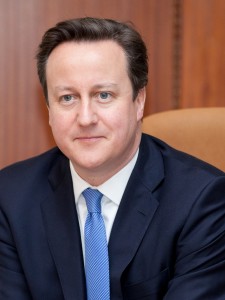
     

  • David Cameron – 2015 Statement with President Barack Obama

    davidcameron

    Below is the text of the statement made by David Cameron, the Prime Minister, with President Barack Obama, on 7 June 2015 at the G7 meeting in Bavaria, Germany.

    President Barack Obama

    It is wonderful to be back with my good friend and partner David Cameron. I’d like to congratulate him, as I did over the phone, on his resounding election victory and look forward to working with him on a whole host of issues in the coming year.

    This is going to give us an opportunity to discuss a number of particular challenges that require US and United Kingdom leadership. We’ll be talking about Russia and Ukraine, and the importance of us maintaining the sanctions regime to put pressure on Russia and separatist forces, to implement fully the Minsk agreement. We think that there can be a peaceful, diplomatic resolution to this problem but it’s going to require that Europe and the United States and the Transatlantic Partnership, as well as the world, stay vigilant and stay focused on the importance of upholding the principles of territorial integrity and sovereignty.

    We’ll have an opportunity to discuss the effort against ISIL and the situation in Iraq and Syria, and assess what’s working, what’s not and how we can continue to make progress there in dismantling the infrastructure that ISILhas built, and in promoting the kinds of political inclusion in Iraq and ultimately in Syria that are going to be necessary for a long-term solution.

    We’ll also have a chance to talk about hot spots like Libya and Nigeria where obviously terrorism has gotten a foothold. And more affirmatively, we’re going to have the opportunity to continue the discussion bilaterally that we’ve been having with the other G7 members around issues like trade and climate change and the importance of US and British leadership on those issues.

    So I am very much looking forward to this conversation. We have no closer partner around the globe on a whole host of critical issues. I would note that one of the great values of having the United Kingdom in the European Union is its leadership and strength on a whole host of global challenges. And so we very much are looking forward to the United Kingdom staying a part of the European Union because of – we think its influence is positive not just for Europe but also for the world.

    Prime Minister David Cameron

    Well, thank you very much, and it’s good to be back with my friend and close partner Barack Obama, and working together over the coming years. As you said Barack, there are so many issues to discuss at this meeting and bilaterally, with our very close partnership and the partnership between Britain and the United States, that special relationship. But they all really come down to two words: prosperity and security. What we want for our people back at home, which is the chance of a job and also the chance of greater security. And whether we’re discussing the situation in the Ukraine, the need to fight Islamist extremist terrorism, particularly in Iraq and Syria, but elsewhere around the world, it’s about keeping people safe back at home, where the cooperation between our security and intelligence services and our military is as close as it’s ever been, and as effective as it’s ever been.

    We’ve also got a lot of issues to discuss that really will determine whether we can have successful, strong economies, like the need for these trade deals we were talking about earlier, and also the deal on climate change which is going to be very important for our future prosperity and security.

    So a lot of issues to discuss tonight and it’s great to be back together with you addressing them in this bilateral meeting as well as in the bigger G7. So thank you very much.

  • Robert Goodwill – 2015 Speech at International Maritime Organization

    robertgoodwill

    Below is the text of the speech made by Robert Goodwill, the Parliamentary Under Secretary of State for Transport, at the 29th Assembly of the International Maritime Organisation on 23 November 2015.

    Introduction

    Mr President, Your Excellencies, Secretary-General, distinguished delegates.

    On behalf of Her Majesty’s government of the United Kingdom of Great Britain and Northern Ireland, I welcome you to London for the 29th Assembly of the International Maritime Organization.

    The United Kingdom is immensely honoured to host the IMO.

    It’s a privilege we take very seriously.

    So it’s a pleasure to address you this morning.

    Condolences

    Can I start though by offering my profound condolences to the distinguished delegation of France in light of the horrific terrorist attacks in Paris last week.

    Our thoughts and prayers are with the families and friends of those who were killed and injured.

    And we stand shoulder to shoulder with France in the fight against those who wish to impose their barbaric values on the rest of the world.

    Their actions only serve to make us stronger.

    Maritime industry

    The maritime industry has always had global reach.

    In fact it gave birth to the global economy.

    Currently over 80% of global trade is moved by ship.

    And by 2030, sea trade is predicted to double.

    So we’re facing great opportunities, but also great challenges.

    By bringing the international maritime industry together, the IMO will help us take advantage of those opportunities, while also helping us meet those challenges.

    And that’s something we are focused on today (23 November 2015), as we look forward to the new biennium, but also as we reflect on the achievements of the past 2 years.

    Highlights of past biennium

    So, what achievements stand out?

    Firstly, I congratulate the IMO on the adoption of the ‘Polar code’.

    It will not only improve safety, but also help protect the environment of both polar regions.

    It showed the organization responding in a timely manner to emerging opportunities for shipping in these regions.

    The United Kingdom was pleased to contribute, just as we were pleased to chair the intercessional working group which finalised the amendments toMARPOL ahead of the code’s launch.

    Another noteworthy achievement was the Nairobi International Convention on the Removal of Wrecks.

    We are very grateful for this important convention, which clarifies responsibilities around the reporting, locating and removal of wrecks.

    Since February, my officials have issued over 11,000 wreck certificates — of which only 800 were for UK registered ships.

    The growth of the World Maritime University has been another highlight.

    And the United Kingdom was delighted to attend the inauguration of the new premises in Malmö earlier this year.

    We continue to provide visiting professorships at the World Maritime University.

    To contribute to the education of the next generation of maritime experts.

    I think we can all agree that for our industry to thrive we must have a good source of suitably qualified personnel.

    So it was fitting that this year’s theme for World Maritime Day was maritime education and training.

    And finally I’d like to mention the recent adoption of the ‘IGF code’ which will provide a sound regulatory framework so we can use emerging, cleaner fuel technologies safely and effectively.

    Of course these — and many other IMO successes — came under the leadership of Mr Sekimizu (Koji Sekimizu, Secretary-General, International Maritime Organization).

    But the move to a new biennium marks the end of Mr Sekimizu’s time at the organization.

    I’m sure you will all have plenty of opportunity to thank him during this assembly.

    But I would like to offer my personal thanks and appreciation for his huge contribution to the IMO — and wish him well in his retirement.

    Migrants

    As we look to the future, it’s vital that we act together.

    That’s what the IMO is all about.

    Partnership and co-operation.

    Mass migration by sea, in particular the current crisis in the Mediterranean, is something the international community must tackle.

    We must redouble efforts to end the loss of migrants’ lives at sea.

    But we must also keep working with the countries of origin and transit so they’re better placed to deal with the problem at source.

    We welcome the UN Security Council’s adoption, in October this year, of resolution 2240 to deter the smuggling of migrants.

    Multi-agency collaboration is key — as demonstrated by the Rescue at Sea guide produced by Institute of Chartered Shipbrokers, IMO, and United Nations High Commissioner For Refugees.

    The UK is providing humanitarian assistance to help as many refugees as possible in the region.

    And we continue to support joint efforts under Frontex Operation Triton — the border security operation conducted by Frontex, the European Union’s border security agency.

    We would also like to thank our Mediterranean colleagues, particularly Italy, Greece and Malta, for their dedication in responding to the crisis, and also the hugely valuable contribution of merchant shipping.

    Future challenges

    As we look forward to the next biennium and beyond there are further challenges and opportunities facing the organization.

    Boosting world trade is essential to raise standards of living everywhere.

    And while we recognise the importance of the technical work of the IMO, we must not forget our obligation within the convention to remove unnecessary restrictions on global shipping.

    I believe that the International Maritime Organization is the right body to regulate the world’s maritime industries.

    With this in mind, I welcome the organization’s work on the review of administrative requirements.

    The consultation showed the desire of the IMO to be open and outward-looking.

    It is only when we hear the views of all stakeholders that we are in a position to make sound and informed decisions.

    The review has come up with a number of recommendations, some of them challenging.

    But the IMO can rise to the challenges it has set itself in the coming biennium, and beyond, to ensure regulations are effective and fit for purpose.

    It is essential that government and the industry work together to design proportionate regulation that maintains competition, that protects the marine environment from pollution, and that keeps shipping safe and secure.

    Any regulation must reflect the international nature of the maritime sector.

    Radically different rules for different parts of the world seldom make sense.

    Most of the time they’re inefficient and expensive and they can lead to perverse incentives.

    We are also encouraged by the progress made in the council reviewing the current strategic framework and establishing a new strategic plan.

    The UK believes that the new framework should be clear and straightforward, and lead the IMO toward future biennia.

    We will continue to take a leading role in this work.

    In particular, helping ensure that right tools are applied to evaluate the potential impacts of new regulations.

    Our shared commitment must be to create a level and competitive playing field, promoting clear regulations, and removing regional obstacles to fair trade.

    Fair and effective enforcement is key.

    Another significant step for the organization is the beginning of the Mandatory Member State Audit Scheme next year, which again demonstrates the organization’s wider vision beyond its immediate sphere of influence.

    We are all aware of the very important meeting of COP 21 which begins next week.

    The IMO has already made great progress on climate change through its energy efficiency design index and the ship energy efficiency management plan.

    And then there is the IMO’s work on developing a global data collection system which will inform future technical and operational measures for shipping.

    The IMO is the organisation which can address the climate change impacts of international shipping, working in partnership with other members of the United Nations family, but retaining its responsibility for maritime transport.

    The anticipated growth of world trade will increase shipping activity.

    And we also expect to see further modal shift towards shipping.

    We strongly support the work of the IMO to achieve a higher level of energy efficiency in the world fleet, thereby reducing the climate change impact of every tonne of cargo carried on every voyage by every individual ship.

    Before I finish, I’d like to take this opportunity to thank all those who make the IMO a success and uphold its positive status within the United Nations.

    These include the chairmen of the Committees & Sub-Committees, the Secretariat and Interpreters and of course you, the many officials who attend IMO with their delegations.

    Without you, the IMO would not have the reputation it enjoys.

    Mr President, Mr Secretary-General.

    I would also like to thank you for inviting me to address this esteemed audience today.

    And on behalf of Her Majesty’s government I wish you all a productive and enjoyable stay in London.

    Finally, I would like to reaffirm the United Kingdom’s commitment to both the work of the IMO and our honoured role as host government.

    We will — of course — continue to contribute to the critical work of the organization over the next biennium.

    And I look forward to meeting as many of you as possible at the UK’s reception on the evening of December 1st.

    Thank you.

  • David Cameron – 2015 Statement in Paris

    davidcameron

    Below is the text of the statement made by David Cameron, the Prime Minister, in Paris on 23 November 2015.

    Good morning.

    It is good to be back in Paris – a city whose people have shown such courage, determination and resilience.

    A city where millions came out on Friday night to live their lives and to send a very clear message to the terrorists that you will never win, you will never beat us.

    Just over one week on from the devastating terrorist attacks, our thoughts are still with all those who lost loved ones and with the injured who are still recovering.

    I want to praise the swift and decisive action taken by the French authorities in response and to prevent further attacks in Paris.

    And, in particular, pay tribute to the bravery of French police officers.

    It is absolutely right to take decisive action to stop terrorists when they are threatening the lives of innocent citizens.

    The United Kingdom will do all in our power to support our friend and ally France to defeat this evil death cult.

    Today, President Hollande and I have discussed how we can further strengthen the counter-terrorism co-operation between our 2 countries and work together to defeat ISIL in Iraq and Syria.

    Let me say a word about each.

    Counter-terrorism

    First, counter-terrorism.

    We face a shared threat.

    And we must share information and intelligence to better protect ourselves from these brutal terrorists.

    The UK and France are already doing this but today we have agreed to step up our efforts even further and to work more closely with our European neighbours.

    In particular, we must do more to tackle the threat of returning foreign fighters.

    This requires a pan-European effort.

    We need a stronger external EU border to protect our security more effectively, with screening, systematic security checks and greater sharing of data amongst member states.

    We must, without any further delay, finally agree rules that will enable us to share passenger name records. It is frankly ridiculous we can get more information from countries outside the EU than we can from each other.

    And we must do more to crack down on the trade in illegal firearms to stop them getting into the hands of terrorists who are determined to wreak such misery with them.

    I welcome the strong backing of the EU Justice and Home Affairs Council for all these measures but now we’ve got to turn words into action.

    We simply cannot afford to wait.

    Syria and Iraq

    While we do more to protect ourselves here in Europe, we must also do more to defeat ISIL in their heartlands in Syria and Iraq.

    The UK is already playing its part as a member of the counter-ISIL coalition – striking targets in Iraq, providing intelligence over the skies of Syria and helping our allies with vital air-to-air refuelling.

    On Friday, the United Nations unanimously backed action to destroy ISIL in Syria and Iraq.

    And later this week, I will set out in Parliament our comprehensive strategy for tackling ISIL.

    I firmly support the action that President Hollande has taken to strike ISIL in Syria and it is my firm conviction that Britain should do so too.

    Of course, that will be a decision for Parliament to make.

    Today I have offered President Hollande the use of RAF Akrotiri for French aircraft engaged in counter-ISIL operations and additional assistance with air-to-air refuelling.

    We also discussed ongoing efforts to secure a political solution to the conflict in Syria.

    We welcome the recent talks in Vienna and we will do all we can to sustain the momentum and to bring all parties to the table so they can agree on a way forward that ends the bloodshed and puts Syria on the path to a more democratic, inclusive and stable future.

    Conclusion

    These have been important talks this morning.

    Later this week, President Hollande will hold discussions with President Obama, President Putin and Chancellor Merkel.

    It is clear that the world is coming together to tackle this evil terrorist threat.

    That was clear on Friday night when – almost exactly one week after the brutal terrorists murdered people here in Paris and sought to divide us…

    …the world united in New York.

    We have shown our firm resolve and together we will destroy this evil threat.

    Nous sommes solidaires avec vous.

  • Jeremy Corbyn – 2015 Speech to Labour South West Conference

    jc-small

    Below is the text of the speech made by Jeremy Corbyn, the Leader of the Opposition, at Labour’s South West conference held in Bristol on 21 November 2015.

    Thank you for that kind introduction and welcome.

    It’s great to be back in the south west – the region where I was born.

    I want to congratulate our new MPs in this region:

    Thangam Debbonaire for Bristol West…. and Karin Smyth in Bristol South.

    As well as our returning MPs….  Ben Bradshaw in Exeter and Kerry McCarthy in Bristol East.

    We have council elections across this region next year.. and a mayoral contest in this city.. where we have an excellent candidate in Marvin Rees.

    Last night we launched Marvin’s campaign with a fundraiser here in Bristol.

    Over the summer we held a huge rally here, and others across the south-west..  in Plymouth, Exeter and at Tolpuddle.. for the Tolpuddle Martyrs’ Festival.

    Tolpuddle reminds us of the roots of our movement.
    In working people organising together for a better life.

    The bravery, determination and endurance of those early trade unionists inspire us to this day.

    They understood the overriding importance of solidarity – no matter how tough the circumstances.

    And trade unions are as necessary today as ever – not least in a region like this, where up to 40% of jobs in Devon and Cornwall earn less than the living wage. That makes Devon and Cornwall the low pay capital of Britain.

    ‘Together, we’re stronger’. ..‘United we stand, divided we fall’… These are not just slogans of the Labour movement, but enduring truths for all of us.

    We’ve seen those values of solidarity and steadfastness in the response of the people of Paris to the horrific events of a week ago.

    Those attacks on civilians were an indefensible outrage.
    The same goes for the recent terrorist atrocities in Beirut, Ankara and elsewhere.

    Those who planned and organized these mass killings must be brought to account.

    The attacks were also an attempt to break the unity of our communities.

    But the quiet heroism we have seen in Paris and other cities, by people who refused to be cowed or divided, is an example to everyone.

    Today I want to use this chance of speaking to you to stand back a bit and reflect on the huge changes that have taken place here in Britain.. in our politics and our party.. how we got here and on the direction we now need to take.

    By any measure, this has been an extraordinary few months for us all – in the Labour party, in British politics and across the country as a whole.

    In six months we’ve gone from the demoralisation of a general election defeat.. through what can only be described as an eruption of grassroots democracy in our political system.

    Two months ago, that tide of people demanding a real political alternative delivered a landslide in the Labour leadership election.

    Of course, I’m humbled by the huge support and mandate I’ve been given.

    It’s been a rollercoaster.. no doubt about that.

    But I also know it’s not about me personally.

    It’s about a thirst for a different kind of politics.. which I’m honoured to help give voice to.

    And we’ve drawn strength from the huge numbers that continue to turn out across the country… to join what is now a deeply rooted movement for change.. for a different kind of Britain.

    Labour party members and supporters in hugely expanded numbers, of course.. but also hundreds of thousands who’ve never been involved in politics before.

    What seemed to come out of nowhere has certainly taken the powers-that-be by surprise.

    But we know that what’s happened in the Labour party has deep roots in something that’s been building up in our country and across the world for years. It’s been a political rebirth.

    People are fed up with a so-called free market system that has delivered grotesque inequality, stagnating living standards for the many…  calamitous foreign wars without end … and a political stitch-up which leaves the vast majority of people shut out of power or influence.

    Since the crash of 2008, anti-austerity politics – and the demand for an alternative – has led to the rise of new movements and parties.. in one country after another.

    In Britain it’s happened in the heart of traditional politics, in the Labour party… which is something we should be extremely proud of.

    It’s exactly what Labour was founded for: to be the voice of the many.. of social justice and progressive change from the bottom up.

    Now of course it’s been a bumpy couple of months.

    The sort of change represented by an election like we went through … was always going to be a difficult transition.

    But amid all the sound and fury – and some stuff that has been truly off-the-wall – that change is already making itself felt.

    Since we formed our new leadership team and shadow cabinet, Labour is now an unequivocally anti-austerity party.

    We have already defeated George Osborne in parliament over the Tories’ swingeing attacks on working families’ tax credits.

    Labour is now at last committed to bringing the railways back into public ownership… supported by the large majority of British people.

    We’ve dragged the government behind us on the threat to our steel industry.

    And we have shamed David Cameron into pulling the plug on his tawdry prison deal with Saudi Arabia.

    That’s our first two months.

    The campaign we launched across the country this summer will continue. Every week, I’m campaigning, speaking and meeting people throughout Britain.

    But now the dust is settling, I think it’s time to set out, not just where my leadership has come from, but where I want this movement to go.. what we want to achieve.. and what our our vision for Britain is all about.

    First and foremost, this Labour leadership is about a genuinely new political direction for the country.

    The platform I was elected on is based on three pillars.. and everything we want to do will be based on those foundations.

    The first pillar is the new politics: the democratisation of public life from the ground up.. giving people a real say in their communities and workplaces.. breaking open the closed circle of Westminster and Whitehall – and yes, of boardrooms too.

    That’s why we want to see a mushrooming of online democracy and citizen’s assemblies.. and why we’re backing a constitutional convention to bring power closer to people, in every nation and region of our country, in every community, town and city.

    That’s why we want communities to have more direct control of their own services.

    As part of our constitutional convention, Jon Trickett will be asking citizens’ assemblies to discuss where powers should be held, who should hold them, and how they should be accountable … of the voting system, House of Lords reform and the voting age.

    Some local councils have already led the way – through participatory budgeting or setting up Fairness Commissions.. to work out how council resources can be harnessed to increase equality.

    People need more power in the workplace too.

    The Conservatives are stripping away the most basic of workers’ rights through the Trade Union Bill.

    Not only will we reverse the Bill when we get back in 2020.. we will extend people’s rights in the workplace – and give employees a real voice in the organisations they work for.

    And Ian Lavery is leading a working group to drive forward this agenda.

    Our party needs to be at the heart of this democratization drive as well.

    Too often in the past, the democratic decisions of our conference have been ignored by the party leadership,

    To many, it’s felt like a small cabal in Westminster decides, while you’re expected to be loyal foot soldiers pounding the streets for Labour.

    But we want people to be able to participate in politics.. to have a direct voice in every part of their lives.

    Our leadership election gave an insight into what can be achieved – 400,000 people were mobilised to vote, and more than half voted online.

    Every week I’ve been asking people for their suggestions of what I could raise with David Cameron at Prime Minister’s Questions – and thousands of people send in their own questions.

    Over the summer, the parliamentary party got a decision badly wrong. We abstained on the welfare bill.

    Would we have made that mistake if we had asked you, our members, what we should have done?

    Why not give members the chance to take part in indicative online ballots on policy in between annual conferences – and give our grassroots members and supporters a real say?

    We want to see this democratic revolution extend into our party.. opening up decision-making.. to the hundreds of thousands of new members and supporters that have joined us since May.

    It’s a huge opportunity for Labour: to remake our party as a real social movement.. organising and rooted in our communities.

    That’s not about fighting sectarian battles or settling political scores.

    It’s about being open to the people we seek to represent … giving them a voice through our organisation and policy-making.. and drawing members into political action.

    Of course the new politics is also about open and respectful debate.
    All my political life I have stood for tolerance, debate and the democratic determination of policy.

    But I have also been elected to lead, to express the aspirations and concerns of millions of people – hundreds of thousands of whom gave me my mandate.

    We owe it to them to unite and conduct our debates in a comradely and constructive way… and all of us to live with the outcomes. It’s about respecting democracy – and also those who depend on us.

    The second pillar of our project for Britain is a new economy.
    It’s anti-austerity economics.. that goes without saying.
    And like so many other of the policies we’re developing.. that’s something that unites our shadow cabinet and MPs..  with members across the party.

    Austerity is a political choice, not an economic necessity.. as our new shadow chancellor John McDonnell told the party conference.

    Five years ago, the Conservatives said they were going to wipe out the deficit and cut the debt.

    Instead, slashing services and benefits – while cutting taxes for the wealthy – only slowed our recovery… and loaded the burden of the banks’ crisis onto the backs of people… who had nothing whatever to do with it.

    Recovery only got going once Osborne panicked.. took the brakes off … and pumped up housing credit to get through the general election.

    Now the Tories are about to impose a new wave of even more devastating cuts.. and effective tax rises for millions of working families.

    That’s happening just as the risks from a weakening global economy are growing.

    Osborne’s economy is a house built on sand.

    But what Labour now stands for is far more than stopping the damage being done by the Tories.. and their threat to our economic future.

    We want to see a break with the failed economic orthodoxy that has gripped the establishment in this country for decades.

    The City elite that was supposed to know best brought our economy to its knees.

    The 1980s orthodoxy of privatisation, deregulation and low taxes on the rich hasn’t delivered sustainable growth.

    And it hasn’t delivered decent living standards for most of us .. let alone economic security.

    That model of how to run an economy is broken.

    The results in Britain have been a lop-sided and unstable economy.. an explosion of insecure low-paid jobs.. declining productivity.. and stagnating or falling incomes for the majority.

    Our alternative will put public investment first.
    It will put science, technology and the green industries of the future front and centre stage.

    We want to see the reindustrialisation of Britain for the digital age.. driven by a national investment bank.. as a motor of economic modernisation for the 21st century.

    Not the phoney Northern powerhouse of George Osborne’s soundbites – but a real economic renaissance of the north: a renaissance based on investment in infrastructure, transport, housing and technology.. that provides a solid return.

    We need the same for the South West too… investing in a new Okehampton bypass and rail electrification on the Great Western line.

    A genuinely mixed economy.. of public enterprise and long-term business commitment.. that will provide the decent pay, jobs, housing, schools, health and social care of the future.

    An economy based on a new settlement with the corporate sector.. that, yes, involves both rights and responsibilities.

    Labour will always distribute the rewards of growth more fairly. That’s for sure.

    But to deliver that growth.. and create that wealth in the first place.. demands profound change in the way the economy is run.

    Change that puts the interests of the public and the workforce.. ahead of short-term shareholder interest.

    Only an economy that is run for the real wealth creators – the technicians, designers, cleaners, supermarket and health workers..  as well as the entrepreneurs and self-employed – and puts them in the driving seat .. is going to deliver prosperity for all in the future.

    The third pillar of our vision for Britain is a different kind of foreign policy – based on a new and more independent relationship with the rest of the world.

    A relationship where war is a last resort.

    For the past 14 years, Britain has been at the centre of a succession of disastrous wars..  that have brought devastation to large parts of the wider Middle East.

    They have increased, not diminished, the threats to our own national security.

    That in no way excuses or mitigates the responsibility of those who carry out these indefensible outrages, whether in Paris a week ago or in the last 24 hours in Bamako, Mali.. or Beirut or Ankara.

    Absolutely nothing can justify the targeting of civilians, by anyone, anywhere.

    But the experience of Afghanistan.. Iraq… and Libya has convinced many of our own people .. that the elite’s enthusiasm for endless military interventions .. has only multiplied the threats to us – while leaving death and destabilisation in their wake.

    David Cameron told parliament this week that last Friday’s atrocities in Paris, claimed by Isis, made the case for British military action in Syria stronger.

    Everyone, including British Muslims, wants to see the defeat of this murderous and reactionary cult.

    Yesterday I was in Finsbury Park mosque to support the Muslim community.. and as I said in parliament on Wednesday, at times like these.. we must stand more strongly than ever.. against anti-semitism, Islamophobia or racism in any form.

    And Labour will consider the proposals the government brings forward – including its responses to the Foreign Affairs select committee report opposing British air strikes in Syria.

    But in our view, the dreadful Paris attacks make the case for a far more urgent international effort… to reach a negotiated settlement of the Syrian civil war – and end the threat from Isis.

    It is the conflict in Syria…and the consequences of the Iraq war …which have created the conditions for Isis to thrive and spread its murderous rule.

    And it is through political agreement to end the civil war – negotiated with all the external powers.. backed by the United Nations.. and with Syrians in control of their own country – that Isis will be isolated and defeated.

    Action against ISIS that sticks… on the ground.. that destroys the virus .. and reclaims hearts and minds, as well as territory.. will have to come from within the Arab and Muslim world itself.

    It can’t be seen as an external intervention.. although the international community has a part to play.

    That’s why we have called on the government to work through the UN. And why we should use the UN security council resolution passed last night.. to accelerate moves towards a comprehensive settlement of the conflict.

    Of course, Labour will support every necessary measure to protect people on the streets of our towns and cities.

    But it is vital at a time of tragedy and outrage not to be drawn into responses which feed a cycle of violence and hatred.

    As the US president Barack Obama said recently, Isis “grew out of our invasion of Iraq” and is one of its “unintended consequences”.

    We must not keep making the same mistake – again and again.

    Let me make it clear. Labour will always stand up to any threat to this country and our people.

    We will never leave Britain unprotected.

    But we need a different approach to foreign policy that puts peace.. justice.. and real security first.

    Our experience of 14 years of failed foreign wars has driven home.. that human rights are better protected through solidarity and universally accepted bodies such as the UN.. rather than arming dictatorships and unilateral military force.

    Engagement, dialogue and negotiation through the UN isn’t a cop-out.

    We’re seeing the start of a process in Vienna that could pave the way for a settlement of the Syrian conflict.. and end the refugee crisis.

    That’s clearly a better and safer way.. to relate to the Arab and Muslim world.

    It’s one that also better reflects Labour’s values.

    Fair trade.. respect for human rights.. aid, internationalism and conflict resolution – instead of perpetual war.. and support for dictatorial regimes that threaten.. not protect.. our security.

    That’s also part of the reason so many…. including at the heart of our military establishment…. question the sense of renewing the Trident weapons system at huge cost, when the threats to our security demand a different defence strategy in the 21st century…. even as we do everything necessary to protect jobs and hi-tech industry.

    We all know there are different views on nuclear weapons in our party, passionately held on both sides.

    But having that debate in a serious and respectful way isn’t a sign of weakness.

    It’s a recognition that some of the most important issues facing our country.. have been excluded from mainstream politics for too long.
    And we are determined to end that.

    Just as we are determined to put the need for a progressive reform agenda in the European Union back on the table – everything from workers’ rights…. to ending corporate privilege.. and enforced privatisation ….  instead of David Cameron’s timid and skewed renegotiation.. choreographed for the cameras.

    But this is the prime minister who tries to wrap himself in the Union Jack.. and claim his opponents hate Britain.

    The gall of the fake Tory patriots is really something to behold.
    Who is it who’s really anti-British?

    Is it the Tory ministers and their non-dom City hedge-fund backers.. who sell off our national assets to overseas governments and corporations?

    Who take instructions from Gulf tyrannies on British domestic policy..  in exchange for arms and oil deals.. or who outsource decisions on our own national security to the US government?

    What kind of patriotism is it.. to sell your country to the highest bidder?

    To flog off the publicly owned NHS to privateers?

    How is it patriotic to take money from working families.. and hand control of the country to a super-rich elite?

    What’s pro-British about a government that slashes support for serving soldiers and military veterans?

    Or ministers whose police cuts are so severe that, as senior officers have warned, they are expected to “reduce very significantly” the ability to respond to a Paris-style attack?

    The letter from senior police chiefs to Theresa May after the Paris tragedy makes clear that planned cuts would have a severe impact on the capacity of the police to respond to attacks on this scale.

    This is an alarming situation. By pressing ahead with these cuts, the government is failing in its most basic duty.. to protect our citizens.

    The planned cuts to police numbers and capability pose a direct threat to the security of our own people.

    They must be halted.

    Following discussions with Andy Burnham, we want to make this very clear.

    After Paris, there must be no cuts in the police front line.

    That means no reduction in numbers, essential equipment or helicopter support.

    To press ahead with these cuts would be gambling with the safety of the British people.

    Labour will take no lectures in patriotism from the Conservatives, the political wing of the hedge-funds and the bankers.

    How dare Cameron’s Conservatives pretend that they speak for Britain.

    We stand for this country’s greatest traditions: the suffragettes and the trade unions..  the Britain of Mary Wollstonecraft, Shelley, Alan Turing and the Beatles… and perhaps our finest Olympian – and a Somalian refugee – Mo Farah.. an Arsenal fan of course.

    And for the working people of this country who fought fascism.. built the welfare state.. and turned this land into an industrial powerhouse.

    The real patriots.

    For all their talk of defending the country, Cameron’s Conservatives won’t even take action to save our steel industry.. when the means are at hand.

    A job in Scunthorpe is as good as a job in the City of London.

    But Cameron’s government is sitting on its hands.. while what’s left of our manufacturing based is bled white by import dumping and its own inaction.

    We need Cameron and Osborne to act as decisively in 2015 .. as Gordon Brown did in 2008.. when the Labour government took over RBS and Lloyds.. to prevent economic collapse.

    Why didn’t Cameron’s government help with high energy costs, without waiting for approval from Brussels?

    Or cut the business rates the industry pays… which are much higher than elsewhere in Europe?

    And what about an industrial strategy to build a modern manufacturing base?

    If the Italian government can take a public stake to maintain their steel industry, so can we.

    That’s why Labour will be pressing Cameron to use the powers we have.. to intervene and, if necessary, take a strategic stake in steel..  to save jobs and restructure the industry.

    Cameron has the power.

    He must act now to save steel.

    The Tories won in May on their lowest ever share of the vote for a parliamentary majority – just 37% of those who voted.. and less than a quarter of those eligible.

    That’s no landslide in anyone’s book.

    But Labour failed to win back the economic credibility lost in the financial crash of 2008.. or convince potential supporters we offered a genuine alternative.

    The result is that millions of families now face deep cuts to their incomes and a savage squeeze on public services.. while the richest enjoy tax cuts and household-name corporations pay almost no tax whatsoever.

    Privatisation and job insecurity are being let rip.. while the government unleashes a legal onslaught on the very trade unions that could defend them.

    Meanwhile middle income voters faces growing insecurity.. and relentlessly rising costs.. from housing to higher education.

    We will oppose and resist this government’s brutal and incompetent policies at every turn.. inside and outside parliament.

    And we will base our campaigns on the commitment and enthusiasm of the hundreds of thousands who have been drawn into Labour politics by my election.

    But at every stage.. starting with next month’s by-election in Oldham.. we will be focused on how to build the support to win elections..  in every community and every part of the country..  laying the ground to win back power for Labour in 2020.

    In May, the votes we needed to win fragmented in all parts of the country..  while millions of our potential voters stayed at home.

    Many didn’t believe we offered the alternative they wanted. Some of our supporters were drawn to Ukip.

    But even if Ukip won’t build you a home, find a school for your kids, or protect the NHS.. it will always find someone to blame.

    It’s true there’s an electoral mountain to climb.

    But if we focus everything on the needs and aspirations of middle and lower income voters….  if we demonstrate we’ve got a viable alternative to the government’s credit-fuelled, insecure economy..
    I’m convinced we can build a coalition of electoral support…. that can beat the Tories in four and a half years’ time.

    That means being the voice of women, of young people and pensioners…. middle and lower income workers….
    the unemployed and the self-employed….
    minority communities – and those struggling with the impact of migration at work.. and in our towns and cities.

    It means putting climate change and green jobs..
    housing..
    the NHS..
    education..
    social care..
    workplace rights..
    mental health..
    and arts for all.. at the centre of everything we do and say.

    Running like a golden thread through Labour’s history is the struggle for equality.

    And rampant inequality has become the great scandal of our time, sapping the potential of our society.. and tearing at its fabric.

    Labour’s goal isn’t just greater equality of wealth and income.. but also of power.

    Our aim could not be more ambitious.

    We want a new settlement for the 21st century: in politics.. business.. our communities.. with the environment, and in our relations with the rest of the world.

    Every one of us in the Labour party.. is motivated by the gap between what our country is .. and what it could be.

    We know that in the fifth largest economy in the world.. the foodbanks.. stunted life chances.. and growing poverty alongside wealth on an undreamt of scale.. are a mark of shameful and unnecessary failure.

    We know that privatisation, outsourcing and unscrupulous employers are driving down pay and conditions.. as the Tories kick away the limited protection people still have.

    We know how great this country could be.. for all its people.. with a new political and economic settlement..

    With new forms of democratic public ownership,.. driven by investment in the technology and industries of the future.. with decent jobs, education and housing for all.. with local services run by and for people.. not outsourced to faceless corporations.

    That’s not backward-looking, it’s the very opposite.

    It’s the socialism of the 21st century.

    But it’s not simply a Labour offer to the British people.. cooked up like some political marketing wheeze.

    What we’re starting this autumn is a democratic transformation..  inside and outside our party.. to build a future that can belong to the British people.

    Based on the three pillars of my leadership mandate, that’s our goal.. to to take back power from the 1% and put it in the hands of our communities..

    Those communities are being damaged by this Tory government.
    Our people are hurting.

    That’s why we need a Labour mayor in Bristol next year… and a Labour government in 2020.

  • Sam Gyimah – 2015 Speech on the School Business Professional

    samgyimah

    Below is the text of the speech made by Sam Gyimah, the Parliamentary Under Secretary of State for Childcare and Education, at the Birmingham Metropole Hotel on 19 November 2015.

    Thank you for that very kind introduction.

    It’s a real pleasure for me to be here today.

    Background and wider context

    Across the public sector, we know the challenge over the next Parliament will be this: how can we deliver world-class public services whilst spending within our means?

    And what this boils down to is simple: good financial management.

    It is vital that our public services make the most effective and efficient use of the resources they are given, ultimately from the taxpayer. This is not just a ‘nice to have’ – it is core and fundamental to each and every school.

    For schools to deliver the high standards we expect of them, they must start from a position of strong financial management.

    School business managers

    School business management has changed dramatically in recent years. The number of school business managers, bursars, finance directors and finance officers in our state-maintained schools has now almost tripled since 2005.

    ‘The age of the school business manager’ report published this year highlights that 90% of secondary schools have access to a school business manager, making them an integral part of the system. You are enabling schools to be more innovative and autonomous in freeing themselves from local authority control and being responsible for their own decisions and strategy. And I have great expectations that your role will become even more fundamental to schools across the country.

    It is obvious to everyone in this room today but it is worth saying again: the role of the school business manager is far more than simply managing the finances of a school. The role encompasses far more because the distinction between the back office and the frontline is false.

    You are all part of the frontline.

    You are all directly enabling schools to drive up their performance which ultimately impacts outcomes for their pupils.

    You are all playing a vital role in the strategic direction and governance of schools.

    And, as a result, you are having a direct impact on the success of our education system as a whole.

    Over the last Parliament, we had a laser focus on driving up educational standards.

    We drove a culture of high expectations for all. And began our mission to spread educational excellence everywhere.

    But, underpinning educational excellence is sound financial management.

    Higher spending per pupil does not in and of itself equal better attainment. Educational systems around the world show this. It is good spending which drives this improvement in schools, and that is why your role is so important.

    The professional standards framework we are launching today will formalise this valuable role further. Defining more clearly the characteristics of a good school business manager will help to further demonstrate the importance of the job and the expertise required, raising the status of your profession in the process.

    ‘The age of the school business manager’ report also provides encouraging reading on this point. Two years ago, fewer than half of respondents from senior leadership teams believed the school business manager role was valuable or essential. That figure now stands at well over 80%; a dramatic increase in such a short space of time.

    Publishing these standards is, therefore, a fantastic opportunity to remind the sector of the crucial value you add.

    But the discipline of school business management should not be restricted only to those who call themselves school business managers. Governors, headteachers, senior leadership and CEOs of multi-academy trusts all have an important part to play in the strategic direction of schools, and they will increasingly rely on you for your knowledge and expertise: in generating income, in asset management, in procurement, in HR, in health and safety; if I continued with this list my speech would have to be very long indeed!

    Funding reform

    We all want the same thing from our schools, to extend opportunity and deliver a world-class education to every young person across the country, so that everyone, no matter where they come from, has a fair shot to succeed. Subsequently, we all want schools to be funded fairly, rather than as a result of history.

    Raising standards

    Fairer funding will channel resources to the schools where they are needed most and can have the greatest impact.

    Our aim as a government is simple – to achieve educational excellence, everywhere. To allow us to do this effectively, we need to make sure that schools are correctly funded to reflect the needs of their pupils.

    Efficiency

    I’m sure I am preaching to the choir when I also say that schools have a duty to spend the money they receive efficiently. We know that by continuously pushing to find the best deals and value for money in schools’ procurement spend, the money saved can be used to improve the frontline service that children benefit from every day.

    Given the difficult financial climate we find ourselves in as a country, it is more important now than ever that schools are relentless in their drive to squeeze the best value out of every pound and penny they receive.

    And this is one of the many areas where your work as school business managers is so vital. Now is the time for you to have a huge impact on schools. Ten years ago, schools were reliant on local authorities without the autonomy to act independently.

    Now, though the academies programme, more and more schools are more autonomous than ever, giving frontline professionals the freedom to think innovatively and creatively about how to make the best use of funding for your pupils.

    For some, this is the effective procurement and management of HR support or property maintenance – for others it is supporting the purchase of frontline intervention services to benefit those students receiving the pupil premium. Your role is strategic – supporting the whole school from back-office functions through to classroom support that directly drives outcomes for pupils.

    Once again, ‘The age of the school business manager’ report highlights important evidence, that “appropriately skilled and effectively deployed” school business managers can provide the senior leadership team in schools with a 33% gain in efficiency.

    In practice, this means they can put more of their time into the classroom, making even more of a difference to those children that need it most – highlighting once again the impact that you all can have on frontline services for pupils.

    Collaboration

    We also know that the most effective schools often work in collaboration with others. They share knowledge, skills, experience and resources in order to achieve their goals.

    This can be done formally through multi-academy trusts, in federations, or as part of a teaching school network, or less formally, through clustering arrangements or collaborative procurement arrangements.

    And we want school business managers to be at the forefront of this. To be leading the way and demonstrating how much you have gained, and will continue to gain in future, by working together.

    Because it is through communities of professionals such as NASBM that we see a truly sustainable and effective way of spreading expertise, innovation and understanding across the sector. And it is through resolute advice from school business managers that school leaders will be convinced of the need to work with other schools to ensure that money is used as efficiently as possible to drive down costs.

    Challenges

    When I met Stephen [Morales, Executive Director of the National Association of School Business Management] earlier this year, we discussed some of the challenges that school business managers face in schools.

    Foremost amongst them was not being listened to. How can you effect changes in schools if senior leaders do not listen to the messages you are giving them?

    So I hope that governors, headteachers, and CEOs of multi-academy trusts across the country will take note now when I say – that this government supports you and this government will continue to support you, because we know how important your role is. Every day, your work underpins the great teaching in our schools and unlocks our goal of educational excellence, everywhere.

    And, as I mentioned at the start of my speech, the professional standards framework we are launching today will only increase your standing and reputation, as experts in your field.

    I am sure this association will go from strength to strength over the coming years. I thank you for the hard work you have done so far, and I eagerly await hearing about the successes I know you will make in the future.

    Thank you so much for having me.

  • Sajid Javid – 2015 Speech on British Business Success

    CBI Conference

    Below is the text of the speech made by Sajid Javid, the Secretary of State for Business, Innovation and Skills, at the Private Business Awards on 30 September 2015.

    It was great to hear that litany of British businesses successes.

    But Charlie, when you said that “everyone” needs a Tangle Teezer hairbrush. Are you sure you meant everyone? I should add that the 1 haircare product that I do use is also made here in the UK. Mr Sheen.

    I know that a couple of years ago the Chancellor stood here and talked a bit about his personal experience of private business. How he grew up watching his dad running the family firm. A firm that employs hundreds of people, turns over millions of pounds, and sells its designer wallpaper right around the world. My early exposure to private business was rather different. The clothes shop my dad ran, for the most part, never had more than 7 employees – him, my mum and, during the school holidays, me and my 4 brothers. That’s why I know more about 1970s ladies fashions than any other male MP. As for exports. Well, I think we once sold a skirt to someone in Wales.

    But whether you’re running a small fashion retailer in Bristol, or an international wallpaper designer on the King’s Road.

    Whether you’re making folding bicycles or folding ballet pumps.

    Whether you’re a kitchen-table start-up or a centuries old family enterprise.

    You all face the same challenges when you’re running your own business:

    • you’re highly exposed to the ups and downs of the economy
    • a new product line could grow the business if it works, or bring it crashing down if it fails
    • one late payment from a major client can wreak havoc with your cash flow
    • it’s rarely easy to find the expert advice you need to help your business expand
    • and even if you’ve got a great idea, finance from sceptical banks can be hard to come by
    • you can’t even rely on Dragon’s Den, as Shaun Pulfrey found!

    But despite all the barriers, despite all the challenges, the people here tonight have come out on top.

    This room is filled with successful businessmen and women. In brewing, retailing, manufacturing, publishing, even corn-popping, you know what it takes to reach the top.

    You know how many obstacles you have to overcome.

    And you know the scale of the challenge that British businesses faced just 5 years ago:

    • the worst recession in almost a century
    • the biggest budget deficit since the Second World War
    • the world’s largest bank bailout
    • a nation saddled with debt and an economy struggling to grow

    When we came to power, in 2010, we knew that Britain couldn’t have a sustainable recovery without a thriving private sector.

    And that’s why we’ve been working tirelessly to support business leaders like you.

    Now I know this evening is all about what private businesses have achieved, and I don’t want to be accused of stealing your thunder.

    But as Ruby just talked so convincingly about the importance of self-promotion, I’m sure you’ll forgive me for telling you a little bit about what we’ve been doing to help!

    • we’ve cut red tape and regulation, giving you the flexibility and freedom to run your companies the way you want to run them
    • we’ve cut corporation tax, so you can invest more of your profits in continued success
    • we’ve introduced a new employer National Insurance Contribution allowance, lifting 450,000 employers out of NICs altogether
    • we’ve created a £1.2 billion package to put a 2% cap on increases in your business rates

    British Business Bank programmes are already supporting £2.3 billion of finance to 40,000 smaller businesses.

    UKTI is helping you access new markets overseas. Only this month I was in China and India, where British private companies are doing just that.

    The Start-Up Loans programme has provided entrepreneurs with more than 30,000 loans worth well over £155 million.

    And the Business Growth Service has brought together a huge range of advice and expertise to help you expand.

    Combining dedicated, dynamic entrepreneurs with a pro-business, pro-growth government has really delivered results.

    • employment is up – in the last 5 years, we have created more jobs than the rest of the EU put together
    • inflation is down
    • the British economy is growing faster than any of our major rivals
    • the number of small and medium-sized companies that are exporting just keeps on going up

    But we’re not about to put up our feet and say “job done”.

    I know that businesses like yours have massive potential for further growth, but surveys show that a shortage of skills and finance are hampering that.

    So from next April we’re abolishing employer national insurance contributions on apprentices under the age of 25, making it easier than ever for you to take on and train the next generation of talent.

    In January we’ll permanently increase the Annual Investment Allowance.

    Not just doubling it, or event trebling it, but raising it by massive 700% so you can spend more on the equipment you need in order to expand.

    We’re rolling out Growth Hubs across the country, helping you access support where and when you need it most.

    And then there’s the Enterprise Bill, which started its passage through Parliament last month.

    The bill will cement the UK’s position as the best place in Europe to start and grow a business.

    It will cut red tape, reform business rates, make it easier for small businesses to resolve disputes, reward entrepreneurship, generate jobs, boost wages and offer people opportunity at every stage of their lives.

    Because this is a government that stands behind you, not in your way.

    A government that is unashamedly pro-business, and believes that successful businesses are an asset to be treasured, not a problem to be dealt with.

    When I was asked to speak at tonight’s award ceremony, I didn’t hesitate to accept.

    Not because of the excellent catering, or because of the quality of the company – although it is of course a pleasure to spend the evening with Charlie!

    I wanted to join you here because tonight is all about celebrating private business.

    And that’s something politicians simply don’t do enough.

    As we’ve already heard, the vast majority of British businesses are in private hands.

    They employ millions of people, pay billions in tax, generate over a trillion pounds of revenue.

    Yet, too many Business Secretaries have overlooked the private business sector in favour of the more glamorous listed companies. The big names and bright lights of Paternoster Square and Wall Street.

    But all businesses start life as private businesses.

    Without you there would be no IPOs, no flotations, no stock market.

    And without you we wouldn’t have some of Britain’s biggest, best, most dynamic and most exciting companies.

    It’s been said that while good companies meet needs, great companies create markets.

    And when I look at the list of nominees here tonight I see a list of great companies who have done just that.

    So let me be very clear – this is one Business Secretary who appreciates private business.

    Who understands the challenges you face, the support you need and, above all, the contribution that you make.

    And that is why I’m here tonight.

    • because successful companies should be applauded.
    • because entrepreneurs should be saluted.
    • because private business deserves to be celebrated.

    Good luck to all the nominees, congratulations to all the winners, and have a great evening.

  • Andrew Selous – 2015 Speech on Criminal Justice Management

    andrewselous

    Below is the text of the speech made by Andrew Selous,  the Parliamentary Under Secretary of State, Minister for Prisons, Probation and Rehabilitation at the Ministry of Justice, made on 23 September 2015 at the Queen Elizabeth II Conference Centre in London.

    Introduction

    Let me start by thanking the organisers of this conference, GovNet, for inviting me to speak at the 15th annual Criminal Justice Management conference here today. I am delighted to follow in the footsteps of my colleague, Lord Faulks, who spoke here last year, and to be speaking today alongside others with whom I work closely – Natalie Ceeney, Lord McNally and Paul Wilson. These people work tirelessly every day to improve the Criminal Justice System, and I applaud them for the work they do.

    Last year, Lord Faulks spoke to you about modernising the Criminal Justice Sector through the Criminal Justice and Courts Bill. Today, Natalie Ceeney is going to talk to you about modernisation of the courts and tribunals through digital technology.

    Under this government, reforms continue to be implemented throughout the Criminal Justice System. During the last government Tom McNally was a crucial part of the Ministerial team leading our reforms and he is therefore ideally qualified to be leading the transformation in Youth Justice. The Prime Minister spoke earlier this month on reviewing the Criminal Justice System, and in particular adapting a whole system approach to the delivery of Youth Justice. I am therefore delighted that Tom is coming here today to talk about this important work.

    Later, Paul Wilson is going to give an independent view of progress on the reforms we have made to the Probation Service. Therefore I want to spend the time I have with you today looking at the broader landscape for rehabilitating offenders and reducing reoffending; and the challenges ahead. In order to do this, I will describe how the landscape has changed both in probation and prisons in the wake of Transforming Rehabilitation; set out other initiatives which will help offenders lead better lives, and touch on our vision for rehabilitation in the future.

    Setting the context

    We are already reducing adult reoffending – since 2002, the overall reoffending rate decreased by 2.3 percentage points to stand at 25.3% at the end of September 2013. However, the group of offenders with the highest reoffending rates remains the under 12 month custodial sentenced group, which is the one group which previously remained out of scope for statutory supervision and rehabilitation in the community.

    During the last government, we came to office determined to change this, and, as a result, implemented the Transforming Rehabilitation reforms, to focus the system better on reducing reoffending and public safety and to ensure greater value for the taxpayer.

    Transforming rehabilitation

    As part of this major programme of reform, we introduced the Offender Rehabilitation Act 2014. This made a number of changes to the sentencing framework, most notably changing the law so that all offenders released from short prison sentences now receive 12 months of supervision in the community.

    These provisions came into force on 1 February 2015, and apply to offences committed on or after that date. We are therefore building up a cohort of offenders who would previously have been released from prison with £46 in their pocket and little else. Now those offenders receive statutory supervision and assistance with their resettlement back in the community.

    To enable the Ministry of Justice to extend statutory rehabilitation in the community to the 45,000 offenders sentenced to less than 12 months in custody, we needed to make significant structural changes both to the Probation Service and the Prison Service. Therefore, after consultation, the 35 Probation Trusts were re-organised into 21 Community Rehabilitation Companies, or CRCs, and a single National Probation Service, known as the NPS.

    As you know, transition to the new probation structures took place on 1 June last year, from which date the NPS and 21 CRCs were live and supervising offenders. Offenders who pose a high risk of serious harm to the public, or are convicted of the most serious offences, are being managed by the public sector NPS, while medium and lower risk offenders are being managed by the CRCs. The NPS sits within the National Offender Management Service, while the 21 CRCs remained in public ownership until 1 February this year when 8 new providers took ownership of, and began running, the CRCs. The CRCs are being run by a diverse group of providers, including a range of voluntary sector providers, which have experience in rehabilitating offenders. These providers will be remunerated via a system which rewards them for reducing reoffending – payment by results.

    Transforming Rehabilitation also brought about substantial reform to the prison system. To support improved rehabilitation outcomes, the prison estate was reorganised to facilitate a “Through the Gate” model where offenders are given help and support from within custody and in to the community to which they will return on release. In order to do this, the National Offender Management Service established a network of 89 Resettlement Prisons in what has involved a large scale re-organisation of prisoner allocation and re-configuration of roles for a substantial part of the prison estate. Short term prisoners and prisoners in the last 12 weeks of their sentence are being housed in those prisons where CRCs provide a Through the Gate resettlement service including support to offenders for accommodation needs, employment brokerage and retention, finance and debt advice and support for sex workers and victims of domestic violence.

    It has now been 8 months since CRCs transitioned to their new owners. So how is the new probation system looking? It is encouraging, given the scale of change that the probation service has gone through, that, based on the wide range of information we published last November, and in July this year, performance is broadly consistent with pre-transition levels. Probation staff in both the NPS and the CRCs have worked very hard to implement these reforms and we of course continue to support them as the new ways of working become embedded.

    In regard to the Community Rehabilitation Companies all the new providers have commenced the process of restructuring their CRCs in order to implement the business models which they set out in their bids during the competition to win the CRC contracts. As the 8 providers only took over the running of their CRCs on 1 February this year these changes are in the early stages. By opening up the market to these new providers the Transforming Rehabilitation programme aimed to ensure that new and innovative approaches would be used to reduce reoffending and bring in best practice from the public, private and third sectors. Initial innovation can already be observed as the eight providers establish new ways of working, ranging from streamlining back office functions and installing modern ICT to implementing new management styles.

    One of the first priorities for the new owners of the 21 CRCs was to get their Through the Gate services up and running by 1 May. Resettlement services relating to employment and accommodation brokerage, and finance and debt advice are now in place. Work continues to drive up standards of this service in both custody and the community with a view to further reducing reoffending, and we are monitoring delivery closely to ensure that these resettlement services meets the high standards set out in our design.

    Intensive contract management by my officials will ensure CRC providers continue to deliver as we go forward. Contract management teams, comprising regionally-based combined teams of operational and commercial staff, are managing CRC contracts, ensuring contractor compliance and consistent levels of performance and delivery of the contract, including all statutory functions.

    The Transforming Rehabilitation reforms have made substantial changes to the way we manage offenders in England and Wales. And I am proud to be a part of the team that made that happen. There of course remains much work to be done as we embed these reforms, and I would like to take this opportunity to thank probation and prison staff for their continued hard work. They are doing a magnificent job and deserve widespread recognition.

    Education and employment

    We are also making a number of other changes to the Criminal Justice System and I will now move on to reflect on some of those changes.

    Offenders have a variety of social problems such as a lack of, or low qualifications, lack of employment, accommodation needs and drugs and/or alcohol misuse.

    These factors are associated with higher rates of reoffending on release from prison, and so we need to take them into account and tackle them when developing and delivering strategies for reducing reoffending.

    Almost half (46%) of prisoners said they had no qualifications 13% said they had never had a job.

    We know that tackling employment can reduce reoffending. A recent statistical publication made by the Ministry of Justice on the impact of employment on reoffending sets out some interesting findings, for example: offenders who got P45 employment at some point in the year after being released from custody were less likely to reoffend than similar offenders who did not get P45 employment. For custodial sentences of less than one year, the one year proven reoffending rate was 9.4 percentage points lower for those who found P45 employment after release than for the matched comparison group.

    Education Review

    Of course, you are more likely to find P45 employment if you have a decent standard of education. Increasing numbers of prisoners are engaged in learning but Ofsted Inspections confirm that one in five prisons has an inadequate standard of education provision and another two fifths require improvement. This is why the Secretary of State for Justice has asked Dame Sally Coates to chair a review of the quality of education in prisons. The review will report in March 2016.

    The review will examine the scope and quality of current provision in adult prisons and in young offender institutions for 18-20 year olds; review domestic and international evidence of what works well in prison education to support the rehabilitation of different segments of prison learners; and identify options for future models of education services in prisons.

    Stakeholders will be contacted and invited to provide evidence to the review.

    We will, of course, take the findings of that review very seriously, but we cannot stand still. Work is already in progress to improve the quality of learning and skills in prisons. This includes: finding ways to improve class attendance and punctuality; collecting better management information; improving support for those with learning difficulties and disabilities and developing more creative and innovative teaching.

    In August 2014 we introduced mandatory assessment of Maths and English for all newly received prisoners. Provisional data, for August 2014 to April 2015, shows that 57,000 prisoners have been assessed and that 32,000 have taken part in a Maths and English course.

    We have also invested in the Virtual Campus which is a secure web based learning and job searching tool which is currently available in 105 prisons to support prisoners’ education.

    Families

    Another of my key priorities is to improve the support available to prisoners to build positive relationships with their families. Families are a stabilising influence and an important motivating factor in rehabilitation and the prevention of reoffending. Many prisoners need additional help to break cycles of crime and family breakdown and I have seen the good work that can be done, such as at HMP Parc where the Invisible Walls Project, using Lottery funding, has enabled the prison to establish a multi-agency partnership and a special unit focused on supporting relationships. Interventions offered to prisoners are integrated with advice and support for the whole family, and the prison hosts parent/teacher evenings where children, their teachers and parents review their school work, and advise fathers on how to support their children’s education. In the public sector, HMP Erlestoke is piloting a dedicated Family Interventions Unit within NOMS benchmarking costs.

    As a part of this I am working with colleagues across government to ensure the needs of the children of prisoners are recognised. For example, as part of the expanded Troubled Families programme to turn around families with multiple disadvantages, which rolled out nationally in April this year, Local Authorities now work with families which include adult offenders and dependent children in the household.

    Volunteers in prison

    I have spoken at some length about the Transforming Rehabilitation reforms, and how they have enabled us to bring the voluntary sector into areas of rehabilitation to a greater degree. We know that some of these organisations use ex-offenders to mentor and assist current offenders to get their lives in order, which, as we all know increases the likelihood that they will not reoffend and that they will make a positive contribution to society. I am keen to encourage more volunteers and volunteer organisations to work with our prisons, bringing a different perspective and valuable innovation to this key area, and making sure that we are using them effectively and to their full potential.

    Prisons reform

    On a final note, some of you might have had the opportunity to hear the Justice Secretary’s speech to the Prisoner Learning Alliance in July. If you did, you will know that we are renewing our focus on making prisons ‘places of rehabilitation’. We have many dedicated and hard-working governors, and the Justice Secretary wants to make those who run establishments more autonomous and accountable, but in turn to demand more of our prisons and of offenders.

    For example, we need to be better at devolving power, like the government has done in education. Currently, Governors do not have enough have control over what is taught in prisons and who teaches it, and insufficient financial freedom to provide meaningful work for their prisoners. We want to give governors that control and we want to incentivise and reward them for delivering the right outcomes.

    As a first step, we are currently considering the potential to close ageing and ineffective Victorian prisons and to build modern establishments which embody higher standards in every way they operate. We need to tackle overcrowding and deal with the problem of violence against prison staff. Psycho-active substances are also a major cause for concern and we must do more to prevent them getting into prisons.

    The money we make by selling off old prisons should be reinvested by commissioning a modern, well-designed prison estate, which design out the faults in existing structures which make violent behaviour and drug-taking much harder to detect.

    There is much to be done and we have already made an excellent start with the Transforming Rehabilitation reforms and Through the Gate support. We must continue this good work, as we redouble our efforts to rehabilitate prisoners; helping to turn their lives around, and ultimately make our society a safer and more decent place in which to live.

  • Sam Gyimah – 2015 Speech on Connecting Employers to Schools

    samgyimah

    Below is the text of the speech made by Sam Gyimah, the Parliamentary Under Secretary of State for Childcare and Education, at the House of Lords in London on 17 September 2015.

    Thank you for that very kind introduction, Christine [Hodgson, Chair of the Careers and Enterprise Company].

    It’s a great pleasure to be here today at the launch of this brand new programme connecting schools and employers, and young people and careers. Only this morning, I was lucky enough to visit Baylis Court School in Slough which already has a very successful careers education programme – the highlight of this visit was when a sixth-form pupil asked how she could get my job!

    For too long the careers provision in schools has not been taken as seriously as it should be – instead, treated with disdain, as a kind of relic from the days before the internet put the whole world at our fingertips.

    I’m sure plenty of people here have heard anecdotes about careers services in schools before – I certainly have.

    Teenagers’ futures being reduced to a 20-question online quiz, a one-off meeting with a careers adviser in year 11 that feels more like a chore than an opportunity – in other words, a total lack of practical advice and personal support.

    Tales of bad advice like these are all too common. I read an article just the other day about a famous comedian who told his careers adviser he liked canoeing, and was told he should join the navy

    When you couple that with that the fact that an Ofsted study found that only 1 in 5 schools gives effective guidance and advice to its year 9, 10 and 11 pupils, it’s no wonder that 80% of employers think that young people don’t leave school equipped with the right skills for the workplace.

    Imagine trying to study for your GCSEs, A levels or even your degree without having any idea about what your future might hold, and with no idea how the qualifications you’re working towards can shape and influence the rest of your life.

    During this tricky phase of life, young people desperately need sensible, practical advice and guidance.

    But I also know that good careers provision is about so much more than directing people into specific jobs.

    It’s about providing that initial spark of enthusiasm and inspiring pupils to broaden their horizons – to think about the world outside the school gates.

    After all, how can we tell a 13-year-old exactly what they should be doing by the time they’re 30 when we don’t even know what jobs will exist then?

    Ten years ago, we didn’t know what a mobile app developer was. But now, coders are a hot commodity, working in some of the most high-profile and creative industries in the market.

    What young people really need today are the building blocks to help them navigate a jobs market which is changing at a more rapid pace than ever before.

    From the simple things that you or I might take for granted – a professional-sounding email address, to dressing smartly for an interview, to writing a great CV – all of these are vital components of good careers provision.

    We’ve all seen embarrassing email addresses, or spelling mistakes in a job application, and I’m sure many young people have holiday snaps that they wouldn’t want their potential bosses to see if they looked at their Facebook profile – it’s all too easy to fall at this first hurdle if young people don’t have the right kind of support!

    I do, however, know that many organisations across the country are working tirelessly to make sure that young people have equal access to this kind of provision at all points of their school journey.

    I know that careers advisers are dedicated professionals who genuinely want young people to progress onto the best courses and into the best job.

    Plenty of employers already work hard to target and support young people in their area.

    And organisations like the National Citizenship Service are helping older teenagers build vital skills like leadership, teamwork and communication.

    But I want this to be done consistently.

    I want a strategic approach that brings all of these people and organisations together so that every single child, no matter where they live or what school they go to, has the same access to top-quality advice. That’s what this ‘one nation’ government is all about – spreading educational excellence everywhere and making sure that every young person across the country can unlock every ounce of their potential.

    Because, as Christine has said previously, there’s currently too much variation across the country. Some schools benefit from a steady stream of professionals coming in to inspire their pupils, but others aren’t lucky enough to have access to these opportunities. And often, it’s pupils at these schools, in disadvantaged areas, who’d benefit most from an extra insight into the world of work.

    Increasing aspirations, improving social mobility and giving everyone an equal chance at a good life can only be a good thing for the continued productivity and economic strength of our country. Outstanding careers provision has to be at the heart of this plan.

    So, finally, when I think about this careers provision, and how the Careers and Enterprise Company can add the most value, I think about the importance of making the right links.

    The importance of connecting employers to schools and young people, connecting schools with the best support and careers provision there is, and connecting young people’s presents to their futures.

    Helping them see the value and relevance of high attainment, good behaviour and regular school attendance.

    Giving them an insight into the exciting paths their careers could follow.

    Fuelling their passions and their drive to succeed.

    Perhaps, most importantly, teaching them the rules of the game. As I said earlier, how to choose the right career, how to apply for the right job, how to impress in the professional world.

    Because I’ve never met a single young person who wants to end up unqualified and under-employed – and yet one young person not in education, employment or training, wasting their abilities and aspirations, is one too many.

    So if we’re going to get careers advice right, if we’re going to harness the talent of the next generation and help young people make sensible choices about their future education and employment, we all need to raise our game.

    Over the coming months, I want to see the Careers and Enterprise Company go from strength to strength, spreading what works to all schools and colleges, filling gaps and making it much, much easier for schools, employers, and careers and enterprise providers to connect.

    Putting the experts in the classrooms, the people that understand business, and careers opportunities in the local area and beyond.

    In turn, I want to see all of those companies who have said time and time again that school leavers don’t have the right skills for the workplace step up and help to solve that problem.

    Of course, some companies are thinking about this already, but many more can consider offering work experience placements, sending staff into schools, mentoring pupils – there are so many ways to help bridge the gap between education and employment.

    I’ll leave you now to hear more from Claudia (Harris, CEO of the Careers and Enterprise company) on the Enterprise Adviser programme, but before I do, I want to thank all of you for all of your work so far. I’m confident I’ll soon be hearing great things and glowing reports as schools and pupils start to benefit from this new service.

    Thank you.