Tag: 2015

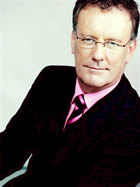
  • Mike Nesbitt – 2015 Speech in Fivemiletown

    milkenesbitt

    Below is the text of the speech made by Mike Nesbitt, the Leader of the Ulster Unionist Party, in Fivemiletown on 7 April 2015.

    The first time I attended an Ulster Unionist event was in this very hotel, The Valley, Fivemiletown.

    I had just been appointed as one of the four Victims Commissioners, and the first political call we took was from an MLA by the name of Tom Elliott. He wanted me to come to speak to his Association.

    Being one of four co-equals in the Commission, it wasn’t a simple question of offering a “yes” or a “no”. Whatever the answer was would set a precedent that could have seen us locked away from political view – or out every night attending the smallest branch meeting and Cumainn in the country!

    The reason I ended up attending was simple – Tom would not give up. He would not take “no” for an answer. He saw no good reason why his members should not have the opportunity to listen to a Commissioner for Victims and Survivors; to question a Commissioner for Victims and Survivors; and to send the Commissioner on his way back to Belfast in no doubt about what people in Fermanagh and South Tyrone thought about certain aspects of Dealing with the Past, such as the definition of a victim.

    That determination is just one of the many qualities that leaves me in no doubt that Tom Elliott will make a fantastic Member of Parliament for Fermanagh and South Tyrone.

    One other story about Tom. In 2010, I found myself helping Tom in his Leadership bid after Lord Empey resigned. We were talking about his speech for the night of the vote at the Waterfront Hall. During a coffee break, Tom started reminiscing about a night a few years previously when he found himself 110 miles from home, parked up in four inches of snow, and delivering a speech to a hall packed to the rafters with …. six people.

    That showed me another quality of Tom’s – dedication.

    And his reaction when I said it should be in the speech demonstrated a third, because he didn’t see it as noteworthy at all, just part of the daily slog of being an elected representative.

    So, Determination, Dedication, lack of Ego … three of the values that I admire in Tom, a man with service in his DNA, be it as a political activist and elected representative, or during the years when he donned an army uniform and put himself in harm’s way to protect his family, this community and the country at large.

    Tom Elliott is a man with the character, the values and the life experience that position him as worthy of the electorate’s support next month.

    And be in no doubt, there are more than enough unionist votes out there to once again make Fermanagh and South Tyrone a unionist seat at Westminster.

    This was and will again be a seat represented by a unionist MP.

    It’s tempting to dwell for a while on the history of this seat, who held it and how it was lost, but it’s well enough known and there’s nothing we can do about it now but put it right! On the 7th of May!

    After last May’s Local Government results, my thoughts turned immediately to this General Election and one of my first priorities was to explore whether we could reach an understanding within Unionism that put country over party and set a target of unseating some abstentionist MPs.

    My focus immediately fell upon Fermanagh and South Tyrone. What a message that would send out if unionism retook the most westerly constituency in the United Kingdom.

    At Conference last October, I made the call – we would support the sitting MP in North Belfast in the face of a real challenge from Sinn Féin, if we were given a clear run here in Fermanagh and South Tyrone.

    The chance to retake a seat

    The chance to reverse a trend.

    The opportunity to put unionism back on the front foot, confident, positive, progressive, with a hardworking, determined, dedicated MP, rather than more of the same, with people having to endure a Member of Parliament who did not even turn up to vote against Welfare Reform at Westminster, even though her Party continues to threaten to bring down the devolved institutions over the issue.

    Abstention is the ticket the incumbent is running on. If abstentionism was ever a valid political policy, it is well past its sell by date.

    I have sat with Sinn Fein in discussions with the Prime Minister at Stormont House, arguing over issues that Parliament has already decided upon. The people of Fermanagh South Tyrone deserve an MP who makes their case in the right place at the right time – not long after the votes are counted.

    I am delighted Tom Elliott has support right across the unionist community in this Election and acknowledge and welcome senior members of other parties who are here this evening.

    I hope every unionist comes out to Vote Elliott in a month’s time.

    I also appeal to nationalists to lend him their vote as well, because this is not about a sectarian head count. This is about who can best represent all the people of Fermanagh and South Tyrone at Westminster.

    This is about recognising that the Union is best for all our people – it makes sense politically, economically, socially and culturally. It makes common sense and nationalists know that as well as unionists.

    So, I say to you: Vote Tom Elliott on the 7th of May.

    I ask of the people of Fermanagh and South Tyrone: Please Vote Tom Elliott on the 7th of May.

    I encourage the electorate to hope for better.

    So, on this, the 7th of April, let us focus our energies on the 7th of May.

    It is the chance to transform the political landscape here in Fermanagh and South Tyrone.

  • Francis Maude – 2015 Speech on the UK Social Economy

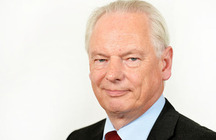
    Francis Maude
    Francis Maude

    Below is the text of the speech made by Francis Maude, the then Minister for the Cabinet Office, at the Chivas Strathisla distillery in Banffshire on 5 March 2015.

    It is a real pleasure to be here with you today to discuss one of the highlights of my job – raising awareness of the great social enterprise work that goes on in the UK.

    To be at a whisky refinery at the start of spring only enhances that feeling, so many thanks to Chivas for hosting this event! I would also like to commend Chivas on their global statement which champions social enterprise as a force for good in business.

    One of the appeals of social enterprise is that, as a concept, it is so very simple – and yet the possibilities are endless.

    Take two of the finalists of Chivas’s ‘Venture’ who are here today – one is a courier company that helps disabled, disenfranchised and long-term ill people to return to employment and the other a brewing company that gives some of its profits to Prostate Cancer UK.

    Two completely different operations united by a common desire to make a difference. It’s something we’re beginning to see more and more of across the country – 1 in 5 UK businesses now have a social mission at their heart, and we are fast becoming the centre for social enterprise globally.

    This means that our social enterprises contribute £55 billion annually to the UK economy and their growth has been a key part of this government’s long-term economic plan.

    This is a phenomenal achievement and as a government we are working hard to drive more and more of this kind of venture, with policies designed to nurture social investment and get it onto the global agenda.

    Our goal is simple – we want the UK to be the global hub for social enterprise, social investment and social finance.

    Social enterprise support

    We are committed to creating the right environment for these innovative and life-changing organisations to grow so they can support communities in the UK and across the globe.

    To do this, social enterprises need access to finance and investment, which is why we introduced the world’s first social investment tax relief to drive more investors to put their money into organisations that do more than make profit.

    And we set up the world’s first social investment bank, Big Society Capital, which has already seen over £180 million of investments to the frontline, supporting over 100 ventures across the UK.

    These ventures once again highlight the diversity of what social enterprise can achieve – from £150,000 going to a skate park in Dundee which provides young people with peer-to-peer education and stewardship, to £10 million to support housing for people with a learning disability so that they have more choice about their living arrangements.

    We’ve also provided non-financial support in the form of initiatives like the Buy Social Directory, which lists over 10,000 social enterprises so that business and government can easily find the services they need.

    The social economy is a great UK success story. We’ve seen how well it works here and we want to export our success to other countries, share the lessons we have learnt and drive investment from abroad into social ventures at home.

    When the G8 met in Northern Ireland in 2013, we put social investment right at the heart of our agenda. And last week in New York we launched a global drive as part of the GREAT Britain campaign to highlight why the UK is the number 1 destination for social investment.

    To date, the GREAT campaign has delivered a return to the economy of over £1 billion and is now active in 144 countries. It is this scale of ambition that we want to bring to the UK’s social economy.

    Society

    As you can see, we’re doing our best to create the right environment for social enterprise both at home and abroad. But in reality, government is only laying the groundwork for socially-minded business, investors and consumers to make the difference.

    The UK is a nation of entrepreneurs and capitalists but we also have a fantastic heritage of philanthropy and social reform. Too often we think of these traditions as being separate, when it should be perfectly possible for people to invest in a way that makes good business sense while also supporting good causes.

    It’s about combining financial hard-headedness with altruism and social concern – allied together these can be an incredibly powerful and effective force.

    Look at issues like homelessness, reoffending or long-term unemployment – these complex problems aren’t new, but the solutions have eluded successive governments for decades.

    Government doesn’t have all the answers, and social ventures are often better able to tailor services around the needs of communities and individuals; they can be more responsive and agile and can help find the kind of lasting and comprehensive solutions that are necessary.

    The examples of social enterprises I have met so far have been truly inspiring and initiatives like Chivas’s ‘Venture’ show how traditional business models can mix with good causes to make a real difference in society.

    And if you won’t take my word for it, perhaps Jamie Oliver can convince you otherwise.

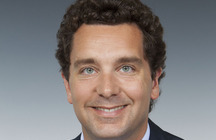
  • Edward Timpson – 2015 Speech to the Centre for Adoption Support

    timpson

    Below is the text of the speech made by Edward Timpson, the Minister of State for Children and Families, on 6 March 2015.

    Hello everyone.

    I’m very sorry to Delyth [Evans, Post-Adoption Support Project Manager at Adoption Matters] and everyone from Caritas and Adoption Matters that I can’t be with you today. But I hope the Max Headroom digital version of me makes up for it.

    It’s been a real pleasure to see how far the Centre for Adoption Support has come in just 1 year.

    Determining how long an adopted child will need extra support for is like asking “how long’s a piece of string?”

    But, sadly, as someone with adopted siblings myself, and as all adopters will know – it’s impossible to know how long it will take to work through trauma and neglect that can be deeply embedded in a child long after the day they enter care. For new parents, this can be a confusing and overwhelming time.

    Parents need somebody with a deep understanding, who can train them to develop strategies, and to work therapeutically with their child. That’s why experience is so important, and – with a combined 140 years between them – families coming into contact with Caritas and Adoption Matters North West are in safe hands.

    Yours is a fantastic partnership for this corner of the country, demonstrating that partnership working, combined with the will of local authorities, is the way forward for adoption support.

    The answer to how long a child needs support for is “as long as it takes”, and with the Adoption Support Fund, you’ve started to spread that ethos.

    Now, your strong focus on education has been a really progressive part of the work you’re doing.

    In January, I was delighted to be able to write to 11 schools who were successfully nominated by parents for the Adoption Friendly Award.

    These schools have gone the extra mile to ensure the needs of adopted children are being met within the school environment.

    Nominated schools have celebrated adopted pupils’ uniqueness, and helped them feel like valued members of their school.

    Doing well at school is key to a child’s future life chances – which is why we’ve given adopted children priority admission to the school of their choice – and with £1,900 of pupil premium available for each adopted child, these schools can help them to achieve just as much as their peers.

    Let’s hope we see more schools following your humbling example. Because the challenge ahead remains substantial.

    Today, as I speak to you, there are more than 3,470 children waiting to be adopted.

    And, although it’s a truism to say so, the only thing that’s going to change that is by recruiting more adopters.

    To do that, we need the best system of adoption support in place to show potential parents that they’ll have a safety net.

    Because an adoption order is often just start of the journey, not the end – and problems don’t just disappear as the ink on the legal papers dry.

    Research by Adoption UK shows that a quarter of parents report major challenges in their placement – and in research by DfE and University of Bristol the majority of parents were very critical of the support they had received.

    We know more than ever about early brain development and the effect of neglect and abuse – so the system needs to respond to that evidence.

    That’s why, from 1 May, following a successful pilot in 10 areas, the Adoption Support Fund (worth £19.3m) will be rolled out across the country enabling adopters who could benefit from therapeutic services to get the help they need when they need it.

    Already 160 families in the 10 pilot areas have accessed over £1m in funding from the Adoption Support Fund, which is making a real difference to their families.

    And so I would encourage adopters in the audience who think they could benefit from therapeutic services to contact their local authority now and ask for an assessment of their needs and, where appropriate, apply to the fund.

    I know that in the North West, families have access to a roster of services, including iMatter and the Nurtured Heart Approach. And the Centre for Adoption Support has become a real beacon for how to work in partnership across the North West region successfully, and it’s great to hear you are now working closely with the Maudsley Hospital.

    We’ve helped fund your work to date and we want to continue to support the excellent work you are doing. I’m pleased you have been successful in reaching the negation stage to secure grant funding for the coming financial year. I hope the negotiations are fruitful and you continue to build on the excellent progress you’ve made.

    A lack of support leaves adopted children in touching distance of a ‘happy ending’ – but never quite able to grasp it.

    And when it comes to supporting some of our most vulnerable and troubled young people in society, there’s no magic wand.

    There is, however, an adoption passport.

    With the right specialist therapeutic support – and, let’s be clear, many placements will not succeed without it – that child will finally be able to embrace the new life ahead of them.

    A life not beset by limitation – but empowered by boundless opportunity.

    Their parents deserve nothing less than our unwavering support. As the saying goes, “you can’t choose your family”.

    But, given the choice, I’m certain that children in the North West would choose the humility and kindness of their devoted adoptive parents a thousand times over.

    To the social workers and staff of the centre, thank you for building them up and being there for them. And to the parents, thank you for being those people.

    Without you, without people like my own parents, many children across our region would be struggling to see beyond their own horizons. But with you, they have, can and will reach higher and further than they ever dreamed possible.

    Thank you.

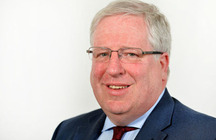
  • Patrick McLoughlin – 2015 Statement on Rail Investment

    Patrick McLoughlin

    Below is the text of the statement made by Patrick McLoughlin, the Secretary of State for Transport, in the House of Commons on 12 October 2015.

    On 30 September (2015), I was pleased to confirm that work to electrify TransPennine and Midland Mainline railways would resume under plans announced as part of Sir Peter Hendy’s work to reset Network Rail’s upgrade programme.

    Sir Peter Hendy, the Chair of Network Rail, outlined to me how work could continue. I replied to him asking Network Rail to un-pause this work.

    Network Rail will work with the Department for Transport (DfT) and Rail North to develop a new plan for electrification of the TransPennine line between Stalybridge and Leeds and on to York and Selby to focus on delivering key passenger benefits as quickly as possible. This is an improvement on the previous plan which only changed the power supply of the trains.

    The new plan will deliver faster journey times and significantly more capacity between Manchester, Leeds and York. The upgrade is expected to provide capacity for 6 fast or semifast trains per hour, take up to 15 minutes off today’s journey time between Manchester and York and be complete by 2022. When the work is finished, the whole route from Liverpool to Newcastle (via Manchester, Leeds and York) will be fully electrified and journey times will be significantly reduced compared to today’s railway.

    Network Rail will also recommence work to electrify the Midland Mainline, the vital long-distance corridor which serves the UK’s industrial heartland. Sir Peter Hendy proposed that line speed and capacity improvement works already in hand are added to, with electrification of the line north of Bedford to Kettering and Corby by 2019 and the line north of Kettering to Leicester, Derby/Nottingham and Sheffield by 2023.

    New Northern and TransPennine rail franchise awards will be announced before the end of the year. The new franchises will deliver new train carriages and remove out-dated Pacer trains; introduce free Wi-Fi on trains; and offer a one-third increase in capacity with 200 additional services on weekdays and Saturdays and 300 more train services on Sundays.

    Connecting up the great cities of the north is at the heart of our plan to build a Northern Powerhouse. The total programme of rail electrification and upgrades will completely transform the railways for passengers in the north and Midlands and help ensure that every part of Britain benefits from a growing economy.

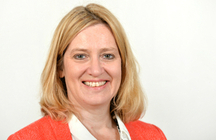
  • Amber Rudd – 2015 Statement on Energy Investment

    amberrudd

    Below is the text of the speech made by Amber Rudd, the Secretary of State for Energy, on 21 October 2015.

    EDF and its Chinese partner China General Nuclear Corporation (CGN) have committed to Hinkley Point C during this week’s landmark China State Visit, confirming that Somerset will have the first new nuclear power station in the UK for a generation.

    The companies have signed a Strategic Investment Agreement which marks a critical moment for the site in Somerset. EDF has confirmed it will take a 66.5 per cent stake in Hinkley with CGN taking 33.5 per cent, demonstrating a clear commitment from both parties.

    The Government and EDF have finalised the detail of the Contract for Difference which offers increased price certainty for the electricity produced from Hinkley Point C. The Funded Decommissioning Programme will make sure that the tax payer doesn’t pick up the cost of decommissioning the plant in the future.

    Hinkley Point C will provide low carbon electricity to six million homes, twice as many as the whole of London, for around 60 years – and consumers won’t pay a penny until the plant is up and running. It will provide a vital boost for the national and local economy – creating 25,000 jobs, with at least 5,000 people from Somerset expected to work directly on the project, providing a £40 million boost to the local economy every year. The Energy Secretary will take her final decision on the Contract for Difference when EDF and GNI have signed the full investment documentation.

    A Departmental Minute will be presented to Parliament today regarding the scale of the financial commitment associated with the CfD and the potential liabilities to arise in relation to those Waste Transfer Contracts (WTC). I judge the likelihood of these potential WTC liabilities arising to be very low.

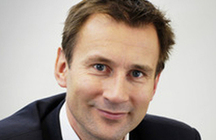
  • Jeremy Hunt – 2015 Statement on Junior Doctors

    jeremyhunt

    Below is the text of the statement made by Jeremy Hunt, the Secretary of State for Health, in the House of Commons on 4 November 2015.

    This government is completely committed to the values of the NHS – the same values that encourage aspiring doctors to take up a career in medicine.

    Junior doctors are the backbone of the NHS, but the current contract has failed to prevent some working unsafe hours, and doesn’t reward them fairly. We know also that they feel unsupported because consultants and diagnostic services are not always available in the evenings and at weekends.

    Today a firm offer for a new contract has been published by NHS Employers. The new contract will be fairer for doctors, safer for patients and juniors alike, better for training, and will better support a 7-day NHS.

    This offer builds on the cast-iron guarantees that I have previously offered the British Medical Association (BMA) including that we would not remove a single penny from the junior doctors’ pay bill, and we would maintain average earnings for junior doctors. The proposals offer an 11% increase to basic pay, with further increases linked to progressing through training and taking on roles with greater responsibility –instead of being based on time served.

    Our ambition for the NHS to be the safest healthcare system in the world is underpinned by reducing, not increasing, the number of hours junior doctors work each week. Juniors will be supported by improved contractual safeguards – the best protection junior doctors have ever had against working long, intense and unsafe hours. For example, no junior will be required to work more than a weekly average of 48 hours without consent and those who opt out of that legal limit in the European Working Time Directive will not be able to work more than a weekly average of 56 hours. The number of hours that can be worked in any single week by any junior will be limited to 72, down from 91; there will be a 13 hour limit on shifts; and there will be no more than 5 consecutive long days or 4 consecutive nights, compared to the current contract which permits 7 consecutive night shifts or up to 12 consecutive day shifts.

    Putting patients first is the responsibility of employers and staff. Where doctors are asked to work in conditions that they believe are unsafe, including being asked to work patterns that put patient safety at risk, they will be asked to use reporting mechanisms available to them to raise the issue with the Board of their Trust, and reporting data will now be available for the Care Quality Commission (CQC) to use during inspections. We would expect Trust Boards to look at any such report and decide how to respond to it; and we would expect the CQC, when it carries out an inspection, to look at how the Board has responded to this and other data reporting safety incidents and concerns – a tough new measure to ensure safe working.

    In order to better support a 7-day NHS, basic pay will increase by 11% to compensate for an extension in plain time working on Saturdays during the day and on weekday evenings, and there will be an enhanced rates for hours worked at nights, on Saturday evenings and Sunday.

    The government has also decided that plain time will be extended only to 7pm on Saturdays – instead of 10pm on Saturdays – and wants to improve training and ensure better clinical supervision from consultants as well.

    We will offer new flexible pay premia for those training in hard-to-fill training programmes where there is the most need – such as general practice, emergency medicine and psychiatry – and we will protect the salaries of those who return or switch to training in these programmes.

    Junior doctors who take time off for academic research that is part of their NHS training, or which contributes to the wider NHS and improvements in patient care, will get additional pay premia to make sure they don’t lose out.

    Today, I have also written to all junior doctors in England confirming that no junior doctor working legal hours will receive a pay cut compared to their current contract during transition. Around three quarters will see an increase in pay and the rest will be protected.

    The exception to this is those who currently receive up to a 100% salary boost as compensation for working unsafe hours. Instead, new contractual safeguards will ensure they are not required to work unsafe hours at all.

    To see how the offer affects them, junior doctors can now log on to a pay calculator published by NHS Employers where they can calculate projected take home pay.

    Our preference throughout has been, and continues to be, to reach agreement through negotiations. We have maintained that, in reforming the contract, we must put patients right at the heart of everything the NHS does every day of the week. A fair, sustainable contract with stronger safeguards, together with the greater availability of consultants at the weekends and evenings, is good for patients and good for junior doctors.

    The details published today represent the government’s offer in England, which will be for doctors and dentists in postgraduate training programmes overseen by Health Education England.

    Since they withdrew from negotiations in October 2014 – despite agreeing the need for change as far back as 2008 – the BMA have refused to return to the table. In light of today’s announcement we hope that the BMA will now agree to return to negotiations.

  • Patrick McLoughlin – 2015 Statement on Aviation Security

    Patrick McLoughlin

    Below is the text of the statement made by Patrick McLoughlin, the Transport Secretary, in the House of Commons on 5 November 2015.

    With permission Mr Speaker I wish to make a statement on the recent decisions taken by the government following the loss of the Russian Metrojet flight on Saturday (31 October 2015).

    I know the House will join with me in expressing our condolences to the families of those who lost their lives.

    224 lives were lost.

    I was able to express our deepest sympathy to the Russian Ambassador yesterday when the Foreign Secretary and I signed the book of condolence.

    We still cannot be certain what caused the loss of the aircraft.

    But we are reaching the view that a bomb on board is a significant possibility.

    Were this to turn out to be the case, it clearly has serious implications for the security of UK nationals flying from Sharm el-Sheikh.

    We have therefore taken the decision that it was necessary to act.

    The decisions we’ve made are based on a review of all of the information available to us.

    Some of it is sensitive.

    I am not able to go into detail on that information.

    But the House can be assured that we have taken this decision on the basis of the safety of British citizens.

    There are 2 stages to this process:

    – we are working with the airlines to put in place a short-term measure – this could for example include different arrangements for handling luggage

    – beyond that, we are working with the Egyptians and airlines to put in place long term sustainable measures to ensure our flights remain safe

    We very much hope that it will be possible to declare that it is safe to fly to the resort and resume normal flight operations in due course.

    That is why my Right Honorable Friend the Foreign Secretary, announced yesterday evening that the government was now advising against all but essential travel by air to or from this particular airport.

    All UK operated flights to and from the airport have now been suspended.

    We are working with the Egyptians to assess, where necessary, to improve security at the airport.

    Over 900,000 British nationals visit Egypt every year. Most visits are trouble-free.

    My Right Honorable Friend said yesterday, we are grateful for the continuing efforts of the Egyptian authorities to work together with us on these vitally important tasks.

    The government is now working with the airline community to put into place interim arrangements for getting people home.

    This is a clearly a very difficult situation for travellers and their families.

    I would like to thank the airlines for their support during this difficult time and to holiday makers for their patience.

    In parallel, specialist teams will be working intensively with the Egyptian authorities to allow normal scheduled operations to recommence.

    The decision to suspend flights is very serious indeed and has not been taken lightly.

    But the safety and security of the travelling public is of course the government’s highest priority.

    We will need to be confident that security standards meet our expectations and those of the public before we allow services to resume.

    I recognise, Mr Speaker, this is a stressful time for British tourists but we haven’t changed the travel threat for the resort itself.

    People should keep in touch with their tour operators. We will also have consular staff on the ground providing assistance.

    We have aviation security experts on the ground and will have arrangements to bring people home safely in due course.

    The airlines are working with us to bring their passengers home.

    No UK-bound aircraft will take off until it is safe to do so.

    We do not expect flights to leave today, but we hope to have flights leaving tomorrow.

  • Theresa May – 2015 Statement on Paris Terrorist Attacks

    theresamay

    Below is the text of the statement made by Theresa May, the Home Secretary, in the House of Commons on 16 November 2015.

    With permission, Mr Speaker, I would like to make a statement about the terrorist attacks in Paris, our response and the threat we face from terrorism in the United Kingdom.

    The full details of last Friday’s horrific attack in Paris are still emerging. But at least 129 innocent people – including at least one British national – have been killed, more than 352 injured, with 99 of those declared critical.

    As the names of those brutally murdered become known, and we learn more about the appalling events of that night, our thoughts and prayers are with all those who have lost loved ones, suffered injuries, or are affected by these horrific events.

    These were co-ordinated attacks, designed to inflict the maximum number of casualties on people who were simply enjoying their daily lives – our way of life. Those killed and injured include people from many countries across Europe and other countries around the world.

    The international investigation into the attacks is ongoing, but we know that ISIL have claimed responsibility. This is not the first time ISIL has struck in Europe. We have seen attacks either inspired or directed by the group in France, Belgium, Denmark, as well as attacks in Lebanon, Turkey and Kuwait, and the ongoing devastating violence in Syria and Iraq. And in June, thirty British nationals along with others were killed by a gunman at a tourist resort in Tunisia. It also looks increasingly likely that the Russian Metrojet plane which crashed two weeks ago in Egypt was brought down by a bomb. But the scale of this latest attack and the degree of co-ordination and planning leave us with little doubt that the threat is evolving.

    In the UK the threat level – set by the independent Joint Terrorism Analysis Centre – remains at SEVERE, meaning an attack is highly likely and could occur without warning. In the past months a number of serious plots have been disrupted here in the UK. Over 750 people are thought to have travelled to Syria and Iraq, and approximately half of those have returned.

    Our law enforcement and security and intelligence agencies are working constantly day and night to keep the people of this country safe and secure. And the Government is taking all necessary steps to make sure they have the powers, the capabilities and resources they need.

    As soon as the attacks took place, we took steps to maintain the security of the UK. The police have increased their presence on some streets and at some locations, and they will be intensifying their approach at events in big cities. Officers are working closely with London’s communities and businesses to provide advice and reassurance.

    Border Force has intensified checks on people, goods and vehicles entering the UK from the near continent and elsewhere. Additionally, in order to help the French authorities secure their own border, Border Force and the police have been undertaking additional and targeted security checks against passengers and vehicles travelling to France via both maritime and rail ports and a number of airports across the country.

    Yesterday I chaired a meeting of COBR to review the situation and our response. As I said in a statement afterwards, UK police and security services are working extremely closely with their French and Belgian counterparts to identify all those involved and pursue anyone who may have been involved in the preparation for these barbaric attacks. And Members will be aware that a number of arrests have been made in Belgium and France in the last 24 hours.

    As I informed the House following the events in Paris in January, we have long had detailed plans for dealing with these kind of attacks in the UK. Since the attacks in Mumbai in 2008, we have improved our police firearms response, building the capability of our police and the speed of our military response. The emergency services have also improved their preparedness for dealing specifically with marauding gun attacks. Specialist joint police, ambulance and fire teams are now in place at important locations across England, with equivalents in Scotland and Wales.

    This summer the police and the emergency services tested this response as part of a major counter-terrorism exercise. And as I have told the House previously, the police can call on appropriate military assistance when required across the country.

    Nevertheless, in light of events in France, it is right that we should review our response to firearms attacks, and we are doing so urgently to ensure that any lessons are learnt.

    The UK has some of the toughest firearms laws in the world. The sorts of weaponry used in the attacks in Paris in January, and those that appear to have been used last Friday, are not readily available in the UK. We must therefore focus on tackling firearms entering and moving throughout the EU, and ensuring that we have the right capabilities at the UK border to detect firearms being smuggled in.

    This Friday I will attend an extraordinary meeting of the European Justice and Home Affairs Council where I will press the need for greater information sharing, passenger name records, and action on firearms. In the UK we have seen tough legislation work and so we want to see action taken to make a difference to the availability of firearms in Europe, particularly assault rifles.

    Mr Speaker, it is imperative that Europe pulls together to defeat this threat. France is one of our oldest allies, and we work very closely with them on matters of national security and counter-terrorism. Yesterday I spoke to my counterpart the French Minister of the Interior – Bernard Cazeneuve – to offer our deepest condolences to France, and to make clear that the UK stands ready to provide any additional support and assistance. And I am very grateful to Minister Cazeneuve and the French for maintaining a police presence at Calais during this very difficult time. I have also spoke to the Belgium Interior Minister Jan Jambon to offer our assistance.

    The House will also know that the Prime Minister is today at the G20 in Turkey where he is urgently discussing with other heads of state the crisis in Syria. He will make a statement to this House tomorrow. Mr Speaker, since 2010, the Government has undertaken significant work to strengthen our response to the threat we face from terrorism.

    In 2014 we passed legislation to ensure law enforcement and the security and intelligence agencies could continue to access the information they needed. While that legislation does not expire until the end of 2016, last week we published the draft Investigatory Powers Bill. This Bill will improve the oversight and safeguards of the police and agencies’ use of investigatory powers, while ensuring they have the tools they need to keep us safe.

    Following any terrorist attack we always consider the legal powers we have to keep our country secure, but it is important that this landmark legislation undergoes proper Parliamentary scrutiny.

    Earlier this year, the Counter-Terrorism and Security Act passed into law, and includes measures to deal specifically with the problem of foreign fighters, and prevent radicalisation.

    It includes a power to temporarily seize the passports of people suspected of travelling to engage in terrorism overseas, extends our ability to refuse airlines the authority to carry people to the UK who pose a risk, and includes a statutory Prevent duty for a wide range of public bodies.

    Through our existing Prevent and intervention programmes we identify people at risk and work to help them turn their lives around. Our Channel process in particular engages vulnerable people in conversations to prevent them being drawn further into extremism or violent acts.

    Mr Speaker, the police and the security and intelligence agencies do an incredible job to keep the people of this country safe. Their work often goes unseen and unrecognised but we owe them an enormous debt of gratitude.

    Since 2010, we have protected the counter-terrorism policing budget. And as part of the budget earlier this year, my right hon friend the Chancellor of the Exchequer confirmed that counter-terrorism spending across Government would be protected across the course of the spending review.

    Today, we have announced we will go further. Through the Strategic Defence and Security Review, we will make new funding available to the security and intelligence agencies to provide for an additional 1,900 officers – an increase of 15% – at MI5, MI6 and GCHQ to better respond to the threat we face from international terrorism, cyber-attacks and other global risks.

    We will also boost aviation security. That is why the Prime Minister has ordered a rapid review of security at a number of airports around the world. Aviation specialists will conduct assessments over the next two months at locations in the Middle East and North Africa in particular.

    This follows additional measures that the UK and US put in place at a number of potentially vulnerable airports over the past year, steps which will be reviewed to check that they go far enough. And tomorrow, at the National Security Council we will discuss the Government’s policy on aviation security and we will put forward a proposal to more than double Government spending on aviation security over this Parliament.

    Mr Speaker, the events in Paris have shocked and appalled people around the world. In France people have queued up to donate blood, lit candles and lain flowers. In Britain, Australia, America, Mexico, Canada, Brazil and many other countries iconic landmarks and buildings have been lit in the colours of the French Tricolour.

    People of all faiths have condemned the violence and British Muslims and indeed Muslims worldwide have said very clearly these events are abhorrent. The attacks have nothing to do with Islam which is followed peacefully by millions of people around the world.

    The terrorists seek to divide us, and to destroy our way of life. But theirs is an empty, perverted and murderous ideology. They represent no one. And they will fail.

    France grieves. But she does not grieve alone. People of all faiths, all nationalities, and all backgrounds around the world, are with you. And together, we will defeat them.

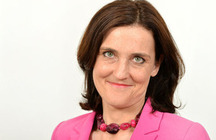
  • Theresa Villiers – 2015 Statement on Northern Ireland

    Below is the text of the statement made by Theresa Villiers, the Secretary of State for Northern Ireland in the House of Commons on 19 November 2015.

    With permission I would like to make a statement on the agreement reached this week in the cross party talks at Stormont.

    But first I would like to pay tribute to Peter Robinson who announced this morning that he will very soon be standing down as First Minister and leader of the DUP.

    Peter has been a central figure in Northern Ireland politics for over four decades. In his long and distinguished record of public service both in this House and the Assembly, he has championed the interests of Northern Ireland with unparalleled effectiveness, determination and dedication.

    Peter was key to the Agreement reached this week and he can be rightly proud of his contribution. I am sure the whole House will join me in wishing him a long and happy retirement. Mr Speaker, last December, the Stormont House Agreement was reached after 11 weeks of negotiations between the five largest Northern Ireland parties and the UK and Irish Governments.

    That Agreement addressed some of the most difficult challenges facing Northern Ireland including the finances of the devolved Executive, welfare reform, flags and parades, the legacy of the past, and reform of the Assembly to make devolution work better.

    All of this was underpinned by a financial package from the UK Government that would give the Executive £2 billion in extra spending power. In the Government’s view the Stormont House Agreement was, and remains, a good deal for Northern Ireland.

    By the summer, however, it was clear that implementation had stalled.

    There were very strong differences of opinion within the Executive over the budget and the implementation of the welfare aspects of the Agreement, and these were preventing other elements of the Agreement from going ahead.

    We were facing a deadlock which, left unresolved, would have made early Assembly elections more and more likely, with an ever increasing risk that collapse of devolution would follow.

    After all that has been achieved in Northern Ireland over recent years, a return to direct rule from Westminster would have been a severe setback, and it is an outcome which I have been striving to avoid. In August, a second issue arose to threaten the stability and survival of devolution.

    The suspected involvement of members of the Provisional IRA in a murder in Belfast raised once again the spectre of paramilitary activity in Northern Ireland and its malign and totally unacceptable impact on society.

    Faced with these circumstances, we concluded it was necessary to convene a fresh round of cross party talks with the five main Northern Ireland parties, and the Irish Government on matters for which they have responsibility, observing the well established three strand approach.

    The talks began on 8 September and ran for ten weeks.

    The objectives we set were twofold:

    – firstly to secure the implementation of the Stormont House Agreement;

    – secondly to deal with continued paramilitary activity.
    I believe that the document published on Tuesday entitle ‘A Fresh Start: The Stormont Agreement and Implementation Plan’ makes real progress towards fulfilling both of these objectives.

    Crucially it tackles the two issues that have posed the greatest threat to the stability and survival of devolution in Northern Ireland.

    First, on the Stormont House Agreement. The new agreement will help give the Executive a stable and sustainable budget, assisted by further financial support of around £500 million from the UK Government. These funds are to help the Executive tackle issues unique to Northern Ireland.

    They include support for their programme of removing so-called ‘peace walls’ and an additional £160 million to assist the Police Service of Northern Ireland in their crucial work to combat the threat from dissident republican terrorists.

    And the package also paves the way for completion of the devolution of corporation tax powers to the Northern Ireland Executive, something which could have a genuinely transformative effect on the Northern Ireland economy.

    The measures in the Stormont House Agreement designed to address issues around flags and parades will now go ahead.

    And there’s agreement on reforms to the Executive and Assembly to make devolution work better, including on the size of the Assembly, the number of government departments, use of the petition of concern, and provision for an official opposition.

    Secondly, on paramilitary activity. The agreement takes Northern Ireland’s leaders further than ever before on this issue.

    It strongly reaffirms the commitment to upholding the rule of law and makes it absolutely clear that in no circumstances will paramilitary activity ever be tolerated.

    The Agreement places new shared obligations on Executive Ministers to work together towards ridding society of all paramilitary groups and actively challenging paramilitary activity in all its forms.

    And it commits all participants to a concerted and enhanced effort to combat organised and cross border crime, which the UK Government will help to fund.

    A key element of the Stormont House Agreement on which we were unable to agree a way forward was the establishment of new bodies to deal with the legacy of the past.

    We did establish common ground between the parties on a range of significant questions on how to establish those important new structures, but sadly not enough to enable legislation to go forward as yet.

    The Government continues to support these provisions because of the pressing need to provide better outcomes for victims and survivors, the people who we must never forget have suffered more than anyone else as a result of the Troubles.

    So it is crucial that we all now reflect on what needs to be done to achieve the wider consensus needed to get the new legacy bodies set up. I want to emphasise that in very large part, the Agreement takes on board a wide range of points made by all five Northern Ireland parties during the 10 weeks of talks just concluded.

    As the overwhelming majority of issues were in devolved area, this agreement has rightly been driven by Northern Ireland’s elected leaders in particular the First and deputy First Ministers. And I would like to reiterate my sincere thanks to them and to all the five Northern Ireland parties who worked with determination and commitment in the talks.

    Thanks too to my Hon Friend the Northern Ireland Minister, and to Ministers Charlie Flanagan and Sean Sherlock from the Irish Government, all of whom devoted many long hours to this process and who made an invaluable contribution to its successful outcome.

    Mr Speaker, implementation of this week’s Agreement is already underway.

    On Tuesday, the Executive voted to support it. Yesterday the Assembly passed an LCM on welfare legislation at Westminster and the Northern Ireland (Welfare Reform) Bill will be introduced to Parliament later today. I believe this package as a whole gives us the opportunity for a fresh start for devolution.

    It’s a further stage in delivering the Government’s manifesto commitment to implement the Stormont House Agreement, and it’s another step forward towards a brighter, more secure future for everyone in Northern Ireland.

    And I commend this statement to the House.

  • David Cameron – 2015 Statement on National Security

    davidcameron

    Below is the text of the statement made by David Cameron, the Prime Minister, in the House of Commons on 23 November 2015.

    Introduction

    With permission, Mr Speaker, I would like to make a statement on the National Security Strategy and Strategic Defence and Security Review.

    Mr Speaker, our national security depends on our economic security, and vice versa.

    So the first step in keeping our country safe is to ensure our economy is, and remains, strong.

    Over the last 5 years we have taken the difficult decisions needed to bring down our deficit and restore our economy to strength.

    In 2010, we were ordering equipment for which there was literally no money.

    The total black hole in the defence budget alone was bigger than the entire defence budget in that year.

    Now it is back in balance.

    By sticking to our long-term economic plan, Britain has become the fastest growing major advanced economy in the world for the last 2 years.

    And our renewed economic security means that today we can show how we can afford to invest further in our national security.

    Growing threats to our security

    Mr Speaker, this is vital at a time when the threats to our country are growing.

    This morning I was in Paris with President Hollande discussing how we can work together to defeat the evil of ISIL.

    As the murders on the streets of Paris reminded us so starkly, ISIL is not some remote problem thousands of miles away.

    It is a direct threat to our security at home and abroad.

    It has already taken the lives of British hostages…

    …and carried out the worst terrorist attack against British people since 7/7 on the beaches of Tunisia…

    …to say nothing of the 7 terrorist plots right here in Britain that have been foiled by our security services over the past year.

    And of course, Mr Speaker, the threats we face today go beyond this evil death cult.

    From the crisis in Ukraine…

    …to the risks of cyber-attacks and pandemics…

    …the world is more dangerous and uncertain today than even 5 years ago.

    So while every government must choose how to spend the money it has available…

    …every penny of which is hard-earned by taxpayers…

    …this government has taken a clear decision to invest in our security and safeguard our prosperity.

    As a result, the United Kingdom is the only major country in the world today which is simultaneously going to meet the NATO target of spending 2% of our GDP on defence…

    …and the UN target of spending 0.7% of our GNI on development…

    …while also increasing investment in our security and intelligence agencies and in counter-terrorism.

    Mr Speaker, in ensuring our national security, we will also protect our economic security.

    As a trading nation with the world’s fifth biggest economy, we depend on stability and order in the world. With 5 million British nationals living overseas, our prosperity depending on trade around the world, so engagement is not an optional extra, it is fundamental to the success of our nation.

    We need the sea lanes to stay open and the arteries of global commerce to remain free flowing.

    So the strategy which I am presenting to the House today sets out a clear vision for a secure and prosperous United Kingdom, with global reach and global influence.

    At its heart is an understanding that we cannot choose between conventional defences against state-based threats on the one hand…

    …and the need to counter threats that do not recognise national borders.

    Today we face both and we must respond to both types of threat.

    So over the course of this Parliament our priorities are to deter state-based threats…

    …to tackle terrorism…

    …to remain a world leader in cyber security…

    …and ensure we have the capability to respond rapidly to crises as they emerge.

    And to meet these priorities we will continue to harness all the tools of national power available to us, coordinated through the National Security Council, to deliver a ‘full-spectrum approach’.

    This includes support for our Armed Forces…

    …counter-terrorism…

    …international aid and diplomacy…

    …and working with our allies to deal with the common threats that face us all.

    Let me take each in turn.

    Armed forces

    First, the bottom line of our National Security Strategy must always be the willingness and capability to use force where necessary.

    On Friday evening the United Nations Security Council unanimously agreed Resolution 2249…

    …calling on Member States to take “all the necessary measures” against ISIL in both Syria and Iraq.

    Mr Speaker, on Thursday I will come to this House and make a further statement responding personally to the Foreign Affairs Select Committee.

    I’ll make the case for Britain to join our international allies in going after ISIL at their headquarters in Syria, not just Iraq.

    And I will explain how such action would be one element of a comprehensive and long-term strategy to defeat ISIL, in parallel with a major international effort to bring an end to the war in Syria.

    But today I want to set out how we will ensure that our Armed Forces have the capabilities to carry out such a task…

    …and indeed any other tasks that might be needed in the years ahead.

    We will invest more than £178 billion in buying and maintaining equipment over the next decade…

    …including doubling our investment in equipment to support our Special Forces.

    And we will also increase the size of our deployable Armed Forces.

    In 2010 we committed to an expeditionary force of 30,000.

    Today I can tell the House that by 2025 we are increasing that number to 50,000.

    And as part of this, we will create two new strike brigades, forces of up to 5,000 personnel fully equipped to deploy rapidly and sustain themselves in the field.

    We will establish two additional Typhoon squadrons and an additional squadron of F35 Lightning combat aircraft to operate from our new aircraft carriers.

    We will maintain our ultimate insurance policy as a nation – our Continuous At Sea Nuclear Deterrent – and replace our four ballistic missile submarines.

    We will buy 9 new Maritime Patrol Aircraft, to be based in Scotland at RAF Lossiemouth. They will protect our nuclear deterrent, they will hunt down hostile submarines and they will enhance our maritime search and rescue. And we will buy at least 13 new frigates and 2 new offshore patrol vessels.

    These will include eight Type 26 anti-submarine warfare frigates.

    We will design and build a new class of light, flexible general purpose frigates as well.

    These will be more affordable than the Type 26, which will allow us to buy more of them for the Royal Navy…

    …so that by the 2030s we can further increase the total number of Royal Navy frigates and destroyers.

    Mr Speaker, not one of these capabilities is an optional extra.

    These investments are an act of clear-eyed self-interest to ensure our future prosperity and security.

    Counter-terrorism

    Second, turning to counter-terrorism, we will make a major additional investment in our world class intelligence agencies…

    …to ensure they have the resources and information they need to detect and foil plots from wherever they emanate in the world.

    So as I announced last week, we will invest £2.5 billion…

    …and employ over 1,900 additional staff.

    We will increase our investment in counter-terrorism police and more than double our spending on aviation security around the world.

    And I can tell the House today that we have put in place a significant new contingency plan to deal with major terrorist attacks

    Under this new operation, up to 10,000 military personnel will be available to support the police in dealing with the type of shocking terrorist attacks we have seen in Paris.

    We will also make a major new investment in a new generation of surveillance drones.

    These British-designed unmanned aircraft will fly at the very edge of the earth’s atmosphere and allow us to observe our adversaries for weeks on end…

    …providing critical intelligence for our forces.

    Mr Speaker, we will also do more to make sure the powers we give our security services keep pace with modern technology.

    So we will see through the draft Bill we have published to ensure GCHQ, MI5 and our counter-terrorism police continue to have the powers they need.

    Aid

    Third, we will use our formidable development budget and our outstanding Diplomatic Service to tackle global poverty, promote our interests, project our influence…

    …and address the causes of the security threats we face, not just their consequences.

    So alongside the Strategic Defence Review, I am also publishing our Strategy for Official Development Assistance.

    At its heart is a decision to refocus half of DFID’s budget on supporting fragile and broken states and regions in every year of this Parliament.

    This will help to prevent conflict – and, crucially, it will help to promote the golden thread of conditions that drive prosperity all across the world: the rule of law, good governance and the growth of democracy.

    The Conflict, Stability and Security Fund will grow to over £1.3 billion a year by the end of this Parliament…

    …and we will also create a new £1.3 billion Prosperity Fund – to drive forward our aim of promoting global prosperity and good governance.

    Building on our success in tackling Ebola, we will do more to improve our resilience and our response to crises…

    …identifying £500 million a year as a crisis reserve…

    …and investing £1.5 billion over the Parliament in a Global Challenges Research Fund for UK Science to pioneer new ways of tackling global problems like anti-microbial resistance.

    We will also invest £1 billion in a new fund for the research and development of products to fight infectious diseases, known as the Ross Fund…

    …and £5.8 billion in climate finance to play our part in helping poorer countries switch to greener forms of energy.

    Mr Speaker, taken together these interventions are not just right morally – they are firmly in our national interest.

    They mean that Britain not only meets its obligations to the poorest in the world, but can now focus our resources on…

    …preventing or dealing with the instability and conflict which impinge on our security at home…

    …investing at scale to create the economic opportunities that lead to long-term stability across the world…

    …and responding rapidly and decisively to emerging crises overseas.

    Acting on all of these fronts gives us greater influence in the world.

    Alliances

    Finally, Britain’s safety and security depends not just on our own efforts, but on working hand in glove with our allies…

    …to deal with the common threats that face us all, from terrorism to climate change.

    When confronted by danger, we are stronger together.

    So we will play our full part in the alliances which underpin our security and amplify our national power.

    And we will work with our allies in Europe and around the world…

    …as well as seizing opportunities to reach out to emerging powers.

    Conclusion

    Mr Speaker, history teaches us that no government can predict the future.

    We have no way of knowing precisely what course events will take over the next 5 years: we must expect the unexpected.

    But we can make sure that we have the versatility and the means to respond to new risks and threats to our security as they arise.

    Mr Speaker, our armed forces, police and security and intelligence services are the pride of our country.

    They are the finest in the world…and this government will ensure they stay that way.

    Using our renewed economic strength, we will help them to keep us safe for generations to come.

    And I commend this Statement to the House.