Tag: 2003

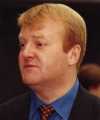
  • Charles Kennedy – 2003 Speech to Liberal Democrat Spring Conference

    Charles Kennedy – 2003 Speech to Liberal Democrat Spring Conference

    The speech made by Charles Kennedy, the then Leader of the Liberal Democrats, on 16 March 2003.

    This won’t be a normal spring conference speech. We’re not this weekend living in normal political times. There is a real possibility that our armed forces may be at war within the next seven days.

    In those circumstances, I feel it’s appropriate for me to focus this speech entirely on the Iraq crisis.

    It’s the right thing to do because of the seriousness of the situation. But it’s also right because of the central role which our party has played, is playing and will continue to play in the national debate on the issue.

    This is a worrying and difficult time for our country. The summit today in the Azores holds out little hope of peace. It has all the makings of a final council of war between the so-called coalition of the willing.

    I see it as a council of despair. I believe that it’s too early to give up the hope of a peaceful outcome. But the signs are that President Bush and Tony Blair have decided to abandon that hope.

    They say that they’re going the extra mile for peace. I don’t see how. This meeting looks highly unlikely to go a single extra inch for peace. If the President and the Prime Minister were serious about finding a peaceful solution, they’d be talking to Kofi Annan, not to each other. And they’d be heeding the warning which the Secretary-General has given against military action without a further explicit UN resolution.

    “The legitimacy and support for any such action”, he’s said, “will be seriously impaired. If the USA and others go outside the Council and take military action, it will not be in conformity with the Charter.”

    If this was a genuine effort to explore alternatives, there’d be other Heads of Government in the Azores today too – the President of France, the German Chancellor, the leaders of the other nations which currently have seats on the Security Council. Instead, this looks like one of those summits where the final communique is already written before a single word has been spoken.

    The British Government may have signed up in the ranks of the willing. But the British nation has not. This will not be a war which most in our country have sought or support.

    George Bush and Tony Blair say there is no other option – Saddam Hussein is dangerous – this is the only way to disarm him. I have questioned this approach all along – and I continue to question it now. But don’t be mistaken. This is not because I have the slightest sympathy for Saddam Hussein.

    Saddam is a brutal dictator. He has used chemical weapons on his own people. He has defied the Security Council. He needs to be disarmed. The question is how.

    There is one group of people who are uppermost in our minds at the moment – our British forces. Politicians can debate issues like Iraq in the safety of a party conference or the Palace of Westminster. Our armed forces are required to risk their lives. If the fighting begins, everyone in this hall would wish a speedy and successful conclusion to hostilities and the safe return of all members of our armed forces.

    They are risking their lives in our name. All through this crisis, I have paid tribute to their courage and skill. I do so again now. They are the bravest and the best. We are proud of them.

    Let no one be in any doubt. The Liberal Democrats are backing our armed forces in the Gulf wholeheartedly.

    Our critics may not acknowledge that. But the country understands our position very well. And the majority of our fellow citizens agree with us. There is no inconsistency between criticising the strategy of the Government and supporting the service people whose duty is to carry that strategy out.

    But we also have in mind another very important group of people – the innocent civilian population of Iraq. They have suffered terribly under Saddam Hussein’s dictatorship. There is no question about that. But war could so easily make their plight so much worse. There are no bombs sufficiently sophisticated, sufficiently smart, to avoid causing civilian casualties. And bombs aren’t the only danger they face.

    Any war will cause a refugee crisis of huge proportions – not to mention the dangers of famine and disease.

    There are concerns nearer home. There is a real danger that the war could alienate British Muslims. Many moderate Muslims already feel that they are victims of prejudice. Action against Saddam could fuel that prejudice and leave the law-abiding Muslim population of Britain feeling excluded and aggrieved.

    Those are factors which have to be weighed very carefully in the balance before any decision is taken to go to war. They’re factors which I fear haven’t been considered nearly hard enough.

    When I went on the march last month to Hyde Park, I was proud that our party played its role in the largest demonstration in British history.

    Our slogan was not peace at any price. It was give peace a chance. I feared then that the British and American governments were denying that chance. That is still my fear today.

    Our position is founded on principle. There are three fundamental beliefs which have always guided the Liberal Democrats – and the Liberal Party before us. First the principle of internationalism – of nations working together. Second, respect for universal human rights. And third the commitment only ever to use force as a last resort.

    Before the Second World War, the Liberal leader Archibald Sinclair was one of the first to support Winston Churchill against Chamberlain’s policy of appeasement. But then Jo Grimond was the first party leader to oppose Suez. And in more recent times our party backed action in the Gulf War, in Kosovo, in Bosnia and in Afghanistan.

    All along, our commitment has been to support action by the international community where that action will promote the causes of peace and security. And to oppose action which has the opposite effect.

    For months now, I have been putting a series of questions to Tony Blair on the floor of the House of Commons. They are questions which people want answered – questions which the official opposition has not been asking. Questions which have probed the Government’s commitment to the United Nations and its relationship with the United States. Questions about the circumstances in which British troops would be sent into battle. Straight questions to which I have had no straight answers.

    Throughout this crisis, we have insisted on a number of crucial tests. We have said that decisions must lie with the United Nations.

    Only the UN can command a legitimate political mandate based on an unquestioned moral authority. And that means that any military action has to be sanctioned by a second resolution of the Security Council of the UN. UN decisions in their turn, we say, should be based on adequate information. They have to be informed by the assessment of Hans Blix and the weapons inspectors – not by some arbitrary verdict of the Bush administration.

    Thirdly we say that the British House of Commons has to sanction any deployment of British troops by vote.

    And we also say that war should only be a last resort after all other diplomatic and political options have been exhausted.

    We have asked wider questions too. What benefits will military action bring? What legitimacy does it have? What will be the consequences for Iraq, the region and the wider world?

    We have always been the party of the United Nations. If George Bush and Tony Blair are about to act without the authority of the UN, they risk undermining our most important international institutions. They put in jeopardy almost sixty years of painstaking work to build an international order. They weaken not only the UN, but NATO and the European Union as well.

    Let me offer you a quote: “We must not allow ourselves to get into a position where we might be denounced in the Security Council. While force cannot be excluded, we must be sure that circumstances justify it and that it is, if used, consistent with our belief in and pledges to the Charter of the United Nations. And not in conflict with them.”

    The speaker, the Leader of the Labour Party – Hugh Gaitskell at the time of Suez. He understood the importance of the United Nations. He understood how damaging it is for Britain to be seen to be ignoring it.

    What a tragedy that his successor Tony Blair has betrayed his legacy. I’ve never questioned Tony Blair’s sincerity. But I do question his judgement.

    The United Nations is fundamental to our vision as Liberal Democrats. It’s not perfect. It needs reform. But its basic principles are sound. When it comes to issues of war and peace and security, there is everything to be said for pooling our national sovereignty with others to mutual advantage. The large and complex problems which face the world are smaller and more soluble when we face them together.

    Action without a UN mandate by the United States or the British Government will have severe consequences. I will undermine the authority of the United Nations not just with regard to this particular operation – serious though that in itself may be – but with regard to future operations for a very long time to come.

    The debates in both Houses of Parliament at the end of last month addressed many of the issues which we have been raising. Politicians from all political parties probed and questioned the build-up to war. There was great concern about the motive for an attack – concern which unhappily the Prime Minister has been unable to alleviate.

    MPs and peers alike were troubled about what is being planned in our name. Is the object regime change – a moral crusade to rid the world of a tyrant? If so, however desirable it might be to take action, there is no justification for such action under international law.

    Or is the issue some connection between Saddam and Al Qa’eda? Is this part of the war against terrorism? If so, we have not been shown the proof. Or is it a straightforward question of depriving Saddam of his weapons of mass destruction?

    If so, why does the American President keep insisting that he will attack Iraq whatever Hans Blix and the weapons inspectors might or might not determine.

    The worries I’ve expressed are shared extremely widely. Here are the words of Kenneth Clarke. “How many terrorists”, he asked in that Parliamentary debate, “will we recruit in the greater, long-standing battle against international terrorism? It will be far harder to win. What will we do to the stability of Saudi Arabia, Pakistan or Egypt?”

    He went on: “The next time a large bomb explodes in a western city, or an Arab or Muslim regime is toppled and is replaced by extremists, the Government must consider the extent to which the policy contributed to it.”

    Or take the powerful case made by Chris Smith from the other side of the House. He argued that there was no weakness involved in opposing an attack. “Strength”, he said, “does not lie simply in military might. Strength lies in having an unanswerable case. It lies in making the right moral choices. It lies in maintaining the pressure, and it lies in securing the furthest possible international agreement.”

    The doubts have come from senior politicians of all parties. And the Government doesn’t have the confidence of senior military men either. These are the words of Field Marshall Lord Bramall, a former Chief of the Defence Staff and architect of the victory in the Falklands War.

    “If anything goes wrong,” he said, “certainly in the short term but probably in the longer term, serious questions will undoubtedly be asked about why the Government went down that road in the first place.” And he pointed out that there was a better alternative: “continued containment of Iraq and concentrating on the more imminent threat posed by Al Qa’eda and other terrorist organisations.”

    This is a formidable array of wise and expert opinion. At the very least it should give the Government cause to stop and think.

    War is sometimes unavoidable. I do not believe that this war is unavoidable at this time.

    But if there is a war and if Saddam is defeated, the international community will still face huge problems.

    Iraq will prove enormously difficult to administer if and when any fighting is over. The Americans appear to favour a regime headed by one of their generals. This is a task which is clearly much better entrusted to the United Nations. There must be doubt about the scale on which other nations would fund and resource a programme run by the USA to deal with the aftermath of a war instigated by the USA.

    Post-war Iraq will pose not only security problems but a huge humanitarian challenge.

    Let me give you some idea of the scale.

    Nearly a million children under five in Iraq already suffer from chronic malnutrition.

    Iraq has the highest increase in infant mortality anywhere in the world.

    Almost three quarters of the country’s population depend on food aid.

    Many more face starvation because of successive years of drought.

    The water supply and sanitation system in Iraq have almost completely collapsed.

    Half a million tons of raw sewage go into the Tigris every day and half of the country’s sewage treatment plants don’t work.

    War will certainly make all these problems far worse.

    In addition, another two million people could be displaced from their homes within the country.

    Others will flee, many of them across areas which are heavily mined. Iran alone expects almost a million refugees from Iraq.

    So the international community has an enormous task on its hands.

    The precedents are not encouraging. Before the attack on Afghanistan, President Bush said: “To the Afghan people we make this commitment. We will not walk away, as the outside world has done so many times before.”

    But look what has happened. The United States has not been prepared to leave enough troops behind to help rebuild a nation shattered by war. The transitional government has been unable to exert its authority over most of the country.

    The problems facing a post-war Iraq would be just as daunting.

    The prospects for security look bleak. The prospects for the democracy which the Americans say they want look bleaker still.

    The country could easily become less rather than more stable, given all the tensions which exist between Sunnis, Shias and Kurds. And instability could easily spread throughout the whole region.

    Regime change is a thoroughly flawed doctrine. There is nothing in international law to justify it. Yet it is increasingly clear that this has been the objective of the Bush Administration all along.

    The more the United States pursues this doctrine, the more chance there is that it will increase rather than diminish the threat of international terrorism. It is easy to see terrorists exploiting the post-war situation. They could recruit more easily and operate more freely if governments are destabilised and resentment is swelling against the west.

    So what’s the alternative? Well, it’s to give Hans Blix and the weapons inspectors time to do their job thoroughly – to make inspections, conduct interviews and scrutinise documents. If the inspectors say that they are being refused co-operation, then the time might have come for force to be used. But not until then. The most effective way to rid Saddam of weapons of mass destruction must be to ensure that there’s an inspector there to watch the weapons being destroyed. That’s far more precise than any bombing campaign.

    And what of the continuing issue in the Middle East, the question of Israel and the Palestinians? This should be the first priority for the international community. It has been ignored to a worrying extent. President Bush has at last put it back on the agenda. But months have already been wasted.

    It is vital that the peace process is resumed with all possible urgency. We need to see action, not just words. We must not lose sight of the goal: the state of Israel at peace within secure borders and an independent state for the Palestinians.

    It would be the height of cynicism if the Bush administration were to use a new-found concern for tackling the Palestinian question just to try and make its policy on Iraq more acceptable.

    As for our own Prime Minister, when a million people marched through the streets of London, it should have been a wake-up call. He should have listened. But he didn’t.

    This war should not begin before all peaceful means are exhausted.

    It should not begin at the cost of the great international institutions which have guaranteed world security since the end of the second world war. It has put at risk NATO and the UN and split the family of European nations.

    And Britain should not go to war without the formal approval of the House of Commons. Nearly, fifty years ago, Jo Grimond complained that the House was not consulted before the action over Suez. Half a century onwards we still have no legislation which compels a Government to go to Parliament before it goes to war. In this respect, the British Prime Minister is less accountable even than the President of the United States. That’s a scandal.

    This war is a very high price to pay to disarm a country which is weaker now than it was in 1991, when a huge coalition under a UN mandate drove Saddam Hussein from Kuwait. I can only hope that if we are now embarked on the final stages of this crisis that the end will come quickly and with the minimum of bloodshed and that our armed forces will come safely home.

    We can be proud of the stance which our party has taken – and proud of the fact that it is a united stance. I’m proud of the way we’ve conducted ourselves this weekend – and proud of the quality of the debate which we had yesterday.

    I leave you with this. There has never been a time when the country has had more need of the Liberal Democrats.
  • Charles Kennedy – 2003 Comments on Blair and the Hutton Inquiry

    Charles Kennedy – 2003 Comments on Blair and the Hutton Inquiry

    The comments made by Charles Kennedy, the then Leader of the Liberal Democrats, on 30 July 2003.

    As usual the Prime Minister evaded answering many of the questions he was asked. But the central question on the Hutton inquiry was not posed. That is: If Lord Hutton concludes that his limited remit has prevented him from fully investigating the circumstances leading to Dr David Kelly’s death will the Prime Minister then agree to set up a more wide-ranging independent inquiry, headed by a judge, into the events which led us going to war? The British people deserve answers.

  • Charles Kennedy – 2003 Speech on the Spending Review

    Charles Kennedy – 2003 Speech on the Spending Review

    The speech made by Charles Kennedy, the then leader of the Liberal Democrats, at the Social Market Foundation on 15 July 2003.

    The central command and control approach has failed Britain. It has failed to promote efficiency and failed to foster fairness.

    It’s time for a fresh approach. It’s time that we re-structured Britain’s Government so that it is part of the solution to Britain’s problems, not part of the problem itself.

    We have two clear priorities. First to direct investment where it’s needed most. And second to set the people who run our public services free from the dead hand of central government.

    This is not about spending less. It’s about saving money where it’s doing little good and redirecting it to where it’s needed most.

    We need less spent on subsidies, less spent on central government, less spent on ministers’ pet projects and more on getting real value for our taxes. The money saved should not be handed back in tax cuts. It should be used to spend more on public services.

    This process will mean hard choices. It will mean scaling back some Government Departments and their spending programmes in order to free up the money that’s desperately needed for doctors, teachers and police, for better schools, better hospitals, better transport and better protection from crime.

    This approach will be at the heart of our plans as we prepare for the next General Election. And it will be this philosophy which distinguishes us most clearly from other parties.

    We want to see the most fundamental restructuring of government that there’s been since the Second World War. If we’re going to make a real difference in our hospitals and schools and police stations, we need radically to reshape and slim down central government. The plans that we’re developing would lead to the abolition of at least eight Government departments, with a net reduction in the number of Ministries from nineteen to fourteen and in the number of ministers from over ninety to around sixty.

    Let me give you an idea of some of the changes which we’re considering.

    First, with the Scottish Parliament and the Welsh Assembly, it’s obvious that the Scotland and Wales Offices have outlived their useful lives. They should be abolished along with the Northern Ireland Office once devolution is complete.

    Next there’s the Office of the Deputy Prime Minister – set up mainly to keep John Prescott out of trouble. That should be abolished too.

    The remaining functions of all four departments should be subsumed into a Department of the Nations and Regions.

    It’s time too to sound the death knell for the old departments set up to defend the interests of producers – departments which have only succeeded in presiding over the decline of the industries which they have tried to serve.

    Why not instead have a Department of Consumer Protection and Enterprise?

    That would mean axing that corporatist relic, the Department of Trade and Industry. Many of the industrial subsidies which it oversees could be cut. Many more of its functions could be decentralised.

    We don’t need a Department for Culture, Media and Sport either. Much of what it does should be decentralised too, with its industry functions going to the Department of Consumer Protection.

    Defra could go the same way – with a new department of environment and transport taking responsibility for rural issues.

    How much money would this free up?

    Altogether, we believe that by both restructuring and slimming down central Government and by cutting back on less productive spending programmes, we can secure significant savings. This will involve some hard choices. We don’t believe that significant amounts of money can be found for education and health simply by cutting out waste and fraud.

    I have decided to set a target of finding savings of at least one per cent of total annual government spending to re-allocate to priority areas like education, health and tackling poverty.

    One per cent of total government spending is realistic and achievable.

    One per cent may sound modest, but it is one per cent, of course, of a very large figure.

    By the time of the next Election, one per cent will be equivalent to savings of around five billion pounds a year – enough , for instance to fund over 150,000 extra nurses, teachers and police every year.

    Bitter experience has proved that grand schemes to save billions by cutting down the number of paper clips never get anywhere. We are talking about deep and fundamental change. It is a change which goes to the heart of our philosophy as Liberal Democrats – a philosophy which rejects the nanny state in favour of an enabling state – a state which allows individuals to make the most of their lives and their talents.

  • Charles Kennedy – 2003 Comments on Death of David Kelly

    Charles Kennedy – 2003 Comments on Death of David Kelly

    The comments made by Charles Kennedy, the then Leader of the Liberal Democrats, on 18 July 2003.

    This is obviously terribly, terribly sad news and everybody’s thoughts and good wishes will be with Dr Kelly’s family and his friends and colleagues at this awful time. I welcome the fact the Prime Minister has said there will obviously have to be a full-scale inquiry into what on earth led to this happening. It would be wrong to comment further before we have more details of that but at the moment this is a desperately sad turn of events.

  • Theresa May – 2003 Speech to the Compassionate Conservatism Conference

    Theresa May – 2003 Speech to the Compassionate Conservatism Conference

    The speech made by Theresa May on 16 September 2003 to the Compassionate Conservatism Conference.

    I am sure many people in Britain would be surprised to know that the Conservative Party has hosted such a successful conference on Compassionate Conservatism.

    All too often, we have allowed ourselves to be portrayed as a party which cares nothing about compassion. As Iain Duncan Smith said earlier this year, we have let our opponents place us in a box marked self-interest. We all know that this is not the case.

    We know that many Conservative Party members up and down the country are at the heart of community groups and voluntary organisations that work with some of the most vulnerable people in our country. We know that Conservative councils deliver the best services for the least well off, for the lowest tax.

    Since becoming Chairman I have seen countless examples of how Conservative councils make life better for people. How they improve schools, how they make town centres safer, how they tackle graffiti and anti-social behaviour.

    Today I want to give a clear message.

    There is nothing inconsistent about being Compassionate and a Conservative. Indeed, compassion has always been at the heart of what we have been about. There has always been a rich vein of compassion running through the Conservative Party. We never stopped being the party of one nation, the party of the poor, or the party of the vulnerable. Conservatives have always been about providing the ladder of opportunity, and the safety net for those in need.

    Labour often think history began in 1997, so let me establish a few facts about Compassionate Conservatism.

    · We were the party that granted home ownership to a million and a half council tenants when we were last in office. In 1997 there were four million more home-owners than there were in 1979.

    · We were the party that helped hundreds of thousands of people gain access to university. By the time we left office, one in three young people went to higher education – up from one in eight in 1979.

    · We were the party that helped countless people set up their own business. There were a million more small businesses in Britain by the time we left office than there were in 1979.

    · The last Conservative Government offered more help to families on low incomes, to lone parents, to pensioners and helped expand opportunity so that social mobility became a reality for many.

    Labour would like us to believe that they have a monopoly on compassion.

    – Tell that to people trapped in crime-ridden estates.

    – Tell that to the mothers who see their children high on drugs, without any help or rehabilitation.

    – Tell that to the children trapped in failing schools.

    – Tell that to elderly people who use up all their life savings to pay for a vital operation that the NHS won’t provide for months.

    – What is compassionate about a Government that imposes so many regulations on care homes that they have to close, leaving thousands of elderly people with an uncertain future?

    There is nothing compassionate about New Labour.

    This is a Government that have shut the door on the policy of right to buy – denying home ownership – the fastest vehicle of social mobility to hundreds of thousands of people.

    This is a Government that has already slapped thousands of pounds in tuition fees on university students, and now plans to burden them even more with top-up fees – a policy which could end up deterring thousands of academically able people from disadvantaged backgrounds from entering university. Where is the compassion in that? It is a policy I am proud to say the Conservative Party has opposed, and which we are committed to reverse.

    Under Labour, the gap between the rich and the poor is wider now that it has been for over a decade. For all its talk about social justice, this is a Government in which allows a quarter of all pensioners to live below the poverty line.

    In today’s Britain a crime is committed every five seconds; record numbers of young people are caught up in a culture of crime and drug abuse; and people fear to walk out alone at night.

    That is just a snapshot of ‘compassion’ in New Labour’s New Britain. It is no wonder people are looking for an alternative.

    When I speak to people across Britain, they tell me that they simply want things to be better.

    They want better schools, better hospitals, better public transport, less crime.

    They can’t understand why they pay more tax, and the public services are getting worse.

    They are sick of the Government’s obsession with spin. They are tired of hearing about the Government’s latest target or initiative. What matters to them is whether the things on which they depend – the public services – are getting better or worse.

    To put it simply – they want a fair deal.

    This presents us with a challenge and an opportunity.

    But it is not enough for us to point out Labour’s failures.

    Nor can we simply point to our achievements when we were in office.

    Neither of these alone provide people with a fair deal.

    We have to persuade people that we can offer a genuine alternative to Labour.

    We need to persuade people that we can deliver the changes in the public services they need.

    For the last two years, that is what the Conservative Party, under Iain Duncan Smith, has been doing just that.

    This is how we are changing.

    As Iain said last week, we are now in our strongest position for ten years. We’re talking about the issues that matter to people. We’re offering solutions to the problems that concern people.

    And instead of Labour’s phoney compassion, we’re offering genuine solutions.

    Surely that is what opposition is about.

    And that’s what ‘Compassionate Conservatism’ is about too.

    Showing that we don’t have to settle for second best in the public services.

    That Government isn’t only about managing decline in the health service – but revitalising them.

    Showing that our goal shouldn’t be simply to curb crime, but to create a neighbourly society.

    Persuading people that inner city children shouldn’t be condemned to failing schools, but provided with a stepping-stone to success.

    That opportunity should be open to the many, not the few.

    Under Iain Duncan Smith, Renewing One Nation has had a central place within the Conservative Party. For that is surely our mission. To renew Britain. To breath new life into failing public services. To show that we can offer genuine alternatives.

    But why should people believe us? Labour promised the earth, and failed to deliver. People feel let down. People’s faith in New Labour has been betrayed.

    How are we going to convince people we are different? We have to show we understand their problems. And we are changing here too.

    The culture of politics is changing.

    People are tired of politicians who argue by throwing statistics at each other.

    They are sick of politicians who think the answer to a problem is to come up with a good slogan.

    People want to know what we stand for, not simply what we are against.

    On Sunday I attended the 30th anniversary of the foundation of the Cookham and Maidenhead branch of Amnesty International – based in my constituency. There was a time when the idea of a conservative attending an Amnesty International event was anathema to many Conservatives. Because we had difficulties with some things they did and said, we appeared to be completely against them. Now, we are grown up enough to say ‘we admire your commitment and recognise your dedication to fighting against injustice and although we don’t always agree with you, we are happy to work with you when we do, such as when Caroline Spelman met representatives of the Indian Government pressing the case for Ian Stillman.

    I believe that is the sort of constructive political engagement that Britain needs to reinvigorate British politics, because too many people have been put off political debate because of the way it is conducted.

    Too many people have lost faith in politicians because of the culture of British politics.

    That is not only bad for politics. It is bad for Britain.

    People want to know that we understand what they want – not simply what makes a good headline.

    We have to show people what a Conservative Government will do for them.

    How a Conservative Government will make their streets safer, how it will make our schools better, how it will improve health services.

    We have already made great progress doing this.

    Last year’s party conference was, I believe, our most successful for a decade. We unveiled 25 new policies that will begin to reverse the decline in our public services, and we have followed this with more announcements.

    Oliver Letwin has set out our commitment to recruit an extra 40,000 police – the largest increase in police numbers for a generation – and our pledge to provide intensive drug rehabilitation for every young hard drug addict.

    David Davis has set out our policy to allow thousands of more people to own their own homes.

    Damian Green has set out how we would give children stuck in failing schools the chance to go to better schools.

    Since then, we have unveiled new policies on health, crime and education.

    We have launched our policy to scrap tuition fees and oppose top-up fees.

    We have set out proposals to improve public health.

    We have begun our consultation on improving Britain’s transport.

    We have produced our own Green Paper on revitalising the voluntary sector. Up and down the country, each and every day, people from all walks of life take part in voluntary activities that knit together civil society. This is the front-line of compassionate Britain. A Government which neglects this well-spring of compassion will never tackle the problems facing Britain today. We will empower civil society in Britain to be an engine of social renewal.

    Labour think the answer to social problems is ever more state control. We disagree.

    Last week, Iain Duncan Smith and David Davis released a major critique of Labour’s culture of command and control, and promised that the next Conservative Government would cut through suffocating Whitehall bureaucracy and empower people on the front-line.

    Since the last party conference Iain has toured the length and breadth of Britain, telling people what a Conservative Government would do for them.

    We have been to some of our most deprived communities – the areas which have most reason to feel let down by Tony Blair.

    We’re not just going to these areas and telling them what we would do. Through organisations like Renewing One Nation, we are listening to them, to their problems, listening to the voice of people – people not obsessed with Westminster politics – to see what they want.

    And I think the fact that this conference is taking place is testimony to how much the Conservative Party is changing.

    Yesterday Iain Duncan Smith set out the Conservative Party’s approach to fighting poverty. Greg Clark has set out the policies that underpin the Fair Deal. Caroline Spelman has spoken of our approach to the developing world. Peter Franklin has spoken about drug rehabilitation. Jill Kirby has spoken about the role of the family. Oliver Letwin has spoken about helping young people off the conveyor belt to crime, and our mission to create genuine neighbourhood policing.

    Later we will hear from leading Conservative figures in local Government about how they are already tackling poverty and empowering communities where they live. We will hear about how Conservative principles, put into practice, can make a genuine difference.

    This afternoon we will hear from David Lidington about how Conservatives will resolve tensions between different communities in Britain – something we need now more than ever before. David Willetts will speak about a Conservative approach to welfare and poverty, and how we will free people from a culture of dependency.

    In a few weeks, we will meet for our annual conference, when even more policies will be set out about how we will take power out of the hands of politicians and bureaucrats, and give it back to the people.

    We won’t deal in slogans. We will set out our policies. People will know what we stand for. And then they will decide.

    This year’s local elections showed that people are already making that decision. Across Britain, people are deciding to come back to the Conservatives.

    On May 1st, we gained over 500 council seats and we are now the largest party in local government in Great Britain.

    People have realised that Labour have failed to make life better. Labour’s voters are abandoning them – not simply because Labour are addicted to spin, not simply because of the war on Iraq, but because they have broken their promise to make Britain better. As Iain said yesterday, there is no heart in Labour’s heartlands. Under Labour, people pay higher taxes, but live in a country of rising crime and declining public services. That is why people are turning to us to deliver a fair deal.

    As this conference has reminded us – there are conservative solutions to the problems Britain faces today.

    Conservative solutions that ensure no one is held back, and no one is left behind.

    But we cannot be complacent. Britain does face huge problems. Too many children leave our schools unable to read or write. Too many communities and town centres have been lost to drug dealers, vandals, and criminals. Too many people wait too long for vital hospital treatment.

    I believe compassionate conservatism offers the answer to these problems. Our party under the leadership of Iain Duncan Smith is providing these answers.

    We have to be disciplined. We have to stick to the course we have set.

    Our goal – as a party and as a country – must be to turn around the decline in our public services, and restore life to our communities.

    This is why we are Conservatives.

    We are Conservatives because we believe in One Nation. We believe that by Conservative principles we can address Labour’s failure.

    Renewing One Nation will be at the heart of our campaign.

    Our mission is simple. It is to make Britain better.

  • David Blunkett – 2003 Speech to the Police Federation

    davidblunkett

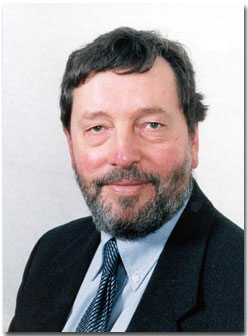
    Below is the text of the speech made by David Blunkett, the then Home Secretary, to the Police Federation in May 2003.

    Thank you very much indeed for an invitation to sunny Blackpool, the home of the tower – the Operation Tower, which is all about dealing with drug addicts and repeat offenders and is doing an extremely good job, and I commend the police here in Blackpool for what they have been doing.

    So here I am again – a repeat offender. It’s only my second offence, so no doubt the Lord Chief Justice would give me a sentence in the community rather than in custody. But this year, I don’t have another cousin to pull out of the hat to give me protection. This year there is only one David Blunkett. So, you’ve got me.

    I have, however, got some very special Harry Potter cufflinks – it says on them “No guts, no glory”. So I have got the guts and I want you to get the glory!

    I want you to get the glory because we have come an enormous way over the past 12 months. We have reached agreement on a whole range of areas. We have seen – despite ugly rumours to the contrary – that crime is down by 7% over the last year, and 27% over the last half decade.

    People disparage that – they pour cold water on it, they confuse it in terms of the national recording standards and the changes that have been brought about, and we need to do something to clarify the messages and the robust nature and credibility of the statistics that are used.

    We need to do so not just because it is good for the survival of Home Secretaries, which is always a dodgy business, but actually because your morale and that of your force, of the people you work with, the ability to sell the job, to get across the effectiveness of the force, is materially affected by whether people really do believe that the police force in our country is doing the job that you know it is doing and I know it is doing.

    I thank you for it because, day in day out, on the streets, in the neighbourhood, investigating major offences, and yes in bringing about social cohesion, you have been doing that job over the last 12 months. Remarkable work, throughout the Iraq conflict, including policing demonstrations.

    And, Jan [Berry] – I am quite prepared to update the National Policing Plan in terms of the recognition of counter-terror, of the resilience function that the police are doing and will in the future be asked to do. I am prepared to listen and respond to the Police Federation, who are themselves prepared to look at reform and improvement.

    The police force of the future is about all of us working together and listening together, and building pride from within the force, and pride within the community.

    Look – as the Prime Minister would say – over the past 12 months we have had an enormous change in terms of continuing recruitment. We have had the target that I set – yes I did set a target because I thought it was crucial in terms of what Chief Constables would do if we didn’t – to get 132,500 police officers in place by next March (March 2004). By last September we had actually made 131,500. We will announce the figures through to the end of March shortly, but it is clear that there has been the most enormous change both in the attitude towards joining the police force and the ability to recruit really good new probationers into the service.

    I say this with some temerity because I viewed the video of what happened to my predecessor when he talked about police numbers and recruits just two years ago. There has been a massive change. 4,300 officers recruited in the 12 month period to September. The largest ever recruitment since 1976. And again, for the second year, a massive change in the numbers actually applying and therefore the quality to be drawn on.

    I think we can all take pride in that in terms of the message that you have put out, the work that you have done, and the ability to get a year on year improvement in police numbers, which is what I promised last year, and which the Government will fulfill.

    There has been a rumour as well that I am not all that pleased with the judges. Now, as you can gather, this is completely untrue. I just like judges that live in the same real world as the rest of us. I just want judges that help us and help you to do the job.

    I heard an ex judge on Radio 4 this morning. You could tell that we weren’t going to have too big a row today because Radio 4 weren’t interested in interviewing me. You can always tell when there is something sensible to be said and there is a dialogue to be had, because they are not interested – only in rows, only in controversy.

    So they had the retiring judge, Sir Oliver Popplewell, on this morning. He told all about his new book where he learnt how football supporters shouted swear words at matches. How he had discovered that the community that he had been judging for all those years was actually quite different to the one he thought about, the one he had presumably met at school and at university and in chambers.

    I am not intending to attack him. I know that when he said that he understood there was real concern about multiple child murderers, that he meant it. But what I want are judges who, when they mean it, ensure that the sentences are such that the perpetrators know that we mean it and the victims know that we are going to protect them. That is why I announced that life will at last mean life – no remission, no supervision, no having to join the register because they will remain in jail for the rest of their lives.

    Do you know what Judge Popplewell said about that this morning? He said that it was popularism. Well I am going to say this, this morning – I have been prepared over the last two years to take head on tabloid newspapers when I have disagreed with them in a way that previous high profile politicians in this job have not necessarily been able to do. I have been prepared on a number of occasions to receive leader columns that have attacked me for taking them on. But I don’t think that responding to the needs of the public, I don’t think listening to the people that you serve and I represent, is popularism. I think it is decent common-sense in a democracy that works.

    People are sick and tired of politicians that talk a good story and don’t do it. They are sick and tired of politics and Parliament excusing itself for not being able to do things rather than doing them. They are sick and tired of constant prevarication and delay within the political system. That is why fewer and fewer people vote. It is why people turn to extreme parties. It is why they are fed up with a system that doesn’t respond to their needs.

    I give you a pledge this morning. It is not worth me being in the job – and I want the job, I want it through to the general election (that’s just a message to the Prime Minister for the reshuffle!) – and I have said to him the sooner the better because I am worn out doing the Police Minister’s job as well as my own. All of us want to be in our jobs to make a difference. We don’t just want to be there for the sake of holding the job. You don’t – you want to respond in terms of the community. I will speak in a moment about the things we have been trying to do to make that easier. I want to be in the job to change the world around me.

    If every time I do that it is described as a gimmick, or if every time I do that I am described as an anti civil libertarian, we are going to get nowhere. I believe in civil liberties – I believe in the liberty of the individual to walk freely on the streets, and to be safe in their homes. So do you and we will do it together because that is what you are in it for.

    But yes, Jan, we do have to sort out those things on which there is disquiet and on which we disagree. I didn’t come here today to be a populist, I came to try and address some of the issues.

    And of course, the issue of special priority payments is one which is exercising you at the conference, and should exercise us because a disquieted police force is not one which will engage readily with other reforms and changes. And change will always be around us and I want the Federation, as you have offered today, to be part of that process, to be a driving force for change, not a resistor to it.

    Not a single word of criticism has passed my lips, or those of my Ministers, of the police service over the last 12 months. I wonder, Jan, whether that is a record in terms of Home Secretaries and Ministers in the Home Office in history? I want to keep it up.

    So let me talk about special priority payments just for 30 seconds and I will happily answer questions on it. Yes we did have a package. It did include the £400 uplift, the speeding up of the incremental scales, and the extra point at the top. It did include the competency payments that are going through. And yes it did include special priority payments and they are controversial.

    So two things. Firstly, there isn’t a service or industry in the world that actually plays everybody exactly the same. We don’t in terms of our increments for experience as you go up the scale. We don’t in other walks of life in terms of what people are paid differentially for the type of job. But if we are going to get it right then I have got to be prepared to listen.

    I am asking the PNB to take another look at the way in which special priority payments are operating. I will engage the Federation in discussions about how it can work better, including the management training needed, as all managers have to do as they actually manage the service rather than simply oversee it.

    If we can do that, I think we can make the adjustments that will take anomalies out of the system, we can take some of the difficulty out of the process that you have experienced over recent months, but we will not – and I make this clear – we will not go backwards to where we pretend that everybody is paid exactly the same for doing very different jobs in very different circumstances.

    That, in my view, is a balanced approach to the future, where you get the change that you believe is necessary and we get the continuing reform in putting alongside what is happening in the rest of the world, for the police service as a whole.

    It may not be exactly what you want this morning, but I think we do need to listen and we do need to respond.

    If we can move forward together, if we can actually take some of the difficulties that you are facing day in day out, and we can build into them the way in which we listen and learn – for instance, on ring-fenced funding coming into the service from outside and the issue of overtime – then we will get somewhere.

    I don’t want the efforts on overtime reduction to have counted in them very specific ring-fenced money, including from other agencies, for a particular job to be done at a particular time.

    So let’s look at a whole range of things that can make sense of good intentions and pick up what Jan Berry said this morning, which is to be prepared to sit down and listen to and respond to the Police Federation. In partnership we can do so much more than we can separately.

    Today I want to address very briefly what I call the “3 Ps”. The reduction in paperwork and bureaucracy, the power to do the job, and a prosecution and court system that actually works in practice.

    You know and I know that the O’Dowd report has not yet been properly implemented in terms of the objectives set and the way in which we can ensure that we reduce paperwork. Everybody in this country, including you, wants to ensure that the increased numbers in policing and the police family, increased visibility, availability, and accessibility, the ability of you to do your job – that isn’t in dispute.

    I was the one who was writing about what had happened in New York before anyone else appeared to have discovered it. I was talking about ensuring that we linked intelligence based community policing with intelligence based investigation – the two aren’t contrary, they are hand in hand.

    I want the reduction in bureaucracy to be the fuel for freeing people to do the job sensibly. In six forces, 2,000 local forms have been eliminated. If we can get that across the country we are in business.

    The video ID parades have massively cut the amount of time spent on setting up and organising ID parades in those forces that have implemented it.

    We have seen the change in live-scan, in terms of the way in which finger-printing is done – 45 minutes per accused – actually transforming the way in which people can do the job.
    We have seen a whole range of technology used to allow people to contact the station without having to return.

    And of course we have seen the street bail, which is both a power and a reducer of bureaucracy in terms of working where it has.

    It can be done, but there is so much more to be done in driving it through. And Jan, you don’t want gimmicks, you want us to actually work with the Federation taking up the O’Dowd report and much more, and driving it forward. I will do what I am doing in the Home Office – I am asking staff in the Home Office to come forward with ideas on how we can transform the way we do business inside the Department. I would like that to be true of rank and file officers in the force as well.

    So if we set up a system with the Fed, for you to come forward with ideas on driving out bureaucracy and paperwork, and we provide some reward for you to designate a local victims charity, to which we could contribute cash for the most successful ideas that come forward, I don’t think that is a gimmick. I think that would be an incentive and a way in which we could engage people at local level. It would also have the advantage of ensuring that my Department had to do it and engage with it, because from this morning I am asking Jan and her colleagues, on your behalf, to set up such a programme with us.

    Of course these things are only small contributors. Of course they are not the be all and end all. There is a much broader programme.

    The second “P” is about powers for you to be able to do the job more quickly. The Anti-Social Behaviour Bill is bringing in a whole range of new powers. The Criminal Justice Bill that I shall be leading on the debate next Monday and Tuesday, as it returns from Committee to the House of Commons. The way in which we need to drive forward powers that already exist, but people are not aware of. The Fixed Penalty Notices piloted in four areas – over 3,000 notices issued. And yes they need to be followed up. And yes when we fine people we need to make sure that the Lord Chancellor’s Department and the court system make sure that those fines stick.

    As I mentioned a moment ago with street bail, we need to make sure that it works effectively.

    The dispersal powers in the new Anti-Social Behaviour Bill need to be used effectively. These are powers where you know that there is continuing nuisance, that there are groups of youths and adults who are causing mayhem, but you don’t even have the old power that used to exist to disperse them.

    You don’t have the power to declare within that immediate zone a curfew for anyone of any age.

    These are powers that are now in the new Bill to close crack houses overnight, to have them boarded up within 24 hours, to take new DNA and fingerprinting tests without the kind of nonsense that we have had, to be able to hold those who are threatening us by terrorism for 14 days rather than 7 – the whole range of powers that we intend and will give you to do the job.

    And as we have seen highlighted by local press this week, the power to confiscate vehicles off the road – a power that I find very little has been disseminated to officers to use. The power has not been spoken about or communicated.

    We need to allow you to respond effectively to what you need,

    I hope the coughing means that you agree with what I am saying, otherwise there has been a terrible outburst of SARS, which would be unfortunate.

    And what about prosecution? I think we are all sick and tired of a situation where you do your job and you find yourself fighting the system rather than fighting the criminals. We need to take that bureaucracy out of the system to get the Crown Prosecution Service and the courts working with you. We need to do so in simple things, like improved disclosure, like changing the rules of evidence. Like ensuring that people who wait until the very last minute to plead guilty don’t actually get remission of their sentence, but also those who have enabled them to continue through the system to the point where they plead guilty, having wasted your time and that of the system as a whole, actually face a penalty themselves.

    I spoke at a Law Society dinner in February. The solicitors were very nice to me. There was a table of barristers and when I announced that we were all sick and tired of the cost of late guilty pleas, they booed me. That is an indication of where we are at in terms of just some parts of the criminal justice system.

    And I have a message this morning for Mathias Kelly who runs the Bar Council. If you think your job is to take me on, to take on the police service, to take on the victims, to take on the community, you’ve lost the plot. Your job is to protect the innocent and convict the guilty.

    So the message this morning is very clear. You are on the side of the victim and the community and we are on your side in doing it. We are going to tackle violent crime and gun crime. 40,000 weapons were handed in in April – that is almost twice as many as the number handed in post the Dunblane tragedy 7 years ago. Almost a million rounds of ammunition. Not all the guns were going to be used by criminals, but some of them would have been, and they are no longer available.

    And we are going to change the gun law so that there is a minimum five year sentence which I shall be moving in Parliament next week.

    New powers, new determination, new partnership with you to do the job from the anti-social behaviour legislation through to tackling the most heinous crimes.

    And yes we will listen about targets. But no-one would thank me if we hadn’t had the drive against robbery and street crime. No-one would thank you if we weren’t driving down burglary. No-one would believe us if we didn’t say that we had a joint job to do together, where reform and partnership go hand in hand to enable you to do the job you want, to overcome cynicism that abounds around us and to provide those safer homes and those safer streets that each and every one of us want our children to walk on in safety.

    That is the task. We have started over the last year to build a new foundation together, between you and between us. I want to build on it in the next two years and I would like to go out not by being remembered as the man who nearly did it, but the person who worked with you, alongside you, to really make it happen.

  • David Blunkett – 2003 Speech on Multi-Faith Britain

    davidblunkett

    Below is the text of the speech made by David Blunkett, the then Home Secretary, on 30 October 2003.

    I am pleased to be part of reinventing this lecture series after a break of several years – and pleased to be talking in my home county of Yorkshire about the opportunities and challenges of multi-faith Britain.

    York itself may not be the most diverse community in the UK, but it has an interesting mix of thriving faith communities, especially here in the university – and of course the city has a long and famous religious history. But as well as the positives in that history there is also a reminder of the negative aspects which are part of the background to my contribution today – the anti-Jewish pogroms of the 12th Century.

    The question I want to raise today is how much does faith matter in the 21st century – and I want to go beyond the obvious contribution to the identity and spirit of the individual. The further question is how, and to what extent, the interface between faith and politics, between faith and social interaction, is still important to us now.

    Self-evidently faith is still important: locally, nationally and internationally. In Britain, 35 million in the 2001 census whilst not necessarily regular attenders declared themselves Christians; there are 1.5m Muslims, half a million Hindus, and hundreds of thousands of Sikhs, Jews, Buddhists, and people of other faiths.

    Understanding the role faith plays in people’s lives is vital to community cohesion and race relations – and I know Charles Clarke is working with the faith communities on the future of religious education in schools. Faith plays a role at crucial points in people’s lives – times of great triumph but also sorrow – birth, marriage, death. It affects the foundation, the framework of our lives. This was true for me, as a Methodist – indeed, it still is. But all of us, even those who are not overtly religious, our basic values, our sense of right and wrong, our consciences, are shaped by our community and its religious heritage.

    And of course from this foundation in the individual and the family springs the framework and structure of community – faith provides the building blocks, but also the glue, for many communities.

    I have seen this in practice as Home Secretary. Take the visit I made to the Hindu ‘Mandir’ in Southall. Reaching out to the community, providing facilities like health screening, doing practical things which benefit everyone like cleaning up the local canal, as well as being the focal point of their own faith community. In nearby Edmonton, the Bible Study Network – a black-led Christian organisation – provides job-seeking assistance, which is especially important for young people finding their way in an area of high unemployment. Also in London, in Stamford Hill, the Jewish community is playing a big role in driving forward the local Sure Start programme – again open to the whole community. Up here in Yorkshire there are mosques in Bradford which offer creches and other facilities to the whole community, including Jewish residents. In Highfields in Leicester the Pakistani community runs a youth and community association, again open to, and used by, all local residents. And right across the country I know that Sikh Gurdwaras provide food to all who need it regardless of faith.

    There is of course a rigorous debate between those who see the purpose of religion as saving souls and individual spirituality and those who see this as indivisible from the contribution we make through our lives and actions to the wellbeing of others. Ironically in the far south of the US the evangelical right, even though in their own lives they practice giving, in public life embrace the individualist route, rejecting the political process – unless that is to get their own man in the key post! Perversely they end up frustrating attempts to change the very circumstances that in their own giving they would want to change.

    I think this is wrong: faith communities should not turn away from the political process. They have an important role not just in building strong communities, but in building active communities – communities which are actively engaged in solving their own problems. Any government which is interested in connecting with, mobilising, and empowering communities – and we are – is going to be interested in engaging with faith communities. That is why I have set up the Faith Communities Unit in the Home Office.

    Faith communities provide people, commitment, drive, and sustainability – springing from inner conviction and strength. But they also have the very thing which makes activity and mutuality practical – namely, buildings in the community, leaders in the community, teachers and other support mechanisms. They have vicars, Ministers, Imams, Brahmins, Rabbis out there in the communities – the Catholic church, for example, had eyes and ears and an internet back in Medieval times, the kind of network which any political party today would give their eye for.

    But here is the rub – we want people to gain strength and we want them to contribute, but is there not a danger in channeling this soley through their faith? When we want people both to participate through their faith community, but also to be part of and active beyond it – and sometimes despite it – this is the real challenge. The challenge for faith communities is to develop the skills and confidence of their members to play an active role in civil society – speaking and acting not just on behalf of their faith, but also on behalf of the local community as a whole. For example I have been hugely impressed by the contribution that the Harringey Peace Alliance are making with the police tackling gun crime and creating a safer community for people of all faiths and those of none.

    Government has a role to play here, which is to facilitate interaction between the different faith communities, and between them and the wider community. We need to build on the spontaneous efforts faith groups are making themselves in this direction – for example the Institute for Social Cohesion, a Baha’i initiative bringing faith, community, business and government groups together to discuss how to improve community cohesion. We need to remember that in the UK we are lucky to be able to have this debate in a political context where faith and politics remain distinct spheres. In the international arena faith and politics are often directly mixed, and then they become not a liberator, channeling strength through faith into wider goals, but actually constrain political engagement and restrict freedom. The will of God or Allah becomes the will of the political state – and as such unchallenged and unchallengeable, and therefore non-pluralistic.

    11 September placed the debate in the wrong context – but it focused all of us on disentangling religious commitment from the kind of religious ‘fundamentalism’ which can lead to extremism. Across the world people are addressing this issue. Where they don’t, they are forced to do so. We have to understand what is happening in a world where young men and women can be enjoined by their religious leaders to take their own lives and the lives of others as suicide bombers.

    Let me accord absolute credit to those standing up to this within world religions. But it is important for all of us to join them in resisting and isolating the challenge of extremism, because it is not about to go away. There is a lot of talk these days about us living in a post-ideological world. The great twentieth century ideologies – communism and extreme nationalism – have been seen to fail. But the hunger for simple answers remains, and there is the danger that another form of extremism, religious extremism, will fill the gap.

    Of course, it is crude to suggest that religion is essentially about simple answers. Signing up to Islam or Judaism or Christianity should mark the beginning of a lifelong journey of moral reflection and self-examination, rather than instant moral certainty. But there will always be those ready to distort religious teachings to satisfy the hunger for simple answers – encouraging their followers to define their faith and their identity in terms of their opposition to outsiders, rather than in positive terms, in terms of self-improvement and contribution to the community.

    It is a worrying trend that young, second-generation British Muslims are more likely than their parents to feel they have to choose between feeling part of the UK and feeling part of their faith – when in fact as citizens of the United Kingdom and adherents of a major faith they should feel part of wider, overlapping communities. There may be a number of reasons for this including islamaphobia and religiously motivated attacks. It is religious extremism which forces them to choose, separating them from their citizenship and demanding the impossible. Again, the issue here is identity: whether people are able to identify with the actual world in which they live, or with another world they are taught about, which offers the absolute certainties which day-to-day interaction can never offer. We need to work together to resist this – by ‘we’ I mean government and faith leaders working together. Otherwise there is a real risk that instead of religion helping to build civic society and a sense of belonging among those who might otherwise become alienated, religion could actually increase that alienation. This risk is not confined to Islam: we see it also in some forms of Hindu nationalism, and as already mentioned it is writ large in some extremes of Christian evangelicalism.

    The clash of cultures, within individual lives as well as within communities, the uncertainty of the second and third generation, these are all political issues – but they are also issues in which teaching and community attitudes can make or break the direction in which young people in particular choose to go. Teaching in religious communities whether evangelical, Christian, or Islam, is rarely spoken about, but it is vital.

    This is not just a problem for Britain; our European partners are wrestling with the same questions. In France, which has 5 million Muslims, a real debate is under way. At the moment in France, 60% of Muslim preachers do not speak French. We should be working together with the Muslim community in Britain to ensure we are not going down the same road. It is crucial that those who have this key role in shaping the world view of our young people should be in a position to help them relate to the world in which they live, rather than turning them away from it. This is absolutely central for the development of the Muslim community itself and for the life chances of young Muslims, but also has a wider impact on social cohesion and race relations.

    It is important that we work together and pool ideas – across countries and governments, across faith communities, and across the academic community as well. This weekend Fiona MacTaggart, the Home Office minister responsible for race and community cohesion, is participating in a European conference in Rome, with other government ministers and faith leaders, looking at precisely these questions – how governments should be engaging with moderate elements across faith communities to isolate extremism and promote social cohesion.

    A large part of the answer has to be to teach and practise tolerance and respect. Britain can be proud of its tradition of tolerance and pluralism. Up until recently this has been about tolerating different versions of the Christian faith. We shouldn’t play down how difficult this was: the bitterest feuds are often between people who are close. But now we face a new challenge – living together with people of radically different faiths who often do not understand one another.

    So we need to work harder at this. But we should never pretend that understanding will bring full agreement – that dialogue between faiths is a kind of search for ‘the lowest common denominator’. Tolerance is about accepting and respecting difference – the true test of tolerance and respect only comes when you disagree with someone. It is about agreeing to work out your disagreements within a legal and democratic framework.

    At the same time, there are limits to where we can agree to disagree. We cannot tolerate the intolerable. Female genital mutilation is one example. Like September 11, this is not about East versus West, or Islam versus Christianity – it is about extremism versus modernity. It is an affront to modern values of equality, equal respect and respect for human life and suffering.

    In fact, we think of these as modern values, but they lie at the heart of all the major religions. Secular thinkers mock believers for being more interested in saving the soul than the body. But religion has never just been about making promises for the afterlife. It is about making a difference now, to the actual reality of people’s lives. All the major religions teach us that in the end our lives will be judged on how much we have helped others.

    Of course, in all the major religions there have also been, and will continue to be, times and places where these central values are obscured by upsurges in religious extremism. That is the challenge of a world where different peoples are at different stages of development. Oppression on the basis of religious difference – which in Europe was probably at its most vivid in the work of the Inquisition, but continues through to the Taleban in much more recent times – is a strand in human affairs which has to be faced up to. It places a duty on all of us not to turn away, but to redouble our efforts to connect with those who continue to fight for openness, tolerance, and respect. And it imposes on Government a duty to address the concerns of faith leaders. If we don’t do this – if we don’t show how moderate faith leaders are listened to, can really have an input into policy discussion – then we play into the hands of the extremists and rabble-rousers.

    That’s why we committed ourselves in the manifesto for the last election to look at the government’s interface with the faith communities; that’s why we have followed through on that by establishing a steering group to look at ways of giving faith groups an input into policymaking and delivery. The steering group reports in December, and we hope its recommendations will enable us to make real progress in harnessing the energy and depth of commitment of faith communities. At the same time of course we will continue to support more immediate, practical projects on the ground, especially those projects which aim to build not just strong, tightly-knit communities but active outreach communities – communities in which deeply held faith is a springboard for individuals and groups to play an active role in civic society.

    Let me finish by making it clear that while I believe faith communities are crucial to the working of civil society, I am not seeking to impose a duty on them to engage with the formal political arena. I simply want us all to recognise that in an increasingly complex, connected world we all share the challenge to finding solutions to our common problems. In that task we should do all we can to engage people of goodwill – both those of faith and those of no faith. Together we need to be clear that in the world we hold in common we need to work together to preserve and enhance what we value most – that is, our common humanity.

  • Alan Milburn – 2003 Speech to the Social Market Foundation

    Below is the text of the speech made by Alan Milburn, the then Secretary of State for Health, on 30 April 2003.

    Domestic politics is back. This week there will be important elections in Scotland, Wales and England. Over these last few months, Iraq put bread and butter issues on hold. The Government’s decision on the Euro could have a similar effect. But whilst Iraq and the Euro are hugely important for the future of our country and the wider international community, it is not the five tests on the Euro that will determine this government’s fate. It is the three big domestic tests: delivering on jobs and the economy, crime and asylum, health and education.

    Here there is a stark choice for the Government. To pursue the cautious incrementalism that sometimes characterised our first term, or to embark on a more fundamental transformation of our country. It is the latter course of action I believe we must choose if we are to successfully meet each of these three key domestic tests.

    Reassurance was right for our first term. Radical reform is what is needed now. Not reform for reform’s sake but reform to open up new opportunities for people to deliver on our commitment to social justice.

    So for public services that means using the considerable extra resources now going in to health and education to reinvent collective provision for today’s world.

    Some find that an uneasy proposition. Reform in health or in education is often caricatured as being in conflict with the values of the Centre Left – as though reform can only ever come from the Right.

    That is to confuse ends with means. The ends remain – of strong public services capable of providing opportunity and security in a globalised and increasingly uncertain world. It is the means of securing them must now change as society itself has changed.

    We are in a century where deference is lower but expectations are higher than they were in the century that saw the creation of these great public services.

    So, today I want to set out the case for public service reform. And I want to do so with particular reference to the changes we seek to make in the National Health Service including NHS Foundation Trusts.

    My starting point is this: strong public services are the best provider of opportunity any society can have. A good education helps lift people up. A good police and criminal justice system keeps communities safe from harm. And a good health service secures the health of the nation.

    All my adult life I have argued for policies and for values that are about widening opportunity in our society. That is why I believe the NHS is such a source of strength for our country. It expresses the values that I believe in. Solidarity, community, opportunity. With the NHS we all share in the security – Nye Bevan called it the serenity- of knowing that we all pay in when we can do so that we all can take out when we need to. The health of each of us depending on the contribution of all of us.

    These were the ideals that inspired the generation of Bevan and Beveridge. They remain our inspiration today.

    Indeed, I believe profoundly that the case for the NHS system of funding and values is stronger today than it has ever been. Now more than ever, we live in a world where health care can do more but costs more. Since none of us knows when we will fall ill, how long it will last or what it will cost, having an NHS that pools risk because it is funded through general taxation and is free at the point of use, based on need not ability to pay, is the right way forward for our country.

    Conversely, the market-based approach favoured by others would be both inefficient and unjust. As the costs of treatment and drugs grow, the risks to family finances of pay-as-you-go and health vouchers would grow too.

    I reject the vision of some privatised future where the health care you are guaranteed for your family is the health care you insure for privately or pay for, in part or in whole. Where poverty bars the entrance to the best treatments. I reject the dogma of those whose dislike of public services is such that they would prefer a private sector working inefficiently to a public sector working well.

    It is because we recognise the unpredictability of health needs, the rising costs of heath technology and the equity and efficiency of the NHS tax funded system that for us the NHS will remain a National Health Service – a public service free at the point of use with decisions on health care always made by doctors and nurses on the basis of clinical need.

    The Government’s decision to double health spending in real terms by 2008 from the position we inherited in 1997 is a declaration of that faith in the NHS. With the right level of funding we believe it can be the best health insurance policy in the world.

    I believe we are right to raise tax to increase spending in the NHS and the increased spending we have been putting in is beginning to repay that declaration of faith. More doctors and nurses. More drugs being prescribed. More patients being seen. Shorter waits for treatment. As the Modernisation Board put it recently there is a long way to go but the NHS is now turning the corner.

    But money alone, however, cannot deliver the modern responsive health services our nation needs. To get the best from the money the NHS needs to be properly organised. I have heard it said that since the extra investment is now paying dividends in the NHS further reforms are not needed. It is true that the resources are tackling the historic capacity problems the NHS has faced for decades. What is equally true however, is that the NHS has cultural barriers that must also be overcome if it is to reach its full potential. That cannot be achieved through investment. It can only be achieved through reform.

    The NHS has great strengths in how it has been organised. For over fifty years it has provided good care and treatment for millions according to the right values. Its ethos and its staff express the values of the nation. Its unitary structure gives it great advantages both in overall levels of efficiency and its focus on public health. Its primary care services, led by Britain’s family doctors, are the envy of many other countries.

    But the NHS has structural weaknesses too, not least its top down, centralised system that tends to inhibit local innovation and its monolithic structure that denies patient choice. NHS Foundation Trusts are a means of overcoming that faultline.

    And for those of us on the Left the most depressing thing of all is that despite having the fairest health care system in the world, for fifty years the gap between the health of the wealthiest and the health of the poorest has widened not narrowed. A boy born today in Manchester will live on average a decade less than a boy born in Dorset.

    For half a century, uniformity of provision has not guaranteed equality of outcome. Too often, even today, the poorest services are in the poorest communities. The hard fact is that for over fifty years it is poorer people and poorer communities who have lost out from poorly provided public services.

    That is an affront to all that I believe in. For me, the only purpose of being in politics is to build a society where, regardless of race or gender or social class, there is opportunity for all not just for some.

    Take choice, which the Left has mistakenly conceded to the Right. For too long choice in health care has only ever been available to those with the means to pay for it. Those with more money have been able to exercise more choice. That is the real two-tier health care in our country.

    The trap we must avoid is that identified by Richard Titmuss four decades ago of so many people opting out of publicly provided health and education that public services become only for the poor and then end up themselves being poor services.

    Then there’s the pensioner with modest savings. Worked hard, paid in all his life, finds he needs a heart operation and then is forced to choose between waiting for treatment or paying for treatment.

    That is a dilemma I want to solve. The way to do it is to reduce the waiting times and make choice available on the NHS; choice for all not just for some so that for the first time NHS patients can choose hospitals rather than hospitals choosing patients.

    The route to patient choice lies not through more healthcare charges but through big cultural changes. The cultural changes which redesign services around the needs of patients so that they are able to make choices about where and when and by whom they are treated. And so that NHS patients can make that choice free of charge, within the NHS.

    So it is right to be bold on reform. But boldness is not an end. It is a means to an end. It should be about making health services more responsive so they can provide more opportunities for the communities they serve. That is the purpose of our reform programme in general and NHS Foundation Trusts in particular.

    We must not allow our reform programme to be caricatured as a values-free zone. It is actually quite the reverse. It is about strengthening our public services as a means of securing the values that guide us – of social justice and stronger communities. It is boldness for a purpose.

    So it is right to press ahead with fundamental reform in how the NHS works. For some – particularly on the Left – this is not an easy process because the NHS is in our blood. For many it is the touchstone of all that we stand for. And yet in our hearts we know that the NHS needs to be better – not because it has failed but because the world has changed.

    Sixty years ago when the NHS was formed it was the era of the ration book. People expected little say and experienced precious little choice.

    Today we live in a quite different world; a consumer age; the computer age; the informed and inquiring society. People demand services tailored to their individual needs. People want choice and expect quality.

    We all do it and we all know it. These changes cannot be wished away. They are here to stay. And these changes challenge every one of our great public services.

    To meet that challenge we’ve got to move on from the one-size-fits-all, take-it-or-leave-it, top down health service of the 1940s towards an NHS which embraces devolution, diversity and choice – precisely so that its services can be more responsive to the way the world is today.

    Unless we do so, more and more of the public will simply walk away from public services eroding the national consensus that supports them. Reform is not about undermining tax-funded public services. It is about strengthening that consensus by making the NHS more responsive to those who use it.

    In our first term we rightly sought to do that by putting in place a new national framework of standards. It is easy to forget how far we have come. There are new national standards for cancer, heart disease, mental health, elderly care and now for children’s services. There is greater transparency over local service performance so that we and more importantly, patients and staff, can spot if things are going wrong and put them right. There is a new legal duty of quality and a new system of clinical governance to enshrine improvements throughout the NHS.

    There is the National Institute for Clinical Excellence to tackle postcode prescribing. For the first time the NHS has an independent inspectorate. With the NHS Modernisation Agency there are now new systems for when things go wrong and more help to learn from what goes right. There are clear targets to focus effort across the whole NHS not least to address the biggest public concern about the health service – how long patients wait for treatment. And for all the comment about targets no one should kid themselves that we would be making the progress we are now – with waiting times falling on virtually every indicator – without the targets we have set.

    These measures have all served to strengthen equity in the NHS. And I believe they were all necessary to kickstart the process of improvement that was overdue. But the NHS cannot be run forever like a 1940s-style nationalised industry.

    National targets and standards are important but ultimately improvement is delivered locally not nationally by frontline staff in frontline services. And that is where power needs to be located if those services are genuinely to be responsive to local communities.

    Sustaining improvements in NHS performance can only happen when staff have more control and local communities have a greater say in how services are run. Disempowering frontline staff – whether it is doctors or nurses, social workers or police officers, teachers or managers – is never going to be the best way to run a public service. That’s why we have devolved power to Primary Care Trusts and why we want to establish NHS Foundation Trusts. It is right to set standards nationally but it is wrong to try to run the NHS nationally.

    Just as there are limits to the role of free markets in health care, there have to be limits to the role of the centralised state.

    Ours is a small country with big differences. It is not uniform. It is multi-faceted and multi-cultural. Different communities have different needs. We have local councils to run local services because we recognise that needs do differ between communities. What is true for social services is also true for health services. With the best will in the world, those needs cannot be met from a distant Whitehall. They can only be properly met locally not nationally.

    That is why, with a national framework of standards and inspection now in place, the centre of gravity is shifting decisively to the NHS frontline. More devolution to primary care trusts, more diversity in provision, more choice for patients to open up the system so that it is more responsive to those who use it. NHS Foundation Trusts are part of that process.

    We are now in transition from the old order to the new. As we set out in the NHS Plan the more performance improves the more control local health services will assume.

    Rather than trying to drive improvements simply through top-down performance management, the transition is towards improvements driven through greater local autonomy in which PCT commissioning, new financial incentives and the choices patients make become the driving force for change, backed by national standards and independent inspection. That transition will take time but the direction of travel is now set – and it must not be reversed.

    NHS Foundation Trusts are the next stage in that journey. In some quarters it is a controversial policy; for many in the NHS it is a welcome one.

    Since I first outlined the policy more than a year ago, there have been a number of myths and misconceptions about what we intend to do and how we intend to do it. So let us nail some myths today.

    NHS Foundation Trusts will be NHS hospitals. They will be fully part of the NHS but with greater freedom to run their own affairs.

    Freeing NHS Foundation Trusts from day-to-day Whitehall control will improve care for patients by encouraging greater local innovation in service delivery. It will help unleash that spirit of public service enterprise that exists in so many parts of the NHS but for too long has been held back.

    NHS Foundation Trusts will be owned and controlled by the public locally not nationally so as to strengthen the relationship between local hospital services and local communities.

    In place of the centralised system of government appointments to hospital boards, for the first time there will be direct elections by local people and local staff of hospital governors.

    Strengthening public ownership by making NHS Foundation Trusts more locally accountable will particularly help improve services in poorer areas. Indeed I very much welcome the fact that hospitals in some of the most deprived areas of the country, including Hackney, Liverpool, Bradford, Doncaster and Sunderland have all expressed an interest in being amongst the first NHS Foundation Trusts.

    We are starting with existing three star NHS hospitals. In time the Foundation principle will be extended to mental health trusts and other parts of the NHS. To date 32 NHS Trusts have applied. I will be making decisions about those applications shortly. I hope to be able to approve the vast majority of them. But that is just the start. I will also be bringing forward plans – including extra financial support – to help each and every NHS hospital to become an NHS Foundation Trust over the course of the next four to five years. A policy, in other words, that is for all and not just for some.

    This is part of an ‘equity guarantee’ that the Bill introducing NHS Foundation Trusts enshrines. That equity guarantee means that NHS Foundation Trusts will remain part of the NHS providing services to NHS patients according to NHS principles – care for free, based on need not ability to pay. It means they will be subject to NHS standards and systems of inspection. And it means they will be bound by a legal duty to work in co-operation with others to improve the quality of health care throughout the NHS in keeping with our values where the strong support the weak for the benefit of all.

    So NHS Foundation Trusts will be built on the values and principles of community empowerment, of staff involvement, and of democratisation. Indeed the way they will work draws on some of this country’s best traditions of mutualism and co-operation. They draw too on international experience of greater independence improving performance in hospitals across Europe.

    This is not the reinvention of an internal market. Far from it. NHS Foundation Trusts will get their income through local Primary Care Trusts, just like every other NHS hospital. They will all work within the flexibilities of the Agenda for Change pay system we have negotiated with the NHS trades unions.

    There will be no competition based on hospitals offering the lowest price. In future all hospitals will be paid a nationally set price for the same procedure. Those who treat more NHS patients should of course get more NHS money. So there will be a payment by results system but NHS Foundation Trusts can not make a profit or pay a dividend. There will be a legal lock on their NHS assets ensuring their continued use for NHS patients and the proportion of their income from private patients will be capped at current levels.

    So those who claim this is privatisation or a step in that direction – through the front door, through the back door or through the side door – are simply wrong.

    By all means let us debate NHS Foundation Trusts but let us do so on the basis of what the policy is rather than what it is not. Greater local freedom, real local ownership, genuine staff involvement to give more responsive services and ensure community needs are better met.

    NHS Foundation Trusts are part of a wider reform programme aimed at getting the right combination of national standards and local control. Both are needed if services are to improve and if the case for collective provision is to be won.

    The Government has made public services the key political battleground in our country. We have staked our reputation on being able to deliver the improvements in public services that have escaped governments for decades. And we have embarked on a high risk but necessary strategy of raising taxes in order to raise resources for the health service and other key public services.

    We have been right to do so. But we need to recognise that in so doing we have raised the stakes. Collective provision of public services – whether in health, education or local government – is challenged as never before.

    The Right – in the media and in politics – believe the game is up for services that are collectively funded and provided. In today’s consumer world they argue that the only way to get services that are responsive to individual needs is through the market mechanism of patients paying for their treatment.

    It is easy to dismiss the Right’s policies as the last twitch of the Thatcherite corpse. But if we fail to match high and sustained investment with real and radical reform it will be the Centre-Left’s argument that public services can both be modern and fair, consumer-orientated and collectively provided that will face extinction.

    We will win the argument for public service investment and reform if we accept that the era of one-size-fits-all public services is over and that the Centre-Left’s approach today should be based on decentralisation, diversity and choice.

    Our objectives – social justice and opportunity for all – remain. It is our means of delivery that must now change. Our job in carrying through these reforms is to preserve values and yet still change structures.

    Reform is difficult. It is often controversial. The pioneers who created the NHS found that. The job of re-creation and renewal will be no less difficult. But we will be failing the public if we did anything other than press ahead with reform. The Government’s foot needs to be firmly on the accelerator not on the brake. We have just entered the period of unprecedented expansion when it comes to investment. We must keep up the pace of reform.

  • Alan Milburn – 2003 Speech to the Association of the British Pharmaceutical Industry

    Below is the text of the speech made by Alan Milburn, the then Secretary of State for Health, on 3 April 2003.

    Mr President, my Lords, ladies and gentlemen,

    It’s a great pleasure to be here with you this evening and particularly to follow both John and Cliff.

    It’s three years since I last had the pleasure of addressing you. I announced then the creation of the PICTF- an important symbol of the co-operation that I believe exists between industry and Government in our country. And I join with John in praising the leading role that colleagues from the ABPI and especially Phil Hunt played in taking that co-operation forward.

    Tonight I want to suggest how we can build on that strengthened relationship.

    The starting point is this simple insight: the health of the country and the health of your industry are intimately linked. The stronger our partnership the better it is for Britain.

    Your industry as John rightly said is a major contributor to the wealth of our nation – and therefore ultimately to the funding of the great public services on which people in our nation rely. Indeed the Pharmaceutical Industry is a competitive and innovative, knowledge-based and high value-added industry. You are genuine world leaders – second only to the US in the discovery and development of the world’s leading medicines. Our job in government is to create the environment in which you can thrive.

    A stable economy; a flexible and skilled labour market, a world-class university sector and science base – these are the keys to unlocking success in what is, as you know, a highly competitive global market place. On each of these fronts there is reasonable progress to report.

    For example, we believe in investing in science. By 2005 the science budget will stand at nearly £3 billion – more than double what it was just a few years ago. Investment that will help grow your future workforce and sow the seeds for future scientific advance. The new R&D tax credits we introduced last year I hope will help that process. The green light that Parliament has given to stem cell research not only provides a further basis for new scientific endeavour but holds out the hope of new breakthroughs in the treatment and prevention of serious illness.

    And for research to thrive it needs proportionate regulation and it also needs a safe environment – which is why John was right to highlight the threats posed by a small minority of animal rights extremists. I know that some of you here tonight will have been targeted by these people. Many more will have felt intimidated by them. All I want to say to you is that the Government unreservedly condemns their campaign of violence and intimidation. We are determined they will not succeed. That is why we have taken action to improve co-ordination between the police and other agencies. It is why we have strengthened the law. And I can say tonight we do not rule out further changes to the law to remove the threat that these extremists pose.

    I believe that we must deal with those threats in order that we can realise the very real potential that now exists. Over these next few years a growing National Health Service and the prospect of further pharmaceutical advance provide new opportunities for both industrial prosperity and better health.

    The NHS is in a period of unprecedented growth. By 2008 its budget will be double that of just a decade before. We have the fastest growing health care system of any major country in Europe. There is of course a huge amount of catching up to do. Nonetheless there aren’t many organisations in this country – perhaps not in the world – that know what their budgets will be in five years time. The NHS is in that enviable position.

    The fruits of increased investment are already plain to see. Not just in the growth in nurses and doctors, more beds and new hospitals but in shorter waiting times for treatment and improved standards of care. In the last year alone there were around 30 million extra prescriptions for patients. The NHS drugs bill rose by £850 million. That represents a year-on-year increase of nearly 14 per cent, with a similar rate of growth likely this year.

    I said three years ago that more spending on medicines is, in my view, a good thing, not a bad thing. Provided of course that the extra money is spent effectively and gets good value. Some feared, three years ago, that the advent of the National Institute for Clinical Excellence – and I pay tribute tonight to its work under the leadership of Sir Michael Rawlins – would act as a brake on drug spending in the NHS. Those who thought that obviously got the wrong pedal. NICE has not slowed down expenditure on new drugs. It has accelerated it. NICE decisions since it was set up three years ago have cost the NHS over £700 million. Amongst those benefiting have been an additional 31,000 cancer patients, 160,000 diabetes patients, 100,000 people suffering from alzheimers disease and 170,000 more who can benefit from atypical antipsychotic drugs. In the last year alone, as John said, prescribing of statins has risen by 30% benefiting over one million people and helping to save an estimated 6,000 lives.

    Now as John commented – and I got the message – there is more that needs to be done. And just for the avoidance of doubt: I did not set up NICE so that its recommendations could sit gathering dust on the shelves of Primary Care Trusts. You want the guidance implemented, I want the guidance implemented and I will ensure that this is precisely what happens.

    And over time I would expect to see the importance of medicines to the NHS continuing to grow. And in all likelihood drugs spending as a proportion of NHS spending will also continue to grow. Too much of the debate on health care today in my view is still focussed on the narrow terrain of hospital-based activity. Now what happens in hospitals is, of course, incredibly important. But it is not the be-all-and-end-all of what the health service does. Indeed changes in demography and the pattern of illness alongside scientific advance and technological breakthroughs are driving the NHS towards more health care being delivered in a non-hospital setting. As today’s World Cancer Report from the WHO argues, the focus increasingly needs to be on prevention, not just treatment. The work we have done together in government and the industry has given the NHS a world-leading smoking cessation service sets a course which we must now follow in the years to come.

    Already in the last few years the number of premature deaths from major killers such as cancer and coronary heart disease have begun to fall dramatically in our country. New drugs and more effective prescribing have played their part in that. But there are new challenges too. The latest census for example showed that nearly 9 million people in England have a limiting long term illness. With the population of over-60s set to grow by one third in the next twenty years, that number will inevitably rise substantially.

    At the other end of the age spectrum, rising levels of obesity, most worryingly amongst children, create future risks of diabetes, heart disease and of course renal failure. If current trends continue – and we need to see that they do not – up to a quarter of all adults in our country could be obese by the year 2010. And, of course, there are the threats posed to public health as a consequence of open borders, increased mobility and global travel.

    New challenges then, demand new approaches. And here there are good reasons to be optimistic. Indeed, some commentators say we are likely to see in the next twenty years as much advance in healthcare as we have seen in the last two hundred. The pharmaceutical industry will undoubtedly be at the leading edge of these advances. Day by day the industry is helping us understand disease mechanisms better. And many believe this generation, our generation, stands on the threshold, fifty years after DNA was first decoded at Cambridge, of a genetics revolution that could transform health care across the world. Pharmocogenetics that tailor drug treatments to individual patient metabolisms. New drugs and therapies targeted at the cause of the disease rather than controlling its symptoms. Diagnostic methods that can help prevent disease before it develops. And gene therapies that hold out the prospect for entirely new treatments – and even cures – for cancer and other common diseases. I am delighted that Trevor Jones has agreed to chair the new Advisory Group for Genetics Research to provide the advice that we need to determine research priorities.

    Because only if we make the decision to invest now will we harness this potential for the future. In a few weeks’ time I will publish a White Paper on genetics which will set out how we intend to work in partnership with the industry to put Britain at the forefront of this genetic revolution so that its advances can be made available to the people of our country.

    And the benefits of scientific breakthrough and the great good that your industry brings need to be made available to poor nations just as well as to richer ones. No challenge can be greater than dealing with the threat to health posed by poverty and disease in the world’s poorest countries. John rightly mentioned the steps that pharmaceutical companies have already taken on this issue and I pay tribute to the work that you have done. It is true that governments and international organisations need to do much more too. But none of us can feel comfortable with a position where the industry develops medicines that can save lives, only for a minority of the people in the world who need them actually being able to benefit from them. It is precisely because of your achievement in creating new life-saving medicines that the world looks to you to do all in your power to make them available to the people who need them most. In Government we not only urge you to do that but we pledge to work in partnership with you to help make that happen.

    In recent years we have built between us – industry and government – a strong partnership. It needs to be stronger still in the years to come if we are to meet the new challenges that confront us and realise the new opportunities that are open to us.

    We are in an era of unparalleled growth in the NHS; a time of unequalled discovery in science and medicine; a period of profound potential in which both the UK’s health services and pharmaceutical industries can lay the foundations of better treatments for generations – in our own country and across the world.

    To realise that potential however, we need to strengthen our partnership. We will then, I believe, truly unlock a rich seam of new science, new discoveries, new treatments and technologies which are genuinely capable of delivering better health and better lives in our own communities and communities across the globe.

    This is the challenge for all of us. It is a challenge that I believe that by working together – Government, Industry and patients groups – we can meet that challenge.

  • Alan Milburn – 2003 Speech to the National Association of Primary Care

    Below is the text of the speech made by Alan Milburn, the then Secretary of State for Health, to the National Association of Primary Care on 5 March 2003.

    I want to begin by thanking the National Association of Primary Care for inviting me to speak but more importantly for being at the forefront of improvements in primary care and for speaking up for its interests.

    Primary care is the frontline service of the National Health Service. Certainly, you are the people who make the health service work for millions of our fellow citizens every year. And from next month primary care organisations – PCTs – will be in charge of £46 billion a year – three-quarters of the total NHS budget.

    So, today I believe we have an historic opportunity to put primary care where it should be: centre stage in a reformed National Health Service. In this speech I want to set out why it is necessary to achieve that renaissance in primary care and how we intend to make it happen.

    The NHS today is the fastest growing health service of any major country in Europe. Six years ago resources were falling in real terms. Now they are set to double. In England, health spending has risen by 6.1% in real terms this year and will rise on average by 7.5% per year for the next five years.

    The investment is going in to put the NHS on a sustainable footing for the long term. Quite simply if we want world class health care it has got to be paid for – if not through Pay As You Earn then through pay as you go. We have chosen on grounds of both equity and efficiency not to make people pay more for their own care when they are ill but instead to raise a little more in tax to get a whole lot more for the health service. A contribution from each of us to the health care of all of us. I believe that is the right decision for the country.

    Some say resources never really produce results. In my view that is a counsel of despair and sometimes it is frankly motivated only by a desire to undermine the NHS and the people working in it.

    Of course the NHS has problems. Decades of neglect and under investment are still felt in health centres and hospitals across the country. But steady progress is underway. Double the number of drugs are being prescribed to prevent heart attacks. 11% more prescriptions were issued last year and 13% more this year. One million more patients are getting a hospital operation every year. One and three quarter million more are getting seen in outpatients or in A and E every year. The number of patients waiting more than twelve months for an operation is down two-thirds. The maximum wait for a heart operation is being halved in just one year. Deaths from heart disease over the last few years are down 14%. Deaths from cancer down 6%. According to Professor Roger Boyle, the country has seen the largest fall in Europe in lung cancer amongst men and the largest decline in breast cancer amongst women.

    In primary care there are particular challenges. In many parts of the country recruitment and retention remains difficult for example. But even here the “GP Golden Hello” scheme has contributed to the recruitment of over 2,200 new or returning GPs since it began in April 2001. The numbers of GPs in training has risen for 5 years in a row after previously falling for 5 years. New programmes, like the Flexible Careers Scheme and childcare support are helping more staff to achieve a balance between work and family life. For the first time since 1948 there is now a concerted programme to improve the quality of the working environment in primary care. Around 1,000 GP premises have already been modernised – well on the way to achieving the NHS Plan commitment to refurbish or replace up to 3,000 GP premises by the end of next year. There are extra resources being invested in the most under doctored areas. And alongside the investment, important reforms are already improving primary care for patients. The average waiting time to see a nurse in those practices involved in the Primary Care Collaborative is down by over 50%. The average time to see is a GP is down by more than 60%.

    There is of course a huge amount of catching up to do and a long way to go. Notwithstanding some of the progress that is being made our primary care services face big problems. There are still too few GPs working in the NHS. Too many GPs and primary health care professionals have to work in poorly equipped premises. Too few GPs are able to spend enough time with their patients.

    But the only way to address these problems – and to maintain the progress now being made – is to sustain the investment now going in. If people in the health service want to see progress then that requires money. That is why in my view it is right that the Government has taken the decision to add 1p to the tax bill so get the right level of resources and the right programme of reform into the health service.

    I know there is a feeling in primary care that it does not get its fair share or that it always loses out. Sometimes in government we may have given the impression that it is always hospitals that come first, primary care services that must inevitably be second. I think that impression is wrong and today I want to tell you why that is and what we intend to do about it.

    I know that over the years every secretary of state for healthSecretary of State for Health has said they want to shift the emphasis of where health care is provided from hospitals to primary care. I know too that primary care audiences generally respond with a few seconds of hope, a few minutes of scepticism and then years of disappointment. I believe however that this generation has the best opportunity there has ever been to put primary care centre stage in a reformed NHS.

    I say that for a number of reasons.

    Firstly, because patients are on the side of primary care. Primary care – despite the very real problems it faces – is the jewel in the crown of Britain’s NHS. It is where we lead the world. Other nations with supposedly superior health care systems look on our family doctor system with envy: admiring it for its better outcomes, lower costs and higher satisfaction levels.

    Primary care makes a difference to one million patients every single working day. Nine out of every ten NHS patients are seen in primary care. And three quarters of patients are quite or very satisfied with the work their GP does for them.

    And primary care is set to become even more important. It will play an even more pivotal role as we expand the choices available to NHS patients. For years the role of GPs has been described as a gateway into the health care system but as patients begin to exercise greater choice within the NHS, the role of family doctors, community nurses and other primary care staff will become increasingly important to help patients make informed choices about their care.

    Second, demographic change is on the side of primary care. The latest census showed that 18% of our population, nearly 9m people, have a limiting long-term illness such as chronic obstructive pulmonary disease, diabetes or arthritis. In some areas of the country this affects nearly one third of the population. The challenge of chronic disease is set to grow rather than diminish over the years to come.

    Modern medicine is increasingly converting previously life threatening conditions into chronic conditions. Nearly three quarters of older people suffer from one or more long-standing illness. The number of people in the UK over 60 is projected to grow by one third by 2021; the number over 75 by more than one quarter.

    At the other end of the age spectrum rising levels of obesity, most worryingly amongst children, create future risks of diabetes, heart disease and renal failure. According to research the Department of Health has undertaken into likely future trends in health care – and which I intend to publish before too long – if current trends continue up to one quarter of adults are likely to be obese by 2010.

    Those with chronic conditions, especially the elderly and frail, need to receive care as close to home as possible. That calls for greater emphasis on expanding primary care services so that they can work more effectively in partnership with patients.

    Third, medical advance and technological change are also on the side of primary care. Future technological change – near patient testing, digital imaging, telemedicine – together with new treatments and prevention strategies will all support an expanding role for primary care in taking a lead in the management of chronic disease.

    For example, within the next decade it is likely that the miniaturisation of diagnostic and monitoring equipment will enable diagnostic kit to be available in primary care; intensive treatment will become available on standard hospital wards and even in the home; and there will be more widespread use of self-monitoring at home.

    The trend in treatment is therefore towards it being delivered locally. Indeed in this era of globalisation that is what people increasingly want to see.

    Public expectations. Changing patterns of health need. New treatments and technologies. The tide of history is flowing firmly on the side of primary care.

    The government’s reform programme goes with this tide of change. As both the proposed new GP contract and the creation of Primary Care Trusts testify our reform programme too is on the side of primary care.

    Let me take each in turn.

    First the proposed new GMS contract. If it is accepted by the profession, I believe it could mark a turning point in the history of primary care.

    I want to use this opportunity to say publicly what I have already said privately to the negotiators. Both the NHS Confederation and the BMA are to be congratulated on the agreement they have reached. The most ambitious quality based incentive scheme for primary care in the world. I hope very much that it is endorsed by the profession. Of course, I fully recognise that implementing this is going to be a major challenge for the NHS. But, difficult as it is, it is the right thing to do.

    I say that because the contract will help GPs better manage workload, in particular the burden of out-of-hours care. It will support the desire I know many practices have to deliver a greater range of new and innovative services particularly at the primary to secondary care interface. And it recognises the independent practice unit as the cornerstone of primary care which should enjoy greater devolution of responsibility and greater freedom.

    Where these developments help PMS doctors, we will look to incorporate them into the PMS arrangements. As I have said before, PMS is here to stay. We want to ensure that all patients have access to high quality services, whether their doctors are PMS doctors or GMS doctors, and we want to ensure that NHS resources are allocated equitably on the basis of the needs of patients and of practice populations.

    The contract will bring an unprecedented 33% increase in new investment in primary care. That should allow those practices that want to, to achieve a step change in the range, quality and accessibility of primary care services.

    Primary Care Trusts will help realise that objective too. From April, PCTs will be in charge of three-quarters of the NHS budget. PCTs exist for two main purposes: to hold the resources and the responsibilities to improve the health of the local population and to commission care which gives local patients the services that are right to meet their needs.

    I have often heard it said this is all very well in theory but in practice the resources are already spoken for with hospitals that drain all the investment and primary care that inevitably loses out.

    I want to take that argument on today – and to set out how, by working together, we can ensure that more not fewer services are provided in primary care and that PCTs are able to exercise real power.

    To begin with, the resources we have allocated direct to local primary care trusts are for three years not one. The average increase is over 30%. This should allow PCTs to plan with certainty to increase capacity over the medium term. In the past short term funding hindered long term planning. Now PCTs are able to decide which local developments will take place when. And three year budgets should allow PCTs to decide longer term agreements with hospitals and with other providers.

    We have also given PCTs the explicit freedom to purchase care from the most appropriate provider – whether public, private, voluntary or not for profit. Resources will follow the choices that patients and PCTs make so that hospitals which do more get more; those which do not, will not.

    And we want to help PCTs develop this commissioning role. At present I know that when it comes to negotiating contracts it can feel like the hospitals hold all the cards. But remember this – PCTs hold all the money. And we want to create a more level playing field.

    We are planning to build up PCTs’ capacity to commission first through the national PCT development programme, then through the new NHS University. I want the NAPC to be part of this process – so that every PCT in every part of the country has the information, the skills and the resources to get the best deal for patients. In some parts of the country PCTs are already drawing on the strengths of organisations such as Kaiser Permanente and United Healthcare from the USA to help them deliver improvements in commissioning of services. In the months to come we will want to find ways of more PCTs benefiting from such an approach. And I can tell this conference that we are already exploring how the concept of earned autonomy can be applied to PCTs so that those who are performing best get more freedoms and those that need more help get greater support. And the concept should not stop there. I will be looking at how Practices should benefit from earned autonomy as relationships with PCTs develop and the new GMS contract beds in.

    Our ambition has to be put primary care centre stage across the whole health service. For example, as w0e move over a four or five year period towards all hospitals having the opportunity to become NHS Foundation hospitals, PCTs throughout the country for the first time will be represented on hospital governance structures. That will put primary care even more in the driving seat.

    And when we start to introduce from next month a common tariff system for hospital operations it will take out of the local negotiations between PCTs and hospitals the very areas where PCTs are weakest – on price negotiation – and leave those where they are strongest – on quality of service and outcomes of care. PCTs need their local hospitals – but not at any price. Hospitals need to deliver – and PCTs need to demand the right standards of services.

    So I will stand up for PCTs. And PCTs need to stand up for themselves. I know that many feel honour bound to the local hospital. But the job of PCTs is to get the right services for patients. They need to flex their financial muscles and use their commissioning powers.

    The truth is that delivering shorter waiting times in hospitals – whether in A&E or for a hospital operation – cannot simply be delivered by more activity in hospitals. It requires more intermediate care services, more social care services, more primary care. It needs more help so that people can avoid hospital by being treated in the community. That calls for more diagnostic and outpatient clinics in health centres. Better facilities to enable GPs who want to, to carry out more diagnostic services and more day surgery. It needs more locally based services so that those people who do need hospital treatment can return home when they are ready to do so. It needs a greater emphasis on prevention and not just treatment. A bigger role for self care. Better use of pharmacist skills. More walk in centres and community hospital services to build a bridge between the big acute hospital and the patient’s home.

    Some PCTs are already grasping these opportunities. Many more can now do so. I believe that taken together, the potential of the proposed GP contract and power in the hands of PCTs, provide a once-in-a-lifetime opportunity to rebalance services in the NHS – between those provided in hospitals and those in the community. Of course hospitals will continue to be important – not least because long waits for treatment both corrode public confidence and frustrate GPs. But a better balance is required. Indeed the hospital won’t be able to do its work and we won’t be able to get hospital waiting times down unless the balance shifts towards primary and community services.

    Take outpatients. Over these next few years we estimate that as many as one million outpatients could be treated in primary and community settings rather than in hospitals. That will ease the pressure on hospitals, provide care more conveniently for patients and enhance and expand the role of primary care.

    That is dependent of course on expanding the capacity of primary care. The new GP contract and the new Agenda for Change pay system will be important means to that end.

    It is also dependent on developing more GPs and nurses with a specialist interest capable of diagnosing and managing a range of conditions that currently require hospital referral. In Huntingdonshire GPs specialising in dermatology have helped reduce waits from 36 weeks to 4 weeks. In Bradford, GPs who are now running outreach clinics providing ENT services have reduced waiting times from 60 weeks to only a few weeks. Optometrists treating patients have reduced referrals to hospital ophthalmology services by almost two-thirds. If it can happen in some places we should try to extend to all.

    And to help that process and to build on the Implementation Framework for GPs with a special interest we published last year, I can tell this conference that later this month we will publish ten further draft guidelines – we have developed with the Royal College of GPs and others – for accrediting GPs with a special interest in areas such as dermatology, diabetes, orthopaedics and neurology. At the same time we will also publish a similar Implementation Framework for Nurses in specialist roles to advise and encourage nurses and PCTs in establishing specialist roles.

    We will also want to encourage more PCTs to follow the lead of those in places like Dudley, Milton Keynes, Salford and Southend-on-Sea which all employ consultants in specialities such as mental health and paediatrics. This is about securing greater integration in services. It is about overcoming the divide between primary and secondary based care. Most importantly of all it is about making services more locally accessible to patients. I hope that – consistent of course with appointments being properly regulated – PCTs will now consider how to extend these employment opportunities for consultants to surgical and other specialties.

    In these next few years – with funding on a sustainable footing for the longer term – PCTs have a huge opportunity to reshape local services in the interests of local patients. If PCTs properly use the power and resources they now have, they will be central to bringing about a renaissance in primary care.

    The future of the NHS lies in primary care. That is where patients want to be treated. It is where medical advance is moving treatment. And it is where both the profession and the government want to see prevention and treatment expand.

    I believe we really do stand on the threshold of that renaissance in primary care. With the right level of investment, the right reforms, the good will of the profession and the support of the whole health community, we can secure a major change in the focus of health care in our country.

    You are central to that.

    For years primary care has dealt with most NHS patients.

    From this year primary care will control most NHS resources.

    From now on, primary care must drive investment and reform across the whole health service.

    You have the power; you will have the resources; you now have the opportunity to change the system in the interests of the patients you serve.