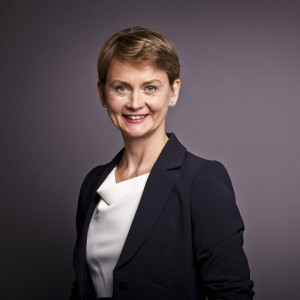
The essay written by Yvette Cooper, the Foreign Secretary, on 6 July 2026.
The world is more dangerous than it has been for decades, and families across the United Kingdom are feeling the impact. War has returned to Europe, pushing up energy bills at home. A closed strait 3,000 miles away drives up prices at the petrol pump. Cyber-attacks from the other side of the world force British firms to shut down overnight. And criminal smuggling gangs make billions breaching our borders.
Geopolitical instability, economic coercion, technological change and a ravaged climate are creating a perfect storm. Having dealt with these threats on the international stage this last year, it is very clear to me the rapid pace at which that storm is now gathering, and the real risks for the UK if we are not ready to act.
We are not alone in facing these challenges. Across the world, nations are being buffeted by events and feeling powerless to respond. The result is a rising sense of frustration that is straining the fabric of democracies.
Here in the UK, successive foreign policy mistakes over many years have left us more exposed than we should have been. The world changed around us, but we failed to properly adapt and ducked difficult, but necessary, domestic public debates.
Since 2024, the Labour government has worked hard to begin turning that inheritance around. But a good start is not the same as keeping pace. Because the toughest tests lie ahead.
Yet, Britain is far from powerless. Ours is an extraordinary country, with capabilities few can match and values that others still look to. As the old world order is remade, we must build our sovereign strengths and put them to work – turning our values into action and convening the agile alliances these challenges demand. Our task is not just to weather the storm but to steer an active course. Our purpose is to shape the world, not to be shaped by it. That is how we make Britain safer, stronger and more prosperous at home.
Instability in the world
Last month in eastern Poland, I walked with army officers along concrete trenches they are digging for miles along NATO’s eastern flank – a sign of how seriously they take the need to defend against Russian tanks. On the Chad border earlier this year I met Sudanese women, survivors of atrocities in a war the world has failed to end. In the Gulf, I heard from businesses wrestling with how to get supplies moving through the blocked Strait of Hormuz. Time and again in discussions with our closest allies, I have been conscious of how much our focus is on our shared security and dealing with the instability we face.
In 2025, the world had more active armed conflicts than at any time since 1945, with almost 120 million people fleeing their homes. Danger no longer comes only from the battlefield – cyber and hybrid threats now reach us in new and unpredictable ways.
At the same time, the economic order is being reshaped. The rise of China and India is shifting the global economy’s centre of gravity. Tech firms now wield more power than mid-sized nations. The biggest economies have pulled back from global trade rules, with protectionism rising. Openness itself is being exploited through tariffs, chokeholds on critical minerals and, above all, the weaponisation of energy.
All of this has a direct impact on Britain, through higher food prices, lost jobs, the spread of mis- and disinformation, and illegal migration that erodes public trust.
We should not kid ourselves that this is the peak of the storm. Climate-driven disasters are triggering more humanitarian crises, which will put new pressures on food, energy and migration. Meanwhile, the accelerating pace of technological change brings phenomenal opportunities and new threats.
Last month, in Shenzhen, China, I saw the extraordinary promise of AI and robotics used for life-saving healthcare. But the same technologies are also reshaping the future of warfare, crime and social cohesion in alarming ways.
Geopolitics is changing, too. The United States is pulling back from its traditional role as guarantor of global security, and while Europe, including Britain, has begun to step up, we must do more for ourselves. At the same time, China – our fourth-biggest trading partner – poses significant threats to our cyber security. Great power politics is back, and the rules-based order and long-standing alliances that Britain did so much to build are being challenged.
Call it the end of the old world order or the age of instability, but more often it just feels like being at the mercy of forces far beyond our control. And that sense of powerlessness weakens the resilience of democracy, because if people feel that normal politics is failing to solve their problems, they can turn towards something much angrier and more extreme.
Amidst the dangers, the instability is also generating extraordinary opportunities. New technologies, markets and partnerships all play to Britain’s character and capabilities. Strong economic growth across many developing economies has lifted billions out of poverty, creating new openings for British trade and investment. Developments in AI, quantum computing and robotics are giving rise to incredible new possibilities for British scientists. The fluidity in geopolitics and geoeconomics creates chances for the kinds of creative diplomacy that we are good at.
So, Britain has choices to make. We don’t have to stand by while our security, prosperity and democracy are undermined. But defending them requires a clear-eyed plan to build Britain’s strength and to uphold our values so we are ready for the challenges ahead.
Britain’s strength in the world
In theory, Britain should be well placed to respond to a rapidly changing world.
We are a leading European military and nuclear power, and a permanent member of the UN Security Council, with intelligence capabilities and diplomatic reach that span the globe. We are a G7 nation, at the heart of the Five Eyes partnership, part of the Commonwealth of 56 nations, and a global financial centre drawing investment from around the world. We have world-class universities and research institutions, and stand among a handful of countries at the frontier of AI and life sciences. And in our King we have a figure of global standing and respect.
We are one of the most connected and influential nations on earth, with relationships and standing that few others can match. But, above all, we should not underestimate how important our values are in building trust and strength overseas: our sense of fairness, our multilateralism, our humanitarianism and our respect for the rule of law.
History shows the difference Britain has made when it deploys those values – we helped deliver NATO and the Marshall Plan, the European Convention on Human Rights (ECHR), the Geneva Conventions and the Nuclear Non-Proliferation Treaty, the ban on landmines and cluster bombs, the Kyoto Agreement and the cancellation of developing country debt. And over the past year, from Ebola to Hurricane Melissa, we have stepped up. Our values mean we act not only because it serves Britain, but because it is the right thing to do.
How we got here and what we got wrong
Yet we have to be honest with ourselves that in recent decades we took Britain’s strengths for granted and failed to grasp how fast the world was changing. Complacency took Britain from shaping the global rules to standing on the sidelines.
First, we pretended the post-Cold War peace dividend would last forever. In 2010, the defence budget was cut by 8 per cent in real terms. In 2014, Russia annexed Crimea. And yet the warnings went unheeded for almost a decade before defence spending began to recover. So, when the full-scale invasion of Ukraine came in 2022, years of under-investment meant we were much less prepared than we should have been.
Second was how we managed globalization. Over decades, economic integration has delivered faster growth and higher living standards. However, in the UK the benefits were not evenly felt and some communities badly lost out.
At the same time, we deepened our dependency on a handful of countries for energy, parts and key technologies, with little thought given to the resilience of those supply chains. Now the chickens have come home to roost. Covid and the war in Ukraine sent food and energy prices soaring, while China has tightened its grip over the critical minerals on which our economy depends.
Third, we grew complacent about our international relationships. We assumed that Britain’s influence was a permanent fact rather than something requiring constant maintenance and determined diplomacy. That confidence was tested when we left the EU. [Political content removed] Our relationships frayed and one of our strongest assets – our reputation for seriousness – was vandalized.
Finally, successive governments have failed to level with the country about global challenges or to nurture public support for difficult foreign policy choices. [Political content removed] And on defence, we haven’t yet had the kind of public engagement our Scandinavian and Eastern European partners have been through on the choices needed to face growing threats.
All of this has left the UK more exposed – less prepared to seize new opportunities, less resilient in the face of new threats.
Since coming into government in July 2024, we have begun to turn that around. We have raised defence spending at the fastest rate since the Cold War, and struck important new trade deals with India, the Gulf, Europe and the US. Keir Starmer has rebuilt our European relationships, brought together the Coalition of the Willing to sustain support for Ukraine, and deepened our role in NATO. We have recognized the state of Palestine and the inalienable right of the Palestinian people to self-determination.
In the Foreign Office, we have sharpened our focus on security in every form: national security, economic security and border security. When the NATO alliance risked fracturing over Greenland, we stood firm in defence of the sovereignty of Denmark and Greenland, and worked with allies to ensure the protection of the High North was best delivered through a new unified NATO Arctic mission. When Iran closed the Strait of Hormuz, we assembled a coalition of 40 nations to defend the principle of freedom of navigation and to lay the groundwork for the Multinational Military Mission. Our significantly expanded migration team is now working across the world to tackle illegal migration at its source.
We have strengthened our commitment to international principles and agreements – working across 46 countries to reform rather than abandon the operation of the ECHR so that it better tackles illegal migration. And this spring we supported allies and partners under fire in the Gulf, but we did not provide support for offensive action by the US and Israel in Iran. And at a time when rights are being rolled back internationally, we have made women and girls a specific priority for the FCDO and worked to keep the spotlight on the atrocities faced by the women of Sudan.
Where we go from here
But the challenges we face are set to grow. Meeting them will require action in three areas:
1: Greater strength and resilience
First, we need to go much further to build Britain’s sovereign strength and resilience.
Delivering modern capabilities and more investment for our armed forces is essential both for our sovereign defence and to maintain our influence and leadership in Europe and the NATO alliance that is the cornerstone of our security. That is why the Defence Investment Plan is vital, and we will need next to quickly establish a clear pathway towards delivering 3 per cent of GDP in defence.
But security isn’t just about military capabilities. At a time when economics is being weaponized, energy and economic security have become the vital underpinnings of trade and growth. Major economies outside the main trading blocs need to work more closely to diversify production in key supply chains such as critical minerals – including on finance, strategic projects and standards. Also vital is our work to strengthen our energy security through the green transition and to build climate security across the world.
Nor should we underestimate the importance of strengthening our democratic resilience. That means better defending ourselves against hybrid threats, cyber-attacks and information warfare – for example, through the Foreign Office’s expanding capabilities to identify, expose and sanction Russian disinformation factories.
For me, this is also about using international cooperation to tackle the issues that undermine public trust. Which is why we plan to go further, working with the Home Office and with overseas partners on tackling smuggling gangs, developing innovative return arrangements, reforming global resettlement and preventing illegal migration.
Most importantly, democratic resilience requires public confidence and honest public debate about the global risks, opportunities and choices we face. We have to make the case that a stronger Britain abroad is better for jobs, security and the cost of living at home.
2: Determined diplomacy
Second, we need to be more assertive and agile in our alliances. We may not be a military or economic superpower, but we can be a convening superpower – the country that brings others together and charts a collective way forward.
Our relationship with the United States remains deeply rooted and deeply valued, and we will continue to work closely with it in NATO and beyond. But we should no longer expect the US to play the role it once did. There will continue to be issues where we disagree. But reduced dependence on any single ally will make us stronger, so that our partnerships rest on what we bring, not on what we need.
That means working more closely with our European partners, but without trying to turn the clock back to 2016. With economics and security more intertwined, Europe’s future depends on what happens from the UK to Ukraine, from Norway to Türkiye and not just within the EU. We need to develop a new, structured relationship with Europe, leading the development of its new security architecture, with a more European NATO at its core. And we must settle our relationship with the EU as a closer but stable partnership, rather than one based on endless incremental bargaining.
Further afield, we must make a virtue of the fast-moving and fluid world order to build new and agile alliances. Some will be enduring partnerships of like-minded countries, such as AUKUS or our growing engagement in the CPTPP trans-Pacific trade agreement. Others will be convened quickly to tackle a single crisis as we and France have done on Ukraine and the Strait of Hormuz. Few other nations can convene in this way.
But in what may be the greatest security challenge of the next decade, I believe we have to put our convening power to work to tackle the profound new global risks posed by AI. We can only exploit the amazing opportunities of frontier technologies if there is sufficient international consensus on how to approach safety and guardrails. Britain is well placed to lead this debate. We are the third-most developed country on AI, after the US and China, and the leading voice on AI security. [Political content removed]
There are clear parallels with the international consensus the UK helped to build around nuclear safety after the Second World War. The world has been able to build and rely on nuclear power stations, nuclear technology and the containment of nuclear weapons only because of the principles agreed and safety commitments made by global powers.
But there are no such agreed principles between global powers on AI. On nuclear, international agreement came only after the world saw the terrifying power of the new technology at Hiroshima – and asked what would happen if it fell into the wrong hands. We cannot afford to wait for an AI equivalent of Hiroshima before we act.
The AI Safety Summit at Bletchley Park in 2023 showed that the UK can rally the world on AI security. We need to draw on that leadership capability now, pulling countries together, including the US, China and other major AI powers, to build consensus on safety principles and standards today.
3: More confidence in our values
Third, we must not forget the enduring importance of our values. Other countries may pull away from the international rules-based order or from multilateral institutions such as the United Nations. We will not. And that also means being more assertive in upholding that order where it counts.
In Sudan, 14 million people have been driven from their homes and atrocities continue. We have sanctioned perpetrators and mobilized humanitarian support. But we must work urgently with international partners to prevent more atrocities and press the outside powers fuelling this war to end it.
In the Middle East, we have recognized the state of Palestine, supported the Gaza ceasefire, provided humanitarian support and sanctioned extremist settlers in the West Bank. But the scale of the humanitarian crisis is escalating. Israel continues to restrict vital aid and the 20-point Gaza peace plan risks running into the ground.
We urgently need new energy behind the peace plan, to go further on enforcement including new sanctions and greater action against trade with illegal settlements, and stronger action against those who are trying to destroy any chance of a two-state solution that is the only way to deliver security, peace and justice for Israelis and Palestinians alike.
On humanitarian crises, development and climate change, we must continue to be international champions, even where budgets are lower. That means driving support for fragile and conflict-affected states, supporting the poorest and most vulnerable, and changing our development approach to treat countries as partners for investment, so they can move beyond aid. Only through international cooperation can we hope to tackle the pace of global warming that is putting all our futures at risk.
And we have an international leadership role to play standing up for the rights and protection of women and girls at a time when many countries are rowing back. There is no clearer test of the world we are prepared to defend than how it treats half its people. The new global coalition on violence against women and girls we are building is a chance to pursue justice for women internationally and help improve women’s safety here at home.
Conclusion
The decade ahead brings real risk, but real opportunity, too. Our task is to build Britain’s strength and resilience in every form, and use that strength as both a force for good in the world and, above all, a force to improve the lives of British people.
Because effective foreign policy is domestic policy. Opening the Strait of Hormuz protects our economy. International return agreements strengthen immigration enforcement. And NATO exercises in the North Sea protect our undersea cables, deter Russian threats and keep our country safe.
As the world changes, we can be a principled architect of what comes next, realistic about challenges, but determined to shape the world for the better. That is how we make our country safer, our economy stronger and our people more secure.


![PRESS RELEASE : Joint statement from member countries of the Multilateral Defence Mechanism [July 2026]](https://www.ukpol.co.uk/wp-content/uploads/2025/09/hmtreasury.png)
![PRESS RELEASE : Government to cut costs for parents ahead of new school year [July 2026]](https://www.ukpol.co.uk/wp-content/uploads/2025/10/education.png)