Blog

  • Karin Smyth – 2024 Speech on Health Services in Rural Areas

    Karin Smyth – 2024 Speech on Health Services in Rural Areas

    The speech made by Karin Smyth, the Minister of State at the Department of Health and Social Care, in the House of Commons on 17 July 2024.

    It is a privilege to be the first Minister of this new Labour Government to respond to an Adjournment debate. I am grateful to the hon. Member for Caithness, Sutherland and Easter Ross (Jamie Stone) for raising this important matter and, indeed, for his kind words.

    I hope we can begin this Parliament as we mean to go on, by being candid about the formidable challenges that the NHS faces. As my right hon. Friend the Secretary of State said on his first day in the job, the NHS is broken, and it will be the task of this Government to build a new NHS for the future. That means the NHS in our rural and coastal areas no less than the NHS in our towns and cities. I agree with the hon. Member for Strangford (Jim Shannon) on that point.

    Facing these hard truths does not take away from the heroic efforts of the people working in health and care, who have done their utmost in incredibly difficult circumstances. We all owe them, on behalf of our constituents, a debt of unending gratitude.

    Instead, we want to focus our attention on what needs to be done, including early action to improve access to primary care, dentistry and dental health services in particular. We await the conclusions of a thorough investigation undertaken by the distinguished surgeon Lord Darzi to properly understand the scale of the problem. The Government will then begin work on an ambitious programme of action—a 10-year plan to put the NHS back on its feet. It is a privilege to be part of a Labour Government who are committed to fixing the NHS and making it fit for the future.

    As the hon. Member for Caithness, Sutherland and Easter Ross said, the Department’s responsibility stretches only to the NHS in England. Healthcare is devolved in Scotland, Wales and Northern Ireland, and it will continue to be so.

    I congratulate the hon. Gentleman on being first out of the traps to secure this debate on behalf of his constituents. As a committed advocate for his constituents in one of the most rural parts of Scotland, he has a deep understanding of matters affecting rural communities, as we have heard this evening. He also has a deep understanding of care, about which I have often heard him speak in this Chamber. It is good to see him back again doing just that.

    I cannot speak in detail about the NHS in Scotland, of course, but I can speak about many of the common issues affecting access to care that are relevant to rural constituencies in England, Scotland, Northern Ireland and Wales. I know how rural the hon. Gentleman’s constituency is, and I know the particular challenges that creates in accessing GPs, dentists and emergency care, and in accessing women’s health and maternity services—an issue he has been passionately raising for so long. Maternity services are a problem across the United Kingdom, but I accept the examples he outlined.

    Few places in England are as remote as the hon. Gentleman’s constituency, but I am very aware of similar issues affecting more rural areas near my Bristol South constituency. We have heard from the hon. Members for Glastonbury and Somerton (Sarah Dyke) and for St Ives (Andrew George) about morale and the difficulties we face in the south-west.

    I hope that, in the years ahead, we can share and learn from one another across all of our borders. In many rural areas, the challenge of improving access to services is compounded by travel times and by the recruitment and retention of staff. We must recognise the importance of designing services that reflect an area’s particular circumstances, which is a growing challenge. As the chief medical officer has pointed out in his reports, people are moving out of towns and cities to coastal, semi-rural and rural areas as they age. At the time that people are most likely to need care, they are increasingly living in the places where it is most difficult to provide that care.

    In England, integrated care systems will have a key role to play in designing services that meet the needs of local people. To do this, they will need to work with clinicians and local communities at place or neighbourhood level. We know that excellent primary care is an essential foundation for improving access, tackling the root causes of poor health and tackling problems early so that people remain in better health for longer, and hopefully do not need to access secondary and tertiary care at the same level. That is why Labour has pledged, as part of our health mission, to train thousands more GPs and bring back the family doctor, and that applies to all the nations.

    We are also doing more to use the transformative power of technology. There is enormous potential in ideas such as virtual wards, which allow care to be delivered in people’s own homes. Such models of care can have disproportionate benefit in areas where rurality is a barrier to care.

    Equally, we are committed to seeing the NHS app reach its full potential under the new Government. We understand that some people will need support to use that technology and we are aware of the challenges of rural broadband, but we are committed to making the benefits accessible to all.

    Andrew George

    The Minister has committed the new Labour Government to address those issues, but will she specifically address the matter of the two coroners’ reports into avoidable excess deaths as a result of very long waits for emergency services in Cornwall? They were never addressed by the previous Conservative Government. The reports were about not just the hours spent waiting—sometimes elderly, frail people were on the floors for 10 or more hours—but the fact that sometimes 20 or more ambulances greeted patients when they arrived at the emergency department. Two coroners’ reports were sent to the then Secretary of State, but there was never an adequate response. I very much hope the new Labour Government will review the failings of the previous Government and address those very serious concerns, which affect many other rural areas.

    Karin Smyth

    I am aware of the issues facing the south-west and, when in Opposition, I spoke in the local media about some of the ambulance challenges. I am not aware of those reports, but if the hon. Gentleman writes to me with the details, I will happily look into the issue and get back to him.

    We also recognise the additional cost of providing services in rural areas, for example in travel and staff time. That is why the funding formula used by NHS England to allocate funds to integrated care boards includes an element to better reflect needs in some rural, coastal and remote areas.

    The NHS faces significant challenges. It needs fundamental reform. The Prime Minister is personally committed to resetting the UK Government’s relationship with devolved Governments in Scotland, Wales and Northern Ireland. I echo the Prime Minister’s words today about our commitment to rural constituencies across the entire country and I hope we can work with hon. Members from across the House, including the hon. Member for Caithness, Sutherland and Easter Ross.

    Jim Shannon

    I welcome the Minister’s clear commitment to England, Scotland, Wales and Northern Ireland—and particularly to Northern Ireland. Let me declare an interest: I am a member of the Ulster Farmers Union. I know that the Ulster Farmers Union back home, in conjunction with the NFU here, has been trying to work with the health service and with all those with responsibility in this area on the issue of suicides. Farmers mostly work on their own and suffer from anxiety and depression. They face pressures from finance and pressures from the bureaucracy that exists in farming. I know the Minister is compassionate and understanding—I mean that honestly. When it comes to addressing that issue, does she think that it must be done in conjunction with the farmers unions? Trying to work together to make things better must be a step in the right direction.

    Karin Smyth

    As ever, the hon. Gentleman makes a valid point. I shall certainly ask my colleagues in the Department for Environment, Food and Rural Affairs about that. His point is extremely well made. I know his constituency in Northern Ireland very well. Let me say that we are very committed to working with hon. Members across the House to share ideas. The hon. Member for Caithness, Sutherland and Easter Ross has put forward more ideas about how that can happen. I do not promise to implement all of those things, but I will certainly look at them. We want to work very closely across all jurisdictions so that we can make progress for all our constituents to improve the health outcomes across the four nations of the United Kingdom.
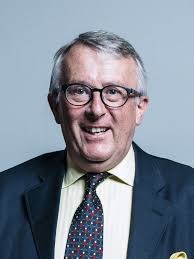
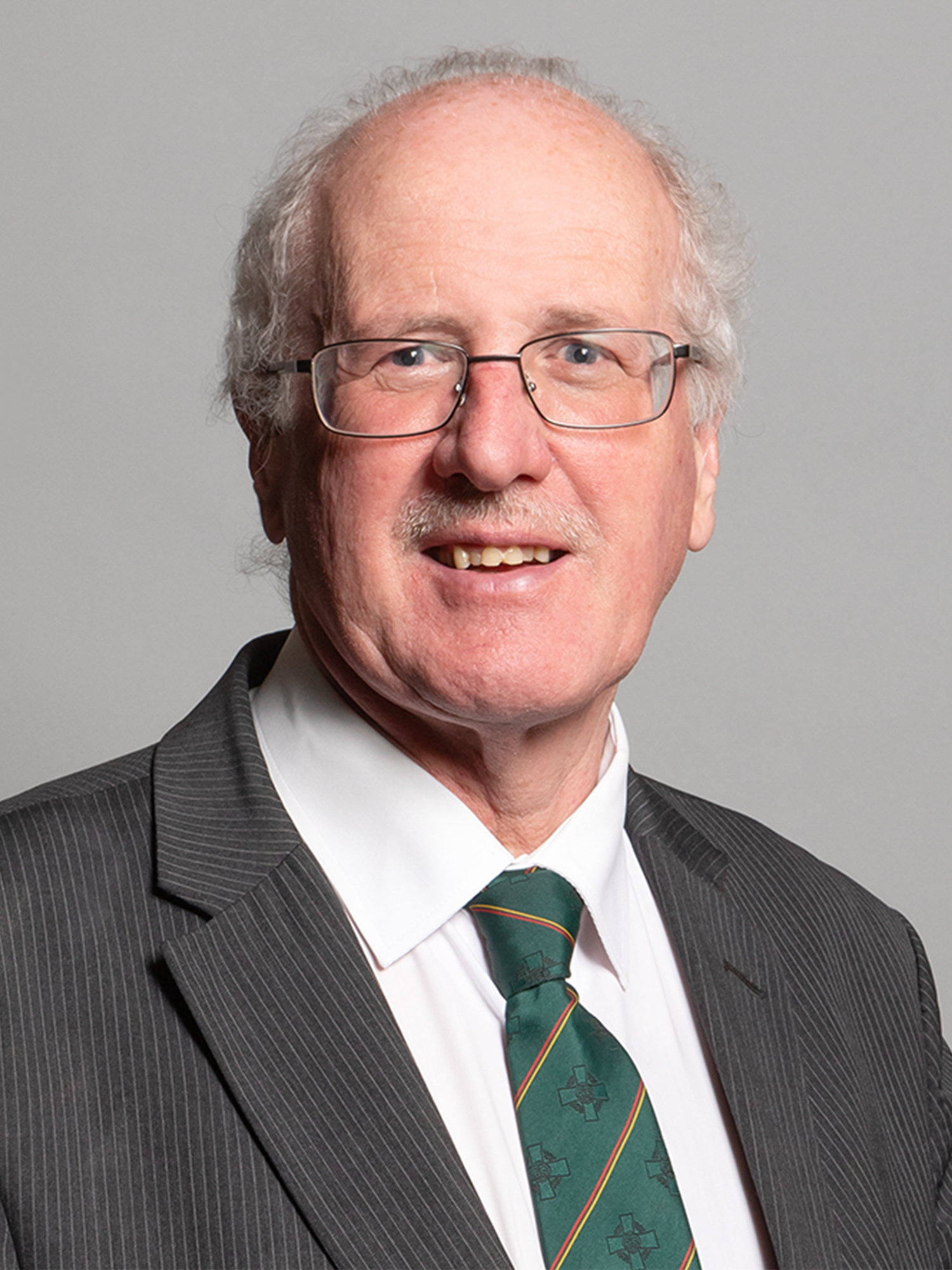
  • Jamie Stone – 2024 Speech on Health Services in Rural Areas

    Jamie Stone – 2024 Speech on Health Services in Rural Areas

    The speech made by Jamie Stone, the Liberal Democrat MP for Caithness, Sutherland and Easter Ross, in the House of Commons on 17 July 2024.

    Let me get my specs on properly, Madam Deputy Speaker. They have a wonky leg that sticks out sideways.

    I must say at the outset that I have heard some excellent maiden speeches today. It is a bit worrying to hear such good maiden speeches, because it makes one feel somewhat mundane in comparison. Let me also welcome the Minister to her place: it is a pleasure to see her sitting opposite me.

    This Adjournment debate is the first of the new Parliament, and I am grateful to the Speaker for granting it. It concerns a topic that is important not only to my constituents in the highlands, but to constituents in every rural area in the country. I thank the Minister for her attendance, and look forward to hearing what she has to say. I hope that the debate sets the tone for how a Government and an Opposition can work together to meet the needs of every citizen of the United Kingdom, no matter where they live.

    I recently had the great honour of being re-elected to represent Caithness, Sutherland and Easter Ross, which is now the largest constituency in the United Kingdom. It measures a staggering 11,798 sq km, more than half the size of Wales. We are here tonight to discuss the adequacy of healthcare services in rural areas, and for fear of being predictable I am afraid to say that the health services in the highlands are not even faintly adequate. I recognise, of course, that health is devolved, but 17 years of centralisation have wreaked havoc on my part of the world. Health services have been stripped back and gutted, leaving my constituents with access to far too few local services.

    Let me begin with general practices. In Scotland, we have seen changes in vaccination services because, in an effort to reduce GPs’ workload, GP contract Scotland removed their vaccination capabilities. That is of huge concern to crofters in my constituency who might cut themselves on a piece of barbed wire and need a tetanus vaccination as quickly as possible. The same goes for anyone in need of shingles, flu, covid or travel vaccines. They must travel a staggering 70 miles or more to the nearest A&E, where they will face further waits owing to backlogs resulting from heavy workloads.

    Jim Shannon (Strangford) (DUP)

    I want to keep the tradition alive, Madam Deputy Speaker. This is my first intervention during an Adjournment debate in the new Parliament.

    I commend the hon. Member for Caithness, Sutherland and Easter Ross (Jamie Stone) for raising an issue that is very important to me and to my constituency. I also congratulate him on his excellent victory in the polls: he has done exceptionally well. I hail from a rural constituency where my own doctor has to service a huge number of people, and the inadequacy of help for rural constituents is abundantly clear to me. Does the hon. Member not agree that the current postcode lottery must end, and that access to GPs, physiotherapists, nutritionists and mental health services for farming and other rural communities must be at least on a par with those in cities and large towns? Why should those in rural communities be second-class citizens in their own country?

    Jamie Stone

    The hon. Member makes his point with his customary charm. It is no wonder that he is so well liked in this place, because he always speaks for his constituents.

    I have talked about the delays in vaccinations, which also applies to the lifesaving vaccinations that babies must have. The Scottish Government take a one-size-fits-all approach that, frankly, does not work in remote rural areas such as mine. The retention and recruitment of GPs and other healthcare workers is crucial, but poor wages and terms and conditions, and a lack of proper travel reimbursement, all lead to a general impression that the game is simply not worth the candle. That is why we are missing key workers and doctors, and why we are paying through the nose for locum and temporary staff. Madam Deputy Speaker, can you believe that NHS Highland has spent £21 million on locum staffing in the past year? That is almost 3% of its entire budget—an eye-watering sum. Could that money not have been spent much better, for example on care homes, hospitals or pain clinics that have been forced to close?

    Sarah Dyke (Glastonbury and Somerton) (LD)

    I apologise for coming a bit late to this debate. Primary care is asked to do more in rural areas than in urban settings, piling pressure on GPs, pharmacists and dentists, yet they struggle to recruit staff, as my hon. Friend said. A dental practice in Street, in my constituency, has been without an NHS dentist on its books for 18 months, despite its best efforts. Does my hon. Friend agree that we must explore ways in which we can incentivise healthcare professionals to practise in rural areas?

    Jamie Stone

    I absolutely endorse that. I am glad that I said in my opening remarks that my experience in a very remote part of Scotland applies to other parts of the United Kingdom. What we have just heard proves that this is the case.

    NHS Scotland has halted all new builds and repairs to health centres across the entire country, which is another problem for healthcare. I have said already how big my constituency is. Just by commuting or doing house visits, healthcare staff will rack up 3,500 miles easily, because the distances are so great. At that point, their reimbursement per mile is more than halved, which does not encourage people to get involved. It is, in fact, discrimination against healthcare professionals who live in rural communities. Training is overwhelmingly based in urban areas, and there is very little incentive to get people to come and work in rural areas. Other factors, such as a lack of housing and job opportunities, feed into this problem.

    There is another issue I want to raise: the lack of women’s health provision, which is pretty severe. In my maiden speech in 2017 I spoke about the need to restore maternity services to Caithness. Seven years later, that is more important than ever. Caithness general hospital used to have a consultant-led maternity service, which meant that expectant mothers could have their babies locally in the far north of Scotland. It was downgraded when I was my constituency’s Member of the Scottish Parliament. At that time, I had more influence and I got it restored. Since then, however, the maternity services have been downgraded again, and there appears to be no movement from the Scottish Government to reverse that. I wish that some Members from the party of the Scottish Government were present today.

    Let me give an example of what this situation means: pregnant mothers have to make a 200-mile round trip in the car to deliver their babies. Imagine a trip like that in the middle of winter, and on rickety-rackety roads in the highlands. In 2019, a pair of twins were born—one was born in Golspie, and the other was born 50 miles away, in Inverness. It is a miracle that those children survived, and that neither a mother nor a child has perished. I have been calling for a safety audit all along, but there has never been one. We know perfectly well what the result would be: the arrangements would be deemed unsafe, if not a breach of human rights.

    It is not just about maternity services; women’s health has been removed from the far north. A routine trip to see a gynaecologist and get a diagnosis for a life-threatening ovarian cyst, or for endometriosis, means travelling the same huge distance—if a woman is lucky enough to get an appointment before her condition has progressed too far for her safety. I wonder what we can do to encourage healthcare professionals to relocate to remote areas, because the health and wellbeing of their wives and daughters must surely be a factor when they consider moving.

    For children growing up in the far north, it is no better. The waiting list for child and adolescent mental health assessments is three years. For neurodevelopmental screenings—for the diagnosis of dyslexia, autism, attention deficit hyperactivity disorder and so on—it is four years. That is the majority of their time at school. One family I spoke to during the election had waited 13 years for a diagnosis. That is a disaster. Dentistry has already been mentioned, and we know that intervention is crucial for long-term dental health

    Andrew George (St Ives) (LD)

    I am grateful to my hon. Friend for giving way, and I apologise to him for being caught out by the early start of this Adjournment debate. Does he agree that it would be really helpful if the new Government achieved a quick win to raise morale in rural areas where services have been so depleted for so long? This applies in west Cornwall, for example, where we cannot call on services from the north or south or west very easily. In those areas, as in others, we have a dentistry desert and the NHS and care services are experiencing their biggest crisis in their history. What we need, for example, is for the West Cornwall hospital to re-establish the urgent treatment centre overnight. Those kinds of quick wins could achieve the lifting of morale within the service and start moving things forward and upward from where they are at present.

    Jamie Stone

    My hon. Friend makes a good point, and I shall touch upon his sentiments in my closing remarks.

    As many in the Chamber know—perhaps new Members do not—I myself am a carer: I am a carer for my wife. So I am very happy that my party has put carers at the top of our agenda. My party leader has spoken about being a carer himself. We desperately need reform, and I believe that the carers allowance should be introduced at a higher rate. In a way, I am declaring an interest here, in that I am an unpaid carer, but we have to look at this. I was recently informed of a constituent who was moved from one care home to another one 123 miles away in the highlands. That is a three-and-a-bit-hour journey each way for the loved ones to go and visit that old man. We can see why this is not great for morale.

    I am from the highlands. I love my native highlands and I care passionately about where I come from, but I think that we need urgent intervention. This is my ask of the Minister. I recognise the nobility of the intent to address these problems at UK level, and I look forward to working with the Government in these endeavours, but the fact is that there is not the delivery under devolution that there should be. I am sorry that no Scottish National party Members are here. I am a committed devolutionist. I was part of the Scottish Constitutional Convention and my name is on the claim of right for Scotland, yet I find it incredibly disappointing that the outcomes are a lot worse than they were.

    When I was in government in the Scottish Parliament, in coalition with the Labour party, we saw progress between 1999 and 2007, when the SNP came in. Now we see that things have gone backwards. This was the main issue on the doorsteps in Scotland, so I hope that the Labour Government can work hard at improving things. I ask them in a cordial way to do everything that can be done to improve the relationship with the Scottish Government, and perhaps encourage the Scottish Government to look at best practice in the rest of the UK and adopt that. I am not talking about hypothecation or about unrolling devolution, but by working together perhaps we can achieve something.

    Also, it would be great if we could encourage NHS England to work closely with NHS Scotland, because it is complete and utter nonsense that people who could cross the border and get treatment have been prevented from doing so by bureaucracy, sometimes by politics of the not-so-clever sort, or by the computer systems not matching. That is nonsense. If someone living in the south of Scotland can get their operation done in Newcastle, let us just go for it.

    I look forward to a Labour Government giving extra money to the health service, and I am sure they will. We will be looking closely at how that happens. There will, of course, be Barnett consequentials that will put that money into the devolved Welsh Assembly, the Scottish Parliament and the Northern Ireland Assembly. I hope that the UK Government will look closely at where those Barnett consequentials go. Will they go where we would hope they would go—namely, to improve the health service, to shorten waiting lists, to sort out the nonsense, and to give the standard of health service that my constituents and I believe everyone in rural parts of the UK is crying out for?

  • Jim Shannon – 2024 Speech on the Loyal Address

    Jim Shannon – 2024 Speech on the Loyal Address

    The speech made by Jim Shannon, the DUP MP for Strangford, in the House of Commons on 17 July 2024.

    Mr Deputy Speaker, I thank you for calling me and all hon. Members who have made contributions so far; I am glad to see you in your place and I am glad to be in mine. I thank the good people of Strangford for voting for me in the election, and I wish all Members in this House God’s richest blessing for this term and the years ahead. I am very pleased to see the Labour party and the Prime Minister in their place. I believe that all of us across the House and out in the nation we represent wish for things to go well—there is good will and a wish to see things in a better way.

    I was delighted to hear in the King’s Speech the Prime Minister’s goal of taking the brakes off Britain, which is a goal that every party can get behind. Yet the Unionist in me would gently remind the Prime Minister and the Labour party that that responsibility applies equally to the whole United Kingdom, not simply to mainland Britain. We need to remove the brakes, wherever they may be, within the United Kingdom of Great Britain and Northern Ireland. One brake that springs to mind at this moment is that mentioned by my right hon. Friend the Member for Belfast East (Gavin Robinson): the one holding back Harland & Wolff from providing jobs and financial stability by not fulfilling the contract promised by the last Government. Security on the loan is critical to prevent the removal of economic growth, and I do hope that brake will be released urgently.

    I also welcome the indication that the creation of wealth is to be a Labour party priority, as that is foundational for any nation. I look forward to working with the Labour Government to ensure that it is spread across the whole United Kingdom, of which Northern Ireland is an integral part. There is work to be done when it comes to Northern Ireland’s place in the Union. In response to my intervention on the Prime Minister today, he quite clearly committed to ensuring that Northern Ireland’s position within the United Kingdom is strengthened. If that is the case, it is good news, but I look forward to seeing those words become action. My colleagues and I are anxious to continue the work of ensuring that our constituents have the same treatment as the rest of the UK, from shopping to post, to imports and border controls. I look forward to meeting our new Secretary of State for Northern Ireland, who is in a position to establish that working relationship to the benefit of all within the United Kingdom. There is work to be done on the remnants of the protocol, and I know that must be a priority for this new Government.

    There is also work to be done on establishing an adequate formula for funding, which both my right hon. Friends the Members for East Antrim (Sammy Wilson) and for Belfast East referred to. When I was a member of the Northern Ireland Affairs Committee, along with other colleagues, all parties on the Committee and the Government officials were clear that the funding formula was wrong and had to be addressed. We are £500 million to £600 million shy of what other parts of the United Kingdom are getting, and there was a commitment given to ensuring that that would come through.

    My request to the Labour Government, and in particular to the Secretary of State for Northern Ireland, will be to ensure that that £600 million gaping hole in Northern Ireland’s finances is addressed. With great respect, I say this: we do not need a vanity project of Casement Park, at a cost of more than £300 million, when the very basics of life are being neglected.

    I was pleased to hear the aim of improving mental health services, which other Members have referred to, particularly for our young people. In Northern Ireland we have the largest prevalence of mental health problems in the whole of the United Kingdom. My request to the Labour Government and to my Prime Minister, as he is, is to ensure that his mental health programme can work in conjunction with the Northern Ireland Assembly so that we can address mental health issues for our young people head-on. Again, there is a way of doing that, if we do it here at Westminster and ensure that the Northern Ireland Assembly are working alongside us in that partnership. I am very keen to ensure that happens.

    I also put in a plea for peace in the middle east to be an aim of the Government. I would gently highlight that calling for a ceasefire when hostages remain in unimaginably cruel captivity, and without ensuring that Hamas terrorists can never inflict that kind of savage damage again, must surely be premature. There is a solution, and it can be found; I know that is the desire of all our constituents, as well as our friends in Israel and on both sides of the Gaza strip. I believe that the Government must consider maintaining the previous Government’s procedural challenge to the International Criminal Court’s jurisdiction in Israel and in the Palestinian Territories. It is important that the ICC retains its proper role within the law and exercises jurisdiction based on its own statutes and in accordance with the principle of complementarity.

    As long as I have been in Parliament, there has always been a plea from both sides of the Chamber for the Islamic Revolutionary Guard Corps to be condemned and made illegal. Those pleas came from the Opposition side when the Labour party was in opposition. Now that Labour is in government, I hope those pleas will be answered. The IRGC is the world’s most powerful terrorist group, committed to the conversion or murder of Jews, Christians, Zoroastrians and others it considers to be infidels, and for 40 years it has pursued its repugnant goals through violence on a global scale. It is time for it to be proscribed, and I ask for that to happen as soon as humanly possible.

    I am afraid I do not have time to go through all the things I wanted to speak to, but I will quickly mention the issue of conversion practices. I just say this gently. I think the Minister responsible has got it. There will be a consultation beforehand—there has to be—and there are many of us who have Christian faith and beliefs, and who wish to ensure that the beliefs to which we hold fast are considered fully when it comes to making any decisions.

    I also make a plea, as have the hon. Member for Salford (Rebecca Long Bailey) and others, for the WASPI women. As you probably know, Mr Deputy Speaker, I led a debate on the issue, and I believe the Government need to deliver for the WASPI women. I have some 5,500 of them in my constituency, and there are 76,000 in Northern Ireland. We have an obligation to everyone across this great United Kingdom of Great Britain and Northern Ireland to deliver.

    This is a new Government, with new ways of doing things and new aims, but there are also new opportunities. I, for one, will do all I can, working alongside the Government, to achieve the aims of making this wonderful United Kingdom of Great Britain and Northern Ireland a wonderful place to live, educate our children, work and thrive. I believe that all of us in this House can work together to see that goal realised and people’s lives made better as a result.

  • Rebecca Long-Bailey – 2024 Speech on the Loyal Address

    Rebecca Long-Bailey – 2024 Speech on the Loyal Address

    The speech made by Rebecca Long-Bailey, the Labour MP for Salford, in the House of Commons on 17 July 2024.

    It is a pleasure to follow the hon. Member for Aberdeenshire North and Moray East (Seamus Logan), after his eloquent and passionate maiden speech. A huge welcome to all new Members; it is the greatest privilege in the world to be here and to be the voice of the place that you love —never take that for granted.

    We on the Labour Benches are under no illusions as to the scale of task ahead of us in government. Fourteen years of successive Conservative Governments have ravaged our public services, stifled investment, created gross levels of inequality, and entrenched widespread job and housing insecurity, so the Gracious Speech offered welcome national renewal. Legislation promising to hand power back to local leaders, support for local growth plans, and greater protections for renters were welcome and long overdue. The new deal for working people was also a pivotal step in ensuring that the fruits of our economic growth are shared by everyone, not just a select few.

    On child poverty, the Government have pledged to roll out breakfast clubs and to develop a strategy to reduce child poverty, which is very welcome, but such extensive plans will take some considerable time to pass through into legislation. In the meantime, there are immediate measures that the Government must take now to alleviate the financial strain faced by so many in my constituency. Indeed, on the issue of child poverty alone, we are in a state of what can only be described as national crisis. Research by Loughborough University on behalf of the End Child Poverty coalition reported that a staggering 333,000 children in Greater Manchester and Lancashire alone are now living in poverty. That is an increase of over 31,000 compared with the previous year. The hope that these families place on the new Labour Government is immense, so my first urgent request of our new Labour Government is to lift these children out of poverty immediately by scrapping the two-child limit in universal credit.

    My second urgent request of the Government is to settle the debt of honour we owe to women born in the 1950s who suffered pension injustice. The issue now is not whether the women faced injustice; the ombudsman’s report earlier this year made it clear that they did, that the Department for Work and Pensions was guilty of maladministration, that the women are entitled to urgent compensation from the Government, and that Parliament must urgently identify a mechanism for providing that appropriate remedy. They need fair, fast, simple redress and an apology from the DWP. There is no excuse for delay. The report was laid before Parliament in March, and at least one woman will die waiting for justice every 13 minutes. They deserve nothing less than justice, so I hope that the Government urgently identify a mechanism for appropriate remedy now.

    Sir John Hayes (South Holland and The Deepings) (Con)

    I would not normally intervene having just entered the House, but knowing that my friend, the hon. Member for Salford (Rebecca Long Bailey), was speaking, I felt I ought to come and hear her, and particularly to support the remark she has just made about those women so badly affected in the way that she has described. It is critical, as she said, that this matter is addressed speedily—and, actually, that means simplifying the system. That will not please everyone, by the way; some people want a detailed analysis, but that is unfortunately likely to lead to obfuscation. It is very important, as she describes, to have a simple mechanism which delivers justice to these women speedily.

    Rebecca Long Bailey

    I agree wholeheartedly. The work that the right hon. Member and I carried out throughout the last Parliament is an example of how we can work co-operatively with Members of opposite parties and find those issues on which we can serve our constituents well. He joins us at an opportune moment, as I am about to talk about an issue that is close to his heart.

    My final urgent request of the Government is one of moral duty: to recognise, support and compensate our nuclear testing veterans and their families. These are the men who put their lives at risk in dangerous atomic weapons tests to ensure our long-term security. For decades, campaigners, Labrats, veterans and their families, and the indefatigable Susie Boniface have been fighting for recognition for these heroes. They have highlighted scientific studies that show increased rates of miscarriage, increased birth defects, and the same rate of genetic damage as clean-up workers at Chernobyl.

    Of course, the campaigners take pride in the fact that the Defence Secretary and the Prime Minister met them when Labour was in opposition, and supported their campaign to receive the long overdue recognition they deserve. But despite winning the campaign for medallic recognition, the UK sadly still remains the only nuclear power that refuses them adequate compensation, research and support, unlike the US, France, Canada and Australia. Medal criteria are very limited, there has not been a formal recognition event and even access to war pensions has been impeded.

    Veterans, and sometimes their wives, widows and descendants, have reported making repeated requests to gain access to their blood or urine testing records from samples the veterans recall being taken during the nuclear testing programmes. Sadly, many confirm that their service medical records frequently do not include the test results, and they just do not understand why. The data is vital for their war pension applications and for understanding the conditions they suffer, but sadly the absence of such records means that many veterans’ war pension applications are refused.

    I want to place on record my thanks to hon. Members right across the House who have continued to support these veterans, particularly the right hon. Member for South Holland and The Deepings (Sir John Hayes), who has worked closely with me and campaigners in recent years. This week, we have both written to the Defence Secretary and the Minister for Veterans and People, my hon. Friend the Member for Birmingham Selly Oak (Al Carns), requesting that they urgently meet us, veterans and campaigners, and work with us to deal with their concerns. We hope that is made an urgent priority, because ultimately the Government can and should deliver justice for these families, and now is the right time to do so.

  • Seamus Logan – 2024 Speech on the Loyal Address and Maiden Speech

    Seamus Logan – 2024 Speech on the Loyal Address and Maiden Speech

    The maiden speech made by Seamus Logan, the SNP MP for Aberdeenshire North and Moray East, in the House of Commons on 17 July 2024.

    Thank you for calling me to speak, Mr Deputy Speaker. I am grateful for the opportunity to make my maiden speech during this important debate. Like others, I wish to congratulate all those who have spoken before me, particularly those who made their maiden speeches, not least the hon. Member for York Outer (Mr Charters) whose contribution was very substantial.

    I am originally from the village of Dunloy in the north-east of Ireland. I represent the Aberdeenshire North and Moray East constituency in the north-east of Scotland. I paid close attention when the right hon. Member for New Forest East (Sir Julian Lewis) was advising new Members on our ambitions for the future, particularly because I want to share my ambition. I am the first MP for Aberdeenshire North and Moray East and I hope to be the last MP for Aberdeenshire North and Moray East.

    This is a coastal area that stretches from the River Spey in the west to Cruden Bay in the south. It is an area noted not only for its industry, but for the industriousness of its people and its communities. Its long-standing economic strengths are in farming, fishing and their associated sectors, including food and drink production, and, in more recent times, in the oil and gas industries and their supply chain. The area makes a substantial and significant contribution to the nation’s energy security and food security.

    We are now undergoing a new industrial revolution associated with the renewables sector. As the world adapts to new challenges, I believe that it is our duty in this Parliament to capitalise on the opportunities that now present themselves in the north-east of Scotland. It is also a most beautiful area—something of an undiscovered gem—with a developing tourism industry. Members will remember that the next time they enjoy a single malt, an Aberdeen Angus steak, a prawn cocktail or perhaps a fish supper, because the chances are that they came from the industries based in my constituency.

    There is also significant poverty—in particular child poverty—in this otherwise prosperous area. Although this is mainly concentrated in larger towns, it is also a challenge in villages and rural areas where it is often less visible. Recent figures suggest that around 5,500 children in this constituency are living in serious poverty—some of them in absolute poverty. To be clear that means that they do not have enough money to meet basic needs for shelter, clothing and food. That is something that we should all remember in our position of privilege, and it is something that we should all work together on to change.

    I want to pay tribute to the outgoing MP, David Duguid, who represented the previous Banff and Buchan constituency, which disappeared in the recent boundary changes. Some Members will know that David experienced sudden and significant ill-health before the general election was called. I wish him a speedy and full recovery. David was an excellent MP who did his best to represent everybody in the constituency, but most notably the interests of the energy, fishing and farming industries. His efforts were in stark contrast to the way that he was treated in the end when he was effectively deselected by his colleagues. I wish David and his family well in whatever their future plans may involve. I also wish to acknowledge the work of the last SNP MP in this area, Eilidh Whiteford, who was an outstanding political representative.

    Today in the King’s Speech, the Government had an opportunity to immediately abolish the harmful two-child cap on child benefit and the notorious rape clause, which my former colleague, the outgoing MP for Glasgow Central, Alison Thewliss, worked so hard to end. The failure to do this is an early indictment of the Government’s policy position. I was encouraged when I heard contributions from the hon. Member for Hackney South and Shoreditch (Dame Meg Hillier) and the right hon. Member for Hayes and Harlington (John McDonnell). But what about the contribution from the right hon. Member for Islington North (Jeremy Corbyn) when he said, “No ifs, no buts, just do it.”?

    It is simply not good enough for the people of Scotland, an energy rich nation, to pay so much to heat their homes while so many of their bairns are living in absolute poverty. I will be focusing on this issue over the course of this Parliament. I will seek to defend the interests of our farming and fishing industries, to protect our public services and to help realise the potential of renewable energy and carbon capture to deliver jobs and economic growth. But, above all, I shall be a voice for the weak and the disadvantaged. After 14 years of austerity, we need a change of direction, not more of the same. I wish to make special mention of the WASPI women who have been so unfairly treated by successive Governments, and who deserve compensation.

    To conclude, I thank the people of my constituency for their support at the ballot box, my colleagues in the SNP and in other parties, and the various members of House staff on the Westminster estate, who have been so welcoming and helpful on my arrival and during my induction.

    Finally—and Members would not expect me to say anything less—I will be working hard in this place and elsewhere to press the case for the people of Scotland to be afforded their democratic rights to determine their own future.

  • Luke Charters – 2024 Speech on the Loyal Address and Maiden Speech

    Luke Charters – 2024 Speech on the Loyal Address and Maiden Speech

    The maiden speech made by Luke Charters, the Labour MP for York Outer, in the House of Commons on 17 July 2024.

    Thank you for giving me the opportunity to speak, Mr Deputy Speaker. I pay tribute to the many hon. Members who have given their wonderful maiden speeches today.

    It is an immense privilege to represent York Outer. I would not be here were it not for the wonderful education I received at Huntington school. That education gave me the confidence and skills to go on and change lives, but there was one stand-out teacher—Robin Parmiter, my wise and compassionate religious studies teacher. I went on to name my son Robin after him, so my son is a continual reminder of the power of a good state education. He is also a constant reminder that, despite humanity’s vast medical and technological progress, we still do not have a cure for toddlers teething.

    Moving on from religious studies to history, I want to go all the way back to 71 AD, when the Romans are believed to have made York a military base. I appreciate a lot has changed over the many millennia since, but York’s role as a military base has not. The Queen Elizabeth barracks is at Strensall, in my constituency, and I am very proud to be the first Labour Member of Parliament to represent there. I am incredibly proud of this Government’s unwavering commitment to our armed forces and to our veteran community.

    It is important to note that my predecessor, Julian Sturdy, played an important role in protecting and saving those barracks. He was also a forceful advocate for our rural communities; I want to continue that work. I wish him all the very best for the future, after 14 years of service.

    As many hon. Members will know, people from Yorkshire are straight-talking and no-nonsense. I have been told many times on the campaign trail, and since joining the House, that unfortunately I live up to that stereotype. But I am not on my own. I have a great cohort of colleagues on the Labour Benches who are representing God’s own county. Even better, we have a Chancellor from the white rose contingent, so the best thing is we have the Yorkshire value of frugality as a national policy, ensuring the public get good value for money. How welcome that is after 14 long years of managed decline, as our country finds itself at a critical juncture. Thankfully, the question is no longer who gets to rebuild Britain, but how we will take the mantle on.

    We can all learn from colleagues in the York community. Just 40 years ago, on 9 July 1984, lightning struck the roof of York Minster and the south transept was destroyed by flames. I am proud that my dad, an outspoken Yorkshireman if ever there was one, was one of the apprentice joiners who went on to rebuild the Minster after the great fire. The Minster joiners’ commitment centres around the values I share: dedication to duty, service and desperation to rebuild.

    But there are already groups in York Outer embodying those values. Take BioYorkshire and its 10-year plan for sustainable innovation, which harnesses the green revolution that we so badly need for the years ahead.

    We are home to many wonderful small and medium-sized enterprises from Wigginton to Wheldrake that share our ambition for wealth creation. We are a Government who are both pro-business and pro-worker.

    It is also fair to say that our heroes on the frontline of the NHS are a perfect embodiment of the Minster joiners’ core values, as was the late Frank Dobson, who was born in the village of Dunnington in my constituency. My family have had close encounters with our health service in York, and I come to this place with enormous gratitude to those who serve in it. I pay true thanks to them, but words cannot truly get there. I will be a powerful advocate for them in this place. These vital public services are at the heart of our communities. We value them so dearly, as do our constituents, as they form the social fabric that allows us all to live rich, happy and content lives. But it is such a shame that so many of these crucial services are evaporating.

    I remember setting up my first bank account in the village of Haxby, but that bank branch no longer exists. That is not an isolated case; there are no longer any bank branches in my constituency. As is so often the case in this country, it is vulnerable people who go on to pay the price. The closure of these branches poses a risk to our vibrant communities, which is exactly why I am so proud that this Government are going to bring forward 350 new bank hubs to maintain valuable access to cash. A priority of mine is to campaign to bring one of those hubs to York Outer.

    After a short departure from the earlier history lesson, I shall now return to it and skip to 1086 and the Domesday Book. The village of Copmanthorpe in my constituency earns an explicit mention in the text. Its historical translation means “Traders” village. Unfortunately, the good enterprising nature of the people of Copmanthorpe, York and North Yorkshire has been taken advantage of over recent years by fraudsters. After spending years combating fraud at the Bank of England, the Financial Conduct Authority, and in the private sector, this is an issue that is close to my heart. One of the biggest investigations undertaken by North Yorkshire police, concluded in April, found that scammers had targeted £30 million of victims’ pensions and life savings, leaving many with nothing.

    It was also reported in May that a devastating cryptocurrency scam took an average of £7,000 each from dozens of families. As many Members may have noted, these victims cannot be named, but I dedicate my maiden speech to them. Each one of those people affected by fraud are a loved one, a family member or a friend. Fraud is the biggest crime in the UK, and, under this Labour Government, I want to ensure that there is no safe harbour for fraudsters, no compromise in our pursuit of their schemes and no escape from justice.

    On a more positive note, I have been fortunate enough to meet thousands of constituents who share the wonderful community spirit of York Outer. To the good people of York, from New Earswick bowls club to The Island, and from St Leonard’s hospice, which lovingly cared for my uncle in his last days, to the Wilberforce Trust, which has supported people with visual and hearing impairments for nearly two centuries, giving back is second nature.

    As the new Member of Parliament for York Outer, I will be tirelessly dedicated to my constituents. I shall be a strong national campaigner when it comes to improving financial services and tackling fraud. I am ready and willing to serve the area that has given me so much.

    Finally, Mr Deputy Speaker, may I be slightly unconventional and end by thanking the House staff? They have welcomed hon. Members to this place. Their dedication and service is clear and I look forward to working with them in the years ahead.

  • Sian Berry – 2024 Speech on the Loyal Address and Maiden Speech

    Sian Berry – 2024 Speech on the Loyal Address and Maiden Speech

    The maiden speech made by Sian Berry, the Green MP for Brighton Pavilion, in the House of Commons on 17 July 2024.

    Thank you, Mr Deputy Speaker, for calling me. I congratulate the hon. Members for Moray West, Nairn and Strathspey (Graham Leadbitter), for Bolton North East (Kirith Entwistle), for Wolverhampton West (Warinder Juss) and for Southport (Patrick Hurley) on making excellent maiden speeches today.

    I am so honoured to be here in this historic Chamber today as part of a brand-new group of Green colleagues, who I must now call my honourable Friends. We are very pleased today to hear a wide range of new Bills being proposed. We welcome some measures. Some we will seek to improve and some we will seek to change or add to.

    Listening to people in my constituency during the election, it was hard not to be affected by the strength of public feeling and distress about the climate emergency and the degradation of our natural environment, and by the huge desire to defend social justice and public services. This Parliament must seek to deliver for them.

    This is my maiden speech; I stand here thanks to the votes and values of the fantastic people of Brighton Pavilion. They have put their trust in me and the Green party, and for that I extend my heartfelt thanks and appreciation. Brighton has always been a truly special place, from its origins as a fishing village and Roman villa complex, to its Regency and railway booms, with its huge sense of spirit and a warm welcome to every visitor to our famous beach.

    But Brighton has always been so much more than a seaside resort. The richness and variety of our culture and entertainment is legendary. From Victorian innovation, through the 1960s of my parents and my own decade of youth in the far away 1990s, to the present day, our music, theatre, comedy and literary traditions have always blended with cutting-edge, creative and exciting counter- culture movements to reflect and enrich the modern world. Our cultural richness has survived, strived, struggled and then thrived through many turbulent times, not least the recent pandemic, and I am confident it will continue to do so for many centuries to come.

    I am proud that the latest census confirms that nowadays my city is home to one of the UK’s largest populations of LGBT+ people, and that we host the biggest and best Pride celebrations, including Europe’s largest Trans Pride, which will be this weekend. Brighton and Hove is a welcoming city in so many ways, and I am very proud we are a city of sanctuary, committed to a culture of hospitality and welcome for those seeking refuge from war and persecution.

    Brighton Pavilion has a history of dedicated, long-serving MPs. From its first election as a single-member constituency in 1950, it was represented until 1969 by Sir William Burke Teeling, an Irish writer and self-described “amateur tramp”, who walked from London to Newcastle to explore how councils were tackling unemployment. Our MP was then Julian Amery for 23 years and Derek Spencer for five years, before David Lepper served in this House as a highly-respected and hardworking MP for 13 years. And, of course, I have one of the easiest and most pleasurable jobs among new MPs in paying tribute to my immediate predecessor.

    Brighton is also a special place because it has been at the heart of the green movement in England and Wales, and that continued when our own, beloved Caroline Lucas won the seat for the Green party in 2010. Caroline held the seat through three further elections, leaving a 14-year legacy that I look up to as a shining mountain to climb, as I take my very first steps here today. As well as being an excellent constituency MP, of the many ways in which Caroline influenced policy, I was most charmed by her success in working with the nature writer Mary Colwell to win a new GCSE in natural history. Helping to inspire and train up a generation of new David Attenboroughs is a real national service.

    Most impressive has been Caroline’s steadfast and long-standing opposition to threats to the public’s right to protest. Caroline lived that principle and through it played a key role in ending fracking in the UK. I know that all of us sitting here today are humbly aiming to live up to the high standards, values and work ethic that she represented, and to serve here with the same energy and enthusiasm.

    It is those principles that will guide my work as an MP, as well as some of my own values and enthusiasms. People who know my work in other places will be aware that listening to and supporting young people is something I feel very strongly about. With huge pleasure, I commend to the House the incredible work of Brighton and Hove Citizens, which has just won a huge campaigning victory with a beautiful example of raising up and empowering young people and their voices to make change happen. With schools across Brighton and Hove working with colleges, religious groups, workers, universities and the charity sector, Brighton and Hove Citizens has this year won a big new commitment from the council. After a long and engaging campaign, sixth formers Fi Abou-Chanad and Tally Wilcox presented a 2,000 signature-strong petition and won a pledge for hundreds of young people in Brighton schools to benefit from investment in mental health support and counselling.

    That is just one group of young people among many inspiring organisations across our country that I cannot wait to hear more about in this job. They include Green New Deal Rising, the UK Youth Climate Coalition, YoungMinds, People & Planet, the National Society of Apprentices, the National Union of Students and many more. Young people should have a louder voice wherever decisions are being made, not just when they organise. I am therefore disappointed to see no specific Bill in today’s list removing barriers to voting for young people, including voter ID and age limits for elections to this House and English local councils that do not apply in Wales and Scotland.

    Our 16 and 17-year-olds, and our young people, need a real voice and need those measures in this Parliament. I hope that, when we debate the Bills put forward in today’s King’s Speech, the voices of young people are sought out and listened to, and that many changes and additions are made where they are needed most, including removing the two-child benefit cap.

    I am grateful for the patience of hon. Members in listening to me. I greatly look forward to seeing the impact of the young voices I plan to raise up in this Chamber being granted the same attention and respect.

  • Kim Leadbeater – 2024 Speech on the Loyal Address

    Kim Leadbeater – 2024 Speech on the Loyal Address

    The speech made by Kim Leadbeater, the Labour MP for Spen Valley, in the House of Commons on 17 July 2024.

    It is a great pleasure to follow the hon. Member for Moray West, Nairn and Strathspey (Graham Leadbitter), who is almost my namesake.

    It is a great pleasure to speak on His Majesty’s first King’s Speech under a Labour Government. We promised change and, as I look around Parliament, I see an awful lot of change, with people in new places and so many new faces. I am enjoying starting to get to know many of the newly elected Members, mostly from my party, but from other parties too. To them, I say welcome. And to you and your team, Mr Deputy Speaker, I say good luck learning everybody’s name and face.

    By coincidence, the 4 July general election that put me in this place as the first MP for the new Spen Valley constituency came just three days after the third anniversary of the Batley and Spen by-election in which I was first elected to this place. It is fair to say that a lot has changed in just three short years. I remember pounding the streets of Batley and Spen in 2021 during challenging times that were full of uncertainty, division and, for many people, fear.

    The dark cloud of the covid pandemic still hung over us, many people were struggling with the cost of living, and politics felt worryingly polarised in this and other countries. I think it is fair to say that the Labour party was not in a great place. Many doubted that we would see power again in 10 years, never mind three. If the result in Batley and Spen played its part in turning things around and getting us to where we are today, I am delighted that we were able to help.

    Although I was delighted with the result, the Batley and Spen by-election was not a pleasant experience. At times, we saw the worst of politics, including unacceptable behaviour from those who use our precious democracy to divide us rather than unite us. My constituents deserved better, and I hoped passionately that no other candidate would have to go through what I went through. Sadly, that has not been the case.

    Although I am relieved that the general election campaign in Spen Valley was mostly conducted in a civilised manner, the same cannot be said elsewhere. Many candidates and their supporters, often women, faced threats, harassment and abuse. None of this should be part of any job, and it is not what our politics should look like. We must not normalise it, and we must all do our bit to change it.

    On this, the first day of the first debate in a new Parliament, we all have the opportunity to reset the dial on politics and work towards a political culture that fosters robust, rigorous debate and scrutiny but does not allow fear, intimidation and abuse to become the norm. As His Majesty said, this Government

    “will take steps to…rebuild trust and foster respect.”

    I wholeheartedly agree with this approach and will work with colleagues across the House in this endeavour.

    I am a realistic optimist. I know it is not going to be easy to bring the change that our country needs, but this new Parliament fills me with hope. I see people around me who are determined to be part of the change to a better kind of politics. The Prime Minister rightly describes it as the return of politics to public service, and he correctly says that this can be achieved only through actions, not words.

    With so many new faces and so much new energy and commitment, I believe we have a once-in-a-generation opportunity in this place to change not only the Government, although that is certainly welcome, but the whole culture of politics, to restore the business we are all in to one that people can look at with respect. That starts with how we behave in here because, whether we like it or not, this Chamber is the window into our national politics. If we treat each other in here with courtesy, if we listen to the arguments of those we disagree with as politely as we listen to the arguments of those we support, and if we show that we can air our differences passionately but with genuine respect, people at home will notice. It would be the right thing to do even if they did not, but I believe they will.

    My constituents want to see change. They sent me here to deliver it, and I will not let them down. It is a wonderful part of West Yorkshire where people have a real sense of pride in where they are from, whether that is the towns of Heckmondwike, Mirfield, Birstall or Cleckheaton, or the many beautiful surrounding villages—too many to list, but I will certainly make sure they all get a mention over the next five years.

    I understand that pride because I share it. It is where I was born and have lived all my life. In Spen Valley, we tell it like it is. We are not easily fooled and we take no nonsense. So my constituents will only believe in change when they see it and when they feel it. This King’s Speech sets out the busy but exciting agenda to make that change happen, and the duty falls on us to make sure it does, whether it is affordable housing; safer streets and more police in our communities; tackling antisocial behaviour and violence against women and girls; shorter waiting times and better access to GPs and dentists on the NHS; better education and opportunities for the young—academic and vocational—including for those with special educational needs and disabilities; reliable public transport; support for people with mental health; or social care that offers dignity in old age and for the most vulnerable in our society. I am all for giving local people more power to make decisions that affect their lives, so I welcome the Deputy Prime Minister’s pledge to kickstart a devolution revolution, with the economic growth and prosperity that underpins all this and helps to give people a bit more at the end of the month,

    Another thing about Yorkshire people is that we do not waste money. We know that you can’t spend what you haven’t got. So when my right hon. Friend the Member for Leeds West and Pudsey (Rachel Reeves)—my good friend and fellow Yorkshire MP, and our first female Chancellor—warns that we have to get the nation’s finances in good order and it has to be our first priority, people get it.

    Politics as public service relies, above all, on trust and honesty. Only if we are straight with people about the challenges we face as a country, and we have honest conversations with our constituents about what we can and sometimes cannot do—or cannot do straightaway—will they start to have faith in politics as a force for good in their lives.

    We have in our hands today a tremendous opportunity to begin the transformation of this country into a country that is looked on once again with respect around the world, ready to step up and play our part, whether on tackling climate change, defending democracy when it is under threat, or doing everything we can to end the appalling and devastating conflicts in the middle east, Ukraine and elsewhere—in short, a country of which we can all be proud. There is a lot of work to do, but the time starts now.

  • Graham Leadbitter – 2024 Speech on the Loyal Address and Maiden Speech

    Graham Leadbitter – 2024 Speech on the Loyal Address and Maiden Speech

    The maiden speech made by Graham Leadbitter, the SNP for Moray West, Nairn and Strathspey, in the House of Commons on 17 July 2024.

    It is an honour to have been elected to represent Moray West, Nairn and Strathspey, which is something of an amalgam of a couple of previous constituencies. First, I would like to thank the electorate of the constituency for sending me to this place to represent them and for putting their trust in me for the years to come. On my arrival here, an amazing job has been done by the House staff, the Independent Parliamentary Standards Authority and others, and I cannot thank them enough for the welcome that they have provided us as new MPs.

    I have a number of predecessors that I need to thank, not least because it is nearly two constituencies rolled into one. First of all there is Douglas Ross, who represented Moray for the Conservatives for several recent years. We were not very close on the political spectrum, it has to be said, but there were a number of occasions where we did come together across parties for the benefit of the constituency and the wider region, notably in the achievement of the growth deal for Moray and to maximise the spend that we got on that. I am sure the official Opposition would also want to thank him for his service in the Scotland Office.

    My predecessor in Inverness, Nairn, Badenoch and Strathspey was Drew Hendry, who was a regular contributor from the Scottish National party Benches. He represented us as an Opposition spokesperson on the economy, trade, foreign affairs, business, enterprise and investment, and transport over several terms as an MP for that area. He was also an assiduous campaigner on energy poverty, which is a particular issue for the highlands and islands and in Moray. I hope that energy regulation is one of the areas that the Government’s commission on poverty will look at very seriously.

    My right hon. Friend the Member for Aberdeen South (Stephen Flynn), the leader of the SNP in this place, mentioned the two-child cap. I will not go into too much detail on that because it has already been well covered, but energy poverty is a critical issue for many families throughout the highlands and Moray. Bringing in a social tariff, for example, would certainly make a big difference to families right across the highlands.

    Other predecessors have included several well-known parliamentarians. Labour Members will, I am sure, be pleased to know that my constituency is the birthplace of Ramsay MacDonald, and it has also been represented very ably by several notable SNP MPs over the years. One of the most famous was Winnie Ewing, who reconvened the Scottish Parliament in 1999 and also represented the area in the Scottish Parliament, in this place and in Europe. Her daughter-in-law, Margaret Ewing, was an assiduous campaigner on poverty issues and will be well known to older members of the House—or longer-serving Members of the House is perhaps more parliamentary. More recently there was Angus Robertson, who led the party in this place for a good number of years and is now a Cabinet Secretary in the Scottish Government.

    We can take a quick stroll through Moray West, Nairn and Strathspey. It goes from the white sands of Lossiemouth, Burghead and Nairn right up to the Cairngorms peaks. It has the city of Elgin in it, which has now been established as a cathedral city for 800 years; it is celebrating the 800th anniversary of the cathedral being established there. The constituency has the Speyside towns of Rothes, Aberlour and Dufftown. Dufftown, of course, is built on seven stills rather than seven hills. In the Badenoch and Strathspey towns we get Grantown, Aviemore, Newtonmore and Kingussie among others. We have surfing, skiing and mountain biking. There is a mountain railway, and we have a national park and a major wildlife park with everything from pine martens to polar bears.

    Moving back up to the coast, in Ardersier we have the green freeport. The Scottish Government have worked closely with the UK Government on that, and I am sure they will continue to do so. The green freeport is incredibly important to us in Moray West, Nairn and Strathspey. It is projected to have 3,500 jobs within 10 years, and it will be vital for just transition. That will need careful scrutiny over the coming years.

    Tourism, the labour market and affordable housing are major issues, particularly in the Badenoch and Strathspey area. Businesses have difficulty with staffing. They are often open only four or five days instead of seven. There is not really any significant unemployment—it is about 2% to 3%. There may be some room for getting more employment from the local labour market, but fundamentally the biggest impact on the labour market there has been Brexit. Immigration in that part of the world is a really significant issue, in that there is not enough of it. We have difficulty staffing care homes, the NHS and many businesses, which are fighting over the same labour population.

    We have iconic food, drink and fashion brands, including Walker’s Shortbread and Baxters, not to mention the 49 distilleries that produce malt whisky and the numerous other distilleries that produce gin and vodka. There are also a number of breweries. We contribute extremely significantly to the Exchequer, and it is really important that we get some of that back.

    We also have three military bases. Fort George currently hosts the Black Watch—the 3rd Battalion, Royal Regiment of Scotland. Kinloss barracks is home to 39 Engineer Regiment, and RAF Lossiemouth is home to Typhoon, Poseidon and arriving Wedgetail squadrons. The welfare of service personnel and veterans is absolutely vital, and it is something I will raise frequently in the House.

    Civilian aerospace and space are the other major emerging sectors. Orbex in Forres employs well over 100 people, and it will be doing vertical launches from Sutherland and the SaxaVord spaceport. The right hon. Member for Orkney and Shetland (Mr Carmichael) will have to forgive me, but its headquarters are, in fact, in Moray West, Nairn and Strathspey.

    Finally there is agriculture. Crofters and hill farmers based in Badenoch and Strathspey in the Cairngorms national park face particular challenges. We also have arable and the pork sector in the laich of Moray, where there are again employment challenges that need to be tackled.

    Moray West, Nairn and Strathspey is the fifth largest constituency, and it takes more than two hours to drive end to end, but what a drive it is—I would recommend it to anybody. I look forward to representing the people living and working the length and breadth of my constituency.

  • Neil Coyle – 2024 Speech on the Loyal Address

    Neil Coyle – 2024 Speech on the Loyal Address

    The speech made by Neil Coyle, the Labour MP for Bermondsey and Old Southwark, in the House of Commons on 17 July 2024.

    This is the first time I have ever been able to speak from the Government side of the House, having first been elected in 2015, which was six Prime Ministers ago. In the 2015 general election, Bermondsey and Old Southwark was so far down Labour’s target list—it was No. 84, I think—that the rule of thumb was that if I won, we would be in government. I will not ask where everyone else has been for the last nine years, but I will thank them and congratulate them on being here today, especially colleagues who have already made their maiden speeches and those who will make them in the coming weeks and months. It is amazing finally to be on this side of the House, but I cannot say that it has been worth the wait, given what the Tories have done to our country over the past few years.

    My constituents’ overwhelming sentiment since the election is one of relief, and of shaking off the sense of shame and embarrassment about the previous Government and the country’s economic devastation. My constituents are still paying higher bills and mortgages as a result of Tory economic incompetence, but there is relief that the shame of the last Government is over. We saw the Equality and Human Rights Commission have to investigate the Department for Work and Pensions because of its unlawful behaviour towards disabled people. Through political incompetence and maladministration, the second biggest spending Government Department was unable to support disabled people properly. Change in the leadership of that Department could not be more refreshing.

    Another cause for relief is that the Rwanda policy is scrapped. It was an unlawful, immoral international embarrassment that was raised with our Foreign Office and raised on every trip I went on with the Foreign Affairs Committee, to the UN, to the US and to Brazil. Wherever we went, countries saw that we were shirking responsibility while others shouldered a greater responsibility. It is also a relief for taxpayers because it was such a colossal waste—a humongous, knuckle-headed nonsense.

    I cannot even repeat what Tory Ministers called the scheme when they were in government, because it would be unparliamentary language, but it cost hundreds of millions of pounds at a time when my constituents were being told that the £20 uplift on universal credit was unaffordable, that seeing a doctor or dentist was just not possible and that having enough police was a luxury and somehow not a Government priority, all while millions were poured down the Rwanda drain. And for what? A scheme that sent no one but Tory Home Secretaries to Rwanda at an outrageous cost. For the price of sending one person to Rwanda you could send six people into space, and the electorate gave their verdict two weeks ago when they blasted the Tories into space. And yes, terrible puns were on my leaflets in the election.

    The Leader of the Opposition—it feels good to say that—said today that he wished to work with the new Government on certain policies. I say to new MPs that from opposition I was able to improve the laws on housing rights for women fleeing domestic violence, on some terminally ill disabled people receiving support from the personal independence payment and on support for communities affected by terror attacks. I say to them: take the Prime Minister up on his offer. He said that the door was open, so take him up on that offer to seek improvements that benefit your constituents.

    Since the election, I have had constituents come in to Parliament. Two schools have come in: St Michael’s college in Bermondsey and the Southwark inclusive learning service from London Bridge. It has been amazing to speak to young people about the new priorities and how the new Government are already beginning to mend and heal the UK with the work done in the first week and announced today in the Gracious Speech. This includes lifting the ban on onshore wind despite Green opposition, boosting UK investment, beginning to fix our NHS, tackling crime and antisocial behaviour and reasserting targets for house building, which is a very welcome priority for my constituency in Southwark, where housing is always the No. 1 priority.

    I flag to the new Government and new Ministers that the Bakerloo line extension would bring 20,000 new homes at least, and benefit not just transport infrastructure and homes but jobs across the country, and boost our economy. I hope to see the Bakerloo line extension delivered under the new Government, offering new hope and new ambition for Britain from a Government who finally say to people not what they cannot have but what we are seeking to achieve for our country and for our people’s future, including today. Of particular personal importance to me is fixing mental health services. My mum had schizophrenia, a mental health condition, and that was my route into public policy awareness and politics. To have the chance to influence and shape mental health services as we in the Labour party begin to fix them and build out better is an enormous privilege.

    I want to end today with a special thank you to the wonderful people of Bermondsey and Old Southwark for giving me my fourth win, including defeating an independent Corbyn candidate; to the Labour members in my constituency who fought so hard, both locally and in other target seats; and importantly, to my local Labour party executive for all their hard work and support, in the last Parliament in particular and over the election period. I look forward to delivering the better Britain they fought for, under this Labour Government.