Blog

  • NEWS STORY : Commons to consider employment support for disabled people

    NEWS STORY : Commons to consider employment support for disabled people

    STORY

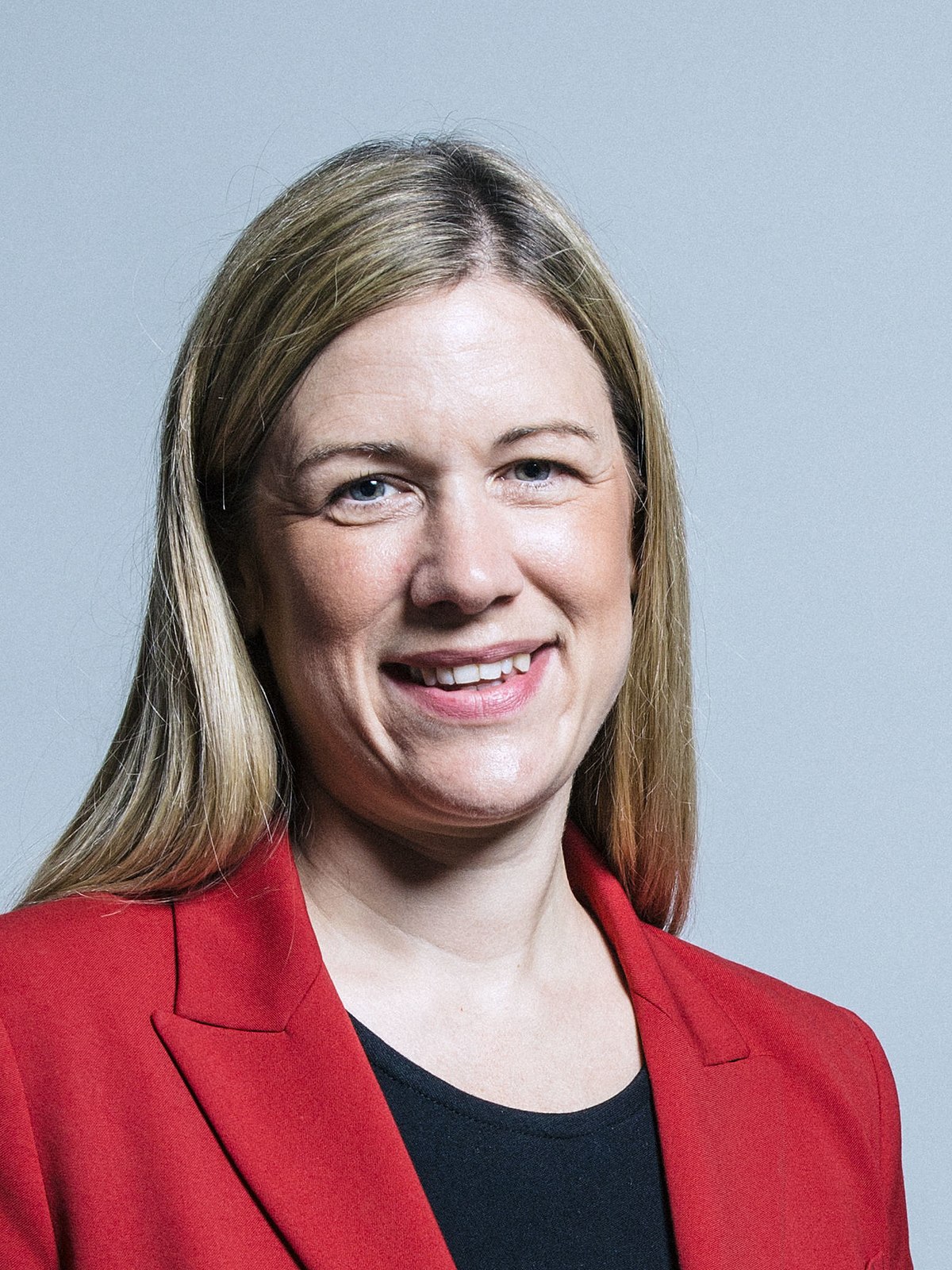
    The House of Commons business list for 25 June includes a select committee statement on the Work and Pensions Committee report into employment support for disabled people and the Connect to Work programme. The statement is due to be made by Debbie Abrahams, the Labour MP for Oldham East and Saddleworth.

    The issue falls within the Department for Work and Pensions’ wider reform agenda, including attempts to increase employment among disabled people and people with health conditions. The Connect to Work programme has been presented as part of the Government’s approach to personalised employment support.

    The statement gives MPs an opportunity to raise questions about implementation, funding and the evidence behind the programme. It also comes as ministers face wider scrutiny over welfare policy, disability support and the relationship between employment targets and claimant protections.

  • NEWS STORY : Government says degree choice has major effect on earnings

    NEWS STORY : Government says degree choice has major effect on earnings

    STORY

    The Department for Education has published new data showing that graduates earn on average around £100,000 more over their lifetime than comparable non-graduates, although the financial return varies sharply by subject. The Government said medicine and economics had some of the highest returns, while some courses offered little or negative financial benefit.

    Ministers said the data would support plans to limit growth in some courses at some providers where outcomes are consistently poor. The Government also said it would consult in the autumn on a minimum English language requirement for some students accessing student finance.

    Skills Minister Jacqui Smith said young people should choose carefully and should not enter higher education by default. The announcement links university policy with the Government’s wider skills agenda, including apprenticeship expansion and the Youth Guarantee.

  • NEWS STORY : Children’s Commissioner warns Home Office asylum plans could harm children

    NEWS STORY : Children’s Commissioner warns Home Office asylum plans could harm children

    STORY

    The Children’s Commissioner for England has warned that Home Office proposals affecting refused asylum seekers could cause significant harm to children. The Guardian reported that Rachel de Souza raised concerns about proposals including the removal of support from some families and the use of physical interventions during enforced removals.

    The Home Office proposals were set out in a consultation launched in March and form part of the Government’s wider approach to increasing removals of people whose asylum claims have been refused. De Souza said ministers should ensure children’s best interests are central to decision-making and questioned whether parts of the plan were compatible with the Children Act 1989.

    Home Secretary Shabana Mahmood has defended a tougher approach to immigration enforcement, arguing that the system must command public confidence. The intervention adds further scrutiny to the Government’s asylum policy at a moment when the Labour leadership transition is already placing pressure on departments to justify major decisions.

  • NEWS STORY : Trump describes Burnham as “extremely liberal”

    NEWS STORY : Trump describes Burnham as “extremely liberal”

    STORY

    Donald Trump has described Andy Burnham as “extremely liberal” in his first public comments on the Labour frontrunner since Keir Starmer announced his resignation. The US President made the remarks after Burnham emerged as the clear favourite to become the next Prime Minister.

    The comments come as British ministers and officials prepare for a change of Labour leader at a time of continued international pressure over Ukraine, the Middle East and defence spending. Starmer met European allies in Berlin this week as he sought to maintain diplomatic continuity before leaving office.

    Burnham has not yet set out a detailed foreign policy programme as the leadership process has not formally begun. His first weeks in office, if he succeeds Starmer, are likely to include early decisions on defence, relations with Washington and the shape of the next Cabinet.

  • NEWS STORY : Darren Jones backs Burnham after talks on economic policy

    NEWS STORY : Darren Jones backs Burnham after talks on economic policy

    STORY

    Darren Jones has said he will not stand in the Labour leadership contest and has backed Andy Burnham after holding talks with him on economic policy. Jones, who has been closely associated with Keir Starmer’s Treasury operation, said Burnham had reassured him that any additional borrowing would need to be targeted and credible.

    Burnham remains the only declared candidate and that Labour expects the leadership process to begin on 9 July. If no other candidate secures enough support, Burnham could enter Downing Street by the middle of July, completing another change of Prime Minister during this Parliament.

    The intervention is politically significant because Jones had been viewed as one of the most plausible internal alternatives to Burnham. His support may help Burnham reassure Labour MPs concerned about fiscal policy, bond market reaction and the relationship between the next Government and the Treasury.

  • PRESS RELEASE : Government steps up action to tackle illegal deforestation [June 2026]

    PRESS RELEASE : Government steps up action to tackle illegal deforestation [June 2026]

    The press release issued by the Department for Environment, Food and Rural Affairs on 23 June 2026.

    New rules will ensure everyday products sold in the UK including coffee and cocoa do not contribute to illegal deforestation around the world.

    The world’s rainforests are to be better protected from deforestation as the government will confirm today (Tuesday 23 June), during London Climate Action Week, that plans to take forward new rules in Great Britain including using powers in the Environment Act alongside legislation strengthening the UK Timber Regulation.

    Under the proposals UK businesses who trade in commodities sourced from rainforests such as soy, palm oil, cocoa and rubber will need to check that their supply chains are not contributing to illegal deforestation. These products are commonly found in everyday supermarket products including chocolate, cooking oils, shampoo and cosmetics.

    UK companies have been at the forefront of global efforts to tackle deforestation within their supply chains, but voluntary action alone cannot tackle this global challenge, and several major supermarkets have been calling for stronger regulation.

    This move will protect the habitats of some of the world’s most precious and endangered species, while giving British consumers confidence that the products in their shopping baskets are not contributing to illegal deforestation.

    Rainforests and other forests are vital for storing carbon and sustaining biodiversity, yet they are increasingly threatened by deforestation. Around 90% of global deforestation is driven by agricultural expansion, much of it linked to the production of internationally traded commodities. In 2023, the UK’s consumption of these goods was associated with approximately 29,000 hectares of deforestation worldwide – around one and a half times the size of Manchester – and 9.4 million tonnes of related carbon emissions.

    Nature Minister Mary Creagh said:

    “Tackling global deforestation is one of the most effective ways we can address climate change and protect some of the world’s most unique and precious wildlife.

    “That is why we are leading by example and scrutinising our own supply chains. Eliminating products linked to illegal deforestation not only helps to protect precious ecosystems but is good for our collective resilience and long-term prosperity.”

    Andrew Opie, Director of Food & Sustainability at the BRC, said:

    “Retailers welcome today’s announcement. We have long called for UK deforestation regulation as an important step in driving forest conservation across retail supply chains in line with business commitments, while supporting alignment with the EU where possible to avoid unnecessary costs and complexity for retailers and their customers.

    “However, with the EU regulation due to take effect in Northern Ireland at the end of the year, it is important that the Government takes a pragmatic approach to enforcement to minimise disruption for businesses and consumers.”

    Gavin Crowden, Director of Advocacy at WWF, said:

    “The UK Government has warned that the collapse of tropical forests in places like the Amazon and Indonesia is a national security risk, not just an environmental one. We rely on these forests for food and climate stability, and they’re home to extraordinary wildlife. With new rules finally coming into force in Northern Ireland at the end of the year, there is no excuse for further delay that would leave shoppers in the rest of the UK still unwittingly driving the destruction of the rainforest.”

    These new measures will help businesses better identify and reduce the risk that their imported products are linked to illegal deforestation and land clearing. The government will consult businesses, civil society and international partners later this year on the details of the proposed GB deforestation policy. This will include consulting on the introduction of these mandatory due diligence requirements for businesses in Great Britain including using powers such as under the Environment Act which target illegal deforestation, and by strengthening the existing UK Timber Regulation.

    To maintain Northern Ireland’s unique dual market access to both the UK Internal Market and the EU Single Market, the EU Regulation on Deforestation-Free Products (EUDR) will apply in Northern Ireland in phases starting 30 December 2026.

    Crucially, to protect the UK Internal Market and streamline compliance, the upcoming consultation will propose that the GB regime covers the same core commodities and underlying information requirements as the regulation in Northern Ireland. This aligned approach is designed to prevent administrative duplication across the UK while helping British exporters to the EU meet consistent data and traceability standards. Businesses in Northern Ireland are encouraged to begin preparations now.

    In due course, the Government’s ambition is to transition to a deforestation-free standard which will require relevant products to be produced free from any deforestation, building on stakeholder efforts globally to decouple supply chains from forest loss and land conversion.

    These changes help deliver on the UK’s commitment under the Glasgow Leaders’ Declaration on Forests and Land Use, agreed at COP26, to halt and reverse forest loss and land degradation by 2030. It also supports the cross-government 2035 International Climate, Nature & Energy Strategic Framework.

    The changes will improve the transparency, traceability and resilience of UK agricultural commodity and timber supply chains, and support smooth trade with the EU through delivering on our Windsor Framework commitments.

    Further details on the GB deforestation regulations consultation process will be announced in due course.

  • PRESS RELEASE : Fiftieth anniversary conference marking the 1976 drought [June 2026]

    PRESS RELEASE : Fiftieth anniversary conference marking the 1976 drought [June 2026]

    The press release issued by the Environment Agency on 23 June 2026.

    Environment Agency Chief Executive Philip Duffy’s keynote address looking at how the devastating drought changed the way we manage and use water.

    Good morning, everyone. There’s something fitting about discussing long-term resilience here at The Institution of Civil Engineers. In fact, during the 1976 drought, which we’re going to talk about today, the president of the ICE was Sir Norman Rowntree, who himself was a leading hydrologist.

    Our subject today is the great drought itself and what we’ve learned from it. I’m going to spend a bit of time now talking about the events of 1976 – I’m going to talk about how since that time our preparedness has changed, but the risk of drought has changed. I’m going to make a case for what we in the Environment Agency think should be done across both infrastructure, social change, policy, and science to ensure that we’ve got access to clean and plentiful water in the years and decades ahead.

    Now, it’s a very strange thing about our collective memory of our history that some years are more resonant than others. Some stand out in the memory, and others less so. And 1976 is very much one of those years that people recall the events of that year. They shape perceptions, they shape narratives, even today, and even for people like me who weren’t alive at the time, reading about it, many aspects of life in the UK in 1976 feel very familiar, but other aspects feel extraordinarily distant and alien, a real reminder that the past truly can be a foreign country.

    1976 was in many ways a very difficult year for Britain. It was a time of very high inflation. There was significant industrial strife. It was in one sense the peak of the dreadful tragedies of the troubles, and of course there was persistent extreme weather throughout the year.  But it was also a year where the recorded life satisfaction reached a post-war high, and there was significant social progress on issues like equality of pay between men and women, and civil rights.

    There’s a sense from people’s recollections of the year, particularly those that were children at the time, that the summer of 1976 was sort of halcyon period – endless summer days, a Wimbledon tournament without any rain, an era of space hoppers, cricket tours, the whole world slowed down in the heat over that period.

    But for those working in water the year had quite a different flavour, and we can see in the data just how drastic that year was. Starting with a very dry summer in 1975 followed by a very dry winter, 1976 saw record after record being broken in our climate. It was the driest year since the Second World War and had the longest heatwave, with 13 days of temperatures above 30 degrees centigrade recorded in West London, starting on the 22nd of June – so we’re almost 50 years past that today. Water stores, both in reservoirs and rivers, reached record low levels right the way across the country. In London, commentators noted that the grass wasn’t just brown, as it often is in the summer, it had gone white from the heat that had burnt the plants across the country. Farmers took photographs of their fields as cracked rock-hard pans of earth, and children playing in the streets found new ways of amusing themselves, rolling up melted tarmac using lolly sticks as if it was melted cheese.

    As a consequence of all of that, many people experienced disruptions in their water supply, and some towns by late summer only had access to water from standpipes. The southwest was particularly hard hit by this. There was often very heavy-handed enforcement of water restrictions, and people complained it was turning neighbour upon neighbour. In Whitehall, nervous about the potential consequences of the drought, a first Minister for Drought was appointed. There were lots of public campaigns to encourage people to reduce consumption, and many of them, even in this pre-internet era, provoke the kind of predictable ridicule you would expect, ideas about putting bricks in your toilet system, or the famous injunction to consider bathing with a friend. If you watch interviews at the time, it’s really striking how many people compared the feel of the country at the time to the war – a war they had lived through. And they pointed out the need for society to come together to deal with this crisis, and the importance of acting with fairness and justice.

    This drought wasn’t just a one-off event. It had very long-term consequences. It wasn’t just the £500 million that farmers lost as their crops died in the fields. It wasn’t just the 25% increase in wheat prices, or the astonishing plague of ladybirds that hit southern England. Long-term studies of the natural environment in England, published many decades later, showed that the drought actually changed the distribution of flora in southern England, with particularly severe impacts on heat-sensitive species like beech. And perhaps for the first time since the war, people woke up to the importance of water – its vulnerability, its importance, its scarcity, and that registered with the public.

    So, I’d like to talk now about how we changed water policy since 1976 and where that’s left us over the last five decades. Now going back to 1976 – the way in which water was managed is very different to how it’s managed today. There was, in fact, a 1973 Water Act, and it took really important steps to create a regionalised system with integrated water management at the regional level. In fact, there were 10 new regional water authorities created, sweeping away the 27 previous water authorities who had been in existence since 1963. That is relevant because when the crisis hit, the water sector as a whole was already undergoing a huge amount of change. Despite that shift to regional planning, by 1976 it was still very early days. The new water authorities had a very fragmented system, a lot of very small-scale planning, a lot of smaller towns and market towns connected to very single sources of water, and the drought really shone a light on how big a problem that was.

    In July 1976 the government made a statement to say that Leeds was going to face really severe problems that autumn, whereas Bradford, just a few miles away, would be unaffected, depicting the fact that systems were very fragmented and broken up between different catchments.

    But I think the government did change its approach to drought in 1976. I think we can point out three really big long-term shifts that the drought led to.

    The first one was that drought appeared in Whitehall rightly as a potentially disastrous catastrophic risk for the country, and a huge amount of effort, both then and ever since, has been put into structured, systematic planning to manage the impact of a future drought. Our doctrine is not to respond in the moment on the hoof, but to plan in advance and think through how we would respond, and we’ve got much more extensive evidence now, and planning about where we get water in the event of a drought, and how we prioritise its use. The law gradually caught up, and by the early 2000s drought plans and long-term water resource management plans became statutory requirements for all water companies. And then in 2010, following the Pitt Review for flooding, we had the Flood and Water Management Act, which created the EA as a category one civil contingency responder.

    Nowadays, we manage drought as a national approach. We have a clear doctrine about who does what, how we prepare, and how we respond and recover. Core to that is the National Drought Group, which is a cross-sector senior level group that the Environment Agency chairs. It brings together all aspects of drought response in England – not just government, but regulators, our colleagues in the Met Office, water companies, and representatives from agriculture, the environment, and key sectors. It has helped us get to know each other and understand when a drought does hit, we are ready to act.

    We have also got much stronger expectations of the water industry than we had at the time. Water companies must produce 25-year long-term water resource management plans, and these have driven much more integrated water networks and significant (but not complete) reductions in leakage. Through these plans, companies must do robust planning for expected growth in demand, future environmental needs, and the impacts of climate change, and we expect them to be resilient to a one in 500 drought event, like 1976.

    Now, planning is very important, but in of itself it doesn’t create any more water. And there was significant progress in the 70s and 80s in expanding systems to store, manage, and transfer water.

    A number of new reservoirs opened, notably Kielder in 1981, Rutland, and the Queen Mother Reservoir in West London (both of which were actually commissioned in 1976) but also a lot of very much smaller facilities, particularly strengthening resilience in places like the south west with the Roadford and Colliford schemes in Devon and Cornwall. This was complemented by a significant expansion of real-time monitoring of groundwater and river levels. Today, the EA collects more data than ever, more efficiently with new technology and improved processes on the state of our waters and groundwater, and there has been real progress on leakage. It was over 30% 30 years ago; it’s now below 20% – but there’s still more room to do. All those improvements have meant that despite having severe drought episodes since 1976, we’ve not had to resort using standpipes in England, although we have had to plan for doing so when things got very demanding.

    That is a good track record, but sadly we can’t be complacent about the future, because the truth is that since 1976 we’ve begun to see the impact of human-induced climate change. For decades some of the features of 1976 – the very high temperatures, the long heatwaves – were considered wholly exceptional, but in many ways, looking at the weather we’ve had in recent years, they’ve become rather normal.

    To give some examples, we’ve now burst through the 40-degree heat barrier with temperatures far exceeding those experienced in 1976. The summers of 2018, 2022 and 2025 were some of the hottest on record, and they put great stress on water supplies. And it isn’t just the severity of the heat and the drought that goes with it.

    When rain finally does come, often in winter, it’s falling much more heavily over much shorter time periods, causing widespread surface flooding, which our systems are struggling to cope with. And we need to prepare for and communicate this new scenario we’re living in – this world in which there is either far too much rain or far too little and that oscillates very frequently. And one of the things that makes this even harder to explain to the public is that the changes we have seen so far are not climate change, but rather the first stages of climate change.

    We will now need to make our country resilient in a very different set of circumstances to the 1970s, a shifting climate that is of immense speed.  

    And we’re not the same country as we were in 1976 in all sorts of ways. For a start, England’s population is 11 million higher than it was back then, and the projections show it will grow by further 8 million people by the mid 2050s. Now, meeting the needs of that growing population, whilst respecting the environment is a challenge I think that we can meet, but only if we take robust and comprehensive action. At the same time, since 1976 we’ve been helped by a decline in water use from water-intensive industries, but of course water use can go up or down, examples like farming and horticulture – practices change or new industrial demands arise.

    Now, part of our response needs to be to look at demand and reduce it in very careful ways. It is an interesting observation to make that the recorded data on per capita consumption for water in the 1960s and 70s was actually lower than it is now, below 100 litres per person per day, compared to about 140 litres per person today. Lifestyles were different, whether it was access to private vehicles, watering of gardens, the use of domestic appliances, or even high-flow showers, people had different expectations.

    So, we’ve got to address these complex challenges, accepting the society and culture we live in now, not the one we had back in 1976 and despite many efforts and widespread introduction of metering, we’ve yet to see significant reductions in per capita consumption.

    Another aspect of public opinion is that compared to 1976, people’s aspirations for their water environment are much more rigorous. We have seen the wave of disgust caused by sewage spills, many of which are illegal, and we also see genuine concern around the country from communities about the health of their rivers. People do not want to see the rivers abstracted till they run dry, or thick with pollution. And the volume of water in those rivers matters just as much as the level of pollutants. Policy makers need to take into account these shifts in perspective when they consider their responses.

    Taken altogether, this rising population and demand, these higher temperatures and the need to cut unsustainable extraction to support the natural environment, could leave us 5 billion litres of water a day short by 2050 – about a third of our current on-grid supply.

    Hopefully you feel I’ve set out the scale of the challenge we face, but now I’d like to talk about what we need to do to meet it.

    Firstly, we’ve got to build more infrastructure and build it faster and better. Now, the Environment Agency is celebrating its 30th birthday this year, but it is a matter of deep regret that during its 30 years of life, not a single new reservoir for public water supply has been completed. Now we do now have many schemes around the country in development and construction. Not only reservoirs, but water transfer schemes, desalination projects, and water recycling schemes, all of which need to be seriously considered and taken forward. As regulators, we and our colleagues at Ofwat and the Drinking Water Inspectorate have a joint team called Rapid, and they are working very hard to expedite delivery. And as I say, the industry must remain focused on its management of underground assets and cutting leakage.

    Secondly, it is time to take managing consumption more seriously, and the government has set out a goal to get per capita consumption down to 110 litres per person per day by 2050.  Later this month, there’ll be a major water efficiency campaign launched by our colleagues in Ofwat, and we know from research by Waterwise that most people do support effort to reduce water consumption to support our supplies and the environment. We need to make a very specific case of water that, unlike some of the other global challenges we face, for many communities reducing your per capita consumption does make a difference to the amount of water in your local community, and that there are steps we can take such as fitting a water butt for those lucky enough to have a garden and introducing more water-efficient appliances into your home. We at the Environment Agency are looking forward to action later from this year from the government that would improve the labelling of appliances for water efficiency.

    Thirdly, we’ve got to start treating water as an integrated holistic system. A climate with very heavy winter rain followed by summer drought needs a different approach. The EA wants to make it easier for farmers to build on-farm reservoirs, with simpler permitting that will allow farmers to take more water in periods of high flow. We want to help rural communities develop what we call local resource options, which are networks allowing water users to collaborate locally. We want to create landscapes with our partners that can more easily absorb water and help groundwater recharge, for example by changing how we manage upland soils to absorb more water. We want to see urban areas and urban planning change to create areas that can attenuate and absorb the storm water temporarily during periods of sharp flooding. We’ve seen that successfully deployed in cities like Rotterdam, and it is central to the integrated water management plan in Manchester. Such measures would minimise the risk from summer storms and provide more reliable supplies of water to intensive urban water users. Water quality, flood risk, and drought are different aspects of similar problems. As I’m talking to you today, we’re awaiting the government’s detailed response on water regulatory reform. We in the Environment Agency are arguing for stronger integrated catchment planning. We think that looking across this water system, working with our partners, using our evidence and our knowledge of local environmental systems, could bring to bear a much more efficient and robust water planning system for the future.

    Finally, I want to say a word about nature. There is emerging evidence that restoring rivers closer to their natural habitats, and improving riverine planting, can not only slow flood, and reduce some eutrophic pollutants, but can also help the biota survive extreme temperatures, with more and deep pooling at river margins. The recent changes made to integrate natural processes into flood management, and consider natural approaches to water quality, will in our view have an additional benefit to natural resilience.

    Now, all of this work, these shifts we need to see, needs ongoing scientific input. We need to improve our modelling and hydrology as the climate warms. We need to understand better how groundwater moves through the system and how it’s recharged better. We think hard about behavioural science and how we launch effective drought responses. We’re playing our part at the EA by working with partners like the Alan Turing Institute to look at how AI and machine learning can improve water system modelling and decision making under uncertainty and having discussions with UK Water Industry Research about how to join up our efforts and maximise our impact.

    September and October of 1976 were the wettest recorded since records began in 1727, and the great drought was brought to an end. And we need to move on to. So let’s leave the Chopper bikes, Steely Dan, Dennis Healey and all the events of that extraordinary summer, and look forward.

    I think that is a positive place to start our deliberations, because we have an enormous opportunity in this room working together across different disciplines to learn from the past, but think about a better future. We can think about a future where economic growth and sustainability can be obtained through robust action, and we know a lot already about what needs to be done. So, our collective challenge today is to ensure we move fast enough with enough ambition and enough collaboration to make sure we have the impact we want to see on the water environment of the future. Thanks very much for coming.

  • NEWS STORY : Lords Continue Detailed Scrutiny Of Financial Services And Markets Bill

    NEWS STORY : Lords Continue Detailed Scrutiny Of Financial Services And Markets Bill

    STORY

    Members of the House of Lords are continuing committee stage scrutiny of the Financial Services and Markets Bill. The legislation would reform areas of financial regulation, including the Financial Ombudsman Service, payment systems regulation, bank ring-fencing and the authorisation of provisional licences.

    Peers are considering amendments covering payment systems, anti-money laundering provisions, the long-term strategies of the Financial Conduct Authority and a possible Government review of regulatory principles. Six days have been scheduled for committee stage, with further sittings due in late June and early July.

    The bill forms part of the wider post-Brexit reform of financial services regulation. Its progress is being watched by the financial sector, consumer bodies and parliamentarians concerned with the balance between competitiveness, stability and consumer protection.

  • NEWS STORY : Planning Inspectorate Publishes Guide For New Local Plan System

    NEWS STORY : Planning Inspectorate Publishes Guide For New Local Plan System

    STORY

    The Planning Inspectorate has published a procedure guide for examinations under the new local plan system in England. The system, developed with the Ministry of Housing, Communities and Local Government, came into force in March 2026 under new planning regulations replacing the 2012 plan-making rules.

    The Government expects the new system to support a 30-month end-to-end plan-making process. The guide sets out how gateway assessments and examinations will operate, with local planning authorities also directed to the Government’s Create or Update a Local Plan guidance.

    The Planning Inspectorate said it would hold a webinar and live question and answer session on 6 July to explain how examinations will work in practice. The legacy system will continue for authorities adopting plans submitted no later than 31 December 2026, while other authorities may use the new process.

  • NEWS STORY : Public Accounts Committee Warns Museums Are Vulnerable To Cyber-Attack

    NEWS STORY : Public Accounts Committee Warns Museums Are Vulnerable To Cyber-Attack

    STORY

    The Public Accounts Committee has warned that national museums and galleries are being left vulnerable to cyber-attack and other security risks. The committee said the Government’s approach to protecting collections and institutions was too reactive and lacked a clear strategic basis.

    MPs said the risks faced by museums and galleries include cyber security, physical security and the protection of nationally important collections. The warning follows growing concern across the public sector about the resilience of cultural institutions and the ability of departments to manage digital threats.

    The committee’s findings place further pressure on ministers to set out how cultural bodies will be supported against security risks. It said the Government needed a more proactive approach to protecting institutions that hold public collections and deliver national cultural services.