Blog

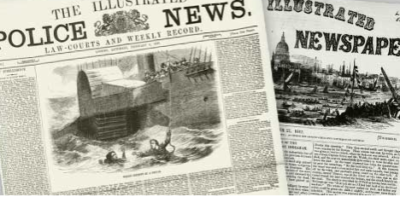
  • NEWS FROM 100 YEARS AGO : 23 January 1923

    NEWS FROM 100 YEARS AGO : 23 January 1923

    23 JANUARY 1923

    Ramsay MacDonald, the Leader of the Opposition, said to an audience of over 2,500 people in Aberdeen that the French were nervous of German strength. He argued that this caused the problem that when the German economy started to grow that the French would want to limit that expansion in fear of the potential military rearmament. MacDonald also called for the allied nations to support the League of Nations to ensure that all nations across Europe would start the process of becoming disarmed.

    After some localised strike action amongst German workers in the French occupied Ruhr Valley, a large scale strike action began in the region.

    Marius Plateau, the editor of the French journal Action Française, was assassinated by Germaine Berton in Paris.

  • NEWS FROM 100 YEARS AGO : 22 January 1923

    NEWS FROM 100 YEARS AGO : 22 January 1923

    22 JANUARY 1923

    The six German miner directors arrested by the French were sent under military escort to a trial in Dusseldorf, as strikes in the mines amongst German miners began. The German Government also issued orders saying that no state official should offer assistance or support to the French authorities in the occupied territories.

    At the Scottish Independent Labour party’s meetings in Glasgow, the French invasion of the Ruhr Valley was condemned.

    The Irregulars in Ireland destroyed part of a railway viaduct at Malahide near Dublin, causing a disruption in the rail services between Belfast and Dublin.

  • PRESS RELEASE : Business Secretary warns energy suppliers to end mistreatment of customers [January 2023]

    PRESS RELEASE : Business Secretary warns energy suppliers to end mistreatment of customers [January 2023]

    The press release issued by the Department for Business, Energy and Industrial Strategy on 23 January 2023.

    The Business and Energy Secretary is today calling on suppliers to do more to protect vulnerable energy users.

    • Business and Energy Secretary Grant Shapps backs consumers as offensive launched to crack down on rogue energy suppliers
    • Energy suppliers told they must stop the practice of forced fitting prepayment meters as the answer to families struggling to pay bills, following a huge surge in cases
    • The Business Secretary asks suppliers to share data on the number of warrants they have requested for this purpose to name and shame worst offenders

    Business and Energy Secretary Grant Shapps has today (22 January 2023) pledged to crack down on the mistreatment of energy users by suppliers, following reports showing some are doing nowhere near enough to support vulnerable customers.

    He has written to energy suppliers calling on them to stop the harmful and anxiety inducing practice of forcibly moving consumers over to prepayment meters without taking every step to support consumers in difficulty.

    The Business Secretary is asking suppliers to voluntarily commit to stopping this practice and holding their feet to the fire by demanding they share the number of warrants they’ve applied for in recent months.

    He wants to see much greater efforts from suppliers to help consumers in payment difficulties before leaping to the extreme of forced prepayment switching, such as offers of additional credit, debt forgiveness or tools such as debt advice. In his letter, he has asked suppliers to discuss possible further action they can take to support customers and avoid forced fitting.

    This action is part of a drive to increase transparency around prepayment meter installations, to track down the worst culprits and find out which energy companies are trigger happy in applying for them.

    Courts are being overwhelmed with applications for warrants as they continue to mount, with reports that huge batches are being approved in a matter of minutes. The Business Secretary is working with Ofgem and the Secretary of State for Justice to ensure that the process by which suppliers bring these cases to court is fair, transparent and supports vulnerable customers.

    Secretary of State for Business, Energy and Industrial Strategy Grant Shapps, said:

    “Suppliers are clearly jumping the gun and moving at risk customers onto prepayment meters before offering them the support they are entitled to – I simply cannot believe that every possible alternative has been exhausted in all these cases.

    “I am deeply concerned to see reports of customers being switched to prepayment meters against their will, with some disconnected from supply – and quite literally left in the dark.

    “Rather than immediately reaching for a new way to extract money out of customers, I want suppliers to stop this practice and lend a more sympathetic ear, offering the kind of forbearance and support that a vulnerable customer struggling to pay should be able to expect.”

    This follows reports that the number of customers switched to prepayment meters has soared in recent months, and in many cases unwillingly and without the offer of support. In some instances, this has led to vulnerable customers having their gas and electricity supplies cut off with little or no notice.

    Prepayment meters allow customers to pay for gas and electricity on a pay-as-you-go basis and serve an important function by helping the avoidance of debt and court action. A moratorium on forced prepayment switching could lead to an increase in bailiff action and so the Government wishes to avoid going down this route.

    Under Ofgem rules forced switching to prepayment must only ever be a last resort but, with the nation battling with energy prices, more have struggled to pay their bills and been forced installations and self-disconnection. In recognition of this, some energy suppliers are already taking steps to support consumers such as by pausing remote switching of smart meters to prepayment mode or providing additional credit to customers struggling to pay. The Business Secretary wants all suppliers to step up this kind of support to avoid resorting to forced fitting.

    Minister for Energy and Climate Graham Stuart said:

    “Switching users onto a prepayment plan should only ever be a very last resort and suppliers have a duty to exhaust all other avenues. It cannot be right that, at a time when consumers need compassionate treatment more than ever, so many are being let down in this way.

    “The Government will continue to do all we can to ensure families and households stay warm this winter and we’re taking urgent action to bring about greater transparency when it comes to bad energy supplier practice.”

    Concerns were also raised around the low number of vouchers being redeemed under the Government’s Energy Bills Support Scheme – meaning many vulnerable households had not had cash knocked off their energy bills. Suppliers are urged to make every attempt to make sure this happens, with the Government to publish a list of supplier redemption rates – showing who is meeting their responsibilities and who needs to do more.

    The Business Secretary is worried about the low uptake of customers on traditional meters in prepayment mode and has demanded more transparent reporting of voucher redemption rates. He has encouraged traditional meter replacement with smart meters as they are able to receive government support payments automatically and detect self-disconnection.

    Mr Shapps has written to Ofgem to ask that they do more to make sure suppliers protect vulnerable consumers. This includes revisiting their approach to enforcing supplier compliance, as well as the urgent publication of recent investigations outcomes into vulnerable customers. The Minister for Energy and Climate Graham Stuart has asked energy suppliers, Ofgem, Energy UK and Citizens Advice to meet with him at the Department for Business, Energy and Industrial Strategy to discuss matters further next week.

    The five-point plan to tackle bad behaviour by energy suppliers comprises the following actions:

    1. A call for suppliers to voluntarily stop the practice of forced prepayment switching as the answer to households struggling to pay bills and make greater effort to help the most vulnerable.
    2. Request of the release of supplier data on the number of warrant applications they have made to forcibly enter homes to install meters.
    3. Urgent publication of a list of supplier redemption rates for the Energy Bills Support Scheme vouchers – showing who is meeting their responsibilities and who needs to do more.
    4. The launch of a Government public information campaign reminding and informing eligible consumers to redeem their Energy Bills Support Scheme vouchers and how to do so. This will be through both advertising and direct communication channels, targeting the most vulnerable and those most likely not to have redeemed vouchers.
    5. Coordination with Ofgem ensure they take a more robust approach to the protection of vulnerable customers and conduct a review to make sure suppliers are complying with rules.

    The five-point plan forms part of a wider effort to ensure that energy users are protected at this challenging time and the Government is exploring longer term measures to address this.

  • PRESS RELEASE : Northern Ireland Secretary to drum up investment opportunities in Northern Ireland in first official US trip [January 2023]

    PRESS RELEASE : Northern Ireland Secretary to drum up investment opportunities in Northern Ireland in first official US trip [January 2023]

    The press release issued by the Northern Ireland Office on 22 January 2023.

    The Secretary of State will use his first visit to the US to build on the already strong US-NI partnership and to drum up investment opportunities in Northern Ireland.

    The Secretary of State will also meet with range of key political, business and civic organisation including the State Department, the National Security Council, members of congress, business and trade organisations and councils and the Ad Hoc Committee to Protect the Good Friday Agreement – as part of routine US-UK engagement on Northern Ireland issues.

    While there, he will also highlight his efforts in securing functioning devolved institutions to deliver for the people of Northern Ireland, and separately, this year’s 25th anniversary of the Belfast (Good Friday) Agreement, which will be marked by celebrations on both sides of the Atlantic.

    During his five day visit, the Secretary of State will meet with Joe Kennedy III for their first in-person meeting since his appointment as US Special Envoy to Northern Ireland for Economic Affairs. They will discuss the upcoming Trade and Investment event in NI, announced in the Autumn Statement, and further opportunities to showcase NI’s creative high-tech business environment and the unique trade and investment opportunities it offers.

    Before departing for Washington, Heaton-Harris said:

    I am excited to meet US stakeholders in person for the first time as Secretary of State for Northern Ireland. The US has been pivotal in supporting Northern Ireland. I greatly value our partnership and look forward to deepening our collaboration, especially in areas of trade and investment.

    Through a busy agenda of meetings with business and government representatives I will raise awareness of Northern Ireland’s offering as a great place to live, work and do business and encourage continued trade and investment opportunities from the US.

    As the 25th anniversary of the Belfast (Good Friday) Agreement approaches, I look forward to discussing with US stakeholders the UK Government’s plans to mark this significant milestone. The US and UK share a commitment to upholding the Agreement and continuing to transform Northern Ireland for the better.

  • PRESS RELEASE : Coronation weekend celebrations that will bring communities together announced [January 2023]

    PRESS RELEASE : Coronation weekend celebrations that will bring communities together announced [January 2023]

    The press release issued by the Department for Digital, Culture, Media and Sport on 21 January 2023.

    Millions of people across the country and the Commonwealth are invited to celebrate the Coronation of His Majesty The King and Her Majesty The Queen Consort over a weekend of special events.

    • The Nation and the Commonwealth will have the opportunity to join a weekend of celebrations to mark the Coronation of His Majesty The King and Her Majesty The Queen Consort
    • Coronation Big Lunches, thousands of street parties, and The Big Help Out will bring communities together over special Bank Holiday Coronation weekend

    The Coronation will take place on the morning of Saturday May 6 at Westminster Abbey, London. Tens of thousands of people are expected to visit the capital city to experience this unique and historic occasion, with millions more watching from home, across the UK and around the globe.

    Coronation Big Lunches, thousands of street parties, and a day dedicated to good causes will bring communities together throughout the UK over the special Coronation Bank Holiday weekend.

    On Sunday May 7 a spectacular Coronation Concert at Windsor Castle will showcase the country’s diverse cultural heritage in music, theatre and dance. One of the highlights of the concert will be “Lighting up the Nation”, in which iconic locations across the UK will be lit up with projections, lasers, drone displays and illuminations.

    Michelle Donelan, Secretary of State for Digital, Culture, Media and Sport, said:

    The Coronation of His Majesty The King and Her Majesty The Queen Consort is a huge milestone in the history of the UK and Commonwealth.

    The weekend of events will bring people together to celebrate our Monarchy and the mixture of tradition and modernity, culture and community that makes our country great.

    Everyone is invited to join in, on any day, whether that is by hosting a special street party, watching the Coronation ceremony or spectacular concert on TV, or stepping forward during The Big Help Out to help causes that matter to them.

    Tens of thousands of Coronation Big Lunches and street parties will be held in the UK and Commonwealth on Sunday and across the weekend. Big Lunches take place across the UK annually and last year they raised more than £22 million for local charities.

    The activities on Sunday will culminate in a fantastic evening of song and dance at the Coronation Concert at Windsor Castle, staged and broadcast by the BBC in front of an audience of several thousand members of the public, selected for free tickets via a public ballot.

    The weekend of celebrations will end with the Big Help Out on Monday May 8 – a special Bank Holiday proclaimed by the Prime Minister in honour of the Coronation.

    Created by Britain’s best loved charities and organised by The Together Coalition, it will highlight the positive impact volunteering has on communities across the nation.

    In tribute to His Majesty The King’s lifetime of public service, The Big Help Out will encourage people to come out and support the causes that matter to them.

    Hundreds of activities are planned for the day by local community groups, organisations and charities including The Scouts, Royal Voluntary Service, National Trust and RNLI. Further details and ways to take part will be announced shortly.

    Peter Stewart LVO, Chief Purpose Officer at the Eden Project (who are behind The Coronation Big Lunch) said:

    We’re so excited about The Coronation Big Lunch on May 7, it is a fantastic opportunity to be part of the celebrations and something for us all to look forward to! The Big Lunch has always been about community – last year almost two thirds of people who took part said The Big Lunch had encouraged more people to get involved in voluntary work. Sharing friendship, food and fun together gives people more than just a good time – people feel less lonely, make friends and go on to get more involved with their community, all as a result of sharing a sarnie and a chat in their neighbourhood. The Coronation Big Lunch helps you bring the celebration right into your own street or back yard so that anyone and everyone, across the UK and beyond, can be part of this amazing moment in our history. Get yourself an organiser pack, knock next door and get planning – this is going to be an event to remember!

    Jon Knight, Chief Executive of the Together Coalition, said:

    The Big Help Out is going to be a festival of volunteering. A day when people up and down the country will roll up their sleeves and do their bit. In the run up to the day we’ll also be launching new ways of getting involved in volunteering in your community. The aim is to create a legacy of better-connected communities long beyond the Coronation itself.

    If you’re a voluntary group who wants to be part of it, please reach out now so we can make this the start of the biggest volunteering effort in our country’s history.

  • Alex Cunningham – 2023 Speech on the Future of the Parole Board

    Alex Cunningham – 2023 Speech on the Future of the Parole Board

    The speech made by Alex Cunningham, the Labour MP for Stockton North, in Westminster Hall, the House of Commons on 18 January 2023.

    It is a pleasure to serve under your chairmanship, Mrs Murray. I congratulate my hon. Friend the Member for Blackley and Broughton (Graham Stringer) on having secured this hugely important debate to highlight the urgent challenges facing the parole system. Much of my speech will reflect and build on his concerns.

    My hon. Friend mentioned the deeply distressing case of Andrew Barlow, formerly known as Andrew Longmire, and I echo his concerns. I, too, welcome the Lord Chancellor’s referral of the case back to the Parole Board for reconsideration that was announced yesterday; it is a testament to the hard work and campaigning of the victims. I also put on record my admiration for my hon. Friend and the vital work he has done, championing those victims’ cause in Parliament. As a former journalist, I also commend the role of the media in this particular case. However, it is totally unacceptable that the victims and their families did not receive the expected prior notification of Barlow’s planned release. Sadly, as highlighted by the hon. Member for Strangford (Jim Shannon), such failures are regularly repeated.

    I am aware that the head of the Parole Board has expressed regret at the fact that some of Barlow’s victims were not informed, but that is simply not good enough. I note that when Sonia Flynn, the chief probation officer, gave evidence to the Science and Technology Committee last year, she confirmed:

    “It is in statute that we must consult victims of serious crime on their view of release, and for them to also give our victim liaison officers a view regarding the protections that we need to put in place to reduce their concerns about that individual if the Parole Board does choose to release—particularly the obvious concern that they could bump into them in the street.”

    It is deeply worrying that, even with a case as serious as this one, mistakes have been made.

    I was horrified to learn that one of the victims, who still has nightmares three decades on as a result of the horror of Mr Barlow’s offending, only found out about his potential release, as we have heard, by reading the Manchester Evening News. We cannot allow our justice system to continue to treat victims as an afterthought. All of Andrew Barlow’s victims should have been signed up to the victim contact scheme and received communications from a victim liaison officer regarding how long he would be in prison, when he was up for parole and when he was likely to be released. They should have been told how to make a victim’s statement at the parole hearing. Such failings can retraumatise victims and seriously damage the public’s confidence in our justice system.

    The Parole Board’s statutory purpose is to ensure that people who are dangerous are not released back into the community. It is a system designed to ensure public safety and to protect victims of crime, but after 12 years of Tory incompetence and chaos, our justice system is on its knees. Before the Minister uses the P-word, let me say that it was chaotic before the pandemic. Public confidence in the system is already near breaking point and with each further failing it gets closer to collapse. The Sentencing Council’s 2022 research report tells us that 45% of those surveyed were not confident in the criminal justice system’s effectiveness and 44% were not confident in its fairness. Does the Minister share my shock at those statistics? Public trust, efficacy and fairness of criminal justice are vital, or we will see fewer victims coming forward to report crimes and even greater numbers withdrawing midway through the process.

    The 2019 Conservative manifesto promised to support all victims of crime and do right by victims, but the Government simply have not addressed these ongoing problems. How can year-long court delays and chronic staffing shortages from one end of the system to another contribute to a system that is doing right by victims? The Minister will not be surprised by my next question: when will the victims Bill come before the House?

    It is clear to us all that the Government have completely lost their grip on criminal justice. Labour is the only party that can be trusted to deliver on law and order. We know that careful parole decisions are essential to reducing reoffending and its costs to society. Reoffending costs our society an astonishing £18 billion each year according to the Government’s own figures. Changes to the parole system introduced by the Government in June last year prohibit probation officers from giving a view or making recommendations to the Parole Board on progression or release of prisoners, thus removing an important element of professional expert knowledge from the process. In his evidence to the Science and Technology Committee, Martin Jones—CEO of the Parole Board—emphasised this expertise by saying,

    “It is really important to make the point that we get evidence from prison and probation officers on whether a person is safe to be released or not, and work by the Ministry of Justice some years ago suggested that 90% of our decisions are in line with the evidence provided by report writers. That provides some evidence of consistency.”

    In July last year, the three recognised Probation Service unions—Napo, Unison and the GMB—penned a letter to the Secretary of State with warnings about the serious consequences of the decision to prevent probation staff from making recommendations in written reports and oral evidence to the Parole Board under any circumstance. The ability to do so has long been a vital and valued part of the parole process. The unions warned that the decision

    “severely endangers the ability of the Probation Service to protect victims of the most serious offences, and indeed the wider public, from the risk of serious harm posed by many individuals involved in the parole system.”

    It further de-professionalises this vital public service role, leading to staff demoralisation, and exacerbating the retention problems that the Probation Service already faces. Prison and probation officers work hard day in, day out to deliver justice, and yet again they have been dismissed, undervalued and let down by this Tory Government. Speaking to the Ministry of Justice last year, a senior probation official said:

    “It is extremely difficult and very disappointing that the Parole Board is the last to hear about important decisions which strike at the very heart of the difficult decisions we are asked to make. It makes our members’ already difficult job close to impossible.”

    In fact, Napo members raised concerns about having to supervise someone in the community who they would not have recommended for release. They talked about the extreme stress that could cause, as well as the increased risk of further serious offences.

    I am interested to hear from the Minister why removing probation recommendations was not included in the root-and-branch review of the Parole Board, and why there was no prior consultation with all stakeholders before the changes were implemented. Napo is concerned that removing professional recommendations in parole will lead to inappropriate releases and the non-release of those who otherwise may have been granted parole. Will the Minister share what impact assessment has been carried out on that particular issue, and confirm whether the Government sought the views of the Parole Board itself about having to make release decisions without expert witness recommendations?

    The changes allow for the Secretary of State to make recommendations. That happens only in the most serious of cases—around 150 of the 6,000 that the Parole Board deals with each year. The remaining cases will now have no recommendation given, which seems astonishing to me. I ask the Minister for further information on the so-called “critical few” cases that the Secretary of State will be involved in. Can the Minister share how many oral hearings have been attended by a Secretary of State’s representative in recent times? In how many of those oral hearings did the Secretary of State’s representative recommend no progression—either from closed or open conditions, to open conditions from closed conditions, or release on licence?

    Public hearings, the other major change introduced last year, were consulted on via the root-and-branch review. My hon. Friend the Member for Blackley and Broughton mentioned that as well. Personally, I am in favour of increasing the transparency of such hearings. When done properly, they could help to improve public confidence in the system. I know there have been only a few public hearings since their introduction, but could the Minister provide an update on how they are running, and how much engagement there has been with them? I understand that a remote link has to be set up to allow viewing, so I assume the Government have some sense of how many people are attending.

    Finally, our probation service is still reeling from the reckless transforming rehabilitation programme, a failed experiment in privatisation. That disaster proceeded because the then Secretary of State, the right hon. Member for Epsom and Ewell (Chris Grayling), failed to listen to the warnings of those with the wealth of experience and expertise. I sincerely hope the current Secretary of State does not make the same mistake with parole.

  • PRESS RELEASE : Youngsters to take up football, boxing and rugby in £5 million bid to cut crime [January 2023]

    PRESS RELEASE : Youngsters to take up football, boxing and rugby in £5 million bid to cut crime [January 2023]

    The press release issued by the Ministry of Justice on 21 January 2023.

    • Hundreds of organisations win cash to run projects for young people and cut crime
    • Deputy Prime Minister and Sky Sports’ Jobi McAnuff see sporting success in action at ThruLife

    Thousands of at-risk teens are set to pick up their racquets and lace up their football boots as part of a bid to keep them on the straight and narrow, the Deputy Prime Minister has announced today (21 January 2023).

    More than 200 grassroots organisations across England and Wales have been awarded cash from the government’s £5 million Youth Justice Sports Fund to run local sports schemes – from climbing to kayaking – that will help keep vulnerable young people away from crime and antisocial behaviour.

    The number of children caught up in crime is at a historical low – falling by 81 percent since 2010 but youth crime still costs the taxpayer £1.5 billion a year. Research shows 80 per cent of prolific adult offenders started on their path of crime when children, making the need to steer more young people away from lawbreaking all the more critical.

    Announcing the news, the Deputy Prime Minister Dominic Raab visited ThruLife – one of the projects which have been awarded funding – at a local school in Tottenham, north London.

    Joined by ThruLife founder Richard Allicock and Sky Sports pundit Jobi McAnuff, the Deputy Prime Minister swapped into his trainers as he joined penalty practice with youngsters at their after-school football club.

    Deputy Prime Minister, Justice Secretary and Lord Chancellor, Dominic Raab, said:

    I know first-hand how powerful sport and mentoring can be in turning young lives around.

    Sport has the power to boost confidence, build resilience and teach discipline, and evidence suggests sports can be effective in reducing offending among young people. That’s why we’re supporting over 200 organisations across England and Wales to encourage more young people to engage with sport and stay away from crime.

    One of the surest ways to keep young people on the right path is to give them the skills to succeed in life – something sports schemes can provide, building young people’s resilience, self-confidence and discipline while engaging in a fun activity.

    Emerging evidence suggests that sports-based intervention programmes – such as the Youth Sports Fund – can lead to improvements in offending. We know that early intervention done well reduces offending, for example, the

    Supporting Families programme showed a 35 per cent reduction in youth prison sentences and a 15 per cent reduction in youth convictions.

    Former Crystal Palace midfielder, Sky Sports commentator, and ThruLife ambassador Jobi McAnuff said:

    Organisations like ThruLife do amazing work. I know how important activities and places like this are, and to have positive role models, particularly in areas like this where I grew up.

    You can’t take shortcuts in life, whether that’s to be a professional footballer or whatever you want to achieve. There will be tough times in life, so if you have a passion for something like sport, it can help you to stay positive and committed.

    Tom* who regularly attends ThruLife said:

    ThruLife has helped me to grow in confidence through the sports sessions I attend teaching me and others different skills that would better place us on our journey through life, and to help us make positive choices.

    Richard Allicock, the founder of Thru Life, said:

    We are delighted to have been awarded this funding, which will help us to continue the positive work that we are doing in the community but also extend our offer to engage with more young people across the borough of Haringey utilising the powers of sport through our mentoring offer.

    In November last year, the Deputy Prime Minister invited sports charities and organisations from across the country to bid for the £5 million fund, which saw hundreds of sports schemes apply.

    Today, over 200 organisations across England and Wales have been awarded cash to run projects from climbing to boxing with vulnerable teens. Bidders were marked on whether they could show a track-record of helping young people at risk of falling into crime and antisocial behaviour to keep their noses clean.

    The £5 million pot of money builds on the government’s existing support for local authorities’ Youth Offending Teams nationwide – which has seen over £730 million worth of funding provided in the last 5 years.

    Minister for Sport, Civil Society & Youth Stuart Andrew said:

    We believe every young person should get the best start in life. Doing sport is a brilliant way of building focus and discipline while also improving physical health and stopping people becoming involved in crime.

    This funding will help make sure people are set on the right path from the outset.

    The Sports Fund has been co-ordinated by StreetGames and the Alliance of Sport for Criminal Justice, with the support of the Sport for Development Coalition – an umbrella of more than 250 charities in the sports sector.

    Stuart Felce, StreetGames Director of Sport and Community Safety, said:

    At StreetGames we believe that community sport, delivered in the right way, can have a transformational impact on children’s lives and the communities they live in. We’re really excited to be partnering with the Sport for Development Coalition and the Alliance of Sport in Criminal Justice to deliver this ambitious new programme from the Ministry of Justice. This investment in sport will support voluntary and community sports organisations to carry out targeted work to enhance positive outcomes for vulnerable children, providing the practical and emotional support they need to grow and helping to keep them and their communities safe.

    Hitesh Patel, Executive Director of the Coalition, added:

    Reducing crime and anti-social behaviour is a core element of the Coalition’s #OpenGoal framework, which shows how the multiple returns on investment created by sport for development can help to generate significant public cost savings. We are delighted to be working alongside StreetGames and the Alliance of Sport in Criminal Justice to ensure this new funding supports and strengthens those organisations that can already demonstrate the positive social impact they are having on their local communities.

    The funding also delivers on the commitment made in the Prisons Strategy White Paper – published in December 2022 – to cut youth crime and create safer streets.

  • Jim Shannon – 2023 Speech on the Future of the Parole Board

    Jim Shannon – 2023 Speech on the Future of the Parole Board

    The speech made by Jim Shannon, the DUP MP for Strangford, in Westminster Hall, the House of Commons on 18 January 2023.

    It is a pleasure to serve under your chairship, Mrs Murray. I thank the hon. Member for Blackley and Broughton (Graham Stringer) for leading the debate, and the right hon. Member for Dwyfor Meirionnydd (Liz Saville Roberts), who has had to go to another meeting, for her great knowledge of the subject. If she had been able to make a speech, that would have added to the debate, but her interventions certainly helped to steer it in a certain direction.

    The hon. Member for Blackley and Broughton is absolutely right. I will echo his concerns and give some examples from Northern Ireland, although the Minister here today does not have direct responsibility for all that happens in relation to the Parole Board or, as it is in Northern Ireland, the Parole Commissioners for Northern Ireland. I appreciate that the Parole Board is complex, and is limited mostly to England and Wales, and it is important to recognise that we have a separate entity in Northern Ireland.

    The 2018-19 parole reforms were crucial for the safety of victims during the parole process. They were partly a response to the case of John Radford, a prolific rapist who committed over 100 assaults. None of his victims was informed when he was released on parole, when they should have been. The case resonated with me at the time in terms of the importance of supporting and defending the victims of crime.

    I remember a case in my constituency of Strangford in Northern Ireland. A lady was in the major supermarket in Newtownards one day, when she turned a corner to be met with the man who had murdered her son during the troubles. She had no idea that he had been released; she had never been consulted or told. That lady was shocked and traumatised when she turned the corner of the shelves and there he was—blatant, unrepentant and with almost a wink of his eye as he looked towards her. The impact on her was dramatic, and if it were not for the fact she had the trolley and the shelves to lean on, she would probably have collapsed there and then in the aisle of the shop.

    In that case, due diligence had clearly not been completed. We must support such measures for any future changes to the Parole Board or the Parole Commissioners for Northern Ireland. The traumatising of the public or retraumatising of the victim should be at the heart of the discussion. I have extreme concerns about that, as, I am sure, do many across the House. The hon. Member for Blackley and Broughton clearly and succinctly put that matter on record.

    There have been ongoing discussions about whether it is acceptable for the Parole Board to be an executive non-departmental public body or whether it is more appropriate for it to be a part of the court system. The Minister always takes our thoughts on board and tries to respond positively, so will he clarify that point?

    In my office, we often have phone calls about matters such as custody of children, family finance issues and marital support. Fortunately—or unfortunately, perhaps —as elected representatives we have no say in relation to legal matters. We have been told to leave such issues up to the courts, solicitors and tribunals. I always do that; I never advise on a legal matter, as I am not qualified to do so. I can give people information about where in the town they can seek legal advice. If it is a work issue, I will refer them to the Labour Relations Agency. The best legal advice comes from people who are qualified to respond.

    However, with the parole system, there are circumstances where the Secretary of State can have a say and apply to the Parole Board for reconsideration of a decision that has been made. I am ever mindful that in Northern Ireland, with the troubles we have had, the case for many who have lost loved ones is real. In a small Province like our own, in many cases those who have committed the most beastly, monstrous and terrible crimes walk the streets, so victims will always be paramount in my consideration.

    Victims of crimes can ask the Secretary of State for a reconsideration mechanism, but I believe the victims themselves should be able to take these matters forward, as ultimately it is their lives that will be turned upside down. Some victims I know carry the burden of a lost one to their very grave. I have personally known some of those people; I often think of the ones who lost their lives in the troubles. I particularly remember someone whose family member was murdered by the IRA, and he told me that he thought of them every morning when he woke up and every night when he went to bed. That is what it means for victims, and then they see the perpetrators of those crimes walking the streets—I will use the word “unrepentant,” because in many cases they are; there might be some who wish they had never done what they did, but there are many who do not have that attitude.

    The changes recommended by the 2022 root-and-branch review of the statutory test for release still must be implemented. The UK Government have argued that in the absence of parliamentary intervention, the application of the current test has drifted from its original intention. In the most serious cases, I believe that Parliament should have a role to intervene where the victim is comfortable and satisfied with Parliament and Government doing so. Again, that is my request to the Minister: is that something that the Government would consider? I think that should be done, and I am keen to hear the Minister’s response.

    A more precautionary approach must be taken, with more input from more representatives to ensure the very best outcome. Parole hearings need to take into account what are described as top-tier offences—for example, murder, rape, terrorism or terrorism-related offences, and allowing or causing the death of a child. I find it impossible to fathom, or to understand in its entirety, the pain of those who have lost loved ones for those reasons, and how that traumatises the family—that mum, dad, brother, sister, grandparent, uncle or aunt—forever. In many people’s humble opinion, those sorts of crimes do not warrant parole or release, as the hon. Member for Blackley and Broughton said in his introduction. Those crimes are of such magnitude, ferocity and evilness that I probably would not support parole for them, on the grounds that the victims’ families should be paramount in any decision on release. In many people’s humble opinion, not just mine, those sorts of crimes do not warrant parole, or being released but under review. When such a decision is to be made, it must be referred to the Secretary of State and to central Government here.

    The onus of this discussion has always been on, and should always remain with, the victims of crimes. It is sometimes easy for behaviour to be assessed after years have passed, and sometimes people can change, but the hurt and torment never go away for those who are left to pick up the pieces. Victims deserve to have their opinions aired at public tribunals, and those opinions must be paramount in all that happens. They deserve to feel safe in the communities they live in; more importantly, they deserve to feel that our judicial system and our Government are working for them and only for them—for the victims, not the perpetrators, of those awful crimes and for the lives that have been changed forever. It is those for victims that I am here today, as is the hon. Member for Blackley and Broughton.

  • NEWS FROM 100 YEARS AGO : 21 January 1923

    NEWS FROM 100 YEARS AGO : 21 January 1923

    21 JANUARY 1923

    Businesses in Essen struggled to open following the French invasion of the Ruhr Valley and the seizing of Reichsbank premises. Other banks also closed, saying that they were unable to open because they were reliant on the Reichsbank infrastructure, whilst German staff refused to work in the now French controlled bank. It was also announced by the French authorities that the Director of Postal Services in Essen had been arrested for failing to comply with French military orders.

    At the annual general meeting of the National Farmers’ Union it was complained that the population wasn’t drinking enough milk and that there should be efforts to reduce its price to make it more affordable. It was also reported that milk was being poured down drains in a bid to keep the price up and some farmers who tried to reduce their charges were met with opposition from suppliers of other services.

    Army Headquarters in Dublin announced that they had discovered a 70 foot long tunnel which was being constructed in a bid to help prisoners escape from Mountjoy Prison. Individuals arrested for their involvement with the tunnel construction included Michael Doyle, Arthur Ring, John Daly, Michael McCann, Thomas Carne and Donal O’Donnell.

  • Graham Stringer – 2023 Speech on the Future of the Parole Board

    Graham Stringer – 2023 Speech on the Future of the Parole Board

    The speech made by Graham Stringer, the Labour MP for Blackley and Broughton, in Westminster Hall, the House of Commons, on 18 January 2023.

    I beg to move,

    That this House has considered the future of the Parole Board.

    It is a pleasure to see you in the Chair, Mrs Murray. I come to this debate on the future of the Parole Board not as an expert in jurisprudence, or the theology of jurisprudence, but from my experience as a constituency MP and a member of the Science and Technology Committee. That Committee looks at, among other areas, how public bodies and Government Departments use evidence when coming to decisions. On 7 September 2022, the Science and Technology Committee had a really interesting session looking at the basis that the Parole Board had for making what are very difficult decisions, in many cases, about who to release on parole. I advise any interested person to read the transcript of that session.

    Unusually, I want to start by thanking the Secretary of State for Justice. At the last Justice questions, I brought up the case of Andrew Longmire, also known as Andrew Barlow and previously, I think, as Andrew Seamark, a man who was given many life sentences, the last one in 2017, for rape. I asked the Secretary of State whether he would look into the matter, and he released a statement yesterday saying that he was asking the Parole Board for a reconsideration of that case. I am grateful to him for doing that. I am sure that the victims and the families of victims of Andrew Barlow who have contacted me are also grateful.

    I would like to thank Neal Keeling, the Manchester Evening News journalist, who has written a number of stories about this case in that paper. Without those stories, I would not have known that Andrew Barlow was likely to be released, and neither would the families of victims and the victims themselves. I have had a large number of harrowing emails from people describing how their families and personal lives have been destroyed by this man and the multiple rapes he carried out over a period of time.

    One of the issues in this case, which I obviously will not go into a great deal of detail about, is that Andrew Barlow was given his first life sentences over 30 years ago, and the progress on DNA analysis meant that the police went back on cold cases and found that he had committed two further rapes, so he was given two further life sentences. Amazingly, he said that he did not remember them. That factor should be taken into account in any Parole Board hearing. If the Parole Board wants to know whether people are remorseful and have changed their view, that is an indication of callousness. As many of the victims and their families who have written to me say, the man is a threat to them and to their families and should remain behind bars. I hope that the reconsideration leads to that.

    Let me look at how the Parole Board operates and the decision taken by the Government immediately to change some of the process and carry out a full review, which was stimulated by the John Worboys case. There was a public outcry that he was going to be released. That case made many people think that there was something fundamentally wrong with the way the Parole Board was working. Following judicial review, the Court came to the view that

    “the Parole Board didn’t do its job properly.”

    That is an understatement of what happened. The Parole Board did not look at all the evidence and it did not look at the court decision properly when deciding that Worboys was going to be released. He was a category A prisoner, which means the Secretary of State thought he was a threat to society, but the decision was taken that he could apply for parole.

    Liz Saville Roberts (Dwyfor Meirionnydd) (PC)

    I congratulate the hon. Gentleman on obtaining the debate, and I rise to speak as co-chair of the board of the Justice Unions parliamentary group. In raising the John Worboys case, does he share my concern that particular emphasis was placed on advice from a psychologist and that advice from probation officers no longer includes recommendations? Although their advice is received, the issue of probation officer recommendations is a particular concern for the union Napo. Perhaps the Government should revisit the decision not to receive specific recommendations from probation officers.

    Graham Stringer

    I thank the right hon. Lady for that intervention. I know the trade union believes that recommendations should be made. I have read a lot of the arguments both ways—from the trade union and from the Government, as well as from many of the professional advisers. The case against what the right hon. Lady says is that when there is a recommendation, there is a temptation, for any human being, not to look at the evidence directly. The Parole Board should make its decision based on the evidence before it and its consideration of that evidence, rather than a recommendation. I also see the other side—what people who know the prisoner think, and considering what the probation officers think and recommend, which is important. It is a moot point, but I would not criticise the decision completely to take out recommendations.

    Liz Saville Roberts

    I agree that there is a debate to be had on the effect of that. Specifically, I hope the Minister will respond with respect to impact assessments following the change in procedure and the removal of recommendations from probation officers, particularly regarding black, Asian and minority ethnic prisoners and IPP—imprisonment for public protection—prisoners.

    Graham Stringer

    I ask the Minister to respond to that. Let me make a further point about the right hon. Lady’s intervention. The Science and Technology Committee was told in evidence—I think by Professor Shute; I hope I have that right—that when recommendations were made, it was rare to the point of being zero that the Parole Board went against the recommendation. That might or might not indicate that the Parole Board was not reading the evidence as it had been presented to the board. It is easy just to take the recommendations.

    Let me turn to third parole case that, as a constituency MP, I spent a lot of time on a few years ago. Thirty years ago today, Suzanne Capper had a funeral and was buried after having been tortured for a week and murdered. I was not an MP 30 years ago, but it was in my constituency. She attended the school that I had attended many years before. It was a horrific case. Four people were convicted of her murder; three have been released, and one is up for parole. In the 1960s, the four people found guilty would have been hanged. I am against capital punishment, but I want the public to have confidence in the justice system. They were guilty of a crime every bit as horrific as the moors murders—Brady and Hindley were never released. Even though three of them have been released since I made representations to the Parole Board on behalf of Suzanne Capper’s mother, which were effectively ignored, I believe that one of the murderers should not be released.

    When people learn that three of the murderers, and potentially a fourth, will be walking the streets of this country after that terrible murder, they will not think that justice has been done. I would like an assessment not just of how the Parole Board operates but of who is considered for parole. I do not think those murderers should have been. Although one cannot just use the general view that they should not be, I think there is a sense, when people such as that are walking the streets of this country, that justice has been undermined and has not been done.

    Those three cases have brought me, as a constituency MP and as somebody who has been watching what has happened to the Parole Board, to consider that the Parole Board should be reformed in many ways. When the Science and Technology Committee took evidence, virtually all the witnesses said that the Parole Board previously operated in private—in secret. Sometimes it made decisions just on the papers in front of it, sometimes it listened to the criminal, and sometimes statements from the victims were read out. We all accept in court cases that justice must not only be done but should be seen to be done, but that has not been the case with the arguments the Parole Board considers. There may be a case for keeping some privacy, because victims and their families may be mentioned, but when a decision is taken to release back into the community somebody who has done appalling things, the public are entitled to know what the basis for that was and what the arguments and evidence were.

    Liz Saville Roberts

    I apologise for not making a speech today, but I am meeting Rhianon Bragg, whose case I raised in Justice questions. She has now received a letter of apology from the Secretary of State for Justice. Her medical, mental health details were given in a dossier to her abuser. She had previously applied to the Parole Board for his release hearing to be held in public, and that has been refused.

    This mistreatment of a victim by the criminal justice system in itself warrants a public Parole Board hearing, because the public need to know why that happened. She has now been advised to apply to attend the Parole Board hearing in private but, frankly, this case is an example of it being in the public interest of justice for there to be an appeal procedure for the Parole Board. Far more Parole Board hearings should be in public, as the hon. Gentleman is calling for.

    Graham Stringer

    I agree with the right hon. Lady, and thank her for her intervention.

    We do not only want transparency; there needs to be an examination of the statistics. We were told on the Science and Technology Committee that the percentage of prisoners applying for parole and getting it had gradually increased over the last 25 years from 10% to 30%—that is a huge change. My suspicion is that, even though it will not be down in writing, there is tremendous pressure on the number of people in prison. There is tremendous pressure on the costs; it costs a lot of money to keep somebody in prison. Somewhere in the background, without it being stated explicitly, there is pressure to get more people out, and that—probably—means that some people are being released into the community who are a risk to it.

    The statistics on reoffending appear to be small. We were told on the Committee that in recent times 12 people have been released who have committed murder, and there have been a number of other serious crimes. As percentages, those are very low, but obviously those crimes are an absolute catastrophe for every family who has lost somebody to a murderer, and for the person who was murdered, and an indication that something has gone seriously wrong.

    The Parole Board keeps for three years statistics on offences by people released on parole. When we questioned the chief executive of the Parole Board, we were told, “Well, after three years there is not a lot to learn, because Parole Board members may have changed and the process may be slightly different.” I do not accept that. Many of these prisoners are in for life, and the statistics that are kept should be kept for the whole of their lives, until they die of natural causes or go back to prison, so that we really know what is happening.

    There was also a serious conflict of evidence between the Parole Board and some of the academic witnesses about how likely repeat offending was. According to the notes we had as Committee members, and what was said, there was a 25% reoffending rate for sexual offences against children who were non-family members. I have to say that the Parole Board did not accept that figure, but the academics were clear.

    The other dispute over the evidence was that, in looking at the three-year period, many of the academics said that there is a curve showing that offending for certain offences was more likely the longer the period. Again, the Parole Board disputed that. If there are good records, these things can be verified factually; we should know what the answer is.

    When it comes to the process of deciding whether somebody should be released, the Parole Board has limited tools. Psychiatrists and psychologists give reports. I say as a scientist, as well as a member of the Select Committee on Science and Technology, that sciences such as astronomy and many other branches of physics are predictive: we know where Saturn or Mars will be in 10 months, 10 years or 100 years.

    Psychiatry and psychology are not predictive. The evidence before the Science and Technology Committee was that the psychiatric and psychological methods used for assessment were 20 years out of date, and that there were better ways to do it. Even with the better ways, there is no certainty around the risk of a prisoner reoffending. Even though the tools used at present are better, they are limited.

    The second point is that statistically, given a series of factors, prediction is more accurate. On a statistical basis, it can be said that, given those factors, 2% of prisoners will reoffend, but we do not know which 2%. It is important to know the risk, but none of that gives a guarantee that a person will not reoffend. It is worth considering that against the background of the large increase in the number of people being released back into the community.

    I have tried to stay with the factual basis of what the science says, what the science can and cannot do, and the practical mistakes made by the Parole Board. We heard very concerning evidence that a sex offender treatment programme increased rather than reduced the chance of reoffending. That programme should be looked at. There should be a clear definition of what is meant by public protection and how it is measured. In addition to that sex offender programme, there should be a proper assessment of all rehabilitation programmes and where they take place.

    I have already mentioned that Worboys was a category A prisoner when a decision was taken to consider him for parole. We were told that he was not on his own. We were also told that it was almost unheard of 25 years ago for category C prisoners to be considered for parole, let alone categories B and A. That seems to be one reason for the increase in prisoners being released. The previous process of rehabilitation programmes in prison, with people moving down the category list into open prisons, is less common, although it has not been abandoned. There are certainly many exceptions to that rule. We did not hear any reasons why those exceptions had been made.

    I have talked for quite a long time. These issues are important—I know our constituents consider them to be important—and very difficult ones. I refer people who think that the Parole Board can be objective to what I think is not a nice but a rather brilliant film by Stanley Kubrick, “A Clockwork Orange”. It has a different ending, incidentally, from that in Anthony Burgess’s book. Had he been alive, Burgess would have been at one time a constituent of mine; he was born and brought up in my constituency.

    Alex DeLarge, the villain of the piece—a hooligan and rapist—goes through all sorts of psychological brainwashing processes to turn him into a model citizen. At the end of the film, when the establishment says, “This has worked; we have now turned Alex into a decent human being”, he turns round and winks at the camera. In a rather unpleasant way, that is a celebration of how the human spirit cannot be brainwashed and he, one guesses, is still the nasty person he was at the beginning of the film.

    The Parole Board has a difficult job in assessing cases. It is a necessary job, but it has gone away from the standards of evidence and from being able to tell us that it has been thorough with the procedures. In two of the cases that I have brought up, the Parole Board has failed to tell the victims and families, and that should be an impediment to somebody leaving. The probation service wrote to me and said that it is difficult to find families 20 years later. It might be difficult, but if it uses the local press and tells people and is transparent, it might be a great deal easier to find members of families who have moved and changed their telephone numbers.

    I am not saying that the Parole Board’s job is easy—it is difficult—but it has not been done as thoroughly and well as it could have been. People have been put at risk and potentially put at risk. The Government need to change the policy on the basis of the evidence and make sure that the public are secure by not allowing some people to get parole and by making sure that they are as certain as they can be that some other people pose no risk to the public.