Blog

  • PRESS RELEASE : Criminal gang activity and human rights violations continue to threaten the peace and stability of Haiti – UK statement at UN Security Council [January 2023]

    PRESS RELEASE : Criminal gang activity and human rights violations continue to threaten the peace and stability of Haiti – UK statement at UN Security Council [January 2023]

    The press release issued by the Foreign Office on 24 January 2023.

    Statement by Alice Jacobs, UK Deputy Political Coordinator at the UN, at the Security Council briefing on Haiti.

    The United Kingdom would like to join others today in extending our sincere condolences to the people of Gabon for the passing of Foreign Minister Moussa Adamo.

    I’d like to thank SRSG La Lime for her briefing today and the continued work of BINUH in Haiti.

    And we welcome the participation of the Foreign Minister of the Dominican Republic and the Permanent Representatives of Haiti and Canada.

    President, the UK remains deeply concerned by the dire humanitarian and security situation in Haiti. The figures speak for themselves: 58% of the population under the poverty line; 4.7 million acutely food insecure and an increase of kidnappings in 2022 of over 100% compared to the previous year. We’ve also heard chilling accounts of the widespread use of sexual violence by armed gangs as a weapon to instil fear into communities.

    It is in this context that we recognise the need for an urgent response to Haiti’s request for international assistance and we look forward to further Council discussion on the authorisation of an international security assistance mission, as proposed by the Secretary General. Such a mission would have to be led by Haitian needs and should aim to contribute towards the restoration of effective governance through combatting endemic gang violence.

    We also recognise the role of targetted sanctions in this regard. Following the establishment of the Sanctions Committee, we stand ready to consider further designations against those involved in criminal gang activity and the human rights violations that continue to threaten the peace, stability and security of Haiti.

    However, sanctions alone do not offer a solution. Now is the time for Haitians to come together to find a solution to the political impasse: one that tackles the deep rooted economic, humanitarian and security challenges blighting the daily lives of the Haitian people. The UK welcomes recent moves towards a broader dialogue and efforts to reach a consensus. We renew our call for all actors to partake in political dialogue and to work together to identify and implement a consensus route towards democratic elections.

    Thank you.

  • PRESS RELEASE : Home Secretary signals ongoing commitment to Windrush generation [January 2023]

    PRESS RELEASE : Home Secretary signals ongoing commitment to Windrush generation [January 2023]

    The press release issued by the Home Office on 24 January 2023.

    Home Secretary Suella Braverman has reaffirmed her department’s commitment to the Windrush generation, whilst hosting her first formal meeting with the Windrush Cross-Government Working Group.

    It comes as new figures show that by the end of last year, more than £64 million in compensation had been paid or offered by the Home Office to those affected by the Windrush scandal.

    Some 15,713 people have been helped to secure documentation confirming their right to be in the UK.

    The Windrush Working Group was set up in June 2020 and brings together stakeholders and community leaders with senior representatives from several government departments.

    The meeting today (24 January), which took place at 10 Downing Street, involved discussions on the operation of the Windrush Compensation Scheme, the Home Office’s progress in responding to the recommendations of the Windrush Lessons Learned Review and planning across government to mark the 75th anniversary of the arrival of MV Empire Windrush in June.

    Home Secretary Suella Braverman said:

    A huge amount has been achieved in responding to and learning the lessons of Windrush and I’m delighted to have been able to host the Windrush Working Group – who have done so much to help shape the Home Office’s response.

    The fact we have now offered or paid more than £64 million in compensation to those affected by the scandal is due in no small part to their tenacity and expertise.

    I am committed to working with my co-chair Bishop Webley and the group’s other members to continue to drive the improvements this department must make.

    The Home Secretary reiterated her commitment to ensure those affected receive the compensation they deserve and that the department she leads learns the lessons of Windrush.

    Bishop Derek Webley, co-chair of the Windrush Working Group said:

    The Home Secretary has made clear that she’s committed to working with us on these vitally important issues.

    We will continue to ensure the voices of the community are heard and I’m confident our advice and constructive challenge will continue to have a positive and tangible impact.

    We’ve worked hard to support and serve the interests of the Windrush generation, who have contributed so much to the life of this country, and we have made very good progress but we all recognise there is more to do.

    The group has been integral to driving improvements to the Windrush Compensation Scheme, culminating in its overhaul in December 2020, when the minimum payment was raised from £250 to £10,000. This minimum award is now paid as a preliminary payment as soon as someone applying can demonstrate an impact on their life under the terms of the scheme.

    It has advised on the design and delivery of the £500,000 Windrush Schemes Community Fund, which allowed community and grassroot organisations to bid for up to £25,000 to deliver projects encouraging applications to the Home Office’s documentation and compensation schemes. It also advised the department on a communications campaign with the same objectives.

    And it has provided strategic input into the Home Office’s response to the Windrush Lessons Learned Review (WLLR), which was written by Wendy Williams and published in March 2019. In her follow-up progress report, published last March, Ms Williams concluded that 21 of her 30 recommendations had been met or partially met. The Home Office will be updating Parliament shortly on its progress in responding to all of the recommendations in the report.

    Most recently, in October 2022, the Home Office established the Office for the Independent Examiner of Complaints (recommendation 25), offering customers of the department’s immigration services an opportunity to have their case reviewed independently if they remain unhappy with the outcome of a complaint.

    Compensation Scheme Statistics

    Today’s statistics show that £53.98 million had been paid out by the end of December 2022 across 1,417 claims. A further £10.09 million has been offered, awaiting acceptance, or pending review, taking the total amount paid or offered to more than £64 million.

    The statistics also highlight a significant increase in the number of claims receiving a final decision during the calendar year 2022, at 1,485, compared to 873 in 2021.

    Payments to date include some very significant sums. More than 200 people have been paid between £50,000 and £100,000 and over a dozen have been paid more than £200,000.

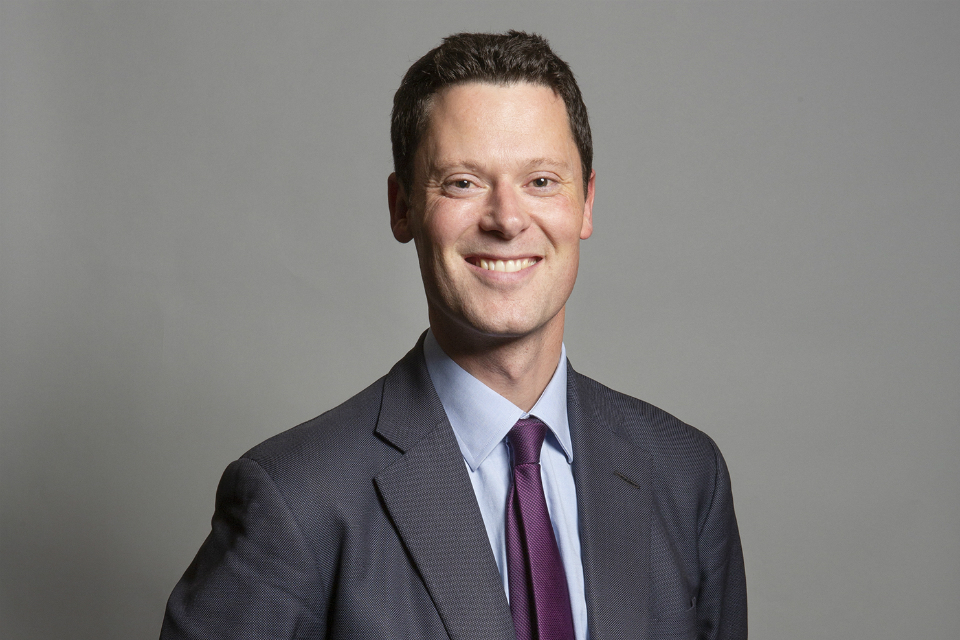
  • Alex Chalk – 2023 Speech at the Steel Cutting of HMS Active

    Alex Chalk – 2023 Speech at the Steel Cutting of HMS Active

    The speech made by Alex Chalk, the Minister for Defence Procurement, at Rosyth Dockyard in Scotland on 24 January 2023.

    It is an enormous pleasure to be here in Rosyth today for my first official visit to a shipyard as a Defence Minister.

    And in doing so to meet some of the staff who will be working on this great vessel but also, as has already happened, to welcome our overseas visitors from Poland, Indonesia, Chile, Denmark, Ukraine, New Zealand, Sweden and the United States.

    I’m especially honoured to be asked to cut the steel.

    Although in case any future crews are watching this and are slightly concerned, I’m assured that all I have to do is press a button and the machine will do the real work.

    Now this vessel is the second of five Type-31 – or Inspiration-class –frigates for the Royal Navy.

    And ‘inspiration’ is the right word for three straightforward reasons.

    First, there is the inspiration offered by a cutting edge, highly capable vessel.

    Armed with SeaCeptor missiles and a 4D radar system, HMS Active has flexibility woven into its DNA.

    Not only will it be able today to do everything from intercepting illegal activity, gathering intelligence, providing humanitarian relief, but, as a modular and scalable platform, it will have the ability to adapt tomorrow to the ever-evolving threats of the 21st century.

    And that’s important because the great frigates constructed here in this yard will be part of a formidable fleet for years to come.

    And they are deliberately designed to evolve and modernise to respond to a changing world and a changing mission.

    And they will of course be operating alongside advanced destroyers and autonomous minehunters, supported by our new auxiliary ships and all led by the Queen Elizabeth-class carriers.

    Second, today provides inspiration for our industry.

    Not only does the construction of these ships directly support 16 different Scottish suppliers – including eight SMEs – with contracts totalling more than £65 million.

    Not only does it sustain around 2,500 highly skilled roles.

    But this represents lasting investment in Scotland and Britain’s manufacturing future.

    Take those 150 or so technical and digital apprenticeships that Babcock is supporting to ensure we have the niche skills required for decades to come.

    Or the fact that, come the Spring, this yard will be hosting its second Festival of Engineering – which sees graduates deliver fun, interactive activities for local school children in a bid to get them excited about STEM careers which can be so fulfilling for them.

    Or consider the pivotal role this project is playing in the revival of our nation’s great shipbuilding traditions.

    We all know, don’t we, that Scottish dockyards have a proud history of producing some of the world’s finest ships.

    And that in recent years, we’ve seen a renaissance in Scottish shipbuilding industry with the construction of everything from offshore patrol vessels to our flagship aircraft carriers.

    Now, thanks to a £60 million investment programme here in Rosyth, we’ve got world-class facilities to match, including the Venturer Building which I’m looking forward so much to seeing shortly.

    And with the T-31 frigates, we’re going to ensure the made-in-Scotland stamp is a worldwide mark of quality for years to come.

    Such a powerful tribute to so many of the men and women here today.

    And that brings me onto my third point – these frigates will act as an inspiration for our exports.

    I don’t want to steal too much of Minister Bowie’s thunder, but it’s fair to say these ships are garnering global interest before they’ve even taken to the water.

    And that’s because I know our allies appreciate and understand how the unique Arrowhead-140 flexible design can support so many different configurations.

    And it offers the potential for greater collaboration at an operational and industrial level.

    And that’s why Babcock has already signed an export contract with Indonesia and I’m not giving anything away I hope when I say there are other suitors too.

    And I do want to take this opportunity finally to pay tribute to this vessel’s predecessor and namesake.

    A Type-21 frigate which played a vital role in the Falklands War 40 years ago, from escorting supply convoys to San Carlos Water, to providing naval gun support to British forces in the Battle of Mount Tumbledown.

    And I’m particularly delighted that some of those who served with such distinction on board the last HMS Active are here today as the torch is passed to a new vessel.

    But historians among you will know these aren’t the only ships to have borne the name.

    During the Second World War, Active joined the hunt for the Bismarck.

    During the First World War, Active was with the Grand Fleet in the Battle of Jutland.

    And in 1762, Active captured a prize of £100 million worth of Spanish treasure. Happy to confirm that is no longer British foreign policy.

    Indeed, 11 different HMS Actives have written their own chapter in our nation’s great maritime history.

    But today’s warship will be more advanced than any of its predecessors.

    More adaptable, more flexible, more agile and more powerful.

    So, thank you to everyone involved in this important enterprise.

    Congratulations on what you have achieved so far and what you will achieve and deliver in the future.

    With a thriving Scottish shipbuilding sector behind it, the 12th HMS Active reflects the finest traditions of the Royal Navy and will write a new and exciting chapter in our nation’s maritime history.

    Thank you.

  • PRESS RELEASE : Support for bereaved families to be extended [January 2023]

    PRESS RELEASE : Support for bereaved families to be extended [January 2023]

    The press release issued by the Department for Work and Pensions on 24 January 2023.

    Bereaved cohabitees with dependent children will soon be eligible for additional financial support, following a successful debate in the House of Commons today.

    The Department for Work and Pensions (DWP) is in its final stages of extending Bereavement Support Payment and Widowed Parent’s Allowance to working age parents who were not married or in a civil partnership with their late partner.

    Subject to final Parliamentary approval of the draft Bereavement Benefits (Remedial) Order 2022, the application window is expected to open early this year, allowing more parents to claim.

    Some people may be eligible for backdated payments if their partner died before the law was changed. The DWP will publish more details on gov.uk soon, explaining the application window and how to claim.

    Minister for Work and Pensions Viscount Younger of Leckie said:

    I am pleased to see this important change is nearing its very final steps to becoming law, so more bereaved parents can access this support.

    Claims for Bereavement Support Payment will be made on gov.uk or by calling DWP’s Bereavement Service helpline. Claims for Widowed Parent’s Allowance will be processed by paper, with applications downloadable via gov.uk.

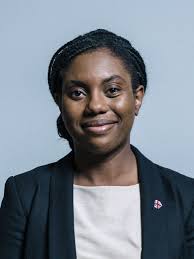
  • Kemi Badenoch – 2023 Speech at Lancaster House

    Kemi Badenoch – 2023 Speech at Lancaster House

    The speech made by Kemi Badenoch, the Secretary of State for International Trade, at Lancaster House in London on 24 January 2023.

    Welcome to Lancaster House.

    What a spectacular setting. The sort of setting that makes me realise how lucky I am to do the job I do.

    Lancaster House has been the venue for G7 meetings, the backdrop for royal TV adaptions and the location for numerous grand political speeches. The very best of the UK.

    So it’s only fitting that among our audience this evening we’ve got Fever-Tree, who are now the number one premium mixer firm in the world.

    Creative Nature CEO Julianne Ponan and Scanning Pens co-founder Jack Churchill, both honoured for their services to industry in the New Year’s Honours….

    and Nestlé who have just officially opened their new £30m mineral water distribution facility in Buxton, Derbyshire.

    I could carry on, but if I listed all the achievements of people in the room there wouldn’t be any time left for my speech.

    And also, I’d rather talk to you than at you. So I will keep this brief.

    The first part of my speech focuses on my priorities for the year ahead.

    The second is about how I want to work with you to deliver them for the country.

    When I was the Exchequer Secretary to the Treasury, it was my job to focus on economic growth. And I always felt that it needed its own department. That’s why I am thrilled to be running DIT – which really is the Government’s flagship economic growth department.

    More importantly, the Prime Minister this month laid out his five priorities for the Government, the second of which was growing the economy.

    Everything DIT does is about creating economic growth…

    …whether it’s supporting exporters…

    securing foreign investment to create UK jobs…

    or building the global security in trade – working with old friends and new – to help British businesses thrive.

    In doing all that, we have an exciting vision to sell. Of a high-skill, high-tech economy with the capability to thrive in the modern world. And one that is finding the life sciences solutions for a healthier world.

    So how are we going to deliver that economic growth; those opportunities; and the secure global trading environment that we need?

    It’s through these five priorities.

    First, we will:

    Remove trade barriers – DIT will knock down 100 unnecessary blockers standing in the way of helping UK businesses sell more and grow more, creating new jobs and paying higher wages.

    We have already made progress. Last year, we opened up the Chinese market to cosmetic companies who sell cruelty-free products – that’s a half a billion pound opportunity for British business.

    Second, we will:

    Grow UK exports every year until we hit our Race to a Trillion – selling over a trillion pounds of goods and services to the world a year by 2030.

    There are, as I have said recently, and many times, a number of people who keep wanting to talk the UK down. Whatever you have read in papers today, the fact is that UK exports are growing – and even to the EU.

    You might not know that I am also the Secretary of State for UK Export Finance. It’s great to see Tim Reid, the newly appointed CEO, here tonight.

    In just five years UKEF has provided over £30 billion to help firms around the country export. And that money has a direct impact on lives – supporting as many as 72,000 jobs.

    Exports are currently at over £800 billion – and that doesn’t happen by accident. We set the challenge of accelerating the race to a trillion to push companies to export, creating more jobs and increasing wages, and that is why it’s my second priority.

    Third, we will:

    Make the UK the undisputed top investment destination in Europe, attracting new investment into communities and helping to level-up the country.

    The UK is a leading destination for foreign investment. However, this position is not a given. There is fierce global competition for every pound of finance.

    I want to make the UK the most attractive place to invest in Europe, enticing companies from across the world to put their money into communities across the country.

    Fourth, we will:

    Seal high quality deals with India and CPTPP – they have a combined population of nearly 2 billion consumers – opening exciting opportunities in fast-growing markets for years to come.

    That’s essentially a quarter of the world’s population in two huge deals, meaning companies such as Coventry-based driverless car manufacturer, Aurrigo, could benefit on its exports to huge markets in Vietnam and Japan.

    But I want to be clear that just signing on the dotted line is not the objective. These deals will only be agreed if they are the right deals for the people of this country. Bringing in jobs and investment to left-behind communities and capitalising on those areas in which we specialise.

    The fifth and final priority is to…

    Defend free trade, and make the world more secure by strengthening supply chains and standing up to protectionism.

    We are a trading nation at heart and by tradition. So we know that free trade is the surest way to prosperity that the world has.

    So that’s the pitch. I will be your biggest defender, your keenest saleswoman, and your proudest backer.

    Because the success of business is the success of the British people – more jobs, higher pay, and better lives.

    Here’s the catch – I need your help to deliver it.

    Some of you will know I was a software engineer and a systems analyst before I became a politician.

    That means I’m a problem solver at heart.

    So when our Indian trade talks hit a bit of an impasse, I didn’t pick up the phone, I got on a plane. That deal’s not done yet, but it’s back on track.

    But to illustrate my point, think about something you use every day, when you open your emails, your WhatsApp, your text messages.

    The QWERTY keyboard.

    One of the greatest problem-solving inventions of all time and still going strong in its 150th year.

    The layout was created because the technology of early typewriters couldn’t cope with clusters of commonly-used keys being too close together.

    Those keys became stuck and blocked – the QWERTY layout unstuck and unblocked them.

    That’s what we need to do as we seek new export markets and drive international investment.

    It’s too easy for trade to become stuck and blocked. For well-meaning rules to become needless regulation.

    But I can’t solve your problems if I don’t know what they are. I need to know which keys are sticking, which levers need pulling, which wheels need greasing.

    So I need you to tell me the problems you face.

    A Lancashire firm called VetPlus did just that. They came to DIT a little while ago and said they had a paperwork problem in selling their pet food products into India.

    We fixed it. And the company now expects to do £1.5m of additional business over the next five years.

    This is where my team comes in.

    We have a new Permanent Secretary at DIT – Gareth Davies. He joins Crawford in adding yet more knowledge and experience to the department’s top team.

    I also have a brilliant team of ministers…

    Greg Hands, back in the department once again to help remove barriers and negotiate FTAs…

    Andrew Bowie, our advocate for British exports…

    Nigel Huddleston, bringing the FTAs we are negotiating into law and working to defend global free trade…

    And Lord Johnson, banging the drum for investment into the UK.

    Please come and talk to any one of us.

    And if you’re not getting the access to the department you need, let us know. If there are things we should be doing differently, do tell us.

    I want DIT to be both a department of economic growth and business engagement. But business engagement with a purpose.

    I wish I had enough time to meet with everyone, but I don’t.

    So instead I will say that the best meetings I’ve had come with a purpose, an agenda and an objective.

    That’s how I work – and it’s not just my time that’s precious but yours too.

    If we get this relationship right I can be your problem-solver-in-chief.

    I look forward to working with you all to deliver for UK PLC..

    Thank you.

  • James Bevan – 2023 Speech on the Future City

    James Bevan – 2023 Speech on the Future City

    The speech made by Sir James Bevan, the Chief Executive of the Environment Agency, at Imperial College in London on 24 January 2023.

    Introduction: the right kind of city

    Close your eyes and picture a city. What do you see? I’d guess that whatever most of us see in our mind’s eye, it’s mostly grey – roads, buildings, bridges. When you say the word “city”, it doesn’t normally bring to mind things which are green, like leaves and grass; or blue, like rivers and lakes; or red, yellow, brown, black and white all together, like a goldfinch.

    But the best cities, and the cities of the future we should be aspiring to build now, are not just grey: they are multicoloured – in their biodiversity, their ecosystems and their partnership with nature.

    That is not just because those multicoloured cities are better places for people and wildlife. It’s because our cities – even more than our countryside – hold the key to addressing the biggest of all issues facing us: the climate emergency.

    In praise of cities

    It’s easy to find people praising the countryside. And rightly so – our own is one of the greatest inheritances we have, and we need to look after it. In the country we can still find things that are increasingly, sometimes vanishingly, rare in our urban environments: natural beauty, silence, darkness, tranquility. We can all draw sustenance from being out in the country and experiencing at least some of those things. Which is why a lot of the work of the organisation I lead, the Environment Agency, is about protecting and enhancing nature and the countryside.

    But today I want to talk about something different. Today I want to sing the praises of the city, and not just the great city of London where we are today.

    Cities matter. They matter because they are where most people on the planet now live. In 2010 the world passed a threshold that went largely unnoticed: for the first time in history more people were living in cities than in the countryside. That trend is going to continue: by 2050, most of the people on this planet (some 70% or more) will be living in cities and other urban areas.

    Now this next bit may sound counter-intuitive, but that fact is good news, because cities are Good Things. They are more efficient at using resources, so they are a critical ingredient in securing a sustainable economy. They put out less carbon per person than rural areas, so they are critical in tackling climate change. They produce most of the resources we need to create the cleaner, greener world we all want. They offer social, educational, cultural and other opportunities that can be hard or impossible to access in many rural environments. They are centres of economic activity, knowledge and innovation, because they are the places where different people from different places with different skills, new ideas and talent congregate and spark off each other to create something new. Which is why cities are what have driven pretty much all human progress since the dawn of humanity. It’s not for nothing that the word civilisation comes from the Latin for city.

    So what we need in future is not – as some might argue – fewer or less populous cities. What we need is bigger and better ones. Cities that retain all the fizz and energy of the cities of the past that have driven so much progress, but which in future use resources much more efficiently, create far less pollution, can stand up to all the impacts that a changing climate will throw at them and thrive, and which have more green and blue spaces to which all city-dwellers have equal access, so that our cities are a joy to live in for everyone as well as drivers of growth and progress. In short, we need to make our cities what the UN Sustainable Development Goals say they should be: “inclusive, safe, resilient and sustainable”.

    The state of nature in our cities

    At the heart of every good city is nature. So what is the state of nature our cities in this country? Short answer: a lot better than it was, but not as good as it could be. I know this because in 2021 the Environment Agency published a report on the state of the urban environment in England.

    Let’s start with what’s got better. To illustrate this I want to take you back to the decade of my birth, the 1950s, and this city, London. It was then that three significant events happened that shaped this city we know now for the better.

    Air quality: the Great Smog,1952

    The first event took place in 1952, when thousands of people in London died as a result of the so-called Great Smog – the smoky fog caused by coal burning which eventually led to the Clean Air Act that banned smoke pollution. Most Londoners today have never even heard of smog, which shows you have far we have come. And it’s not just the smoke that’s gone: our air is much cleaner than it was overall. As a result of robust regulation of polluting industries, largely by the Environment Agency, emissions of some of the worst air pollutants have been massively reduced right across the country. Between 1970 and 2017 sulphur oxides (SOx) emissions have decreased by 97%, particulate matter (PM10) by 73%, fine particulate matter (PM2.5) by 79%, and nitrogen oxides (NOx) by 73%. We need to go further, because air quality is still a major factor in unnecessary deaths. But we are making progress.

    Flood risk: the Great Floods, 1953

    The second big event happened almost exactly seventy years ago now, on the night of 31 January 1953. On that day, an anniversary we will shortly be commemorating, over 300 people died in this country when a massive storm surge caused sudden and catastrophic flooding of parts of the East Coast. While Lincolnshire, East Anglia and Canvey Island bore the brunt, London itself came perilously close to disaster. We have come a long way since then. We are much better now at warning people of flood risk and informing communities how to protect themselves. We have much better flood defences. The EA now deploys our people and kit quickly and effectively to help communities under threat. And – a direct result of the 1953 disaster – the Thames Barrier now protects 125 square km of central London, millions of people, and hundreds of billions of pounds of assets and infrastructure. It will continue to do that until at least 2070, but we are already planning for its replacement.

    Water quality: the biological death of the Thames, 1957

    The Thames was also the centre of the third big event. In 1957 the Natural History Museum declared that the river in London was ‘biologically dead’ because the water was so polluted. Since then, we have made great strides in restoring the water quality of the river, largely down to the investments made by the water companies and the introduction of much tougher rules about what operators can put into the river, enforced by the EA. Which is why the river is alive again, with salmon – always a sure sign of good water quality – back in central London.

    Citytopia: imagining the future city

    But it isn’t all good news. While here in London and in many other cities around the country the air is cleaner, the population is better protected against flood risk, and the rivers have come back to life, there are significant challenges that remain as our cities grow. Perhaps the biggest of those challenges isn’t actually out there on the streets, in our air or in our waters but in our own heads: if we want to build a better world then the challenge is to reimagine the city itself.

    A utopia is defined as “an imaginary place in which everything is perfect”. Of course, nowhere is nor ever will be perfect. But it helps to have a vision of where you want to get to. What would Citytopia look like? It would be many things, but most of all it would be three things: clean, green and climate positive.

    Clean

    First, the environment in and around our future city would be pristine, with clean air, clean land and clean waters.

    For the EA, that means continuing all the work we have been doing over the last two decades to stop the pollution that threatens those natural assets – regulating to ensure our air and water quality continues to improve, restoring contaminated land to its near-natural state, tackling the waste criminals who damage our communities and our environment through illegal dumping, and so on.

    Green

    Second, our Citytopia would be the best possible place to live: for wildlife as much as for people. That means more green (and blue) alongside the grey and black.

    The EA is playing a major role in designing and delivering cities with that green and blue infrastructure. We are a statutory consultee on all major developments, and take an active role in placemaking, including by helping design in that blue and green infrastructure, and advising on how best to protect people from flood risk and enhance the environment. We are influential: more than 97% of planning applications are decided in line with our advice.

    As part of that we apply the principle of what is technically called Biodiversity Net Gain, but which in normal English means development that leaves nature in a better state than it was. With our active support that principle was enshrined by the government in the 2021 Environment Act, which makes it a precondition of planning permission.

    The government has recently announced another important step forward: its intent to make what is called sustainable drainage mandatory in new developments in England. This is another boring phrase for another really exciting concept. Sustainable drainage increases the ability of our cities and their drainage systems to absorb large amounts of water when it rains, for example by creating parks to act as giant sponges or putting grass on roofs to allow rainwater to drain away gradually.

    As our cities grow and our current drains reach full capacity, as we concrete over areas that used to act as natural drains, and as climate change brings us bigger and more violent rainfall, these schemes can make all the difference between basements, underpasses, city centres and Tube lines that are flooded and dangerous, and a city that just shrugs its shoulders, puts up its umbrellas, and keeps going. Not only can sustainable drainage reduce flooding, it can also improve water quality, and provide more green – creating better habitats for wildlife and better places for people. The EA already designs sustainable drainage into the flood schemes we build and the developments we support.

    Climate positive

    And third, our future city would not just be a clean, green place where many would dream to live. It would also do something even more important than all of those things: it would actively help us beat the biggest of all challenges that we face, the climate emergency.

    This Citytopia would no longer be part of the climate problem, because it would not be emitting the greenhouse gases that are causing our climate to change. It would achieve that with the right transport systems, so that people could easily walk or cycle to wherever they wanted to go or use cheap and convenient public transport fueled by renewable energy. It would have buildings designed to be energy efficient, heated by solar or other renewable energy and cooled by natural airflow designed into the building at the start. It would use all its resources efficiently and turn all its waste back into a resource to be reused again. It would have arrangements that allowed its inhabitants to share many of the things they needed (bicycles, vehicles, tools, etc) without having to buy or own them all, thus vastly reducing the carbon cost of producing, consuming and disposing of all the stuff we currently feel we have to each own ourselves. Our city might even grow much of its own food, including in so-called vertical farms – tall buildings or deep tunnels – and so avoid the carbon damage caused by transporting its food over hundreds, sometimes thousands, of miles.

    And our future city would not just stop being part of the climate problem. It would also be a major part of the solution. Its green areas – parks, woodland, grasslands, flowerbeds, football pitches – would all be acting as carbon sinks, taking damaging carbon out of the atmosphere and so reducing the extent of climate change. In its design and its infrastructure our city would be perfectly adapted to living safely and well in a climate-changed world. It would have flood defences that protected people from the worst that the violent weather caused by a changing climate could fling at it. It would have power and transport systems designed to cope just as well with periods of high temperature and drought as with record-breaking rainfall. Better still, its trees and plants would not just take carbon out of the atmosphere but cool the air and provide habitats for wildlife. Our city would not just be liveable: it would be beautiful. And by nurturing nature as well as the human spirit, it would lift us all up in mind and body.

    The future is now

    The good news is that this isn’t science fiction. A lot of this future is happening now, and the Environment Agency is helping it happen. I could replicate what follows from most of the cities in this country, but since we are in London let me give you a couple of examples from this city:

    The London Olympic site. The Environment Agency worked with our partners before, during and after the 2012 London Olympics to transform what was a derelict and contaminated landscape into what was first the site for those fantastic games and is now Britain’s largest urban park and a vibrant new development with thousands of sustainable homes and businesses, better water quality, new habitats and lower flood risk – a better place for people and wildlife.

    The Thames Tideway Tunnel. This is a new 25km sewer running from west to east London, mostly in a tunnel under the River Thames. It will address the problem of overflow from Bazalgette’s Victorian sewers, ensuring that after high rainfall sewage discharges are stored and treated rather than as now emptying straight into the Thames. That will bring the biggest single improvement to water quality in the Thames since Bazalgette. The EA has ensured it’s designed and built in ways which don’t just avoid damage to the environment but create something better. For example, a new piece of landscaped land jutting out into the Thames by Blackfriars Bridge which covers one of the main tunnel shafts will create a small park. And the project won’t just improve water quality in the river and provide amenities for the public. It will also help tackle the climate emergency, because it will increase London’s resilience to the higher rainfall that climate change is bringing.

    None of us is as good as all of us: Imperial strength

    So the future London, and the other future cities in this country, are being designed and built right now. But none of us is as good as all of us. If we are going to build the future cities we want – both in our heads and on the ground – we need to draw on all the energy, insight and expertise that’s out there.

    Which is why I want to salute the role of the Grantham Institute and Imperial College in all this.

    The Grantham Institute is delivering world-leading research on climate and the environment and – critically – turning that into real world impact. You are giving us all – practitioners, policymakers, businesses and governments – news we can use. And we are acting on that news. Keep giving it to us.

    And here at Imperial you are doing all that and more. Your vision – a sustainable, resilient, zero-carbon future – is our vision. And your work is helping us realise that vision, including what you are doing on urban ecosystems, and your own Transition to Zero Pollution initiative.

    It’s not just all of you here today and the rest of your faculty, researchers and academic partners who will change the world for the better. The students here at Imperial and in other institutions like this around the country will too. Because they are the people who over the next few critical decades will be playing leading roles in governments around the world, in research, in development, in businesses, in NGOs and the other major organisations that will be shaping the future world – and our future cities – in ways that can be better for everyone.

    Before I conclude, please let me include a brief commercial for the Environment Agency. Our job is to create a better place. We are always looking for talented people who have a passionate commitment to that goal. There is a lot of that talent and commitment in this room, and at Imperial College more widely. So if you are interested in building the green cities of the future, or changing the world for the better in other ways, please think about joining us.

    Conclusion

    I said at the start of these remarks that it’s relatively easy to find people who will praise the country but there are fewer who will praise cities. That includes poets. But there are exceptions, including someone who is much more famous as a nature poet than as a writer about the urban environment.

    That person is William Wordsworth, and I thought it would be fitting to end this speech – which is a speech in praise of cities in general and London in particular – with a poem he wrote over 200 years ago on Westminster Bridge. Wordsworth was looking at the London of 1803, a city that is long gone. But if we do the right things, in this city and elsewhere, his words could also be describing the city of the future.

    Earth has not anything to show more fair:

    Dull would he be of soul who could pass by

    A sight so touching in its majesty:

    This City now doth like a garment wear

    The beauty of the morning; silent, bare,

    Ships, towers, domes, theatres, and temples lie

    Open unto the fields, and to the sky;

    All bright and glittering in the smokeless air.

    Never did sun more beautifully steep

    In his first splendour valley, rock, or hill;

    Ne’er saw I, never felt, a calm so deep!

    The river glideth at his own sweet will:

    Dear God! the very houses seem asleep;

    And all that mighty heart is lying still!

  • PRESS RELEASE : Foreign Secretary leads calls to remember victims of the Holocaust [January 2023]

    PRESS RELEASE : Foreign Secretary leads calls to remember victims of the Holocaust [January 2023]

    The press release issued by the Foreign Office on 24 January 2023.

    The Foreign Secretary James Cleverly and the Israeli Embassy host Holocaust Memorial Day event at Foreign Office.

    • James Cleverly and Israeli Embassy host Holocaust Memorial Day event at Foreign Office
    • The Foreign Secretary speaks of the importance of learning from the Holocaust and grieving for all those who died
    • Concentration camp survivor Manfred Goldberg and Israel’s Ambassador to the UK also attend the first in-person memorial event at the FCDO in three years.

    The Foreign Secretary said we all share “a solemn duty” to remember the six million victims of the Holocaust – as the UK and Israel jointly commemorated Holocaust Memorial Day (HMD) with a ceremony at the Foreign, Commonwealth, and Development Office.

    The event, co-hosted by the FCDO and the Israeli Embassy in the UK, was part of a long-standing collaboration between the UK and Israel to mark HMD and returns in-person for the first time in three years.

    The Foreign Secretary gave a speech to attendees reflecting on his own visit, last year, to Radegast station in Lodz in Poland where 200,000 Jewish men, women and children were transported to Nazi death camps.

    In his speech, the Foreign Secretary spoke of the “solemn duty to remember” that “every one of us shares.”

    Stutthof Concentration Camp survivor, Manfred Goldberg BEM, also shared his testimony with guests at the ceremony, including representatives from the Jewish community, diplomatic community, civil society, Parliamentarians, and other communal leaders.

    UK Foreign Secretary, James Cleverly, said:

    Every one of us shares a solemn duty to remember that six million men, women and children were killed during the Holocaust.

    When we say the words “never again”, we must mean it, heart and soul.

    We owe it to all who were not saved to reflect, to learn, to grieve, and above all, to remember.

    Israel’s Ambassador to the UK, Tzipi Hotovely, said:

    Today, we remember the six million Jewish people murdered in the Holocaust, as well as the millions of other lives who perished at the hands of Nazism. We reflect on the systematic murder of ordinary people and the immense pain and suffering needlessly inflicted on so many. “We also consider the terrible consequences of when other ordinary people stand idly by and allow the initial roots of hatred to take hold. We, therefore, renew our promise to forever challenge prejudice in all its forms wherever it occurs, so that the horrors of the Holocaust are never repeated.

    The Rt Hon. the Lord Pickles, the UK’s Special Envoy for post-Holocaust issues and Co-Chair of the UK Holocaust Memorial Foundation, said:

    Sadly, the number of direct witnesses to the Holocaust are dwindling and that is why we must ensure that what they endured, what they witnessed is never forgotten. We should make it our mission to ensure that no one questions the basic facts of the Holocaust.

    The Holocaust was the systematic, state-sponsored persecution and murder of six million European Jews by the Nazi German regime and its allies and collaborators.

    We owe it to the six million Jewish men, women and children who were murdered during the Holocaust, survivors, and refugees to reclaim their rights, their history, their cultural heritage and traditions, and their dignity.

    Both the Embassy of Israel and the FCDO will mark Holocaust Memorial Day on Friday 27th January 2023, by lighting up their respective buildings in purple, in honour of all victims of genocide.

  • PRESS RELEASE : Government announces crackdown against organised criminal gangs [January 2023]

    PRESS RELEASE : Government announces crackdown against organised criminal gangs [January 2023]

    The press release issued by the Home Office on 24 January 2023.

    Police to adopt new ‘Clear, Hold, Build’ tactic, as Home Secretary launches consultation on new offences to frustrate criminal enterprises.

    Efforts to clamp down on organised criminal gangs and drive illegal drugs and violent crime from our communities, are being stepped up by the government today.

    All police forces across England and Wales will adopt a new approach for tackling serious and organised crime, after early signs of success have been seen by forces already piloting the strategy – with West Yorkshire police reporting a significant drop in burglaries, drug offences and antisocial behaviour in its pilot area.

    ‘Clear, Hold, Build’ is a multi-agency partnership tactic, designed by the Home Office and endorsed by the Policing Inspectorate, to rescue areas of the country most blighted by organised crime.

    This sees police ruthlessly pursue gang members to clear an area; maintain grip and hold the location, so another gang can’t take control in the vacuum; and then work to build the community into a more prosperous area, less susceptible to the draw of crime groups.

    The government has also launched a consultation on potential new laws to criminalise the making, supply and possession of items strongly suspected to facilitate serious crime – such as digital templates for 3D-printing firearms components, pill presses and sophisticated encrypted communication devices.

    The consultation will also look at strengthening serious crime prevention orders to make it easier for police and other law enforcement agencies to place restrictions on suspected offenders and stop them from participating in further crime.

    Home Secretary, Suella Braverman, said:

    Enough is enough. We cannot allow depraved criminals to operate under the radar, inciting fear in our communities and profiting from the devastation they cause.

    Clear, Hold, Build is a common-sense policing approach. Taking out these gangs will prevent violence, stem the flow of harmful drugs poisoning our communities and cut down on antisocial behaviour. That will, in turn, create a brighter future for young people in those areas.

    Gun crime in this country is thankfully still rare, but the recent spate of tragic shootings are a stark reminder of what is at stake when gang violence spills onto our streets and I’ve recently written to affected families to pass on my condolences and deep concern.

    If stronger laws are also necessary to protect the public, I will not hesitate to act.

    Around £2 million will be invested to support the roll-out of ‘Clear, Hold, Build’ in the highest-harm hot-spot areas in England and Wales to include new organised crime co-ordinators to work with regional organised crime units and forces.

    The programme has already been piloted by seven police forces since 2020 to positive effect, improving community resilience to serious and organised crime but also showing the potential to impact wider crime reduction.

    According to Merseyside Police, between August and October last year, the programme yielded a significant increase in operational outcomes in high-harm areas including 420 arrests, 11 firearms and 90 vehicle seizures and 78 warrants executed.

    After 9-year-old Olivia Pratt-Korbel was killed last year, the Home Office provided Merseyside Police with £350,000 to expand the roll-out of ‘Clear, Hold, Build’ which was already being trialled in the region, to more hot-spot sites.

    There were also several crime reductions within the pilot site in West Yorkshire including a 57% reduction in burglary, 27% reduction in drug offences and 38% reduction in antisocial behaviour.

    On ‘Clear, Hold, Build’, National Police Chiefs’ Council Lead for Serious and Organised Crime, Chief Constable Steve Jupp, said:

    The rollout of Clear, Hold, Build across policing is an important step in tackling and preventing serious and organised crime.

    This approach will see police forces and regional organised crime units (ROCUs) work more closely with local partners to build resilience in communities and prevent those at risk from being drawn into crime.

    The support for this system-wide approach, alongside significant investment into ROCUs, has enabled us to maximise our efforts and effectiveness against high harm offenders alongside our law enforcement partners. Extending and maintaining this support across the country will help to ensure a strong response across the entirety of policing.

    Under the consultation published today, the government is considering new ways to strengthen the law enforcement agencies response to serious and organised crime and ability to frustrate criminal operations. The public will be asked to review two new legislative measures which would:

    • create a new offence which criminalises the making, modification, supply, offer to supply and possession of articles where there is strong suspicion they are being use for serious crime, such as:
      • sophisticated and bespoke encrypted communication devices used to facilitate organised crime
      • vehicle concealments used to conceal and transport illicit goods
      • digital templates that can be used for 3D-printed firearm components; and
      • pill presses used in the supply of illegal drugs
    • strengthen the functioning of serious crime prevention orders by:
      • expanding the list of enforcement agencies that can apply for an order in the absence of a conviction to include police forces (currently only able to do so in terrorism-related cases), the National Crime Agency and British Transport Police
      • enabling the Crown Court to grant an order on acquittal, where this may still be appropriate for the protection of the public; and
      • improving the ongoing monitoring and enforcement of the orders to enable closer management of those known to have been involved in serious crime

    National Crime Agency Director General, Graeme Biggar, said:

    Serious and organised crime is a corrosive threat to the UK’s people and economy.

    The NCA works relentlessly to protect the public from the most harmful criminals, but as the challenge posed by our adversaries grows and evolves, the UK’s response must also advance.

    It is vital that we can disrupt the criminals seeking to use specialist technology and other customised products to manufacture and conceal drugs and firearms, share child abuse images or plan people smuggling activity.

    UK law enforcement bodies must also be able to use the full range of legislative tools to prevent serious and organised crime, and deter the perpetrators.

    The NCA welcomes this consultation, and encourages our partners to contribute their views.

    Today’s announcements are part of a wider body of ongoing work to tackle serious and organised crime. The government plans to publish a new strategy later this year to update the Serious and Organised Crime Strategy published in 2018.

  • James Cleverly – 2023 Speech at the Holocaust Memorial Day Reception

    James Cleverly – 2023 Speech at the Holocaust Memorial Day Reception

    The speech made by James Cleverly, the Foreign Secretary, in London on 24 January 2023.

    Your Excellency the Ambassador of Israel, distinguished guests, ladies and gentlemen.

    I’m deeply honoured to join you on this occasion.

    Last year, on a winter evening, I stood on a concrete platform of the disused Radegast station in Lodz in Poland.

    From this nondescript and functional building, 200,000 Jewish men, women and children were transported to Nazi death camps.

    I reflected that there were countless unused buildings like this, scattered across occupied Europe, all being used, to send human beings to be murdered.

    Radegast was where the Jews of Lodz ghetto were transported to Chelmno and Auschwitz-Birkenau.

    I stood where they would have stood, and I saw what they saw; the crude wooden cattle trucks, drawn up by the platform.

    Inside the station building, I turned over page after page of neatly typewritten names of the people who were forced at gunpoint onto those trucks.

    One of those who was deported to Auschwitz, in her case from Romania, was Olga Lengyel, who lost her parents, lost her husband, and lost her two sons.

    She wrote, and I quote: “Whenever I recall the first days at the camp, I still grow hot and cold with nameless terror. It was a terror that rose for no particular reason, but one that was constantly nourished by strange occurrences whose meaning I sought in vain.

    “At night the glow of the flames from the chimneys…showed through the crevices in the walls. The shrieks of the sick or the wounded, crowded together in trucks bound for some unknown destination, grated on our nerves.

    “Sometimes we heard revolver shots, for the SS guards used their guns freely. Above these noises came orders barked in overbearing voices. Nothing would let us forget our slavery.”

    And then Olga Lengyel asks: “Could such conditions really exist in Europe in the twentieth century?”

    Today, every one of us shares a solemn duty to remember that those conditions did indeed exist in Europe in the 20th century, that six million men, women and children were consumed by the Holocaust,

    Now our only possible response is to mean it, heart and soul, when we say the words “never again”.

    But there were, at the time, some ordinary people who meant it when they said to themselves that they would not stand by, and they would not watch others being transported to their deaths.

    It remains an extraordinary and uplifting fact that ordinary people in Denmark managed to save almost all of their country’s Jews.

    They were hidden in churches, in hospitals and in family homes, and spirited to coastal towns, from where they were taken to safety in Sweden, on board fishing boats or kayaks or motorboats.

    In the town of Elsinore, the escape line was run by Erling Kiaer, the local bookbinder, Thormod Larsen, a policeman, Ove Bruhn, a clerk, and Børge Rønne, the editor of the local newspaper.

    They called themselves the “Elsinore Sewing Club” and they carried about 700 Jews across the Sound to Sweden.

    They knew full well that they were risking their own lives.

    And indeed in May 1944, the Nazis arrested Erling Kiaer after intercepting his motorboat, and he was incarcerated in Neuengamme concentration camp in Germany.

    But he survived until the camp liberation, and he lived until his 77th year, dying in 1980.

    The members of the Elsinore Sewing Club – and others like them across occupied Europe – consciously decided to place themselves in the mortal peril in order to save others.

    But the hard truth is that when the moment came, there were never enough people like them.

    If almost every Jew could be saved in Denmark, why not elsewhere?

    Today, we must all silently ask ourselves the difficult and searching question, what would I have done?

    Would I have taken that risk, not just for myself but for my family?

    And as we answer that profoundly difficult and necessary question in our hearts, we owe it to the six million who were not saved to reflect, to learn, to grieve, and above all, to remember.

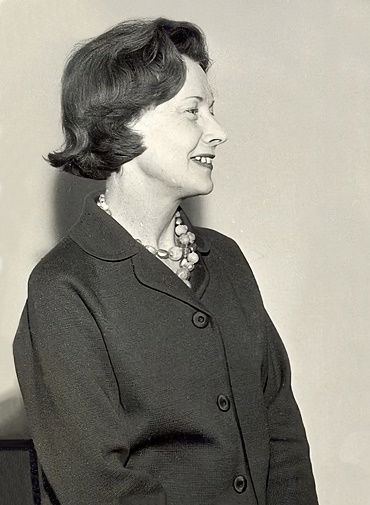
  • Barbara Castle – 1967 Statement on the Railway Network Map

    Barbara Castle – 1967 Statement on the Railway Network Map

    The statement made by Barbara Castle, the then Minister of Transport, in the House of Commons on 15 March 1967.

    When the House debated transport policy last month I was able to report on the progress which the Chairman of the Railways Board and I had made on the determination of the new basic railway network. I am now glad to be able to tell the House that the network has been decided. A detailed map of the network, with an explanatory foreword by the Chairman and myself, will be available in the Vote Office at 11 o’clock.

    In deciding which lines should be included I have taken account of my consultations with the planning Ministers, with the Economic Planning Councils, and with the railway unions. Above all, I have given full weight to the Government’s determination that broader social and economic needs, not just narrow profitability, should count when it comes to national decisions on priorities. The result is a basic network of about 11,000 miles—some 3,000 miles longer than the likely outcome of the policy of the last Administration.

    This will be a network of which the industry, and the country, can be proud. In itself, it will give a much-needed boost to railway efficiency and morale, but the Chairman and I do not intend that these 11,000 miles should simply remain in being; they must be a working system, continually developed with the aid of modern research and technology: and I shall see that this is done.

    The Railways Board will now be reviewing the future of the lines outside the basic network. For these lines, it will be up to the Board to publish passenger closure proposals under Section 56 of the Transport Act if it so decides. But I would remind the House that no such line will be closed without my individual consent, and only after a full examination by the Transport Users Consultative Committees and the Economic Planning Councils of the hardship and economic planning implications.

    The basic network is a landmark in carrying out the railway policy set out in the Government’s White Paper. It will help the railways to provide an efficient and flexible service to the public, fitted to the needs of the day. The Government are determined that a revitalised railway industry should play its full part in the integrated transport system of the country. This network will give them the right infrastructure to do it.

    Mr. Webster Is the right hon. Lady aware that it has been a growing practice, since morning Sittings began, to make Statements which are palatable to Government supporters in the afternoon and those which are unpalatable to them in the morning? Is she further aware that it is a monstrous discourtesy to the House to make a Statement at 10 o’clock, when the map which we are discussing, if we are to have any substance out of this Statement, will not be published for another 50 minutes, and that this is something which all my hon. Friends will wish to probe most deeply in relation to what is happening in their regions?

    How does the right hon. Lady propose to maintain lines which are running at a loss? To what extent will the local authority contribute and to what extent will the central Government? What sanctions does she propose to use if a local authority does not contribute, and how will she undertake to keep these lines going if they are running at a loss? Is she further aware that, for every seven miles closed in the period 1951–64, she is closing 10 miles under her present proposals?

    Mrs. Castle I cannot accept for one moment that this statement is unpalatable to Government supporters. On the contrary, they realise full well the plans which were afoot under the policy of the previous Administration for a constant contraction of our railway service to a mere skeleton of a system—

    Several Hon. Members rose—

    Mrs. Castle Hon. Gentlemen must not jump up at this stage. The hon. Member for Weston-super-Mare (Mr. Webster) has asked me half a dozen questions and I must take some time to answer them. Of course, when the railway map is available for detailed consideration, it will be open to any hon. Member to put down any Questions or to probe in any way he likes, and I shall be only too delighted to try to deal with any particular points.

    The hon. Member for Weston-super-Mare asked how unprofitable lines will be paid for. We have discussed this matter in the House; it was referred to in the White Paper and it was discussed in the debate on transport policy. There is at the moment a joint study going on between the Railways Board and myself, under a steering committee, of which the Joint Parliamentary Secretary is Chairman, and the job of which is to identify these socially necessary unprofitable lines and decide the amount of subsidy that will be necessary. We have made it clear that the Government, having adopted a policy of maintaining socially necessary lines—even if they do not pay—must, the Government having made that decision, give an open subsidy for those lines; and I am sure that the majority of hon. Members welcome this decision.

    The position regarding local authorities has already been outlined in the White Paper. We will be moving forward towards the creation of conurbation transport authorities and—

    Sir G. Nabarro On a point of order. Is it not a fact that, in accordance with the custom and tradition of this House, you ask for supplementaries to be brief, Mr. Speaker? That being so, should you—

    Mr. Manuel Sit down.

    Sir G. Nabarro I was asking, Mr. Speaker—[Interruption.]

    Mr. Speaker Order. There is too much morning enthusiasm.

    Sir G. Nabarro Are we to have inflicted upon us by Ministers long answers of this type? Cannot Ministers be brief, as back benchers are asked to be brief?

    Mr. Speaker Order. I allow a certain amount of latitude or longitude to the Front Bench spokesmen.

    Sir G. Nabarro There is too much longitude.

    Mrs. Castle As I have had a number of questions inflicted on me by the hon. Member for Weston-super-Mare—[Interruption.]—presumably he wants them answered. It is intolerable if, when I am attempting to answer them, hon. Gentlemen opposite complain.

    I was explaining, regarding local authorities, that the new transportation authorities, under the new arrangements for the general help which the Government are giving to public transport, will take over responsibility for deciding which socially necessary lines they want as part of their local transport plans. In such a situation, the responsibility for maintaining those lines could gradually transfer to the local authorities. In the meantime, the subsidy will be a Government subsidy, although we leave it open to individual local authorities to approach the Railways Board and try to negotiate the retention of a purely local line on the basis that they will meet the particular subsidy.

    Mr. Manuel Is my right hon. Friend aware that there will be no discourtesies or competition for discourtesy from this side of the House arising from her statement? Is she aware that we welcome it and that we are, by it, redeeming some of the pledges which we made at the General Election? Is she aware that one of the important results of her statement will be the heartening effect it will have on railway workers throughout the country? I assure my right hon. Friend that she will have the full backing of the influential railway trade unions in this matter.

    Mr. Speaker Order. Even compliments must be phrased in an interrogatory form.

    Mrs. Castle I am grateful to my hon. Friend for those remarks.

    Mr. John Hall The Minister has made an important and interesting statement. Would not she agree—and, as a constituent of mine, I am sure that she will agree—that it is difficult to be sure exactly what she is stating without our having the advantage of having looked at the map first? I cannot believe that it is possible for any hon. Member to say unreservedly that he welcomes her statement without having seen the effect of it by having looked at the map. Would it not have been more convenient to the House—I say nothing about discourtesy because I am sure that the right hon. Lady would not treat the House in a discourteous manner—if the map had been published earlier, instead of at 11 o’clock, and her statement made this afternoon, since we would then have been able to examine the matter more closely, and—

    Mr. Speaker Order. Questions must be brief.

    Mr. Hall Would not the right hon. Lady agree that we would have been able to examine the matter more closely and been able to ask questions more intelligently than we are able to do without the map?

    Mrs. Castle It is possible to welcome unreservedly the two principles which I have laid down. The first is that the Government do not believe that we can have a satisfactory railway network in Britain on the basis of purely commercial considerations. This is, therefore, a fundamental change of policy and, on that principle, hon. Members can make up their minds. The second point to be welcomed is the fact that we are going to give a period of stabilisation to the railway industry on the basis of a railway network which is about 3,000 miles longer than it would otherwise have been.

    To answer the hon. Gentleman’s question about the availability of the map, even if it had been released earlier, this is inevitably such a detailed subject that at this stage it is possible to discuss only the broad principles. However, it will be open to hon. Members to put down Questions about details of the matter in the normal way.

    Mr. Tudor Watkins Is my right hon. Friend aware that the Central Wales line was examined by the T.U.C.C. about five years ago? Is it her intention that this line should again be examined by herself and the T.U.C.C.?

    Mrs. Castle Yes, Sir, that is so. The Central Wales line will be one of the lines on the map for further consideration. However, I repeat that those lines on the man which are not included in the basic network will not necessarily all be closed. They are simply lines which need further examination so that we can see whether they should be retained, whether they should be modified or whether alternative methods can be found to cater for the people of the area.

    Mr. Peyton Would not the right hon. Lady agree that it is rather odd for her to have made a statement like this without hon. Members having the map, particularly since the map will be available in only half on hour’s time? I do not wish to accuse the right hon. Lady of discourtesy, but I urge her not to follow the example of some other members of the present Administration, and to show at least some courtesy to the House of Commons.

    Accepting all she says about socially necessary things, is she aware that one socially necessary thing always competes against another socially necessary thing for the limited resources that are available? Will she, therefore, when making her judgments about what is necessary, at least bear in mind and examine carefully those instances where local authorities press for the preservation of a line—[HON. MEMBERS: “Too long.”]—I apologise to the Minister for the barking that is coming from her hon. Friends; it is making my question that much longer—at the same time as they maintain an uneconomic bus service in competition with it?

    Mrs. Castle I naturally do not want to be discourteous to the House, and did not think that I was being discourteous. It is quite normal practice for a Minister to make a statement and to draw attention to material that is being placed in the Vote Office. I repeat that this is inevitably a detailed matter which could not possibly, even if the map were available now, be examined in great detail in the form of question and answer following a statement.

    As to what is socially necessary, we of course recognise that there must be a balance here—a balance on the basis of social cost benefit. This is the principle that we are bringing into our consideration of these lines. One factor which we shall take into account—it is important that we should, because this country cannot afford to throw money about just for the fun of it—in examining the grey lines on the map is to consider what are the alternatives and whether a more integrated local policy might be able to make the line pay.

    Mr. Dalyell Will my right hon. Friend bear in mind the broader social and economic considerations in central and south Scotland? Is she in a position to say anything about the Edinburgh—Carlisle line?

    Mrs. Castle As my hon. Friend is no doubt aware, the Edinburgh—Carlisle line has already been proposed for closure and is already coming under the normal examination. [HON. MEMBERS: “Oh!”] This preceded the publication of the map, and whether in the end the Edinburgh—Carlisle line finishes up as one of the parts of the stabilised network must depend on the outcome of this examination.

    Mr. Alasdair Mackenzie While there is no reference to Scotland in the Minister’s statement, we welcome the fact that it says that social and economic needs will be considered in coming to decisions on closures, and so forth. Is she aware that this affects my part of the country, the Highlands of Scotland, very much? I should like an assurance from the right hon. Lady that there will be no further rundown in railway services in the Highlands of Scotland, because we are at the moment suffering a great deal on account of the rundown that has taken place in the past.

    Mrs. Castle I am sure that the hon. Gentleman will be delighted to know that as a result of my reversal of the previous Administration’s policy, the line routes included in the basic network map include the Perth-Thurso line, which would have disappeared, the Aberdeen-Inverness line, which would have disappeared, the Helensburgh-Oban line, which would have disappeared, and a number of others.

    Mr. Speaker Mr. Mendelson.

    Mr. Mendelson rose—[Interruption.]

    Mr. Speaker Order.

    Mr. Manuel On a point of order, Mr. Speaker. I ask, with the greatest respect to you, why, if hon. Members on this side seem to be pulled up right away, hon. and right hon. Members opposite get the utmost liberty to throw remarks about in this Chamber.

    Mr. Speaker I call to order hon. Members who are misbehaving when I notice them. I happened to notice the hon. Member concerned. Mr. Mendelson.

    Mr. Mendelson I should like to ask about the decisions which my right hon. Friend reserves to herself after these matters have been before the Economic Development Council. Would she bear in mind that a conflict is developing between the actual need to save on certain local lines and the future economic development of the areas they serve? The general policy of the Cabinet to have diversity of industry and new industries in certain old industrial areas is now being contradicted by the decision to close or drastically revise certain lines that should be kept open on economic grounds.

    Mrs. Castle I am very acutely aware of the need to take into consideration possible industrial and housing development in an area. This is one of the facts which should be very much taken care of by the Economic Planning Councils, and the basic map has been drawn up in consultation with them. The responsibility for the final network is mine, but the councils with this kind of idea in mind, have put many proposals to me to which I have responded in drawing up the basic network. I repeat that when we examine the closures which will have to be considered in the next few months, I shall have this very much in mind as well.

    Mr. Edward M. Taylor As the present Government have either closed or plan the closure of 4,991 miles of railway line compared with 3,480 miles in the 13 years when the previous Government were in power, does not the right hon. Lady agree that it is outrageous that we should have this statement made without the map? Why could the map not have been given to us by 10 a.m., in time for her statement?
    Will the right hon. Lady also—

    Mr. Speaker Order. Supplementary questions must be brief.

    Mr. Taylor —try to explain what is meant by gradually transferring the burden to local authorities? Does this mean that the 11,000 miles target can be achieved only if ratepayers in certain areas accept a further heavy burden? If so, is this wise in view of the already heavy burden that exists?

    Mrs. Castle I hope that we can nail once and for all the mythology that hon. Members opposite had tried to build up about closures. The truth is that more mileage was planned for closure in the last year of Conservative government than there has been in the whole life of this Government. The right hon. Member for Wallasey (Mr. Marples) merely refused 10 closures during his period of office; my right hon. Friend the Member for Hamilton (Mr. Tom Fraser) and I refused 29 in our two years of responsibility. Hon. Members will be able to see perfectly clearly what we have done in fixing this basic network to reverse a situation under which, under the logic of the policy of the previous Administration, we should have had something like 4,800 passenger miles left on our railway network. That was a fact, and this is the policy we have reversed.

    As to local councils, the answer to the hon. Member for Glasgow, Cathcart (Mr. Edward M. Taylor) is that it does not mean that the preservation of 11,000 route miles depends on the ratepayers’ carrying this burden.

    Dr. John Dunwoody May I congratulate my right hon. Friend on allaying the doubts and anxieties that have hung over the railway industry since the days when the present Opposition were in power? Can she assure the House that the basic railway network as it is to be published will remain for the foreseeable future? Will she agree that if local authorities are to play a part in financing the maintenance of unprofitable branch lines, it may mean some changes in the criteria by which the central Government support local government? Will she consider consulting her right hon. Friend the Minister of Housing and Local Government with this end in view?

    Mrs. Castle I am grateful to my hon. Friend. As a result of this reversal of policy, new hope is being brought to the South-West, because included in the basic network will be the Plymouth-Penzance line, the Salisbury-Exeter and Okehampton-Barnstaple line, and the Castle Cary-Dorchester line. These are some of the examples of what will be in the basic network map. I can assure my hon. Friend that no proposals for the closure of any lines now in the basic network will be made in the foreseeable future.

    On the local authority point, quite clearly it would be ridiculous to transfer to existing local authorities the Exchequer burden that we are openly taking here. There must be a move towards the creation of wider transport authorities in the context of the grant policy for public transport as a whole before a transfer of the burden could even be contemplated. In addition, I repeat that some local authorities have said that there are purely local lines that might otherwise be closed under Section 56 but which they want a chance to try to keep open by local subsidy. I have made it clear that if they want to do that, it will be open to them to negotiate with the British Railways Board.

    Several Hon. Members rose—

    Mr. Speaker Order. We must cut down the length of supplementary questions and answers if possible. Sir John Eden.

    Sir J. Eden Before leaving this matter, Mr. Speaker, may we hear from the right hon. Lady at what time the map was given to the Press?

    Sir G. Nabarro Having regard to the open-ended subsidy to which the Minister referred, whatever that jargon may mean, has she calculated what this will add to the existing rate of loss on the railways of £130 million per annum, when she abandons a commercial enterprise in favour of a Ministry of Social Security exercise?

    Mrs. Castle Hon. Members opposite had better make up their minds whether their objection is that I am to subsidise too much or whether it is that no lines are to be closed at all. This has been the duplicity of the policy of hon. Members opposite for years—[Interruption.]—and it has bedevilled the case—

    Mr. Barber On a point of order, Mr. Speaker. Is it in order for the Minister to accuse hon. Members on this side of duplicity?

    Mr. Speaker I think that the right hon. Gentleman is being unduly sensitive.

    Mrs. Castle It is—

    Hon. Members Withdraw.

    Mr. Speaker Order. We should be able to proceed more quietly.

    Mrs. Castle It is this which has be-devilled the creation of a proper railways policy. I do not know what the hon. Member for Worcestershire, South (Sir G. Nabarro) means by his reference to “open-ended subsidy”. I have made it clear that, on the contrary, in every case where the Government decide that a line is socially necessary, the joint survey to which I have referred will examine in great detail what economies can be brought into play in order to reduce the loss before deciding the size of the contribution which has to be made on social grounds by the Government.

    This will not add to the deficit of the Board, because the position at the moment is that, where closures are refused, the cost falls on the deficit anyhow. The right hon. Member for Wallasey refused certain closures on the one hand, while, on the other, lecturing the Railways Board about the need to pay its way. No one could hope in that way to get an efficiency target for British Railways that it could hope to reach.

    Mr. Ridley On a point order, Mr. Speaker. May we take it that my right hon. and hon. Friends will be allowed to ask longer supplementary questions in view of the disproportionate amount of time being taken by the right hon. Lady’s answers?

    Mr. Speaker I have already commented on that matter.

    Mrs. Castle The trouble is that I get such long questions, so I have to give long answers.

    Sir G. Nabarro On a point of order, Mr. Speaker. That jibe was directed at me. Is it not a fact that my supplementary question was a masterpiece of brevity?

    Mrs. Castle Well, it certainly was not a masterpiece of sanity.

    Sir G. Nabarro You have constantly ruled, Mr. Speaker, that supplementary questions should be brief. If my supplementary question had not been brief, you would have been on your feet in a split second. But you made no attempt to halt my question, which was a masterpiece of brevity. Would you, therefore, ask the right hon. Lady to withdraw her shocking innuendo that my supplementary was insane and not brief?

    Mr. Speaker The last question is not part of the hon. Gentleman’s point of order, the first part of which was a statement of fact.

    Sir G. Nabarro You agree with it?

    Mr. Speaker Order. The hon. Gentleman must contain himself a little. We must get on.

    Sir J. Eden Has the right hon. Lady made any assessment of the likely increase to the taxpayer of the Government’s policy?

    Mrs. Castle Perhaps I should explain what happens if a closure is refused even though the line is losing money. This cost falls on the deficit, although it is the Government and Parliament who have decided that the line should remain open. In such a situation, it is obvious common sense to have a separate social account so that, Parliament having willed a line to be kept open, Parliament will put it not on the deficit but under a special social subsidy. The amount involved cannot be foreseen until the joint survey has examined each socially necessary line, what economies can be made and what size of subsidy will be required.