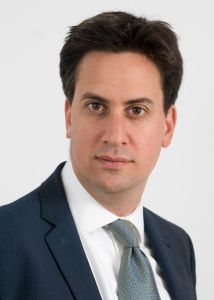
The statement made by Ed Miliband, the Foreign Secretary, in the House of Commons on 8 September 2026.
Madame Deputy Speaker, with permission, I would like to make a statement on Israel and Palestine.
I do so as a proud British Jew, someone with the deepest gratitude to the State of Israel for giving a home to my grandmother after she lost her husband, my grandfather, and 60 other family members at the hands of the Nazis.
I remember visiting her in the 1970s in Tel Aviv and seeing the life and the sanctuary Israel had provided. Indeed, some of my most joyful childhood memories were picking oranges as a kid on the kibbutz where my cousins lived.
Madame Deputy Speaker, my personal story and that of thousands of British Jews is one of the many reasons why I say to anyone here or around the world who questions Israel’s right to exist as a homeland for the Jewish people: you are wrong and we will call you out whenever you engage in this attempt at the erasure of Israel.
Madame Deputy Speaker, I know what the trauma of Hamas’s terrorist atrocity of October 7th meant and still means to people across Israel and to Jews across the world. It was a murderous act by a murderous terrorist organisation designed to massacre and instil fear across a whole population.
October 7th makes plain the grave threats that Israel faces. And it has every right to defend itself. We should not only condemn those threats but act against those who carry them out.
Iran continues to threaten Israel and Jews across the world.
We have already designated Iran’s IRGC and we will do more today on Iran’s proxy groups. So today I can also announce we are sanctioning Lebanese Hezbollah’s financing arm, Al-Qard Al-Hassan.
Iran must never have a nuclear weapon. So we are also acting this week to report Iran to the UN Security Council for its nuclear violations, alongside our allies. And I can announce today that we are also reimposing major economic sanctions on Iran in line with the European Union and the United States.
Madame Deputy Speaker, tackling these threats is just one of the important, shared national security interests we have with Israel, on which we will continue to co-operate.
I know too that so many members of the Jewish community now live in fear in the face of rising antisemitism, including here in the UK.
Last week we commemorated the anniversary of the Heaton Park attack—Jews murdered at their place of worship simply for their religion.
An outrage that was followed by antisemitic attacks in Golders Green, including on the Hatzola ambulances.
And the everyday life of Jews in Britain is deeply affected by the climate that such hate creates.
When I went to school in the 1980s, I did so without fear.
Today we need to face the truth: that is not the case for thousands of Jewish children across the UK, children who have to go to school with security guards outside their school.
Mr Speaker, no child should have to go to school facing this. And no teacher should face antisemitism either.
Whether it happens in our schools, universities or workplaces or online or on our streets, antisemitism is a scourge and an evil.
We are rightly putting in place an additional investment of £250 million for community security. But we all have a responsibility to do more.
As part of this, I will in October host representatives of the J7, the countries with the largest Jewish populations from across the world.
We will meet in the UK to discuss the different ways we can work across borders to tackle antisemitism, including tackling online hate.
So Madame Deputy Speaker, I am proud of my Jewishness and unwavering in my support for the State of Israel.
And there is absolutely no contradiction between this and my support for the State of Palestine. Indeed quite the opposite.
The two state solution is based on an explicit belief that the only route to security for both peoples is to live side by side in peaceful co-existence with freedom, security and self-determination.
Securing the two-state solution in its fullest form is the North Star of this government’s policy, and indeed of successive British governments over decades.
And it is precisely this belief in the rights and freedoms of the Israeli and Palestinian people that leads many, including me, to a deep sense of shame about what has unfolded in Palestine under the eyes of the international community.
In Gaza, the most unimaginable trauma and suffering in the last three years – death, destruction and dehumanisation on an appalling scale.
A stain on the conscience of the world and of this country too.
And in the West Bank, the clear attempt to – in the words of Israeli Finance Minister Smotrich – and I quote – “bury the idea of a Palestinian State”.
So Madame Deputy Speaker, there is a deeply painful contrast between our professed commitment to a two state solution, and the reality on the ground in Gaza and the West Bank.
I pay tribute to my predecessors, the current Health Secretary and the Right Honourable Member for Tottenham, for their tireless efforts on this issue as well as my Right Honourable Friend the Member for Lincoln.
We should always be proud that it was a Labour government that took the historic step of recognising the State of Palestine.
But the Prime Minister is right to say that the Labour government has not done enough in the face of what is happening.
So today marks the beginning of a new approach.
An approach that not only calls out injustice and suffering but acts.
And in taking this stance, I make a very clear distinction – which is crucial for all of us in this debate:
Our argument is not with the people of Israel, with whom the UK has unshakeable bonds. Our argument is with the conduct of its government.
And I also want to say emphatically to people in Britain and across the world:
Holding British Jews responsible for the actions of the Israeli Government is antisemitism, plain and simple.
What we seek today is to salvage the only course for peace and security for Israelis and Palestinians – the two state solution.
Let me start with the situation in the West Bank.
Madame Deputy Speaker, at the time of the Oslo peace accords in 1993, around 270,000 settlers lived in the occupied Palestinian territories. Today it is some 770,000.
More settlements have been approved under the four years of this Israeli government than in the previous twenty years.
Let us spell out what this has meant for Palestinian communities.
Houses bulldozed. Roads and public infrastructure destroyed. Families displaced from their homes.
Community by community.
Family by family.
Person by person.
Madame Deputy Speaker, sixty-five Palestinian communities completely expelled since 2023 – a total of over 4,000 Palestinians evicted from their homes due to settler violence and state actions.
And in August, the crossing of a long-standing red line: the issuing of E1 tenders for over 1,200 homes.
I visited a community in the area covered by E1 in 2014. The Bedouin communities I met in Khan Al Ahmar had lived on that land for generations.
E1 proposals would evict them and place settlements directly between East Jerusalem and the West Bank cutting through the heart of Palestine.
Let’s be clear what this means: the creation of a set of facts on the ground to make the two state solution unviable.
And on top of official state policy, settler terrorism is rampant.
The UN reports an average of six violent settler attacks against Palestinians per day this year, the highest on record.
Take one example
In Al Mughayir, twenty miles north of Jerusalem, settlers have encircled the village and mounted a campaign of intimidation, largely under the protection of the Israeli military.
Families in the village are increasingly cut off from accessing their land, squeezed into ever smaller areas and have olive trees uprooted and livestock stolen.
In the same community, just last week, two teenagers were shot when settlers entered the village under police and military escort. Both died before reaching hospital. Madame Deputy Speaker five teenagers have now been killed from their school this year.
Ehud Olmert, the former Israeli Prime Minister, has described what is happening as – I quote – “a violent and criminal effort to ethnically cleanse territories in the West Bank’.
The former Minister of Health and retired Brigadier General from the IDF, Ephraim Sneh has said – and I quote again – “this is ethnic cleansing to put it simply”.
Ethnic cleansing is defined by the UN as ‘a purposeful policy designed by one ethnic or religious group to remove by violent and terror-inspiring means the civilian population of another ethnic or religious group from certain geographic areas.’
The British government agrees that there is ethnic cleansing of Palestinians in areas of the West Bank – perpetrated by settler terrorists.
And all too often the Israeli government has turned a blind eye to this and worse, members of it have made statements and taken actions to support the forced displacement of Palestinians.
Now Madame Deputy Speaker, I recognise the gravity of saying this but the truth is, it is the least the people who face such suffering deserve. And it should be the prelude to justice.
Now for a long time, the British government has rightly said settlements are illegal.
But we have remained silent on the question of the legality of the occupation as a whole, which in 2024 the International Court of Justice concluded was unlawful.
Today I announce that the official view of the British Government is that the occupation is unlawful.
Because of Israel’s entrenchment of its control, its intention to extend permanent sovereignty, and its expansionist agenda via illegal settlements.
Madame Deputy Speaker, our position is not just an overdue statement of reality.
The government believes the unlawfulness of the occupation should be reflected in the economic relationships we choose to have with the occupied territories.
I do not believe that the British people want us supporting the occupation by accepting products from settlements in our shops and supermarkets.
So I can announce today that we will introduce an import ban on goods from illegal settlements in the occupied territories.
To do so, we will introduce a new comprehensive sanctions regime working with my Right Honourable Friend the Business Secretary, with appropriate religious exemptions.
And as part of this regime, we will go further.
We will take action against specific companies and individuals who provide services such as construction, infrastructure, financing, or real estate for settlement expansion.
So to those who finance or facilitate illegal settlements, let me say this, you will face the full force of UK sanctions.
Settlements are illegal. They should not be promoted in our country.
Earlier this year, shamefully, just a few miles from here, we saw an expo advertising illegal settlement land.
We must and we will ensure this never happens again, so we will ban the advertising in the UK of illegal settlements.
The sanctions regime will target illegal settlements and settlement expansion, not Israel.
We will continue to support important and valued trade with green line Israel precisely because we support the two state solution, including security and prosperity for Israel.
For this reason, I wholeheartedly oppose the Boycott, Divestment, Sanctions or BDS campaign.
The legislation I have announced today will be in place within 6 to 9 months and we will also take more immediate steps.
Today we are sanctioning a further set of extremist settlers who have supported or incited acts of violence against Palestinian communities.
And I can also announce that we are extending the existing global human rights regime such that it will enable swifter action to deter settlement expansion, including crucially seeking to present the development of E1.
I also want to address the question of arms sales. We have already suspended over 30 arms licences used by the IDF in Gaza. That suspension remains fully in place.
We will now also refuse all licence applications for arms and other exports that materially contribute to the occupation, in effect a double lock against arms sales.
This means the ban on such exports will now remain as long as the occupation persists.
To advance the two state solution, we also need viable and effective Palestinian governance.
So I urge the Palestinian Authority to accelerate reform and I urge Israel to lift its withholding of revenues that is financially crippling the provision of essential services in the West Bank.
The set of measures I have announced represents a clear message to the government of Israel, to the Palestinians in the Occupied Territories, and to the world that we will not acquiesce in the destruction of the two state solution.
I turn now to Gaza.
The horror of October 7th appalled the world and had terrible echoes of the centuries of persecution of the Jewish people.
Men, women, children and babies killed, mutilated, and tortured by Hamas terrorists. People murdered whilst seeking to protect their families. Young people massacred at a music festival. People abducted from their homes.
As the 20 point peace plan for Gaza sets out, this is one of many reasons Hamas can play no role in the future governance of Gaza, it must decommission its weapons and must dismantle its terrorist infrastructure.
Israel has the right not to live in fear of vile terrorism, and the Israeli State has the right to protect its people and defend its territory.
But Madame Deputy Speaker that cannot justify what has happened in Gaza.
Over 70,000 people have been killed, at least 20,000 of them children. 20,000 children.
The vast majority of the population is now displaced – nearly two million people – who are now penned into just one third of the territory.
Life-saving humanitarian aid and access has been routinely blocked.
Hospitals and clinics have been destroyed.
Over 60% of homes are in ruins.
Mr Speaker, international humanitarian law imposes clear rules for states fighting wars – including to ensure access to food and medical supplies, to avoid mass displacement of civilians, and to avoid the targeting of civilians.
Serious and intentional violations of this law, if proven, amount to war crimes.
What has occurred, including the actions of the IDF, have been examined in depth by a number of organisations, including the UN Independent International Commission of Inquiry.
The conclusions of these reports represent increasing evidence that war crimes appear to have been committed.
And we support legal processes to determine this.
On the question of genocide, the UK has always supported full, robust and fair judicial processes to consider allegations, with final determinations made by competent courts before the British government reaches a conclusion.
This has been the case for all of the genocides since the 1948 Genocide Convention: Rwanda, Srebrenica, Cambodia, and acts against the Yazidi people.
This will remain our policy. It is right that this issue has been brought before the ICJ and I want to make it clear that we support the Court in coming to its determination.
So accountability for what has happened in Gaza matters.
But even more urgent is action to address the ongoing crisis.
Because today in Gaza, the death and suffering continue.
Nearly a year ago, Madame Deputy Speaker, a ceasefire was declared. Yet over 1,200 Palestinians have been killed since.
And the people of Gaza are experiencing a totally avoidable humanitarian catastrophe, I am afraid, driven by decisions of the Israeli government.
Last week I talked to courageous doctors and humanitarian aid workers who have served in Gaza. It was a heartbreaking conversation.
They recounted:
Children dying waiting for medical treatment.
People forced to live next to open sewage and without shelter.
And food insecurity rampant.
I’m sure the whole House agrees, this is unconscionable.
So I pledge we will continue to do everything we can to provide all the humanitarian support possible to help the people of Gaza.
UK-supported hospitals in Gaza will enable around 800,000 medical consultations this year and essential health services for patients.
UK expertise will deliver care to over a thousand child amputees.
And we recently welcomed another wave of students from Gaza coming to study in Britain and we will welcome more.
But in truth, unless Israel changes course, the situation will remain dire.
So we are taking further steps – both ourselves and with others.
Our extension of the global human rights sanctions regime will enable us to target those responsible for violations of international humanitarian law, whether in Gaza or anywhere else in the world.
And we will at the UN General Assembly in New York later this month shine the clearest and harshest spotlight on what is happening and what must change.
And with Jordan, we will convene countries across the world to lead a call for action on health and humanitarian access.
We will also lend the UK’s voice to the growing global alliance of countries – led by Arab partners in the region – calling for the full implementation of the US-led 20 point plan, the rejection of extremism, and for a lasting end to the cycles of violence.
As we implement the policy measures I have announced today, we will continue to assess the government of Israel by its actions. We want to see a new approach – in both Gaza and the West Bank.
Madame Deputy Speaker, today we refuse to be bystanders to further suffering and to the destruction of the two state solution.
We call out what is unlawful.
We act on the import of goods from illegal settlements.
We ban advertising of illegal settlements
We act on services to prevent new settlement expansion.
We act on settler violence.
We support accountability for what has happened in Gaza.
And we pledge to galvanise the international community to confront the ongoing and urgent humanitarian crisis.
Above all, we say: Britain is not silent in the face of deep injustice and nor is it powerless.
And today we act in concert with others in a broad international coalition.
I can tell the House that today France and Canada are announcing, alongside Britain, that they will also ban the import of goods from illegal settlements.
Joining the Netherlands, Ireland, Belgium, Spain and Norway – which have either banned goods or are in the process of doing so.
With many other countries – Denmark, Finland, Iceland, Poland, Portugal, and Sweden – pledging today they will support further action.
Madame Deputy Speaker, this is what Britain can achieve leading with others.
And this is in our fundamental national interest because if there is one lesson of recent decades, it is that we will never have stability in the Middle East without a two state solution.
And it is also the case that if we fail to stand up for the values that this country has long held and fought for, we lose credibility and influence in the world.
Madame Deputy Speaker, my parents came here as Jewish refugees and found sanctuary and a country that stood up for the rule of law, freedom and self-determination.
Those are the values this government is standing up for today.
And I truly believe that the vast majority of the British people, including in our communities with ties to the region, are united in their desire to see humanitarian suffering end, and all sides commit to a durable peace process.
And just as we want Israelis and Palestinians to live side by side, so we have to live out those values in Britain.
Jews in Britain, Muslims in Britain, people of all faiths and none have a right to live without prejudice or fear.
Madame Deputy Speaker, a Britain that upholds its values at home and around the world.
A Britain that fights against oppression and suffering wherever it occurs.
A Britain that stands up for what is right.
And I commend this statement to the House.


![PRESS RELEASE : Tom Riordan Appointed as New Permanent Secretary, Ministry of Housing, Communities and Local Government [September 2026]](https://www.ukpol.co.uk/wp-content/uploads/2025/09/cabinetoffice.png)
![PRESS RELEASE : UK Summons Serbian Chargé d’Affaires to the United Kingdom [September 2026]](https://www.ukpol.co.uk/wp-content/uploads/2025/09/newfco.png)