Blog

  • Amanda Spielman – 2023 Speech at the Annual Apprenticeship Conference

    Amanda Spielman – 2023 Speech at the Annual Apprenticeship Conference

    The speech made by Amanda Spielman, the Chief Inspector of Ofsted, on 13 March 2023.

    Hello, and it’s good to be here, thank you for inviting me.

    State of the nation

    I want to start by recognising the great job that you do. In recent inspections, two thirds of apprenticeship providers have come out as good or outstanding. This shows that we have a lot of high-quality training in the sector – but of course, there is still work to do.

    High-quality apprenticeships are particularly important right now. They play such a big part in making sure that the economy has the right skills to grow. And while they may be mainly aimed at young people, they can be just as valuable for those wanting a career change.

    On a recent visit to a learning provider, I met Lauren. Lauren had already completed a childcare apprenticeship, but when she started working, she realised it wasn’t the right career for her. As she’d really enjoyed her first apprenticeship, she returned to the same learning provider for a business administration apprenticeship. And the learning provider then hired her, and she now works in their digital marketing team.

    This is a wonderful example of how your work makes a difference. You can help the country meet its skills needs. And you help individuals to find the career that works for them, personally and professionally.

    Workforce challenges

    The fact that so many of you are offering this kind of high-quality training is particularly impressive given some of the challenges you have faced and are still facing.

    Many of you are struggling with workforce pressures. Recruiting and retaining staff is difficult in all kinds of education, and beyond. And these difficulties are even greater for specialist staff, many of whom can earn far more working in their sectors.

    We also know that, with the current economic uncertainties, smaller employers are less willing to take on apprentices. So, opportunities for level 2 and level 3 apprenticeships are continuing to decline.

    English and maths

    And we know that many of your apprentices have had their education hampered by the pandemic. You may well have young people who are behind where you need them to be in English and maths. You may also be having to do more to work out which apprentices need additional help. This leaves you and their employer with the challenge of getting them get to the right level.

    We know that some of you have concerns about the reformed functional skills qualifications. You think they are harder to pass. The fact that pass rates are lower might support this, but of course there are other factors at play such as disruption to younger apprentices’ education.

    It is also important to remember that functional skills tests are summative tests not diagnostic assessments. They may not be the best tools to identify what apprentices still need to be taught. You need to assess their skills properly and make sure that you’re genuinely helping them to improve, not just to pass an assessment.

    Just think of all the subjects that you teach and all the different ways that you use English and maths every day. Care apprentices need to measure medicines accurately. Hospitality apprentices need to measure ingredients and calculate portion sizes. Business analyst apprentices need to interpret data and client requirements. Management apprentices need to communicate with their teams, write job specifications and create marketing materials. The list goes on, but these examples show how important English and maths are at every level and in every subject.

    So, you do need to think carefully about how to assess and improve your apprentices’ English and maths skills. You should be asking yourselves the questions:

    • Are you identifying apprentices’ starting points when they begin their training?
    • Are you using the information you gather to plan a suitable curriculum?
    • Are English and maths teachers working with vocational trainers to help apprentices learn these skills in a way that’s relevant to their other training?

    And it’s not just younger apprentices or those at lower levels who need help with English and maths. We recently visited a police constabulary that was training police community support officers as part of a level 4 apprenticeship. Those apprentices did need to be taught spelling and grammar because their notes and statements weren’t always fit to be used as evidence in court.

    Ready for work

    We do also know that some new apprentices don’t have a good attitude to work. They may not have done any work experience in school or college, nor had a part-time job. This can make the start of on-the job training difficult and strain employer relationships which also adds to your workload.

    Funding

    Of course, funding plays a big part in many of these challenges, and in their solutions. We know there are concerns about the complexity of the apprenticeship levy. And we know that several billion pounds have been returned to the Treasury since the levy was introduced which could have funded many more apprenticeships.

    It’s encouraging to hear that the amount being returned is declining which could indicate that businesses are taking on more apprentices. But these new apprenticeships tend to be at higher levels, which are more costly to teach. And the recent data does show a further decline in starts at levels 2 and 3 and for under-19s. Skills gaps often are at the lowest levels, and it is important to maximise opportunities for under-19s.

    We welcome the UCAS announcement that it’s extending its service to apprenticeship vacancies. Along with initiatives to improve school careers guidance, this could significantly improve young people’s awareness and take-up of apprenticeships.

    We also welcome the Institute’s announcement that it’s reviewing funding for the 20 highest enrolling apprenticeships. But we know that some of you are already cutting apprenticeships because they aren’t economically viable. In a few cases, providers are leaving the market completely. We know that the sector is resilient and reactive, but it’s wasteful to lose good capacity only to have to rebuild it.

    I hope that these kinds of changes can accelerate improvement in the sector. We will continue to play our part by highlighting good practice and identifying what needs to improve.

    A need for improvement

    Because, while many of you are doing a great job, we do have concerns about some parts of the sector. We know the current environment is tough, but it is our role to report on the quality of provision as we find it. We will always acknowledge the context, but we can’t soft-pedal on inspection. That wouldn’t be fair to you, and it wouldn’t be fair to the apprentices you train. And by reporting accurately, we can then make a case for systemic change when it’s needed.

    We are concerned about the slow pace of improvement particularly among new providers. The picture is improving and the proportion who aren’t doing well enough at their first inspection has declined. But that proportion is still too high despite all the information, guidance and support that is available.

    Looking at our judgements, we cannot ignore that apprenticeships are the worst performing type of provision in the further education and skills sector.

    Achievement rates

    So, we do welcome the DfE setting a target of 67% for apprenticeship achievement rates. But it’s important to think about why achievement rates are often so low.

    The pandemic, yes it had an impact, but achievement rates were often too low even before this. And it’s worth noting that the apprentices who do take their end-point assessment are very likely to pass. The big challenge is apprentices leaving before they finish their training.

    And of course, there are various reasons for this. They include poor-quality tuition that doesn’t include meaningful practical experience, employers not releasing staff for off-the-job training or just not enough opportunities for on-the-job training.

    Low wages in childcare, hospitality, adult care, and other sectors means that some apprentices are leaving for higher paid roles. This is obviously understandable in the current climate, and different skills aren’t always equally rewarded. But it’s worth asking yourself questions:

    • Could I be doing more to explain the longer-term benefits of apprenticeships?
    • Do my apprentices understand the importance of a career path over a short-term pay boost?
    • Am I acting with integrity when I recruit apprentices?

    All these factors must be considered and tackled if the DfE target is to be met.

    We know that low achievement rates don’t necessarily indicate a problem with the provider. When we inspect, we won’t hold previously low achievement rates against you. But we will want to see that you know the reasons for low rates and have taken actions to improve them where you can.

    High-quality educational experience

    Of course, the most important factors in determining whether apprentices complete their programmes are the quality of the training and the experience.

    Apprentices need high-quality training from skilled and experienced staff. You need to plan it well and teach it in a coherent order. You need to balance the on- and off-the-job elements carefully. You need to know what will be learnt and when, and your apprentices should know this too.

    You need to think about how and in what order you’re going to teach the knowledge and skills. If your hairdressing apprentices need to colour a client’s hair, you obviously need to teach them the practical skills. But you also need to teach them the health and safety aspects around using colouring chemicals. And you’ll need to teach them the skills to hold a client consultation.

    You also need to consider the apprentice’s experience. Online learning and self-study can be part of that. But they can also be a toxic combination when they’re overused or used too soon in an apprenticeship.

    I know that many of you balance these factors well but failing to do so can damage apprentices’ motivation and enthusiasm. If an apprentice spends most of their first 3 months studying at home on their own, we can hardly be surprised if they drop out.

    So, it is important to think about how and why you use these methods. It can be appropriate when it improves the apprentices’ experiences or prepares them well for work in their chosen sector. But it shouldn’t be for your convenience or to save money.

    Other sessions

    We know that part of the value we can add is engaging and supporting you with training. As usual, we’re offering several workshops at this conference. They are being run by our knowledgeable HMI, so you’ll be able to talk directly to the people who come to inspect you.

    The workshop topics reflect the areas where we think we can offer the most help.

    We have a session on on- and off-the-job training and the important relationship between these 2 elements.

    To try and help those of you who are newer to the sector, we have a session on how we inspect. Understanding more about new provider monitoring visits and about full inspections will help those of you who haven’t already got this experience in your team.

    And on both days, we’re running our ever popular ‘Ask the Inspector’ sessions. We really do want to do everything that we can to demystify the process. These sessions give you the chance to ask inspectors whatever you want. Pretty much the only thing they won’t tell you is the date of your next inspection!

    Thank you again for listening. I’m happy to take questions and I’m going to be joined on the platform by Paul Joyce, who is our Deputy Director for Further Education and Skills, and he will join me in answering them.

    Thank you.

  • NEWS FROM 100 YEARS AGO : 15 March 1923

    NEWS FROM 100 YEARS AGO : 15 March 1923

    15 MARCH 1923

    Irish Republicans have issued a proclamation stating an indefinite period of national mourning during which all sports and amusements are to be suspended.

    The Irregulars issued a statement saying that any MP in the Provisional Government that signed the Murder Bill would be shot on sight.

  • NEWS FROM 100 YEARS AGO : 14 March 1923

    NEWS FROM 100 YEARS AGO : 14 March 1923

    14 MARCH 1923

    It was reported that British traders were struggling in the Rhineland due to the French occupation of the Ruhr Valley.

    Seven members of the Irregulars were executed by shooting in the Irish Free State, one in Dublin, two in Cork, two in Mullingar and three in Wexford.

    A group of armed Irregulars looted the village of Knocknagree in County Cork.

  • PRESS RELEASE : Change of His Majesty’s Ambassador to Turkmenistan [March 2023]

    PRESS RELEASE : Change of His Majesty’s Ambassador to Turkmenistan [March 2023]

    The press release issued by the Foreign Office on 14 March 2023.

    Mr Stephen Conlon has been appointed His Majesty’s Ambassador to Turkmenistan in succession to Ms Lucia Wilde who will be transferring to another Civil Service appointment. Mr Conlon will take up his appointment during May 2023.

    Curriculum vitae

    Full name: Stephen Austin Conlon

    Married to: Ruta Conlon (née Taraskeviciute)

    Children: Two

    Date Role
    2022 to present Full Time Language Training (Russian)
    2020 to 2022 Brussels, UK Mission to the EU, Head of European Parliament Team
    2017 to 2020 United Kingdom Permanent Representation to the European Union, Head of European Parliament Team
    2014 to 2017 United Kingdom Permanent Representation to the European Union, Food Safety and Veterinary Attaché
    2009 to 2014 Vilnius, Deputy Head of Mission, Chargé d’Affaires and Her Majesty’s Consul
    2004 to 2008 Helsinki, Director of UK Trade and Investment
    2004 FCO, Desk Officer, EU Department (Internal), later Full Time Language Training (Finnish)
    2003 Stockholm, Trade Attaché
    2001 to 2003 FCO, Desk Officer for EU Environment & Food Safety, EU Department (Internal)
    1997 to 2001 The Organisation for Economic Co-operation and Development, United Nations Economic Commission for Europe and the World Economic Forum, Desk Officer, Economic Policy Department
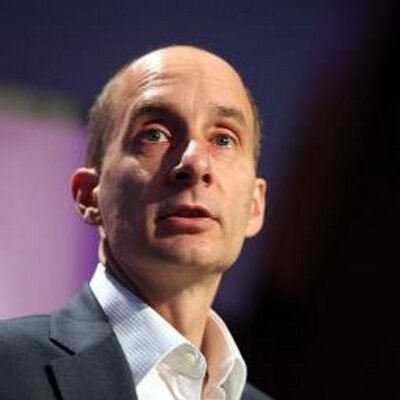
  • Andrew Adonis – 2023 Comments on HS2 Delays

    Andrew Adonis – 2023 Comments on HS2 Delays

    The comments made by Andrew Adonis on Twitter on 10 March 2023.

    A big mistake to delay HS2 north of Birmingham. It will add to costs and delay benefits. Also puts Manchester at huge competitive disadvantage to Birmingham for a decade or more. Birmingham will be barely half an hour from London by HS2, while Manchester will be more than 2 hours.

    Birmingham will also have an HS2 connection directly into Elizabeth Line at Old Oak Common, whereas Manchester won’t (at Euston) which means onward journeys to West End, City and Canary Wharf will be far slower and more congested from Manchester.

  • PRESS RELEASE : UN HRC52 – Statement on human rights while countering terrorism [March 2023]

    PRESS RELEASE : UN HRC52 – Statement on human rights while countering terrorism [March 2023]

    The press release issued by the Foreign Office on 14 March 2023.

    At the 52nd session of the UN Human Rights Council in Geneva, the UK delivered a statement on human rights and fundamental freedoms while countering terrorism.

    Thank you, Mr Vice-President.

    The UK would like to thank the Special Rapporteur for her latest Report on the implications of the development, use and transfer of new technologies, and for her contribution to the promotion of human rights in countering terrorism over the course of her six-year mandate, which is drawing to a close this summer.

    The UK strongly believes that to be truly effective, our counter terrorism and counter violent extremism efforts must respect human rights.

    In line with this, the UK welcomes the recommendations of the Special Rapporteur. The use of biometric information helps us combat terrorism, but it must be used in compliance with human rights law. The UK stands ready to engage with member states to support this objective, building our capability and capacity to counter terrorism whilst protecting and promoting human rights around the world.

    With this in mind, we would like to ask the Special Rapporteur what more could be done by States to ensure that human rights are respected in the deployment of new technologies when it comes to countering terrorism.

    Thank you.

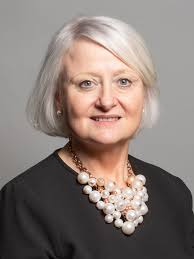
  • Siobhain McDonagh – 2023 Speech on Brain Tumour Research Funding

    Siobhain McDonagh – 2023 Speech on Brain Tumour Research Funding

    The speech made by Siobhain McDonagh, the Labour MP for Mitcham and Morden, in the House of Commons on 9 March 2023.

    I crave the indulgence of the House for the speech that I am about to make.

    On 27 November 2021, my beautiful, unique, tough, resilient, successful sister collapsed in front of me and had a series of fits. Five hours later, in University College Hospital, two doctors named Henry told me that they suspected that she had a brain tumour, but as this was the NHS, MRI scans were not done at the weekend, so they could not confirm their diagnosis. On Wednesday, when I stepped on to her ward, she demanded—and everybody here who knows her will be able to hear her say it—that I ask the ward doctor to come and speak to her. She said, “It’s bad, Siobhain, because he can’t look at me.” And it was.

    For the woman who had run Labour’s only two consecutive successful general election campaigns, and achieved her ultimate ambition to see two full-term Labour Governments, the diagnosis was of a glioblastoma. All her toughness evaporated, and there was my little sister with a diagnosis that meant that she might have nine months left—a condition for which there was no cure, for which treatment had not made progress in over 30 years. Just before Christmas, she had the tumours removed by two amazing female surgeons, Róisín Finn and Anna Miserocchi at the National Hospital for Neurology and Neurosurgery, but this was post Brexit, so there were not enough nurses to keep all the operating theatres open, and Margaret’s operation was cancelled three times. I leave it to Members to guess my reaction to that, and how we got that operation in the end.

    The best piece of advice I have ever received in my life, and I have received many bits of good advice, was from the clinical nurse specialist. When we asked her where Margaret should go for post-operative treatment— St George’s, down the road from where we live; the Royal Marsden, around the corner; or to stay at University College—Róisín said, “We have Professor Paul Mulholland, and he is the best. He is the best in the UK, and he is the best in Europe.” I want to confirm to the House that he is the best. He is why Margaret is still alive.

    What you get when you have your tumour removed, if you live that long—many people do not—is six weeks’ radiotherapy, followed by six months’ chemotherapy with a drug called temozolomide. That drug was introduced in 2005, and since then there have been no variations to the gold-standard treatment in our NHS, so when you read articles such as the one in The Times on Monday, telling us all how successful cancer treatment in the UK is—how 85% of people with a breast cancer diagnosis, 55% of people with a bowel cancer diagnosis, and 98% of people with a prostate cancer diagnosis will get to live for 10 years—do not believe that it is the same for brain cancer. The Times may have chosen a brain as the photograph for the top of the article, but those statistics do not apply.

    Margaret had her treatment in early new year 2022; like so many, she could not go through with it—the treatment would have killed her. At that point, where do you go? There were no alternatives. It is not that there are a few trials: there are no trials, and there is nowhere to go. So, like so many of us who are lucky enough to have friends and family and access to money, we looked to the private sector and international travel. Margaret has been on a course of treatment with nivolumab, a Bristol Myers Squibb drug that was seen to be unsuccessful in the treatment of brain cancer, and Avastin, and has been going monthly to Düsseldorf, Germany for four days. That might seem an easy thing to do, but taking a seriously ill person on an aeroplane to a hotel, with no access to healthcare and no emergency services, would be foolhardy unless there was nothing else in this country. There was, and is, nothing.

    The help that we received from Dr Sahinbas and his wife, who runs their small clinic in Germany, with hyperthermic treatment was amazing. Their kindness was overwhelming, but there were times when I thought that I would not be able to get Margaret on the plane—that somebody would stop her because she was so unwell. There was one night when I stayed and stared at her, because I did not think she was going to make it through the night, and how would I explain that to anybody?

    By June 2022, Margaret had a scan, and they could not see the tumour. When I asked Dr Mulholland, “Is this normal for this treatment?”, he said, “Normal? I have never tried this on anybody before.” Nobody has ever had this drug so early in their treatment or at the quantity that Margaret has had it, or at the same time as hyperthermia therapy. Those who know about Margaret’s experience have come to me and sought support from Dr Mulholland because there is nothing else. The number that the NHS is currently forsaking and, for the lucky people who can get the funds to do it, abandoning to international travel is nothing short of a complete and utter national scandal. I wonder what my mum who came here in 1947 to train as part of the first generation of NHS nurses from Ireland would say about the NHS abandoning her daughter.

    But things can be different. Things can be better—maybe not today, maybe not tomorrow, maybe not next year, and maybe not within Margaret’s lifetime—and they can be different if we want them to be different. I ask the Minister to please not give the NHS or the cancer research charities any more money until they guarantee that at least 200 sufferers every year get access to a trial—that would be 1,000 patients over the lifetime of a Parliament—because with those trials we can begin to understand what works and what does not.

    The Minister should give no more money to the NHS trainers until they commit that every young doctor training to be a medical oncologist has to go through a course on brain tumour. At the moment, there is no compulsory training. The reason why there is nobody on those wards and nobody doing the work is that we are training nobody, and we are training nobody because nobody is required to do the course, and it was like that 15 years ago with melanoma. Some 15 years ago, the survival rates were so poor, but somebody came up with the idea that immunotherapy would be successful, and today we see successful survival rates equivalent to the best in any discipline. We also see young doctors wanting to take on the specialism, because it is exciting, there is hope, there is a future and there are alternatives.

    Who in their right mind today would become a medical oncologist in glioblastoma? There is no hope, no future, no trials—nothing. It would have to be someone with the belligerence and tenacity of my sister Margaret, and we have found that person in Paul Mulholland, but there needs to be more Pauls and more determination. We must have access to trials for 200 people and the training of medical oncologists, and we must require the pharmaceutical industry—because we will make no progress without it—to trial every drug that gets licensed to deal with tumours on those with brain tumours, so that there is access to existing drugs that can be repurposed.

    I am sorry about the time I have taken for this speech, but I want to tell the House that when I go to bed tonight I will keep my ear open for Margaret to hear her call my name, I will get up and I will go into her room, and it may be that she is asleep and I have imagined that she has called me. I accept that. That is my duty. It is what I have learned from my family, from my faith and from my politics. I accept that. That is my duty. It is what I have learned from my family, what I have learned from my faith, and what I have learned from my politics. I accept my responsibility. All that I want is for the NHS, cancer research charities, and pharmaceutical companies to stand up and accept their responsibility, and give some hope to the 3,200 people who will be diagnosed with a glioblastoma this year.

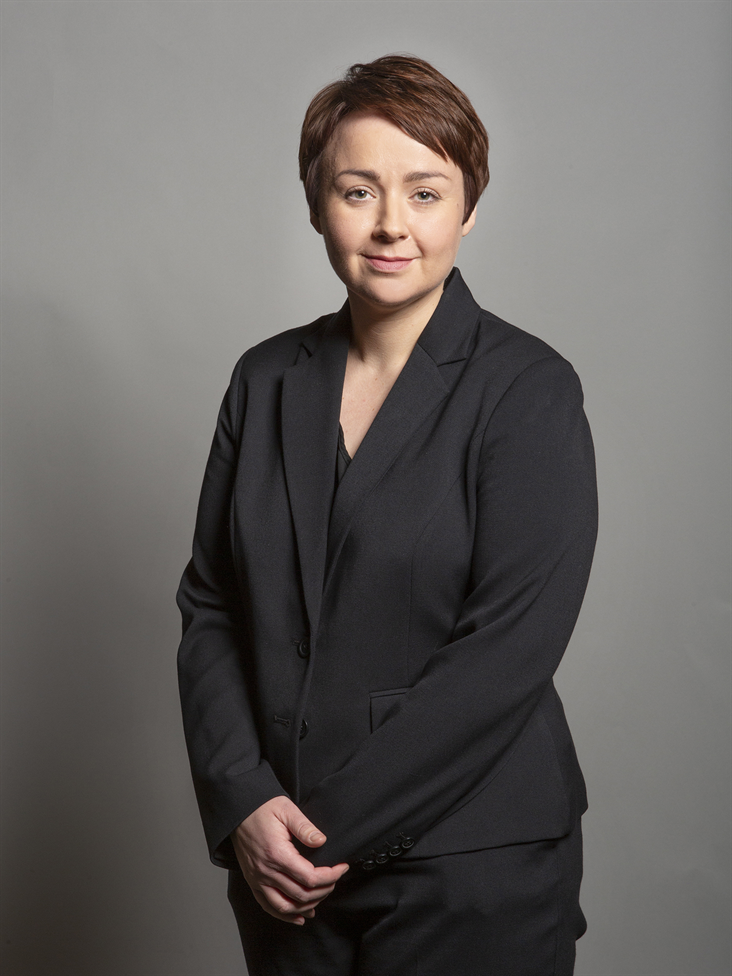
  • Holly Mumby-Croft – 2023 Speech on Brain Tumour Research Funding

    Holly Mumby-Croft – 2023 Speech on Brain Tumour Research Funding

    The speech made by Holly Mumby-Croft, the Conservative MP for Scunthorpe, in the House of Commons on 9 March 2023.

    First, let me offer my thanks to the Backbench Business Committee for allowing time for this really important debate. I have been working on this issue for some time, alongside other members of the all-party parliamentary group on brain tumours who have produced this report. I wish to put on the record my thanks to all those who have contributed to the report and, specifically, to Brain Tumour Research for its help. May I also give a special thanks to my hon. Friend the Member for St Ives (Derek Thomas)? I greatly admire the way that he has led this process and the work that he has done on brain tumours over my time in this House, and I know that he will continue with that work.

    Like many Members, I took a keen interest in this issue because of a constituent of mine, David Hopkins, who sadly was diagnosed with a brain tumour. He features in the all-party group’s report. In September 2020, David went to Scunthorpe General Hospital because he was unwell. That was right in the middle of the covid pandemic, so he was alone and had to go through the experience without his family with him. He was given the devastating news that he had a brain tumour—a glioblastoma. As we have heard today, the life expectancy of person who is diagnosed with a glioblastoma is between 12 and 18 months, so it is an utterly devastating diagnosis to receive for a family man and a very much-loved member of our community.

    David underwent bouts of chemo and radiotherapy, and he sought personalised immune therapy in Germany that cost £150,000. Unfortunately, a scan in April 2021 showed further tumour progressions and he had to have two craniotomies. By the following July, David had exhausted all treatment options that the NHS could provide for him and began NeoPeptide vaccine treatment, again in Germany. Sadly, this did not save David and he died in November 2021, leaving behind his children, Dylan, Lydia and Sydney, and his wife Nicki. I should say that Nicki is a force of nature. We are incredibly proud of her in Scunthorpe. She has gone on to raise funds for Brain Tumour Research and she ran the London Marathon. I commend Nicki for the work that she has done in this area.

    As I have already mentioned, people with glioblastoma may have only 12 to 18 months to live. The five-year survival rate for this cancer is still only 12%. By comparison, this rate has increased for cancers such as breast cancer and leukaemia to 85% and 54% respectively. This is not a coincidence; there has been extensive research and funding for treatment for these cancers, and we need to find treatment and cures for people such as David.

    The Government have pledged £40 million to fund brain tumour research. That is neither a small nor inconsequential amount of money. It shows that there is political will to solve the issue, but will alone is not enough. Only £15 million of that pot has been spent, and that underspend must be addressed. As the report explains, there are serious shortcomings in the current funding system when it comes to accessing the funding. We simply need to get the money into the hands of doctors, researchers and the people who know what to do with it—the people who are, as we have heard, working their socks off to find a cure for this terrible disease. A further step that the Government can take in the right direction is to recognise that this is a priority and to develop a plan, backed by the pledged money, that will support research from beginning to end.

    The report contains a number of key recommendations and proposals, and I will highlight a few of them. First, any treatment that is made available must be tested beforehand to assess its efficacy—we understand that—but there is a dearth of available trials, and the number of people participating in them is shockingly low. There are instances in which people with brain tumours are excluded from trials owing to concerns about the side effects from which they might suffer. Sometimes, people are just not aware that a trial is running until it is too late for them to participate.

    Surveys have shown that people want to participate in trials—I think that we all instinctively understand that that is the case—and we should make it as easy as possible for them to do when clinically appropriate. Guidance must be given on the inclusion of brain tumour patients in early-phase cancer trials. More mutation-focused studies should be commissioned, and the available trials should be listed in one single source that is available to patients at their bedside, as well as to clinicians.

    Secondly, another issue raised throughout the enquiry was one that researchers often encounter when taking their findings from labs into treatment centres. Conducting this translational research costs money, but researchers are impeded by a system that is difficult to navigate, meaning they cannot access money that the Government have pledged or put forward. It is ludicrous that scientists spend time and money and provide expertise on research that might go to waste because they cannot take it through the next steps. I would encourage the Government to look closely at the proposals to improve access to funding and for the MRC to introduce a fund to accelerate the pathway from discovery research to translational development.

    The report provides answers on why we seem to be stuck, as it were, on brain tumour research, and why we have not made as much progress as we might have on tackling the disease. People suffering from brain tumours do not have the luxury of time, and we owe it to the people who will be diagnosed in future to take action that gives them the best possible chance of survival, so that families such as the Hopkins family in Scunthorpe do not lose the people they love.

  • PRESS RELEASE : Rural Payments Agency opens application windows for farm payments for 2023 [March 2023]

    PRESS RELEASE : Rural Payments Agency opens application windows for farm payments for 2023 [March 2023]

    The press release issued by the Department for Environment, Food and Rural Affairs on 14 March 2023.

    Farmers can now apply for the Basic Payment Scheme and claim for their existing Countryside Stewardship revenue and Environmental Stewardship agreements.

    The application window for the Basic Payment Scheme (BPS) and the claim window for existing Countryside Stewardship (CS) revenue and Environmental Stewardship (ES) agreements has opened today (Tuesday 14 March).

    Basic Payment Scheme

    Last year, BPS advance payments were made in the summer for the first time to help farmers with their cashflow, with balance payments made from December. This change to the BPS payment cycle will continue and this year advance payments of around 50% of the total will be made from the start of August 2023.

    Direct Payments, currently paid through BPS, are being steadily phased out through to 2027 as the government introduces the Environmental Land Management schemes. As part of this process, we plan to replace BPS with delinked payments based on a farmer’s average BPS payments for the 2020 to 2022 scheme years. The payments will be reduced each year as they are phased out. Farmers must claim and be eligible for BPS payments in the 2023 scheme year to receive delinked payments for 2024 to 2027.

    Cross compliance will end after the 2023 scheme year and will not apply to delinked payments, although the vast majority of strong legal standards for the environment and animal health and welfare will continue and these will be enforced in a fair and proportionate way. We will work with farmers to get it right and give them a chance to self-correct before taking stronger action, for example by increasing the use of warning letters, where appropriate, rather than immediately defaulting to payment penalties.

    Countryside Stewardship and Environmental Stewardship

    For 2023 the Rural Payments Agency (RPA) has supplemented the existing online claim process for CS with a more straightforward annual declaration option in cases where no changes are required. This will be available in the Rural Payments service, with farmers able to generate and submit an automated revenue claim without needing to complete each section of the claim form.

    All farmers must submit a claim or annual declaration for CS and ES to receive payment for works carried out in 2023.

    Rural Payments Agency Chief Executive Paul Caldwell said:

    I know the importance of cashflow to rural businesses at this time. I am pleased that we have continued to achieve a strong performance to help farmers deliver sustainable food production alongside environmental actions to enhance and support nature.

    I encourage all eligible farmers to submit their applications and claims as soon as possible to ensure that no one misses out.

    The government is committed to investing £2.4 billion per year into the farming sector for the rest of this parliament – with all the money from reduced BPS payments being reinvested into the sector through our ongoing payments and one-off grants under our Environmental Land Management schemes.

    In January, the government set out detailed plans on the improved and expanded Sustainable Farming Incentive (SFI) and Countryside Stewardship, as well as increased payment rates through Countryside Stewardship and a new SFI Management Payment worth up to £1,000 to help manage costs.

    The schemes offer something for every farmer, with six further SFI standards open for applications this summer, and even more actions to be added to both schemes next year.

  • NEWS STORY : Edward Hobart Appointed as Next Ambassador to the United Arab Emirates

    NEWS STORY : Edward Hobart Appointed as Next Ambassador to the United Arab Emirates

    STORY

    Edward Hobart has been appointed as the next Ambassador to the United Arab Emirates, succeeding Patrick Moody who is transferring to another role in the Diplomatic Service. Hobart will begin his new role in May 2023.

    RESOURCES

    Foreign Office Press Release

    EXTERNAL NEWS LINKS

    Foreign Office

    GOV.UK Page on Edward Hobart