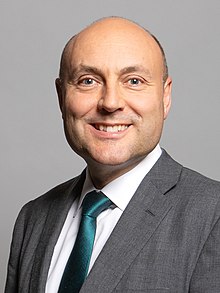
The speech made by Sarah Jones, the Policing Minister, in Stratford on 15 September 2026.
Last week, I stood with the policing family and the people of Cleveland to honour PC Blades and PC Clough at their funerals, just as I stood earlier in the year at the funeral of PC Jess Turnbull, who was only 19.
Along with PC Corke, PC Najeeb, PC Chester. Six officers have died since this time last year, and I know the impact of that will still be raw for everybody, especially those who knew and worked alongside those officers who lost their lives.
I realise too that the work doesn’t stop just because someone has lost their life and something dreadful has happened. You and your colleagues have to carry on serving your communities despite the shock and sadness, and I saw that in Cleveland on the two days that I was there.
So let me say clearly, on behalf of the government, that we value you, we cherish you, and we stand by you today and always.
In honouring the memory of those officers who have lost their lives, and all the officers and staff who have died in the line of duty, we have a responsibility to give thanks for their service and their sacrifice, and that of every man and woman who goes to work every day with a singular aim: keeping the rest of us safe.
While recent events have brought that responsibility to the fore in the most painful way, it is something that has been at the forefront of my mind ever since I was appointed a year ago. And it’s why I was also so proud to have been reappointed to this post when Andy Burnham became Prime Minister, and to have the opportunity to carry on our work together.
Looking back at my speech here last year, I observed that I was not a police officer and, much to the relief of the people you serve, that remains the case today.
The point I was making then about not knowing everything and the need to work together, I can see even more clearly now.
Because the last 12 months have taught me so much.
About the challenges of policing in an online age. About the split-second operational decisions in situations the rest of us can barely comprehend. About the painstaking investigations carried out over months and years to tackle the most dangerous threats.
And the obstacles, the really frustrating obstacles, that stop the service performing to the levels it could reach. And, perhaps most of all, about the enduring courage that is the hallmark of British policing.
So, my first message to you all – and please convey this to your teams – is one of heartfelt thanks.
Not just for the high-profile operations and feats of supreme bravery, but also for the work that often goes unseen but matters so much, from daily acts of local police work, to securing the entire country.
There are few, if any, public services with such a broad and crucial role in our national life. No one understands that better than you.
As operational leaders, you are uniquely placed within the system, helping to shape your forces’ long-term strategies in a range of critical areas, as well as overseeing the work of those grappling with the realities of fighting crime and protecting the public on the ground.
Over the last year I have tried to talk to, go and see as many front-line teams as possible to build my understanding of the challenges and opportunities facing the service. In doing so I have sought to strengthen the lines of communication between forces and the government.
In one way or another, you will have contributed to that. In fact, I would guess there is no item or issue that crosses my desk without some level of superintendent involvement, and I am grateful for that.
One of the topics I spoke about last year was having a shared sense of mission and going on this journey together. I think we can all agree that has not always been the case. But it is something we have worked hard to get right.
While there is undoubtedly much more to be done, we can reflect on some really significant achievements.
To start with an issue that matters a lot to me personally because of where I live and the people that I represent, we are making really good progress across the country in our mission to halve knife crime in a decade.
Overall knife crime has fallen by 11%. Knife homicides are down by 26%. Hospital admissions for stabbings are down 13%. Knife-enabled robberies are down by 16%. And we have taken more than 63,000 knives off our streets.
And the impact of all this work can’t be overstated. Our communities are safer as a result.
There is, of course, much more to do, and earlier this year we published a plan setting out how we want to go further in key areas including prevention and policing.
Neighbourhood policing has been a big focus for us. Through the Neighbourhood Policing Guarantee, we delivered more than 3,800 officers and PCSOs into neighbourhood policing roles, which exceeded our target for the first year.
This means more visible neighbourhood policing, and a greater focus on the issues that matter most to local communities. Building on that strong start, we need to keep going as we work towards the target of 13,000 additional neighbourhood policing personnel by the end of this Parliament.
And that’s about more than just numbers. We are also restoring the link between policing and communities with named, contactable officers for every neighbourhood and guaranteed 72-hour response times for neighbourhood queries.
I’ve just come before here from a visit in Coventry, where I was talking to local police officers tackling antisocial behaviour, dodgy vape shops, the challenges that we know our communities care about so much, the value of neighbourhood policing, the intelligence and the wisdom that they have was there to see, and it is on every visit that I go on.
Our use of technology also continues to grow. Take facial recognition for example. I have seen that in my own constituency, catching wanted rapists and robbers, taking them off the streets.
The benefits to public safety are clear, and we are tripling the number of live facial recognition units across the country.
Knife crime, neighbourhood policing and technology – these are just some of the areas where we have taken really important strides forward together.
But none of us would suggest it’s plain sailing. We still face significant challenges.
I know the demand placed on policing is a source of constant concern for you.
Nick and I have had this conversation many times, and I appreciate it and I understand it. Our task together is to find ways of reducing and effectively managing that demand.
I spent the weekend on the phone with a constituent, who was a young girl who had mental health problems, who’d been in and out of mental health hospitals, and had been arrested by the police because of her behaviour on the street.
And the police were having to look after her all weekend because there was nowhere else for her to go. That will be something that you all recognise, and is one of the challenges that we know we face. So together we have to find ways to reduce demand and head off the pressures that we can see.
The Police Efficiency and Collaboration Programme is cutting unnecessary bureaucracy. Again, something that when I speak to rank and file officers, they always talk about and show me.
We need to modernise those outdated processes while working to free forces from responding to incidents that would be best dealt with by other agencies, like mental health continues under the Right Care Right Person approach.
We are also investing in responsible AI, such as audio-visual redaction tooling.
Previously, trained police officers, as you know, were spending hours, sometimes days, painstakingly drawing black boxes frame by frame around digital footage as part of case file preparation.
Over the last two years, we have been supporting the majority of forces with AI software that does this in minutes, freeing up around 1 million hours a year for redeployment if adopted nationally.
And last month, I announced a new AI-enabled 101 triage system, which will drastically reduce the 4 million calls policing gets a year that are actually for other organisations.
We all know there are processes and procedures that make policing more difficult. Often for good, and valid reasons. But sometimes because that is how it has always been done.
Where this is the case, we want to know about it and we want to help find the solution. We can, for example, better use the tools officers already have to reduce the time spent on briefing at the start of a shift. How can we help on that?
We’re working with industry, and there will no doubt be many areas that are ripe for progress as technology continues to evolve.
Technology offers many opportunities for good. But it also brings risk.
To say that criminals today are tech-savvy is an understatement.
We see this across a range of threats from fraud to child sexual abuse, serious violence to drug-dealing, and the generation of deep fake sexual imagery without consent.
It is not enough merely to keep pace with these evolving threats. We need to get ahead of them – and we are supporting you to find ways to do that, including through PoliceAI, the new national centre dedicated to the responsible development, testing and scaling of AI across all forces in England and Wales.
We know, too, that you and your colleagues are operating in a complex and contested environment. Some of the most acute challenges facing our society play out in our streets, with implications for policing.
It wasn’t long after this conference last year that we had that appalling act of terrorism at Heaton Park synagogue in Manchester.
And this terrible trend of violence towards British Jews has continued this year, with a series of arson incidents in London, as well as the attack in Golders Green in April.
In response, we have ramped up resources for policing and protective security, so that our Jewish communities can have the safety and the confidence they deserve.
Clearly, it’s going to be a major area of focus for us all in the days, weeks and months ahead, especially at the moment during the High Holy Days.
We know, too, that the escalation in hatred and hostility isn’t confined to antisemitism. The threat faced by British Muslims has also grown, demanding an equally robust response from us all.
As recent events show, public order remains a complex and challenging issue. We had the incidents in Dover and Portsmouth just 10 days ago.
And I would reiterate the point that the Home Secretary made to your chief constables last week, about the need to move quickly and effectively, making full use of available powers.
While the right to protest is an essential part of our democracy and one we must and always will protect, I also recognise the pressure policing such events place on your forces.
There is, undoubtedly, a strong appetite for greater clarity across the service.
And that’s why the Home Secretary asked Lord Macdonald to review the public order and hate crime framework. Lord Macdonald has submitted his findings and we will publish them, and our response, soon.
Let me turn to resources. This government remains committed to supporting the police mission and has increased police funding by £2 billion since being elected.
As we change police force structures, the case for changing the funding formula is also well made.
We are committed to a proper review of the police funding formula to ensure that force funding is fair and keeps the public safe. A new approach to allocating funding will be brought in as part of our reforms to police structures.
Ultimately, we’re looking to ensure that more resources meet the frontline.
The successes we have had and the challenges we face are, in a sense, two sides of the same coin. Our achievements to date show what can be done when we work in tandem.
Driving down serious threats, becoming smarter and more modern in our approach and keeping a clear focus on the issues that matter most to our communities. When done to the world-class standards we know are possible, the potential of policing is enormous.
At the same time, that potential can only be realised if we set up the system for success, which brings me to police reform.
We would all agree that policing is performing remarkably well given that much of the current system dates back to the 1960s. It is no longer well suited to the nature of modern crime or public expectations.
The fundamental issue is that policing is currently neither properly local enough nor properly national enough. Too often, officers and staff are having to work around existing structures rather than being supported by them.
At present, there’s a heavy reliance on voluntary collaboration, part-time leadership arrangements and securing agreement across all 43 forces, which can make meaningful change really difficult to deliver.
As a result, policing is not making the best possible use of data and technology, is not supporting and developing its workforce consistently, and it risks being outpaced by increasingly sophisticated criminal networks.
Policing must evolve to meet modern crime and public expectations. At the local level, it needs to be organised closer to communities and more responsive to local priorities. At the national level, it must be better equipped to tackle increasing complex, cross-border threats.
The Police Reform White Paper set out our plans for the biggest structural changes in 200 years.
At the heart of this programme is a commitment to strengthen local policing through the introduction of stronger and more empowered Local Policing Areas.
We’ll establish the National Police Service to tackle national threats, deliver national capabilities and support forces to provide a more consistent service to the public.
And we will introduce a force structure that reduces duplication, improves resilience and addresses the inefficiencies of maintaining 43 separate HR, finance and support functions, while ensuring forces have sufficient scale and capability to respond to major incidents.
Reform isn’t just a structural exercise. 80% of the total police budget is spent on people. The officers and staff who invest heavily in their careers, who are the service’s most vital asset.
We are developing a new Police Workforce Strategy to ensure policing has the right people, with the right skills, in the right places, at the right time.
Strong, ethical and consistent leadership at every level is essential. Lord Blunkett and Lord Herbert’s report on that subject made a number of really important recommendations.
We are actively going through all of those now with police leaders, and we will publish our full response to that in the autumn.
I know people are hungry to get going on those changes, and that Lord Herbert, that I think you’ve already seen, is pushing us to go faster. And of course, you understand and recognise that.
We are also committed to addressing longstanding concerns with accountability systems to drive up standards and improve both the public and police’s confidence.
Yesterday, you heard from Jason Beer KC, who the Home Secretary and Lord Chancellor recently appointed alongside Dame Lynne Owens to lead an independent end-to-end review of the police accountability system. We really look forward to receiving their findings, and we absolutely recognise, as Nick said, how important that is for policing.
To meet the challenges of today and tomorrow, policing cannot remain the same and that is clear. But what will never change is our commitment and the public’s commitment to supporting you and your families.
The Police Covenant is central to that. And we are putting support for officers and staff at the heart of our police reform, with a package of measures backed by £2.4 million in additional funding this year.
This is about doing right by those who put themselves under extraordinary pressure every day, facing situations that most people could barely imagine. And going to remarkable lengths to keep the rest of us safe.
For what we ask of you and your colleagues, the least we can do, as a society, is make sure help is there when needed.
That is the rationale behind the funding I mentioned. But we must go further.
I can therefore announce that I will ask His Majesty’s Inspectorate of Constabulary and Fire & Rescue Services to provide an assessment of the current support landscape, and to consider what more needs to be done at force and national level to drive improvements in this area.
And your role in this can’t be overstated. No one knows better than you what your teams need and how to manage them through a period of change. Put simply: this successful reform programme will live or die on you and on all of us working together.
Before I wrap up, a word of thanks and appreciation must go to Nick and his team for organising this conference. Thanks too, to the whole PSA membership for all that you do in the name of keeping people safe.
Finally, I spoke at the beginning about the developments since we were last together a year ago, and I want to return to that theme in closing.
Perhaps the biggest change is that we have a new Prime Minister. He has spoken very clearly about his determination to lift up our country and restore hope.
Everyone in this room and the teams they lead are integral to that effort. Because for people to realise their potential, they must be safe. And for communities to flourish, they must be secure.
That is our mission. And if we build on the momentum we have generated over this past year, I know we can and will succeed.
Thank you very much.


![PRESS RELEASE : New spy drones to give Army greater powers on the battlefield [September 2026]](https://www.ukpol.co.uk/wp-content/uploads/2025/09/mod.png)
![PRESS RELEASE : Six neighbourhood health trailblazers to transform care [September 2026]](https://www.ukpol.co.uk/wp-content/uploads/2025/09/health.png)