Blog

  • Kate Osborne – 2023 Speech on the Budget

    Kate Osborne – 2023 Speech on the Budget

    The speech made by Kate Osborne, the Labour MP for Jarrow, in the House of Commons on 16 March 2023.

    I start by welcoming my hon. Friend the Member for West Lancashire (Ashley Dalton) to her place, and congratulate her on a fabulous maiden speech.

    The Government have spent 13 years failing the majority in this country, keeping us in a vicious cycle of economic and political failures. The spring Budget yesterday promised more of the same. With this Budget, the Government have failed my Jarrow constituents. The majority of people in this country know someone who is relying on a food bank or someone who cannot afford to pay their energy bills. The only people who do not seem to know anyone who is struggling are those sitting on the Government Benches. They cannot be listening to their constituents, even though some of them love posing for smiley pictures at food banks. The 40% of civil servants who are using food banks are not smiling. The nurses, firefighters, teachers, care workers and other key workers using food banks are not smiling. I say to the Chancellor yes, they can budget; they are much better at it than him, it seems.

    The 700,000 workers who took strike action over pay yesterday are also not smiling. In fact, very few people in the country are smiling. The falls in household disposable incomes this year and next will be the worst in a century. People across the UK are struggling to afford food, rent, heating and childcare. Mortgages are £2,000 a year higher than they were before the Government’s mini-Budget last September. These costs have escalated during the cost of living crisis, but these issues have been ongoing since long before inflation reached its highest point in 40 years because of their failure to govern.

    Under this Government, pensioner poverty is up, child poverty is up and fuel poverty is up, and public services such as the NHS, schools, local government and so much more are on their knees. Yet for workers, real wages are down. In fact, one in five pensioners—more than 2 million people—are living in relative poverty in the UK, an increase of more than 200,000 pensioners living in poverty in the last year alone. I have been holding cost of living advice roadshows, and at the event in Boldon in my constituency, my constituent Joan, who is 94 years old, told me that she is struggling and that living now is harder than it was for her family in the 1930s. This Government pretend to be on the side of pensioners, to get their votes, but they fail them again and again. The Chancellor attempted to make a thing of helping pensioners, but the reality is that his spring Budget helps only those who are already well off; pensioners in poverty will receive no help. As the shadow Chancellor said, this is a £1 billion pensions bung for the top 1%.

    People reliant on incapacity benefits could lose hundreds of pounds a month as a result of the Chancellor’s reforms to the welfare system; once again, the Conservative party attacks some of the most vulnerable in society. The Chancellor’s delivering for women has been much lauded, because of the provision of childcare, yet this Budget does nothing to tackle the financial discrimination women face on a daily basis, the gender health gap, the pay gap or the cost of living crisis, the burden of which falls in the main on women. As for childcare, the CBI has estimated that extending the free hours scheme to one and two-year-olds would cost £8.9 billion a year, more than double what the Chancellor awarded, so how will nurseries deliver it? Relaxing minimum staff-to-child ratios will not work and, yet again, less affluent parents will be affected the most. It is no wonder that so many people are saying that enough is enough, and that real change is needed. This Government, once again, failed to prioritise the majority or even those who need support the most, instead protecting the wealthiest in society.

    In Jarrow, 40% of constituents are unable to afford to turn on the heating. That comes as no surprise, as electricity prices in the UK have risen by 66.7% and gas prices have risen by 129% in the 12 months to January 2023. The so-called “price freeze” does not help the many who are struggling to pay the already high costs. After accounting for Government support, typical household net energy bills will be 17% higher again in 2023-24 than this year. This is just unsustainable; millions more will be driven into fuel poverty.

    Small businesses were once again neglected, and the Government’s false rhetoric on levelling up continues. More still goes to London and the south-east than the north will ever see, but I hope the promise for money for South Tyneside is actually delivered. It came as a surprise to the leader of South Tyneside Council, whom I spoke to this morning, that we were mentioned in the Budget; despite our bid being described as a strong bid with a very good-quality delivery plan and costs, it was rejected. The Government refused to provide the scores for the bid, even though the levelling-up Minister said that full feedback would be given. So can today’s Minister confirm whether the Chancellor’s announcement yesterday now means that the bid has been successful after all? Or is this money earmarked for something else? The town centres in Hebburn and Jarrow, and the redevelopment of our cultural centre, Jarrow Hall, is much needed. Will the Chancellor actually deliver this investment now or is this just more empty rhetoric?

    In conclusion, as we always see from this Government, in the main the Chancellor’s Budget serves the most wealthy in our society, with £9 billion in tax cuts to corporations and £6 billion in cuts to fuel duty—yet nothing from this Government for our teachers, lecturers, nurses, junior doctors, NHS staff or civil servants. Poverty is a political choice. This spring Budget has proved that the Tories will make that choice over and over, callously disregarding the devastating impact on communities. With this Budget, the Government have once again failed my Jarrow constituents.

  • Jackie Doyle-Price – 2023 Speech on the Budget

    Jackie Doyle-Price – 2023 Speech on the Budget

    The speech made by Jackie Doyle-Price, the Conservative MP for Thurrock, in the House of Commons on 16 March 2023.

    It is a pleasure to participate in the debate. I congratulate the hon. Member for West Lancashire (Ashley Dalton). I have to say that I like her style: I like people who can bring subjects to life and talk with real empathy about the experience of their constituents. I look forward to hearing more of her speeches, but I suspect that we will have a few more ding-dongs than the spirit in which I am addressing her now suggests.

    That brings me to the speech from my former hon. Friend, the hon. Member for Bury South (Christian Wakeford). He paints a rather Dickensian picture, but that view is not widely shared—certainly not by my constituents, who are not without hope. They recognise that we are going through a challenging period and that it is incumbent on all of us as a nation to put our shoulders to the wheel and get on with it.

    The hon. Member for Eltham (Clive Efford), who is no longer in his place, talked about the level of earnings and economic growth today compared with 2007. In 2008, we went through a massive financial crisis that required significant taxpayer intervention, which reminds us that when the taxpayer has to intervene, it does not come for free—there are consequences for the wider economy and everybody in it. Just as having to deal with that financial crisis made us poorer in the long run, so too does fighting a fatal disease and defending freedom against the actions of a dictator.

    All those things that we collectively decide to take action on cost the taxpayer—every taxpayer in this nation—and have an impact on our economy, but those are the choices that we make, because they are the responsible and right thing to do. Nothing comes for free; everything has to be paid for by taxpayers. The more tax we take from them, the more we limit their ability to contribute to the economy.

    Every Budget is a balance of decisions about how best to support those who need it, of course, and how best to fund our public services, as well as how best to generate the revenue to pay for them. Sometimes, those policies pull in different directions, but we should never forget that all the money that we take from taxpayers is theirs. When we make a change to the pension tax regime, therefore, we are not giving money away to the rich; we are letting them keep more of what they earn, which is the right thing to do. The virtue of that is not only that they keep more of what they earn, but that we incentivise doctors to work for longer and address that capacity within the health service, and we incentivise everyone to work more and contribute to the economic life of the country.

    Collectively, we in this place spend an awful lot of time—I say this as somebody who spent their whole career in the public sector, which makes me somewhat unusual on the Conservative Benches—debating public services and how much we should pay public sector workers, because that is what we decide to fund from here. I often think, however, that we take for granted the private sector’s ability to generate the wealth that pays for those services.

    That is why yesterday’s Budget was important. Opposition Members can find ways to criticise it, but it focused on the need to tackle inflation, which we all know impoverishes people and kills jobs, so it is right to nip it in the bud. We also know that inflationary pressures are made not here but by global factors, which is why we need to ensure that we are not too short-termist in addressing some of those demands. If we agree to high wage demands for public sector workers, they will fall through to the private sector. Last week, I met a local employer who employs 200 people and, frankly, his business cannot sustain the wage demands he is facing from his employees without making job cuts. That is the reality of the situation. So the more we can do to combat inflation, the more we can restrict the damage it will do to our economy in the long run.

    As I said earlier, we really need to champion our private companies and make sure that we are providing the best possible conditions for them to flourish. I want to highlight a few success stories, because I am very proud of the businesses I represent in my constituency, and some of them are great British brands. Not many Members will know that the mayonnaise in their sandwich will have been made in Purfleet in my constituency. If they go to the opera, everything they see on stage will have been made in Thurrock. Every newspaper they buy has come through the port of Tilbury. These are the businesses that really keep our life going. We are looking to the future, too. We have a new investment in Tevva trucks in Tilbury, which is bringing the manufacture of hydrogen-powered trucks to this country.

    There is plenty to be hopeful about and plenty to be ambitious about. What we need to do is make sure that we are creating the best possible conditions for our businesses to flourish, to provide high-paid jobs and to generate the wealth of this country. That is what we are going to do on the Government Benches, and everybody will be better off if we succeed.

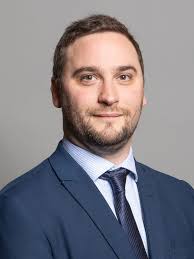
  • Christian Wakeford – 2023 Speech on the Budget

    Christian Wakeford – 2023 Speech on the Budget

    The speech made by Christian Wakeford, the Labour MP for Bury South, in the House of Commons on 16 March 2023.

    It is an honour to follow the hon. Member for Darlington (Peter Gibson), although he appears to have listened to a slightly different Budget statement yesterday.

    I would like to start by welcoming my hon. Friend the Member for West Lancashire (Ashley Dalton) to her place and congratulate her on her magnificent maiden speech. It is certainly an achievement to not mention any roundabouts whatsoever when talking about West Lancs.

    This Budget was a huge opportunity for the Government to make amends for the previous Prime Minister they burdened us with and the kami-Kwasi Budget that they unleashed on the country. But it is an opportunity that the Government missed. This could have been a Budget for workers, but it was not. This could have been a Budget for health, but it was not. This could have been a budget for justice, but it was not. This could have been a Budget for growth, but it really was not. This could also have been a Budget for education, but guess what? It was not.

    What we got was a sticking-plaster Budget from a Government on life support. There was nothing for public sector workers, nothing to tackle court backlogs, nothing for dentistry and nothing for health inequalities. Growth has been downgraded and we have the biggest fall in living standards since records began. Is it any wonder that the proud people of this country are living without any hope, wondering how they will get by? They lie awake at night waiting for the next heating bill and are filled with dread as that brown envelope comes through the letterbox. They have no chance to save, their dreams of buying a home are dashed, the fridge grows ever emptier and they have no money to fill it. This is a Budget that lets the people of this country down. Quite frankly, they deserve better.

    I will, however, go on record to give credit to the Chancellor for the action on pegging alcohol duty to inflation. Having previously accompanied alcohol-related charities to a meeting with the Exchequer Secretary, I know that that is hugely welcome and I thank him for it. The action taken on prepayment meters will also help many of my constituents. Such actions can and will save lives, and I give credit where it is due on those two matters.

    However, among G7 countries we have the lowest rate of business investment and are likely to have the weakest economy and to be the only country with negative growth. The list of self-inflicted problems on the Chancellor’s desk must have been piling up so high that it was possible to see them from Trafalgar Square.

    The problem that persists is that of childcare. One third of parents who use formal childcare say that they have to rely on some form of debt just to pay for it. One in four parents also say that childcare costs now account for more than three quarters of their take-home pay. Although action is welcome, without any new investment I am afraid that it is doomed to fail. It does not benefit people who have children now, and there are so many questions about whether it will benefit them at all. Will it cut the cost of childcare? Will it deliver high-quality childcare for every family? Will it deliver the growth that our country needs?

    But not to worry, because the Budget had some of the tax cuts for which Government Back Benchers have been begging. To be fair, the Government have borrowed the money—£1 billion, to be precise—from the magic money tree. I am afraid, however, that this is not good news for nurses, junior doctors or people who work in retail, and it is definitely not good news for posties, firefighters, teachers or cleaners. In fact, it is not really good news for anyone other than the Government’s friends in the City, who they seem to care about so much. Yes, abolishing the lifetime allowance and increasing the annual allowance paid into pensions will affect about 1% of people in this country, but they happen to be the wealthiest 1%. That is the Chancellor’s answer to the cost of living crisis—giving more bankers a tax cut.

    I heard the Chancellor this morning trot out the line that this is to help doctors, but that gives rise to a question. If this really is about doctors, why not introduce a bespoke scheme similar to that suggested by the shadow Health and Social Care Secretary, my hon. Friend the Member for Ilford North (Wes Streeting)? A conscious and political choice has been made to ignore the people of this country who are struggling to make ends meet, while at the same time giving all higher earners the benefit of a further tax cut.

    If the Chancellor wanted to help the NHS, he would have found the money to pay for nurses and junior doctors, and to bring down waiting lists, but they were not mentioned in the Budget statement. Right now, a junior doctor on the lowest band level in Bury earns less per hour than a barista in Pret. They have also experienced a wage decrease of more than 14%, while nurses have experienced a decrease of more than 10%. People in Bury South are waiting on average eight weeks for a mental health appointment, 28 days for a GP appointment and over a year for an operation. That is before we get to the complete impossibility of accessing a dentist. In 2023, this is the Government’s legacy for the NHS, and it is not one that anyone is proud of.

    Let me be clear: only a Labour Government will improve the NHS, reform the justice system, raise education standards and provide growth to the country. Only a Labour Government can protect the country from this reckless Conservative party, which is increasingly out of touch and out of ideas, and thankfully, running out of time.

  • Peter Gibson – 2023 Speech on the Budget

    Peter Gibson – 2023 Speech on the Budget

    The speech made by Peter Gibson, the Conservative MP for Darlington, in the House of Commons on 16 March 2023.

    Let me begin by congratulating the hon. Member for West Lancashire (Ashley Dalton) on her maiden speech, and on her warm tribute to her predecessor.

    I welcome this Conservative Budget, and commend the Chancellor for the measures that he has announced. He is delivering on the Government’s priorities: to halve inflation, grow the economy and reduce debt, so that we can create better-paid jobs and opportunities across the United Kingdom. I know that this Budget for growth will guarantee a better future for the people of Darlington, and for people up and down the country.

    The focus of today’s debate is employment. At the outset, I want to highlight the fantastic new data which shows that the claimant count in Darlington has decreased by 11.3% in the past year, and is now below the point where it was before the pandemic. This is good news for Darlington, because it means that the Government are helping to get more of my constituents back to work and my plan to deliver more jobs as the MP for Darlington is delivering also. This Conservative Government, working with our Conservative council—led by the fantastic Jonathan Dulston—and the Conservative Tees Valley Mayor, the amazing Ben Houchen, have ensured that Darlington and the wider region are blessed with new opportunities for local people to build their careers in the town where they grew up, championing our ambition to allow people to stay local but go far. Nothing can demonstrate that better than the delivery of the Darlington Northern Economic Campus, thanks to my honourable friend the Prime Minister. With civil service jobs from eight different Government Departments, there are fantastic job opportunities—more and better opportunities than we have ever had before—enabling people to play a real part in shaping the future of our country. Indeed, I regularly look to see which civil service jobs are being advertised. As of yesterday, there were 314 jobs advertised that are potentially based in Darlington. In addition, with 80% of those jobs at the northern economic campus in Darlington going to local people from our region, we are truly empowering our community.

    We know that employment is the best route out of poverty and this Budget is delivering on removing barriers to employment that have prevented many of my constituents from continuing their working lives. I warmly welcome the announcement to extend childcare, enabling parents to return to work, and also the further support that we see for disabled people. Abolishing the work capability assessment will ensure that we make the system better for disabled people and that they find the job that is right for them. I know from my own constituency casework that many disabled people want to work and to contribute to society, and these steps will help with that.

    I have welcomed the unprecedented investments that this Government have made in the Tees Valley on many occasions in this House, such as the £14.6 million awarded to Darlington-based engine maker Cummins to develop a hydrogen combustion engine. Cummins is a fantastic local employer, and these investments will allow it and other such businesses to continue to deliver high-skilled jobs for local people in cutting-edge green technologies well into the future. With that in mind, the £20 billion investment to develop one of the first carbon capture and storage clusters in the north-east is also hugely welcome, putting us well on the way to making net zero Teesside a reality.

    Investment zones are another hugely welcome step. The Tees Valley Combined Authority has been one of the areas identified for this policy, which would see the Tees Valley potentially getting a further £80 million over the next five years. This will be a great boost to our economic growth, bringing in more jobs and more investment. I welcome the measures in this Budget to encourage further investment in the Tees Valley and the continued transformative impact that that will have on the region.

    As we are discussing employment, it is important to remember that there are limited levers the state has to control the ability of people to get into work. In my own constituency of Darlington, we have a number of organisations that work with local people to ensure that their potential is not wasted. Let me take the opportunity to praise the work of the Morrison Trust and the Conservative-led Darlington Borough Council’s youth employment initiative, which has done such an amazing job. By recognising individual needs and targeting support, both have been hugely successful in supporting people in Darlington into work—people who had been finding it hard to get a job for a variety of reasons.

    I also pay tribute to First Stop, which, through work that I have done with it, has secured £50,000 of funding from the Harrison Centre for Social Mobility. First Stop provides information, advice, guidance and support to people who are experiencing difficulties in their lives that may make them vulnerable to a range of outcomes. In addition to providing one-to-one sessions, it also provides workshops, training and activities, including job clubs each week.

    There are a couple of things that I would have liked to have seen in the Budget. First, I would have liked the enhancements that we have seen in the west midlands and Manchester devolved areas to be applied to the Tees Valley—I hope that they will come in due course. I draw the House’s attention to my entry in the Register of Members’ Financial Interests and to my role as co-chair of the all-party parliamentary group on hospice and end of life care, and I would have liked to have seen further specific support for this sector, but I will maintain the pressure on my local integrated care boards to deliver what is needed for our local hospices.

    In conclusion this is a Budget for growth. This Conservative Government have set out a plan to meet the real challenges faced by our country, boost economic growth and continue our commitment to our ambitious levelling-up agenda. This Budget is good for the country, good for the Tees Valley and good for the people of Darlington.

  • Andrew Western – 2023 Speech on the Budget

    Andrew Western – 2023 Speech on the Budget

    The speech made by Andrew Western, the Labour MP for Stretford and Urmston, in the House of Commons on 16 March 2023.

    I congratulate my hon. Friend the Member for West Lancashire (Ashley Dalton) on her outstanding maiden speech. Having known her before her election to this place, I knew she would quickly make an impact and she certainly did that with her contribution today.

    In his Budget speech yesterday, the Chancellor said:

    “In November we delivered stability; today it is growth.”—[Official Report, 15 March 2023; Vol. 729, c. 847.]

    That is a bold statement, and upon closer inspection one may even say a brazen one: brazen not only because that stability was required because of the Conservative Government’s kamikaze Budget and their crashing of the economy, but more pertinently because on this Chancellor’s watch our economy will not grow, but will shrink, by 0.2% this year. In fact, we only avert technical recession this year because the pain is distributed in such a way that it avoids two successive quarters of output decline—not because this Government have averted economic shrinkage, and not because they have delivered the laser-like focus on growth that our economy needs. Far from it, the evidence tells us that this Government have been asleep at the wheel: while we in the UK see economic contraction this year, every other G7 country is forecast growth. While we in the UK see an economy that is still some 0.8% smaller than before the pandemic, every other G7 economy has grown to be larger than it was before the virus intervened.

    Conservative Members tell us to look at the longer-term picture: they say that this was always going to be a difficult year and their action has lessened the blow. That is nonsense, because this claim fails to take into consideration that growth projections for years three to five of the forecast period are revised down, and at the same time our underlying debt is set to increase from 92.4% of GDP this year to 93.7% of GDP next year. This is Tory Britain: they crashed our economy last year, and they have no plan to put it right this year.

    But let me turn to what this Budget says about the Conservative approach to basic fairness. The uplift in the annual tax-free allowance on pension contributions, from £40,000 to £60,000, benefits only those whose retirement funds constitute the largest 1% of pension pots in the country. Alongside lifting the lifetime allowance, that amounts to a huge tax break for some of the wealthiest people in the land. That this announcement came on the very same day that the OBR informed us we will have the lowest real living standards since records began speaks volumes about the appalling priorities of this Government.

    I have said before in this place that politics is ultimately about choices, and this Tory Government have made the wrong choices yet again. Not once in his speech yesterday did the Chancellor mention the words “fair” or “fairness,” and I cannot say I am surprised. They have form on fairness, and time and again they show us whose side they are really on.

    I accept that we need to address the shortage of doctors somehow, particularly as the Government continue to reject Labour’s fully costed proposal to scrap non-dom status and fund the largest workforce expansion in NHS history. So while I welcome the pension changes as they pertain to NHS staff, this should have been a bespoke offer available only to them, and in my view it should initially have been a pilot so that we could assess its future impact. Moreover, although the Government claim to want to help over-50s back to work, their unfair tax break for the wealthiest 1% has created a perverse situation whereby some over-50s may well be able to retire sooner, because their pension pots will have grown large enough for them to do so at a younger age than they had planned. Joined-up government? Don’t make me laugh. We have a Government at sixes and sevens, and a Chancellor without the clarity of purpose that is needed to turn our economy around.

    How do we know this? Well, let us recap. The Government want to level up, but we have the lowest investment in the G7. The Prime Minister wants debt to go down, but debt as a share of GDP will be up next year. The Chancellor wants to help with living costs, but we have the worst real living standards since records began. The Health Secretary wants to fix the NHS workforce, but the Prime Minister will not scrap non-dom status to fund it. The Work and Pensions Secretary wants to get over-50s back to work, but the Chancellor has just given a huge tax break to the richest, which means that they may well retire earlier than ever. It is preposterous. You could not make it up.

    We have had 13 years of this grotesque contradiction between words and action, this lack of vision, this fundamental mismanagement. The Government have no idea, no clue, and no plan for economic growth. They have crashed our economy, they have undermined our standing in the world, and they have decimated our public services. We are seeing sticking-plaster politics time and again, rather than the long-term solutions that our country needs. Because they are unable or unwilling to unleash the ambition of the British people to realise the fastest growth in the G7, we languish at the bottom of the pile.

    The Chancellor said yesterday that this Budget showed that his plan was working, but the reality is that this tired, out-of-touch, failing Government have no credible plan at all. It is time for a change. It is time for a Labour Government. For me, the next general election cannot come soon enough, and given this half-hearted attempt at a Budget for growth, it cannot come soon enough for the Conservative party either.

  • PRESS RELEASE : Launch of life-saving public emergency alerts [March 2023]

    PRESS RELEASE : Launch of life-saving public emergency alerts [March 2023]

    The press release issued by the Cabinet Office on 19 March 2023.

    A new system that will give the Government and emergency services the capability to send an alert directly to mobiles phones when there is a risk to life has been launched today.

    • UK-wide Emergency Alerts service launched and in operation from today
    • System will bolster the UK’s resilience and provides the capability to send alerts direct to mobile phones when there is a risk to life
    • UK-wide test to take place on Sunday 23 April

    Working with mobile broadcasting technology, the Emergency Alerts system will transform the UK’s warning and informing capability; providing a means to get urgent messages quickly to nearly 90 percent of mobile phones in a defined area; providing clear instructions about how best to respond.

    The system is now ready to be tested across the country following successful tests in East Suffolk and Reading, as the Government continues to strengthen its resilience capability, making sure it offers the best possible protection against an ever-evolving range of threats.

    A UK-wide alerts test will take place in the early evening of Sunday 23 April which will see people receive a test message on their mobile phones.

    The alerts will only ever come from the Government or emergency services, and they will issue a warning, always include the details of the area impacted, and provide instructions about how best to respond – linking to gov.uk/alerts where people can receive further information.

    Emergency Alerts will be used very rarely – only being sent where there is an immediate risk to people’s lives – so people may not receive an alert for months, or even years.

    The service has already been used successfully in a number of other countries, including the US, Canada, the Netherlands and Japan, where it has been widely credited with saving lives, for example, during severe weather events. In the UK, alerts could be used to tell residents of villages being encroached by wildfires, or of severe flooding.

    Announcing the launch of the new alerts system, Chancellor of the Duchy of Lancaster, Oliver Dowden MP, said:

    We are strengthening our national resilience with a new emergency alerts system, to deal with a wide range of threats – from flooding to wild fires.

    It will revolutionise our ability to warn and inform people who are in immediate danger, and help us keep people safe. As we’ve seen in the U.S. and elsewhere, the buzz of a phone can save a life.

    Emergency Alerts will be used across England, Scotland, Wales and Northern Ireland, and their initial use will focus on the most serious severe weather-related incidents, including severe flooding in England. The Government has been working closely with a range of stakeholders and partners across the UK on developing the system, including colleagues from the emergency services, transport groups and the Environment Agency.

    Chair of the National Fire Chiefs Council, Mark Hardingham, said:

    Together with every fire and rescue service in the country, I’m looking forward to having Emergency Alerts available to help us to do our jobs and to help communities in the event of emergencies.

    We’ve seen this type of system in action elsewhere across the world and we look forward to having the facility here in the UK – by working together with fire services and partners we want this system to help us to help you be as safe as you can if a crisis does hit.

    Executive Director for Flood and Coastal Erosion Risk Management at the Environment Agency, Caroline Douglass, commented:

    Being able to communicate warnings in a timely and accurate manner during incidents is really important to help people take action to protect themselves, their families, and their neighbours.

    This year is the 70th anniversary of the 1953 east coast surge, one of the worst flood events in our recent history which saw over 300 people perish in England – while our ability to warn and inform has come on leaps and bounds since then, Emergency Alerts is a fantastic addition to our toolbox that we can use in emergency situations.

    By broadcasting from cell towers in the vicinity of an emergency, the alerts are secure, free to receive, and one-way. They do not reveal anyone’s location or collect personal data.   Alerts can only be sent by authorised Governmental and Emergency Services users. Successful live tests of the service have already taken place in East Suffolk and Reading.

  • PRESS RELEASE : UK boosts girls’ access to education in the Democratic Republic of Congo [March 2023]

    PRESS RELEASE : UK boosts girls’ access to education in the Democratic Republic of Congo [March 2023]

    The press release issued by the Foreign Office on 19 March 2023.

    The Minister for Development and Africa, Andrew Mitchell, launches a new programme to support 60,000 children to access education in the Kasai province in the DRC.

    • New UK programme to increase girls’ access to education in Kasai, one of the Democratic Republic of Congo’s (DRC) most deprived provinces.
    • Following launch of UK’s new Women and Girls Strategy to tackle increasing threats to gender equality, support will reach 60,000 children in the region, 60% of whom will be girls.
    • The Accès et Égalité pour l’Éducation des Filles (AXE-Filles) Programme will improve access to and the quality of education, tackling barriers to girls continuing in school, such as sexual and gender-based violence.

    The Minister for Development and Africa, Andrew Mitchell has today (Sunday 19 March) launched a new programme to support 60,000 children, mainly girls, to access education in the Kasai province in the DRC.

    Kasai is one of the most deprived regions in the DRC, where both attendance in school and literacy rates for children are low.

    Up to £28 million of UK funding will go to the new programme, Accès et Égalité pour l’Éducation des Filles (AXE-Filles), to improve school facilities and provide a better quality of learning for Congolese children, including marginalised girls.

    This builds on previous UK education programmes which have helped approximately four million children access schooling across the DRC, and have supported the Congolese government’s efforts to roll out free education and improve quality.

    The UK is committed to tackling gender inequality around the world and helping girls get a quality education, a priority reaffirmed by Foreign Secretary James Cleverly in Sierra Leone last week where he launched the UK’s new global Women and Girls Strategy. The strategy puts a continued focus on educating girls, empowering women and girls, championing their health and rights and ending gender-based violence – the challenges the UK believes are most acute.

    AXE-Filles will work with schools, provincial government, and communities to provide education on sexual health and reproductive rights, tackle sexual and gender-based violence at school, and provide scholarships to help girls attend and remain in secondary school.

    The Minister for Development and Africa, The Rt Hon Andrew Mitchell MP said:

    The launch of our new education programme is vital for ensuring that Congolese children who need it the most get the access to education they deserve. By transforming the way they learn, we can boost the quality of teaching, improve school attendance and outcomes, and empower girls.

    We work closely with DRC on common challenges, including the fight against climate change. From strengthening democratic processes, to UK-supported hospitals saving lives in North Kivu, we are collaborating to improve the lives of Congolese people, supporting sustainable development, empowering women and girls and working towards regional peace.

    During his three-day visit to the country, Minister Mitchell will also discuss steps towards ending the violence in the east of the country.

    In Kinshasa, he will meet President Felix Tshisekedi and Foreign Minister Christophe Lutundula to discuss the ongoing work to strengthen the UK-DRC partnership.

    Alongside development and humanitarian support, the UK is also keen to work with DRC to improve the business environment and help deliver economic prosperity. The UK has invited the DRC to the UK-African Investment Summit, to be held in London in April 2024, aiming to grow two-way trade and investment.

    He will also visit North Kivu to listen to a range of voices on finding a peaceful solution to the violence in the east of the country, and see first-hand how UK humanitarian support is saving lives and reducing suffering of the most vulnerable who have been displaced by ongoing conflict.

  • PRESS RELEASE : UK and Rwanda strengthen agreement to deal with global migration issues [March 2023]

    PRESS RELEASE : UK and Rwanda strengthen agreement to deal with global migration issues [March 2023]

    The press release issued by the Home Office on 18 March 2023.

    The Home Secretary hailed the strengthening of the partnership with Rwanda as both countries vow to step up efforts in dealing with global migration challenges.

    Under the innovative Migration and Economic Development Partnership, people who make dangerous, unnecessary and illegal journeys to the UK, such as by small boat, will be relocated to Rwanda, where they will be supported to rebuild their lives.

    Suella Braverman travelled to Kigali for official engagements with Rwandan President Paul Kagame and Rwandan Minister for Foreign Affairs and International Co-operation, Dr Vincent Biruta, this weekend (March 18 and 19).

    Today, the Home Secretary and Dr Biruta reiterated their desire to deliver the partnership, amid a global migration crisis that has seen 100 million people displaced and people smugglers cashing in on human misery.

    They outlined the global leaders’ commitment to working on bold and innovative migration policies to redress the balance between legal and uncontrolled migration. The government of Rwanda reiterated the country’s readiness to receive thousands of individuals, process their claims and house them before they are moved to longer-term accommodation, with necessary support services including health and education provisions.

    In addition, the Home Secretary and Dr Biruta signed an update to the Memorandum of Understanding, expanding the partnership further to all categories of people who pass through safe countries and make illegal and dangerous journeys to the UK.

    This will have the added benefit of preparing the UK to deliver on the measures proposed in the Illegal Migration Bill, as it will mean that anyone who comes to the UK illegally – who cannot be returned to their home country – will be in scope to be relocated to Rwanda.

    The new bill, which was introduced to Parliament last week, will see people who come to the UK illegally face detention and be returned to their home country, or a safe third country such as Rwanda.

    The scheme is uncapped and the government of Rwanda have confirmed they are able to take thousands of people eligible for relocation.

    In December, the UK government secured an important victory in the High Court on the legality of the partnership and will continue to defend the policy against ongoing legal challenge, while working with Rwanda to ensure flights can operate as soon as there are no legal barriers.

    Home Secretary Suella Braverman said:

    We cannot continue to see people risking their lives crossing the Channel, which is why I am pleased to strengthen our agreement even further with the government of Rwanda so we can address the global migration crisis head on.

    The Migration and Economic Development Partnership is key to breaking the business model of people smugglers while ensuring those who genuinely need protection can be helped to rebuild their lives.

    Rwanda is a progressive, rapidly growing economy at the forefront of innovation – I have thoroughly enjoyed seeing first-hand the rich opportunities this country can provide to relocated people through our partnership.

    Minister of Foreign Affairs Vincent Biruta said:

    If we are to successfully tackle the global migration crisis, we need innovative, urgent action. This Partnership addresses the opportunity gap at the heart of the migration crisis, by investing in Rwanda’s capability to continue offering migrants the opportunity to build new lives in a safe, secure place, through accommodation, education, and vocational training.

    For these reasons, we are pleased to once again renew our commitment to our ground-breaking Partnership with the UK, which shares our determination to solve this crisis.

    On the visit, the Home Secretary will spend time meeting refugees, who have been supported by the Government of Rwanda to rebuild their lives. She will also see new housing developments, which will be used to relocate people.

    She also visited new modern, long-term accommodation that will support those who are relocated to settle in Rwanda.

    The Home Secretary also met with investment start-ups and entrepreneurs to discuss the range of business and employment opportunities available to people in Rwanda.

    The partnership with Rwanda is just one strand of the work the government is doing to tackle illegal migration. Last week the Prime Minister agreed a package with France which will see a new detention centre established in France as well as the deployment of more French personnel and enhanced technology to patrol beaches.

  • PRESS RELEASE : UK sends life-saving support to cyclone-hit Malawi [March 2023]

    PRESS RELEASE : UK sends life-saving support to cyclone-hit Malawi [March 2023]

    The press release issued by the Foreign Office on 18 March 2023.

    UK sends aid support to help save lives in aftermath of Cyclone Freddy.

    • UK sends search and rescue team of 27 and medical team of six to help the Government of Malawi save lives in the aftermath of the Cyclone Freddy
    • Support will also provide shelter and water to thousands of people hit by flooding
    • British teams will work with the Malawi authorities to provide help where most needed

    The UK is providing urgently needed crisis expertise and humanitarian supplies to Malawi following the devastation caused by Cyclone Freddy.

    Our support will provide emergency shelter to approximately 3,600 people and allow up to 12,750 people affected by the floods to access safe drinking water, protecting them from disease.

    UK Minister for Development and Africa Andrew Mitchell MP said:

    We have been working since this horrendous cyclone hit to support the emergency response in Malawi and provide life-saving assistance to those who need it most.

    Working alongside the Malawians, our search and rescue and medical teams are playing a critical role in helping ensure those who have lost their homes in the floods receive much required expert assistance and that we prevent a wider outbreak of cholera.

    The initial UK package of assistance, which arrived in Malawi today, comprises: 27 members of the UK’s International Search and Rescue Team (ISAR); and six from the UK Emergency Medical Team (EMT); specialist boats; and urgently needed emergency relief items. The flight with our support left Birmingham airport this morning.

    This is in addition to the immediate help the UK provided to the Malawian Government, when the cyclone hit last week, to help launch emergency operations. This builds on the UK’s longstanding partnership with Malawi, working together on crisis preparedness and resilience. For example, the UK has supported Malawi tackle cholera and Covid-19.

    Over 300 people have died in the tragic event which has also left nearly 20,000 people without homes.

    The UK ISAR team will support Malawian authorities in the search for survivors of the floods, assisted by their specialist equipment which includes lightweight, nimble boats and a drone team. These boats will be gifted to the Malawi Government for future emergency use when the UK ISAR team departs.

    The Emergency Medical Team will support hospitals in southern Malawi to treat victims of Cyclone Freddy and save lives. Their support builds on the existing cholera-focussed UK EMT who have been in Malawi since January 2023, and are helping to reduce the risk of the on-going cholera outbreak.

    The UK government remains in close contact with the authorities in the area and is ready to assist any British nationals affected.

  • NEWS FROM 100 YEARS AGO : 19 March 1923

    NEWS FROM 100 YEARS AGO : 19 March 1923

    19 MARCH 1923

    Andrew Bonar Law, the Prime Minister, responded to a deputation that met him that there would be no public subsidy for the agriculture industry.

    Joseph Smeets, a leading Rhineland separatist, was attacked and seriously wounded in Cologne.

    The Unionist Party selected Richard Owen Roberts as their candidate for the forthcoming Anglesey by-election.