Blog

  • NEWS STORY : IMF Agrees $15.6 Billion Loan to Ukraine

    NEWS STORY : IMF Agrees $15.6 Billion Loan to Ukraine

    STORY

    The International Monetary Fund (IMF) has agreed a $15.6 billion (£12.8 billion) loan to Ukraine to help it rebuild following the military invasion of the country by Russia. The loan agreement comes following a change of policy in the IMF which previously limited loans to countries with high levels of uncertainty, with a spokesperson from the international economic organisation saying:

    “The programme has been designed in line with the new fund’s policy on lending under exceptionally high uncertainty, and strong financing assurances are expected from donors, including the G7 and EU”.

    Denys Shmyhal, the Prime Minister of Ukraine, said in a statement:

    “In conditions of a record budget deficit, this program will help us finance all critical expenditure and ensure macroeconomic stability and strengthen our interaction with other international partners”.

    Gavin Gray who led the IMF loan team said:

    “In addition to the horrific humanitarian toll, Russia’s invasion of Ukraine continues to have a devastating impact on the economy: activity contracted by 30 percent in 2022, a large share of the capital stock has been destroyed, and poverty levels have climbed. Acute macroeconomic challenges persist due to the scale of the shock and the expansion of the fiscal deficit. The authorities have nevertheless managed to maintain macroeconomic and financial stability, thanks to substantial external support and skillful policymaking”.

    RESOURCES

    IMF Press Release on Loan

    EXTERNAL LINKS

    IMF

    President of Ukraine

  • PRESS RELEASE : IMF and Ukrainian Authorities Reach Staff Level Agreement on a US$15.6 Billion Extended Fund Facility (EFF) Arrangement [March 2023]

    PRESS RELEASE : IMF and Ukrainian Authorities Reach Staff Level Agreement on a US$15.6 Billion Extended Fund Facility (EFF) Arrangement [March 2023]

    The press release issued by the IMF on 21 March 2023.

    • The Ukrainian authorities and IMF staff have reached a staff-level agreement on a set of macroeconomic and financial policies that would be supported by a new 48-month Extended Fund Facility (EFF) Arrangement.
    • The EFF, with requested access of SDR 11.6 billion (about US$15.6 billion), or 577 percent of quota, aims to support the Ukrainian authorities anchor policies that sustain fiscal, external, price and financial stability, and support the ongoing gradual economic recovery, while promoting long-term growth in the context of post-war reconstruction and Ukraine’s path to EU accession.
    • The staff-level agreement reflects the IMF’s continued commitment to support Ukraine and is expected to help mobilize large-scale concessional financing from Ukraine’s international donors and partners.

    Washington, DC: At the request of the Ukrainian authorities, an International Monetary Fund (IMF) team led by Mr. Gavin Gray held discussions in Warsaw with Ukrainian officials, during March 8-15, 2023, on a 4-year economic program that, subject to approval by the Executive Board, would be supported by the IMF under the Extended Fund Facility (EFF).

    Mr. Gavin Gray issued the following statement today:

    “I am pleased to announce that the IMF team has reached staff-level agreement with the Ukrainian authorities on a 4-year IMF-supported program, with access requested of SDR 11.6 billion (about US$15.6 billion), or 577 percent of Ukraine’s quota. This agreement is subject to approval by the IMF Executive Board, with Board consideration expected in the coming weeks.

    “The staff-level agreement reflects the IMF’s continued commitment to support Ukraine and is expected to help mobilize large-scale concessional financing from Ukraine’s international donors and partners over the duration of the program.

    “In addition to the horrific humanitarian toll, Russia’s invasion of Ukraine continues to have a devastating impact on the economy: activity contracted by 30 percent in 2022, a large share of the capital stock has been destroyed, and poverty levels have climbed. Acute macroeconomic challenges persist due to the scale of the shock and the expansion of the fiscal deficit. The authorities have nevertheless managed to maintain macroeconomic and financial stability, thanks to substantial external support and skillful policymaking. The authorities’ commitment to good economic management was also evidenced by the strong performance under the Program Monitoring with Board Involvement (PMB) (Press Release 23/46).

    “A gradual economic recovery is expected over the coming quarters, as activity recovers from the severe damage to critical infrastructure, although headwinds persist, including the risk of further escalation in the conflict. Developing a single baseline outlook scenario under exceptionally high uncertainty is exceedingly challenging, as a range of outcomes are plausible. On that basis, staff currently sees real GDP growth for 2023 ranging from -3 to +1 percent.

    “The overarching goals of the authorities’ program are to sustain economic and financial stability in circumstances of exceptionally high uncertainty, restore debt sustainability, and support Ukraine’s recovery on the path toward EU accession in the post-war period. The program has been designed in line with the new Fund’s policy on lending under exceptionally high uncertainty, and strong financing assurances are expected from donors, including the G7 and EU. In view of the exceptionally high uncertainty, the requested IMF-supported program envisions a two-phased approach:

    • The first phase, currently envisioned during the first 12-18 months of the program, will build on the PMB, to strengthen fiscal, external, price and financial stability by (i) bolstering revenue mobilization, (ii) eliminating monetary financing and aiming at net positive financing from domestic debt markets, and (iii) contributing to long-term financial stability, including by preparing a deeper assessment of the banking sector health and continuing to promote central bank independence. New measures that might erode tax revenues will be avoided. The authorities are also committed to continuing reforms to strengthen governance and anti-corruption frameworks, including through legislative changes.
    • The second phase would shift focus to more expansive reforms to entrench macroeconomic stability, support recovery and early reconstruction, and enhance resilience and higher long-term growth, including in the context of Ukraine’s EU accession goals. During the second phase, Ukraine would be expected to revert to pre-war policy frameworks, including a flexible exchange rate and inflation targeting regime. In addition, fiscal policies would focus on critical structural reforms to anchor medium-term revenues through the implementation of a national revenue strategy, together with strengthening public finance management and introducing public investment management reforms to support post-war reconstruction. Enhancing competition in the vital energy sector, while reducing quasi-fiscal liabilities would complement the post-war reform efforts.

    “The mission met with NBU Governor Pyshnyy and Finance Minister Marchenko, and other senior public officials, and would like to thank the authorities for the open and constructive discussions and the close collaboration that have brought us to today’s staff-level agreement.”

  • NEWS STORY : Boris Johnson Admits Lying to Parliament But Claims it was Accidental

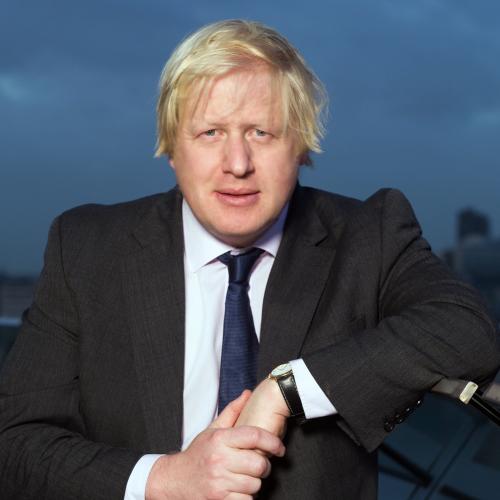
    NEWS STORY : Boris Johnson Admits Lying to Parliament But Claims it was Accidental

    STORY

    Boris Johnson, the former Prime Minister, has presented a 52 page bundle of evidence to the Privileges Committee which are investigating whether he knowingly lied to Parliament. Johnson has said that he was not guilty of deliberate misinformation and rule-breaking and lied to Parliament by accident rather than by design. The former Prime Minister will this week face the Privileges Committee to answer questions about his level of knowledge of parties which were being held at 10 Downing Street.

    The committee will also investigate an allegation that Johnson was slow to correct the record and whether he should have been aware of the parties that were taking place at 10 Downing Street given that he lived at the property. The committee will issue a report which will conclude whether they believe he was guilty of contempt of Parliament, with a range of possible sanctions available including a recommendation that he be suspended from the House of Commons.

    RESOURCES

    Boris Johnson – Evidence to Privileges Committee

    EXTERNAL LINKS

    Privileges Committee

  • PRESS RELEASE : £1.8 billion awarded to boost energy efficiency and cut emissions of homes and public buildings across England [March 2023]

    PRESS RELEASE : £1.8 billion awarded to boost energy efficiency and cut emissions of homes and public buildings across England [March 2023]

    The press release issued by the Department for Energy Security and Net Zero on 22 March 2023.

    Government awards £1.8 billion through Social Housing Decarbonisation Fund and Public Sector Decarbonisation Scheme to upgrade social homes and public buildings.

    • £1.4 billion to go to local authorities, providers of social housing and charities to upgrade homes and off-grid households with energy efficiency measures
    • changes, including loft insulation and new windows, mean households could save between £220 and £400 on annual energy bills, with funding expected to support 20,000 jobs
    • £409 million also awarded to reduce carbon emissions of hospitals, schools, museums, universities and other public sector buildings across England

    More than 115,000 homes across England are to get upgrades to improve their energy efficiency and save residents money on their bills as the government announces the allocation of nearly £2 billion in funding.

    The Social Housing Decarbonisation Fund and Home Upgrade Grant are collectively worth £1.4 billion, which will be used to fund energy-saving measures ranging from loft insulation to new windows. An additional £1.1 billion in match funding for social housing provided by local authorities, providers of social housing and charities will bring the total investment to £2.5 billion to upgrade social and private homes in England.

    The money will go towards improvements to vulnerable households and off-gas grid homes with an EPC rating of D or below and could save tenants between £220 and £400 a year on energy bills.

    These schemes could also support around 20,000 jobs in the construction and home retrofit sectors, helping to deliver on our promise to grow the economy and create better paid jobs, whilst supporting families across the country.

    On top of this, a further £409 million has been granted through the Public Sector Decarbonisation Scheme to help public sector buildings such as schools and hospitals drive down their carbon emissions. Upgraded heating systems, powered by cleaner, cheaper, renewable energy, will reduce the use of fossil fuels exposed to volatile global energy prices – supporting thousands of jobs and saving taxpayers hundreds of millions of pounds.

    Secretary of State Grant Shapps said:

    We know this is a difficult time for families, which is why the government is covered around half a typical household’s energy bill this winter.

    This is a huge investment that will help households save hundreds on energy bills and see them heat their homes for less, and stay warm for longer.

    Not only this but the funding is also a huge boost for job creation and economic growth, opening up new and exciting opportunities across the UK’s ever-expanding green sector.

    Lord Callanan, Minister for Energy Efficiency and Green Finance, said:

    The UK is truly a world-leader when it comes to reducing carbon emissions and the progress we’ve made over the last decade has been remarkable. But we can’t rest on our laurels and must continue to drive forward progress, setting a standard for other countries to follow.

    Reaching net zero means considerable action from the public sector as well as private sector. Through the Public Sector Decarbonisation Scheme funding allocation announced today, we are empowering public bodies to save the taxpayer hundreds of millions while packing a punch on our ambitious and necessary climate goals.

    Local authorities, providers of social housing and charities have been awarded a huge injection of £630 million, to come from Phase 2 of the latest stage of the Home Upgrade Grant, while £778 million will be provided through the most recent wave of the Social Housing Decarbonisation Fund. An additional £1.1 billion in match funding will be added to this through the Social Housing Decarbonisation Fund, bringing the total to £2.5 billion to upgrade social and private homes in England.

    The funding will be rolled out from April 2023 to upgrade homes over the next 2 years.

    Energy cutting and cost saving measures provided through the schemes include exterior wall insulation, cavity wall insulation, loft insulation, new windows and doors and draft proofing measures, as well as heat pumps and solar panel installation.

    The schemes form part of the government’s commitment to reduce overall UK energy demand by 15% by 2030, as well as supporting the ambition for the UK to move towards greater energy independence.

    The Home Upgrade Grant is supporting over 25,000 low-income homes across England by installing energy efficiency measures and low carbon heating. Those being aided are typically the worst quality, off-grid homes most in need of upgrading, with an EPC rating of D to G. Improving these homes comes with the added benefit of supporting 7,000 jobs.

    Aliye Galloway lives in social housing in Northamptonshire with her partner and 5 children. Through the Social Housing Decarbonisation Fund her home was fitted with an air source heat pump, solar panels and more efficient doors and windows.

    She said that even with the recent energy price rises, the family’s energy bills are significantly lower since the work has been completed.

    Aliye explained:

    Already we are seeing a massive change with our energy consumption and energy costs and already that’s having a positive impact on us a family.

    We are very happy with how it all works. We would recommend it to any tenant who is approached by the scheme. It will have a huge positive outcome.

    It’s supposed to be more eco-friendly too so I’m very happy we managed to get rid of the gas to be honest. We are literally just electric now.

    We are going to massively save. Even though the prices have gone up, we are still putting in less than we were before.

    Emma Pinchbeck, Chief Executive of Energy UK said:

    Improving the energy efficiency of Britain’s draughty homes and buildings is the best way to cut energy bills permanently, while also boosting the UK’s energy security and reducing carbon emissions.

    Today’s announcement will rightly prioritise those who need support the most like low- income households, social housing and public buildings.

    Industry will work with government to build on these vital schemes and to remove any barriers that prevent households and businesses from saving money on their bills by reducing heat loss and conserving energy.

    The government has also announced today that over £400 million has been allocated to public sector bodies across England to help reduce their carbon emissions. 144 public sector organisations responsible for hospitals, schools, leisure centres, museums and universities will benefit from this support.

    This funding is being delivered through the Public Sector Decarbonisation Scheme, which provides grants to public sector bodies to fund low carbon heating, renewable energy and energy efficiency measures such as heat pumps, solar panels and insulation. The scheme is being delivered on behalf of the government by Salix Finance.

    Announced today, organisations set to receive funding include Adur and Worthing Councils, Salisbury NHS Foundation Trust, Northumbria University, Greater Manchester Academies Trust and many other worthy recipients across England looking to improve the sustainability of their buildings.

    The Scheme aims to support the government’s commitment to reduce emissions from public sector buildings by 75% by 2037, compared to 2017 levels, as first set out in the 2021 Heat and Buildings Strategy. The commitment follows significant progress the UK has already made towards reaching net zero – cutting all emissions by 48% between 1990 and 2021, which is faster than any other G7 country. Decarbonising the public sector with low carbon heating and energy efficiency measures is also expected to save the public sector an estimated £650 million per year on average to 2037.

    Salix Finance Chief Executive Annie Shepperd OBE, said:

    There is a huge amount of passion and expertise in the green energy sector, and Salix is proud to be supporting the hundreds of decarbonisation projects that have been made possible through the Public Sector Decarbonisation Scheme. Each one represents the best evidence of government and public bodies working together to achieve great things.

    In the meantime, the government has partnered with Energy Systems Catapult today to launch a freely accessible suite of tools, templates and guidance to support the public sector in further decarbonising their sites. This support will help public sector bodies from the first stages of developing a strategy, through funding, installation and completion, to help make achieving net zero sites and energy savings simpler.

    This is a continuation of the government’s award-winning Modern Energy Partners programme which has worked with 42 sites to explore different avenues for decarbonisation.

    Stakeholder reactions

    Social Housing Decarbonisation Fund and Home Upgrade Grant

    Adam Scorer, Chief Executive of National Energy Action (NEA) said:

    This vital investment is desperately needed. Low-income households, in the least efficient homes, are being hardest hit by the energy crisis and are having to pay hundreds of pounds more than the typical household just to heat and power their home to a minimum reasonable standard.

    As well as helping to abate the impact of high energy bills for thousands more households, we hope the investment can lessen some of the physical and mental health impacts for people unable to keep warm at home.

    Both the Social Housing Decarbonisation Fund and Home Upgrade Grant can also help us make progress with our legal fuel poverty targets, helping millions more of the poorest households, who are massively exposed to high energy prices and pay an ‘energy inefficiency premium’ just to stay warm and safe at home.

    Tracy Harrison, Chief Executive, Northern Housing Consortium said:

    This latest wave of funding adds to the momentum already built around green home upgrades in the North.

    Retrofitting homes towards net zero is a key priority for councils and housing associations across the North. Our members want to continue to scale their activity to support the development of the supply chain, and to deliver good, green jobs.

    We were delighted to see even more ambitious partnership bids submitted to this Wave – an approach which we hope to see followed through in delivery. But most importantly, these successful projects will help create warmer homes and improve the physical and mental health of people in our communities.

    Carol Matthews CBE, Chief Executive of The Riverside Group said:

    We are delighted that we have secured just short of £12.7 million from the Social Housing Decarbonisation Fund from the Department for Energy Security and Net Zero. This funding will enable us to improve the energy efficiency of our homes and protect our residents from rising fuel bills and cost of living crisis.  Riverside will be match funding and investing £15 million as part of our retrofitting and net zero commitments. We are looking forward to working with the government to improve over 1,100 homes and the lives of our residents living in them.

    Public Sector Decarbonisation Scheme

    Cllr Helen Silman, Worthing Council’s Cabinet Member for Climate Emergency, said:

    Worthing Borough Council is delighted to receive this latest round of Public Sector Decarbonisation Scheme funding, which will help us to secure Worthing’s sustainable future through infrastructure and innovation.

    The decarbonisation of heating is key to our goal of being a carbon neutral council by 2030, and a challenge we’ll continue to rise to as we look ahead to meeting our 2045 target of a carbon-neutral Worthing.

    Cristina Calleja, Sustainability Manager at South Warwickshire University Foundation Trust, said:

    Our estates, capital and sustainability teams worked very hard to put together an innovative and detailed grant application, which will reduce our organisation’s carbon emissions and benefit our staff, patients and visitors. Therefore, we are extremely delighted to have received this grant that demonstrates our commitment to climate change at the Trust.

    Canterbury City Council’s Director of Strategy and Improvement, Peter Davies, said:

    We are really pleased to have secured a grant from the Public Sector Decarbonisation Scheme, which will allow us to significantly reduce emissions at Kingsmead Leisure Centre. By their very nature, leisure centres are energy intensive buildings and we have been conscious of the need to put in place measures to lessen the impact of Kingsmead on the environment. This grant will enable us to do a huge amount using some of the latest technology.

  • PRESS RELEASE : Plans to make UK an international technology superpower launched [March 2023]

    PRESS RELEASE : Plans to make UK an international technology superpower launched [March 2023]

    The press release issued by the Foreign Office on 22 March 2023.

    International Technology Strategy launched to guide UK to becoming a tech superpower by 2030.

    • Strategy sets out how UK can make the best use of new technologies while countering malign influences on tech
    • new tech envoys and new Technology Centre of Expertise announced to boost UK influence around the world
    • UK will focus efforts on five critical technologies of tomorrow: AI, quantum, semiconductors, telecoms and engineering biology

    The UK has today (22 March 2023) published a roadmap for reaching tech superpower status by 2030 through a new International Technology Strategy.

    The Foreign Secretary and the Science, Innovation and Technology Secretary set out at the launch in London how the UK will build on the strength of our tech sector, which is already the largest in Europe and the third highest valued in the world after the USA and China.

    Last week’s publication of the Integrated Review Refresh identified that authoritarian regimes are using technology as a tool of oppression – with far-reaching consequences for the security and prosperity of the British people.

    The International Technology Strategy sets out the UK’s alternative. The UK, guided by four principles – to be open, responsible, secure and resilient – will shape the future of technology in a way that promotes its use positively, and drives innovation and UK tech leadership, while boosting our security from new and emerging threats.

    The UK government will work closely with governments, academia and industry to leverage the UK’s world-leading strengths in technology through international partnerships with established and emerging science and technology powerhouse nations.

    The Prime Minister has made growing the economy, creating better paid jobs and opportunity across the country, one of his five priorities. Investing in our thriving tech sector will directly contribute to that. The sector was worth $1 trillion in 2022, and our country is home to more than 85,000 start-ups and scale-ups. More investment was generated in the UK tech sector last year than in France and Germany combined, creating and sustaining high quality jobs around the country.

    The International Tech Strategy will boost growth in this sector, strengthening our position on the world stage while forging long-term links that will promote the UK as place for investment and collaboration in the technologies of the future

    Foreign Secretary James Cleverly said:

    Now more than ever, it is important that the UK steps up to promote British tech excellence worldwide and takes a stand against the malign influences that seek to use tech against us.

    That is why we’ve announced this strategy, helping to deliver on our ambition to be a tech superpower by 2030, backing UK businesses and helping us solve the challenges of tomorrow through innovation and international collaboration.

    Technology Secretary Michelle Donelan said:

    We are a top-class breeding ground for emerging tech, but being a superpower means working with our international partners to turn these nascent technologies into global industries.

    Our International Tech Strategy will ensure we deepen collaboration with our allies on the technologies of tomorrow, driving growth and prosperity for the UK while strengthening our national security.

    Our first tech envoy, Joe White, has helped to boost our ties with tech companies in Silicon Valley. Building on this success, the UK will expand our network of tech envoys and expertise to create the world’s most extensive tech diplomacy network. We will use this as a platform to enforce our principles, challenge authoritarian narratives and to drive international collaboration with industry. Envoys will be bring expertise from the tech sector, ensuring that they can put their lived experience of this industry into boosting the UK’s global leadership.

    These aims will further be supported through our new Technology Centre of Expertise. With the first pilots running from later this year, these centres will bring together tech and digital experts from government, private sector, and academia to support countries to transform their economies in a sustainable and inclusive manner through innovation.

    The UK Science and Technology Framework set out the ambition for the UK to be internationally recognised as a tech superpower by 2030. Being a tech superpower requires us to collaborate more deeply with other leading nations to tackle the urgent global challenges facing our planet through science and tech. This strategy set out the work being done to build those partnerships.

    As part of the strategy, the UK will also work with the Organisation for Economic Co-operation and Development (OECD) Global Forum on Technology to engage with the international community on how to better use technology. We will also build on the UK’s success in securing a seat on the Council of the International Telecommunications Union (ITU), working together with partners to increase worldwide connectivity, and provide clear leadership in the telecoms sector.

  • PRESS RELEASE : Government sets out strategy to protect NHS from cyber attacks [March 2023]

    PRESS RELEASE : Government sets out strategy to protect NHS from cyber attacks [March 2023]

    The press release issued by the Department of Health and Social Care on 22 March 2023.

    The government will provide a plan to promote cyber resilience across the health and care sectors by 2030, protecting both services and patients.

    • New strategy sets out five key ways to build cyber resilience in health and care by 2030
    • Cyber strategy will protect health and adult social care functions and services, which the whole nation depends on
    • Part of government’s commitment to build a stronger, more sustainable NHS for the future

    Patients will benefit from bolstered protection to the nation’s health and adult social care services as a new cyber security strategy for England is published today.

    The Cyber Security Strategy for Health and Adult Social Care sets out a plan to promote cyber resilience across the sector by 2030, protecting services and the patients they support.

    This will ensure services are better protected from cyber threats, further securing sensitive information and ensuring patients can continue accessing care safely as the NHS continues to cut waiting lists.

    Technology is transforming how people access health and care services and information. Over 40 million people now have an NHS login, helping them book appointments, track referrals, and order medications online. Over 50% of social care providers now use a digital social care record, helping staff share vital information about the people they care for. As digital systems are adopted to improve health and care services for people across the country, it is vital the health and care sector has the tools it needs to better protect patients’ information.

    This new strategy will ensure health and adult social care organisations across England are set up to meet the challenges of the future – from identifying areas in the sector which are most vulnerable, to better utilising resources and expertise across the country to defend against cyber attacks.

    Health Minister Lord Markham said:

    We’re harnessing the power of technology to deliver better, safer care to people across the country – but at the same time it’s crucial we’re also bolstering the defences of our health and care services.

    This new strategy will be instrumental to ensure every organisation in health and adult social care is set up to meet the challenges of the future.

    This is an important step to ensure we’re building an NHS which is sustainable and fit for the future, with patients at the centre.

    The health and social care sector has made good progress in recent years, by using the increasing number of cyber defence and response tools it has at its disposal. The sector is now much better protected from attacks than it was at the time of the WannaCry cyber attack in 2017.

    NHS Trusts now benefit from a direct link to NHS England’s Cyber Security Operations Centre (CSOC), providing real time protection of any suspicious activity to approximately 1.7 million devices across the NHS network. Around 21 million malicious emails are also blocked every month.

    The vision includes five key pillars to minimise the risk of cyber attacks and other cyber security issues, and to improve response and recovery following any incidents across health and social care systems including for adult social care, primary and secondary care. This includes:

    • Identifying the areas of the sector where disruption would cause the greatest harm to patients, such as through sensitive information being leaked or critical services being unable to function.
    • Uniting the sector so it can take advantage of its scale and benefit from national resources and expertise, enabling faster responses and minimising disruption.
    • Building on the current culture to ensure leaders are engaged and the cyber workforce is grown and recognised, and relevant cyber basics training is offered to the general workforce.
    • Embedding security into the framework of emerging technology to better protect it against cyber threat.
    • Supporting every health and care organisation to minimise the impact and recovery time of a cyber incident.

    A full implementation plan will be published in Summer 2023 setting out detailed activities and defining metrics to build and measure resilience over the next two to three years.

    National cyber security teams will also work closely with local and regional health and care organisations to achieve the visions and aims of the strategy. This work will include enhancing the NHS England Cyber Security Operations Centre, publishing a comprehensive and data-led landscape review of cyber security in adult social care, and updating the Data Security and Protection Toolkit (DSPT) to empower organisations to own their cyber risk.

  • Wayne David – 2023 Speech on the Budget

    Wayne David – 2023 Speech on the Budget

    The speech made by Wayne David, the Labour MP for Caerphilly, in the House of Commons on 20 March 2023.

    I think it is fair to say that there are few surprises in the Budget. Many of the announcements were expected, and quite a few of them were borrowed from the Labour party, but a significant rabbit was pulled out of the hat—and it was a really big one. It was announced that there will be a £1 billion tax cut for the richest 1% through changes to tax allowances. Someone with a £2 million pension pot will now get a tax cut of more than a quarter of a million pounds when they take their tax-free lump sum. Moreover, there will be no limit on how much the rich can put into their pension pots tax-free. That is not all: they will be able to pass that on to their heirs tax-free through the creation of a local inheritance law.

    I am told that a competition is now under way in my Caerphilly constituency to find out whether anyone at all will benefit from those tax allowance changes. The odds are that not one single individual there will. The justification for that generous tax cut is that it will encourage people into work. Frankly, it is unlikely that that will happen judging by the reaction from a large number of commentators. As has already been said in the debate, if the measure is aimed specifically at doctors, why not have a proposal that is tailor-made for them?

    If the Government really want to get people into work, I urge them to tackle economic inactivity effectively. Figures in the 2021 census indicated that of the 10 local authority areas in Wales and England with the highest levels of economic inactivity, five were in the south Wales valleys—because individuals are sick or disabled. Blaenau Gwent has the highest proportion—36.1%—of working-age residents who are economically inactive. Then, there is Merthyr Tydfil and the Caerphilly County Borough Council area, where the figure stands at 34%. The legacy of coalmining and heavy industry generally has much to answer for, but it is fair to say that in those areas there is a chronic lack of well-paid jobs and chronic ill health. The responsibility for that situation lies squarely with central Government.

    Unfortunately, the measures in the Budget will do little, if anything at all, to tackle those issues. What they will do is make the rich richer and reinforce the trends that we have seen over the last 13 years. It is worth pointing out, though, that, if anything, the gap between the rich and the poor is growing. There were 147 billionaires in this country in 2020, for example; now, there are 177. At the same time, as the OBR has confirmed, there has been a huge fall in living standards over the last two years—the worst figures since comparable records began.

    The crisis in living standards has had a hugely negative impact on my constituents. Like so many people across the country, my constituents are facing huge levels of inflation, as well as significant increases in their energy bills. The real hardship is manifested in a host of different ways, but I will cite just one for the moment: food banks.

    Citizens Advice has recorded that between April and September 2020, 23,905 emergency food parcels were distributed in south-east Wales alone, which includes my Caerphilly constituency, and that 34% of those who accessed Citizens Advice and requested a food bank parcel were in work but facing real financial difficulties. This is in-work poverty. Unfortunately, the Government are doing little about it.

    My local authority, Caerphilly County Borough Council, through its “Newsline”, is giving clear advice to people on how to claim the benefits they are entitled to and how to relieve the suffering they are going through. For many people, this Budget offers little at all, if anything. My conclusion is unavoidable and straightforward: we need a Labour Government who put people first, and we need that Government as soon as humanly possible.

  • David Davis – 2023 Speech on the Budget

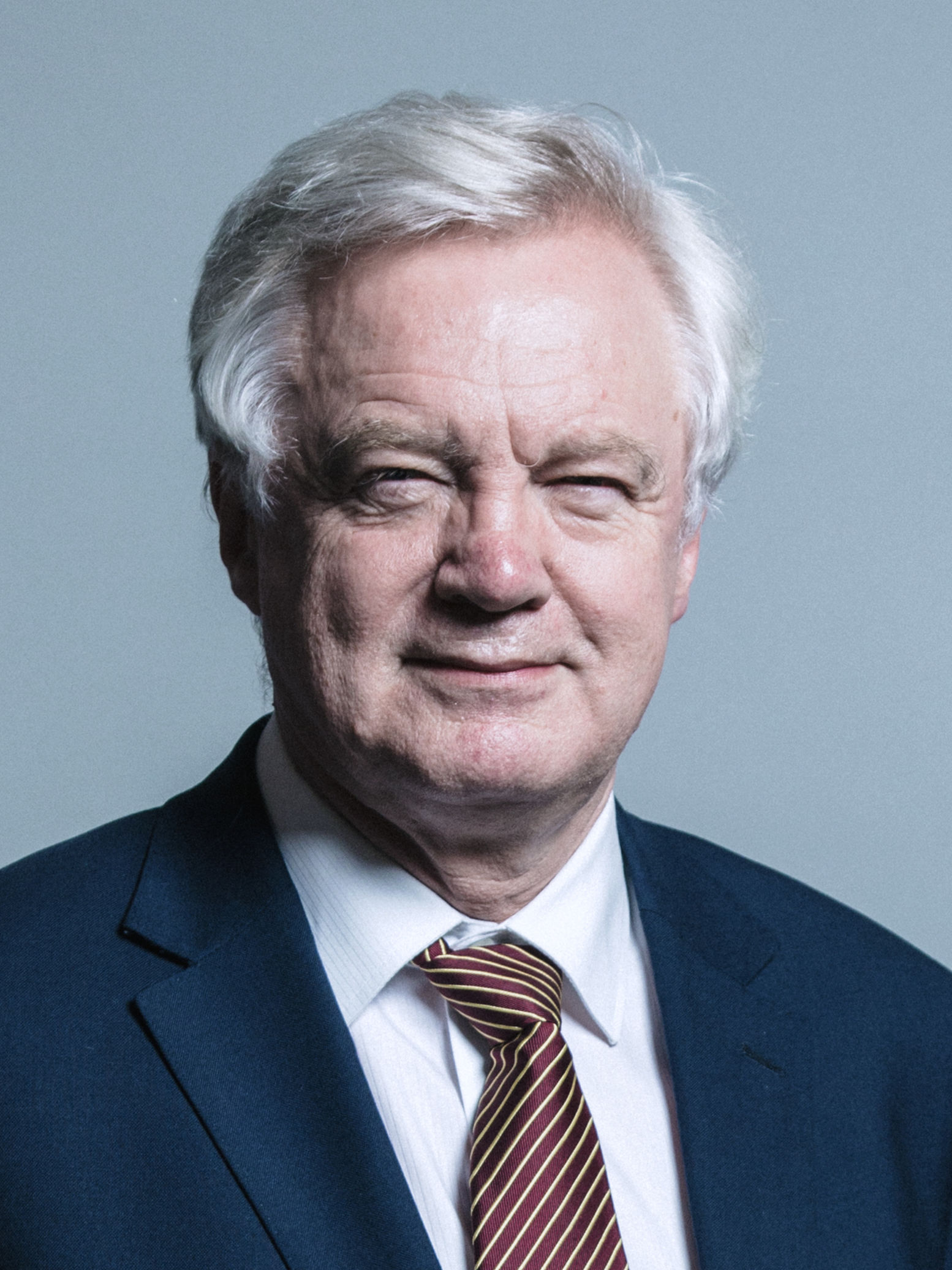
    David Davis – 2023 Speech on the Budget

    The speech made by David Davis, the Conservative MP for Haltemprice and Howden, in the House of Commons on 20 March 2023.

    I draw the attention of the House to my entry in the Register of Members’ Financial Interests.

    Like two of the previous speakers, I am also a science graduate, although I do not compare myself with the Conservative party’s most famous science graduate. I had intended to make my speech essentially about science and technology, because they are massively important and, as the hon. Member for Manchester Central (Lucy Powell) pointed out, we have fantastic competitive advantages in those fields. That will be a major part of growth.

    Since last Tuesday, however, dramatic events have unfolded in the banking sector—particularly over the weekend. Back in 2009-10, the then Chair of the Treasury Committee, Lord McFall, asked me to chair the Future of Banking Commission. The last week has, unfortunately, brought back some memories. One of the characteristic problems of the banking sector is its short memory, particularly when it is Wall Street that we are talking about. I hope that the House will indulge me if I remind it of the lessons of the major banking crashes of the past half century.

    Back in 1933, after the great depression, the Americans passed the Glass-Steagall Act, which separated banks out into risky investment banks and straightforward commercial banks. That gave us about seven decades of stability until 1999, when President Clinton—under pressure from unwise and greedy Wall Street lobbyists—essentially removed Glass-Steagall. What followed was the collapse of several banks, including Lehman Brothers—probably precipitated by the new mark-to-market rules—in the great crisis that we saw in 2008.

    In 2009, because of the crash, America passed Dodd-Frank, which required banks with more than $50 billion in assets to be subject to tight regulation. Again, under pressure from Wall Street, President Trump relaxed those regulations in 2019. I talk about Wall Street, but the whole world followed. Of course, after that relaxation, banks assumed that they had an infinite period of low interest rates and that they could borrow ad nauseam. When global interest rates sharply increased by three, four or five times, the shock destabilised a number of those banks. One such bank was Silicon Valley Bank, which had been taken out of regulation by the Trump changes.

    There is a lesson for us in all that. It has caused an instability in the financial system. Chancellors, central bank governors, financial secretaries in the States and regulators have no chance but to claim that the system is robust. I am not so sure. We will not know for a while whether it is actually robust, because of the complexity of the system. Of the three major banks that have failed so far, each has failed for different reasons, and we have no clear insight into what risks other banks have taken, partly because of the deregulation under Trump and his predecessors. In that respect, we in this country are probably in a better place than either the Americans or the Europeans, but I am keeping my fingers crossed as I say that so as not to tempt fate.

    There is one lesson that we should learn. A big issue on which the world is hanging at the moment is whether the takeover of Credit Suisse by UBS is a success. I draw people’s minds back to Lloyds taking over HBOS, which was done under pressure from the Government of the day—from Gordon Brown—and Lloyds itself nearly collapsing the very next year. I hope that UBS will not do the same. The point of this story is that we are in a period of extraordinary global financial instability.

    I am a low-tax Tory—I would have loved the Chancellor to have had a lower-tax strategy—but I have to say that the events of the past week have demonstrated that a very small-c conservative strategy is wise under these circumstances. The more confident the markets in the Government, the better our prospects for the future. That said, I would be completely unsurprised if we had to have another Budget in the autumn owing to the nature of the transitions and changes that are now happening.

    If that happens, I would ask the Chancellor, “Could you please look again at bringing back your super-deduction?” That will attract investment here in a way that will not happen with the 25% rate. I would ask, “Will you look at doing away with IR35 and at other concerns that will improve prospects for small businesses?” In my view, it will be incredibly difficult for the banks to get right the balance between inflation and growth now that their hands are tied by the instability of the banking sector. My one line to the Chancellor is this: please look, for the next Budget, at much more growth.

  • Shabana Mahmood – 2023 Speech on the Budget

    Shabana Mahmood – 2023 Speech on the Budget

    The speech made by Shabana Mahmood, the Labour MP for Birmingham Ladywood, in the House of Commons on 20 March 2023.

    It is a pleasure to speak in the debate today, but, while I do not wish to be unkind, it was a little less of a pleasure to listen to the Secretary of State open the debate. I notice that she is leaving the Chamber. Listening to her assertions about economic growth and the record of this Government, I had to wonder what planet she was on.

    The reality is that, despite the assertions made from the Dispatch Box by the Secretary of State today and the Chancellor last week, the OBR has downgraded the UK’s long-term growth forecasts, with downgrades in all of the last three years of the forecast period. The OECD has confirmed that we will be the weakest economy in the G7 this year, no other G20 economy other than Russia is forecast to shrink this year, and our economy is still smaller than it was prior to the pandemic.

    All that has a huge impact on the finances of families in Birmingham, Ladywood and all over the country. The hit to living standards over the past two years is the largest since comparable records began. Wages are lower in real terms than 13 years ago and real weekly wages are expected to remain below their 2008 levels until at least 2026. I believe that a little more humility was needed at the Dispatch Box today, because the measures taken by this Government over the past 13 years—in particular since the so-called kamikaze Budget last November—have car-crashed the finances of families and households all over our country, with no end in sight.

    Given how deeply the cost of living crisis is hitting families all over our country and given the headline rates of economic growth, it is shocking that the only permanent tax cut the Government announced was the £1 billion tax cut for the richest 1% of earners. The pension changes announced by the Chancellor last week mean that for higher earners with a pension pot of £2 million, that tax cut is worth almost £250,000.

    That measure is supposed to be about getting people back to work—older doctors in particular. Labour agrees that targeted measures are needed to deal with the NHS crisis and to make sure that doctors are not leaving the profession in the numbers they currently are, but the way the Government have gone about making these changes will cost them £70,000 for every single person returning to the labour market—and that is if the Government even manage to hit the number of people they say will return to the labour market as a result. There have been warnings, including from a former Pensions Minister in the coalition Government, that some people will retire early as a result of those measures, so in fact some people will now leave the labour market who were not originally planning on it.

    Labour’s priority would have been to take targeted measures to help doctors, given the acute crisis in the NHS labour market, not the golden

    “sledgehammer to crack a very small nut”,

    as the IFS calls it, announced by this Government. It is the wrong priority at the wrong time.

    The burden of tax must be shared fairly; making a permanent tax change that benefits the 1% with the biggest pension pots is unfair and wrong and, in government, we will reverse it. I also wonder why the Government are still leaving more than £10 billion on the table with the windfall tax. If they closed down the holes and had a proper windfall tax, we could bring in billions of pounds more, which could help ordinary families if that money was put towards easing the pressure of the cost of living crisis.

    We heard a lot about the people’s priorities from the Dispatch Box today. The people’s priorities are easing the cost of living crisis and measures that pay for that easing by asking those with the broadest shoulders to pay more and those profiting from the war in Ukraine to give that money back to the taxpayer so that we can help families in our countries. That is what was needed and that is what the Government have singularly failed to deliver.

    If I may say something about the west midlands, I noted with interest the trailblazer devolution deals announced for both the Greater Manchester area and the West Midlands Combined Authority. That particular deal is welcome, although I worry about the very asymmetric way the Government have approached devolution in our country. We need a nationwide approach to an economic devolution settlement that has some coherence to it, not a “Hunger Games”-style system where areas fight it out over relatively small pots of money, while other areas that are already a little further ahead get more powers and more money. While the deal is welcome to west midlands MPs such as myself, I do not think it is an approach that helps people all over our country.

    While I very much hope that both that deal and the levelling-up zone in the East Birmingham-North Solihull corridor are a success, they must ultimately be judged by whether they turn around the deep-scarring problem of high unemployment in Birmingham, which in the last decade or so has shown no signs of coming down. My constituency has the highest rate of unemployment in the country; Birmingham, Perry Barr is second, Birmingham, Hodge Hill is third, Birmingham, Erdington is fourth, Birmingham, Hall Green is sixth, Birmingham, Yardley is ninth and Birmingham, Northfield is 13th. The trailblazer deal, with all the powers within it and the greater financial devolution it entails, has to result in a step change. It must be a game changer on unemployment rates across Birmingham and the wider west midlands area if it is to be judged a success.

  • PRESS RELEASE : British High Commission expands to support Bahamian exports [March 2023]

    PRESS RELEASE : British High Commission expands to support Bahamian exports [March 2023]

    The press release issued by the Foreign Office on 21 March 2023.

    A new partnership to increase exports of Bahamian-produced alcohol to the UK.

    The British High Commission is pleased to have secured the services of Steve Boon, President of Wine and Spirts Guys https://www.winespiritguys.com, to support The Bahamas ambition to increase exports of Bahamian-produced alcohol to the UK.

    Steve Boon, from New Providence, is a member of the UK’s The Worshipful Company of Distillers (the Spirits Guild) and is the youngest Bahamian to have qualified as a wine and spirit lecturer with WSET (at the age of 21). With 40 years in the wine and spirit sector, both locally and internationally, Steve Boon will use his trade knowledge, business acumen, and contacts throughout the world, to support Bahamian exporters wanting to access the UK market.

    The UK and the Bahamas Chamber of Commerce, BCCEC, have also partnered to host an exporters’ web-seminar, on 29th March. As well as Steve Boon’s direct support, this seminar aims to educate Bahamian producers of spirits on the UK’s positive import rules and tariffs.

    The British High Commissioner, Thomas Hartley, said:

    I am very pleased to have secured Steve’s services. The Bahamas’ Trade Commissioner has asked for the UK’s help in opening up UK markets to Bahamian exports, and Steve’s unrivalled experience and network is a significant first step in bringing the two markets closer together.

    I’ve reserved a bottle of John Watlings rum I was gifted, and will only open it when we celebrate seeing it for sale in British shops. I’m also looking forward to promoting London gin, Sottish whisky, and world-leading English sparkling wines at The Bahamas Food and Wine Festival this autumn, as well as a few others surprises this year.

    Steve Boon said:

    I am absolutely thrilled at the opportunity to be working with the British High commission, promoting Bahamian alcohol brands to the UK market. With such a diverse range of quality products, I don´t think it will be long before Tom is opening his bottle of John Watlings rum!