Blog

  • PRESS RELEASE : Imprisonment of Vladimir Kara-Murza: Joint Statement to the OSCE [April 2023]

    PRESS RELEASE : Imprisonment of Vladimir Kara-Murza: Joint Statement to the OSCE [April 2023]

    The press release issued by the Foreign Office on 20 April 2023.

    Canadian Ambassador Jocelyn Kinnear gives a statement on behalf of four OSCE participating States on prosecution and imprisonment of Vladimir Kara-Murza.

    Madam Chair, I am delivering this statement on behalf of Canada, Iceland, Norway, and the United Kingdom.

    We are deeply alarmed by the prosecution of opposition politician Vladimir Kara-Murza, who was sentenced this week to 25 years’ imprisonment on politically motivated charges of treason, discrediting the armed forces and assisting an undesirable organization.

    We firstly want to pay tribute to Mr Kara-Murza, a champion for human rights and opposition voices, who has shown immense courage in speaking out against the aggression of the Russian state. I also want to recognise his wife, Evgenia, and commend her on her tireless efforts to promote her husband’s cause.

    These charges were brought against Mr. Kara-Murza for engaging in legitimate criticism of the political situation in Russia. As he himself observed in his closing statement to the court – he is in jail for his political views, for speaking out against the war in Ukraine and against Putin’s regime.

    It is evident that Russia continues to completely disregard respect for democratic principles and for universal human rights—including freedom of speech—in relation to its own people and to others around the world. This court ruling is yet another violation of Russia’s international human rights obligations.

    The Kremlin’s persecution of opposition voices and civil society actors is an abhorrent effort to silence those who hold Russia accountable for it actions.

    In addition to Mr. Kara-Murza’s sentencing, this month has also seen:

    • the closure of Moscow’s Sakharov Center;
    • the designation of yet more civil society actors as “foreign agents” and “undesirable organizations” including Norwegian non-governmental ecological organization Bellona;
    • the blocking of websites, including Canada’s MacDonald-Laurier Institute, the Woodrow Wilson International Science Center, and the British Royal Institute of International Affairs (Chatham House);
    • the prosecution of multiple individuals for anti-war commentary.
    • The Kremlin has further continued in its attempts to intimidate, harass and silence independent journalists, including through the detention of Wall Street Journal reporter Evan Gershkovich.

    We look forward to wholeheartedly supporting the work of the newly appointed UN Special Rapporteur on Human Rights in Russia and we will ensure Russia does not discredit their findings.

    Tragically, we could name dozens of other political prisoners. But today Mr. Kara-Murza stands as a symbol of the courageous and principled defence of democratic values and human rights in Russia. The Kremlin’s attempts to silence its domestic critics only makes their voices more powerful.

    We will therefore join others amplifying his voice and quote from his closing statement to the court:

    “But I also know that the day will come when the darkness over our country will dissipate. When black is called black and white is called white; when at the official level it will be recognized that two times two is still four; when a war is called a war, and a usurper a usurper; and when those who kindled and unleashed this war, and not those who tried to stop it, are recognized as criminals. This day will come as inevitably as spring comes to replace even the most frosty winter.”

    We stand with the people of Russia who are fighting for democracy and human rights.

    We will continue to press for a better future for the Russian people and we call upon the Russian government to respect its human rights obligations and to allow dissenting voices to express their views without fear of persecution.

    Thank you very much, Madam Chair.

  • PRESS RELEASE : ‘Severe consequences’ for cladding companies who refuse to remediate, government warns investors [April 2023]

    PRESS RELEASE : ‘Severe consequences’ for cladding companies who refuse to remediate, government warns investors [April 2023]

    The press release issued by the Department for Levelling Up, Housing and Communities on 20 April 2023.

    Housing Secretary warns cladding shareholders of “severe consequences” for manufacturers if they do not bring forward comprehensive remediation package.

    Shareholders in three cladding companies, whose shocking practices were uncovered in evidence heard at the Grenfell Inquiry, have been warned by the government that the manufacturers they invest in will face “severe consequences” if they do not come forward with a comprehensive financial package to fix unsafe buildings.

    Michael Gove has written to investors in Kingspan, Arconic, and Saint-Gobain and urged them to use their “position of influence” to encourage the firms to “engage constructively in helping us reach a just resolution for all concerned.” Shareholders who received letters include Blackrock, Vanguard, and Fidelity Management and Research, as well as investors like Norges Bank, the central bank of Norway, who tell their employees it is important to promote “a high level of ethical awareness and integrity” in their work.

    Shareholders were warned that if the manufacturers do not come forward with a comprehensive financial package, then the focus of the Department for Levelling Up, Housing and Communities “will be trained upon them” and “the consequences for that firm are likely to be severe.”

    The letters add that there will likely be consequences for shareholders’ reputations, in addition to their financial stake, if he is forced to use “the legal and commercial tools available” to ensure the position of the cladding companies “becomes extremely uncomfortable.” Mr Gove also said he is considering whether further tools will need to be handed to regulators or the government.

    Secretary of State for Levelling Up, Housing and Communities Michael Gove said:

    I have always been clear that those responsible for the building safety crisis must pay. But despite the fact that their products continue to put lives at risk, some cladding firms have no intention of doing what’s right and addressing their moral and financial obligations to innocent residents.

    Today we ask responsible investors to use their influence to encourage these companies to come forward immediately with a comprehensive financial package for remediation work. It cannot be right that cladding companies continue to profit whilst so many innocent, hardworking people face financial hardship and misery.

    To those cladding companies who fail to do the right thing: you will face severe consequences and I will use all commercial and legal tools available to me to ensure you take responsibility.

    To date, the three construction product manufacturers – who together were responsible for manufacturing the majority of cladding used on the Grenfell Tower – have not contributed a penny to the cost of fixing buildings in the United Kingdom that their products have made unsafe. Evidence at the Grenfell Inquiry uncovered shocking behaviour by the three companies, including the sale of flammable products that were wholly inappropriate for their end use, apparent mis-selling of construction products through inaccurate marketing information, and misappropriating safety test results thereby perpetuating the sale of high-risk products on the market.

    The Secretary of State wrote to the bosses of Kingspan, Arconic and Saint-Gobain over the last month to ask them to meet officials from his department and explain how they will scope, identify, and pay for remediation works. The invitation followed Kingspan saying publicly that they would be willing to pay for remediation costs where its products had been used inappropriately. While Kingspan agreed to meet DLUHC officials, none have yet committed to any new remediation funding.

    Efforts to make cladding companies pay are proceeding in tandem with measures used by the Department to ensure developers and freeholders contribute to remediation costs of unsafe buildings.

    As of today, there are 46 signatories on the landmark Developer Remediation Contract, which for the first time in law commits developers to fixing all life-critical fire-safety defects in English buildings over 11 metres they had a role in developing or refurbishing. Further to this, the Department’s Recovery Strategy Unit has ramped up litigation against irresponsible freeholders who will not remediate buildings they are responsible for, including recently against GreyGR, owned by billion-pound railway pension fund RailPen.

    The Department is also publishing today an Independent Review by Paul Morrell and Anneliese Day KC, looking at the current testing regime for construction products.

    The report was commissioned in response to evidence heard by the Grenfell Tower Public Inquiry about the behaviours of manufacturers and those responsible for advising on the fire-performance of products, including serious failings in the system for testing construction products that involved cladding.

    Peter Caplehorn, Chief Executive of the Construction Products Association, commenting on the report said:

    We are very pleased to see the publication of this Review.  Paul has immense experience from the many senior roles he has played in both industry and government.  We respect him for his intellect, understanding and objective approach to the challenges facing our industry.

    This report should be required reading for policy-makers and industry leaders alike, coming at a critical time not only for the future of the UK product testing and certification sector, but for the wider culture and practices of UK construction as well.  The recommendations cover a wide range of urgent issues, and the CPA and its members will be focusing on developing the necessary responses and actions in consultation with department officials.

    “It is also very pleasing to see solid support for the work we are doing in developing and implementing the Code for Construction Product Information, a fundamental foundation for reform in the sector.”

    The Department will carefully consider the recommendations of the Independent Review and we will set out proposals for reforms in due course.

    The full Independent Review can be found here: https://www.gov.uk/government/publications/independent-review-of-the-construction-product-testing-regime

    Further information

    • Letters will be sent to investors including Vanguard, Blackrock, Fidelity Management and Research, Norges Bank and Caisse des Dépôts et Consignations.
  • PRESS RELEASE : Funding to help developing countries phase out use of damaging climate gases announced [April 2023]

    PRESS RELEASE : Funding to help developing countries phase out use of damaging climate gases announced [April 2023]

    The press release issued by the Department for Environment, Food and Rural Affairs on 20 April 2023.

    Environment Secretary announces developing countries will receive £4 million to phase out the use of chemicals found in refrigeration and cold supply chains.

    • £4 million dedicated to phase out the use of chemicals found in refrigeration and cold supply chains
    • Funding will support climate-friendly technologies in developing countries that help reduce food and vaccine loss, as well as increase farming productivity
    • Announcement made as a delegation of scientists visit London for talks and attend No10 reception

    Developing countries will receive £4 million to drive down the emissions of harmful hydrofluorocarbons generated by outdated air conditioning units, cooling refrigeration and cold supply chains, the government has announced today (20th April).

    Hydrofluorocarbons are industrial chemicals primarily used for cooling and refrigeration. They are amongst the fastest-growing source of greenhouse gas emissions in the world, and when emitted have a global warming potential thousands of times that of carbon dioxide.

    The funding will help deliver an African Centre of Excellence for Sustainable Cooling and Cold Chain – based in Kigali, Rwanda – which delivers training to farmers, healthcare workers and technicians to uptake more climate friendly and energy-efficient cooling.

    As well as reducing emissions, developing nations will be better placed to store food and medicines more efficiently with the use of more efficient technologies. These will also help to improve farming productivity and reduce poverty, as for many crops up to 40% of the harvested produce is lost before being sold.

    The Environment Secretary has made the announcement as she is set to welcome a delegation of climate scientists from the UN Montreal Protocol’s Assessment Panels to a reception in No.10 Downing Street later today.

    The scientists will discuss the next steps of the Montreal Protocol, designed to protect the earth’s ozone layer by phasing out the production and consumption of harmful ozone-depleting substances and then extended to cover hydrofluorocarbons through the Kigali Amendment.

    The UK is a global leader in the fight against climate change, integral to the agreement of the Protocol and leading the world in the ambition to keep global warming under 1.5 °C through our presidency of COP26 and leadership at COP15 placed nature at the heart of tackling the twin challenges of climate change and biodiversity loss.

    The Environment Secretary Thérèse Coffey said:

    The UN Montreal Protocol has played a vital part in protecting our ozone layer from harmful depleting substances and, as a global leader in the fight against climate change, I am delighted to be able to welcome the scientists leading the charge on this to Downing Street.

    This funding will help developing countries to play their part in tackling climate change and communities across the world with storing food and medicines more efficiently – as well as support farmers to increase their productivity.

    Alongside improvements to cooling equipment efficiency, UK leadership for early action on hydrofluorocarbons under the Montreal Protocol could avoid up to a degree of warming by the end of the century. The UK continues to cut consumption of hydrofluorocarbons at a faster pace than required under the Kigali Amendment to the UN Montreal Protocol – since 2015, levels have been reduced by 55% and by 2030 this will have phased down by 79% under existing legislation.

    On top of today’s announcement, a further £1.2 million is being allocated towards the development of a roadmap and virtual modelling tools to help developing countries pilot techniques before they are implemented – enabling them to deploy the most efficient and cost-effective approach to more sustainable cooling.

    The UK is a global leader in supporting efforts to halt the decline in nature and restore the natural world, with UK leadership helping to deliver an ambitious new global deal for nature to protect 30% of our land and ocean by 2030 at the UN Nature Summit COP15 in December.

    Through UK programmes such as the Darwin Initiative, the Illegal Wildlife Trade Challenge Fund, and the Biodiverse Landscapes Fund the UK is supporting developing countries around the world to restore habitats, tackle the trade in illegal wildlife and deal with the drivers of habitat loss that put the environment at risk.

    Professor Toby Peters, Professor in Cold Economy at University of Birmingham and Heriot-Watt University, and leading the collaboration of UK Universities supporting the work in Africa and India, said:

    Sustainable and equitable cooling and cold-chain is now more than ever critical infrastructure in a warming world. This programme for the first time delivers in an integrated approach that includes on the ground training and support for subsistence farmers and their communities, financeable business models and the network of skilled engineers needed to support equipment installation and maintenance. This work is underpinned by the evidence strategies required to increase investment into the development of sustainable cold-chain and community cooling.

  • PRESS RELEASE : Landowner John Price sentenced for destruction of River Lugg, Herefordshire [April 2023]

    PRESS RELEASE : Landowner John Price sentenced for destruction of River Lugg, Herefordshire [April 2023]

    The press release issued by the Environment Agency on 20 April 2023.

    Natural England and Environment Agency see justice delivered for nature as landowner sentenced for destruction of part of the River Lugg in Herefordshire.

    • Natural England and the Environment Agency welcome the sentencing of John Price for the destruction of 1.5km of the protected River Lugg in 2020
    • Habitats of otters, kingfishers, trout and salmon were among those destroyed
    • The damage is the worst case of riverside destruction seen by the organisations and could take several decades to be fully restored
    • This is the first prosecution under Farming Rules for Water

    Natural England and the Environment Agency have today welcomed the seriousness with which the Court has treated the severe and lasting damage to the River Lugg, which destroyed habitats and wildlife on a stretch of one of the country’s most unspoiled rivers.

    John Price appeared today at Kidderminster Magistrates Court where he was sentenced to 12 months in prison. He was also ordered to pay prosecution costs of £600,000 and disqualified from being a director of a limited company for three years. In addition, a Restoration Order under the Wildlife and Countryside Act 1981 was imposed requiring Mr Price to carry out a number of actions to restore the river.

    The sentence is the result of legal action launched last year by Natural England and the Environment Agency following a joint in-depth investigation into environmental harm caused by the work in 2020 and 2021.

    The River Lugg before destruction by the landowner

    Mr Price used heavy machinery including bulldozers and excavators to dredge and reprofile a 1.5km stretch of the River Lugg at Kingsland, Herefordshire, destroying the riverbed and banks. The unconsented works were in breach of several regulations, including the Reduction and Prevention of Agricultural Diffuse Pollution (England) Regulations 2018, also known as the Farming Rules for Water; and operations prohibited in the notification of a Site of Special Scientific Interest (SSSI), which persisted despite Mr Price being issued with a Stop Notice.

    Due to the exceptionally high diversity of wildlife, the River Lugg is a designated SSSI, with 121 river plant species that live in the river and provide habitat for invertebrates, fish and birds. The damage to the river and banks removed the habitats of hundreds of these species including otters, kingfishers and salmon as well as destroying trees, aquatic plant life and invertebrates. It is predicted to take decades to re-establish mature trees to provide the stability, cover and shade to restore the diversity of the river. Fish, plants, native crayfish and birds may take years to make a gradual return to previous populations.

    In sentencing Mr Price, the Judge noted that neither the Environment Agency nor Natural England did anything to encourage these works.

    Speaking after the verdict, Emma Johnson, Area Manager for Natural England said:

    “The destruction of this section of the River Lugg was devastating for the abundance and range of species which thrived in this river. The River Lugg is one of the most iconic rivers in the UK and to see this wanton destruction take place was devastating. This is why we have used our powers as regulators to see that justice was done and to act as a stark warning to others that we will take the strongest action against those who do not respect the laws that protect the environment and wildlife we all cherish. “We want to ensure that Mr Price now takes the necessary actions which we hope, in time will restore this much-loved stretch of river to its former condition.”

    Martin Quine, Environment Agency Place Manager for Herefordshire added:

    “We welcome the outcome of this prosecution for the unconsented works on the River Lugg.

    “The Environment Agency is working hard to restore the health of our rivers. It is a complex task that can only be achieved in partnership with landowners. We provide advice and guidance but will impose sanctions or prosecute where appropriate to protect the environment and ensure those who breach regulations are held to account. The vast majority of landowners and users fully cooperate with this process.

    “While Mr Price’s justification for the works was to help prevent flooding to local properties, his actions did not have any flood prevention benefit. The destruction of river banks is not appropriate flood management. It is important that the Judge recognised that the works significantly weakened flood prevention measures rather than improved them.“We urge landowners never to take extreme measure such as this and instead to always work closely with the Environment Agency around river management to agree the best solutions for both landowners and the environment.”

    As a designated Site of Special Scientific Interest (SSSI), the Lugg is afforded the highest level of environmental protection. Works to SSSIs or any watercourses must be done in such a way that protects the environment and does not cause any impact on flooding. Such works can only be undertaken after securing permits from the Environment Agency.

  • PRESS RELEASE : Government launches new cyber security measures to tackle ever growing threats [April 2023]

    PRESS RELEASE : Government launches new cyber security measures to tackle ever growing threats [April 2023]

    The press release issued by the Cabinet Office on 20 April 2023.

    New and enhanced cyber security measures will better protect the UK government’s IT systems, which run key services for the public, from growing cyber threats.

    • All government departments and a select number of arm’s length bodies to have their cyber security reviewed under new, more stringent measures.
    • The new cyber security regime, known as GovAssure, will be run by the Government Security Group, part of the Cabinet Office.
    • GovAssure delivers on a key part of the Government Cyber Security Strategy by improving cyber resilience and help government organisations protect themselves from growing hostile cyber threats.

    New cyber security measures will increase the UK’s cyber resilience and protect the UK government’s essential IT functions from ever growing threats. Under the new rules, all central government departments will have their cyber health reviewed annually through new, more robust criteria.

    Known as GovAssure, the new cyber security scheme will be run by the Cabinet Office’s Government Security Group (GSG), with input from the National Cyber Security Centre (NCSC).

    GovAssure was announced by Chancellor to the Duchy of Lancaster, Oliver Dowden, at a speech to CyberUK in Belfast.

    Chancellor of the Duchy of Lancaster, The Rt Hon Oliver Dowden said:

    Cyber threats are growing, which is why we are committed to overhauling our defences to better protect government from attacks. Today’s stepped up cyber assurance will strengthen government systems, which run vital services for the public, from attacks. It will also improve the country’s resilience; a key part of our recent Integrated Review Refresh.

    GovAssure introduces a number of changes in the way government protects itself from cyber threats. These include:

    • Using NCSC’s Cyber Assessment Framework (CAF) to review the assurance measures all government departments have. The framework includes measures such as setting out indicators of good practice for managing security risk and protecting against a cyber attack and was designed for making critical national services resilient to attack.
    • Departments will also be assessed by third parties to increase standardisation and validate results.
    • Centralised cyber security policy and guidance to help government organisations identify best practice.

    In January 2022, the UK government launched the first ever Government Cyber Security Strategy (GCSS) which laid out the significant challenges facing government security and a clear vision for improving resilience. Today’s announcement delivers on a key part of the aim of the strategy of significantly hardening government systems from  cyber attack.

    Government Chief Security Officer, Vincent Devine said:

    This is a transformative change in government cyber security. GovAssure will give us far greater visibility of the common cyber security challenges facing government. It will set clear expectations for departments, empower hard-working cyber security professionals to strengthen the case for security change and investment, and will be a powerful tool for security advocacy.

    Lindy Cameron, CEO, National Cyber Security Centre said:

    We are committed to ensuring the UK continues to be a leading global cyber nation, which is why we have supported the development of the Cyber Assessment Framework to improve the security of our most critical information systems.

    The government’s adoption of the Cyber Assessment Framework through GovAssure will significantly improve resilience.

  • PRESS RELEASE : Government ramps up supply chain work with first independent Critical Minerals Taskforce meeting [April 2023]

    PRESS RELEASE : Government ramps up supply chain work with first independent Critical Minerals Taskforce meeting [April 2023]

    The press release issued by the Department for Business and Trade on 20 April 2023.

    The Department for Business and Trade launches new independent Critical Minerals Taskforce.

    • Department for Business and Trade launches new independent Critical Minerals Taskforce
    • Taskforce will guarantee supply of critical minerals as production of all kinds is expected to rise sharply – some as much as 500% by 2050
    • Government work will ensure UK has strong foothold in this growing market by supporting key investments in related industries

    Today (Thursday 20 April) the independent Task & Finish Group on Industry Resilience for Critical Minerals had its inaugural meeting. The group brings together independent experts to advise the government on where dependencies exist in the UK’s critical mineral supply chains, and how industry can protect its supply.

    Certain minerals are essential for the technologies we depend on for jobs, economic growth, and everyday life, from mobile phones to wind turbines. Minerals like graphite, lithium and silicon are vital to the economy as they are irreplaceable components in products ranging from laptops to aircraft. “Critical” minerals are defined as those that are important and have high levels of supply risk.

    Attending the meeting today, Business and Trade Minister Nusrat Ghani said:

    “We rely on critical minerals far more than people realise. They’re essential to much of what keeps society going, from medical equipment saving lives in hospitals to wind turbines keeping our economy powered up.

    “In an increasingly uncertain world, it’s clear we must do more to safeguard our supply chains – because as the name suggests, these minerals really are critical to our future. This group of experts will help us build resilient supply chains that will make a strong foundation for the new, green industries we’re backing to deliver jobs and growth for decades to come.”

    The Task & Finish Group was commissioned by Minister Ghani and announced in the recent Critical Minerals Refresh publication. Members of the independent group have been drawn from key industry sectors that depend on critical minerals, as well as experts with insights into the supply vulnerabilities of UK industry. The group will deliver an independent report to government later this year.

    Katherine Bennett CBE, Chair of the Critical Minerals Task & Finish Group and CEO High Value Manufacturing Catapult said:

    “Ground-breaking innovations need a reliable supply of raw materials to have real-world impact.

    “We need to be able to trust in our critical mineral supplies. Whether it’s more efficient batteries for electric vehicles or next-generation communications systems, the cutting-edge technologies of today and the innovations of tomorrow are only possible we have secure supply chains.

    “Collaboration is key, and I look forward to working with our panel of cross-industry experts to help put the UK in the best position to grow and thrive.”

    In July 2022, HMG published the UK’s Critical Minerals Strategy to promote resilience in critical mineral supply chains, safeguarding UK industry, supporting the clean energy transition and protecting national security and defence capability.

    To deliver these ambitions, collaboration between government, industry, academia and other stakeholders is vital. The Task & Finish Group will harness the wealth of expertise across UK industry – those that depend on a secure supply of critical minerals – to identify supply chain vulnerabilities and promote resilience and diversity, strengthening the competitiveness of the UK and helping grow the economy.

    Membership list:

    • Jeff Townsend, Critical Minerals Association
    • Stephen Hall, Minor Metals Trade Association
    • Helen Kennett, Rolls Royce
    • Kevin Craven, ADS
    • Gabby Costigan, BAE Systems
    • Nathan Earland, Jaguar Land Rover
    • Mike Hawes, SMMT
    • Julian Hetherington, Advanced Propulsion Centre
    • Andy Walker, Johnson Matthey
    • Thomas Birk, BASF
    • Steve Elliott, Chemical Industry Association
    • Dr Cristina Garcia-Duffy,Offshore Renewable Energy Catapult
    • Ben Hirst, ITM Power
    • James Robottom, RenewableUK
    • Chris Hewett, Solar Energy UK
    • Tom Greatrex, Nuclear Industry Association
    • Peter Ellingworth, ABHI
    • Gerry Thurgood, National Microelectronics Institute
    • Matthew Evans, Tech UK
    • Andrew Willman, BEAMA
    • Mark Richards, Rio Tinto
    • Ben Jones, Anglo American
    • Guy Platten, International Chamber of Shipping
    • Simon Moores, Benchmark
    • Paul Lusty, Critical Minerals Intelligence Centre
    • Allan Walton, Birmingham Centre for Strategic Elements and Critical Minerals
    • Colin Church, IOM3
    • Amber Rudd, Advisor in energy and security
    • Cherilyn Mackrory MP, APPG for Critical Minerals
  • PRESS RELEASE : OSCE Co-operation with Council of Europe – UK Statement to the OSCE [April 2023]

    PRESS RELEASE : OSCE Co-operation with Council of Europe – UK Statement to the OSCE [April 2023]

    The press release issued by the Foreign Office on 20 April 2023.

    Ambassador Bush welcomes the OSCE’s co-operation with the Council of Europe, an important institution to the UK’s foreign policy agenda.

    Thank you, Mr Chair. On behalf of the UK, I warmly welcome you, Secretary General Buric, back to the Permanent Council. Thank you for outlining your priorities at the Council of Europe and your collaboration with the OSCE. The Council of Europe is, and will continue to be, important to the UK’s human rights and foreign policy agenda.

    The promotion of human rights, rule of law, and democracy across our region and beyond characterises the longstanding and steadfast relationship between the OSCE and the Council of Europe. These common principles continue to define our shared ventures in Vienna and in Strasbourg.

    Both the OSCE and the Council of Europe face a series of common challenges this year. To make progress together we should continue to recognise each organisation’s merits and distinctiveness – working in a coordinated way to engage the unique sets of tools.  The Council of Europe and the OSCE continue to share much common ground, including work on electoral reform; media freedom; anti-trafficking; anti-corruption; protection of national minorities; counter terrorism; inclusive education and protecting cultural heritage.

    Today we meet at an especially challenging time for European Security. As President Putin’s unprovoked and illegal war against Ukraine goes on, we continue to see reports of violations of international human rights law and of international humanitarian law by Russia’s forces. Every day we see reminders that the common principles and commitments on which our organisations are founded are being transgressed. The launch of the Council of Europe’s Ukraine Action Plan 2023-26 underscores the international community’s united support for Ukraine.

    The Council of Europe’s fourth Summit of Heads of State and Government next month provides a welcome opportunity to re-affirm and promote our shared commitment to democracy, human rights and the Rule of Law and to demonstrate solidarity with Ukraine. The UK will engage fully in the proceedings, including by calling for strong support for Ukraine, a united response to Russia’s aggression, and strengthening multilateralism in Europe.

    Secretary General Buric – in the face of war in Europe and regression of human rights and fundamental freedoms across the region, the work of the Council of Europe and the OSCE remains of the upmost importance. The UK is, and will remain, a steadfast supporter of this work and looks forward to working with the Council of Europe and the OSCE throughout 2023 and beyond.

    Thank you, Mr Chair.

  • PRESS RELEASE : New data reveals record amounts of cocaine and ketamine seized [April 2023]

    PRESS RELEASE : New data reveals record amounts of cocaine and ketamine seized [April 2023]

    The press release issued by the Home Office on 20 April 2023.

    New data released today (20 April) reveals the largest quantity of cocaine and ketamine seized by Border Force and police forces since records began.

    Record amounts of cocaine and ketamine have been seized by Border Force and police forces, new data released today (20 April) shows.

    Border Force and police forces’ record seizures of tonnes of illicit drugs helps to break criminal gangs’ supply chains, keep our borders secure and communities safe.

    In the year ending March 2022, 188,929 drug seizures were made in England and Wales with so-called party drugs cocaine and ketamine reaching the highest levels of seizures on record.

    The quantity of cocaine seized rose by 68% to 18,767kg, while the quantity of ketamine confiscated rose by 884% to 1,837kg.

    The record amounts seized were driven by an increase in the number of high-quantity and intelligence-led seizures by Border Force. Although police forces accounted for 89% of the number of seizures, Border Force seized a much a higher proportion of drugs in terms of quantity.

    Border Force is often involved in operations where large quantities of drugs are seized, for example at airports or maritime ports.

    In the year ending March 2022, law enforcement action by Border Force made up 91% of the quantity of all cocaine and ketamine seizures, 97% of anabolic steroids and 79% of heroin.

    Working in partnership, Border Force, police forces the National Crime Agency and international partners use intelligence and technology to keep our borders safe, prevent drug trafficking and bring those responsible to justice.

    Expert staff use a range of methods including high-tech search equipment and visual checks to detect illegal and restricted goods that criminals attempt to bring into the country.

    These statistics are the first to be published which cover a period following the announcement of the government’s 10-year Drug Strategy to tackle the harms caused by drug misuse in December 2021.

    Securing the border to crack down on supply chains and criminal gangs profiting from the trade in illegal drugs forms a key part of the strategy, which will see £300 million invested in pursuing and closing down the ruthless gangs who exploit and threaten our most vulnerable in society for financial gain. A further £780 million will be invested in treatment and recovery.

    Today, Immigration Minister Robert Jenrick is visiting Border Force officials at Heathrow Airport, to commend to their commitment to tackle and break drug supply chains and stop these harmful substances from entering the UK.

    Immigration Minister Robert Jenrick said:

    We will continue to back Border Force and the police to use every available power to stop dangerous drugs from coming into our country and enforce the law.

    Data released today, which includes a record amount of cocaine and ketamine seized, shows the effectiveness of our approach as we continue to go after the criminals who blight so many communities and destroy lives with these harmful substances.

    Steve Dann, Border Force Chief Operating Officer said:

    These seizures send a clear message to anyone prepared to smuggle illegal drugs into the country that we remain committed to tackle often violent and exploitative drug supply chains.

    Border Force Officers involved in these seizures can be proud of their work in stopping these dangerous drugs from entering our communities.

    In the year ending March 2022, Border Force and the police seized the following quantities:

    • for Class A seizures, 18,767kg of cocaine, 1,412kg of heroin and 43kg of crack cocaine
    • for Class B seizures, 35,436kg of herbal cannabis, 1,837kg of ketamine and 243kg of amphetamines
    • for Class C seizures, 2.5 million doses of anabolic steroids and 21kg of GHB

    In the year ending March 2022, 188,929 drug seizures were made in England and Wales. Although this is a 14% decrease on the previous year, this is likely due to increased drug enforcement activity during COVID-19 lockdowns that has since returned to pre-COVID-19 levels. Nevertheless, the total number of seizures remains the second-highest number of seizures since the year ending March 2014.

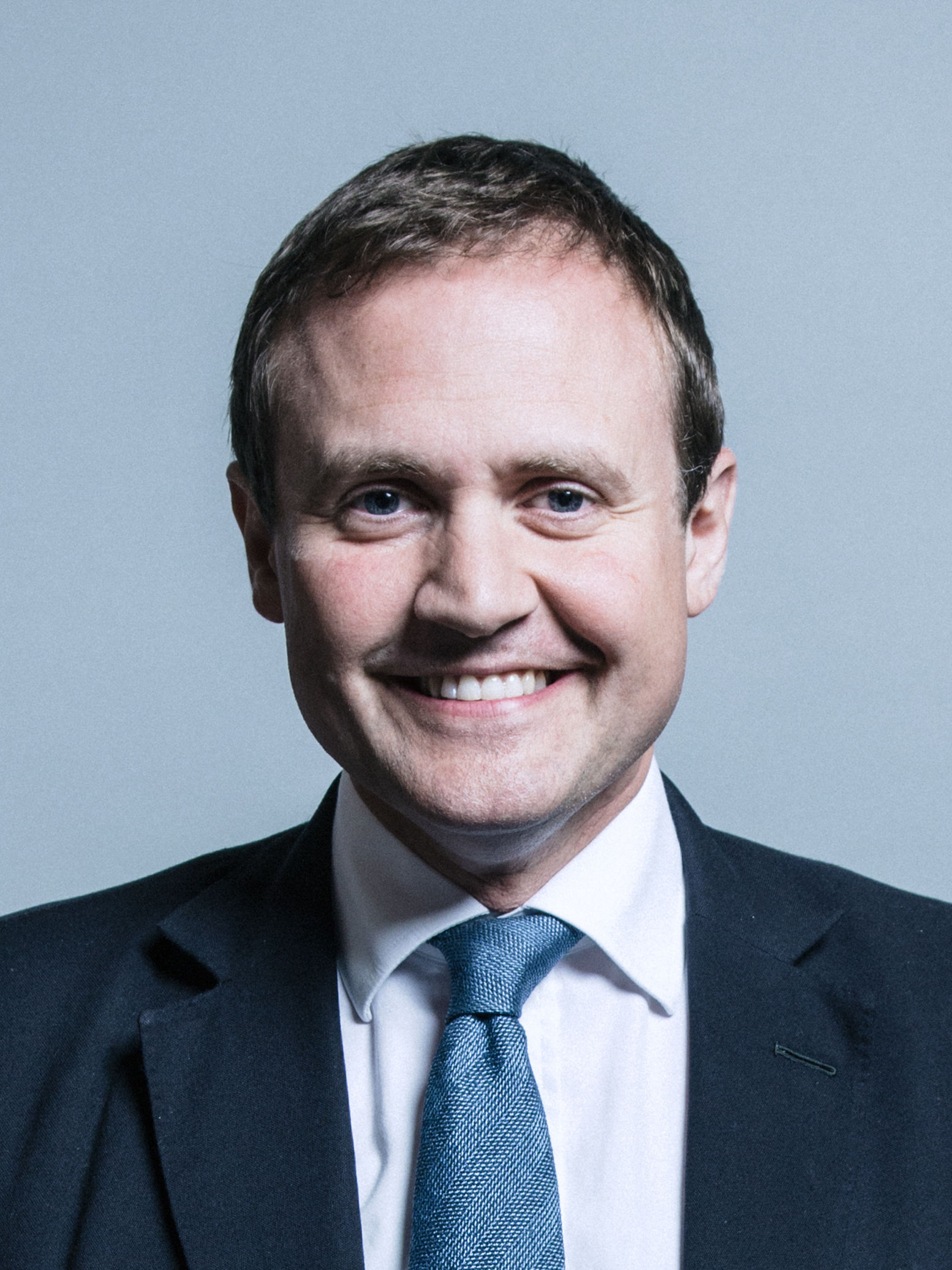
  • Tom Tugendhat – 2023 Speech to CYBERUK

    Tom Tugendhat – 2023 Speech to CYBERUK

    The speech made by Tom Tugendhat, the Security Minister, in Belfast on 20 April 2023.

    Thank you. It’s an enormous pleasure to be here with you today in Belfast.

    It is also an incredible honour to be here in Belfast on this auspicious occasion. Not just to be here at this conference, but 25 years ago there was the extraordinary moment of the signing of the Good Friday agreement. That wonderful moment that gave hope to a new generation and demonstrated this country, the whole of the UK and the whole of these islands can move on from a difficult past to a much better future.

    It’s a reminder that peace can never be taken for granted, and that service, debate and compromise define what is at the heart of our peaceful and democratic system, and together they must never be neglected.

    It also makes me particularly mindful of my role today. I stand before you as Security Minister of the UK.

    In one respect, that is quite a simple job: keep Britain safe. Of course, that clarity marks a complexity of the challenges we face from terrorism and state threats to organised crime and distributed attacks.

    Those attacks are more your field and its there in the cyber world that the UK faces some of its sternest tests.

    A quick look at the basic figures is enough to bring home the scale and severity of the issue we face.

    New findings released just yesterday from the Cyber Security Breaches Survey show that 32% of businesses experienced at least one cyber breach in the last 12 months.

    This year, for the first time, the survey also tells us how many of these breaches resulted in a cybercrime being committed.

    We can now estimate that 11% of businesses were victim to at least one cybercrime. That cost each of them around £15,000 in the past year.

    We must never lose sight of the fact that behind each of these online statistics is a real-world victim.

    Each is a grandparent defrauded, and stripped of their savings.

    Each is a small business held to ransom, and jobs lost.

    Each is public money stolen, and the taxpayer short-changed.

    The cyber-threat doesn’t just come from criminals. The ongoing war in Ukraine is a constant reminder of the threat we face from hostile actors. Russia has been trying to invade Ukraine’s cyberspace as much as its physical space, threatening critical information, critical services, and critical infrastructure.

    The threat of further cyber fallout from conflict is very real to the United Kingdom and to all our allies.

    At home we are seeing the overlap of state threats, terrorism and organised crime brought together online and off.

    Against this troubling background our mission is clear. We must crack down on cybercrime, we must protect the United Kingdom from the most capable cyber adversaries – states, criminals and terrorists – all are trying to hurt us and all have made the online world work for them, delivering offline political gain and criminal profit.

    That is no small brief, and it is not one any department, certainly not one Minister, can achieve alone.

    That’s why this event is so important to me. This is why I’m so grateful to Lindy for inviting me and so grateful for the opportunity to speak to you. Because what we can achieve together is an all round ecosystem of cyber security built on the UK’s world class foundations of education, expertise, technology and capability.

    The task of cyber security falls to government of course, but also to individuals, law enforcement, and to you, business.

    Now today, I’d like to reflect on how far we’ve come, and where we need to go. Above all, I want to stress the core message, exemplified by those extraordinary events of 25 years ago – that only by working together can we collectively be safe.

    I’d like to briefly outline my priorities in cyber policy, before affirming areas in which government and industry partnerships must go further if we are all going to succeed.

    The government has already made phenomenal progress in building resilience and countering the threat from our adversaries.

    The latest iteration of the National Cyber Strategy set out the UK’s role as a responsible and democratic cyber power, and laid down the framework on which the UK’s security and prosperity can depend.

    It’s the bedrock of everything we do to keep the UK cyber safe.

    It also important that our laws, the software of our society, are updated.

    That’s why we recently published a consultation on improving the Computer Misuse Act, which is an important part of deterring those who would commit crime, and equipping law enforcement to carry out their duties.

    That consultation is for you to contribute to and I look forward to hearing your thoughts.

    We are proposing to include powers to take control of domains and IP addresses used by criminals and enable action against individuals in possession of or using data obtained through the criminal actions of others.

    But I say again, your thoughts matter and I’m looking forward to your input.

    We’re building the National Cyber Crime Unit to take on serious cyber criminals.

    Its operational resources must deliver arrests and disruption, and build on the NCA’s enhanced intelligence picture to target criminals where they are most vulnerable.

    We recently helped to dismantle Genesis Market – one of the biggest online marketplaces selling stolen logins and passwords to criminals across the world.

    We’ve built a network of Regional Cyber Crime Units, ensuring that police units have access to specialists and capabilities.

    I must also mention Ransomware attacks, where the National Cyber Security Centre assesses to be in the top tier of online threats to the UK.

    Ransomware criminals cause harm and hurt. They cost more than cash. Hospitals and their patients in a pandemic were targeted, putting people and lives at risk.

    Now this is a global problem, we are working with global partners.

    With the US and others, the UK is a leading member of the international Counter Ransomware Initiative, and together we are going after these criminals.

    Recently we sanctioned seven Russian cyber criminals who were behind some of the most damaging ransomware attacks in the UK in recent years.

    With those priorities in mind, let me now turn to your role in the cyber community. Against this array of challenges, collaboration between government, law enforcement and industry is key.

    I’d like to propose three areas where we must go further and faster, together.

    First, prevention is always better than a cure.

    Sometimes cyberattacks are sophisticated – but the vast majority are in fact simple, and can be easily prevented by a few simple steps.

    Our aim is to make the UK the safest place to be online, and that starts with all of us working to ensure that everyone understands how to protect themselves.

    The NCSC’s Cyber Aware campaign and the work of City of London Police leading this work, is I hope, of use to you all in providing advice that is simple, consistent and based on our collective latest understanding of the threat picture.

    This room is filled with experts so please be active in shaping the guidance so that your staff and customers can avoid becoming victims in the first place.

    Second, our most capable adversaries will only get better.

    Malign states and crime gangs will look for chances in an open internet. We’ve got to do the same to protect ourselves.

    Five years ago, WannaCry wreaked havoc in the NHS, leading to cancelled appointments and postponed operations on a huge scale.

    North Korea’s cyber weapon was heralded in a new business model for criminals around the world.

    Today, Ransomware is a chronic threat and is sold as a service to groups without cyber skills. The barriers to entry have come down. This is a democratisation of crime, just as much as any other.

    The question that we should all be asking is: what next?

    Breaking the future cyber-criminal business model – and understanding tomorrow’s state action in cyber space is key to pushing for more responsible, democratic behaviour.

    The enemy will evolve and so must we.

    Third, new technology will change the world we think we know.

    Dawn has broken on the age of Artificial Intelligence. We’ve only just begun to wake up to the opportunities that will be unlocked in the coming years, and can only guess at the ways in which they’ll transform our world.

    This speech wasn’t written by ChatGPT as you can probably tell. You’re not supposed to laugh at that. Very soon we are going to see Large Language Models such as Open AI’s ChatGPT which are already able to ace the bar exam and indeed write better speeches than this, and suggest new avenues for drug discovery. They’re not thinking yet, it is more pattern recognition and repetition than real thought, but the game is changing already.

    The goal that many are working towards – an Artificial General Intelligence, or AGI – is looking more open and more possible.

    It’s difficult to overstate what this would mean to all of us. Super intelligent computers that learn and develop autonomously would transform our society and our world, and more than almost any other advancement in human history.

    Even in these early stages, AI can enhance our security but it can also threaten it. Our AI capabilities will be at the heart of our mission to protect the UK.

    In Ukraine, AI is already being used to identify malicious Russian behaviour by analysing patterns of activity at huge scale, they are not just finding needles in the haystack but finding out what the haystack itself is saying.

    At home and across our homes in the UK, AI could protect children from predators, unlocking advanced tools and techniques to identify potential grooming behaviour at scale and uncover rings of offenders right across the net.

    However, in our line of work opportunity often comes hand in hand with risk, and AI is no different.

    We already know because we’ve seen it, the cost of the advancement of technology and the challenge it has brought in biological space and we know because we’ve seen it the risks that a pathogen can cause to our world. We need to make sure that we do not see the same risk from AI.

    It’s not hard to see future AGI coding weapons, even now there are threats we must guard against.

    Cyberattacks work when they find vulnerabilities. AI will cut the cost and complication of cyber attacks by automating the hunt for the chinks in our armour.

    Already AI can confuse and copy, spreading lies and committing fraud. Natural language models can mimic credible news sources, pushing disingenuous narratives at huge scale. And AI image and video generation will get better – so called ‘deepfakes’ – which make the danger to our democracy even greater.

    Given the stakes, we can all understand the calls to stop AI development altogether. But the genie won’t go back in the bottle anymore than we can write laws against maths.

    As Robert Oppenheimer once said, ‘technology happens because it is possible’.

    Putin has a longstanding strategic interest in AI, and has commented that ‘whoever becomes leader in this sphere will rule the world’. And China, with its vast data sets and fierce determination is a strong rival.

    But AI also threatens authoritarian control.

    Other than the United States, the UK is one of the only a handful liberal democratic countries that can credibly help lead the world in AI development.

    We can stay ahead but it will demand investment and cooperation and not just by government. Only by working together can we keep Britain in the front rank of AI powers and protect ourselves and our businesses.

    As for the safety of the technology itself, it’s essential that by the time we reach the development of AGI we are confident that it can be safely controlled, and aligned to our values and interests.

    Solving this issue of alignment is where our efforts must lie – not in some King Canute like attempt to stop the inevitable, but in a national mission to ensure that when super intelligent computers do arrive, they make the world safer and more secure.

    Before I finish let me say again what a huge pleasure it is to join you for this outstanding event.

    Last night at dinner I wasn’t with you in the Titanic Hall but instead at Hillsborough castle hearing those that had negotiated the complexity of the Good Friday agreement. I heard about the uncertainty and recriminations and the fear but I also heard about hope and the individual efforts by millions across Northern Ireland, and indeed across the islands of Ireland and Great Britain that changed our lives for the better.

    This morning I’ve heard from others who are taking on a different challenge with its own complexity and uncertainty and indeed its own risk. But I’ve also heard the hope for a better future for us all. As we can cooperate to contain and confront the challenges, I am grateful to you all for everything you have done and continue to do in the name of keeping people safe online.

    This is a ferociously difficult task. But I am constantly inspired and reassured by your talent, expertise and dedication.

    I am very grateful for everything you do and I look forward to us working together to make sure that this revolution, the next revolution, serves us all and keeps us all safe.

  • PRESS RELEASE : We need accountability, not more lies, disinformation and destruction from the Kremlin – UK statement to the OSCE [April 2023]

    PRESS RELEASE : We need accountability, not more lies, disinformation and destruction from the Kremlin – UK statement to the OSCE [April 2023]

    The press release issued by the Foreign Office on 20 April 2023.

    Ambassador Bush says there can be no impunity for war crimes and other atrocities, such as Russia’s attacks against civilians and critical civilian infrastructure.

    Thank you Mr Chair. Russia’s invasion of Ukraine is a violation of international law, including the UN Charter, and has shown blatant disregard for OSCE principles. This statement will focus on Russia’s failure to adhere to international law, including international humanitarian law. The same laws that Russia helped to create and to which it voluntarily signed up.

    Two Moscow Mechanism Reports, ODIHR’s Interim Reports, and weekly statements at this Council have documented a clear pattern of human rights abuses and violations of international law. The UN High Commissioner for Human Rights said last month, “severe violations” of international humanitarian law have become “shockingly routine” in Russia’s invasion of Ukraine. I will focus today on three specific areas of international law: safeguarding civilians; the treatment of prisoners of war; and protection of places of worship.

    Firstly, as Russia is well aware, international humanitarian law prohibits attacks that do not distinguish between military and civilian targets. It also forbids the infliction of suffering, injury, or destruction not actually necessary for military purposes. Attacks like the one on the residential buildings in Sloviansk on Saturday, which reportedly left at least 15 civilians dead – including a two-year-old – and at least 24 others injured. And attacks like the one in Suihurivka, on Orthodox Easter Sunday, which reportedly killed two teenagers.

    We also condemn the ongoing attacks and endangerment of critical civilian infrastructure. The recent landmine explosions near the Zaporizhzhia Nuclear Power Plant (ZNPP) are a reminder of the potentially severe consequences for nuclear safety and security. We support the International Atomic Energy Agency’s efforts to help strengthen nuclear safety and security in Ukraine, including the Director General’s leadership on efforts at the ZNPP.

    Secondly, as Russia knows, under international humanitarian law, all prisoners of war should be treated humanely. They should be afforded appropriate medical treatment and basic necessities, and be protected from humiliating and degrading treatment. We welcome the exchanges last week of over 300 prisoners of war between Ukraine and Russia. We are appalled by the recent video, which appears to depict Russian forces executing a prisoner of war. Executing prisoners of war is a war crime.

    We also call on Russia to immediately release all illegally detained persons, including the Special Monitoring Mission national staff. These individuals remain detained simply for carrying out their official duties, mandated by all participating States including Russia.

    And thirdly, international humanitarian law provides extra protection to places of worship and other cultural property. Attacks like the ones on Orthodox Easter Sunday, on three churches in the suburbs of Zaporizhzhia, Dnipro and Kherson. As the governor of Dnipro oblast said, it seems that “nothing is sacred” for the Russian armed forces.

    Mr Chair, we need accountability, not more lies, disinformation and destruction from the Kremlin. No matter what the Russian leadership says, obligations under international humanitarian law are non-negotiable. G7 Foreign Ministers reasserted our position earlier this week: there can be no impunity for war crimes and other atrocities, such as Russia’s attacks against civilians and critical civilian infrastructure. We remain committed to holding those responsible to account, including through support to the International Criminal Court.

    Mr Chair, the Russian force’s barbarity has only strengthened Ukrainian resolve and UK support. The way to end this war remains simple. Russia must withdraw all Russian forces and equipment from Ukraine immediately and unconditionally. Those responsible for violations of international law must be held to account. We will not forget. We will not tire. We will support Ukraine for as long as it takes to achieve a just and lasting peace. Thank you Mr Chair.