Blog

  • Michelle Donelan – 2023 Speech to Conservative Party Conference

    Michelle Donelan – 2023 Speech to Conservative Party Conference

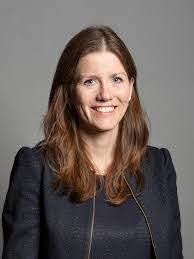
    The speech made by Michelle Donelan, the Secretary of State for Science, Innovation and Technology, in Manchester on 3 October 2023.

    Thank you, Conference.

    It is an honour to be here, speaking as the UK’s first ever Secretary of State for Science, Innovation and Technology.

    The department that is working with industry and research to create the opportunities of tomorrow.

    I want to start by thanking my amazing ministerial team.

    Our ever-zestful science superpower, George Freeman.

    The tireless tech titan, Paul Scully.

    The Baron of Broadband, John Whittingdale.

    And our in-house entrepreneur, Viscount Camrose.

    And of course, my brilliant PPS Paul Bristow.

    When the Prime Minister created DSIT, some questioned why this department was a priority.

    But they weren’t saying that when our tech sector worth over one trillion dollars was under threat in February,

    When the UK arm of Silicon Valley Bank stood on the brink of collapse, putting thousands of British tech businesses and jobs in danger.

    But in the space of just three days, my department helped secure the sale of the bank, saving those businesses, protecting those jobs.

    And Conference, we have continued to prove them wrong.

    We’re utilising science, technology and innovation to help us all live longer, healthier, easier, happier lives with the people we love.

    In the last eight months, over two million homes have been connected to gigabit broadband. By the time I have finished this speech, 71 more will have.

    Around 53,000 people have got new jobs in 31,000 new British tech businesses.

    And we’ve agreed a bespoke new deal to join Horizon.

    And, we will protect 14 million British children thanks to the Online Safety Bill.

    But these aren’t the only changes that have happened – We’ve crowned our new King, Labour have appointed another Shadow Cabinet and I welcomed my baby boy in May.

    And yes, there have been plenty of late night tantrums, incoherent screaming and dummies being thrown out of the pram.

    But, I am told this is perfectly normal behaviour from a Labour shadow cabinet.

    Now, they’ve flip-flopped on everything from the EU, to schools, to housing, to ULEZ.

    In contrast, with your Conservative government making long term decisions for a brighter future.

    And we have an opportunity to make this Britain’s great tech century.

    As Conservatives, our job is to make sure that this transformation remains a positive one for the British people, improving all our lives.

    Let’s not forget it was British inventors who gave us the telephone, the television, the jet engine, antibiotics, the world wide web, and the first vaccine, the list goes on.

    But for too long, Britain has been a challenger nation to the US and China…

    We’ve seen too many great British ideas sold off to help foreign companies, rather than creating jobs here in the UK.

    But Conference, we have a plan.

    By the end of this decade, Britain will become a science and technology superpower.

    I want this to be a country that becomes energy independent, that flies the first electric commercial plane and even discovers cures for cancer.

    Because, when we double down on the things that put the Great into Britain in the first place,

    Our talented people, our entrepreneurial spirit, our ability to problem solve,

    We will lead the world with new inventions and keep the jobs they create on our shores.

    Because to me, that is what being a Conservative is all about – aspirations and ambition for our nation and putting the British people and British values first.

    Conference, just look how our game changing Online Safety Bill. How it put you back in the driving seat for what you see and do online – allowing adults to take control over their own social media accounts.

    When I took over this Bill a year ago, many of us were concerned about the implications for free speech.

    It was stuck in deadlock over the issue of ‘legal but harmful’,

    And I didn’t think it went far enough to protect our children.

    So, I injected some common sense.

    I said, that we should not create a quasi-legal categories, where something is legal offline to say to someone’s face, but where the state clamps down on it online.

    Because if we think something should be illegal, we should have the courage of our convictions to make it illegal.

    So that’s what we did, with cyber-flashing, with intimate image abuse, with the promotion of self-harm.

    Whilst standing up for free speech and choice and removing legal but harmful

    Illegal content should go yes, companies should stick to their own terms and conditions yes, and not treat different parts of society differently.

    But fundamentally, I believe adults should have more choice over what they see – not the state and not tech executives million miles away.

    Because we are the party of free speech and we should stay that way.

    When I took over this bill, people also said it was impossible to strengthen it to protect children.

    Do you know that the average 9-year-old has a social media account, and the average 13-year-old has seen porn online ?

    I said, enough is enough.

    Now the bill will protect children from online porn.

    It ensures that children under 13 cannot access social media platforms.

    And tech executives will face jail time if they turn a blind eye.

    But as we protect our children from harms online today, we are, of course, also preparing for a future enhanced by Artificial Intelligence.

    Britain is leading the way on AI safety.

    AI does have enormous opportunities to cut down our NHS waiting lists, to support teachers so they’ve got more time to teach and less time to do admin, and to revolutionise our public transport and much more.

    But to seize these opportunities we have got to grip the risks.

    Next month, Britain is organising the world’s first Global AI Safety Summit – bringing together world leaders so we can better understand the risks of AI and put in place the guardrails to protect the public – whilst also reaping the benefits and fostering innovation.

    With the Prime Minister, I set up the world-renowned Frontier AI Taskforce – modelled on the fantastic Vaccine Taskforce – with some of the leading minds on AI to ensure Britain leads the world on AI safety.

    Because the stakes are simply too high, and the technology is developing too fast not to act on a global scale.

    Conference, I believe we should be proactive not reactive.

    I believe, we are at a crossroads in human history, and to turn the other way would be a monumental, missed opportunity for mankind.

    Already, AI is being used to detect breast cancer earlier, the capability exists to prevent over 90% of road collisions and it’s being used to detect heart disease 39 times faster – and that’s just name a few examples.

    The opportunities in the future really are limitless.

    But we won’t make them a reality unless we have the skills and then we can truly seize these opportunities.

    To ensure that the next generation of the world’s AI entrepreneurs are Britain’s best and brightest,

    I am today announcing an £8million increase to the number of AI scholarships we are funding.

    Giving 800 more people the opportunity to excel in AI and cementing our place as leading the global conversation on AI safety.

    But as Conservatives we also must ensure the opportunities of technology are spread right across the country – from Folkestone and Falmouth to Hartlepool to Holyhead.

    Why shouldn’t an entrepreneur in a rural village be able to start a new business from home?

    Why shouldn’t British farmers be able to use state of the art agri-tech and have fast, stable internet connections to sell their produce to more customers online?

    Well, we believe they should have those opportunities, and what’s more, I am today taking action to ensure they do.

    I am announcing that in the coming months, we will be giving access to very hard-to-reach rural homes and businesses to get state-of-the-art satellite broadband to unlock the potential in these rural areas.

    I am also announcing a new £60million pound Regional Innovation Fund, a cash injection that will be felt almost immediately.

    We will back our world class universities to support local businesses, to grow local economies and support opportunities across our country.

    Right here in the North West, almost £9million will deliver new jobs, faster growth and real benefits for local communities.

    And we will be increasing our overall investment in great British research and development to £20 billion by next year.

    This is record breaking funding.

    We are backing British scientists, backing British businesses and driving investment into all corners of our United Kingdom.

    This investment will open the door to the opportunities of tomorrow.

    And British scientists are consistently advancing the frontiers of knowledge, with groundbreaking discoveries that are reshaping our world.

    Did you know, we are first in the world for producing the top medical science publications?

    We’re second in the world for R&D into healthcare,

    And unlike countries like the USA, China and Germany, we are a net exporter of pharmaceuticals .

    British scientists are the bedrock of our great economic power.

    When I was first appointed to this role, I was reminded of Margaret Thatcher’s scientific legacy.

    Now, I am not talking just about her legendary role in the invention of soft scoop ice cream…

    I am talking about her wise words as Prime Minister – when she described science as humanity’s attempt to “cast a light ahead… so that we may move forward, step by step, in the right direction”.

    She was right.

    Conference, we are the party of facts, we are the party of evidence, we are the party of scientific rigour – and I will stand up for these core values.

    But increasingly, thanks to the slow creep of wokeism, this guiding light that Thatcher referred to is under attack.

    Now, Keir Starmer has said these issues don’t matter to the public.

    He thinks that the legitimate concerns of the scientific community and of millions of Britons don’t matter.

    Well Conference, I think it does matter.

    I think it matters when scientists are told by university bureaucrats that they cannot ask legitimate research questions about biological sex.

    And I think it matters when Scotland’s chief of stats issues guidance stating that data on sex can only be collected in exceptional circumstances.

    And I think it matters when the ONS has to be taken to the High Court because its census guidance said it was possible to change your biological sex.

    I think it matters that in 2021 Police Scotland announced that a male rapist who self-identifies as a women will then be recorded statistically as a female rapist by the police.

    Now, any credible scientist will tell you that gender and sex are two different things…

    To suggest otherwise is not only scientifically illiterate, it actually damages scientific research and statistics in everything from population studies to medicine to sport.

    And unlike Comrade Keir, we will not sit idly by and watch an intolerant few stifle the light of science that leads us in the right direction.

    So today, Conference, I am launching a review into the use of sex and gender questions in scientific research and statistics – including in public bodies – which will produce robust guidance within six months.

    Conducted by Professor Alice Sullivan of UCL, who will produce a report for my department and also to Cabinet Office.

    The review will leave no stone unturned in the effort to protect scientific integrity and let our world class scientific community accurately get on with their jobs.

    So, to those who think they have the right to impose this utter nonsense on science,

    Let this message go out from this conference hall.

    We are safeguarding scientific research from the denial of biology and the steady creep of political correctness.

    We are making a stand before it suffocates British very identity and our values entirely.

    That is why we are depoliticising science, because science is the most extraordinary force for good – from curing disease to growing our food – we’ve got to keep it that way.

    Science must be based on facts.

    Now, finally Conference, delivery and outcomes are my focus.

    Last month I announced a bold new deal to join Horizon – the world’s biggest scientific collaboration.

    During the negotiations, Labour called on us to take the first deal we were offered.

    They told us ‘Bite the EU’s hand off because 0 Little Britain couldn’t get a better deal’.

    They talked our country down, trying to score a quick political win.

    And what did we do? We got an even better deal.

    And that says it all really.

    While Labour act in self-interest, when they sneer from the sidelines and say it can’t be done,

    We are busy taking the long term decisions and delivering.

    They said we couldn’t leave the EU and secure a better deal on Horizon – we did it.

    They said we couldn’t create a bespoke, common sense, British version of GDPR that cracked down on endless cookie pop-ups – we did it.

    They said the Online Safety Bill couldn’t protect free speech for adults and do more to protect children online – we did it.

    And we achieved these because we never lost sight of what it means to solve difficult problems in an unapologetically, common-sense Conservative way.

    I believe in the individual, in opportunities and hard work, in the family.

    While others want to smash the foundations of Britain down, I believe that we as Conservatives have a duty to build Britain up.

    Now, that’s what my department is all about, and that is what this government is all about.

    Consistency in our values.

    Long term commitment to opportunity.

    Driving us forward, to deliver a better today, and for our children’s future tomorrow.

    Thank you.

  • Steve Barclay – 2023 Speech to Conservative Party Conference

    Steve Barclay – 2023 Speech to Conservative Party Conference

    The speech made by Steve Barclay, the Secretary of State for Health and Social Care, in Manchester on 3 October 2023.

    Thank you, Luke.

    As Health and Social Care Secretary, what drives me is getting people the care they need, more quickly.

    Boosting capacity, expanding our workforce and embracing technology that will help tackle waiting lists.

    But today, I also want to tell you about the long-term decisions that we are taking to support the NHS; to give patients more control and choice and to take on those – like militant union leaders and Labour MPs supporting them on the picket line – who want to block these changes.

    We’re taking immediate action to tackle challenges in the NHS and in Social Care.

    Putting 800 new ambulances on the road.

    Delivering 5,000 permanent hospital beds.

    And creating 10,000 hospital-at-home places for patients to receive care in their own home.

    And we’re making the biggest ever increase in social care funding with a record uplift in the autumn statement last year.

    But Conference, as a Conservative what matters to me most is not inputs – it is the outcomes for patients.

    We are making significant progress with the help of new technology.

    Take strokes.

    We are using AI to speed up brain scans – meaning thousands of patients have fully recovered who may not have.

    And by the end of the year, this technology will be available in all stroke units in England.

    We are also upgrading the NHS to offer patients a choice of up to five different healthcare providers – including independent providers – following a GP referral which the Patients Association say can reduce waits by up to three months.

    Bu I also know that it can sometimes take too long to roll out new innovations nationally, even when they have been proven to work in local pilots.

    So today, conference, I am announcing the creation of a new £30-million fund to speed up the adoption of tech in the NHS.

    This will enable clinicians to adopt proven technology that can improve patient care.

    These could include new tools to detect cancer sooner, to help people receive treatment in their own home or increase productivity to tackle waiting lists.

    Projects will be delivered in this financial year – getting benefits to patients as quickly as possible.

    We’re focused on getting the very latest technology into the hands of doctors and nurses so they can benefit you when you need it.

    And that’s the mission I share with my fantastic Ministerial team – with Will Quince, Helen Whately, Maria Caulfield, Neil O’Brien and Lord Markham.

    All supported by our brilliant PPSs Gareth Bacon and Duncan Baker, and our fabulous whips Faye Jones and Lord Evans.

    But, Conference, I want to be clear: We want to give patients more choice and control over their care and we can only do that with long-term thinking.

    Take our Long-Term Workforce Plan. The largest expansion in training in the history of the NHS.

    The first time in the history of the NHS that a government has been willing to set out a plan for the next 15 years for recruiting and training doctors, nurses, paramedics and other vital staff.

    And to show we are already delivering on that plan, I’m delighted to announce today that we are making additional medical school places available at universities for next September.

    Most of these places will be targeted towards three new medical schools at the Universities of Worcester, Chester and Brunel.

    With further places for two universities here in the Northwest – the University of Central Lancashire and Edge Hill.

    This is alongside our new pilot for medical degree apprenticeships.

    A new route into medicine for young people yearning to train to become a doctor but who want to take a vocational route, because our party is the party of real opportunity for anyone, no matter where you come from.

    And conference – our plan is not just about more staff.

    It is about using this powerful moment for reform using our Brexit freedoms.

    Shorter degrees.

    New roles.

    And more ways onto the NHS career ladder.

    Better for patients and the taxpayer.

    Now conference, my own background in the private sector taught me that organisations run more efficiently when you look to outcomes, not the inputs.

    Being focused on the end point means you cut down on waste.

    That’s why I brought in Steve Rowe, the former Chief Executive of Marks and Spencer – to scrutinise our Departmental spending.

    With a budget of £190 billion, there are always opportunities to get more resources from the backroom to the front line.

    When I was appointed, I put in an immediate recruitment freeze in place, which has reduced the department’s headcount by a sixth and we are closing half of the department’s offices.

    That’s less money on the back-office and more money on frontline.

    To deliver the long-term change the NHS needs, we need a relentless focus on patient outcomes and that means prioritising frontline resources.

    It does not mean spending huge sums of taxpayer’s money on diversity consultants or hiring bloated internal diversity and inclusion teams.

    And it does not mean ignoring patient’s voices – especially women’s voices when it comes to the importance of biological sex in healthcare.

    If we do not get this right now, the long-term consequences could be very serious for the protection of women and future generations.

    And Conference, I know as Conservatives, we know what a woman is and I know the vast majority of hardworking NHS staff and patients do too.

    That is why I ordered a reversal of unacceptable changes to the NHS website that erased references to women for conditions such as cervical cancer and stopped the NHS from ordering staff to declare pronouns to each new patient.

    And that is why today, I am going further; by announcing that we will change the NHS constitution following a consultation later this year to make sure we respect the privacy, dignity and safety of all patients recognise the importance of different biological needs and protect the rights of women.

    Now, Conference, if all of that seems like simple common sense, that’s because it is.

    And yet every step of the way we have faced opposition from the usual suspects when we are trying to do the best for patients.

    You probably saw some of them on your way in this morning.

    The militant BMA leadership – whose strikes have resulted in countless cancelled appointments and pose a serious threat to the NHS’s recovery from the pandemic.

    Their Consultants and Junior Doctors Committee are relentlessly demanding massive pay rises.

    Even if that means diverting resources from patients. And despite junior doctors having already received a pay rise of up to 10.3%.

    But it doesn’t end there.

    They are even threatening to take the Government to court over our plans to let patients see their own test results on their own phones, rather than taking up a GP appointment.

    This clearly shows that the BMA leadership is not on the side of change, and they are not on the side of patients.

    And then there’s Labour.

    Keir Starmer’s MPs continue to join the BMA on the picket line.

    You only have to look at Starmer’s own plans for the NHS to see that Labour will always bottle it and take the easy way out.

    When his own proposals on workforce were published, there was nothing on reform whatsoever. No shorter courses. No new roles. Just more of the same.

    His Shadow Health team won’t back our rollout of new obesity drugs on the NHS via primary care.

    Game changing new treatments that can give people struggling to lose weight a real helping hand.

    Labour don’t want to embrace innovation.

    Instead, the left like to lecture people on what they eat and drink.

    Look at Labour run London.

    Sadiq Khan has banned Wimbledon adverts on the underground.

    Why?

    Because photos of strawberries and cream breach health advertising rules set by City Hall.

    And in Wales, Labour has banned meal deals that include a sandwich with a bag of crisps at a time when families are concerned about the cost of living.

    Now, Keir Starmer says that Wales is the ‘blueprint for what Labour can do in England’.

    But their record on health makes for grim reading.

    As a result of Labour’s short-term thinking, patients in Wales are twice as likely to be waiting for treatment than in England.

    No wonder that the number of patients in Wales escaping to seek treatment in England has increased by 40% in two years.

    So, the next time you hear Labour telling people that they have easy answers to the challenges our health system faces remind them that Labour is letting people down in Wales.

    Now Conference, it is only by taking on those who resist change that we can make sure the NHS is there for us and our loves ones in the future.

    So, let’s stand up to a militant BMA leadership that does not accept the need for reform.

    Let’s challenges the ideologues who silence the voice of women.

    And let’s be very clear that we won’t take lectures from a Labour Party that has utterly failed patients in Wales.

    Conference, we will achieve it by coming together as Conservatives.

    Showing our values, our vision, our drive will deliver an NHS that gives people more choice, more control and, above all, puts patients first.

  • PRESS RELEASE : Government launches plan to put drivers back in the driving seat [October 2023]

    PRESS RELEASE : Government launches plan to put drivers back in the driving seat [October 2023]

    The press release issued by the Department for Transport on 2 October 2023.

    New 30-point plan to support people’s freedom to use their cars and curb over-zealous enforcement measures.

    • Transport Secretary announces plan for drivers to fix common issues on the road and back people who use cars in their daily lives
    • action will be taken to support drivers with easier parking, smoother journeys and fairer traffic enforcement
    • measures will also speed up the rollout of electric vehicle chargepoints across the country and crack down on inconsiderate driving

    Today (2 October 2023), the Transport Secretary announced a new 30-point plan to support people’s freedom to use their cars and curb over-zealous enforcement measures.

    Drivers will benefit from smoother, easier journeys thanks to the government’s new plan for drivers, including £70 million to keep traffic flowing and measures to speed up the rollout of electric vehicle charging.

    The plan includes measures that could help councils increase spending on fixing potholes and road repairs by more than £100 million over 10 years, fining roadworks which overrun, new technology to simplify parking payment and updating 20mph zone guidance for England to prevent inappropriate blanket use

    The government has also today committed to exploring measures to speed up the installation of chargepoints for electric vehicles and extending grants to schools to install chargepoints.

    Transport Secretary Mark Harper said:

    We’re backing drivers and our new long-term plan will improve journeys for millions across the country, whether they’re commuting to work or college, parking up for a day trip, or charging their electric car.

    Our plan for drivers will support thousands of skilled jobs and help grow the economy, sitting alongside our continued record investment in public transport and active travel – ensuring people have the freedom to travel how they want.

    To help ease congestion, £70 million will be provided to councils this financial year in 3 different schemes to invest in improving traffic lights and signals, including AI tech to optimise traffic flow in city centres.

    Journeys will also be smoother and quicker with the digitisation of traffic regulation orders, which will pave the way for autonomous vehicles and make life easier for today’s motorists by ensuring satnavs have the most up-to-date information on the location of parking spaces, road closures and speed limits.

    These measures fulfil the government’s commitment to support families and grow the economy by making driving easier for the 50 million car licence holders in the UK. It will also help people make the switch to electric vehicles as the country continues its proportionate, balanced journey to net zero.

    The measures come on top of extending the temporary fuel duty cut for another year in March 2023 to save drivers a total of around £5 billion over the past 2 years.

    The full plan for drivers will make journeys smoother by:

    • strengthening guidance to make sure bus lanes operate only when buses are running
    • guiding local authorities on allowing motorcycles to use bus lanes and holding a consultation about whether motorcycle access should be standard
    • permitting red flashing lights for breakdown vehicles, helping to protect recovery drivers by making them more visible at the roadside
    • supporting councils to introduce more lane rental schemes, which reduce roadworks by incentivising utilities to avoid the busiest roads at the busiest times
    • consulting on requiring local authorities with lane rental schemes to use at least 50% of any surplus on pothole repairs or resurfacing
    • consulting on extending fines for overrunning street works at weekends and increasing fixed penalty notices
    • rolling out the Live Labs 2 programme to explore new, low-carbon and high-tech ways of managing local highway networks, supporting the transition to net zero carbon local roads and infrastructure
    • developing a New Road Condition Data Standard to provide local authorities with access to new technologies enabling them more easily to identify and deal with road defects like potholes
    • £30 million fund to upgrade traffic signal systems, replacing unreliable and obsolete equipment to improve reliability
    • £20 million ‘Green Light Fund’ to tune up traffic signals to better reflect current traffic conditions and get traffic flowing
    • £20 million to deploy advanced technology for traffic signals, making use of machine learning and AI to optimise traffic flow and balance traffic across city centres

    We’re also stopping unfair enforcement by:

    • issuing 20mph zone guidance for England to help prevent inappropriate blanket use.
    • consulting on measures including the removal of local authorities’ access to DVLA data to enforce such schemes by camera
    • focusing on the importance of local support and consider as part of the LTN review how to address existing LTNs that have not secured local consent
    • strengthening government and sector-led guidance on enforcement of moving traffic offences such as entering yellow box junctions, to ensure consistency and stop drivers from being penalised unfairly
    • launching a call for evidence on options to restrict local authorities’ ability to generate surpluses from traffic offences and over-zealous use of traffic enforcement powers

    We’re making parking easier by:

    • delivering the new National Parking Platform by autumn 2024, ending the need to use multiple parking apps
    • consulting on revising guidance about the public’s right to challenge local authority parking policies
    • introducing digitised traffic regulation orders to help easily identify where it is legal to park anywhere in the country

    We’re tackling inconsiderate driving by:

    • consulting on removing the right of uninsured drivers to claim compensation for property damage
    • launching a communications campaign and enforcement to tackle lane hogs and other inconsiderate driving on the motorway
    • allowing local councils to roll out noise cameras to target unacceptable vehicle modifications
    • clamping down on roadside littering, extending the trial on camera enforcement across the strategic road network

    We’re supporting the transition to zero emission driving by:

    • reviewing grid connections process for EV chargepoints, with the aim to accelerate it
    • consulting on measures to speed up the approvals process for installation of chargepoints
    • providing dedicated, targeted support for schools to install chargepoints, using existing grants
    • widening eligibility of EV chargepoint grants to include cross-pavement solutions to make EV ownership a more practical option for those without off-street parking
    • providing guidance on the use of safe cross-pavement solutions
    • consulting on the expansion of permitted development rights, making private chargepoint installation cheaper and easier
    • working with industry to myth-bust concerns about EVs
  • PRESS RELEASE : Sentencing of Vietnamese climate advocate – FCDO statement [October 2023]

    PRESS RELEASE : Sentencing of Vietnamese climate advocate – FCDO statement [October 2023]

    The press release issued by the Foreign Office on 2 October 2023.

    The Foreign, Commonwealth and Development Office (FCDO) has released a statement on the sentencing of Vietnamese climate advocate Hoang Thi Minh Hong.

    An FCDO spokesperson said:

    The United Kingdom is deeply concerned by the conviction and sentencing of Hoang Thi Minh Hong, former leader of environmental campaign group CHANGE. There is a pattern of environmental experts being arrested and imprisoned in Vietnam.

    The Government of Vietnam committed to consult NGOs, media and other stakeholders as part of the Just Energy Transition Partnership. The UK urges the Vietnamese authorities to ensure civil society organisations can operate and participate without fear of unfair treatment, targeting or prosecution.

    Civil society plays a crucial role in supporting sustainable and inclusive development. We reiterate our call on Vietnam to respect all human rights, including freedom of expression and association.

  • PRESS RELEASE : End to Civil Service expansion and review of equality and diversity spending announced in productivity drive [October 2023]

    PRESS RELEASE : End to Civil Service expansion and review of equality and diversity spending announced in productivity drive [October 2023]

    The press release issued by HM Treasury on 2 October 2023.

    The Chancellor has today, 2 October 2023, announced an immediate cap on civil servant headcount across Whitehall to stop any further expansion, increase efficiencies and boost productivity.

    • Chancellor announces Civil Service Numbers Cap, capping headcount at current level, which could save up to £1 billion, with focus on a leaner and more effective workforce
    • government departments to submit long-term productivity plans that modernise the Civil Service and reduce the size of the state – delivering high-quality public services at a lower cost
    • equality, diversity and inclusion (EDI) spending in the Civil Service to be reviewed to ensure it represents value for money for the taxpayer

    The Civil Service workforce has grown year on year since 2016, with headcount as of June 2023 around 488,000. While this has enabled an effective response to the challenges of the Covid-19 pandemic, further unabated growth would not be fair to taxpayers or promote the efficiency they expect.

    A cap on headcount at its current level will be introduced with immediate effect – a decision that will help cut the cost of government and could save up to £1 billion by March 2025 compared to the current trajectory.

    The cap – which will be in place for the duration of the current Spending Review period – does not equate to a recruitment freeze, and current recruitment campaigns will remain ongoing.

    To go further after the current Spending Review period, government departments will be asked to produce plans on driving down headcount over the long-term to pre-pandemic levels, as part of the Public Sector Productivity Programme being carried out by the Chief Secretary to the Treasury.

    A first-time value for money audit of EDI spending in the Civil Service will also separately inform the productivity review, with the findings and actions to be announced by the Chancellor in the Autumn.

    Through tackling unnecessary bureaucracy and improved use of technology, it is expected that the Civil Service will become more productive and act as a lean, agile, and cost-effective organisation, in line with the people’s priorities.

    Departmental plans are expected to include detail on how departments will utilise modern technology to drive efficiencies and deliver better services for the public at lower costs – across both the Civil Service and the wider public sector. This process will also prioritise the protection of critical frontline services.

    Further information

    • Estimated savings are based on the latest available headcount for full-time employee numbers (457,000 as of June 2023) from the ONS (excluding devolved administrations), as well as a projection of 490,000 in March 2025 based on the current trend in headcount growth since 2016.
    • The figure is based on a median wage of £32k reported in the latest Civil Service Statistics and additional non-wage costs of £13k per FTE. The figure is subject to change based on departmental negotiations and a later retrospective update to headcount data.
    • The cap will apply to all government departments and their arm’s length bodies. Public servants and crown servants will also be included where they are normally in scope of the Civil Service Pay Remit.
    • The Civil Service Fast Stream will continue as planned in recognition of the importance of the talent pipeline.
    • The Cabinet Office has written to over 100 organisations in the Civil Service, including government departments and executive agencies, to confirm how many staff work on EDI and how that work supports government priorities.
    • The Chancellor, Minister for the Cabinet Office and Minister for Women and Equalities will jointly scrutinise whether EDI spending offers taxpayers value for money.
  • PRESS RELEASE : Tougher rules to stamp out debanking [October 2023]

    PRESS RELEASE : Tougher rules to stamp out debanking [October 2023]

    The press release issued by HM Treasury on 2 October 2023.

    Changes to the rules which determine whether a bank can operate – known as Threshold Conditions – will ensure banks are upholding their current legal duties to protect freedom of speech.

    • Chancellor spells out new rules for banks to protect free speech
    • banks forced to show exactly how they are protecting customers’ freedom of speech under a shakeup of the rules
    • banks must take existing obligations not to discriminate seriously

    This action will give regulators the green light to take firm action if any bank is found to undermine or fails to protect the rights of their customers.

    A public consultation will be launched shortly to consider how these changes are best delivered, before legislating next year, as part of the government’s aim to put an end to de-banking for freedom of speech reasons.

    This follows concerning reports that highlighted situations where banks may have been closing the bank accounts of customers based on their political views.

    The Chancellor was quick to act – confirming new rules will force banks to delay and explain account closures and asking the FCA to conduct a deep dive into this issue.

    The notice period for payment service framework contract terminations is to increase from two months to 90 days, and banks will be required to give customers clear and tailored explanations for why they had closed an account – unless in limited cases such as where this would be unlawful.

  • PRESS RELEASE : Chancellor announces major increase to National Living Wage [October 2023]

    PRESS RELEASE : Chancellor announces major increase to National Living Wage [October 2023]

    The press release issued by HM Treasury on 2 October 2023.

    The National Living Wage will rise to two-thirds of average earnings, the Chancellor announced today (Monday 2 October).

    • National Living Wage will rise to two-thirds of average earnings
    • Chancellor commits to Low Pay Commission recommendations, with latest forecasts showing a pay boost next year worth over £1,000 for 2 million low-paid workers
    • successive rises mean a full-time worker on the National Living Wage will be over £9,000 better off than they would have been in 2010

    In a significant boost for the UK’s lowest paid, the Chancellor committed to accept the Low Pay Commission’s recommendations – which will be announced in November. Based on the Low Pay Commission’s latest forecasts, this would see the National Living Wage increase to over £11 an hour from April 2024 and would mean the annual earnings of a full-time worker on the National Living Wage will increase by over £1,000 next year.

    People currently aged 23 and over are eligible for the National Living Wage, with over 2 million workers on low pay set to benefit from the increase. The announcement, after successive rises since its introduction in July 2015, means a full-time worker on the National Living Wage will be over £9,000 better off than they would have been in 2010.

    Each year, the independent Low Pay Commission produces recommendations to the Government on National Living Wage and National Minimum Wage rates. This year it is due to make recommendations for the rates that will take effect from April 2024, based on their remit which sets a target for the National Living Wage to reach two-thirds of median earnings by 2024 for workers aged 21 and over, taking economic conditions into account.

    Further information

    Projected coverage of National Living Wage/National Minimum Wage workers in April 2023 across the UK’s countries and regions

    Region National Living Wage
    North East 130,000
    North West 300,000
    Yorkshire & Humber 310,000
    East Midlands 200,000
    West Midlands 270,000
    South West 200,000
    East 220,000
    London 200,000
    South East 280,000
    Wales 120,000
    Scotland 180,000
    Northern Ireland 130,000
    Total 2,540,000

    History of the NLW

    • Since 1999, the UK has had a National Minimum Wage, which is uprated annually based on the advice of the independent Low Pay Commission (LPC).
    • The LPC is made up of representatives from business, employee and academic communities and reaches a consensus agreement on this uprating.
    • Prior to the first target announced in 2015, the LPCs remit was to set rates as high as possible without significant employment impacts.
    • The first minimum wage target was announced in 2015, when he announced the introduction of the National Living Wage (NLW)  from April 2016. The NLW had a target to reach 60% median earnings by 2020. This target was met in October 2020.
    • In 2019 a new target was announced for the NLW to reach two thirds of median earnings by 2024.
    • The target for the NLW to reach two thirds of median earnings was set to ‘end’ low pay according to the ONS definition.
  • PRESS RELEASE : Boost to UK-Indonesia low-carbon cooperation as Minister visits Jakarta [October 2023]

    PRESS RELEASE : Boost to UK-Indonesia low-carbon cooperation as Minister visits Jakarta [October 2023]

    The press release issued by the Foreign Office on 2 October 2023.

    Minister for the Indo-Pacific, Anne-Marie Trevelyan, is visiting Indonesia to launch the second phase of UK support to the Low Carbon Development Initiative.

    • Minister for the Indo-Pacific, Anne-Marie Trevelyan, is visiting Indonesia to launch the second phase of UK support to the Low Carbon Development Initiative (LCDI).
    • £27.2 million of new UK funding will foster sustainable economic growth and development while mitigating the impacts of climate change.

    The UK and Indonesia are set to extend collaboration on low carbon development until 2027, as Minister Trevelyan announces the second phase of UK support to the Low Carbon Development Initiative (LCDI) on a visit to Indonesia today (2 October). The Minister will announce new funding alongside Indonesian Minister for National Development Planning Suharso Monoarfa. The commitment affirms the UK’s record of support for climate action and sustainable growth in the Indo-Pacific.

    Ahead of the visit, Anne-Marie Trevelyan said:

    Indonesia’s thriving economy and capacity for innovation bring ever greater opportunities for our two countries to work together, from trade and investment to science and tech cooperation.

    The LCDI will ensure Indonesia’s economic growth is sustainable and resilient against the impacts of climate change, delivering benefits for people in the UK, Indonesia and across the Indo-Pacific.

    The Low Carbon Development Initiative (LCDI) is a flagship Indonesian government policy aiming to reduce emissions and promote sustainable growth and development. The first phase of UK support, launched in 2017, saw the inclusion of climate targets within the country’s development planning for the first time. Now, new funding will enable further training and capability building to develop science-based policy and provide grants to pilot innovative low-carbon technologies.

    The visit by Minister Trevelyan follows sustained UK engagement with Indonesia during its ASEAN Presidency year, including visits by Minister for Energy Security and Net Zero Graham Stuart in August and Foreign Secretary James Cleverly in July.

    During the visit, the Minister will meet Deputy Minister of Foreign Affairs Pahala Mansury for discussions on global and regional security, and Minister of Maritime and Investment Affairs Luhut to discuss economic cooperation and progress under the JETP. She will also meet ASEAN Secretary General Dr Kao Kim Hourn, to reaffirm the UK’s respect for ASEAN centrality and commitment to its role as a Dialogue Partner.

    Finally, the Minister will visit sports charity Inspire Indonesia to learn about their work educating teenagers on the importance of gender equality and the harms of sexual and gender-based violence.

    Notes to editors

    • The extension of UK support to the LCDI follows the launch of the Indonesia Just Energy Transition Partnership (JETP), agreed by Prime Minister Rishi Sunak at the 2022 G20 leaders’ summit in Bali. The JETP secured public and private sector infrastructure funding to accelerate Indonesia’s transition to clean energy.
  • PRESS RELEASE : Social housing tenants helped to cut energy bills with £80 million for home upgrades [October 2023]

    PRESS RELEASE : Social housing tenants helped to cut energy bills with £80 million for home upgrades [October 2023]

    The press release issued by the Department for Energy Security and Net Zero on 2 October 2023.

    More social housing tenants to receive energy efficiency upgrades in their home, with an additional £80 million under Social Housing Decarbonisation Fund.

    • An extra 9,500 social housing tenants will benefit from grants to make homes warmer and more energy efficient
    • Additional funding for the government’s Social Housing Decarbonisation Fund will help lower bills by £240 a year on average and support 2,000 jobs
    • Scheme is already benefiting more than 100,000 households

    Thousands more social housing tenants will be helped to cut bills with additional government grants available for home energy efficiency upgrades.

    Energy Security and Net Zero Secretary Claire Coutinho today (Monday 2 October) announced up to £80 million in additional funding will be made available through the Social Housing Decarbonisation Fund – which will generate energy bill savings of around £240 a year for some of the lowest-income households.

    More than 100,000 households in England are already benefiting from the scheme and today’s funding is enough to upgrade an additional 9,500 homes.

    Measures range from installing new wall, loft or underfloor insulation to supporting families to switch to low carbon heating – helping to cut energy bills and supporting around 2,000 jobs.

    As part of the government’s new pragmatic and proportionate approach to reaching net zero, eligible tenants will receive the energy efficiency upgrades free of charge through their social housing provider, whether local councils or housing associations.

    Secretary of State for Energy Security Claire Coutinho said:

    We are delivering net zero in a way that supports the British public and does not burden hardworking families with additional costs.

    Our Social Housing Decarbonisation Fund is delivering warmer homes and energy bill savings of around £240 for some of the lowest income families, as well as supporting thousands of jobs.

    We’re already making over 100,000 homes more energy efficient with this scheme, and I’m delighted an extra 9,500 social housing tenants will now benefit too.

    Minister for Energy Efficiency and Green Finance Lord Callanan said:

    The UK is a trailblazer when it comes to reducing carbon emissions, cutting them faster than any other G7 country.

    By supporting families to improve their household energy efficiency, this additional funding will deliver measures such as new insulation and low-carbon heating for even more households – helping them save money and cut emissions.

    The government has a strong record on energy efficiency, with the proportion of homes in England with an EPC rating of C or above up from 14% in 2010 to nearly half of all homes now. Today’s funding will help drive up the energy performance of social homes with an EPC rating of D or below.

    The scheme forms part of the government’s commitment to reduce overall UK energy demand by 15% by 2030, as well as supporting the ambition for the UK to move towards ever-greater energy security and independence. The government also plans to run a consultation on energy efficiency standards in the social rented sector.

    Local and combined authorities, registered providers of social housing and charities that own social housing will be able to bid for the additional funding to install energy efficiency upgrades in November.

  • PRESS RELEASE : New measures targeting bomb-making materials come into force [October 2023]

    PRESS RELEASE : New measures targeting bomb-making materials come into force [October 2023]

    The press release issued by the Home Office on 2 October 2023.

    Stronger restrictions on poisons and explosive substances came into effect on 1 October 2023.

    New restrictions on poisons and explosive substances have come into effect from Sunday 1 October, strengthening existing controls for poisons and chemicals which could be used to make explosives.

    Under these changes, there will be stricter requirements on reporting suspicious activity, including new obligations for online marketplaces. Customer information, such as photo identification, will be recorded when selling regulated materials to business users.

    Additional substances have also been added to the list of regulated poisons, including 2,4 Dinitrophenol, also known as DNP, which has taken the lives of many young people in the UK. Other substances to be added include zinc phosphide and hexamine, often used in fireworks.

    This will mean it will be a criminal offence to sell these substances to members of the public without a valid licence.

    Security Minister Tom Tugendhat said:

    The deaths of dozens of young people at the hands of criminals selling chemicals like DNP is a tragedy.

    These new measures will help prevent dangerous controlled substances from falling into the wrong hands.

    These measures come on the back of the devastating Manchester Arena attack in 2017, and the government’s commitment to look at whether current laws went far enough to protect the public.

    The changes will come into force through the updates to the Poisons Act 1972.

    Food Standards Agency (FSA) Head of National Food Crime Unit Andrew Quinn said:

    DNP can, and does, kill. This is why we strongly support the Home Office on the reclassification of DNP as a poison as well as the police on tackling criminals who supply this killer chemical.

    British Retail Consortium (BRC) Retail Products Advisor Adrian Simpson said:

    Retailers play an important part in spotting any suspicious activity from customers when buying particular chemical products, and will take additional steps to verify legitimacy of a purchase through more thorough ID checks.

    We welcome these new strengthened measures – retailers are vital in protecting the public by ensuring that all changes are clearly communicated to their customers. They will provide additional information online to explain the risks associated with certain products.

    The government continues to regularly work with online marketplaces to ensure that they are aware of the harms of chemicals and poisons and can identify and take down potentially unlawful listings as quickly as possible.

    The Poisons Act 1972 already sets out controls of chemicals which can be used to make explosives and poisons, restricting the general public’s access to the most dangerous materials. It permits a licensing regime for the purchase and use of regulated substances where there is a legitimate need and no safer alternative.

    Newly reportable explosives precursors:

    • Sulfur

    Newly reportable poisons:

    • Metal sulfides and polysulfides
    • Metal phosphides
    • Sodium hypochlorite solutions (above 6% available Cl).

    Newly regulated precursors:

    • Hexamine
    • Hydrochloric acid (over 10% w/w)
    • Phosphoric acid (over 30% w/w)
    • Ammonium nitrate (over 16% N)

    Newly regulated poisons:

    • Aluminium sulfide
    • Sodium sulfide
    • Calcium sulfide
    • Magnesium sulfide
    • Calcium phosphide
    • Zinc phosphide
    • Arsenic compounds
    • Mercury compounds
    • 2,4- dinitrophenol (DNP) and compounds including sodium dinitrophenolate