Blog

  • PRESS RELEASE : Secretary of State announces appointment of a new Chair and Members to the Board of National Museums Northern Ireland [October 2023]

    PRESS RELEASE : Secretary of State announces appointment of a new Chair and Members to the Board of National Museums Northern Ireland [October 2023]

    The press release issued by the Secretary of State for Northern Ireland on 26 October 2023.

    The Secretary of State, the Rt Hon Chris Heaton-Harris MP, has today announced the appointment of a new Chair and seven new Board Members to National Museums Northern Ireland.

    The Secretary of State, the Rt Hon Chris Heaton-Harris MP, has today announced the appointment of Gordon Milligan OBE as the new Chair of National Museums Northern Ireland. In addition, seven new Board Members have been appointed:

    • Keith Charlton
    • Ryan Cornett
    • Sally Montgomery OBE
    • Peter Osborne
    • Therese Rafferty
    • Fiona Ryan
    • Mark Walker

    In the absence of Ministers in the Northern Ireland Executive, these appointments have been made under the Northern Ireland (Executive Formation etc) Act 2022.

    All eight individuals took up their roles on 1 October 2023. They bring a range of skills and attributes to the Board, with backgrounds covering areas such as: leadership; delivering results; governance and accountability; collaborative working; commercial management; and financial management. This experience will strengthen the Board, allowing it to champion and advance the work of National Museums Northern Ireland.

    Biographies

    Gordon Milligan OBE

    Mr Milligan had served as an Executive at Translink where his responsibilities have included transformational change and leadership across corporate teams. Having served a period as Interim Chief Executive he was appointed Deputy Chief Executive in 2015. His experience includes leadership roles within large Global and National organisations including Bombardier Aerospace, Nortel Networks and Dubia Agrifood. He has served as an Executive member on both private and public sector boards. He has Non-Executive board experience and is currently Chair of the Institute of Directors in Northern Ireland, Chair of the Labour Relations Agency and is a visiting professor at the Ulster University Business School. Gordon was awarded the OBE in the 2023 New Year Honours for serve to Business and Human Resources Management in Northern Ireland. He has an MBA, is a Fellow of the Institute of Directors and is a Chartered Fellow of the Institute of Personnel and Development.

    Keith Charlton

    Mr Charlton has a wide range of experience in the private sector across the retail, manufacturing, tourism and leisure industries. As an entrepreneur, he co-founded award-winning Belfast based tourism business Bunk Campers and the ecommerce leisure retailer Camperco. As Group Managing Director, he was responsible for leading and developing group strategy and overseeing all commercial aspects of the business. He has European board level risk management and corporate governance experience and purchasing, sales and marketing expertise from various industry roles. He does not currently hold any other public appointments

    Ryan Cornett

    Mr Cornett has several years’ experience managing investment portfolios for a broad range of clients including private individuals, trusts, charities and corporate entities. He is on the board of a local charity, the John Hewitt Society, which provides opportunities for individuals across Northern Ireland to explore issues of difference and identity through literature and creative writing. He does not currently hold any other public appointments.

    Sally Montgomery OBE

    Dr Montgomery OBE is a trained educator and was formerly Head of Education at the Ulster Museum, Project Director and founding CEO of W5. At W5 she used her experience of exhibition management, including communication and marketing plans. As a Director of the Titanic Foundation, she was successfully involved in securing funds for heritage assets. She has held a number of Board and advisory positions and is currently a member of the Historic Monuments Council (unremunerated).

    Peter Osborne

    Mr Osborne has run his own business within the private sector, and held executive and non-executive roles with organisations that have managed significant capital and revenue expenditure, and managed relationships and major change. He currently sits as an Independent Member on the Northern Ireland Policing Board, as well as its Audit & Risk Assurance Committee.

    Therese Rafferty

    Ms Rafferty is a graduate of Queen’s University, the University of Ulster, and an alumnus of Boston College, Massachusetts, Therese has held senior roles over a career of 35 years in higher education and local government, the most recent being Head of Regeneration in Armagh City, Banbridge and Craigavon Borough Council. Her experience includes the delivery of a wide portfolio of capital development programmes and environmental initiatives, financial and corporate planning, performance and risk management, and corporate governance. Therese is a previous member of the Programming Committee for the FE McWilliam Gallery and Studio in Banbridge and oversaw its construction and accreditation. She has held a number of previous Board positions and is currently a Board member of the Agri-Food & Biosciences Institute.

    Fiona Ryan

    Ms Ryan is the Commissioner for Survivors of Institutional Childhood Abuse. Her previous leadership roles include Chief Executive in the areas of domestic, sexual and gender-based violence and public health advocacy. She was appointed by the Irish Department of Justice to the monitoring committee of successive national Domestic, Sexual and Gender-Based Violence Strategies. Her early career was spent in media as a journalist and External Affairs. She has worked in Belfast, Dublin and at European level. She has a Masters in Business Administration.

    Mark Walker

    Mr Walker has gained extensive financial and strategic management knowledge and experience as a senior manager in banking with Danske Bank and as Group Finance Director at Randox Laboratories, an international private sector biotech organisation. His experience is underpinned by knowledge and understanding of corporate finance and strategic and financial management. He is a Board Member of NIACRO, Thrive Audience Development and is an independent member of Clanmil Housing Association Audit & Risk Committee. He does not currently hold any other public appointments.

    Details of body

    National Museums Northern Ireland is the corporate name of the Board of Trustees of the National Museums and Galleries of NI, established under the Museums and Galleries (NI) Order 1998. It is a Non-Departmental Public Body sponsored by the Department for Communities (DfC).

    It is made up of four museums – the Ulster Museum, the Ulster Folk Museum, the Ulster Transport Museum and the Ulster American Folk Park – and serves as custodian for 1.4 million objects in Northern Ireland’s national collection. Its main statutory functions are to care for, preserve and add to the objects in its collections, interpret and exhibit them to the public, and to promote the awareness, appreciation and understanding by the public of art, history and science, the culture and way of life of people and the migration and settlement of people.

    Terms Of Appointment

    • The Chair position attracts remuneration of £10,000 per annum with a time commitment of at least 36 days per year.
    • Member positions are not remunerated. The time commitment is approximately one day per month.  but reasonable expenses (including travel, subsistence and other reasonable expenses in line with NICS rates) are paid with a time commitment of one day per month.
    • All Board positions receive reasonable expenses (including travel, subsistence and other reasonable expenses in line with NICS rates) and are for a term of up to four years.

    Regulation

    These appointments have been made in accordance with the Commissioner for Public Appointments for Northern Ireland (CPANI) Code of Practice.

    Political Activity

    All appointments are made on merit and political activity plays no part in the selection process. However, the Commissioner for Public Appointments for Northern Ireland requires the political activity of appointees to be published. All eight appointees have not declared any political activity in the last five years.
  • Rishi Sunak – 2023 Speech on AI

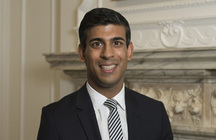
    Rishi Sunak – 2023 Speech on AI

    The speech made by Rishi Sunak, the Prime Minister, at the Royal Society in London on 26 October 2023.

    I’m delighted to be here at the Royal Society, the place where the story of modern science has been written for centuries.

    Now, I’m unashamedly optimistic about the power of technology to make life better for everyone.

    So, the easy speech for me to give – the one in my heart I really want to give…

    …would be to tell you about the incredible opportunities before us.

    Just this morning, I was at Moorfields Eye Hospital.

    They’re using Artificial Intelligence to build a model that can look at a single picture of your eyes…

    …and not only diagnose blindness, but predict heart attacks, strokes, or Parkinson’s.

    And that’s just the beginning.

    I genuinely believe that technologies like AI will bring a transformation as far-reaching…

    …as the industrial revolution, the coming of electricity, or the birth of the internet.

    Now, as with every one of those waves of technology, AI will bring new knowledge…

    …new opportunities for economic growth, new advances in human capability…

    …and the chance to solve problems that we once thought beyond us.

    But like those waves, it also brings new dangers and new fears.

    So, the responsible thing for me to do – the right speech for me to make – is to address those fears head on…

    …giving you the peace of mind that we will keep you safe…

    …while making sure you and your children have all the opportunities for a better future that AI can bring.

    Now, doing the right thing, not the easy thing, means being honest with people about the risks from these technologies.

    So, I won’t hide them from you.

    That’s why today, for the first time, we’ve taken the highly unusual step…

    …of publishing our analysis on the risks of AI…

    …including an assessment by the UK intelligence communities.

    These reports provide a stark warning.

    Get this wrong, and AI could make it easier to build chemical or biological weapons.

    Terrorist groups could use AI to spread fear and destruction on an even greater scale.

    Criminals could exploit AI for cyber-attacks, disinformation, fraud, or even child sexual abuse.

    And in the most unlikely but extreme cases, there is even the risk that humanity could lose control of AI completely…

    …through the kind of AI sometimes referred to as ‘super intelligence’.

    Indeed, to quote the statement made earlier this year by hundreds of the world’s leading AI experts:

    “Mitigating the risk of extinction from AI should be a global priority alongside other societal-scale risks such as pandemics and nuclear war”.

    Now, I want to be completely clear:

    This is not a risk that people need to be losing sleep over right now.

    I don’t want to be alarmist.

    And there is a real debate about this – some experts think it will never happen at all.

    But however uncertain and unlikely these risks are, if they did manifest themselves, the consequences would be incredibly serious.

    And when so many of the biggest developers of this technology themselves warn of these risks…

    …leaders have a responsibility to take them seriously, and to act.

    And that is what I am doing today – in three specific ways.

    First, keeping you safe.

    Right now, the only people testing the safety of AI…

    …are the very organisations developing it.

    Even they don’t always fully understand what their models could become capable of.

    And there are incentives in part, to compete to build the best models, quickest.

    So, we should not rely on them marking their own homework, as many of those working on this would agree.

    Not least because only governments can properly assess the risks to national security.

    And only nation states have the power and legitimacy to keep their people safe.

    The UK’s answer is not to rush to regulate.

    This is a point of principle – we believe in innovation, it’s a hallmark of the British economy…

    …so we will always have a presumption to encourage it, not stifle it.

    And in any case, how can we write laws that make sense for something we don’t yet fully understand?

    So, instead, we’re building world-leading capability to understand and evaluate the safety of AI models within government.

    To do that, we’ve already invested £100m in a new taskforce…

    …more funding for AI safety than any other country in the world.

    And we’ve recruited some of the most respected and knowledgeable figures in the world of AI.

    So, I’m completely confident in telling you the UK is doing far more than other countries to keep you safe.

    And because of this – because of the unique steps we’ve already taken – we’re able to go even further today.

    I can announce that we will establish the world’s first AI Safety Institute – right here in the UK.

    It will advance the world’s knowledge of AI safety.

    And it will carefully examine, evaluate, and test new types of AI…

    …so that we understand what each new model is capable of…

    …exploring all the risks, from social harms like bias and misinformation, through to the most extreme risks of all.

    The British people should have peace of mind that we’re developing the most advanced protections for AI of any country in the world.

    Doing what’s right and what’s necessary to keep you safe.

    But AI does not respect borders.

    So we cannot do this alone.

    The second part of our plan is to host the world’s first ever Global AI Safety Summit next week, at Bletchley Park – the iconic home of computer science.

    We’re bringing together the world’s leading representatives…

    …from Civil Society…

    …to the companies pioneering AI…

    …and the countries most advanced in using it.

    And yes – we’ve invited China.

    I know there are some who will say they should have been excluded.

    But there can be no serious strategy for AI without at least trying to engage all of the world’s leading AI powers.

    That might not have been the easy thing to do, but it was the right thing to do.

    So, what do we hope to achieve at next week’s Summit?

    Right now, we don’t have a shared understanding of the risks that we face.

    And without that, we cannot hope to work together to address them.

    That’s why we will push hard to agree the first ever international statement about the nature of these risks.

    Yet AI is developing at breath taking speed.

    Every new wave will become more advanced, better trained, with better chips, and more computing power.

    So we need to make sure that as the risks evolve, so does our shared understanding.

    I believe we should take inspiration from the Intergovernmental Panel on Climate Change…

    …which was set up to reach an international scientific consensus.

    So, next week, I will propose that we establish a truly global expert panel…

    …nominated by the countries and organisations attending …

    …to publish a State of AI Science report.

    Of course, our efforts also depend on collaboration with the AI companies themselves.

    Uniquely in the world, those companies have already trusted the UK with privileged access to their models.

    That’s why the UK is so well-placed to create the world’s first Safety Institute.

    And at next week’s Summit I will work together with the companies and countries to deepen our partnerships.

    My vision, and our ultimate goal, should be to work towards a more international approach to safety…

    …where we collaborate with partners to ensure AI systems are safe before they are released.

    And so to support this, we will make the work of our Safety Institute available to the world.

    That’s the right thing to do morally, in keeping with the UK’s historic role on the international stage.

    And it’s also the right thing economically, for families and businesses up and down the country.

    Because the future of AI is safe AI.

    And by making the UK a global leader in safe AI, we will attract even more of the new jobs and investment that will come from this new wave of technology.

    Just think for a moment about what that will mean for our country.

    The growth it will catalyse, the jobs it will create, the change it can deliver –for the better.

    And that’s the third part of our plan – to make sure that everyone in our country can benefit from the opportunities of AI.

    We’ve already got strong foundations.

    Third in the world for tech, behind only the US and China.

    The best place in Europe to raise capital.

    All of the leading AI companies – choosing the UK as their European headquarters.

    The most pro-investment tax regime…

    The most pro-entrepreneur visa regime, to attract the world’s top talent…

    …and the education reforms to give our own young people the skills to succeed.

    And we’re going to make it even easier for ambitious people with big ideas to start, grow, and compete in the world of AI.

    That’s not just about having the technical skills, but the raw computing power.

    That’s why we’re investing almost a billion pounds in a supercomputer thousands of times faster than the one you have at home.

    And it’s why we’re investing £2.5bn in quantum computers, which can be exponentially quicker than those computers still.

    To understand this, consider how Google’s Sycamore quantum computer…

    …can solve a maths problem in 200 seconds, that would take the world’s fastest supercomputer 10,000 years.

    And as we invest more in our computing power, we’ll make it available for researchers and businesses, as well as government…

    …so that when the best entrepreneurs in the world think about where they want to start and scale their AI businesses, they choose the UK.

    And finally, we must target our scientific efforts towards what I think of as AI for good.

    Right across the western world, we’re searching for answers to the question of how we can improve and increase our productivity.

    Because that’s the only way over the long-term to grow our economy and raise people’s living standards.

    And in a million different ways, across every aspect of our lives, AI can be that answer.

    In the public sector, we’re clamping down on benefit fraudsters…

    …and using AI as a co-pilot to help clear backlogs and radically speed up paperwork.

    Just take for example, the task of producing bundles for a benefits tribunal.

    Before, a week’s work could produce around 11.

    Now – that takes less than an hour.

    And just imagine the benefits of that rolled out across the whole of government.

    In the private sector, start-ups like Robin AI are revolutionising the legal profession…

    …writing contracts in minutes, saving businesses and customers time and money.

    London-based Wayve is using sophisticated AI software to create a new generation of electric, self-driving cars.

    But more than all of this – AI can help us solve some of the greatest social challenges of our time.

    It can help us finally achieve the promise of nuclear fusion, providing abundant, cheap, clean energy with virtually no emissions.

    It can help us solve world hunger, by making food cheaper and easier to grow…

    …and preventing crop failures by accurately predicting when to plant, harvest or water your crops.

    And AI could help find novel dementia treatments or develop vaccines for cancer.

    That’s why today we’re investing a further £100m to accelerate the use of AI…

    …on the most transformational breakthroughs in treatments for previously incurable diseases.

    Now I believe nothing in our foreseeable future will be more transformative for our economy, our society, and all our lives, than this technology.

    But in this moment, it is also one of the greatest tests of leadership we face.

    It would be easy to bury our heads in the sand and hope it’ll turn out alright in the end.

    To decide it’s all too difficult, or the risks of political failure are too great.

    To put short-term demands ahead of the long-term interest of the country.

    But I won’t do that.

    I will do the right thing, not the easy thing.

    I will always be honest with you about the risks.

    And you can trust me to make the right long-term decisions…

    …giving you the peace of mind that we will keep you safe…

    …while making sure you and your children have all the opportunities for a better future that AI can bring.

    I feel an extraordinary sense of purpose.

    When I think about why I came into politics…

    Frankly, why almost anyone came into politics…

    It’s because we want to make life better for people…

    …to give our children and grandchildren a better future.

    And we strive, hour after hour, policy after policy, just trying to make a difference.

    And yet, if harnessed in the right way, the power and possibility of this technology…

    …could dwarf anything any of us have achieved in a generation.

    And that’s why I make no apology for being pro-technology.

    It’s why I want to seize every opportunity for our country to benefit in the way I’m so convinced that it can.

    And it’s why I believe we can and should, look to the future with optimism and hope.

    Thank you.

  • PRESS RELEASE : Back to work boost for disability benefit claimants as ground-breaking employment scheme expanded [October 2023]

    PRESS RELEASE : Back to work boost for disability benefit claimants as ground-breaking employment scheme expanded [October 2023]

    The press release issued by the Department for Work and Pensions on 26 October 2023.

    A pilot scheme for disabled people and people with health conditions to explore barriers to work will be rolled out to 12 new areas.

    • Health and employment pilot scheme to be expanded with £1.3 million government investment
    • Thousands could be helped in pilot expansion
    • Twelve new sites across England and Wales to benefit from programme

    A pilot scheme for disabled people and people with health conditions to explore barriers to work will be rolled out to 12 new areas as part of the next generation of welfare reforms being introduced by the Department for Work and Pensions (DWP).

    The government is taking long-term decisions to reform the welfare system so it better supports disabled people and people with long-term conditions into work, growing the economy and changing lives.

    Today’s announcement marks the next step in this agenda, with thousands more out of work benefit claimants set to receive additional support to chart a path back to work with an employment and health practitioner.

    Under the new initiative, the claimants and health practitioners develop a ‘work ability plan’ over a one-hour conversation, identifying barriers to employment and actions and support to overcome them. The plan is then shared with their work coach to continue support to overcome their barriers and move them towards work.

    It means health claimants can highlight and begin to overcome any work barriers prior to undergoing a Work Capability Assessment, potentially realising a job outcome sooner.

    As committed to in the White Paper, following a successful trial in Leeds which has helped hundreds of people move towards work, Employment and Health Discussions will now be expanded to 12 additional sites across England and Wales.

    Secretary of State for Work and Pensions Mel Stride MP said:

    We are pushing ahead with the next generation of welfare reforms to ensure benefit claimants get as much support as soon as possible to move towards work and the more prosperous life that brings.

    This pilot is an important part of that, helping people understand what they need to do to move towards employment through a simple and effective conversation. The findings will help us build the new disability benefits system once the Work Capability Assessment is removed later this decade.

    Minister for Disabled People Tom Pursglove MP said:

    We know that many people eager to return or start work face complicated barriers to making this a reality. Having an initial conversation with a supportive health professional can have a hugely positive influence on their confidence and help set them on the journey to sustainable employment.

    These voluntary discussions will offer new avenues to many people who are keen to enter the workplace and transform lives for the better.

    The DWP is expanding this model to a dozen new sites following the success of the Leeds pilot, which was launched in May 2022 and has seen hundreds of conversations supporting claimants towards work.

    Building on this, the expanded pilot seeks to help benefit claimants with health conditions to understand better how they could find a path towards employment. The discussions typically involve a one-hour conversation where a ‘work ability plan’ is developed between the practitioner and claimant.

    This plan involves identifying how the claimant’s health interacts with their work and how to address these barriers, including signposting to further support to help them self-manage any problems. When a personalised plan is finalised, the details are shared with a work coach who then helps move them towards long-term employment.

    Initial feedback from those involved in the Leeds pilot showed that most claimants were able to understand their own health better, which in turn allowed them to communicate this better with others, including their Work Coach and potential employers.

    Many also felt more confident about what they are able to do, and how to overcome barriers they face – making them more inclined to take further steps towards the labour market. This pilot therefore represents a first step to help claimants understand where employment support is and how to access it.

    Other help includes Universal Support, an employment programme which will ramp up to support at least 50,000 people a year from 2025 to 2026. The latest phase of this programme, backed by £53 million, began across the country in September to provide personalised support to help more people with complex barriers into work with ‘on the job’ support.

    And with one in five health and disability claimants across the country assessed as having limited capability for work-related activity wanting to work with the right support, the government is also consulting on changes to the Work Capability Assessment. These proposals reflect increased Government support and the rise of flexible and home working and better employer support for disabled people and people with health conditions.

    The proposals will help these claimants access support whilst forming a bridge to the eventual removal of the assessment, which will complete a reframing of the disability benefits system.

    The DWP will therefore use the findings from the expanded Employment and Health Discussions pilot in the longer-term to inform the structure of the wider benefits system once the Work Capability Assessment is removed, focusing on what disabled people and people with health conditions can do, rather than what they can’t.

    Additional Information

    The 12 new sites, in addition to Leeds, which have come online are: Aberdare, Bradford, Chelmsford, Doncaster, Durham, Hull, Lancaster, Newcastle, Norwich, Sunderland, Wigan and York.

  • PRESS RELEASE : Giles Adams appointed to the British Library Board [October 2023]

    PRESS RELEASE : Giles Adams appointed to the British Library Board [October 2023]

    The press release issued by the Department for Culture, Media and Sport on 26 October 2023.

    The Secretary of State has appointed Giles Adams as a Board Member of the British Library for a term of 4 years commencing 2 October 2023.

    Giles Adams

    Giles recently retired as a Partner at KPMG UK having worked on financial services regulation in the Enterprise Risk Advisory practice for the last 25 years. He advised a wide range of UK and international banks and investment firms on both prudential and non financial risk management issues, regulatory compliance and governance matters.  Before joining KPMG he worked for 12 years as a bank and markets regulator at the Bank of England.

    Giles read English, Politics and History of Art at the University of York followed by a Master’s degree in History of Art from the University of Sussex.

    Giles has been a Trustee of Historic Buildings and Places (one of the nine National Amenity Societies consulted on all Listed Building Consents) since 2018.

    Giles is a Fellow of the Royal Society of Arts.

    Remuneration and Governance Code

    Board Members of the British Library are remunerated at £9,130 per annum.  This appointments has been made in accordance with the Cabinet Office’s Governance Code on Public Appointments.

    The Governance Code requires that any significant political activity undertaken by an appointee in the last five years is declared; this is defined as holding office, public speaking, making a recordable donation or candidature for election. Giles Adams has not declared any significant political activity.

  • NEWS FROM 100 YEARS AGO : 6 November 1923

    NEWS FROM 100 YEARS AGO : 6 November 1923

    6 NOVEMBER 1923

    The Chancellor of the Exchequer, speaking in Leeds, criticised the position of the Labour party with regards to the new fiscal policy.

    It was reported in the United States that Great Britain, Italy and Belgium had reached agreement in favour of a free and full inquiry regarding reparations by a Committee of Experts.

    In the first of the polls under the Scottish (Temperance) Act, Falkirk voted for ‘no change’.

  • NEWS FROM 100 YEARS AGO : 5 November 1923

    NEWS FROM 100 YEARS AGO : 5 November 1923

    5 NOVEMBER 1923

    Telegrams from Paris and the Rhineland reported a change in the attitude of Belgium towards the Separatists, who were being disarmed in the Belgian zone.

    David Lloyd George, the former Prime Minister, said in a farewell speech in New York that during the war he had stood for the ruthless prosecution of it; after the war ended he was for the ruthless prosecution of peace.

    Bishop Walpole, speaking in Edinburgh, made a plea for the reformed public house [designed to appeal to the whole family and not just men] and said that he didn’t feel that prohibition had been successful.

  • NEWS FROM 100 YEARS AGO : 4 November 1923

    NEWS FROM 100 YEARS AGO : 4 November 1923

    4 NOVEMBER 1923

    It was reported that there had been a plot to assassinate David Lloyd George, the former Prime Minister.

    The body of Andrew Bonar Law, the former Prime Minister, was cremated at Golder’s Green in London.

  • NEWS FROM 100 YEARS AGO : 3 November 1923

    NEWS FROM 100 YEARS AGO : 3 November 1923

    3 NOVEMBER 1923

    Stanley Baldwin, the Prime Minister, gave a speech in Manchester giving further details on safeguarding the home market, combating unemployment and ensuring cheaper supplies of raw material.

    The Chancellor of the Exchequer, speaking in Cardiff, referred to the policy of protection and said what was intended was a general tariff on imported manufactured goods.

    It was announced in the German press that the Social Democrats had decided to withdraw from the Reich coalition Government.

  • NEWS FROM 100 YEARS AGO : 2 November 1923

    NEWS FROM 100 YEARS AGO : 2 November 1923

    2 NOVEMBER 1923

    Speaking in Nevers, Raymond Poincaré, the French Prime Minister, said that now wasn’t the time to change their line of action with regards to the German reparations situation.

    At a meeting of the Imperial Economic Conference, resolutions were passed with regard to the immunity of State enterprises from taxation, commercial facilities, reciprocal enforcement of judgements, including arbitration awards and patents.

    Two more cases of foot and mouth disease were reported in Renfrewshire.

  • NEWS FROM 100 YEARS AGO : 1 November 1923

    NEWS FROM 100 YEARS AGO : 1 November 1923

    1 NOVEMBER 1923

    It was announced that the funeral of Andrew Bonar Law, the former Prime Minister, would take place at Westminster Abbey.

    The Unionist candidates in the by-elections of the Yeovil Division of Somerset and the Rutland and Stamford Division of Lincolnshire were returned with sizeable majorities.

    Following a deputation of doctors on the question of panel fees, the Minister of Health has submitted a new offer for a settlement of the doctors’ claims.