The text of the Supreme Court decision on sending asylum seekers to Rwanda, published on 15 November 2023.
Judgement (in .pdf format)


The text of the Supreme Court decision on sending asylum seekers to Rwanda, published on 15 November 2023.
Judgement (in .pdf format)
STORY
The Supreme Court has judged that the Government’s plan to send asylum seekers to Rwanda is unlawful. The five judges said that asylum seekers sent to the African country were in danger of having their claims wrongly assessed or being placed in danger. Downing Street has yet to comment on the decision, with the policy having been delivered by Suella Braverman, who was sacked as Home Secretary earlier this week.
RESOURCES
![PRESS RELEASE : We must see humanitarian pauses that allow enough time for aid into Gaza – UK statement at the UN Security Council [November 2023]](https://www.ukpol.co.uk/wp-content/uploads/2020/01/fco.png)
The press release issued by the Foreign Office on 10 November 2023.
Statement by Ambassador Barbara Woodward at the UN Security Council meeting on Gaza.
I thank the UAE and China for organising this session and our moment of silence earlier. I’d also like to thank Dr Tedros and Dr Jilani, not just for your briefings, but for the life saving work that you and your teams are doing.
Colleagues, we are in no doubt: there is a humanitarian crisis in Gaza. And as Dr Tedros set out, that humanitarian crisis is deteriorating day by day. Of course, we welcome the opening of the Rafah border, and we thank partners for their work in allowing foreign nationals to leave. But it is essential and urgent that more aid flows in the other direction into Gaza.
Access both through Rafah and other crossing points needs to improve so that aid can reach the people who so desperately need it. For this to happen, we must see humanitarian pauses that allow enough time for aid to be delivered to those who need it and for hostages to be released. Fuel must be allowed to enter Gaza so that hospitals and water desalination plants can operate and for aid to be delivered. The pauses in northern Gaza are a first step but any pauses in hostilities should allow sufficient time and security both for civilians to move and for humanitarian aid to be delivered.
Since the 7th of October, the UK has been firm in its support for Israel’s right to self-defence following Hamas terrorist attacks against Israel. In this context, international humanitarian law is not a nice to have. International humanitarian law is what keeps humanitarian workers and medical staff safe to assist those in need and protects civilians and civilian infrastructure, including hospitals, wherever possible. So we urge all parties to the conflict to take all possible steps to minimise harm to civilians, health and humanitarian workers and to protect its sites. And we express our condolences for each life lost.
Finally, Mr President, we have been clear that Israel must do more to prevent escalation in the West Bank. We welcome statements, including that made by Prime Minister Netanyahu, condemning settler violence. But we must see tangible action to bring perpetrators to justice. We also condemn attacks against Israel emanating from armed groups in the region. The UK Foreign Secretary was in Riyadh yesterday where he discussed preventing regional escalation with the foreign ministers and representatives of Saudi Arabia, Jordan, Lebanon, Bahrain, Kuwait, Oman and the Palestinian Authority. The Foreign Secretary also reaffirmed the UK’s unwavering commitment to a two-state solution.
Thank you, President.

The speech made by Therese Coffey, the Secretary of State for Environment, Food and Rural Affairs on 10 November 2023.
Morning, everyone, thank you to United for Wildlife for bringing us together here in dazzling Singapore, and for all the amazing work you do to build a safer, more sustainable future for communities that depend on the natural world so deeply, and threatened species right around the globe.
I know just how much our own native species mean to us back in the UK so much in fact, that many of the species of flora and fauna we are working hard to support will be celebrated on the first coins being minted to mark the new reign of King Charles III, reflecting his the love of the natural world that he has nurtured over decades, and very clearly passed on to his son, the Prince of Wales, from whom we heard last night.
We know that the love of nature, of flora and fauna is of course reflected around the world often being used with pride as national emblems.
We all rely on the natural world for everything from food to water to the air we breathe, the functioning climate and weather systems, and the peace and prosperity we all want to see.
And at a time when a quarter of plant and animal species are at risk of extinction, many within decades,
we know that for some of the most endangered species in the world, the illegal wildlife trade is the gravest threat they face as transnational criminal trade to the tune of £23 billion dollars a year brings violence and corruption to countries and communities who are and must be at the forefront of finding solutions and more sustainable alternatives as well.
This has been a personal priority for me over many years, previously I was an Environment Minister, I’m now back in the environment department as Secretary of State and tackling this illegal trade is very important for the UK government we’ve continued to build on work we have done since we hosted the first global Illegal Wildlife Trade conference back in 2014.
We have committed over £51m to 157 projects through our IWT Challenge Fund and I think there are several organisations here who may have benefitted from that. That means working in over 60 countries across Africa, Asia, Latin America and Europe,
and protecting a broad range of threatened species, including pangolins, jaguar and orchids.
In recent years, we’ve achieved 288 arrests, 482 cases for prosecution, 141 successful prosecutions, and millions of pounds worth of illegal-wildlife trade products seized in collaboration with many of you.
We are continuing to support projects designed to help communities, from the Lower Mekong to the Amazon to build more sustainable livelihoods, including through our newly-established £100m Biodiverse Landscapes Fund, and we continue to back the Global Environment Facility’s ‘Global Wildlife Programme’.
And by backing the work of the International Consortium for Combatting Wildlife Crime we are helping to bring key agencies together, to build the long-term capacity in law enforcement that we need around the world if we are to combat wildlife crime effectively.
We all know we have to keep learning about about the major transnational syndicates and routes and tackling them is going to require a collective approach to targeting high-level criminals and deterring this crime.
But what we do know is that the gangs who traffic natural capitalise on weak governance in our systems.
And while vast flows of ill-gotten gains are moved on to massive markets across the region, too often criminal enterprises go unchallenged, and that is why the UK is supporting the efforts of countries at both ends of the Africa-Asia route, and tackling this in partnership wherever we can.
We’re keen in the UK build on our work to date, focusing our efforts on the things where governments can achieve the greatest impact from making the most of the tools we already have, including CITES, supporting the efforts of countries at both ends of the Africa-Asia route.
to strengthen sharing intelligence and bolstering enforcement, helping communities build more sustainable livelihoods and disarm the criminal gangs, as well as building political will around the world. And in all this, working together, in partnership, across sectors is key to making it impossible for traffickers to transport, finance, or profit from illegal wildlife products,
And that is why I am pleased that the UK is confirmed signing up to your new Statement of Principals, and that we will be encouraging others to join us to help us work together across jurisdictions and with all sectors
Building that bigger picture and having quicker communication, we know that is needed to stay one step ahead of the criminals, to achieve further seizures, forfeitures, and arrests, and prevent, detect, and disrupt the financial activity of major transnational syndicates involved in wildlife crime so there is no place for them to hide.
I know that the foundation has put on a packed schedule full of the real heroes making this happen on the ground. I know you’ve got a busy day ahead of you and I’m pleased that I’m here to support you and I wish you well as you scope out what happens next to help nature recover and communities thrive.
Thank you very much.
![PRESS RELEASE : Close defence ties with US reaffirmed as minister visits British aircraft carrier off the coast of Virginia [November 2023]](https://www.ukpol.co.uk/wp-content/uploads/2022/06/mod.png)
The press release issued by the Ministry of Defence on 10 November 2023.
Minister for the Armed Forces, James Heappey, met key figures in Washington DC to discuss bilateral defence cooperation.
The Minister for the Armed Forces visited the United States of America this week (6 – 9 November) for talks with key officials and political leaders to reaffirm the UK’s deep defence and security relationship with the US – one of the closest such partnerships between any two nations in the world.
The UK’s defence and security relationship with the USA is uniquely close, and the sight of British and American aircraft landing on a British aircraft carrier stationed off America’s coastline is the perfect demonstration of the depth of that alliance.
I have held productive discussions with senior administration officials and military chiefs to discuss the future of this relationship in the context of serious conflicts both in Ukraine, and now in the Middle East.
His visit began at the United Nations headquarters in New York, where he met the Under-Secretary-General for Peace Operations, Jean-Pierre Lacroix, for discussions on the UN’s peacekeeping reforms and how the UK can contribute to them.
He then visited the US Military Academy, West Point, to meet senior leaders and cadets to understand what the UK armed forces could learn from the US Army’s approach to training the next generation of leaders.
In Washington DC, the minister held talks with senior officials, discussing areas for further strengthening the UK-US defence relationship, as well as support for both Israel and Ukraine. He then met senior politicians in Congress for further talks on defence cooperation and on continuing support for Ukraine has it fights to regain its sovereign territory.
His visit to the US coincided with that of the aircraft carrier HMS Prince of Wales – the largest ship ever built for the Royal Navy – which has been conducting trials with US armed forces off the east coast to test the future of naval aviation. Visiting the ship off the coast of Virginia with the US Secretary of the Navy, Carlos Del Toro, the minister had the chance to speak to the ship’s company about their work and see first-hand the ability of British and American forces to operate alongside one another.
While in Norfolk, he also met senior NATO commanders to discuss UK-NATO collaboration, and had a chance to meet the more than 100 UK personnel stationed there – just some of the thousands of British personnel based in the US.
![PRESS RELEASE : Appointments of Commissioner to the Equality Commission for Northern Ireland [November 2023]](https://www.ukpol.co.uk/wp-content/uploads/2022/08/northernirelandoffice.png)
The press release issued by the Northern Ireland Office on 10 November 2023.
The Secretary of State for Northern Ireland invites applications for the appointment of a new member of the Equality Commission for Northern Ireland.
The Secretary of State for Northern Ireland invites applications for the appointment of a new member to the Equality Commission for Northern Ireland. Further details about the role of Commissioner, including terms of appointment and an application pack are available for download at:
https://apply-for-public-appointment.service.gov.uk/roles/7904
Alternatively, an application pack or alternative formats can be requested by email to ecni2023@nio.gov.uk
All applications should be submitted via the Cabinet Office website at https://apply-for-public-appointment.service.gov.uk/roles
The closing date for applications is 1 December 2023.
Late or incomplete applications will not be accepted.
Appointments will be made on merit and with regard to the equality provisions set out in Section 75 of the Northern Ireland Act 1998. We encourage applications from all sections of the community.
![PRESS RELEASE : Affordable housing in rural areas boosted by launch of new scheme [November 2023]](https://www.ukpol.co.uk/wp-content/uploads/2022/08/environmentlogo.png)
The press release issued by the Department for Environment, Food and Rural Affairs on 10 November 2023.
New grant scheme will bring forward small-scale developments which meet the needs of the community.
The £2.5m package will support a network of independent advisors who will work with communities to develop affordable housing schemes. The advisors will help identify suitable development opportunities in communities, and support site owners and community representatives to navigate the planning system and create developments in rural areas that meet the needs of local people.
The scheme, which is being delivered in conjunction with Action with Communities in Rural England (ACRE), will help boost the supply of new, affordable homes across England.
The first payments have been awarded to local partners in Cambridgeshire and Northumberland, with other projects set to be announced across England next year.
All too often people are unable to live near to the village where they work or were brought up. We are making it a priority that rural communities have access to the housing they need.
Our support for rural housing advisors will help develop small scale affordable housing schemes that fit in with the local area. Together with our policies to improve transport, connectivity and access to public services, this is another demonstration of our commitment to unleash opportunity in rural areas.”
We’re thrilled to be delivering this programme for Defra. Many people in rural communities understand there’s a need for much more affordable housing but they are often opposed to unfettered commercial developments that neither fit in with the area, nor create homes that go to those who genuinely need it.
The decision by the government to back Rural Housing Enablers is hugely positive news as it will mean many more communities across England can access independent support and advice to help them appraise the need for affordable homes locally, navigate complicated planning rules and work with more socially minded developers to bring forward suitable schemes.”
The expansion of the Rural Housing Enablers scheme was first announced by Defra in the ‘Unleashing Rural Opportunity’ document earlier this summer, which sets out plans to unlock growth and potential in rural areas.
Other government measures supporting the provision of rural homes for local people include the Rural Exception Sites policy, which facilitates the development of small affordable housing sites in rural areas, and the Affordable Homes Programme, which aims to create high-quality homes and thriving places across England.
This new funding is part of a number of measures being implemented by the government to strengthen rural communities and invigorate the rural economy, including Project Gigabit, which aims to bring better internet access to rural areas, and Future of Transport Rural Strategy to tackle isolation and increase access to jobs in rural and remote areas.
This builds on the Government’s manifesto commitment to build 1 million homes over this Parliament. Reaching this target would represent another important milestone in the Government’s housebuilding strategy with over 2.2 million new homes delivered since 2010, and millions of people being moved into home ownership.
![PRESS RELEASE : British businesses avoid tariff cliff edge with Mexico [November 2023]](https://www.ukpol.co.uk/wp-content/uploads/2023/02/deptbusinesstrade.png)
The press release issued by the Department for Business and Trade on 10 November 2023.
British goods remain eligible for reduced or zero tariffs to Mexico after UK secures extension to ‘rules of origin’ provisions.
The UK has secured an extension to arrangements that were due to expire, helping British manufacturers access lower or zero tariffs when selling their products to Mexico.
The arrangement will come into effect from 1 January 2024 and will remain in place until a new UK-Mexico Free Trade Agreement enters into force.
The deal will provide welcome certainty for UK businesses, helping them to continue avoiding high tariffs imposed by Mexico and maintain their competitive edge in the market. The announcement is particularly welcome news for the automotive and food and drink sectors, with road vehicles accounting for almost £300 million in exports to Mexico, almost 20% of all goods exported.
Mexico is the 14th largest economy in the world and second largest in Latin America, and its demand for imports is forecast to grow by 42% between 2021 and 2035 as its economy continues to grow. With a population of over 130 million people, its market is larger than France and Italy combined.
Minister for Industry and Economic Security Nusrat Ghani said:
Ensuring UK goods avoid higher tariffs is essential for British businesses to stay competitive in this huge and dynamic market of over 130 million people.
This extension will provide UK businesses exporting to Mexico with certainty as they plan for next year and beyond while the UK and Mexico negotiate an exciting new trade deal covering the 21st century economy.”
When the UK negotiated its current trade agreement with Mexico, rolled over from our membership of the EU, time-restricted provisions were agreed to allow for the use of EU inputs in UK products in meeting the UK-Mexico rules of origin. The extension will apply until the entry into force of new, permanent rules as part of a new, enhanced free trade agreement with Mexico.
Protecting our integrated supply chains with longstanding trade partners like Mexico is vital for both British and Mexican businesses as we continue to see supply chain disruption impact the global economy. This extension will therefore benefit businesses in both countries.
The UK and Mexico launched negotiations on the new deal in May 2022. The deal is intended to replace our existing, outdated trade deal which was agreed over 20 years ago and boost our £6.2 billion trading relationship.
Chief Executive of the Society of Motor Manufacturers and Traders Mike Hawes said:
We welcome this pragmatic decision as it avoids duty liabilities from January 2024 which, given the long standing and productive relationship between the UK and Mexican automotive industries, would have undermined our mutual trade. Mexico is among the top 10 global markets for UK car exports and we now look forward to the swift agreement of a modernised trade deal as this would deliver even more benefits for both sides, boosting bilateral trade in hybrid and ICE technologies as well as zero emission vehicles.”
Director of Sustainability and Growth at the Food and Drink Federation Balwinder Dhoot said:
This is welcome news for UK food and drink manufacturers, avoiding any disruption to an increasing export market worth almost £175 million to the UK, our third largest in Latin America. It helps maintain important partnerships that are already established between UK and Mexican businesses, and allows continuity and certainty to exporters until a new and ambitious agreement is negotiated. This will help businesses to export more and ensures continued access to seasonal imported ingredients that complement our industry’s use of domestic produce.”
The news comes as International Trade Weeks comes to a close. Businesses from across the UK participated in over 170 events and activities across the week aimed at supporting them sell internationally for the first time.
![PRESS RELEASE : Skills training to be transformed with innovative projects [November 2023]](https://www.ukpol.co.uk/wp-content/uploads/2022/08/education.png)
The press release issued by the Department for Education on 10 November 2023.
People across the country set to benefit from more skills training, with £200 million to help them launch careers in key industries.
People seeking careers in growing sectors such as green energy, digital and construction will be able to access improved skills training, helping them secure good jobs closer to home.
More than £200 million has been announced today, 10th November, to support colleges and universities to offer more training opportunities in key industries, such as the growing green sector. Investment is being targeted to address the specific skills needs of each region, which local businesses and employers have identified as priority sectors in their local skills improvement plans (LSIPs), giving them access to the skilled workforce they need to grow.
Demand for green skills is set to rise as the government works to create energy security and the UK heads towards net zero. The government’s net zero growth plan predicts that the transition to a green and sustainable future will support hundreds of thousands of exciting green job opportunities in areas such as heat pump installation and solar panel maintenance, electric vehicle manufacturing and environmental consultancy.
During green careers week (6 -11 November), the government is investing in a range of projects so communities can equip people with the green – as well as digital, construction and manufacturing – skills they need to futureproof the workforce.
The funding will also make sure more people can access higher technical qualifications – that sit between A level, T levels and degrees – to gain in demand skills including digital, health care and engineering as an alternative to a traditional three-year degree. HTQs are designed in close collaboration with employers, so they equip students with the skills they need to go onto further study or straight into a good job.
Education Secretary Gillian Keegan said:
This investment is about boosting local industries, building people’s skills and ultimately futureproofing our economy and the career prospects of the next generation.
Our local skills projects will bring together regional organisations, businesses and education providers to respond to the specific needs of employers, building an increasingly skilled workforce and growing local economies.
Whether it is green skills, construction, engineering or digital, thousands more people can now gain the skills they need to secure good jobs closer to home. These are long-term plans that will ensure every area can have a brighter future.
MidKent College in Kent has been awarded funding to build a new training facility to provide hands-on experience in retrofit energy efficiency measures, renewable and sustainable energy solutions. The new courses will cover a range of areas including thermal imaging, aerial survey and mapping and will utilise virtual reality capabilities to develop simulated engineering challenges, construction processes and techniques, supporting people to gain the skills needed to launch green careers.
Simon Cook, Principal and CEO at MidKent College said:
We’re thrilled that construction and building services businesses across Kent & Medway will benefit from this investment in retrofit technology and training. We know from our conversations with employers that growing skills for sustainable construction practices and improving the energy efficiency of existing housing stock are priorities for the sector here in the Southeast.
We’re incredibly proud that this new facility will work seamlessly with our Home Energy Centre and Sustainable Construction Skills Factory at the heart of our Maidstone campus, and alongside our own efforts to make the campus carbon neutral by 2030.
Minister of State for Energy Security and Net Zero, Graham Stuart said:
The UK’s world-leading climate ambitions and our net zero target demand a workforce to match.
Whether it’s manufacturing electric vehicles, installing heat pumps, or building wind turbines, this funding will help train the tens of thousands of skilled workers needed to power our green industrial revolution and grow the economy.
Jane Gratton, Deputy Director of Public Policy at the British Chambers of Commerce, said:
Businesses are crying out for more people with technical skills to fill the great jobs we have today and new ones in the developing green economy.
It’s vital that everyone can access the training they need locally to grasp these opportunities.
Business-led LSIPs are setting out the skills needs and opportunities, and this new funding will ensure the right training solutions are put in place.
As part of the government’s work to support more people to gain the skills they need to secure rewarding careers, the British Chambers of Commerce and other employer representative organisations were commissioned to lead work to develop local skills improvement plans, published in the summer, so the training on offer better meets the current and future skills needs of local areas.
The investment in local areas announced today is just one way the government is boosting skills, alongside a huge range of other high-quality programmes including T levels, free courses for jobs and Skills Bootcamps.
Last year, the government delivered over 40,000 Skills Bootcamp starts, exceeding its ambitious target. Skills Bootcamps are free courses lasting up to 16 weeks, with an offer of a job interview on completion.
They are available across the country in a wide range of in demand subjects, including heat pump engineering and electric vehicle maintenance, and are another example of how the government is helping get more people into green careers.
STORY
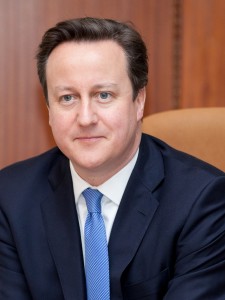
David Cameron, the former Prime Minister, has been appointed as the new Foreign Secretary in succession to James Cleverly, who has been appointed as the new Home Secretary. David Cameron, speaking on their differences, said:
“Though I may have disagreed with some individual decisions, it is clear to me that Rishi Sunak is a strong and capable Prime Minister, who is showing exemplary leadership at a difficult time. I want to help him to deliver the security and prosperity our country needs and be part of the strongest possible team that serves the United Kingdom and that can be presented to the country when the General Election is held.”
David Lammy, the Shadow Foreign Secretary, said:
“David Cameron was a disastrous PM. This is a last gasp act of desperation from a government devoid of talent and ideas. Amid international crisis, Sunak has chosen an unelected failure from the past who MPs cannot even hold to account.”
RESOURCES