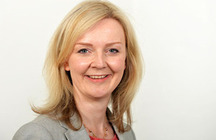
Below is the text of the speech made by Elizabeth Truss, the Parliamentary Under-Secretary of State for Education and Childcare, at the Science Museum in London on 7th May 2014.
Earlier this year I visited Shanghai to see why they were number 1 in maths education – why there is virtually no difference in performance between girls and boys or those from low and high income backgrounds.
I saw great teaching, motivated students and lots of hard work.
But more than that I saw a deep belief in maths and science – students told me of their ambitions to be engineers, work in tech or teach the subject.
One professor told me there was a Chinese saying “maths gets you everywhere”.
They were right. Every sector in our economy has been transformed by technology. There is no such thing as a job where maths is not useful.
Big data and statistics are now as vital in marketing as they are in medicine. The earnings premium on studying engineering, physics or maths is increasing by the day.
That’s why business is speaking out so strongly today as the Chancellor mentioned.
For our children to go on and succeed in the modern world – they need maths and science.
Progress, but still work to do
The message is getting through. A majority of the public now think maths and science are important for young people’s careers – it was only 27% in 2008.
Record numbers of pupils entering the sciences at GCSE and A level – and almost as many girls as boys take GCSE physics – almost 75,000.
But despite these advances – the pipeline of talent is broken at age 16.
A-levels are the most popular choice at 16. But only 2% of girls taking A level do physics and only 8% do maths – the numbers aren’t much better for boys.
We ran focus groups of teenagers in Leeds, York and London a month ago. These bright and ambitious young people wanted success, to know that a career would be interesting, enjoyable and well rewarded.
Their views on maths and physics were as follows:
– male
– equations
– glasses
– boring
– formula
– irrelevant
They didn’t know that maths is the only A level proven to increase earnings in later life – by an average of 10%.
They were surprised to hear that maths and physics aren’t just about a narrow range of careers – that they open doors.
Just look at the board for Your Life and what they’ve achieved through maths and science.
Edwina, in customer service. Sarah turning marketing on its head. Entrepreneurs like Belinda, Ruth, Sherry or Eben, who jets between Sheffield and Silicon Valley. Engineers like Roma, who helped build the Shard. Ben, sending missions to mars. Melanie, working on nuclear fusion, or coders like Nick.
They have got everywhere and that’s the message they are taking to the next generation.
They are focused on that broken pipeline at 16 – on giving young people, especially girls the confidence to believe that studying maths and physics can be for them and will open up a world of opportunities.
Which is why we’re acting
One of the most important factors in students taking these subjects is teachers encouraging them.
We’ve got 2 pupils here today in the audience. Neither liked maths. They wanted to drop it.
But they then went to Sir Isaac Newton Free School in Norwich. Its inspirational leadership were firm about the importance of maths – and told them to stick with it.
And now Christian, who wants to be a ship captain, knows he needs maths to get there.
And Ellen, who wants to be a child psychologist, has really got into the subject, looking forward to each and every lesson.
That’s what inspirational teachers can do. And we want more.
So today, we’re creating new maths and physics chairs.
These are postgraduate specialists in maths and physics, hired to inject their enthusiasm and subject expertise into schools – to raise standards and get children excited about maths and physics.
We know that in half of all mixed state schools no girls take physics A level.
We want to eradicate these science deserts.
The new chairs will provide masterclasses, online lesson demonstrations. They will help link the classroom to business and universities and complement other great programmes like stimulating physics and maths hubs.
And some great household names have sponsored the scheme, including GlaxoSmithKline, BAE Systems and Samsung.
These chairs will be paid £40,000 – an attractive offer.
Recruitment is already underway, and the first chairs will be in classrooms from this autumn. In due course we want to see hundreds recruited.
So thanks to Researchers in School, who are managing the scheme – to our sponsors – and of course the first chairs – who have the most important job of all.
Conclusion – just think what’s possible
And if we get this right – then the opportunity is huge.
Think of where we could be with dramatically more young people taking maths and science at 16. Think of the impact on productivity and competitiveness.
We’ll set our children up for a future as makers, inventors, coders, yes – but also marketers, journalists, managers too, everything from sea captains to psychologists, broadening their horizons – and giving them the very best start in life.
We want to be a can-do maths and science country.
This is our route to future success. Maths and science can get us everywhere.
Below is the text of the speech made by Elizabeth Truss, the Childcare Minister, at the Big Bang Fair at the NEC in Birmingham on 13th March 2014.
Thank you for that welcome it’s fantastic to be at the Big Bang Fair.
What a range of stalls and activities you’re about to see. From extracting the DNA of a blueberry to building a satellite – you’re in for a treat!
I’m very intrigued by the fact there’s even something claiming to be “the most disgusting show on Earth!”
This is a great celebration of science and maths and where they can get you – the answer is they can get you everywhere.
From fashion to farming, from Snap Fashion’s underlying algorithm to the latest agricultural technology – if you want to launch the next Facebook or be big in the city, it all starts here.
It’s not just exciting, it’s important for career prospects. Maths commands the highest earnings premium in the jobs market, science and tech occupations earn 19% more than other professions.
The OECD has said that half the gender pay gap is down to less use of problem-solving – these are key skills developed in maths and science.
It’s so important that we get more young people studying and enjoying these subjects, particularly young girls.
I’m pleased to say that we’re going in the right direction:
– record number of students taking maths and science A levels
– record number of girls taking GCSE physics – an important precursor of engineering
And I’m pleased to say that a new report on attitudes to science which is being published by BIS tomorrow shows an increasing understanding of the importance of science.
In 2008 fewer than a third strongly agreed that young people’s interest in science was essential for our future prosperity. Now in 2014, more than half think that.
You here at the Big Bang Fair are the trend-setters!
Below is the text of the speech made by Elizabeth Truss, the Education Minister, at the Resolution Foundation in London on 13th February 2014.
We live in a time of big changes: unprecedented globalisation, new technologies, and a shifting balance of global economic power.
As the research of the Resolution Foundation shows, these powerful forces are changing how we work – and what we do.
It’s making the link between education and earnings much stronger – because a tech-led, outward-facing economy rewards the highly-skilled.
The OECD, for example, says that the association between education scores and GDP growth increased by a third from 1960 to 1980 and 1980 to 2000.
And the pay and prospects of families are changing, too.
Across the developed world, it has become the norm for both parents to work. In 60% of 2-parent families in the OECD, both parents work. And the concept of work itself is changing – becoming more flexible. People change jobs more often – and mums and dads use different combinations of work – sometimes holding down 2 or more jobs.
Day in day out, they’re taking decisions about how they structure work – while also raising happy, successful children.
For anyone that’s ever rushed home from a meeting to the school gates, or sat down to work out how to balance family time and family bills – they’ll know that this often feels like a challenge.
But I think these conditions present an opportunity.
Because a changing economy means that parents need affordable, available childcare more than ever.
A changing world means that children need a rigorous, rounded education more than ever.
The opportunity is to join those 2 things together – so that we achieve both.
The opportunity
Get it right, and we help parents – and give children a good start in life.
That is the potential of an education and childcare system that works.
And that’s why we’re reforming education, and reforming childcare.
Longer school day
Because at the moment, some children are falling behind.
Since 2010, the number of children in failing schools has dropped – by a quarter of a million. But we still have a long tail of poor academic performance.
And it’s not just academic performance. Whether it’s simple things like not having space to do homework – or big things like not being encouraged into core academic subjects – we have a long-term issue with low social capital – of pupils who lack the cultural knowledge or network to succeed.
And for parents, we know things are often frustrating.
Listen to the blogger Rebecca Allen, a researcher at the Institute of Education, talking about what happens when schools close in mid-afternoon:
I am resigned to spending many afternoons each week standing at the school gate, driving my children to extra-curricular clubs, sitting reading my Twitter feed while the club is running, driving them home and preparing their tea while they watch TV. Yes, it is great for families to spend quality time together, but this doesn’t feel like good quality time to me.
Some children left behind – some parents feel unsupported.
This is why Michael Gove announced last week that a future Conservative government would help state schools – just like independent schools – to offer a school day 9 or 10 hours long.
That extra time would help children who might otherwise slip. It would provide a safe, supervised place to do homework – and in particular, ensure everyone masters the core academic subjects – maths, English, sciences, languages, history and geography subjects that wealthier families have always encouraged their children into – and that our competitors like Germany and Poland now mandate for all children to at least 16.
And at the same time, it would help all children build character, confidence and resilience. It would provide time for debating, cadets, orchestras, drama, volunteering, getting employers in to develop technical skills and get ready for the world of work – things that nurture rounded young people – activities that wealthier families often take for granted.
And for parents who want to work, an extended school day makes balancing work and care much easier.
Of course, some schools do it already.
Like Great Yarmouth Primary School. Their school day runs from 9 to 5 for years 3 and 4, and to 6pm for years 5 to 6 – using that time to provide team sports, drama, extra maths, and supervised homework clubs.
Or Bourne Abbey Church of England in Lincolnshire. They’re a converter academy, offering provision, from 7:30am to 6pm. They’re rated outstanding.
They show you can expand children’s horizons, and support working parents.
It’s good to see teaching leaders like Russell Hobby recognise this. As he said, the current schedule of intense periods and long breaks doesn’t necessarily work for teachers, either. He welcomed a debate over an extended school day – because it’s not about teachers being on their feet long into the evening.
It’s about the fact that we have school buildings across the country, sitting empty for hours of each day. The fact that children need a broad, rounded education – which too many are currently denied. The fact that parents struggle to do the school to care run.
It’s about seeing results for children and support for parents as part of the same question.
So we’re making it easier for schools
So today, I am delighted to announce sweeping reform of the regulations around the school day and childcare.
We publish our response to a consultation, outlining plans for a simplification and improvement of the rules.
And that will make it easier for schools to offer a longer school day.
At the moment, if they want to bring in an external provider to run on-site care, they have to do new registrations. If they want to offer extensions of the school day, they have to struggle through a different set of staffing rules, different qualification rules, local consultations, and local authority permissions.
So we’re making the staffing requirements for out-of-hours the same – so that the school doesn’t need to worry about changing the numbers of staff, just because the clock’s struck 4.
We’re improving the child development guidance, so they don’t need to worry about meeting unnecessary rules about pedagogy and instruction.
And we’re removing unnecessary central rules around setting up after school clubs – so if they want to bring in an external childcare provider, they don’t have to worry about a pile of new paperwork.
Childcare outside schools
And we also want to makes it easier for the childcare around the school day, too.
At the moment, for example, childminders can’t operate outside homes.
So in future, they’ll be able to. If schools want to bring them in, they can just do it.
And at the moment, parents aren’t allowed to pay a neighbour, or relative, if they want them to look after their children for more than 2 hours – unless they register with Ofsted.
That’s just daft – especially when the gap between school finishing and work ending is more or less 2 hours exactly.
So the plans released today make it easier, increasing the time they can rely on informal care from 2 to 3 hours.
So a longer school day; making it easier for schools to offer childcare; more sensible regulations.
All of these things help parents.
Whatever combination of work and care is right for them – they should feel confident there’s an option.
Quality in childcare
We are also improving childcare for the under 5s – as well as raising the quality of provision.
All the evidence suggests once an attainment gap opens up, it’s hard to close later in life. At the moment, by the time they start school, poorer children are a full 18 months behind their richer peers in vocabulary development. It would be better to think about preventing the gap in the first place.
That requires high-quality staff and pedagogy suited to the age of the child.
The psychologist Daniel Willingham notes that it’s not a simple choice between academic or fun activities. Often, they’re the same thing. As he says:
Songs and rhyming games…help children hear that words are composed of individual sounds, making it easier to learn how to read letters.
Kids gain knowledge about the world – important for reading comprehension in later elementary years – when they are read to.
Jigsaw puzzles and globes help kids develop spatial skills, which later help with math.
Household rules teach children to learn to control their impulses, part of learning self-discipline.
And these activities need teachers to lead them.
Already, we’ve seen a 25% increase in the number of early years teachers recruited, when you compare September 2012 to 2013. We’ve introduced English and maths requirements, so that staff are themselves confident and have reached a minimum standard.
But we should also think about how providers structure their operation, too.
If they’re ambitious and smart, they can spend less money on overheads, make better use of their buildings, drive up their occupancy rates.
Meaning there’s more money to spend on high-quality staff.
And we know that containing costs doesn’t have to mean low quality. We know that other countries, like France or Germany, have excellent systems, for comparable amounts of government spending – while also paying staff good salaries and keeping parents’ costs affordable.
School nurseries
And we’re seeing it happen in England, too.
There are some great school nurseries out there. That are open 8 to 6. That offer affordable care. And that deliver outstanding quality.
Take schools like St Bede Primary Academy or Parbold Douglas Academy, in the North West. They are rated outstanding by Ofsted. They use highly qualified staff.
And because they’re smart about their sessions, their staffing and their costs – it only costs these schools about £6,000 a year to provide each place. Direct comparisons are difficult, but average for the North West as a whole is something like £9,000.
So not only do these schools help children: they help parents.
We want more school nurseries to have similar ambitions.
That’s why we are providing an £8 million fund to London local authorities – where costs are particularly acute – to extend their opening hours.
We’re working with 49 different schools as they offer places for 2-year-olds – seeing what works for their pupils and parents, and how school premises can be used to offer nursery places
And just imagine if all school nurseries opened longer. About two-fifths of all places provided in London are in school nurseries. Across the country, some 30% of all childcare is in school nurseries.
If they all went from 9 to 3 to 8 to 6 – that’s over a 60% increase in childcare hours at school nurseries.
Private nurseries and chains
And it’s not just school nurseries we want to see expand.
We’re backing high-quality private nurseries and chains, too.
We’re ending planning restrictions – so they can convert buildings without extra bureaucracy.
We’re simplifying funding – so that good or outstanding providers automatically get money.
And in the reforms announced today, we’re removing unnecessary bureaucracy and red tape – allowing providers to register multiple premises in one go.
All of that makes it easier for the best nurseries to grow – which in turn, makes it easier to provide quality care, and keep bills for parents low.
Of course, private providers have some extra costs, like VAT.
But it can be done.
Like Cedar Road nursery, in Northamptonshire, that I visited last week. I saw children toasting marshmallows by a campfire – learning and having fun. The local MP Michael Ellis and I were shown around by the Director, Tom Shea – and we were served some play dough ice creams, children learning counting and gross motor skills. Their staff are well-trained, and well-paid. It’s rated outstanding.
But what was really impressive was that they used their resources so well. They had 150 children on their books. They had reduced paperwork and recording to spend more time interacting with the children. And they had a capable manager – who could justify the progress children were making to Ofsted, without needing daily or weekly notes.
Childminders
If we look at childminders, we can see similar issues.
Many are low-paid. Many struggle to fill their hours. Many have high costs for things like marketing or buying equipment – an average of £3,600 per year. We know that we have fewer younger childminders entering the profession – and it costs about £800 just to become a childminder.
So we’re helping by first, simplifying funding – so that any good or outstanding childminder automatically gets access to funding to provide free early education.
And second, we’re helping establish childminder agencies. So that the admin burden – marketing, accountancy, equipment, training, registration – is shared, so childminders spend less time on paperwork, and can concentrate on what they want to do – look after children.
About 20 organisations are trialling the agency model. We have schools, private enterprises, local authorities and a children’s centre – working out how they can help childminders, and meet parent’s needs in their local area.
Because we want more good childminders – both independent and agency.
Whole market working together
But crucially – whether it’s schools, private providers, nurseries or childminders – we want the system to work as a whole.
In schools, one of the big lessons of academy trusts and school chains is that they can drive up standards faster – by sharing resources, and learning quickly from each other, and stronger schools lending help to weaker.
By encouraging chains and expansion in nurseries and school nurseries, I hope we see the same pattern in early years.
And we want all providers to work together. So our rules move us towards a system that is much clearer and more coherent.
In registration – it makes no sense to have 3 separate, overlapping safeguarding requirements – so that childcare workers have to spend time working out which requirements apply to which registers.
So we want to make it simpler – with 1 set of aligned requirements.
In inspection, it makes little sense to have different requirements and rules for different providers.
So we want to make it simpler – with a much more coherent, flexible inspection framework.
Because we think of education as 1 system – and will work further with the National College of Teaching and Leadership and Ofsted towards a system where from 2 to 18, teachers have the same respect, the rules are equally clear, quality is equally valued, and parents are equally supported.
Parents survey
Things are moving in the right direction.
Last month we published our annual survey of parents. Those parents told us that hourly costs for nurseries were about 6% lower in 2012 to 2013 than 2011 to 2012 – and childminders, about 11%. It showed that low-income parents were accessing more childcare by 16%. And it showed that maternal employment had gone up.
And other surveys are encouraging, too – like the National Day Nurseries Association which showed more than half their members had frozen fees – or the recent study by Laing & Buisson finding that there has been no real growth in costs for the second year running.
That’s good – but we are not complacent. And our reforms aim to secure and advance these positive numbers.
Our vision
Because as I said when I started – the world is changing.
Families are feeling the impact of a growing, changing economy.
We want the highest of expectations for early years education. We want schools that excel at academic performance and also give confidence and resilience. We want education and childcare providers that respond to the modern world, and the way families live.
We want a system where not only can parents chose the life they want – get the balance of work and care that’s right for them – but can be confident their children are getting a rich, broad and effective education.
Support for parents, and a good education for children. That’s the opportunity – and that’s what our reforms aim to achieve.
Below is the text of the speech made by Elizabeth Truss on childcare reform on 12th December 2013 to the Family Childcare Trust in London.
Thank you, it’s a pleasure to be here – and thanks for the Family Childcare Trust for putting on today’s conference.
I’ve just come from a visit to Ephraim nursery in Peckham. They’re a private nursery, with their premises actually inside the school building of a primary and secondary academy, and I was meeting their staff with Boris Johnson.
It’s always impressive to see a funny, warm, charismatic professional in action – charming children and media alike, in a high-quality nursery.
And it was good to have Boris there, too.
Seriously, though, it’s good to have such a dedicated champion of early years in City Hall.
He knows it’s really important – for making sure the next generation do really well, and also for helping working parents in the city.
And one of the things that really impressed me this morning was the way the nursery works with parents.
It’s open from 8 until 6. Sandra, its leader, told me about how they talk to each individual parent about their needs, and what sort of care is right for them. There’s one mum who wants to do a degree – so they’re working with her to offer funded places across 2 days, rather than in one block, to allow her to do her course.
It’s a great example of catering to all age ranges at a single location, with everyone working together to give parents the flexibility they need.
That’s the sort of childcare I want to talk about today.
Flexibility and choice
Because families where both parents work are now in the majority in the developed world.
Here in England, a third of mothers stay at home and two-thirds go out to work. Fathers are increasingly involved in the upbringing of their children.
We need to support all these families in the choices they make – making life simpler and more fulfilling.
That’s why we’re introducing flexible parental leave, for example, so that they can decide how to manage their lives when they have a baby.
Likewise – I want families to have a range of flexible options when it comes to childcare and schooling, to suit their family circumstances.
We all know that even as the economy is picking up, childcare is a big item on tight family budgets.
And it’s not just a question of costs: all too often, childcare is too inflexible.
Whether it’s not being able to find a childminder, or a nursery in the right location with available places, or a school that offers after-hours care, we know that too many parents can’t get the mix of childcare that they need.
We want a system that gives them real flexibility – that gives more choice to more parents.
So what are we doing to achieve that?
I want to focus on 3 big things today.
First, we’re increasing the amount of childcare that’s available, and its flexibility – across schools, childminders, and nurseries.
Second, we’re driving up quality.
And finally, we’re helping parents with the cost of care.
Increasing availability is crucial
I believe increasing the amount and flexibility of childcare is the single most important thing we can do to help parents. That’s where the biggest difference is going to be made.
It creates more types of childcare, for parents to get the choice of care that they want – whether it’s in schools, or nurseries, or childminding.
And offering that choice – increasing supply – will help us get value for money, too.
At the moment, we spend a lot – more than the OECD average – yet parents are paying some of the highest costs in Europe.
When parents find their options limited, the real problem is that over-complex funding and unnecessary bureaucracy have stopped childcare providers growing and flourishing.
So that’s what we’re reforming.
Childminders
Look at childminders, for example.
They are popular, flexible, and local. Many parents prefer home-based care, especially for the youngest children. They also suit parents who work shifts.
But the number of childminders almost halved over the past decade.
Becoming a childminder meant a mass of paperwork.
Funding rules meant it was hard for childminders to access government funding – just 1% of funded early years places were provided by childminders
And there are also fewer young people entering the profession.
So our solution is first, to level the playing field in funding for independent childminders.
Since September, any good or outstanding childminder can automatically offer funded places for 2- to 4-year-olds.
Fewer than 4,000 childminders were accessing funding. Now, 32,000 are now automatically eligible.
We’re also creating new routes to becoming a childminder in the first place.
We’ve had a number of roundtables at the department with childminders. And they tell me that setting up is a lot of work.
Childminders have to register with Ofsted. They have to spend about £80 on a medical check. About £100 on a pre-registration course. Up to £100 for paediatric first aid training. Public liability, car and home insurance, professional membership, DBS checks, buying equipment, toys, books, creating a website, sorting marketing and accountancy.
I could go on – but I think I would probably bore you.
It’s a lot of money – we estimate at least £800 – and a lot of time.
That’s one of the reasons we’ve enabled the creation of childminder agencies.
By helping with that admin, agencies will simplify the process for becoming a childminder. They could spread the cost, reduce the hassle, and use economies of scale to make it cheaper.
If existing childminders want to join an agency – and it’s completely optional – then they will benefit from that shared invoicing, marketing and training support too.
And for parents, they’ll make it easier to find and employ a childminder – taking vouchers, and giving access to lots of childminders in their area.
At the moment, 20 organisations across the country are working with us to trial childminder agencies. I know that some of them are here today.
Some are private businesses, some are led by local authorities, one’s a children’s centre, some are school based, one’s a charity, one’s a joint venture between a business and a council.
All of them are committed to seeing what works.
And in time, we expect agencies to increase the numbers of childminders – France, where creches familiales have similar functions to agencies, has 5 times as many childminders per person than England.
We want to see more childminders – both independent and agency, working with other types of provision – so that parents have flexibility and choice.
Nurseries
Nurseries are equally essential, giving a really important, valued service to parents, and making up about a quarter of all childcare.
So parents need to get good use from them, too.
We’ve simplified funding. Any good or outstanding nursery will be able to access money – just like childminders – without jumping through any further bureaucratic hoops – and we estimate about 80% of nurseries will automatically get funding.
And we’re making it easier to expand.
We want planning rules – a long, cumbersome process that’s a big frustration for many nurseries – to be much more straightforward too, so they can convert office and shops without requiring additional planning permission.
And we’re replacing a patchwork of local quality and registration standards – with single, national quality and registration standards – so that expansion across more than one authority is easier.
That frees up nurseries that want to grow.
It means that local authorities can focus on encouraging the best providers to their area, and support the weakest providers.
School nurseries
There’s one final part of the puzzle here – schools.
Schools nurseries are an under-appreciated part of childcare.
Half of London places are provided in schools, and they make up fully one-third of the national childcare market – some 800,000 early years places.
But the hours are sometimes inflexible. Most only do 9 to 3. That’s if parents are lucky.
Just imagine if they did 8 to 6. That extra 4 hours a day – two-thirds more time – it would revolutionise parents’ options.
We want to encourage that model.
That’s why I was with Boris this morning, and I’m delighted that Wandsworth want to lead the way, and want to encourage their school nurseries to offer places from 8 to 6.
Some are already showing this model works. Like Oakwood school in Eastbourne. They have a mixture of funded and fee-paying care – which in turn, makes local government funding go further. They now generate income from their nursery, and by clever timing of sessions, they’ve filled almost all their spaces.
And there are others – like Parbold Douglas C of E Academy in Wigan, who have a nursery from age 2 up, and are open from 7:45 to 6. Or St John Vianney RC Primary School in Hartlepool – who run from 7:30 to 6:30.
Many of you will have seen Sally Morgan arguing for school nurseries to start offering places at age 2.
I agree with Sally. And we are helping 50 schools trial places for 2-year-olds, in on-site nurseries.
Because as Sally said, by the time they start school, poorer children have already fallen the equivalent of 19 months behind their more affluent peers.
I want to make it absolutely clear that these children aren’t sitting at desks studying trigonometry.
I recently visited Oasis Academy Hadley, for example, which is offering 2-year-old places. They were painting their feet to make patterns on the floor, running up and down this enormous strip of paper. The point is they were engaging with their teachers and nursery nurses, and learning. That’s what I’m talking about – not mortarboards and blackboards, which is sometimes what people have in their minds.
About 375 schools now offer funded nursery places for 2-year-olds – many of them for the first time – a welcome development.
School-based childcare for the over 5s
And of course it doesn’t stop at age 5.
Schools are already trusted locations, and are obviously convenient for parents who only have to do one school run.
But often, their facilities sit empty for hours each day.
One man who saw the potential to change that was Jack Hatch. He’s headteacher of St Bede Academy, in Bolton.
He saw there was a need for childcare in the area, and felt St Bede’s had a mission to help local families beyond the day-to-day running of the school.
So they started providing childcare, from as early as 7am, up to 6pm, up to 52 weeks of the year, to 7 other local schools – as well as 3 full daycare nurseries. All of St Bede Services’ settings are rated good or outstanding.
But that was in the face of red tape.
If a school wanted to offer care before 8 or after 4, they had to bring in more staff. They had to meet different qualifications rules. They had to consult locally, get permission from the local authority – and meet different planning requirements. And they had to make anyone providing childcare elsewhere register separately at each site.
We want to make it easier – and encourage school-based childcare.
Over the summer we consulted on making it easier for schools to bring in other providers, without that unnecessary red tape.
We’ve already made it much easier for schools to extend the school day – reducing the hours that parents need to cover – and want to do the same for their term dates, too.
We want to align the rules for during and around the school day – so that it is a much simpler operation.
So now, you don’t have to be a complete hero like Jack Hatch – this is something all headteachers can do, and ought to think about.
The new rules will make it easier to bring in private or voluntary sector childcare providers on-site – buying in their specialist expertise.
Or if schools want to, then it will be easier for them to provide the services themselves.
So across schools, childminders and daycare nurseries, we’re expanding availability.
The latest figures show the total number of primary schools, nurseries or childminders offering childcare rose from 88,000 in 2010 to 90,000 in in 2011.
That’s 2 million early years places – a 5% increase on 2009.
Children’s centres
I want to talk briefly about children’s centres.
They’re often mentioned in the childcare debate.
Just to be clear, they provide 1% of all daycare places – compare that to school-based childcare, which is 30%, and it’s a much smaller number.
They are an important part of the support we provide for children and families. But that support is primarily about pre-natal, post-natal care, parenting classes, stay and play, providing support and networks for those parents – I was part of my network, after I had my daughters.
We have to be clear that they’re there for everybody in the local community. And in our guidance that we put out earlier this year, we made it very clear that local authorities have a responsibility to make sure children’s centres are accessible to all parents.
Of course we want focus on disadvantaged families – but unless we get all parents through the door, how are we to know which are those that need most help?
And I’m delighted to see a lot of children’s centres working much more closely with their local health services.
I met children’s centre leaders in Watford recently, and it was great to see the range of services they provided – maternal support, antenatal classes, midwives on call – and more. So parents are getting a seamless service, from expecting a baby, through birth, right through early childhood.
Because the wider purpose of children’s centres is to improve outcomes for children. And that’s what we want them to focus on.
There’s this rumour that hundreds are closing. It’s not true. Figures from local authorities tell us about 1% of the total number have closed since 2010 – and a few have opened, too.
And we know from 4Children that 1 million parents using them – so they are thriving.
But I think we can go further. I want to see them even more integrated with health services – especially with health and wellbeing boards.
And DCLG have announced a fund, which local authorities can bid for, to make sure services suit parents – so that parents can find all the services in one place, for example, by sharing sites – rather than having to travel from service to service. We all know how important that sort of local, accessible service is.
I want to encourage everyone to apply – or get their local authority to apply – because it’s a great opportunity to make sure more money gets to the frontline and services work for parents.
Improving quality
Availability is a big issue for parents. So is quality. But the 2 are linked.
By simplifying funding for good and outstanding providers, for example, we’re creating a race to the top. We’re funnelling money towards the best. That gives providers a good reason to get better.
And clarifying the rules means providers are focused on children – not on meeting the demands of red tape.
Take registration. At the moment, we have 2 registers, for different ages; each has different requirements; the older register is compulsory if you do more than 2 hours; but you can still register if you do less.
That’s so complicated, in one of our policy papers we resorted to showing this using a Venn diagram.
Or take inspection, where we have overlapping Ofsted and local authority rules.
Or qualifications. We used to have 400 early years qualifications, a majority of which have no maths or English requirements.
All of this duplication is confusing for parents, time-consuming for providers, and the purpose of these rules – ensuring quality – actually becomes harder when people focus on box ticking, rather than what matters: children.
So we’re improving how it works.
We’re improving registration – we’ve consulted on introducing a single, clear set of safeguarding and welfare requirements.
We’re improving inspection – and want Ofsted to be sole arbiter of standards, with consistent quality standards. Local authorities can support weaker providers, using the issues identified by Ofsted – so the two work together.
And we’re improving qualifications.
The new, more rigorous early years educator qualification will be available from 2014.
We’ve made 1,000 bursaries available for apprentices aspiring to a career in early years education. Just a fortnight ago, we announced these were increasing from £1,500 to £3,000 for the first 200 successful applicants.
And I’m pleased to say that this September, we recruited more than 2,300 trainees to become early years teachers – a 25% increase – despite strengthening the entry requirements.
All of this moves us towards a single training, regulation and quality system from 0 to 18, that’s clearer for parents, and puts better outcomes for children at the heart of reform.
Helping with costs
So that’s how we’re increasing availability and improving quality.
Our third priority is to offer support for parents, to help with the costs of childcare.
We already fund 15 hours of free childcare for every 3- and 4-year-old – worth £2,400 to each family.
And we’ve made it much more flexible so parents can take it in blocks.
And we’ve increased funding for low income 2-year-olds.
Just one month after launching the scheme, 92,000 children have benefitted – we’ve already reached an estimated 70% of the deprived children we want to.
On top of this basic entitlement, low income working families can get help for up to 70% of their additional childcare costs.
And under tax-free childcare, those on middle incomes will get up to 20% of their additional costs paid.
Our vision
So there are 3 elements to our plan.
We’re increasing the availability and flexibility of childcare – of every type.
We’re improving quality – by clarifying standards.
And we’re helping with costs.
All of those things fit together.
They create a much more coherent, less fragmented market.
They aim to create a system where parents are in the driving seat, and children get what they need.
Our vision is of childcare where families want it, at the time they need it, provided by people they trust, at a cost they can afford.
I know that families are under pressure. I know they face tough choices about how to balance work and care – not least at Christmas time.
I want it to be a real choice.
So that each family – of any shape and size – can work out what’s best for them, and their children.
Below is the text of the speech made by Elizabeth Truss at the Institute of Physics on 9th December 2013.
Thank you very much for the introduction – I’m delighted to be here at the Institute of Physics for the launch of another excellent report.
I think ‘Closing doors’ is a great name for this report, because what we’re talking about here is the way young people, particularly girls, are dropping subjects which could offer very good prospects for them and which lead to fulfilling careers.
Last week, the PISA education test scores hit the headlines, where England ranked 26th in the world for maths, 21st for science, and 23rd for reading.
If we are to do better in the PISA rankings, it’s vitally important that we particularly improve the performance of girls in critical subjects like maths and science. One thing that’s particularly interesting from the PISA report is that we had one of the lowest gender gaps in reading, where girls traditionally do better than boys, but we had one of the highest gender gaps for science, where boys traditionally do better than girls.
Too often we focus on maths and science separately, but this report gets across the broader message to parents, teachers and the wider public that all these subjects together are very important, very high value subjects.
For school pupils, that means that studying maths and sciences opens up their career options, whatever field they want to work in. In this country maths has a higher earnings premium than in other countries, which demonstrates that we are not producing enough qualified individuals in these areas to go on and work in industry.
If we think about any industry now, people with maths skills, physics skills and computer science skills are vital, because technology is transforming those industries. If we look at agriculture, often seen as a traditional industry, you will see people programming computers and doing advanced engineering. Likewise in the fashion industry; these skills are equally as important, whether it’s media or marketing.
We need to get away from the idea that it’s just a few scientists in a laboratory who need these skills. Maths and science are universal skills that all our young people need. This is shown up in the earnings premia. At age 10 and 18, those with good maths skills earn up to 10% more as adults than those without. Maths and computer science and engineering are among the top 5 degrees for future earnings.
We also know there are increasing returns to education across the OECD. If you look at the data from the 1960s to the present day, the correlation between education and economic growth has increased by a third. So educational underperformance is increasingly important for our country’s economic performance.
The Institute of Physics has pointed out the problem we have. In 2010 to 2012, 4 times as many boys took A level physics as girls did; 60% of the entries to A level maths were boys. In 2012 alone, 12 times as many boys did A level computer studies. Just 4% of state schools have equal numbers of girls and boys progressing from GCSE to A level for the subjects covered in the Institute of Physics’ report.
We also know that there’s a performance difference between girls and boys in this country. In PISA, our boys outperformed girls in maths by 13 points, 2 points bigger than the international average gender gap. In science, boys did a full 14 points better, when the OECD average gap is just 1 point.
And the issue for girls is not competence, it’s confidence. TIMSS, another international education study, tells us boys are already more confident in maths than girls at age 10. By 14, girls have actually lost confidence, and the gap with boys has grown.
This is borne out by the PISA results, which shows that we have high anxiety levels for girls in these subjects.
We need to be more conscious of the messages we’re giving to girls.
Even with the highest-performing girls, fewer of them will go on and take physics at A level. Almost half of boys who get an A* in physics GCSE go on to do the subject at A level, but for girls, it’s just a fifth. We know there is a clear relationship between a pupil’s confidence in a subject and attainment – and we have a generation of girls who are nervous about maths and science.
This is a very worrying picture. It means we’re missing an opportunity: because improving the performance of girls wouldn’t just improve their individual earnings potential. It would improve the country’s economic and educational performance, too.
But the international comparisons give us hope: none of this is inevitable. Top-performing places like Singapore or Shanghai have a negligible gender gap. In the PISA science scores, all but 4 countries that equalled or outperformed England had no significant gender gap.
So this shows us that addressing our gender gap will help us improve our PISA performance, as well as helping those girls open the doors to more careers.
I also think there’s a cultural issue in England. We can see it in the chemistry sets marketed as boy’s toys or a wider culture towards maths and science thinking that it’s something for specialists or geeks, parents saying to our daughters ‘oh, I’m useless at maths’, as if that won’t discourage them. Or perhaps the Top Gear Formula 1 feature where boys were engineers and technicians – and girls, hostesses and press officers. Relentless stereotyping is still going on.
Too often, narrow conceptions of maths or sciences convince girls that they can’t or shouldn’t do these subjects. That feeds the cycle where it’s harder for the few girls who do want to do these subjects.
This is starting to change. Thanks to our English Baccalaureate – the performance table measure that encourages pupils into the most respected subjects – the number of girls doing GCSE physics is now at a record high and has almost caught up with boys. 73,000 girls are now taking the subject compared to 76,000 boys. The critical thing is to make sure those young people continue doing the subject at A level.
A lot of the evidence shows that young people make up their mind about their career aspirations before the age of 16. We need to work with the grain of young people’s aspirations – not persuade everybody they want to be a research scientist, desirable though that career option is, but acknowledge that 60% of children want to go into business. We need to show them that maths and sciences are an excellent basis for these careers too.
Look at the CEO of Prudential, Tidjane Thiam, a nuclear physicist. Let’s have more of these examples of people who have succeeded in busineas by using their analytical skills and the knowledge they’ve gained by studying maths, physics and computer science. These aren’t just subjects for brainboxes who want to do research sciences. It’s a really important background for a career and will give you transferable skills to help you succeed.
As the institute’s report shows, schools can make a big difference here. They can use their influence to challenge gender stereotypes – or reinforce them. Many are using the new curriculum to show girls what they could do. They’re using design and technology to demonstrate the vast range of applications of maths and science, or taking advantage of programmes like Stimulating Physics Network which champion these subjects.
It’s vital that we improve the quality of teaching in these important subjects. Last week I announced new maths hubs which will work on improving the quality of teaching of mathematics at primary. We’re also offering very high bursaries to aspiring teachers in maths, physics and computer science.
A lot of it comes down to encouragement of all children, especially girls. All of us – politicians, parents, professionals – need to communicate that maths and science aren’t just useful for niche careers. They’re the foundation of the modern world.
If we do that, then we will open up options and eventually, better jobs, for our children. And this time, not just for the boys.
Below is the text of the speech made by Elizabeth Truss in London on 17th October 2013.
Thank you. It’s a pleasure to be here.
I want to start by talking about Kevin Spacey.
After a hard day at the department, one of my guilty pleasures is watching the American political thriller, House of Cards.
The 90s BBC series was updated by Netflix – a service where viewers can watch TV and films over the internet.
Their version, with Mr Spacey starring as Senate Chief Whip, Frank Underwood, won critical acclaim and helped Netflix gain some 2 million customers.
Less well known is how they commissioned the series.
Most shows have to persuade editors to take a gamble, based on a pilot episode or series.
But Netflix scan audience behaviour on all their content. They knew exactly what they like, how they watch, when they pause, what they want.
So they could commission an entire series with confidence, and release it all at once – because they looked at the numbers, and knew it would work.
Of course a TV series in which a super-ambitious politician schemes, slanders and bumps off colleagues on their way to the top has little relation to reality.
You might well think that; I couldn’t possibly comment.
But anyway, the way that this show – an innovative, award-winning, profitable show – was created says so much about how the world has changed.
A changing world…
Netflix would scarcely have been imaginable 10 years ago – we were all going to Blockbuster to pick up videos then.
Now, it’s one of a generation of online businesses, ripping up the rules on how people buy and consume and invent.
And we live in a smaller world, too. Borders mean less. Companies are foot-loose, able to move and sell to almost anyone, anywhere.
They have vast new markets expanding across the world – just this week, the Chancellor is in China. Young, hungry countries are changing the shape of the global economy with millions of new middle-class consumers, professionals, and graduates.
…which needs good education
And in this world, good education is more important than ever.
The association between test scores and growth rates increased by a third between 1960 to 1980 and 1980 to 2000.
Technology and globalisation have created a ‘hollowed-out’ labour market – with demand for lots of manual jobs, demand for lots of high-end jobs, but far fewer of the old manual-skilled jobs in between.
This rewards those who develop a highly-skilled, highly-educated population.
And leaves behind those who don’t – or won’t.
Risk of relative decline
In Britain, we have a lot to do.
Last week, the OECD published results of adult literacy and numeracy tests in 24 developed countries.
It confirmed the link between education and economics: across all countries, people with the best numeracy scores were almost 4 times as likely to enjoy high wages as those with the bottom.
To quote the report: ‘incomes are higher in countries with larger proportions of adults who reach the highest levels of literacy or numeracy proficiency.’
It found that in England, 25- to 54-year-olds did much better than 16 to 24s.
Our young people came 22nd out of 24 for literacy, and 21st for numeracy.
What’s interesting is that 90% of the variation in skills across the study was within, rather than between, countries – in other words, we have a huge gap between our top – and bottom-placed adults, and a long tail of poor performance.
The case for reform
We can’t afford this. To put it in the words of the OECD’s Andreas Schleicher – the study has ‘serious economic implications’ for England.
Studies like this confirm the case for the changes we’re making.
They’re the motivating force behind our reforms. They’re evidence we have more to do – and that if we don’t, we won’t take advantage of the new world order – we won’t pay our way in the world.
That’s why we are making big changes: with a new national curriculum in 2014; new exams from 2015; and accountability reforms from 2016.
Learning from the best
We’re learning from the best in the world here.
After Germany received bad results in PISA – an international assessment – it experienced what was known as ‘PISA schock’. Over several years, they introduced reforms – lengthening the school day, strengthening the core curriculum, giving greater autonomy to teachers, creating nationwide performance standards.
Germany has since overtaken us in the rankings.
So our reforms are designed to do the same thing – to look at our results, learn from the best, and improve.
Take our EBacc – which encourages students to keep studying an academic core into late secondary, just like the best countries.
We’ve started to see its effects. In 2013, the number of GCSE entries in languages was its highest in 5 years. Individual entries in the 3 sciences were the highest in more than 16 years. We saw the highest number of history entries since at least 1997. Record numbers of girls did chemistry and physics.
Curriculum – maths
And lessons from abroad inspire changes to individual subjects, too.
Take maths – where PISA ranks us 27th.
TIMSS – another international benchmarking assessment – showed that children in England were better at data and statistics than arithmetic and algebra. So we’re removing calculators from primary tests, and encouraging children to become fluent in their times tables at a younger age, so that they get to grips with these more fundamental concepts and processes.
TIMSS also ranked us 39 of 42 for maths teaching time at age 14 – so we’re encouraging an increase in time spent on maths.
At primary, the new curriculum gives a stronger foundation – with more time on vital concepts like arithmetic or fractions.
At secondary, new GCSEs in 2015 will be more rigorous, with pupils covering more content and more challenging problems – in areas like ratios, proportions, or algebra.
Post-16 maths
And we’re transforming post-16 maths.
The best countries keep their students studying maths later. According to the Nuffield Foundation, in England just over 20% of students carry on with maths into upper secondary.
In countries like Japan – which had the highest average numeracy score in the OECD study – or Hong Kong, it’s over 95%. In Germany, it’s above 90%; in Singapore, it’s 66%.
In England, most students who do carry on with maths in England to a higher level are A-grade students. For those that want to pursue advanced maths, new A levels in 2016 will be more challenging, and we now have the first maths free schools as well.
But almost all other pupils drop the subject after GCSE. Only 33% of students who got a B, and just 24% of those with a C, kept on doing maths – worryingly, many at a lower level than they’d previously done.
That’s largely because they haven’t had appropriate courses for their ability range.
So we’re introducing core maths. Pupils who haven’t yet achieved a C at GCSE will keep studying, and those who got a good GCSE but don’t want to pursue an A level will do a range of new mid-level qualifications, specifically developed for intermediate, post-16 study.
We will spend £20 million in 2014 to 2016 to help schools and colleges prepare to teach the new courses.
We’re looking for organisations to pilot then – and I’d encourage anyone here that wants to, to get in touch with the department.
We’ve had a good response from organisations like the CBI, and are encouraging universities to start looking for core maths in their entry requirements. And last week, the International Baccalaureate Organisation announced that their maths standard level will be available online, from 2015 to 2016.
And we’re also funding Maths in Education and Industry to work with Professor Tim Gowers at Cambridge University to devise a whole new problem-solving course, based on intriguing, real-world questions.
Just to give you a few examples of the sorts of question we’re looking at:
– roughly how many people could fit into the Isle of Wight?
– British vegetarians have, on average, higher IQs than the general population. Does this show that meat is bad for your brain?
– how do Mexican waves start?
and one that’s appropriate for this place
– how much can we trust opinion polls?
Obviously, there’s only one answer to that last question – you can’t – and these are just examples from Tim’s website. But you get a sense of the type of imaginative thing being explored.
All of this means that by 2020, the vast majority of young people will be studying maths right up to 18 – to the highest standard each can achieve.
Curriculum – science, computing, design and technology
In the sciences, we’re increasing the maths element, and deepening the content on key topics like evolution, or mechanics.
The computing curriculum now includes coding from a young age, and children will learn 2 programming languages – preparing for lives in a digital world by learning complex, abstract processes from a young age.
And in DT, they will be exposed to the most exciting new technologies, from 3D printing to biomimicry.
Curriculum – English, languages and EBacc
In English, younger children will have better checks to spot those falling behind, and a renewed emphasis on spelling and grammar and punctuation across secondary school.
In the languages, primary schools will be required to teach a foreign language from age 7 – and we’ve encouraged much higher take-up at secondary, through our English baccalaureate, introduced in 2011.
Freedom for teachers
You’ve had a chance to digest, and no doubt to contribute, to the new curriculum.
But I want to be clear that we want to trust your professional judgement.
We might be clarifying what knowledge children should learn: but we will not interfere in how.
That means there is no one-size-fits-all national roll-out of the curriculum.
Resources for teachers
Still, we are making information and support available to help.
If you go to the website of the National College for Teaching and Leadership, they have an online resource, developed with headteachers, to help schools plan curriculum change.
Teaching schools are receiving additional funding to help with the transition in their alliances. If you’re not in an alliance, I encourage you to contact your local teaching school.
We fund subject-specific resources – like the National Centre for Excellence in Teaching Mathematics, which has a range of support available for schools, or the National Science Learning Centre which will shortly have more materials for the new science curriculum.
We have announced £2 million funding for master computer teachers – while ‘expert subject groups’ drawn from teaching schools, subject associations and higher education have looked at how to support the new curriculum. The computing and geography groups have already published their work – and others will follow soon.
All of this is on GOV.UK – or you can always follow DfE on Twitter – and will help you introduce the changes.
Reforming exams
The same goes for exam reform. On the department’s website, and Ofqual’s, there is a very clear timetable showing what we’re changing, when, and what you need to know.
And again, the case for reform is clear: over the past decade, even as our international rankings stagnated, exam pass rates went up.
So new, more rigorous exams will be less predictable and more stretching. Teaching of new GCSEs for English and maths will start in 2015, with other subjects starting in 2016. New A levels in most of the key subjects will be available from 2015, with maths and language A levels available from 2016.
Last month, we stopped early entry into GCSEs counting towards league-table performance.
And from 2014 GCSEs and from last month A level exams will all be sat in the summer – ending the culture of endless modules and resits.
Reforming accountability
This is a based on an essential lesson from the best systems.
They show a combination of autonomy and accountability: letting teachers get on with their job, but holding them to account.
That requires respected qualifications.
And it’s why we’re changing wider performance measures, too.
At the moment, secondary schools are judged by the proportion of pupils awarded 5 GCSEs at grade C or more.
That created perverse incentives. We all know it encouraged disproportionate focus on moving pupils over the C/D borderline. It rewarded schools where pupils met the C grade targets, rather than excelled them. And with just 5 subjects, pupils often studied a narrow curriculum.
So from 2016, schools will publish pupils’ performance across 8 subjects, with maths and English double-weighted, and with reserved slots for EBacc subjects.
Achievement will not be measured by crossing an arbitrary threshold, but by pupils’ progress – whether they under- or over-perform, given a reasonable target.
That gives children a much broader curriculum, with a solid academic core. It’s a better test of schools’ ability to get each child to do their personal best. And it’s much fairer for those with a challenging intake.
Conclusion
We are midway through our reforms.
And we can see from countries like Germany that reform takes a decade. It’s an inherently long-term task.
But across these 3 big areas – the curriculum, exams, and accountability – our approach is consistent. We will accept nothing but the highest quality. We are learning from the best in the world. And we will combine more autonomy for schools with better accountability.
I encourage everyone here to spread that message.
Think about the OECD and its reports showing other countries racing ahead. That’s the challenge we face.
Think about Netflix and the sort of high-end, advanced, all-digital business they represent.
Below is the text of a speech made by the Education Minister, Elizabeth Truss, at the Policy Exchange in London on 29th January 2013.
Thank you very much Lucy (1). It is always a pleasure to attend an event at Policy Exchange, and I congratulate you on your typically rigorous and informative report on childcare.
You make a number of highly pertinent observations, not least in highlighting how much quality varies across the country and especially between richer and poorer areas. You are also absolutely right to stress that making it easier for parents – and mothers in particular – to be able to combine family with work matters enormously – to them as individuals, to families, and to the wider economy.
Many mothers want to stay at home and of course we are fully supportive of that. It is simply that my job is to help make sure that they have a genuine choice.
Much of the debate about childcare provision centres on cost. Of course this has a massive impact – many parents feel that childcare is so expensive that they cannot afford to work at all, let alone build a career.
I am determined to address this, and will have a lot more to say on the matter soon.
But today I want to outline our vision for early years childcare – and specifically to talk about quality, which is every bit as important as cost and which we ignore at our peril. Or, to quote the title of our paper published today, More Great Childcare. It is partly our response to Professor Cathy Nutbrown’s Foundations for Quality, which looked in detail at the qualifications regime for the early education and childcare workforce.
It also addresses some of the structural issues in the childcare system, because before making fresh demands on resources we need to make sure every penny parents and governments spend is used effectively.
This morning I visited the superb nursery at Durand Academy in Lambeth – a brilliant educational establishment that shows that the most effective institutions are every bit as life-changing as the worst ones. By driving up standards and focusing on quality, I want every child in the country to be given the sort of early education I saw this morning – and the best possible start in life.
The critical importance of early years
The Jesuits famously said “Give me the child for his first seven years, and I’ll give you the man.” As my colleague Andrea Leadsom has observed, science now suggests that the Jesuits may have been significantly overestimating. As people like Baroness Greenfield – Professor of Synaptic Pharmacology at Oxford – have made clear, how the brain develops – or fails to develop – in the first few years of a person’s life is utterly critical. It never makes sense to give up on anyone, but the fact is that much of what a child experiences well before the age of seven has an enduring effect on their life chances.
Research for the Foundation Years Action Group (2) by academics from UCL, the Institute of Education and Bristol University has laid this out in stark terms. At the age of 15 or 16, English pupils score 492 on the average PISA maths score, compared to 555 in Hong Kong, 562 in Singapore and 600 in Shanghai. Yet the gulf in attainment is evident way before that age. The gap between England and East Asia does not differ between the ages of nine or ten and 15 or 16. It’s already there by five years old.
If we look at international comparisons of how many children could complete early numeracy tasks when they started primary school, we see the same countries at the top of that table as we would expect to see when comparing the abilities of adults – countries like Chinese Taipei, Hong Kong and Singapore (3).
So when parents hand their child over to the care of a childminder or nursery they are not just entrusting them with their child’s physical safety; they are also entrusting their child’s brain. It is vital that staff have an adequate vocabulary and numerical ability.
The 21st Century will belong to those countries that win the global race for jobs and economic advantage. In order for every adult to fulfil their potential, they need to be properly equipped with essential skills from the very beginning of their lives.
A world-class childcare system
All of which leads to an inescapable conclusion: childcare in this country must be world-class. Quality is first and foremost about people. No school is better than its teachers. I am grateful to Professor Cathy Nutbrown for all her work in assessing the overall landscape of qualifications for those working in early education and childcare.
She has said very clearly that too many people who work with young children are under-qualified and that the system for qualifications is confusing and inadequate, with over 400 different qualifications available.
I agree with her.
And given what we know about early years development, it is no longer acceptable that childcare professionals are not required to have a GCSE grade C or above in English and maths.
Professor Nutbrown says in her report,
If we are going to improve the quality of early childhood education and care, we cannot allow individuals to ‘slip through’ without their level 2 English and maths in place.
The international context underlines all this.
In France, at least 40 per cent of staff in crèches must hold a diploma, which demands a three-year, post-16 course.
In the Netherlands, certified childcare workers must train for three years post-18. Childcare professionals in Denmark need three to five years of vocational or tertiary education before they can work with children in their early years.
These and other countries recognise that looking after children is an extremely important job – and that attitude is reflected in higher levels of skills and pay. Contrastingly, Professor Nutbrown’s report raises serious concerns about the quality of training and qualifications in this country.
In her interim report, Professor Nutbrown wrote:
The ‘hair or care’ stereotype still exists for many considering a course in the early years; yet many other sectors have raised their expectations in relation to enrolment. It must be a cause for concern that early years courses are often the easiest to enrol on and the courses that the students with the poorest academic records are sometimes steered towards (4).
The interim report quotes Helen Perkins, Head of Early Years and Childhood Studies at Solihull College, who said:
We demand that students need a relevant level 2 qualification before they are able to handle animals independently on our animal care courses at Solihull College. Nobody demands the same level of qualification before you can be left alone with a baby (5).
Plainly this trend is both extremely worrying and insupportable.
I want a high-quality, highly qualified workforce here too. I want their work to be underpinned by effective regulation and inspection that targets support where it’s most needed – but I also want them to be trusted to use their professional judgement and experience.
We won’t get where we want to be overnight, but we are moving in the right direction on quality and qualifications. But we cannot overlook the fact that the commitment to make further improvements means giving providers the headroom to pay higher salaries.
I also want to be clearer to nurseries and parents about what these qualifications are and what they mean.
So we will introduce graduate-level Early Years Teachers specifically trained to teach young children. The Effective Provision of Pre-School Education Project – known as the EPPE report – showed that children make much better progress in pre-school centres where trained teachers are present (6). We will also seek more crossover between primary school teachers into early years and early years teachers into primary.
There have been strong and persuasive calls to bring back the Nursery Nurse Diploma, and we will create Early Years Educators, backed by improved level 3 qualifications. This will offer strong practical experience and require candidates to have at least a C grade in English and maths GCSE.
In order to improve this we have to attract people into the profession. Too many make it through sheer dedication, finding it to be a terrific slog. I am convinced that this will be tough given existing wage levels.
Staff in this country earn about £6.60 an hour on average, only a little above the minimum wage. This speaks volumes for how much those working in the early years have hitherto been valued.
But there is further to go, and we have learned from other countries that deliver better value and better quality childcare. We have looked across Europe and beyond. The aim is not to replicate another country’s approach but to learn from and apply best practice.
I have been struck by the high status and trust afforded to childcare professionals in continental Europe. In particular, I am impressed by much of what happens in France.
The well-established system of écoles maternelles is being expanded to offer spaces for more two-year-olds, while a mixture of crèche and childminder provision is in high demand for younger children. Many French families put down their child’s name for a French crèche as soon as they discover they are pregnant. Nursery workers are paid around £16,000, compared to about £13,000 here. In return, candidates are expected to have higher qualifications. We are at the bottom of the league table of our near neighbours.
Inspired by examples like Durand Academy, I want far more schools to offer childcare and early years education. We will facilitate this by abolishing the requirement on schools to register separately with Ofsted if they want to provide for children under the age of three. And we will reform the burdensome statutory processes schools must follow if they want to take younger children.
I hope that some schools will want to run childminder agencies, which would allow well-qualified childminders to offer both group-based and home-based care and to employ their teaching expertise. This will have the added benefit of allowing children to engage with school early. Being able to take children to the same place will make life more convenient for many families too.
Greater flexibility for professionals
It is telling that I am often asked whether I would be able to look after a certain number of children. I think this line of thinking betrays an attitude that “anyone can do the job”. I don’t start from the premise that anyone can be an early educator. It is an extremely demanding job that requires great and specific expertise.
I am not trained to do the job. I am equally sure I would not be able to walk into a class of 30 fourteen-year-olds and teach them German.
My ministerial colleagues at the Department of Health don’t get asked if they would be willing to perform keyhole surgery.
Those at the MoD aren’t asked if they would fancy hopping on a helicopter and going into battle.
Although I suspect that Andrew Robathan and Mark Francois would be up for that.
Working in early education isn’t for everyone. Those who do it well are special – and they deserve our thanks. It is a professional career.
Other European countries have taken a different approach on ratios. They think that the quality of staff is the most important thing. Whereas in England nursery staff may look after no more than four two-year-olds, in France they can be responsible for eight – and there are no limits in Denmark, Germany or Sweden.
That is why we are encouraging nurseries to use their professional judgement and enjoy greater flexibility. Where there is an Early Years Educator leading a group of children, we plan to allow ratios for two-year-olds to rise from four children per adult to six children per adult. And for ones-and-under to rise from three children per adult to four children per adult.
We are not changing the ratios for three and four-year-olds but we would like to see more nurseries in the private and voluntary sector using the full allowance of 1:13 with a teacher to have traditional-style nursery classes. Many of our leading providers are successfully delivering this model, including Durand Academy.
We think teacher-led groups with structured activities are a good thing. Ofsted has made it clear to me that they do too and want to see evidence of well qualified staff engaging directly with children. Of course parents may demand other learning styles but I think it is important that parents have the choice of this model that works well.
We also want to see parents have the choice of more structured group care for their two year olds like the French crèche system. These groups would be led by qualified Early Years Educators. We know two is a crucial age where children are learning the structure of language and vocabulary.
We are hardwired to be inquisitive, to want to learn and to take pleasure from learning. Think about the joy on a toddler’s face when they take their first steps, or how proud a four-year-old is when they earnestly tell you what the French word for “yes” is.
I totally reject the idea that children in a nursery can either have an educational day or an enjoyable one. Ros Marshall of Kids Unlimited has proved that this is bunk. She does outstanding work, for example in encouraging children to learn how to count when they are playing musical instruments.
Far from killing any pleasure that a child might get out of learning, structure and clear guidelines provide reassurance and safety. Rather than crushing spontaneity and discovery, they offer an essential framework for precisely those things. This is fully compatible with the EYFS .
My insistence that children are well-educated from the very beginning of their lives isn’t just about getting ahead in the global race – crucial though that is. It is a recognition that children’s lives should be complete and fulfilled. This is not just about the economy – it is also about personal happiness.
We also want to see more options for home-based care.
We have seen a decrease in the number of childminders over recent years – this is, in part, because childminders have to be business owners as well as child carers. When setting up, this means registering with Ofsted, the local authority, finding training, marketing the service to parents and collecting fees. As well as the role of caring for and educating young children, there is a lot of paperwork, administration, chasing up parents for payments and jumping through hoops set by local authorities involved.
Some people want a simpler way to enter the profession. So we are setting up “one stop shops” called childminder agencies to do the practicalities.
This will mean someone interested in becoming a childminder can go to a local agency, have their premises checked out, receive training and be approved all by a single organisation which itself will be regulated by Ofsted. This agency will deal with the government funding, market services, place children and collect fees from parents. Similar organisations in France and the Netherlands have created a good entry route for childminders, meaning that there are many more childminders relative to population size than there are in Enlgand.
These measures coupled with the removal of hoops to jump through from local authorities to receive Government funding should see a revival in this important form of care.
This will be particularly important for parents in rural areas who have a lack of facilities nearby, for those who are working shifts or irregular hours (like MPs!) who are looking for flexible, home-based childcare. And what’s more, agencies will be able to offer cover if a childminder is on holiday or ill. And we have all been in those situations where childcare arrangements have fallen through at the last minute. Mine normally involves a phone call to my parents in Leeds.
We also want to give childminders more flexibility. At present the ratio of one child under the age of one per childminder means that twins are a no-no without special permission. The limit for under-fives is three children – which is fewer than many families have to cope with.
This gives rise to the situation I saw where two qualified childminders are looking after six children between them, where if they need a pint of milk one of them has to drag three children to the shop to comply with the rules.
In France a childminder can look after up to four children under five. In Denmark they can look after five. There are no ratios in Sweden.
We will bring our rules in line with France so that childminders can look after up to four under-fives of which no more than two are under one. This is of course a maximum not a requirement and we would expect childminders to do what they or their agency are comfortable with.
We will also give flexibility on changeovers. This will help parents too. If one person is late picking up their child, another parent will not have to wait because the childminder isn’t allowed to look after two children even for a few minutes.
Rigorous and fair inspections
It is vital that the inspection and regulatory regime is rigorous, comprehensive, clearly understood and fair. It must focus solely on what matters and not distract providers from looking after children.
We are working with Ofsted to implement further improvements to the current regime including increasing the number of HMIs covering the early years and to concentrate inspection on those weaker providers that need the most attention.
Ofsted alone will be the arbiter of quality. At the moment, local authorities also check the quality of provision, which is both a waste of resources and creates extra barriers for new providers trying to set up. Although we fund three and four-year-old places at £2,200 per head which is enough to cover the costs to nurseries, not enough of this money is reaching the frontline.
Local authorities retain £160 million annually of the funding intended to deliver early education to three and four-year-olds, some of which is spent on duplicating work Ofsted is already doing. Ending this situation will mean that as much money as possible goes to the front line.
Our commitment to a fair regime is such that we have heeded calls from those who asked for a new route allowing paid-for re-inspection.
If a nursery that received a satisfactory rating has taken steps to reach good or outstanding, I want this to be recognised and updated swiftly.
Lifelong learning applies to the very young as well as the very old
Professionals should also be given the chance to think creatively about how they help children to learn. Better qualified staff will be better able to do that.
For some years now politicians have stressed the importance of “lifelong learning”. But the term tends to be used to remind us that a person’s education shouldn’t end when they leave school or university. I believe that learning should be genuinely lifelong – which means that it should start from the moment a child enters the world.
We know that the first few years of our life shape the development of our brains. The evidence is clear that qualified teachers are best placed to offer strong developmental learning. Therefore we need to increase the number of teachers involved with the early years.
This is all part of our efforts to increase the quality of teaching across the piece for all ages.
Conclusion
We will shortly publish the report by our commission on childcare, looking at ways to tackle the high costs for parents and to get better value for money. The status-quo is neither fair to providers nor allows enough money to reach the front line. I appreciate your patience in waiting to hear more about this.
Getting the funding right is a necessary condition of providing world-class childcare but it is not sufficient. It is not good enough to carry on with an unreformed system. A greater focus on quality and value for money matters enormously as well.
Some children enjoy more advantages than others, but all children are vulnerable. Of course parents want their child to have the very best start in life possible.
I want every child to spend their early years learning, exploring, enjoying and growing – and for them to arrive at primary school well-prepared and confident. By driving up standards right across early education, we can give parents the sense of security they crave and every child the care and attention they need.
Thank you very much indeed.
(notes to speech)
1 Lucy Lee, Head of Education at Policy Exchange.
2 Foundation Years Action Group, The vital importance of early development to later life outcomes, 15 November 2012.
3 Trends in International Mathematics and Science Study (TIMSS), TIMSS 2011 International Results in Mathematics.
4 Professor Cathy Nutbrown, Review of Early Education and Childcare Qualifications: Interim Report, March 2012, p.9.
5 Professor Cathy Nutbrown, Review of Early Education and Childcare Qualifications: Interim Report, March 2012, p.29.
6 Sylva, K. et al. (2004) Effective Provision of Pre-School Education (EPPE) Project: Findings from the pre-school period. Department for Education and Skills. Research Brief RBX15-03.
Below is the text of the maiden speech made in the House of Commons by Dennis Turner on 2nd July 1987.
I felt a little diffident about speaking after the comment by the leader of the Social Democratic party, the right hon. Member for Plymouth, Devonport (Dr. Owen), about people coming from local government, but then I composed myself, on the basis that as I have come from local government I might have more contemporary experience to bring to the House on some of the major issues that are being debated today and have been raised during the debates on the Loyal Address over the past five days.
I sincerely thank hon. Members on both sides of the House, and all the workers in the House — the people who serve us our food, the Whips’ Office, Mr. Speaker’s Office, and the Fees Office, which I must not forget — for the warm welcome that I have received and for the courteous and helpful way in which I have been treated. Every hon. Member has helped me in settling into an awesome place. It is an experience that one has to live through to fully appreciate it. I say that in all humility. I am grateful for the help that has been shown to me.
I come to the House following a legend — the legend of Bob Edwards, who was a fine parliamentarian, and who devoted all his life to the interests of the people. If I can serve the people of my constituency one quarter as well as he did, I shall be very pleased.
Bob Edwards made a wider contribution than that, from the days when he sat with Trotsky as a young man, and with Mao Tse Tung. He fought in the Spanish civil war. All that is known to the House. He is such a modest man. He served through the years with such humility. It is a great privilege to follow him. To have had him as a mentor over the past 20 years has been of great value to me.
Bob represented a black country constituency. Many of my constituents expected me to use words such as yow, bay or thear, and wanted me to talk in good black country dialect. However, I shall not do so, only because I have respect and regard for the Hansardwriters. The dialect orginated from the language of Chaucer, but I understand the difficulties of writing down all that I have been saying in black country dialect, so I shall stick to the Queen’s English as we debate the Queen’s Speech.
Bob represented the black country towns of Bilston, Coseley and Sedgley. I now represent, as he did before his retirement, the constituency of Wolverhampton, South-East, which still takes in a large part of the black country. I am a black country man and proud of it. I come here with the spirit of the black country with all that has happened to us over the past few years, some of which has been debated in the past few days.
Many of my black country men would not comprehend what has been said in the speeches over the past few days, I think that they would have difficulty in identifying some of the things that have been said by the Government about the community in which we live in the black country today. Unemployment is 25 per cent. in my constituency. In Wolverhampton, 25,000 good men and women do not have the opportunity to make a useful contribution to society and cannot receive the rewards that would arise from that.
When we talk of unemployment, we must take into account the indignity that comes with it. Independence and freedom have been mentioned often in the past few days. The people whom I represent no longer have the freedom and independence given by the wage packet. A wage packet is important to them, and their dignity, standards and independence are based on that. So I must reconcile that freedom and independence with the difficulties and impoverishment in which many of our people have been placed by being out of work and finding it difficult to cope in present circumstances.
I wonder what I am supposed to say to the lady who came to see me and told me that she was existing on £39.50 a week. Although she received housing benefit, she had to pay for gas and electricity and keep herself on that amount of money. I reflect on that, and on the fact that there must be days in the week on which people, inside and outside the House, spend that much on one meal, yet that person and many thousands of others have to exist week by week on amounts such as that coming into their homes.
It is said that there is investment in housing, but in Wolverhampton we are starved of investment in housing. Year by year, since the Conservative Government came to power—my objective is not to make a political point—we have seen our capital programmes reduced to the extent that our ability to do what we want to in the inner areas has been taken away from us and we are not in a position to make a contribution.
Two thousand five hundred senior citizens and disabled people in Wolverhampton are seeking bungalows or purpose-built sheltered accommodation. We have not been in a position to build a bungalow for the past four or five years. We have estimated that it will take some of the people on that list who are 70 years old now until they are 120 to qualify for the bungalows or sheltered accommodation that they need, because of our lack of ability to provide it.
In Wolverhampton, 74 per cent. of the people are on housing benefit. Is that the freedom and independence that we are told about? What opportunities are afforded them to buy their own homes? Without any ideological hang-up, we— a Labour-controlled council—were selling houses in the 1960s and 1970s, and that is true of many authorities up and down the land. So the idea that tenants were somehow liberated purely by the advent of the Conservative Government is quite erroneous.
If we talk of health, 85 people have been turned away from our hospitals in the past three weeks—people who were seriously ill and could not be provided with a bed when they desperately needed one for emergency treatment. There has been a cut of £3.9 million in our district health authority funding since 1983 — which is not the increase about which we have heard. Recently, because of pressures of finance, we have cut back by 50 per cent. on the incontinence pads that our elderly and disabled people need to be able to live in some kind of decency and comfort. That has happened in the past month.
Will the education that we hear about be education that is uplifting for all, or occasional schools that will be identified and can be moved into the private sector? In the schools in Wolverhampton, there has been a reduction, year after year, in the capital programmes that are needed to improve those schools. There has been chaos in the legislation dealing with teachers, and we know that we cannot now give an education service to our children because of the turmoil that exists. Are we really intending to improve the lot of all our children in all our schools, or that of only a few? We shall see the test of that in the months ahead.
Across all these issues—and there are many more—the reality of people’s lives in my community is different from what is portrayed in the speeches that we have had from Conservative Members. The Father of the House, the right hon. Member for Castle Point (Sir B. Braine) spoke a couple of days ago about the new licensing laws, but Omar Khayyam, that philosopher of old, would not have subscribed to his views on them: Ah love! could thou and I with Fate conspire To grasp this sorry Scheme of Things entire, Would we not shatter it to bits—and then Re-mould it nearer to the Heart’s Desire! That is what we want in our community. We want fresh thinking and application from this House for the real needs of our people. If we do that, we will give people hope where it does not now exist. We can give people the opportunity to believe that they can grow and build.
In our lives, we have infinitesimal time to do what is necessary. Would it not be better now if, together, we were to start building something better, not only for some of the people, but for all of them? That would make a tremendous contribution to the people whom I represent.
Below is the text of the speech made by Edward Timpson, the Children’s Minister, at an event hosted by the Council for Disabled Children on 24th February 2014.
Thanks, Christine [Lenehan, Chair and Director, CDC]. It’s great to be with you today.
And firstly, a huge thanks to you and the Council for Disabled Children and In Control for hosting this important event. The first in a series of 5 that are all over-subscribed – an indication that they are much-needed.
And to NHS England too, for their continued support in bringing these events together and for their work with clinical commissioning groups and my department to help deliver these substantive reforms to special educational needs.
I hope you’ve found it to be a productive day so far and are feeling more confident about what these changes – the biggest for 30 years – mean for the health service.
Now I know that you’ve been through some significant changes of your own in the NHS. I don’t underestimate the challenge this brings. But as your attendance today testifies, I know that you also share our ambition to do much better by some our most vulnerable children – children for whom support has, sadly, too often fallen short.
When I first took on the SEN brief 18 months ago, I kept hearing the same refrain from families; about how they faced an endless and excruciating fight with a system that’s supposed to help them. About how they found themselves falling through gaps in services that failed to work together. And how they had to repeat their stories over and over again to different agencies.
I’m afraid to say that too many singled out health as especially hard to engage and get around the table. This is particularly worrying given the significant number of children needing health support under the current system, but perhaps in some ways it’s not entirely surprising.
I think we would all acknowledge that the existing set-up hasn’t made it easy for you to do your best for these children and join up with education and social care in their interests – something that we know has caused frustration on all sides and that we know is absolutely key in securing better outcomes and a better transition to adulthood.
New duty on health and drive for integration
Which is precisely why we’re overhauling the SEN system, through the Children and Families Bill and the new 0 to 25 code of practice, to provide you with the framework and freedom to support much better integration, both for children with SEN as well as disabilities.
And through the Care Bill, currently going through Parliament, extending the provision of services beyond 18 where this makes sense, rather than using the blunt instrument of a birthday to determine need.
As you’ll already have heard from Christine, Andrew, Amanda and Martin, these changes promise to be truly transformative; requiring much closer co-operation between services and a bigger say for young people and their parents – whether through the local offer, setting out the support that’s available in an area, or through new education, health and care (EHC) plans.
But perhaps the most vital change in all of this is the new duty on health to provide the health aspect of these new plans and to work with local authorities to jointly assess and meet children’s needs.
This represents a real breakthrough; rebooting the relationship between health and social care firmly and decisively in favour of families. Dissolving the barriers in language, culture and approach that divide team from team, department from department, agency from agency. Spurring professionals to no longer just zero in on their piece of the jigsaw, but to see the whole picture from the perspective of the child and their needs.
A truly integrated approach that we’re championing in a number of ways – such as the enhanced role for mediation; making the disputes process less adversarial and, with a single point of redress for health, education and social care, making it much easier for families to navigate.
Now, I know that, with health having different structures for complaints procedures, there was concern about whether families would have to go down separate routes to challenge provision. So I’m pleased that we’ve been able to make improvements and provide greater reassurance in just this area.
We’ve also listened to worries about schools failing to support children with disabilities or medical conditions, with reports of parents being forced to come into schools to administer medication and pupils even being excluded.
That’s why we’ve introduced a new duty to make it easier to hold schools to account on managing medicines. This will be underpinned by statutory guidance – that’s currently out for consultation – based on existing good practice. So parents can have more confidence that their child’s needs, both health and educational, will be met in schools.
But, in many ways, the real acid test will be joint commissioning; with the scope it offers, for instance, to create integrated care pathways with health services. If we can get this right, we’ll not only get a better match between need and the support provided, but also generate better results as well as save costs.
All of which should make your job easier and also more satisfying – and I think it’s important to stress that this is central to our ambitions for a better SEN system. Professionals who are freed and supported to do the very best for their patients.
NHS reforms
Now, believe it or not, I don’t want to load you with unnecessary changes on top of the ones you’ve already gone through. Or demands that conflict with your broader work in the health service.
On the contrary. This drive for more collaboration on behalf of children with special educational needs and disabilities (SEND) is very much in line with the NHS constitution and reforms to the wider NHS, which advocate greater integration wherever possible.
And as you know, there’s an objective in the NHS mandate regarding children with SEND – that NHS England will be monitoring clinical commissioning groups against.
So there’s a real opportunity here, on the back of acknowledged difficulties in the past and changes to the NHS, to do things differently and better for some of our most disadvantaged children – with health playing a pivotal role as equal partners alongside social care and education.
It’s an agenda that involves us all. Quite simply, we can’t do it without you.
Progress, pathfinders and personal budgets
As has been said, the Children and Families Bill has completed its passage through Parliament and the legislation will shortly receive royal assent. But this is very much the beginning, not the end of the work that needs to be done.
We all know that the real hard work, the effort that ultimately pays off, doesn’t happen in Parliament, but in classrooms, GP surgeries, nurseries and clinics, not to mention family homes. A change in law must go hand in hand with a change in culture if it’s to have the impact we all want to see.
And I’m encouraged that we’re starting to see this important shift.
As the bill’s progressed and the 20 pathfinders testing the SEN reforms across 31 local authorities have made inroads, there have been growing signs of a change in the approach, understanding and involvement of health providers.
And as you’ve just heard, families and professionals are starting to feel the benefits.
The pathfinder in Southampton, for example, has developed an integrated health and social care service that has cut right back on duplication of assessments through joint visits and by co-ordinating information provided in previous assessments.
Hertfordshire, another pathfinder, has brought parents and health and education professionals together to better understand the family’s journey through the system and how this can be improved when developing new education, health and care plans.
And there’s the app, developed by Early Support, our SEND delivery partner, which helps families receive, record and share information with all manner of health and education professionals and, in doing so, offers the prospect of useful discussion without endless repetition.
I’ve seen also for myself, on visits to pathfinders in Surrey and Bromley, what a difference this level of engagement can make. How much more involved and empowered young people and their parents feel in drawing up their own package of support through the education, health and care plans.
And also what a rewarding experience it is for the professionals involved. As one consultant paediatrician put it:
I’ve found the new process really positive. The live documents we’ve generated with the parents capture a much better description of the child. Their personality really shines through.
Not something, I think, many health professionals would necessarily have said before.
Personal budgets are also having a similar effect; shifting the focus from the mechanics of provision to the potential of each young person, resulting in better conversations between families and professionals.
And giving children and their parents more choice and control over the support they receive – support such as the dedicated one-to-one health worker who was employed to help a 3-year-old girl with complex health needs that were stopping her attending nursery.
In her case, at the pathfinder in Oldham, education, health and social care joined forces to provide the funding needed to ensure that the child didn’t miss out on her education – which is surely what integration is all about.
As one parent, who is using a personal budget, put it:
It was really lovely to feel…heard on an equal footing…Now I feel part of a team…Now it feels as though there is someone on my side.
Implementation
All fantastic examples of what can be achieved when services really come together – and examples that I hope will inspire you as you gear up for the new system which, as you know, kicks in this September.
And looking forward, we all want to ensure as smooth a transition as possible for vulnerable families and for them to be able to take full advantage of the new arrangements. So now is very much the time to step up your preparations.
So I’m pleased to see that, in many places, these preparations are already underway, but we know there’s still a lot to do.
Pathfinders tell us that it takes a least a year to get ready, not least for the cultural change to take hold. So it’s essential that everyone involved; the NHS, education, local authorities and others services, intensifies their efforts.
And there’s no need to wait. Wolverhampton and Richmond aren’t pathfinders, but they’ve already begun involving families in developing education, health and care plans and a draft local offer.
Doing more now saves time and energy later and can even lead to savings, so there’s every incentive to act with urgency and make the reforms a success.
And we want to do everything we can to help you with this.
Which is why we’re providing local authorities with a £70 million SEN reform grant that they can use, with no ring-fencing, to work with health and others to deliver these changes.
It’s why we’ve made £30 million available to recruit and train – with the help of the Council for Disabled Children – over 1,800 independent supporters to help families navigate the new system.
And it’s why I’m working closely with Dan Poulter, my ministerial colleague at Health, to provide advice on implementation to clinical commissioning groups, health and wellbeing boards as well as to chief executives and lead members in all local authorities.
We’re also extending the pathfinder champion programme until March 2015, so that local areas can readily draw on lessons from those who have trodden the path, including in the vital area of health.
Listening to young people
But, in many ways, the best guide to how services should be flexed and fused comes from children and young people themselves; brought to home me most powerfully in my regular meetings with EPIC, a group of disabled young people assembled, again, with the help of the CDC. They’ve provided me with valuable advice on the SEN and disability reforms – and held my feet to the fire on a few occasions too! I’m thinking, in particular, of a highly articulate and astute young man called Cory, whose wisdom and practical insight I’ve benefited from hugely.
They remind me, time and time again, that no-one else has a keener understanding of what will make their lives better. And that services could save themselves a lot of time, money and effort if they just took the trouble to sit down and listen to them.
Conclusion
After all, they’re the reason that we’re all here today – because we want children and young people with special educational needs and disabilities to be able to aspire and achieve as other children do.
Because we want them to do well at school, form strong relationships and find success and fulfilment in work and further study as independent adults. Nothing more, nothing less than we want for our own children.
And all of you in the health service are absolutely critical to making this happen.
So I very much hope that you will continue to work with us and work ever more closely with your colleagues in education and social care to make a difference to the prospects of some of our neediest children.
Now I know that this may seem a lot to ask given all the changes that you’ve already been through – and I can’t thank you enough for the hard work and dedication you’ve put in so far.
But with the new duties on health, which reinforce wider changes in the health service, there has never been a better opportunity for you to play a full and active role in transforming SEND provision – backed by the significant support that we’re providing.
The fact we can see that this more ambitious approach is already working wonders in the pathfinder areas and beyond gives us real cause for optimism. Like you, I want families everywhere to be able to enjoy this kind of outstanding support.
Support that fits in with their needs and not the other way around. That sees children’s potential and not their limits. Support that’s truly on their side.
Below is the text of the speech made by Edward Timpson, a junior Minister at the Department of Education, to the Youth Sport Trust Conference on 5th February 2014.
Thank you, it’s a pleasure to be here.
Before going any further, let me get a confession out of the way: I’m a big fan of the Youth Sport Trust. Not just because your work to give every child access to sport – and change their lives through sport – is essential – but because your passionate belief in the power of sport can be – and often is – an inspiration to others.
Because any sports fan can remember those defining moments when we were inspired to go and compete.
I remember mine.
It was 1982, and I was excited. My dad was running the second ever London marathon, and I was standing with my family along the Mall, waiting for him to come cantering past. If anyone recalls Hugh Jones – one of our best runners back then – he dashed past in first place, the crowd erupting as this blur of red hair flew by, a human gazelle speeding towards British glory – and with unrivalled anticipation I waited for my dad to come through behind him.
And waited. And waited.
Two hours later, there he came, running around the corner.
Well, I say running – staggering would be more accurate.
So it maybe wasn’t first place – but I went wild as he plodded past. And over 30 years on, as I try and knuckle down to training for my ninth London marathon this year, it inspires me still.
And that’s exactly what you do – inspire and encourage and train and support – and give young people access to sport. It’s great work, and it’s great to be here today.
Collaboration in government
And the theme you’ve got for your conference – excellence through collaboration – it made me think.
It made me think about the culture that surrounds sport – its special nature – and what those 2 ideas really mean.
And I came to the conclusion that we’re probably on the same page.
For instance, collaboration is at the heart of our approach at a national level.
We all know that school sport is important for so many different things.
It’s important for health.
I’m not sure if anyone saw the figures on child obesity released before Christmas. Obesity rates in children fell to 14% in 2012 – the lowest level since 1998.
That’s encouraging, though it’s certainly not enough to be complacent. But we’re so used to bad news on child health – a creeping barrage of headlines about an inactive, inert generation. These numbers show it just isn’t inevitable.
We all know that school sport – getting children active – is an essential weapon in the fight against obesity.
And I’m sure I don’t need to convince you that sport and PE have a real and lasting positive effect on pupils’ wider attitude towards school.
Sport offers children something quite distinctive. A chance to compete, to push yourself – but also lessons about teamwork and people. We even have a word – sportsmanship – for the particular respect and ethos that sport, at its best, creates.
Whether it’s generosity in victory, discipline in training – or simple humility after an absolute thrashing at the hands of a better team – sport isn’t a bad way to learn about life.
Put that way, it sounds like quite good training for politics, too.
So sport is about health, and about competition, confidence and character. And if it’s something that affects so many aspects to growing up – often referred to as our physical literacy – then we need to get the health, education and culture departments all working together.
That’s why we set up a cross-ministerial working group last year, so that different departments are all working together – really working together – for the first time. It’s collaboration, at the heart of government.
We meet every month, bringing together colleagues from across government and real experts from the sector – including, of course, Sue and John from YST.
Sport for all children
And we don’t just want sport to be for the minority, either.
Many of you I’m sure will know of Rachel Yankey. She plays for Arsenal and England.
She’s the most-capped England player of all time – beating Peter Shilton by just 1 game – which is fine by me, because anyone who’s talked to me for more than 5 minutes will know my hero is the goalkeeper Joe Corrigan, and Peter Shilton kept Joe out of the England men’s team for most of the late 1970s.
So, that 1 extra cap makes all the difference.
Anyway – when she started to play football aged 7, Rachel and 2 male friends tried to join a local club.
Except the club was boys-only.
So she said her name was Ray – which was near enough the truth – and cut her hair short to fit in.
And she got away with it for 2 years. I’m not sure her parents approved of the new hairdo.
But she went on to become England’s first ever female full-time professional footballer.
I think we can all agree that it’s just wrong if ambitious girls like Rachel have to fight against the system to get a chance to play. About two-fifths of all boys over 14 play sport each week. But for girls, it’s just a third. That’s such a waste of talent.
But if we look over the Atlantic to the USA, we see the rewards for letting that talent blossom and grow into a national force. There are now 1.7 million women registered with US Soccer – not far behind the 2.5 million we have. It can be done.
That’s why Maria Miller, the Sport, Culture and Media Secretary, set up a group to look specifically at how to encourage more girls into sport – bringing in high-profile businesswomen, athletes and sport experts.
And that’s why Sport England’s Active Women campaign got £10 million from the lottery to work with low-income women. There’s a £2.3 million project in Bury, too, called ‘I will if you will’, seeing what sort of activities would bring more women and girls into sport. And we funded the Women’s Sport and Fitness Foundation to understand where future efforts should be directed.
And the same goes for disabled sport. It’s wrong for special educational needs or disability to prevent access to sport, or physical activity.
So 10,000 disabled children now have the chance to play meaningful, competitive sport . Fifty schools – like the Marjorie McClure School in Bromley that I’ve visited – run the Project Ability strand of the School Games, which aims to increase sporting opportunities for disabled young people. And for the first time, Change4Life clubs now offer the Paralympic sports, boccia and wheelchair basketball.
Now, everyone remembers the Olympics opening ceremony, with Sir Tim Berners Lee sending a tweet that flashed around the stadium – saying ‘this is for everyone’.
He was of course talking about the internet – but he may as well have been talking about sport.
Because not everyone will win an Olympic medal. Only a few will ever score for Arsenal. Or win the London marathon.
But everyone can get excited about sport if we encourage them – and if we give them the opportunity.
That, to me, is what collaboration really means – working together, government departments and sport experts, so that the passion and excitement and sheer fun of sport is accessible to every child, at every level, from every background.
So collaboration is a principle that runs through our work.
Excellence in sport
But what about the other theme of this year’s conference – excellence?
Well, we’re backing excellence through competitive sport.
With your help, with substantial support from the National Lottery and from Sainsbury’s, the School Games are growing year on year.
Last year, around 16,000 schools took part – that’s almost two-thirds of all schools.
I’ve met headteachers and children who took part in the finals in Sheffield, and the excitement and pride was obvious. The games really were the talk of the playground and staffroom alike.
We want them to go on, growing each year – so that every child, in every school, has access to competitive sport – to have the chance to excel on a national stage, to have the chance to surpass their personal best.
And as you know, PE remains very much part of the national curriculum – and compulsory for children at all 4 key stages.
We think PE teaching is a specialist role too. So it deserves bespoke support.
That’s why we’ve invested three-quarters of a million pounds in creating a new intake of specialist primary PE teachers. The first 120 trainees will be qualified to teach from this September – and it’s already attracted some high-calibre graduates who want to share their love of sport.
But it’s not just about what we do in central government.
We want to see these principles at a local level, too.
Local lead for school sport
Look at the primary sport premium, for example. We’ve committed over £450 million up to 2016. It’s the only money for schools that’s ring-fenced.
But it’s up to schools to work out how to spend it. Whether it’s bringing in specialist sports experts to work alongside staff, or buying new equipment, investing in facilities, or using that money for continuous professional development or staff training – we’ve given real discretion over how it’s used.
And across the country, with the help of the Youth Sport Trust and others, we’re seeing some schools taking some really imaginative approaches.
Some are pooling their money, for example. They realised that they get better economies of scale for buying equipment, or benefitting from a PE specialist. That they can share facilities, or staff. So they’ve joined forces, and created their own local networks.
And again, it’s not just about education. Health and wellbeing boards are getting involved too – because in health, like in education, local conditions vary – so local organisations should lead.
And it’s not just primary schools benefitting.
We’ve always been eager for schools of all ages to work together.
Projects like Access to Schools in Birmingham are trying to find ways to get better use of secondary school facilities by the wider community, while Sport England aims to have 4,000 ‘satellite clubs’ at secondary schools by 2017.
And we’re now seeing that the sport premium is bringing primary and secondary schools together.
In Southwark, for example, Bacons College has taken the lead in setting up a network, the London PE and School Sport Network. They work with YST and 72 primary, 17 secondary, 5 special and 4 independent schools across the borough – working together to give the best PE teaching possible, and make the most of that premium money.
So we might be keen on collaboration at a national level.
But I’m even more delighted that schools have taken it on at a local level.
There are no one-size fits-all policy solutions for school sport.
And this sort of local energy and teamwork is exactly what we hoped the premium would foster.
Tribute to the Youth Sport Trust
And in that context, I want today to pay tribute to the work of the Youth Sport Trust.
Because you’re at the forefront of grassroots work. Your help with using the premium wisely. Your sessions for cluster co-ordinators. Your essential work with the School Games. Your training for PE coordinators in schools, National School Sport Week, your sport camps and more – all these things drive up interest and participation in sport.
And nowhere more so than with the Youth Ambassadors programme.
It’s so important to make sure the memory of that amazing summer in 2012 doesn’t die. I’ve been fortunate to meet some of the hugely impressive ambassadors who, up and down the country, are keeping the spirit of 2012 alive.
And today, I’m delighted to announce that we will be renewing the funding for the programme.
We will extend funding for an additional 12 months – £250,000 for 2014 to 2015 – to help continue the Ambassador’s efforts – and get more and more children into sport.
So at a national level, at a local level – collaboration and excellence – that’s what we want.
I think we all agree on that.
Conclusion
Now arguably, in sport, collaboration can go too far.
At the first ever London marathon – the year before my dad raced Hugh – the first 2 people to cross the line, American Dick Beardsley and Norwegian Inge Simonsen held hands in a public display of sportsmanship.
Now I’ve run a marathon with my wife. We ran the London marathon together in 2012, the Olympic year. And I’m ashamed to say that, although we ran stride for stride the whole way, as we came to the finish line on the Mall – almost on the same spot I’d stood and cheered my dad on 30 years before – rather than grab my wife’s hand in a gesture of solidarity, mutual respect – and dare I say, love – I grunted a self-motivating ‘come on’ and did a Linford Christie style dip – in order to come 7,836th rather than 7,837th.
My excuse? On the field, collaboration sometimes has to take second place to excellence.
But when we’re talking about how all of us can inspire the next generation – about how we build up and maintain active, healthy kids who enjoy sport and get everything it has to offer – it’s a different story. Collaboration and excellence are 2 things we should insist on.
And as we move forward with a sustained drive to push them both through the power of sport, I thank you for your help, and commitment, in making it happen.