Blog

  • Chris Patten – 2000 Speech on South East Europe

    Below is the text of the speech made by Chris Patten, a then EU Commissioner, at the Foreign and Commonwealth Office in London on 7th July 2000.

    Keith, Ministers, Ambassadors, Ladies and Gentlemen, Can I add my own warm welcome to those of Robin Cook and Keith Vaz.

    As Keith has just said, since I became a Commissioner about nine months ago no subject has occupied more of my time and my attention than South East Europe, and rightly so. We have a formidable amount at stake there. The region in my judgment offers the defining test of our nascent common foreign and security policy, of our ability to close the gap between our rhetoric and brutal reality and of our ability to project stability, for me one of the primary goals of Europe’s external relations policy into our immediate neighbourhood. We know the history of the region. Its peoples began the last century as the victims of crumbling imperialism, endured the rise and fall of communism and ended the century with the descent at the hands of extreme nationalist politicians into wars of mediaeval barbarity. And the rest of Europe, well we must accept our share of the blame, from the Congress of Vienna to the fall of Vukovar. In the closing decade of the last century some suggested that the hour of Europe had dawned even as Sarajevo, one of the cradles of our civilisation, was being reduced to rubble. We failed to stop the bloodshed, but now we can make good in part on that failure by helping to build the peace, drawing on our own experience within the European Union.

    That is certainly our goal, with the rest of the international community, including of course our friends in the United States. The commitment by the European Union alone is formidable, political, military, financial, moral. From the Krajina to Kosovo, from Podgorica to Pristina, we are supporting refugee returns, reconstructing homes and infrastructure, supervising elections, reforming the media, providing budgetary support to Governments, creating border and customs services, stabilising currencies, supplying emergency humanitarian assistance, building institutions from independent judiciaries to dependable police services. Over 28,000 troops from European Union Member States are serving in Kosovo, thousands more in Bosnia.

    We have spent, and here there is a difference in addition between the Foreign Office and the European Commission, not conceivably for either the first or the last time, we think we have spent seventeen billion of European taxpayers’ money in the region since 1991 and this year – no dispute about this figure – we are spending three hundred and sixty million in Kosovo alone. Just worth noting that it is more than we are spending in the whole of Asia. It’s a high investment, a huge investment in peace and in stability. But lots of money and lots of troops don’t by themselves produce lasting peace. Building that requires a comprehensive strategy tailored to the needs of individual countries, but designed to meet the needs of the region as a whole.

    IMPLEMENTING THE STRATEGY OF INTEGRATION

    We have, I believe, such a strategy, accurately reflected in the title of this conference, to integrate as fully as possible the countries of the region into the European mainstream. We want to welcome them warmly into the European family by transferring not just resources from the European Union and its member states, but the values and principles that underpin the Union itself, democracy, the market economy, the rule of law, the values on which we have built our modern prosperity and extinguished old animosities.

    And we have the tools to implement this strategy. The Stability Pact, led by my colleague Bodo Hombach, is fostering intra-regional co-operation and nurturing the process of Europeanisation. On the part of the European Union, our enlargement process, which includes Bulgaria, Romania, Hungary and Slovenia, is already helping to project stability more widely. Specifically for South East Europe we have the Stabilisation and Association process, a policy which aims to do just what it says, stabilise the region and associate it more and more closely with the European Union. Stabilisation and Association agreements offer substantial benefits, better trade access, formal political relations with the European Union and above all the prospect one day of membership of the Union.

    The agreements will each include a so-called evolutionary clause holding out this long-term prize, the symbolic and practical importance of which it is hard to overstate in the region. That prospect was set out clearly by the European Union’s Heads of Government in Cologne last year, and most clearly to date at the Feira Summit last month, which declared that ‘all the countries concerned are potential candidates for European Union membership’.

    But Stabilisation and Association Agreements, like membership of the European Union itself, don’t just bring benefits, they also entail obligations, to respect human rights and the rights of minorities, to respect the rule of law, to carry out economic reforms, to move towards free trade, to align legislation with European Union standards. In fact the agreements are a reform agenda in themselves.

    ELECTORAL AND INSTITUTIONAL REFORM

    At Lisbon in March, Javier Solana and I were given a remit to get a tighter grip of the overall European Union effort in the Balkans. To be frank, it had been Balkanised, to ensure better co-ordination and to push ahead with the process of integrating the region into European structures. We have made progress in the last few months. We held the very successful Stability Pact Regional Funding Conference in March which raised 2.4 billion for quick start projects with a regional dimension, much more than the 1.8 billion that we had hoped and expected. Now we must translate those pledges into projects on the ground. In Montenegro, which I have visited twice in the last few months, we are determined to make a stand. We are using all the means at our disposal imaginatively and visibly and we have dramatically increased the scale of our assistance in recent weeks to help the democratically elected government cope with enormous pressure from Belgrade, pressure which clearly is going to increase after yesterday’s events.

    Working closely with the United States, the other major donor in Montenegro, we are, I hope, demonstrating that we have learnt the lessons of recent years by working to prevent a potential crisis. We are now providing 55 million euro to Montenegro this year, 20 million for infrastructure and institution building, 20 million in budgetary assistance to help pay pensions and social welfare payments, 10 million in food security and 5 million in humanitarian assistance. These are sizeable sums for a community of 600,000 people, but justified to assist, as I believe they are doing, in stabilising the situation.

    In Kosovo we are making headway with an urgent reconstruction programme over the summer with our reconstruction agency concentrating on the key sectors of housing, power, water and transport. We are working round the clock to make a substantial difference before the onset of winter. I was in Kosovo last week and announced the signature of a major contract for the overhaul of the Kosovo-B power station.

    We are pressing ahead with the stabilisation and association process, we launched negotiations with Fyrom in March, I was in Skopje last week, the start of the negotiations has itself added welcome impetus to the process of economic reforms there. We hope to start negotiations with Croatia after the summer, in direct response to the dramatic political change in Zagreb and the courageous efforts of the new government, a message that I hope will be heard by the people of Serbia. We are working closely with the Albanian government to help it prepare for future negotiations and we have set out very clearly for the authorities in Bosnia Herzegovina in the form of a road map of detailed measures what they need to do to enable us to start negotiations with them.

    ECONOMIC INTEGRATION

    Integrating the region politically and institutionally is important, but equally important is economic integration. The oldest form of international cooperation is trade. Communities that trade more closely and more openly together, grow closer together. The single market is a prime example of that. Open markets, open minds. That is why I believe passionately that the European Union should display vision and boldness in opening up its markets to the Balkans. It is, I am convinced, one of the best and most immediate practical things that we can do to make a real difference fast.

    In the last few weeks the Commission has put forward radical proposals for opening up the European Union market to Balkan trade. I was delighted that Robin Cook referred to them. Our proposals for asymmetric one-sided trade liberalisation would open the European Union market completely and immediately to industrial products from Bosnia Herzegovina, Albania and Croatia, as well as Macedonia. They do the same for agricultural goods, except wine, beef and some types of fish. They also cover Kosovo. They are tied to greater trade access between the countries of the region themselves. In the case of Montenegro, we have proposed a special provision to allow them to export their aluminium duty-free to the Union, aluminium being one of Montenegro’s most valuable exports.

    These proposals, drawn up with my colleagues, Pascal Lamy, the Trade Commissioner, and Franz Fischler, the Agriculture Commissioner, and with the backing of the whole Commission, would provide a turbo charge to economic activity across the region, they would boost prosperity, create jobs and ultimately reduce dependency on European Union aid. From the European Union’s point of view the costs will be minimal, total European Union imports from these countries account for just 0.6% of our total imports and in the case of agriculture just 0.16%. I say would because the decision lies with the member states. I hope that Ministers who are currently examining our proposals will endorse them rapidly and that we can put them into effect without delay.

    Let me be clear about this. We got these proposals through the European Commission in pretty well record time, it wasn’t easy but we are all committed to them. Now I hope that the member states will endorse them, if not equally rapidly, at least as soon as possible. We have got a summit, proposed by the French Presidency, in the autumn. I think it would be an extremely nice gesture if by the time of that summit we were able to say that we had opened our markets to the products of the region, otherwise I think we may have some explaining to do.

    I hope that our trade measures will be met by a redoubled effort by the countries of the region to press ahead with economic reform, with the establishment of a fair and open regulatory environment, compatible with European Union practice, with transparent privatisation, with structural economic reforms. The investment compact is a valuable contribution to this process of achieving an attractive investment environment, but it is not enough to get the right laws on to the Statute Book, they have to be enforced fairly and uniformly too.

    I hope too that the countries of the region will work with the Union to maximise the opportunities offered by the information society, the opportunities offered by e-commerce which is blind to ethnic and political division and which can allow economies to leapfrog less technologically advanced rivals. The Internet is a powerful tool for creating open societies and open economies. It is already helping the independent media in Serbia, but Internet access in the region is still patchy. In Croatia the marketing value of a quality website is increasingly appreciated. But elsewhere in the region those with Internet access are thin on the ground, due not just to the lack of availability of computers, but poor telephone infrastructure. We need to address these issues as part of our overall reform efforts, for example by encouraging telecoms liberalisation, by getting the regulatory environment right and by making sure that young people and older ones too are equipped with basic IT skills.

    EU FUNDING

    Many of you work with EU funding. Let me say a word about the action we are taking to speed up its delivery and effectiveness. We have now put forward proposals for root and branch reform of the way we run things. I want to demolish our reputation for late delivery and chronic inefficiency, that means doing away with the ludicrous procedures that tie us and our beneficiaries in Kafkaesque knots.

    It means devolving authority to qualified people in the field like the best aid programmes do, and it means providing enough staff to get the job done. The Commission has 2.9 staff for every 10 million of aid that we manage. The figures in member states range from 4 to 9. The figure in Britain, where dwells one of our most enthusiastic critics, is 6.5. So my message is simple. Give us the people, let us reform and we will do the job. Otherwise, to be candid, we will just have to cut back dramatically on the scale of our programmes, but we certainly can’t go on as we are. Where we are implementing reforms it is already making a difference.

    In Kosovo for example, while the overall structure within which it has to work is far from perfect, our reconstruction agency is delivering impressive results. It does have the resources it needs to perform well. As a result the money is being disbursed, the contracts are under way. 54% of our funds for this year had been contracted by the end of May, 94% in the housing sector. In my meeting with NGOs in Pristina last week several praised the agency for its speed and efficiency. This is not something to which I am generally accustomed. The European Parliament delegation that visited Kosovo in April was impressed and concluded that there was no problem in terms of absorption capacity for the substantial sums that we judge necessary to fulfil our share of the European World Bank Needs Assessment.

    In Sarajevo, where likewise we have devolved authority to our office to sign contracts and disburse funds in Bosnia without constant reference to Brussels, and where we have beefed up their staffing, we are getting rather better results. I want to build on this by introducing a new regulation which will be called, after some difficulty, Cards, governing our assistance to the region. It is simple, light and designed to let us run programmes under the broad guidance of the Council of Ministers, but without the constant micro-management and second guessing by member states’ officials.

    We have plenty to do in the coming months, we have elections in Albania, Bosnia and Herzegovina, in Fyrom and probably in the FRY. We will work to try and ensure that those elections, including in the FRY, strengthen the hands of democrats and reformers. We have got to implement the agenda agreed at the Feira European Council last month, especially in the justice and home affairs field, working to combat organised crime.

    SERBIA

    I warmly welcome therefore President Chirac’s proposal for an EU-Balkan Summit in the autumn to take stock of our efforts in the region. I am particularly pleased that it will be held in Croatia, which will advertise widely what a difference fresh, decent and sensible leaders can make very fast. I hope that that message will get through to the people of Serbia because for the time being their country stands needlessly apart from this positive agenda. There can be no true and lasting solution in South East Europe without Serbia.

    Ten million people, crucial geographically, potentially the most productive economy, but for now Serbia drifts on isolated and alone while the rest of Europe passes it by. We look forward to the day when we can welcome Serbia to the fold and we will continue to do all we can to hasten its arrival, by tightening the screw on the Milosevic regime while lending our support to the opposition, to civil society and to the independent media. We have strengthened the financial sanctions and we are maintaining the visa ban. Javier Solana is working with us and others to promote closer ties with civil society, with NGOs, with the churches and so on, and by promoting links between Serbian and European Union municipalities. We have stepped up our support to the independent media to enable the Serbian people to hear the truth about what is happening in their country and its neighbours.

    I very much hope that the Commission will be able to launch within the next few weeks a new programme entitled Schools for Democracy in Serbia to provide small scale infrastructure improvements to schools in all opposition-controlled municipalities. It will supply visible help, blackboards, basic repair work, new desks, books and so on. This will follow on from our very successful Energy for Democracy programme over the winter, launched with the help of the G17 Group in Serbia which helped to keep the heating and lighting on in some opposition towns through the winter. It was an extremely difficult programme to run, but I am delighted that it went well and has just received an endorsement from Europe’s Court of Auditors.

    CONCLUSION

    I hope it is clear from all I have said what a central element our efforts in South East Europe represent for the European Union, for the European Commission and for this Commissioner. Our commitment is starting to make a real difference, allied to the will and the commitment of people of goodwill throughout South East Europe. We have got to remain vigilant for new flashpoints, new crises, but for the long term I am an optimist. There are more grounds for Hope – hope with a capital H – in South East Europe today than there have been for many years. Croatia, Macedonia, Bosnia, Albania, Montenegro are all at varying paces and in varying degrees now joining the European mainstream. Countries and peoples are starting to work and trade with each other again, seeing each other as markets and partners instead of political problems.

    We are forging a ring of democracies all around Serbia, a mutually reinforcing network of increasingly stable and open societies, growing in confidence all the time, less vulnerable to the malign influence of Belgrade, more and more able to demonstrate to the Serbian people that there is another road open to them – the road to Europe. This conference will I hope mark another small step along that road.

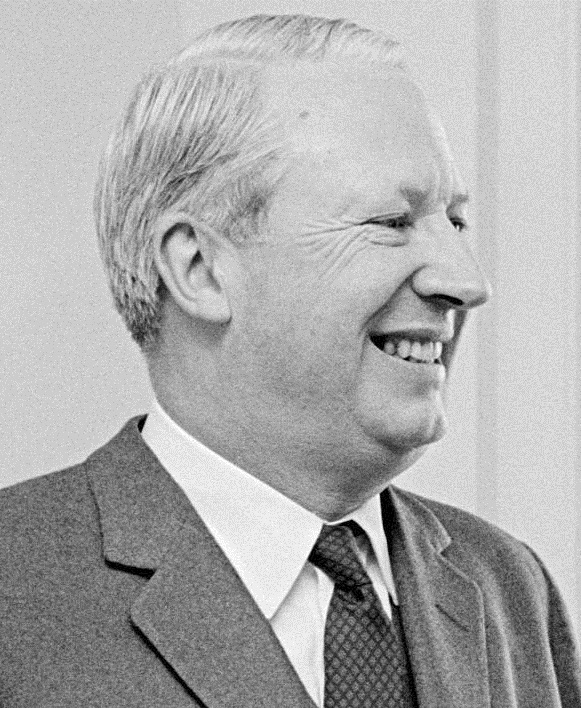
  • Chris Patten – 1979 Maiden Speech in the House of Commons

    Below is the text of the maiden speech made by Chris Patten in the House of Commons on 14th June 1979.

    I am grateful to you, Mr. Deputy Speaker, for calling me this evening. I am even more grateful to the electors of Bath for giving you the opportunity to do so.

    It is a custom that in getting off the mark in this House one should attempt to avoid controversy. That is a daunting challenge for most of us. I have heard and read a number of maiden speeches over the last two or three weeks and I must say that the word “controversial” seems to be defined in a fairly relaxed way. The first I heard in this House began with a colourful attack on the Iron Lady, whoever that may be, and went on to give some crisp advice to Chancellor Schmidt on how to run the West German economy, for which I am sure he was very grateful.

    I shall try to stay within “the meaning of the Act” and to avoid controversy. I begin therefore with the entirely uncontroversial remark that I have the honour of representing the most beautiful city in England. In doing so, I follow a notable servant of this House, Sir Edward Brown, who represented Bath for 15 years and previously worked at every level in the Conservative Party, ultimately becoming chairman of the national union, which is a slightly different body from the national executive of the Labour Party. He was a diligent Member of Parliament. He worked extremely conscientiously for his constituents. In a few weeks, I have already come across countless examples of his courtesy and consideration. He was a hard worker in this House where he chaired a number of Committees, and he spoke knowledgeably in the Conservative Party about trade union matters. I hope that I shall be able to match his service to the party and the country. In saying that, I am all too aware of the fact that Bath has been called the graveyard of ambition. If this is indeed the case, although I am sure that none of us would admit to any greater ambition than the chance of representing our constituency in this House, then, to mix metaphors, I cannot imagine anywhere better to hang up one’s boots.

    I shall not take hon. Members on a verbal guided tour of Bath. I am sure that they will excuse that. I would not want to deter any of them from visiting Bath, if they have not already done so. I would say quickly, in the hope that the chamber of commerce is listening, that if hon. Members come to Bath I should be grateful if they would stay in Bath rather than Bristol.

    Bath is not a museum piece. It is an extremely busy city, although not quite as busy as we would like following the rise in unemployment in the last few years. It depends a great deal for its prosperity on a number of fine engineering firms. It would not be an exaggeration to say that those firms and my constituency will depend a great deal for their future prosperity on this Budget.

    I suppose that one can easily over-estimate the impact on the economy of what my right hon. and learned Friend the Chancellor of the Exchequer once called, in a speech to which I shall return later, an “archaic ritual”. Nevertheless, our success in the future hangs very much on some of the decisions which the Chancellor announced on Tuesday. He had an unenviable job, first—and I must try to avoid controversy—because of a less than wholly satisfactory inheritance. Hearing so many speeches from the Opposition Front Bench, such as the speech of the right hon. Member for Leeds, East (Mr. Healey) yesterday, about the state of the economy on 2 May, I sympathise very much with the story of the late Lord Avon’s father who was once seen throwing the family barometer out of the front door into the pouring rain, shouting after it “Set fair, eh! Get out there and see for yourself.”

    We must also sympathise with the Chancellor since he has confronted in this Budget what he described at the beginning of his statement as the crisis of decline, which is no less real for having become recently the subject of increasingly fashionable discussion. If he is right—I think he probably is—that we are poised somewhere between relative and absolute decline, and if he is also right—again, I agree with him—that the decline is not irreversible, the burden on his shoulders these last few weeks has been considerable. One of the troubles is that many of us who agree with him about the seriousness of the present situation are reluctant, or have been reluctant, to accept some of the changes that are necessary to do anything about it. Like St. Augustine, we have all wanted to be virtuous but not quite yet. I plead guilty to that charge.

    But it is difficult, I should have thought, to make out an overwhelmingly convincing case for the status quo. If one is to change things, one has to start at some time and somewhere. I am sure that the Chancellor was right this week to take his courage, and ours, in both hands and plunge ahead.

    My right hon. and learned Friend identified correctly three main tasks. First, as the noble Lord Robbins once said, one can be agnostic about the precise effect or incentives of given rates of tax. But even most Labour Members, I believe, would agree that a 100 per cent. rate of tax would have a pretty serious effect on incentives. It is therefore not very sensible to argue that some slightly lower rate than 100 per cent. has no effect whatever.

    I was pleased that the Chancellor chose in his Budget Statement to place so much emphasis on restoring incentives right across the board. I should like to be able to turn to some of the arguments advanced by my pair, the hon. Member for Birkenhead (Mr. Field), about incentives. Alas, he is not here, and I have insufficient time, but I look forward with relish to returning to that topic on some future occasion.

    There is obviously some risk in making such a substantial shift from direct to indirect taxes when the underlying rate of inflation is increasing. I am sure, however, that the Chancellor was, on balance, justified in taking that risk. I am pleased that in doing so he has seen that pensioners are protected from the one-off increase in prices that will result from the rise in VAT. I hope that he will also encourage the Treasury to be as imaginative as possible in thinking about the impact on VAT on the performing arts, particularly the theatre.

    The second task for the Chancellor was to reduce the public sector borrowing requirement this year and in subsequent years. He has spoken in the past about the advantages of acting with “all deliberate speed.” It was perhaps a pity, but inevitable given the fact that the PSBR was much larger than anticipated, that he had to act so rapidly on public expenditure. One of the problems of acting so swiftly is that sometimes the cuts one makes in the short term discredit the important longer-term exercise of getting public expenditure under firm and lasting control. On the whole, the Government seem to have avoided that situation. I am grateful that what would have been a departmentally easy cut in the Department of the Environment has not been made in the programme—which is already hard-pressed—for conserving our historic heritage. I am grateful that that programme has not been cut.

    One easy cut, I suggest to my right hon. Friend is, the “pork barrel” scheme for reallocating civil servants’ jobs from one part of the country to another and particularly the eccentric, extravagant and, what I believe is the vogue word, “reckless” scheme for moving 800 or more jobs from Bath to Glasgow. I am pleased that the Minister of State, Civil Service Department told me in a written reply at the beginning of the week that that scheme is to be reviewed. I must tell him that I would find it very difficult to explain to my constituents why I had voted in favour of the Adjournment motion for the Summer Recess if that review had not been completed by the end of July.

    One other thing which I hope Ministers will remember in thinking about public expenditure is the speeches they made in Opposition about the importance of increasing parliamentary control over the Executive, about overhauling our antique budgetary procedures, about ending, in the words of my noble Friend Lord Cockfield, the divorce between Government spending plans and parliamentary control. In a very good speech to the LSE in 1977 on this subject, the Chancellor himself said: Whether as Ministers or as parliamentarians, it is we who are in charge. Only we can change the system. Quite so.

    I hope that the Government will show that they are as keen on those issues now as they were before the election and, for example, will give the proposals of the Procedure Committee a fair wind when they are debated next week.

    The third task that the Chancellor and his right hon. Friends have had to deal with is the establishment of a more balanced relationship between the trade union movement and the rest of society. In that context I was a little disappointed that there was not in the Budget more encouragement of ownership through profit-sharing schemes. I am also disappointed that we have not yet heard much about the Government’s thoughts on the improvement of bargaining structures.

    Obviously there is agreement on both sides of the House that the Budget will have some impact on the attitudes taken during the next pay round and the one after that. The CBI has put forward imaginative proposals for improving pay bargaining. It would be nice to have heard the Government’s thoughts on that, Perhaps we shall hear them later in the debate.

    If anyone else has any better ideas than the CBI about how to reconcile pay moderation and freedom, I am sure that we should be delighted to hear them. Among other things, we need some kind of forum where the major participants in the economy can sit down calmly to consider the implications for prosperity, as well as for unemployment and pay bargaining, of the Government’s fiscal and monetary policies. Those words were written by my right hon. and learned Friend the Chancellor and by the Secretaries of State for Employment, Industry and Energy and the Paymaster General in a pamphlet called “The Right Approach to the Economy”, published a couple of years ago. They were absolutely right then and I think that they are right now.

    I was disappointed to see an article on the back page of the Financial Times this morning suggesting that Ministers are not thinking in that way any more. I imagine that that suggestion could only have been a jeu d’esprit by the labour editor of the Financial Times. I cannot imagine that it represented the Government’s real intentions.

    The Chancellor has set out in his Budget on a long and arduous road. None of us on the Government Benches believes in “hey presto” economic strategies or that one Budget can turn everything around. But we do believe that there are more sensible and less sensible ways of steering the economy. The Chancellor has started this week in a characteristically sensible way. I am sure that we all wish him at least as long in the job as his predecessor has had. Judging from his first Budget, whoever eventually succeeds him will have a much easier and more agreeable task than he has had this week.

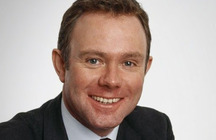
  • Owen Paterson – 2014 Speech to the Scotch Whisky Association

    owenpaterson

    Below is the text of the speech made by Owen Paterson, the Secretary of State for the Environment, Food and Rural Affairs, in Scotland on 12th May 2014.

    Thank you for inviting me today to celebrate the Association’s Members’ Day. I am very pleased to have the opportunity to return to Scotland. I am delighted to take any opportunity to shout about Scotch whisky’s great success story.

    That success is down to the hard work of the 35,000 entrepreneurial people directly or indirectly employed by your industry. It is down to men and women like you that we have such an internationally trailblazing product.

    Indeed, this is a product of such quality and prestige that it enhances the reputation of all UK food and drink, which together supports 3.6 million jobs, adds nearly £100 billion to the economy and is our largest manufacturing sector.

    I am pleased that your success has been achieved working in strong partnership with government. My department has long worked very closely with the Association. I worked particularly closely with Gavin, who did great work for the industry and I wish him well for the future. I was pleased to meet David three weeks’ ago, and I’m looking forward to continuing our cooperation with him.

    Exports: recent successes

    In 2013 UK food and drink exports reached their highest level ever at £18.9 billion.

    Scotch whisky makes up nearly a quarter of this, with £4.4 billion of Scotch whisky exported last year. The government is hugely proud of this success, which has led to Scotch becoming a well-loved product all over the world.

    I would like to recognise the Association’s constant efforts, over many years, to support and grow UK exports by increasing the Scotch whisky market overseas. It is hard to believe that in the 1980s, growth had stalled in the industry, and distilleries were being mothballed.

    Three decades later, and the situation is transformed. Whisky is Scotland’s leading single product export and the UK’s largest consumer good export, making up nearly two-thirds of the value of all beverage exports. And do not underestimate Scotch’s role as a pathfinder, advertising the reliability and quality of UK food and drink across the globe.

    The government has supported UK companies to double international food and drink trade in the past decade. That’s not just because we produce the world’s best products. It’s because we have the trade networks, the embassies, and an exceptional diplomatic service – together, they are what win trade deals.

    The UK’s diplomatic networks are what gave us tariff-free deals with the USA on whisky, and Singapore on beef. The Foreign Office employs over 14,000 people in around 270 missions. That’s why last year alone we were able to open 112 additional markets for food and drink exports. That’s good for Scotland’s producers and good for tax revenues too.

    I have seen how well our embassies work. In January I enjoyed telling several hundred politicians, industrialists and opinion-formers at the British embassy in Berlin that the French drink more Scotch whisky in a month than cognac in a year.

    Exports: future prospects

    Future economic wins will rely on the activity of our substantial and long-experienced negotiating teams, who are very actively involved on behalf of the whole UK in forthcoming EU / Indian and South American trade talks.

    You don’t need me to tell you that the Indian market is important, standing at our 4th biggest by volume and 14th by value, up 12% from last year to £69 million. I will be making early contact with the new Indian government following today’s conclusion of the Indian elections and I am looking forward to resuming negotiations on the EU-India Free Trade Agreement. The question of tariffs will certainly be at the front of my mind.

    In South America, momentum is building towards an imminent exchange of offers on the EU-Mercosur Free Trade Agreement negotiations. This will be an important step towards better access to the Brazilian market, where I know consumer demand for Scotch whisky is growing fast. We will report back to you with that outcome but meanwhile I hope that current difficulties with the registration of the Scotch Whisky Geographical Indication will be resolved.

    Seven negotiating rounds have taken place since the launch of EU-Vietnam negotiations in June 2012. Vietnam is keen to conclude the deal which is slated for October 2014.

    Finally, we are starting to see promising developments in negotiations on the EU-USA Transatlantic Trade and Investment Partnership. Scotch whisky already benefits from a zero tariff in the USA, so the immediate commercial benefits are likely to be modest. Exports to the USA grew 8% on 2012 to a record £819 million. This represents nearly £1 in every £5 of exports and is by far the largest market for Scotch by value. I discussed TTIP with my counterpart Tom Vilsack in Washington last year and look forward to seeing him again next month in Washington. The UK has real influence on this deal. Notwithstanding the zero tariff I feel our efforts to boost trade through TTIP could help increase exports even further. We are keen to create a more efficient transatlantic trading environment by reducing the non-tariff barriers that cause problems for UK exporters.

    Legal protection

    The UK’s deep diplomatic relationships also protect Scotch against illegal and dangerous copycats. On my first visit to China as Secretary of State in Autumn 2012, I had constructive discussions with the Chinese in Guangzhou on bearing down on counterfeit stills. I am pleased that the Chinese authorities take this issue so seriously and have closed down illegal stills.

    And when the Czech authorities reacted disproportionately to an incident involving illicit alcohol, Defra intervened to resolve the issue quickly and satisfactorily.

    I will actively support the industry in pursuing those who exploit Scotch whisky by name or product. For example, we have in the past seen fraudulent activities in Austria with the production, sale and export of counterfeit whisky and Scotch whisky. I discussed with David the unresolved legal issues that remain on this, and I have written to my Austrian counterpart requesting a meeting between their Federal Ministry of Agriculture, the SWA and Defra.

    Geographical Indicators

    I would like to acknowledge the work carried out by the Scotch Whisky Association in making the most of the EU protection afforded Scotch Whisky as a Geographical Indication.

    Currently, Scotch Whisky is recognized and registered as a Geographical Indication in 41 countries. The latest success in registering Scotch whisky as a certification trade mark in Australia in April this year was a clear example of collaborative working. My colleague William Hague recently met the Australian High Commissioner to get Scotch fast-tracked as a trademark there, protecting an £84 million market.

    It represents an important step in cracking down on fakes and imitations. It is the culmination of meticulous hard work from the Scotch Whisky Association, the UK government and the European Commission.

    The Scotch Whisky Geographical Indication has been further protected with the launch of HMRC’s Spirit Drinks Verification Scheme established this year. The scheme ensures that Scotch whisky is produced and marketed in ways that fully comply with its technical specification.

    I know we have worked closely to achieve solutions for the protection of bulk exports of Scotch whisky outside the EU. The verification system introduced by HMRC goes some way to alleviating the problems with poorly blended and bottled products overseas. Enforcement is also an important aspect to protecting this reputation.

    Budget

    Nearer home, I wanted to touch briefly on the recent Budget decision to end the alcohol duty escalator and freeze spirits duty. I know the SWA was a big part of the campaign for movement on that. This is a good example of how we can work as partners in close cooperation and deliver big decisions with very significant benefits for the industry.

    Wider benefits

    As well as recognising your success in growing your businesses, opening new markets and protecting your brands, I also wanted to recognise the wider benefits of this industry. Not only do you bring high-quality, long-term jobs to the heart of some very remote and rural communities, you are also making an important contribution to the environment.

    I know the SWA published its third Environmental Strategy last year and the industry has been increasingly looking at greener, more environmentally-friendly production with fewer emissions and a move away from fossil fuel sources of energy.

    I am a particular supporter of anaerobic digestion technology for producing electricity. I know Diageo have started using this for malt distilling, which I think is a first. That puts Diageo on the cutting edge of renewable energy innovation. And I welcome the news that the Association is close to achieving zero waste to landfill, with only 5% of waste being landfilled in 2012. These are major achievements which the industry can be very proud of, but I want to encourage you to continue challenging yourselves on this.

    Concluding remarks

    Looking to the future, what we all want to see is an industry that is increasingly developing new products, tapping into new markets, competing with the global players and meeting the demands of millions more discerning consumers. Scotch whisky is ideally positioned to gain from increasing disposable incomes as economies grow in markets such as India, South America and Africa. The Scotch Whisky Association is already well ahead of the game in capitalising on these markets.

    With £2 billion of investment committed over two years, and more than 20 new distilleries planned, the future looks really exciting. But I understand this level of investment can’t be taken for granted. It only happens when businesses can have some certainty and a favourable climate.

    Your ambitions are tremendous, and the UK government will continue do everything it can to provide the positive business environment to meet them. I look forward to working with you over the coming year.

    Thank you.

  • Owen Paterson – 2014 Speech to British Retail Consortium

    owenpaterson

    Below is the text of the speech made by Owen Paterson, the Secretary of State for the Environment, Food and Rural Affairs, on 29th January 2014.

    It’s a great pleasure to be speaking at today’s launch of the sixth edition of the British Retail Consortium’s ‘A Better Retailing Climate’, a voluntary initiative setting out the environmental ambitions of a group of committed businesses.

    Two of my key priorities are growing the rural economy, and improving the environment. These are intricately linked, and this initiative perfectly demonstrates how each enhances the other. Sustained economic growth needs a healthy natural environment, and we cannot invest in our environment without the resource generated by economic activity.

    Environmentally and economically sustainable growth requires a partnership approach between industry and government. This great initiative is just the sort of leadership we hope for and expect from the BRC.

    When the BRC first launched this initiative, they set five targets to reduce the direct environmental impact of the retail sector – buildings, refrigeration, transport, water and waste.

    Today’s report sets out the progress made and I am delighted to congratulate you for not only meeting the targets set, but massively exceeding them. This is a great performance and the case studies in your report highlight an impressive record of achievement.

    The sector has exceeded these targets against the backdrop of the tough trading climate in recent years, both in the retail sector and the wider economy. This shows that growth and sustainable practices can go hand in hand. Sustainable business practices are essential in a resource-constrained world, and only businesses that recognise this can be truly competitive.

    I am pleased to see this reflected in the report. There are a wealth of examples of how retailers have optimised their use of resources to improve our environment, while boosting business.

    You’ve just heard from Ian, who led the Ecosystem Markets Task Force. He is leading from the front on this. B&Q has reduced transport emissions by a third and has used two million litres less fuel, saving itself £1.9m.

    Asda is investing £10 to 15 million every year to improve energy use across its stores, depots and offices. This has resulted in savings of £41.9 million.

    McDonalds has developed a ‘What If?’ digital tool for the beef sector, which allows farmers to manipulate different scenarios to see which changes can improve the efficiency of their farms, and realise cost savings.

    Tesco has made significant progress in reducing its emissions from refrigeration, achieving an absolute reduction in refrigerant gas emissions of 16 per cent, against a backdrop of an 84per cent increase in store space.

    Over 100 of The Co-operative Food’s stores now have doors on their refrigerators, reducing their energy consumption by 38 per cent since 2006, and creating cost savings of £63m annually.

    Boots’ Botanics range is more sustainable than ever, with full traceability of natural ingredients used in products, and with more recycled material used in packaging.

    Morrisons are reducing water consumption across stores through raising awareness of water usage amongst employees.

    Sainsbury’s has launched a ‘Love Your Leftovers’ campaign to help customers reduce food waste through tips and recipe ideas.

    Marks and Spencer is helping customers keep their food ‘Fresher for Longer’ by providing storage advice for food, both in-store and online. These initiatives save businesses money and they can save customers money.

    The Government is creating the right climate for growth by cutting down on burdensome red tape to make it easier for businesses to flourish. The Prime Minister announced on Monday that through the Red Tape Challenge we will save businesses over £850 million by scrapping or improving over 3000 regulations.

    The UK has a long, proud and strong heritage of producing food with robust traceability, rigorous production standards and top quality produce. We’re working hard to make sure that food and drink businesses have a wide range of opportunities to expand, opening up new markets both in the UK and abroad. The public sector bought £2.1 billion worth of food and drink last year. I’m working to get Government purchasers to take advantage of our top quality products. I’m also working to open up new export markets in China, Russia and the USA.

    We’ve been helping business make the best use of natural resources so that they can grow, while reducing their environmental impact. You’ve made water management a key target. Measurement of water usage is complex, but it is a vital step towards managing water use. The sector has succeeded in measuring 83 per cent of water usage so far, and has carried out a range of water efficiency measures to make the most of this crucial resource.

    Defra, with WRAP, has been helping businesses to reduce their water use through initiatives such as the Rippleeffect – a free support package to help companies understand their water use, and identify ways to save water and money.

    The Water Bill, currently going through Parliament, will reform the water market by removing barriers to competition. We will have a more efficient and resilient water industry with lower environmental impacts. It will allow businesses to choose their water and sewerage supplier and enable multi-site operators to tender for one supplier. It is not just good for the environment; it is good for business.

    We want to move towards a ‘zero waste’ economy. This means that we reduce, reuse and recycle all we can, and throw things away only as a last resort. Recycling, reprocessing and remanufacture of materials offer potentially lucrative investment opportunities. At the same time we will save energy, water and use less virgin materials, keeping valuable resources from ending up in landfill.

    I am delighted to see that in 2013, the companies taking part in this initiative sent only 6 per cent of waste to landfill. This is a big step forward from the picture in 2005, when 47 per cent was sent to landfill. Retailers have played a key role in changing how waste is perceived and managed.

    For some years now, Defra and WRAP have been working through the Courtauld Commitment to reduce waste in the grocery sector. We’ve also been working with your members through the Love Food Hate Waste campaign, to help your customers reduce the amount of good food they waste at home.

    As well as celebrating the sector’s achievements to date, I’d also like to welcome the new extremely ambitious targets for 2020. You have set the bar high and I commend you for it. Commitments include promoting better carbon management, reducing the water footprint in the supply chain, and responsible sourcing.

    I am looking forward to the announcement of new targets for the Sustainable Clothing Action Plan 2020 Commitment to reduce the energy, water and waste footprints of UK clothing consumption. And the launch of a consumer campaign to help deliver these targets. It is good to see that the sector is continuing to focus on product life-cycle analysis, building on the valuable work done in the Product Sustainability Forum, supported by WRAP, which mapped the environmental performance of grocery and home improvement products. I am also pleased to see that retailers are continuing to work with supply chain partners on reducing their environmental impact – for example, playing a leading role in the switch to the sourcing of certified sustainable palm oil.

    Palm oil is the world’s most used vegetable oil, and global consumption is increasing. Palm oil can be produced at higher volumes per unit area of land than other vegetable oils, but production is often linked to deforestation and peatland drainage, mainly in Indonesia and Malaysia. This has major impacts on biodiversity and also land rights for local people. Your commitment here is contributing to our wider policies to protect international biodiversity such as the ‘If They’re Gone’ campaign.

    The BRC are part of the stakeholder group which signed up to the UK Statement in October 2012, working towards the target of sourcing 100 per cent sustainable palm oil by 2015. This latest BRC report records the progress made by its members in sustainably sourcing palm oil. Indeed, it is good to see that BRC members are sustainably sourcing 92 per cent of palm oil used in own label products, almost 58 per cent of which is physically certified sustainable palm oil. This, along with the Defra Progress Report published in November 2013, shows that consumption of certified sustainable palm oil in the UK has risen from 24 per cent in 2009 to 52per cent in 2012. This is a vital step in mitigating the negative environmental effects of palm oil production.

    Many of the challenges we face today need new and innovative approaches. Retailers continue to be in the lead on developing many of these, not only in the products you sell, but in new ways of doing business. Today’s report demonstrates that you take that leadership role seriously and are setting ambitious goals that will continue to drive innovation. Thank you to the retailers who are here today, who have demonstrated their successes in making sustainable products, shared their insights into consumer behaviour, and showcased the innovative tools they’ve developed in creating a sustainable sector.

    I welcome your commitment to continue to work with government, and others, on developing sustainable business models.

    Today’s report has highlighted the sector’s successes, and its continued commitment to environmental sustainability. I congratulate you wholeheartedly on your success. I look forward to continuing to work with you towards your new targets to build a thriving, competitive and sustainable retail sector.

  • Owen Paterson – 2013 Speech to Policy Exchange

    owenpaterson

    Below is the text of the speech made by Owen Paterson to the Policy Exchange on 20th November 2013.

    Thank you for inviting me to speak today. It’s a great pleasure to be here at Policy Exchange, a think tank that does so much to shape and inform debate across a wide range of issues.

    Since becoming Defra Secretary last year I have set out my four key priorities for the Department. These are to grow the rural economy, improve the environment, and safeguard both plant and animal health.

    My desire to improve, rather than just protect, the environment, while at the same time growing the economy stems from Edmund Burke’s description of us as the “temporary possessors and life-renters” of the earth who must live in a way which doesn’t “leave to those who come after… a ruin instead of a habitation.”

    I have lived in the countryside all my life. I have always been immersed in its activities. I have seen for myself the impact each and every one of us has on the environment.

    That’s why I believe that we need to leave our natural environment in a better condition than we inherited it. Our 2011 Natural Environment White Paper – the first of its kind for twenty years – set the goal of “being the first generation to leave the natural environment of England in a better state than it inherited.” That is a big ambition, to which I am strongly committed.

    This is not only because it’s the right thing to do but because it’s the only way in which we will secure growth that is both environmentally and economically sustainable.

    There is no doubt that our natural environment is under pressure. In the UK populations of farmland birds have declined by 50 per cent and woodland birds by 17 per cent since the 1970s. The State of Nature report produced by a wide range of environmental organisations earlier this year set out the scale of the task we face.

    That said, it’s not all doom and gloom. While many species have declined, others have increased significantly in range or abundance over the last two to three decades. These include common and widespread species, as well as some formerly declining species that are conservation priorities, such as the red kite, otter or large blue butterfly.

    The causes of this overall decline are broadly understood, with loss of habitat and increasingly intense human use of the countryside, not least in the 1960s, ‘70s and ‘80s when agriculture went through a rapid period of modernisation. This is a problem that has faced successive generations and governments. It is not a matter of blaming this government or that organisation. This is a complex and long-term issue that we must, as a society, work together to solve. This is especially the case as we try to deliver more, with fewer resources and less taxpayers’ money.

    Yesterday’s publication of the Nature Check 2013 report only serves to demonstrate the scale of some of the problems we face. While I would disagree with many of the report’s conclusions, it serves a useful purpose in highlighting the continuing limitations of a top down approach to the natural environment. If we are to make progress in this important area, we must look to a new approach, working with the grain of nature and society. Hence we must harness the enthusiasm and expertise of the public, farmers and landowners.

    I am a practical environmentalist. I find common cause with all those who passionately believe that we have a duty to pass on a better environment than the one we inherited. Too many times those that say they are doing their best to protect the environment shy away from the difficult decisions. I won’t do that. The environment’s much too important to be left to ideologues.

    Our approach is based on three core principles:

    First, the environment and the economy are inextricably linked.

    Second, the natural environment in Britain is overwhelmingly managed by man rather than being abandoned in a homage to Rousseau.

    And finally, improving the environment is a national challenge requiring a concerted, partnership approach. It’s not something that taxpayers’ money or government alone can fix. We must harness the rich seam of practical environmentalism that runs through our country.

    Up until recently the choice has often been portrayed as one of growing the economy or protecting the environment. That’s not how I see it. I am absolutely convinced that we can only improve the environment if we have a growing, prosperous economy. Mrs Thatcher said, in a speech to the Royal Society in 1990, that “we must enable all our economies to grow and develop because without growth you cannot generate the wealth required to pay for the protection of the environment.”

    I will never forget travelling to Albania and seeing brooks running black with oil as a result of the disastrous rule of Enver Hoxha. Economic failure led to environmental failure. In contrast, in China and a host of other countries, where per capita income is increasing as a result of continuous economic growth, people are taking an interest in their environment for the first time resulting in more trees being planted.

    We cannot have sustained economic growth without a healthy natural environment. Neither can we invest in nature without the resources generated by economic activity. That is why I want to secure growth and improve the environment in tandem. These two priorities are not mutually exclusive.

    We need to be able to measure our natural capital and build it into our economic decision-making. That’s why we set up the Natural Capital Committee. The Committee, established in 2012, was one of the headline commitments in the White Paper. It is the first committee of its kind in the world.

    The water industry is a prime example of economic investment as environmental investment. Of improving the environment while growing the economy.

    The privatisation of our water industry in the late 1980s has secured more than £116 billion of private investment – investment that would never have come from the Exchequer. As a result, we have moved from several of our major rivers being classified in the not too recent past as sterile or biologically dead to our waterways now being cleaner than they have been for decades. We now have otters in every region of the UK. Salmon and trout are returning to rivers and streams where they have not been seen for generations.

    Earlier this year I visited Northumbrian Water’s waste treatment site in Howdon on Tyneside. Their investment in anaerobic digestion is enabling them to process half a million tonnes of sewage, which was previously dumped untreated in the North Sea every day. This generates enough electricity to power the equivalent of 8,000 homes and produce a dry fertiliser for local farmers.

    This investment not only makes economic sense for the company but it is also helping clean up the Tyne, once one of our most industrialised and polluted rivers. Upon my arrival at the site, one of the staff showed me a picture of a large salmon, which he had caught only yards from where I stood, something that would not have been possible until recently.

    Looking to the future, there’s still more to do. The Water Bill will reform the water market still further by removing barriers to competition. That will lead to a more efficient and resilient water industry with lower environmental impacts. It’s in the interests of the water companies themselves to continue to invest in reducing leakage, pollution and unsustainable abstraction. It is not just good for the environment; it is good for business.

    The privatisation of the water industry shows us that we should not be afraid of economic or technological innovation. In fact, we should embrace it.

    Indur Goklany has calculated that if we tried to support today’s population using the production methods of the 1950s, instead of farming 38 per cent of all land, we would need to use 82 per cent. It has also been estimated that the production of a given quantity of a crop now requires 65 per cent less land than it did in 1961.

    Continued progress and innovation could see us using cultivated land more efficiently, presenting us with exciting opportunities to free up more space for biodiversity and wildlife. The adoption of technology will be key to us meeting the challenge of “sustainable intensification” as set out by the Government’s former Chief Scientist, Sir John Beddington.

    Technological advances over the course of the 20th century have also meant that Britain now has three times as much woodland as it did a century ago. Woodland cover in England reached a nadir of 5 per cent at the end of First World War. Today, it stands at just over 10 per cent, around the same level as when Chaucer wrote the Canterbury Tales. We believe that government and the forestry sector working together could achieve 12 per cent woodland cover by 2060. An increase equivalent to a county the size of Derbyshire.

    The forestry sector is leading the way in demonstrating how a healthy environment and economic growth can go hand in hand. With around two thirds of the UK’s woodland resource in private hands, the importance of working with private individuals to make progress in improving biodiversity cannot be overstated.

    The Grown in Britain initiative, led by the forestry industry itself, is working to increase demand for British wood products, thereby increasing investment in the planting and management of woodland. The initiative seeks to provide an “economic pull” to galvanise landowners to see the many benefits, both economic and environmental, of well managed woodland.

    Thanks to Grown in Britain, Heal’s is stocking a new range of British grown and manufactured ash furniture. Just this relatively small step is supporting 60 jobs, 20 of which are furniture-making apprentices. It’s improving the environment and helping business.

    One policy which I believe has huge potential for improving the environment, and placing our biodiversity on a sustainable footing for the future, is that of biodiversity offsetting.

    Offsetting is a measurable way of ensuring that we make good the residual damage to nature caused by development which cannot be avoided or mitigated. This guarantees that there is no net loss to biodiversity from development and can often lead to net gain. It will not change existing safeguards in the planning system but it makes it quicker and simpler to agree a development’s impacts to ensure losses are properly compensated for. Offsetting could help create a ready market for farmers, landowners and environmental organisations to supply compensation for residual damage to nature, providing long term opportunities for investing in our habitats and biodiversity.

    It’s incredibly apt that I’m speaking here at Policy Exchange, the think tank that through its Nurturing Nature report has put offsetting on the political agenda and highlighted the real contribution it could make to our natural environment.

    There are already over 20 other countries using offsetting and the Ecosystems Market Task Force, chaired by Ian Cheshire, recommended that we adopt offsetting as its priority recommendation. Not all of these models would work here but we’re looking closely at the US, Germany and Australia to see what lessons we can learn. On a visit earlier this year, I saw different models working well in Australia. And in July I visited one of our offsetting pilots in Warwickshire.

    The Biodiversity Strategy we published in 2011 sets out our plan to halt the overall loss of England’s biodiversity by 2020. The ultimate aim is to move from a net biodiversity loss to a net gain. The Rural Development Programme, which invests £400 million a year in agri-environment schemes, is already rewarding farmers for providing and improving habitats and biodiversity. I see offsetting as a potentially important tool to sit alongside this.

    In a small and heavily-populated country such as ours, there will always be developments or infrastructure projects that require a trade-off between economic and social benefits and the natural environment. It could be a new housing development that would cover some woodland, or a new road crossing a wetland area. The first question should always be can the environmental damage be avoided or mitigated. If it can’t then we would look to offsetting to add an equal or greater amount of environmental value to another area.

    But this isn’t something we will rush into without careful consideration. The consultation on our green paper has just closed. I’ve gathered views from all sides of the debate, from developers, environmental organisations and the public. This was a genuinely open consultation. I am determined to find a solution that works for both the economy and the environment. I am determined to make sure the planning system allows sensible decisions on development by ensuring that environmental value is considered at the very start.

    The ideal outcome is a system that correctly values nature. We know it can work – in Australia offsetting has reduced the number of applications to develop on native grassland by 80 per cent. Such a system can provide certainty for both developers and the environment.

    Moving to the second core principle of our approach, I believe that to build on the successes we’ve seen in boosting the populations of species such as the red kite and the otter we must recognise that the countryside we see today, and the landscapes that are part of it, have been shaped by man over thousands of years.

    In this country there is very little of what can be termed genuine wilderness. Some of our most iconic landscapes – the landscapes which have inspired artists and poets across the centuries – are managed landscapes. The Lake District would not look the way it does today without the presence of sheep and the careful management of hill farmers. The Downs would soon return to elders and bracken if it were not for the presence of livestock and active farming.

    These landscapes not only support our plants and wildlife. They contribute to our health and wellbeing and attract large numbers of tourists. In rural England, the £33 billion tourism industry accounts for 14 per cent of employment and 10 per cent of businesses.

    Our countryside is something which needs constant management and intervention. The influence of man can be seen in both our flora and fauna. The names of the following species – the barn owl, harvest mouse, meadow pipit, corn bunting and hedge sparrow – demonstrate the importance of the farmed landscape to our wildlife.

    The American author and conservationist, Aldo Leopold, recognised this when he said: “The hope for the future lies not in curbing the influence of human occupancy – it is already too late for that – but in creating a better understanding of the extent of that influence and a new ethic for its governance.”

    The backdrop of a growing population, increased pressure for land for development and changing farming practices means that this approach is more necessary than ever.

    It is after all human activity that has, across the centuries, removed many of the countryside’s natural predators and introduced invasive non-native species. It would therefore be a dereliction of duty for us to shy away from continuing to manage and intervene in our natural environment.

    The work of organisations such as the Game and Wildlife Conservation Trust demonstrate the importance of managing both our landscapes and wildlife populations. The GWCT’s Allerton Project demonstrates the real contribution game management on farmland can make to meeting wider environmental objectives. Its ‘Fields for the future’ report, published to mark twenty years of the project at Loddington in Leicestershire, found that:

    – Wild pheasants increased four-fold in response to full game management

    – Hare numbers dropped substantially once predator control was withdrawn

    – Songbird numbers doubled in response to game management but showed a gradual decline once feeding and predator control was stopped.

    Individuals such as Philip Merricks are also demonstrating the importance of addressing all components of conservation management. At his Elmley National Nature Reserve on the Isle of Sheppey, an hour from London and which I had the privilege of visiting on Sunday, predator control is enabling him to achieve lapwing fledging rates that both protect and increase the population. To maintain a stable population, lapwings need to fledge a minimum of approximately 0.7 chicks per adult pair per year. In 2010, Merricks achieved 1.3 fledged chicks per adult pair, whereas the neighbouring nature reserve, where species management is not undertaken, achieved a fledging rate of less than 10 per cent of Merricks’s rate.

    Tomorrow, I will be visiting Lark Rise Farm in Cambridgeshire, the headquarters of the Countryside Restoration Trust. For 20 years the Trust has been demonstrating how farming can coexist and benefit from a countryside rich in wildlife. In a relatively short time, otters and barn owls have returned after an absence of nearly forty years.

    The Trust is also leading efforts to try and clear a large area of the Upper Cam Valley of mink for the benefit of our indigenous wildlife. The scheme has been taken up by a total of 42 landowners, farmers and charities along a total of 45 miles of water courses and lakes. As a result of this intervention, 163 mink have been trapped, with water voles beginning to make a comeback and the number of kingfishers and moorhens on the increase.

    Wildlife control is also playing a key role in the battle to save the red squirrel, a species which has been native to Britain for more than 10,000 years but has been in decline ever since the more dominant grey squirrel was introduced from North America at the end of the 19th century. Greys also cause significant damage to our woodlands.

    The Red Squirrel Survival Trust and others have long been working, in partnership with local organisations and volunteers, to protect and stabilise our existing red squirrel populations. Grey squirrel control is central to their efforts and is starting to yield results. In the North East, monitoring shows that the red squirrel managed to expand its range by 7 per cent between 2012 and 2013, with the greys’ presence in these areas shrinking by as much as 18 per cent.

    With 70 per cent of all agricultural land in this country under an agri-environment scheme, there are real opportunities for us to begin to redress the current imbalance that exists in our countryside. An imbalance which, since 1970, has seen Britain’s magpie and crow populations increase by 90 and 81 per cent respectively. We must manage both landscapes and species.

    It is against this background, that we must acknowledge that the beautiful landscapes and diverse ecosystems the countryside supports, will soon fall into disrepair without the presence of thriving communities and businesses.

    Farmers alone are responsible for managing 75 per cent of the UK’s surface area. They are some of our greatest environmentalists from whom we can learn a great deal and with whom we must work in partnership.

    That’s why it’s so important that the British countryside is a living, working one and why I want to make sure that people in rural areas have access to the same services and facilities as people living in urban ones.

    I believe that the roll-out of superfast broadband has the potential to transform rural areas, bridging the age-old gap between rural and urban. It could be bigger than the advent of the canals, railways and telephone combined. It will allow businesses to grow and expand.

    Google estimate that small online businesses can grow up to 8 times faster than their offline equivalents. I’ve seen brilliant examples, not least the architects’ business located in a converted barn at the top of a Cumbrian fell designing golfing villas for clients in Nasiriyah.

    We are investing £1.2 billion to 2015 to connect as many properties as possible. Currently we’re connecting 10,000 rural properties a week. And from 2015 there will be a further £250 million to connect even more properties. We’re also investing £150 million to improve mobile phone coverage.

    We need to recognise the realities of rural life and the constant balancing act that’s necessary between different activities. I believe that we can have long term growth and improve our environment. That’s my vision. To achieve this we all need to work together; people, environmental groups, businesses and government. But what we can’t do is look to government to have all the answers and turn things around overnight. That’s not how nature works. That’s not how the economy works.

    Watercourses, for example, are an important part of the rural landscape, from both an environmental and flood prevention perspective. Despite this, the last government, in its blind adherence to Rousseauism, failed to maintain watercourses or enable land managers to do so. That’s why we’re working to remove the unnecessary burdens that discourage farmers and landowners from undertaking their own watercourse maintenance.

    Last month we launched seven River Maintenance Pilots across the country to do just this. These pilots are part of the wider Catchment Based Approach that make sure the river maintenance and other environmental goals are considered together to achieve the best outcome for farmers, landowners, local communities and the environment.

    With effective forward planning, river maintenance activities and their timing can be managed in ways which enhance water quality and support wildlife interests, particularly fisheries. These pilots will help us develop a new, more flexible consenting system for river maintenance by 2015.

    The third principle of my approach stems from the fact that we must seek to work with the grain of both nature and people. It is increasingly clear that a top down approach to the natural environment hasn’t worked. We must empower, encourage and utilise our farmers, land managers and civil society. All of whom have knowledge and experience of where they live and work. These “little platoons” of practical environmentalism can help us with our ambition to improve the natural environment, leaving it in a better condition than we inherited it.

    When Ash Dieback was first discovered, the contribution of the public was invaluable to helping us identify diseased trees and monitor the spread of the disease. There was an innovative use of technology to make this possible – the Chalara mobile phone app.

    I’m pleased that we’re taking this principle forward in the Observatree project, which aims to develop an early warning system for pest and disease threats to the UK’s tree. This is a partnership between the Forestry Commission and other organisations. The Woodland Trust and National Trust will use their experience to recruit and train a network of volunteers. The volunteers will support scientists by acting as a first line of response to the reports of tree pest and disease sent in by the public. They will screen and filter reported incidents, enabling scientists to focus on those reports of greatest significance.

    This is a brilliant example of how we can harness the enthusiasm of the public to benefit the natural environment and mobilise people to engage with an area of policy which would normally be considered the preserve of specialists.

    There are also millions of people across the country who take part in activities such as shooting or angling and who as part of their pastime make a significant contribution to the natural environment. The 2006 PACEC report estimated that two million hectares of land are actively managed for conservation as a result of shooting and that the shooting community spends 2.7 million work days on conservation. The 2012 Fishing for Answers report found that 25 per cent of anglers said that they “contributed to environmental or aquatic habitat conservation projects.”

    Many farmers and landowners already see themselves as stewards of the land they own or farm. They are also already working on a landscape or catchment area scale. In his 2010 review of England’s Wildlife Sites and Ecological Network, Sir John Lawton identified this as of huge importance to the delivery of a more coherent and resilient wildlife network.

    If we are to succeed in delivering meaningful environmental benefits, partnership between government, local authorities, landowners and communities will be key. This is especially important when so much of the nation’s property, be it farmland or back gardens, is in private hands and often beyond the reach of Whitehall intervention. It is this sort of approach that I want to seek and promote.

    That’s why we are building local partnerships in a variety of areas – Local Nature Partnerships, Nature Improvement Areas and the Catchment Based Approach. This is the best way of directly engaging communities in the management of their local environment.

    Many of the Nature Improvement Area partnerships are led by voluntary organisations, with the aim of creating an environment that is better for wildlife and people. By working across large, discrete areas, this approach can provide a huge range of benefits, from flood protection to pollination services.

    We’ve invested £7.5 million over three years to establish 12 Areas. For every pound invested, an additional £5.50 has been leveraged. This is a great example of government and private funding working together.

    A few weeks ago I went to see this approach in action in the Nene Valley. It’s an area that had one of the highest areas of species extinctions and the lowest amount of land being protected. The Nature Improvement Area is turning this around. They’ve worked to build strong ties with the Local Nature Partnership and the Local Enterprise Partnership. In the first year they’ve secured an additional £1 million of investment. An impressive 3,300 days of volunteer time have been mobilised. 1,500 hectares of farmland have been added to Higher Level Stewardship schemes. For these partnerships to work they must enjoy the full co-operation of farmers and landowners.

    The Catchment Based Approach is also being rolled out across all of England’s 89 river catchments. It will form the principle mechanism to deliver our national water quality targets. Interested parties from the local area will take part in the decision making process.

    We’re also applying a landscape-scale based approach, or the marine equivalent, to our fisheries. In my 2005 Green Paper, I described the Common Fisheries Policy as “a biological, environmental, economic and social disaster.” The continental, top-down control of our fish stocks, based on little local scientific evidence or regional flexibility, has proved catastrophic for the sustainability of our seas.

    I’m pleased that after three tough years of negotiation and as part of the historic deal on the CFP, we’ve been able to secure a move to a more appropriate, regionalised system of decision-making. We’re also putting an end to the scandal of perfectly edible fish being discarded, which was a key proposal in my Green Paper, as well as reaching a legally binding commitment to fishing at sustainable levels. This deal will help put our fish stocks and fishing economy on a firm footing for the future. Improving the environment. Growing the economy.

    This speech asked a question – can we have it all? Can we have growth and improve the environment? The answer is yes. It will take hard work and cooperation but we are laying the foundations. It is possible.

    I am absolutely convinced that to improve the environment we need a growing economy. At the same time we need to avoid growth that erodes our natural capital and therefore our ability to grow in the future. We need to encourage and secure growth which conserves or enhances our natural environment.

    The countryside is not something that can be preserved in aspic nor would we wish it to be. It is something of which we are custodians. We must seek, as practical environmentalists, to improve our habitats and ecosystems, to leave them in a better condition than we found them. We must not be afraid to intervene.

    I believe that by working with the grain of the countryside and harnessing the enthusiasm that millions of people have for nature, be it on their farms or in their back gardens, we can make real progress in boosting our wildlife and biodiversity.

    Valuing natural capital, as the basis of sustainable economic and environmental growth, is central to this Government’s vision. I look forward to working with you on making that vision a reality.

  • Owen Paterson – 2013 Speech on the Environment

    owenpaterson

    Below is the text of the speech made by the Secretary of State for the Department for Environment, Food and Rural Affairs made to the Civil Society Advisory Board on 29th October 2013.

    I would like to thank Defra’s Civil Society Advisory Board for organising this event and the RSA for hosting it.

    As many of you know, I have four key priorities for Defra. Growing the rural economy. Improving the environment. Safeguarding both plant and animal health. Civil society has a vital role to play in helping to design and deliver the policies to achieve these goals.

    As part of civil society, you have a huge geographical reach. You have a vast amount of expertise. You understand local issues and people trust you to take action. You are potentially the most powerful ally we have to deliver growth while improving the environment. I want us to work together to achieve this.

    Our partnership needs to be built on openness, trust and goodwill. There are times when we could have done this better. We are paying attention. We are improving the way we work.

    For example on our proposals for the nation’s forests, it was said that we did not listen or explain ourselves properly.

    There will be times when we will have differing views on the best way to make progress. For these issues it’s even more important that we talk to each other. We need to understand the range of concerns so that we can make the most robust decisions.

    That’s why I now insist that for all major new policies we start working with interested parties as early as possible.

    On forestry, last autumn I made sure that in developing our policy we sought the expert advice of civil society. We did this through a large Forestry Summit and by involving local people in discussions about the future of their local woodlands.

    The government’s Forestry and Woodlands Policy Statement recognised the need to reconnect communities with their woodlands. The Forestry Commission has been working on this with civil society. This has led directly to the formation of the Woodland Social Enterprise Network, which is now taking forward development of the pilot project.

    There are many other examples. On my return from Australia and New Zealand earlier in the year, I was clear that we needed to look seriously at biodiversity offsetting. To gather evidence and views we had a series of informal meetings with NGOs on both sides of the debate. I’ve also been to see pilots in the UK for myself – like Ryton Pools Country Park in Warwickshire.

    As a result, we’ve just launched a green paper that is a genuine consultation. I really want to hear from a wide range of individuals and organisations. I want to get as much evidence as possible before taking a decision.

    There are many examples of Defra and its network working innovatively and successfully in partnership with you. Sometimes the most effective way for government to empower you is for us to get out of your hair.

    The best example of Defra employing this approach is the establishment of the Canal and River Trust in July 2012. We transferred the functions, assets and liabilities of British Waterways in England and Wales to a charitable body – the Canal & River Trust.

    This gives users and communities a much greater involvement in managing their waterways, while improving their long term financial sustainability. The Trust has had a successful first year, which included the recruitment of more than 450 volunteer lock keepers, 17 community canal adoptions and over 29,000 volunteer days.

    In my own constituency, I’ve seen the incredible impact that this can have. The Montgomery canal is being improved by volunteers who travel from all over the West Midlands at the weekends to restore this historic waterway.

    Sometimes the focus will be on improving communication and raising awareness. An excellent example of this is the If They’re Gone campaign, which I launched in March this year. The campaign highlights the threats posed to four iconic endangered species – rhinos, elephants, orang-utans and tigers.

    It involves more than 20 wildlife organisations, zoos and safari parks. It will provide the public with information on the plight of these species and give practical advice on how people’s decisions can help save these majestic animals from extinction.

    Sometimes a successful partnership depends on civil society mobilising resources at the local level, for example in The Big Tree Plant. This is supporting communities to plant a million new trees, often in areas of urban deprivation.

    Working with local organisations has been fundamental to the on-going success of the project. The Tree Council and others have raised significant amounts of match funding, almost double the £4 million made available from government. They have provided routes to a huge range of community groups. They have helped to ensure the grant application process remains fair and robustly monitored. Without this extensive partnership working, The Big Tree Plant simply could not have happened.

    I’m particularly pleased with the way we’re working together on tackling irresponsible dog ownership. Defra funding helped the RSPCA, the Dogs Trust and Battersea Cats and Dogs home to run community projects on encouraging responsible ownership. And on microchipping, these organisations are making our policy a reality by not only providing free microchipping but also using their networks to explain its value. Last autumn the public’s contribution to the ash dieback survey was crucial to identifying diseased trees and monitoring its spread. There was an innovative use of technology to make this possible – the Chalara mobile phone app.

    We want to build on this through the Observatree project. Civil society will be helping to safeguard the health of our plants. The project starts this autumn. It aims to develop an early warning system for pest and disease threats to the United Kingdom’s trees. This is a partnership between the Forestry Commission and other organisations. The Woodland Trust and National Trust will use their experience to recruit and train a network of volunteers.

    Volunteers will support scientists by acting as a first line of response to reports of tree pests and diseases sent in by the public. They will screen and filter reported incidents, enabling scientists to focus on those reports of greatest significance.

    This is a brilliant example of how civil society can mobilise people in an area of policy which would normally be considered the preserve of specialists.

    We are building local partnerships in a variety of areas – Local Nature Partnerships, Nature Improvement Areas, and the Catchment Based Approach. This is the best way of directly involving communities in the management of their local environment.

    Many of the Nature Improvement Area partnerships are led by civil society organisations, with the aim of creating an environment that is better for wildlife and people. Earlier this month I went to see this approach for myself in the Nene Valley, Northamptonshire, where 25 different organisations are working together to improve the local environment.

    The catchment-based approach is being rolled out across all of England’s 89 river catchments. It will form the principle mechanism to deliver our national water quality targets. Interested parties from the local area will take part in the decision making.

    Looking ahead, I want to build on our success by developing even better and more extensive partnerships. We need to change the culture of both Defra and civil society. On both sides I believe the change will be for the better, but the demands and impacts of the change need to be recognised and managed.

    Our mindset should be that partnership with civil society is critical to the successful delivery of our policies. The department should consider the use of partnerships when developing new policies and programmes. They will not be applicable in all cases, but the range of delivery options should always include working with you.

    This will require us to embed the spirit of the Compact, the agreement re-launched in 2010 between central government and civil society, more systematically within the department.

    So, every Defra official will be sent the text of this speech with a message from Bronwyn Hill, Defra’s Permanent Secretary, underlining the importance of partnership working. Guidance on effective cooperation is being prepared by Defra’s Civil Society Advisory Board and will be shared with staff.

    The Civil Society Advisory Board has been our active link with civil society since it was established in 2009. I am very grateful to the Board for the support and advice it has generously provided. In line with Cabinet Office regulations on advisory bodies the Board’s lifespan is time limited and it will be wound up in March 2014.

    However, I am determined to build on the Board’s legacy. The Board is currently advising us about the form its successor body should take. I very much hope that many of you will be involved.

    My aim is that Defra sets an example across Whitehall in the way it works with you. I want us to be open, innovative and efficient. The design and delivery of our policies should be transformed through partnership working at national and local levels. I want Defra to be the benchmark in government of how to work constructively with civil society.

    I want us all to work together to boost the rural economy while improving the environment. This partnership working can also help safeguard our plants and animals.

    Ultimately, what I want to achieve is a thriving network at local and national levels.

    I am confident that by pooling our collective goodwill and creativity we can, and will, succeed.

    I look forward to continuing to work with you.

  • Owen Paterson – 2013 Speech on Illegal Wildlife Trafficking

    owenpaterson

    Below is the text of a speech made by the Secretary of State for Environment, Food and Rural Affairs, Owen Paterson, at St. James’s Palace in London on 21st May 2013.

    I would like to start by thanking Their Royal Highnesses for hosting today’s forum and for providing us with an opportunity to discuss this urgent and vital issue. It is inspiring to see and hear two generations of our Royal Family following in the footsteps of the Duke of Edinburgh who over many decades has done so much to promote the conservation of many of the species that are now under threat.

    The illegal trade in wildlife jeopardises the very survival of some of our most iconic species, like rhinos, elephants, tigers and orangutans.

    ‘If they’re gone…’

    It is against this background that I launched the ‘If they’re gone…’ campaign at the Cotswold Wildlife Park back in March, focusing initially on rhinos. The campaign is a key part of our efforts to raise awareness of the impacts of the demand for products made from animal parts. Education must be a key weapon in our armoury.

    Rhino horn has the same medicinal value as my big toenail. Despite this, the seemingly insatiable appetite for rhino horn means that it is now fetching as much as £40,000 per kg. It is shocking that we are losing a rhino to poachers every 11 hours. This is reversing all of the good conservation work that saw white rhino numbers increase by around 9.5 per cent a year and black rhinos by 6 per cent between the early 1990s and the end of 2007. It is beyond depressing that between 2007 and 2011 there has been a 3,000 per cent increase in rhino poaching.

    In June, I will go to Knowsley to launch the next part of the ‘If they’re gone…’ campaign focusing on elephants. In 2011 more than 23 tonnes of illegal elephant ivory were seized around the world, that’s the equivalent of 2,500 elephants. These statistics are particularly worrying when it is estimated that up to 30 per cent of tree species in central African forests may require elephants to help with dispersal and germination. As the Prince of Wales has already said, these animals do not exist in isolation but at the heart of ecosystems and communities.

    What should shame us all is the fact that the perilous situation many of these species find themselves in is not as a result of some hideous disease that we can’t cure but as a result of human criminal violence. A human crime that is based on ignorance and greed. A human crime that supports a trade that is estimated to run into billions of dollars.

    This is a problem of global proportions that will need a coordinated global response. That’s why we must use events such as today to commit to redouble our efforts to protect these wonderful animals for future generations. We cannot afford to lose them or the habitats or ways of life they support. History will not forgive us if we allow vicious criminals to make them extinct.

    Implications of the trade

    This abhorrent trade not only puts our wildlife in danger. It poses an increasing threat to security by funding criminal gangs and terrorism. It also hampers efforts to tackle long term poverty.

    Collectively, we need to stop activities like poaching and illegal logging. It is also crucial that we end the demand for wildlife and wildlife products. We need to stop both supply and demand.

    Much good work is being done in this respect through international organisations such as CITES and INTERPOL.

    And the UK Government is determined to play its part. William Hague and I recently met other senior ministers to agree to focus our efforts on 3 key areas that will have the most impact. We want to improve enforcement, reduce market demand and help communities find viable alternatives.

    Enforcement

    To carry out enforcement in the UK, we have a dedicated National Wildlife Crime Unit within our Police Service and a dedicated Border Force team at Heathrow Airport monitoring imports of wildlife products.

    We are also helping to fund international enforcement through INTERPOL, the Global Tiger Initiative and the African Elephant Action Plan.

    We share our expertise in enforcement with other countries to strengthen global efforts. I would like all of us in this room to work together to make sure we’re learning best practice from one another.

    Supporting communities in developing countries

    The UK Government will continue to play an active role in the international legal framework through CITES. However CITES can only establish the framework for action. It is the responsibility of individual countries to implement these agreements.

    The UK is helping developing countries to implement CITES and other environmental agreements through the Darwin Initiative Grant Scheme.

    For example, a Darwin project in La Primavera forest in Mexico is looking into a local payment scheme to provide resources for rural development. This will protect biological corridors and halt land-use change in the oak-pine forest.

    We believe that this model, where a small amount of funding can lead to significant and long-lasting action on the ground, is an effective way to help.

    Concluding Remarks

    There is no doubt that the organised level of ruthless criminality that we’re up against will require strong international co-operation and leadership. We need to build consensus to tackle the underlying cause of poaching: the demand for wildlife products.

    The UK is committed to developing the tools and generating the international drive to help us safeguard these species. I believe that this meeting provides a tremendous basis for the gathering of Heads of States planned for the autumn, where I hope we can secure international agreement to work together to eradicate illegal wildlife trafficking.

    The prize if we do is glittering: a legacy for our children and their children after them. Failure will be a shame on us all.

    I would like to thank the Prince of Wales, once again, for getting us all together today and I look forward to working with each and every one of you to ensure that the amazing diversity of species on this planet not only survives, but under our watch, thrives.

  • Owen Paterson – 2013 Speech at UK-Ireland Business Innovation Summit

    owenpaterson

    Below is the text of the speech made by Owen Paterson to the UK-Ireland Food Business Innovation Summit in Dublin on 29th May 2013.

    I would like to thank Simon Coveney, Teagasc, the UK Institute of Food Research and the British Embassy here in Dublin for organising this event.

    I am particularly pleased to be here today to build on the Joint Statement that the Prime Minister and the Taoiseach made at Downing Street in March last year. The Statement, which looks at how we can strengthen the relationship between our two countries even further, highlights the agri-food sector as an area where both our Governments “believe there is considerable potential for closer cooperation”.

    It also sets out our commitment to boosting competiveness and growth through innovation, research and development. This Summit and this sector have a key role to play in helping us unlock the huge potential that exists for the UK and Irish economies. Economies that already benefit from a flow of people, goods and ideas.

    I’ve been in Ireland for the last few days with a really packed agenda. The shared problem of animal diseases. European cooperation on CAP Reform. And innovation and skills for food businesses. The themes of my visit encapsulate some of the key challenges and opportunities for the food and farming sectors in both countries.

    CAP Reform

    While I’ve been here, I’ve been treated yet again to a wonderful showcase of the best of Irish food, drink and entertainment at the Informal Agriculture Council.

    Simon Coveney has done a remarkable job in the Presidency. He’s made huge progress over the last five months on CAP and CFP reform. I really believe that we will reach an agreement on CAP at the next Council in June and that is very much down to his skilful and knowledgeable leadership.

    Simon has heard me bang on about my objectives for the negotiations many times. I want to make sure that CAP continues on the path of reform set in train by MacSharry and Fischler. It should be simpler for farmers and get better outcomes for the environment. Decisions on implementation should be taken according to local circumstance, so I fully support regional decision-making. Negotiations between 27 Member States and the European Parliament are not easy. We all have different visions for the future of CAP. I was able to support the compromise position we agreed at Council in March because it is broadly heading in the right direction. The package which Simon managed to get agreement on prevented many of the more regressive measures, like market intervention, which would have hindered both our countries export objectives.

    I’m particularly pleased that we agreed not to extend the sugar quota regime to 2020. The challenge now is to maintain and indeed improve on that agreement at the June Council. In the long term, I believe that agriculture should be less reliant on subsidy. I want farmers to be free to make their own decisions about what they produce and how they operate their businesses based on market signals.

    On my recent trip to New Zealand I saw new world-class wineries built on poor soil in an area once dominated by sheep farms. This was a choice that the farmers were able to make as there were no subsidies and coupled payments influencing their decisions.

    In the bad old days of subsidy, New Zealand had 70 million scraggy sheep. Now without subsidy they have 30 million sheep but they are actually exporting more sheep meat. Ideally I’d like farming in Europe to be in the same place – driven by market signals not subsidy. Although, this will not happen in this CAP round that runs to 2020.

    However, I do believe that there is a clear role for taxpayers’ money rewarding farmers for the public and environmental goods they provide for which there is no market mechanism. This is why I support our schemes in Pillar 2, which help rural development and improve the environment.

    When it comes to implementing the new CAP we must not repeat the errors of the past. The system that emerged under the previous Government was far too complex. The UK was fined €590 million because we couldn’t comply with the excessively complex regulations

    In the next month I would like us to follow these principles for the CAP Reform. Keep it simple. Keep it local. If in doubt make it voluntary.

    Overview of the food sector

    Improving CAP will benefit agriculture and the food industry. But we must recognise that across the food supply network at the moment there are some real difficulties. Bad weather continues to have a significant effect on crops and livestock. I know how difficult the cold weather has made getting cattle fodder, especially in Ireland.

    That’s why I’m working with the banks, agricultural charities and representatives from the farming industry to look at risks to agriculture and building resilience within the sector. Including exploring the appetite for a contingency fund for future disasters like weather or disease.

    The horse meat fraud shook consumer confidence. As a result many businesses are looking to shorten their supply chains.

    Added to this there are long-term challenges. By 2050 the world’s population is expected to grow from 6 billion to 9 billion, which will significantly increase the need for food production. This will put pressure on land, water and energy. It will also create food security risks.

    But, I am convinced that we should be optimistic about the future of this great industry. All of us need to eat three times a day, so there will always be a market. Innovation means that not only are consumers getting convenience at reasonable prices, but also farmers are able to be more productive than ever before.

    Technological improvements in agriculture have allowed us to produce a given quantity of food with less than half of the land required in 1961. Between 1967 and 2007 crop yields increased by 115 per cent but land use only increased by eight per cent. Indur Goklany has calculated that if we tried to support today’s population using the production methods of the 1950s, instead of farming 38 per cent of all land, we would need to use 82 per cent.

    And of course all this innovation would not be possible without the highly skilled workforce right across the sector. There are nearly 4 million people employed in the UK industry alone. It makes sense for our two countries to work closely together. Our citizens are uniquely linked by geography and history. They are connected today as never before through business, politics, culture and sport, travel and technology and of course family ties.

    Our consumers have similar tastes. Many products are developed for both the UK and Irish market – helping economies of scale. Our companies often have large footprints in both countries.

    In addition, we have similar weather. We suffer from the same animal and plant diseases. Tackling these together could save us time and money. And make our response more effective. By working together we can maximise the benefits to the food and drink industry in the UK and Ireland.

    Exports

    Food is our largest manufacturing industry worth nearly £80 billion a year.

    Closer working between our two food industries is crucial. Ireland is the top destination for UK food, feed and drink, with exports worth £3.1 billion in 2011. 17 per cent of the UK total for the sector.

    In the same year in the same sector the UK imported £3.5 billion from Ireland. That’s 9 per cent of UK food and drink imports. Over half of all Irish agricultural exports currently go to the UK.

    Our two markets are so closely tied together that in 2011 66 per cent of UK exports of beef and veal, worth £95 million, went to Ireland. Equally, 52 per cent of UK mushroom imports came from Ireland, worth £96 million. We export about the same amount of chocolate to Ireland as we import from Ireland – just under £130 million worth.

    I met ABP yesterday. Their business model relies on innovation and working across the UK and Ireland to offer high quality premium and processed beef products. In fact one of their largest abattoirs is in Ellesmere in my constituency. It is businesses like this that show how closely linked the two countries are.

    Both countries are looking to increase exports. From a UK perspective, Ireland is a really important market for us. The FDF’s 2020 target of a 20% sustainable increase in exports by 2020 can only be met if we look to our neighbours in Ireland as well as to other countries like China and Brazil.

    Skills

    Key to making the industry successful is making sure that there are the right people with the right skills in the sector. We need entrepreneurial, ambitious people who have both the motivation to succeed and the skills to do so. New entrants have a range of options from entry to PhD level jobs. Those already in the industry have plenty of options to progress. In the UK, the industry is taking the lead in promoting itself to young people and supporting new entrants. Creating opportunities for young people at all levels to enter the industry. For example they made 50,000 new apprenticeship places by the end of last year.

    They have set up the UK’s first Food Engineering degree course at Sheffield Hallam University, which will be ready for its first intake in September 2014.

    Jobs in the industry range from cutting edge research and development to the business skills needed to run multi-million pound global corporations. Every job is part of a vital chain that puts food in an ever growing network of shops and restaurants.

    We should be encouraging graduates and people with experience and skills from other sectors to take advantage of the opportunities on offer. We should use the synergies between the British and Irish industries to make sure that we’re attracting the best and the brightest into our companies.

    Innovation

    Part of the reason the industry is so successful is its ability to embrace new technologies – in the UK there are around 6000 new products a year. We recognise the importance of innovation, so Defra invests £65 million a year and the UK Government as a whole invests around £400 million in agriculture and food research.

    David Willetts, the Science Minister, and I are developing an Agri-Tech Strategy to support and capitalise on the UK’s world class science and technology base. The aim is to turn innovative new ideas into practical applications, processes and products. We need to take advantage of opportunities to export UK agri-tech skills and services.

    There are some really exciting examples, like Pepsi Co. whose i-crop initiative, in partnership with Cambridge University, is using precision technology to reduce the amount of water used in growing the potatoes used in Walkers crisps every year. And the Wheat Initiative which is using genomics to speed up the natural selection process to increase crop yields.

    It’s no secret that I think GM technology has the potential to be a crucial tool for helping us to tackle the global challenges of food security and the sustainable intensification of agriculture. 17 million farmers cultivated 170 million hectares of GM crops globally in 2012, that’s over 12 per cent of the world’s arable land. This represents a 100 fold increase since 1996.

    I recently met the Brazilian Agriculture Minister who told me that 90 per cent of all soya grown in Brazil is GM, because it is 30 per cent more cost effective. And it is better for the environment with reduced inputs such as pesticides and diesel.

    I sympathise with the incredibly difficult position the Commission are in given wildly conflicting views on GM across member states.

    The EU has the strongest and strictest safety-based regime for GMOs in the world – and its right that products should be subject to such controls.

    But there is more the EU as a whole can do to facilitate fair market access for products which have been through that system. The EU is being left behind when it comes to GM, and I fear we’ll regret it if we don’t try and catch up.

    The whole of the food and drink sector is constantly innovating. Farmers are using exciting new technologies to increase productivity and reduce the impact on the environment. Manufacturers are making healthier and more convenient foods to meet consumer demands. Retailers are becoming more conscious of their supply chains and are increasing traceability while reducing waste. For example Allied Bakeries are supporting consumers to eat more healthily by reducing the salt content of their breads. McCain are using excess cooking heat and waste water to produce energy to power their plants.

    Coca-cola are minimising their environmental impact through recycling. At the Olympics, in partnership with ECO, they invested £15 million in a recycling facility to turn waste bottles back into new bottles within 6 weeks. Recycling 10.5 million bottles, which were made into recycled material that went towards manufacturing 42 million new bottles.

    There are real benefits to working together both within and across countries. In the UK, we promote and invest in collaborative research across Government, academia and industry.

    We support the transfer of research into practice. And we support opportunities for SMEs across the sector to benefit from rapid development of innovative ideas. But I am sure there is more we can learn from each other.

    EU collaboration on innovation across the sector could be a real boost. I encourage you to get involved in all the opportunities that are available.

    Animal and plant health

    One of the key things on this trip was meetings with vets and visits to farms here to discuss animal disease. I am completely clear that we must do more to safeguard plant and animal health.

    That’s why I took such a strong stance on ash die-back disease – banning imports and carrying out the largest ever plant survey in the UK. Working together with Irish counterparts we built up a clear picture of the disease across these islands.

    I commissioned an Expert Taskforce on Plant Health that published its final report last week. This will kick off a major reappraisal of the way we deal with threats to plant health, including how we deal with threats from overseas. This is vital both for the farming industry and the environment.

    We’re also raising awareness. FERA won the silver prize at the Chelsea Flower Show for their garden ‘stop the spread’.

    There are clear lessons to be learned from the markedly different regimes that I saw last month in Australia and New Zealand.

    The UK and Ireland face threats from similar diseases. We already have a close working relationship but I would like us to do more.

    The horse meat fraud showed how well our two governments can work together to share information and take action at a national and European level. By working together we were able to galvanise the Commission to carry out Europe-wide testing and agreeing to bring in Europol to coordinate the investigations.

    By combining our efforts we will have more knowledge about existing diseases. We will more easily be able to learn about emerging threats. We will have more resources to find solutions. The Common Travel Area has been a benefit to both countries for decades, I would like us to build on this. I want to work towards a plant and animal health biosecurity regime for these islands, as part of our shared determination to strengthen our food and drink industries.

    Concluding remarks

    My trip here has reaffirmed my belief that we have a lot to learn from each other. By working together we can help to tackle some of the problems in the industry more quickly. We can also more easily work together to realise the benefits for industries.

    The continuing success of the industry hinges on its ability to continue to innovate and attract the people with the right skills.

    Since I’ve been in office, I’ve enjoyed an excellent working relationship with the Irish Government. The two biggest challenges we’ve faced together are the horse meat fraud and CAP Reform. On both we’ve built strong relationships at official and Ministerial level, so that we can face the challenges and seize the opportunities together.

    I hope that the same spirit of cooperation will make this Summit a triumph. I look forward to hearing your concrete proposals. I congratulate those that put it together and hope it will be the first of many such events.

  • Owen Paterson – 2013 Speech to the Oxford Farming Conference

    owenpaterson

    Below is the text of the speech made by Owen Paterson in January 2013 to the Oxford Farming Conference.

    I am delighted to be speaking at the conference which for more than 65 years has done so much to provide a platform for debate in the farming industry.

    I must first acknowledge what a tough year this has been. The year that started in drought has ended in torrential rain and floods. Only yesterday, I saw for myself the impact of flooding on homes and farmland in Worcestershire and Gloucestershire. These difficulties have been further compounded by pressure on prices, high feed costs and diseases such as bovine TB and Schmallenberg.

    I would like to pay particular tribute to the generosity of the Prince of Wales and the Duke of Westminster whose recent donations will bolster the work of organisations, such as the Royal Agricultural Benevolent Institution, in supporting those facing “need, hardship or distress”.

    Despite these problems, there is much to be positive about. Farming in this country successfully produces food for 63.5 million people and supports industries that add nearly £90 billion to the UK economy. It also adds value in many other ways, from enhancing some of our most valuable habitats to managing the landscapes that underpin recreation and tourism.

    Our farmers and landowners demonstrate on a daily basis how you can grow the economy while improving the environment. The two are not mutually exclusive. It is these twin objectives, alongside our determination to safeguard animal and plant health, that must guide everything Defra does.

    Above all, I see Defra’s role as working to create the right conditions for rural businesses to thrive and grow. That includes investing £530 million in superfast broadband for rural areas by 2015, with £20 million for the most remote communities.

    We are also overseeing a £150 million programme to get mobile phone masts into rural areas, helping to overcome the perennial frustrations of not-spots.

    When it comes to flooding, we are investing more than £2.3 billion in flood prevention. The additional £120 million that we secured in the Autumn Statement, alongside the money brought in through our successful partnership funding programme, means that more money is being invested over this current spending review period than in any previous four year period. This investment doesn’t just focus on bricks and mortar: 59 projects completed during 2011/12 provided an improved level of flood protection to more than 74,000 hectares of agricultural land.

    I am absolutely convinced that we can only improve the environment and enable farmers to continue to make the significant contribution they do if we have a growing, prosperous economy. I want to work with you to drive that growth.

    From Turnip Townshend to Sir Joseph Nickerson, the industry has long been at the forefront of innovation through its development of new processes, technologies and land management techniques. This is something we must continue to champion.

    The world’s population has grown from 2.5 billion in 1950 to just over 7 billion today. New technologies for food and agriculture are helping us to keep pace with the growing population. Between 1967 and 2007 crop yields increased by 115 per cent but land use only increased by eight per cent. Indur Goklany has calculated that if we tried to support today’s population using the production methods of the 1950s, instead of farming 38 per cent of all land, we would need to use 82 per cent. It has also been estimated that the production of a given quantity of a crop now requires 65 per cent less land than it did in 1961.

    It is for these reasons that the UK Government as a whole invests over £410 million annually in research in the agriculture, food and drink sector. I am also working closely with David Willetts, the Science Minister, on the Agri-Tech Strategy. This will look at how best to capitalise on the UK’s world class science and technology base to increase the competitiveness of the agricultural sector, as well as addressing the challenge of food security. We need to be able to translate research into new products, processes and technologies.

    When we’re talking about innovation, we should also consider GM. In 2011, 16 million farmers in 29 countries grew GM products on 160 million hectares. That’s 11 per cent of the world’s arable land. To put it in context that’s 6 times larger than the surface area of the UK.

    I fully appreciate the strong feelings on both sides of the debate. GM needs to be considered in its proper overall context with a balanced understanding of the risks and benefits. We should not, however, be afraid of making the case to the public about the potential benefits of GM beyond the food chain, for example, significantly reducing the use of pesticides and inputs such as diesel. As well as making the case at home, we also need to go through the rigorous processes that the EU has in place to ensure the safety of GM crops. I believe that GM offers great opportunities but I also recognise that we owe a duty to the public to reassure them that it is a safe and beneficial innovation.

    The key for growth, however, must be for us to put the conditions in place so that we can get out of people’s hair and let them get on with what they are good at. I want our farmers to be farming not form-filling.

    In response to the Farming Regulation Taskforce’s recommendations, we have made 137 commitments to reduce the regulatory burden on farmers.  I am keeping in close touch with progress and met Richard Macdonald, the Chairman of the Implementation Group, just before Christmas for an update. As a result of this work, there will be 12,000 fewer dairy inspections a year.  We must now crack on to replicate this across the industry, as well as reducing further the burden of paperwork.

    I start from the position of trusting farmers. I am determined that we should move towards a system of “earned recognition”.  Such a system would acknowledge that the majority of farmers adhere to high standards and ensure that those who do are rewarded by less frequent inspections.

    While many of the changes that we have made will not have grabbed the headlines, I do believe that they are beginning to make a practical difference. Since 2011, we have removed over £13 of unnecessary compliance costs for every £1 added. There is however no room for complacency. I know, for example, that there are areas like movement of livestock that still require real work.

    I am keen to hear from farmers about how regulation affects them and their businesses, day in day out, in order to work to improve the system.

    To put farming on a sustainable footing, it needs a highly skilled workforce. We need entrepreneurial, ambitious people who have both the motivation to succeed and the skills to do so. There are half a million people employed in agriculture and horticulture. And almost 4 million in the food and drink sector in total.

    I welcome the lead the industry is taking in  promoting itself to young people and supporting new entrants, not least through the ‘Bright Crop’ initiative, which is working to change perceptions. We will continue to support the industry in its efforts to get the right people with the right skills into the right jobs and that is why David Heath, the Farming Minister, will be making a more detailed announcement on the ‘Future of Farming’ group later on today.

    There are exciting opportunities at every level of the industry, ranging from agronomy to research and engineering. We should be encouraging graduates and people with experience and skills from other sectors to take advantage of them. People need to know that many of these roles involve multi-million pound budgets and cutting-edge science. All of them put food on the nation’s plates.

    I am personally committed to ensuring that we seize the opportunities that the growing global demand for high-quality UK products presents us with. Food and drink exports were worth £18.2 billion in 2011 – the seventh year of continuous export growth.

    There are some great examples of new markets that we are opening up. After lengthy negotiations, Russia has just lifted its ban on British beef and lamb imports in a deal potentially worth £80 million over the next three years. China has also opened its doors to British pork, enabling us to export the fifth quarter for which there is little demand in the UK with a value of £50 million a year.

    In November, I visited Shanghai as part of the largest ever delegation of food and drink companies from the UK to open the Food and Hotel China trade fair. I also attended a reception in Hong Kong where I carved a prime piece of Yorkshire beef to promote our new agreement to sell beef on the bone there.  I intend to return to China later this year to build on these foundations.

    British food is increasingly marketable abroad thanks to its excellent reputation. Our animal welfare standards are some of the highest in the world. We have top quality ingredients and raw materials, coupled with rigorous food production systems. We have totally reliable traceability.

    We must not only capitalise on the opportunities that exist across the globe but also on the huge support amongst the public for UK farmers and the genuine desire to buy local products. We need to convert this support into buying decisions, supporting growth in the sector and the wider economy.

    At home, we are currently 78 per cent self-sufficient in the type of food we are able to grow in this country. We currently import 22 per cent of food that could be produced here. For example, we have a £1.2 billion trade deficit in dairy products. Each year we bring in 115,000 tonnes of ice cream – more than double the 50,000 we send abroad, 150,000 tonnes of yoghurt – six times the 25,000 we export. British fruit and vegetable growers are in a similar position.

    We can all do more and, just as everyone got behind Team GB last summer, we must get behind our food producers. By buying British, we boost the rural economy and enjoy some of the best quality produce in the world.

    In addition to the role farmers play as food producers, the public places a huge value on the work they do for the environment. The Government supports this work through its agri-environment schemes. Around 70 per cent of our agricultural land is covered by such agreements and we continue to develop our schemes with a new winter bird feeding option coming on stream this week.  Only recently, Tedney Farm in Worcestershire became our 10,000th Higher Level Stewardship scheme, delivering benefits for agriculture and the environment.

    2013 is an important year for CAP reform. That is why I plan to attend all of the Agriculture Council meetings in person. I am working hard to build alliances with other Member States, both in the Council and the Parliament. In December I hosted a lunch for like-minded agricultural ministers from countries in the Stockholm Group to explore common ground for sensible reform. It is also important that the CAP reflects how the UK works, so we’ve been working with the devolved Ministers and arguing for decision-making at regional level.

    In the current negotiations, I know where I would like European agriculture to end up, although we might not get there this time. It is clear that in this round, due to run until 2020, Pillar 1 will continue.

    I would like decisions on which food to produce to be left to the market, so farmers alone decide which crops to grow and which animals to raise according to demand in the food sector. While this is already happening, and farmers have risen to the challenge, with over 90 per cent of EU support payments now decoupled, there’s more to do. I do, however, believe that there is a role for taxpayer’s money in compensating farmers for the work they do in enhancing the environment and providing public goods for which there is no market mechanism. Farming makes a real contribution to our habitats and wildlife.  We must be able to continue to develop our agri-environment schemes.

    Throughout this process, I have made it clear to Commissioner Ciolos that if his reforms continue the process set in train by MacSharry and Fischler I will support them. If they seek to take us backwards, I will not.

    I will continue to push for greater simplification as we cannot afford another round of unnecessarily complex or costly reforms. This would risk undermining the progress that has been made at the RPA, which saw it achieve its best ever performance in December paying out more than £1.4 billion to 97,000 farmers. Last time the CAP was reformed, the changes were so horrendously complicated that we struggled to implement them and ended up paying out over €550 million in disallowance – the EU’s euphemism for clawing back our money.

    As we explore farming’s broader contribution to society, it is vital that we find ways of placing a value on nature so that we can make informed choices when it comes to assessing the economic value of one form of farming against the environmental value of another.

    We have established the Natural Capital Committee, chaired by Professor Dieter Helm, to explore how we might be able to create a value system around our natural capital which acknowledges the diversity and benefits we all enjoy from our wildlife and landscapes alongside the need for a living, working countryside.

    What potential, for example, is there for a credits system that takes into account the difference between habitats and their relative scarcity, building on the sort of offsetting approach that we are piloting in the planning system through section 106 agreements? This is an approach that is already being deployed in the USA and Australia.

    I hope that the Committee’s work will help us identify a system which recognises the importance of agricultural production and wildlife, moving us away from the polarised nature of previous debates.

    The health of our animals and the important role they play in both our economy and environment must be at the heart of everything Defra does.

    We must not only ensure that our native animals are healthy for economic reasons – in 2011 exports of beef and lamb totalled £851 million alone – but the very important role they play in supporting our landscapes and biodiversity.

    Many of our most delicate landscapes and wildlife – the landscapes which have inspired some of our most famous artists and which continue to attract millions of visitors – depend on the presence of animals such as the Herdwick in the Lake District or the Southdown on the Downs.  These animals, and the benefits we derive from them, sum up the multi-faceted contribution farming makes to society.

    Bovine TB is the most pressing animal health problem in the UK. Its impact on our cattle farmers, their families and their communities cannot be overstated. Last year TB led to the slaughter of 26,000 cattle in England at a cost of nearly £100 million. In the last 10 years bovine TB has cost the taxpayer £500 million. This will rise to an estimated £1billion over the next decade if the disease is left unchecked.

    Coming from a farming background, and representing a constituency where the cattle industry is central to both its economy and character, I have long taken a deep interest in this issue.  As a Shadow Minister I tabled more than 600 Parliamentary Questions on the subject and met international experts in the field.

    Research in this country over the past fifteen years has clearly demonstrated not only that cattle and badgers transmit the disease to each other but that the culling of badgers can lead to a reduction of the disease in cattle if carried out over a large enough area for a sufficient length of time. We must also learn from the experience of other countries which shows that TB in cattle cannot be controlled without also bearing down on it in the surrounding wildlife population. In New Zealand, the number of infected cattle and deer herds has been reduced from 1,700 in the mid 1990s to fewer than 100 in 2011. This is a result of rigorous biosecurity, strict cattle movement controls and proactive wildlife management.  A similar approach has been successfully deployed in Australia, the Republic of Ireland and the USA.

    The decision, based on the advice of the NFU, to postpone the culls last autumn was a disappointing one for us all but the right one in terms of the effective delivery of the policy. I would like to thank the NFU’s leadership, staff and members for the huge amount of work they put in on the ground and their courageous public stance on this emotive issue.

    The pilots will go ahead this summer.  That’s why I have established a project board with all the key partners – including Defra and its agencies, the NFU, Natural England and the police – to oversee the delivery of the pilot culls.  We are all committed to working together in partnership to ensure that the culls go ahead and to establish a sustainable model for future deployment.

    Culling is, however, only one element of the Government’s approach to tackling bovine TB. That is why we continue to strengthen cattle movement controls, increase our surveillance testing regime and invest in research into badger and cattle vaccines. I’m also keen to pursue better diagnostic techniques such as PCR and to work with the European Commission on a way forward on vaccination.

    With an injectable cattle vaccine and a legal and validated diagnostic test still some way off, I am acutely aware of the burden the increasingly stringent on-farm measures are placing on farmers. That’s why I am determined to use every tool at our disposal and to bear down on the disease in both cattle and badgers.

    The presence of Schmallenberg on our shores is another reminder of the many threats to our livestock. It’s a midge-borne disease so we have no way of stopping it and there is no known cure. Defra is funding research in the UK and collaboratively with other EU countries to find out more about this virus, how it spreads, how it works and what its impact is. We continue to work with the AHVLA to raise awareness and provide testing for farmers’ flocks.

    We don’t just face animal diseases though. We have to be increasingly vigilant for disease in our plants and trees. Ash dieback has served as a timely reminder of the need for us to prioritise plant health and the centrality of plants to our economy, landscape and history.

    In October, I asked our Chief Scientific Adviser, Professor Ian Boyd, to convene an Independent Taskforce on Tree Health and Plant Biosecurity to review our strategic approach to plant health and to think outside the usual political, regulatory and resource constraints. Their initial recommendations lay the groundwork for a radical reappraisal of how we approach plant health.

    The interim control plan for Chalara, published in December, builds on the tree health summit that we organised for more than 100 forestry experts, campaign groups and businesses and the two COBR meetings I chaired to co-ordinate our response across government and across the UK.

    We will reduce the spread of the disease by maintaining the ban on the import and movement of ash trees. We will work with research councils and European partners on research into spore production at infected sites and on understanding genetic resistance.  Farmers, landowners, voluntary organisations and the general public all have a crucial role to play in helping us identify diseased and potentially resistant trees. We will also work with the horticulture and nursery sectors on long-term resilience.

    I am determined that disease in trees and plants is given the same priority as that in animals.

    I have lived in the countryside all my life and represented a rural constituency for more than 15 years. I am in no doubt about the vital role farming plays in our society economically, environmentally and socially.

    I believe that government’s role is to help where it is needed and to get out of the way where it is not. That’s why we are determined to put in place the conditions that will enable the industry to capitalise on the very real opportunities that exist at home and abroad and to put itself on a firm footing for the future. By doing this, we will have a flourishing, outward-looking industry boosting growth in the economy while improving the environment: a confident industry delivering for society.

    I look forward to working with you and I wish you all a successful New Year.

  • Owen Paterson – 2012 Speech to the Women's Institute Food Event

    owenpaterson

    Below is the text of a speech made in December 2012 by the Environment Secretary, Owen Paterson, to the Women’s Institute Food Event.

    I want to start by thanking the Women’s Institute for inviting me to speak. I enjoy coming to events outside of London and getting a broader perspective on the issues that my department deals with.

    The history of the Women’s Institute makes it particularly fitting that the WI should be playing a major part in the debate of food security.

    The WI were set up in Britain in 1915 and promptly got on with helping women get involved in food production in the First World War.

    Then in the Second World War the WI played a key role on the Home Front growing and preserving over five thousand tonnes of fruit between 1940 and 1945, which otherwise would have been wasted.

    With all the practical experience the WI are bringing to the problem and their partnership with the Institute of Public Policy Research, I am sure the WI’s report will be a valuable addition to the food security debate.

    By 2050 we’re expecting the world’s population to hit 9 billion. That’s 9 billion mouths to feed in a world with increasing competition for land, water and energy.  We may need as much as a 70% global increase in food by 2050. Before we get depressed by this, let’s celebrate the fact that technology has dramatically improved our ability to feed ourselves.

    The World’s population has grown from 2.5 billion in 1950 to just over 7 billion today. New technologies for food and agriculture are helping us to keep pace with the growing population. As the WI set out in their report, between 1967 and 2007 crop yields increased by 115 per cent but land use only increased by eight per cent. Indur Goklany has calculated that if we tried to support today’s population using the methods of the 1950s, instead of farming 38% of all land, we would need to use 82%.

    There is still a massive challenge but also an exciting opportunity to rethink the way our food production works. This is a chance for us all to improve food production from farm to fork. Technology and innovation will help us to increase production while improving the environment.

    The UK is already a world leader in food security issues. In 2011 we published the Foresight report, which set out how to deal with growing world population and changing climate. I would like to pay tribute to my predecessor, Caroline Spelman, for her work on this and thank her for her achievements.

    The Prime Minister gave me clear instructions upon my appointment. I need to find ways to increase growth while improving the environment – the two are not mutually exclusive. The work the Government is currently doing on food production and food security is a key part of making this happen.

    One of my first events was a meeting at No 10 with farmers, producers, distributors and exporters.  I understand that Government needs to work in partnership with industry.

    The Green Food Project is looking at how to produce more food while simultaneously improving the environment. We’re working with partners from across the food supply chain, from farmers to retailers, to develop solutions that ensure UK food security. We need to design and implement policy that works for businesses, consumers and the environment.

    Innovation has a key role to play in food security. There are some really innovative businesses like Intake Farm in Skipton that introduced a bedding recovery unit using money from a Rural Development Grant. This will save them thousands of pounds a year and reduce the risk of lameness in their livestock.

    I am currently working with David Willetts, the Science Minister, on the Life Sciences Agri-Tech Strategy to help encourage innovation and new technologies. We want to use the UK’s world class science base to increase the competitiveness of the agricultural sector. We need to be able to translate research into new products, processes and technologies, and this should include serious consideration of GM. In 2011, 16 million farmers in 29 countries grew GM products on 160 million hectares. That’s 11% of the world’s arable land.

    The Agri-Tech Strategy will build on the world leading scientific expertise in the UK. The Government invests £400million in agri-food R&D. We need the best research, technology and knowledge transfer that we can get.  An inspiring example is the Driffield based Beef Improvement Group. Earlier this year they successfully secured a £1.2m grant from the Technology Strategy Board. They are using this to carry out an inventive project to measure Net Feed Efficiency, which will help beef producers drive down production costs and compete in the world market.

    When I was in Hong Kong three weeks ago I went to a reception promoting our new agreement to sell beef on the bone to Hong Kong. I can’t resist mentioning that the centre piece of the event was that I carved a prime piece of Yorkshire beef from Whitby.

    Government is also determined to do everything possible to improve food production. That’s why I’m so supportive of the Food and Drink Federation’s 2020 strategy: 20% sustainable growth by 2020. The Food industry contributes nearly £90 billion a year to the economy and is a key area for growth. We celebrated food exports of £18.1 billion last year.

    We need to recognise the role that exports play in our food and drink sector. My recent trip to China showed me how much things have changed there. The middle classes are aspiring to a more westernised diet that includes high-end imported goods, including dairy products.  Russia has just lifted their ban on the import of British beef and lamb, opening up a huge new market, potentially worth £80million over the next three years.

    British food is becoming increasingly popular abroad thanks to its excellent reputation. We have high quality ingredients and raw materials. We have rigorous food production standards. We have totally reliable traceability. There are great examples of internationally recognised foods from this part of the world like Wensleydale cheese and Yorkshire pudding. It’s these types of food that help to make British food popular.

    I have to mention some of the wonderful entrepreneurial UK companies that I went to China with, including Pukka and Imporient tea. Can you believe that they are selling tea to China?

    I came across all kinds of exciting business prospects while I was out there. Visiting one of Tesco’s growing number of stores, I saw for myself the opportunities for some products that there’s no market for in the UK. Like chicken feet for example. One UK company alone produces 9 million chicken feet a week. Currently, disposing of poultry heads and feet costs £17.6 million a year. The estimated market value of UK chicken and turkey feet sold to China could be £300million. Taking up an opportunity like this could reduce waste and be good for the industry.

    Incredibly in 2011 the UK threw away 15 million tonnes of food and drink waste. For an average family that is £500 worth of edible food that’s chucked out each year. At least 60% of our household food waste is avoidable. We are already making progress. Since 2006 food waste has been reduced by 13% but there’s more to do. That’s why Government introduced clearer food date labels on products.

    We have been drawn into a cult of beauty and perfection, which has no bearing on nutritious or economic value. There’s nothing wrong with ugly veg. There’s no need to throw it out.

    We all have a responsibility to do something about this. As an organisation with a diverse membership of 210,000 and a can do attitude, I would like to encourage the WI to help us as a nation cut down on food waste.

    While Government can do a lot of things, I think a big part of what Government needs to do is get out of people’s hair and let them get on with doing the things they are good at. That’s why we’re getting rid of so many regulations.

    Government can’t do this alone. I need the industry and consumers to tell me what more we can do, what other regulations we can get rid of, what processes we can improve.

    We are introducing a Groceries Code Adjudicator to even out the balance of power in the supply chain and make sure farmers get a fair deal for their hard work.

    We are continuing to support the UK dairy industry through the Code of Practice. I would like to pay tribute to Sir Jim Paice, the previous Agriculture Minister, for his tireless efforts to get this agreed. The Code means that in future, contracts between farmers and dairy processors will be freely negotiated, fairer and more transparent.

    I know that the dairy industry is a particular interest for the WI. We can all do our bit to help the industry. We have a £1.2 billion trade deficit in dairy products. Each year we bring in 115,000 tonnes of ice cream – more than double the 50,000 we send abroad. 150,000 tonnes of yoghurt – six times the 25,000 we export. We have a dessert deficit. If we all reached for dairy products with made in the UK on the label, we could make a massive difference. This includes Muller yogurts that are made in Market Drayton in my constituency.

    Farming and the food industry are now an international industry. Food prices are impacted by the global market.

    In the European Union I’m pushing other Member States hard on CAP reform. I have a clear end point that I’d like European agriculture to arrive at. Decisions on what food to produce should be left to the market, so farmers alone decide what crops to grow and animals to raise. Tax payers’ money should be used to support the environment through our excellent agri-environment schemes, so that farmers and landowners are compensated for the public goods they provide and for which there is no market mechanism.

    At the Agriculture Council in November I made it clear that sugar quotas need to go. The price of sugar is 35% higher than it needs to be; it adds an unnecessary 1% on to the weekly shopping basket. This is ridiculous when China imported £1.2billion worth of raw and refined sugar in 2011, more than double what it was the year before. We should be able to export our sugar to them.

    We produce just over half of the food we consume. We can’t produce all our own food, mangoes don’t grow well here. 22% of the food we do eat could be produced here. We should back it.

    What I want to do is create the conditions for the food industry to grow and at the same time to improve the environment.

    The food and farming industry is an amazing success story. It employs 3.6 million people in the UK. The Government has helped to secure 6000 apprenticeships in the industry presenting a great opportunity for innovative young people.

    Food security is the responsibility of us all, whether it’s Government, industry or consumers. The Government is working to capitalise on the opportunities offered by the growing global demand for high-quality British products. Industry is investing in science to keep Britain at the cutting edge of food technology. Consumers are voting with their money by demanding sustainable products and clearer labelling.

    In the UK we are well equipped to rise to the challenge of food security.

    The WI’s discussion paper has kicked off a national debate on how to achieve food security. I know it will make an important contribution and I look forward to working with you.