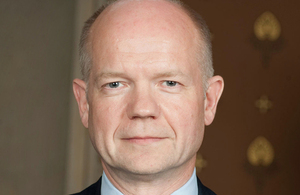
Below is the text of the speech made by William Hague, the then Leader of the Opposition, on 4 July 2000.
Today, I set out the bold agenda of the next Conservative Government to set Britain’s schools free; and I am particularly delighted to do so under the auspices of Politeia which, under Sheila’s energetic leadership, has made such an important contribution to the debate about education in our country.
Conservative education policy could not be more ambitious: quite simply, I want Britain’s children to be the best educated, most motivated and inspired in the world – ready to seize with both hands all the opportunities which the twenty first century and the new global economy have to offer. I believe that is not possible unless our children are taught in schools that are free of bureaucratic state control, and by teachers who enjoy the professional respect and freedom they deserve.
Good education is an end in itself. In a civilised society, every person has the right to be given the chance to stretch their mind, develop their talents and to realise their full human potential. But good education is also a social benefit. It is about creating good citizens, not by teaching classes in citizenship but by educating children in an environment that teaches civility and respect for others. That leads to a more ordered and law-abiding community. And a good education is also an economic necessity. If our country is to prosper in an increasingly global knowledge based economy, and is to be able to afford better health care and transport and other public services, then we have to have a well educated workforce.
For all these reasons, Britain needs a first class schools system. But you do not need me to tell you that, today, we fall a long way short.
For listen, as our Conservative candidate did, to the children in one school in Tottenham. They will tell you about how the drug dealers openly gather around the school gates. They will tell how discipline in the school has collapsed ever since the teachers were forced by the local authority to take back the young thug who threatened his classmates with a knife. Those children in Tottenham know they are being let down by the system, but they are powerless to do anything about it.
Listen, as Theresa May and I did, to the heads of the teaching unions who came to see us last month and told us that the morale of their members has never been so low; or to the teachers I meet in every school I visit who are drowning in a sea of paperwork, Whitehall plans and meaningless targets.
Listen, as I did, to the two dozen chairmen and chief executives of our leading technology companies, who sat around the table with me a few weeks ago and told me bluntly that unless Britain’s education system improves dramatically so that they can recruit youngsters with the right skills and motivation, then we will lose our foothold in the new global economy.
The National Skills Taskforce reported a week ago that 25 per cent of today’s job vacancies cannot be filled because applicants do not have suitable basic skills to cope with the world of work. Improving the skills of our workforce also means improving our university and further education – and that is a whole subject for another day. Today I am focussing solely on schools.
Of course, not every school is letting its pupils down; discipline has not broken down in every playground; not every school leaver is ill-equipped for the new economy. There are countless examples of outstanding personal achievement in our education system, and many tens of thousands of teachers who do a fantastic job.
But individual success stories can seem like points of light in the gloomy scene of a state education system where, in too many areas, bad schools are still tolerated, parents have little choice, standards are stagnant, the lowest common denominator prevails, teacher morale is at an all time low, headteachers are powerless, discipline has broken down, waste is widespread and bureaucracy is rampant, grammar schools are victimised, the tyranny of political correctness has run riot and the whole thing is in the grips of a liberal establishment whose theories of progressive education have, over 40 years of mismanagement and interference, have brought some of our schools to their knees and betrayed too many of our nation’s children.
It is that left-leaning liberal establishment, of which this Government is the living and breathing manifestation, which is failing our children, failing our teachers, failing the mainstream majority who expect to live in a civil and law-abiding society, and failing Britain as we compete to be a leader in the new world economy.
We have to defeat that liberal establishment. The next Conservative Government will have to defeat it. We have to realise that ambition of becoming the best educated nation in the world by transforming one of the most mediocre education systems in Western Europe. For I issue this warning that if we do not, then Britain will decline into an educational and economic backwater and we may never return.
That is why transforming our education system is the greatest challenge the Conservatives face when we return to office, but one which I relish.
Of course, there was another politician not so long ago who said ‘education is my number one passion’, and who repeated it three times just in case anyone had missed the point – ‘education, education, education’.
Three years later the sense of betrayal felt by many millions of parents was summed up by the mother I met in Birmingham, who said to me: ‘Tony Blair keeps harping on about education, education, education; but it’s all been a lot of wind, a lot of hot air and broken promises, and my daughter’s school has not get better it has got worse’.
Tony Blair promised as the very first of his ten contracts with the British people that Labour would ‘increase the share of the national income spent on education’.
But despite all David Blunkett’s gimmicks and re-announcements of extra money, the House of Commons Library confirms that over the five years of its term in office this Labour Government will spend an average of 4.7 per cent of GDP on education – less than the average of 5 per cent of GDP which the previous Conservative Government spent.
Tony Blair promised, as every parent in the country remembers, to cut class sizes and appeared during the election brandishing one of his famous mugs embossed with the pledge of ‘smaller class sizes’.
Since the election, class sizes for all but 5 to 7 year-olds have risen. The leading accountancy firm Chantry Vellacott has estimated that the proportion of school children taught in classes with 31 or more pupils has actually risen by 14 per cent. This is borne out by the experience of head teachers. As the headmaster of Haybridge High School in Worcestershire put it earlier this year: ‘class sizes in my school have definitely increased and it is very frustrating’ (Sunday Telegraph, 9th April 2000).
Labour’s failure to deliver on education has not been lost on parents and teachers, so why is it that some commentators continue to credit the Government with substantial achievements in this field?
The answer seems to be that they still believe David Blunkett is really a ‘Conservative’. The believe that the man who, as Council Leader, presided over the failures of education policy in Sheffield has re-invented himself as the radical Tory itching to put Politeia pamphlets into practice.
Well it is time someone shattered this cosy myth of the education establishment. David Blunkett is not a Conservative in disguise. In fact, many of the things he has done are left-wing, centralising, bossy, interfering, bureaucratic, and gimmick driven. He is a modern municipal socialist presiding over an education system in which the freedom of parents and teachers and schools is being steadily diminished, and standards are stagnant.
Look at how this Government actually runs Britain’s schools.
First, they have greatly restricted the freedom of parents to choose the best education for their children – a freedom that more than anything else drives up standards in the class room.
In the past three years, all the impetus from the Department for Education has been towards re-creating a monolithic comprehensive system in which choice and diversity have no place.
In an act of sheer educational vandalism, Grant Maintained Schools, which took power out of the hands of local bureaucrats and gave it to parents, staff and governors, have been abolished and former GM schools have had their budgets cut by an average of £125,000 per school.
Despite a ‘personal guarantee’ from the Prime Minister before the election that ‘a Labour Government will not close your grammar schools’, open season has been declared on these centres of excellence. David Blunkett has introducing a rigged ballot system and encouraged Labour Party activists all over England to re-ignite the class war. The whole exercise has divided local communities, consumed enormous amounts of energy in the schools under threat, and flown in the face of parental choice.
Labour has also abolished, for no other reason than dogmatic hostility to private education, the Assisted Places Scheme – which gave gifted children from less well-off backgrounds the unique opportunity of studying at some of the best schools in the country.
Now the Government is planning to take its crusade against parental choice and school diversity into the sixth form. The funding formula in the Learning and Skills Bill currently before Parliament could starve them of finance and force many school sixth forms to close. The impact on individual schools could be severe because, without a sixth form, they will find it harder to attract good teachers. It is all part of Labour’s levelling agenda of enforcing monolithic conformity, and denying pupils choice by pushing them into tertiary colleges.
And there is New Labour’s assault on parental choice which flows from the Government’s desperate efforts to meet its early pledge on class sizes.
The bizarre side effects of the Government’s Class Size Reduction Scheme are brought home in the letter which the Shadow Education Secretary Theresa May received a fortnight ago from a headteacher of a primary school in Kent.
He writes of the case of a young boy who lives in the village and is presently in kindergarten with other children his age. This autumn, however, this boy will be the only child who does not go to the local primary school because the Class Size Reduction Scheme will not allow the school to take 31 pupils in the class. Instead he has to leave his local community and travel every day to another primary school in another village. In the words of the headmaster: ‘because of a policy made without reference to our school, the parents of a four year old child will soon have to explain to their son why all his classmates are going to one school and he is going to another’.
This is not the behaviour of a Government that cares about choice and diversity in education.
Forget, too, the spin about the Government giving freedom to schools, for this Education Secretary has tied headteachers and teachers in knots with a string of Whitehall diktats, meaningless targets and paperwork.
Only last week I received a letter from a school which is being forced to lose a teacher this year because of budget cuts. At the same time, this school has been given a capital grant of £98,000 by the DfEE to up-grade all its windows, despite advice from the local glaziers that there is nothing wrong with the windows and that they will last another 20 years at least. The school would much rather spend the £98,000 on retaining the teacher, but Whitehall rules say it cannot.
Thanks to New Labour’s obsession with gimmicks and pointless plans and irrelevant target setting, this kind of interference is now commonplace throughout our education system. We have had 17 plans including the education development plan, the early years development plan, the ICT plan, the community plan, the school organisation plan, the admissions plan, the class sizes plan, the new deal plan, the asset plans, the post inspection plan, and, my favourite, the education plan of plans.
These plans are designed to meet targets. And we have had the target for truancy, the target for school leavers, the target for exclusions, the target for GCSE grades, the target for numeracy and literacy, and, of course, the target for the number of 16 year olds going to adventure camps every summer.
These plans and targets are the extending tentacles of central government, as it seeks to control and regulate and interfere in everything going on in our education system, and destroy all freedom of initiative in our schools. This Government is turning headteachers into mere functionaries of the central state, and teachers into clerks filling in forms.
As the Government’s own Better Regulation Taskforce investigation into the teaching profession reported in April this year: ‘there is a widespread and deeply held view that increased red tape is acting as a distraction from the drive to raise standards … Over-elaborate processes are being used to achieve straight-forward objectives, leading to unnecessary duplication and confusing excessive lines of accountability’.
According to one survey, schools have received 685 publications and 377 regulations from the DfEE since the election. Add together the various forms, and you have the equivalent of over 17 million lessons a year in teaching time wasted on filling in paperwork. As the headteacher of one secondary school in Hampshire wrote recently to Theresa May: ‘we have received 477 documents from the LEA since 1st April 1999 and only three were relevant and the rest is administrative tripe’.
That will only get worse with the Government’s so-called Performance Related Pay Scheme. It must be a good idea to reward good teachers with more pay, but any proper performance pay related scheme would award bonuses on a year by year basis rather than as a one off payment for all time. As it is, the main feature of the Government’s scheme seems to be the enormous amount of paperwork involved. Some teachers have told me that it is taking them up to twenty hours to fill in the form. Headteachers then have to spend a further two hours on each one of their teacher’s forms, which in large school means weeks of paperwork. The process does not end there. The Government is spending £25 million on an army of hired assessors to go through every single form all over again. Given the failings of the scheme itself, the Government might have spent the money better as a pay-rise to all teachers and save all those wasted hours of form filling.
All this bureaucracy and Government interference not only costs the taxpayer large sums of money, it also affects standards in the classroom. For teachers raise standards by teaching well, not by filling in forms. Headteachers raise standards by managing and leading their schools well, not by following the latest Whitehall plan. Parents raise standards in schools by demanding good teaching from teachers and choosing the best school for their children, not by being forced to choose between identikit schools that cannot respond to their needs.
The single most damaging act of this Government on standards in the classroom has been to restrict the freedom of schools to maintain discipline. We all know how one disruptive child can wreck the education of an entire class. We also know that learning about order and respect for the law at school is vital to creating a law abiding society.
But all this is lost on the Government, which has set schools the completely arbitrary and unacceptable target of cutting the number of expulsions or – to use the proper jargon – the number of permanent exclusions by a third over the next two years. And to make sure their targets are met, they are fining schools up to £6,000 for every disruptive pupil excluded beyond the targets set by civil servants in Whitehall.
If you want to know what that means in practice, listen to story of two London secondary schools which two months ago were forced to re-admit pupils they had permanently excluded for wielding knives and conducting gang-like vendettas. ‘Now’, say the headteachers, ‘all the other pupils are desperately frightened’ and the education of hundreds of children has been jeopardised for the sake of a tiny minority.
Or listen to the story of Angeles Walford, a head-teacher seconded to a failing school, who said recently: ‘I excluded a boy who hit a teacher but was forced to give him a second chance. He came back and hit another teacher’.
It is symptomatic of an Education Secretary in thrall to a liberal consensus that says you have to put the interests of the unruly minority over and above the rights of the mainstream majority. In this case, the rights of a few disruptive pupils are taking precedence over the rights of the many children to an ordered classroom in which they can learn.
The same attitude expresses itself in the Government’s approach to school uniforms. When David Blunkett was in charge of Sheffield’s schools, he waged an obsessive battle against uniforms. Now he has escalated the war to the national stage. A recent DfEE Circular on Pupil Inclusion prevents headteachers enforcing the wearing of school uniforms. It says pupils may not be excluded for ‘breaching school uniform policy including hairstyle and wearing jewellery’, because heaven forbid any headteacher might try to ensure that the children at their school are tidy and well presented.
What all this amounts too, of course, is the slow creep of political correctness through our schools.
In recent months, a number of stories of political correctness in the classroom have caught the headlines. We have had the Prime Minister’s drive to abolish Section 28 and Margaret Hodge’s barmy plans to abolish musical chairs.
But the real damage to our children’s education has been going on for decades, caused by a liberal consensus and its progressive teaching methods. The fashions may change, and the jargon is different, but the assault on more traditional teaching methods continue.
For example, David Blunkett already insists that school children attend special ‘citizenship’ classes. Last week he announced at the C’Mon Everybody Citizenship Conference that he was going to spend a further £300,000 on this pet project.
Of course, we all want children to learn to think for themselves, and we all want them to become good citizens. But good citizenship is not something you learn from a textbook in a citizenship class; good citizenship is something you develop from being in an ordered and civil environment, in which people understand their duties and respect the rights of others.
Now we are told that the Education Secretary is planning to put so-called ‘thinking skills’ into the National Curriculum, with ‘thinking classrooms’ in which children become ‘active creators of their knowledge’. Children learn how to think by studying science or history or literature, not by going to thinking classes.
Citizenship classes and thinking classrooms are part of the world of an out of touch elite in which all must be treated the same, everyone must sink to the lowest common denominator, the best must not be allowed to succeed, the worst must not be allowed to fail, everyone passes, nothing must be too difficult or too challenging, no one must be told to try harder.
It is this patronising attitude that has led to failing schools, poor standards and children who cannot even spell the word ‘Oxford’ let alone aspire to go there. It is an attitude that, whatever the New Labour rhetoric, has pervaded so much which David Blunkett and Tony Blair have done with Britain’s education system in the last three years.
The previous Conservative Government began to turn the tide with grant maintained schools, city technology colleges, the National Curriculum and regular schools inspections. But we did not go far enough and we were hampered in our efforts by left-wing local education authorities. Sadly, some of the improvements we did make have been dismantled by the present regime.
The next Conservative Government will not just turn the tide – we will defeat once and for all the attitudes that are holding back our education system and we will set Britain’s schools free.
Three simple but radical principles will underpin our policy.
The first principle of Conservative education policy is that every school will be a Free School, free of bureaucratic and political control.
All schools will receive all their funding directly, rather than via a local education authority. Headteachers and governors will then be free to manage their own budgets, free to employ their own staff, free to set their teachers’ pay, free to determine their own admissions policy, free to run their own school transport, free to manage their own opening hours and term times, and free to set and enforce their own standards of discipline. Small schools will be able to get together, if they wish, and pool their management.
LEAs as we know them will cease to exist, although the local council will still have a role in certain areas of education – which we expect will include educational welfare, special needs statementing, and discharging the ultimate responsibility of seeing that every child gets an education.
The second principle is that every school will be accountable to its parents.
Parents will be free to apply to whichever school can best bring out the potential of their child. Government money will then follow the pupil, putting financial power behind parental accountability. There will also be some basic safeguards backing up parental accountability. We will give all parents a Guarantee that provides a means of changing the management of a bad school. We will retain the National Curriculum, albeit in a more flexible form. We will retain the literacy and numeracy hours, which owe their origins to the previous Conservative Government. We will give Ofsted greater powers of inspection, and publish expanded, value added league tables. And we will reform teacher training – an issue which I will leave for another speech.
The third principle of Conservative education policy is diversity, for no one will have a monopoly on the provision of education.
We will allow good schools to expand. We will allow new schools to be created, including new grammar schools and specialist schools. There will be state run and state owned schools, but there will also be privately run state owned schools and privately run privately owned schools all operating within the overall taxpayer funded education system. We will ensure that children with special education needs get the right help, and also introduce a form of the assisted places scheme for particularly gifted children. We will set out our policies for both special educational needs and gifted children in greater detail in the future.
These three principles of freedom, accountability and diversity are the pillars upon which we will build an education system fit for twenty first century Britain.
But school structures and funding mechanisms are the dry bones of the policy. What will Free Schools actually mean for the teacher in the classroom and the parent who just wants their child to get a good education.
What do Free Schools mean for the school child?
They mean the right to being taught to a standard that gets the very best out of them, and develops their full potential.
In the current comprehensive system, far too many pupils are still taught in mixed ability classes. The result is that less able pupils struggle to keep up, while more able pupils are not stretched. In Free Schools the headteacher and governors will be totally free to stream or set classes according to ability, so that every child gets the appropriate level of teaching. They will be free to keep their sixth forms, which are so important to attracting the best teachers. And they will also be free to set their own school timetables and term times. It will be possible to find time in the week for extra classes for pupils who may need more help, and for pupils who can go much further in their learning. Under a Conservative Government, all schools will be Free Schools, so all schools will have the freedom to innovate in this way.
One of the few restrictions on a school’s freedom will be the National Curriculum. The National Curriculum was introduced because some schools were failing to teach their pupils even the basics of a standard education. In our judgement, that safeguard needs to remain in place longer – at least until the Free Schools system is up and running, and delivering higher standards.
However, I have listened to many teachers who have told me that the National Curriculum is far too prescriptive – and I agree. We will therefore simplify the Curriculum, and we will reduce the Curriculum requirements of consistently high achieving schools, who have demonstrated that they can be trusted to deliver a good rounded education.
It is also crazy that pupils who are struggling to read, write and add up, are forced by the Curriculum to move on to other lessons. We will allow schools to exempt children who have not yet reached basic standards of literacy and numeracy from National Curriculum requirements, at least until they have caught up. Children who cannot yet understand English should not be forced to try to learn French. And we will give post 14 year olds, who feel that academic subjects offers them little, vocational curriculum options that train them for the world of work.
We have also listened to Ofsted and accept their view that Literacy and Numeracy Hours in primary schools are proving a valuable tool in ensuring that for at least two hours a day, young children are taught the basics. The Literacy and Numeracy Hours owe their origins to the work of the last Conservative Government, were developed by the present Government, and I can tell you that the next Conservative Government will keep them.
Free Schools give all school children the right to the best education suitable for their needs and their ability. But that right is meaningless if they cannot be taught in disciplined classrooms, where the education of the mainstream majority is given precedence over the disruptive behaviour of a few.
I have already spoken about how this Government has undermined school discipline, and tied the hands of teachers, with its arbitrary exclusion targets and financial penalties.
The next Conservative Government will abolish artificial exclusion targets and the stiff financial penalties. Good school discipline will no longer mean a heavy blow to school budgets. We will give headteachers and school governors the complete freedom, within the law, to set the standards and rules of discipline in their classrooms.
There is absolutely no point excluding disruptive children from schools if you are unable to provide them with support. Or else, as we all know to our cost, today’s child terrorising a class room becomes tomorrow’s youth criminal terrorising a whole community.
So we will draw on the pioneering work of the Zacchaeus Centre in Birmingham that has achieved remarkable results with difficult and disruptive children. We will establish a network of centres – which we shall call Progress Centres – that will provide everything from a one week’s special teaching for a child at risk of being excluded to full-time education for those pupils who are permanently excluded.
These Progress Centres could be financed either by schools buying a course for a disruptive pupil; or, in the case of permanent exclusions, the Centre being paid the funds that would otherwise have gone to the school. We will also abolish the Government’s ineffective and gimmicky on site school ‘sin bins’ and use part of the money saved to help fund the work of the Progress Centres.
When I announced these policies last month I received the near universal support of teaching unions whose members are fed up with having their authority undermined and their judgement second-guessed. Nigel de Gruchy of the NASUWT said Conservative policies on school discipline were ‘spot on’.
Creating a strong school ethos in which children learn about civility and respect for others does not simply require good school discipline. A school ethos comes from pride in the school, a sense of team spirit, a bond between the teaching staff and the student body, and mutual respect between teachers and parents. There are many ways to bring that about – voluntary service in the community, a particular religious affiliation, interesting school trips, competitions against other schools, a healthy dialogue between teachers and pupils. Competitive sports are clearly very important in this, as are organised sports in primary schools, and we will be setting out our policy to encourage these over the coming months.
A school uniform can also be a vital component of a strong school ethos. The liberal establishment have waged a long war against school uniforms, the latest salvo in which is the Government’s new rule that headteachers cannot exclude pupils who refuse to wear a uniform. The excuse they have used is that parents do not want to pay for a uniform. They clearly have never actually listened to any real parents.
In my experience of speaking to many hundreds of parents, they want their children to go to school looking smart and wearing a uniform. As one parent in Maidstone said to me, ‘school uniforms are a great leveller. They make children respect each other’. The alternative, where children compete with each other to wear the latest brand fashions, is actually more expensive.
The next Conservative Government will give schools the complete freedom to require their pupils to wear a school uniform, and give them the powers to ensure the uniform is worn.
So Free Schools mean giving school children the right to a good education in a disciplined environment. What do they mean for parents?
Above all, Free Schools mean accountability. Every parent wants his or her child to have a good education. Yet every morning, tens of thousands of parents wave goodbye to their children knowing that those children are going to a bad school. And they also know that there is absolutely nothing that they can do about it, because power in our education system rests with local education authorities and Whitehall bureaucrats. No wonder the parents I meet are angry and upset and bitter.
The next Conservative Government will put the power in our education system where it belongs – in the hands of parents, heads and governors. We will do it by giving parents the freedom to apply to any school they feel is best for their child, and then make the money follow the child.
That means schools that offer a good education and a good ethos will attract more pupils and more funding, and schools that offer nothing but bad teaching, low standards and disorder will attract fewer pupils and less funding. In other words, there will be a real incentive for schools to improve and a parent-driven mechanism for forcing the worst schools to close. This does not mean abandoning children in bad schools. Far from it. We will not allow bad schools to continue to fail their children.
We will also give parents a real choice of different schools to suit the ability and talents of their child. Under a future Conservative Government, a great diversity of different schools will flourish.
We will abolish the surplus places rule that prevents good schools expanding. Free Schools will be free to determine their own admissions policies, so that some of them can specialise in areas like art or science or sport or information technology. Some will wish to select 20 or 30 or 40 per cent of their intake, others will wish to be wholly selective. That will mean that new grammar schools can be created, reversing a 30 year policy which has done more than anything else to lower standards in our state education system.
All the evidence suggests that even where all the schools in an area are free to determine their own admissions policy, no pupil falls through the net. For example, in Bromley, where all but one of the secondary schools was Grant Maintained, the schools regularly got together to make sure every child had a place.
Just to make sure, we will give to local councils the ultimate responsibility of ensuring that every child in their area receives an education.
We will also end the monopoly on education provision that has created such a barrier between the state and independent sectors. When David Blunkett took office, he liked to talk a lot about bringing private firms in to run schools and creating education action zones. Three years later, education action zones have run into the sand. Only one school has been contracted to a private company, and that was only because it was in a Conservative-run authority.
We will sweep away the barriers by allowing independent foundations, be they companies or charities or religious groups, to run existing state schools – all under the umbrella of a taxpayer funded education system. We will also allow these independent foundations to found and build completely new schools, which will also receive taxpayer funding on an equal basis to existing schools. These schools will be called Partner Schools, and, to coin a phrase, they will be in the state education system but not run by the state education system.
I believe this could be the most exciting and far-reaching development in state education since Rab Butler’s 1944 Act. Of course, there are those who will be enraged by this. They will hate the idea that some schools might do better than others. They will loathe the idea that anyone but the state might run a school. They will complain bitterly about replacing Whitehall Knows Best with Parents Know Best.
So they will kick and scream, and claim that what Free Schools really means is that the Tories are abandoning sink schools in bad areas, and all that we are interested in is good schools in good areas.
These people have obviously never visited schools like Archbishop Tenison’s School in a deprived area of inner city South London, as I did a month ago. A former grammar school, forced to go comprehensive, losing its sixth form, managed by Lambeth’s loony left, Archbishop Tenison’s was a monument to the absolute failure of our education system. That was until along came the freedom of grant maintained status, and with it headmaster Brian Jones. Now the school, which draws over 80 per cent of its intake from the Afro-Caribbean population, is one of the 29 most improved schools in the country, sends many of its pupils on to university, including this year to Cambridge.
Give parents real power in our education system, and set schools free, and it is schools like Archbishop Tenison’s that will thrive, regardless of where they are located.
Sometimes, however, it is not enough to allow parents simply to vote with their feet. In some areas and for some parents, the choice of schools is limited. That is why we will also introduce the Parents’ Guarantee. Where parents feel their school is not delivering an adequate education, we will give them the right to call for a special Ofsted inspection. Where the inspection confirms the judgement of the parents, then a new management will be sought for the school.
If parents are to make informed choices about which school is best for their child, then they need access to high quality, independent information about the performance of different schools. National league tables and an independent schools inspection service were one of the most important achievements of the Conservative years. We propose to go even further.
Alongside the raw data of school inspections, we will publish value-added league tables that enable parents to see clearly what progress children are making over a period of time in a particular school. That means knowing the point from which the children start, which is why we will publish for all schools the reading and maths results of Key Stage One – information which the Government currently keep secret.
We will also beef up the powers of Ofsted. Chris Woodhead, Her Majesty’s Chief Inspector of Schools, has done more than anyone else in Britain to drive up standards in our classrooms and challenge our failing schools system. I do not just praise his work, I propose to build on it.
At present, schools know long in advance when the Ofsted inspectors are coming. The result, as one parent in Bury told me, is that ‘everyone in the schools gets ready for it. For the week the inspectors are there, it all runs to clockwork. But as soon they’re gone, it’s business as usual’. That may be unfair on some schools, where the preparation for a visit by Ofsted can lead to a permanent improvement; but there is more than a ring of truth to it. So under a Conservative Education Secretary, Ofsted inspections will take place with little or no notice. But we will also reduce the level of surveillance of schools with a consistently high record of achievement, so that the inspectors can focus their work on schools with real problems.
I have talked of the parents and the school children. But what does Free Schools mean for teachers, who today find themselves under more and more pressure and feel valued less and less?
Free Schools means freedom for teachers. It means slashing away all the bureaucracy and paperwork and red tape that stops teachers doing their job. It means trusting headteachers to lead their schools to the best of their ability and judgement, and let teachers teach.
Politicians are always promising to cut red tape, without ever getting specific. So that you know I mean business, let’s gets down to the specifics.
We will abolish the early years development plan, the area educational development plan, the ICT plan, the school organisation plan, the admissions plan, the class sizes plan, the new deal plan, the asset plans, and, yes, the education plan of plans. And we will abolish all those Government targets on exclusion and university entry and adventure camps and so on.
We will get Government off the back of teachers. All those hundreds of hours wasted filling in pointless forms will disappear, so that teachers can spend more time with their pupils – in other words, doing what they are paid to do. By trusting teachers to teach, and headteachers to run their schools, I believe we will dramatically raise the morale of our teachers and the status of the teaching profession in our society.
Let me finally turn to the gritty question of money. What does Free Schools mean for the funding of education?
Teacher and Parents have all got used now to this Government’s trick of announcing with a fanfare great telephone sums of money for our schools, and then, on closer examination, for those sums to turn out to be a tiny fraction of what was implied. And they have got used to Education Ministers re-announcing the same sums again and again. As no less an authority than the Guardian put it: ‘the truth is that Mr Blunkett’s £19 billion is largely conjured out of thin air by trickery, double counting, treble counting, and a steady stream of fundamentally misleading public statements’.
The big difference between this Government and the next Conservative Government will be the way that money gets to schools. At present, well over £3 billion of the total schools budget is kept back by LEAs to spend, as they see fit, on their own activities and bureaucracy. A further £1 billion is kept back by the DfEE to spend on gimmicky grant schemes and pointless bureaucracy such as the near 300 person strong Standards and Effectiveness Unit.
Under the next Conservative Government, these DfEE grant schemes would disappear and LEAs as we know them would cease to exist – the functions which we expect local authorities will retain financial responsibility for are statementing and special support for children with Special Education Needs, and Education Welfare services.
All the money will go direct to the schools. Schools will be paid on a per pupil basis. And because £4 billion will no longer be kept back by Whitehall and local councils, every school in the country will get on average £540 more per pupil to spend as best they see fit. Of course, schools will have extra responsibilities such as organising school transport.
But it is still £540 more per pupil per school – a real cash boost for headteachers to spend as they wish in the education frontline. And the most important thing is that a pound spent on schools will be a pound spent in schools.
Free Schools mean higher standards for pupils, better discipline in our classrooms, real choice and real accountability for parents, a great expansion in the diversity of education provision, freedom for teachers to teach, and £540 extra per pupil going direct to the school. It means creating the high quality education service that Britain deserves, building an architecture of excellence on the foundations of freedom, accountability and diversity.
I do not pretend that all this will happen overnight. There will be an important transition period, and we will consult widely with parents and teachers and governors and local councillors on how that is best carried out.
But what I have set out today are the principles and practical applications of a radical Conservative education policy that will transform our schools system, put power in the hands of parents and governors, and give freedom to our teachers.
The Government talked of ‘education, education, education’ and has delivered nothing but failure, failure, failure. Where they have failed, we will succeed. The watchwords of the next Conservative Government will be: freedom, standards, discipline.
And our ambition is quite simple: to set children free to realise their full potential; set parents free to choose for their child a better education than they themselves received; set every teacher free to teach; set Britain free so that with skills, the civility and the aspiration, we can be the world leader in the new global economy.