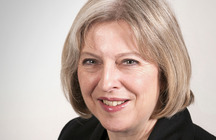
Below is the text of the speech made by Theresa May, the Prime Minister, on 22 September 2017 in Florence, Italy.
It’s good to be here in this great city of Florence today at a critical time in the evolution of the relationship between the United Kingdom and the European Union.
It was here, more than anywhere else, that the Renaissance began – a period of history that inspired centuries of creativity and critical thought across our continent and which in many ways defined what it meant to be European.
A period of history whose example shaped the modern world. A period of history that teaches us that when we come together in a spirit of ambition and innovation, we have it within ourselves to do great things.
That shows us that if we open our minds to new thinking and new possibilities, we can forge a better, brighter future for all our peoples.
And that is what I want to focus on today. For we are moving through a new and critical period in the history of the United Kingdom’s relationship with the European Union.
The British people have decided to leave the EU; and to be a global, free-trading nation, able to chart our own way in the world.
For many, this is an exciting time, full of promise; for others it is a worrying one.
I look ahead with optimism, believing that if we use this moment to change not just our relationship with Europe, but also the way we do things at home, this will be a defining moment in the history of our nation.
And it is an exciting time for many in Europe too. The European Union is beginning a new chapter in the story of its development. Just last week, President Juncker set out his ambitions for the future of the European Union.
There is a vibrant debate going on about the shape of the EU’s institutions and the direction of the Union in the years ahead. We don’t want to stand in the way of that.
Indeed, we want to be your strongest friend and partner as the EU, and the UK thrive side by side.
Shared challenges
And that partnership is important. For as we look ahead, we see shared challenges and opportunities in common.
Here in Italy today, our two countries are working together to tackle some of the greatest challenges of our time; challenges where all too often geography has put Italy on the frontline.
As I speak, Britain’s Royal Navy, National Crime Agency and Border Force are working alongside their Italian partners to save lives in the Mediterranean and crack down on the evil traffickers who are exploiting desperate men, women and children who seek a better life.
Our two countries are also working together in the fight against terrorism – from our positions at the forefront of the international coalition against Daesh to our work to disrupt the networks terrorist groups use to finance their operations and recruit to their ranks.
And earlier this week, I was delighted that Prime Minister Gentiloni was able to join President Macron and myself in convening the first ever UN summit of government and industry to move further and faster in preventing terrorist use of the Internet.
Mass migration and terrorism are but two examples of the challenges to our shared European interests and values that we can only solve in partnership.
The weakening growth of global trade; the loss of popular support for the forces of liberalism and free trade that is driving moves towards protectionism; the threat of climate change depleting and degrading the planet we leave for future generations; and most recently, the outrageous proliferation of nuclear weapons by North Korea with a threat to use them.
Here on our own continent, we see territorial aggression to the east; and from the South threats from instability and civil war; terrorism, crime and other challenges which respect no borders.
The only way for us to respond to this vast array of challenges is for likeminded nations and peoples to come together and defend the international order that we have worked so hard to create – and the values of liberty, democracy, human rights and the rule of law by which we stand.
Britain has always – and will always – stand with its friends and allies in defence of these values.
Our decision to leave the European Union is in no way a repudiation of this longstanding commitment. We may be leaving the European Union, but we are not leaving Europe.
Our resolve to draw on the full weight of our military, intelligence, diplomatic and development resources to lead international action, with our partners, on the issues that affect the security and prosperity of our peoples is unchanged.
Our commitment to the defence – and indeed the advance – of our shared values is undimmed.
Our determination to defend the stability, security and prosperity of our European neighbours and friends remains steadfast.
The decision of the British people
And we will do all this as a sovereign nation in which the British people are in control.
Their decision to leave the institution of the European Union was an expression of that desire – a statement about how they want their democracy to work.
They want more direct control of decisions that affect their daily lives; and that means those decisions being made in Britain by people directly accountable to them.
The strength of feeling that the British people have about this need for control and the direct accountability of their politicians is one reason why, throughout its membership, the United Kingdom has never totally felt at home being in the European Union.
And perhaps because of our history and geography, the European Union never felt to us like an integral part of our national story in the way it does to so many elsewhere in Europe.
It is a matter of choices. The profound pooling of sovereignty that is a crucial feature of the European Union permits unprecedentedly deep cooperation, which brings benefits.
But it also means that when countries are in the minority they must sometimes accept decisions they do not want, even affecting domestic matters with no market implications beyond their borders. And when such decisions are taken, they can be very hard to change.
So the British electorate made a choice. They chose the power of domestic democratic control over pooling that control, strengthening the role of the UK Parliament and the devolved Scottish Parliament, Welsh and Northern Ireland Assemblies in deciding our laws.
That is our choice. It does not mean we are no longer a proud member of the family of European nations. And it does not mean we are turning our back on Europe; or worse that we do not wish the EU to succeed. The success of the EU is profoundly in our national interest and that of the wider world.
But having made this choice, the question now is whether we – the leaders of Britain, and of the EU’s Member States and institutions – can demonstrate that creativity, that innovation, that ambition that we need to shape a new partnership to the benefit of all our people.
I believe we must. And I believe we can.
For while the UK’s departure from the EU is inevitably a difficult process, it is in all of our interests for our negotiations to succeed. If we were to fail, or be divided, the only beneficiaries would be those who reject our values and oppose our interests.
So I believe we share a profound sense of responsibility to make this change work smoothly and sensibly, not just for people today but for the next generation who will inherit the world we leave them.
The eyes of the world are on us, but if we can be imaginative and creative about the way we establish this new relationship, if we can proceed on the basis of trust in each other, I believe we can be optimistic about the future we can build for the United Kingdom and for the European Union.
Negotiations
In my speech at Lancaster House earlier this year, I set out the UK’s negotiating objectives.
Those still stand today. Since that speech and the triggering of Article 50 in March, the UK has published 14 papers to address the current issues in the talks and set out the building blocks of the relationship we would like to see with the EU, both as we leave, and into the future.
We have now conducted three rounds of negotiations. And while, at times, these negotiations have been tough, it is clear that, thanks to the professionalism and diligence of David Davis and Michel Barnier, we have made concrete progress on many important issues.
For example, we have recognised from the outset there are unique issues to consider when it comes to Northern Ireland.
The UK government, the Irish government and the EU as a whole have been clear that through the process of our withdrawal we will protect progress made in Northern Ireland over recent years – and the lives and livelihoods that depend on this progress.
As part of this, we and the EU have committed to protecting the Belfast Agreement and the Common Travel Area and, looking ahead, we have both stated explicitly that we will not accept any physical infrastructure at the border.
We owe it to the people of Northern Ireland – and indeed to everyone on the island of Ireland – to see through these commitments.
We have also made significant progress on how we look after European nationals living in the UK and British nationals living in the 27 Member States of the EU.
I know this whole process has been a cause of great worry and anxiety for them and their loved ones.
But I want to repeat to the 600,000 Italians in the UK – and indeed to all EU citizens who have made their lives in our country – that we want you to stay; we value you; and we thank you for your contribution to our national life – and it has been, and remains, one of my first goals in this negotiation to ensure that you can carry on living your lives as before.
I am clear that the guarantee I am giving on your rights is real. And I doubt anyone with real experience of the UK would doubt the independence of our courts or of the rigour with which they will uphold people’s legal rights.
But I know there are concerns that over time the rights of EU citizens in the UK and UK citizens overseas will diverge. I want to incorporate our agreement fully into UK law and make sure the UK courts can refer directly to it.
Where there is uncertainty around underlying EU law, I want the UK courts to be able to take into account the judgments of the European Court of Justice with a view to ensuring consistent interpretation. On this basis, I hope our teams can reach firm agreement quickly.
Shared future
At the moment, the negotiations are focused on the arrangements for the UK’s withdrawal from the EU. But we need to move on to talk about our future relationship.
Of course, we recognise that we can’t leave the EU and have everything stay the same. Life for us will be different.
But what we do want – and what we hope that you, our European friends, want too – is to stay as partners who carry on working together for our mutual benefit.
In short, we want to work hand in hand with the European Union, rather than as part of the European Union.
That is why in my speech at Lancaster House I said that the United Kingdom would seek to secure a new, deep and special partnership with the European Union.
And this should span both a new economic relationship and a new relationship on security.
So let me set out what each of these relationships could look like – before turning to the question of how we get there.
Economic partnership
Let me start with the economic partnership.
The United Kingdom is leaving the European Union. We will no longer be members of its single market or its customs union. For we understand that the single market’s four freedoms are indivisible for our European friends.
We recognise that the single market is built on a balance of rights and obligations. And we do not pretend that you can have all the benefits of membership of the single market without its obligations.
So our task is to find a new framework that allows for a close economic partnership but holds those rights and obligations in a new and different balance.
But as we work out together how to do so, we do not start with a blank sheet of paper, like other external partners negotiating a free trade deal from scratch have done.
In fact, we start from an unprecedented position. For we have the same rules and regulations as the EU – and our EU Withdrawal Bill will ensure they are carried over into our domestic law at the moment we leave the EU.
So the question for us now in building a new economic partnership is not how we bring our rules and regulations closer together, but what we do when one of us wants to make changes.
One way of approaching this question is to put forward a stark and unimaginative choice between two models: either something based on European Economic Area membership; or a traditional Free Trade Agreement, such as that the EU has recently negotiated with Canada.
I don’t believe either of these options would be best for the UK or best for the European Union.
European Economic Area membership would mean the UK having to adopt at home – automatically and in their entirety – new EU rules. Rules over which, in future, we will have little influence and no vote.
Such a loss of democratic control could not work for the British people. I fear it would inevitably lead to friction and then a damaging re-opening of the nature of our relationship in the near future: the very last thing that anyone on either side of the Channel wants.
As for a Canadian style free trade agreement, we should recognise that this is the most advanced free trade agreement the EU has yet concluded and a breakthrough in trade between Canada and the EU.
But compared with what exists between Britain and the EU today, it would nevertheless represent such a restriction on our mutual market access that it would benefit neither of our economies.
Not only that, it would start from the false premise that there is no pre-existing regulatory relationship between us. And precedent suggests that it could take years to negotiate.
We can do so much better than this.
As I said at Lancaster House, let us not seek merely to adopt a model already enjoyed by other countries. Instead let us be creative as well as practical in designing an ambitious economic partnership which respects the freedoms and principles of the EU, and the wishes of the British people.
I believe there are good reasons for this level of optimism and ambition.
First of all, the UK is the EU’s largest trading partner, one of the largest economies in the world, and a market of considerable importance for many businesses and jobs across the continent. And the EU is our largest trading partner, so it is in all our interests to find a creative solution.
The European Union has shown in the past that creative arrangements can be agreed in other areas. For example, it has developed a diverse array of arrangements with neighbouring countries outside the EU, both in economic relations and in justice and home affairs.
Furthermore, we share the same set of fundamental beliefs; a belief in free trade, rigorous and fair competition, strong consumer rights, and that trying to beat other countries’ industries by unfairly subsidising one’s own is a serious mistake.
So there is no need to impose tariffs where we have none now, and I don’t think anyone sensible is contemplating this.
And as we have set out in a future partnership paper, when it comes to trade in goods, we will do everything we can to avoid friction at the border. But of course the regulatory issues are crucial.
We share a commitment to high regulatory standards.
People in Britain do not want shoddy goods, shoddy services, a poor environment or exploitative working practices and I can never imagine them thinking those things to be acceptable.
The government I lead is committed not only to protecting high standards, but strengthening them.
So I am optimistic about what we can achieve by finding a creative solution to a new economic relationship that can support prosperity for all our peoples.
Now in any trading relationship, both sides have to agree on a set of rules which govern how each side behaves.
So we will need to discuss with our European partners new ways of managing our interdependence and our differences, in the context of our shared values.
There will be areas of policy and regulation which are outside the scope of our trade and economic relations where this should be straightforward.
There will be areas which do affect our economic relations where we and our European friends may have different goals; or where we share the same goals but want to achieve them through different means.
And there will be areas where we want to achieve the same goals in the same ways, because it makes sense for our economies.
And because rights and obligations must be held in balance, the decisions we both take will have consequences for the UK’s access to European markets and vice versa.
To make this partnership work, because disagreements inevitably arise, we will need a strong and appropriate dispute resolution mechanism.
It is, of course, vital that any agreement reached – its specific terms and the principles on which it is based – are interpreted in the same way by the European Union and the United Kingdom and we want to discuss how we do that.
This could not mean the European Court of Justice – or indeed UK courts – being the arbiter of disputes about the implementation of the agreement between the UK and the EU however.
It wouldn’t be right for one party’s court to have jurisdiction over the other. But I am confident we can find an appropriate mechanism for resolving disputes.
So this new economic partnership, would be comprehensive and ambitious. It would be underpinned by high standards, and a practical approach to regulation that enables us to continue to work together in bringing shared prosperity to our peoples for generations to come.
Security relationship
Let me turn to the new security relationship that we want to see.
To keep our people safe and to secure our values and interests, I believe it is essential that, although the UK is leaving the EU, the quality of our cooperation on security is maintained.
We believe we should be as open-minded as possible about how we continue to work together on what can be life and death matters.
Our security co-operation is not just vital because our people face the same threats, but also because we share a deep, historic belief in the same values – the values of peace, democracy, human rights and the rule of law.
Of course, there is no pre-existing model for co-operation between the EU and external partners which replicates the full scale and depth of the collaboration that currently exists between the EU and the UK on security, law enforcement and criminal justice.
But as the threats we face evolve faster than ever, I believe it is vital that we work together to design new, dynamic arrangements that go beyond the existing arrangements that the EU has in this area – and draw on the legal models the EU has previously used to structure co-operation with external partners in other fields such as trade.
So we are proposing a bold new strategic agreement that provides a comprehensive framework for future security, law enforcement and criminal justice co-operation: a treaty between the UK and the EU.
This would complement the extensive and mature bi-lateral relationships that we already have with European friends to promote our common security.
Our ambition would be to build a model that is underpinned by our shared principles, including high standards of data protection and human rights.
It would be kept sufficiently versatile and dynamic to respond to the ever-evolving threats that we face. And it would create an ongoing dialogue in which law enforcement and criminal justice priorities can be shared and – where appropriate – tackled jointly.
We are also proposing a far reaching partnership on how we protect Europe together from the threats we face in the world today; how we work together to promote our shared values and interests abroad; whether security, spreading the rule of law, dealing with emerging threats, handling the migration crisis or helping countries out of poverty.
The United Kingdom has outstanding capabilities. We have the biggest defence budget in Europe, and one of the largest development budgets in the world. We have a far-reaching diplomatic network, and world class security, intelligence and law enforcement services.
So what we are offering will be unprecedented in its breadth, taking in cooperation on diplomacy, defence and security, and development.
And it will be unprecedented in its depth, in terms of the degree of engagement that we would aim to deliver.
It is our ambition to work as closely as possible together with the EU, protecting our people, promoting our values and ensuring the future security of our continent.
The United Kingdom is unconditionally committed to maintaining Europe’s security. And the UK will continue to offer aid and assistance to EU member states that are the victims of armed aggression, terrorism and natural or manmade disasters.
Taken as a whole, this bold new security partnership will not only reflect our history and the practical benefits of co-operation in tackling shared threats, but also demonstrate the UK’s genuine commitment to promoting our shared values across the world and to maintaining a secure and prosperous Europe.
Implementation
That is the partnership I want Britain and the European Union to have in the future.
None of its goals should be controversial. Everything I have said is about creating a long-term relationship through which the nations of the European Union and the United Kingdom can work together for the mutual benefit of all our people.
If we adopt this vision of a deep and special partnership, the question is then how we get there: how we build a bridge from where we are now to where we want to be.
The United Kingdom will cease to be a member of the European Union on 29th March 2019.
We will no longer sit at the European Council table or in the Council of Ministers, and we will no longer have Members of the European Parliament.
Our relations with countries outside the EU can be developed in new ways, including through our own trade negotiations, because we will no longer be an EU country, and we will no longer directly benefit from the EU’s future trade negotiations.
But the fact is that, at that point, neither the UK – nor the EU and its Members States – will be in a position to implement smoothly many of the detailed arrangements that will underpin this new relationship we seek.
Neither is the European Union legally able to conclude an agreement with the UK as an external partner while it is itself still part of the European Union.
And such an agreement on the future partnership will require the appropriate legal ratification, which would take time.
It is also the case that people and businesses – both in the UK and in the EU – would benefit from a period to adjust to the new arrangements in a smooth and orderly way.
As I said in my speech at Lancaster House a period of implementation would be in our mutual interest. That is why I am proposing that there should be such a period after the UK leaves the EU.
Clearly people, businesses and public services should only have to plan for one set of changes in the relationship between the UK and the EU.
So during the implementation period access to one another’s markets should continue on current terms and Britain also should continue to take part in existing security measures. And I know businesses, in particular, would welcome the certainty this would provide.
The framework for this strictly time-limited period, which can be agreed under Article 50, would be the existing structure of EU rules and regulations.
How long the period is should be determined simply by how long it will take to prepare and implement the new processes and new systems that will underpin that future partnership.
For example, it will take time to put in place the new immigration system required to re-take control of the UK’s borders.
So during the implementation period, people will continue to be able to come and live and work in the UK; but there will be a registration system – an essential preparation for the new regime.
As of today, these considerations point to an implementation period of around two years.
But because I don’t believe that either the EU or the British people will want the UK to stay longer in the existing structures than is necessary, we could also agree to bring forward aspects of that future framework such as new dispute resolution mechanisms more quickly if this can be done smoothly.
It is clear that what would be most helpful to people and businesses on both sides, who want this process to be smooth and orderly, is for us to agree the detailed arrangements for this implementation period as early as possible. Although we recognise that the EU institutions will need to adopt a formal position.
And at the heart of these arrangements, there should be a clear double lock: a guarantee that there will be a period of implementation giving businesses and people alike the certainty that they will be able to prepare for the change; and a guarantee that this implementation period will be time-limited, giving everyone the certainty that this will not go on for ever.
These arrangements will create valuable certainty.
But in this context I am conscious that our departure causes another type of uncertainty for the remaining member states and their taxpayers over the EU budget.
Some of the claims made on this issue are exaggerated and unhelpful and we can only resolve this as part of the settlement of all the issues I have been talking about today.
Still I do not want our partners to fear that they will need to pay more or receive less over the remainder of the current budget plan as a result of our decision to leave. The UK will honour commitments we have made during the period of our membership.
And as we move forwards, we will also want to continue working together in ways that promote the long-term economic development of our continent.
This includes continuing to take part in those specific policies and programmes which are greatly to the UK and the EU’s joint advantage, such as those that promote science, education and culture – and those that promote our mutual security.
And as I set out in my speech at Lancaster House, in doing so, we would want to make an ongoing contribution to cover our fair share of the costs involved.
Conclusion
When I gave my speech at the beginning of this year I spoke not just about the preparations we were making for a successful negotiation but also about our preparations for our life outside the European Union – with or without what I hope will be a successful deal.
And the necessary work continues on all these fronts so that we are able to meet any eventual outcome.
But as we meet here today, in this city of creativity and rebirth, let us open our minds to the possible.
To a new era of cooperation and partnership between the United Kingdom and the European Union. And to a stronger, fairer, more prosperous future for us all.
For that is the prize if we get this negotiation right.
A sovereign United Kingdom and a confident European Union, both free to chart their own course.
A new partnership of values and interests.
A new alliance that can stand strongly together in the world.
That is the goal towards which we must work in the months ahead as the relationship between Britain and Europe evolves.
However it does so, I am clear that Britain’s future is bright.
Our fundamentals are strong: a legal system respected around the world; a keen openness to foreign investment; an enthusiasm for innovation; an ease of doing business; some of the best universities and researchers you can find anywhere; an exceptional national talent for creativity and an indomitable spirit.
It is our fundamental strengths that really determine a country’s success and that is why Britain’s economy will always be strong.
There are other reasons why our future should give us confidence. We will always be a champion of economic openness; we will always be a country whose pitch to the world is high standards at home.
When we differ from the EU in our regulatory choices, it won’t be to try and attain an unfair competitive advantage, it will be because we want rules that are right for Britain’s particular situation.
The best way for us both to succeed is to fulfil the potential of the partnership I have set out today.
For we should be in no doubt, that if our collective endeavours in these negotiations were to prove insufficient to reach an agreement, it would be a failure in the eyes of history and a damaging blow to the future of our continent.
Indeed, I believe the difference between where we would all be if we fail – and where we could be if we can achieve the kind of new partnership I have set out today – to be so great that it is beholden on all of us involved to demonstrate the leadership and flexibility needed to ensure that we succeed.
Yes, the negotiations to get there will be difficult. But if we approach them in the right way – respectful of the challenges for both sides and pragmatic about resolving them – we can find a way forward that makes a success of this for all of our peoples.
I recognise that this is not something that you – our European partners – wanted to do. It is a distraction from what you want to get on with. But we have to get this right.
And we both want to get this done as swiftly as possible.
So it is up to leaders to set the tone.
And the tone I want to set is one of partnership and friendship.
A tone of trust, the cornerstone of any relationship.
For if we get the spirit of this negotiation right; if we get the spirit of this partnership right, then at the end of this process we will find that we are able to resolve the issues where we disagree respectfully and quickly.
And if we can do that, then when this chapter of our European history is written, it will be remembered not for the differences we faced but for the vision we showed; not for the challenges we endured but for the creativity we used to overcome them; not for a relationship that ended but a new partnership that began.
A partnership of interests, a partnership of values; a partnership of ambition for a shared future: the UK and the EU side by side delivering prosperity and opportunity for all our people.
This is the future within our grasp – so, together, let us seize it.