Blog

  • Theresa May – 2016 Speech on Organised Crime

    theresamay

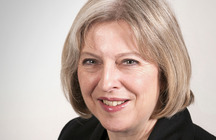
    Below is the text of the speech made by Theresa May, the Home Secretary, at the Serious and Organised Crime Exchange on 16 May 2016.

    I am delighted to be back again at this second Serious and Organised Crime Exchange Conference. The work you do is of immense importance, and it is great to see you building on the success of last year’s event.

    When I became Home Secretary in 2010, I was clear that the threat we face from serious and organised crime had been not been taken seriously enough by government and law enforcement alike. And in the past not enough had been done to build capabilities, intelligence and networks to tackle it.

    Six years later, when we consider the threats we face today, I do not think there can be anyone in this room who doubts the seriousness of the threat or the scale of the challenge. The telephone and internet scams that rob elderly people of their life savings. The organised exploitation of young women and children in our towns and cities. The illegal movement of firearms, risking the kind of attacks we have seen in Paris taking place on the streets of the UK. The organised gangs that operate their appalling trade in human misery across the Mediterranean and across Europe. The trade in illegal drugs and new psychoactive substances that harms our communities and causes untold suffering. And those groups involved in laundering the often enormous proceeds of all of these crimes.

    As of July last year, there were around 5,800 organised crime groups operating in the United Kingdom, with organised crime costing us at least £24 billion a year. Fraud due to organised crime is thought to cost around £9 billion. And the social and economic costs of illegal drug supply are estimated to be £10.7 billion a year in England and Wales, with over half of that attributed to drug related acquisitive crime.

    These are not figures we can readily accept or ignore. It is a threat we must treat with the utmost seriousness.

    The serious threat of serious and organised crime
    Yet there are those who question why we should care so much about serious and organised crime. People who say that it has always existed and always will. That it is not a national security threat in the true sense of the term. That it is not as pernicious, indiscriminate or dangerous as terrorism. Those people could not be more wrong.

    Last April, 7 men from across the UK were convicted of some of the most sickening instances of child sexual exploitation ever investigated by law enforcement in this country. Their crimes were so depraved that they shocked even the most hardened investigators. As the lead prosecutor warned the jurors in the courtroom ahead of the trial of 2 of the men, the case would take them “into a world you wished did not exist”.

    The men shared indecent images and videos of the appalling abuse of very young children. Some were force-fed stupefying drugs in order to facilitate these heinous crimes. Chat logs, obtained during the course of the investigation, even showed the men offering advice and guidance to others regarding how much of the drug to administer to a child, depending on their age.

    During the trial the court heard how the group meticulously groomed the families of the victims – in some cases, even starting before the victim was born. They often travelled long distances to carry out the abuse, or watched other members live over the internet – facilitated by the dark web.

    Thankfully, the hard work of those involved in the National Crime Agency-led operation – Operation Voicer – ensured these men were brought to trial. Members of the group were sentenced for a collective total of 107 years in prison, bringing justice for the victims and their families, and safeguarding more than 20 other vulnerable children.

    But as this investigation demonstrates, not only is the threat depraved, it is also changing quickly. The use of the internet and the dark web to organise and facilitate crimes. The sickening use of live streaming services. The lengths those convicted went to conceal their crimes and online trace. And it also shows just why the creation of the National Crime Agency (NCA) was so vital. Throughout the investigation, the NCA provided specialist skills and capabilities, and leveraged the co-operation of 7 police forces, the Crown Prosecution Service and 9 local authorities.

    I highlight this case not to shock, although of course it should and will. But to show why everyone in this room, and people up and down the country, should care about the threat from serious and organised crime. When those who are most vulnerable in our society are attacked in such a vile way, we cannot stand by. We must bring to bear all of the levers of the state, to keep the people of this country safe, and to ensure that the full force of the law is felt by those that would seek to undermine it.

    Today, I am pleased to say there is far greater recognition in government of the role every agency of state needs to play in confronting and disrupting this threat. Last year, the National Security Risk Assessment made clear that serious and organised crime should be considered a national security risk alongside terrorism, international military conflict and instability overseas.

    Since then, the number of cross-Whitehall projects on serious and organised crime has increased significantly. My officials have worked with the Ministry of Defence to deploy Royal Navy assets to tackle people smuggling and organised immigration crime in the Mediterranean. Along with the use of existing NCA assets, this has enabled officials to debrief victims, more effectively gather intelligence and better target people smugglers and traffickers.

    And last week, the NCA and my officials worked closely with the rest of Whitehall to deliver an ambitious agenda at the Prime Minister’s Anti-Corruption Summit. We have galvanised international commitments to support new public private partnerships to combat economic crime, establish an International Anti-Corruption Coordination Centre, hosted by the NCA, and introduce new powers to bring those gaining from corruption to justice and reclaim their ill-gotten gains.

    Reforming our approach to serious and organised crime
    These initiatives complement the radical reforms we have already introduced to tackle serious and organised crime in the 6 years since I became Home Secretary.

    In 2013, I abolished the Serious Organised Crime Agency and in its place created the NCA with the clout, the budget and the international reach to do the job properly.

    The NCA is now properly up and on its feet and is starting to deliver excellent results. In 2014 and 2015, the NCA led and co-ordinated operational activity that resulted in 900 disruptions against some of the most serious and organised criminals and groups in the UK, the arrest of nearly 3,400 people in the UK and overseas, and the safeguarding or protection of over 1,700 children.

    Now, under the leadership of its new Director General Lynne Owens, the NCA must build upon those strong foundations. And it must develop the capabilities and relationships necessary in the fight against serious and organised crime. Today, the NCA is an integral part of UK law enforcement – and this government protected its budget precisely because we expect to see it lead the national operational response to serious and organised crime.

    But even with a protected budget, the NCA will face new challenges. It will need to drive a greater focus on intelligence and leadership in the face of a rapidly changing threat – in the forms of cyber crime, organised immigration crime, firearms, and the exploitation of children in particular.

    But the NCA cannot solve the problem on its own. So on the same day as we launched the NCA, we published the serious and organised crime strategy. Modelled on our successful counter-terrorism framework CONTEST, the strategy delivers a comprehensive approach to tackling the threat from serious and organised crime, including prosecuting and disrupting those involved, preventing people from engaging such activities, increasing protection from serious and organised crime and reducing its impact when it does take place. Supporting the development of a network of Regional Organised Crime Units (ROCU) has been an important part of our approach.

    Last year’s inspection of ROCU by Her Majesty’s Inspectorate of Constabulary (HMIC) marked an important milestone in that development. As HMIC said, ROCUs are fast positioning themselves as centres of expertise on the nature of the threat in their regions, bringing increasing levels of rigour and consistency to the assessment of threats. And where ROCU engage in systematic, thought through and genuine collaboration, it can be transformative in how we respond to the threat.

    I have also been pleased to see the significant financial support provided by police and crime commissioners (PCCs). The Home Office’s contribution to ROCUs is dwarfed by local contributions 4 times as large, and I commend PCCs for this investment without which we would not have seen the levels of transformation to date. This funding is symbolically, as well as practically, important. Because where capability is delivered effectively and efficiently for the benefit of all forces in a region, it should be properly funded and overseen by democratically elected and locally accountable PCCs.

    This is not to say that development of the ROCU network has been all plain sailing. Progress has been too slow and too piecemeal. Some forces have been slow to act and as a result must now work quickly to make up lost ground, especially where core capabilities have not yet been delivered.

    That is why I have asked my officials to work with the national policing leads to ensure that all core capabilities are finally fully delivered in each ROCU. I hope to be in a position to make announcements on additional ROCU funding streams, shortly. But let me be clear: I am prepared to withhold funding if those core capabilities are not delivered.

    Wider reforms and specialist capabilities
    But, of course, the NCA and the ROCU network are just part of my wider reforms across policing and law enforcement, to drive greater accountability, increase responsiveness and ensure better crime fighting.

    Since 2010, I have brought in some big organisational changes: we have replaced some inadequate and unaccountable institutions, and I have shifted power away from central government to local police forces.

    I did away with the centralised system of national targets that existed under Labour and stripped back unnecessary bureaucracy that weighed officers down. And in doing so I ensured that we put professional discretion firmly back where it belongs – with the police.

    I established the College of Policing to drive up standards and establish an evidence base for what works in cutting crime. And I have supported schemes like Direct Entry and Police Now, which are opening up the police to the brightest and the best and bringing in people with fresh talent, new skills and expertise.

    In return for greater discretion and autonomy over officers’ day to day lives, I said that the police would have to become more accountable and transparent. So we brought in local beat meetings, crime maps and directly elected PCCs. I strengthened HMIC to give it greater independence and beefed up the Independent Police Complaints Commission to deal with cases when things go wrong.

    And I introduced a strong national framework, in the shape of the strategic policing requirement, to govern the relationship between national and local threats, which I refreshed last year.

    So, as I stand here today, there is now a framework of institutions and processes in place that work properly to ensure accountability, transparency and effectiveness in policing. To cut crime and keep vulnerable people safe. And to support the relentless pursuit and disruption of serious and organised crime.

    But just as we have ensured the right framework is in place, we must now ensure that we have the right capabilities to make our response effective.

    Specialist capabilities

    Because we have moved on from the tired, stale debate about structures. Today, the question is not what structural reforms are needed, but what capabilities policing needs to counter new and complex threats, where those capabilities best sit and how they are best delivered – whether that is locally, through specialist units owned jointly by a number of forces, or regionally through the ROCU structure. And we must also drive much greater collaboration across counter terrorism and organised crime policing.

    And the spending review settlement enables this greater collaboration. As the Chancellor set out in December, police spending will be protected in real terms over the spending review period, when precept is taken into account. This is an increase of up to £900 million in cash terms by 2019 to 2020, including extra funding for transformation and the development of specialist capabilities.

    But as I said then, and as I say again today, this extra funding is not a reprieve from reform, nor an excuse to slow the pace. It creates the opportunity for investment in transformation, to develop the capabilities needed to meet the new and emerging threats and to drive a new approach to existing demand. We have already committed funding to driving new capability in firearms and in digital investigation. In due course I hope you will put forward innovative proposals that will transform the approach to serious and organised crime.

    All of this work is tremendously important. But, it will never supplant the need for strong partnership working – at a local level across agencies, with the voluntary sector and with industry, including banks, financial institutions and others. This is central to the success of everything we are doing.

    If we are to deny organised criminals the space to operate on our streets and in our communities, we must secure the local as part of the national response to serious and organised crime, and drive strong, locally based, multi-agency partnerships.

    I know that the vast majority of police forces now have multi-agency partnership boards in place to tackle serious and organised crime. But I want them to extend their reach to include all partners, particularly local authorities, immigration enforcement, education and health, so they are properly equipped to drive a holistic and strategic response to organised criminality.

    This type of partnership is at the heart of everything the government does in this space. The commitments to tackle child sexual exploitation we set out in the wake of the unacceptable failures in Rotherham, Manchester, Oxford and elsewhere. The work we are doing with industry to make the internet a safer place for children and young people. For example, Google has introduced changes which make it significantly harder to find child sexual abuse material online. Using new technology, they have experienced an eight-fold reduction in search attempts over an 18 month period.

    The joint action with banks, insurers and other financial institutions to tackle fraud and money laundering, including the joint fraud taskforce that we launched last year to more effectively catch and stop fraudsters, design out systemic vulnerabilities in banking and retail systems that fraudsters exploit, educate and empower the public to protect themselves, and to identify victims and potential victims of fraud, putting in place interventions to stop them falling victim again. Because fraud is not a faceless, victimless crime. Victims can suffer both serious financial and emotional harm, and we know that the money fraudsters make can go on to fund other serious and organised crimes, and terrorism.

    This work also builds upon the success of the NCA-led Joint Money Laundering Intelligence Taskforce, which was launched in February last year, and which has already yielded impressive results. As of February 2016, the taskforce identified over 1,700 bank accounts linked to suspected criminal activity. 261 accounts have been closed and 517 are subject to heightened monitoring by the banks. It has led to 11 arrests and 12 alerts; and restraint of £558,144 of criminal funds.

    But this is just the beginning. We can, and we will, continue to build the links with the private sector and all the government agencies responsible for tackling serious and organised crime.

    The need for the right powers

    Better partnership must be supported by a strong and comprehensive legislative framework, ensuring that you have the necessary and proportionate powers you need to tackle serious and organised crime in its modern form.

    The Investigatory Powers Bill, currently going through Parliament, is an important part of this. The bill, which sets new standards for openness and transparency, will ensure that the powers our law enforcement and security agencies need are contained in a single and comprehensive piece of legislation. It will help to protect the UK from serious criminals and terrorists, adept at using fast-evolving technologies.

    And we recognise the need to significantly improve our response to money laundering and terrorist financing. That is why, in April, we published an anti-money laundering and terrorist financing action plan that sets out proposals for the biggest changes to our anti-money laundering regime for over a decade, underpinned by a powerful public-private partnership between government, law enforcement agencies, and the private sector.

    Alongside the action plan we published a consultation document seeking views on the new powers we think are necessary to significantly improve our capability to tackle money laundering, corruption and terrorist financing, and to protect the integrity of the UK’s financial markets.

    We are consulting on changes to implement a more effective regime for reporting suspicions of money laundering, to ensure that the private sector is focussed on fighting crime, not regulatory compliance. We also want to make it easier for the private sector to share information about money laundering risk so banks can better protect themselves from the threat.

    We are also consulting on the introduction of unexplained wealth orders, which would require those who are suspected of money laundering to explain their sources of wealth. Those who cannot provide a satisfactory answer to the court would have their property forfeited.

    We are looking also at new powers to enable the police to seize and forfeit money held in bank accounts that a bank itself suspects are derived from criminality of any kind.

    So alongside the substantial reforms we have put in place, these changes add up to a comprehensive response to the threat that we face.

    Conclusion

    But of course none of this will be effective without the hard work you do day in and day out.

    And before I end, I would like to pay tribute to one of our hosts here today, Chief Constable Sir Jon Murphy. From cadet through to chief constable, Sir Jon has served the force and the people of Merseyside with professionalism, integrity and dedication. But – in his capacity as national policing lead for crime – he has also done much to promote the importance of properly tackling serious and organised crime.

    So it was no surprise to see HMIC grading Merseyside as one of the 3 outstanding forces for effectiveness in tackling serious and organised crime in last year’s police effectiveness, efficiency and legitimacy programme (PEEL) inspections. I want to thank him for all his tremendous work, commend his exceptional record, and wish him all the very best in his forthcoming retirement.

    Because it is only by treating this threat with the seriousness that it deserves, that we will ensure the relentless disruption of serious and organised crime.

    Today the right institutions and frameworks are in place. We have protected your budgets and work – led by policing – is underway to ensure you have the right capabilities. And we are working hard to give you the powers you need.

    Now, I want to see you go out and deliver results.

    I want to see more of the appalling crimes I described at the beginning of my speech put a stop to. More organised criminals brought to justice. And more victims saved from heinous crimes.

    The threat is serious, the challenge significant. But I know you have the ability to make a difference. And in taking this threat seriously, I will back you every step of the way.

  • Tim Farron – 2016 Speech on the EU

    timfarron

    Below is the text of the speech made by Tim Farron, the Leader of the Liberal Democrats, on 11 May 2016.

    So much of the debate around Europe has been about financial projections, trading complex cost benefit analyses about what will happen if we stay or leave. And fascinating though that all is, my hunch is that it might not, on its own, clinch the right result.

    Because there is much more to this Referendum than the economy, crucial though that is.

    It is also about more fundamental questions such as: what sort of country will my children be living in when they grow, what sort of country will their children live in?

    What is the international legacy we want to leave to the coming generations?

    We should be clear with ourselves. This decision is not so much about the here and now, but about the impact on our children and our children’s children.

    It is about the character of our country. For instance, do you see Britain as a country that stands apart from others, glowering across the White Cliffs of Dover in bad-tempered isolation? Or do you see Britain as an outward-looking country that works with its neighbours to build a more prosperous and secure world?

    Do you see Britain as a country that should resist any changes to meet the challenges of the twenty-first century? Or do you see Britain as an adaptable country that can thrive, innovate and lead in an open, global economy?

    Do you think the only way we can protect our security against distant threats is by standing alone? Or can we make ourselves safer by sharing our response with those countries who are our friends, who share our values and who also face those threats?

    I’m a natural optimist: Liberals are natural optimists. Last Thursday, as the biggest gainers in the local elections, my optimism was vindicated.

    As a movement, we want to look forward, not back. We are in the future business.

    A few weeks back I spoke to a 97 year old chap back home in the lakes. I asked him if he was voting in or out. He looked at me and said very matter-of-factly ‘well, either way, it’s not going to affect me for long’, which was a bit grim. And whilst I was trying work out how to respond he chipped in ‘but I’ve got grandchildren and great grandchildren, so I’ll be voting to stay’.

    He didn’t expand. He didn’t need to.

    Not everyone gets it though. Yesterday, Roger Daltrey came out for Brexit. He had his reasons, I’m not going to slag him off. In the 60s he led the youthful mod revolution. He’s 72, a slip of a lad compared to my constituent. But Roger, we’re not talking about your generation. We’re not talking about mine either. The referendum is about the generations to come.

    So let me be really blunt. You may be grumpy about Brussels. But I suggest that you have no right to prejudice the future of your children, grandchildren and great grandchildren.

    Liberal Democrats fought harder than anyone to give 16 and 17 year olds the vote in this referendum. The government blocked us and let those young people down. But this vote is still more about them than it is about people of my age and above.

    Of course, if you want, you can cast your vote in a self-regarding way. But I want to challenge you, before you vote, to think of those people that your vote will actually affect the most – Britain’s next generation.

    Have you the right to limit, bind and impoverish their futures? To narrow their horizons, curtail their freedoms, hamper their ambitions and isolate the country that they will inherit?

    Some may regret that Britain is no longer the imperial power it was generations ago, sovereign over India and much of Africa., But those same individuals often fail to recognise that our own sovereignty in a complex world is a much more complex thing – shared and limited whether in Europe or out of it.

    And let’s face it. The past wasn’t all that glorious, after all: it involved massive defence spending, national service, a succession of colonial conflicts in Malaya, Kenya, Cyprus and Borneo and – let’s be honest – the empire didn’t do that much for the sovereignty of those countries that we occupied…

    But it’s Britain future that this Referendum is about, not its past – glorious or inglorious.

    We shouldn’t allow the Referendum to become a collective exorcism of our Brussels demons at the expense of a rational consideration of what is in the long-term best interest of our country and our people – and what role we want to play in the world.

    I don’t want Britain to become an offshore financial centre, hoping like a Switzerland or a Panama, helping the global rich hide their wealth from tax authorities in other countries. I don’t want Britain to lose the rest of its manufacturing capabilities, which is what would happen if we go for the unilateral free trade approach that Brexit economists have suggested as an alternative to the European single market.

    I don’t want us to become a society riven with nationalism, viewing foreigners as hostile and dangerous, closing its frontiers to outsiders– a second incarnation of King Zog’s Albania or a partner to Putin’s Russia.

    I want us to recognise the future benefits of close relations with our neighbours and natural partners, how investing in each other’s economies and sharing in prosperity can make Britain even greater than it is now.

    People talk about Europe being very good for business. The single market, no tariffs, free movement of labour. And they are right, but you know what? Even more than that, the thing that business and economies need more than anything else to prosper is…peace.

    Today we sit around the table with people that seventy years ago we were at war with. We sit around the table with people that, twenty-five years ago, had nuclear weapons on their soil pointed at us. Europe is the world’s most successful peace process.

    Our generations have enjoyed that peace, how dare we recklessly risk that peace for the generations to come?

    I want my children to grow up in a society that shares security, shares political values and shares social standards with our European neighbours, rather than risking a return to mutual hostility.

    Now, these are just a few of the vital arguments that need to be made by those of us who consider ourselves progressives.

    David Cameron’s approach seems to be to point at the door to exit and say ‘there be dragons’, to emphasise the danger. Now, there is of course much to fear from the isolation that exit would bring, but I say that the progressive case for Britain in Europe is the positive case for Britain in Europe. One the focuses on hope not fear, on opportunities not threats. A case that is uplifting, inspiring, and – crucially – patriotic.

    This is a decision too big for tribal loyalties. Progressives need to come together – and be seen to come together – to build a progressive political alliance. Because this is a choice between liberals and progressives on one side – and on the other, nationalists, who suspect foreigners of conspiring all the time to do Britain down.

    This is not about loving everything that comes out of Brussels. It is about recognising that there is a vision of co-operation, collaboration and mutual support which Britain can play leading part in.

    Look at the other side – Farage, Johnson and Goldsmith – the most conservative forces in British politics have already made their agenda clear. “These ‘Go’ rallies are one lurid blazer away from John Redwood’s fantasy cabinet.”

    They are English nationalists who want to reduce workers’ rights, reduce environmental protections and reduce financial regulations on the banks.

    Lord Lawson, the former Tory Chancellor, is just one of several Brexiteers who have argued that a vote to leave would free Britain to return to a full-blooded, hard-right Thatcherite agenda.

    Those of us who share a positive vision of a community of nations working together to tackle the immense challenges we face must come together. Those of us who claim the mantle of progressive politics have to champion the positive reasons for being in Europe. It is not enough to point out the calamity that Brexit will be.

    That is why I call on the leaders of all the progressive parties in British politics to join me on platforms such as this, going round the country making that case.

    Because fighting a positive campaign is the right thing to do.

    Last week saw the culmination of a despicable campaign for London Mayor by Zac Goldsmith, and saw the election of Sadiq Kahn, to whom I offer my warmest congratulations.

    But it also saw the emergence of a new and credible progressive voice for Londoners: Caroline Pidgeon.

    Her campaign buzzed with energy and creativity. Above all else, it was decent, positive and Liberal. Caroline’s campaign has enhanced her standing, it has enhanced the Liberal Democrats and it has enhanced London.

    But there is one thing on which I can agree with the Leave campaign:

    This is a once-in-a-generation decision.

    That’s why it’s so important that young people register to vote before the 7 June.

    We can choose isolation, only to leave our children trailing around after our European partners, haggling pathetically for the chance to get back into their markets, watching them implement the rules they tell us we have to adopt but without any influence.

    Or we can choose to remain, playing an active part in shaping the future of the European Union.

    And here’s the thing that frustrates me the most. We are one of the EU’s largest and richest countries. Why are we not leading from the front in Europe? For decades we haven’t been in the driving seat. We haven’t been in the passenger seat. We haven’t even been in the back seat. We have been rattling around in the boot with the spare tyre.

    But that’s been our choice, the choice of the British establishment, our stupid fault. Let this be the moment when we choose to use Europe to boost our power, boost our independence, boost our influence.

    We have a wealth of talent and creative energy in our tech entrepreneurs that can help shape the digital economy across Europe and that can help us tackle the delicate balance between open access and individual privacy.

    Take our creative industries, often driven by young people for the benefit of young people. One of the great British success stories and the fastest growing sector of our economy.

    The British music industry alone contributes £3.8 billion to the UK economy – over half of this comes from exports, and it is Europe that is its second-largest market.

    The EU and its member governments have led global negotiations on containing climate change – magnifying Britain’s influence through working with like-minded European partners.

    It’s only by working with our fellow European democracies that we will tackle the hiding of money around the world by the global rich revealed in the Panama Papers.

    More importantly, it is only by working with our European partners that we will tackle the kind of corporate tax evasion that is too dull to make the news but which has the most significant impact on revenue. Companies that use our infrastructure and resources, yet fail to pay their fair share.

    Their workforces are educated in our schools and treated in our hospitals. They use our roads and our railways. What an outrage that the likes of Amazon and Google who benefit from the investment of our tax payers, choose to sponge off those tax payers. Taxation is not a penalty. It is the subscription charge you pay for living in a civilised society. It is time that those corporations joined the civilised world. Remaining in Europe gives us a better chance of keeping those companies civilised, making them honest, collecting their taxes.

    And as we look forward, the Leave camp still can’t answer basic questions about what will happen if we do vote for exit.

    If we vote to leave, we will face years of uncertainty while our government negotiates different arrangements with individual governments: hitting UK employment and investment – and therefore jobs.

    In a global economy in which networked services operate across national boundaries, and cars, aircraft and smart-phones are assembled out of parts designed and assembled in different countries, we will be a bit-player, on the edge of the world’s largest single market – which is the EU.

    And as the Prime Minister said on Monday, we shouldn’t take the peaceful and open world we have benefitted from over the past 20 years for granted, either.

    Putin’s Russia is economically weak but militarily powerful and relies for its legitimacy on stoking anti-Western nationalism. So let’s not stoke our own anti-European nationalism. We’re best off working with our partners in the EU and NATO – two closely-linked organisations, as President Obama has reminded us – to contain the threat.

    Rapid population growth, economic weakness and political disorder across much of Africa and the Middle East are pushing waves of migrants cross the Mediterranean.

    There’s no way any European country can manage this long-term challenge on its own.

    The Leave campaign have conjured up the idea that the greatest threat to Britain’s future comes from Europe itself: that Brussels is a new Roman Empire, aiming to reduce Britain to colonial status. That’s absurd and the politics of the conspiracy theorist.

    And as for Trump in the latest Leave.EU video… Could anything set the bar for credible celebrity endorsement any lower?

    Our neighbours are also democratic states, with open societies and vigorous political debates. These societies share our values; they share our recent memory; if you want to know why they say to us ‘stay’ it is because they share the same experience of total war that we did. They’re like us, warts and all.

    Our British Identity

    We should celebrate our diversity and the fact that Britain’s character and identity has been shaped by successive waves of immigration from the continent: Saxons, Danes, Normans, then later French Huguenots, Russian Jews, and in the turmoil of two world wars German and Austrian Jews, displaced Poles and Ukrainians, Italian prisoners-of-war who stayed here to work.

    The British Establishment is as diverse as the rest of us. Winston Churchill’s mother was American. Boris Johnson’s grandmother was Turkish. Zac Goldsmith has a French grandmother. Nigel Farage has a German wife.

    Michael Gove has a romantic fantasy of Britain as naturally free and perfectly democratic, facing a continent that is naturally authoritarian: he’s even described the EU as ‘Soviet’.

    What an insult to those now free countries, once our enemies, now our friends within the EU who could tell Michael Gove all about life under soviet imperialism. The EU is the antithesis to that authoritarianism. They should know – they were liberated from it and chose instead to belong to an international club that has freedom and liberalism at its heart.

    Of course the EU is far from perfect; but then Westminster and Whitehall are far from perfect – for example, Michael, thanks to you, the Department for Education is now a basket-case. It doesn’t mean that I want to leave Britain.

    Even though of course Britain isn’t a spotless miracle of democracy either. As police investigations into the Conservatives’ election expenses show.

    Liberal Democrats are as frustrated at the obstacles to political reform in Westminster as in Brussels. But that doesn’t mean we want to blow the Palace of Westminster up, any more than we want to take our bat home from Brussels.

    The Leave campaign has vigorously dismissed the long succession of English-speaking heads of government, the Australian and Canadian prime ministers, the US President, who have told them they are wrong. These are the leaders of the countries Boris Johnson and Michael Gove think we should be moving closer to, in an imagined ‘Anglo-sphere’ of special relationships. But the reality is that the people they want to work with think they are fools – and they certainly believe that to leave is the most foolish course of action.

    Since they see European governments in the EU as hostile to Britain, and find American and Commonwealth leaders urging us to remain an EU member, they might like to adopt the old Millwall chant as their theme song: ‘Nobody likes us, and we don’t care’.

    I care about the future of this country, and I’m sure that future will be more secure and more prosperous if we continue to work together with the Dutch and Danes, French and Spanish, Germans and Italians.

    The EU is not a monster directed against Britain by a secret conspiracy in Brussels. It’s a grouping of friendly democratic governments, struggling to master the many challenges we all face.

    The unavoidable compromises among 28 governments, with different pressures from their domestic publics, don’t always reach the perfect answer that some in Britain demand.

    But life isn’t perfect, and politics is about compromise; and political negotiation among democratic governments across Europe is far better than what our grandparents suffered in war, or the numbing fear and anxiety of those of us who grew up through the cold war.

    So in this referendum, my challenge to voters of my age or older, is to use your vote in the interests of those that your vote will affect the most. Your children and grandchildren. And my challenge to younger voters is that you should leave no-one in any doubt that the Britain you will inherit must be outward looking, positive, ambitious – not isolated, limited and negative.

    I want my children to grow up in a confident Britain that pursues prosperity and peace in cooperation with our neighbours, countries that are also our cousins; not a sullen country cut off from the continent. Britain is a European country; we share democratic and liberal values.

    We share Europe’s history.

    We share Europe’s future.

    That’s why I vote to remain.

  • George Osborne – 2016 Concluding Statement on IMF Article IV

    gosborne

    Below is the text of the speech made by George Osborne, the Chancellor of the Exchequer, on 13 May 2016.

    I’m delighted to welcome Christine Lagarde and her team to the Treasury this morning, so they can outline the findings of the IMF’s annual Article 4 assessment of the British economy.

    The Article 4 assessment plays an important role in providing independent scrutiny of the prospects for our economy, and today the IMF report on a British economy that is growing, with low unemployment and rising wages.

    We’ve got that growing economy thanks to the hard work of the British people and because we’ve stuck to our long term plan.

    But there are many challenges we need to address if we are going to go on raising living standards, and the IMF help us to identify them.

    I can say that we accept the broad conclusions of their report today.

    First, they urge us to go on repairing the public finances.

    We’ve made huge progress in reducing the record deficit of more than 10% we inherited to around 3% this year, but it is still too high.

    I welcome the IMF’s endorsement of our plan to continue to bring stability to our finances – and their acknowledgment that the pace of additional consolidation set out at the recent Budget was, in their words, “appropriate”.

    Second, the IMF remind us of the big challenge we, like other advanced economies, face on productivity growth.

    This is a challenge we acknowledge, and one we’ve already taken steps to tackle – with initiatives from the apprenticeship levy to the National Infrastructure Commission – and in next week’s Queen’s Speech there will be a number of major measures to do even more to make Britain’s economy fit for the modern age.

    The third challenge is the current account.

    A wide current account deficit leaves the UK reliant on financing from abroad, and more exposed to economic risks than we’d like.

    We’re taking steps to reduce it, including mobilising the whole government behind our exports strategy, and as the IMF has said, our plan to repair the public finances will support a gradual narrowing of the current account.

    This year’s Article IV mission comes alongside the IMF’s Financial Sector Assessment Program of the UK, which is conducted once every five years.

    This is an innovation since the financial crisis that ensures major financial centres are subject to international scrutiny.

    I’m glad the IMF acknowledge the enormous progress we’ve made under this government to make our financial sector stronger, to improve dramatically our financial supervision, and to ensure Britain is better prepared for any financial shocks.

    So in the view of the IMF, the UK economy is set on a positive course: with rising incomes, more jobs and a sound financial system.

    That is what is on offer if we remain in the EU.

    For the IMF have been in town for this Article 4 as Britain prepares to take what the Fund describe as a “momentous decision” on whether to remain in the European Union, or leave.

    The IMF are clear that even the prospect of a leave vote is already having an impact on investment and hiring decisions, and weighing on economic growth in the UK.

    But the Fund are also clear that this could be a mere taste of things to come if we vote to leave.

    The IMF today finds that a vote to leave would cause a “protracted period of heightened uncertainty”, “financial market volatility” and a “hit to output” – in other words, a hit to growth.

    They say that the long term impact on incomes in Britain would “likely be negative and substantial,” and they note that the market reaction to these adverse economic effects could entail:

    a “sudden stop of investment inflows into key sectors”
    “sharp drops” in house prices
    and “sharp drops” in equity or share prices too
    and the costs of borrowing for households and businesses could rise
    And the IMF also put to rest the fallacy that’s been peddled by those who say Britain will have more money for public services if we’re not paying into the EU budget.

    The IMF are very clear today: the hit to growth we could expect from a vote to leave would cost our public finances more than the amount we’d gain from no longer contributing to the EU budget.

    Put simply, the IMF says a vote to leave costs us money.

    We’d have less to spend on public services like schools and the NHS if we leave the EU.

    Ahead of this historic referendum the British people have been clear: they want facts, and they want credible independent opinion to help inform their decision.

    Today the independent IMF reinforce the conclusions of the independent Bank of England.

    These are the facts that the British people need to hear. If we vote to leave, British families will be poorer and Britain will be poorer. Incomes would be hit, businesses would suffer, and we’d have less money to spend.

    That’s if we vote to leave. But there’s a positive future for Britain on offer if we stay in the EU. Our economy is expected to keep on growing, businesses will keep creating jobs and families will benefit from rising wages and living standards.

    Let’s not put all that at risk with a leap in the dark.

  • Hugo Swire – 2016 Speech on Chile Day

    hugoswire

    Below is the text of the speech made by Hugo Swire, the Minister of State at the Foreign and Commonwealth Office, on 13 May 2016.

    President Bachelet, Lord Mayor, Foreign Minister Muñoz, Ministers, ladies and gentlemen, good morning. As this year’s Chile Day comes to an end here at Mansion House, it is a good moment to reflect on our engagement with Chile and Latin America since the first Chile Day six years ago.

    Since the first Chile Day in 2010, we have re-engaged substantively with the whole of Latin America, under our Canning Agenda. We have increased our Royal and Ministerial visits, and increased our footprint, opening new Embassies and Consulates and boosting the numbers of staff working on trade and investment –including in Chile.

    The enduring strength of our friendship with Chile is reflected in the breadth of our cooperation today. We share the same free trade, free market approach. We hold similar views on a variety of subjects from the Antarctic to peacekeeping; from human rights to education. Chile is an important partner in humanitarian relief, peacekeeping and global defence interests. We worked closely together on Syria during Chile’s UN Security Council chairmanship last year. We were proud to support Chile’s initiatives on women and LGBTI rights in the Human Rights Council.

    And our relationship looks to the future – through the Newton-Picarté Fund our science and innovation collaboration is second to none in the region. The Chilean Government’s match funding has been especially effective in making this a real partnership. And this year, we were pleased to announce a substantial increase in our package of support to Chile through our Prosperity Fund. We will spend more than £1 million this year on projects supporting a wide range of fields, from renewable energy and green finance to sustainable mining; from energy efficiency and environmental governance to smart cities.

    The strength of our cooperation is also reflected not only in our growing education exchanges but also in the number of important agreements we have signed at the Foreign and Commonwealth Office this morning. These covered mutual recognition of qualifications;the use of satellite technology to tackle issues, of which one of the most important is illegal fishing; co-operation between our Diplomatic Academies; and Building Information Modelling, a UK innovation which helps to make construction more efficient and cost effective.

    In addition to all this we look forward to ever greater cooperation in Antarctica.

    And our bilateral trade has also grown. British exports of goods and services to Chile reached one and a quarter billion pounds in 2014, and Chile’s investments in the UK are also growing, in IT, food and drink and Financial Services.

    As you all know, the City of London is the world’s pre-eminent financial centre. Ranked first in the global financial centres index. The reason is London’s unique cluster of services – at the forefront of every field. It is a one-stop shop for all business needs – whether that is financial and legal services or expertise in planning, delivering and managing infrastructure over the whole life-cycle of a project.

    It is in this context that I am pleased Chile chose to hold Chile Day in London for the sixth consecutive year. And we look forward to welcoming you back next year, I am sure!

    When the Lord Mayor was in Santiago last month, he invited Chilean businesses – particularly SME’s in the growing technology sector – to use the liquidity and capital of London’s markets and to take advantage of London’s expertise.

    Following his visit, we are matching a number of opportunities in Chile with areas where we do have particular expertise, such as green finance and financial services, in addition to the strong existing cooperation in sectors such as mining. As the industry becomes more sophisticated and environmentally aware, so the opportunities grow for more cooperation.

    The role of the Chilean Government has been vital in all this. It has pursued sound economic policies that have enabled Chile to withstand the challenges of the global economic downturn. And it has set a clear strategic direction, with its membership of the free trade, free-market oriented Pacific Alliance. I wish President Bachelet and Chile well as they take over the Chair of the Alliance next month. The United Kingdom is an active observer of the Alliance and we will continue to work with them on the agreed priorities of education, innovation and competition.

    I would like to thank the Lord Mayor and the Corporation for hosting Chile Day in these unmatchable surroundings. And I will finish by saying to President Bachelet that we have been honoured and delighted to welcome you. Your presence, and that of so many of your Ministers and the Governor of you Central Bank, has made this a very special Chile Day. Your visit to London has even greater significance, as an illustration of our shared goal to further strengthen the relationship between our two countries. We will now – Government and private sector alike – be working to build on your visit here and to take that relationship to a new level.

    President Bachelet, I know you have great ambitions for Chile. As one of your oldest friends, we want to work with you to help you to achieve those goals. Thank you for coming here today.

  • Michael Gove – 2016 Speech on Making Prisons Work

    michaelgove

    Below is the text of the speech made by Michael Gove, the Secretary of State for Justice and Lord Chancellor, at the Governing Governors’ Forum on 12 May 2016.

    Good morning, and thank you very much for that kind introduction.

    It is a great pleasure to be here today among so many motivated and dedicated governors at a time of exciting changes – and challenges – for the prison service. Looking around the room, I see a good number of familiar faces from my many prison visits and discussions. These have taught me so much about the scale of those challenges that you deal with every day.

    Dare to be different

    One of your number, Russell Trent – the governor of the new HMP Berwyn in north Wales – was on holiday recently when some of his plans for the prison suddenly attracted a wave of criticism.

    In his desire to boost rehabilitation he had spoken of wanting to create a prison atmosphere that was as close to ‘normality’ – to life on the outside – as possible.

    He had explained that when Berwyn opened, the ‘men’ – not ‘prisoners’ – would be held in ‘rooms’ rather than ‘cells’. The men would have telephones in their rooms so they could ring their families and say goodnight. Prison officers would knock on the doors of those rooms before entering, as a basic courtesy.

    These cheap and simple measures, Russ pointed out, would make HMP Berwyn a decent place that would facilitate rehabilitation, and that could only be a good thing because keeping offenders from re-offending makes us all safer.

    As a former Royal Marine, Russ Trent is not one to shrink from ‘incoming’. Even so, he did wonder how much trouble he would be in on his return from holiday.

    The answer, I’m glad to say, was none.

    Quite the opposite.

    When it comes to governing prisons, Russ’s instincts are absolutely right. Because the principal purpose of prison is rehabilitation.

    We want individuals who leave prison to be changed characters – to be redeemed, to have rejected violence as a way of settling disputes, to have overcome the impulsiveness, weakness and lack of self-respect which drew them into crime in the first place, to have become assets contributing to society rather than liabilities who bring only costs.

    And we don’t make it easier to rehabilitate individuals back into society if, during their time in custody, they live in squalid conditions, face daily indignities and don’t have the chance to form relationships based on mutual respect.

    But in order to make prisons work we need to allow Governors to govern. At the moment you are held back – by too many rules, too much bureaucracy and, to be frank, the fear that if something goes wrong – or even worse – gets in the papers – then that’s it – career over.

    So I have one essential message that I want to get across today. I am behind you; Michael Spurr is behind you – in your desire to lead your prisons, not just manage them. We want you to dare to be different – to exercise as much autonomy as possible – to be guided by moral purpose not manuals and rulebooks – in your mission to change lives for good.

    If we want safer streets, we must first have safer prisons
    If we give you – the people in this room – more freedom and support then I believe we can make all our prisons much more effective at rehabilitation. And that will serve the highest purpose of all – making our society safer, more secure and more civilized. When nearly half of those in prison go on to re-offend, we cannot say our criminal justice system is working. Only by changing how prisoners behave – when they’re in our care – can we contribute effectively to public safety.

    But before we can do the necessary work of rehabilitation which will make our streets safer, we must first ensure that our prisons are made safer. Only when they are places of calm stability and order can we make the difference we need to.

    I have nothing but admiration for those who work in our prisons: officers, teachers, chaplains, governors – all those who devote themselves to caring for offenders are, I believe, doing genuinely noble work. Work for which they don’t get nearly enough recognition, praise and thanks. So nothing I am about to say is intended as criticism of those who work so hard in our prisons to keep society safer.

    Indeed I hope many prison officers – and those who work alongside them – will welcome a candid acknowledgement of just how difficult and dangerous conditions now are in our prisons.

    The most recent figures for deaths in custody and violence in prisons are terrible. There’s no point trying to minimise, excuse or divert attention away from the increasing problems we face.

    One hundred self-inflicted deaths in custody, up from 79; assaults on staff up by36 per cent to 4,963; an increase of 25 per cent in incidents of self-harm.

    I am grateful to the outgoing Chief Inspector of Prisons, Nick Hardwick, and his successor, Peter Clarke, for their unsparing focus on the problems we face.

    Nick drew attention to the accelerating increase in serious assaults in his annual report last July.

    Since then, report after report, while often praising the hard work and dedication of officers, has reinforced the scale of the challenges. Peter’s report into Wormwood Scrubs published earlier this year – in which he condemned the institution as rat-infested, over-crowded and nowhere near safe enough – was particularly chastening. I was painfully reminded of just how far we have to go when I heard of the assaults inflicted on a male and female prison officer at the Scrubs just this weekend. These incidents weigh on my conscience.

    Our prisons need a radical programme of reform which will take several years to implement before they can make the positive difference I know you are all capable of delivering, but what prisons need now, most of all, is rapid action to enhance staff safety and improve prison security.

    We have taken some significant steps already. We have recruited 2,830 prison officers since January 2015, a net increase of 530. We are trialling the use of body-worn cameras; our tough new law on psychoactive substances comes into force at the end of this month – including sentences of up to two years for their possession in prison – and we are strengthening the case management of individuals at risk of harming others. The Violence Reduction Project is giving us a better understanding of the causes and characteristics of violence. A new project on suicide and self-harm will give extra support to vulnerable prisoners.

    But we need to do much more. I will be giving further details in the weeks ahead about other urgent steps we are taking to improve safety across the estate.

    I am – personally – delighted that work to enhance security in all our prisons is now being led by a new director – the superbly talented and experienced former Governor Claudia Sturt. She will be given the resources and support she needs to make a positive difference for good. And I want to work closely with her – and with all prison staff and their representative bodies – to make the changes we need.

    Governors at the heart of change

    Claudia’s appointment embodies one of the central elements of our reform programme – putting Governors at the heart of driving change.

    The lesson of other public service reforms is that empowering managers at the frontline by giving them greater autonomy generates innovation. Proper accountability and scrutiny then identify which institutions and which innovations are driving the biggest improvements, so others can emulate them.

    From July 1, four trailblazing governors will be appointed to run prisons with the maximum possible level of autonomy under current legislation. But while these early adopters will have huge scope to innovate, every governor will be granted greater autonomy and expected to use new freedoms to improve rehabilitation.

    In particular, I want to see prisoners spend much more time engaged in the sort of purposeful activity which prepares them for life on the outside – pursuing worthwhile educational qualifications, or working in an environment that will help them get a satisfying job on release.

    Not only are these goods in themselves, it’s also manifestly the case that the more prisoners are engaged in activities which occupy their hands and minds, the more they see a link between their daily routine and a chance to succeed on the outside, the more they are given hope that by their own actions they can secure a better future – the less likely they are to feel frustrated, angry and un-cooperative. The more purpose there is in every prisoner’s day, the more likely their prison is to be an ordered, safe and successful environment.

    The review of prison education by the inspirational academy head teacher Dame Sally Coates will be published shortly. I mustn’t pre-empt its full range of recommendations. But as the Prime Minister has already said, Sally will argue that governors should be given direct control of education budgets.

    It’s a big change. But radical change is needed. The current level of education provision in prisons is frankly inadequate. While there are some inspirational teachers, quality overall is far too low. That’s partly because the present system means that just four further education providers serve all prisons in England with an often unrewarding diet of low-level qualifications which do not open career doors.

    It’s no good for prisoners – or society – if their experience of education is banal material tediously delivered which has little or no relevance to securing any sort of satisfying job. Education needs to give prisoners skills that will enable them to lead socially constructive and economically valuable lives. It should also provide prisoners with the chance to grow culturally and morally – to develop new interests and strengthen character.

    Critically, education should also help prisoners to acquire the social skills and virtues which will make them better fathers, better husbands and better brothers. Ensuring that prisoners can re-integrate into family life and maintain positive relationships is crucial to effective rehabilitation. Families are one of our most effective crime-fighting institutions. And we should strengthen them at every turn.

    Under our reform plans, individual Governors will be able to demand that their current education provider radically improves – and if not, they can take their custom elsewhere. Governors will be held to account for educational outcomes and celebrated for the value they add – providing an additional incentive and reward for getting more prisoners to acquire meaningful qualifications.

    Critical to our reform programme, however, is providing not just the right incentives to empower managers who want to support rehabilitation but also providing the right incentives for offenders themselves to engage in rehabilitative activity.

    That means giving Governors more control over how incentives are shaped for, and privileges granted to, the offenders in their care. Prisoners need to be able to see a direct link every day between engaging in purposeful activity and living in a more civilised environment.

    We also need to review the position of prisoners who have received Imprisonment for Public Protection (IPP) Sentences. We must not compromise public safety but there are a significant number of IPP prisoners who are still in jail after having served their full tariff who need to be given hope that they can contribute positively to society in the future.

    We also need to enable Governors to release more prisoners on temporary licence. It can only enhance public safety if prisoners can gain experience of work and life on the outside prior to full release, learning how to conduct themselves properly and contribute effectively so they can integrate successfully back into society.

    Giving prisoners incentives to change

    Let me turn first to the Incentives and Earned Privileges (IEP) scheme. My colleague Andrew Selous has been consulting widely among governors, staff and others – to assess how well the current system is working.

    The answer – not very. The widespread view is that IEP does not do enough to encourage good behaviour, or contribute to rehabilitation.

    It is seen as bureaucratic and punitive, offering little difference between standard and enhanced levels.

    We propose to reform the system – giving Governors far greater autonomy to shape incentives and privileges in a way they consider right for their institution. We think there, of course, need to be minimum standards of decency and it’s probably right to have a core framework around which individual approaches can be built.

    It seems sensible to have national standards on the number of privilege levels, the process governing reviews and appeals, and the transfer of privilege levels after a prison move.

    But while we need to respect the fact that prisons operate as part of an integrated system we must also recognise that prisons work best when leaders lead. It must be right that the man or woman in charge of any institution should be able to reward the behaviour that makes their institution work well in the way they think best. Or else what does leadership mean?

    I was very struck by how effective autonomy over granting privileges can be when I visited the prison Nick Hardwick most admires in this country – the Military Corrective Training Centre (MCTC) in Colchester, Britain’s custodial facility for men in the Armed Forces.

    The Commanding Officer there – the leader of the institution – has huge flexibility over how he grants privileges and additional freedoms to prisoners. Enthusiastic commitment to work and education secures the rapid accumulation of additional benefits. That not only contributes to an atmosphere of order and purpose, it helps accelerate the offender’s journey back into the mainstream.

    Of course, the MCTC caters for a very specific type of offender but the principles behind the CO’s approach are clearly applicable in almost any prison – as Nick Hardwick was right to point out in his report of March last year. ‘The MCTC,’ he noted, ‘holds some complex and challenging detainees and there is much they do from which the civilian system could learn.’

    We want to learn from that, and will consult with governors over how changes to IEP will work in practise.

    The next area I want to touch on briefly is the future for IPP prisoners. I was struck, like many others, by the candid admission from the former Home Secretary David Blunkett last month that these sentences had developed in a way he had never envisaged. I sympathise with his position.

    And in helping to resolve this issue I am grateful to be able to turn once more to Nick Hardwick – in his new role as Chairman of the Parole Board.

    There will always be some prisoners whose behaviour and attitudes render them a continuing danger to the public and who need to remain in custody for a significant time.

    But there are also – clearly – some prisoners who have served their tariff, who want to prove they are ready to contribute to society and who have been frustrated by failures in the way sentence plans have worked and bureaucracy in the parole system.

    I’m pleased work is already being done inside prisons to reinvigorate sentence plans in complex cases, leading to prisoners being released at an appropriate point.

    But more still needs to be done – and I have asked Nick to help develop an improved approach to handling IPP prisoners which keeps inside those who pose real risks to the public but gives hope and a reason to engage in rehabilitative activity to the majority.

    Which brings me to the third area of change I wanted to touch on today – the use of Release on Temporary Licence (ROTL) to reintegrate offenders into society.

    Properly used, ROTL can do a huge amount to improve a prisoner’s chances of finding a long-term job. ROTL removes the ‘cliff edge’ between custody and liberty, and enables prisoners to adjust to the expectations and demands of society.

    Allowing a prisoner out on temporary release is not a soft option – it is a preparation for the hard choices that life on the outside demands. ROTL requires prisoners to commit to proper work, the discipline of new routines and respect for new boundaries set by others.

    ROTL doesn’t just help prisoners prepare for employment. It also helps prisoners strengthen the family ties which are crucial to rehabilitation. Mothers can develop stronger relationships with their children; husbands can demonstrate they are ready to behave with greater consideration and regard for others.

    We know that the three most powerful factors helping to keep ex-offenders from re-offending are a good job, strong family ties and a stable place to live – ROTL makes all of them easier to achieve.

    The structure of ROTL was always reformist – it put power in the hands of individual governors. It was for you to decide – when you were confident that an offender’s risk to others was diminishing – to give them the chance to grow into their imminent freedom.

    ROTL has made useful citizens – social assets – out of people who once generated only pain, injury and trouble.

    Offenders have completed plumbing and heating qualifications under ROTL and now unblock U-bends for a living. We have turned out gym instructors, barbers, chefs, landscape gardeners, builders – even locksmiths and a Parliamentary researcher.

    The system, of course, is not infallible. Mistakes in the past led to an understandable tightening-up of the rules. When individuals abuse freedoms, regimes will be tightened.

    But ultimately, public safety is better served by allowing prisoners to develop the skills and characteristics they need to succeed on the outside through extensive use of ROTL than it is by keeping too many prisoners inside and then releasing them ill-prepared and unready for life outside – more likely than ever to go back to a life of crime.

    The number of prisoners to benefit from ROTL has fallen by 40 per cent since 2013. So I think now is the time for a change.

    After careful consideration, we have decided to give governors more control. Although it will take time for confidence in the system to return fully, I believe that it would be wrong to allow a very few high-profile cases, appalling though they were, to distract us from the long-term advantages for society of ROTL.

    With the help of careful assessment processes, I am confident that our reform-minded governors can identify the most promising candidates for a successful, safe, ROTL. Prisoners like Jason Ridgeway, a former Light Dragoon who served in Bosnia and later fell into debt, and was jailed for his involvement in a drug dealing operation.

    Now in Kirklevington Grange Open Prison, in north-east England, he has been taken on as a general worker for the construction giant Balfour Beatty.

    He says his job has been crucial to his rehabilitation and wishes he didn’t have to stay in prison for one full day each week even when work has been offered. His mother is not well, and he can now help her – a ‘massive weight off my shoulders’, he says. As for Balfour Beatty? Jason says: ‘I can’t big the company up enough for taking us on. What they get from us lads, the keen ones, is really hard work. They have absolute loyalty.

    ‘So many people here are basically good, but they can be backed in a corner and desperate. This is a real way out.’

    Jason was speaking to an audience of employers, journalists and the intimidating figure of Andrew Selous. Another prisoner present – jailed for 14 years for ‘gang-related stuff’ – was so nervous that day he could barely speak. ‘Go on Michael, you can do it,’ bellowed his Balfour Beatty manager and mentor. And Michael did. ‘I just want to say “thanks” for the chance,’ he said. ‘It means everything.’

    Let me repeat what he said, so simply. ‘It means everything.’

    In HMP Send, I recently met the impressive law student and mentor CJ, who wakes up at 4am to read her textbooks before heading off into London to counsel young people against joining gangs. ‘I’ve spent over five years incarcerated,’ she says, ‘and RoTL has been one of the most rewarding, fulfilling, enlightening and freeing experiences of not only those five years, but of all the years of deception and darkness that preceded prison.

    ‘Rotl gave me the chance to be the person I have always wanted to be: a productive, hardworking, respected member of a team; a responsible parent who can financially look after their child and family; a contributing member of society who takes pride in paying their taxes.’

    Productive. Hard-working. Respected. Responsible. Able to look after children and family. And a proud tax-payer! What more could any government or governor want of a prisoner?

    Conclusion

    Some people believe my reform programme to empower the men and women in this room has an ulterior motive.

    Not true.

    While I have the utmost respect for our private prison operators, I also have faith in NOMS, its leaders and its staff to turn around jails. Over the coming months and years, some change will happen quickly.

    The effects of other reforms will take longer, as we go further to help the most disadvantaged, and open up opportunities in education and work. NOMS’ greatest resource is its people. Listen to their feedback and encourage their visions. You never know where the next big idea will come from, so empower everyone – up and down the ladder – to contribute and innovate.

    By now, you will all know one of my favourite quotes on prisoners, from a speech made in 1910 by Winston Churchill as Home Secretary, when he urged us to find the treasure in the heart of every man. You may be less familiar with another inspirational penal pioneer, a direct contemporary of Churchill but one who campaigned for prison reform on the other side of the Atlantic.

    Thomas Mott Osborne was a wealthy Democrat politician who turned to good works, becoming chairman of the New York State Commission on Prison Reform in 1913. No armchair do-gooder, Osborne had by then spent a week undercover in the state’s infamous Auburn high security jail – later writing an electrifying diary about his experience of its harsh regime based on silence, corporal punishment and labour.

    His time in Auburn was enough to convince Osborne that in the words of the great Victorian statesman – and one of my own heroes – William Gladstone, it was ‘liberty alone that fits men for liberty’.

    He set up a Mutual Welfare League for ex-prisoners to help them find jobs, and, while they were looking, help with housing, food and clothing. His purpose was to ‘bridge the gap’ between their discharge from prison and ultimate rehabilitation. In New York, The Osborne Association still works on behalf of offenders – because the challenges they still face are only too familiar.

    Osborne sounds like a man after my own heart. ‘Not until we think of our prisons as, in reality, educational institutions shall we come within sight of a successful system,’ he said of his approach. ‘And by a successful system I mean one that not only ensures a quiet, orderly well-behaved prison, but has genuine life in it – one that restores to society the largest number of intelligent, forceful, honest citizens.’

    I particularly warm to Osborne’s rallying cry as he took over as warden of New York’s infamous maximum security jail, Sing Sing, in 1914. ‘We will turn this prison from a scrap heap into a repair shop!’ he declared.

    Let me thank you all, once again, for your tireless work keeping the public safe and our prisoners secure. And – now equipped through our reforms with the tools you need to run your own repair shops – thank you in advance for creating a new generation – of intelligent and honest citizens.

  • George Osborne – 2016 Speech on the EU Made at Ryanair, Stansted

    gosborne

    Below is the text of the speech made by George Osborne, the Chancellor of the Exchequer, at Ryanair in Stansted Airport, on 16 May 2016.

    Thank you Michael [O’Leary]. It’s good to be here at Ryanair today.

    Ed Balls, Vince Cable and I are from different political parties.

    We fought each other at the last general election with different economic arguments and we’ve clashed repeatedly in the House of Commons over the years.

    But there’s one thing we all agree on.

    And it’s that it would be a huge mistake for Britain to leave the EU and to leave the Single Market And we’ve come here today to Ryanair to make that point.

    You are an Irish company, but you’ve got 3,000 thousand employees here in Britain, flying 41 million British passengers to over 200 destinations every year.

    That would not be possible without the Single Market.

    And it’s because you’re part of a growing British economy that you’re announcing today a plan to invest $1.4 billion this year – that’s almost £1 billion – and create 450 new jobs in the UK.

    And you are very clear: those are jobs and investment that would be at risk if we left the EU.

    It’s one, very practical example of what is at stake on June 23rd when we vote in this referendum.

    In the past week we’ve seen two defining moments in the campaign.

    The first was the 24 hour period when both the Monetary Policy Committee of the Bank of England, and the Managing Director of the International Monetary Fund told us that Britain’s economy would suffer if we left the EU.

    Their message could not have been clearer: Britain will be poorer and the British people will be poorer.

    A vote to leave could see family incomes fall, growth hit, and borrowing costs rise.

    It is difficult to think of more credible observers of the British economy than the 9 members of the Monetary Policy Committee and the staff of the International Monetary Fund.

    And they join a line of observers that range from the OECD, to the London School of Economics, to 8 former US Treasury secretaries, to the President of the United States of America, to the Prime Minister of Japan, to the leaders of Australia and New Zealand – indeed every member of the G20, every one of our major trading partners and every major international financial institution has been unequivocal: leaving the EU would come at an economic cost.

    And what has been the response of the leave campaign?

    They say it’s all a massive conspiracy.

    So that’s everyone from Mark Carney to Christine Lagarde, to Barack Obama, to the entire editorial team at ITV, the staff at the IMF and the OECD, to hundreds of economists, a majority of leaders of small, medium and large firms – they think they’re all part of some global stitch up to give misinformation to the British people.

    The next thing we know the Leave camp will be accusing us all of faking the moon landings, kidnapping Shergar, and covering up the existence of the Loch Ness monster.

    The response to the sober economic warnings from around the world by those who want to leave the EU has not been credible or serious.

    There is a reason the three of us are standing here today, putting aside our very obvious differences.

    It’s not a conspiracy – it’s called a consensus.

    The interventions of the last couple of weeks, from the IMF to the Bank of England make very clear that the economic argument is beyond doubt.

    Britain will be worse off if we leave the EU. British families will be worse off – equivalent to £4,300 per household.

    Leaving the EU is a one way ticket to a poorer country.

    This emergence of this overwhelming consensus has been one of the defining moments of the last week. But there is now a second key development and it’s just as revealing.

    And that is that the leading advocates for Britain leaving the EU have finally conceded – after weeks of evasive answers – that not only do they want Britain to leave the European Union, they want us to leave the Single Market too.

    It’s a major admission from the leave campaign – and a major moment. For it means we can begin to quantify just what the economic costs of leaving are.

    And it’s important for everyone in Britain to understand what the Single Market is.

    This is the arrangement that Margaret Thatcher took us into in the 1980s.

    The arrangement that the House of Commons, under Labour, Conservative and Coalition governments has endorsed.

    The Single Market gives British companies and the people who work for them access to half a billion customers. It is the world’s largest trading area.

    It means that when you sell something like a car, or an aeroplane engine, or a plane ticket or a food product, they can all be sold to consumers in other European countries without paying any tariffs or customs duties – in other words, there’s no extra costs to selling to our neighbours.

    And it means we, as consumers, can buy those things from our European neighbours without us having to pay extra costs for doing so.

    It also means we can offer services like insurance premiums and architectural designs and pensions and engineering plans direct to customers in Europe and vice versa.

    The Single Market is more than just a free trade area. It’s a set of common standards.

    And in an age when we’re buying and selling things on the internet, it’s more important than ever.

    The Single Market means that when we buy things from companies, we know that they’re safe, that they don’t cause environmental damage, that the labelling is accurate and that you know you’re going to get what you pay for.

    In the European Single Market instead of having 28 sets of rules, we have one agreed set of rules, that Britain helps shape and influence.

    If we leave the EU Single Market we would lose all of that.

    Ed Balls and Vince Cable are going to explain what this means in practice for British companies, British workforces and British consumers.

    But I can tell you today what the overall impact on the British economy would be.

    In recent weeks the leave campaign have made clear they would be prepared to see Britain leave the EU and fall back on default World Trade Organisation rules.

    This is the worst case scenario and would be a disaster for the British economy.

    New Treasury analysis shows that if we left the Single Market and relied on the rules of the World Trade Organisation, then after 15 years we’d be doing £200 billion less trade every year, in today’s terms.

    And we’d miss out on over £200 billion of overseas investment into our country.

    And let me tell you what £200 billion less trade every year and £200 billion less overseas investment means.

    It means we don’t see the new jobs and facilities like we see here today at Ryanair.

    It means less investment in offices, factories, car plants, shopping centres, high street shops and local industrial estates.

    It means companies don’t sell as much, don’t make as much, don’t employ as much.

    What does all that mean for you? It means fewer jobs, lower incomes and higher prices in the shops.

    So let me end by saying this – the British people want to know the facts. In the last week we’ve learnt two key facts.

    Fact: we now know the Leave campaign want to take us out of both European Union and the Single Market.

    Fact: we know that the overwhelming consensus of the independent economic experts is that Britain would be poorer if we left.

    And from those two facts, we can work this out:

    Those who will pay the price if we leave the EU are the working people up and down this country, doing the right thing, providing for their families, worrying about their children’s future; these are the people that politicians from all parties should seek to represent.

    These are the working people who will be stronger, safer and better off if we remain in the EU.

  • Sir John Major – 2016 Speech at Oxford Union on the EU

    johnmajor

    Below is the text of the speech made by Sir John Major, the former Prime Minister, at the Oxford Union on 13 May 2016.

    This is my first formal speech in the Referendum campaign, and it is appropriate that it is here – because it is your generation’s future that will be enhanced or diminished by whether we “remain” in or “leave” the EU.

    I’ve no particular reason to be a supporter of the EU. It is far from perfect. A quarter of a century ago it bitterly divided my Party, and European disagreements wrecked many of the ambitions I had as Prime Minister. It opened disputes that linger yet. Nor am I an unquestioning European: I did, after all, say “No” to the Euro, and “No” to joining the Schengen Agreement on open borders.

    Even so, I passionately believe we must remain in Europe and help shape its future: geography, trade and logic mean our futures are linked whether we wish it or not.

    Tonight I want to explain why I believe that is so, and then cast a critical eye over the flawed – and misleading – arguments for Brexit.

    What sort of country are we? For hundreds of years we’ve been a positive force in the world – a nation that looked outwards, and spread our ideas, our principles, our laws, our democracy, across the world.

    But that world has changed. Today, we are 65 million people: less than 1% of a world of 7,000 million, forecast to become 9,000 million by the time your own children are at University.

    And the global market is inexorably drawing that world together on a scale we could not have imagined even a few years ago. It is counter-intuitive to try to go it alone and, as our friends around the world tell us, a disastrously bad decision to do so.

    Within the EU, we are a large and influential nation and – while we remain a part of a Union of 500 million people – we have serious political and diplomatic clout, as well as economic advantages. Some examples make this clear.

    In Europe, we were able to impose sanctions on Russia to keep her in check, and deter further misbehaviour in Ukraine. We persuaded the EU to join America and impose sanctions on Iran, to bring about a deal that halts development of a nuclear weapon. We could not do this alone. If we were to leave, the world would consider us diminished. Departure would be a gratuitous act of self-harm.

    The economic argument for Europe is overwhelming: it is nearly half our export market, and nearly five times bigger than all the 52 Commonwealth countries added together, or indeed, six times more than the sum total of trade with Brazil, Russia, India and China.

    In the EU, we have unimpeded access to the richest trade market in the world – right here on our doorstep. Access to that market of 500 million people encourages a wealth of investment into our country. That’s not an abstract statistic – it’s people’s jobs, taxes, profits and overall quality of life.

    Outside Europe, we would still have to comply with EU rules and regulations, unless we surrendered all access to the Single Market – which all reputable authorities, not least the IMF, OECD, NIESR and the Bank of England, regard as economically foolish.

    And, once out – or “liberated” in the more emotive language of the “Leave” campaign – we could no longer protect ourselves against the impact of EU laws on the City of London, nor on our industry and service sectors.

    Nominally, we would indeed be “free”, but – in practice – we would only be “free” to accept whatever the EU determined, with no power to argue against it. Is that “taking back control” – as the “Leave” campaign describes it? No it isn’t. And it’s not glorious sovereignty either. It is nothing other than reckless, imprudent folly. And the price for that would be paid by every British family.

    It is not the only price. The NIESR warns of a collapse in the value of Sterling. The LSE warns of higher prices. The Bank of England fears higher interest rates and mortgages. All this and more – from independent bodies – is ignored and brushed aside by the “Leave” campaign.

    Yet many people – not least in my own Party – wish to leave.

    Their motives are many and variable: pride in our country, concern over sovereignty and immigration, and fear that we have no influence in Europe and are heading towards a federal structure.

    We must address these instincts, these emotions, and debunk myths that are wrong, but sunk in our national consciousness. If we fail to do so, we may end up leaving Europe because absurd falsehoods are widely believed to be true.

    One absurdity is that, subsumed in Europe, we would lose our traditions, our heritage, our individuality. We won’t: after sixty years of Europe are the French less French or the Germans less German? Of course not: and nor will we be less British.

    In the search for voter support the “Leave” campaign repeatedly overstate their case: if they were to win, they risk a backlash from those who reasonably might say they were misled.

    There is no shortage of such exaggerations. One clear example is the cost of Europe. Nigel Farage, Iain Duncan-Smith and Boris Johnson all put it at £20 billion a year; Michael Gove is more modest at £18 billion (£350 million a week), all of which, they tell us – if only we could be free of Europe – would be spent on the Health Service and our hospitals.

    If only … if only…. but the truth is their figures are wrong by a factor of over three! During the last five years the average gross payment was £12.7 billion of which £5.6 billion was paid back to us. Last year, our gross payment was just over £11 billion, of which over £5 billion was paid back to our farmers, businesses, science, research and regional aid. This is not my calculation – it is the calculation of the Institute for Fiscal Studies.

    So, to put £20 billion more into hospitals the “Leave” campaign would have to claw back all the money paid to some of our fellow countrymen and, on top of that, tax us all by an additional £10 billion. Those who make such false claims – and knowingly do so – need to apologise that they’ve got their figures badly wrong – and stop peddling a demonstrable untruth – as they have been repeatedly asked to do by the Chairman of the UK Statistics Authority.

    The “Leave” campaign fret that we have surrendered our “sovereignty” to Europe. That is a very rum claim: and – if it were true – how could we offer our nation a Referendum? It is certainly true that we have shared sovereignty: we share ours and, in return, we gain a share of the sovereignty of 27 other nations.

    But this is our choice – because it is in our own national interest. And, if it ever ceased to be, our Government can always commence withdrawal with Parliament support. So let me make the position on sovereignty absolutely clear: we share it within the EU only for as long as our British Parliament wishes us to do so.

    And even that sharing is partial.

    What say does the EU have over our economic policy? None.
    Our education system? None.
    Our NHS? None.
    Our welfare system? None.
    Our Armed Forces? None.
    Our police? None

    I could go on: 98% of government spending is entirely in the control of the British Parliament.

    Like much we hear from the “Leave” campaign, the sovereignty argument is emotive but specious. In a global economy, no country truly has sovereignty – not even our mighty friend the US. And in our most crucial area – security – we have happily shared sovereignty within NATO for over 60 years.

    Of course, we don’t always get our own way. Who does in any relationship of two – let alone one that numbers 27 other Member States? But we should not forget that – in well over 90% of the votes cast in Brussels – the UK wins. The caricature that we are repeatedly voted down in Europe is ill-informed nonsense.

    Another cherished “Leave” mantra is that we will all be “dragged” into a “federal” Europe. It is their favourite horror story. But, yet again, it is fantasy.

    Were we dragged into the Euro? No
    Were we dragged into Schengen and open borders? No
    Are we now exempt from “ever-closer union”? Yes, we are.

    And if any new Treaty seeks more power, that Treaty would have to be put to the British nation in a Referendum and if – and only if – it were approved by us would it become law.

    A final point on sovereignty: we have sovereignty in its purest and most potent form: we – the UK – can leave the EU at any time; nothing legally binds us to the EU forever. That is the fact and we should disregard the fiction.

    As the “Leave” arguments implode one by one, some of the Brexit leaders morph into UKIP, and turn to their default position: immigration. This is their trump card. I urge them to take care: this is dangerous territory that – if handled carelessly – can open up long-term divisions in our society.

    I grew up in Brixton in the 1950s – a time of massive West Indian immigration. As a boy, I played in local parks with the children of migrants. Some of these newcomers rented rooms in the same house as my family.

    So, I can tell you, as a matter of fact, not fantasy, that those I knew then – and later – didn’t come here for our benefits: they came half-way across the world to give themselves and their families a better life.

    But, at the time, fears were fanned by careless statements from political figures. That was a mistake then, and would be a mistake now.

    Do not misunderstand me. Of course, it is legitimate to raise the issue of the sheer number of those wishing to enter our country. I wholly accept that. Nor do I wish to silence debate. We mustn’t overlook genuine concerns: but these should be expressed with care, honesty and balance. Not in a manner that can raise fears or fuel prejudice. The “Leave” campaign are crossing that boundary, and I caution them not to do so.

    They attribute motives to new arrivals that are speculative and, frankly, offensive. They highlight – with grotesque exaggeration – the risk of mass migration from Turkey – which is unlikely to be joining the EU any time soon and indeed may never do so. And – even if she did – the terms of her accession would need to be agreed by every Member State.

    So, when the “Leave” campaign warn of “opening our borders to 88 million” (meaning Turkey and the Western Balkans) they cross the boundaries of responsible comment. It is unlikely in the extreme that – I quote – “another 88 million people will soon be eligible for NHS care and school places for their children”.

    I assume this distortion of reality was intended to lead the British people into believing that almost the entire population of possible new entrants will wish to relocate to the UK. If so, this is pure demagoguery. I hope that – when the heat of the Referendum is behind us – the proponents of such mischief making will be embarrassed and ashamed at how they have mis-used this issue.

    They advance a second migration red herring – that the recent modest rise in our National Living Wage will be “irresistible” to would-be migrants.

    This is very dubious. First of all, 40% of all migrants are under 25 and therefore ineligible.

    Second, are people really motivated to cross an entire Continent to receive a few pence a week extra? I very much doubt it.

    But even if they were – why would they choose the UK, when the minimum wage is higher, for example, in France; and wage levels higher in other countries that have no statutory minimum.

    And what of the “numbers” argument?

    There are various categories of immigrants. Commonwealth immigration is entirely unaffected by our membership of the EU.

    Would-be migrants from around the world need skilled worker visas to enter: and these are under our control.

    Refugees are dealt with on a case by case basis. Many of those applying for citizenship have lost everything, and we have always been a compassionate nation. But these decisions are under our control.

    But there are clearly undesirables, who we can – and already do – exclude. This includes anyone where there is concern over national security, criminal activity or adverse immigration history. This, too, is already under our control.

    But yes, if we were to leave Europe, we could exclude more EU citizens – such as the 54,000 EU migrants now working as Doctors, or Nurses or Ancilliaries in our Health Service, or the nearly 80,000 working in Social Care. We could exclude skilled workers like builders and plumbers – or unskilled labour that takes jobs that are unappealing to the British. In short, the people we could most easily keep out are the very people we most need.

    A balanced approach would acknowledge the contribution of migrants to our national wellbeing. Without their contribution, the Health Service would not be able to cope – nor would our public transport system; and our hotels, restaurants and shops would be without staff to serve their customers. We would have a shortage of many skills for industry. This is the reality of what lies beneath the emotive language of those who seek to raise the drawbridge on our country.

    This problem of numbers will not be forever. The growth of the Eurozone economy – now clearly underway – should cut demand to come here, as jobs grow elsewhere across Europe. And, in any event, a short term migrancy flow should not be the issue that drives the UK out of an economic union that already benefits our country immensely – and will continue to do so in the future.

    I asked earlier: what sort of country are we? And what sort of people are we?

    Under our undemonstrative exterior we are an essentially kind and benevolent nation, and more inclined to emotion than the age old caricature of stiff upper lip.

    Show us charitable need and we dig deep.

    Show us children in need, and we pay up happily.

    Show us people starving in Africa, and we text our contributions by the million.

    Show us a far away nation suffering from natural disaster, and we rush to help.

    We do so because our emotions are touched. But we should not let those emotions be stirred by false fear: nor allow false fear to impair our judgement on the future of our country.

    Over the next few weeks we – the British people – will decide the future direction of our country.

    This is not a General Election which rolls around every five years: we can’t “suck it and see”. There will not be another Referendum on Europe. This is it.

    So – whatever your view – register and vote. Because the decision you take on the 23rd of June will shape our country, our people, and our livelihoods for generations to come.

  • Michael Gove – 2016 Statement on Youth Justice (Medway Prison)

    michaelgove

    Below is the text of the written statement issued by Michael Gove, the Lord Chancellor and Secretary of State for Justice, to the House of Commons on 12 May 2016.

    Following the troubling allegations raised by whistleblowers—and documented by the BBC’s “Panorama”—about the treatment of young people in custody at Medway, I appointed an independent improvement board to investigate the centre’s governance and the safeguarding measures in place there.

    I am today publishing the board’s report, which tells a powerful story—not just about what went wrong at Medway, but about broader problems in the youth justice system, and specifically in the children’s secure estate. The board’s conclusions reinforce the interim findings from the separate, wider review that I have asked Charlie Taylor to prepare on the youth justice system, which will report this summer.

    Given the findings of the independent improvement board, the pending Charlie Taylor review and the announcement by G4S in February 2016 of its intention to sell its children’s services business I have agreed with G4S that the new contract to operate Medway will not proceed.

    The National Offender Management Service (NOMS) will take over the running of Medway in the short term—by the end of July—and will work closely with the Youth Justice Board on the enhanced monitoring arrangements that will be put in place. Beverley Bevan—an experienced prison governor with seven years’ experience of working with young offenders—will be appointed as the governor at that time.

    The independent improvement board made a series of recommendations which we accept in full and which will be implemented across all three secure training centres (STCs). By implementing these recommendations, we will strengthen external scrutiny, safeguarding and monitoring arrangements and clarify the responsibilities of organisations and individuals involved in providing services at all STCs. Steps will be taken to ensure that whistleblowers—including young people who speak out—are supported and listened to.

    However, the fundamental problem identified by the independent improvement board was that those running Medway conceived of it as a place of coercion, where the culture and the incentives—as they were designed in the contracts—were centred around the corralling and control of children, rather than their full rehabilitation. Their focus should instead have been on education and care, on identifying root problems and giving children the opportunity to find their way back into society, and to make something of themselves.

    Charlie Taylor’s interim findings have made it clear that the places where young offenders spend time should not be junior prisons, but secure schools. I am announcing today that each of the secure training centres will have a new governing body who will scrutinise and support those running each centre. This will be a first step towards giving these centres the type of oversight and support that we would see in an ordinary school.

    When Charlie’s final report is published, I hope we will be able to move swiftly to a model which ensures that the educational mission of these establishments is central to their existence.

    Based on the findings of the independent improvement board, I will appoint a similar youth custody improvement board to work across the youth secure estate, to help to make sure that children are safe and to improve standards of behaviour management in each secure training centre and young offender institution that holds children, including those currently run by NOMS. I will confirm the board appointments in due course.

    I am grateful to all the members of the independent improvement board who delivered their important work at such impressive speed.

    This report, and our response to the recommendations made by the independent improvement board can be found at: https://www.gov.uk/government/publications/medway-improvement-board-report-and-moj-response-to-its-recommendations.

    I will place a copy of these in the Libraries of both Houses.

  • Maria Eagle – 2016 Speech on the BBC

    marieagle

    Below is the text of the speech made by Maria Eagle, the Shadow Secretary of State for Culture, Media and Sport, in the House of Commons on 12 May 2016.

    May I thank the Secretary of State for his statement and for early sight of it? Despite being very coy in the House yesterday when we asked about his plans, he seems to have managed to brief various newspapers overnight on a large part of the contents of the White Paper—a deplorable state of affairs. Indeed, for the last few weeks, we have had to read an increasing avalanche of briefing to Conservative-supporting newspapers—especially those hostile to the BBC—which appears to have emanated from his Department.

    The fact that most of the Secretary of State’s wilder proposals appear to have been watered down, dumped or delayed by the Government, of which he is a member, is a reflection of his diminishing influence and lack of clout. He has not got his way in most things, and I welcome that.

    There is no point the Secretary of State denying that he has been overruled by the Prime Minister and the Chancellor. We know he is extremely hostile to the BBC. He wants it diminished in scope and size. He recently told an audience in Cambridge that the BBC is merely

    “a market intervention of around £4 billion by government”.

    That was before he described the disappearance of the BBC if the charter was not renewed as “a tempting prospect”.

    The Secretary of State has spent time in speeches trying to tell the BBC that it should not be making popular programmes or that, if it does, they should be scheduled at times when fewer people will watch them. The truth is that, in large part, he has not got his way.

    [Interruption.]

    Mr Speaker

    Order.

    Maria Eagle

    The Secretary of State’s views are also totally out of step with licence fee payers, who value and support the BBC. I said yesterday that the Opposition believe the BBC charter should have governance arrangements that guarantee the BBC’s editorial and financial independence and refrain from interfering with the BBC’s mission to inform, educate and entertain us all. We will examine the White Paper in detail to see how well it measures up against those criteria.

    I welcome the fact that the length of the new charter is to be 11 years, but I am concerned with the imposition of a break clause that will, in effect, reduce that to five and a half years. That does not really give the BBC the certainty and stability it requires to get on with the job. I also welcome the fact that the licence fee is to continue until 2022, increased by CPI inflation, but we wait to see how his proposals over the second half of the charter period develop and will look very closely at what the Government do at that stage.

    I still have some major concerns. On governance, I said yesterday that it is unacceptable for a majority of the unitary board, which will have major influence over output and therefore over editorial decisions, to be appointed by the Government. Today we learned that the Secretary of State plans that only up to at least half the board will be Government appointees. This board will run the BBC. Despite what he says, it will have influence over output and therefore over editorial decisions. Appointing a unitary board is different from appointing either governors or trustees, who have had no power to run the BBC day to day.

    The Secretary of State’s suggestion that these proposals enhance the independence of the BBC are hard to reconcile with reality. We have seen overnight a political campaign—the leave campaign—headed up by Cabinet Ministers threatening a broadcaster with unspecified consequences for doing something that Cabinet Ministers did not like. How much more serious a threat would that be if those Cabinet Ministers got to appoint at least half the board of the broadcaster concerned? Yet that is the prospect facing the BBC under his plans.

    I am still worried, therefore, that the Government are seeking unduly to influence the output and editorial decision making of the BBC—or can be seen to be doing so. Will he now promise that all Government appointments will be made by a demonstrably independent process overseen by the Commissioner for Public Appointments that prevents there being any suspicion that the Government seek to turn the BBC into something over which they have more control than is currently the case? Reports in today’s newspapers that the Prime Minister has personally intervened to insist that Rona Fairhead be installed as chair of the new board do not augur well in this respect. I make no comment on the merits of Rona Fairhead, but there has been no process at all to reach such a decision—simply a prime ministerial diktat. That does not augur well for these arrangements in future.

    On financial independence, a funding agreement was struck by the Chancellor with the BBC last year. We will look to ensure that it is met in full by the Government, with no more top-slicing—I welcome what the Secretary of State said about that—and no siphoning off of licence fee payers’ money into funds to be given to other broadcasters. We are glad, in that respect, that his contestable pot proposals, widely briefed in advance of the publication of the White Paper, are now somewhat shrunken and are to be consulted on. Will he give the House an assurance that he will listen to the results of that consultation and be prepared, if necessary and if that is its outcome, to abandon these proposals?

    I am very concerned that the Secretary of State wants to change the mission of the BBC when it has worked well for more than 90 years and is supported by the public. There is a great virtue to the simplicity and clarity of the current phraseology of its mission statement. Given what he has said, we will look closely at what he proposes to see how it might work. I do not believe that his obsession with distinctiveness should be imported into the BBC’s mission statement. However, we will look at the wording he proposes to see whether we have any concerns about what the implications will be.

    I welcome the Secretary of State’s focus on improving the diversity of the BBC in respect of its staffing and the way in which it produces its output. Again, I am not convinced that the mission statement is the best place to put that. None the less, we will look closely at what he proposes, and I welcome the general tenor of his remarks and his intentions in this respect.

    The Opposition do not accept the Secretary of State’s assertion that the size and scale of the BBC crowd out investment and have a negative impact on the media market—quite the opposite. The BBC already works well with other UK creative industries and other broadcasters, to the benefit of all. He might be better advised to keep his nose out of this rather than trying to tell the BBC how to do the job that it does on a day-to-day basis. He ought to stop his ideologically driven meddling and let it get on with the job.

    We note what the Secretary of State had to say about the new and enhanced role that Ofcom will have in regulating the BBC. It will be a big job, and Ofcom already has a lot on its plate. Can he guarantee to the House that Ofcom will be given the proper resource—extra staffing, expertise and money—to do the job he now expects it to do? He said nothing about that in his statement today, but an important part of whether this will work is how Ofcom will be able to do this job.

    In respect of what the Secretary of State said about the National Audit Office, I respect the National Audit Office and its work very much—I think everybody in this House does—so I have no objection. I note that he said in his statement that there will be appropriate safeguards for editorial independence once value-for-money reports have been done. That is tremendously important. It needs to be totally clear that any work done by the National Audit Office does not interfere with the editorial independence of the BBC. We will look at the detail of those safeguards, and I hope that he will be very open in setting out that detail.

    The BBC is one of the UK’s most successful and loved institutions. There has developed a feeling, both inside this Parliament and outside it, that the Government are seeking inappropriate influence over the BBC. Will he now agree that when his proposals are debated in both Houses of Parliament, it should be on a substantive motion that enables Members of both Houses to express their views by way of a vote?

  • John Whittingdale – 2016 Statement on the BBC

    johnwhittingdale

    Below is the text of the speech made by John Whittingdale, the Secretary of State for Culture, Media and Sport, in the House of Commons on 12 May 2016.

    With permission, Mr Speaker, I should like to make a statement.

    The Government are today laying before Parliament and depositing in the Libraries of both Houses a White Paper on the BBC charter review. The royal charter is the constitutional basis for the BBC. It is the framework for how the BBC is governed and guarantees its independence. The current royal charter will expire at the end of 2016; today we lay out our plans for the next one.

    The White Paper represents the culmination of 10 months’ work. I thank everyone who contributed to the Green Paper consultation process, not least 190,000 members of the public. I am also very grateful to Sir David Clementi and his team for their independent review of the governance and regulation of the BBC, to the Committees in both Houses that made recommendations and to all the stakeholders, BBC representatives and others who helped inform our deliberations.

    The BBC is one of the country’s greatest institutions, and 80% of those who responded to our Green Paper said the BBC serves audiences very well or well. Every week the BBC reaches 97% of the UK population and 348 million people across the globe, informing, educating and entertaining them and promoting Britain around the world.

    It is our overriding aim to ensure that the BBC continues to thrive in a media landscape that has changed beyond recognition since the last charter review 10 years ago and that it continues to delivers the best possible service for licence fee payers. So today we are setting out a framework for the BBC that allows it to focus on high-quality, distinctive content that informs, educates and entertains while also serving all audiences; enhances its independence while also making it much more effective and accountable in its governance and regulation; makes support for the UK’s creative industries central to the BBC’s operations while at the same time minimising any undue negative market impacts; increases the BBC’s efficiency and transparency; and supports the BBC with a modern, sustainable and fair system of funding.

    The BBC’s special public service ethos and funding allow it to take creative risks, to be innovative, and to produce high-quality content. That means more choice for listeners and viewers. The BBC delivers a huge amount of outstanding programming, including in drama, news and current affairs, sport, science and the arts. Many programmes have received awards, not least at the BAFTAs on Sunday, and they demonstrate that, at its best, the BBC is still the finest broadcaster in the world. However, as the BBC Trust itself has recognised, in some areas the BBC needs to be more ambitious, particularly in its more mainstream television, radio and online services.

    The BBC director-general has called for a BBC that is

    “more distinctive than ever—and clearly distinguishable from the market”.

    The Government are emphatically not saying that the BBC should not be popular. Indeed, some of its most distinctive programmes, such as “Life on Earth”, “Wonders of the Universe” and “Strictly Come Dancing” on TV, or the “Newsbeat” programme or Jeremy Vine show on Radio 1 and 2 respectively, have very wide audiences because they are so good.

    With a 33% share in television, 53% share in radio and the third most popular UK website, and with only 27% of people believing that the BBC makes lots of programmes that are more daring and innovative than those of other broadcasters, commissioning editors should ask consistently of new programming, “Is this idea sufficiently innovative and high quality?” rather than simply, “How will it do in the ratings?” So we will place a requirement to provide distinctive content and services at the heart of the BBC’s overall core mission of informing, educating and entertaining in the public interest, and we will also affirm the need for impartiality in its news and current affairs broadcasts.

    The BBC’s existing minimum content requirements will be replaced with a new licensing regime that will ensure its services are clearly differentiated from the rest of the market, enhancing choice for licence fee payers and backed up by robust incentive structures. The BBC will also be required to give greater focus to under-served audiences, in particular those from black, Asian and ethnic minority backgrounds and from the nations and regions, who are currently less well served. That will involve the BBC building on its new diversity strategy, maintaining out-of-London production quotas, and ensuring that it continues to provide for minority languages in its partnerships with S4C and MG Alba.

    Over the next charter period, we want the BBC to be the leading broadcaster in addressing issues of diversity. For the first time, diversity will be enshrined in the new charter’s public purposes. This, along with a commitment to serve all audiences in the BBC’s mission, will help hold the BBC to account for delivering for everyone in the UK.

    Looking beyond these shores, the BBC World Service is rightly considered across the globe to be a beacon of impartial and objective news. It is a vital corrective to the state-run propaganda of certain other countries. So we will protect its annual funding of £254 million for five years and also make available £289 million of additional Government funding over the spending review period, as announced by the Chancellor last year, so that the World Service can represent the UK and its values around the globe.

    All organisations need a governance and regulatory structure that is fit for purpose. The BBC’s is not, and it is no longer supportable for the BBC to regulate itself. Governance failures, including excessive severance payments and the costly digital media initiative, have illustrated that the division of responsibilities between the BBC executive and the BBC Trust is confusing and ineffective. As the independent review led by Sir David Clementi made clear, there is widespread agreement that reform is vital. I can announce today that we are accepting the review’s recommendations.

    The new charter will create a unitary board for the BBC that has a much clearer separation of governance and regulation. The board will be responsible for ensuring that the BBC’s strategy, activity and output are in the public interest and accord with the missions and purposes set out in the charter. Editorial decisions will remain the responsibility of the director-general and his editorial independence will be explicitly enshrined in the Charter, while the unitary board will consider any issues or complaints that arise post-transmission. For the first time, the BBC will have the ability to appoint a majority of its board independently of Government. This is a major change, as previously the BBC governors, and then the members of the BBC Trust, were all appointed by Government.

    Ofcom has a proven track record as a regulator of media and telecoms. It is the right body to take on external regulation of the BBC. We will require Ofcom to establish new operating licences for the BBC, with powers to ensure that its findings are acted upon. Ofcom will also take charge of regulating the distribution framework and fair trading arrangements for the BBC. It will be a strong regulator to match a strong BBC.

    The Government will introduce four further changes to make the BBC more accountable to those it serves. The charter review process will be separated from the political cycle by establishing an 11-year charter to 2027, with an opportunity to check that the reforms are working as we intend at the mid-term. This will be the third longest charter in the BBC’s history, and allows for an orderly transition to the new arrangements. The BBC will become more accountable to the devolved nations; the complaints system will undergo long overdue reform; and new expectations will be set for public engagement and responsiveness. These are major changes to the way that the BBC is governed. They will take time to effect and it is important that this process runs smoothly, so the current BBC chair, Rona Fairhead, will remain in post for the duration of her current term, which ends in October 2018.

    The creative sector is one of this country’s great success stories, growing at twice the rate of the rest of the economy since 2008 and accounting for £84 billion of gross value added and nearly 9% of service exports. The BBC should be at the core of the creative sector, supporting everyone from established players to SMEs. It is already a major purchaser, spending more than £1 billion on the services of around 2,700 suppliers involved in making programmes for the BBC.

    The BBC already allows up to 50% of its content to be competed for by the independent sector. The Government now intend that the remaining 50% in-house guarantee for television should be removed for all BBC content except news and related current affairs output. Unless there is clear evidence that it would not provide value for money, all productions will be tendered. There will be a phased introduction of this requirement, which will open up hundreds of millions of pounds of production expenditure to competition. Not only will this benefit the creative industries, but it is fundamentally a good thing for viewers and listeners, with BBC commissioning editors given greater freedom to pick the most creative ideas and broadcast the highest quality programmes.

    The BBC plans to make its in-house production unit a commercial subsidiary. We support these plans in principle, provided they meet the necessary regulatory approvals. However, the BBC can, by virtue of its size and scale, potentially have a negative impact on the media market, crowding out investment and deterring new entrants, so Ofcom will be given the power to assess all aspects of BBC services to see how they impact on the market, with proportionate powers to sanction. Rather than seeing other players as rivals, the BBC should proactively seek to enhance, bolster and work in partnership with the wider broadcasting and creative industries. There will be a focus on that in the new charter. In particular, the BBC will support and invigorate local democracy across the UK, working with local news outlets.

    The Government will also consult in the autumn on a new contestable public service content fund that will allow other broadcasters and producers to make more public service content in areas that are currently underserved, such as programmes for children and for black, Asian and minority ethnic audiences. It will be worth £20 million a year, and it will be paid for from unallocated funding from the 2010 licence fee agreement. There will be more transparency in the way the BBC promotes its own services, and a requirement to steer such activity towards areas of high public value. The BBC will be expected to share its content as widely as possible, and it will also be encouraged further to open up its archive so that other organisations and the public can enjoy its many treasures.

    The BBC belongs to all of us. Making its archive more widely available is just one part of a broader opening up process. We want the BBC to be much more transparent, in particular about efficiency improvements. The BBC already plans to make £1.5 billion of savings by the end of this charter period, and the BBC Trust has driven some improvements in transparency, but the BBC needs to become more accountable to those it serves. Only 23% of the public believe that the BBC is efficient. Licence fee payers need the BBC to spend the nearly £4 billion they give it every year more wisely. The National Audit Office, which has an outstanding track record, will therefore become the financial auditor of the BBC and will have the power to conduct value for money investigations of the BBC’s activities, with appropriate safeguards for editorial matters. The BBC will also be required to ensure that it is transparent and efficient in its spending by reporting expenditure by genre.

    The BBC already publishes data on the salaries of its staff by broad bands, and the names and detailed remuneration packages of those in management earning more than £150,000. The public have a right to know what the highest earners the BBC employs are paid out of their licence fee. The new charter will therefore require the BBC to go further regarding the transparency of what it pays its talent and publish the names of all its employees and freelancers who earn above £450,000—the current director-general’s salary—in broad bands. The Government also expect the new BBC board to consider other ways in which it can improve transparency of talent pay. The BBC will also be required to undertake a root-and-branch review of its research and development activity, laying out its objectives for the future.

    Finally, the BBC needs a fair, accountable and sustainable funding system that is fit for the future. There is no perfect model for funding the BBC but, given the stability it provides and the lack of clear public support for any alternative model, the licence fee remains the most appropriate funding model for the next charter period. The licence fee has been frozen at £145.50 since 2010. We will end the freeze and increase the licence fee in line with inflation to 2021-22, at which point there will be a new settlement. In line with the other reforms to funding announced last July, this means that the BBC will have a flat cash settlement to 2021-22. This gives it the certainty and funding levels it needs to deliver its updated mission and purposes, and it will ensure that the BBC will remain one of the best-funded public service broadcasters in the world, receiving more than £18 billion from 2017-18 to 2021-22.

    Future funding settlements will be made using a new regularised process every five years, giving the BBC greater independence from Government. The licence fee concession for the over-75s will be protected during this Parliament, although voluntary payments will be allowed. We will give the BBC more freedom to manage its budgets. Protected funding of £150 million a year for broadband and £5 million a year for local television will be phased out. The World Service will be an exception to this, given its enormously important role.

    The current licence fee system needs to be fairer, so we will close the iPlayer loophole, meaning that those who watch BBC programmes on demand will now need a TV licence like everyone else. There will be pilots of a more flexible payment system to benefit those on lower incomes and make it fairer for everyone. At the moment, people have to pay for the first year in only six months, meaning six much higher monthly payments. We will take forward many of the recommendations from David Perry QC’s review to make the process of investigating and prosecuting licence fee evasion more effective and fair.

    Although the licence fee remains the best way of funding the BBC for this charter period, it is likely to become less sustainable as the media landscape continues to evolve. The Government therefore welcome the BBC’s intention to explore whether additional revenue could be raised at home and abroad from additional subscription services sitting alongside the core universal fee.

    The Government are clear that any new subscription offer would be for additional services beyond what the BBC already offers. It will be for the BBC to set the scope of these plans, but we expect it to review progress and success in order to feed into the next charter review process. We would also like to see BBC content become portable so that licence fee payers have access when travelling abroad.

    The BBC is, and must always remain, at the very heart of British life. We want the BBC to thrive, to make fantastic programmes for audiences and to act as an engine for growth and creativity. Our reforms give the BBC much greater independence from Government—in editorial matters, in its governance, in setting budgets and through a longer charter period. They secure the funding of the BBC and will help the BBC to develop new funding models for the future.

    At the same time, these reforms will assist the BBC to fulfil its own stated desire to become more distinctive and better to reflect the diverse nature of its audience. They place the BBC at the heart of the creative industries—as a partner of the local and commercial sectors, not a rival. The BBC will operate in a more robust and more clearly defined governance and regulatory framework. It will be more transparent and accountable to the public it serves, who rely on the BBC to be the very best it can possibly be so that it can inform, educate and entertain for many years to come. I commend this statement to the House.