Blog

  • Liam Fox – 2018 Speech on Britain and America

    Below is the text of the speech made by Liam Fox, the Secretary of State for International Trade, on 16 March 2018.

    Welcome.

    It’s a pleasure to be here at Thomson-Reuters with our close friends at British American Business – an organisation whose very existence is testament to the close and enduring ties between our 2 countries.

    And, as always, it’s great to be in the United States, a country with which the United Kingdom has so much in common and shares such a strong and enduring bond.

    If you read some sections of the international press, it might seem as though the UK is entering an economic meltdown, with uncertainty around the Brexit process driving commerce and investment away from our shores.

    It is an interesting hypothesis, but unfortunately for those commentators, one refuted by simple facts.

    In 2017, we saw the highest level of foreign direct investment projects landing in the United Kingdom in our history – hardly the hallmark of an economic slowdown.

    This was matched by an increase of some 14% in the value of our exports.

    In the year to October 2017 some £617 billion of British goods and services were sold overseas, narrowing the UK’s trade deficit by just under £11 billion.

    Partly as a result of this improved export performance, order books for British manufacturers are stronger than at any time since August 1988.

    We also saw a continued explosion of interest in British tech and innovation.

    The UK boasts some 58,000 technology firms. In the last year, more venture capital was invested in London than in Germany, France, Spain and Ireland combined.

    All of this adds up to an extremely positive picture for the British economy – an economy that already boasts record employment levels.

    Many of these are down to the record number of new investment projects that I mentioned earlier.

    These have contributed almost 108,000 new and safeguarded jobs to the UK employment market in 2016/17.

    My Department for International Trade regularly surveys the largest foreign direct investors in the UK economy.

    The fundamental reasons they give for investing in the country are always the same.

    We have a highly skilled workforce, produced by some of the world’s finest universities.

    We have a low tax, well regulated economy which fosters innovation and supports tech start-ups, and we have world-renowned legal system and protections for intellectual property.

    Like you, we speak English. We are in the right time zone to trade with the Asia in the morning and the United States in the afternoon.

    Those tech companies I mentioned earlier are reassured by our robust intellectual property laws – fundamentally, companies across the world trust the UK to protect their investments.

    Our success does not, of course, mean that there won’t be challenges ahead. And I appreciate that firms often crave continuity, and Brexit of course represents a break with the past.

    But the referendum result was not a signal of impending insularity.

    Rather, it was driven by the democratic principle that laws governing your life should be made in your own country, by people you have elected – a principal that you, our American cousins well understand.

    So I want to inject a note of reassurance and optimism. Britain is not turning away from the world. We are not turning away from Europe either – or the economic, political or personal bonds that have evolved over centuries.

    All we are doing is leaving the European Union.

    Brexit will open far more doors for Britain than it closes. For the first time in more than 4 decades, we will have an independent trade policy, that we can shape to meet the needs of our businesses, and those of our partners operating on UK soil.

    It is a once-in-a-generation opportunity for the UK to tap into the changing realities of global trade and ensure our future prosperity.

    In 2006, around 60% of the UK’s exports went to other EU countries. By 2020, this is predicted to fall below 40%.

    Cooperation and alignment will continue where necessary, but we should also strengthen our ties to our most important global trading partners, including the United States.

    The UK intends to be a global champion of trading freedoms, working both unilaterally and within international bodies such as the WTO to erode and remove barriers to trade.

    Free trade is fundamentally beneficial to mankind. And there’s a good reason for us to believe this.

    Both our countries have benefited enormously from open, capitalist economies. We are standing in one of the greatest cities on earth – built on the back of business, commerce and trade.

    The core insight of capitalism is that competition drives improvement and if competition is so good, why would you stop it at your border?

    History tells us that, when we trade more and welcome competition, we find that we all benefit –individuals, companies and countries.

    It benefits us as consumers to get more choice.

    It benefits industry as a whole – competition encourages innovation.

    And it has wider benefits. Britain and the United States have the world’s 2 largest foreign aid programmes.

    But as generous as they are, free markets have lifted more people out of poverty than every aid programme and charity combined.

    According to the World Bank the years 1981 to 2011 witnessed the greatest reduction in poverty in human history – it is no accident that those were the years when China opened-up and the Soviet Union fell.

    Of course, free trade does not mean trade without rules. It is entirely legitimate for states to take measures to protect against unfair dumping from abroad – we’re currently taking a Trade Bill through Parliament that will protect our ability to do just that.

    But in the long run, it is better for everyone involved if we resolve disputes multilaterally – that’s why we called for the G20 meeting in November at which this issue was discussed.

    We look forward to continuing to work closely with the United States and our allies around the world for co-operation on issues of mutual concern.

    Make no mistake – trade with America is one of Britain’s top priorities. How could it not be, when America is our single largest export market? Exports to America are twice those to Germany, our next largest market.

    That is why we are investing so much effort here: my department, the Department for International Trade, has staff in 11 locations across the United States.

    We are making as a government, up to $7 available billion in export finance for companies trading here.

    And we are working closely with the American government.

    Our joint Trade and Investment Working Group has been discussing issues such as encouraging small business exports, the technical transfer of existing EU-US agreements, and cooperation on financial regulation. It will hold its third meeting later this month.

    And we’re partnering on technology. American firms will be crucial to the success of a future British spaceport, and we are following up this month’s successful multilateral space forum by sending teams to major industry events such as the Space Symposium in Colorado Springs.

    In September we signed our first ever Science and Technology agreement, which began with us putting £65 million into a project at South Dakota to explore the physics of the early universe.

    So Britain is not turning inwards. We will have an independent voice at the World Trade Organization, and we will use that voice to push for more trade, more openness and a deeper and stronger liberal trading system.

    We will continue to have areas of policy where our interests coincide with the EU but we need to be free to pursue our own national interests where they differ.

    And because we believe in free trade, our interests are not in opposition to other countries – trade is not a zero-sum game.

    Open trade with Britain is in America’s interests and we have hundreds of billions invested in each other’s economies, maintaining jobs across both our nations.

    British companies create more jobs in America than firms from any other nation. In fact, UK companies employ over a million people in America and US companies employ over a million people in the UK.

    Trade and investment flows benefit both countries, I believe that politicians and business leaders in America appreciate this fact, judging by the number of positive comments about UK trade from members of Congress from both parties that I met yesterday in Washington.

    As you would expect, one of the reasons I’m in the US is to talk about steel. We are, of course, disappointed by the recent decision to raise import taxes on steel and aluminium.

    And this is an issue the Prime Minister and I have both discussed with the administration on a number of occasions.

    I am confident that, together, we will find a solution that reflects the reality of the strong national security and trade relationship that exists between the UK and the United States, and indeed between the wider EU and the United States. A solution that preserves the economic, commercial and security interests of us all.

    My department is helping to emphasise to political leaders across the US just how valuable those mutual interests are.

    Last year we published an analysis of the importance of UK trade to every single congressional district.

    For example, in the New York Tri-State area including Pennsylvania goods exports to the UK are worth approximately $7.8 billion a year.

    Service exports to the UK are approximately $15.1 billion.

    And 1,873 UK companies employ around 224,000 American citizens.

    To put it simply, our economic relationship is invaluable.

    The commercial bonds between the US and the UK are strengthened by cultural and personal ties.

    800,000 of our citizens live in each other’s countries.

    We speak the same language, almost – remember that there’s no other country America can trade with that has as many native English speakers as the UK.

    We are one of the few major economies to use the same legal system as you, or vice versa depending on your view of history. That makes things easier when you choose to invest.

    But it’s important we maintain those links – we cannot afford to let them atrophy under any circumstances, politics or economics.

    That is why I am here this week. And that is why I’d like to thank British American Business for all the work you and your members do to cultivate these vital links.

    Britain and America are an outstanding partnership, and what we have done together has truly shaped the world.

    Thank you.

  • John Glen – 2018 Speech to Innovate Finance Global Summit

    Below is the text of the speech made by John Glen, the Economic Secretary to the Treasury, to the Innovate Finance Global Summit on 19 March 2018.

    Fantastic to see entrepreneurs, the giants of tech and finance, and the emerging players in FinTech under one roof…

    …to celebrate the success of UK FinTech…

    …and chart a future for the industry.

    But we don’t need to navigate too far from our shores to witness how far we have come.

    As a former Heritage Minister, I can see this link between our past, however ancient, and the present.

    We should walk over to Bloomberg’s new headquarters at Queen Victoria Street…

    …and admire the 405 Roman tablets found during its construction.

    My favourite is an old promissory note detailing the payment of 105 denarii from Tibillus to Gratus – which is now the earliest dated document found in Romain Britain.

    The irony that this was an ancient financial contract found in the heart of London…

    …on a tablet, roughly the size of an iPad…

    …didn’t escape anyone in the City!

    As it always has been: the fulcrum of our financial future is right here – in London, and across the UK.

    All of you are the levers – moving in tandem (and in healthy competition!) – to oil the engines of growth.

    The world is changing so quickly that it would be an act of hubris to predict anything.

    But one thing feels certain: you will all play a role in shaping that future.

    Because FinTech will continue to transform the way we live our lives.

    I’m very pleased to be here at IFGS kicking off UK FinTech week…

    … a week packed full of great events from Edinburgh, Leeds, the University of Durham, the London Stock Exchange, the FCA and the Treasury’s own International FinTech Conference…

    … I wouldn’t be doing my job unless I told you there is time for investors to register for this great event…

    … an opportunity to hear from the Chancellor and other global leaders…

    …about all we are doing to make the UK a great place to invest.

    I would like to thank Innovate Finance – at the epicentre of the FinTech ecosystem – for doing such a great job in supporting this mandate.

    This event is FinTech in microcosm…passion, drive, and ingenuity distilled into two days.

    It is only right that the sector is brimming with confidence – the UK is the best place in the world for FinTech…

    …and as Economic Secretary my mandate is to ensure it remains as such.

    Today I have two intentions…

    …first, to celebrate our status as a leading global FinTech hub…

    …the second is to look at how we remain the leading global FinTech hub.

    We are a leading FinTech hub

    I hear rumblings from across the Channel that President Macron is looking to drag you all over to Paris. And I understand why – it’s a great city. So, hop on a Eurostar, enjoy a weekend away, stock up on croissants etc. Then come on back to London on Monday morning to carry on making money/go back to work/crack on as you have been

    … because President Macron can’t argue against hard truths: that the FinTech sector is estimated to be worth over £6 billion to the UK economy…

    …generating a staggering 60,000 jobs across 1,600 firms…

    …a greater number than work in New York’s FinTech sector, or in the combined FinTech workforce of Singapore, Hong Kong and Australia.

    And London has been independently verified by Deloitte as Europe’s best city to launch a FinTech firm.

    They said of London: “it has “the ‘fin’ of New York, the ‘tech’ of the U.S. West Coast … all within a 15-minute journey on public transport”.

    For the pundits – the economic case for supporting UK FinTech is compelling.

    2017 was the best year on record for venture capital investment in UK FinTech.

    It saw £1.3bn invested – spanning 224 deals, representing a 153% increase on 2016.

    54% of this funding came from abroad: a strong, international, vote of confidence.

    This is not by accident but by design – we have the talent, the minds, the markets, and the regulatory and tax environment.

    And the UK is now in the enviable position of being the global leader in FinTech.

    We don’t want to shift gears, or resort to complacency – but keep up the momentum, and remain the global leader.

    What will this position of sustained global leadership look like? What are the ingredients to make this a reality?

    I can think of three: competition, capital, and connectivity.

    Competition

    I strongly believe that the free market is the key to create wealth and fuel innovation.

    Driven by this compelling economic logic, the government champions robust market competition.

    So we welcome innovation in the delivery of financial services that promotes competition.

    And we know that government has a role to play in supporting a competitive environment…

    …and we fully embrace our position as a partner of British enterprise and of FinTech.

    But government backing is not, and should not be a blunt or misdirected instrument.

    Our regulators also appreciate this: which is why they rank amongst the most robust in the world….

    …because the economy moves rapidly, so we need regulators to keep up and move at pace.

    Take the explosion of growth in crypto-assets.

    While the pipeline of opportunity presented by the underlying technology is immense, crypto-assets (such as Bitcoin) may pose risks.

    So in our upcoming Fintech Sector Strategy, the government will announce further work with the FCA and Bank of England to consider these issues in more detail.

    And more generally, policies have been implemented to intelligently support the environment in which FinTech operates.

    The FCA has risen to this challenge, setting up Project Innovate and the Regulatory Sandbox, seen as the global gold standard in terms of support for FinTech by a regulator.

    In 2015 the government also established the Payment Systems Regulator – the first of its kind worldwide – with statutory objectives to promote competition and innovation in payment systems.

    Government is in the privileged position to ensure that firms have both the right incentives, and the right environment to deliver cheaper, better products to consumers.

    Capital

    The firms you represent are the future: the digital economy is growing faster than the wider economy. Which is why this government is backing you to the hilt.

    At Autumn Budget 2017, the government launched a 10-year action plan to unlock over £20 billion to finance growth in innovative firms.

    This includes a commitment to support new technologies…

    …improving the domestic skills pipeline by expanding the range of technical education opportunities…

    …and overhauling the UK’s digital infrastructure, including rolling out our first 5G networks.

    But we’re not just helping companies get off the ground. We want to help you build your businesses into the sky.

    Since 2010, the government has reduced the rate of corporation tax from 28% to 19% today, the lowest in the G20.

    And we have legislated for corporate tax rate to fall further, to 17% in 2020.

    You will be able to keep more of what you earn, and invest more in yourselves to stay ahead of the pack.

    We are doubling annual investment limits in EIS and VCTs for knowledge-intensive companies, and their investors.

    We also know that it’s important that companies continue to evolve and stay ahead of the competition.

    So since 2013, we have doubled the generosity of R&D tax credits for SMEs.

    We are backing this up with direct support: since 2016, we have announced £7bn of investment in science and innovation.

    Connectivity

    Despite the strides made, FinTech is not “done” – we are very much at the start of this story.

    My priority is to ensure that FinTech continues to function in a way that works for all – and delivers benefits across society…

    …as a force for positive change right across the UK.

    FinTech has enormous potential to transform financial inclusion…

    …through the democratic power of information and universal connectivity.

    This connectivity is the natural by-product of such a dynamic ecosystem…

    …by expanding access to the unbanked and the underserved…

    …and unlocking invaluable support to people up, down, and across this country.

    FinTech is a route to ensure that this happens – by helping people make the most out of their money.

    Open Banking is a clear next step in this endeavour.

    It empowers customers to make the most of their data, sharing it with FinTechs, giving them access to a better range of tailored products.

    It opens the door to cheaper and more easily available loans for small businesses by making it easier for them to shop-around for deals.

    The government has also launched the Rent Recognition Challenge.

    Millions of families living in rented accommodation in Britain today are not getting access to credit.

    That is because, currently, a history of meeting your rent payments on time is not reflected in your credit score, and is not taken into account when you come to apply for a loan, such as a mortgage.

    The Treasury’s Challenge was designed to tackle this problem.

    It offers a £2m prize fund to UK FinTechs, to develop new solutions enabling tenants to collect their rental data, and share it with lenders and credit reference agencies.

    Today I am please to announce the six winners:

    Bud – a financial network allowing users to interact with all their finances in one place

    Canopy – a deposit-free renting service

    Credit Ladder – the UK’s first tenant rent reporting service for the private rental sector

    META Labs – who focus on harnessing digital data to support decision making

    Movem – a digital passport for tenant referencing

    RentalStep – a rental platform helping tenants boost their credit scores

    Conclusion

    Government has an important role to play in fostering a strong, enduring and competitive FinTech sector.

    But if Britain is going to continue to lead the way forward in world FinTech – it is ultimately down to you…

    …the companies, the universities, financial services firms, investors, accelerators.

    Collaboration and cooperation will be vital in bring further innovation to fruition.

    We won’t be resting on our laurels…

    …because that’s one of the things about this industry…

    …you have to keep moving, and you have to keep improving.

    I often hear it said that necessity is the mother of invention.

    But I challenge this…because it seems to me that our modern economy has exceeded the bounds of this proverb.

    If necessity powers invention, how then do we explain the explosion of creation…

    …that has come from mere curiosity…

    …from questions asked by frustrated minds trapped in the confines of the 9-5…

    …from students dreaming big in university halls?

    It is a sign of our times that invention is no longer birthed by necessity…

    …but by innovation which goes further than any of us thought necessary or possible.

    I look forward to taking this conversation forward with you all.

    Thank you very much.

  • Robert Syms – 2018 Speech on CERN Pensions

    Below is the text of the speech made by Sir Robert Syms, the Conservative MP for Poole, in the House of Commons on 15 March 2018.

    I rise to discuss the UK tax treatment of CERN pensioners, but the subject goes rather wider than purely CERN. I mention CERN only because I have two or three constituents who are quite exercised by recent changes.

    George Osborne brought in a change to do away with the concession whereby people with foreign pensions were taxed on 90% of their income, pushing that up to 100% in 2017-18. That has had a material effect on several of my constituents, but there must be people who worked for a number of organisations who are affected by the tax change when they land pensions back into the United Kingdom. I shall talk a little about CERN, but also about one or two other international organisations, because the more I look into this issue, the more complex it becomes.

    CERN was set up by UNESCO in 1954 as an international organisation, based in Geneva, to carry out fundamental research in high-energy physics. The UK was among its 12 founding members; today, there are 22 member states. The host nations are Switzerland and France, and most of those who work at CERN on a day-to-day basis live in either Switzerland or France, in or around the vicinity of Geneva. CERN served as a model for successful European collaboration, and several similar organisations, working in fields such as space research, have since been created, based on its structure.

    On retiring, CERN staff receive pensions in Swiss francs. They are not ungenerous pensions—some are in six figures—because these people are extremely able, talented scientists who have committed themselves to science. CERN staff can either stay in one of the host states or move elsewhere. Many member states offer favourable tax treatment to attract such staff to their country. They range from Austria, which allows CERN staff to retire tax-free, to Spain, Malta and Sweden, where low rates have been negotiated, typically in the order of 10%.

    The UK never gave any kind of special privileges to CERN retirees, but there was provision under our tax law that 90% of foreign pensions would be taxed. If someone is on a six-figure pension and the first £8,000 or £10,000 is disregarded, bringing them down in all the various tax brackets, that concession is worth having. CERN pensioners, who are particularly bright, have to decide where they are going to land themselves and their families when they have finished working. Many wish to move back to the UK, and they previously saw the UK Government’s more modest concession as attractive enough for them to retire to places such as Poole.

    I make one very important point about CERN pensioners: they have not benefited from UK tax concessions in any way. They do not get the 25% tax-free cash payment that a UK taxpayer gets. Effectively, they have earned their pension by working abroad for an international organisation in which we have a big interest. They have come back to the UK and then been given a slightly better tax position, probably in recognition of ​the fact that many people who have foreign pensions do not benefit from the reduced rate available to those who contribute to pensions in this country.

    Pensioners of other international organisations that are similar to CERN do receive special concessions from the UK Treasury. I understand that there are organisations that represent those who have worked for the UN, or its various agencies, and that discussions are going on about the appropriate rate. I also know that there are discussions about pensioners from the World Bank. A number of European organisations work under similar terms and conditions as CERN. Known as the co-ordinated organisations, they include: the Council of Europe; the European Centre for Medium-Range Weather Forecasts; the European Space Agency; the European Organisation for the Exploitation of Meteorological Satellites; the North Atlantic Treaty Organisation; and the Organisation for Economic Co-operation and Development. The International Service for Remunerations and Pensions, which is based in Paris, is responsible for the pay and rations of all those bodies. As I understand it, the civil servants who work for these co-ordinated organisations are taxed on only 50% of their salaries.

    There are therefore examples of concessionary rates for organisations in which Britain participates, and my constituents have a very simple request: if the UK Treasury is not going to tax them on 50% of their income, which I somehow doubt that it will, they wish to go back to the 90% rate with which they were happy. Many decided to move back to the United Kingdom on the basis of that proposition. I stress that, because some of the pensions are high, over 20 years, the amount in question represents probably a couple of million pounds’ worth of sterling. We should bear in mind that the money is landed back in the UK in Swiss francs, and that it is not only taxed but spent in the United Kingdom.

    There is actually a very strong economic argument for making a pitch to people with good international salaries to come back to the UK to retire in order to feed the very important column that is UK invisible earnings. My constituents thought that they would be taxed at only 90%, but feel that the rules have changed, so they would like the UK Government to reconsider.

    When I asked the House of Commons Library what happened to civil servants who retired from the EU, I was told very politely that the EU taxed them and kept the money. I am very surprised that Her Majesty’s Revenue and Customs—it must be letting the side down—does not have any say over EU civil servants who retire back to the UK. I suspect that that is one of those fine points of detail that will be dealt with in the withdrawal negotiations. If those people were given a preferential arrangement, I would be extremely surprised if the UK Government were to change that and make those people’s pensions taxable at 100%.

    This complex area involves a number of tax treaties and several international organisations, all of which operate to a different range of rules. My essential point is that a few of my constituents who worked hard in the scientific sector and earned good pensions thought that they had a proposition that meant that they were taxed at 90%, but now feel somewhat aggrieved that the previous Chancellor has pushed their rate up to 100%. As I have said, that was not the most generous tax proposition—those of other countries are far more generous—but that rate was attractive enough to get ​these people to move to places such as Poole. I hope that the UK Government will consider the options. Given that this is a complex area, I wonder if the Minister might be willing to meet me and a few CERN pensioners to discuss the matter more fully so that we can get to the bottom of whether they are being treated fairly and reasonably.

    Finally, I congratulate the Minister on taking his post. He is among the Members on these Benches who I always thought was destined for high things. He had to start somewhere, and Economic Secretary to the Treasury is a fine and important post.

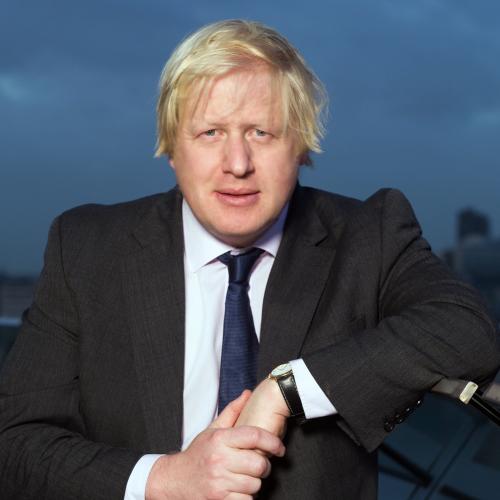
  • Boris Johnson – 2018 Comments on the Salisbury Attack

    Below is the text of the comments made by Boris Johnson, the Foreign Secretary, on 19 March 2018.

    Good morning. I have been very heartened already by the strength of the support that the UK is getting in respect of the incident in Salisbury and I think that is partly because they can see that Britain is acting [with] punctilious accordance with our obligations under the Treaty on Chemical Weapons and I would contrast that with how the Russians are behaving.

    Today the technical experts from the Organisation for the Prohibition of Chemical Weapons are arriving in the UK to take the samples from Salisbury and in the meantime the Russian denials grow increasingly absurd. At one time they say that they never made Novichok, at another time they say that they did make Novichok but all the stocks have been destroyed. Then again they say that they made Novichok but all the stocks have been destroyed but some of them have mysteriously escaped to Sweden or at the Czech Republic or Slovakia or the United States – or even – America, or the United Kingdom.

    I think what people can see is that this is a classic Russian strategy of trying to conceal the needle of truth in a haystack of lies and obfuscation. And what really strikes me talking to European friends and partners today is that 12 years after the assassination of Alexander Litvinenko in London they are not fooling anybody anymore. There is scarcely a country around the table – here in Brussels – that has not been affected by some kind of malign or disruptive Russian behaviour and that is why I think the strength and the resolve of our European friends is so striking today. Thank you very much.

  • Jo Johnson – 2018 Speech on Modernising the Railways

    Below is the text of the speech made by Jo Johnson, the Minister for London and Minister of State for Transport, on 15 March 2018.

    Good afternoon.

    It’s a pleasure to be here.

    And a welcome opportunity to speak to you after my recent appointment as Rail Minister.

    I understand the responsibility that comes along with the job.

    Responsibility for a service that provides 1.7 billion passenger journeys a year.

    And for the equally vital rail freight sector that keeps our economy on the move.

    And I understand the pressures – the pressures that you face too.

    Of busy commuter trains on an over-stretched infrastructure.

    Of managing massive maintenance and upgrade projects.

    Of dealing with industrial action.

    And through it all, trying to provide a reliable service, day-in, day-out.

    So I know it’s tough.

    And I congratulate the industry for keeping things going during the recent spell of cold weather.

    But I also believe that today, the prospects for the railway are brighter than they have been for generations.

    However, we face 2 significant challenges.

    First, we have to deal with the consequences of long-term underinvestment and soaring demand.

    In the 35 years before privatisation 2 decades ago, passenger numbers fell by a third.

    But in the 20 years following privatisation, they doubled.

    Putting a significant burden on some of the most intensively used rail lines in Europe.

    We’re working hard to reverse decades of rail underinvestment.

    With the biggest rail programme since the Victorian era.

    One of the first decisions that the government had to take in 2010 – when the current Chancellor was Transport Secretary – was whether to approve the Civil Service’s recommendation to cancel Crossrail.

    Because the economy was in crisis, and the new line would require significant funding.

    We saw it differently.

    And today, as a result, the first Elizabeth Line test trains are running under the Thames and central London.

    We’ve rebuilt major stations in Manchester, London, Birmingham, Leeds and Reading.

    Every Northern and TransPennine Express train in the north of England is being replaced or refurbished.

    And of course we’re building HS2.

    Towards the end of last year we published our rail spending commitments for the period from 2019 to 2024.

    Total spending will be around £48 billion.

    Billions of pounds from franchise operators is also helping to renew train fleets, upgrade stations and transform services across the country.

    And that leads me to the second great challenge.

    Compared with other transport, the pace of innovation in rail is slow.

    Transport is now the most polluting sector of our economy.

    And while it is cleaner than other modes, rail cannot rest on its laurels.

    Rail emissions have increased in absolute terms.

    So it’s time the rail sector made a stronger commitment to cleaning up its act.

    Electrification of every last mile is unlikely to be the only or most cost effective way to do this.

    New bi-modes are a good bridging technology to other low emission futures.

    And in time, as battery technologies improve we expect to see the diesel engines in bi-modes replaced altogether.

    That’s why we need to continue developing battery technology for hybrid trains.

    And work towards the real prize which is to develop and introduce zero-carbon alternative-fuel trains to the network.

    I look forward with great interest to industry taking forward a hydrogen train trial in the next Control Period.

    Ushering in a new era in low carbon rail travel.

    So I have called on the railway to provide a vision for how it will decarbonise.

    Including the removal of diesel-only trains from the network by 2040.

    I am pleased that the industry has risen to this challenge by forming a task force to lead its response, and I look forward to my meeting with its Chair next week.

    Our ambitions must also go beyond the method of traction.

    I want industry to play its part in addressing the public’s very real concerns about air quality.

    The research which industry is leading into air quality at and around stations, is a good start.

    Now I want us to find new and innovative ways to tackle this blight.

    But innovation is not just about new technologies.

    We can also innovate by changing the way the railway is managed and run.

    This is still a fragmented industry.

    And this fragmentation has been a big factor in preventing the railway from focusing on the passenger.

    That’s why our Rail Strategy goes further than ever before to get private and public sector working more closely together.

    To end the operational divide between track and train.

    And to rebuild the railway around the customer.

    The railway also needs a much stronger regional focus, with integrated teams in place to sort out problems and manage local services.

    So the strategy sets out plans to reorganise Network Rail into a series of regional businesses.

    With greater autonomy and responsibility for local decision making.

    These are common sense changes.

    But they represent a radical reorganisation of the way the railway works.

    Joined up management.

    Simpler, more accountable structures.

    Regional teams whose whole focus is on the customer.

    So, to sum up.

    Privatisation brought a revolution to our railways, and turned round half a century of decline.

    Increased funding since 2010 – and well into the future – has turned round decades of underinvestment.

    Now it’s time for the next transformation.

    Modernising rail services and delivering HS2.

    Committing the industry to a carbon-free future.

    And uniting the railway in a relentless focus on the customer.

    Thank you.

  • Phillip Lee – 2018 Speech at Centre for Social Justice

    Below is the text of the speech made by Phillip Lee, the Parliamentary Under Secretary of State for Youth Justice, Victims, Female Offenders and Offender Health, at the Centre for Social Justice on 14 March 2018.

    Thank you very much for inviting me along to this launch event today. Firstly can I thank the team at Centre for Social Justice for this insightful report. It not only raises a number of pertinent points about the challenges which female offenders, and the services responding to them face, but also outlines practical and creative proposals we can take to tackle them.

    Secondly, I would like to emphasise an important theme that runs throughout this report: the need for a multi-agency, gender-responsive approach to female offenders that brings together local and national partners in a coordinated and accountable manner.

    Female offenders are some of our most vulnerable members of society and often have complex needs. As articulated in the report, a significant number of these women have histories of mental health issues, substance misuse, trauma and abuse, homelessness, poor education and unemployment.

    For many, these issues have developed prior to their involvement with the criminal justice system. Many of these women are also likely to be already known to, or already engaged with, different public services before they even commit a crime.

    Despite this, we know that outcomes for a significant number of women remain persistently and unacceptably poor.

    We must address these issues at the outset if we want to reduce crime, reduce reoffending, protect victims and the public.

    Achieving this requires a joined-up approach from the relevant Government departments, national and local statutory services, and the voluntary sector, to develop a coordinated, multi-agency response. I’m pleased to say we are making some real progress in achieving this. And, this is a principle that also underlines my female offender strategy.

    Whole System Approach and women’s centres

    As set out in the report, we are investing £1 million pounds seed funding to support local areas to develop new ways of working with female offenders by adopting a multi-agency – often termed Whole System – approach.

    The whole system model brings together local agencies, criminal justice, statutory and voluntary. Together they provide the holistic, targeted support a female offender needs, with shared investment and outcomes. The National Probation Service and Community Rehabilitation Companies are key partners, ensuring that female offenders receive targeted, wrap-around support both through the gate and in the community.

    Women’s centres are often at the heart of many of these Whole-System Approach models. And I have been impressed by the women’s centres that I have visited. Over the past year I met staff and service users at Nelson Trust and Anawim, which are both providing valuable support to vulnerable women.

    I recognise the hugely important role that these women’s centres can play in supporting female offenders and those at risk of offending. Our best response to female offending must be one that is locally-led.

    Liaison and diversion

    Another recent success commended in the report is that of Liaison and Diversion (L&D) services. L&D services place clinical staff at police stations and courts to provide assessments and referrals at an earlier stage. In doing so, we can intervene early to support people with mental health, drug and alcohol issues as soon as they come to the attention of the criminal justice system.

    L&D services will be operating across 82% of England by the end of March 2018, and across 90% of the country by the end of March 2019. Full rollout is expected by 2020/21.

    And we are going further. NHS England are currently enhancing ‘women’s pathways’ across all L&D services, to address the specific needs of women in the criminal justice system.

    A specific women’s lead will be appointed in each service to focus on this. Services will:

    offer to see all females who come into custody
    provide females with the choice of the gender of their practitioner

    offer gender-sensitive tools for screening

    and provide effective onward referrals to gender specific and sensitive services.

    The needs of particular groups such as women sex workers and foreign national women, will also be considered. These pathways will be co-designed with women with lived experience.

    This will mean that more female offenders will be diverted away from the criminal justice system in the first place, away from charge, or to a community sentence. I firmly believe that early intervention is an important part of our response to female offending. Not only does it improve outcomes for these women but also their children, their families and the public as a whole.

    Devolution

    As the report outlines, Police & Crime Commissioners (PPC’S) have a real appetite to be more involved in a new approach for female offenders.

    This is extremely welcome. PCCs play a valuable role as visible and accountable leaders of the local police and crime systems. And Combined Authorities bring together several services which are crucial to reduce reoffending.

    I recognise the potential benefits that a more locally-led system offers. I am keen to work closely with PCCs and Combined Authorities to explore this further.

    It is crucial that we work more closely with these local partners to tackle the issues leading women into the criminal justice system.

    To deliver this, we have signed devolution agreements with several areas, including Greater Manchester, Liverpool City Region, West Midlands and Greater London.

    The Ministry of Justice is committed to exploring options to provide greater devolution of criminal justice responsibility and budgets to local commissioners.

    Women at court

    Another issue raised in the report was that of awareness of pre-sentence report writers of the disposals available in their areas. We have recently undertaken an audit of pre-sentence reports and assessment tools for female offenders at court. This looked at how we could take a more gender responsive and trauma informed approach towards the women we are working with.

    Cross-departmental work is now progressing to increase the quality of assessments for female offenders and a work plan has been developed to take this work forward.

    This work is also looking to increase the take up of effective community sentences in line with sentencing guidelines. This work is being carried out in partnership with the National Probation Service and Community Rehabilitation Companies (CRC’s).

    Workforce development

    However, for these changes to have the necessary impact, it is essential that we have a gender informed workforce.

    We continue to roll out Trauma Informed training to criminal justice professionals. Training is now being extended across the National Probation Service and CRCs, as well as to prison staff.

    We have also supported the wider Criminal Justice System roll out of the ‘Safeguarding Children When Sentencing Mothers’ training material completed by Dr Shona Minson.

    This training raises awareness of the diverse implications of maternal imprisonment for children. I would like to reiterate my thanks to Dr Minson for her invaluable work.

    Benefits and employment

    Today’s report also rightly highlights the challenges which prisoners face when leaving prison, particularly around access to welfare support.

    Prisoners are able to speak to a Department of Work and Pensions Work Coach before release. They can make an appointment at the relevant Job Centre as early as the day of release. Once the former prisoner attends the Job Centre to complete their claim, eligible prisoners can receive funds within hours.

    However, we recognise that more can be done. That is why we are working with the Department of Work and Pensions to improve the process with the aim of enabling a claim in advance of release.

    And I want to do more to help women into employment on release too. Getting and keeping a job can change people’s lives and work is the best route out of crime. The prison and probation service have an important role to help offenders build the skills and experience they need whilst they’re in prison so they can have the right attitude for work and get a job when they’re released. As the Secretary of State outlined on 6 March, we will shortly be launching our Education and Employment Strategy. This will set out our approach to helping offenders get the skills they need to find a job and avoid the activities that landed them in prison in the first place.

    Accommodation

    Another factor that plays an important part in rehabilitation is accommodation. There is considerable evidence which tells us there is a link between lack of stable accommodation and reoffending. Suitable accommodation plays an important part in enabling offenders to get a job, into training, or registered with a GP.

    HMPPS has undertaken some initiatives to improve access to accommodation, such as expanding the BASS contract to offer accommodation to offenders on licence.

    We continue to work with all probation providers to help make sure offenders get the support they need to find accommodation on release.

    But accommodation is a serious problem which requires a cross departmental response, as recognised in the report’s recommendations.

    We are working with Ministry of Housing, Communities and Local Government to improve access to housing for those being released from prison.

    As part of this, we are investigating how Housing First and proposals regarding the private rented sector could help to ensure that offenders with complex needs, including female offenders, can secure suitable accommodation

    This work will form part of the wider Government commitment to eliminate homelessness.

    Conclusion

    As you know, my female offender strategy is due shortly. I hope to outline in this what further progress we have made in the areas I have highlighted today, and others, to address the challenges which female offenders face. This is a complex issue and one that I want to get right.

    Thank you for having me here today to support the launch of this report.

  • Harriett Baldwin – 2018 Speech on Illegal Wildlife Trade

    Harriett Baldwin

    Below is the text of the speech made by Harriett Baldwin, the Minister of State for Africa at the Foreign & Commonwealth Office, on 16 March 2018.

    The Foreign Secretary Boris Johnson sends his congratulations to everyone involved in the incredible work here. It is great to be here with you in beautiful Botswana.

    President Khama has been a towering force in what is appropriately named the Giants Club. Botswana’s abundance of diverse wildlife is testament to the fantastic job that President Khama, Space for Giants, and many other committed people and organisations are doing to protect these wonders and their natural habitat. I’d like to pay tribute to the founding members of this Club – the Presidents of Botswana, Gabon, Kenya, and Uganda. We’ve heard the strength of their ongoing commitment today, and they are an inspiration to Africa and the rest of the world.

    I want to hear more from the Giants Club, and from the other African delegates here today, about the action you think needs to be taken to realise African ambitions for a type of conservation that brings economic benefit to African communities. I want to say that the UK stands ready to help.

    Illegal Wildlife Trade

    We are all here because we understand just how tragically short-sighted the illegal wildlife trade is and because we know that if we don’t act now, it will be too late, as many species could be approaching extinction. In 1979 there were 1.3 million African elephants, today there are only 415,000. And their populations are declining at an alarming rate, which is why we need action now.

    The illegal wildlife trade is threatening not only elephants, but many of the world’s endangered species – species that define national identities, and heavily influence economic development. We are all here because we know we need to preserve these riches, not destroy them. We also know that tragically, the curse of this trade is two-fold; as poaching and the illegal wildlife trade also has a deeply corrosive effect on human society.

    Poachers are now coming armed to the teeth, endangering not only animals’ lives, but human lives too. They undermine state institutions and governance, they illegally exploit your countries’ natural resources, often to benefit people and networks beyond your borders, and they foster the corruption which feeds discontent and insecurity.

    This insecurity can damage livelihoods and hold back development as well as robbing people of their economic potential. The criminals responsible must not be allowed to fracture your societies and plunder your children’s futures.

    These are the reasons that I and the Foreign Secretary are so passionate about tackling this illegal trade head-on. We believe the work you are doing. We believe in the cooperation between your countries through the Giants Club, and we believe that that is the key to achieving real change.

    Foreign Secretary’s commitment

    The Foreign Secretary has made the illegal wildlife trade a personal priority, and is dedicated to ending the illegal ivory trade. He wants 2018 to be the year that real changes are made. He is particularly excited by your proposals to create a cross border safe space for wildlife.

    Ambitious ideas like this are what is needed if real change is going to be achieved. Which is why Britain is supporting the awareness-raising work being done by Space for Giants, and I know the digital march of the elephants last week really set the tone for the summit.

    Tackling poaching

    Operations to tackle poaching will be discussed today, and they are another critical part of the Space for Giants programmes. The UK is funding practical action around the world to reduce demand, strengthen enforcement and develop sustainable livelihoods for communities affected by the illegal wildlife trade. Since the Illegal Wildlife Trade Challenge Fund was launched in 2013 we have funded 47 such projects.

    One recent example involves the British military delivering anti-poaching activities with rangers in Gabon, and a follow-up project in Malawi. The project aims to reduce poaching, working with African park rangers for more effective and safer counter-poaching techniques.

    London Conference

    The UK is hosting an important conference to tackle the illegal wildlife trade in October; and I know many of you will be attending. The conference will enable us to build on the work being done by the Giants Club and others groups. It will focus on 3 challenges:

    firstly, how to tackle the illegal wildlife trade as a serious organised crime. This will consider how we strengthen law enforcement, and how we snuff out the associated corruption

    secondly, we are going to build coalitions to help us in this fight. We will harness technology, and share and scale up successful and innovative solutions

    we will look at how we close global markets for illegally traded wildlife products, tackling the demand problem. And yes, the UK will lead by example.

    We will be shutting down our ivory trade. We will be working with the EU to do the same. That’s something we can do irrespective of whether we are in the European Union or not.

    Conclusion

    In conclusion to my remarks – we do not currently have the answers to all these challenges; but, if the international community works together, I know we can find the solutions. Together we can halt the alarming disappearance of these unique animals.

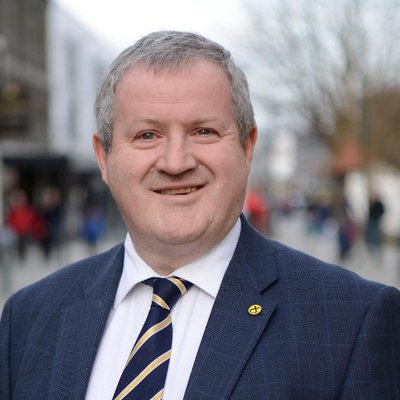
  • Ian Blackford – 2018 Response to the Salisbury Attack Statement

    Below is the text of the speech made by Ian Blackford, the SNP MP for Ross. Skye and Lochaber, in the House of Commons on 14 March 2018.

    Let me thank the Prime Minister for advance sight of her statement.

    As the Prime Minister has said, the attack on Mr Skripal and his daughter was an unlawful use of force by the Russian state against the United Kingdom. There has to be a robust response to the use of terror on our streets. We must act in a measured way to show that we will simply not tolerate this behaviour. In that regard, I welcome, and associate those of us on the Scottish National party Benches with, the measures contained in the statement. On this matter, I commit my party to working constructively with the Government.

    I am sure that the House will join me in extending thanks to the members of the police and security services who are working around the clock on the recent case in Salisbury. It has been warming to see our closest friends ​and allies across Europe expressing solidarity and support. Our friends globally must join with us by standing up to this abuse of state power by Russia. I look forward to the discussions in the United Nations, which must speak with a clear and unambiguous voice.

    The fact that we are expelling the largest number of undeclared intelligence officers in over 30 years is welcome, as is the desire to examine what can be done from a legislative perspective to defend against hostile state activity. As someone who has previously supported so-called Magnitsky measures, I am pleased that the Government are signalling action in this area. Let me commend the actions of Bill Browder—I have had the opportunity to meet him—who has personally been at massive risk, but has stood up to the effects of Russian state power.

    Financial sanctions are welcome, and we must redouble our efforts against any money laundering by those responsible. It must be made clear to the Russian authorities that we will not tolerate activities that infringe international law. While we support the PM’s actions, we will continue to scrutinise them carefully, and we must ensure that any proposed legislation is properly scrutinised.

    Our thoughts are with those in Russia who have suffered due to the abuse of state power. There is no doubt that that is what we are seeing. In doing so, we look forward to a time when we can engage positively, and to a time of peace and co-operation, but the only response today must be a robust one towards the Kremlin and Russia.

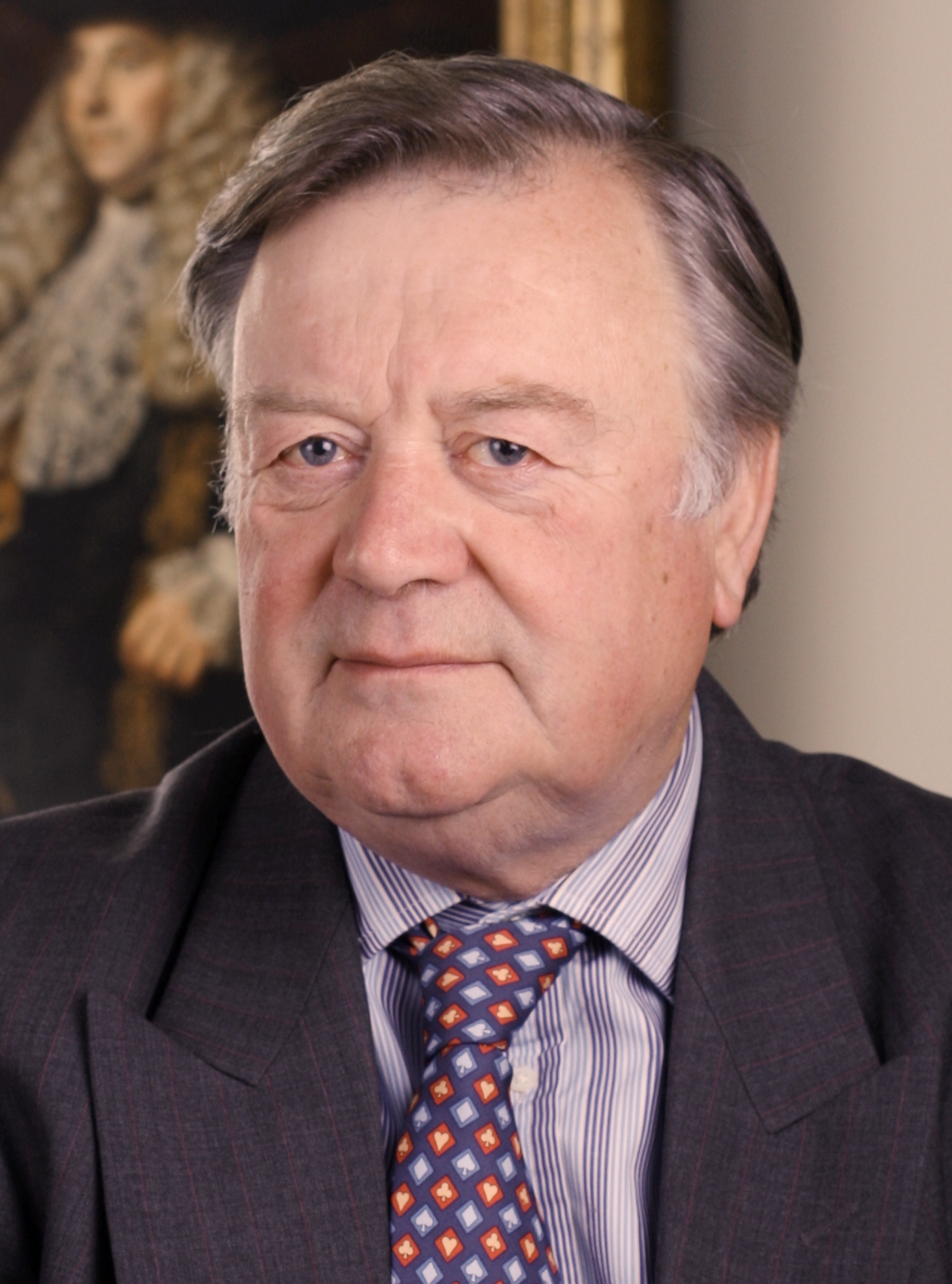
  • Ken Clarke – 2018 Response to the Salisbury Attack Statement

    Below is the text of the speech made by Kenneth Clarke, the Conservative MP for Rushcliffe, in the House of Commons on 14 March 2018.

    It seems to me, without any access to closed information, that the use of this particularly bizarre and dreadful way of killing an individual is a deliberate choice by the Russian Government to put their signature on a particular killing so that other defectors are left in no doubt that it is the Russian Government who will act if they are disappointed in any way by those people’s actions. In the light of that, the only sensible question the Leader of the Opposition asked was what consultation we propose to have with NATO, other European countries and the American Government about positive action that could be taken to prevent this continuing defiance of international law, and the defiance of all rules on the testing and possession of chemical weapons. This is not just a question of expressing our anger about Salisbury. This is actually a serious threat to the safety of the western world unless and until we all do something together to get the Russians to do something, as opposed to simply ignoring us.

  • Jeremy Corbyn – 2018 Response to the Salisbury Attack Statement

    Below is the text of the speech made by Jeremy Corbyn, the Leader of the Opposition, in response to the Prime Minister’s statement on the Salisbury attacks, on 15 March 2018.

    I thank the Prime Minister for advance sight of her statement and echo her words about the service of our emergency and public services.

    The attack in Salisbury was an appalling act of violence. Nerve agents are abominable if used in any war. It is utterly reckless to use them in a civilian environment. This attack in Britain has concerned our allies in the European Union, NATO and the UN, and their words of solidarity have strengthened our position diplomatically. Our response as a country must be guided by the rule of law, support for international agreements and respect for human rights. When it comes to the use of chemical weapons on British soil, it is essential that the Government work with the United Nations to strengthen its chemical weapons monitoring system and involve the Organisation for the Prohibition of Chemical Weapons.​

    The Prime Minister said on Monday:

    “either this was a direct act by the Russian state…or the Russian Government lost control of their potentially catastrophically damaging nerve agent and allowed it to get into the hands of others.”—[Official Report, 12 March 2018; Vol. 637, c. 620-21.]

    Our response must be decisive, proportionate and based on clear evidence. If the Government believe that it is still a possibility that Russia negligently lost control of a military-grade nerve agent, what action is being taken through the OPCW with our allies? I welcome the fact that the police are working with the OPCW.

    Has the Prime Minister taken the necessary steps under the chemical weapons convention to make a formal request for evidence from the Russian Government under article IX(2)? How has she responded to the Russian Government’s request for a sample of the agent used in the Salisbury attack to run their own tests? Has high-resolution trace analysis been run on a sample of the nerve agent, and has that revealed any evidence as to the location of its production or the identity of its perpetrators?

    Can the Prime Minister update the House on what conversations, if any, she has had with the Russian Government? While suspending planned high-level contacts, does she agree that is essential to retain a robust dialogue with Russia, in the interests of our own and wider international security?

    With many countries speaking out alongside us, the circumstances demand that we build an international consensus to address the use of chemical weapons. We should urge our international allies to join us in calling on Russia to reveal without delay full details of its chemical weapons programme to the Organisation for the Prohibition of Chemical Weapons. It is, as we on the Labour Benches have expressed before, a matter of huge regret that our country’s diplomatic capacity has been stripped back, with cuts of 25% in the last five years. It is—[Interruption.]

    Mr Speaker

    Order. The right hon. Gentleman must be heard. There will be adequate opportunity for colleagues on both sides of the House to put questions. Members must be heard.

    Jeremy Corbyn

    I could not understand a word of what the Foreign Secretary just said, but his behaviour demeans his office.

    It is in moments such as these that Governments realise how vital strong diplomacy and political pressure are for our security and national interest. The measures we take have to be effective, not just for the long-term security of our citizens but to secure a world free of chemical weapons. Can the Prime Minister outline what discussions she has had with our partners in the European Union, NATO and the UN and what willingness there was to take multilateral action? While the poisonings of Sergei and Yulia Skripal are confronting us today, what efforts are being made by the Government to reassess the death of Mr Skripal’s wife, Liudmila, who died in 2012, and the deaths of his elder brother and son in the past two years?

    We have a duty to speak out against the abuse of human rights by the Putin Government and their supporters, both at home and abroad, and I join many others in this House in paying tribute to the many campaigners in Russia for human rights, justice and ​democracy in that country. We must do more to address the dangers posed by the state’s relationship with unofficial mafia-like groups and corrupt oligarchs. We must also expose the flows of ill-gotten cash between the Russian state and billionaires who become stupendously rich by looting their country and subsequently use London to protect their wealth. We welcome the Prime Minister today clearly committing to support the Magnitsky amendments and implementing them as soon as possible, as Labour has long pushed for.

    Yesterday Nikolai Glushkov, a Russian exile who was close friends with the late oligarch Boris Berezovsky, was found dead in his London home. What reassurances can the Prime Minister give to citizens of Russian origin living in Britain that they are safe here?

    The events in Salisbury earlier this month are abominable and have been rightly condemned across the House. Britain has to build a consensus with our allies, and we support the Prime Minister in taking multilateral and firm action to ensure that we strengthen the chemical weapons convention and that this dreadful, appalling act, which we totally condemn, never happens again in our country.