Blog

  • Amber Rudd – 2010 Maiden Speech in the House of Commons

    Below is the text of the maiden speech made by Amber Rudd, the Conservative MP for Hastings and Rye, in the House of Commons on 17 June 2010.

    I am grateful for the opportunity to deliver my maiden speech. I congratulate all new Members who have spoken so ​elegantly and eloquently, particularly my hon. Friend the Member for Rossendale and Darwen (Jake Berry), whose maiden speech was well conceived and comfortably delivered.

    I represent the constituency of Hastings and Rye. Of course, it is only us who call our areas constituencies. To my constituents, the constituency is home, where they live and where they bring up their families, and I will never forget that. Some six weeks since the general election, I still get a little lost going from one room to the next, and between staircases and lifts, but I remain impressed, humbled and not a little relieved to be in these historic corridors and as part of this historic coalition.

    Part of my responsibility is to live up to the example of the previous Member of Parliament for Hastings and Rye, Michael Foster. He was the epitome of a good constituency MP. He was immensely popular, not just because of the individual acts that he did for local residents, but because of his high visibility locally and his successful lobbying of the then Government for additional funds for the town. Unfortunately for him, his popularity grew in inverse proportion to that of his Government, but I recognise that, through his service, he set a very high bar—one that I shall try to reach and, hopefully, at some stage exceed.

    The fruits of Michael Foster’s success are evident in Hastings. We have a new train station, further education college, and university centre, and two new state-of-the-art office developments. However, physical regeneration has not yet translated into economic regeneration. Our offices are still largely empty, the train services are still poor, and on the index of multiple deprivation, Hastings remains 29th from the bottom. We have some of the lowest wages and highest unemployment in the whole country, let alone the south-east. Cynics might be forgiven for thinking that Labour’s regeneration has been a triumph of style over substance so far. The make-up is in place, but I am afraid that the wrinkles are still very much there.

    But deprivation is only one part of Hastings, and Hastings is only one part of an area of contrasts and variations. My constituency feels very much like a microcosm of the country, with urban and rural areas, with farmland adjacent to idyllic estates, and with idyllic villages next to deprived wards. We are the custodians of England’s most famous date—perhaps more famous than 6 May 2010.

    Let me introduce colleagues to the wonderful aspects of my constituency. Hastings, Rye and the village of Winchelsea were all parts of the Cinque ports, which were put together in the 11th century to keep out seafaring invaders, and for the mutual benefit of trade and fishing. Each place has its own unique character. I urge Members to spend their summer holidays with us. They can enjoy local produce, the source of modern English history, top-quality entertainment, fresh air and exercise—and for the more sedentary among us, there are fish and chips and slot machines. They can even walk in genuine dinosaur footprints, which may appeal to some Labour Members.

    Tourism is an essential ingredient of what we have to offer. Hotels and boarding houses boast that they have been popular with visitors since 1066—visitors, of course, have not always been so popular with them. We have fantastic beaches, wonderful countryside and arguably ​the world’s most remarkable heritage. We have flourishing language schools, visited by students from all over the world, and a community that welcomes them with open arms, not to mention open tills, because we need the business.

    Like many towns, we suffer from the coastal problem of being at the end of the line. Looking at previous maiden speeches over the past 40 to 50 years, I see that there has been a recurring theme: transport. The A21 to Hastings needs renewing and improvement. Our survival and prosperity depend on access. There is no point having wonderful facilities if people cannot access them. It unquestionably puts off employers and tourists, both of whom we need, that it is so difficult to get to our part of the world. I am talking of a constituency where 43% of the work force are in the public sector. We are like an island. We know which way the tide is going; we need to attract the private sector to try to take up some of the unemployment. I fear that much of the money that has already been spent in my constituency will fail to improve the economy if we do not do something about that. For too long, we have been the underprivileged cousin of the south-east. Many of my constituents have suffered terribly from an economy that has simply left them behind.

    I have two important considerations for my constituency of Hastings and Rye. The first is transport. I recognise the particular financial situation in which we find ourselves—there must be cuts; we have inherited a difficult legacy. However, I urge Government Front Benchers not to make them to vital infrastructure projects, on which everything else depends. In my constituency, they are a link road to open up the area to more jobs and more employers, improvements to the A21, and better rail transport. We must be accessible to prosper. Conservatives understand above all the importance of enterprise and encouraging private sector growth so that families and communities can grow on their own.

    We have discussed the high-skilled economy, and I agree that we all need that for our country to advance. However, I would like to draw hon. Members’ attention to a very old trade. In Hastings, we have the largest beach-launched fishing fleet in Europe. In Rye, we have an important port and fishing fleet. They have been treated shamefully in the past 15 years. In the 1990s, there were 44 fishing vessels leaving Hastings; now there are 20, and the fishermen eke out a precarious living. Those men earn their living in a traditional, honest and environmentally friendly way, battling with the sea and the dangers of the deep. However, the common fisheries policy, as enforced by the Department for Environment, Food and Rural Affairs, has made their lives impossible. In 2005, there were prosecutions of those fishermen. The role of Government must be to help people, not put them out of business. Their way of life needs bailing out. Our Fisheries Minister understands the issue and the urgency and has visited Hastings twice, but we cannot wait for a full renegotiation of the common fisheries policy. We need change now, with the cod season approaching and difficulties ahead of us. We need a Government who protect our fisheries and our fishermen. I urge particular consideration of coastal towns.

    The Government recognise the importance of promoting private sector growth. I hope that we can demonstrate ​that in Hastings and Rye by supporting better transport links and securing a fairer deal for fishermen. All we ask is a fair wind and an even keel.

  • George Eustice – 2018 Statement on Agriculture and Fisheries Council

    Below is the text of the statement made by George Eustice, the Minister for Agriculture, Fisheries and Food, in the House of Commons on 26 April 2018.

    The Agriculture and Fisheries Council took place in Luxembourg on 16 April. Counsellor Rory O’Donnell represented the UK.

    The most substantive agricultural item was a presentation by the European Commission setting out a proposal for a directive on “unfair trading practices in business-to-business relationships in the food supply chain”. The Commission’s presentation highlighted the UK’s Groceries Code Adjudicator (GCA) as an example of best practice in this field. The UK outlined its agreement with member state action to tackle unfair trading practices, but stressed the need for any proposed EU-wide legislation to protect well-functioning existing national systems.

    The Bulgarian presidency also provided the Council with an update on food losses and food waste, following the adoption of Council conclusions on tackling food waste in June 2016. The Council reaffirmed its commitment to meeting UN sustainable development goal 12.3 on food waste.

    For fisheries, the focus of this Council was a presentation by the European Commission outlining a proposed multi-annual plan for fish stocks in western waters. The UK welcomed the proposal’s alignment of the western waters plan with the approach taken in the North sea plan, while reminding Council of the need to find solutions for by-catch stocks in the context of meeting the landing obligation.

    Four further items were discussed under “any other business”:

    the Spanish delegation requested clarification on interpreting the landing obligation in article 15 of the common fisheries policy

    the presidency informed the Council of the outcomes of the TAIEX workshop on the role of wildlife in animal health management

    the Polish and Danish delegations presented information on African swine fever

    the European Commission informed Council about a proposed regulation on the transparency and sustainability of the EU risk assessment in the food chain.

  • Penny Mordaunt – 2018 Statement on Syria and the Brussels Conference

    Below is the text of the statement made by Penny Mordaunt, the Secretary of State for International Development, in the House of Commons on 27 April 2018.

    The Syrian regime’s continued and systematic blatant disregard for international humanitarian and human rights law has resulted in an unprecedented humanitarian catastrophe. Medical facilities, schools and aid workers appear to have been deliberately targeted, aid has been blocked to starve communities into submission, and rape and sexual violence have been deployed as routine weapons of war.

    13.1 million people are now in need of humanitarian assistance, including 5.6 million with acute needs. In addition, over half of Syria’s population has been displaced by the violence, with 5.6 million seeking refuge in neighbouring countries.

    Since the conflict began seven years ago, the UK has been at the forefront of the international response. We are the second largest bilateral donor to the crisis. Our support to Syria and the region since 2012 has provided humanitarian assistance to 17 million people, including over 27,000,000 monthly food rations and over 10,000,000 vaccines, and helped over 7.1 million children gain a decent education.

    But now, in the eighth year of the conflict, the humanitarian needs of the Syrian people remain as grave as they have ever been. It is clear that the regime has no intention of ending its people’s suffering. The barbaric chemical weapons attack in Douma on innocent civilians, including young children, was yet another example of the regime’s flagrant disregard for its responsibility to protect civilians.

    We must not turn our backs on their suffering. That is why at this week’s Brussels conference for Syria and the region, I announced that the UK will provide at least £450 million this year, and £300 million next year ​to alleviate the extreme suffering in Syria and provide vital support in neighbouring countries. We have now committed £2.71 billion to the Syria crisis since 2012, our largest ever response to a single humanitarian crisis.

    Our pledge will help keep medical facilities open so doctors and nurses can save lives, and will help support the millions of Syrian refugees sheltering in neighbouring countries.

    Our friends in the region, Jordan, Lebanon and Turkey in particular, continue to demonstrate extraordinary generosity in opening their doors and communities to millions fleeing the conflict in Syria.

    We must continue to offer them our fullest support. Not least because as the trajectory of the Syrian war has worsened, our collective interests in a stable and prosperous region have increased. Jordan’s resilience and prosperity are critical to the long-run interests of the region. That is why, in addition to the support to the region provided in our pledge, I announced that the UK will host an international conference with Jordan in London later this year: to showcase Jordan’s economic reform plans, its aspiration to build/enable a thriving private sector, and to mobilise support from international investors and donors.

    But money alone is not enough. We continue to support the UN-mediated process as the surest path to peace. But while we work towards a political solution in the future that can end this suffering once and for all, we must not give up on improving conditions in the present. In this spirit, I called upon those present at the conference to join the UK in calling for concrete actions to enable greater protection for civilians and aid workers now. That means an immediate ceasefire and immediate safe access so that brave aid workers and medical staff can do their jobs and help the most vulnerable and the most desperate without fear of attack.

    The UK is a global leader within the Syria response. I am proud that at this week’s conference, we demonstrated clearly that we will not turn away from the suffering of the Syrian people—we will continue to lead the response in working with others to call out atrocities, mobilise funding, demand access for aid, protect civilians and ultimately, work towards a solution that can put Syria on a path to peace.

  • Nick Raynsford – 1986 Speech on the West London Hospital

    Below is the text of the speech made by Nick Raynsford, the then Labour MP for Fulham, in the House of Commons on 18 July 1986.

    I am grateful for this opportunity to discuss the future of the West London hospital, which is extensively used by many residents of my constituency, although it is located just outside the boundary in the constituency of my hon. Friend the Member for Hammersmith (Mr. Soley), who has fully supported my concern and would have wished to be here today but for other commitments. It is appropriate that this debate should take place today as a consultation paper is expected to be published today by the district health authority proposing the closure of the West London hospital in November 1987.

    It is important that the House should be aware of the context of that consultation paper. It is being produced by a district health authority which has been told to make cuts of some £33 million in a budget of £120 million by 1993–94—a reduction in expenditure of no less than 27 per cent. That is no reflection of lack of need in the area, which has huge unmet needs—an aging population, long and lengthening waiting lists for many operations and many people suffering poverty and deprivation. Against that background, the National Health Service should be expanding and developing to meet needs more effectively, rather than being told to make swingeing cuts in the budget which illustrate all too clearly the dishonesty of the Government’s claim that the Health Service is safe in their hands. The people of Fulham and Hammersmith are well aware how hollow and untrue that claim is. In the face of such cuts in hospital services, the Health Service in West London is far from safe in the Government’s hands.

    The West London hospital currently incorporates four main units. The obstetrics unit has a national reputation for a very high standard of care. Among women it has a reputation for providing a service that is sensitive to their needs and aspirations, and it has been in the forefront in promoting natural childbirth. There is also a special baby care unit with a particularly high standard of neonatal care —a factor contributing to the good reputation of the area in terms of perinatal mortality, for which the figures are among the lowest in Britain and, indeed, in western Europe. The plan in the consultation paper involves closure of the hospital and loss of the obstetrics unit without replacement, and thus the destruction of one of the country’s best maternity units.

    Secondly, the geriatric unit provides long-term care for about 50 elderly patients. This unit has done important work in developing understanding and a close relationship between staff and patients. Many of the patients suffer from senile dementia, requiring intensive care and needing to develop trust and confidence in the people looking after them.

    The third unit is the psycho-geriatric assessment unit providing 16 beds and also associated day care. The fourth is the genito-urinary unit, which is doing extremely important work in one of the most difficult areas of medicine and, indeed, is currently one of the first places of referral for a substantial number of people suffering from AIDS in Britain. The importance of that work should not be underestimated.

    Apart from the four units provided by the hospital, there is also an associated nurses home, Abercorn House, which is providing accommodation for 90 nurses in an area where there is a desperate need because high house prices and exceptionally high rents make it difficult for nursing staff to afford to live. That in turn creates acute problems for hospitals, one of which, the Charing Cross hospital, has encountered considerable difficulty in maintaining its wards because of the absence of nursing staff who simply cannot afford to live in the area.

    The proposal in the consultation paper suggests the relocatin of some of those units. The psycho-geriatric and genito-urinary units would be relocated, essentially at Charing Cross hospital, and I would not quarrel in principle with that. It is appropriate that those units should be on a district general hospital site, and the standard of provision could well be improved there.

    The geriatric department will be replaced under the proposals with two small-scale nursing homes. Again that is not necessarily wrong in principle, but there are serious potential problems. In the first place, there must be an anxiety about the timetable — whether the new units, which have not yet been begun, could possibly be completed and ready for occupation by November 1987, the date set for the closure of the West London hospital.

    Secondly, what will happen in terms of the disruption of the care of the elderly people, whose trust in their nurses has been painstakingly built up over a period? We should remember that we are talking only of replacing beds that will be lost. Yet we know that there is an urgent additional need for extra beds, particularly for respite care to help many carers who look after elderly relatives and who desperately need the opportunity to place their relatives in a caring environment so that they can get away for a week or two weeks’ holiday from time to time. Those are the units that will, to an extent, be replaced under the proposal. I want now to deal with those that will not.

    The nurses home will be lost, and that will be a loss of desperately needed accommodation in the area. The obstetrics unit will be lost without replacement under the proposal. That is clearly motivated by a wish to make savings. There can be no other possible explanation of why that has been put forward. The consultation paper suggests that that will provide savings of approximately £2,250,000 out of the total projected revenue savings coming from the closure of the hospital of £2,750,000. So the lion’s share of the total savings is attributable to the closure of the obstetrics unit without replacement.

    What possible justification can there be for doing this? It may be argued that the West London hospital building is old, in need of maintenance and repair. It is an old building. It has a long and distinguished history going back 126 years, during which time the hospital has been located on this site. However, I hasten to add that there have been many additions and improvements to the building during that time. It is not simply a building that dates back to the 1860s.

    Everyone who has been there or who has accompanied patients there knows what is really important is not its bricks and mortar but the standard of care. The West London hospital’s reputation is without equal in that respect. It has an immensely high standard of care and concern for patients. It is also one of those smaller hospitals which can achieve a more friendly and intimate environment than is possible in larger hospitals. The physical fabric of the hospital might justify the relocation of the unit elsewhere, but it certainly does not justify the closure of that unit without replacement.

    What other justification could be advanced for the closure of the unit? Undoubtedly the claim will be advanced—I suspect the Minister has been briefed to this effect—that there is an over-provision of maternity beds in the district”. Such a claim can be substantiated only by a juggling of the statistics to suit the argument. There are only two maternity units in hospitals managed by the district health authority—Westminster hospital and the West London hospital. Between them they provide for about 3,000 births a year—about 2,000 at the West London hospital and about 1,000 at Westminster hospital. The birth rate for the Riverside area is about 3,500 and the forecast, based upon a midpoint projection, is about 3,700 a year.

    Local needs can be met adequately only because of the two other maternity units, which do not come under the district health authority, but come under the special health authority. I refer to Queen Charlotte’s and Hammersmith hospitals. Beds there are not primarily available to local residents. The North West Thames Regional Health Authority’s maternity patients flow data show clearly that only a small proportion — about 17 per cent. —of maternity patients at Queen Charlotte’s come from Hammersmith and Fulham. Most come from other areas.

    There is no catchment area for obstetrics and no priority is given to local patients. Many of my constituents are refused access to Queen Charlotte’s hospital. The letter that is sent out states simply: Your doctor has written to us requesting a booking for your confinement at Queen Charlotte’s Maternity Hospital. We very much regret that during the time of your expected confinement we are fully booked and suggest that you return to your doctor immediately so that alternative arrangements for your confinement can be made. Letters like that are being sent out in large numbers. According to recent evidence from Professor Elder, 150 applicants a month are turned away by the special health authority. So much for the argument about over-provision.

    Furthermore, the argument ignores consumer choice. West London and Queen Charlotte’s hospitals are both excellent in their way, but they represent entirely different poles of maternity care provision. The West London hospital has a national reputation for progressive maternity care, for natural child bith and for taking account of the woman’s needs and wishes. My three children were born there, so I know of the extraordinary sensitive care that my wife received during her confinements.

    The consultation document admits as much. It says: The West London unit is justly famous. It has been in the forefront of the development of more liberal and sensitive approaches to maternity services and has become known as a leading centre for natural child birth. It is also regarded as a major centre for teaching and research. That is a tragic comment on the state of the Health Service under this Government. An outstanding maternity unit is threatened with closure without replacement.

    The third argument which might be advanced for the closure is that patients can go instead to Westminster hospital. That involves the loss of the West London unit and its tradition of excellence. It will involve a substantial aditional journey for people in my constituency that is particularly important if their children are in the neo-natal intensive care unit and they have to be on hand to be close to their babies.

    The fundamental argument is that even if one of those units has to close because of over-provision, West London certainly should not be chosen. West London is the only unit which satisfies the health authority’s criteria for the minimum standards of provision which make the unit viable. The health authority’s planners have made it clear that the minimum standard for viability is 2,000 births per year. The West London hospital achieves that, but Westminster does not. Even with the proposed extra provision, Westminster will still have a capacity for only 1,700 deliveries — far below the minimum level for viability. What an extraordinary proposal.

    There will be a serious potential impact on Charing Cross hospital and its medical school. The closure of the unit at West London will leave a major teaching hospital without an associatud obstetrics unit. That will create an extraordinary situation and, as the consultation paper admits, it will have a knock-on effect on the gynaecological service. The document states: Some impact on the existing provision of gynaecology services could result. Any reduction in the level of gynaecology services would have to be the subject of separate formal consultation. The paper admits that there will be serious potential consequences and that there will have to be further consultation, yet it is still proposed to go ahead with the closure of the West London hospital. That is nonsensical. Furthermore, this could undermine the viability of obstetric teaching at Charing Cross.

    Professor Curzon has said that the closure of the West London unit would have drastic consequences. I shall quote from a paper that he wrote earlier this year, which states: If the West London obstetric unit were to be closed before a definitive solution to the long-term provision of obstetric services had been agreed and implemented, the School’s department would have to move to some other temporary site. This would compound the damaging effects of further uncertainties about the future with the considerable turbulence resulting from the move. The only possible sites to which the department could move would be either Westminster Hospital or Queen Charlotte’s Hospital. It has already been shown that Westminster Hospital fails to meet the essential criteria of sufficient resources for teaching, and provision of obstetrics and gynaecology on the same site. A subsequent note from the Professor states that Queen Charlotte’s hospital will not take the students in question.

    There are all these damaging consequences. The cuts will have an effect on patient care, medical education and related health services. Above all, they will fly in the face of public opinion. When the closure was last proposed, there was generated a massive public reaction. There are many who are associated with the hospital, including patients and nurses in the Public Gallery today to show their concern.

    I hope that the Minister will reconsider this ill-thought out proposal, which will have damaging consequences. If the Government wish to be taken seriously in their claim that the Health Service is safe in their hands, they must provide more funds to maintain the viability of this hospital.

  • Dominic Raab – 2018 Speech at Design Quality Conference

    Below is the text of the speech made by Dominic Raab, the Minister of State for Housing, on 25 April 2018.

    Introduction

    Well good morning, can I welcome you all to this conference, the first on design quality we’ve hosted as a Ministry.

    I’d like to thank my team of officials for all their hard-work and creativity in making today happen.

    Of course, we couldn’t have done it without our sponsors, so a huge thanks, and I want to name them as we are very grateful, to:

    Nigel Longstaff from Barratt

    Tony Pidgley from Berkeley Homes

    Adrian Penfold from British Land

    Melanie Leech from BPF

    Helen Gordon from Grainger

    Rosie Toogood from Legal and General Modular Homes

    Dan Labbad from Lend Lease

    and, Mary Parsons from Places for People.

    And thanks to all of you for coming today.

    Just over a month ago, the Prime Minister stood here in this room and launched our ambitious planning reform package to help us deliver the homes our country so sorely needs.

    It’s a commitment that we’re already delivering on, with over 217,000 new homes delivered in the last year, And over a million homes delivered since 2010.

    We’ve helped thousands of people onto the housing ladder, through Help to Buy and the recent cut in stamp duty for first time buyers.

    And are making renting fairer, safer and more secure for tenants.

    But it’s also become clear to me in the short time that I have been in this job, that it’s not good enough just to build more homes.

    We need to build better homes.

    Homes that embody the high standards of quality and design, that are at the heart of strong communities…

    And that is what today’s conference is really all about for us, Championing the great work that many of you doing … to create attractive, thriving, places to live … And ensuring that, whether you are a home-owner or a renter, quality design is available to everyone, That it becomes the norm, rather than some exception.

    UK as global leaders

    Whenever I discuss the role of design in home-building, I can’t help feeling that the objective, the aim of building homes on the scale we need in this this country, And at the same time making them wonderful, vibrant places to live, Should be seen as mutually reinforcing goals … not competing priorities.

    Steve Jobs once said:

    Design is a funny word. Some people think design means how it looks. But of course, if you dig deeper, it’s really about how it works.

    And if that’s true of your phone it must be even more important when it comes to your home.

    How our homes feel, how they look it is not some ‘nice tack-on’ if you like, an additional extra, It is inextricably interwoven with how they function in practice and how we feel about them, And how our individual homes fit in with our neighbourhoods and wider community.

    So design really matters, it’s a practical thing it’s not just abstract. It lies at the heart and soul of the housing challenge.

    And I was excited to open this conference, Because I know from all the innovative talent we have got in this room, That we’ve got a really strong foundation to build on.

    That flows from the history we have got in this country and we have a long history as world leaders in architecture and urban design … But also having and forging new innovative ways of looking at housing design for the future.

    The calibre of entrants to the Housing Design Awards, which celebrates its 70th anniversary this year, is a testament to that … And there are the many excellent examples of housing being delivered across the country, By Housing Associations, by councils, by developers, And through the growing Build to Rent market.

    I recently visited Heyford Park in Oxfordshire. It’s a good illustration of the strides we are making. It really feels like a community, From the moment you stroll past the new local school, Around the well-designed streets … in a beautiful setting, Underpinned by well-planned transport links, so it really feels like it is set-up to thrive for the future.

    We should take great pride in our design heritage and feel inspired by it … as we gear up to deliver those 300,000 homes that we will need by the middle of the next decade to meet the demand in this country. 300,000 each year.

    It’s going to be a real challenge, A lot of opportunities for all of you to hone and fine-tune your design skills along the way, So we build the homes we need, The homes people fall in love with, And the homes that communities welcome, There’s no question it’s a great challenge.

    But I think, and I sense from people in the room that I have already talked to, that there is many of us that actually out of this challenge we can really find a great opportunity.

    And, if we are going to seize that opportunity and meet the challenge, it is clear to me that quality matters.

    And just as innovation in smart phones has emancipated hundreds of millions through better technology, better information, better communication links.

    So too, high quality design in housing shouldn’t just be the preserve of those with deep pockets, But within the grasp of everyone in this country who dreams of moving into their own place, whether it is to rent or to buy.

    First time buyers and social housing

    Take first time buyers. They are investing a huge amount of money, They are toiling harder than ever to get a foot on the housing ladder. I think it’s right they expect a beautiful home, a beautifully designed home, in return, Whether it’s a studio right they way through to a larger family house.

    Lower incomes should not mean low grade quality.

    That’s something that has really been brought into a sharper focus for me, Dealing with the situation in the aftermath of the horrific events at Grenfell and the work we’re doing, which is a part of that, on the forthcoming Social Housing Green Paper.

    We’ve just completed a national programme of meetings with social housing tenants, we’ve been taking wider views online and we have been able to listen and share views with all of those people who live and breath the life as social housing tenants.

    Many spoke to me believe it or not, you might not intuitively expect it, but many spoke to me about the pride they take in their homes, But they also talked right across the country, from Basingstoke to North Kensington, they also spoke to me about some of the stigma associated with social housing.

    I am convinced that design has a role to play, in inspiring the way social tenants feel about their homes, And piercing some of frankly pretty offensive stereotypes people perceive about those communities.

    For everyone in this country, the way our homes look and how they make us feel is central to our quality of life, Essential for the vibrant and resilient communities we want to build.

    Now I know it sounds a bit soft and fluffy but there’s hard evidence to back up this concept.

    How design quality affects supply

    Design quality has an important role to play in boosting supply. It is not just about quality, but it is interlinked with the number homes we build, Looking at good practice from some of our large-scale developments demonstrates that taking a long-term view, Making sure that you have got great design, Along with the right targeted infrastructure investment, Delivers more of the places where people really want to live, And can also help in the process reduce some of the local opposition we have historically seen in this country.

    Let’s face it, the more attractive the new homes are, The more likely we are to carry communities with us, And the less pressure there will be on local authorities to oppose residential development.

    That’s got to be the win-win we’re striving for in this room.

    I have got no doubt that a focus on quality can drive up the quantity of new homes delivered.

    We can see that from the fine examples of developments being built using modern methods of construction, Whether it’s Kidbrooke Village in Greenwich or Smiths Dock in North Shields.

    And nor should high quality design necessarily cost more.

    That’s one of the key points that we need to demonstrate through research as government, and you need to demonstrate in your practice in terms of rolling out and deploying modern methods of construction.

    Impact on social factors

    Good design can help us deliver more homes more swiftly, that’s important too. And it can also improve people’s health and wellbeing.

    According to Public Health England, high-density living along with good community facilities is associated with increasing positive social interaction. Again that is another illustration if you like of the way smart design can deliver a win-win.

    Of course, proximity to outside spaces matters too – particularly in the context of density. And our parks and green spaces, there is no doubt, the evidence is clear, helping increase health, fitness and mental wellbeing as well.

    So raising the bar on design can help tackle wider issues and indeed it can help tackle wider social issues too. The regeneration of Coventry’s Spirit Quarter saw crime in the area going down, and at the same time the percentage of students leaving school with five or more GCSE grades A* to C go up.

    Government action

    So those are just some of the reasons why this conference is so valuable, For promoting better community engagement, innovation and learning from best practice elsewhere.

    Much of the work will be done by the techies – the architects, the developers, the engineers and the local planners.

    But it’s clear to me the government has a role to play as well. We are putting high quality design at the very heart of what we are doing and it is central really to the mission we’ve got to get Britain building.

    It starts with our planning reforms, which include the revised National Planning Policy Framework (NPPF). I’m sure you have all had a chance to have a look at and study in great detail.

    The revised NPPF strengthens the focus on high-quality design.

    The framework places a renewed emphasis on achieving well-designed places by setting out that new development should add to the overall quality and quality of life of an area, And that permission should be refused if there is poor design – that is a really important step.

    Community engagement

    We want to see development guided by what people want locally, Not some dull homogenous, design that has been pulled out of a bureaucratic top drawer in an office miles away from the community where the people affected are actually going to live it.

    The NPPF promotes early engagement with the community and promotes the use of tools and techniques, using IT an other things, to asses design quality.

    Through the revised NPPF, there will be fewer opportunities for local authorities to lower the expectations or to fail to deliver on the expectations and indeed on their plans.

    We can see already how this approach will add value, for example in the Garden Settlements programme.

    Take Tresham. People from the local area attended workshops to help develop the strategic masterplan, so that was a really important example of where the community were involved from the outset,

    Or Didcot Garden Town, there was an interactive website to encourage more people to get involved in shaping the community as it developed.

    And I think in the same spirit, if you look at the programme on Neighbourhood Plans they will go a long way to increasing the amount of influence the local community has on well-designed development, We have got 560 plans that have been signed off, over 2,400 groups starting have been starting the neighbourhood planning process since 2012. So that is something that is really gathering momentum.

    And I am excited by the sector-led initiatives as well, initiatives like Beauty in my Back Yard, Which is a great way of harnessing IT to help communities participate effectively in local planning, So that good design gets off the drawing board and gets onto the building site.

    Innovation and international practice

    As with Beauty in my Backyard, innovation is crucial to creative design, And I feel that the SMEs in this sector, the new entrants the challengers in the market are often strong drivers of greater creativity and innovation in this area.

    So, I am quite keen to learn, as well as the market leaders in the field, … and, I should add, not just those the UK, I think we have got a lot to learn from some of the innovative practice abroad.

    Many Northern European countries, including Denmark, Sweden and Norway have interesting national policy framework to encourage high quality design in home-building.

    I can see in my own community some of the Scandinavian designs are really popular.

    Beyond Europe, in Australia they uphold good design through clear guidance on expected quality of neighbourhoods and homes.

    Last year the Better Placed policy was launched in New South Wales in Australia. It aligns, it is quite similar with our view that design is not just what a place look like, but also how it works and feels to the people already living in it.

    So in central park in Sydney, they matched higher density with social areas for people to share a meal, to meet or just to mingle.

    And, here at home, we’re promoting innovation by encouraging market diversification, particularly through the Home Building Fund.

    So far 11 schemes, all employing modern methods of construction, have been awarded nearly £1 billion of funding to deliver innovation.

    One of these is Crowthorne in Berkshire, where the delivery of over 1,000 homes has been accelerated using modular methods of construction.

    I hope that all the SMEs invited here today, along with the larger developers, will be pioneers, really blazing the trail in this area, in delivering the most attractively designed homes for our communities.

    Good practice

    And of course I have to mention our new, more assertive housing agency, Homes England because Nick Walkley and his team will be at the heart of our efforts. He has got an excellent team at Homes England and they have got a huge opportunity I think to deliver on our aspirations on better design of new garden settlements, Backed up by £22 million pounds worth of capacity funding for local authorities leading these projects to boost their capabilities …. And that includes getting the design right.

    These garden towns and villages amount to 24 new locally-led communities, with the potential to deliver over 220,000 new homes. It’s a really big slug of supply that goes with the quality we want to see.

    Supporting local authorities

    Local councils too, they are an essential vehicle for delivering better design too and that is what our NPPF revisions are all about.

    Many local authorities told us they really buy into this, they share our ambition for setting high standards of design, but they did say they needed a bit of support in order to realise those aspirations.

    We listened to that feedback.

    And we launched the Planning Delivery Fund last year and awarded 26 local authorities over £5 million to boost their resources and deliver increased design quality in their areas.

    The bids focused on resource to develop masterplans and to accelerate housing delivery … another illustration of the win-win we want to achieve between quality and quantity of the homes.

    Conclusion

    So, with your help, high quality design is well and truly on the map, It is central to our vision of how we can build the homes Britain needs, Whilst carrying local communities with us, And reviving that dream of home ownership we want to see for the next generation.

    This conference today is an important milestone along that journey, it’s not the point of arrival, but the point of departure.

    And it is really an opportunity to showcase your talents, To look at brilliant examples of inspirational design, both in this country and also across the world, And to link up the innovation and creativity of the private sector, With the linchpin roles councils and, of course, government have to play as well.

    Above all, I wanted to take the time out to open the conference really just to demonstrate to all of you that you have a government that is really serious … About delivering not just the number of homes that we need in this country, But also the kinds of homes that families dream of.

    Thank you all very much.

  • Sam Gyimah – 2018 Speech on the Unified Patent Court Agreement

    Below is the text of the speech made by Sam Gyimah, the Minister of State for Universities, Science, Research and Innovation, on 26 April 2018.

    I am delighted to be here on World Intellectual Property Day; my first as IP Minister.

    And I’m delighted to see such a wide cross-section of our IP community here today, including two former IP Ministers and the Chair of the All Party Parliamentary IP Group Pete Wishart, each of whom supports and advocates for IP.

    I want to thank John for the introduction, and for bringing us together today, and I would also like to congratulate him and his organisation on their 25th anniversary this year. Today is as much a celebration of their work as it is of IP.

    And we can all agree – there is much to celebrate.

    The UK is consistently ranked among the best IP regimes in the world. We have topped the Taylor Wessing Global IP Index three times, and we have maintained our second-placed ranking in the recent US Chambers of Commerce International IP Index too.

    Thanks to the Intellectual Property Office and our IP legal community, we offer a world-class rights granting regime.

    As well as encouraging new IP, we are global leaders when it comes to protecting it too.

    The success of the Police IP Crime Unit and the strength of collaboration between local and national enforcement agencies means we are ever more effective at protecting rights holders and consumers.

    Providing those protections gives businesses a sense of certainty. But we were asked to provide further certainty and clarity in our preparations to leave the European Union – something which we’ve done by securing a transition period.

    Now we are well placed to make sure we turn the changes – which will be the central part of our exit – into opportunities.

    One of those opportunities is to make sure we continue to strengthen and develop the international IP framework.

    And today I am pleased to confirm that the UK has ratified the Unified Patent Court agreement and look forward to bringing the court into being.

    But there is continuity too. We will maintain our high level of protection of intellectual property, and we will keep making the case for British innovations.

    As we develop our trading relationships with other countries we will focus on getting the right outcome for UK inventors, creators and consumers, while promoting our outstanding talent to all corners of the world.

    We must be transparent and inclusive as we develop our future trade policy, and we will be working closely with a wide range of stakeholders to develop our priorities around trade and IP.

    I am delighted to have already met some of our important stakeholders, and we have a shared ambition to ensure that IP rights underpin future trade relationships.

    IP is serious business. So, naturally, supporting, protecting and developing it is a fundamental part of the Industrial Strategy.

    It can help us to build on our strengths, extend them into the future, and capitalise on the opportunities before us.

    And it’s a key part of our aim to raise the level of research and development investment to 2.4 per cent of GDP by 2027.

    The recently launched Creative Industries sector deal is a perfect example of this ambition in action.

    The commitment by government and industry to invest nearly £60 million in immersive technologies wouldn’t have happened without a strong IP regime to support innovation, giving us the confidence needed to make that investment.

    But IP isn’t limited to the creative industries. I’m delighted to be standing here on the day we have launched a new deal with our booming artificial intelligence sector. And IP is central here, too.

    Earlier this week I visited IntelligentX, a microbrewery in the heart of London. There, I learned how AI can take feedback, refine flavours, and craft beers to match your exact tastes.

    Now if you ask me, that’s pretty exciting. But artificial intelligence has all kinds of real world benefits which are rather more serious too.

    From streamlining complex services to increasing our productivity, AI is being applied across a whole range of sectors including manufacturing, automotive and financial services sectors.

    Today’s Sector Deal will see government and industry investing almost £1 billion together, strengthening our reputation as a world-leader in innovative technologies.

    This will help us to assert ourselves as one the most attractive places in the world to start and grow an AI business.

    For those businesses – and many others – IP is often their most valuable asset. That is why improving access to finance is so important; it’s essential that a business can built on an idea. But it also needs the means to grow.

    Our plans for providing intensive business readiness support will be complemented by the work of the British Business Bank and the IPO. They are currently exploring the potential for an IP asset-based lending product that would help better secure investment in their ideas.

    We are a nation which backs ambition, and embraces innovation. So we have every reason to back IP.

    Today is a celebration for IPAN; for us and our contribution to a world leading IP system.

    In government, we have a vision of an innovative and resilient economy. And I know it is one that you share.

    I know we all have our eyes the future, and I’m excited to see the role that British IP can play in shaping the world.

    Thank you.

  • Andrea Leadsom – 2018 Speech on Strengthening Parliamentary Democracy

    Andrea Leadsom

    Below is the text of the speech made by Andrea Leadsom, the Leader of the House of Commons, on 25 April 2018.

    I am number 336.

    I’m sure you’re wondering, ‘what on earth does she mean by that?’ Well today I am standing here as the 336th woman to become an MP – ever in the UK! Just to put that in perspective, there are 442 male MPs in this Parliament alone.

    Now 100 years ago, it wouldn’t have been possible for me to be here as Leader of the Commons – but thanks to the sacrifices of the women who came before, we won the right to vote, and eventually, to stand as parliamentary candidates.

    The suffragettes and the suffragists made huge sacrifices; women who were imprisoned, women who were humiliated in public and at home, women who endured hunger strikes and women who paid the ultimate price – women like Emily Wilding Davison.

    From the first women in the world to get the vote in New Zealand, to those who just pipped us to the post in some states of the US – this was a long, global fight, but it was a fight that changed the world. A century later, we can feel proud with the progress made in the UK as we remember the struggle and the achievements but we are also reminded of how far we have to go.

    When we think of democracy, it’s easy to think of it as ‘just’ voting. But it’s about so much more than that. Democracy today is a society that hears every voice, considers every view, counts every hand. Democracy is encouraging open dialogue and embracing, rather than recoiling, from our differing views.

    So 100 years since some women in the UK got the vote, can we really say our democracy is as equal as those women sought to make it? I think not.

    Democracy is not something we can take for granted. There is a growing concern about democratic backsliding in countries right around the world. Wherever you are, whatever your political context, democracy is something that requires nurturing all the time.

    In recent years, something in our own politics has shifted. Aggression and intolerance is on the rise, social media presents a very challenging battleground, and as the Prime Minister recognised in her recent speech on standards in public life, public debate is coarsening.

    To paraphrase Thomas Jefferson – the 3rd US President – the democracy we get is the democracy we deserve. That means if we collectively fail to tackle discrimination, bullying, and attempted censorship; then we cannot be surprised when the health of our democracy suffers. We must not be complacent.

    For in this centenary year, we have to ask ourselves, where will we be in another 100 years? Well, to begin with, in the spirit of the suffrage movement – we must continue the fight to achieve a 50/50 parliament. We still sadly fall far short of that target. Just as importantly, it is to achieve an inter sectional parliament – one that recognises our diversity of race, religion and gender in the UK.

    The question is, how do we get there? We cannot assume that we are heading in the right direction, and just wait to see what happens. We will only realise these changes through action.

    So this evening, whilst I am very proud of our democracy, I want to talk about three areas that I think we have to look very closely at over the coming years, if we want to have a democracy that works for all:

    first is participation – supporting young people to engage with politics, and making sure everyone uses their voice, and their vote

    second is e-democracy – how can we make sure the digital world is compatible with a fair and open democracy?

    third is securing a parliament fit for the 21st century – a parliament that is the best workplace in the world

    Participation

    I will come to each of these in turn but I want to start by looking at participation in democracy, and where better than the recent referendums?

    The Scottish independence referendum saw an incredible turnout of 84.6% – to be followed by the EU referendum with an impressive 77.2% turnout. These decisions will shape the future of our United Kingdom, and the huge interest they attracted should be celebrated.

    Then, the 2017 general election was seen as a game changer for the role of young people in elections. Over a million under-25s made voter registration applications, 34% of the total, in the run-up to the 2017 general election. This helped increase the size of the electoral register to 46.8 million electors – which is a record.

    Nevertheless, young people continue to be under-represented in our democratic processes including on the electoral register. YouGov estimate that at the 2017 general election, only 57% of 18 to 19-year-olds voted compared with 84% of those aged 70 and over.

    Research by the British Election Study also suggests that the ‘youthquake’ wasn’t as seismic as first reported, putting the turnout figure somewhere in the region of 50%. So whilst youth engagement appears to be at its highest in 25 years, turnout remains comparatively low, especially compared with other European countries.

    Recent research shows that young people in the UK are interested in ‘politics’, broadly defined, but have turned to alternative forms of democratic engagement, from consumer politics to community campaigns rather than engaging in what might be seen as more ‘formal politics’. Evidence suggests this could be due to a lack of knowledge and awareness of how and why young people should participate in our democracy.

    Well we must do better. Voting is the ultimate act of protest. By that, I don’t mean casting a protest-vote. I mean casting a vote, full-stop. As we have seen in the recent referendums and recent elections, it does matter and it does make a difference. Voting sends a powerful message, it has the ability to change everything and it is entirely yours to cast. As the leading American suffragette Carrie Chapman Catt said in 1920, ‘‘the vote is the emblem of your equality.”

    Those words ring true to this day.

    That is why the Government is so committed to building a more inclusive democracy. We recognise every voice matters as an issue of social justice, and are working towards making our elections the most accessible ever by 2022.

    So I want to pay tribute to the Minister for the Constitution, Chloe Smith, and her predecessor Chris Skidmore, for their work to:

    – tackle democratic engagement by modernising electoral registration
    strengthen the integrity of our electoral system through a series of measures to tackle election fraud
    – promote this summer’s inaugural National Democracy Week, which will act as a focal point for promoting democratic engagement

    I also want to praise Parliament’s own efforts to reach out beyond the walls of the Palace of Westminster. I hope you will all get involved in November, when this year’s Parliament Week takes place, an annual festival which informs people about Parliament and also empowers them to get involved.

    In my own role as Leader of the Commons, I’ve loved being able to get involved with the UK Youth Parliament and visit a number of schools taking part in Votes for Schools – a great organisation encouraging young people to debate, and voice their opinion.

    The 2018 Audit of Political Engagement by the Hansard Society is published on Monday and will show that progress is being made, with a significant improvement over the period of the Audit in the percentage saying they are certain to vote. This headline figure is encouraging but the Audit also shows that underlying issues remain.

    Many continue to take a dim view of the efficacy of our political system. In other words, they don’t feel if they get involved it will make much of a difference. This is a challenge for all of us and doing more to ensure our public space for debate is as inclusive as possible is a critical first step. People deserve to feel that their voice will not just be heard but also respected. Creating an equal space for participation and debate falls to all of us, and not just the Government.

    Universities are a beacon for discussion and debate and we are lucky that the UK is home to 12 of the world’s top 100 universities, including the world’s number one and two.

    But recently, we have heard worrying reports by online forum the Student Room, that a third of students have experienced racism on campus and a shocking report by the National Union of Students claims that sexual misconduct by university staff is ‘rife’.

    As institutions that thrive on free speech and inclusion – universities are in many ways, a testing ground for the state of our democracy.

    Nobody should be silenced because of their race or gender, and we cannot let it go unchallenged. What becomes acceptable in a liberal environment like our colleges or universities, soon becomes acceptable in wider society. Whilst ensuring they remain bastions for free speech, these institutions must do more to expel all forms of racism, sexism, homophobia, and all religious intolerance, from their campuses because to feel shut out from a lecture, or from a debate is to be shut out from democracy.

    Our experiences in education should encourage us to make our voices heard once we have left school – including at the ballot box. What we cannot doubt, however, is the enthusiasm and engagement of young people in political issues and for that we can’t ignore the role played by the internet.

    E-Democracy

    From blogging to campaign videos, the internet has revolutionised the way we interact with politicians and parliament. It has, in many ways, been a force for good. Over half of 12 to 15-year-olds interested in the news get their updates from social media – compared with only 17% who read a newspaper. The web has also made previously opaque processes far more accessible. Take voter registration, or e-petitions; just two examples where digitalisation has made democratic engagement easier and quicker.

    In its first year of operation, the current petitions system saw over ten million unique email addresses used to sign petitions in the UK. The topics for petitions are hugely varied – from what should be on the national schools curriculum, through to animal rights issues and foreign policy. All political parties understand the value of social media for communicating to their supporters.

    But whilst there is much to embrace, we are in danger of allowing the internet to provide an unregulated free-for-all, with serious consequences for our society, such as the harmful impact of data protection breaches and the ways this erodes trust. The proliferation of ‘fake’ news, we’ve even seen a trend of selective reporting on debates in the Commons – like that of animal sentience. Such cases prove that a lie gets halfway around the world before the truth has a chance to get its boots on. And of course there is the constant abuse from internet trolls. We heard only last week the appalling antisemitic abuse suffered by Jewish colleagues in Parliament, with social media being used as the most common vehicle for spreading that abuse

    I am also concerned by websites publishing details of debates and votes that only tell half the story. I know plenty of MPs have been sent abusive emails from their constituents because websites such as They Work For You have reported them as missing a vote. What these websites don’t tell you, is whether an MP is away from Parliament because they have just become a parent – or whether they were paired with another MP because they are on important Select Committee business overseas – or even if they are tending to a constituency crisis. These are crucial parts of the puzzle when it comes to the accurate reporting of ‘what goes on in Parliament.’ It’s a slippery slope. Abuse can turn to trolling, and trolling has driven some of my own colleagues offline. In the worst cases, parliamentarians have also been victims of violent crime.

    A recent report by the Westminster Foundation for Democracy found that 44% of female parliamentarians from 39 different countries have received death threats or threats of rape, assault or abduction.

    The Government’s Internet Safety Green Paper, published last October noted:

    “There is much anecdotal evidence that online abuse and hate crime can silence the voices of women, BAME, faith, disabled and LGBT communities, who feel that they have to remove themselves from certain platforms and discussions in order to stay safe.”

    How can this be the case in 21st century Britain?

    The Department for Digital, Culture, Media and Sport has proposed introducing a social media code of practice, transparency reporting and a social media levy. These are all steps that will help to achieve our aim of making Britain the safest place in the world to be online.

    The Government’s response to the Committee on Standards in Public Life report, which was commissioned by the Prime Minister, outlines a comprehensive set of actions. This includes a review of offensive communications by the Law Commission – making sure that what is illegal offline, is also illegal online.

    Of course, equal participation in our democracy is not just a problem for our online spaces. The wave of sexual misconduct allegations, and the ‘Me Too’ movement, soon reached the door of Parliament. For too long, a culture of bullying, harassment, and sexual harassment has gone unchecked. It is no wonder, that out of fear of being hounded, out of fear of being called a liar, or out of fear of being ignored; victims so often stay silent. That silence erodes the democratic participation of too many people, particularly women and in Westminster, we have so far failed to set the best example.

    A Parliament Fit for the 21st Century

    What we urgently need is a parliament fit for the 21st century – and following last November’s allegations, the Prime Minister acted quickly. She asked me to chair a Working Group to tackle allegations of bullying, harassment, and sexual harassment, and to implement strong procedures to handle complaints and grievances. This was by no means easy. With seven political parties plus staff representatives, there were a huge number of views on how best to achieve our aims.

    I was reminded quite regularly, by committed and talented colleagues across the House, that we’ve tried this before, and it didn’t work then, so it won’t work now – you all know the score! So it was a groundbreaking moment for Parliament, when the recommendations of the Working Group’s report were actually approved by the Commons, the Lords, and the House of Commons Commission. There will now be radical changes that will fundamentally change Parliament for the better.

    Work is underway to establish:

    a behaviour code that will cover all those working in or visiting Parliament
    independent services to investigate cases of bullying and of sexual harassment – with the appropriate support provided for each
    a new set of sanctions available to the Parliamentary Commissioners for Standards – who deal with complaints against MPs and Peers
    vitally, confidentiality that will give victims the courage to come forward

    It is my hope that by creating an independent complaints process, with proper sanctions, this will not only provide the much-needed support to those who have been treated badly but will also help create the culture change we want to see, where everyone working in or visiting Parliament is treated with dignity and respect.

    Since publication of the report, we have heard further, worrying allegations about bullying of House staff by MPs. And it has become clear that the Respect policy that was meant to protect staff of the House of Commons, is just not working for them.

    So I was pleased that my recommendation to the House Commission for an independent inquiry into the bullying of House staff was approved and that it is now being taken forward under the independent chairmanship of Dame Laura Cox QC.

    There can be no hiding places, or cover-ups, for anyone abusing their power. It is the dream job of so many to work in Parliament and in politics – helping to make our world a better place. We owe it to them, and to the next generation of politicians, staffers and campaigners, to make this a great place to work. As I’ve said many times, it is a right not a privilege, to be treated with respect and I’m committed to making our Parliament a fair and safe place for everyone.

    Conclusion

    Before I finish, I want to return to the question I posed at the start. Is our democracy as equal as the suffrage movement sought to make it? Their achievement was the moment when some women were given the vote, paving the way for universal suffrage in the following decade.

    The franchise is now a fundamental part of our democracy. It is vital. But as I hope I have made clear this evening, democracy is about more than just voting.

    A democracy that works for all is one where:

    – each voter is confident to express themselves in public debate

    – each voter is confident their views will be represented without fear or favour in Parliament by their local MP –

    – each voter believes they will not be subject to abuse or intimidation

    It’s clear that the UK has a lot to do to safeguard our democracy from what are new, emerging, and uncharted threats.

    That’s why I conclude where I started, with those who refused to accept the political status quo, 100 years ago. I am inspired by the suffragists and their determination to achieve change. We should be energised by their example of seeking the political culture we want to see, not the one we have today. We should never forget how lucky we are to live in a country that gives us a vote and we must do everything we can to protect that including making equality itself, an emblem of our democracy.

    Thank you.

  • Nicky Morgan – 2018 Speech on Customs and Borders

    Below is the text of the speech made by Nicky Morgan, the Conservative MP for Loughborough, in the House of Commons on 26 April 2018.

    It is a pleasure to follow three such excellent speeches, two of which I agreed with and one that, as I think the hon. Member for Vauxhall (Kate Hoey) will not be surprised to hear, I did not. However, I do agree with one point that she made. Right at the end, she mentioned a dishonesty in debate, and I take the tenor in which she made that point. Actually, Parliament is doing today exactly what it should do and teasing out the issues in these complex and important negotiations, as my right hon. and learned Friend the Member for Rushcliffe (Mr Clarke) said.

    The Select Committees are bringing before Parliament the hours and hours of evidence that we have gathered from expert witnesses. I know there is a suspicion of experts, but there are many people who want to share their thoughts, their expertise and the points that they had to get on the record before the Select Committees. It is right that those Committees should have called today’s debate via the Liaison Committee, because this is a very important issue. When the hon. Member for Vauxhall talks about dishonesty, let me say to her that the dishonesty is not fronting up to the issues that we face. We must be able to discuss them, and part of the reason for today’s debate is that we are not having it in the heat of amendments to legislation, when we know there is enormous pressure on Members on both sides to vote one way or another. I hope that today’s debate can remain calm and rational, so that we can get the evidence out there. If there is any doubt about the amount of evidence, Members have only to look at the number of reports on the Table here in the Chamber or the number of reports tagged on today’s Order Paper.

    Time is very limited and I do not want to repeat all the points that have already been made, but I want to say a few things, in particular to my party colleagues and party members out in the country, some of whom seem to think that it is an affront for Members such as myself and others with my views to be making these points today. First, the Prime Minister was very clear in both our manifesto and the Lancaster House speech when she talked about wanting a customs agreement. The manifesto talks about a

    “free trade and customs agreement”,

    and the Prime Minister said in the Lancaster House speech:

    “I do want us to have a customs agreement with the EU. Whether that means we must reach a completely new customs agreement, become an associate member of the Customs Union in some way, or remain a signatory to some elements of it, I hold no preconceived position.”

    Much has been said about free trade agreements and the fact that they will take some time to negotiate, but it is not just the new free trade agreements to be negotiated; it is the ones that we are currently party to that have to be renegotiated. That is a complex project. It will take a long time to make that pulling apart happen, and I do not think that the time necessary for it has been allocated by the Government.

    Robert Neill (Bromley and Chislehurst) (Con) I utterly agree with everything that my right hon. Friend has just said. I joined a free-trading Conservative party that was pro-business. Does she agree that inevitable delays and complexities, the additional form filling that is required and dead-weight costs on businesses can do nothing but reduce the competitiveness of British business, unless we have the kind of effective customs union that she is talking about?

    Nicky Morgan My hon. Friend is absolutely right. The cost to business, as identified already by my hon. Friend the Member for Thirsk and Malton (Kevin Hollinrake), must not be forgotten. This is not just about costs for the Government; it is about costs for business.

    Mark Garnier (Wyre Forest) (Con) rose—

    Nicky Morgan I give way to the former Trade Minister.

    Mark Garnier Just on a small technical point, my right hon. Friend is absolutely right that a trade deal takes a long time to complete and negotiate, but the plan is to transfer across the existing trade deals that we enjoy within the European Union at the early stage and then renegotiate at our leisure where we can improve them, so we will ensure continued business afterwards without deviation.

    Nicky Morgan I understand the point my hon. Friend has made; he is a former Minister and everything else. I will talk about this in a moment if I have time, but the trouble with it is that we have been saying, “The plan is—” for some time now. We had a speech last month from the Prime Minister and we had position papers last summer: “The plan is—”. Time is running out, as we heard from the right hon. Member for Normanton, Pontefract and Castleford (Yvette Cooper), the Chair of the Home Affairs Committee. The hon. Member for Dundee East (Stewart Hosie) is not in his place, but as he said, when we travelled to the United States with the Treasury Committee, the US was very clear: “Yes, you can have a free trade agreement. It’ll be on our terms.”

    Let me talk about logistics. As I have said, part of today’s debate is about getting the evidence, and we took evidence in the Treasury Committee from Jim Harra, a senior official at Her Majesty’s Revenue and Customs, who said:

    “The key challenge, for example, in ro-ro ports, in contrast with container ports, is that in a lot of them there are no port inventory systems in place.”

    We have less than 12 months to go to March 2019 and not that much longer to December 2020, and no port inventory systems are in place. He also talked about ensuring that declarations can be linked

    “to the vehicle that is carrying the goods,”

    so that they can

    “flow off the ferry and we know what…lorry we need to check.”

    The British Irish Chamber of Commerce has come up with a proposal for a new customs arrangement. Have the Government been exploring it? Much mention has been made of Northern Ireland, and for me this is a critical issue. I had the pleasure in the 2010 to 2015 Parliament of being a Treasury Minister. I was the Duties Minister, and I visited the Northern Ireland border. Other hon. Members will know far more about it than I do, but it is over 300 miles long and incredibly porous. Had it not been for the policemen I was with, I would not have known which side of the border I was on. It was impossible to tell. Realistically, how on earth is such a border going to be policed? This is not just about the economy; it is about the political and cultural sensitivities of the border. We have already heard about the Northern Ireland Affairs Committee’s conclusion about the aspirational aspects of the technology that might be needed.

    This is a debate of the Government’s own making, because as we have heard, time is running out and silence on these important issues is no longer an option. It is completely right that Members of Parliament and Select Committees should ask questions about these issues. What are the Government’s plans? How are things going to work? We have to listen not just to those in the country, but to individuals and business in our constituencies. The Treasury Committee and the Select Committee on International Trade had a joint evidence session this week. When asked about the free trade agreements and the free trade policy that we are apparently going to pursue, Professor Patrick Minford, who many Members on my side of the House will say is somebody we should listen to, said:

    “We don’t have any precedents for this.”

    This country is being asked to experiment, at other people’s pleasure, with a free trade policy when we do not know what the costs will be for constituents and businesses in this country. I say to my party: if we undermine and ignore the evidence, the peace in Northern Ireland and the business and financial security of people in this country, we will not be forgiven for a generation.


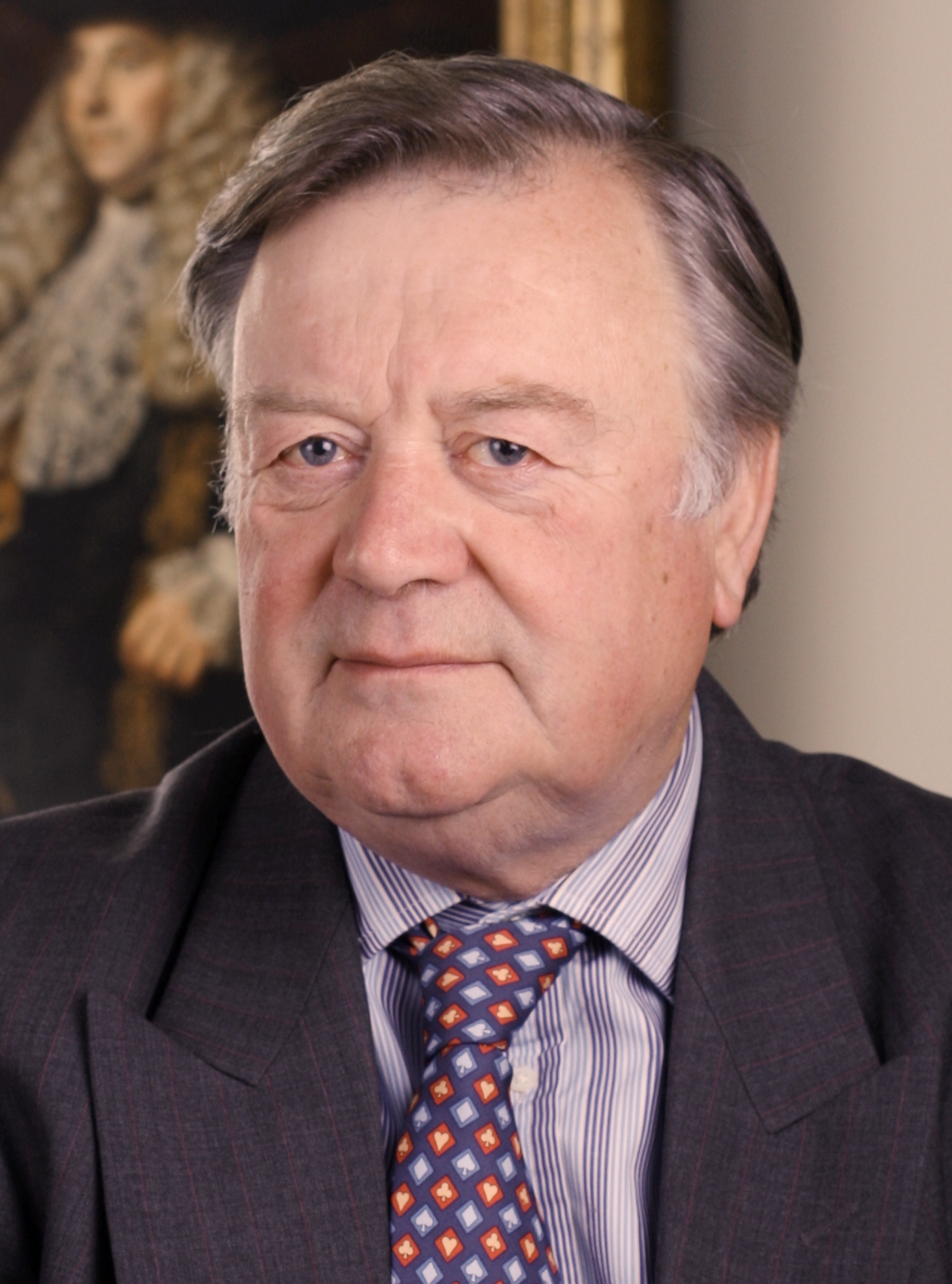
  • Ken Clarke – 2018 Speech on Customs and Borders

    Below is the text of the speech made by Ken Clarke, the Conservative MP for Rushcliffe, in the House of Commons on 26 April 2018.

    May I begin by congratulating the right hon. Member for Normanton, Pontefract and Castleford (Yvette Cooper), the other Chairmen of the Select Committees and the Liaison Committee on obtaining this debate and on tabling the motion? It is remarkable how little attention Parliament has been allowed to pay to the momentous events that are taking place at the moment and that will certainly take place over the next few months, which have a profound importance for the future health of our economy and the standing of this country in the world.

    At the moment, Cabinet members are trying to agree among themselves their negotiating position, and those in the shadow Cabinet are trying to reach an agreement among themselves on their response. Meanwhile, events are moving on, and I think the House of Commons should have more opportunities to give its views, exercise influence and debate a substantive motion every now and again, not just a motion that has already been dismissed, in the curious way we do in this Parliament, as somehow not legally binding and therefore one that need not be regarded as important.

    I have often agreed with the right hon. Lady in the past, but I do not think I have ever heard her make a speech in which I agreed with just about every sentence she uttered. That will enable me to respond to your request, Mr Speaker, because she said it all with great eloquence and there is absolutely no point in my simply trying to repeat all of it or anything like all of it. The only thing I disagreed with is that she revised—no doubt for party reasons—the strange conspiracy theory that trade deals with America might involve privatising the NHS. I have no doubt that someone will try to explain the logic of that argument in the course of this debate. However, I totally agreed with everything else she said.

    That is rather surprising, because everything the right hon. Lady said was in line with what has always been the official, mainstream policy of the Conservative party throughout the first 50 years of my membership of it. Some of my colleagues seemed to have a strange conversion—like St Paul on the way to Damascus— about two years ago, but I am afraid that the light did not strike me.

    This debate bodes well for what needs to emerge. Many of us in this House have argued for some time for a cross-party convergence, in the national interest, so that this House can make sure that no damage is inflicted by the consequences of our leaving the European Union, or—to be more precise, I am afraid—so that we can limit that damage so far as possible.

    The underlying point is clear: the economy of this country and, to an extent, those of other European countries, will be damaged if a sudden decision is taken to erect new barriers at the border between the UK and our major trading partners.

    Chuka Umunna (Streatham) (Lab) rose—

    Mr Clarke I will give way in just a second. There are no advantages in introducing tariffs to European trade, which I do not think anybody wants to do, or new customs procedures and processes, and there are no advantages in producing regulatory differences between our market and the European market. If people insist on having a new free trade agreement, it should include, and as far as possible replicate, the arrangements that the customs union and the single market give us now. If any hard-line Eurosceptic wishes to get up and say why it is positively in the British interest to have new customs procedures, and that we want more lorry parks at Dover and wish to delay the lorries carrying goods one way and the other, I would be interested to hear it. I shall turn in a moment to the main argument—indeed, as far as I am aware, it is the only argument—that most of them ever give for leaving the customs union. First, I give way to the hon. Gentleman.

    Chuka Umunna I am grateful to the Father of the House for giving way. He has served in this House for 48 years, if I am not mistaken, and served in a number of Governments. He will know that this Government have been advised by their own officials that leaving the single market and the customs union will make this country poorer. In all his time in this House, can he think of any Government who have knowingly taken a decision of this gravity that would make the country poorer? Can he think of any example in which any Government he has seen have done that?

    Mr Clarke Not deliberately—but accidentally, several times. [Laughter.] The hon. Gentleman makes reference to my great longevity, which is the one non-controversial feature of my presence in this House. Practically all my old friends from several Governments are now ennobled and in the House of Lords, where they are debating these very matters. Actually, all my colleagues who have served in Governments during my time—particularly under Margaret Thatcher and John Major—who are still with us and in the House of Lords are voting in line with this motion. They are of the same opinion, because is it is utterly unprecedented for us to get into a position of this kind.

    The only argument—certainly the only one the Prime Minister ever uses—for leaving the customs union is that we can have trade agreements with the rest of the world. We also refer to “a customs union”, for reasons that have been explained; it would be a replica of the present customs union. It is quite right to say that, in the customs union, we do not have total freedom to negotiate. We have a common tariff barrier around the customs union, and no member can punch holes through it and start letting in goods from various markets under different arrangements. Once anyone started to do that, it would be necessary to stop the goods seeping through. A great deal of work is being done at the moment, as I understand it from following the leaks in the newspapers and talking to my contacts among those involved, to try to find a way to achieve something similar that would be acceptable. We will have to see how that goes.

    It has already been said that, for over 40 years, Governments of both parties in this country who essentially believed in free trade, and who found that Britain gained ever more advantages from developing a free trade climate, have been extending free trade through our membership of the European Union. First, we had the common market—the customs union—and then we added the single market to it, removing all the regulatory barriers. Then we encouraged EU agreements with an ever-increasing number of countries, which reduced the barriers yet further in all those markets around the world. Indeed, my right hon. Friend the Member for Wokingham (John Redwood) has said that this helped us to make progress in the rest of the world as well. Not only have we participated in that but, in my opinion, British Governments have been the most influential and leading advocates of that approach inside the European Union.

    It is not true to say that we have been an isolated, powerless member, ignored and penalised by the others. I believe that on issues of the economy, on liberal economic policy and on trading policy, the United Kingdom has been the leading influential member in Europe, and I think that was probably as true under the Blair Government as it was under the Thatcher and Major Governments. We were responsible for the single market. All the way up to the Cameron coalition Government, we were in the lead in Europe in pressing for the EU agreements to be extended to other countries.

    I do not remember even Eurosceptics bothering to raise much objection to that policy. Even during the referendum, I did not hear any Brexiteer, including the ones I debated with, saying that they wanted more protectionism or that they wanted to withdraw from all that. Dan Hannan is one of the most articulate advocates of the Eurosceptic cause, and I debated with him twice in town hall settings during the referendum. I always got the impression that he was in favour of the single market. Again it is important to stress that it is possible to leave the European Union and to stay in the single market and the customs union. There is no constitutional or legal barrier to that happening, and the Commission has made it plain that it could be on offer. However, if we are not going to do that—for reasons that I do not understand—we will have to replicate it pretty well.

    Peter Kyle (Hove) (Lab) Will the right hon. and learned Gentleman give way?

    Mr Clarke I will give way, after which I will go back to the question of trade relations with non-EU countries.

    Peter Kyle On a recent visit to Norway with the Business, Energy and Industrial Strategy Committee, we heard Norway’s lead negotiator with the EU explain that, being outside the customs union, Norway is in a permanent state of negotiation with the EU regarding trade and customs. He said that Norway would sometimes win a concession, only to lose it in a negotiation a couple of years later. Is not this precisely the status that businesses come to Britain to avoid?

    Mr Clarke I quite agree. The Norwegians have a second-best solution by a good long way. When I was Chancellor, we were engaged in negotiating with the Norwegian Government and with other would-be new members over full membership of the European Union, which on the whole the entire Norwegian political class, left and right, supported. The same thing happened here during the referendum, when every significant political party in this country was in favour of remaining, with the exception of UKIP and the Democratic Unionist party. The Norwegians came out with not a bad compromise, but it was far less satisfactory than the one we are starting from as we negotiate now.

    Anna Soubry Will my right hon. and learned Friend give way?

    Mr Clarke With great respect to my close ally and friend, I must make a little progress and finish making this point. I might already have had my 10 minutes.

    The theory is propounded to the British people that we somehow have nothing to do with these EU trading arrangements and that somehow, when trade deals are done, grey men in the European Commission secretly impose upon us all sorts of restrictive terms. Indeed, the right-wing press give the impression to all their readers that that is what we are facing now. They suggest that Jean-Claude Juncker and Michel Barnier are somehow plotting against us, that the whole thing is being done by unaccountable Eurocrats who are trying to take revenge on us, and that the trouble with our EU trade deals is that we have no say in them and they happen mechanically. That is complete rubbish, and it is rubbish that has been propounded for the last 30 or 40 years.

    The Commission does have some roles that our civil service does not have, but basically it can negotiate only if it has the approval of each and every member state’s Government. It negotiates only within a mandate that the states have agreed. In my own ministerial experience of EU trade and economic affairs, the bigger countries—particularly Britain—have a huge influence on what is being negotiated. In my last job in the Cameron Government, when I was in the Cabinet Office without portfolio, I was asked by David Cameron to lead for us on the EU-US Transatlantic Trade and Investment Partnership deal. I spent time in Brussels and Washington doing that. I cannot say that I played a key role, but the whole point was that the British were keen advocates of that, along with the Germans, the Italians and the French. We were all close to what was going on, and seeking to find out where things were going and whether we could push it. No deal has ever been done by the EU with any other country that anbody has ever objected to in the United Kingdom. For example, no British Government ever protested about the EU deal with South Korea, which is one of the better ones that we have achieved recently. No one ever told me they were against it.

    Norman Lamb (North Norfolk) (LD) Will the right hon. and learned Gentleman give way?

    Mr Clarke I really should not, because the Speaker will get extremely annoyed. I must come to a quick conclusion and I wanted to touch on Ireland. I apologise to the right hon. Gentleman, but other people must get in.

    It is an utterly ludicrous idea that it would somehow be better if we do things on our own. The countries always cited are the United States, Australia and New Zealand, and they will do deals with us because they all want to sell us foodstuffs. There is not a great deal of trade that we can add between us and New Zealand and Australia, and the Americans are desperately keen to sell us their beef and their chicken. As someone has already said, all trade deals are not done by a sovereign country saying, “Of course we are not binding ourselves to do anything.” They involve the agreeing of market regulations and of the trading rules that will apply. We would not say, “It’s all going to be decided by the British courts.” There would be an international arbitration agreement to which businesses and countries could look to if one side started breaking its treaty obligations. The Americans will say, “Give up these European food safety and environmental regulations, and we will trade with you on ours.” If we let in chlorinated chicken, hormone-treated beef and genetically modified crops—personally I am not convinced that they are the health hazards that most people in the country seem to believe they are—that means new barriers with Europe, which will not let those products go straight through, and we will probably lose a large part of our biggest market, for food and agricultural products, which is in Europe.

    I have one final point to make on international trade and about where the debate is unrealistic. WTO rules have suddenly been elevated to some mystic world order that means that our new trade agreements will somehow be much better. I wish that were true. This country does abide by WTO rules, but they are nothing like as comprehensive as they ought to be because the Doha round failed. The Americans take no notice of the WTO. The Americans and the Chinese are about to start a trade war, and everything that they are doing is in total breach of WTO rules. We will not get a deal with Donald Trump subject to WTO rules. He will not even appoint judges to the WTO court, because otherwise it might do what it is usually its major duty, which is settling disputes between states.

    Going back what the right hon. Member for Normanton, Pontefract and Castleford said, we want trade with Europe that has no barriers between ourselves and Europe. It will require some ingenuity to find some basis on which we might still be able to do trade deals with other people, but the idea that some marvellous new global future with fantastic new trade deals is about to open up is hopeless. If someone can get the Americans to open up their public procurement to international competition and give up the “Buy America” policy or to open the regulatory barriers that they have put in the way of professional and financial services, they will be a miraculous negotiator, because we could get nowhere when Obama was in power. I do not think that the present Administration are offering us anything; they just want their beef to come here.

    Finally, on Ireland—I will be much shorter on this because it is a big question that has been touched on already—it is absolutely critical that we do not break the Good Friday agreement. It is quite obvious that most people on this side of the Irish sea had never thought about Ireland when we were debating during the referendum and when they were propounding their policies. The problem of the Good Friday agreement has been addressed by most Brexiteers by them saying, “Surely that’s all over now? Isn’t it a nuisance? What an irrelevance. Let us break it now, because it no longer matters. It is far more important that we get the kind of hard Brexit that we want.” That is very dangerous.

    The Good Friday agreement is one of the major achievements of the British Governments of my time. It was negotiated with the Americans, with the Government of the Republic of Ireland and with every section of opinion in Northern Ireland. It brought an end—almost; it is the end, I hope—to 200 years of the troubles in Ireland after they erupted into violence. When the troubles were under way in the ’70s and ’80s we lost more policemen and soldiers in Ulster than we did in Iraq and Afghanistan put together. The agreement was a splendid achievement for John Major and Tony Blair, so to say, “What an inconvenience. It is getting in the way of our leaving the customs union,” is very dangerous.

    I thought that the Government had accepted that. Indeed, I think they have done so formally on two occasions. First, we had the Prime Minister’s Florence speech, which addressed the matter. Talking about the discussions she had had with Europe about Northern Ireland, she said that

    “we have both stated explicitly that we will not accept any physical infrastructure at the border.”

    That was solemnly agreed. It was the agreed Cabinet policy. The Foreign Secretary made a strange speech before the Florence speech and a statement shortly afterwards that gave the impression that he was trying to undermine the speech, but I am sure he was not. That statement is already agreed Government policy.

    Secondly, we finally managed to make progress by finishing the withdrawal agreement, and we published the texts of what had been agreed. As people have said, there are all these other possible solutions involving using congestion charge cameras and things to avoid issues at the border, but I do not think that they will get very far. We have already committed ourselves to the following:

    “In the absence of agreed solutions, the United Kingdom will maintain full alignment with those rules of the Internal Market and the Customs Union which, now or in the future, support North-South cooperation”,

    which I think means pretty well full regulatory convergence. As someone has already said, the chief constable of Ulster has said that we cannot have infrastructure at a new hard border. It would outrage nationalist and republican opinion across the whole island and take us right back to all the problems we had. Symbolism is huge in the politics of Ireland and always has been, and it would be grossly irresponsible to put a hard border in the middle of the island of Ireland again. We have never been on such good terms with the Government of the Republic of Ireland since the Republic was founded.

    If we have those arrangements at the Irish border, the same arrangements will of course apply to Holyhead and to Dover. That is what I want to see. We want no new barriers and no customs processes. We want the necessary level of regulatory convergence. Obviously, the easy way to do that is to stay in the customs union and stay in the single market. If not, we will need what I think the Prime Minister described as a “customs procedure”, which will be something that looks remarkably like the single market and the customs union.

    The customs union is what today’s business is about, and it would do terrible damage to this country if, for strange ideological reasons in the confused aftermath of a misguided referendum, we were to take such a foolish step as not to replicate the customs union in any future arrangements.

  • Sajid Javid – 2018 Speech at the Design Quality Conference

    Below is the text of the speech made by Sajid Javid, the Secretary of State for Housing, Communities and Local Government, on 26 April 2018.

    Winston Churchill famously said: “We shape our buildings; thereafter they shape us.”

    That’s certainly true for me.

    As you may know, I grew up above the family shop.

    I lived on a road that has been labelled by one newspaper as “Britain’s most dangerous street”.

    Those experiences taught me a lot.

    The value of family and hard work.

    How few things are more important than feeling safe in your own home and your your own neighbourhood.

    And – crucially – how to hold your own against 5 siblings.

    Now I know that I’m not alone.

    Our homes, for all of us, are the making of us.

    That is why today’s event is so important.

    And why I’m delighted that so many of you could be here today.

    And why I want to say a massive thank you for your interest and support.

    I can’t recall when a government last held a conference on design quality.

    It’s a measure of our commitment on this vital issue – as not just something that is nice to have.

    A bonus that if you are lucky enough to be able to afford it.

    But as something that’s fundamental to everyone’s quality of life – regardless of whether you’re buying or you’re renting a place, or whether you’re in the private sector or the social sector.

    It’s very fundamental to the way we feel when we get up in the morning and when we go to bed.

    To the opportunities that we have and the futures that we can imagine for ourselves.

    To people coming together to create, quite simply, great places to live.

    Which is why there’s absolutely no question of having to choose between quality and quantity when it comes to building the homes that our country so desperately needs.

    As you will have no doubt have heard many times today, the 2 – quality and quantity – go very much hand in hand.

    With communities that are much more likely to welcome new development, if it’s attractive, thoughtful and in keeping with the local area.

    But the gains are, of course, much bigger than just somewhere that looks good.

    It could be a quiet place to study that means you get a better chance at school.

    Parks and other outdoor spaces will be good for your health and your mental health.

    And public spaces that design in opportunities for people to come together across generations can end up designing out isolation and helping to build those strong communities.

    To achieve this, to really raise the bar on design quality, we need to see stronger collaboration right across the whole sector – which is what today’s event is all about.

    It sounds like you’ve had a busy and interesting day, with lots of great speakers lots sharing their ideas and expertise.

    And excellent examples, such as the University of North Cambridge development, that where they aren’t just aiming to meet short-term targets, but are very much taking that long-term view that we all want to see.

    Something that’s crucial for creating homes that are a much-loved part of the fabric of our local areas not just now, but, potentially, well into the next century and beyond.

    I’m also pleased to see that today’s conference has thrown up another positive variation of NIMBY – BIMBY or Beauty In My Backyard, from The Princes Foundation.

    I’m looking forward to that phrase catching on!

    The new technologies on display at the exhibition are also hugely impressive – as are the new technologies highlighted by the Farmer Review that address the need to build at pace and scale whilst still promoting quality and consumer choice.

    And it was especially inspiring to see that we focused on the views, talents and aspirations of young people.

    We’re remembering one of those young people this week – Stephen Lawrence.

    An aspiring architect, whose murder 25 years ago, is still hard to bear.

    The work of the Stephen Lawrence Trust – who we heard from today…

    …which gives young people the opportunities which he was denied, to pursue a career in architecture…

    ….is a fitting tribute to his memory.

    And I’m deeply grateful for all the efforts of everyone involved.

    Their work is a poignant reminder that, in shaping homes, we’re also shaping lives.

    And we owe it to this and the generations to come to leave a legacy of places that, whether you’re putting down roots or just passing through, lift the human spirit.

    Inspired by a strong vision of what we want for our villages, our towns and cities, what we want them to look like and feel like in the future.

    In doing so, we can draw on a rich history of British housing and urban design that is the envy of the world.

    The elegant terraces and town houses, squares and crescents of the Georgian period.

    Victorian terrace houses, avenues and parks.

    Edwardian mansion blocks and flats.

    The detached and semi-detached homes and garden suburbs of the 20th century.

    What will our legacy be like for the 21st century?

    What design approaches are we pioneering that will become the original features of the future?

    What new built environments are we developing that meet the challenges of our age?

    What trails are we blazing?

    Are we truly drawing on the talents of all our people – with their diverse backgrounds and their perspectives – as we build that modern, global Britain?

    This is what I want us to be thinking about and aiming for – with all of us doing our bit.

    For our part, in government, we’ve strengthened the expectations for design quality and community engagement in the planning system.

    This doesn’t, in any way, involve the government dictating what good design looks like, but it makes it clear that it must be rooted in and it must be backed by the local communities.

    Of course, local authorities, they too have a leading role to play in setting a vision for their areas and their plans.

    And it’s the job of developers and their designers to respond positively to these expectations; harnessing the talents of skilled professionals – urban designers, architects, engineers and landscape designers.

    The great projects we’ve heard about today show that we’re already achieving this in many places and creating beautiful, safe, healthy neighbourhoods that command local support.

    The challenge, now, is to deliver this consistently right across the country, so that high quality design is the norm rather than the exception.

    I’m confident – from the ambition and wealth of talent I see before me – that that prize is very much in our grasp.

    It only remains for me to thank you all, once again, for attending and contributing – particularly our speakers and sponsors at the event. Thank you all very much.