Blog

  • Iain Duncan Smith – 2002 Press Release on Public Services

    Iain Duncan Smith – 2002 Press Release on Public Services

    Below is a press release issued by the Conservative Party on 17/01/2002.

    The Conservative Leader, Iain Duncan Smith, has said that the Party was firmly fixed on public services. He said that while the problems facing the country were changing, the values that underpinned the Party’s solutions were as relevant as ever.

    In a speech to business leaders in Birmingham, he said that the Conservatives would renew policies using timeless principles to meet the challenges of our time, contrasting that with the Labour Party who stood for power without purpose, politics without principles and governing without direction.

    He accused the Government of having a top-down approach to the public services, thinking that problems can be solved from the top of Government. “My instincts are always to build from the bottom up: to derive policy from the instincts and values of the people we represent, guided by our own values,” he said.

    Mr Duncan Smith went on to say that policy renewal was inseparable from effective Opposition. “The way we develop policy will be characterised by leadership and direction, and based firmly on Conservative values,” he said. The Conservatives had always been successful, he argued, when they articulated a clear view of the problems that Britain faces, and found ways to solve them, by empowering people, rather than pushing them around.

    While in Birmingham, Mr Duncan Smith paid a visit to a local comprehensive school, to meet with staff and pupils.

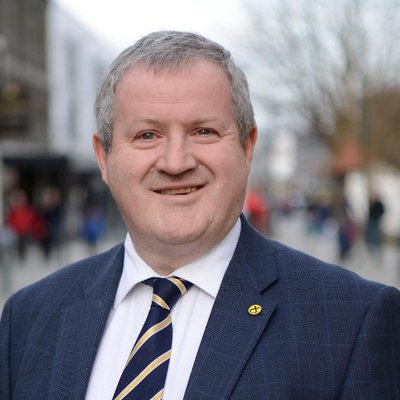
  • Ian Blackford – 2019 Speech on Brexit

    Ian Blackford – 2019 Speech on Brexit

    Below is the text of the speech made by Ian Blackford, the SNP MP for Ross, Skye and Lochaber, in the House of Commons on 19 October 2019.

    May I join you, Mr Speaker, in thanking all the staff who have made today’s sitting possible? I also thank the Prime Minister for advance sight of his statement.

    Northern Ireland, 13: Scotland, zero—those are the number of references to Northern Ireland and to Scotland in the Prime Minister’s statement. There was not one reference to Scotland. The Prime Minister has returned from Brussels to present a deal that he knows—that we all know—is actually worse than Theresa May’s deal. It is a deal that would see Scotland shafted by this United Kingdom Government and left at an economic disadvantage, with Scotland’s views and interests totally disregarded by this Prime Minister and his Government.

    The Scottish National party could not have been clearer: we would support any mandate to approach the European Union to remain in the single market and the customs union, or simply to remain in the European Union altogether. Yet the Prime Minister has made it clear that he is not interested in meaningful discussions with the SNP or our Scottish Government. He and his cronies in No. 10 do not care about Scotland. This Tory Government have sold Scotland out, and once against they have let Scotland down.

    While, rightfully, Northern Ireland has been allowed special arrangements to remain in the single market and the customs union, the Prime Minister will not afford Scotland the same arrangements. He did not even consider giving Scotland a fair deal. Despite the fact that the Scottish people, like the people of Northern Ireland, voted overwhelmingly to remain in the European Union, this Prime Minister has never entertained the notion of giving Scotland the same arrangements that Northern Ireland gets in this deal.

    The truth is that the Prime Minister does not care about Scotland. He and his Government have treated the Scottish Government, our Scottish Parliament and the Scottish people with nothing but contempt.

    Not a single MP who cares about Scotland’s future should consider supporting the Prime Minister today. They should stand with the Scottish National party and vote this deal down. Any and all assessments of any Brexit outcome show that the United Kingdom and Scotland will be poorer, no matter how we leave the European Union. People up and down Scotland know that the Prime Minister, his Brexit fan boys and the Vote Leave campaign have ignored and shafted Scotland.

    England is getting what it voted for, Wales is getting what it voted for, and Northern Ireland is getting a special deal, yet Scotland, which democratically voted to remain, is being ignored and treated as a second-class nation by this Government. How will the Prime Minister justify himself to the people of Scotland at the general election? When he cannot, and when he fails, and when the Brexit-backing fan club from all quarters fails, will he finally respect the mandate of the Scottish people and let them have their say on our future?

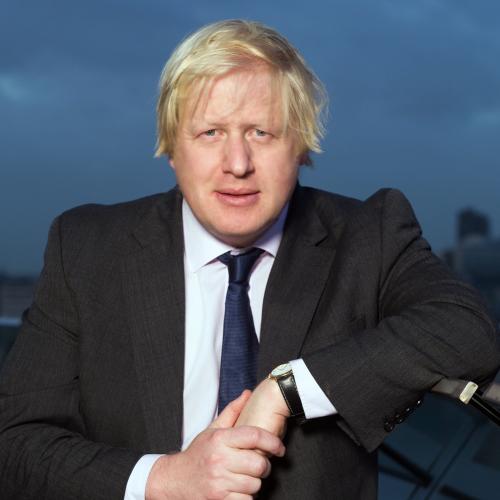
  • Boris Johnson – 2019 Statement on Brexit

    Boris Johnson – 2019 Statement on Brexit

    Below is the text of the speech made by Boris Johnson, the Prime Minister, in the House of Commons on 19 October 2019.

    Mr Speaker, I want to begin by echoing what you’ve just said, my gratitude to all members of the House for assembling on a Saturday for the first time in 37 years and indeed to all members of the House of Commons staff who have worked to make this possible.

    I know this has meant people giving up their Saturdays, breaking into their weekends at a time when families want to be together, and of course it means missing at least the end of England’s World Cup quarter final.

    I apologies to the House for that and I wish I could watch it myself.

    I know the Honourable Member for Cardiff West has postponed his 60th birthday party – if not his 60th birthday – to be here.

    So Mr Speaker the House has gone to a great deal of trouble to assemble here on a Saturday for the first time in a generation.

    And I do hope for the purposes of a meaningful vote that we will indeed be allowed to have a meaningful vote this evening.

    And with permission, Mr Speaker, I shall make a statement on the new agreement with our European friends.

    The House will need no reminding that this is the second deal and the fourth vote, three and half years after the nation voted for Brexit.

    And during those years, friendships have been strained, families divided and the attention of this House consumed by a single issue that has at times felt incapable of resolution.

    But I hope Mr Speaker, that this is the moment when we can finally achieve that resolution and reconcile the instincts that compete within us.

    Many times in the last 30 years I have heard our European friends remark that this country is half-hearted in its EU membership and it is true that we in the UK have often been a backmarker opting out of the single currency, not taking part in Schengen, very often trying to block some collective ambition.

    And in the last three years and a half years it has been striking that members on all sides of this House have debated Brexit in almost entirely practical terms in an argument that has focused on the balance of economic risk and advantage.

    And I don’t think I can recall a time when I have heard a single member stand up and call for Britain to play her full part in the political construction of a federal Europe.

    I don’t think I’ve heard a single member call for an ever closer union or ever deeper integration or a federal destiny – mon pays Europe – perhaps I’ve missed it but I don’t think I’ve heard much of it Mr Speaker.

    And there is a whole side of that debate that you hear regularly in other European capitals that is simply absent from our national conversation and I don’t think that has changed much in the last 30 years.

    But if we have been sceptical, and if we have been anxious about the remoteness of the bureaucracy, if we have been dubious about the rhetoric of union and integration, if we have been half-hearted Europeans,

    Then it follows logically that with part of our hearts, with half our hearts, we feel something else, a sense of love and respect for European culture and civilisation of which we are a part; a desire to cooperate with our friends and partners in everything, creatively, artistically, intellectually.

    A sense of our shared destiny and a deep understanding of the eternal need – especially after the horrors of the last century – for Britain to stand as one of the guarantors of peace and democracy in our continent.

    And it is our continent. And it is precisely because we are capable of feeling both things at once – sceptical about the modes of EU integration as we are but passionate and enthusiastic about Europe – that the whole experience of the last few years has been so difficult for this country and so divisive.

    And that is why it is now so urgent for us to move on and build a new relationship with our friends in the EU on the basis of a new deal – a deal that can heal the rift in British politics, unite the warring instincts in us all.

    And now is the time for this great House of Commons to come together and bring the country together today as I believe people at home are hoping and expecting, with a new way forward and a new and better deal both for Britain and our friends in the EU, and that is the advantage of the agreement that we have struck with our friends in the last two days.

    Because this new deal allows the UK – whole and entire – to leave the EU on October 31st in accordance with the referendum while simultaneously looking forward to a new partnership based on the closest ties of friendship and co-operation.

    And I pay tribute to our European friends for escaping the prison of existing positions and showing the vision to be flexible by re-opening the Withdrawal Agreement and thereby addressing the deeply felt concerns of many in this House.

    And one of my most important jobs is to express those concerns to our European friends.

    I shall continue to listen to all Honourable Members throughout the debate today, to meet with anyone on any side and to welcome the scrutiny the House will bring to bear if – as I hope – we proceed to consider the Withdrawal Agreement Bill next week.

    Today this House has an historic opportunity to show the same breadth of vision as our European neighbours.

    The same ability and resolve to reach beyond past disagreements by getting Brexit done and moving this country forwards, as we all yearn to do.

    This agreement provides for a real Brexit, taking back control of our borders, laws, money, farming, fisheries and trade, amounting to the greatest single restoration of national sovereignty in Parliamentary history.

    It removes the backstop which would have held us against our will in the Customs Union and much of the Single Market.

    For the first time in almost five decades the UK will be able to strike free trade deals with our friends across the world to benefit the whole country – including Northern Ireland.

    Article 4 of the Protocol states: “Northern Ireland is part of the customs territory of the United Kingdom”.

    It adds “nothing in this Protocol shall prevent” Northern Ireland from realising the preferential market access in any free trade deals “on the same terms as goods produced in other parts of the United Kingdom.”

    Our negotiations have focused on the uniquely sensitive nature of the border between Northern Ireland and the Republic.

    And we have respected those sensitivities.

    Above all, we and our European friends have preserved the letter and the spirit of the Belfast (Good Friday) Agreement and upheld the long-standing areas of co-operation between the UK and Ireland, including the Common Travel Area.

    And as I told the House on 3rd October, in order to prevent a regulatory border on the island of Ireland we proposed a regulatory zone covering all goods, including agrifood, eliminating any need for associated checks along the border.

    And Mr Speaker, in this agreement we have gone further by also finding a solution to the vexed question of customs, which many in this House have raised.

    Our agreement ensures – and I quote – “unfettered market access for goods moving from Northern Ireland to the rest of the United Kingdom’s internal market.”

    It ensures that there should be no tariffs on goods circulating within the UK customs territory, that is between Great Britain and Northern Ireland, unless they are at risk of entering the EU.

    It ensures an open border on the island of Ireland, a common objective of everyone in this House.

    And it ensures that for those living and working alongside the border there will be no visible or practical changes to their lives – they can carry on as before.

    I believe this is a good arrangement, reconciling the special circumstances in Northern Ireland with the minimum possible bureaucratic consequences at a few points of arrival into Northern Ireland.

    And it is precisely to ensure that those arrangements are acceptable to the people of Northern Ireland that we have made consent a fundamental element of this new deal.

    So no arrangements can be imposed on Northern Ireland if they do not work for Northern Ireland.

    The people of Northern Ireland will have the right under this agreement to express or withhold their consent to these provisions, by means of a majority vote in their Assembly four years after the end of the transition.

    And if the Assembly chooses to withhold consent, these provisions “shall cease to apply” after two years, during which the Joint Committee of the UK and EU would propose a new way forward, in concert with Northern Ireland’s institutions.

    And as soon as this House allows the process of extracting ourselves from the EU to be completed, the exciting enterprise of building our new relationship with our friends can begin which has been too long delayed.

    And Mr Speaker, I do not wish this to be the project of any one Government or any one party but rather the endeavour of the United Kingdom as a whole.

    Only this Parliament can make this new relationship the work of the nation.

    And so Parliament should be at the heart of decision-making as we develop our approach.

    And I acknowledge that in the past we have not always acted in that spirit.

    So as we take forward our friendship with our closest neighbours and construct that new relationship

    I will ensure that a broad and open process draws upon the wealth of expertise in every part of this House including select committees and their chairs.

    Every party and every Member who wishes to contribute will be invited to do so.

    And we shall start by debating the mandate for our negotiators in the next phase.

    Mr Speaker, the ambition for our future friendship is contained in the revised Political Declaration which also provides for this House to be free to decide our own laws and regulations.

    I have complete faith in this House to choose regulations that are in our best tradition of the highest standards of environmental protections and workers’ rights.

    No one anywhere in this chamber believes in lowering standards, instead we believe in improving them as indeed we will be able to do and seizing the opportunities of our new freedoms.

    For example, free from the Common Agricultural Policy, we will have a far simpler system where we will reward farmers for improving our environment and animal welfare many of whose provisions are impossible under the current arrangements, instead of just paying them for their acreage.

    And free from the Common Fisheries Policy, we can ensure sustainable yields based on the latest science not outdated methods of setting quotas.

    And these restored powers will be available not simply to this Government but to every future British Government of any party to use as they see fit.

    That is what restoring sovereignty means, that is what is meant in practice by taking back control of our destiny.

    And our first decision, on which I believe there will be unanimity is that in any future trade negotiations with any country our National Health Service will not be on the table.

    Mr Speaker, I am convinced that an overwhelming majority in this House, regardless of our personal views, wishes to see Brexit delivered in accordance with the referendum. A majority.

    And in this crucial mission there can no longer be any argument for further delay.

    As someone who passionately believed that we had to go back to our European friends to seek a better agreement,

    I must tell the House that with this new deal the scope for fruitful negotiation has run its course.

    They said that we couldn’t re-open the Withdrawal Agreement, Mr Speaker, they said we couldn’t change a comma of the Withdrawal Agreement, they said we couldn’t abolish the backstop, Mr Speaker, we’ve done both.

    But it is now my judgement that we have reached the best possible solution.

    So those who agree, like me that Brexit must be delivered and who – like me – prefer to avoid a no deal outcome, must abandon the delusion that this House can delay again.

    And I must tell the House in all candour that there is very little appetite among our friends in the EU for this business to be protracted by one extra day.

    They have had three and a half years of this debate.

    It has distracted them from their own projects and their own ambitions and if there is one feeling that unites the British public with a growing number of the officials of the EU it is a burning desire to get Brexit done.

    and I must tell the House again in all candour that whatever letters they may seek to force the government to write, it cannot change my judgment that further delay is pointless, expensive and deeply corrosive of public trust.

    And people simply will not understand how politicians can say with one breath that they want delay to avoid no deal and then with the next breath that they still want delay when a great deal is there to be done.

    Now is the time Mr Speaker to get this thing done, and I say to all members let us come together as democrats to end this debilitating feud.

    Let us come together as democrats behind this deal, the one proposition that fulfils the verdict of the majority but which also allows us to bring together the two halves of our hearts, to bring together the two halves of our nation.

    Let’s speak now both for the 52 and the 48.

    Let us go for a deal that can heal this country, let’s go for a deal that can heal this country and allow us all to express our legitimate desires for the deepest possible friendship and partnership with our neighbours

    A deal that allows us to create a new shared destiny with them.

    And a deal that also allows us to express our confidence in our own democratic institutions, to make our own laws, to determine our own future, to believe in ourselves once again as an open, generous global, outward-looking and free-trading United Kingdom.

    That is the prospect that this deal offers our country.

    It is a great prospect and a great deal, and I commend it to the House.
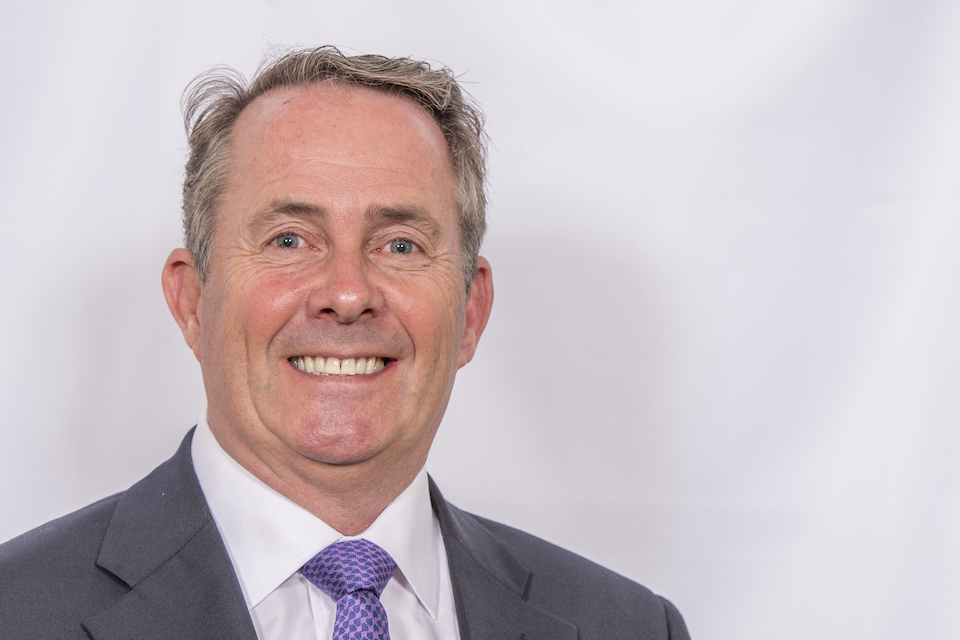
  • Liam Fox – 2019 Speech on Portishead Railway

    Liam Fox – 2019 Speech on Portishead Railway

    Below is the text of the speech made by Liam Fox, the Conservative MP for North Somerset, in the House of Commons on 16 October 2019.

    I am grateful for the opportunity to have this debate, especially during the week of the Queen’s Speech. I am also grateful for the dogged and outstanding support that the Portishead railway project has had from the residents of the town itself, from North Somerset more widely, and from the wider region. I am also grateful to my fellow Bristol MPs for being here this evening. I single out and pay tribute to the Portishead Railway Group, whose contribution has been utterly invaluable.

    When I last raised this issue in an Adjournment debate in this House, in January 2005, I spoke about the increase in population in Portishead. In the mid-1950s, the town had a population of around 9,000, which had risen to some 15,000 by the time I was first elected in the early 1990s. The population now stands at around 25,000. The power station and the phosphorus works that used to sit on the dock are long gone, with the last stacks having been brought down in 1992. In their place, we now have one of the country’s finest marinas, and we have contributed more than most to the rise in the country’s housing stock.

    That housebuilding has not been without controversy. John Prescott, as Housing Minister, ordered that the housing density be doubled, so almost twice as many homes as originally intended were built on this land. That inevitably had consequences for the traffic in the town and parking has been a particular problem. Although the housing density was doubled, the number of parking spaces per home was allocated at the national average of 1.6 per household, when the average in North Somerset, even at the time, was 2.76. It does not take a mathematical genius to work out that the inevitable consequence was a huge deficit in the number of parking spaces available compared with what was needed.

    The increased population in what I described back in 2005 as the most overcrowded cul-de-sac in the country—a phrase that has been widely deployed since—has inevitably put pressure on our road system. The A369 is the only A road out of the town, and junction 19 of the M5 is a regularly miserable experience for Portishead commuters, particularly at peak times. The answer to many of our problems, but by no means all, is to reopen the railway line to Portishead, providing additional capacity to our overstretched transport network.

    The reopening of Portishead railway is part of the MetroWest project, which was given the go-ahead in July 2012 as part of the city deal under the coalition Government led by David Cameron. Portishead railway was part of MetroWest phase 1, but it has been beset by delays and cost overruns. In 2017, the planned date of the Portishead opening was 2020, yet by then the original cost of £50 million had mushroomed to £116 million. It became quickly clear that it would be beyond the financial scope of North Somerset Council or, indeed, the partnership of four councils to absorb such an increased cost. We were therefore pleased that the former Transport Secretary, my right hon. Friend the Member for Epsom and Ewell (Chris Grayling), came to visit North Somerset and indicated that this Government would ensure that additional money became available. I wish to focus on that area ​and some of the technical issues around it so that the Minister can give us categorical assurances where there remain some anxieties.

    The proposed allocation of £31.9 million by the Department exactly closed the funding gap. It did not reduce it; it closed it. The four local councils and the West of England Combined Authority have spent, and continue to spend, millions of pounds on the design of the reinstatement of the railway, the necessary environmental studies, and in preparing the development consent order application. For those who may not be familiar with the process, let me describe what this entails. The development consent order process is based on many submission items, one of which is a full funding statement. The statement has had to be generated on the assumption that the Department’s £31.9 million funding share will not be withdrawn. Another item is the business case, which is strong. Its benefit-cost ratio of around 3:1 is almost unheard of for a public infrastructure project. In other words, we know the reinstatement would be an efficient and effective use of public funds to produce a defined benefit. That is a lot more than we can say for many projects funded with taxpayers’ money.

    Karin Smyth (Bristol South) (Lab)

    I am grateful to the right hon. Gentleman, my constituency neighbour, both for securing this debate and for allowing me to intervene. He will be aware that, in addition to the football and the rugby, Ashton Gate stadium has hosted a number of entertainment events this year. Investment in transport to and from the ground is critical. As the line goes through south Bristol, it provides an opportunity to open up more local transport provision, so it is not just about what we can get now. We are very supportive of this opportunity, which is critical to us in south Bristol.

    Dr Fox

    I am extremely grateful to the hon. Lady, and she is right that we deserve better public transport in the Bristol area. Bristol is one of only two cities in the United Kingdom, outside London, that produce a net benefit to the economy, and we deserve a level of spending commensurate with that level of economic contribution to the UK economy.

    Jim Shannon (Strangford) (DUP)

    I thank the right hon. Gentleman for securing this debate. He was very good to us in Strangford on many occasions in his former position as a Minister, so I wanted to come along to support him tonight.

    The right hon. Gentleman has outlined the need for the Portishead railway to be encouraged and rebuilt, based on the population trends, the extra traffic and the pressure on our roads. Does he agree that perhaps it is time for the Government to look at sustaining public transport, be it railways or buses, to take pressure off the roads?

    Dr Fox

    It is not simply a specific case; it is also a generic one. We need to see major improvements in our railway capacity for exactly those reasons and for the environmental benefits that will come from not having the pollutants from slow-moving traffic congesting our towns and villages.

    As a result of the Department for Transport announcing its £31.9 million funding share, the four local councils and the West of England Combined Authority have ​now committed to their £84 million share of the funding for the railway project. I make it clear that the railway reinstatement cannot be completed without the Department’s £31.9 million, so can the Minister make a clear commitment tonight that the Department’s funding will be solely on the basis of there being a good business case?

    Darren Jones (Bristol North West) (Lab)

    I am pleased to be here to support the right hon. Gentleman’s case for the Portishead line. Does he agree it is part of what should be a much broader rail network? It is about commuter traffic into and out of Bristol. My Bristol North West constituency is adjacent to his, and there should be a connection to the Henbury loop line so that people can travel between the major areas of employment, as well as travelling into and out of the city.

    Dr Fox

    I completely agree. Our transport network is now an economic rate-limiting step in the Bristol area. I know, and my colleagues will know, of companies that want to grow but are incapable of doing so. We are fortunate to have low levels of unemployment in our area, but it is difficult to get people to come into those areas where growth could occur because our public transport network is so inadequate.

    The second issue I would like the Minister to address tonight is the Department’s rail network enhancements pipeline. As the House will know, the RNEP is a multistage process that could lead the Department to adjust its priorities such that its £31.9 million funding share could be either reduced or cancelled. This railway reinstatement is widely accepted as a no brainer in the region and beyond. It has a strong business case, and it is viewed as being of the highest priority in the wider Bristol area. The Department for Transport itself seems to think that the reinstatement of the Portishead line is a major improvement to our railways overall, and so do I. A ministerial commitment on this issue would be most welcome, so will the Minister confirm that the RNEP process will be used only to assure the Department that it is using its money wisely, rather than being used to generate a reason to reduce or cancel the Department’s funding contribution?

    The Portishead reinstatement will upgrade 8 km of existing Network Rail freight line to Pill and reinstate the track along 4 km of existing permanent way from Pill to Portishead. Given the length of time it has taken and the amount of money spent, it must be one of the greatest investments in one of the smallest increases in railway track that the House has seen.

    Unfortunately, despite the extremely modest nature of this particular project, the reinstatement is subject to the weighty process that applies to major rail improvements. Why? Because the criterion set out in the Planning Act 2008 is pegged at more than 2 km of track on non-railway land. The only reason why more than 2 km of the reinstatement track is on non-railway land is that North Somerset Council wisely decided to purchase the Portbury to Portishead section to ensure future reinstatement. In other words, we are being penalised because of the council’s foresight and confidence that this most worthwhile project would eventually be brought to fruition.

    I understand that, unfortunately, the processes operated by the planning inspectorate for the DCO and by the Department for the RNEP clearly have to be followed, ​despite the non-major nature of the reinstatement. I want from the Minister an assurance that everything possible will be done to ensure that the process is as speedy as possible, within the constraints of the law.

    Given the urgent need to reduce CO2 emissions, which has been widely discussed recently, will the Minister confirm that he and his officials will do everything they can to speed up the processes, so that the long-standing congestion and environmental pollution that afflict the 50,000-plus people who will directly benefit from the railway and the 130,000-plus people who will indirectly benefit from the railway, can be reduced at the earliest opportunity?

    I wish to raise two other brief points. There has been much speculation locally that, rather than a traditional railway, a hybrid of bus, tram and train might be introduced. What is the Minister’s understanding of the likely outcome of any such proposals currently under consideration? There has been a great deal of debate about the relative merits of a range of different alternatives, but we are now seeking an end to the indecision, and clarity about the timescale and nature of the transportation system itself.

    When I visited the North Somerset summer show this July, I gave my word that I would raise the issue of Sustrans. I am sure the Minister will be aware that Sustrans has been instrumental in the creation of a national network of cycle routes on quiet roads and traffic-free paths that now extends to more than 17,000 miles. I hope that he and his Department can look into the potential for a dual-use path alongside the planned railway, to see whether we can improve our local facilities further, with all the benefits that that will bring to recreation, transport and health.

    As I have said, this project is a no-brainer. It fulfils all the Government’s criteria for reducing road congestion, improving our environment and improving the functioning of our local economy. We are keen to give the Government all those things—if they give us reassurance, clarity and the necessary funding. After all the delay, I would be proud if this Government gave the people of Portishead what they deserve and what they have waited so long to get.

  • Robert Buckland – 2019 Statement on Justice and Home Affairs

    Below is the text of the statement made by Robert Buckland, the Lord Chancellor and Secretary of State for Justice, in the House of Commons on 16 October 2019.

    The Justice and Home Affairs Council of the Finnish EU presidency recently took place in Luxembourg. The JHA Counsellor at the permanent representation of the UK to the EU attended Justice Day on 7 October. The UK did not attend Interior Day on 8 October.

    The UK Government decided that from 1 September until Brexit day, UK Ministers and officials will only attend EU meetings where the UK has a significant national interest in the outcome of the discussions.

    Justice Day began with a discussion on the EU Action against corruption, in the broader context of the debate on rule of law and mutual recognition. All member states supported the need to take action against corruption. The presidency concluded that there was support for a new comprehensive EU strategy or action plan. The EU work should bring added value and as such should look first at using its existing tools. member states also supported the EU becoming a full member of the Group of States Against Corruption (GRECO), so that the EU institutions are held to the same standards as GRECO members.

    Ministers adopted the supplementary negotiating directives on EU accession to the ECHR. The Commission committed to restarting negotiations as soon as possible, whilst ensuring that the EU would reform its internal rules ahead of agreement with the Council of Europe.

    The Council conclusions on the “EU Charter of Fundamental Rights after 10 Years: a State of Play and future work” were waived through without debate.​
    During lunch, Ministers discussed the rights of victims of crime, particularly the most vulnerable, including children and victims of domestic and sexual violence. The Fundamental Rights Agency (FRA) cited the 2.5 million children across the EU who are involved in criminal proceedings in different forms. The need for a multi-agency approach was noted, with care of victims being about more than the criminal justice system alone. It also entailed medical, social and psychological care. The presidency concluded that they would consider this issue further at the December Council.

    After lunch, the FRA director presented the ‘Fundamental Rights Challenges in 2020 and Beyond’ paper. Many member states touched on the importance of the link between rule of law and fundamental rights and the importance of the EU moving forwards on artificial intelligence with a fundamental rights focus.

    The Commission then welcomed the progress made following the introduction of the code of conduct but called for further work to be done by the next Commission on disinformation and online hate speech.​
    Ministers also approved the Council conclusions on Eurojust. Eurojust presented the counter-terrorism register which was launched in September. Member states agreed that the register would build upon the spirit of co-operation reached in the 2005 Council decision to support the work of Eurojust.

    The Commission briefed the Council on the latest EU-US senior officials meeting, reiterating the limited mandate due to the ongoing e-evidence negotiations. The second senior officials meeting would take place in early November to make progress before the EU-US Ministerial on 10 December. Security Commissioner Sir Julian King briefed on the progress made on the Budapest Convention. The presidency concluded that it would return to the issue in December.

    The Commission considered that the appointment of the European Public Prosecutor would give a boost to the European Public Prosecutor’s Office (EPPO) being set up and reminded participating member states to nominate their three nominees so as to be ready before November 2020.

  • Seema Kennedy – 2019 Statement on a Fair Immigration System

    Below is the text of the statement made by Seema Kennedy, the Parliamentary Under-Secretary of State for the Home Department, in the House of Commons on 16 October 2019.

    People from all over the world have come to the UK and helped make this nation what it is today, and this Government welcome the contribution migrants make to the UK’s economy, society and culture.

    Leaving the EU allows us to introduce a new points-based immigration system and we have commissioned the independent Migration Advisory Committee to conduct a review of the Australian immigration system and other international comparators, as the first step in creating our new fairer immigration system.

    The new immigration system will be a single system, where it is people’s skills that matter, not where they come from. For example, our new graduate route will be open to international students who have successfully completed a course of study in any subject at undergraduate level or above at an approved UK higher education provider. It will build on action to help recruit and retain the best and brightest global talent.

    But a fair system also means a controlled system. My right hon. Friend, the Prime Minister, has confirmed he is not getting into a numbers game in respect of migration, but it is only fair to those who play by the rules and everyone else that those working, living and accessing public services are doing so legally. It is right that the system distinguishes effectively between those with lawful status and those here illegally.

    In that respect, we are keen to ensure that the experiences of the Windrush generation are not repeated. One of the key lessons we have learnt is that declaratory systems do not work. The EU settlement scheme means that, in years to come, EU citizens will always have the evidence that they need to continue living in the UK as they do now. Simply to grant all EU citizens a status in law, and not require them to obtain evidence of this, would significantly increase the risk of another Windrush.

    The EU settlement scheme, is a fair, simple and straightforward system for EU citizens to secure their immigration status in UK law. The system is working well, and the latest internal figures show we have received two million applications and are processing up to 20,000 a day.

    Settled and pre-settled status reflects the residence rights that EU citizens currently have under EU free movement rules. EU citizens resident in the UK for less than five years can get pre-settled status, which protects their current rights to live, work, receive benefits and access services, qualifying for settled status once five years residence is complete.

    Fairness also means ensuring we provide protection to those most in need of it. This Government have great respect for human rights and has evidenced this through ​a long and proud history of supporting refugees and other vulnerable people. Over 75,000 individuals have been granted some form of protection since 2010.

    In 2015 we committed to resettle up to 20,000 refugees affected by the conflict in Syria by 2020—and we are well over three-quarters of the way there, resettling over 17,000. We have re-affirmed this commitment to resettlement beyond the current commitments by creating a new consolidated global resettlement scheme, resettling in the region of 5,000 refugees in its first year of operation.

    Immigration is a reserved matter and this Government believe it is right that it stays that way, but we do recognise the need for some regional variation, which is why Scotland already benefits from a separate shortage occupation list.

    It is also why, earlier this year, we commissioned the MAC to advise on issues concerning potential future salary thresholds.

    This Government believe that a controlled immigration system that serves the best interests of the whole of the UK, that rewards hard work and talent, that is based on a person’s skills and what they have to offer rather than where they come from; and that provides protection to the most vulnerable, is a system that constitutes fairness. That is the system this Government are working to deliver.

  • Nicky Morgan – 2019 Statement on Online Harms

    Below is the text of the statement made by Nicky Morgan, the Secretary of State for Digital, Culture, Media and Sport on 16 October 2019.

    Protecting children is at the heart of our online harms agenda, and is key to wider Government priorities. Going online can be beneficial for children, who use the internet for connecting with peers, to access educational resources and for entertainment. However, the Government are concerned about the prevalence of adult content online, which is easily accessible to children, and believe it is vital that children are protected from accessing inappropriate, harmful content.

    The Government published the Online Harms White Paper in April this year. It proposed the establishment of a duty of care on companies to improve online ​safety, overseen by an independent regulator with strong enforcement powers to deal with non-compliance. Since the White Paper’s publication, the Government’s proposals have continued to develop at pace. The Government announced as part of the Queen’s Speech that we will publish draft legislation for pre-legislative scrutiny. It is important that our policy aims and our overall policy on protecting children from online harms are developed coherently in view of these developments with the aim of bringing forward the most comprehensive approach possible to protecting children.

    The Government have concluded that this objective of coherence will be best achieved through our wider online harms proposals and, as a consequence, will not be commencing part 3 of the Digital Economy Act 2017 concerning age verification for online pornography. The Digital Economy Act objectives will therefore be delivered through our proposed online harms regulatory regime. This course of action will give the regulator discretion on the most effective means for companies to meet their duty of care. As currently drafted, the Digital Economy Act does not cover social media platforms.

    The Government’s commitment to protecting children online is unwavering. Adult content is too easily accessed online and more needs to be done to protect children from harm. We want to deliver the most comprehensive approach to keeping children safe online and recognised in the Online Harms White Paper the role that technology can play in keeping all users, particularly children, safe. We are committed to the UK becoming a world-leader in the development of online safety technology and to ensure companies of all sizes have access to, and adopt, innovative solutions to improve the safety of their users. This includes age verification tools and we expect them to continue to play a key role in protecting children online.

    We will continue to engage with Members of Parliament on the provisions of the online harms regime to ensure the most comprehensive online harms proposals which deliver on the objectives of the Digital Economy Act.

  • Oliver Dowden – 2019 Statement on the Office of Veterans’ Affairs

    Below is the text of the statement made by Oliver Dowden, the Minister for the Cabinet Office and Paymaster General, in the House of Commons on 16 October 2019.

    I would like to update the House on the work of the new Office for Veterans’ Affairs, which was announced by the Prime Minister in July.

    As the Minister attending Cabinet with responsibility for veterans, I have been appointed to oversee the Office with the Minister for Defence People and Veterans.

    Veterans have offered to make the ultimate sacrifice in defence of our country, so the Government have a moral duty to them and their loved ones to provide the best possible support after they leave service.

    Our ambition is for the UK to be the best place in the world to be a veteran and the Office for Veterans’ Affairs will be a champion for our ex-servicemen and women at the centre of Government. It will promote the outstanding contribution veterans are already making to our economy and society and ensure no individual who needs help is left behind after they leave service.

    As part of the recent spending round, £5 million of Government funding was secured to staff and resource the new Office.

    Colonel (Retired) David Richmond CBE has now been appointed as the Head of the Office for Veterans’ Affairs and has started work in the Cabinet Office this week. David Richmond was the most senior officer injured in combat in Afghanistan and subsequently became the Director of Recovery at Help for Heroes.

    One of the Office’s first tasks will be to produce a detailed work programme informed by the responses to the Government consultation on the strategy for our veterans. David Richmond and his team will be engaging widely with veterans, charities, the Devolved Administrations, local authorities and Parliamentarians so that the work of the Office reflects the needs of veterans and their families, with a particular focus on:

    Pulling together all functions of Government, and better collaboration with charity sector provision, in order to ensure this Nation’s life-long duty to those who have served.

    Ensuring that every single veteran and their family knows where to turn to access support if required.

    Helping to generate a ‘single view of the veteran’ by making better use of data to understand veterans’ needs and where gaps in provision exist.

    Improving the perception of veterans and showcasing the brilliant contribution they make after leaving service.

  • Conor Burns – 2019 Statement on No-deal Brexit Schedule of Tariffs

    Below is the text of the statement made by Conor Burns, the Minister of State at the Department for International Trade, in the House of Commons on 7 October 2019.

    I am grateful to the hon. Gentleman for his question.

    On 13 March, the Government announced that they would implement a temporary tariff regime in the event of a no-deal Brexit. This regime would apply equally to all imports that are not subject to alternative trade arrangements and would apply for up to—I stress, up to—12 months while a full public consultation takes place to inform long-term tariff arrangements. The Government would prefer to leave with a deal and will continue to work energetically and with determination to get that better deal. This will require the European Union to show the same spirit of compromise that my right hon. Friend the Prime Minister is demonstrating in his engagement with our European friends and allies.

    As the UK leaves the EU, the Government are stepping up their preparations to get the UK ready to trade if there is no deal. The temporary tariff regime will maintain open trade on the majority of UK imports, helping to support consumers, business supply chains and sensitive sectors of the UK economy. Due regard has been given to the five principles set out in the Taxation (Cross-border Trade) Act 2018: the interests of consumers in the UK; the interests of producers in the UK; the desire to maintain and promote external trade of the UK; the desire to maintain and promote productivity in the UK; and the extent to which these goods are subject to competition. It reaffirms our commitment to become a free-trading nation. It realises the benefits of an independent trade policy to support increased trade and investment with partners new and old around the world and increased choice for British shoppers.

    At the same time, Her Majesty’s Government recognise the importance of retaining some tariffs. Tariffs would therefore apply on just over 10% of imports, supporting sectors facing unfair global competition, mitigating otherwise significant adjustment costs for the agricultural sector, supporting the strategically important automotive sector and maintaining our commitments to developing countries. Preferential access to the UK market is important for our developing country partners, and tariffs are being retained on a set of goods, including bananas, raw sugar cane and certain kinds of fish, to demonstrate the Government’s ongoing commitment to countries in the developing world. During the article 50 extension, the Government have remained responsive to the concerns of business and have reviewed the tariffs that would come into effect if the UK left the EU without a deal.

    To answer the hon. Member for Nottingham East (Mr Leslie), the Government will publish the final tariffs shortly. It would not be appropriate for me to comment on any amendments being considered prior to that announcement. As he will understand from his former guise as shadow Chancellor, to do so would be irresponsible. The Government will ensure that Parliament is informed as soon as is practically possible once a final decision has been made.

  • Andrew Murrison – 2019 Statement on Nazanin Zaghari-Ratcliffe

    Below is the text of the statement made by Andrew Murrison, the Minister for the Middle East and North Africa, in the House of Commons on 7 October 2019.

    May I start by congratulating the hon. Member for Hampstead and Kilburn (Tulip Siddiq) on her urgent question and thanking her for the passion and persistence she has brought to Nazanin Zaghari-Ratcliffe’s case? Her constituent can be sure that she and her family have been well served by the hon. Lady as a constituency MP.

    In recent weeks, we have seen further cases of unwarranted detention of foreign nationals in Iran. These cases are completely devastating for the individuals concerned and deeply and profoundly upsetting for their families. We are of course delighted to hear that Jolie King, a British-Australian national, has been released from detention in Iran. That is good news, but it invites us to think about others who are detained in Tehran.

    Equating the cases of foreign nationals in detention in Iran and cases of British-Iranian dual nationals is unlikely to be helpful, as Iran perceives the two to be quite distinct, and it is Iran with which we have to deal. We want to do everything we can to resolve Nazanin’s case. We also want to see the resolution of the cases of other British-Iranians detained in Iran. The trouble is that the Iranian authorities do not recognise dual nationality; they consider Nazanin simply to be an Iranian national. Consequently, they do not grant us consular access; nor do they give us sight of legal process or changes, despite all of our efforts.

    The House will be fully aware of the lengthy chronology of representations made at ministerial level on this issue. On 11 September, the Foreign Secretary again raised his serious concerns with the Iranian ambassador to London about Iran’s practice of detaining foreign and dual nationals. The Prime Minister raised his concerns with President Rouhani on 24 September, and my right hon. Friend the Foreign Secretary did the same with Foreign Minister Zarif on 17 September. My colleague Lord Ahmad of Wimbledon hosted an event at the United Nations General Assembly on 25 September to bring attention to these incredibly important issues, as I did in Tehran earlier this year. I can assure the House that our efforts to raise the plight of those detained with the Iranian authorities at ministerial and ambassadorial level will continue.

    It is a matter of deep regret that a country such as Iran, with such a rich and proud history, is failing to uphold its basic international obligations. That this sophisticated and cultured country is arresting individuals on unclear charges, failing to afford them due process and, in some cases, committing acts of torture and mistreatment on not only dual nationals, but its own citizens is deeply disappointing, to put it mildly. Dealing specifically with dual nationals, we are absolutely clear that Iran’s behaviour is beyond unacceptable. The treatment of our dual nationals, including Nazanin, is unlawful ​and unacceptable, and it must end. Be in no doubt: this matter remains a top priority for the UK Government. We will continue to lobby at all levels for Nazanin’s unconditional release, so that she can return to her patient, long-suffering family in the UK.