Blog

  • Bob Blackman – 2020 Speech on Holocaust Memorial Day

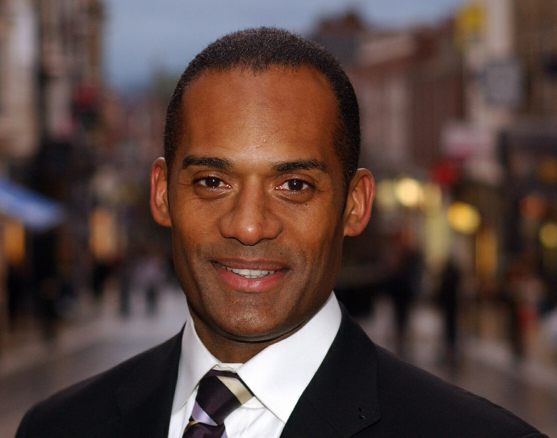
    Below is the text of the speech made by Bob Blackman, the Conservative MP for Harrow East, in the House of Commons on 23 January 2020.

    I am grateful, Mr Deputy Speaker, for the opportunity to speak in this deeply emotional debate. I congratulate the hon. Member for Warrington North (Charlotte Nichols) on her speech—on a personal level, but also in understanding the Jewish people and what they actually went through.

    Antisemitism is not new. It has been prevalent in society for centuries, and it is still prevalent with us today. But what makes the holocaust different is that it shows us the ultimate destination of antisemitism, with a systematic attempt to wipe out the Jewish race and anyone of Jewish religion—not just people who were openly Jewish, but anyone with Jewish genealogy somewhere in their DNA. The way in which people’s backgrounds were traced to see whether any relative or any person of their blood was Jewish was systematic, deliberate and intentional.

    I was at school with many Jewish children, and no one ever spoke about the holocaust. It was ignored—perhaps to be airbrushed from history forever because it was such a tragedy. The relatives—the fathers and mothers—of many of my friends had actually come from eastern Europe or Germany as refugees, but they never spoke about the holocaust. Whenever one went for dinner on Friday nights, it was never mentioned—I often wondered why. When we were at school, we never got the opportunity to learn about the horrors of the holocaust and what people went through.

    I remember my first visit to Yad Vashem. It was not the Yad Vashem that we see now—I have been there many times since—but the first formation of it. This was back in 1992, I think, on my first visit to Jerusalem. It was a much more intimate museum at that time. It commemorated things that had gone on. It had the first recordings of survivors—people who had sadly passed away, but recorded their testimony—and early photographs and other details of what had gone on in Germany and in eastern Europe, in particular, during the holocaust. That made Yad Vashem more intimate, in many ways, than it is now. When I heard the names of the children being recited, it brought home to me how people could systematically murder children—wipe them off the face of the planet—and what a terrible experience it was. I do not mind admitting that I cried. I cried for humanity, and I cried for the people who had lost their lives and their relatives.

    When I was elected to this place, the first all-party parliamentary group that I joined was the one on combating antisemitism, because it is right that we in this House stand up against it. I also do not mind admitting that when Holocaust Memorial Day was first mooted—it was when I was the leader of my party’s group on the London Borough of Brent Council—I was concerned that we were going to get into virtue-signalling. I am glad to say that I was wrong. It is right that we educate people, that we commemorate the liberation of Auschwitz and that we bring to bear greater understanding of the horrors that went on.

    I, too, have visited Auschwitz-Birkenau. My hon. Friend the Member for Shrewsbury and Atcham (Daniel Kawczynski) alluded to the concern that students see ​Auschwitz for one day, and it would be better if they could stay for longer. The problem with that is funding and the fact that lengthening the amount of time spent away might reduce the numbers who could go on such visits. The problem that I see with the programme of Auschwitz-Birkenau visits is that students learn about what went on there and think that that was it. We need to remember that there was a network of death camps—forced labour camps—across eastern Europe and Germany, where Jews and others were forced into slave labour and then systematically exterminated.

    I have often wondered how a civilised nation such as Germany could get into a position in which it would commit such inhumane acts. How could that possibly happen? When we talk about 6 million Jews being killed, it is a number, and it is hard to personalise that down to individual circumstances. It is difficult to visualise the horror of this attempt to wipe out the Jewish race. We have to remember that this did not just take place in one or two years. This was a deliberate attempt by the Nazis to eliminate the Jewish race.

    The roots of this are at the end of the great war, when Germany was subjected to severe reparations. That led to incredible poverty in Germany, which then gave rise to the Nazis, who could say, “It’s the Jews’ fault that you haven’t got any money. Let’s take it out on the Jews. If we take Jews out of their position, we can spread the wealth.” That was a deliberate policy, and it should never be allowed to be repeated. There needs to be a greater understanding and appreciation that, from the early 1930s onwards, this systematic approach led to the Shoah. We all have to remember that.

    We must also remember that antisemitism was rife in this country at that time. We should not think that it was only going on elsewhere. The thought process and the demeaning of Jewish people was going on in this country, and that is one reason why few people were allowed to escape from Germany to here. Had they been allowed to do so, many people who unfortunately lost their lives in camps would have survived.

    I pay tribute to Karen Pollock and her brilliant team at the Holocaust Educational Trust, who do such wonderful work to educate people—young and old—about the horrors of the holocaust. Not everyone can go to Auschwitz-Birkenau and witness evidence of the terrible crimes that were committed. We talk about the shoes, the spectacles and the clothing at Auschwitz-Birkenau. The memory that I have above all else is walking across the park with the lakes, where there is an eerie stillness. No birds tweet, and there is no sign of wildlife. There is nothing there because those ponds were where the Nazis put the ashes after emptying them from the gas chambers and incinerators. The wildlife know what happened, and so should we.

    One aspect of the Holocaust Educational Trust’s work that has become more important is the outreach programme. Last year, more than 600 schools partnered with the trust to enhance educational provision. That is important, because it allows holocaust survivors to give their first-hand testimony and lead workshops so that more and more young people can understand what happened and learn the lessons from it. It is important that we remember the survivors.​
    I echo the need for a holocaust education centre to be set up alongside this building. People visit this place as the cradle of democracy, and it is right that we have a holocaust education centre alongside our Parliamentary Education Centre so that people visiting London can see a proper record of what happened without having to travel to Jerusalem or other parts of the world. I co-chaired the all-party parliamentary group on holocaust memorial in the last Parliament. I pay tribute to my co-chair, Ian Austin, who called out antisemitism and did so much to ensure that people understood the evils of antisemitism and the need for an education centre.

    The testimony of survivors is most important. I want to place on record the details of those who sadly lost their lives last year and this year. Eve Glicksman and Henri Obstfeld both died last year, and Hermann Hirschberger MBE passed away on 1 January. One of the most famous holocaust survivors was Gena Turgel, who lived in Stanmore in my constituency. In many ways, she was a pioneer of holocaust education, as she was going into schools and colleges way before many of the current structures were set up. She was born in Krakow in Poland and had eight brothers and sisters. She was only 16 when her home city was bombed on 1 September 1939.

    Here is the part of Gena Turgel’s story that I think is most pertinent. Her family had relatives in Chicago, and they planned to leave for the United States, but they made their decision too late, as the Nazis had already invaded and closed all the entry and exit points, so her family had to move to just outside Krakow. In autumn 1941 she was moved to the ghetto in Krakow, and then moved after some of her family were shot by the SS in the ghetto. She was then forced into a labour camp, and in 1945 to Auschwitz-Birkenau, where she was sent with her mother on the death march from Auschwitz, leaving behind her sister, who they never saw again. They then arrived in a further labour camp, were forced on to trucks, and travelled under terrible conditions to Bergen-Belsen, where they arrived in February 1945. On 15 April 1945, the British Army liberated Bergen-Belsen and among the liberators was Norman Turgel, who became Gena’s husband just six months later. Gena passed away in 2018, but her record is in a book called “I Light a Candle”, so her legacy will live on.

    Hermann Hirschberger was born in 1926 in Germany. He lived with his mother, father and older brother. He attended a local non-Jewish school; in fact, there were only two Jewish students in his class and school. In 1936, Nazi laws ruled that Jewish children could no longer attend non-Jewish schools—that was part of the programme to eliminate and delegitimise Jewish people.

    Sir Peter Bottomley

    Those who have not ought to look at Adolf Eichmann’s story. He was appointed in 1932, and in 1933 he started dealing with what was thought of as “the Jewish problem”. The idea was to persecute, isolate, emigrate and then literally exterminate the Jews—it went all that time back.

    Bob Blackman

    I thank my hon. Friend for his intervention. It was clear that this was going on for a long time before the second world war broke out.

    Hermann and his brother had to walk to and from school, because German culture at that time prevented Jewish people from travelling on trams. Jewish people ​were not allowed to mix with other people on trams—this was the dehumanisation of Jewish people. Of course, on their way to and from school, Hermann and his brother were often verbally and physically attacked by students from the non-Jewish school. The people they called friends suddenly turned on them because they were Jewish.

    Then, at 9 pm on 9 November 1938, across Germany the synagogues were burnt, and businesses and homes and shops were smashed. Windows were smashed and homes and buildings were burnt to the ground. This is known as Kristallnacht, the night of broken glass.

    Hermann and his brother had not seen these crimes at first hand, but when they went to school the following morning, many of their teachers had been arrested and they were sent home. Hermann’s mother went to the bank where his father worked to warn him. However, two members of the Gestapo forced their way in and arrested his father at work. His father was then held for two days before being allowed home.

    After Kristallnacht, Hermann’s parents realised, as did many others in Germany, that they could no longer stay there safely. They tried to arrange for the family to leave but could not obtain visas for the whole family. However, they managed to arrange for Hermann and his brother to be sent to England on the Kindertransport, meaning that they were making a huge sacrifice—they knew they would probably never see their sons ever again.

    Fabian Hamilton

    I pay tribute to the hon. Gentleman for his work on fighting antisemitism, defending against it and ensuring that this curse can never happen again. Has he visited the amazing and incredible holocaust museum, Beth Shalom, in Ollerton in Nottinghamshire? It is absolutely incredible. It recreates the classrooms he has just talked about as well as the carriages of the Kindertransport. If he has not done so, I urge him to visit it.

    Bob Blackman

    I have not visited, but I will make it a priority to do so when it is convenient, because I believe that it is something we should go and witness for ourselves.

    Hermann and his brother had a long journey to get to the United Kingdom. They were then taken to a refugee hostel in Margate, where they remained for about a year, during which time Hermann had his bar mitzvah. They regularly wrote to their parents and two days before the war broke out, their parents wrote to them to say that they had just received their permits—they were going to be allowed to leave. However, once war had broken out, they were not allowed to leave. They were sent to a camp in the Pyrenees, from which they were still able to write to the brothers, but eventually they were deported to Auschwitz-Birkenau, where they were both murdered.

    In this country, Hermann and his brother were separated and sent off to different schools. Hermann was sent to work in Staffordshire while his brother worked in London, but eventually they were reunited. Hermann went on to marry and to live in London. He lived in my constituency, and he regularly spoke in schools about his experiences not only in Germany, but in this country, because we should remember that Jewish people coming as refugees to this country did not always have a happy experience. ​We should own up to that, and we should also say that we are not unique in offering service now to Jewish people. Sadly, Hermann died on 1 January 2020. I met him on many occasions and had the opportunity to hear of his experiences both in this country and before he arrived.

    I want to single out two other people. The first is Angela Ioannou, who is an ambassador for the Holocaust Educational Trust. She recently attended the Lord Merlyn-Rees annual lecture in Parliament, and has given an account of her views on how we can make sure that holocaust education continues to be rolled out. The other is Dr Alfred Weinberger, who was born 26 April 1900—he shares my birthday, if not my exact birth year. He was deported to the ghetto in 1943, and then on to Auschwitz-Birkenau, where he was killed.

    The reality is that the testimony of survivors and their experiences bring to life the horrors of the holocaust. We must set out our stall to make sure that such things never happen again. Members have mentioned other forms of systematic murder, but I have seen the plight of the Rohingya at first hand. The duty we owe is to ensure that those people who have perpetrated murder are brought to justice and suffer for the war crimes they have committed, and that we help and assist people who are refugees.

    I end by saying that the theme of this year is “stand together”, and I that think the whole House stands together united today in remembering the horrors of the holocaust and saying, with one voice, never again.

  • Luke Hall – 2020 Statement on Holocaust Memorial Day

    Luke Hall – 2020 Statement on Holocaust Memorial Day

    Below is the text of the statement made by Luke Hall, the Parliamentary Under-Secretary of State for Housing, Communities and Local Government, on 23 January 2020.

    I beg to move,

    That this House has considered Holocaust Memorial Day.

    This debate is taking place on the 75th anniversary of the liberation of the Nazi concentration camps throughout Europe, which brought an end to the murder of 6 million Jewish men, women and children by Nazi Germany. But as we know, it did not bring an end to the scourge of antisemitism. Today, sadly, we see antisemitism on the rise once more in this country and across Europe and the Americas. It is a mark of a civilised society that people of different faiths, different cultures and different traditions can live together in harmony. If we are truly to value Holocaust Memorial Day, we will do it by remembering this lesson: that we must show tolerance and respect for other people in order to live in peace. That is why it is vital that we all rise to the challenge and rid our society of this age-old hatred.

    On Holocaust Memorial Day, we remember all those murdered by the Nazis: the 6 million Jews; the thousands of Roma and Sinti; the political prisoners; those with physical disabilities and mental illness; and those persecuted for their sexuality. It is a day when we remember the 2 million victims of the Khmer Rouge in Cambodia and the almost 1 million victims of the Rwandan genocide. It is a day when we remember the 8,000 Muslim men and boys murdered in Srebrenica 25 years ago. On Holocaust Memorial Day, we remember them all.

    The enormity of the numbers can make it seem almost impossible to relate to individual victims. That is made even harder because the names of many holocaust victims have been lost to us. In Nazi Germany, Jewish men and women were forced to change any name believed to be Aryan to Israel for men and Sara for women. Others, in the camps, had their names stripped from them and replaced by a tattooed number. Personal names that had been handed down from father to son and from mother to daughter were lost or replaced.

    To mark the 75th anniversary of the liberation of Auschwitz, the Holocaust Memorial Day Trust has launched a social media commemorative project that will generate the name of an individual who was murdered by the Nazis, allowing us to honour those victims by giving them back their name. Today I will be honouring Johannes Degen. He was born in Germany on 8 July 1900 and was murdered by the Nazis for being a Jehovah’s Witness. I hope that all Members will take the time to take part and visit the trust’s website.

    Survivors are at the heart of holocaust commemorations. Those of us who have been fortunate enough to sit before a survivor and listen to them describe their experience can be in no doubt about the terrible truth of what happened. Sadly, to this day there are still people who insist that the holocaust never happened.

    Mr Barry Sheerman (Huddersfield) (Lab/Co-op)

    The Minister is absolutely right that as these wonderful survivors come to the end of their lives, we need to have a record of their testimony. The exhibition at the Huddersfield holocaust memorial centre, which was ​opened by Lord Pickles, is a wonderful resource. We have those recordings, and children and other people can learn and remember.

    Luke Hall

    I thank the hon. Gentleman for putting that on record, and I completely agree with what he said. Survivors are the ultimate rebuke to such thoughts, and the testimonies that we hear are a reminder of our duty to confront those who would tell lies about our history.

    I wish to take the time to share a little of the story of Auschwitz survivor Lily Eberts. In 1944, when she was just 14 years old, the Nazis deported her and her family from her Hungarian home town to Auschwitz. She was with her mother, brother and three sisters. On their arrival, they were split up, either directed left or right. Lily’s mother, brother and sister were told to go right and they were taken to the gas chambers and crematorium. Lily and her two sisters were directed the other way. They never saw the others again. The only possession that Lily was able to keep with her on her journey was her gold pendant, given to her by her mother, which, remarkably, survived the camp with her, hidden in the heel of her shoe.

    Seventy five years have passed since liberation. Lily is now a proud great grandmother. She still wears the tiny gold pendant and shares its remarkable story with all those who will listen. Any gold arriving in Auschwitz was stolen by the Nazis, so Lily believes that her pendant is unique in that it was the only gold to enter and leave the camp with its rightful owner. Like Lily herself, it survived against the odds.

    Many Members of this House and many millions of people from around the world have visited Auschwitz-Birkenau and have seen the thousands upon thousands of shoes, of all shapes and sizes, piled on top of one another. Many of those shoes, like Lily’s, hold the memories of those last murdered in Auschwitz. Hidden in the soles of those shoes are notes and photos—the last possessions of men, women and children murdered by the Nazis.

    I pay tribute to the eye witnesses for their resilience and their bravery. They are still, even in their 80s and 90s, sharing their testimony in schools across the country with the Holocaust Educational Trust. We are also hugely grateful to the next generation of Holocaust Educational Trust ambassadors—thousands of young people who have heard testimony from survivors and who have visited Auschwitz and returned to share what they have learned. They are doing incredible work, taking on that responsibility and commitment to carry the legacy and stand up to hate today.

    Sir John Hayes (South Holland and The Deepings) (Con)

    Further to that point and, indeed, to the intervention of the hon. Member for Huddersfield (Mr Sheerman), will the Government play their part in working with schools to bring the life of the work of the trust to every part of our kingdom? It is vital that the next generation understand that the future is, in part, shaped by what we learn from the past.

    Luke Hall

    I absolutely give that commitment, and I thank my right hon. Friend for the opportunity to put it on the record. That is why we should pay particular tribute to the next generation of volunteers who are really taking on that legacy and serious responsibility.​

    Although Auschwitz is synonymous with the holocaust, few people are aware of the Arolsen archive, the world’s most comprehensive archive on the victims and survivors of Nazi persecution. The collection has information on around 17.5 million people and belongs to UNESCO’s memory of the world. Apart from the paper records, the archive has 3,000 personal possessions belonging to former inmates of concentration camps. Thanks to the #StolenMemory campaign, the archive has returned precious recovered items to family members. Members can imagine the immeasurable value that these items have to their families—they are often the last remaining traces of parents, grandparents, brothers and sisters.

    Decades after the Nazis had confiscated a watch from his father, Jean-Pierre Lopez held it in his hands and wound it up again. He reported that it was extraordinary. He said that it seems to still work perfectly even after 74 years. In 1944, the Gestapo had arrested his father, José Lopez, as an anti-fascist and deported him as a forced labourer. He managed only just to survive, ending up with typhus and a body weight of just 40 kg.

    The theme for this year’s Holocaust Memorial Day is “stand together”. It is a reminder for us to stand together, with each other and with our communities, to remember the holocaust. It is also a reminder that during the holocaust and subsequent genocides, communities themselves were deliberately divided, with individuals persecuted because of their identity, and that, despite the dangers of doing so, some people chose to stand together with those targeted, to challenge the divisive actions of genocidal regimes. We must remember their bravery and sacrifice and be inspired by it. We also must make sure that we stand together to challenge hatred and prejudice wherever we find them today, which is why this Government are so proud of the support that they give to holocaust education remembrance.

    The incredible work of the Holocaust Educational Trust is of massive value. Every year, the trust takes thousands of young people to Auschwitz-Birkenau and trains hundreds of teachers across the country. The Government have provided £2.2 million to the trust’s “Lessons from Auschwitz” project and £1.7 million for visits to Bergen-Belsen, the camp liberated by British troops. We also provide £1 million a year to the Holocaust Memorial Day trust to deliver the annual memorial day and thousands of local events across the country. We have been funding the charity Remembering Srebrenica since 2013, including with a further £400,000 this year. The charity uses the funding to raise public awareness of the 1995 genocide, with the aim of creating a diverse movement of people coming together to challenge hatred and intolerance.

    Despite that education and the support of successive Governments and people in the United Kingdom, it is a sad fact that antisemitism has spread like a virus far into UK politics in recent years—even into the very building in which we stand. When the Chief Rabbi unprecedendently feels the need to speak about his fears during the general election campaign, when Jewish councillors and Members of Parliament are subjected to such campaigns of hatred that they feel they have no alternative but to stand down, when dangerous conspiracy theories become so widespread on social media that the ​public start to believe them and write in to our offices with the most offensive lies, we must shake ourselves and remember that this is not normal; this is wrong. I urge all Members to play their part in turning the tide of antisemitism.

    Andrew Percy (Brigg and Goole) (Con)

    The sad truth is that there are people elected to this place in the recent general election who have shared antisemitic conspiracy theories and breached the International Holocaust Remembrance Alliance definition of anti- semitism. It is all very well people apologising, but the real evidence that they have changed is their taking some action over what they have said—owning it and showing that their apologies are more than just words.

    Luke Hall

    First, I thank my hon. Friend for his work as vice-chair of the all-party parliamentary group against antisemitism. I agree that people should take action. We are proud to support the International Holocaust Remembrance Alliance, which unites experts and 34 member states behind the need for holocaust education, remembrance and research. In 2016, the IHRA created a working definition of antisemitism, which is now internationally accepted. The alliance seeks to ensure that no one can shirk responsibility for their words by playing with semantics, but it will succeed only if organisations sign up to the definition and support it. The IHRA definition is already used in guidance for the police and Crown Prosecution Service, to help them to identify hate crime. I urge public organisations in the UK to sign up to the IHRA definition.

    I will finish by saying a few words about the holocaust memorial and learning centre we plan to build in Victoria Tower gardens next to Parliament. We are fortunate that the foundation delivering the memorial is headed up by the right hon. Eric Pickles and the right hon. Ed Balls. By placing the memorial and learning centre next to Parliament, we ensure that it will serve as a permanent reminder that political decisions have far-reaching consequences.

  • Matt Hancock – 2020 Statement on Wuhan Coronavirus

    Matt Hancock – 2020 Statement on Wuhan Coronavirus

    Below is the text of the statement made by Matt Hancock, the Secretary of State for Health, in the House of Commons on 23 January 2020.

    With permission, Mr Speaker, I would like to inform the House about the outbreak of a new coronavirus in China and the UK’s response to protect the British public. As of this morning, 571 cases have been confirmed by the Chinese Government, and 17 people are reported to have died of this new strain of respiratory illness. All the fatalities have so far been contained to mainland China. However, this is a rapidly developing situation and the number of cases, and deaths, is likely to be higher than those that have been confirmed so far. I expect them to rise further. It has been reported that the Chinese authorities have placed further transport restrictions on the epicentre of the outbreak, Wuhan city, including on international flights. A small number of cases of the new coronavirus have now been detected in other countries, including Thailand, Japan, South Korea, Taiwan and the United States. Experts at the World Health Organisation are meeting again today to determine whether this new outbreak now constitutes a “public health emergency of international concern”.

    Most cases of the new coronavirus so far have been non-fatal. In these cases, most people experience cold and flu-like symptoms and then recover. However, there have been a small number of cases so far where it has proven more serious and fatal.

    There are no confirmed cases of this new infection in the UK so far. We have been closely monitoring the situation in Wuhan and have put in place proportionate precautionary measures. Our approach has at all times been guided by the advice of the chief medical officer, Professor Chris Whitty. Since yesterday, Public Health England officials have been carrying out enhanced monitoring of direct flights from Wuhan city, and all passengers on direct flights from China will receive information on what to do if they fall ill. Professor Whitty and Public Health England, aided by independent experts, are in close contact with their international counterparts, and are continually monitoring the scientific evidence as it emerges.

    The chief medical officer has revised the risk to the UK population from “very low” to “low”, and has concluded that while there is an increased likelihood that cases may arise in this country, we are well prepared and well equipped to deal with them. The UK is one of the first countries to have developed a world-leading test for the new coronavirus. The NHS is ready to respond appropriately to any cases that emerge. Clinicians in both primary and secondary care have already received advice, covering initial detection and investigation of possible cases, infection prevention and control, and clinical diagnostics. Acting on the advice of Professor Whitty, we have updated our travel guidance to British citizens to advise against all but essential travel to Wuhan city.

    We are working closely with our counterparts in the devolved Administrations. The public can be assured that the whole of the UK is always well prepared for these types of outbreaks, and we will remain vigilant and keep our response under constant review in the light of emerging scientific evidence.

    I commend this statement to the House.​

    Mrs Sharon Hodgson (Washington and Sunderland West) (Lab)

    I thank the Secretary of State for an advance copy of his statement, and for updating the House this morning.

    The coronavirus is indeed very concerning, and I am grateful for the work of Public Health England and the Department on it so far, especially in screening passengers on direct flights from Wuhan. However, a passenger arriving from Wuhan yesterday said that he had gone through virtually no screening, but was given a leaflet. Does the Secretary of State have any response to that?

    Will flights from other Chinese cities, not just Wuhan, be monitored, and when does the Minister think monitoring might begin? Will there be specific traveller advice for UK citizens travelling into China who have existing conditions that may mean they need to take more care?

    As the Minister said, Public Health England has assessed the risk of the coronavirus being spread to the UK as “low”. In the event of the virus spreading to the UK, are there contingency plans and funds to prevent further spreading, to deal with the scale of the problem?

    As the Minister knows, we are in the middle of flu season, so I do not want to cause any undue anxiety, especially as—as we have heard—there are no cases in the UK at the moment, but can he please advise people watching who may be concerned about their own symptoms of what they should do?

    We all know that the NHS has a tremendous record in responding to similar incidents, such as Ebola and monkeypox. We can certainly be proud of our public health record in these areas and can be confident in how public health bodies will respond to this incident. There is a chance that a global pandemic can be avoided if Governments across the world take the right measures in a timely fashion.

    I thank the Minister for his update today, and would be grateful if he could provide some further clarity on all the points I have raised.

    Matt Hancock

    I appreciate the cross-party approach that is being taken to this outbreak, as reflected in the shadow Minister’s remarks. I shall address the specific points that she raised. On the reports from the flight that arrived yesterday, it is important that we get the enhanced monitoring right. The challenge is that symptoms for the Wuhan novel coronavirus do not usually appear until five to seven days, and sometimes up to 14 days, after a person has been infected, and therefore the advice is that the most important part of the monitoring is to ensure that everybody knows what to do if the symptoms arise, because often the symptoms will not be there for somebody on the flight. Having said that, we do not expect further flights from Wuhan, because the Chinese authorities have taken steps to stop travel out of the city.

    The hon. Lady asked whether we will be monitoring flights from other Chinese cities or, indeed, from anywhere else. The current evidence suggests that the vast majority of cases are in Wuhan. Obviously we keep that under constant review, and we will not hesitate to take further steps, if necessary, to protect the British public.

    Robert Halfon (Harlow) (Con)

    We have a big and vibrant Chinese community and a very large Chinese community centre in Harlow. What information is being ​sent to such Chinese community centres? Many members of the Chinese community have relatives in Hong Kong, so what will be done if this disease reaches Hong Kong?

    Matt Hancock

    There is evidence of potential cases of the coronavirus in Hong Kong, although the vast majority of cases are in Wuhan city. We will keep that under review.

    The advice to my right hon. Friend’s Chinese residents is exactly the same as the advice to all, which is to avoid anything but essential travel to Wuhan city and that direct flights from Wuhan city appear to have ceased. An awful lot of people who work for Public Health England are already in Harlow, with more to come. I am sure he would want to join me in thanking them for the vigilant work they are undertaking.

    Anne McLaughlin (Glasgow North East) (SNP)

    It is obvious that the scale of this operation should not be underestimated. Shutting down a city the size of London as it prepares to celebrate Chinese new year is an extraordinary undertaking. What support has the international community offered to the Chinese authorities, particularly the health services, as they cope with this unprecedented strain on resources?

    Some of my questions have already been asked, so I will just ask about the World Health Organisation, which is meeting today. What communication have the UK Government had with the WHO? Can the Secretary of State assure the House that the Government will remain updated, in real time, on developments and on what steps, if any, are required in the UK?

    Finally, I have a number of Chinese constituents, as we probably all have, and English is difficult for many of them. When we give information to Chinese communities in the UK, is it provided in different languages?

    Matt Hancock

    Yes, the advice will be available today in Mandarin and Cantonese. The UK is heavily engaged in the WHO response and, of course, we are engaging with the Chinese Government. That engagement principally happens through the WHO, which has well-established procedures to make sure we understand the nature of the outbreak so that scientists can investigate the epidemiology and come to an evolving scientific analysis of what is happening. We then base our decisions, as much as possible, on the scientific advice that flows from that. The chief medical officer, who is an expert on these issues, is co-ordinating the work here in the UK.

    Jason McCartney (Colne Valley) (Con)

    Many UK universities, not least my local Huddersfield University, have strong links with the Wuhan University of Science and Technology. What particular advice is the Secretary of State’s Department giving to UK universities, particularly those with a large Chinese student population?

    Matt Hancock

    We are not giving them specific advice. We are giving the same advice to everybody, which is to avoid all non-essential travel to Wuhan, but I am happy to take away the point that we should communicate, through Universities UK, with all UK universities to make sure the message gets to students directly so that they hear the advice that is there for everybody, which is to avoid all but essential travel.

    ​Afzal Khan (Manchester, Gorton) (Lab)

    My thoughts go out to all the residents of Wuhan, Manchester’s sister city. Sadly, the news of this outbreak could not have come at a worse time, as residents are preparing to celebrate the lunar new year. What more can the Secretary of State do, in light of our expertise in coronaviruses, to support the Chinese Government? We have a sizeable Chinese community in Manchester, so we should raise awareness in this country.

    Matt Hancock

    I will ensure that the authorities in Manchester are fully apprised of, and keep up to date with, our advice, which, as I say, is based on the best scientific evidence, to make sure that Manchester and its sister city deal with this as well and as appropriately as they can.

    Alicia Kearns (Rutland and Melton) (Con)

    I thank my right hon. Friend for the comprehensive update and, in particular, for the detail on the test the UK has developed for the coronavirus. What consular assistance is being provided to British nationals caught up in affected areas in China and elsewhere?

    Matt Hancock

    My hon. Friend raises an important question. There are approximately 11 million people in Wuhan city, including British nationals. As far as we know, we have two UK staff in our consulate in Wuhan and 15 locally employed staff. Of course we are ensuring that they get all the support they need, and they are available to provide consular assistance to British nationals in Wuhan city.

    Hilary Benn (Leeds Central) (Lab)

    The House appreciates the fact that the Secretary of State has come here so promptly to make this statement. Of course we all hope that an outbreak here does not happen, but what is the current advice to members of the public about the use of face masks if it does? One thing about these outbreaks is that people look at what measures are being taken and what people are doing in countries where the disease has taken hold, and then ask the authorities here, “Why aren’t we doing the same?” It would be helpful to know this in anticipation; presumably it will come from guidance given by the chief medical officer.

    Matt Hancock

    That is right. We have well-established procedures for dealing with a potential outbreak such as this, be it of flu or a coronavirus. Our advice at the moment to the UK public is that the risk is low—of course we will keep that under review. We try very much only to put forward proposals that are clinically appropriate. The wearing of face masks is not deemed clinically necessary now. Of course we keep that under review, and we will be guided by the science.

    Munira Wilson (Twickenham) (LD)

    I thank the Secretary of State for the comprehensive update. We know that scientists are already working hard to find a vaccine for this newly identified strain of coronavirus. Given the importance of vaccines in combating serious diseases such as this, does he agree that education about vaccines ​is more important than ever in this age of disinformation? What conversations has he had with colleagues to combat fake news on vaccines?

    Matt Hancock

    The hon. Lady makes an incredibly important point, on which I wholly concur in the round: vaccines are incredibly important and valuable. We have a long-established process for working out where we should vaccinate. In this case, because of the nature of the virus, it is unlikely that a vaccine is going to be available—there is not one now—so that is not the route we should be looking at, but of course we will keep that under review. On her general point, when advised to take a vaccine, such as the flu vaccine for the winter or the measles, mumps and rubella vaccine for children, people should vaccinate, because it is both good for them and good for their neighbour.

    Dame Diana Johnson (Kingston upon Hull North) (Lab)

    I thank the Secretary of State for the statement. In Hull, including in my constituency, we have a lot of Chinese students. I just want to be clear about the advice being given to anyone worried about symptoms that might develop, as he said that that might happen up to 14 days after arriving in the UK. What advice should those students be given about what to do and who to contact?

    Matt Hancock

    Anybody with concerns, be they a student in Hull or elsewhere, should contact their doctor. As the first port of call, 24 hours a day, they can call NHS 111, which has clinical advice available around the clock. All the 111 contact centres have been updated and will be kept updated with the most appropriate advice.

    Jim Shannon (Strangford) (DUP)

    First, may I thank the Secretary of State for his statement and his clear commitment? Throughout the United Kingdom of Great Britain and Northern Ireland, people like you and me, Mr Speaker—you are a type 1 diabetic and I am a type 2 diabetic—have a chronic disease. Those who are diabetic and many others across the United Kingdom worry about the killer impact of this virus.

    I note that the United States of America has diverted flights to specific screening areas. I am sure that the Minister and many others in the House saw the news this morning, as I did. On the flight that arrived this morning, there were three different opinions among those coming off the plane: one said that they had had no advice or discussion whatsoever; the second one got a leaflet; and the third one said that they had some tests done before they left China. So it seems that mixed messages are coming out. It is important that we have a clear policy and that everyone flying here and every person here feels assured.

    Matt Hancock

    The hon. Gentleman is absolutely right. We had a divert in place for that flight to ensure that it went to a part of Heathrow where there are the procedures and processes to be able to deal with this issue. There was enhanced monitoring of that flight— not all of that is immediately obvious to the passengers themselves. Crucially, we understand that the Chinese Government have stopped future flights. We will of course keep all that under review.

  • David Adams – 1943 Question on Overcrowded Long Distance Trains

    Below is the text of the question asked by David Adams, the then Labour for Consett, in the House of Commons on 11 March 1943.

    Mr. David Adams

    Asked the Parliamentary Secretary to the Ministry of War Transport whether he is aware that long-distance trains are leaving King’s Cross with men, women and children passengers standing in the corridors for long periods, whilst first-class compartments are seating only six persons each; and whether, to remedy these hardships, he will give instructions that seating shall in future be not less than eight persons per compartment when required?

    The Joint Parliamentary Secretary to the Ministry of War Transport (Mr. Noel-Baker)

    I share my hon. Friend’s anxiety that the passengers on the long-distance trains to which he refers shall be spared all avoidable discomfort. I understand, however, that the seating accommodation in these trains, both in first and third-class compartments, is already being used to its full capacity. In some first-class compartments the fixed projecting arm-rests make it impracticable to seat more than six persons. But the train attendants have been instructed that where first-class compartments can seat eight passengers in reasonable comfort, this additional accommodation must be used.

    Mr. Adams

    Why was not this obvious necessity put into force long ago?

    Mr. Noel-Baker

    Instructions were in fact given some time ago. If my hon. Friend will give me particulars of any case he has in mind, I will make inquiries.

    Sir Granville Gibson

    Is the hon. Gentleman aware that if I travel to Yorkshire this afternoon, I must be at the station at least half-an-hour before the train starts?

    Mr. Noel-Baker

    I know that pressure on the trains is very great, and I regret it, but it is an unavoidable necessity.

    Miss Rathbone

    Is the meaning of the regulation that, if there is an arm rest which can be raised, the train officers have a right to insist that it shall be raised?

    Mr. Noel-Baker

    Yes, that is the understanding.

  • Anthony Eden – 1943 Statement on Death of Speaker Edward FitzRoy

    Anthony Eden – 1943 Statement on Death of Speaker Edward FitzRoy

    Below is the text of the statement made by Anthony Eden, the then Secretary of State for Foreign Affairs, in the House of Commons on 3 March 1943.

    The news which the House has just received will be felt, I think, as a tragic personal blow to each one of us. The Speaker was not only a great Speaker, but also he was a man whom every Member of the House had come to regard as a personal friend. In that light, perhaps, most of all we shall always remember him. This, as the House knows, is not the moment for the tributes which will in due course be paid, but I think I shall be expressing the feelings of every Member if now, on behalf of the House, I send a message of bur deepest and most heartfelt sympathy to Mrs. FitzRoy and to the family in the loss which, though it, is nearer to them than to us, is a loss which we the House of Commons feel also. [HON. MEMBERS: “Hear, hear.”]

    In the circumstances, I think the House will feel it appropriate that I should move, ​ “That this House do now adjourn till Tuesday next.”

  • Pierse Loftus – 1943 Speech on Grass at Aerodromes

    Below is the text of the speech made by Pierse Loftus, the then Conservative for Lowestoft, in the House of Commons on 24 February 1943.

    In the short time available to me I propose raising a matter which I believe is of greater national importance than is generally ​ realised, namely, the failure to use for feeding purposes for stock a vast amount of grass available on aerodromes. We are all begged to-day, each one of us, to economise to the utmost in the consumption and use of all feeding material, and those who can produce food, whether farmers or market gardeners, are urged to do their utmost to increase the food supply of the country. I believe myself that owing to the failure to use this vast amount of grass on our aerodromes we are wasting an enormous quantity of the most valuable animal food in the world. I believe that the loss may well run into over 100,000 tons a year, perhaps considerably more. The drying of grass is probably the most progressive, beneficent step achieved in agriculture in the last 50 years. Dried grass contains in itself a perfect animal food. It has an enormous quantity of vitamins, proteins, and so on; and such a food in these times should not be wasted. I recognise that in putting my case I must be brief, and that I must not use any figures as to the numbers of aerodromes and so on; I must deal with the matter in general terms.

    The first thing to note is that every aerodrome could utilise two drying plants. Between 1st May and 1st October each plant would produce 250 tons; that is to say, each aerodrome with two plants would produce 500 tons a year of this valuable food. A hundred aerodromes would produce 50,000 tons a year of this food for our stock. It is possible that some aerodromes could utilise three drying plants, but I take the figure two. Nearly all the surface of an aerodrome—quite 90 per cent.—is grass. On how many aerodromes are we utilising grass for drying? I have asked the Minister on what percentage of aerodromes it has been utilised, or on what number of aerodromes. He gave an answer in one word—”Ten.” Whether he meant 10 per cent. or 10 aerodromes I do not know—I presume he meant 10 aerodromes. In any case it is obvious that there is a great waste in not utilising the enormous majority of aerodromes for this purpose. What happens to the grass on these aerodromes? It has to be cut. I believe that in some instances, possibly in many, it is cut and then left to rot. The only way of utilising this grass is to dry it. You cannot utilise it as hay; it would not keep in such quantities, especially the very short grass.

    What is the answer that the various Government Departments have given on this matter? The first answer probably is that the disposal of the grass is left to the county war agricultural committees. I believe that these committees have the power to deal only with areas outside the aerodrome, small areas containing probably inferior, rough grass. I do not believe they have power to deal with the aerodromes themselves. I have a friend—and I will give particulars to the right hon. Gentleman later—who for 18 months has been trying to get the grass of five or six aerodromes in one county, and has offered £2 an acre, but cannot get an answer. He has been referred from one Department to another, chivvied from pillar to post, and he can find nobody in any Department who will take the responsibility of accepting his offer and adding to the food supplies of the country. The second answer is, that it may be said that camouflaging grass on aerodromes prevents the utilisation of the grass. I suggest that only a small proportion of the grass of an aerodrome is so affected. It should be known that camouflage has taken place for years on aerodromes where the grass has been dried, and further that the grass driers themselves used to apply the camouflage in certain aerodromes. I admit frankly that years ago there was a lot of camouflaging in aerodromes which did prevent the grass being used. I will not go into the details of the methods, naturally, but I know that that method has been abolished and is no longer used.

    The third answer may be given as follows; Aerodromes are sown with a special type of grass which is not suitable for grass drying. I reply to that that the majority of aerodromes laid before the war were seeded with first-class grass admirably adapted for grass drying. I have here the analyses of that grass from three aerodromes, and they are as follow: first, carotene, which forms 450 millograms per kilo; the second, 400 millograms per kilo; and the third, 330 millograms per kilo. First quality dried grass is anything above 250 millograms per kilo.

    Therefore it is first-quality dry grass. But I am also told by experts that even these special grasses which are used on the minority of aerodromes only can be utilised for grass drying. Surely, if there ​ is any question about it, it can be solved very easily. Let the Minister obtain samples and have them analysed by experts and discover whether the types of grass used on this minority of aerodromes are suitable or not.

    A possible answer is that drying plants are not available. I admit that they are not available to-day, but they can be made available quite easily. Grass drying plant can be easily and quickly made. It consists of an oven of sheet metal and a furnace, and I believe that we could get 500 of these plants made by one or two firms within three months, once the order was given and the material provided. I would point out to the Minister that these plants could be used for other purposes, such as drying corn during a wet harvest, and after the war they would be an invaluable national asset in providing food for stock.

    I feel that the only explanation is that the Air Ministry is the obstacle. I realise it is the obstacle. The Air Ministry is concentrating on its own magnificent job, which it is carrying out so splendidly, and the Minister and the Ministry personnel say, “We want to get on with our job and with the war, and we cannot deal with these agricultural troubles.” It is, I think, because they do not realise the immense importance of the subject. It is important for these and many other reasons. We want more milk, and the ideal food for the purpose is dried grass. We want more meat, we want to import less food for our stock. Dried grass is the perfect food. We have killed off our pig and poultry populations to a large extent, yet here we have the perfect food, not being used. If we had even half this available food, we could enormously increase our stock of pigs and poultry, to the general benefit of the country.

    My final consideration is this: Lord Woolton, in a passage which appealed to our people, said the other day, when begging us to economise on bread, that when you fiddle with a piece of bread by the side of your plate you are fiddling with the lives of our seamen. That went home to the British people. Here, I suggest, is a vast store of magnificent animal food which is being wasted. If we used it, it would save great quantities of food which might have to be brought in, indeed, will have to be brought in, in ships at great cost of loss of ships and men I would beg the Parliamentary Secretary​ to consider this matter seriously. I ask him to take at least this step, to insist on a joint investigation by the Ministry of Agriculture and the Air Ministry. Let there be a joint Departmental Committee to sift the facts and hear the evidence of experts, so that the obstacles are removed. That is a small request to make. I would like to quote the eloquent words used by the Parliamentary Secretary at Cardiff the other day. He is reported to have said:

    “More food is still the rallying cry in the battle of the fields. Every ton of food produced here helps in the battle against the U-boats. Each ship used to import food is one less to carry the war to the enemy.”

    Let the Parliamentary Secretary now break down this inertia, this lack of realisation of what is happening, and force a thorough investigation into the great possibilities of this food.

  • Ellis Smith – 1943 Speech on Transference of Labour

    Below is the text of the speech made by Ellis Smith, the then Labour MP for Stoke, in the House of Commons on 23 February 1943.

    Let me make It quite clear that we wish to maintain our record in the world battle for freedom. We want the complete annihilation of the Nazi and Fascist cliques and the subjugation of the economic and social forces that gave rise to the Hitlerites, who, in the main, are responsible for this war. Therefore, we are logically bound to support more efficient organisation. We support more efficient organisation, first of all, to enable us to secure an early victory, to avoid a war of attrition and to provide our Forces with overwhelming superiority in weapons and equipment. We desire more efficient organisation in order to be worthy of our great Russian Allies and to ​ send them the maximum supplies and, at the same time, to get this war over as soon as possible and so save thousands of our lives.

    I have prefaced what I intend to say, in order to point out the need, especially in the war situation, to get away from the pre-war quibbling that used to take place in this country, and which to a certain extent, when we come to deal with domestic affairs, we find is still there. The war has made this country dynamic, and we want to maintain that attitude. We want our country to gather momentum for victory and also for peace purposes. At the end of last year, the Minister of Production visited the United States, where he had consultations with those in charge of American production. I should think—and we would like a reply on this point—that agreement was reached on a united, planned strategy, on a planned production programme, based upon our strategical needs. The result of it was the Minister’s statement, which, summed up, meant this: Temporary dislocation, leading to the peak production of our offensive needs in ships, aircraft and tanks, in the main.

    To-day we are concerned with the following points which the Minister made and which I will give in an extract from his speech:

    “Nineteen forty-three will be a peak year in our war production, and the total labour force employed in the munitions industries during the year will considerably exceed the numbers employed in 1942. In order to obtain the additional labour force required and at the same time to satisfy the requirements of the Forces, there will have to be, by means of concentration or otherwise, further withdrawals of labour from the less essential industries and further mobilisation of women into industry both for munitions work and as replacements for those transferred from the less essential industries. At the same time transfers of labour within the munition industries themselves must take place ….

    Managers and workers who are affected by the changes in programmes which I have just described must realise that, notwithstanding any temporary dislocation that may occur, these changes are part of an ordered plan. If men and women find themselves being transferred to new work they will understand that it is because the new work is even more vitally important than that upon which they were previously engaged. If there is some temporary dislocation to management or to labour, the great and insistent demand for man- and woman-power will quickly reabsorb them into new activities.”

    We hope they are. If men and women find themselves being transferred to new ​ work, they will understand it is because the new work has become even more vitally important than that upon which they were previously engaged. If there is some temporary dislocation of management and labour, the great and insistent demand for all man- and woman-power will quickly re-absorb them into new activity.

    Then the Minister went on to say:

    “I would appeal to Members of this House, whose influence can be of so much importance in their constituencies, as well as to the managements of all companies, to give every assistance to my right hon. Friend the Minister of Labour and National Service in his difficult task, by explaining to their workpeople why the changes are necessary. If they are understood, doubt and uncertainty will not occur.”—[OFFICIAL REPORT, 19th January, 1943; cols. 38 and 39, Vol. 386.]

    That is our main purpose in this Debate. We differ from an hon. Gentleman who spoke from a Bench below the Gangway not long ago, in regard to Debates, because we believe that Debates in this House have been a great contribution to our war effort. We believe that, in this democratic assembly, Questions, in the main, and Debates have helped to stimulate the Government and Government Departments, and at the same time to provide Ministers with an opportunity of making statements which have explained matters of this kind to the country. It is with this reason in mind that we are raising this issue to-day.

    An important factor in the degree of success in the new policy will be how the workpeople are treated when these transfers are being made. Upon that matter I am instructed by my hon. Friends to speak, and I gladly do so. At the last Trades Union Congress this resolution was carried:

    “The Congress urges upon the Government the necessity of seeing that ample safeguards are provided to ensure that employers cannot take advantage of the Regulations by transferring their (the employers’) liability for subsistence allowance on to the Government and, in addition”—

    and this is what I want to emphasise—

    “that proper accommodation is provided for the workers prior to transference, and adequate welfare arrangements made. Further regard should be paid to the question of women workers and the need of keeping them employed as near their homes as possible.”

    I hope that, in the policy which the Minister of Production outlined, that resolution will be borne in mind. I understand that the new policy will mean that ​ transfers will have to take place on a national scale and also within a region, and that there will also be transfers within a restricted area. What does the Ministry consider a reasonable distance to travel daily for a transferred worker, from his or her home to the new place? Over a reasonable distance, workers should receive travelling allowance daily. When the travelling distance is over the reasonable mileage, can arrangements be made for transferred people to receive a hot meal when they arrive, or, at the very least, tea, if the distance is outside a reasonable mileage? I would also ask that the transferred workpeople should be given more free travelling vouchers, especially at holiday periods. When there is sickness at home they should be given leave as expeditiously as possible, because if their minds are on the fact that there is sickness in their homes, they cannot do justice either to themselves or to those in charge of the work. It is to be remembered that in those cases they have to bear the cost of making the journey home and that sickness in the home increases the domestic expenditure, while at the same time they suffer a loss of wages. That is why I suggest that leave should be granted to them more readily than has been the case up to the present, and that they should also receive more travelling vouchers. I think in circumstances like those, transferred people are entitled to some such benefits as I suggest, and I therefore ask that consideration shall be given to that aspect of the matter in connection with the new policy.

    Then, I would ask, cannot something be done to ease the difficulty experienced by workpeople who are transferred from a relatively highly-paid area to an area where the pay is lower? I can visualise that under the new policy which has been outlined this will be a cause of considerable difficulty. Cannot arrangements be made for the payment of a transfer bonus in cases of that kind? There is another point. Why have the Government not taken steps to put an end to the exorbitant charges which are being made for houses? This matter is probably causing as much friction as any other question—if not, indeed, more than any other question of which I know at the present time—in connection with the transfer of workpeople. If transference is to take place on a large scale, something will have to be done in this respect, in order that the ​ machine may work as efficiently as we desire it to work, and enable us to get the best results.

    Mr. Craven-Ellis (Southampton)

    The hon. Member has just complained of the charges which are being made for houses. Would it not be more correct if he were to say the charges made for lodgings, since house rent is controlled?

    Mr. Smith

    I was going on to make that point. My first point was in regard to houses, and I intended in the next place to mention that the same complaint applied to lodgings. The same thing applies to rent, and the same thing applies to charges for keys. All this means a form of inflation. The Government have done better than I expected as regards the avoidance of inflation in this country, but they do not seem to have tackled this particular problem, in the same way as they have dealt with bigger issues. We want to know to-day who has prevented this matter from being dealt with; who is responsible for it, and will it be dealt with before transfers take place on a larger scale? The question of housing accommodation is one of the most difficult which has to be faced in connection with large-scale transfers. In the industrial areas there were serious housing shortages even before the war, and these have been intensified by the large numbers of people who have come into the industrial areas since the war began.

    Within limits, the most efficient way of dealing with the problem would be for the Government to take over all the large hotels in the industrial areas and to retain the staffs and the service in those hotels for the accommodation of transferred workers. No class of people in this country, apart from the Armed Forces, are more entitled to have the most efficient service possible than the people directly employed in the manufacture of munitions. If it was right to take over seaside hotels to house Government offices and to accommodate Civil servants, then I think it is reasonable to suggest, now that a policy of large-scale transfer is to be embarked upon, according to the Minister’s own statement, that large hotels, within reasonable distance of industrial centres, should be taken over in order that our people may be housed on as decent a basis as possible.

    I do not know whether it is generally realised everywhere what our people have gone through during the last four or five years, particularly in the industrial centres. Very few countries, with the possible exception of Russia, have gone through worse experiences, and I do not think this is fully realised throughout the world. I live among these people; I belong to them and do not desire to be any different from them, and it is obvious, when you are among them and speak to them, how great has been the effect of the strain of the last few years upon them. No one could have made a greater contribution to the war effort than they have made. I submit that we have now reached a stage at which maximum hours could be fixed at a certain figure which would enable us to get the best possible production from the people, having regard to that strain under which they have been working. After Dunkirk they worked for 60 and 70 and 80 and 90 hours—a fact of which the Minister himself needs no reminding. He is as well aware of it as any of us. But now we have reached a stage of the war and a situation in regard to man-power, in which, I think, it would be good policy if hours were fixed, except in cases of exceptional emergency or urgency, at about 54 or 56 or some figure like that. Is the Minister satisfied that we are obtaining the best results from the men and women in industry who desire to give of their best? I would follow up that question by asking also: Are we getting the best production we could get from the numbers engaged in the aircraft industry? Those are questions to which we should have satisfactory answers before any large-scale transfers take place.

    I had expected that a representative of the Ministry of Production would have been here to-day, because the issues which are being raised concern not only the Ministry of Labour, but also the Ministry of Production and the Ministry of Supply. I would like to ask at this point whether better arrangements can be made to balance and to fit in the labour supply with the raw materials supply. When major modifications are made or when there is a change-over from one type to another, can we be given an assurance that transferred workpeople will not be sent to some place where they will have to mark time until production can start? Nothing has a worse effect on workpeople than ​ being transferred from one area to another, only to find that the area to which they have been transferred is not yet ready for production. There has been too much of that, and under the new policy that kind of thing ought not to take place. I would also ask whether workpeople will be allowed to remain as near to their homes as possible. I have seen a number of circulars issued by the Ministry, and we have heard speeches made by the Minister. We have noticed the spirit in which he makes those speeches, and I be-believe it is intended that the whole administration of the scheme should be carried out in that same spirit. What steps then are being taken, in connection with the new policy of transference, to see that the other Ministries involved in particular localities act in accordance with the Minister’s intentions? Will there be a linking-up in the localities to avoid friction?

    I suggest that where production committees have not already been set up some sort of joint committees should be established, in order that the facts can be explained to the workpeople. I have sufficient confidence in our people, and I know them sufficiently well, to say without hesitation that if the facts are explained to them most of them will respond.

    Unfortunately, too often a new policy is introduced and people are transferred, or some change takes place, without any explanation being offered to the people. These joint committees ought to be set up where large transfers take place, so that the facts can be put before the workpeople and so that general discussion can take place. I also suggest the setting-up of a rota, in the preparation of which everything would be taken into consideration in regard to domestic responsibilities and liabilities, and that the transfers should be made upon that basis.

    We all know that the Ministry of Labour has organised the British people in such a way that a great story can be told of it. It is time that that story was told to this country and to the world. It would inspire our people to greater efforts; it would encourage our men in the Forces, and that which would assist the enemy could be left out. In my view there is not yet the co-operation there should be between the Ministries responsible on such questions as transfers. Is there the co-ordination there should be on these questions between the Ministry of Labour, the Ministry of ​ Production, the Ministry of Supply, the Admiralty and the Ministry of Aircraft Production? Are we getting the co-operation we should get from the local authorities? Here is just one example. Let us remind ourselves that we are in the fourth year of war. In the last war supplementary rations were granted to workpeople. I believe that in this war those engaged in heavy manual work should have received supplementary rations, but the Ministry of Food would not agree to a policy of that kind. Many of my hon. Friends would not agree to a policy of that kind. I agree that it is very debatable.

    This is the reply which the Ministry of Food made to some of us. My right hon. Friend will remember those of us in Parliament who suggested that heavy workers like miners, engineers, transport workers, steel workers should be entitled to supplementary rations. The Ministry said, “We have a good deal of sympathy with you, but it cannot be done, owing to the situation we find ourselves in.” They went on to say that British Restaurants are now being established and that in industrial centres in particular the workpeople can take advantage of the facilities which the Ministry has organised at those British Restaurants and that this is equivalent to a supplementary ration.

    I thought that was very reasonable, and I accepted it. But what do we find? Here we are in the fourth year of the war, and so far as industrial centres are concerned this is what has been done. At the end of January, 1943, the number of British restaurants operating in the towns mentioned, per 30,000 of the population, were as follow:—Stoke-on-Trent, 1; Birmingham, 1; Manchester, 0.4; Sheffield, 0.4; Glasgow, 0.3; Salford, 0.1; Liverpool, 0.4. I have no hesitation in saying that these figures are a disgrace to those localities, and that were we getting the co-operation of the local authorities in those areas that we should do those figures would be much higher. I go on to the numbers that have been set up—Stoke-on-Trent, 9; Sheffield, 7; Glasgow, 10; Manchester, centre of a large industrial area which will probably become more important in view of our new needs and products upon which we are going to concentrate, 11; Birmingham, 35, with 14 being prepared; Newcastle-on-Tyne, 30; Salford, 1; Liverpool, 10; Darwen, ​ Eccles and Farnworth, none; Leigh, none; Mossley, none; St. Helen’s, none; and Swinton, none. Therefore, there seems to be need, before the Minister embarks on large-scale transfers, with the additional people going into those localities, to take notice of these figures.

    There is too much of this, and I am going to read this, because I think the House ought to be aware of it. A man wrote to me, and I asked him, because of what he said in his letter, whether he was a trade unionist, because that is a point which carries some weight, so far as we who come from industrial areas are concerned, because we believe, in view of the part which trade unions have played before and during the war, it places an obligation on the shoulders of all British working people to associate themselves with their fellows and become a part of the trade union movement. My correspondent replied under the official heading of the Transport and General Workers’ Union:

    “Dear Bro. Ellis Smith,

    Many thanks for the reply to my letter. I am sorry to inform yon that my wife died a few hours after writing yon on Saturday night, from meningitis. I think you will agree with me that her death would be aggravated by the suffering and worry over my having to leave her to go out of the district at that particular time. I do not want to take up much of your time but I would like you to hear this appeal of mine. I have also addressed a similar appeal to another member of the House. I might add that I feel very sore at losing my wife through the inefficiency of these people who claim to administrate in these cases, and I would like you to interview Mr. Ernest Bevin, the Minister of Labour (who might know me personally) to look up my case. I have written to the National Service Officer at Malvern for my release on the same ground as before except that I have added that my wife has since died and further that my activities as a union official warrant me a job nearer to my home. I am enclosing the original copy of my appeal.”

    Here is the original copy, which anyone can examine. This is a real tragedy. It is headed “Regulation 58A of the Defence (General) Regulations, 1939.” This man is being instructed to take up employment as a designated craftsman in another part of the country, and this is the case which he puts in his appeal:

    “1. Owing to the illness of my wife, who has been suffering from tuberculosis for the last 25 years. Secondly, of the four children left at home out of six, two of them, girls of 15 and 17 respectively, a son of 19 and a little girl of ​ seven require parental control, and my effort, if I went away, would be wasted to the country if these children lost all parental control.”

    That was sent by the man. They go on to say:

    “This man was withdrawn from building maintenance work at the R.O.F. on instructions from Regional Office, through the Inspector of Building Labourers Supply. He was directed to take up first urgency work.”

    I do not believe that it was ever the intention of this House that cases of that kind should be transferred. If transfers are to take place on a large scale, we have somehow to get the Minister’s and the Ministry’s spirit carried out right through the administration, because I do not believe that it was ever intended that that kind of case should be transferred.

    When workpeople are transferred in the future, I ask for the most efficient organisation and the best possible treatment from when they leave their homes to when they settle in another. We on this side of the House—I say that in no political sense but because of where we come from and belong to—have restrained ourselves from the beginning of this war to an extent to which I never thought I should be able to restrain myself. We have done that as a contribution to the war effort. We have allowed scores and scores of Regulations to go through this House without saying a word. Now it annoys us when we, sitting here, can see Members quibbling over Regulations when they are introduced, not to move people about, but because Ministers want to improve the efficiency of the war machine. We find certain hon. Members quibbling, and in many ways that is bound to have some effect on us, considering how these matters are dealt with. In pre-war days those who could afford it had their holiday tours arranged for them. During the whole of the tours they made there was very seldom a hitch. We want to aim at the same standard of organisation in the organisation and treatment of all transferred work-people. It is not luxury we are asking for. We are asking for human treatment, the avoidance of friction, the maintenance of good will, all leading to the maximum production. There is more consideration and sympathy in this country now for one another than at any, other time in my lifetime. We should keep in tune with the people and make care for the people’s welfare a State instruction to all. I remember when I was at work one very efficient manager whose ​ policy was to give full consideration to all questions that were raised. You could not have a row with him. The result was that he obtained maximum production. That is what we should aim at in this transference policy. We take no objection to the policy; we realise that it is a contribution to the war effort; but the policy should be carried out on the basis I have indicated, to eliminate friction and to maintain good will, so enabling us to secure maximum production. By that means we shall achieve earlier victory and take a much larger part in the battle for freedom.

  • Mark Prentice – 2020 Letter Accidentally Sent to EDP Newspaper

    Below is the text of the internal letter sent via email by Mark Prentice, the Communications Manager of Norfolk and Suffolk Foundation Trust, released by the EDP on 23 January 2020.

    Just to let you know in advance of the Board meeting that there’s nothing in the EADT today (either in print or online) about eating disorders following Emily Townsend’s query yesterday. Perhaps she might attend the Board today and try to talk to someone about it then?

    Also, we seem to have got away (again) with the Adult Safeguarding Review story. I used iPlayer to check Radio Norfolk between 4pm and 7pm last night, and it was not on there at all. I think we may have been saved by the death of Terry Jones.

    However, it was the lead story (Nikki Fox) on BBC Look East last night at 6.30pm and again at 10.30pm (Leigh Milner!), but not on the lunchtime bulletin at all. Yet again, though, we emerged virtually unscathed. We weren’t named but our Nikki said something along the lines of “No agency involved in Doreen Livermore’s care emerged without criticism”.

    Here’s a link to the BBC Online version (again, we are not named): https://www.bbc.co.uk/news/uk-england-norfolk-51210654

    Thought you ought to know the above.

    Mark Prentice
    Communications Manager
    Norfolk and Suffolk NHS FT

  • Arnold Gridley – 1943 Speech on the Beveridge Report

    Below is the text of the speech made by Sir Arnold Gridley, the then Conservative MP for Stockport, in the House of Commons on 16 February 1943.

    I beg to support the Motion. The right hon. Gentleman who moved it rightly described it as a peg on which to hang our observations. It will be found that I largely agree with much that he has said. [An HON. MEMBER: “How much?”] I cannot, and I do not propose to, cover so wide a field as he did, but will condense my observations to certain aspects of the Report. A few months ago we were considering the Beveridge coupon fuel-rationing scheme, which I then felt it my duty stoutly to oppose. Well, we managed without it. [An HON. MEMBER: “Thanks ​ to the weather.”] The necessary economies have been secured by our housewives and industrial users of coal, with retention of the good will of the country. To-day we are considering a far more important scheme from the same author.

    I was interested, as the House will be, perhaps, in one or two other productions from his mind and pen. In my researches I have found that in 1912 he wrote “An Anthology of Thoughts on Women.” I wonder whether those thoughts are the same to-day. Then, in the middle of the last war, he brought forth a production which was entitled, “Swish, a Submarine War Game.” In 1931 he wrote on the causes and cures of unemployment. Today that strikes me as being a little curious, as, with great candour, I think it was in December, at Oxford, Sir William Beveridge said that he did not know how to cure unemployment and doubted very much whether anyone else did.

    Mr. MacLaren

    He said that twice.

    Sir A. Gridley

    In 1932 there was another volume published’, entitled “Changes in Family Life.” I think we can all agree that the Report which we are considering to-day will bring about a great many changes in family life, no doubt many of them for the better. It is no exaggeration to say that we are today discussing domestic matters of greater importance than have been brought before this House for many years past. I do not go so far as those who claim to be able to say that the Beveridge plan has received almost universal approval. I sometimes wonder how those who claim to speak for the people of the country, including the Fighting Services scattered in their thousands all over the world, can claim to interpret what those people are thinking. It is claimed that what they are fighting for are a better world and a higher standard of living. My own view, and I think what most of us realise, is that what we are fighting for is our very existence, and most certainly for freedom and for peace in the world after the war, not only for ourselves but for all civilised countries. I think one would not be far from the truth if one said that the question uppermost in the minds of the men in our Fighting Services to-day is whether good jobs and work in plenty will be available for them on their return. They ​ are probably much more concerned about that than the better world which so many refer to but about which definition would probably vary very widely. It is for the abolition of war and for a world in Which our children will not have to fight for their existence that we are primarily fighting to-day.

    As to the Report itself, one cannot study it without appreciating more and more the great skill and ability of its author. Yet even he is not infallible. None of us is. He himself points out that many of his proposals have to be worked out before they can be adopted. He calls attention to the five evils of want, disease, idleness, squalor and ignorance. Squalor and ignorance can be tackled by better housing and improved education, which are outside his Report. He says much about the abolition of want, but his proposals in fact go far beyond meeting that need. I wonder sometimes how want is really denned. Can it necessarily be met by any specific monetary sum? The family of the hard working, thrifty husband and wife may be free from want on £3 a week. On the other hand, the family of a father who is a hard drinker, or gambler, or a spendthrift, may be very hard put to it if his wages are £5 or £6 a week. Nothing will make all of us alike in this world of frail human creatures. If it could, there would not be Conservatives, Socialists, Liberals, Independents and so on who make up this House.

    Until recent years there was no yardstick by which real want could be measured. Since public assistance was made available it can be measured. In 1938 the aggregate of payments made on proof of need totalled £135,000,000. It may be urged, and I would agree, that this sum does not necessarily signify the total needed to abolish real want. Therefore I will put the sum up to £175,000,000, or £200,000,000, to take a considerably higher figure. But in 1938 another £207,000,000 was paid out as insurance benefit of legal right, irrespective of need. The relative figure in the Beveridge proposal would be £650,000,000 in 1945 and £826,000,000 in 1965. I do not want to be controversial here at all, but clearly there is an immense sum here over and above that which is required for meeting real want.

    Mr. S. O. Davies (Merthyr)

    I understood the hon. Member to admit a few moments ago that he personally could not possibly define the meaning of the word “want.” In that case will he be good enough to say what is the relationship between the figures he is now bandying about and something which he cannot understand and cannot define?

    Sir A. Gridley

    I think that what I have already said makes that perfectly clear. It is because I cannot assess what real want amounts to that I put up the figure of £135,000,000 to £175,000,000 or £200,000,000. That, I take it, is the answer. I do not think anyone can define what want is. It all depends on the character of the family. The question we must face and ask ourselves is whether it is right to draw upon the personal income of all classes, including the workers, to enable vast sums to be paid in the aggregate to those who are not in real want. The real objective, as Sir William Beveridge has admitted over and over again, is not to abolish want, with which everyone would agree without reservation, but the redistribution of income, and opinions may differ as to how far or how much further this should be compulsorily carried.

    I want to put in here just one short plea, that in our consideration of these problems we should not forget the middle classes of this country. They are quite unorganised and, therefore, completely inarticulate, and life for thousands of them is an ever increasing burden. I am talking about the people of from £500 to £1,000 a year. Life is very hard for them under present taxation.

    Mr. McGovern

    The hon. Member said earlier that he was supporting the Motion, and the Mover demanded the carrying out of these plans almost immediately. Does he agree to that, or is he condemning that?

    Sir A. Gridley

    If the hon. Member will allow me to continue my own speech in my own way, he will very soon discover where I stand.

    Mr. McGovern

    The hon. Member is speaking a lot but saying nothing.

    Sir A. Gridley

    I wish to say just a brief word now about the medical services. I think all would agree that these should be expanded and brought within reach of a wider public. The Report ​ makes it clear that the financial cost of such services is not yet calculable until a scheme has been worked out, which must take a considerable time. In my view there must be an extension of State and municipal control, but would it not be unfortunate if there was not some room left for private practice and for at least a proportion of the voluntary hospitals? These are matters which perhaps one can leave to be debated later, when the proposals for the medical services have been worked out. A decision will then have to be taken with regard to the retention or otherwise of the approved and friendly societies. One knows that there are flaws in the administration of those societies which ought to be removed, bat there are the strongest arguments for their retention under proper safeguards and improved methods, and I say without any hesitation that many millions of their members would profoundly regret and resent any disturbance of societies with which they have so long been honourably and satisfactorily associated.

    I am going to face the question of cost, because I think no one would be so foolish as to deny that it is the duty of all of us to consider the cost of the Beveridge proposals, in conjunction with all other items of national expenditure which we shall have to face in the immediate post-war period. Moreover, I think it would be the duty of this House, under the guidance of the Government, to decide upon the priority of the items of expenditure which will have to be provided for, say, in the 1945 Budget. What shall we have to provide for? We cannot, if we are sensible, close our eyes to these facts:

    There will be the maintenance of the Fighting Services, stronger than those of pre-war, there will be war and civil pensions to meet, the servicing of the National Debt, grants to overrun countries and our own temporarily lost Colonies, the refunding of Income Tax Certificates, the interest on National Savings Certificates, the rebuilding of our bombed areas, housing, education, Colonial development, and other expenditure on roads and transport, police, civil aviation and the rest of it. On top of all this must be added such of the Beveridge proposals as this House may decide to implement.

    What does all this mean? I tried to get from the Chancellor of the Exchequer last week an estimate of the probable total of the first post-war Budget expenditure, but he said that until certain major questions of policy were settled it was impossible to provide such an estimate. I am going to do my best to provide it, and I find that if you take the 1937–38 Budget, which includes £147,000,000 for what I may describe as the Beveridge services, we had then to provide £863,000,000. In 1945^6, estimating that to be the first post-war year, I estimate the probable Budget expenditure at over £2,100,000,000, without including anything in respect of grants to overrun countries and Colonies, or the rebuilding of our bombed areas, or the interest on National Savings Certificates, all of which I am quite unable to estimate.

    Mr. Loftus (Lowestoft)

    Does the hon. Member include anything for the pegging of prices, which must continue for some years after the war?

    Sir A. Gridley

    No, Sir, that is an uncertain factor; I think it is one of the major problems that the Government will have to tackle. Supposing I am £200,000,000 out and it is £1,900,000,000. Shades of the Grand Old Man, Gladstone! One could almost hear his bones rattling in the grave at this country having to face a Budget of such taxation.

    Mr. David Grenfell (Gower)

    Does the hon. Member realise that the national income now is greater than his estimate of Government expenditure, and that the national income to-day is four times as high as it was in the Grand Old Man’s time?

    Sir A. Gridley

    I agree. The circumstances to-day are quite different from what they were then. But if I were the present Chancellor, I think my teeth would chatter at the prospect of having to find all that money from taxation. We have to remember that, on the other side of the balance-sheet, there are certain things we have lost—our former income from overseas investment, shipping, and banking, which in 1938 brought us in £332,000,000, and helped us to balance exports and imports, with an adverse margin of only £55,000,000. Who can foresee how long it will take us to recover that loss? A Budget of £2,000,000,000 would involve, on the present method of ​ taxation, an Income Tax rate, if half of the amount were raised by Income Tax, of 15s. in the £. This would mean raising another £1,000,000,000 by indirect taxation. That is nearly twice the sum which was raised by Excise in 1937–38. We have to ask ourselves whether the country can afford such a tremendous burden of taxation. If we decide that it cannot, we must prune the expenditure and decide what items must be deferred for the time being.

    Sir Francis Fremantle (St. Albans)

    Does the hon. Member take into account the increased productivity that is expected to arise from the providing of these different services, especially rehabilitation and the health services of the country?

    Sir A. Gridley

    Yes, Sir; as an employer I attach the greatest value to them.

    Sir F. Fremantle

    Do you take them into account in your estimate?

    Sir A. Gridley

    The next sentence which I intended to speak would have covered that point. What I have just said does not by any means lead to the conclusion that gradually, over a period of years, the country would not be able to afford the full implementation of all the Beveridge proposals. Before the last war our social expenditure was something of the order of £25,000,000 a year. It rose in the 20-odd years to nearly £500,000,000, showing what, with improved prosperity, we could afford. I am not without hope that if we can achieve a correspondingly improved prosperity in the next 20 years, the task set us in the Beveridge Report will not be by any means impossible. What is abundantly clear—and one must have the courage to say so—is that the whole of the proposals cannot be implemented at one bound. The Mover of the Motion himself made a strong point of the necessity of going forward with this scheme by instalments. With that, I think, we all agree. None of us need lack the courage to tell our constituents what the nation can and cannot afford. When national bankruptcy threatened us in 1931, our then leaders asked for a doctor’s mandate and for the power to cut salaries and wages, unemployment assistance, and the like. What was the response of the people of this country? They voted solidly for those cuts. Let us remember that.

    ​ May I remind the House what the Minister without Portfolio said on 1st December last?

    “We must survey his”—

    Sir William Beveridge’s—

    “work, not in isolation, but as a part of our reconstruction work as a whole. He covers a vast field, he proposes sweeping changes, and it would be foolish to suppose that the Government can here and now make any pronouncement of their views on these matters. We propose to read and consider the proposals before we make a statement about them, and Members in all quarters of the House would be well advised to follow that example, to spend time in studying what lie says and to consider these proposals in relation alike to finance, to industry, and to the maintenance of international security as well as to our social services generally.”—[OFFICIAL REPORT, 1st December, 1942; col. 1077, Vol. 385.]

    I come to what I hope is the practical portion of my speech. How far is it possible for common agreement to be reached on the Beveridge proposals at this early stage in their consideration? I suggest that a large measure of agreement can be reached on the following: First, that it is right that a new Ministry of Social Insurance should be set up, to centralise the administration of the social services, though one would hope that this would not mean new buildings in every city, town, and urban district; secondly, that there should be separate funds for each benefit we may decide to make statutory; thirdly, that national health insurance should be extended; fourthly, that maternity and marriage grants should be approved without delay; fifthly, that there should be a removal of restrictions limiting the output of production; sixthly, that there must be effective safeguards against malingering; seventhly, that all should contribute to and be eligible for old age pensions. If in so far as I have gone we can reach common agreement, we shall have taken a great step forward. There will remain a great many problems which will require solution.

    Mr. Mander (Wolverhampton, East)

    Does my hon. Friend in putting forward those specific suggestions definitely exclude children’s allowances?

    Sir A. Gridley

    I wish I would not be interrupted, because I think the hon. Member will find the ground covered in the very few minutes for which I propose to ask the attention of the House. ​ First, it is Parliament’s duty to consider what are the total post-war obligations that the State must face, and decide on their order of priority, within the capacity of the State to meet them. In this connection—and this answers the point of my hon. Friend—we should consider whether children’s allowances should not be the first of the major Beveridge proposals to be implemented, the whole cost of which must fall on the State. I am merely expressing my personal views, committing no body of friends and no party. The great value of this Debate should be that we are free to express our own views, irrespective of ties of any kind. I certainly am in favour of children’s allowances being one of the first of the proposals to be implemented.

    Secondly, how are we effectively to control the cost of living?

    Thirdly, should the taxpayer’s contributions be a percentage of the employer’s and employee’s contributions—in other words, is the liability of the State to be fixed, or is it to be unlimited? There is a great deal to be said for fixing it. Also, what should be the actual cash benefits? That is a matter to be hammered out.

    Fourthly, who should be included for unemployment benefit? I sometimes wonder whether hon. Members realise how many hundreds of thousands of people there are in the country to whom unemployment is practically unknown. They include Civil Services, municipal services, public utility undertakings, the railways, the standing Fighting Forces, the police, many undertakings such as fanning, tobacco manufacture, the co-operative societies, and the clerical staffs of many industrial undertakings. These must total up to many millions, and they get pensions on retiring. Should such people as these be compelled to contribute to Unemployment Insurance, which they may never require?

    Fifthly, should there be a national scheme of pooled benefits for workmen’s compensation? That has to be hammered out.

    Sixthly, should old age pensions be conditional on retirement, and should schemes of insurance by employers for their workpeople be encouraged, and the national Exchequer thus relieved? I have always been quietly proud of the fact that 98 per cent. of the staff and the employees ​ in the undertakings with which I am connected are already insured. They are insured for benefits on retirement, and a capital sum is payable for the benefit of their relatives in the event of their death. I should view with the greatest apprehension having to give up schemes of that kind, and I do not think it would be to the benefit of the State that they should be discouraged.

    Seventhly, should not funeral and death benefit be left as they are? There are 100,000,000 policies of this kind to-day. Why should that state of things be disturbed?

    Eighthly, is there any justification for setting up an Industrial Insurance Board? I doubt it very much, but we may be convinced later that it cannot be avoided.

    Ninthly, should all be eligible for health insurance benefits, or only those below a certain income limit? That is a big question about which views may differ. My own view is that a limit should be fixed at about £600 or £700 a year, and that below that figure people should be entitled to these benefits, but that above it they must go to their own doctors and pay for treatment. Finally, to what extent is it likely that international co-operation can be secured? All these are major problems for careful consideration. I ventured to tabulate them because I thought they might be of some use to Ministers who have to reply, and perhaps to some of my hon. Friends who have to make up their minds on these problems.

    Finally, may I say this? I find myself in agreement with the main principles underlying the Beveridge proposals, subject to adequate—and they must be adequate—safeguards against abuse and over-organisation. The whole plan hangs upon our industrial prosperity and constant good employment. If prosperity is not achieved, the whole plan is bound to crash. There is no gainsaying the fact that we shall be an impoverished nation at the end of this war, and it will be vital to create employment, and to work hard and efficiently if we are to maintain even the present standards of living. The State undoubtedly has its part to play in clearing away the obstacles which hamper industrial planning for the maximum production. I entirely agree with what the Mover of the Motion said about maximum production in industry, and about not contracting merely to meet the demand. Let the State move the obstacles out of the way of our planning for maximum production, and then it will be our responsibility, those of us who are industrialists, to plan so that we can secure for our people the maximum employment. The well-being of all of us is involved in all these problems, and surely, if ever there was a time when we should approach them in no party spirit, it is now. We all want to make this world a better one, free from the fears of aggression, and with the doors wide open for everyone to pursue his or her life’s work in peace and free from the fear of want.

    I conclude by making this appeal to my hon. and right hon. Friends in all parts of the House, and I do it with great respect: Let us give and take. Let us conduct our discussions on these proposals on a high plane as a Council of State, and if we can go forward in that spirit of co-operation, I am convinced, myself, that we can face, however formidable they are, the post-war problems and meet them with success.

  • Arthur Greenwood – 1943 Speech on the Beveridge Report

    Arthur Greenwood – 1943 Speech on the Beveridge Report

    Below is the text of the speech made by Arthur Greenwood, the then Labour MP for Wakefield, in the House of Commons on 16 February 1943.

    I beg to move.

    “That this House welcomes the Report of Sir William Beveridge on Social Insurance and Allied Services as a comprehensive review of ​ the present provisions in this sphere and as a valuable aid in determining the lines on which developments and legislation should be pursued as part of the Government’s policy of post-war reconstruction.”

    The Beveridge Report broke on the world on 2nd December last. Hon. Members have now had ample opportunity of measuring its public reception. Sir William Beveridge, as an ex-Civil Servant and the head of an Oxford College, must have been embarrassed by the fierce limelight of publicity which has been directed on to the Report. The B.B.C. trumpeted the Report across the world in many languages. The Report has proved to be a best seller not only here but abroad. The Government were so impressed by its importance that they went to the length in war-time, a time of great economy, of preparing and publishing a summary of the Report. Certain newspapers and commercial enterprises have pushed epitomes of the Report on to the market. I understand that, having regard to the limited paper supplies available, they have had a very large circulation. The Report has been the subject of innumerable leading articles and letters to the Press. A spontaneous movement has arisen among people or among groups of people anxious to study and assess its proposals. The Secretary of State for War, because of the action taken by him, sharpened the appetite of the men in the Army, and for that he deserves our thanks.

    Mr. R. G. Casey, the Minister of State, in a broadcast on 22nd December last, said, according to “The Times,” that the Beveridge Report had aroused the greatest interest among the troops. The troops did not believe in any fairy stories like “homes for heroes.” They knew that the world could not suddenly become a bed of roses after the colossal destruction of this war, but they did hope that it was going to be a fairer world, with no permanent scarcity of work, and one in which those who worked hardest could get most and all those who worked would get a fair deal. The Report has excited deep, sympathetic interest overseas in many countries and aroused hopes that freedom from want can, if we will it, be attained. At home it has met with almost universal approval in principle and purpose. The Labour Party, the Trades Union Congress General Council, and the Co-operative Movement have ​ given it a warm welcome in its broad outlines, after very close consideration. For them I speak and for the millions whom they represent. I propose to read the resolution which was adopted unanimously on 17th December last by the National Council of Labour, the most representative popular working-class organisation in this country:

    “The National Council of Labour, representing the Trades Union Congress, the Labour Party and the Co-operative Union, believes that, as provision against want is one part of a policy of social progress, an essential part of the reconstruction of the new Britain must be the adoption of a Charter of Security, so that if members of the community meet with adverse circumstances a minimum standard of the essentials of life will be guaranteed, not as a charity but as a right, to citizens of the country. The National Council, therefore, approves the principles laid down in the Beveridge Report and, while the detailed proposals must necessarily be subject to further scrutiny, it welcomes the effort to safeguard the standards of life and health of the nation. The Council particularly accepts the emphasis of Sir William Beveridge upon the importance of giving effect to the general policy of the Report before the end of the war and, therefore, calls upon the Government to introduce the necessary legislation at an early date.”

    With that view I am, of course, in full accord, and indeed the whole purpose of my speech is to press more particularly for acceptance of the last paragraph, asking for early legislation. The Liberal Party has also given the Report cordial, and indeed enthusiastic, welcome and approval. The Conservative Party’s first reaction to it was to be found in a recent issue of the “Onlooker,” a paper hitherto unknown to me, which gives the impression of damning the Report with faint praise, or praising it with faint damns, but the letter bags of Members of Parliament will bear witness to the support given to it by the rank and file of the people. Various Motions and Amendments have appeared on the Order Paper, one in my name and that of other Members, which provides a peg on which to hang a general Debate in the expectation that the Government will make a satisfactory statement—I mean one that is satisfactory to me and all like-minded people. With the purpose of those Amendments asking for early action, I am in hearty agreement, but as regards others, which find excuses for delay by suggesting further inquiries, I am in the most emphatic disagreement.

    Sir Irving Albery (Gravesend)

    It is not clear to me—I do not know whether ​ it is to other Members—after what he has just said whether the right hon. Gentleman himself is mainly in agreement with his own Motion or with that of the National Council of Labour.

    Mr. Greenwood

    I have said that I regard my Motion as a peg on which to hang a general Debate. If the hon. Gentleman does not know what a peg is, I am afraid I cannot help him. The fact is that the people want a pledge which will ensure that the broad principles of the social security plan are accepted and will be implemented. As regards the logical and inescapable implications of such, a pledge, I will say something later. We must, of course, admit that here and there in the Press letters have appeared from people shivering at the possible consequences of the acceptance of the scheme. The industrial assurance offices have, in somewhat timid tones so far, ventured to express their fears and appear to be preparing in great depth their ground defences, and their underground attack also. They appear to resent the criticism, expressed in the Appendix to the Report, on their administration. I do not propose on this occasion to enter into a duel with shadow opponents. No doubt we shall hear more of them later, when they come out into the open.

    What is the broad conclusion to be drawn over the last 10 weeks, during which time the document has been before the public? No document within living memory has made such a powerful impression, or stirred such hopes, as the Beveridge Report. The people of the country have made up their minds to see the plan in its broad outline carried into effect, and nothing will shift them. The plan for social security has struck their imagination. They feel in their hearts, quite rightly, that it is their due on grounds of social justice and in fulfilment of Article 5 of the Atlantic Charter. Where is a Member of the House who would dare to vote against the general proposals, and thereby for the repudiation of solemn pledges of the United Nations inspired by the British Prime Minister and by the President of the American Republic? Is any Member of the House, aware of the deep convictions of the people, prepared to say that the poor in their hours of adversity should live in undeserved poverty, or to deny ​ that security and dignity of life are the very foundations of a healthy, civilised society and that the goal of this war is full and undisputed freedom for all peoples? Is there any Member of the House who dares make such assertions? If so, let him declare himself in this Debate. I am certain that no responsible Member of the Government can, in the light of the Government’s commitments, in honour impede the progress of this plan towards the Statute Book.

    I therefore call—and I hope I can do so with confidence—upon the Government to begin implementing, without a day’s unnecessary delay, the social security scheme boldly planned in broad outline by Sir William Beveridge. This Debate will have failed in its purpose unless, during its course, the Government make a clear and explicit statement of their intentions. It would be unreasonable to expect a statement on details. Indeed, there are many of us, I imagine, on all sides of the House who do not swallow this Report holus bolus. There are points of criticism to which we shall have to turn our attention as time goes on, and, therefore, although the Government must obviously have given considerable attention to the Report, we do not expect them, at this stage, to make commitments in detail. But we, the people for whom I speak, do expect a statement indicating that the principles of the social security scheme are accepted Government policy and that active steps are to be taken to give effect to them.

    The Beveridge Report is a challenge to the Government and to the House of Commons. The people of this country, having read about it, having talked about it, having thought about it, having responded to the principles of a plan that would begin to disperse the dark, sombre, sinister clouds of insecurity which are shadowing millions of homes in this country—they also challenge the Government and this House. They ask, indeed they demand, an answer. The country awaits the Government’s reply and the views of Parliament. I hope those views, in general, will be expressed in support of the social security scheme.

    I should like to place on record the debt of gratitude which this country and the statesmen of other countries owe to the author of this arresting document, ​ which has struck the imagination of millions of people and given them a hope for the future. At the same time, I express my own sense of indebtedness to one who, though deeply involved in other tasks, responded to my invitation to undertake a heavy and responsible piece of work. I sincerely hope that we all appreciate how well worth his labours have been in the judgment of his fellow citizens and of men and women of good will the world over. The Beveridge Report has been criticised because it did not range over fields which its author was not invited to enter. There was a primary job to be done. In my view, the first thing to be done was to work out a broad scheme to secure, for all those in want, provision when they fall by the wayside. Freedom from want when people suffer adversity, whether through lack of work, sickness, accident, disablement, loss of the breadwinner or old age, seemed to me to be our first human task.

    Sir William Davison (Kensington, South)

    What about the millions of money for those who are not in want?

    Mr. Greenwood

    They ought to thank God that they are in those happy circumstances. It was, in my view, an urgent and vital social task and the logical starting-point for a series of studies of our social and economic requirements and organisations. Sir William Beveridge fully appreciated that he could not cover, within a reasonable compass and a reasonable time, any wider area than that which was assigned to him. With his recognised intellectual integrity, he explained the assumptions on which he worked and was fully aware of the ‘implications of any adequate scheme of social security. There can be no satisfactory and successful scheme of social security unless wider and economic implications are accepted and unless adequate steps are taken now to face the problems involved.

    In the first place, there must be a redistribution according to the needs of the homes of the people. This involves family allowances. For a long time, indeed from the very inception of the campaign for children’s allowances, I had the gravest doubts about the wisdom of that policy. I regarded such payments as a possible social danger. When they were originally proposed I took the view—it is many years ago now, and I see no reason to change it in the light of the circumstances which ​ obtained then—that the payment of children’s allowances might be used to undermine wages standards, and thereby to perpetuate bad industrial conditions. To-day, however, I believe the trade union movement is strong enough to resist such efforts, with the support of the general public, who now realise that poverty breeds poverty.

    What powerfully influenced my own mind in this matter was my friend Seebohm Rowntree’s second social survey of the city of York, published in 1941, under the title of “Poverty and Progress.”

    Mr. MacLaren (Burslem)

    “Progress and Poverty.”

    Mr. Greenwood

    In this case, I think it is “Poverty and Progress.” My hon. Friend is thinking of another phrase. He is thinking of Henry George—

    Mr. MacLaren

    A bigger man than Beveridge.

    Mr. Greenwood

    That may be. The investigation of Mr. Rowntree and other investigations had shown beyond doubt, that, apart from interruption or loss of earning power, the chief cause of want is the failure to relate income during the time of earning to the needs and the size of the family. During this war the principle of the rate of wage for the job has been universally accepted and widely adopted. That principle, however, ensures only equality in the field of employment. It pays no regard to the worker’s family responsibilities, which are a social problem. Whether under Capitalism or under Socialism wages must be paid according to the services rendered in employment. To maintain a proper standard of life for all necessitates the provision of social services of which family allowances will no doubt in the future be one. While the inspiration which created the social services in the past was born out of the defects of the capitalist system, it is now generally recognised that communal services must be an integral part of our social structure, whether under a Capitalist or a Socialist organisation of the national life. To aid in remedying social injustice and avoiding economic injustice, it is clear that children’s allowances must be an integral part of any scheme aiming at freedom from want. I am not on this occasion proposing to pursue the question further. I only wish to assert that children’s allowances must in future be ​ one of the pillars of the temple of social security.

    Secondly, it is foolish to continue to expend £300,000,600 a year on preventable disease, quite apart from the avoidable suffering involved. It is equally foolish to ignore the rehabilitation for useful service of those crippled by industrial disease, by other diseases or by accidents. These problems no doubt call for further consideration, but they also call for further action, because to secure the objects of the Report steps will need to be taken which stretch far beyond the scope and the purview of social insurance. Comprehensive health and rehabilitation services, like children’s allowances are essential to any adequate scheme to abolish want.

    Thirdly, the Report assumes the avoidance of mass unemployment. The term “unemployment insurance,” as I have argued in this House for 20 years, was always a misnomer. It has covered two, different problems which were not in the accepted sense insurance. The incidence of disease and death, broadly speaking, is actuarially calculable within reasonable limits, and it provided a basis for health insurance. Unemployment falls into a different category. There is the type which results from unforeseeable causes which must be somehow succoured. There is what is called technological unemployment, arising in the first stages of almost every further economic advance. For this what is called insurance benefit is essential and inevitable. It is, indeed, important, and I would go so far as to say essential, that new economic developments should be welcomed as indications of progress holding out hopes of future prosperity, and those who temporarily suffer in that process and through such causes should not be pauperised. The major problem is that of the mass unemployment due to disorganisation, lack of forethought, and consequent trade cycles. It was Sir William Beveridge who, many years ago, some years before the beginning of the last great war, wrote a book with the title “Unemployment, a Problem of Industry.” Up to that time and, indeed, in many quarters since, unemployment had been regarded as due to the vices and defects of the poor. The sub-title of the book was a true description of world unemployment, unemployment on a large scale, as a problem of economic reorganisation. It was this​ problem which Sir William clearly had in mind in his assumption regarding mass unemployment. It is this problem which challenges the knowledge, the skill, the imagination and the sincerity of mankind. In the final analysis it must be so if the peoples of the world are to enjoy the benefits of economic and social justice.

    I should like now to examine the implications of the social security scheme. An adequate scheme would do something, I believe, to safeguard the workers, especially the lowly paid workers, against wage reductions. That would be so, I believe, especially in the less organised trades; It would, therefore, aid in attaining that freedom from want which depends, in the words of the Atlantic Charter, on

    “securing for all improved labour standards, economic advancement and social security.”

    There is a further step to be taken along the road to prosperity to ensure the fulfilment of freedom from want. There must be hospital, rehabilitation and medical services, the provision of proper housing conditions and educational developments, all of which will entail considerable charges on public funds, most of which we must pay as we go. I do not regard these charges as crippling. I regard the charges for these services as an investment which will yield a rich return in human life, vigour, efficiency and happiness. We must pay a price for such desirable ends. Nor can we escape adequate money payments, whether as wages or as maintenance, if we are to establish a standard of life worthy of a great people. There are already those who are shaking with fear lest the whole national economy should be reduced to stark, irretrievable bankruptcy by following the trail blazed by the Report. There are those who think that the scheme and its inevitable consequences outside the defined limits of social insurance will prove to be an intolerable burden upon the State. I do not share that view. The financial responsibilities to be borne by the Government are not large, relatively, though admittedly they are progressive as the years go on. The charges falling on the workers and on employers are indeed considerable, but I would remind the House that the abolition of mass unemployment, to which the United Nations are pledged, implies a developing prosperity out of which the funds necessary for the services vital to national well-being can be provided.

    Then there are those whose eyes are turned towards harsh restrictions on expenditure, what is called cutting the coat according to the cloth—a useless expedient if the coat is made too small to perform its purpose. In any event this well-worn phrase rests on the assumption that the amount of cloth is fixed and that a further length of it is not available. In the Debate on the Address before Christmas, I submitted a contrary view. I do not believe that the way to national recovery and prosperity is through the dark, foetid channel of harsh restrictions and economy. There may be those who disagree with me on this, but pounds, shillings and pence have become quite meaningless symbols. The future of this country does not depend on the Bank of England and the “Big Five.” At their best the banks are but the lubricant oiling the wheels of production. The future of this country and of the world depends not upon money-changing, book-keeping and accountancy, but upon what brains and brawn can produce out of the bowels of the earth, from the surface of the earth, by processes of manufacture, and by skill in trade and commerce. Counting the shekels does not produce wealth. Real wealth is the production of organisation, executive ability and manual labour.

    Even the most rigid and cruel economy will fail to solve our problems. The key to prosperity is developing production based on science and efficiency, not the defeatist policy of contracting consumption, with the inevitable result of progressively contracting markets and ever-deepening world misery, as we learnt to our bitter sorrow in the years after the last great war. Industry, it has been said, was made for man and not man for industry. The development foreshadowed in the Beveridge Report will inevitably call for economic reorganisation. I do not believe that man need be the slave of industry or of its handmaiden, I might now say master, finance. Unfortunately, industry in many directions is inefficient and profit-ridden. I believe man can make himself the master of industry, provided he can shake off the shackles of selfish ends and monopolistic interests. Whether this is palatable in some quarters or not, this problem will have to be faced, ​ and the Government, as well as industry, both management and labour, must consider as an urgent problem the great test of switching over from war industries to the industries of peace-time in the light of our own economic needs and our international commitments. It is idle to think that British industry, after the tremendous changes which have taken place under the stress of war requirements, can be pressed back into the pre-war mould.

    What we ought to do is to reap the fruits of wartime experience and to organise our industries for the purposes of optimum economic production and not for maximum monetary profit.

    But if we are to insure social security and adequate standards of life, while we must develop to the full our own resources, we must look outwards, overseas. As I must continue to insist, because I have made the same point in the House before, future prosperity depends upon the development of the world’s resources. Without that the objectives laid down in the Atlantic Charter, freedom from want and social security for all, cannot possibly be attained. My argument briefly is this: Honour and justice alike require us to accept the principles of the Beveridge Report. Such a scheme, I believe, would assist in the maintenance of wages standards, and would therefore contribute to the attainment of freedom from want in the wide sense. Security and economic advancement, which are among the objectives of the Atlantic Charter, will necessitate economic reorganisation at home and the development of the world’s economic possibilities in an orderly way. It would be foolish to attempt to stem the rising tide of opinion in favour of bold plans by attempts to “crab” them on the ground that we cannot afford them. The only line of approach to the fulfilment of our pledges and the establishment of social justice, security and prosperity is by multiplying the fruits of the earth. This, in my view, can only be done effectively through international economic co-operation and considered plans designed to avoid financial exploitation and to yield the maximum benefit to mankind. What the House and the country, and other countries also, want to know is whether the Government are now in a position, after the consideration they have had time to give to the Beveridge proposals, to declare their acceptance of the principles of the Report.

    Earl Winterton

    May I put a friendly question? It is entirely friendly. The right hon. Gentleman is constantly using the term: “the principles of the Report.” Sir William Beveridge has made it very plain that this is an all-in plan, that it is a plan and not merely a principle. Do I understand that my right hon. Friend is urging the Government to say whether they are prepared to accept, not the Beveridge principle, but the Beveridge plan?

    Mr. Greenwood

    Certainly, I want the plan. It is very difficult, in a complicated scheme of this kind, to distinguish between principles and details. Extremely small details loom very large in the minds of some people. I would like to put my own view as to how further procedure should unfold itself. Let me say in the first place emphatically that to wait until the last “t” is crossed and the last “i” dotted before introducing legislation would not meet with the approval of my hon. Friends nor, indeed, of a very large number of our people. It is unfortunate, but it is undeniably true, that in many quarters of the country, and among members of the Forces there exists an atmosphere of cynicism tinged with bitterness which may be dangerous for our future. I beg the Government not to add to that cynicism or to deepen the spirit of bitterness, and not to breed disappointment in the hearts of the younger generation by inaction, procrastination or—almost as bad—lukewarmness.

    It will be a bad end to the war if those who in various ways have secured victory return to eat the bread of disillusionment and to live among shattered hopes and discarded or unfulfilled promises. I believe that, to give heart and encouragement to anxious millions, the implementation of the social security plan should proceed quickly and should proceed by instalments. [An HON. MEMBER: Why by instalment?] Ah, there is that last “t” It should proceed by instalments for the simple reason that if we do not get it by instalments, we shall never get it at all, add hon. Members know that to be true.

    The first step, obviously, is to set up the organisation for handling the whole proposal. The Beveridge Report suggests that a Ministry of Social Security should be established. That seems an urgent step, which should be carried out almost immediately. I do not suggest at this ​ stage that branches should be torn out of the Departments which are concerned with one or other aspect of social security, especially as many of them are engaged upon important war duties. A Minister of Social Security, with a staff of experts to deal with the different sides of this problem, should be in the saddle at the earliest possible moment, so that those who have knowledge and experience of various aspects of the plan can be instructed to clothe the general proposals of the Report with the necessary form and detail, in consultation with the Departments involved, and to produce the final plan for submission to the Government. As each particular aspect, of the general plan is accepted—and there ought to be no undue delay in connection with many aspects of the Report—it should be put into legislative form and brought before the House. This procedure would involve a series of Measures, but as I want to get going while the going is good, I do not object to a series of Measures. When the ground had been covered—I hope that a substantial amount of it will be covered this present Session—the Government would probably need to introduce a general amending and consolidating Bill in order to fit the plan together into a comprehensive and integrated scheme.

    The House will expect to learn from the Government something of their plans for the future of the medical services and of rehabilitation. The Inter-Departmental Committee set up by the Minister of Labour and National Service and myself upon industrial rehabilitation has presented its Report. The recommendations of this Report are a necessary part of the development of the health services and should be considered, of course, in relation to the larger plan. I see no sufficient reason why action on this aspect, on the rehabilitation Report, should not be taken without waiting until we have the complete, final plan for the whole of the public health and medical services. I feel sure that the House at some appropriate time before long will wish to consider that problem in its wider aspects:

    This does not exhaust our efforts to ensure the success of the social security scheme. There is the question of full or active employment, as the Chancellor of the Exchequer called it in a recent Debate. It involves plans for the change-over from war purposes to peace purposes in Indus- ​ try and for the necessary economic reorganisation at home and in agreement with the United Nations. As to international co-operation, we cannot embark during this Debate on any detailed discussion of the vast range of problems which must be tackled, partly by ourselves and partly in co-operation with the Dominions and the Colonial Empire, and very largely through the co-operation of the United Nations. It is clear again that the House will desire at the appropriate time in the future to discuss these problems. So far, we have had from Members of the Government speeches stating the problems that we are now facing and expressing general observations upon them, but we have had no coherent statement indicating that progress is being made. It is distressing to me to learn that no discussions are now-taking place between the British, United States and Soviet Union Governments. I venture to predict that unless such discussions are begun and pressed well forward, and decisions are reached before long, the future will be gravely imperilled.

    I have not entered upon any discussion of the details of the Beveridge Report. I regard it as of primary importance to secure the general acceptance of the plan and to obtain assurances that its implementation has a very high priority in the mind of the Government. Delay will be disastrous. Early action would hearten the people of this country and of other countries and would give Britain the moral leadership in the universal struggle for social security for all people in all lands. I earnestly hope that the Government will grasp this great and glorious opportunity to place themselves in the forefront of a great human movement and so fulfil some of the fundamental aims for which the war is being fought.