Blog

  • Patricia Gibson – 2021 Speech on the Gender Pension Gap

    Patricia Gibson – 2021 Speech on the Gender Pension Gap

    The speech made by Patricia Gibson, the SNP MP for North Ayrshire and Arran, in the House of Commons on 19 April 2021.

    I am delighted to have secured this important debate on the gender pension gap, which stands at a shameful 40.3%—more than double the gender pay gap of 17.3%. That is truly shocking, and I hope that the debate will both highlight this terrible inequality and perhaps persuade the UK Government to take some fairly straightforward measures to address it if they are truly committed to pension justice and equality.

    We are all aware of the justifications for women’s state pension age being raised, but equalising state pension ages is very different from pension equality. We could simply throw our hands in the air and exclaim that women have always had lower pensions than men, and that is just the way it is, but it need not be this way. It is simply unacceptable that all types of pension provision—whether state pensions, workplace pensions or private pensions—inherently discriminate against women. If they choose to do so, the UK Government could tackle this and thereby tackle the poverty that too many women face in old age. This can wait no longer, as an increasing proportion of women are simply not able to rely on their partner’s income in retirement, and nor should they be required to.

    David Linden (Glasgow East) (SNP)

    I congratulate my hon. Friend most sincerely on securing the debate. The average woman in her 20s in the UK will have to work almost 40 years longer than her male counterpart to build up the same pension. Indeed, a female saver can expect to have £100,000 less in retirement savings thanks to time taken out of the workplace to raise children. In the previous debate, the Government spoke an awful lot about levelling up. Does she agree that, if the Government are serious about levelling up, the first thing they could do is tackle the injustice of the gender pension gap?

    Patricia Gibson

    Absolutely. I know that the Minister will be listening intently, and I hope he will take away the reasonable and straightforward suggestions that I will make this evening, so that we can truly level up in the way that the Government say they want to.

    Women born in the 1950s—WASPI women, or Women Against State Pension Inequality—have suffered hugely as their state pension age was accelerated, giving them insufficient time to prepare for retirement. Despite the clamour of outrage, the Government have refused to do anything to address the hardship caused to the women affected. I wish I could say that that policy decision was the only one that targets women in retirement. I wish this was the only measure I could find that has transformed retirement into a time of financial uncertainty and fiscal pressure for women. Sadly, it is a mere continuation of policy choices that have contributed to—indeed, exacerbated—the gender pension gap under which too many women now labour.

    Jim Shannon (Strangford) (DUP)

    The hon. Lady, myself and others in this Chamber have supported the WASPI women the whole way through. Does she agree that there is not only a legal obligation but a moral obligation to deliver for them and that the WASPI women in our constituencies who have contacted us deserve to know that the battle has not ended for them?

    Patricia Gibson

    The hon. Gentleman is absolutely right. It is impossible, in all conscience, to have any debate about pensions and not mention the plight and difficulties into which the WASPI women have been thrust. Indeed, it would be remiss not to mention them and to pay tribute to the dignified campaign that they have fought and continue to fight.

    Let us take pension credit as an example. The uptake of pension credit is only around 60%—a matter that I have raised repeatedly over the years in the House, urging the UK Government to do more to improve uptake. Doing so could play an important part in helping to close the gender pension gap, since women are much more likely to need to rely on pension credit, which is additional support for the poorest pensioners, as their lifetime earnings tend to be lower than men’s. However, the so-called triple lock on state pensions does not apply to pension credit. This means that the poorest pensioners, who tend to be women, do not have the same income protection as those pensioners who are better off.

    In addition to this gender penalty, the very lowest earners, who we know tend to be women—I keep saying it because it bears repeating—are excluded from building credit on their state pension. Those who have a job earning below the lower earnings threshold get no credit for their state pension at all, and that applies even if a person has more than one job. This exclusion disproportionately hits women hard as they are more likely to be in part-time work. When the Minister gets to his feet, I hope that he will explain why this stubborn inflexibility in the national insurance system has not been addressed and when we can expect this pitfall—that is what it is—to be removed, as it contributes to the impoverishment of women in retirement. The lower earnings threshold should be abolished so that all workers can claim credit for state pension, no matter the level of their earnings.

    The gender pension gap is exacerbated in all sorts of sneaky and labyrinthine ways, some of which most women do not know about due to the arcane nature of the system. The UK Government could fix many of these problems almost at a stroke; why this has not happened is curious.

    For example, even if a woman is not currently in paid work, if she claims child benefit for a child under 12, she will get national insurance credit towards her state pension, and is treated as though she has contributed to national insurance while she claims that child benefit, when her state pension is calculated. Even if her partner’s earnings deem her ineligible for child benefit, she needs to apply in order to get national insurance credit. Who knew?

    If a woman finds out subsequently about this rather silly and pointless method of gender discrimination—well, too bad. She cannot backdate her claim. In addition, research has shown that huge numbers of women simply do not know how child benefit claims affect their state pension calculation. And who could blame them? It would be fairly simple for the UK Government to address this by allowing all women who are looking after their children to claim state pension credit. Why not? What is the obstacle to this change, which could play a part in reducing the shameful gender pension gap?

    Let me turn to the issue of temporarily leaving the workforce to look after children adversely impacting on a woman’s pension. Workplace pensions discriminate against women, who tend to earn less and to have interrupted careers, meaning that they are active in the workplace for fewer years than men. This means that their workplace pensions are lower, as well as their state pensions. This could be mitigated if the Government introduced a family carer’s top-up, whereby the Government would pay the equivalent of the employer’s contribution—at least at the level of minimum wage—into women’s pensions if they are taking time out as carers. This would equate to around £820 per year and would boost pension outcomes for women by 20% if they took 10 years out of the workforce to undertake caring responsibilities and return to the workforce thereafter. Importantly, research shows that this could close half the pension wealth gap that is created by taking time out of work to care for others—so far, so good.

    It was always traditionally the case that women were forced to leave company pensions if they married or switched to part-time working. I have lost count of the number of WASPI women who have told me that they were forced out of occupational pension provisions when they married. However, we know that women also tended to be less likely even to be offered an occupational pension in the first place due to the types of jobs women traditionally did. Again, we have inherent bias against women’s workplace pensions.

    We also need to remember that some workplace pensions do not aggregate women’s pensions following maternity leave. Not merging periods of pension service means that women have a reduced pension when they retire, relative to their male counterparts. Surely it cannot be beyond the wit of this Government to regulate pension provision so that women’s pension rights can be preserved whilst caring responsibilities are attended to?

    If this litany of how women get a raw pension deal and suffer institutional bias seems to be long, I am afraid it is set to become longer still, because we have not yet considered auto-enrolment. This much-heralded programme to ensure all employers provide workplace pensions leaves out, ignores and simply does not take into account millions of women.

    How can that be? It is actually very simple. Those who earn less than £10,000—again, disproportionately women of course—do not benefit from auto-enrolment and therefore do not benefit from their employer’s pension contribution. Again, it does not matter if someone has two part-time jobs, because if each pays below £10,000, they miss out on auto-enrolment and the employer’s contribution to the pension.

    New research from the Pensions Policy Institute shows that almost half of single mothers are currently ineligible for auto-enrolment—almost half. Does the Minister think that is acceptable? What will he do to persuade his Government to remove the £10,000 earnings limit for auto-enrolment so that the threshold can be reduced to the very first pound earned? When one considers the part that that measure alone could play in helping to reduce the gender pay gap, I can think of no good reason not to do it.

    If that was not bad enough, those who are auto-enrolled into their workplace pension are often forced to pay an additional 25% for their pensions if they earn between £10,000 and £12,000. Again, that situation tends to affect women disproportionately and is due to the type of pension an employer may use, which operates on a net pay basis. That means that the employee has to pay extra to their pension provider instead of receiving the tax relief they could have in a different type of pension scheme, such as a relief at source scheme. Sadly, it seems that most employers use the net pay scheme, so contributions are collected before tax.

    However, if the relief at source scheme were used, women would benefit from an additional £8,000 in their pensions over their working lives. We have, quite frankly, a disgraceful situation in which women, who are most in need of help in building up their pension pots, are forced to pay more, usually without knowledge of how they are being financially penalised. If we want pension equality, why are the Government not legislating so that employers and pension providers ensure workers are enrolled into schemes that will qualify for tax relief?

    If, after all that, a woman finds herself widowed, her late husband’s life annuity will probably not provide her with any income, meaning that after the shock of being widowed many women are thrown into poverty, financially unprotected. Similarly, if a woman is divorced, she may find herself in poverty in retirement. Indeed, she is more likely to do so. It seems clear that there are institutional, inherent, ingrained and unfair barriers to women being able properly and fairly to build up a pension pot that will offer them protection from poverty in their later years.

    The obstacles, problems and barriers have been set out clearly tonight, and the Minister has been listening to the potential solutions. I urge him to respond to each barrier and to indicate what his Government will do to address the shocking and unacceptable gender pension gap that exposes women to poverty and hardship in their later years, because it does not have to be this way.
  • Michelle Donelan – 2021 Speech to TASO Conference

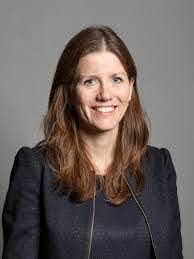
    Michelle Donelan – 2021 Speech to TASO Conference

    The speech made by Michelle Donelan, the Universities Minister, on 21 April 2021.

    Good afternoon and thank you for inviting me here today to speak about the vital role we can all play as we overcome Covid-19.

    I regret that we cannot be together today, that instead we are speaking through screens in a manner that has become familiar to us all by now. This pandemic has forced us all to adapt – and adapt fast in order to keep students learning during this historic pandemic.

    So, I want to start by thanking everyone across our universities and higher education institutions for all that you have done across the last year. And with our fantastic vaccine roll-out, we can see the light at the end of the tunnel.

    But levelling-up Britain cannot wait. We need to double down on eliminating equality gaps in higher education today.

    Those of you that know me will know just how passionate I am about social mobility – and Covid-19 has not diluted that one bit.

    I want to be clear that as Universities Minister, this is my top priority.

    That means making sure access and participation in higher education is open to all that have the ability and desire.

    It means making sure those who grow up in the most disadvantaged households have the same opportunities to go to university as their peers – and succeed when they are there.

    It also means that they should be just as likely to study courses with good graduate outcomes and complete those courses.

    That is why when I first heard of TASO, I was truly excited to hear about the evidence it is gathering to bolster these efforts.

    I support TASO’s mission to develop that strong evidence around effective approaches to access, student success and progression to good quality employment and further study.

    Because we all know that evidence-led policy and practice in university access and successful participation is at the very heart of levelling up and providing equality of opportunity.

    And we know that we need to measure what matters, not just what is easy to measure.

    It is easy to get people on to courses by making unconditional courses, without considering whether they are academically suitable; or to reduce the attainment gap by grade inflation and offering more firsts. But let me be candid: that does not and will not deliver effective change and we need to seriously question these practices.

    It is more difficult, but much more meaningful, to improve access by working closely with schools and pupils to raise academic performance, and to drive improvement in outcomes by giving all students the support that they need to succeed, whatever their background. So, I hope that this conference can be a watershed moment in establishing what works for higher education – and as TASO develops a clearer understanding of what works in access and participation.

    Already I’m pleased to see how far TASO has come since the Department for Education’s Social Mobility Action Plan committed to an Evidence and Impact Exchange for widening access and successful participation in Higher Education back in 2017.

    Since its launch in 2019, both under Susannah’s [Susannah Hume – interim Director] and now Omar’s leadership, TASO has been quick to make an impact, gathering and synthesing evidence, and leading projects in a range of key areas and understanding impacts on different groups of learners. I know from speaking to vice chancellors how valuable this work is already, with good practice being shared around the sector.

    Many of you will by now know that I was the first in my family to go to university. I know first-hand how it can change lives, because it changed mine, and I can confidently say I would not be speaking to you today had I not graduated. My mission to bring about real social mobility is shared across this Government – and with the sector, we want to enable every person to fulfil their potential.

    To do so, we must together ensure that work on access and participation focuses on delivering real social mobility. We need to equip students will the tools they need to make the right choices for them and their futures, including making sure they can get onto and succeed in high quality courses that are valued by employers.

    The hard truth is that at times some students are tempted onto courses that offer them nothing come graduation. The fact is that at times some students will pay thousands of pounds for a degree that leads them nowhere.

    We need to guard against encouraging more and more students onto courses which do not provide good graduate outcomes, because it is self-evident that this does not provide real social mobility and serves only to entrench inequality. It will be obvious to those listening today that there is a direct link between success at university and prior attainment at school.

    That is why our school reforms are raising standards of attainment for all – and why we are asking universities to take on a more direct role in raising attainment in schools.  But our work does not stop at school.

    We need to develop a society where training, re-training and learning throughout your life is second nature. We all need to stop thinking about education as something you tick off and move on from and start thinking about it as something we can draw from throughout our lives. There has been a need to do this long before Covid-19, because as we all know these are long-term structural issues.

    That is why the Prime Minister has announced plans to introduce a Lifelong Loan Entitlement as part of the Lifetime Skills Guarantee.

    This will give people the opportunity to train, retrain and upskill throughout their lives to respond to changing skills needs and employment patterns. It will have a massive, transformative impact on post-18 study, delivering greater parity between further and higher education.

    And it will do what it says on the tin. Introduced from 2025, the Lifelong Loan Entitlement will provide individuals with a loan entitlement to the equivalent of four years of post-18 education to use over their lifetime. These steps will make it easier for students to navigate the options available, create a more streamlined funding system and encourage provision to better meet the needs of people, employers and the economy.

    Flexibility is the name of the game today and will continue to be as the future unfolds. That is why it is been so important for people to be able to develop new life-changing skills as the economy changes. Equally important, though, is giving people the flexibility to study when they want and how they want.

    This new loan entitlement means people can space out their studies, transfer credits between FE and HE institutions, and take up more part-time study. As part of the pathway towards the Lifelong Loan Entitlement, we will stimulate the provision of high-quality higher technical education and introduce pilots to incentivise more flexible and modular provision.

    We will consult on the detail and scope of the Lifelong Loan Entitlement this year to make sure that it works as effectively as possible. Where necessary, we will put forward legislation in this parliament.

    What is clear already though is that modular education will need to be front and centre of any changes we make. This modular education will be at the heart of our Lifelong Learning Entitlement, revolutionising our education offer – both in higher and further education.

    Why? Because we need a real alternative to the traditional three-year degree, that remains out of grasp of too many. Because it is hard – if not impossible – to take three years out of full-time employment when you have a mortgage, children or caring responsibilities.

    Think for a minute about your friends and family, and those who have not been able to take up a place at university because of existing commitments. Those who, by doing the right things for their families, are held back from making a better life for themselves. We are a Government that will always back people who want to make a better life for themselves.

    But right now we are seeing entrants to part-time study falling. The number of entrants to part-time study at English Higher Education providers fell steeply after 2012 and continued to decline at a slower pace.

    So, I want all institutions, staff, and students to know that I will be taking action to incentivise more flexible and modular provision. From 2022, we will be trialling loan-funded access to tuition fees for certain modules at a number of institutions across England.

    What we learn from this trial will inform our approach to lifelong learning, and is a key step towards our delivery of the Lifelong Loan Entitlement, as well as supporting some students to participate on shorter modular courses in England as early as 2022. But I can say today that this is real, transformative change. Change that will make us a fairer society, change that will make us a high-skilled society.

    This starts now because we have a choice today between carrying on with business as usual, or making bold, brave changes that mean we can be even prouder of our universities. But perhaps more importantly, we will make changes that benefit students for generations to come. I look forward to working with you to make this a reality. Thank you.

  • Boris Johnson – 2021 Comments at Climate Leaders Summit

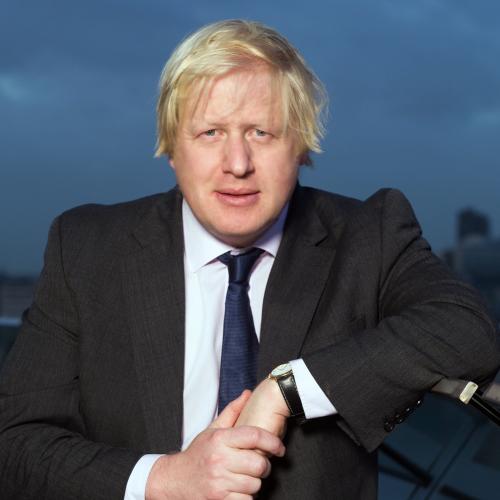
    Boris Johnson – 2021 Comments at Climate Leaders Summit

    The comments made by Boris Johnson, the Prime Minister, on 22 April 2021.

    The UK has shown that it’s possible to slash emissions while growing the economy, which makes question of reaching net zero not so much technical as political.

    If we actually want to stop climate change, then this must be the year in which we get serious about doing so. Because the 2020s will be remembered either as the decade in which world leaders united to turn the tide, or as a failure.

    So let’s come to Kunming in October and Glasgow in November armed with ambitious targets and the plans required to reach them. And let the history books show that it was this generation of leaders that possessed the will to preserve our planet for generations to come.

  • Sarah Jones – 2021 Comments on Fire Safety Repairs for Leaseholders

    Sarah Jones – 2021 Comments on Fire Safety Repairs for Leaseholders

    The comments made by Sarah Jones, the Shadow Minister for Policing and Fire, on 21 April 2021.

    I am grateful to the Lords for voting to protect leaseholders from being forced to pay huge sums for fire safety repairs.

    Each time that we vote on these amendments, the hopes of leaseholders across the country are raised, but we will not stop pushing the Government to act.

    The vote provides the Government with yet another opportunity to do the right thing when the Bill returns to the Commons. If the Government decide not to, they will again betray leaseholders up and down the country.

  • Rachel Reeves – 2021 Comments on Prime Minister Releasing Text Messages

    Rachel Reeves – 2021 Comments on Prime Minister Releasing Text Messages

    The comments made by Rachel Reeves, the Shadow Chancellor of the Duchy of Lancaster, on 21 April 2021.

    Given the shocking revelations this morning and a serious lack of transparency for months, we welcome the Prime Minister’s commitment to publish his text messages with business leaders in Prime Minister’s Questions today.

    Since we also have no Independent Advisor on Ministerial Standards in place, and no Register of Ministers’ Financial Interests published for nine months, these texts must immediately be made public.

  • Preet Gill – 2021 Comments on UK Aid

    Preet Gill – 2021 Comments on UK Aid

    The comments made by Preet Gill, the Shadow International Development Secretary, on 21 April 2021.

    Slashing humanitarian support in the middle of a global pandemic is callous and incredibly shortsighted.

    As the only G7 nation to cut aid, this is a retreat from our moral duty and people will lose their lives as a result.

    Sneaking out aid cuts with a written statement rather than facing parliament in person shows the cowardice of this Conservative government which continues to fail to take responsibility for their actions.

    Parliament has made it clear that it does not support the aid cuts and Britain must not turn its back on the world’s poorest. The Prime Minister must put the cuts to a vote at the earliest opportunity.

  • Rachel Reeves – 2021 Comments on Cronyism

    Rachel Reeves – 2021 Comments on Cronyism

    The comments made by Rachel Reeves, the Shadow Chancellor of the Duchy of Lancaster, on 21 April 2021.

    NHS nurses worked on our frontlines to protect us – but it’s a chum of the Prime Minister who has his phone number that gets offered a tax break, while they got a pay cut.

    Revelations today seem to confirm a growing feeling that if one has access to a telephone number of someone like the Prime Minister or the Chancellor of the Exchequer, then they are able to gain special treatment, potentially even significant financial ones.

    We need the Prime Minister to appear before the Liaison Committee immediately, and for a thorough investigation into his conduct on this matter.

    Boris Johnson should also stick to the commitment he made this week in Prime Minister Questions and publish his text messages with other business leaders immediately.

  • Rachel Reeves – 2021 Comments on Covid Contracts

    Rachel Reeves – 2021 Comments on Covid Contracts

    The comments made by Rachel Reeves, the Shadow Chancellor of the Duchy of Lancaster, on 22 April 2021.

    The scale of corruption risk to vast amounts of taxpayer money revealed in this report is shocking, as is the evidence of endemic cronyism flowing through the government’s contracting.

    Standards on public contracts have slipped so far under this Conservative government that this would be embarrassing if it wasn’t so serious.

    Labour have consistently asked for the government to get the basics right – calling on them to publish the names of businesses that won lucrative Covid contracts through the ‘VIP fast lane’, ramp up transparency and come clean to taxpayers about the £2 billion worth of contracts that have gone to Tory friends and donors.

    Instead they’ve let cronyism and sleaze run through the core of their procurement and contracting.

    A Labour government would introduce an Integrity and Ethics Commission to clean up cronyism and raise standards for good.

  • Matt Hancock – 2021 Speech at the Pandemic Preparedness Partnership Conference

    Matt Hancock – 2021 Speech at the Pandemic Preparedness Partnership Conference

    The speech made by Matt Hancock, the Secretary of State for Health and Social Care, on 20 April 2021.

    Thank you Sir Patrick – and good morning everyone.

    I think this is an incredibly important meeting and an incredibly important process and I’m very grateful to everyone for their time.

    It was Melinda Gates – who will close this conference tomorrow – who once said:

    Goals are only wishes, unless you have a plan.

    And so at the UN last September, the Prime Minister set out a plan: the Five Point Plan to Prevent Future Pandemics.

    At its heart is the drive to get better and quicker at developing and deploying what we might need in a future crisis, and especially the life-saving vaccines, therapeutics and diagnostics. But not limited to those things.

    And as hard as it might be to focus on a future crisis while we’re still facing down COVID-19, the WHO estimates we face a pandemic threat every 5 years.

    So we must be better prepared. And we must start that process now.

    And if you think about it, the structures we’ve put in place, from the ACT-Accelerator to COVAX, we’re in a stronger place than we were and we’ve been stronger when we’ve worked in partnership.

    And there’s a couple of important points that I think are critical to what this partnership means.

    Firstly, I think it’s very important we recognise that whether it’s public or private, or from academia or industry, we must draw on expertise and resources wherever we find them, and we’re more than the sum of our parts.

    And that is at the core of what this Pandemic Preparedness Partnership is all about. And looking at the part that all of us can play in improving and streamlining vaccines, therapeutics and diagnostics, so we’re better prepared for future pandemics.

    Let me turn for a moment to the role of the G7. And I can see Sir Patrick sitting in front of the G7 logo there.

    The UK as President of the G7 will be ensuring that we use that institution to drive forward the project that we call building back better, and we’re determined to make it count.

    I’m so grateful to our G7 colleagues joining us today.

    I’m sure you agree: at a time like this, the G7 can’t be anything but ambitious.

    And our G7 health track reflects that ambition. We want health security for all, working on international leadership on clinical trials, action on antimicrobial resistance, and to embrace the vast opportunities in digital health we’ve seen come to the fore over the last year.

    And the PPP can be instrumental in this agenda – especially in those first 2 strands: global health security and clinical trials.

    And there really is no better place to start than the G7.

    The reason we use the G7 is that that group represents two thirds of the global pharmaceutical market, the majority of the world’s genomic capability, a huge proportion of global research and development, and it leads the world in life sciences and clinical trials.

    So at our G7 meetings this summer, both at the health track and then the leaders, I want us to declare to the world how we can take this forward, how we can make vaccines, therapeutics and diagnostics available and accessible in the vast quantities that we’re going to need to make the world safer.

    And responding to the call that has already been made to slash the time that’s need to develop and deploy vaccines by two thirds to just 100 days – and being equally ambitious about ensuring high-quality and effective therapeutics and diagnostics are available quickly after a new disease threat is identified.

    That’s the goal. But it remains just a wish, unless we plan.

    So I’m incredibly grateful to Sir Patrick and our 6 expert leads, for the work they’re going to do shaping advice and developing policy recommendations across the 3 workstreams. And if I just briefly touch on the 3.

    First, to Sir Andrew Witty and Sir John Bell, who will look at how we can accelerate research and development for new vaccines, therapeutics and diagnostics and the technologies that are going to help us manufacture and deploy them across the globe.

    And in that mission, we need look no further than organisations like CEPI to see what is possible when we embrace new and dynamic types of partnership.

    CEPI’s mission – to find new vaccines for a safer world – is one the UK is firmly behind.

    Because vaccines of course are one of the most powerful tools we have.

    The UK will continue to support CEPI, and today I’m pleased to confirm a further £16 million investment.

    The funds are there to support CEPI’s work to boost manufacturing capacity around the world, all with the goal of making sure no one is left behind and taking us ever closer to the model of responsiveness that we need to prevent future pandemics.

    And that sort of model is one where we get the rapid adaption of vaccines to new diseases or new variants – within that 100-day goal – and deployment where they’re needed.

    Beyond vaccines, it is also imperative that we significantly enhance our speed of response to pick up new technologies, and in particular I want to mention the supply of novel antiviral treatments which later today the Prime Minister will be setting out the details of how we will be driving forward the deployment and development of antivirals here in the UK.

    A second team I want to give a shout out to and touch on is the work that Dame Anne Johnson and Professor Martin Landray are going to be doing on how we can improve clinical trials and data sharing.

    For me the pandemic has shown beyond measure the value of robust clinical trials. And, critically, the value of sticking with the clinical trial even when there is this incredible imperative to get treatments out fast.

    Finding what works, and, crucially, ruling out what doesn’t work. I’m sure all of us in our heads can think of treatments that have been trumpeted, sometimes from the highest office, as solutions, but clinical trials are the answer as we know to finding out what works.

    But we’ve got to get quicker. And if trials aren’t working to shared standards across borders, we risk losing precious time – and precious ingenuity.

    I’ve been struck by the fact that if clinical trials aren’t designed right with set standards at the start, then the data within them is not interoperable or not easily interoperable and therefore it takes longer to get a robust signal. This is something we can and must fix.

    Faced with another pandemic, those aren’t risks any of us should be prepared to take.

    We’ve got to hold onto these precious commodities – ingenuity and time – and use data and insights as fast as possible flowing freely across borders so the whole world can benefit.

    Here in the UK, the MHRA worked really hard to overcome some of the obstacles within the structure of clinical trials taking place in different jurisdictions.

    And that was one of the reasons we were able to license vaccines here in the UK faster than anywhere else in the UK, because of the flexibility yet robustness shown by the MHRA.

    And making sure that in future we have clinical trials that can get the power of all of the data used everywhere in the world is incredibly important. It requires set standards that we agree on in principle before those trials are structured.

    I know it’s possible. But it will take focus and it will take leadership – and that’s what the G7 can provide.

    And then the third point I want to briefly touch on is, of course, the money.

    I’m incredibly grateful to Baroness Minouche Shafik and Lord Jim O’Neill, who are working, along with the finance ministers’ track, on sustainable finance.

    Now let’s face it, the pandemic has been painfully expensive, not just in how much we’ve had to spend, but the hit to our economies too.

    Confronted with the same level of preparedness, we would risk being in the same boat.

    But in future, when we’re better prepared, we’ll be able to do it differently and do it better – with more targeted, more inventive and more sustainable financing initiatives.

    And here, crucially, it is absolutely vital that in peacetime, when there is not a pandemic on the horizon, we can bring in the financing that can ensure we stay prepared.

    So today is a fantastic chance to draw on the unmatched experience of this incredible group of people and put forward some big, bold ideas.

    Ideas that drive the plan that we’re working towards putting before G7 leaders in June and, ultimately, the plan that we’ll then put before the whole world.

    We’ve got to bring everyone with us as much as is possible on this vital mission and with the plan that we will develop through this team, with our plan – with your plan – I know that we can make it.

    So thank you very much for what you’re going to do and for the work that you’re doing in putting these plans in place and then to turn these plans into actions.

    It’s incredibly important and the work starts now.

  • Grant Shapps – 2021 Comments on All Lane Running Motorways

    Grant Shapps – 2021 Comments on All Lane Running Motorways

    The comments made by Grant Shapps, the Secretary of State for Transport, on 20 April 2021.

    Despite the data showing that fatalities are less likely on All Lane Running motorways than on conventional ones, this doesn’t mean all drivers necessarily feel safe on them.

    That is why I tasked Highways England last year with delivering an action plan to raise the bar on safety measures even higher. This progress report shows the extensive work already carried out, but we want to do more.

    Alongside the raft of measures already undertaken, today I am announcing that all new All Lane Running motorways will open with stopped vehicle detection technology in place, as well as a programme to speed up the roll-out of the technology on previously built stretches of All Lane Running motorways to next year. This will help us further reduce the risk of accidents on the country’s roads.

    So-called smart motorways started to be built in 2001 and I am determined to ensure that technology and exacting standards are in place.