Blog

  • Anneliese Dodds – 2021 Comments on David Cameron and Greensill Emails

    Anneliese Dodds – 2021 Comments on David Cameron and Greensill Emails

    The comments made by Anneliese Dodds, the Shadow Chancellor of the Exchequer, on 22 April 2021.

    These emails confirm that Greensill wasn’t shy about the financial trouble it was in last year. They were sending the begging bowl round to the Bank for England for up to £20 billion in support in March, and yet the Government granted the failed lending firm access to hundreds of millions of pounds of taxpayer-backed loans in June.

    This is about keeping public money safe. We need to understand why Greensill Capital was given so much time and access to the Treasury, and why so much public money was put at risk.

    The Chancellor must now come clean about his role in the return of Conservative sleaze by urgently publishing details of every call, text and secret meeting he had with David Cameron’s Greensill Capital.

  • Anneliese Dodds – 2021 Comments on David Cameron Emails

    Anneliese Dodds – 2021 Comments on David Cameron Emails

    The comments made by Anneliese Dodds, the Shadow Chancellor of the Exchequer, on 22 April 2021.

    These emails confirm Treasury officials knew Greensill was in financial trouble as early as the 21 March last year. They also knew Greensill applied to the CLBILS Covid loan scheme on 24 April.

    We need to follow the money. Greensill was carrying the begging bowl from the Bank of England to the Treasury and back. It was desperate for access to taxpayer money, and the Government granted that access by accrediting it to the CLBILS scheme in June.

    Hundreds of millions of pounds of taxpayer cash were put at risk by that decision. We need to understand why the Chancellor and the Treasury did nothing when they were aware Greensill was deep in the red three months earlier.

    The Chancellor can’t keep ducking this. He must come out of hiding and explain his role in the return of Conservative sleaze.

  • Kate Green – 2021 Comments on Early Years

    Kate Green – 2021 Comments on Early Years

    The comments made by Kate Green, the Shadow Secretary of State for Education, on 22 April 2021.

    The Conservatives have treated children as an afterthought throughout this pandemic, with had no plan to protect early years providers nor support the families who rely on their vital services.

    Labour wants to see children at the heart of our national recovery.

    Through engagement with parents, providers, children and experts our Bright Future Taskforce will develop a national strategy to ensure every child can recover the learning and social development lost during the pandemic and has the chance to reach their full potential.

  • Tulip Siddiq – 2021 Comments on Early Years

    Tulip Siddiq – 2021 Comments on Early Years

    The comments made by Tulip Siddiq, the Shadow Minister for Children and Early Years, on 22 April 2021.

    The early years are critical for a child’s development and childcare is a fundamental building block of our economy but, over the last decade, early years services have been neglected.

    This Conservative Government has failed to listen to families who have been unable to get the childcare, early education and wellbeing support they need.

    As we emerge from the pandemic, we need to have a big conversation with the public about how we can rebuild this essential infrastructure.

  • Jo Stevens – 2021 Comments on Boris Johnson Meeting with Ed Woodward

    Jo Stevens – 2021 Comments on Boris Johnson Meeting with Ed Woodward

    The comments made by Jo Stevens, the Shadow Digital, Culture, Media and Sport Secretary, on 22 April 2021.

    The Prime Minister and his ministers made very public and vocal condemnation of the European Super League. The public would therefore expect the same message to have been delivered in any private meetings.

    Downing Street should release the minutes in order to clear up any confusion and avoid accusations of hypocrisy.

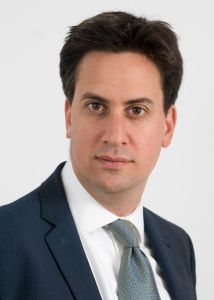
  • Ed Miliband – 2021 Comments on Post Office Scandal

    Ed Miliband – 2021 Comments on Post Office Scandal

    The comments made by Ed Miliband, the Shadow Business Secretary, on 23 April 2021.

    This is a huge victory in the fight for justice for the subpostmasters affected by this appalling decades-long scandal, in the face of inaction from government.

    But there are so many other names to clear. For some who lost their homes and their reputations, it’s too late.

    We’re pushing for a proper Inquiry with teeth to get the bottom of how this scandal can have happened – and who was responsible – to deliver the justice those impacted need and deserve. The Government’s inquiry risks being a whitewash.

  • Rishi Sunak – 2021 Statement on the UK Listings Review

    Rishi Sunak – 2021 Statement on the UK Listings Review

    The statement made by Rishi Sunak, the Chancellor of the Exchequer, in the House of Commons on 19 April 2021.

    In November last year, I asked Lord Hill of Oareford CBE to carry out an independent review of the UK’s listing arrangements. Strong public markets are a vital component of the UK economy and the Government are committed to ensuring that the UK’s markets are as competitive as possible, and to supporting the many different companies that use markets to raise capital, including technology firms as mentioned in Lord Hill’s report.

    At Budget last month, Lord Hill published his UK listing review1. It made 14 recommendations. Today, I am pleased to set out how the Government intend to take forward each of the recommendations made.

    Seven of the recommendations are directed towards the Financial Conduct Authority (FCA), our independent regulator. As the FCA set out in its public response on 3 March, it welcomes the report and intends to consider all the relevant recommendations carefully, including on free float, dual class share structures, and special purpose acquisition companies (SPACs). It has committed to acting quickly where appropriate, including by publishing a consultation by the summer, and a specific consultation on SPACs before that.

    Six key recommendations are directed towards HM Treasury (HMT), and I outline how we will be taking forward each recommendation, in turn, below.

    First, I agree to present an annual “State of the City” report to Parliament (recommendation 1). I am grateful for the suggestions provided as to what this report could cover, and I believe this would benefit the UK’s capital markets. I will present the first of these reports in 2022.

    Lord Hill recommended that HMT considers an additional “growth” or “competitiveness” objective for the FCA, as part of the future regulatory framework (FRF) review (recommendation 2). The first consultation on the FRF review closed on 19 February. This review seeks to ensure the UK’s regulatory framework is fit for our future outside the EU and the first consultation welcomed stakeholder views on the current set of statutory objectives. It also sought views on the future overall accountability framework for the FCA (and PRA). The Government are currently considering the 120 stakeholder responses received in relation to this consultation and will use these to inform a second consultation later this year. I will carefully consider this recommendation as part of that process.

    Three of the recommendations, on reviewing the UK’s prospectus regime (recommendation 7), considering whether prospectuses drawn up under other jurisdictions’ rules can be used to facilitate secondary listings in the UK (recommendation 8) and facilitating the provision of forward-looking information by issuers in prospectuses (recommendation 9), all deal with the UK’s prospectus regime. Again, I strongly welcome this, and agree we need to consider reforms to ensure these documents are fit for purpose. I can confirm that the Government will bring forward a public consultation on the UK’s prospectus regime later this year.

    Lord Hill also raised the issue of improving the efficiency of further capital raising by listed companies (recommendation 13). This is a highly technical area, and I agree that bringing together expertise specifically on this issue will be helpful to consider what more can be done to improve capital raising processes and I am happy to help convene such a group. My officials will be considering what form this will take over the coming weeks.

    One of the recommendations, concerning how technology can be used to improve retail investor involvement in corporate actions and their undertaking of an appropriate stewardship role, is directed towards the Department for Business, Energy and Industrial Strategy (BEIS). As such, this recommendation will be taken forward by BEIS as part of its wider consideration of the findings from the Law Commission’s recent scoping study on intermediated securities. BEIS expects to announce a response to the study later this year.

    Finally, Lord Hill concluded by drawing the Government’s attention to other issues raised with the review illustrating how the wider financial ecosystem may impact UK listings. I would like to thank Lord Hill for bringing these issues to my attention.

    I would like to conclude by again thanking Lord Hill for his work, and I look forward to taking forward his recommendations.

  • John Glen – 2021 Statement on London Capital and Finance

    John Glen – 2021 Statement on London Capital and Finance

    The statement made by John Glen, the Economic Secretary to the Treasury, in the House of Commons on 19 April 2021.

    On 17 December 2020, I announced that the Treasury would set up a compensation scheme for bondholders who suffered losses after investing in London Capital & Finance (LCF) (HCWS678)[1]. This statement provides an update on the Government’s approach, including the details of the scheme and the next steps for bondholders.

    LCF was a Financial Conduct Authority (FCA) authorised firm which issued unregulated non-transferable debt securities, commonly known as “mini-bonds”, to investors and then speculatively invested the funds received in a number of underlying businesses. LCF went into administration in January 2019 and at the point of failure 11,625 bondholders had invested around £237 million.

    This has been a very difficult time for LCF bondholders, many of whom are elderly and have lost their hard-earned savings. As I noted in my last statement, for some, this will have formed part of an investment portfolio, but for others, it will have represented a significant portion of their savings.

    One of the key purposes of regulation is to ensure that investors have the right information to understand their risk. Within this system even a regulator doing everything right will not be able to, and should not be expected to, ensure a zero-failure regime. That is why statute has established the Financial Services Compensation Scheme (FSCS), which is the compensation scheme for customers of failed financial services firms in the UK. Its scope is strictly limited and it is only able to pay out when a relevant regulated activity has been undertaken. The FSCS has considered LCF claims in detail and has been able to protect around 2,800 bondholders, paying out over £57 million in compensation.

    It is an important point of principle that Government do not step in to pay compensation in respect of failed financial services firms that fall outside the FSCS. Doing so would create the wrong set of incentives for individuals and an unnecessary burden on the taxpayer. However, the situation regarding LCF is unique and exceptional. After considering the issues in detail, the Government have decided to establish a compensation scheme for LCF bondholders. The scheme I am announcing today appropriately balances the interests of both bondholders and the taxpayer and will ensure that all LCF bondholders receive a fair level of compensation in respect of the financial loss they have suffered.

    LCF’s business model was highly unusual, both in its scale and structure. In particular, it was authorised by the FCA despite generating no income from regulated activities. This allowed LCF’s unregulated activity of selling mini-bonds to benefit from the “halo effect” of being issued by an authorised firm, helping LCF gain respectability and grow to an unprecedented scale before it failed, resulting in losses for thousands of bondholders.

    A complex range of interconnected factors contributed to the scale of losses for LCF bondholders. Clearly individuals have responsibility for choosing investments that are suitable for their risk profile. The high interest rates on offer from LCF, particularly when compared with deposit accounts, should have prompted questions from potential bondholders about the risks. While some may have understood those risks and invested anyway, LCF’s disclosure materials and marketing strategy may have led others to believe they were investing in a product that was far safer than it was.

    Bondholders have reported LCF using a range of dishonest tactics to persuade them to invest. For example, some novice investors have said they were encouraged to declare themselves to be sophisticated and experienced, thereby enabling them to access products that should have been out of reach. Furthermore, LCF appears to have adopted flawed investment and marketing strategies and paid high commissions of up to 25% to the sales agent.

    Bondholders have been badly let down by LCF, but they have also been let down by the regulatory system that is designed to protect them. The independent investigation led by Dame Elizabeth Gloster[2], which the Government published at the end of last year, concluded that the FCA did not discharge its functions in respect of LCF in a manner which enabled it to effectively fulfil its statutory objectives during the relevant period.

    While I have not seen evidence that would indicate that the regulatory failings at the FCA were the primary cause of the losses incurred by LCF bondholders, they are a significant factor that the Government have taken into account when deciding to establish this scheme. Indeed, the Government do not ordinarily step in to pay compensation to consumers in relation to allegations of fraud, investment losses, mis-selling or mis-buying of investments. I would, however, like to make it clear that neither the Government nor the FCA accept any legal liability for the failure of LCF or the losses incurred by its bondholders.

    In these extraordinary circumstances, the Government have decided to establish a compensation scheme. However, it is imperative to avoid creating the misconception that Government will stand behind bad investments in future, even where FSCS protection does not apply. That would create a moral hazard for investors and potentially lead individuals to choose unsuitable investments, thinking the Government will provide compensation if things go wrong. The ultimate responsibility for choosing suitable investments must remain with individuals.

    To avoid creating this misconception, and to take into account the wide range of factors that contributed to the losses that Government would not ordinarily compensate for, the Government will establish a scheme that provides 80% of LCF bondholders’ initial investment up to a maximum of £68,000. Where bondholders have received interest payments from LCF or distributions from the administrators, Smith & Williamson, these will be deducted from the amount of compensation payable. The scheme will be available to all LCF bondholders who have not already received compensation from the FSCS and represents 80% of the compensation they would have received had they been eligible for FSCS protection.

    Around 97% of all LCF bondholders invested less than £85,000 and therefore will not reach the compensation cap under either the Government scheme or the FSCS. The Government expect to pay out around £120 million in compensation in total and the scheme to have paid all bondholders within six months of securing the necessary primary legislation, which the Government will bring forward as soon as parliamentary time allows.

    Bondholders do not need to do anything at this stage and Government will provide further details on how the scheme will operate in due course. The scheme will be simple and straightforward to navigate. Bondholders will not need to use a claims management company, solicitor or any other organisation to help them claim.

    I am mindful that some individuals may be anxious to receive their compensation and I urge bondholders to be vigilant to the risk of scammers posing as services to help them claim. To reiterate, the scheme has not opened yet and bondholders should await further announcements from the Government on next steps.

    One of the challenges highlighted by Dame Elizabeth Gloster’s report is that, despite exhibiting many of the characteristics of other regulated financial services activities, the issuance of mini-bonds is not currently a regulated activity. The Government are committed to ensuring the financial services sector is well regulated and consumers are adequately protected, and the Treasury is therefore today launching a consultation on proposals to bring the issuance of mini-bonds into FCA regulation. This consultation is the culmination of a review into the regulation of mini-bonds that I announced in May 2019 and delivers on one of the recommendations made in Dame Elizabeth Gloster’s report.

    In addition, the FCA is continuing its work to address the recommendations in Dame Elizabeth Gloster’s report, including through its ongoing transformation programme. A number of important steps have already been taken and I welcome the FCA’s commitment to report publicly on the progress of these vital reforms.

    Finally, I wish to reiterate my sympathy for LCF bondholders. I hope the compensation offered by the Government scheme will offer some relief to the distress and hardship suffered and provide closure on this difficult matter.


  • Jo Stevens – 2021 Speech on the European Football Proposals

    Jo Stevens – 2021 Speech on the European Football Proposals

    The speech made by Jo Stevens, the Labour MP for Cardiff Central, in the House of Commons on 19 April 2021.

    I thank the Secretary of State for advance sight of parts of his statement. This is a watershed moment for our national game, and this statement is welcomed, as is the chair of the review, but it is short on detail and on the urgency that this situation merits; fans will have noted that. The Secretary of State tweeted last night extolling the virtues of the football pyramid, but if anything exposed the Government’s lack of understanding of our broken football system, that tweet summed it up. Tory trickle-down economics does not work, and it especially does not work in football.

    Football governance is broken, football finance is broken and football fans, whichever club we support, are ignored. The hedge fund owners and billionaires who treat football clubs like any of their other commodities have no care for the history of our football, for the role it plays in villages, towns and cities up and down our country, and especially for the fans who are the beating heart of it. They should understand their role as custodians, rather than cartel chiefs. The future of our national game and all our clubs depends on it.

    Labour has repeatedly called for the reform of the governance and finances of football by the Government. Government intervention is needed to fix this broken system. That is why we pledged in all four of our manifestos going back to 2010 to take action, and it is why I and the shadow Sports Minister, my hon. Friend the Member for Wirral South (Alison McGovern), repeatedly urged the Government to get on with their promised fan-led review of football—a promise that they made in 2019. It is nearly a year since our letter to the Sports Minister offering support and help with 16 questions that the review should focus on. We know that Members across the House have supported reform for the past 11 years of Conservative-led Governments, so it is time for the Government to get off the subs bench and show some leadership on the pitch, because we need reform of football.

    It is not as if there has been a blockage in Parliament preventing the Government from taking action to sort out the problems. Former Conservative Sports Minister, the hon. Member for Maidstone and The Weald (Mrs Grant), has said:

    “no one is speaking for the football world with the independence and authority needed to address the big issues.”—[Official Report, 26 January 2021; Vol. 688, c. 207.]

    She is right. The former Conservative Chair of the Digital, Culture, Media and Sport Committee, the hon. Member for Folkestone and Hythe (Damian Collins), has said:

    “We should have long ago reformed the governance of football”.

    He is right as well. The current Conservative Chair of the Select Committee, the hon. Member for Solihull (Julian Knight), has said:

    “What’s needed is a fan-led review of football with real teeth and here we have more evidence to strengthen the case for it.”

    I welcome the review, but why the long delay? Why create the vacuum that has allowed these super-league proposals the space and ability to become a reality? Eleven years have been wasted when a small amount of Government time could have been found to bring primary legislation to the House to sort out the problems. Instead, it has been all punditry and no progress on the pitch, and in that time, clubs and fans have suffered disasters. Fans in Bury know only too well the importance of reforming the way in which football is governed, and supporters in Liverpool, Edinburgh, Manchester, my city of Cardiff, Portsmouth and most football towns and cities have seen the damage done to clubs when profit outstrips the role of supporters in our game.

    We are in a global pandemic and the owners of the six clubs behind this proposal think that now is the time to ride roughshod over their fans and endanger the future of football, on the back of a year when fans have been at the heart of supporting communities up and down the country. What a contrast! These proposals have been carved out behind closed doors without consultation with fans or players, and they have at their heart a plan that is anti-football—a super league from which teams can never be relegated and in which they are always guaranteed a place because of their wealth. That represents a fundamental attack on the integrity of sporting competitions.

    It is very rare that an issue unites football fans and organisations across the rivalries and divides, but this super league proposal has managed to do just that. From supporters trusts and groups, including the Football Supporters’ Association, to the Professional Footballers’ Association, the Football Association, UEFA, the Premier League, the League Managers Association and the European Clubs Association—I could go on—it has been universally rejected as the greedy, obscene and selfish proposal that it is.

    Let us act urgently. It is already too late for some clubs and their supporters, so I ask the Secretary of State when the review will be launched, what the terms of reference will be, who will take part and when it will report. What exactly will the Government do to stop the European super league decimating our national game? They should explore every option, and I hope that they will, whether that is a super-tax on revenue or investigating whether the proposal breaches the clear rules that govern markets and competition in this country.

    For football fans up and down the country, our message is clear: Labour stands ready to do whatever it takes to stop this plan, and I hope that the Government will make exactly the same commitment.

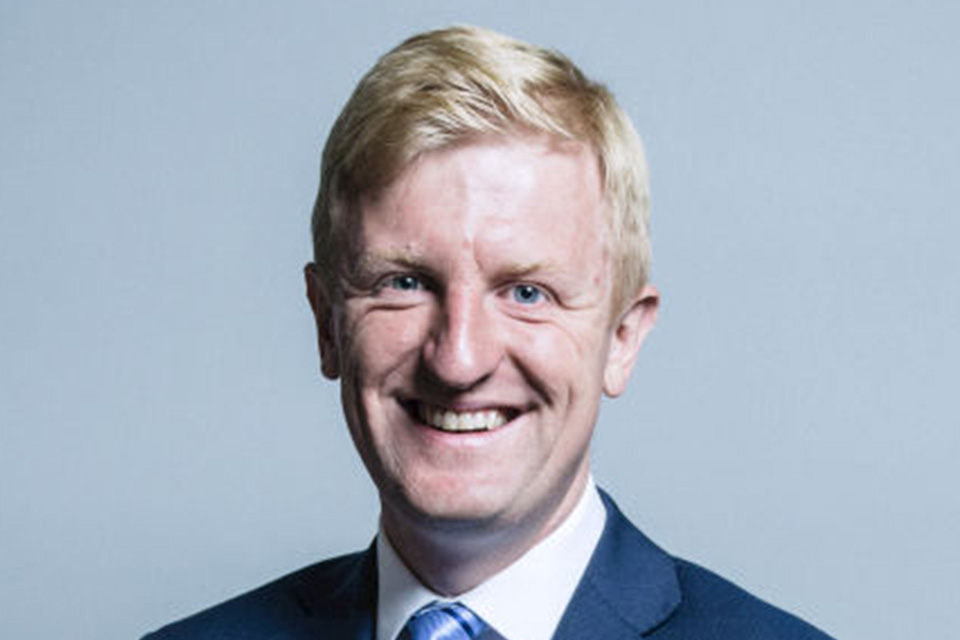
  • Oliver Dowden – 2021 Speech on the European Football Proposals

    Oliver Dowden – 2021 Speech on the European Football Proposals

    The speech made by Oliver Dowden, the Secretary of State for Digital, Culture, Media and Sport, in the House of Commons on 19 April 2021.

    With permission, Madam Deputy Speaker, I should like to make a statement. Football is in our national DNA. We invented it, we helped to export it around the world, and it has been at the heart of British life for over a century. Football clubs, of course, are not just businesses but define communities across the country, so along with almost every Member of the House, I suspect, I was appalled by the announcement made late last night that a handful of clubs are proposing to form their own breakaway European league.

    These six clubs announced that decision without any consultation with football authorities or with Government. Worst of all, they did it without any dialogue whatsoever with their own fans. It was a tone-deaf proposal, but the owners of those clubs will not have been able to ignore the near universal roar of outrage from all parts of the football community over the past 24 hours.

    This move goes against the very spirit of the game. This is a sport where a team such as Leicester City can ascend from league one to the premier league title in under a decade, earning the right to go toe to toe against European heavyweights in the champions league. Instead, a small handful of owners want to create a closed shop of elite clubs at the top of the game—a league based on wealth and brand recognition rather than merit. We will not stand by and watch football be cravenly stripped of the things that make millions across the country love it.

    As a Conservative, I believe passionately in defending our nation’s institutions and our rich heritage. They are central to our identity and help to build a sense of solidarity between people of every generation and every background. Just as the Government would not hesitate to act when other treasured areas of our national life are under threat, nor will we hesitate to protect one of our greatest national institutions: football.

    This is, of course, for football authorities to handle first, and today I have met with the Premier League, the Football Association and the president of UEFA, while the Sports Minister has had another series of meetings with the Football Supporters’ Association. The football authorities have robust rules in place to deal with this, and I know from my conversations with them today that they are rightly considering a wide range of sanctions and measures to stop this move in its tracks. My message to them was clear: they have our full backing. However, be in no doubt that if they cannot act, we will.

    We will put everything on the table to prevent this from happening. We are examining every option, from governance reform to competition law and mechanisms that allow football to take place. Put simply, we will review everything that the Government do to support these clubs to play. I have discussed those options with the Prime Minister this morning, and we are working at pace across Government and with the football authorities. I reassure this House of a very robust response. We will do whatever it takes to protect our national game.

    However, it is clearer than ever that we need a proper examination of the long-term future of football. To many fans in this country, the game is now almost unrecognisable from a few decades ago. Season after season, year after year, football fans demonstrate unwavering loyalty and passion by sticking by their clubs, but their loyalty is being abused by a small number of individuals who wield an incredible amount of power and influence. If the past year has taught us anything, it is that football is nothing without its fans. These owners should remember that they are only temporary custodians of their clubs, and they forget fans at their peril. That is why, over the past few months, I have been meeting with fans and representative organisations to develop our proposals for a fan-led review. I had always been clear that I did not want to launch this until football had returned to normal following the pandemic. Sadly, these clubs have made it clear that I have no choice. They have decided to put money before fans, so today I have been left with no choice but to formally trigger the launch of our fan-led review of football.

    The review will be chaired by my hon. Friend the Member for Chatham and Aylesford (Tracey Crouch) and will be a root-and-branch examination of football in this country. It will cover the financial sustainability of the men’s and women’s game, governance and regulation and the merits of an independent regulator. Crucially, in the light of this weekend’s proposal, it will also consider how fans can have an even greater say in the oversight of the game and the models that might best achieve that.

    We are the people’s Government. We are unequivocally on the side of fans, and their voices have to be heard when it comes to the future of our national game. It starts with fans, and it ends with fans. In the meantime, we have thrown our full weight behind the football authorities and stand ready to do whatever is necessary to represent fans and protect their interests. I commend this statement to the House.