Blog

  • Michael Gove – 2010 Comments about Free Schools

    Michael Gove – 2010 Comments about Free Schools

    The comments made by Michael Gove, the then Secretary of State for Education, on 18 June 2010.

    The most important element of a great education is the quality of teaching and free schools will enable excellent teachers to create new schools and improve standards for all children. This government believes that passionate teachers who want to make a real difference to education should have the opportunity. That’s why I am today inviting groups to complete a proposal form and enter a process to set up new free schools.

    Hundreds of groups, from teachers themselves to charities such as the Sutton Trust, have expressed an interest in starting great new schools. Just like the successful charter schools in the US, supported across the political spectrum, these schools will have the freedom to innovate and respond directly to parents’ needs. The new free schools will also be incentivised to concentrate on the poorest children by the introduction of this government’s pupil premium which will see schools receiving extra funds for educating children from disadvantaged backgrounds.

    In this country, too often the poorest children are left with the worst education while richer families can buy their way to quality education via private schools or expensive houses. By allowing new schools we will give all children access to the kind of education only the rich can afford – small schools with small class sizes, great teaching and strong discipline.

  • Michael Gove – 2010 Comments on the Abolition of the General Teaching Council for England

    Michael Gove – 2010 Comments on the Abolition of the General Teaching Council for England

    The comments made by Michael Gove, the then Secretary of State for Education, on 2 June 2010.

    This government trusts the professionals. That’s why we want to give teachers greater freedoms and reduce unnecessary bureaucracy. Since I have been shadowing education and more recently held the brief in government there has been one organisation of whose purpose and benefit to teachers I am deeply sceptical – the General Teaching Council for England.

    I believe this organisation does little to raise teaching standards or professionalism. Instead it simply acts as a further layer of bureaucracy while taking money away from teachers.

    I want there to be stronger and clearer arrangements in relation to teacher misconduct and I am not convinced the GTCE is the right organisation to take these forward. I intend to seek authority from Parliament to abolish the General Teaching Council for England.

  • Michael Gove – 2010 Comments on Over 1,000 Schools Applying to be Academies

    Michael Gove – 2010 Comments on Over 1,000 Schools Applying to be Academies

    The comments made by Michael Gove, the then Secretary of State for Education, on 2 June 2010.

    I believe that headteachers and teachers know best how to run schools, not local bureaucrats or politicians. That’s why last week I wrote to every school in the country inviting them to take up academy freedoms if they wished to do so. The response has been overwhelming. In just 1 week, over 1,100 schools have applied. Of these, 626 are outstanding schools, including over 250 primary schools, nearly 300 secondary schools (over half of all the outstanding secondary schools in the country) and over 50 special schools.

  • Michael Gove – 2010 Comments on Schools Becoming Academies

    Michael Gove – 2010 Comments on Schools Becoming Academies

    The comments made by Michael Gove, the then Secretary of State for Education, on 26 May 2010.

    The government is genuinely committed to giving schools greater freedoms. We trust teachers and headteachers to run their schools. We think headteachers know how to run their schools better than bureaucrats or politicians.

    Many school leaders have already shown a keen interest in gaining academy freedoms. They want to use those powers to increase standards for all children and close the gap between the richest and the poorest.

    Today I am inviting all schools to register their interest. It is right that they should be able to enjoy academy freedoms and I hope many will take up this offer.

  • Michael Gove – 2010 Comments on Trusting Teachers

    Michael Gove – 2010 Comments on Trusting Teachers

    The comments made by Michael Gove, the then Secretary of State for Education, on 26 May 2010.

    The government is genuinely committed to giving schools greater freedoms. We trust teachers and headteachers to run their schools. We think headteachers know how to run their schools better than bureaucrats or politicians.

    Many school leaders have already shown a keen interest in gaining academy freedoms. They want to use those powers to increase standards for all children and close the gap between the richest and the poorest.

    Today I am inviting all schools to register their interest. It is right that they should be able to enjoy academy freedoms and I hope many will take up this offer.

  • Greg Smith – 2020 Speech on Mental Health Support for Police Officers

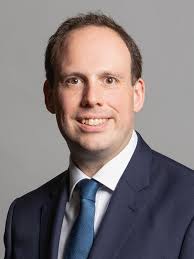
    Greg Smith – 2020 Speech on Mental Health Support for Police Officers

    The speech made by Greg Smith, the Conservative MP for Buckingham, in the House of Commons on 25 November 2020.

    Policing and supporting our police officers are both enormously important to me. I have worked with police officers throughout my political career, especially during my 12 years in local government, and every single police officer who serves has my absolute and total respect and thanks for all that they do to keep us safe, often putting themselves in dangerous situations to do so.

    I also speak as someone who grew up with policing. My father served for 31 years. As I reflected on the subject of tonight’s debate, it struck me how policing changed so much throughout his career and continues to do so to this day. When he joined the Birmingham City police in 1970, he was issued with the usual tunic and a truncheon and sent out on patrol. By the time he retired from the Metropolitan police in 2001, stab vests had already become the norm and ASPs had replaced truncheons. As I joined officers in Aylesbury Vale a few Fridays ago to see first hand their day-to-day operations, it struck me how it had become necessary for so many to carry a taser.

    The inspiration for this Adjournment debate came from my constituent Sam Smith—for the record, he is not a relative—who came to my surgery with a number of very well researched points about mental health support in policing, which I shall put to the House and my hon. Friend the Minister in the hope that they will be addressed.

    To set the scene, my constituent is an ex-police officer who served for three years on the frontline. Unfortunately he had to leave service a year ago because of struggles with his mental health caused by the trauma experienced in policing. He reports that throughout his short policing career very little support was offered for his mental health and he points to a strong stigma around mental wellbeing in general. It came as a surprise to him when he found out from a survey of nearly 17,000 serving officers and operational staff last autumn—conducted by the University of Cambridge and funded by the charity Police Care UK, and entitled “The Job & The Life”—that 90% of police workers had been exposed to trauma, and almost one in five suffers with a form of post-traumatic stress disorder or complex post-traumatic stress disorder. Those who work in law enforcement are almost five times more likely to develop PTSD than the general UK population.

    To give a flavour of what our police officers face on a daily basis, the British Transport police were in touch with me this week. The nature of BTP’s work means that their officers regularly deal with the most traumatic of incidents. For example, tragically about 300 people take their own lives on the railway each year and British Transport police officers attend and manage all of those incidents. Some 40% of BTP staff are impacted by one of these incidents every year and over 1,000 staff are impacted by two or more.

    Going back to the survey, among the 80% without clinical levels of post-traumatic stress disorder, half reported overall fatigue, anxiety and trouble sleeping. It is concerning that this information is not regularly provided to officers during their initial training, so that they can be aware of the dangers of the job for their mental health. If someone tried to join the police while suffering from PTSD it is unlikely they would be considered medically fit, so it is worrying that we are allowing so many officers to struggle with their mental health and go through trauma while being responsible for the safety of members of the public. Another sad statistic from the Office for National Statistics data is that approximately one officer every two weeks is taking their own life. The true number and risk is hard to quantify, as not all police forces in the UK are separately recording this data.

    After experiencing the inadequate support currently available for officer mental health, my constituent decided to start a campaign for change. Through his experiences he felt that there was a lack of prevention and support for resilience to help avoid mental health issues and he believes that his force at the time concentrated on aftercare, which he informs me is poorly advertised and rarely used. Officers’ experiences are unique to the force they are serving in, so the level of care that officers receive comes down to individual forces. That position is backed up by Gill Scott-Moore, the chief executive of Police Care UK, who said:

    “There is no comprehensive strategy to tackle the issue of mental health in policing, and that has to change.”

    Indeed, there is no Government mandate or minimum standard for forces’ management of trauma exposure or mental health, and no requirement for anything to improve. This has led to a mix of positive and negative experiences for officers struggling with mental health.

    Wendy Chamberlain (North East Fife) (LD)

    I apologise for missing the start of this very important debate. As a former police officer myself, I am aware of this issue and the additional burden that police officers face in supporting people who also have their own mental health challenges. One constituent contacted me to say that they had tried to take their own life but had been stopped by police officers. The officers said that they wished they could do more, but that they were not trained in mental health. Indeed, today Deputy Chief Constable Will Kerr, at a Scottish Police Authority board meeting, said that the

    “level of demand has outstripped capacity”

    and Police Scotland’s

    “professional ability to deal with”

    those with mental health issues. The hon. Gentleman is talking so compassionately about the experience of police officers. Does he agree that we need to make sure that police officers have mental health support to give to other people?

    Greg Smith

    I thank the hon. Lady for her intervention. I agree with her, particularly on her point about training. I will come on to that later on in my speech.

    My constituent found in his research that, although it is a near costless process, not all forces are recording tragic police suicides separately, so they cannot feed in to the work we must do to prevent those suicides taking place. The research by the charity Police Care UK and the University of Cambridge into police trauma and mental health made headline news in May last year. The research highlights areas in which police officers are not given adequate opportunity to look after their own mental health or that of others. For example, 93% of officers who reported a psychological issue as a result of work said that they would still go to work as usual, and 73% of those with possible or probable PTSD have not been diagnosed and may not even know that they have it. This represents a huge human cost to police officers’ wellbeing, and the implications for performance and public safety do not bear thinking about. With figures like these, I put it to my hon. Friend the Minister that change is required.

    For a long time now, mental health has come second to physical health. The statistics show that mental illness is as dangerous to a police officer’s health as physical injury, and we therefore need to give mental health the same attention that physical health has received for so many years. The College of Policing is working on creating a national curriculum for police safety training. This is the training that focuses on the physical side of policing. Police safety training was reviewed after the tragic death of PC Harper last year, and it was unanimously agreed by all chief constables that the training should be consistent across forces, as there were major discrepancies in the quality of training across the board. I put it to the House that mental health and trauma resilience should feature as a key component to that officer safety training.

    By creating a new, pragmatic, national approach, the Home Office could guarantee that every force would meet the agreed and expected standard to best protect our officers. Initiatives such as the national wellbeing service are very welcome. However, Police Care UK’s research with the University of Cambridge illustrates that there is an over-reliance on generic NHS services. As long as police officers and staff are on NHS waiting lists, the existing national approach can hope to have only limited success. Challenges such as these have already been recognised by the NHS, which has set up its own specialist service to support the mental health of its doctors through practitioner health programmes. There needs to be an equivalent for our police.

    My constituent’s campaign therefore proposes that the same is needed for mental health in the police force, and that a 360° approach to mental health needs to be adopted. This would include prevention through education, maintained resiliency and aftercare, so that no matter what stage someone was at in their policing career, they would be better protected from the overwhelmingly high chances of being a victim. In particular, mental health prevention and education on officers’ personal welfare are widely missed, and training currently focuses only on dealing with mental health in the community. The fully encompassing approach should also increase awareness of the existing aftercare support that is currently being underused.

    This consistent and fair approach would also help to break the long-standing stigma around mental health in policing. The benefits of this would go far beyond protecting those who serve; it would mean that police officers were able to carry out their duty more safely and be at less risk from finding themselves in situations where they were being investigated, for example, for misconduct. It would reduce long-term sickness and better retain experienced police officers who would otherwise have their careers cut short. While this is not about money, the long-term financial savings would outweigh the short-term spending required to implement the new approach.

    The fear is that, without Government intervention and guidance, the 43 individual forces will continue to go off in different directions, and someone’s mental wellbeing should not be put down to the luck of which police force they are located in. We are showing a lack of equality not only in the way we view mental health but across the wider policing family. The police covenant offers the perfect opportunity for my hon. Friend the Minister to listen to these concerns and to instigate simple, specific and vital changes to managing police mental health across the UK, such as monitoring PTSD prevalence and suicide rates. Providing the police with a full support network for both physical and mental health is the very least we can do.

    It is clear that no force would send an officer to a stabbing without a stab-proof vest, so why do we as a country continue to send them into repeated trauma without the knowledge of how to safely manage their own mental health? Unlike physical health, mental health is too often invisible, but it is there and we cannot ignore it. Mental illness affects not just the person suffering; it can destroy entire families and cause great heartache for years to come. The question for my hon. Friend is this: will she support and help implement a change nationally to provide equal standards of mental health welfare, training, support and access to therapy for every officer that serves for Queen and country no matter what force they are in?

    Crucially, any initiatives introduced need to make provision for addressing the backlog of cases that need support. Police Care UK has seen a fivefold increase in demand for therapy over the past 12 months alone. Will my hon. Friend the Minister back this campaign? Will she make it mandatory that all police forces in the United Kingdom show consistency and record those PTSD prevalence rates and those sad tragic suicides? As Dr Jessica Miller of the University of Cambridge says:

    “A stiff upper lip attitude will not work in contemporary policing. Without decent interventions and monitoring for trauma impact and a national conversation involving the Home Office and the Department of Health, the alarming levels of PTSD our study has uncovered will stay the same.”

    Every single day, police officers across the country face risks—dangerous risks—defending our communities. I was proud to stand on a manifesto that committed to backing our police by equipping officers with the powers and tools that they need to protect us, including Tasers and body cameras. It is now time that we increased steps to look after their mental health, too.
  • Nadine Dorries – 2020 Statement on the Elizabeth Dixon Investigation Report

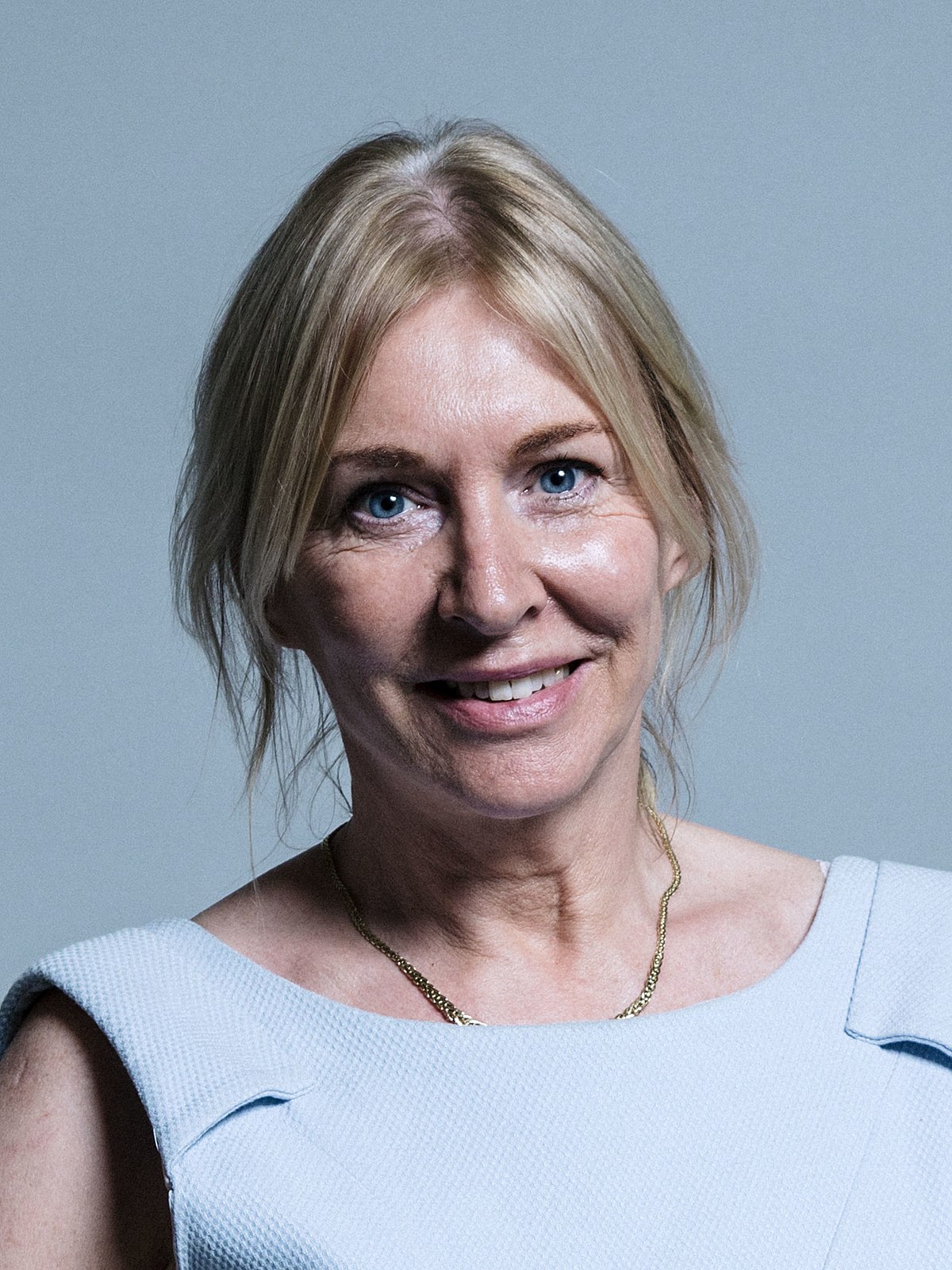
    Nadine Dorries – 2020 Statement on the Elizabeth Dixon Investigation Report

    The statement made by Nadine Dorries, the Minister for Patient Safety, Mental Health and Suicide Prevention, in the House of Commons on 26 November 2020.

    Today we have published the report into the events surrounding the death of Elizabeth Dixon—a baby who sadly died in December 2001 from asphyxiation resulting from a blocked tracheostomy tube and while under the care of a private nursing agency.

    I offer my heart-felt condolences to Elizabeth’s family, to Anne and Graeme Dixon for their loss, compounded by the length of time—the passage of 20 years—before the facts of this case have been brought to light.

    The investigation led by Dr Bill Kirkup was tasked with reviewing the care given to Elizabeth Dixon between her birth on 14 December 2000 and her death on 4 December 2001—and the response of the health system to a catalogue of errors and serious failings in that care.

    This report describes a harrowing and shocking series of mistakes associated with the care received by Elizabeth and a response to her death that was completely inadequate and at times inhumane. Elizabeth and her family were let down by a failure to diagnose or respond to her underlying condition, to put in place the care she required, to acknowledge the circumstances of her death or provide her parents with an honest account of these failings.

    The investigation sheds light on what the report describes as a “20 year cover up”. It alleges that some individuals have been persistently dishonest in accounting for their actions or inaction.

    Underlying all of this was the acceptance of a flawed prognosis that influenced the future course of events. It created a situation in which

    “facts were wilfully ignored, and alternatives fabricated”.

    Shocking too is the implication in the report’s recommendations that the presence of her physical and mental health needs may have been used to justify or excuse the inadequate care she had received.

    On behalf of Government and the health system I would like to say I am truly sorry for the devastating impact this must have had upon the Dixon family.

    Individuals made mistakes and acted unprofessionally, but the system allowed it. The report makes it clear that

    “clinical error, openly disclosed, investigated and learned from, should not result in blame or censure; equally, conscious choices to cover up or to be dishonest should not be tolerated”.

    It is also unacceptable for patients ever to be exposed to unsafe or poor care, and I remain fully committed to ensuring we provide the highest standards of quality and safe services to all patients.

    I am grateful to my right hon. Friend the Member for South West Surrey (Jeremy Hunt) for commissioning this investigation in June 2017 when he was Secretary of State for Health and bringing these events into the open. I would also like to thank Dr Bill Kirkup and his team for the diligence and hard work that has informed their report.

    Particularly, I would like to pay tribute to Anne and Graeme Dixon who have fought so hard for answers. I hope this report is the beginning of a process that will bring some closure for the family. They should not have had to wait for so long.

    This report shines a light on a culture of denial and cover up 20 years ago that left a family with little choice but report their concerns to the police. Families should not have to fight a closed system for answers and I will not hesitate to expose this sort of behaviour whenever it appears today. Indeed, Elizabeth’s legacy should be that other families will always be told the truth.

    Relevant organisations will need to consider and reflect carefully on the report’s recommendations. There is no room for complacency. The continual appearance of shocking reports about patient safety—historical or more recent—implies there is much for the NHS to focus on. My Department will therefore have oversight of their responses and report back to the House. There needs to be learning and implementation, but above all I want to be assured that we are doing all we can to make sure such events cannot happen again.

    No other family should ever again have to go through the heartache and frustration experienced by the Dixons and I apologise again for the failings set out in this report.

    Copies of the report have been laid before the House.

  • Priti Patel – 2020 Comments on Agreement Between UK and France on Illegal Migration

    Priti Patel – 2020 Comments on Agreement Between UK and France on Illegal Migration

    The comments made by Priti Patel, the Home Secretary, on 29 November 2020.

    Today’s agreement is a significant moment for our 2 countries, stepping up our joint action to tackle illegal migration. Thanks to more police patrols on French beaches and enhanced intelligence sharing between our security and law enforcement agencies, we are already seeing fewer migrants leaving French beaches.

    The actions we have agreed jointly today go further, doubling the number of police officers on the ground in France, increasing surveillance and introducing new cutting edge technology, representing a further step forward in our shared mission to make channel crossings completely unviable.

    On top of these new operational plans, we will introduce a new asylum system that is firm and fair, and I will bring forward new legislation next year to deliver on that commitment.

  • Matt Hancock – 2020 Comments about Vaccines

    Matt Hancock – 2020 Comments about Vaccines

    The comments made by Matt Hancock, the Secretary of State for Health and Social Care, on 29 November 2020.

    Every week, we are getting more positive news about the range of vaccines in development, and thanks to the work of our taskforce the UK has pre-ordered hundreds of millions of doses from those companies most advanced in their work.

    This includes buying a further 2 million doses of Moderna’s vaccine, on top of the 5 million we’ve already secured.

    With a wide range of vaccine candidates in our portfolio, we stand ready to deploy a vaccine should they receive approval from our medicines regulator, starting with those who will benefit most.

  • Matt Hancock – 2020 Comments on Free Vitamin-D for the Vulnerable

    Matt Hancock – 2020 Comments on Free Vitamin-D for the Vulnerable

    The comments made by Matt Hancock, the Secretary of State for Health and Social Care, on 28 November 2020.

    Because of the incredible sacrifices made by the British people to control the virus, many of us have spent more time indoors this year and could be deficient in vitamin D.

    The government is taking action to ensure vulnerable individuals can access a free supply to last them through the darker winter months. This will support their general health, keep their bones and muscles healthy and crucially reduce the pressure on our NHS.

    A number of studies indicate vitamin D might have a positive impact in protecting against COVID-19. I have asked NICE and PHE to re-review the existing evidence on the link between COVID-19 and vitamin D to ensure we explore every potential opportunity to beat this virus.