Blog

  • Alok Sharma – 2020 Comments on Vaccine

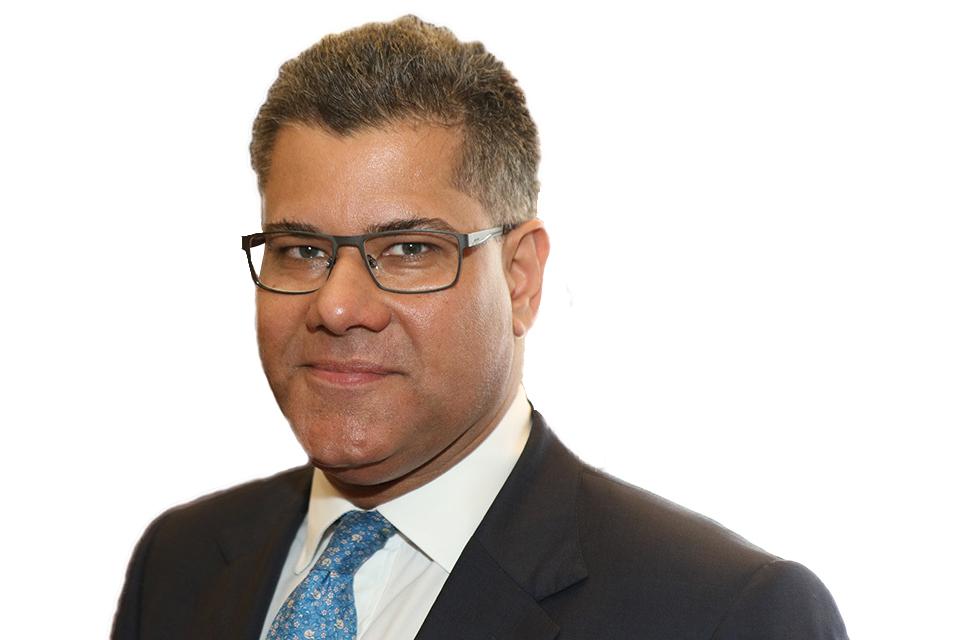
    Alok Sharma – 2020 Comments on Vaccine

    The comments made by Alok Sharma, the Secretary of State for Business, Energy and Industrial Strategy, on 2 December 2020.

    Since the start of the pandemic, every single person has made an immense sacrifice to protect themselves, their loved ones and the health of our nation. Through it all, we have remained united to defeat a virus that has taken too many before their time.

    As a nation we owe every scientist, clinician and trial volunteer an enormous debt of gratitude for their victory won against odds that at times seemed impossible. It is thanks to their efforts, and of our Vaccine Taskforce, that the UK was the first country to sign a deal with Pfizer/BioNTech and will now be the first to deploy their vaccine.

    While today’s breakthrough is a positive one, we will not end the pandemic overnight. But in years to come, we will look back and remember this moment as the day the United Kingdom led humanity’s charge against this terrible disease.

  • Boris Johnson – 2020 Statement on Covid-19

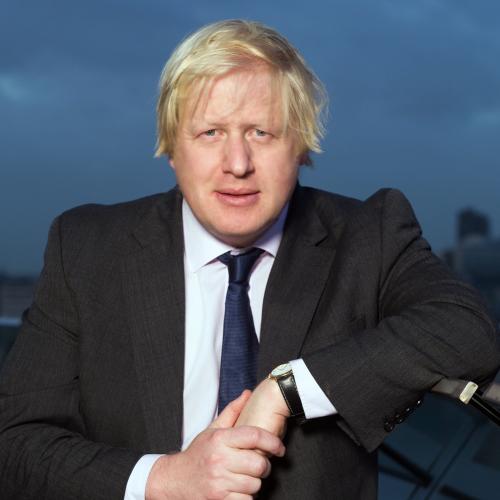
    Boris Johnson – 2020 Statement on Covid-19

    The statement made by Boris Johnson, the Prime Minister, on 2 December 2020.

    It is almost a year since humanity has been tormented by COVID

    Across the world, economic output has plummeted and a million and a half people have died

    And all the time we have waiting and hoping for the day when the searchlights of science would pick out our invisible enemy

    And give us the power to stop that enemy from making us ill – and now the scientists have done it

    And they have used the virus itself to perform a kind of biological jiu-jitsu, to turn the virus on itself in the form of a vaccine from an idea that was pioneered in this country by Edward Jenner in 1796

    And today we can announce that the government has accepted the recommendation from the independent Medicines and Healthcare products Regulatory Agency to approve the Pfizer-BioNTech vaccine for distribution across the United Kingdom. After months of clinical trials, involving thousands of people to ensure that the vaccine meets the strictest, internationally recognised, standards of safety, quality and effectiveness.

    Thanks to the fantastic work of Kate Bingham and the Vaccines Task Force, we purchased more than 350 million doses of seven different vaccine candidates, and the UK was the first country in the world to pre-order supplies of this Pfizer vaccine securing 40 million doses.

    Through our Winter Plan, the NHS has been preparing for the biggest programme of mass vaccination in the history of the UK.

    And that is going to begin next week, and in line with the advice of the independent Joint Committee on Vaccination and Immunisation the first phase will include care home residents, health and care staff, the elderly and those who are clinically extremely vulnerable,

    But there are immense logistical challenges: the vaccine must be stored at minus 70 degrees and each person needs two injections, three weeks apart.

    So it will inevitably take some months before all the most vulnerable are protected.

    Long and cold months. So it is all the more vital that as we celebrate this scientific achievement we are not carried away with over optimism

    Or fall into the naïve belief that the struggle is over. It’s not, we’ve got to stick to our Winter Plan, a comprehensive programme to suppress the virus, protect the NHS and the vulnerable, keep education and the economy going and use treatments, testing and vaccines to enable us to return to much closer to normal by spring.

    Today in England we have ended national restrictions, opening up significant parts of the economy in doing so; but also replacing them with tough tiers to keep this virus down.

    And I know that those tiers will mean continued hardship for many, and it is going to continue to be tough for some sectors but until the vaccine is deployed, our plan does rely on all of us continuing to make sacrifices to protect those we love.

    So please, please continue to follow the rules where you live, remember hands, face, space – and if you live in a tier 3 area where community testing will be made available, please take part in that community testing.

    Together, these steps are for now the surest way to protect yourselves and those you love and by reducing the transmission of the virus, help de-escalate your area to a lower level of restrictions, as vaccines and testing, as I say, take an ever larger share of the burden.

    And as we do all this, we are no longer resting on the mere hope that we can return to normal next year in the spring, but rather on the sure and certain knowledge that we will succeed: and together reclaim our lives and all the things about our lives that we love

    So I want to thank the scientists and all those around the world who have taken part in the trials and got us to this stage.

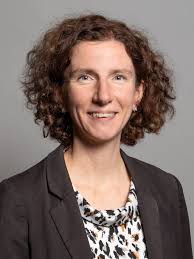
  • Anneliese Dodds – 2020 Speech to Bloomberg

    Anneliese Dodds – 2020 Speech to Bloomberg

    The speech made by Anneliese Dodds, the Shadow Chancellor of the Exchequer, on 2 December 2020.

    This has been an extraordinary year. As it draws to a close, and with the prospect of a vaccine on the horizon, thoughts are turning to recovery, and how we can build a better, more secure future for the United Kingdom. That will require contributions from everyone; public, private, mutual and voluntary sectors. In particular it will require the support of the finance industry— where Britain is a global leader.

    But it must also start with an honest appraisal of where our weaknesses lay, which have been so ruthlessly laid bare during this crisis.

    The UK entered the pandemic with worryingly low levels of household financial resilience, after a decade that saw insecure work rise and wages flat line. A quarter of all families had less than £100 in the bank when the crisis began. Since March, 4 and a half million people have accumulated over £6 billion in debt and arrears.

    We also entered the pandemic as one of the most unequal countries in Europe. That too has accelerated. As more and more economic activity was locked down, people on higher incomes, who could work from home, put money away. Their savings have risen. But those on the lowest incomes have been, on average, £170 a month worse off – losing 14% of their pre-crisis income.

    And we entered the pandemic after a decade of too many examples of poor corporate practice. High profile collapses like BHS and Carillion indicated severe shortcomings in governance.

    During the pandemic, most businesses have made herculean efforts to support their staff and local communities. But coronavirus has also shone a spotlight on problems: the Boohoo’s supply chain, the gaping hole in Arcadia’s pension scheme, the ‘fire and rehire’ approach taken at companies from British Airways to Pret a Manger.

    When we emerge from the crisis we must deal with those challenges- of financial resilience, inequality and poor corporate practice. We all want life to return to normal. But that cannot mean a return to business as usual. We should never again let our country, or our economy, be so vulnerable to external shocks. Because we count the cost of that in lost jobs and businesses gone to the wall.

    Financial services have an essential role to play in the recovery, and in laying the foundations for a better, more secure future. In fact, the recovery cannot happen without them. That’s one of many reasons why I’m so pleased to be addressing you today.

    A well-functioning, responsible banking sector can help people save and build their financial resilience. Pension funds can take the money workers set aside for tomorrow, and put it to work, backing the businesses of today. As the stewards of our largest businesses, asset managers can raise the standard of corporate behaviour. And insurance companies can direct the money we all put by in case the worst happens, and make sure it builds a better, greener future.

    Those aims hark back to the origins of the financial sector. A sector that saw its role as helping build social fabric, encouraging saving and resilience. Often those origins lay in Scotland. It was the Scottish minister Henry Duncan who is credited with founding the world’s first commercial savings bank. (Though I have to say that there was such a bank established by a female social entrepreneur in Tottenham. But she was not such a good publicist!!) And it was two other Scottish churchmen, Robert Wallace and Alexander Webster, who founded the first funded pension—the Widows Pension Fund to look after the wives and children of their fellow clergymen. The link between finance and social reform threads its way through the ‘friendly societies’ of the nineteenth century to the origins of trade unionism and, indeed, the Labour Party. And the purpose of financial services, helping people save, to transact, to share risk, to fund responsible business, is especially important to me. My father was an accountant, who ran his own small business. I saw first-hand how committed he was, to enabling his clients to do the right thing, grow their businesses and support the local economy.

    Yet some firms have strayed a long way from this approach. When the finance sector stops thinking of itself as providing a means to empower individuals or businesses, but instead as an end in itself – it loses its way. And for a country like the UK, with such a large and powerful financial services industry, it is a huge lost opportunity. Indeed the results can be catastrophic.

    By 2008, the finance sector had lost its way. But in 2020, we have often seen the sector at its best. Setting up huge new systems overnight to get government-backed loans out to businesses who were desperately short of cash. Helping those who ran into difficulty to keep a roof over their head. Partnering with charities to support those most in need.

    We must harness that sense of active commitment as we plan for the recovery- a recovery which must be environmentally productive, not destructive; and one marked by providing additional opportunity, not wasting it.

    Many in financial services are already blazing a trail here in many ways, with the amount raised in green bonds on the London Stock Exchange having nearly tripled in the last three years. But we know too there is much more to do. The UK is only just over a third of the way to achieving the targets we need to hit to reach net zero, and we will not get there without the power of the finance sector to mobilise capital and put it to sustainable use.

    We need to go further, faster. That’s why Labour has called for it to be mandatory for all listed companies to report in line with the recommendations of the Task Force on Climate-Related Disclosures next year, when the UK hosts the COP26 conference. And it’s why we sought to amend the Pension Schemes Bill – working hand in hand with pensions providers – so that pension schemes become aligned with the Paris Agreement.

    Sadly, the government’s ambition in this area still falls far short of what is needed. Ahead of last week’s Spending Review, we called on government to bring forward £30bn of green investment in the next 18 months, supporting the creation of 400,000 jobs. That in turn could stimulate more private capital. Unbelievably, when it came to it the Chancellor actually cut £300 million of capital spending next year, compared with previous plans.

    The second area where responsible finance has a critical role to play is in extending opportunity to every part of our country. We know, of course, that the UK’s financial services sector is more than just the City of London – with two-thirds of the sector’s 2.3 million jobs being outside the capital – but it is telling that people continually use that shorthand. This is symptomatic of a broader sense in which our economy is out of kilter. Holding all else equal, people living in the North of England have been more likely to be made redundant during this crisis- and of course, many are now, along with people in the Midlands and Yorkshire, much more likely to be living under the highest additional Covid-related restrictions.

    Instead of accepting that regional inequality, we need to make every single part of this country the best place in the world to grow up in and the best place to grow old in. For that to happen, we need opportunities on people’s doorsteps –not at the other end of the country. That means businesses in every town that people want to work for, and where they can envisage their children working. And every part of the country must feel like a good place to set up home. That needs decent and genuinely affordable, energy-efficient homes. We can’t achieve any of that without the finance sector getting money to where it needs to be.

    To deliver on those two aims – a greener economy, with opportunities right across the country– requires policymakers to work hand in hand with the finance sector. Because responsible financial services firms deserve a responsible government in return.

    Too often, in recent years, we’ve seen precisely the opposite. A sector which accounts for 10% of our economic output has been almost totally left out of the government’s trade negotiations with the EU. What started as plans for an ambitious financial services chapter in a free trade agreement, with talk of mutual recognition and super equivalence, has been watered down and watered down. Now the Conservative Government is trying desperately to dress up a sow’s ear as a silk purse – their unilateral decision to grant access to UK markets, with the hope – hope, not guarantee- that we might get offered the same in return.

    It is not a foregone conclusion that we will emerge with a deal, as last weekend’s revelations indicated. If we do obtain a deal, media reports suggest it will be as thin as gruel – it won’t contain anything for our largest exporting industry. And along the way, having threatened to break international law as a negotiating tactic, the government has trashed our reputation with other potential trading partners. Little wonder we’ve seen over 7,000 financial services jobs lost already and £1.2 trillion in assets poised to follow.

    Sadly, what’s true of Brexit has been true of coronavirus too. Last minute changes to economic support schemes have left businesses in all sectors not knowing what on earth is about to happen next. The Chancellor set out four versions of his winter economy plan in six weeks, all of them before winter had even begun. We have come out of national lockdown today and yet the business support packages for Tier 2 and Tier 3 areas of the country are still inadequate and unfair, and we still lack clarity about what comes next.

    We’ve still had nothing from the government on what will happen to those companies who’ve taken out loans and find themselves burdened with unsustainable debt, despite the finance sector’s best efforts to draw attention to the issue. There’s still no word on the mysterious Project Birch plans to support our most strategic industries. Above all, there is still no proper plan to see the country through to March. That’s completely irresponsible, in a situation where the UK is experiencing the worst economic downturn in the G7 – and where the OECD yesterday forecast that our recovery will take longer than the rest of the G7, too.

    It doesn’t have to be like this. Politicians and financial firms should be working hand in hand to lay the groundwork for our recovery. I want us to have a genuine partnership so that together we can deliver security and opportunity for every part of the country.

    I’ve said today what a responsible financial services industry might look like.

    My promise in return is that from Labour, under new leadership, you would get responsible government. A government that plans for the long-term, not chopping and changing every five minutes. A government that knows the value of one of our most important sectors and seeks to maximise it. A government that, once it has set the regulatory framework and the operating environment, will do all it can to ensure stability. That way, businesses and finance can plan for the future and deliver the fair and sustainable growth, and much-needed jobs, that every part of our country deserves.

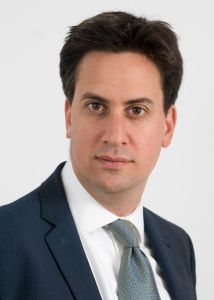
  • Ed Miliband – 2020 Comments on Arcadia and Debenhams

    Ed Miliband – 2020 Comments on Arcadia and Debenhams

    The comments made by Ed Miliband, the Shadow Secretary of State for Business, Energy and Industrial Strategy, on 2 December 2020.

    Let me join the Minister in expressing deep sympathy for those who are at risk of losing their jobs. The test of government and indeed this House is whether that sympathy translates into action. So I have four specific questions for him.

    First, Philip Green owes the workers at Arcadia a moral duty. His family took a dividend worth 1.2bn from the company, the largest in UK history, more than three times the size of the pension deficit. The workers at Arcadia should not pay the price of Philip Green’s greed. So will the Minister now publicly call for Philip Green to make good any shortfall in the pension scheme? And will he ensure the pensions regulator takes all possible steps to make sure this happens?

    Second, we need to learn lessons. In the insolvency bill this summer, Labour put forward amendments to make pension fund holders priority creditors when businesses went bust. The Minister said it was not necessary. Does he now agree now that it was a mistake, that this change would have better protected the pensions at Arcadia and that this should be put right through legislation in the future?

    Third, on the workers at Debenhams and indeed Arcadia facing redundancy, given the scale of redundancies and the grim economic backdrop will he look at providing specific and targeted help for them to get back to work?

    Fourth, we have an emergency on our high streets with an estimated 20,000 shops closing and 200,000 workers losing their jobs since the economic crisis began. While we welcome the support that has been provided, will he recognise the Government must do more? Extending the rent evictions moratorium beyond December when it is due to expire. Increasing the support for hospitality businesses which was a call across this House yesterday. And addressing the massive disadvantage high streets face around business rates compared to online retailers?

    Today is a day of great news on the vaccine. The Government has a massive responsibility to preserve the businesses and jobs we need on the other side of this crisis. They are still not acting on a scale that meets the economic emergency our country faces. They need to do so.

  • Chloe Smith – 2020 Comments on Abolishing Fixed Terms Parliament Act

    Chloe Smith – 2020 Comments on Abolishing Fixed Terms Parliament Act

    The comments made by Chloe Smith, the Minister for the Constitution and Devolution, on 1 December 2020.

    The Fixed-term Parliaments Act caused constitutional chaos last year which, when combined with total gridlock in Parliament, meant the previous Government couldn’t deliver what it was asked to do.

    Ultimately, at critical moments for our country, we trust the public to decide. So we are going back to the system that lets elections happen when they are needed. We want to return to constitutional arrangements that give people more confidence in what to expect, and more security.

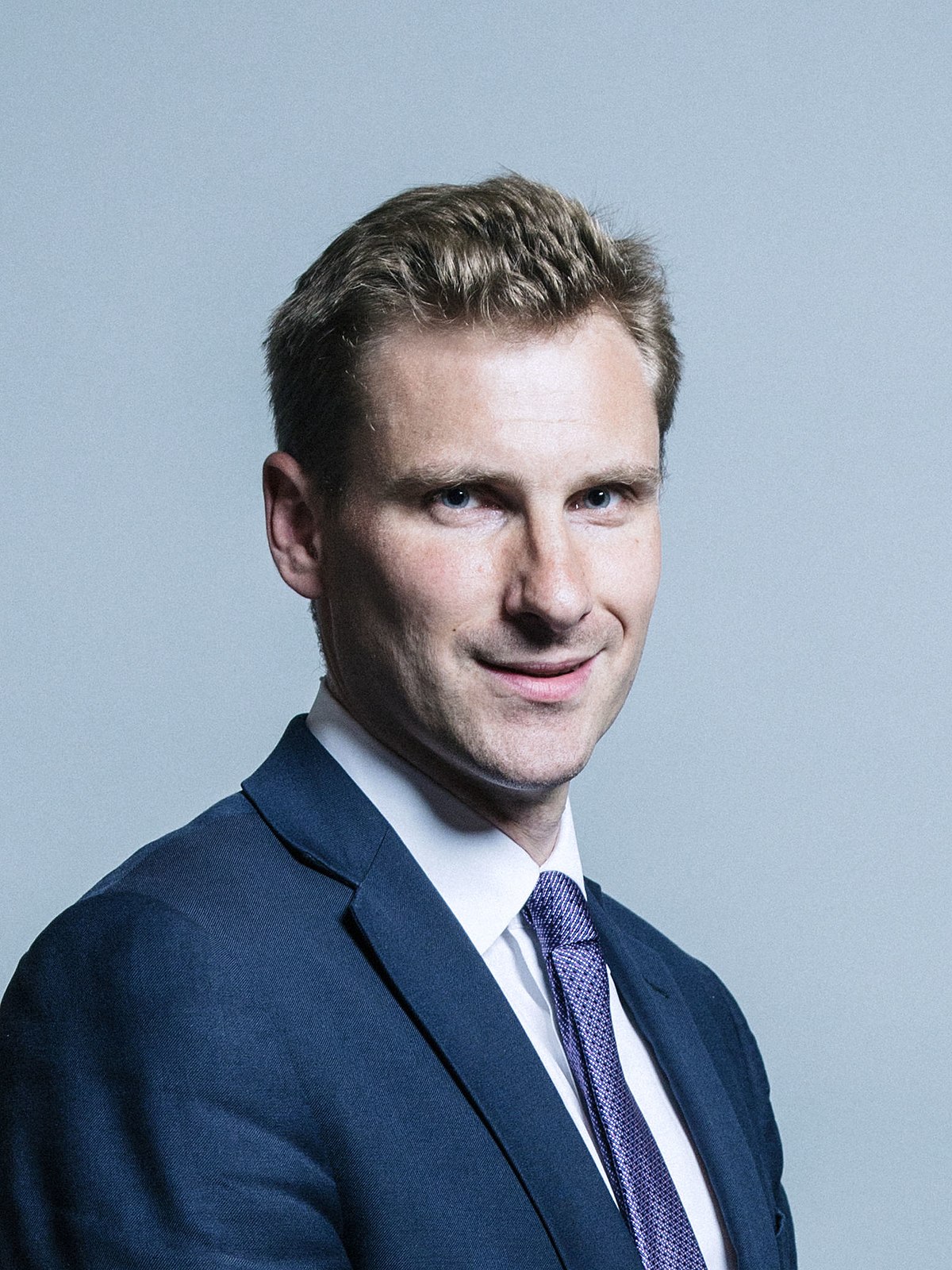
  • Chris Philp – 2020 Comments on Nightingale Courtrooms

    Chris Philp – 2020 Comments on Nightingale Courtrooms

    The comments made by Chris Philip, the Courts Minister, on 1 December 2020.

    We will explore every viable option for additional court space across the country – and that of course includes looking close to home.

    Courts staff have gone to great lengths to help our recovery and the additional capacity at Petty France will further help to deliver speedier justice in the capital.

  • Michael Gove – 2020 Article Justifying the Lockdown

    Michael Gove – 2020 Article Justifying the Lockdown

    The article in the Times, republished by the Government, by Michael Gove, the Chancellor of the Duchy of Lancaster, on 28 November 2020.

    It was a decision none of us wanted to take. But it was a decision none of us could avoid. When ministers met just one month ago to consider whether to introduce a second national lockdown we were presented with a Devil’s dilemma.

    We were being asked to impose restrictions on individual liberty which went against every instinct we have had all our adult lives. We would be asking friends and families to avoid each other’s company. We would be closing shops, bars and restaurants, and not just denying people the social contact which defines us as human beings but also suppressing the animal spirit which keeps our economy going. We would be asking millions who had already given up so much to sacrifice even more.

    So why did those of us gathered round the cabinet table that Friday afternoon decide that we would, indeed, choose to make November 2020 such a difficult month? For the same reason that Emmanuel Macron in France, Sebastian Kurz in Austria, Micheál Martin in Ireland, Mark Rutte in the Netherlands, Angela Merkel in Germany, Stefan Löfven in Sweden and so many other democratic leaders chose to restrict their people’s freedoms. And for the same reason that the eight political parties in power in devolved administrations have taken similar steps to the UK government. Because the alternative would have been indefensible.

    We had to act, as they did, because if we did not our health service would have been overwhelmed.

    That Friday morning I was in Surrey, looking forward to a trip later to an award-winning business in my constituency, the Hogs Back Brewery. But a cloud already hung over my day. I knew that the data coming in from the frontline of the fight against the virus was ominous. So I was not surprised, although I was certainly chilled, by the summons to an action meeting to consider the difficult steps that might now be required. Of course, I’d change my diary: was the meeting tomorrow, or Sunday? No — please get back to London as soon as possible.

    That afternoon we were confronted with what would happen to our hospitals if the spread of the virus continued at the rate it was growing. Unless we acted, the NHS would be broken.

    Infections were doubling fast. The number of days taken to see that increase was open to question. But the trend was not. Infection numbers were growing in areas which had previously seen low prevalence. And as the numbers infected increased so, with iron logic, did the numbers in our hospitals. We could not know exactly when, or how late, we could leave it and still have time to pull the handbrake to avoid disaster, but sooner or later our NHS hospitals would be full.

    Not just administratively at full stretch. But physically overwhelmed. Every bed, every ward occupied. All the capacity built in the Nightingales and requisitioned from the private sector too. The NHS could, and would, cancel the operations of patients waiting for hip replacements and other routine procedures to free up more beds. But that wouldn’t be enough. The numbers infected with Covid-19 and requiring a bed would displace all but emergency cases. And then even those. With every NHS bed full, the capacity of the health service to treat new emergency cases — people who had suffered serious accidents, heart attacks, strokes — would go.

    The questions we asked that afternoon — and had asked before — were the questions we were to hear everyone ask after we took our decision. Couldn’t NHS capacity have been increased to meet this pressure? Well it had been; the Nightingales had been built, staff redeployed, retired doctors and nurses called to the colours. But while capacity had been, and can be, increased, there is a limit. With the numbers becoming infected and facing hospitalisation doubling, there comes a point where no more flexibility exists. It is difficult to strengthen flood defences when the tsunami is surging towards the shore. Hospitals need doctors and nurses and you can’t double their numbers in a month. And even if you could, you would still need to slow the virus spreading to stop even that capacity being overwhelmed.

    Could not more patients be treated at home? And surely improvements in treatment — dexamethasone and non-invasive oxygen support — had made the virus less deadly? Well yes, some patients could be treated at home but the difference could only be made at the margins. And yes, these new treatments reduced mortality. But they relied on patients being in hospital and receiving the treatments from trained professionals. And that was precisely the resource that would run out.

    Keeping our hospitals open, available and effective was not just crucial to dealing with Covid-19. It was imperative for the health of the whole nation. But the only way to ensure we can take care of cancer patients, administer radiotherapy and chemotherapy, and help stroke victims and treat heart attacks is by protecting the NHS. And the only way we can do that is by reducing the spread of the virus, thus limiting the number of Covid-19 patients in hospital. Reducing infections is not a distraction from saving other lives, it is a precondition of saving other lives.

    And just as we want to reduce Covid-19 infections to save lives, so reducing them is the key to saving the economy. Think for a moment what would happen to our economy if we allowed infections to reach such a level that our NHS was overwhelmed. Would families seek out crowded bars and buzzing restaurants if they knew they could be infecting friends and relatives who could not be treated if they fell ill? Would we flock to the January sales if the doors to our hospitals were shut? Would investors, entrepreneurs and tourists make a beeline for Britain if we could not even guarantee the lives and welfare of our existing citizens?

    All the arguments against lockdown came up against that harsh, brute reality. If this government could not guarantee that the NHS was there for our citizens, it would not just be a political and moral failure. It would mean Covid-19 patients who could be saved would die; cancer patients who could be cured would be lost; thousands in pain would suffer for longer; countless more would lose years of their lives; the economy would grind to a halt, as a population we could not protect sought to save their loved ones; and the world would hang an indelible quarantine sign over our nation’s name.

    So we acted. And we did so knowing that the most difficult lesson we had learnt that year is that tougher measures than we would ever want to impose are required to restrict the virus’s spread. The tiers we had in place before the lockdown had not suppressed it sufficiently: they were neither strong enough to reduce social contact sufficiently, nor applied widely enough to contain the virus’s spread. And that is the difficult lesson we cannot unlearn as this lockdown ends.

    Thanks to the chancellor’s swift action, millions of people have been helped financially through the dark days of this crisis. Since March, we have provided more than £200 billion in fiscal support. We have extended the furlough scheme to the end of March next year, and businesses that are forced to close can get grants of up to £3,000 a month. For councils, we have also provided an additional £900 million on top of previous funding, to support local economies and communities and fund local healthcare needs.

    This coming month brings hope. Vaccines that will defeat the virus are motoring towards regulatory authorisation and distribution. We are seeing strong efficacy rates coming out of the Pfizer/Biontech, Moderna and Oxford/Astrazeneca trials, and the regulator is reviewing both the Pfizer and Oxford vaccines to determine if they reach the required robust standards for quality, safety and effectiveness. The end of the national lockdown means that in all areas shops can reopen, people can go to the gym, hairdressers and beauty services are available again, collective worship can resume and outdoor sports can restart. And, of course, this Christmas, friends and families across the UK can travel to celebrate in each others’ homes.

    But for many, these relaxations are cold crumbs of comfort at the start of a long, harsh winter. The new, tougher tiers which cover most of the country still limit social mixing, keep friends apart and hit pubs and bars particularly hard.

    Yet they are grimly, inevitably, necessary. The level of infection across the country remains uncomfortably and threateningly high. The pressure on hospitals is still severe: across the UK, about 16,000 beds are filled with Covid-19 patients, which compares with almost 20,000 at the April peak and as low as 740 on September 11. From the current high base, any sharp uptick in infection could see the NHS under even more severe threat again.

    Before the lockdown, the increase in infections was like a tap filling a bath faster and faster with every day that passed. Lockdown first slowed the pace at which the bath was filling up, then stabilised it. Slowly, it has begun to lower the water level. But as we exit this lockdown the level is still high and it would not take too much, or too rapid an increase, for us to risk it overtopping again.

    If, however, we can keep the level of infection stable or, even better, falling, and hold out through January and February, then we can be confident that vaccination will pull the plug on the problem. That is why in our Winter Plan we have set out new, stronger tiers. Bluntly, our previous tiers were not as effective as we had hoped. In general, infections continued to rise in Tier 1 and Tier 2 areas and even the bare, basic, old Tier 3 wasn’t enough.

    These are, of course, uncomfortable truths. Not least for those of us who argued that these measures, on their own, would be enough. But we cannot ignore the evidence. What has worked, however, is the combination of a toughened Tier 3 and widespread community testing. In Liverpool, the mayor Joe Anderson bravely adopted measures above and beyond the old basic Tier 3 and championed mass testing. The result: falling infections, reduced hospitalisations and a smooth transfer to the new Tier 2.

    Learning from that experience, we are confident that our new, tougher tiers will have a real impact, and equip us to respond to local conditions — guarding against spread, stemming signs of growth, or bringing a local outbreak back under control so that hospital capacity is not overwhelmed.

    Why is it, some ask, that when they come into force on Wednesday, so many areas will be in Tiers 2 and 3, when they entered the lockdown a tier below? Because the level of infection, while stabilising, is simply still too high, and many hospitals remain under pressure. And why is it that we did not take an even more localised approach, and carve up local authorities? Because we are a small, densely populated country where this virus has proven it can spread with ease — so casting the net wide is more effective. And for another reason too, which is that many NHS hospital catchments are expansive, and so to protect our hospitals you need to tackle the virus right across the areas they serve.

    The truth, however uncomfortable, sets you free. And these new tiers, alongside the wider deployment of mass testing, have the capacity to prevent our NHS being overwhelmed until vaccines arrive.

    In politics there is often a readier market for comfortable evasions than uncomfortable truths. Some have argued that you can avoid restrictions on everyday life, let the young in particular go out and about, and build up collective or herd immunity — “Just look at Sweden”.

    But Sweden, which has in fact always placed restrictions on its population, has found that even the battery of measures it adopted was not enough. Infections rose dramatically in October and early this month, and hospitalisations continue to rise as its government has, reluctantly but firmly, introduced new measures to keep households apart, restrict commerce, stop people visiting bars and restaurants and comprehensively reduce the social contact that spreads infection.

    Others have argued, in good faith of course, for a sort of Sweden-that-never-was — for the strict segregation of the most vulnerable while the rest of us go about our business until the pandemic passes. But what would that involve? How, practically, could we ensure that every older citizen, every diabetic, everyone with an underlying condition or impaired immune system was perfectly insulated from all contact with others for months to come? How many are we expected to isolate completely and for how long? Five million? Ten? No visits by carers or medical staff, no mixing of generations, the eviction of older citizens from the homes they share with younger? No country has embarked on this course, with no detailed plan for implementing such a strategy ever laid out.

    That is not to deny the course we are on has costs. But those costs are not ones we choose; they are ones we must endure. It is this virus — which in its combination of rapid spread and targeted lethality poses a bigger public health threat than any pandemic since the Spanish flu of 1918 — which brings terrible costs. As previous pandemics always have.

    And when the country is facing such a national crisis, the truth is that all of us who have been elected to parliament, not just ministers, must take responsibility for difficult decisions. Covid-19 is no respecter of constituency boundaries and the hardships we are facing now are unfortunately necessary to protect every single one of us, no matter where we live. In any analysis of this government’s, or any government’s approach, the cost of lockdown and restrictions cannot be reckoned against the status quo ante, but only against the cost of inaction, or inadequate action, and the overwhelming of the NHS.

    We know now that the costs, significant as they were, generated by our pre-lockdown measures still did not bring us the benefit of a virus under control. We know now, as do other European and western nations, that we can keep the enemy at bay until vaccination turns the tide, but it will be tough. For France, with cafés and restaurants closed across the country until January; for Germany, where even as I write they debate whether even school closures may be necessary; in the US, where Joe Biden, the president-elect, knows he must enter office imposing tougher restrictions to cope with resurgent infections, the need to act is the same. Because the grim calculus of infection is the same. We cannot alter the mathematics, bargain with the virus or evade our responsibilities.

    But we can see an end to this. We can end the suffering. Mass testing, vaccination, liberation. But until that liberation comes, we must stand firm. Stand in solidarity with each other. And shoulder the sacrifices required to save the lives of those we love.

    The original article.

  • Boris Johnson – 2020 Statement in the House of Commons on Winter Plan

    Boris Johnson – 2020 Statement in the House of Commons on Winter Plan

    The statement made by Boris Johnson, the Prime Minister, in the House of Commons on 1 December 2020.

    Mr Speaker, I beg to move that these Regulations now be approved.

    And I want to begin by telling the House that I was hugely encouraged by a visit I paid only yesterday to a vaccine plant in North Wales where I saw for myself the vials of one of seven vaccines backed by the UK Government that could turn the tide of our struggle against Covid, not just in this country but around the world.

    It is the protection of those vaccines that could get our economies moving again, and allow us to reclaim our lives.

    And that one plant in Wrexham could produce 300 million doses a year and yesterday was the momentous day when it began to manufacture the Oxford AstraZeneca vaccine.

    And it was a very moving moment Mr Speaker when I talked to one of the brilliant young scientists there,

    And she described the extraordinary moment for her in her life,

    to be part of an enterprise that was she thought truly going to offer humanity a route out of this suffering.

    But Mr Speaker, we have to be realistic,

    And we have to accept that this vaccine is not here yet, no vaccine is here yet

    and while all the signs are promising

    and almost every scientist I’ve talked to agrees that the breakthrough will surely come

    we do not yet have one that has gained regulatory approval.

    We can’t be completely sure when the moment will arrive

    and until then we cannot afford to relax,

    especially during the cold months of winter.

    The national measures which are now shortly ending in England

    have eased the burden on the NHS and begun to reverse the advance of the virus.

    Today, the R is back below 1

    and the ONS survey is showing that signs of the infection rate are levelling off

    and Imperial College London has found that the number of people with Covid has fallen by a third in England since 2nd November.

    But while the virus has been contained, it has not been eradicated.

    The latest ONS figures suggest that out of every 85 people in England, one has Coronavirus; far more than in the Summer

    between 24th November and yesterday, 3,222 people across the UK lost their lives;

    and despite the immense progress of the last four weeks,

    our NHS remains under pressure, with hospitals in three regions – the South West, the North East and Yorkshire – all treating more Covid patients now than at the peak of the first wave.

    So we can’t simply allow the current restrictions to expire for the reason he gives with no replacement whatever.

    With the spread of the epidemic varying across the country, there remains a compelling case for regional tiers in England and indeed Mr Speaker a compelling necessity for regional tiers.

    But I hope the House is clear what I am not asking for today.

    This is not another lockdown,

    nor is this the renewal of the existing measures in England.

    The tiers that I am proposing would mean that from tomorrow

    everyone in England

    – including those in tier 3 –

    will be free to leave their homes for any reason.

    And when they do, they will find the shops open for Christmas,

    the hairdressers open,

    the nail bars open,

    gyms and leisure centres, swimming pools open,

    churches, synagogues, mosques and temples will be open for communal worship.

    Organised outdoor sport will resume,

    and in every tier you will be able to meet others in parks and in public gardens subject to the Rule of Six.

    And every one of those things has been by necessity restricted until today.

    Every one of them would be allowed again tomorrow.

    Of course I accept that this is not a return to normality. I wish it were so.

    But it is a bit closer to normality than the present restrictions.

    And what we cannot do is lift all of the restrictions at once, or move too quickly, in such a way that the virus would begin to spread rapidly again.

    That would be the surest way of endangering our NHS and forcing us into a new year lockdown, with all the costs that that would impose.

    We all accept that the burden on the hospitality sector has been very great.

    We feel this deeply, because our pubs, our hotels, restaurants they are in many ways the heart of the communities

    And part of the fabric of our identity as a country

    And everybody can see that the hospitality industry has borne a disproportionate share of the burden in this crisis. There’s no question about it. And that is obviously because we want to keep schools open Mr Speaker and we have to take such measures as we can.

    I would just remind the House however, that we are not alone in this.

    In France bars, restaurants and gyms will not reopen until 20th January at the earliest.

    In Germany, the hospitality sector will remain closed in its entirety over Christmas.

    But we will do everything in our power to support our hospitality sector throughout this crisis.

    We have already extended the furlough scheme for all businesses until the end of March,

    We’ve provided monthly grants of up to £3,000 for premises forced to close,

    and £2,100 for those that remain open but have suffered because of reduced demand.

    We have allocated £1.1 billion for local authorities to support businesses at particular risk.

    And today Mr Speaker we are going further with a one-off payment of £1,000 in December to wet pubs – that is Mr Speaker pubs that do not serve food as the House knows

    recognising how hard they have been hit by this virus in what is typically their busiest month.

    We will also work with the hospitality sector in supporting their bounce back next year.

    Mr Speaker I want to stress, that the situation is profoundly different now because there is an end in sight.

    And I am not this afternoon seeking open-ended measures.

    On the contrary, these regulations come with a sunset clause at the end of February, sorry at the end of the 2 February I should say Mr Speaker.

    At that point we will have sufficient data to assess our position after Christmas,

    and though I believe these types of restrictions will be needed until the Spring,

    they can only be extended beyond 2 February if this House votes for them Mr Speaker.

    These are points that have been made with great power as I say by Hon Members on all sides of the House.

    We will review the allocation of tiers every fourteen days, starting on 16th December. I just want to make an important point to my Rt Hon friend and to all members who are rightly concerned about the position of their constituencies, our constituencies, in these tiers.

    Hon Members have it in their powers, in our power to help move our areas down the tiers,

    by throwing their full weight Mr Speaker, our full weight as leaders in our communities behind community testing,

    and seizing the opportunity, seizing the opportunity to encourage as many people as possible to take part.

    Of the kind we’ve seen in Liverpool Mr Speaker

    where since the 6th November over 284,000 tests have been conducted,

    and together with the effect of national restrictions,

    the number of cases fell by more than two thirds. This is the model that I would recommend.

    We are now proposing that from tomorrow Liverpool City Region and Warrington should be in tier 2, where as previously obviously they were in tier 3.

    And we want other regions and other towns, cities, communities to follow this path,

    And that is why – with the help of our fantastic armed forces –

    we will be offering community testing to tier 3 areas as quickly as possible.

    Mr Speaker let me just say, I find it extraordinary that the Official Opposition –represented by the gentleman opposite – currently have no view on the way ahead and are not proposing to vote tonight.

    I do think it is extraordinary that in spite of the barrage of criticism that we have no credible plan from the party opposite. Indeed, we have no view on the way ahead. It’s a quite extraordinary thing Mr Speaker that tonight to the best of my knowledge

    The RHG Opposite who has always said he will ‘act in the national interest’ has told his party to sit on its hands and to abstain in the vote tonight Mr Speaker.

    And I think the government has made its decision, we’ve taken some tough decisions Mr Speaker and the Labour opposition has decided tonight heroically to abstain Mr Speaker

    And I think when the history of this pandemic comes to be written, I think the people of this country will observe that instead of having politicians of all parties coming together in the national interest they had one party taking the decisions and another party heroically deciding to abstain

    Mr Speaker, in the story of 2020, I think there are two great feats in which we can take a great deal of comfort.

    First, our country has come together in an extraordinary effort that has so far succeeded in protecting our NHS and in saving many lives.

    And while our scientists have been zeroing in on the weaknesses of Covid,

    telescoping ten years of work into ten months,

    and now their endeavours are about to deliver the means as I say to rout the virus. That is clear.

    The Government is backing not one potential vaccine, but seven.

    We have ordered 100 million doses of the Oxford-AstraZeneca vaccine, that is now seeking regulatory approval.

    We have ordered 7 million doses of the Moderna vaccine, which has almost 95 per cent effectiveness in trials.

    And Mr Speaker, we have ordered 40 million doses of the Pfizer-BioNTech vaccine, which

    if approved by the regulator –

    could start being administered before Christmas.

    In total, Mr Speaker our Vaccines Task Force has secured more than 350 million doses,

    more than enough for everyone in the UK, the Crown Dependencies and our Overseas Territories.

    All we need to do now Mr Speaker is to hold our nerve until these vaccines are indeed in our grasp,

    and indeed being injected into our arms.

    So I say to the House again let us follow the guidance, let us roll out mass testing, let’s work to deliver mass testing to the people of our country, let’s work together to control the virus and it is in that spirit that I commend these regulations Mr Speaker I commend these regulations to the House.
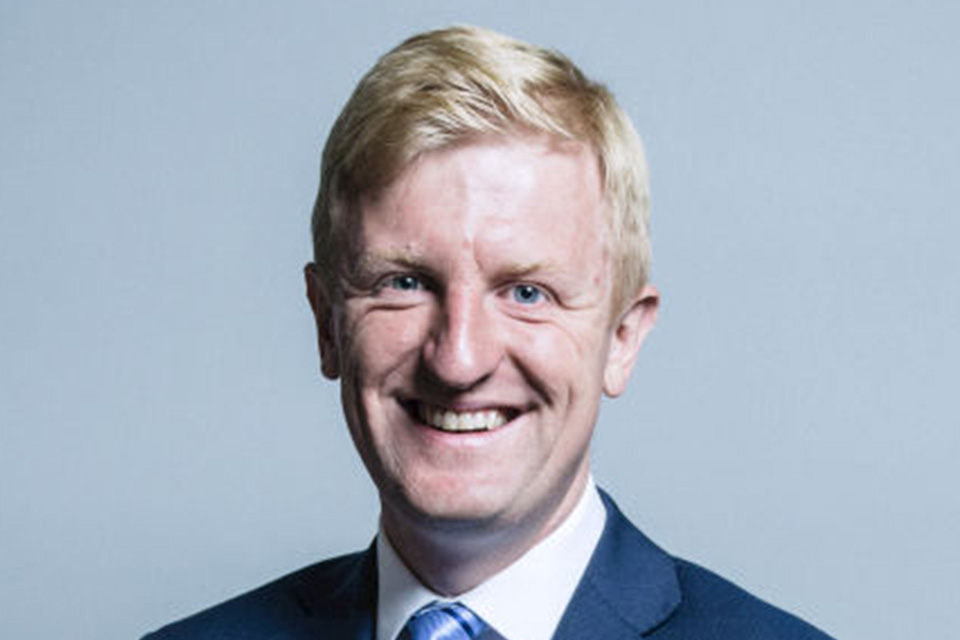
  • Oliver Dowden – 2020 Speech to the Law Family Commission

    Oliver Dowden – 2020 Speech to the Law Family Commission

    The speech made by Oliver Dowden, the Secretary of State for Digital, Culture, Media and Sport, on 1 December 2020.

    Thanks Gus, and it’s a pleasure to be at the launch of the Law Family Commission.

    Can I also pay tribute to Andrew Law and the Law Family Charitable Foundation, whose generous support has made this Commission possible.

    I was interested to read the report and Gus O’Donnell’s article in the FT – and I was particularly struck by what Andrew Law wrote in his foreword, about how we can best coordinate the “millions of individual acts of benevolence that take place every day in our nation”.

    That’s exactly what we are looking to do in government with our approach to civil society.

    And I think this report is a timely and useful intervention. This launch comes at the end of one of the most challenging years in recent history – and I’d like to talk a little bit about that context, and what it has taught us about civil society, before getting into the government’s approach in the coming years.

    I know how hard hit civil society has been by the crisis – unable to fundraise face to face, unable to open charity shops, cafes and other retail outlets – especially at a time when the public has looked to the sector for frontline support more than ever.

    The Commission’s report identifies one key challenge, first and foremost – and that is what it calls our collective failure to properly value what civil society delivers.

    But I want to be clear up front: that is not this government’s attitude.

    That’s why we made a £750 million investment into the sector when the COVID crisis hit, to help ensure it could keep delivering essential support to those who needed it the most.

    That was the first sector-specific financial intervention my department sought, and one of the first the Treasury granted across the entire economy. It was by far the biggest package of its kind in Europe, and a signal of our clear commitment to the sector.

    Because in the unique challenges it has posed, and the enormous response required, I think COVID demonstrated beyond doubt that we can’t afford not to value civil society.

    At the same time, the wider context for civil society has shifted. When this pandemic hit, we witnessed a surge of goodwill in our communities.

    The Commission’s own research has found that 18 million people in England helped friends or neighbours during the first lockdown, by doing their shopping or walking the dog.

    There’s a strong appetite for community, and for helping good causes. And as we look back on this extraordinary year, I think it’s a good moment to stop, to reflect, and to try and answer two important questions:

    How do we capitalise on that surge of goodwill, on the army of volunteers who put their hands up during COVID – and make sure the epidemic of kindness we’ve witnessed in the last 12 months lasts far beyond this pandemic?

    What lessons can we take from the past year, from the way civil society has had to radically adapt – and does COVID offer us and civil society a new way forward?

    So let me offer some reflections on the key points from the report you have published today, and give you a taste of what the government is looking to do to unleash the potential of civil society.

    And I use the term “unleash” deliberately there. Because I strongly believe, as your report rightly highlights, that there is huge power in civil society, and that it should be the government’s job to unlock it – not try to replace it, or end up stymying it.

    Not running things from the top-down – but stewarding the sector, unlocking resources and empowering volunteers.

    So my first priority is for the government’s work to focus on where it can add most value in this space.

    The way the sector uses digital and data is a good example of this.

    The Commission’s report talks about the “digital deficit” – how more than one-in-three charities say they don’t have the resources to invest in technology.

    But I’ve been struck by the way charities have innovated and adapted during the pandemic – particularly through their use of digital technology: 92 percent of organisations have moved their services online as a result of COVID.

    And the government has played an important role here, with a significant amount of the £200 million we have made available to small and medium sized charities via the Coronavirus Community Support Fund being spent on helping them to digitise their offer.

    I know that charities can’t deliver everything online, and that some of their most important work is done face-to-face.

    But one of COVID’s positive legacies could be the way it has helped digitise the sector for the long-term. And of course, going digital means more data, and that means making it easier to both evaluate and boost an organisation’s impact.

    In my wider role as Secretary of State, I spend a lot of time thinking about how we can make better use of data in the wider economy. In fact, it’s one of the areas where I think we can make a really significant impact now that we have left the EU.

    But just as data isn’t always well used in the public sector, your report highlights the ‘data deficit’ in civil society. 87% of charities say a focus on impact measurement is important to delivering their objectives, but fewer than half describe their knowledge and use of such approaches as “good” or “very good”.

    In truth, I think the government has the same data deficit.

    The early stages of the Covid crisis showed that Whitehall didn’t know as much about civil society as we thought we did. Where the volunteers were, which charities were best placed to step in and support public services, and what the real picture of its financial health was.

    That matters: because without that understanding, we in government can’t be as effective in supporting the sector or making the most of what it has to offer.

    So I have made it a priority for my department to build up that knowledge – bringing in new skills and tools in order to do so. This was an important part of our settlement for the Office for Civil Society in the recent Spending Review, and I hope to see it bear fruit in the coming months as we take a different approach.

    Secondly – and this is another issue that the Commission’s report highlights – we want to look at how we can help bring more resources into the sector.

    But not all of it needs to come from the same old sources. We need to look at bold new ways to raise funds.

    So, for example, the Commission’s report highlights what it calls the “philanthropic deficit” in this country. While the UK is undoubtedly a generous nation – and we saw that in abundance throughout the pandemic – we lag behind countries like the U.S., to the equivalent of an estimated £45 billion a year. That’s very nearly the entire income of our charity sector income.

    I want to know how we can use philanthropy more in this country in the future. Why is it that we don’t get philanthropy on the same scale as you see in the U.S.? What role can the government play in stimulating it?

    And as part of this, my excellent colleague Baroness Barran, the Minister for Civil Society, is doing some very important work on leveraging finance.

    She has led two hugely successful fund-matching partnerships during the pandemic – firstly, the BBC’s Big Night In, which saw government funds match public generosity and secondly the £85 million Community Match Challenge, which doubled government investment by unlocking support from philanthropists, foundations and grant making organisations.

    It’s also become increasingly clear that a growing number of people are looking to invest their money in companies that align with their values. So we’re looking at how we can drive impact investment. So in the same way people can now invest directly in funds focused on green investment, we want to look at how this could be applied to the work being done by civil society, to sit alongside the investment government is making.

    We’re also looking to expand the UK’s Dormant Assets Scheme. This is money that is sitting in unused accounts, begging to be used to tackle some of society’s most pressing challenges.

    Since 2011, over £745m has been released from that scheme to support work on things like youth unemployment and problem debt. And we made another £150m available in May to help people who have been left particularly vulnerable as a result of COVID. Very shortly, we’ll be publishing our response to a consultation on the expansion of that scheme.

    And when we talk about making sure that investment has the greatest possible impact, I think we also need to ask some important questions about the National Lottery.

    It was established in 1996 – and it has undergone only one real change since then, when a Labour government changed the way funding was distributed.

    I’m keen, particularly as we move to a comprehensive spending review, to review where that balance lies.

    During this pandemic we’ve seen how valuable organisations like grassroots sports clubs are in their communities. I want to see how we can best use those kinds of existing organisations to help communities, so that we make the most of our strongest assets on the ground.

    And our third priority, something the report again highlights, is how we can unlock another important resource – which is time.

    The Report warns that the country’s early-pandemic enthusiasm for volunteering and sense of community is beginning to wane.

    And yet we hear from so many people, and particularly the young, that they really want to get into volunteering. The will is there – but there are just too many obstacles in the way.

    One person might volunteer to help in a care home, for instance, and have to go through a whole process of checks to do so. And then when they try to volunteer in another nearby care home in the same area, they find that they have to go through the exact same process again.

    How can the government help simplify this process, and make sure the pandemic spirit of volunteering lives on long beyond this crisis?

    Danny Kruger has spoken about a volunteer passport to coordinate the supply and demand of volunteers, which is something we’re looking at closely.

    We’ve already strengthened our links with voluntary organisations through the Voluntary and Community Sector Emergencies Partnership, which was given a £4.8 million grant during the coronavirus crisis. That has set us up to work much better together in the future.

    These efforts are all part of one of this government’s central goals, which is leveling up the country. Leveling up extends to civil society.

    One thing we’ve learnt from COVID is that those areas that already had a strong volunteering infrastructure were able to respond to the crisis much more effectively and much quicker than those without.

    So how can we level up the country so that, when the next crisis hits, everyone has access to rapid support?

    An important part of this is the Government’s new £4 billion Leveling Up Fund.

    Danny Kruger’s report recommended it, and it’s a central piece of the spending review.

    But now that we have the funding, we have to make sure the money gets to where it is most needed.

    And as we do that, I want to ensure the decisions aren’t just made by people sitting in offices in London. It should be driven and directed by the communities on the ground.

    As I’ve touched on throughout my speech, a lot of this comes down to data and analytics, and getting a clear picture of how things stand.

    One of the most important things we can do is to try and understand not just the health of the sector, but its value. As Andy Haldane highlighted in a lecture last year, the collective contribution of civil society to our economy and society is hugely underestimated by current economic measures.

    And that is why this Commission is so important, and why we’ll be wanting to work closely with you throughout this project.

    Gus knows better than anyone that my job is to quantify to the Treasury, in terms they understand, what all of us speaking today know: that civil society is not just special but incredibly important.

    I look forward to working with all of you in making that case.

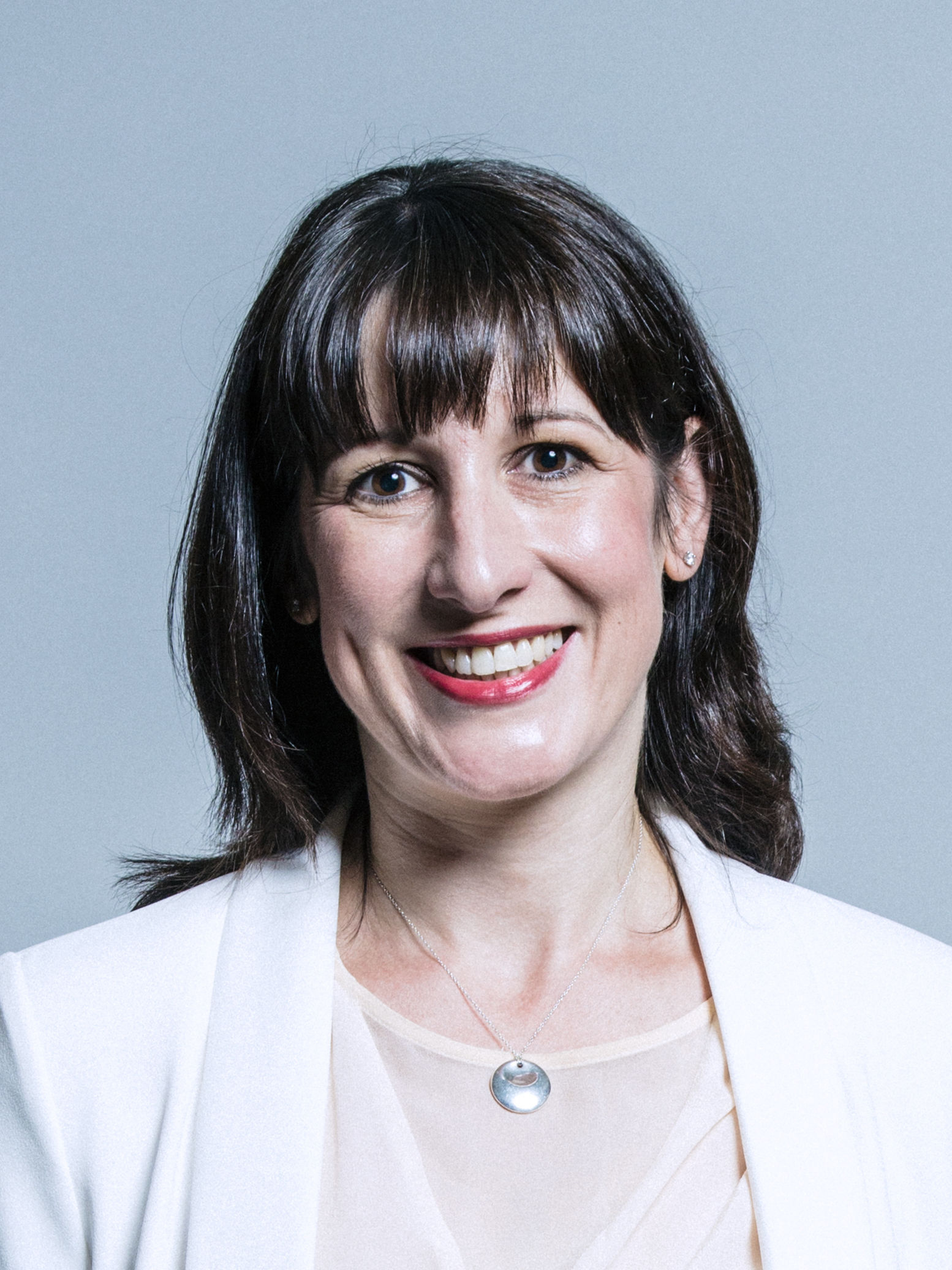
  • Rachel Reeves – 2020 Comments on Government’s Border Operations Centre

    Rachel Reeves – 2020 Comments on Government’s Border Operations Centre

    The comments made by Rachel Reeves, the Shadow Minister for the Cabinet Office, on 1 December 2020.

    Once again, this government is putting the burden on businesses to prepare for the end of the transition period, when it has not explained what it is those businesses are getting ready for. Is it for tariffs or no tariffs with the EU?

    The government is rebadging a basic element of preparation but still can’t tell us how many customs agents are recruited or trained or whether crucial IT is ready.

    With glaring questions like these still unanswered, this government must do much more than just ‘demand action’ from UK businesses, already under huge pressure from the pandemic – and instead provide them with some much needed answers.