Blog

  • Boris Johnson – 2020 Statement on Covid-19

    Boris Johnson – 2020 Statement on Covid-19

    The statement made by Boris Johnson, the Prime Minister, on 21 December 2020.

    Good afternoon,

    I want to update everyone on one thing and that’s what’s happening at our borders and especially at Dover.

    Last night at 11pm the French Government imposed restrictions on UK freight crossing to France when accompanied by a driver.

    And so today I chaired a meeting of the Government’s emergency, COBR committee

    in order to co-ordinate a UK-wide response.

    And it is vital first to stress that these delays

    – which are only occurring at Dover –

    only affect human-handled freight,

    and that is only 20 per cent of the total arriving from or departing to the European continent,

    which means the vast majority of food, medicines and other supplies are coming and going as normal.

    You may also be aware – in fact I’d be amazed if you weren’t –

    that the government has been preparing for a long time for this exactly kind of event.

    So working with the Kent Resilience Forum, Kent County Council and Highways England,

    we’ve activated our long-prepared plans,

    with the result that we have already been able to reduce the number of lorries waiting on the M20 from 500 to 170.

    The site at Manston Airfield is ready to cope with any overflow.

    And, of course, we are working with our friends across the Channel to unblock the flow of trade as fast as possible.

    The Government at all levels is communicating with our friends in Paris

    I have just spoken to President Macron – we had a very good call – we both understand each other’s positions and want to resolve these problems as fast as possible.

    I know that Grant is also speaking to his counterpart and we are working to a solution, as I say, as fast as we can

    to allow freight traffic to resume between the UK and France,

    and ensure that lorries can travel in both directions in a Covid-secure way.

    I want to stress that we in the UK fully understand the anxieties of our friends about Covid, their anxieties about the new variant,

    but it is also true that we believe the risks of transmission by a solitary driver sitting alone in the cab are really very low.

    And so we hope to make progress as fast as we possibly can.

    I want to repeat that these delays only apply to a very small percentage of food entering the UK,

    and as British supermarkets have said, their supply chains are strong and robust,

    so everyone can continue to shop normally.

    And to our international friends and partners I want to say very frankly:

    We understand your concerns,

    And I hope that everybody can see that as soon as we were briefed as a government of the fast transmissibility of this new strain at about 3.15pm on Friday afternoon,

    We lodged all the necessary information with the World Health Organisation

    And we took prompt and decisive action the very next day to curb the spread of the variant within the UK.

    And we want to work with our colleagues, with our friends around the world, as we have from the beginning to develop new treatments and new vaccines.

    And today I can announce that half a million people in the UK have now received their first dose.

    As we’ve seen throughout this pandemic, this virus alas can move all too swiftly from one nation to another,

    But it is steadily being defeated by an international response

    An international response that is bringing the hope of vaccines to the entire world,

    And in that the UK will continue to play our full part.

    I’ll now handover to our Secretary of State, Grant.

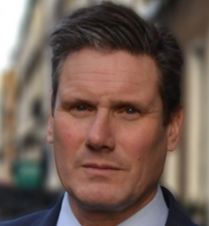
  • Keir Starmer – 2020 Keynote Speech on Scotland’s Future Role in the UK

    Keir Starmer – 2020 Keynote Speech on Scotland’s Future Role in the UK

    The speech made by Keir Starmer, the Leader of the Opposition, on 21 December 2020.

    Good morning.

    I want to start by addressing the emerging situation relating to the pandemic.

    The news over the last 24 hours has been deeply disturbing.

    The number of coronavirus cases has nearly doubled in the last week.

    Over 67,000 people have now tragically died.

    And hospital admissions are rising.

    We cannot be in any doubt.

    The virus is now out of control.

    International flights have been banned.

    International Borders have been shut.

    And there is now severe disruption at Britain’s ports.

    Make no mistake this is now a real emergency.

    I have faith in the British people to once again step up to the challenge.

    As they have done at every stage of the pandemic.

    But they expect the Government to do the same.

    We can have no more over-promising and false hope, confused messages and slow decision-making.

    We need strong, clear and decisive leadership.

    The Prime Minister needs to be straight with people about precisely what is going on.

    And precisely what he is doing about it.

    He must address the nation today after this morning’s COBRA meeting.

    And hold daily press conferences until the disruption has eased.

    He must also get the Brexit deal he promised done this week.

    This is not a game of brinkmanship.

    This is people’s lives.

    People’s jobs.

    And people’s businesses.

    They need a deal.

    They expect a deal.

    And a deal is what must happen.

    I renew my pledge to act in the national interest to help us through these dark and difficult days.

    We will support further restrictions where they are necessary.

    We will work with Government to help businesses get through the winter months.

    And we will offer constructive solutions to keep our NHS open and the vaccine distributed.

    As we struggle against the pandemic,

    And the profound health and economic consequences of it,

    Making the case for our United Kingdom could never be more important.

    We entered this pandemic together.

    We faced the enduring challenges of the pandemic together.

    We will come out of it together.

    And we must rebuild together.

    The duty to rebuild will be a shared duty.

    It is a duty not just in England, Scotland, Wales or Northern Ireland.

    It is a duty across all four nations together.

    And believe you me, future generations will not forgive us if we shirk that responsibility.

    That is why the case I want to make today is the case for the United Kingdom.

    Of course there’s a case for the United Kingdom that’s measured in

    Power
    Prosperity
    Trade
    And security

    We are all stronger because we choose to pool our resources to share the risks and rewards.

    We are all better off because we can live, work and trade across borders, rather than behind them.

    And as one United Kingdom we’re better able to weather the storms of a global financial crash, a pandemic, or the climate emergency.

    But for me the case for the United Kingdom goes much deeper than that.

    The United Kingdom is shaped not just by our shared institutions,

    But by the people who made them,

    The history and experiences that shaped them

    And the amazing things we’ve achieved together.

    Together we’ve fought slavery,

    We’ve fought poverty,

    We’ve fought fascism,

    And we’re fighting Covid.

    The first baby born in the NHS – Aneira Thomas – was born in South Wales and named after the great Nye Bevan.

    Our welfare state was born out of the struggles of early Scottish activists who fought against the Scottish Poor Laws.

    Britain’s great achievements in science, innovation and discovery are all the greater because they drew on all our talents.

    The Open University was founded by a Scot, Jennie Lee and we’re a world leader in education, research and knowledge because of our great universities and our shared tradition of learning.

    The Labour Party was first led by Keir Hardie – a Scot – who ended up representing a Welsh constituency

    and such was the influence of that boy from Lanarkshire, that many years later a family in Oxted, East Surrey, decided to call their son Keir too.

    My point is this:

    Our nations are bound by our history, our values and our identity.

    Our families live across borders,

    Our businesses operate across borders,

    We’re interconnected and we’re interdependent.

    That’s not just a precious inheritance, or a description of the past, it’s what we are.

    It’s what I want for our children, for the next generation.

    I don’t believe in putting up borders across any part of our United Kingdom, in dividing people, communities, and families who have stood together for so long.

    It’s not, England, or Scotland, or Wales, or Northern Ireland,

    I’ve had enough of hearing that.

    It’s England, and Scotland, and Wales, and Northern Ireland, together.

    I believe in that core Labour principle: that we achieve more together than we do alone.

    All four nations working together to build a more open, more optimistic and outward-looking country.

    A United Kingdom that’s a force for social justice and a moral force for good in the world

    And that’s why I’m so determined to preserve and to renew the United Kingdom.

    But just as I believe in the United Kingdom,

    I equally believe in devolving power and opportunity across it.

    This is the common thread that joins so many great figures of the Scottish Labour movement.

    From John Mackintosh and Donald Dewar, to John Smith and Gordon Brown.

    A tradition that doesn’t simply see devolution as a process of shifting power from one place to another, but that sees devolution as a means to an end.

    To empower. To democratise. And to deliver social justice.

    The challenge for Labour now is how to carry on that tradition, to renew the case for devolution and to harness the energy, dynamism and creativity of all corners of the country.

    Devolution in Scotland, Wales and Northern Ireland was one of the proudest achievements of the last Labour government.

    Against, I might add, the opposition of the Conservatives and the indifference of the SNP.

    But since Labour lost power in Holyrood in 2007, and then in Westminster in 2010, that renewal hasn’t happened.

    In Westminster, successive Conservative governments have eroded the fabric of the United Kingdom.

    First, with a decade of austerity, which undermined our public services, widened inequalities and made communities across the country poorer and less secure.

    And then came Brexit.

    Now, I know the Prime Minister is the only person in Britain who still wants to talk about Brexit.

    So I will just say this:

    Whichever side of the divide you were on,

    We can surely all agree that the cavalier and chaotic approach the Conservatives have taken in the last four years has frayed the bonds of the United Kingdom.

    Take, for example, the Internal Markets Bill – which was railroaded through Westminster without concern for the impact it would have on devolution or the damage it would cause across the UK.

    That Bill could have been a huge opportunity to push power outwards,

    But instead, the Prime Minister showed his instinct is to hoard power, not to devolve it.

    Perhaps we shouldn’t be surprised, because we now know that the Prime Minister thinks Scottish devolution has been ‘a disaster’.

    And the reason Johnson’s comment struck home is because it spoke to a wider truth,

    The Conservatives simply don’t believe in devolution. They never have.

    And they are blind to the damage that their cavalier attitude is doing to our United Kingdom.

    They have no plan to counter Scottish separatism other than to defend the status quo

    And – to borrow the Prime Minister’s terminology – in Brexit and in austerity they’ve given separatists two big boxing gloves to pummel the United Kingdom.

    Scotland was once rightly proud and world renowned for providing an exceptional education to children from all backgrounds.

    For being a society where anyone could reach their potential.

    But after 13 years of the SNP in power, sadly that’s no longer the case.

    International comparisons show that children in Scotland are now lagging behind children in England – and in many advanced countries – for the first time

    Scotland now has one of the largest average class sizes in any major economy

    The attainment gap between the poorest and wealthiest children rises through each stage of primary education in Scotland.

    Under the last Labour Government child poverty fell by 150,000 in Scotland. But under the SNP, child poverty has risen sharply and is forecast to reach one in three Scottish children by 2030.

    And I’m afraid it’s the same story on public health.

    Life expectancy in Scotland is now the lowest in Western Europe – with Scottish men in the poorest areas expected to die 13 years before those in least deprived areas.

    The Scottish NHS hasn’t hit its cancer waiting times for seven years

    And in the first wave of Covid, the death rate in Scotland, was the THIRD highest in Europe. Tragically the percentage of Covid deaths in care homes was also far higher than anywhere else in the UK.

    And just last week, we saw the appalling extent of the drugs crisis in Scotland: Scotland now has the worst death rate from drugs in Europe.

    The SNP has also failed to build the modern, dynamic economy Scotland deserves, or to protect Scottish manufacturing jobs – as we’ve seen with the shambolic handling of the BiFab plants in Fife and Lewis – and the loss of £52m of taxpayers’ money.

    So it’s no wonder that Nicola Sturgeon wants to make next May’s elections a referendum on another referendum.

    Because on education, health and social justice the SNP has no story to tell.

    Against that backdrop, it’s Labour’s duty to offer a positive alternative to the Scottish people.

    To show that you don’t have to choose between a broken status quo and the uncertainty and divisiveness of separatism.

    And it’s our duty – my duty – to make the alternative case for a devolved and socially just Scotland in a modern United Kingdom.

    I’m under no illusion about the scale of the task Labour faces.

    We’ve lost four General Elections and the last three Scottish Parliamentary elections.

    For over a decade we’ve been in no position to decide anything, or to change anyone’s lives.

    That has to stop. And fast. Because when Labour loses elections we fail in our historic mission. We fail the people of Scotland. And we allow the fabric of the United Kingdom to be weakened.

    So I want to talk directly to people in Scotland who have given up on Labour – and given up on the United Kingdom.

    I’ve spoken to many of you since becoming leader.

    I’ve heard the arguments you’ve made and I’ve listened to your frustrations.

    I hear what you’re saying.

    I understand why you feel as you do.

    And I’m not surprised.

    For a decade there’s been a Conservative government in Westminster with priorities you don’t share.

    And there’s been a Labour opposition that keeps losing.

    When those are the alternatives, I can see why you’ve reached the conclusion you have.

    But Boris Johnson isn’t Britain.

    Just as Nicola Sturgeon isn’t Scotland.

    The United Kingdom is much more than that, more than any individual.

    It has been before – and can be again – a great force for social justice. For Security. And for solidarity.

    Under my leadership, we will do everything we can to win back your trust,

    In Labour – but equally importantly, in the United Kingdom.

    I know that won’t be easy.

    Labour has a mountain to climb, nowhere more than in Scotland.

    And nowhere matters more to me than Scotland.

    The first step on that journey is to reaffirm Labour’s commitment to a United Kingdom based on social justice and solidarity.

    And to set out the means to that end:

    A new phase of radical economic and political devolution across the United Kingdom.

    I want devolution and social justice to be the hallmarks of the next Labour government.

    In fact, I may be the first person ever to run to be Prime Minister of this country on a manifesto that will aim to win power – and then push as much power as possible away from Westminster.

    That’s because I believe there’s a desire across the United Kingdom for politics and power to be much closer to people.

    We saw this in the Brexit referendum and we’ve been ignoring it for years.

    Unless we grasp the nettle and deliver real devolution of power and resources,

    We won’t be able to renew our United Kingdom for the 2020s and 2030s.

    We won’t be able to tackle the root causes of the appalling inequalities and injustices that we see across our regions and nations.

    And we won’t be able to make Britain the country I know it can be: The best place to grow up in and the best place to grow old in.

    The case for the next phase of devolution was urgent before Covid, but the pandemic has put rocket boosters under it.

    Our Labour council leaders, mayors and metro mayors have stood up for their communities against a centralised Westminster-knows best response.

    A national crisis on this scale should have been the time for central government to work with and empower local communities – to bring the country together.

    But too often the UK Government’s approach has been to pit council against council; town against town; city against city, mayor against mayor.

    It’s no surprise that the many local leaders I’ve spoken to have felt distanced and ignored on decisions that have had huge consequences on people’s jobs, lives and their communities

    This has got to change.

    And that’s why I’m announcing today that in the New Year,

    Labour will launch a UK-wide Constitutional Commission to consider how power, wealth and opportunity can be devolved to the most local level.

    This won’t be an exercise in shifting power from one Parliament to another – of moving a few jobs out of London, or to devolve and to forget.

    This will be the boldest project Labour has embarked on for a generation.

    And every bit as bold and radical as the programme of devolution that Labour delivered in the 1990s and 2000s.

    It will consider all parts of the United Kingdom.

    And it will focus on delivering real – and lasting – economic and political devolution across our towns, our communities and to people across the country.

    It’ll start with listening to people in their local communities about what they want.

    It’ll look at the successes of devolution so far, but also where it’s fallen short.

    It’ll consider everything from how people can have more of a say in what happens in their community, to how we can break down barriers to democracy and participation.

    It’ll consider how we can make sure that powers coming back from Brussels are not just centralised in Westminster….but are shared across the regions and nations of the United Kingdom

    It will be particularly important for the Commission to hear from and work with our great mayors and council leaders – and to use their experience and ideas to guide our next steps.

    The Commission will make the positive case for the UK and it will champion devolution, but beyond that it will rule nothing out and I will look at the conclusions without preconceptions.

    It will have one overriding priority: to push power closer to people

    And to deliver a more democratic and socially just United Kingdom.

    It will put our nations and regions at its centre: our Metro Mayors, Mayors, local leaders and councillors.

    It will involve all parts of the labour movement: our members, trade unions and supporters.

    And it will welcome community organisations, grassroots groups, and movements for change.

    Above all, it will hear direct from the British people.

    The Shadow Cabinet and I, and everyone involved in the Commission will hear from as many people as possible from across the UK.

    That might have to start on a Zoom screen, but as soon we can, Labour will be out in local communities, in town halls, offices, colleges, factories and community centres.

    Because if this is going to work and to drive the radical change I know is needed across this country this cannot, and will not, be a project of Westminster, by Westminster and for Westminster.

    It will be of the people of the United Kingdom.

    I’m delighted that our last Labour Prime Minister, Gordon Brown has agreed to be an adviser in the setting up of the Commission.

    Of course, a project of this scale and this urgency should be initiated by the UK Government.

    But in the absence of that leadership from the Prime Minister, Labour will do what is necessary in Opposition.

    And, just as in 1997, we will make devolution a reality under the next Labour Government.

    This will of course take time.

    But I expect the Scottish section – working with Scottish Labour and our leader, Richard Leonard, to be completed as soon as possible.

    Because frankly, there’s no time to waste.

    The Scottish Parliamentary elections are just over five months away.

    Labour will fight those elections, making the case, for a socially just Scotland in a modern United Kingdom.

    And we’ll make clear that five more years of separatism and division isn’t the answer to any of the challenges facing the Scottish people.

    Whether on Covid,

    Improving Scotland’s schools and NHS,

    Protecting jobs and the economy,

    Addressing the climate emergency or

    Providing greater security at home and abroad.

    Ultimately, there’s nothing that separatism can offer to a child living in poverty in Glasgow,

    Just as there’s nothing that nationalism can offer a child living in poverty in Camden.

    And the last thing Scotland needs now is more years of division.

    So Labour will argue passionately against another independence referendum.

    We will argue that today, we will argue that tomorrow.

    It would be entirely the wrong priority to hold another Scottish independence referendum in the teeth of the deepest recession for 300 years.

    While still fighting this pandemic

    When there is such uncertainty about how Brexit, and Coronavirus will affect us.

    And when the costs and consequences of independence are still so uncertain.

    That’s why Nicola Sturgeon’s call for an independence referendum in the ‘early part’ of the next Scottish Parliament – perhaps even next year – is so misguided.

    Given the damage and division this would cause, no responsible First Minister should contemplate it – and no responsible Prime Minister would grant it.

    There should not be another independence referendum while our economic and health outlook is so precarious – nor until there has been a proper assessment of the costs, consequences and uncertainties of separation.

    Including the future of Scotland’s currency,

    Our armed forces and national security,

    As well as the potential impact on the pensions, jobs, taxes and social security of the Scottish people.

    The sterile debate between the status quo and independence will not answer these questions.

    That is why our Commission must also ensure that there is a fresh – and tangible – offer in front of the Scottish people – a path to a socially just and secure Scotland within a modern UK.

    Because only then can we ensure that the discussion on our constitution is not a re-run of 2014: with the huge uncertainty of separation pitted against an outdated status quo.

    The Labour movement has a long and proud tradition of fighting for greater devolution and social justice.

    For Labour, devolution has never been about power itself, but a means to build a fairer, more socially just society.

    Under my leadership, that will be our focus again.

    And if we get this right, then I believe Labour can play a key role in defeating the forces of separatism.

    And once again make clear that it’s only by harnessing the strength and dynamism of the whole United Kingdom that we can tackle the huge challenges we all face.

    Because a separatist agenda won’t solve inequality, injustice or poverty.

    And it won’t make us stronger on the international stage,

    And it won’t make us better able to lead in the global fight against climate change.

    Separatism will leave us all weaker – just as defending the status quo will.

    That’s why it’s time to build a new partnership between our nations and regions.

    To make Britain fit for the decades ahead.

    That is the challenge we face,

    And the Labour Party I lead must rise to that challenge.
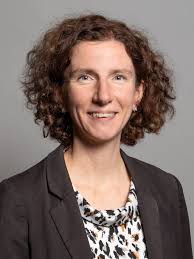
  • Anneliese Dodds – 2020 Comments on Threat to Businesses

    Anneliese Dodds – 2020 Comments on Threat to Businesses

    The comments made by Anneliese Dodds, the Shadow Chancellor of the Exchequer, on 21 December 2020.

    For businesses and workers right across the country, this winter is going from bad to worse. They are craving certainty and leadership from the Government but the Chancellor is still nowhere to be seen.

    People understand that these are extraordinary times, but the UK Government’s irresponsible choices mean we have been much harder hit, with the steepest recession of any major economy.

    It’s time for the Chancellor to front up, do the right thing and speak to the British people about the economic challenges we face and the support he is planning to offer.

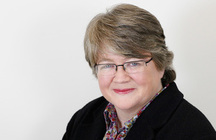
  • Therese Coffey – 2020 Comments on the Winter Grant

    Therese Coffey – 2020 Comments on the Winter Grant

    The comments made by Therese Coffey, the Secretary of State for Work and Pensions, on 18 December 2020.

    No child should have to worry about food or warmth this winter. We have worked with councils across England to ensure the £170 million Covid Winter Grant delivers well-targeted support as quickly as possible, primarily focusing on heating and eating for disadvantaged families with children.

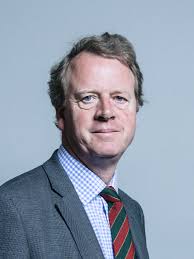
  • Alister Jack – 2020 Comments on Scottish GDP Figures

    Alister Jack – 2020 Comments on Scottish GDP Figures

    The comments made by Alister Jack, the Secretary of State for Scotland, on 18 December 2020.

    Today’s figures show again the significant challenge we face to recover from the economic shock of the covid pandemic.

    The UK Government continues to take unprecedented action to support jobs and business in Scotland. Yesterday, the Chancellor announced a further extension of furlough and business loan schemes, and we continue to support self-employed people and hardest-hit sectors with VAT cuts. The direct support is on top of £9.5 billion in additional funding from the UK Government to the Scottish Government.

    As we look ahead to the new year, we will continue investing billions in our Plan for Jobs, supporting City and Region growth deals in Scotland, and driving green recovery and jobs.

    The strength of the Union and the support offered by the UK Treasury have never been more important. Together, we will continue to get through these challenging times.

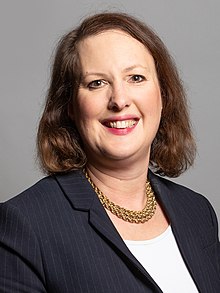
  • Victoria Prentis – 2020 Comments on English Sparkling Wines

    Victoria Prentis – 2020 Comments on English Sparkling Wines

    The comments made by Victoria Prentis, the Food Minister, on 19 December 2020.

    It’s fantastic that English sparkling wine is being increasingly recognised as the premium drink of choice to celebrate Christmas here in the UK.

    Growers and producers in England set a high bar internationally, thanks to their thirst for innovation and due to unique methods of managing their estates. It is truly inspiring to see ecologically-friendly and surprising ways to make sure the vineyards are well-maintained and that the soil is as nutrient-rich as possible.

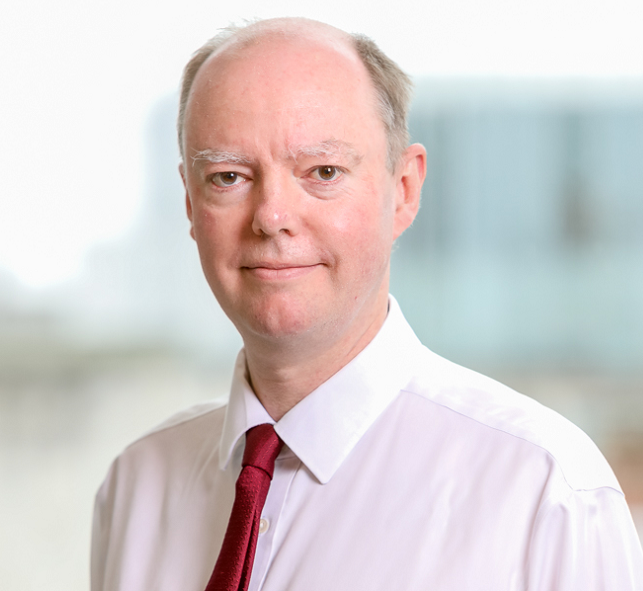
  • Chris Whitty – 2020 Statement on New Strain of Virus

    Chris Whitty – 2020 Statement on New Strain of Virus

    The statement made by Chris Whitty, the Chief Medical Officer, on 19 December 2020.

    As announced on Monday, the UK has identified a new variant of Covid-19 through Public Health England’s genomic surveillance.

    As a result of the rapid spread of the new variant, preliminary modelling data and rapidly rising incidence rates in the South East, the New and Emerging Respiratory Virus Threats Advisory Group (NERVTAG) now consider that the new strain can spread more quickly.

    We have alerted the World Health Organisation and are continuing to analyse the available data to improve our understanding.

    There is no current evidence to suggest the new strain causes a higher mortality rate or that it affects vaccines and treatments although urgent work is underway to confirm this.

    Given this latest development it is now more vital than ever that the public continue to take action in their area to reduce transmission.

  • Boris Johnson – 2020 Emergency Statement on Covid-19 and Christmas

    Boris Johnson – 2020 Emergency Statement on Covid-19 and Christmas

    The statement made by Boris Johnson, the Prime Minister, on 19 December 2020.

    Good afternoon,

    I am sorry to report that the situation has deteriorated since I last spoke to you three days ago.

    Yesterday afternoon, I was briefed on the latest data showing the virus spreading more rapidly in London, the South East and the East of England than would be expected given the tough restrictions which are already in place.

    I also received an explanation for why the virus is spreading more rapidly in these areas. It appears this spread is now being driven by the new variant of the virus, which we first learned about earlier this week.

    Our advisory group on New and Emerging Respiratory Virus Threats – NERVTAG – has spent the last few days analysing the new variant.

    There is no evidence the variant causes more severe illness or higher mortality, but it does appear to be passed on significantly more easily.

    NERVTAG’s early analysis suggests the new variant could increase R by 0.4 or greater. Although there is considerable uncertainty, it may be up to 70% more transmissible than the old variant.

    This is early data. It is subject to review. It is the best we have at the moment, and we have to act on information as we have it because this is now spreading very fast.

    The U.K. has by far the best genomic sequencing ability in the world, which means we are better able to identify new strains like this than any other country.

    The Chief Medical Officer last night submitted our findings so far to the World Health Organisation and we will continue to be totally transparent with our global partners.

    There is still much we don’t know. While we are fairly certain the variant is transmitted more quickly, there is no evidence to suggest that it is more lethal or causes more severe illness. Equally there is no evidence to suggest the vaccine will be any less effective against the new variant.

    Our experts will continue their work to improve our understanding of the variant.

    So we are learning more about this variant as we go.

    But we know enough already to be sure that we must act now.

    I met ministers on the Covid Operations Committee last night and again first thing this morning, and Cabinet met at lunchtime to agree the following actions.

    First, we will introduce new restrictions in the most affected areas – specifically those parts of London, the South East and the East of England which are currently in tier 3.

    These areas will enter a new tier 4, which will be broadly equivalent to the national restrictions which were in place in England in November.

    That means:

    Residents in those areas must stay at home, apart from limited exemptions set out in law. Non-essential retail, indoor gyms and leisure facilities, and personal care services must close. People must work from home if they can, but may travel to work if this is not possible, for example in the construction and manufacturing sectors. People should not enter or leave tier 4 areas, and tier 4 residents must not stay overnight away from home. Individuals can only meet one person from another household in an outdoor public space.

    Unlike the November national restrictions, communal worship can continue to take place in tier 4 areas.

    These measures will take effect from tomorrow morning.

    All tiers will continue to be regularly reviewed in line with the approach previously set out, with the next formal review point taking place on 30 December.

    Second, we are issuing new advice on travel.

    Although the new variant is concentrated in tier 4 areas, it is nonetheless present at lower levels around the country.

    We are asking everyone, in all tiers, to stay local.

    People should carefully consider whether they need to travel abroad and follow the rules in their tier.

    Those in tier 4 areas will not be permitted to travel abroad apart from limited exceptions, such as for work purposes.

    Third, we must, I am afraid, look again at Christmas.

    As Prime Minister, it is my duty to take the difficult decisions, to do what is right to protect the people of this country.

    Given the early evidence we have on this new variant of the virus, and the potential risk it poses, it is with a heavy heart that I must tell you we cannot continue with Christmas as planned.

    In England, those living in tier 4 areas should not mix with anyone outside their own household at Christmas, though support bubbles will remain in place for those at particular risk of loneliness or isolation.

    Across the rest of the country, the Christmas rules allowing up to three households to meet will now be limited to Christmas Day only, rather than the five days as previously set out.

    As before, there will be no relaxation on 31 December, so people must not break the rules at New Year.

    I know how much emotion people invest in this time of year, and how important it is for grandparents to see their grandchildren, and for families to be together.

    So I know how disappointing this will be, but we have said throughout this pandemic that we must and we will be guided by the science.

    When the science changes, we must change our response.

    When the virus changes its method of attack, we must change our method of defence.

    As your Prime Minister, I sincerely believe there is no alternative open to me. Without action, the evidence suggests infections would soar, hospitals would become overwhelmed and many thousands more would lose their lives.

    I want to stress we are not alone in this fight – many of our European friends and neighbours are being forced to take similar action.

    We are working closely with the devolved administrations to protect people in every part of the UK.

    Of course there is now hope – real hope – that we will soon be rid of this virus.

    That prospect is growing with every day that passes and every vaccine dose administered.

    The UK was the first country in the western world to start using a clinically approve vaccine.

    So please, if the NHS contacts you then get your vaccine – and join the 350,000 people across the UK who have already had their first dose.

    Yes, Christmas this year will be very different, but we must be realistic.

    We are sacrificing our chance to see loved ones this Christmas, so we have a better chance of protecting their lives so we can see them at future Christmases.

    As sure as night follows day, we will beat back this virus.

    We will defeat it.

    And we will reclaim our lives.

  • Liz Truss – 2020 Speech on Fairness (Before Redactions)

    Liz Truss – 2020 Speech on Fairness (Before Redactions)

    The speech made by Liz Truss, the Secretary of State for International Trade, on 17 December 2020. The Government then reissued this speech with redactions.

    No matter your skin colour, sexuality, religion or anything else, the United Kingdom is one of the best places in the world to live.

    The British story has been driven from its earliest days by the desire for liberty, agency, and fairness.

    It is the notion that in Britain you will have the opportunity to succeed at whatever you wish to do professionally, that you can be whoever you want to be. Dress however you want to dress. Love whoever you wish to love and achieve your dreams.

    But we must be honest. Our story is not yet complete. Our equality journey is not yet finished.

    For too many people, particularly in places beyond the South East, opportunity is diminished.

    For years, successive governments have either pretended that all opportunity was equal or failed to come up with proper solutions, paying lip service to a problem that has festered for decades.

    It was this government that finally tore down this social taboo when we were elected to level-up the country and toppled the Red Wall turning it Blue.

    We were elected partly on the promise of fixing the scourge of geographic inequality, and ensuring equal opportunity for all. There are still too many cases where your destination in life is decided by where you started it. So today, I am outlining a new approach to equality in this country.

    This will be founded firmly on Conservative values.

    It will be about individual dignity and humanity, not quotas and targets, or equality of outcome.

    It will reject the approach taken by the Left, captured as they are by identity politics and loud lobby groups.

    It will focus fiercely on fixing geographic inequality, addressing the real problems people face in their everyday lives using evidence and data.

    If you were born in Wolverhampton or Darlington, you have been under-served by successive governments. No more.

    Things must change and things will change.

    This new approach to equality will run through the DNA of this government.

    The moral and practical case for equality

    For me, it is a moral and practical mission.

    Just as our forebears fought for change, we must fight for change again – challenging what is unfair and unjust today.

    It is not right that having a particular surname or accent can sometimes make it harder to get a job.

    It is appalling that pregnant women suffer discrimination at work. Or that women may be encouraged to dress in a certain way to get ahead.

    Or that some employers overlook the capabilities of people with disabilities.

    It is outrageous in the 21st century that LGBT people still face harassment in public spaces.

    As well as being a moral problem, it is shameful we are squandering so much talent.

    If women opened businesses at the same rate as men – we could add £250bn to the economy.

    If people of every ethnic group were fully represented across the labour market, that would mean an extra £24 billion of income a year.

    If businesses were fully accessible for disabled consumers, they could benefit from an estimated £274 billion a year in spending power.

    We can ill afford to waste this potential as we recover from Covid and build back better.

    Equality rooted in Conservative values

    Our new approach to equality will be based on the core principles of freedom, choice, opportunity, and individual humanity and dignity.

    We will move well beyond the narrow focus of protected characteristics and deliver real change that benefits people across our United Kingdom.

    We will do this in three ways.

    First, by delivering fairness through modernisation, increased choice and openness.

    Second, by concentrating on data and research, rather than on campaigning and listening to those with the loudest voices.

    And third, by taking our biggest and broadest look yet at the challenges we face, including the all too neglected scourge of geographic inequality.

    Now is the time to root the equality debate in the real concerns people face, like affording a home, getting to work, going out safely at night, ending discrimination in our offices, factories and shop floors, and improving our schools so every child has a good chance in life.

    It is our duty to deliver, because if right-thinking people do not lead the fight for fairness, then it will be led by those whose ideas don’t work.

    The failed ideas of the Left

    The ideas that have dominated the equality debate have been long in the making.

    As a comprehensive school student in Leeds in the 1980s, I was struck by the lip service that was paid to equality by the City Council while children from disadvantaged backgrounds were let down.

    While we were taught about racism and sexism, there was too little time spent making sure everyone could read and write.

    These ideas have their roots in post-modernist philosophy – pioneered by Foucault – that put societal power structures and labels ahead of individuals and their endeavours.

    In this school of thought, there is no space for evidence, as there is no objective view – truth and morality are all relative.

    Rather than promote policies that would have been a game-changer for the disenfranchised like better education and business opportunities, there was a preference for symbolic gestures.

    Even now, authorities rush to embrace symbols – for example, Birmingham City Council naming new streets “Diversity Grove” and “Equality Road” – as if that counts as real change.

    Underlying this is the soft bigotry of low expectations, where people from certain backgrounds are not expected to reach high standards.

    This diminishes their individual humanity, dignity and agency.

    And it hasn’t delivered the progress it promised.

    In addition, this focus on groups at the expense of individuals has led to harmful unintended consequences.

    Study after study has shown that unconscious bias training does not improve equality, and in fact can backfire by reinforcing stereotypes and exacerbating biases.

    That’s why this week we announced we will no longer be using it in government or civil service.

    By contrast, the Conservative Party has elected two female leaders, and has a Cabinet with the highest ever level of ethnic minority representation.

    We have done this not by positively discriminating, but by positively empowering people who want to go into politics and opening up our Party to people of all backgrounds. Because when you choose on the basis of protected characteristics, you end up excluding other people.

    1. Fairness, not favouritism

    Fairness, not favouritism, drives our approach to equality.

    Too often, the equality debate has been dominated by a small number of unrepresentative voices, and by those who believe people are defined by their protected characteristic, and not by their individual character.

    This school of thought says that if you are not from an ‘oppressed group’ then you are not entitled to an opinion, and that this debate is not for you.

    I wholeheartedly reject this approach.

    Equality is something everybody in the United Kingdom should care about and something all of us have a stake in.

    So, I am calling time on “pink bus” feminism, where women are left to fix sexism and campaign for childcare.

    Rather than virtue signalling, or campaigning, this government is focused on delivering a fairer and more transparent society that works for all and that delivers genuine equality of opportunity.

    The work of American academic Iris Bohnet shows that modernising and making organisations more transparent is the best way to tackle inequality.

    When things are opaque, it benefits those who know how to game the system.

    We know that when companies publish their wage ranges, it leads to more equal starting points for men and women.

    We know that automatic promotions based on performance help level up opportunities for women in the workplace, overcoming the barriers that make women less likely to put themselves forward for promotion.

    And we know that evidence-driven recruitment in a clear and open structure is more effective than using informal and ad hoc networks.

    On the other hand, techniques like unconscious bias training, quotas and diversity statements do nothing to make the workplace fundamentally fairer.

    By driving reforms that increase competition, boost transparency and improve choice, we can open up opportunities.

    This is the approach we will be taking across government.

    It is fundamentally important that the role of equality minister is held by someone who also has another cabinet job, as I do with trade.

    This ensures equality is not siloed, but is instead the responsibility of the whole government and all our elected representatives.

    For example, the Academies Act 2010 meant good free schools were established across England and more children had the opportunity of a great education. The 1980 Housing Act empowered over two million people to get on the housing ladder, and the independent taxation of women in 1988 gave wives control of their own money.

    All of these reforms promoted equality by giving people greater agency over their own lives and making systems more transparent.

    For example, we know that students from poorer backgrounds are more likely to achieve better grades than they were predicted, and they lose out in the current university admissions system which is based on predicted grades.

    That is why Gavin Williamson is right to base the university admissions system on the actual grades students achieve, making sure that students from lower income backgrounds have a fairer shot at university.

    In the workplace, we know that flexible working improves productivity and helps people to combine work with other responsibilities.

    That is why I will be working with Alok Sharma, the Business Secretary, to enable more flexible working – not just as a necessity amid the Covid crisis but to empower employees.

    The best way to reduce unfairness in our society is through opening up opportunities for all.

    This is the level playing field we should be talking about.

    And we are going to make sure that this level playing field is properly enforced.

    That is why I am appointing a new chair and a wide variety of commissioners to the Equality and Human Rights Commission to drive this agenda forward.

    I am proud we have Baroness Kishwer Falkner, David Goodhart, Jessica Butcher, Su-Mei Thompson and Lord Ribeiro, all of whom are committed to equality and ready to challenge dangerous groupthink.

    Under this new leadership, the EHRC will focus on enforcing fair treatment for all, rather than freelance campaigning.

    2. Facts, not fiction

    To make our society more equal, we need the equality debate to be led by facts not by fashion.

    Time and time again, we see politicians making their own evidence-free judgements.

    My superb colleague Kemi Badenoch is leading work on the Commission on Race and Ethnic Disparities, established by the Prime Minister.

    We should heed the warning from its chair, Dr Tony Sewell, who wrote last month that they have uncovered “a perception of racism that is often not supported by evidence” and that “wrong perceptions sow mistrust”.

    This does not mean we don’t recognise people’s stories about their individual lives or believe that their experiences of discrimination are not real. It means that we can and must have an equality agenda that is driven by evidence.

    Today I am announcing that the Equality Hub will embark on the Government’s biggest, broadest and most comprehensive equality data project yet, and it will closely coordinate with the work of CRED (Commission on Race and Ethnic Disparities).

    Over the coming months, we will look across the UK to identify where people are held back and what the biggest barriers are.

    We will not limit our fight for fairness to the nine protected characteristics laid out in the 2010 Equality Act, which include sex, race and gender reassignment.

    While it is true people in these groups suffer discrimination, the focus on protected characteristics has led to a narrowing of the equality debate that overlooks socio-economic status and geographic inequality.

    This means some issues – particularly those facing white working-class children – are neglected.

    This project will broaden the drive for equality and get to the heart of the barriers people face. It will report its initial findings in the Summer.

    In addition to race, sex, disability and religion, it will also look at issues around geography, community and socio-economic background.

    It will deliver a new life-path analysis of equality from the perspective of the individual, not groups. Using longitudinal data sets will help us understand where the real problems lie.

    3. Geographic Inequality

    There is a deeper wage gap between London and the regions than between men and women, with an average full-time salary a third higher in the capital than the North East of England.

    There are lower employment rates, pay packets and life expectancy across the North than the South. At the same time, average median hourly earnings in the South West are only just over two thirds of those in London.

    That is why the equality agenda must be prosecuted with fierce determination and clarity of purpose up and down the country, not just in London boardrooms and Whitehall offices.

    Whether that is making the case for free schools in deprived areas or using data to help regional businesses attract investment.

    We will use the power of evidence to drive reform and give people access to the facts so they can push for change.

    We will drive this action from the North of England, where we will be moving the Equality Hub.

    And I am delighted to announce that we are also taking on sponsorship of the Social Mobility Commission, to give this agenda real teeth and coherence.

    The whole of government will be – and is – totally committed to this agenda. The Treasury is revising its Green Book so that it judges infrastructure investment fairly across the UK, no longer seeing – for example – faster broadband as a better investment in Surrey than South Lanarkshire.

    The Department for Education is going to extra lengths to create academies and free schools outside London. And in housing, we are working to increase opportunities for home ownership across the country.

    This is just the start. There is much more we will be doing to make our country fairer and give people agency over their own lives.

    This is not limited to the UK

    This fight for fairness goes beyond our shores.

    Next year, the United Kingdom will use its presidency of the G7 to ramp up its work worldwide with like-minded allies to champion freedom, human rights and the equality of opportunity.

    The UK is co-leading the new global Generation Equality Action Coalition on Gender Based Violence, and co-chairing the Equal Rights Coalition.

    In that role, we will be holding our International LGBT conference, on the theme of Safe to Be Me.

    We are working internationally to bring an end to child marriage and are supporting international programmes to end the abhorrent practice of Female Genital Mutilation.

    We need to make progress across the world and at home as a fairer world and a fairer Britain go hand in hand.

    Taking the right approach to deliver real change

    At this vital time in our country’s history, we must make sure everyone has a chance to succeed in modern Britain.

    That is why we cannot waste time on misguided, wrong-headed and ultimately destructive ideas that take agency away from people.

    Instead, we will drive an agenda that empowers people and actively challenges discrimination.

    We will use evidence to inform policy and drive change.

    And we will focus on increasing openness and transparency, fixing the system rather than the results.

    Together, we will build back a better society and lead the new fight for fairness.

  • Gavin Williamson – 2020 Comments on Provision of Laptops and Tablets to Students

    Gavin Williamson – 2020 Comments on Provision of Laptops and Tablets to Students

    The comments made by Gavin Williamson, the Secretary of State for Education, on 20 December 2020.

    We know how important it is for children to be in school, but it’s also vital that where public health advice means they can’t be, we have all-encompassing measures in place to prevent them falling behind.

    That’s why scaling up our devices scheme, alongside our tutoring offer to reach as many children and young people as possible, is so important.

    Providing one million devices is a hugely significant achievement, not only in the context of supporting children through the pandemic, but an investment in tech for our schools, colleges and children for years to come.