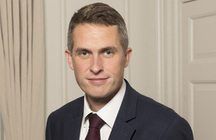
The statement made by Gavin Williamson, the Secretary of State for Education, in the House of Commons on 13 May 2021.
This country has faced unprecedented challenges over the past year as we have tackled the global coronavirus pandemic. The impact on education has been considerable. I would like once more to put on record the enormous debt of gratitude the country owes to everyone who has played their part in keeping our children safe and learning, and to the young people themselves, for their resilience at this incredibly difficult time.
We are beginning our national recovery, and as part of that we aim to, and we will, build back better. As Her Majesty the Queen set out in her Gracious Speech on Tuesday, this means a full and far-reaching legislative agenda. Our programme of ambitious reforms to level up this country will continue apace, alongside an overarching mission to make sure the country’s recovery has a solid and sure foundation. We are committed to making sure that everyone in the country has the education and training that is right for them, as well as to lifelong upskilling, so that better-paid jobs are within local reach and not down to a postcode lottery.
Peter Kyle (Hove) (Lab)
Does the Secretary of State agree with Dame Louise Casey, who said today that we cannot be a levelled-up country if we have got food banks?
Gavin Williamson
This party is committed to delivering right across the country. This party is committed to making sure that we make a real difference to every child’s life by raising standards in education and making sure that all the way through their lives, people have the opportunity to train and better themselves in order to succeed and deliver for their communities and families. Of course we will always take action to support families. That is why we increased universal credit; that is why we have taken the action we have all the way through this pandemic; and that is why we have invested billions of pounds in the furlough scheme, to make sure that in these difficult and challenging times, people can provide for their family.
One of our main priorities is to make sure that children whose education has been held back during the pandemic are given the means to catch up and that their long-term prospects do not suffer. We have put a package of measures in place to make sure that children who are behind get extra support. We are working with the Education Recovery Commissioner, Sir Kevan Collins, to develop an ambitious long-term plan for recovery and have already provided more than £2 billion to enable schools, colleges and early years settings to support pupils’ academic and wider progress. We know that disadvantaged children and young people have been affected more than others, and we will target support for these pupils.
I have said that we have a packed legislative agenda, and this is an historic moment for radical reform in post-16 education—radical reform that has been too long needed. This is the most significant reform we have seen in this country not just for the past 10 years, but for two generations.
Jo Gideon (Stoke-on-Trent Central) (Con)
In our mission to upskill, re-skill and retrain people as we work towards a better Britain—building back better—will my right hon. Friend reassure me that the measures announced in Her Majesty’s Gracious Speech will ensure that people, particularly those from left-behind communities such as Stoke-on-Trent and left-behind regions, get the skills and training they need to get well-paid, good-quality jobs?
Gavin Williamson
My hon. Friend has championed this issue in Stoke-on-Trent Central ever since she got elected, recognising the importance of delivering for Stoke-on-Trent. Far too often, the Labour party did not deliver at all for Stoke-on-Trent, but we are seeing things change. It is not just about skills, but about driving up education standards right across the city, and that is what my hon. Friend and her colleagues who represent Stoke-on-Trent are doing, along with Councillor Abi Brown, who leads the city council. I look forward to working with my hon. Friend and other colleagues to deliver on this issue.
Steve Double (St Austell and Newquay) (Con)
I thank the Secretary of State for his commitment to invest in further education in my constituency. Does he agree that, as we emerge from the pandemic, it has never been more important to invest in further education, particularly in some of the most disadvantaged communities across our country?
Gavin Williamson
My hon. Friend has been an enormous champion of further education in his constituency, and he has done a fair bit of lobbying—in a very proper manner, it should be added—on behalf of Cornwall College. It is good to see that there will be investment in his constituency to deliver better prospects not just for his constituents, but for constituents right across Cornwall, making a true difference.
Alan Brown (Kilmarnock and Loudoun) (SNP)
Will the right hon. Gentleman give way?
Gavin Williamson
I will always give way to the hon. Gentleman.
Alan Brown
I will hold the Secretary of State to that.
When it comes to reshaping education, climate change should be an important part of the curriculum. At the Business, Energy and Industrial Strategy Committee, we heard from young activists from Teach the Future, who said that the Scottish Government have been willing to engage with them about the merits of including climate change in education. The Secretary of State has refused 18 requests to meet the organisation. Why is he so arrogant and out of touch that he will not even engage with the young?
Gavin Williamson
I perhaps exaggerated my enthusiasm to give way to the hon. Gentleman. We recognise how important it is that young people have a good understanding of climate change. That is why we are looking at bringing forward a natural history GCSE, which will be very important in both learning the subject and teaching it. The Government lead the world in this area: we are hosting COP26 in the amazing city of Glasgow, the Prime Minister is leading on this agenda at the G7 in Cornwall and we are setting the pace. We do not just talk about it, as the SNP does; we deliver on it.
The Prime Minister set out his vision for a skilled and resilient workforce when he announced the lifelong loan entitlement as part of the lifetime skills guarantee. That will transform opportunities for everyone, at any stage in their life, by providing people with a loan entitlement for the equivalent of four years of post-18 education to use over their lifetime.
Christian Wakeford (Bury South) (Con)
To talk about levelling up is truly to talk about education. I thank the Secretary of State for the investment in secondary education that he has made in my constituency with the Radcliffe high school. When it comes to further education and the skills agenda that he has mentioned, the institutes of technology are a fine example of how we can achieve in that area. Will he meet me again to discuss the University of Salford?
Gavin Williamson
It is fair to say that despite the fact that my hon. Friend’s constituency was represented for many years by a Labour Member of Parliament, the free school in Radcliffe that was wanted so much was never delivered. My hon. Friend gets elected, however, and what does he do? He delivers for his constituents with a much-needed new secondary school. Of course, we all know how important institutes of technology are for driving the revolution in skills that we need to be able to meet the demands of the economy. I will be more than delighted to meet him to discuss the institutes of technology and how we roll them out across the country.
Our agenda will mean more choice and better prospects for all. This is levelling up in action, and it will turbocharge our economy by getting people back into jobs and getting Britain working again. It is a truly transformational investment in local communities, not an exit route out of those communities.
Our White Paper on skills for jobs sets out a blueprint for providing our young people with better choices within our further education system. New legislation will put employers at the heart of our skills reforms. They will join forces with further education colleges to deliver a skills accelerator programme. We are going to make sure that there is a better balance between the skills that local employers want from their workforce and those being taught by colleges and other providers, so that young people have a valuable and top-quality alternative to university.
Steven Bonnar (Coatbridge, Chryston and Bellshill) (SNP)
If the Secretary of State wants to speak about opportunities for young people, why will this Government not give the young people of these four nations the opportunity to have their say in the democracy that we are all taking part in? Also, this Government have slammed the door closed on the opportunities for our young people to work and thrive in 27 nations. There is no opportunity coming from the Tory Government, which is why the young people of these nations reject Tory policies.
Gavin Williamson
I think the hon. Gentleman is warming up for what will no doubt be a long speech later in the day. He obviously needs to come and see the brilliant progress that we are making in maths in England, unlike the sad reversals that we have seen in Scotland, with the failed education system that the SNP has presided over and the damage it has done to the education system in Scotland. If he had the benefit of sitting in some of the schools that are delivering such brilliant maths education right across England, he would understand that the Turing scheme opens up opportunities in many more countries than just 27. In fact, it will be a global scheme that looks beyond the European Union, to countries right across the world, making sure that young people have more and greater opportunities, not less. His horizons might reach only as far as the European Union, but we recognise that young people want opportunities on a global scale, in the United States, Canada, Australia, New Zealand, India, China—emerging great economies as well as old friends and allies.
Mrs Maria Miller (Basingstoke) (Con)
My right hon. Friend is making an important point about the opportunities that we give young people. Will he join me in welcoming the opening of a new special school in Basingstoke under the Government’s academy programme, the Austen Academy, to ensure that children with special needs get the sorts of opportunities that he is talking about?
Gavin Williamson
I know that my right hon. Friend has been a real champion of the Austen Academy, recognising the important role that academies can play in delivering not just mainstream education but more specialist support for some pupils. It is an important step forward, ensuring that we get high-quality education across all our schools. We have seen some amazing work being done in our special schools, and I look forward to seeing that school grow and prosper into the future.
We want to encourage people to stay part of their community. Rather than encouraging them to leave home to find a rewarding career, we intend to empower them to find fulfilling and rewarding work wherever they live, invigorating communities and driving economic growth up and down the country. They do not need to leave their home towns in order to succeed.
Robbie Moore (Keighley) (Con)
My right hon. Friend will be well aware that in Keighley we are progressing nicely with our towns fund application. One of the projects that we are hoping to deliver is a skills hub, bringing together businesses and education providers, such as Keighley College, to deliver the skills we need for manufacturing, engineering and tech. Does he agree that a skills hub in Keighley is exactly what we need for levelling up?
Gavin Williamson
I absolutely agree with my hon. Friend—that is vital for the reinvigoration and regeneration of Keighley, and driving it forward. We know that Keighley has a great and proud tradition of manufacturing, leading the world in the engineering and the work that is done there, but that has to be supported, and it can only be sustained with the right skills in that community, supporting those businesses to be able to grow and prosper into the future.
All that we are doing is a natural progression of the groundbreaking reforms we have already been rolling out, such as our T-level and apprenticeship programmes, which will deliver the skilled individuals to boost the post-pandemic economy and bring down unemployment. Starting this year, the Government are investing £3 billion in the national skills fund. That is a significant investment and has the potential to deliver new opportunities to generations of adults who may have been previously left behind. Any adult who does not have an A-level or equivalent will be able to access around 400 fully funded courses as part of the lifetime skills guarantee. That offer is a long-term commitment, backed by £95 million of funding from the national skills fund in its first year. We have temporarily extended the time for universal credit claimants to undertake training to develop work-related skills and qualifications, and we will review this in six months.
There is a golden thread running through all our reforms: everyone should have access to the same enriching opportunities to broaden their horizons and make the most of their potential wherever they live, whether it is London, Leeds, Leigh or Loftus. I am proud to have announced the Turing scheme, which will enable students to study and do work placements overseas. It will start in September and will focus on students from disadvantaged backgrounds. It is backed by significant investment of £110 million and will provide funding for around 35,000 students to go abroad.
Peter Kyle
Will the Secretary of State give way?
Gavin Williamson
The hon. Gentleman has had an opportunity to speak; I am sure he will contribute later on.
The Turing scheme is genuinely global in reach and will connect our young people with a whole world, rich and varied in its cultural experiences, giving them the opportunity to learn from the very best institutions on a global scale.
This is a Government who deliver on their promises. We are fulfilling our manifesto commitment by introducing a Bill to protect freedom of speech and academic freedom in universities. Free speech is the lifeblood of democracy. Our world-class universities have a long and proud history of being spaces in which differing views or beliefs can be expressed without fear or censure. However, there have been increasing concerns about a chilling effect on campus and that not all students and staff feel able to share their views. That is why we will strengthen existing duties on universities, extending those duties to students’ unions and establishing a director in the Office for Students to protect and promote these rights.
We have always been determined that every child, regardless of background, should have access to high-quality education, and that is just as true for our youngest children as it is for those who are on the cusp of adulthood. The early years are a crucial time in a child’s development, and we know that the pandemic has had a significant impact on many young children. Earlier this year, we announced £18 million to support language development, which includes £10 million for an early language programme to help nursery children who have been affected by the pandemic. We are introducing the early years foundation stage reforms, which will be statutory for all early years providers from September this year.
When it comes to the most vulnerable children, there is no such thing as being too bold. We have launched our children’s social care review of systems and services, so that vulnerable youngsters can experience the benefits of a stable and loving home, many of them for the first time. The review will take place alongside ongoing reforms to raise standards in local authorities, boost adoption, improve support for care leavers and improve quality and placement practice in unregulated accommodation, including banning the placement of under-16s in unregulated homes and introducing national standards for provision.
Kate Green (Stretford and Urmston) (Lab)
Will the Secretary of State look again at placing a ceiling of the age of 16 on the requirement not to place young people in unregulated accommodation? I am sure he will agree that there are very many vulnerable 17, 18 and 19-year-olds for whom that would also be an important measure.
Gavin Williamson
The hon. Lady will know about my commitment and passion in this area and how important it is to look at how we can improve things for these children. Certainly, as part of looking at how we continuously improve, we will make sure that we get these regulations in place initially, but we will then be looking at how we can continue to improve on that work.
Our country, like many others, faces a number of social and economic challenges as we recover from the pandemic. I am confident that, thanks to this ambitious legislative programme and our unwavering mission to level up every inch of our country, we will all have a chance to play our part in that recovery. In Her Majesty’s Gracious Speech, a fairer, better Britain is emerging, and future generations, as well as this one, will feel the benefit.