Blog

  • Boris Johnson – 2021 Article on Science

    Boris Johnson – 2021 Article on Science

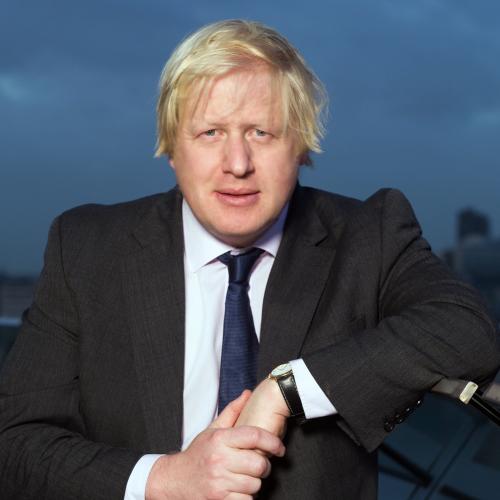
    The article written by Boris Johnson, the Prime Minister, on 21 June 2021. The article was published in the Daily Telegraph and republished by the Cabinet Office.

    I cannot think of a time in the last 100 years when the entire population of this country has been so deeply and so obviously indebted to science – and to scientists.

    Had it not been for our scientists, we would not now be able to enjoy the most basic human freedoms: hugging relatives, meeting friends, playing football, going to the pub; or at least not without the risk of spreading a lethal disease.

    It is thanks to the vaccine roll-out that literally every person and every family in this country has an immediate future that is happier, more prosperous, more full of hope and opportunity, and if you think I am belabouring this point, it is because it needs belabouring.

    We have spent too long in a state of semi-detachment from science, as though it was something intimidating and remote from our lives. Too many people in our country lack training in science and technology, too many children think STEM subjects are not for them.

    Most glaringly of all, this country has failed for decades to invest enough in scientific research, and that strategic error has been compounded by the decisions of the UK private sector.

    It is a wretched fact that British firms are currently investing a fraction of the OECD average on research; and though the speed of the discovery of Oxford AstraZeneca was little short of miraculous, it was also something of a miracle that it took place here at all. Before Covid, the UK domestic vaccine industry had almost perished out of benign neglect.

    Had a couple of investment decisions gone the other way, this country might not have possessed the skills or practical capability to make vast batches of the vaccine that has been so indispensable to our success.

    So this is the moment to learn this stark lesson of the pandemic – our daily dependence on high-quality scientific research. It is also the moment to abandon any notion that government can be strategically indifferent, or treat research as a matter of abstract academic speculation.

    I am not suggesting that government should try to exercise scientific judgment, or impose some dogma on the scientific world – like the deranged genetic theories of Stalinist Russia.

    On the contrary, it is because we want to support high science, and to foster research that may or may not lead nowhere, that we are setting up the high-risk high reward ARIA agency, on the lines of DARPA in the US. We need to intensify the search for the unknown unknowns.

    And then there are the known unknowns, the nuts we know we need to crack, for the sake of our health and happiness. If the covid experience has taught us anything, it is that government does have a role in making demands, in explicitly framing the challenges we hope that science can meet.

    If we don’t, there are others who will. We made no particular effort to develop 5G, for instance, and we have paid a price. For the first time since the second world war, the largest western democracies were left behind in the race for a major new communications technology. It is a mistake that has proved expensive to rectify, and we don’t want to make another one like it.

    So we are investing unprecedented sums, increasing government spending to £22 billion for scientific research of all kinds; and we need to use those billions of state spending to leverage in the many more billions of the markets.

    One way to encourage those private sector investments is to give the market players the confidence that they are backing national priorities – so that public and private sector come together to deliver the breakthroughs, like the covid vaccine, that can transform our lives and economic prospects.

    To shape those priorities I will be chairing a new National Science and Technology Council, with Sir Patrick Vallance as my National Technology Adviser, so that together we can give the scientific world – in academia and across commercial laboratories – a sense of where we think we need to go.

    Some imperatives are already obvious. We need science urgently to accelerate the solutions that will help us to tackle climate change. We need progress on efficient power storage, hydrogen manufacture, net zero aviation, and other knotty problems raised in our ten point plan. We have a huge challenge to meet net zero by 2050, and not much time. But the vaccine programme has shown that when the pressure is on, humanity can produce feats of Manhattan Project-like speed, as the research of decades is compressed into months. It will be the job of the new National Science and Technology Council to signal the challenges – perhaps even to specify the breakthroughs required – and we hope that science, both public and commercial, will respond.

    We will be thinking about medical imperatives, such as tackling dementia or using new gene therapies to cure the hitherto incurable.

    We will be thinking about the new threats and opportunities in cyber, in space, and in the field of AI. We will of course be hoping that British science will play a leading role in fixing the problems of the world, providing everything from cheaper pharmaceuticals to drought-resistant crops.

    We will pursue these missions not just because each breakthrough could be a boon for humanity, but also because we want to see the expansion of scientifically-led start-ups and scale-ups, and a growth that goes beyond the golden triangle of Oxford-London-Cambridge and across the whole country.

    We want the UK to regain its status as a science superpower, and in so doing to level up. The UK has so many of the necessary ingredients: the academic base (four of the world’s top ten universities), a culture of innovation, the amazing data resource of the NHS, the capital markets.

    What we are offering now is record funding combined with the strongest possible political support and backing for science and a clear indication of where government sees greatest need.

    Of course we must generously fund pure science. We must allow for serendipity. You cannot plot or plan every breakthrough. But you can certainly set out to restore Britain’s place as a scientific superpower – while simultaneously driving economic prosperity and addressing the great challenges we face – and that is the plan of the government.
  • Dominic Raab – 2021 Statement on the UN’s Durban Conference

    Dominic Raab – 2021 Statement on the UN’s Durban Conference

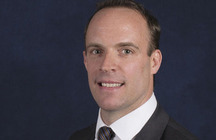
    The statement made by Dominic Raab, the Foreign Secretary, on 21 June 2021.

    Following historic concerns regarding antisemitism, the UK has decided not to attend the UN’s Durban Conference anniversary event, later this year.

  • Angela Rayner – 2021 Comments on “Snobbery” in Government Appointments

    Angela Rayner – 2021 Comments on “Snobbery” in Government Appointments

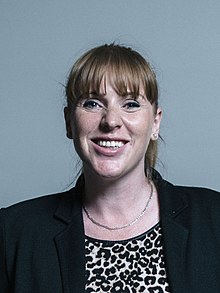
    The comments made by Angela Rayner, the Deputy Leader of the Labour Party, on 20 June 2021.

    If Michael Gove really wants to attract the most talented people to work in our civil service, then he should end the ingrained snobbery that underpins attitudes towards different types of qualifications and the outdated assumption that academic qualifications should be a basic entry requirement for government jobs.

    Academic qualifications like degrees or A-Levels should only be a requirement when they are actually necessary to do the job. This will ensure that the government is more representative of the country it serves and that a greater range of talented candidates are not put off by snobbish and patronising attitudes about qualifications.

    This government has long talked a good game on parity of esteem but that rhetoric has not been matched by action. The Tories have cut billions from further education and while achieving this parity of esteem will need more resources, it will also need deep-seated culture change too. That culture change requires leadership from government, setting an example to other employers and showing that it is skills, experience and hard work that matter, not a particular type of education or where somebody went to school or university.

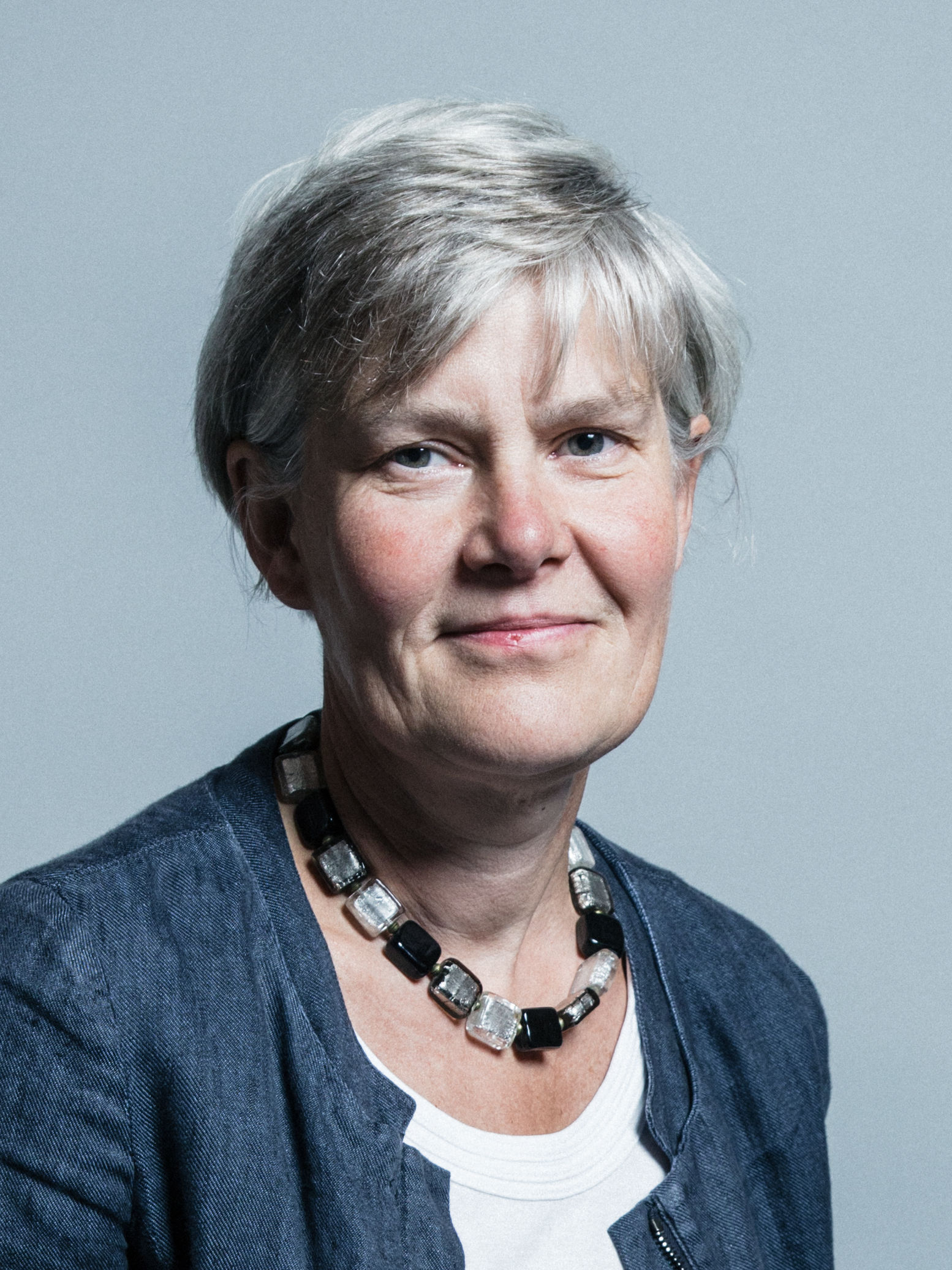
  • Kate Green – 2021 Comments on Education Recovery Plan

    Kate Green – 2021 Comments on Education Recovery Plan

    The comments made by Kate Green, the Shadow Secretary of State for Education, on 21 June 2021.

    We have seen failure, upon failure from this Conservative Government which has treated children as an afterthought and is now failing to invest in their futures.

    Not only is there nothing in their proposals to support children’s wellbeing or social development but the academic element is woefully insufficient, failing to live-up to the promised tutoring revolution.

    Labour has listened to parents, teachers and children and set out a recovery plan that is ambitious for children futures, with tutoring for all who need it alongside investment in activities and clubs creating new opportunities for every child.

  • Emily Thornberry – 2021 Comments on the UK Steel Industry

    Emily Thornberry – 2021 Comments on the UK Steel Industry

    The comments made by Emily Thornberry, the Shadow Secretary of State for International Trade, on 21 June 2021.

    This Government is on the verge of selling out Britain’s steel industry. Slashing safeguards and opening the floodgates to cheap steel imports would be devastating for steel plants across our country and damaging for our wider economy.

    Any MP who represents a steel community should vote for this motion. Any MP who cares about the UK’s economy, our industries, our critical infrastructure, our national security, and protecting the tens of thousands of jobs that depend on steel should vote for this motion.

    The Tories have already betrayed British farmers this month and now they are preparing to do the same to British steelworkers. We cannot let that happen.

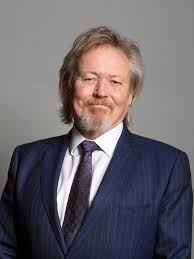
  • Giles Watling – 2021 Speech on Anti-Loitering Devices

    Giles Watling – 2021 Speech on Anti-Loitering Devices

    The speech made by Giles Watling, the Conservative MP for Clacton, on 16 June 2021.

    It is a great pleasure to speak on this important issue once again. Colleagues may remember that I introduced a private Member’s Bill to regulate the use of sonic anti-loitering devices in 2018. In my view, unregulated, these things can be a menace. They are discriminatory, painful to some, and can cause suffering to children, babies and animals. I find it amazing that some in civilised Britain even consider them to be a useful adjunct to policing—that is the stuff of totalitarian regimes. We police by consent, not by fear and pain.

    I will not simply regurgitate my earlier speech now, but I would like to remind the House of some key points. Sonic anti-loitering devices, also known as mosquitos or teenager repellents, target young people with a pulsing sound. My daughters tell me it is like a prolonged beep, akin to tinnitus. Some devices emit ultrasound specifically to achieve that effect. There are no firm figures for how many of these devices there are nationally, although the manufacturers claim to have sold thousands. In 2010, the Council of Europe found that this device was “degrading and discriminatory” to youngsters and should be banned because it “violates legislation prohibiting torture.” Academics also contest that these devices contravene several pieces of UK legislation regarding antisocial behaviour and discrimination. Despite the assertion of manufacturers, there are reports that people as old as 40 can hear these devices, and those who use them neglect their impact on very young children, babies, and animals, all of whom will struggle to communicate any distress caused. Likewise, they ignore the impact on those with pre-existing conditions that make them especially sensitive, such as autism. Many children with these conditions cannot avoid long-term exposure, because they might live next door to somebody who has one of these devices, or their school might be close to one. They could equally struggle to communicate any distress.

    There is a lack of research on the harm caused by these devices, especially the effects of ultrasound and the impact on those who cannot even hear them. Some 40% of young people regularly come across these devices, but 75% of young people said that they would just put up with the irritating noise and go where they want, when they want and do what they want anyway. These devices will not necessarily stop those who want to commit antisocial behaviour, but they will harm innocent young people in public spaces.

    Finally, these devices have been banned on all council buildings in Sheffield, Kent, Edinburgh and Dublin on safety grounds, so as it stands I still believe that we do not know enough about them to be confident that they are indeed safe, and therefore we must control their use. Moreover, these potentially dangerous devices are not wholly successful in preventing antisocial behaviour, as they do not stop those intending to do harm from entering a certain public space if they are so minded. Even if these devices were effective against ASB in a certain location, we would just be moving criminals and their urge to cause damage somewhere else.

    Consequently, I believe that these devices are not a solution for antisocial behaviour. They succeed only in causing distress to young people who cannot avoid them, but who have a right to use the public spaces where they are often located. There are plenty of examples of innocent young people feeling unable to use railway and bus stations, shops, schools, and spaces in their own town centres—all places where these devices have been installed, and all places that young people are entitled to visit safely.

    Indeed, there are reports from a Scottish survey that 41% of young respondents experienced health effects or discomfort after encountering a device, and I highly doubt whether any of them were engaged in any sort of antisocial behaviour at the time. According to those respondents, discomfort included headaches, migraines, ear problems, tinnitus, dizziness, nausea, anxiety and/or panic. We have not even touched on the potential effect on wildlife and animal habitats, both of which can be equally affected.

    However, despite my clear opposition to these devices, I am not seeking an outright ban, as I understand that there are circumstances where they could legitimately be used, such as warehouses, business premises, railway lines, industrial estates and electricity pylons—places where nobody should be in the first place. Also, there is a strong case for using them to deter animals around food stores and such. If the owners of such locations wish to use these devices, they should be able to do so, but they must be used responsibly, with proper oversight. That is why, in my private Member’s Bill, I argued that the use of these devices should be regulated, with a necessary licence obtained by the local authority before use.

    In short, I do not argue that these devices should be better regulated just because they are ineffective; their use should be better regulated because they are also discriminatory and potentially hazardous to health, with a particularly acute impact on the most vulnerable. Moreover, I do not believe that it is fair for members of the public of any age to be exposed to these devices without adequate control. There are too many stories of families suffering because these devices have been installed nearby, and they have no effective power of redress under current legislation.

    After bringing forward this proposal, I was grateful to the then Minister for Small Business, Consumers and Corporate Responsibility, my hon. Friend the Member for Rochester and Strood (Kelly Tolhurst), for engaging with me on the issue. In her letter she sent to me on 21 April 2019, she set out how she had asked officials in the Office for Product Safety and Standards to consider the evidence against these devices. I was disappointed by its conclusion that they do not present a safety risk, and I maintain that that position is based on insufficient evidence. We just do not know enough about these devices to know either way, because the research just is not there. The only safe approach is to be cautious.

    Following a further letter to the same Minister arguing that point, she set out the following in her subsequent reply of 8 June 2019. First, in response to my suggestion that such devices infringe on the rights of young people, mirroring an argument put forward by Northumbria University, she asked the Ministry of Justice to reply, as that falls under its remit. Regrettably, with everything that we now know took place in late 2019, I quite understandably did not receive a reply from Justice at that time. I would be grateful if the current Minister would follow up with his colleagues at that Department on that point.

    Secondly, I asked the then Minister for further research to be undertaken by the OPSS into these devices. Unfortunately, at the time the office had set out its priorities for research going into early 2020, so of course my request was not approved. I believe that needs to change. We must improve our understanding of such devices, especially when it comes to the effect of ultrasound. Worryingly, as the former Minister said in her first response to me, there is some evidence that ultrasound can cause potential health issues. Although there is insufficient evidence that those potential health risks constitute safety risks, that does not mean that they are not present.

    Currently, our knowledge of ultrasound is limited and flawed. We simply do not fully understand its effects and cannot draw any definitive conclusions about its use. As Professor Timothy Leighton set out in September 2019 work on ultrasound,

    “whilst there is over fifty years of anecdotal reports of the adverse effects of ultrasound on humans (supplemented by limited laboratory testing), the state of knowledge is insufficient to meet regulatory needs.”

    He concludes that

    “the priority must be on ensuring that these devices are safe for any humans they may expose. It is not possible to do this with the current data on the adverse effects on humans”.

    We simply do not understand ultrasound enough to use it legitimately to support any policy positions, but we are doing just that by allowing the liberal use of devices that emit ultrasound, including anti-loitering sonic devices. We are dealing with a potential harm here, and we must increase our knowledge of these devices and their impacts. We owe that to those who have already been affected inadvertently by these devices, and until we do so we must be cautious and properly oversee the use of them.

    We cannot continue to treat this as a case of safe until proven otherwise. Instead, I believe it must be a case of potential harm, used with caution and in controlled conditions. I understand from previous correspondence that

    “if further data or research emerges about the safety impact of such devices, then the OPSS will review their assessment.”

    I argue that such further research has emerged, some of which I have mentioned, and we need the OPSS to commission further work to increase our understanding of the long-term impact of ultrasound and the impact of exposure to such devices. I hope that the current Minister will consider taking that work forward. I would welcome a meeting with him, perhaps with a representative of the OPSS, to discuss that further. I also ask him to follow up with the Ministry of Justice on the point about children’s rights that I mentioned earlier. I will write to him to set out those requests further, but for now I thank him for listening, and will welcome any comments on these devices that he may have to share with us.

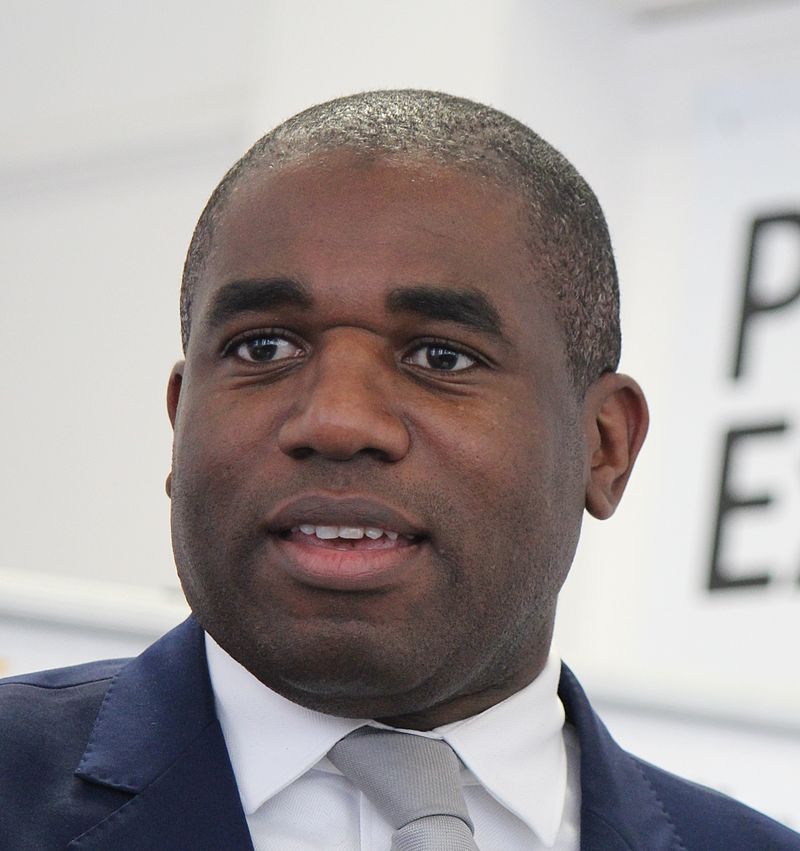
  • David Lammy – 2021 Comments on Government’s Rape Review

    David Lammy – 2021 Comments on Government’s Rape Review

    The comments made by David Lammy, the Shadow Justice Secretary, on 20 June 2021.

    After a decade of Conservative incompetence and cuts has led to record-low conviction and prosecution rates for rape, the last thing victims need from the Justice Secretary is a U-turn.

    The Conservatives must urgently clarify whether or not they intend to stick to the target of increasing the number of rapists who are charged and end up in court.

  • Delyth Jewell – 2021 Comments on Climate Anxiety

    Delyth Jewell – 2021 Comments on Climate Anxiety

    The comments made by Delyth Jewell, the Plaid Cymru Spokesperson on Climate Change, on 9 June 2021.

    I’m eager in my new role to help to reframe the way we talk about climate change with children and young people, to focus more on the agency we have, the actions we can take to make a difference, not just about catastrophes that can’t be overcome.

    Climate anxiety is real, and scary, and can hit us all; so many of us will have had an overwhelming realisation that something truly awful is happening to our planet, and it can make us all feel powerless, like there’s nothing we can do.

    We can’t allow this narrative to continue, not least because our very hope of tackling the climate emergency rests on our not allowing it to overwhelm us.

    We need to get better at talking about climate change in a way that also gives us agency. The way we frame the conversation about human impact on our planet needs to show us tangible ways of reversing that impact, especially when talking to children and young people. Less ‘countdown to the end of the world’, more counting all the ways we can make a positive change.

    The media narrative has a role in this, but so does government messaging. There’s a huge role for the curriculum in Wales in this – guidance and support should be given to all teachers in how to address climate anxiety, and to make sure we can all give our children a sense that change is possible. That every action we take now can help to turn things around.

  • John Bercow – 2021 Comments on Joining the Labour Party

    John Bercow – 2021 Comments on Joining the Labour Party

    The comments made by John Bercow, the former Speaker of the House of Commons, on 20 June 2021.

    I am motivated by support for equality, social justice and internationalism. That is the Labour brand. The conclusion I have reached is that this government needs to be replaced. The reality is that the Labour party is the only vehicle that can achieve that objective. There is no other credible option.

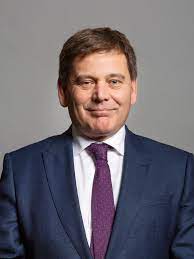
  • Andrew Bridgen – 2021 Comments on John Bercow

    Andrew Bridgen – 2021 Comments on John Bercow

    The comments made by Andrew Bridgen, the Conservative MP for North West Leicestershire, on 20 June 2021.

    John Bercow is a former member of the Monday Club, which supported apartheid and used the slogan “Hang Nelson Mandela”.

    I can tell you that I would never have joined the Monday Club in a month of Sundays, the Labour Party is where he belongs.