Blog

  • Alison McGovern – 2021 Comments on the Events Research Programme Results

    Alison McGovern – 2021 Comments on the Events Research Programme Results

    The comments made by Alison McGovern, the Shadow Culture Minister, on 23 June 2021.

    As requested by the Government, Directors of Public Health, events companies and members of the public put in every effort to test safe ways to go ahead with live music, nightclubs, sports events and other large scale events. And yet now the Government won’t share the data to confirm if it works and allow them to plan.

    Businesses need to be able to plan and the public should know what is possible to make sure the summer is both safe and fun. They all deserve a lot better than this messing about from the Conservatives. Why does Boris Johnson find it so hard to be transparent with us?

  • Lisa Nandy – 2021 Comments on Russian Intervention on Royal Navy Ship

    Lisa Nandy – 2021 Comments on Russian Intervention on Royal Navy Ship

    The comments made by Lisa Nandy, the Shadow Foreign Secretary, on 23 June 2021.

    The Foreign Secretary must urgently come to the House to confirm the validity of these deeply concerning reports and outline what steps the UK is taking to ensure the safety of British forces in the Black Sea.

  • Sadiq Khan – 2021 Comments on Hydrogen Buses

    Sadiq Khan – 2021 Comments on Hydrogen Buses

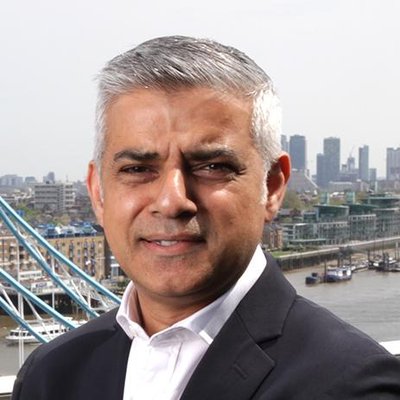
    The comments made by Sadiq Khan, the Mayor of London, on 23 June 2021.

    We have made real progress in London to clean up our air, but we still have a long way to go because toxic air pollution in our city is still leading to thousands of premature deaths every year and is stunting the growth of children’s lungs. As part of our world-leading ongoing efforts, I’m proud to announce England’s first hydrogen double decker buses, which don’t produce any harmful emissions, will now be put into service.

    Our investment in these hydrogen buses is not only helping us to clean up London’s air, but is supporting jobs and local economics across the UK. This is a great demonstration of how tackling air pollution and the climate crisis and boosting economic growth is about regions working together, investing in the very latest technology.

    I’ve worked hard to ensure TfL’s entire core bus fleet across London now meets the ULEZ standards, and this includes 500 electric buses. Our new investment in hydrogen buses will move us even closer to our ambition of making all London buses zero-emission by 2030.

  • Graham Stuart – 2021 Comments on UK Export Finance

    Graham Stuart – 2021 Comments on UK Export Finance

    The comments made by Graham Stuart, the Minister for Exports, on 23 June 2021.

    UKEF stepped up when its help was needed most. Coronavirus put the UK in its most economically challenging position in decades. UKEF has been central to the government’s response and provided £12.3 billion in support of UK exports – the most in 30 years. This backing helped our nation of exporters keep selling to the world through this pandemic.

    We are opening up the world’s fastest growing markets through the trade deals we are negotiating so that the UK can recover as quickly as possible from the pandemic. Thanks to the talent and dedication of UKEF staff, companies can now make the most of our ambitious trade policies. With a dedicated clean growth lending facility and the new Clean Energy team I’m announcing today, UKEF will help the economy grow back stronger, fairer and greener.

  • Matt Hancock – 2021 Comments on Clinical Research

    Matt Hancock – 2021 Comments on Clinical Research

    The comments made by Matt Hancock, the Secretary of State for Health and Social Care, on 23 June 2021.

    Clinical research has been vital in our fight against COVID-19 and has saved thousands of lives. Working with the Scottish, Welsh and Northern Ireland governments, our ambitious UK-wide vision for the future of clinical research delivery is essential if we are to build on this exciting and life saving momentum.

    We are making this vision a reality by continuing to work closely with our partners across the UK, the NHS, regulators, industry and medical research sector. We will create a more innovative, resilient and patient-centred clinical research system.

  • Oliver Dowden – 2021 Article on the Broadcasting Landscape

    Oliver Dowden – 2021 Article on the Broadcasting Landscape

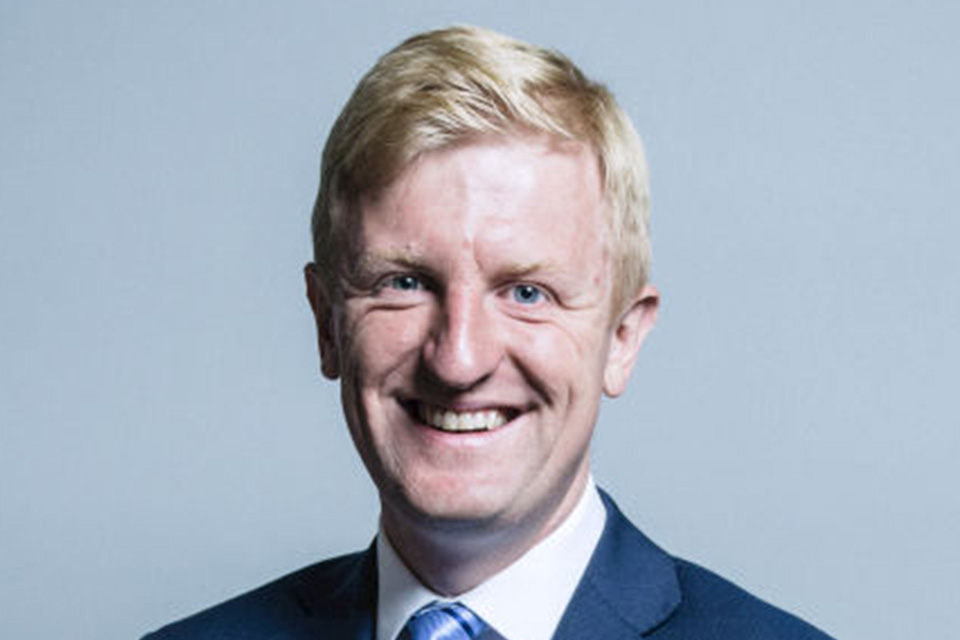
    The article written by Oliver Dowden, the Secretary of State for Digital, Culture, Media and Sport, on 23 June 2021.

    Think of the last TV show you recommended to a friend. In my house, we’re hooked on Spiral, the French police procedural. In the office, all the talk is about Mare of Easttown.

    Whatever your choice, I’ll bet you didn’t switch on your TV and watch it live, alongside millions of others. When Line of Duty drew record-breaking live viewing figures earlier this year, it was a rare exception to the new broadcasting rule. Traditional viewing habits are dead. We now live in a world of smart TVs and streaming sticks, catch-up and on-demand; of that nightly dilemma between Netflix, BBC iPlayer, or Amazon Prime.

    It’s a golden age for TV – and I want to keep it that way. But to do that, we need the healthiest broadcasting landscape: one that is diverse, free and pluralistic. One where streamers can keep churning out brilliant shows, while traditional public service broadcasters retain their place at the centre of the UK’s media ecosystem.

    Right now, UK broadcasters are holding their own. Production studios are packed. The BBC and Channel 4 have put out two of the most critically-acclaimed shows of recent years, I May Destroy You and It’s A Sin.

    But our broadcasters can’t do it alone – and they certainly can’t compete in a digital world while operating under analogue rules.

    So in the Autumn, I plan to bring forward a White Paper on the future of broadcasting, and how we can make it fit for the 21st century.

    First, we need to level the playing field, and address one blatant disparity forcing traditional broadcasters to compete with one hand tied behind their backs. Every “linear” broadcaster – BBC, Sky, etc. – has to comply with stringent content and audience protection standards.

    You might assume the same is true of video-on-demand services like Amazon Prime and Disney+. You’d be wrong. Of course, some have done an admirable job of introducing their own procedures – such as Netflix’s voluntary age ratings partnership with the BBFC. But this is all on an ad-hoc and inconsistent basis.

    So this summer we will consult on whether it’s time to set the same basic rules for video-on-demand services as we do for traditional broadcasters.

    The White Paper will also set out proposals on how we make sure public service broadcasters are given sufficient visibility – aka “prominence” – on different online platforms, and ensure viewers can continue to find and access original and high-quality British content.

    Amidst all this TV upheaval, it’s time to consider the long-term future of one broadcaster in particular: Channel 4. When Channel 4 joined the airwaves in 1982, there were just three other terrestrial TV stations, and there was a lively debate about how to put the latest available set of bandwidths to best use. The main reason Channel 4 won that competition and was set up as a publicly-owned, commercially-run station was to provide greater choice.

    Four decades later, choice is no longer an issue. Commercial satellite and digital terrestrial TV had already pushed channel numbers into the hundreds before the big online streamers exploded onto our screens.

    Channel 4 has delivered on its remit since being established, and has done an excellent job in managing the recent market upheaval.

    But this is 2021, not 1982 – and the broadcasting landscape has changed beyond all recognition.

    I want to make sure Channel 4 thrives for another 40 years, and so I believe it’s time to seriously consider changes to its current public ownership model. That model severely restricts Channel 4’s ability to access capital and compete with commercial broadcasters by investing in technology and programming.

    In order to secure its long-term success, this summer I will consult on the sale of Channel 4 – and I will be proceeding on the basis that an alternative ownership model (but one where it keeps its public service remit) may be better for the broadcaster, and better for the country. Private investment would mean more content, more jobs – and a more sustainable future for Channel 4.

    In an era of fake news and huge technological change, we need trusted and respected media providers more than ever. We’re taking steps to make sure they keep their place at the heart of British broadcasting, whatever the future holds.

  • Dominic Raab – 2021 Statement on the Closure of Apple Daily

    Dominic Raab – 2021 Statement on the Closure of Apple Daily

    The statement made by Dominic Raab, the Foreign Secretary, on 23 June 2021.

    The forced closure of Apple Daily by the Hong Kong authorities is a chilling blow to freedom of expression in Hong Kong.

    It is crystal clear that the powers under the National Security Law are being used as a tool to curtail freedoms and punish dissent – rather than keep public order.

    The Chinese government undertook to protect press freedom and freedom of speech in Hong Kong under the UK-Sino Joint Declaration. It must keep its promises, and stand by the commitments it freely assumed.

  • Alister Jack – 2021 Comments on Scottish GDP Figures

    Alister Jack – 2021 Comments on Scottish GDP Figures

    The comments made by Alister Jack, the Secretary of State for Scotland, on 23 June 2021.

    The UK Government has taken swift and robust action to deal with the pandemic. We have supported more than 900,000 Scottish jobs, given thousands of businesses vital loans, and VAT cuts have kept firms in the hardest hit sectors afloat.

    On top of this direct support, the Scottish Government has received more than £14.5 billion in additional funding. And the successful UK-Government-funded vaccine programme is giving us optimism for the future.

    We are beginning to emerge from these uncertain times, and three consecutive months of growth is encouraging. But we know we still have a huge amount to do to recover our economy, and that families and businesses across Scotland still need our help.

    A strong and stable recovery is the UK Government’s sole priority. Growth deals across Scotland have seen investment of £1.5 billion and our new UK-wide funding programmes will benefit communities right across the UK.

  • Louise Haigh – 2021 Comments on 5th Anniversary of Brexit

    Louise Haigh – 2021 Comments on 5th Anniversary of Brexit

    The comments made by Louise Haigh, the Shadow Secretary of State for Northern Ireland, on 22 June 2021.

    There is a direct line from the Prime Minister’s dishonesty over the deal he negotiated, to the instability we see in Northern Ireland today.

    The Prime Minister pledged never to put barriers down the Irish Sea and then a few months later did exactly that – this dishonesty is still having real consequences.

    Five years on from the referendum, it is not too late for the Prime Minister to show some responsibility, agree solutions that make the protocol work, and protect the precious Good Friday Agreement.

  • Seema Malhotra – 2021 Comments on Asset Stripping by Supermarkets

    Seema Malhotra – 2021 Comments on Asset Stripping by Supermarkets

    The comments made by Seema Malhotra, the Shadow Minister for Business and Consumers, on 22 June 2021.

    Responsible business owners invest in their companies for the long-term, because they know it is the best way to create wealth, support jobs and achieve long-term success and profitability.

    But there are really worrying examples of companies including private equity firms loading businesses with debt, stripping them for parts and leaving with the rewards. It is far too often the employees, pensioners and the taxpayer who are left to pick up the pieces and pay.

    The Government cannot just stand by and let that happen to Britain’s supermarkets, which are at the heart of our communities and provide an essential national service as we have seen during the pandemic. Ministers must stand up for the hundreds of thousands of workers, loyal customers, our farmers and the wider food retail sector who would be affected by a takeover – and secure the legal commitments we need.