Blog

  • Anne Marie Morris – 2022 Speech on the Cost of Living Crisis

    Anne Marie Morris – 2022 Speech on the Cost of Living Crisis

    The speech made by Anne Marie Morris, the Conservative MP for Newton Abbot, in the House of Commons on 17 May 2022.

    What do we mean by the cost of living? Well, we really mean the cost of housing, utilities and food. The argument has been put that they are all out of the Government’s control because they are driven by international pressure, but housing is a domestic competence.

    I am concerned that the Levelling-up and Regeneration Bill has missed an opportunity. Certainly in my part of the south-west in Devon, finding affordable housing is well neigh impossible and social housing is almost invisible, and that is because there is nothing in the planning system to, first, ensure that “affordable” really means affordable—there is no regionalisation of the term —or, secondly, stop the argy-bargy between the developer and the planning authority, which means that the sum set aside for affordable and social housing is, in effect, tiny. Local authorities need more power, and they need to be able to hold the line so that we get the affordable property we need, not what the developers want.

    Of course, we also have to deal with those problems that, while not generated by domestic drivers, none the less affect every man and woman on the street, and we have to provide help and support, as the Chancellor did very effectively during covid. The support that has already been provided to the poorest in society is very welcome, but I sometimes think that the Treasury does not recognise that everybody is hurting. We need only look at the statistics provided by the Office for National Statistics to see that everybody needs some support. Pensioners on fixed incomes and those who have done the right thing and invested in a home cannot just move or change their mortgage and utility supplier; they are struggling with the same issue of trying to meet the costs of housing, utility and food bills. They need some help. We should not reject solutions just because they impact on and benefit more people than just the poorest.

    I am not a great believer in increasing tax; I am a great believer in reducing it. As I have said on a number of occasions, we could move forward by cutting VAT on energy bills. Now that we are renegotiating the Northern Ireland protocol and looking at talking to Brussels, it cannot be right that the VAT on residents across the United Kingdom is not under the Government’s control. That would be a sensible way forward. Tinkering with having MOTs every second or third year, rather than every single year, will not really cut it.

    There would effectively be a windfall on the Treasury, which is more appropriate than a windfall on those who provide productivity and general growth in our country. However, the Government need to make ends meet, so there needs to be a thorough look at the various spending commitments and projects. We talk about HS2, but it is only one of many projects in which there is so much vested interest. I recommend that the Government ask the National Audit Office to set up a commission specifically to look at which projects we can and should cut. They may be nice, but they are not necessary.

    There is one area that we have not touched on, which is causing a lot of grief. We rightly say, “Isn’t it wonderful that unemployment is at a low level?” But there is a reason for that: the fundamental reshaping of the labour market that has caused a number of people to fall out of employment. In Devon, a number of people in their 40s and 50s are out of the market, meaning that we have a 25% shortfall in that age group. Something is not working. I have talked to employers in my constituency. Unless we fix the issue, we are not going to help them to survive, and we need them to survive in order to carry on paying wages.

    We need to look at what is causing the problem. There are at least two things, but there might be more. One is our benefits system. My right hon. Friend the Member for Chingford and Woodford Green (Sir Iain Duncan Smith) did a grand job and the Government have implemented much of that work, but the market has changed, so the system needs to be reviewed. It seems that what is stopping people is the challenge of losing housing benefit and childcare. We have addressed this to some extent, but there is more work to do. I suggest that the Government ask my right hon. Friend to set up a taskforce to look at that issue, at the whole structure of employment and at how we can attract people from overseas to work in our markets.

    The Gracious Speech has many factors to commend it, but addressing the cost of living is not one.
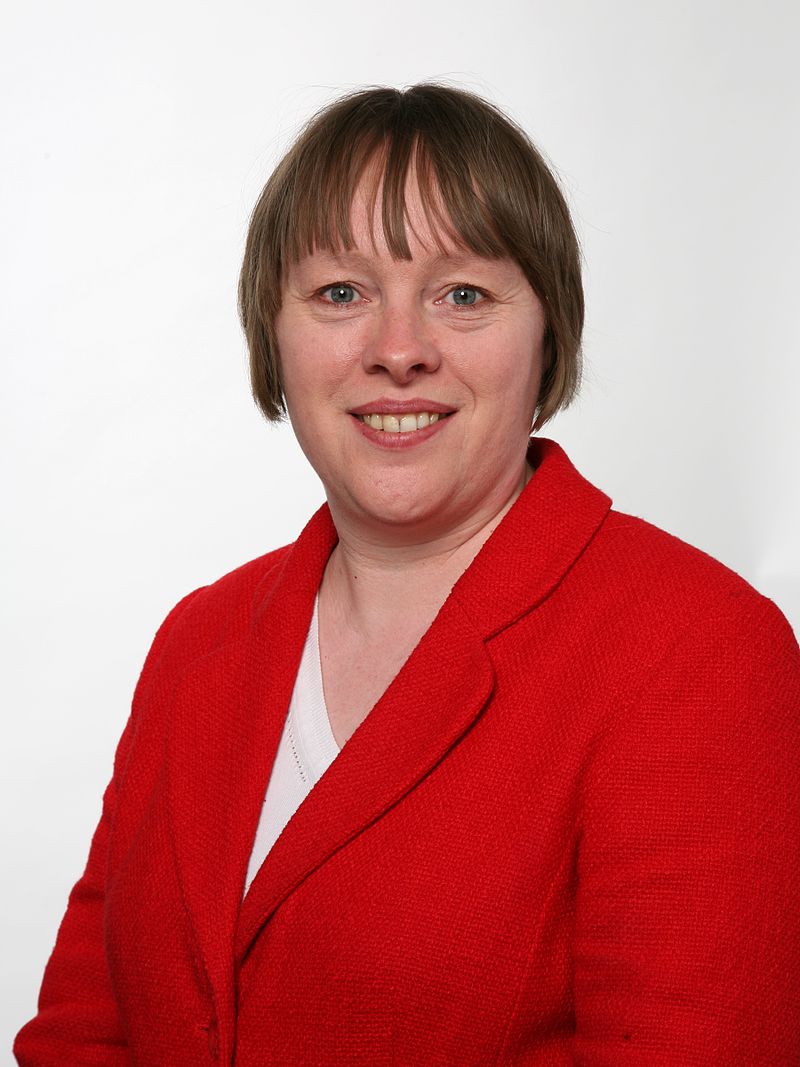
  • Maria Eagle – 2022 Speech on the Cost of Living Crisis

    Maria Eagle – 2022 Speech on the Cost of Living Crisis

    The speech made by Maria Eagle, the Labour MP for Garston and Halewood, in the House of Commons on 17 May 2022.

    I will begin by talking about something that I care a lot about, which ought to have been in the Queen’s Speech, but was not: the Hillsborough law and, particularly, the Public Advocate Bill that my noble Friend Lord Wills first introduced in the other place in 2014. He and I have been introducing it in both Houses ever since.

    The Bill’s aim is to prevent families bereaved by public disasters from ever again having to endure the horrors that the Hillsborough families and survivors have endured over the course of 33 years. Something similar was in the Conservative manifesto in 2017, but it has disappeared, and I do not understand why. Disasters continue to happen and, although each has its own particular circumstances, there are common themes—issues that a public advocate, as proposed in my Bill, would work to ameliorate at an early stage, saving those affected years of heartache, pain and cost, and saving the public purse millions of pounds. My right hon. Friend the Member for Normanton, Pontefract and Castleford (Yvette Cooper) mentioned the issue in her speech, and the right hon. Member for Maidenhead (Mrs May) told the Prime Minister on the first day of the debate that he should simply adopt my Bill. Naturally, I agree. The Bill would fulfil a manifesto promise. Why has it disappeared? I simply do not understand it. The Public Advocate Bill should be enacted, and the Hillsborough law should be passed by this place; that is long past due. I hope that, even now, the Government decide to do it. They would get a lot of support from Opposition Members.

    The past 12 Tory years have seen economic growth stagnate. It has fallen from 2% a year on average under Labour to just 1.5%, and is forecast by the Bank of England to go negative shortly. Inflation has hit 7% and is forecast to reach 10% later this year. Energy bills are already up 54% this year and will rise further in October. Food and fuel prices are soaring because of the end of frictionless trade with Europe after Brexit, and because of the shocks caused by the Ukraine war and covid. The coming food price increases will be “apocalyptic”, according to the Governor of the Bank of England yesterday, yet the Office for Budget Responsibility says that real wages will be lower in 2026 than in 2008, before the global financial crisis.

    My constituents have faced 12 years of frozen wages, and real-terms cuts to the support that they used to rely on in difficult times. The Government recently cut universal credit by £1,000, and have increased benefits by 3% when inflation is more than 7%; that is a real-terms cut for some of the poorest in our society. The Government have just increased taxes for working people by increasing national insurance. It is one of 15 Tory tax rises that have left taxes at their highest for 70 years. The Government’s failure to help the poorest people now is exacerbating the cost of living crisis faced by thousands of families in Garston and Halewood. We need measures to tackle the cost of living crisis, and an emergency Budget that imposes a windfall tax on the oil and gas companies, which are coining it in because of the soaring price of energy—and we need it now. That is why I very much welcome the Opposition Front Benchers’ amendment to the Loyal Address. We really need short-term measures that will help immediately, when the bills need paying, not promises of jam tomorrow, or at some time in the future, when it will be too late to avert serious crises for many families in my constituency.

    I say to Ministers, and to some Tory Back Benchers, that the old Tory trick of blaming poor people for their misfortune, as though they were morally culpable, is heartless and shows that, in addition to being callous, they are out of touch. Many of my constituents have been trying to get more hours or better jobs, buying cheaper supermarket brands and cooking on a shoestring, but they are still sinking financially. They simply do not have enough money to live because of increasing costs and real cuts in their income that have gone on for years. Many are disabled, and some cannot work, even though they want to, or change their circumstances easily. Those with caring responsibilities lose more in additional childcare costs after increasing their hours than they gain from the increased wages that they get for working for longer. Pensioners on small, fixed incomes do not have the financial resilience to cope with huge increases in the cost of living. Many budget their incomes to within pennies, and it is not fair to imply that they are at fault for their situation, or could easily change it if only they bothered to. When this Government begin to realise the truth of that, they might start to think that they should do something about it.

    Energy bills are set to rise by a record amount later this year. It is shameful that the Chancellor is not really doing anything to prevent that, and is more intent on feuding with the Prime Minister about his political future than on the future of millions of people in this country. Conservative Members could do some good: they could vote for the amendment tonight.

  • Mike Wood – 2022 Speech on the Cost of Living Crisis

    Mike Wood – 2022 Speech on the Cost of Living Crisis

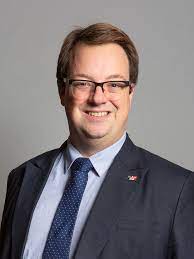
    The speech made by Mike Wood, the Conservative MP for Dudley South, in the House of Commons on 17 May 2022.

    Helping our constituents with the rising cost of living is clearly the most pressing challenge facing our country, and most other countries in western Europe and North America, over the next year. The issue was rightly at the top of the Queen’s Speech, because it needs to be right at the top of the Government’s agenda for the year ahead.

    Prices are rising right around the world. A number of factors have come together. Some are supply-led; some crucial supplies are still suffering from the impact of the pandemic. Others are demand-led. Pent-up demand has been released, resulting in excess demand, as people make purchases that have not been possible over the past couple of years. There has been a switch to lower-carbon fossil fuels; people are moving away from coal and other dirty fossil fuels to cleaner fuels such as gas. That is all coming together to cause an increase in prices that few of us have seen in our adult lifetime.

    A large package of support is clearly necessary. I welcome the support the Chancellor has already announced and introduced, and in particular the strong focus on helping low-paid workers and those most likely to be struggling. There is last month’s increase in the national living wage; the additional money through the universal credit taper, which gives well over 1 million families over £1,000; and, from July, the increase in the national insurance contribution threshold, which will put another £330 in people’s pay packets. Together, those measures will mean that the lowest-paid workers are significantly better off. That is part of a £22 billion package, which is an enormous amount. It is difficult to grasp quite how big a number it is. It is, for example, more than the budget for the police and Border Force combined. These are not insignificant figures. They also come on top of the sums that were spent to help to get people through the pandemic, when the wages of 12 million workers were paid, either through furlough or the self-employment income support scheme.

    However, many of our constituents are still struggling. As prices continue to rise over the coming months, even more will struggle, so more will need to be done. The Government need to look constantly at what can be done to provide effective and sustainable support. I welcome the special Cabinet meeting last Thursday, and hope that it will be part of a long series of reviews to consider the measures that might be introduced. I urge the Treasury and other Ministers to look at how we can narrow the time gap between the calculation of consumer prices index and earnings growth figures for uprating pensions and benefits, and those increases coming in. The figures are calculated so far ahead of when they come in. In normal times, the difference between, say, September’s CPI figures and April might amount to half of 1% of a pension, or 50p or 60p a week. However, when there are very sharp increases in inflation, it can be £4, £5, £6 or £7 a week.

    On a windfall tax, I would normally oppose retrospective taxation, but given the circumstances in the energy markets, it can be justified here. However, we need to be confident, as my hon. Friend the Member for Sevenoaks (Laura Trott) said, that the benefits of such a tax outweigh the costs. We have to understand what the costs are, and the benefits are perhaps not quite as high as people imagine. They certainly would not pay for the package that the right hon. Member for Doncaster North (Edward Miliband), the former Leader of the Opposition, set out. There would probably be about £14 billion or £15 billion spare. That would be about £5 per month per household, instead of the large amounts that the Government have delivered.

  • John Cryer – 2022 Speech on the Cost of Living Crisis

    John Cryer – 2022 Speech on the Cost of Living Crisis

    The speech made by John Cryer, the Labour MP for Leyton and Wanstead, in the House of Commons on 17 May 2022.

    I will be brief—I have absolutely no choice about that. I was going to say that hundreds of thousands of people are now lying awake at night worrying about paying their bills, but the real figure is probably into the millions. That is certainly the case in my constituency. Day in, day out, I am contacted by people—I also bump into them at various events or in the street—who tell me that they are worried sick about not being able to pay their bills. It is a cliché to talk about the choice between heating and eating, but it is a cliché because there is a great deal of truth in it. Among poorer households, that choice has been there for years—it goes back to the early days of austerity—but that economic insecurity, which again I see in my constituency, is starting to travel up the income scale. My hon. Friend the Member for Wallasey (Dame Angela Eagle) referred to comments made yesterday by the Governor of the Bank of England. I think the word he used was “apocalyptic” on the food price rises that will hit this country—and others, to be fair—in the next few months.

    Dame Angela Eagle

    It was.

    John Cryer

    And she was there.

    I discovered these stark figures only the other day: only 12 years ago, the number of people using food banks was fewer than 30,000. It is now in excess of 2.5 million. Those figures illustrate what is happening in the country, if no other figures do. They should be sprayed on people’s eyeballs. More than 2.5 million people have been forced into using food banks.

    This is an economic situation without precedent, certainly in living memory. I had hoped we had learned that at times of national catastrophe, full-scale Government intervention is always the answer. We should have learned that from covid, when it was clear, but the lesson has not been learned, and clearly not by the Chancellor. Full-scale state intervention is the only way to respond in times of national catastrophe. Sadly, the Chancellor is not in his place. Perhaps he has gone for a long lie down to think about the advantages of a windfall tax. We have a desiccated Chancellor who is wedded to the idea that the free market will deliver all, but it will not. We should not really be surprised by that when we have a Minister, the honourable—I use the word in its broadest possible sense—Member for Redditch (Rachel Maclean), who said, very clearly, “If you’ve got problems, just work a few more hours.” We are sent here to represent people, not attack them. She attacked British workers.

    In the same vein, a few years ago, leading members of this Government produced a book called “Britannia Unchained”, which some of us might remember. It said, in very clear terms,

    “the British are among the worst idlers in the world. We work among the lowest hours”

    and

    “we retire early.”

    That is just factually incorrect. We work among the longest hours in Europe, and we very often retire later than people in other European countries. That historical contempt for British workers is behind the laissez-faire attitude to the current situation, and if it does not change quickly, we are heading for catastrophe.

  • Laura Trott – 2022 Speech on the Cost of Living Crisis

    Laura Trott – 2022 Speech on the Cost of Living Crisis

    The speech made by Laura Trott, the Conservative MP for Sevenoaks, in the House of Commons on 17 May 2022.

    I welcome the opportunity to debate this topic and discuss what we can best do to help all of our constituents who are suffering today. Inflation is running at 7% here, 7.5% in Europe and 8.5% in the United States of America. The Bank of England Governor has been clear that 80% of the inflationary forces are outside the Government’s control and the reach of monetary policy, so we must look to fiscal policy to do as much as we can, while not making the problem worse by being inflationary.

    I turn first to the windfall tax. It is important to get the quantum in perspective. A windfall tax is not a silver bullet. It would be worth £2 billion overall, I think, which is about £72 a household or, if we targeted that at the lowest 25%, £280 a household. Of course that is helpful, but would it solve the problem? No.

    I have three concerns about the design of a windfall tax and whether we employ it. First, on protecting consumers, it is unorthodox to suggest that price reductions in a sector are best served by whacking a tax on the producers. It is difficult to see how that would result in price reductions in the sector. Of course, we have the price cap, and that would help in some respects, but without proper controls it is difficult to see how the costs would not ultimately be passed on to consumers.

    Secondly, on competition in the market, we all know that the industry is volatile: BP’s profits last year were at a record low, and they are now at an enormous high. The right hon. Member for Doncaster North (Edward Miliband) was absolutely right that BP and Shell have not said that a windfall tax would be a disaster for them, but in many ways they would not say that, because they are huge players in the market and they could absorb it. The problem will be much more with the smaller players and the discouragement to competition that such a tax might result in. I strongly believe that the best way to drive down prices in the market is by encouraging competition. We have lost that recently, and I do not see how a windfall tax would encourage it or get it back in place.

    Finally, we need to be clear that the best thing we can do to help everyone is drive up economic growth, which is best served by businesses creating jobs and driving consumption. If we put a windfall tax on industries at random, that will discourage investment. I am not talking about individual projects here and there, and I recognise what BP has said, but in the business environment overall we need to be extremely clear about what our criteria are for imposing windfall taxes and, therefore, the impact those will have on investment in business overall. What we cannot do under any circumstances is give up our reputation for being a stable, low-taxation economy.

    That aside, I have one idea of my own to put to the Front-Bench team. I think that we should introduce a measure to make it illegal to disconnect the energy supply, similar to that for the water supply. Following privatisation in 1989, the Water Act 1989 prohibited the disconnection of the water supply to domestic customers for reasons of non-payment. Companies can therefore still take people to court for moneys owed, but they cannot cut off supply. Currently, energy suppliers cannot disconnect households over the winter months in some situations, such as those who live alone or with other people who have reached the state pension age. I propose that we extend that more widely to ensure that, in the very worst circumstances, we do not have people’s homes cut off. I hope that can be taken away and considered. More broadly, when we are talking about these issues and how we best help people, let us think about the potential quantum for the windfall tax: what it will raise, the potential harm it may cause and what the alternatives are.

  • Angela Eagle – 2022 Speech on the Cost of Living Crisis

    Angela Eagle – 2022 Speech on the Cost of Living Crisis

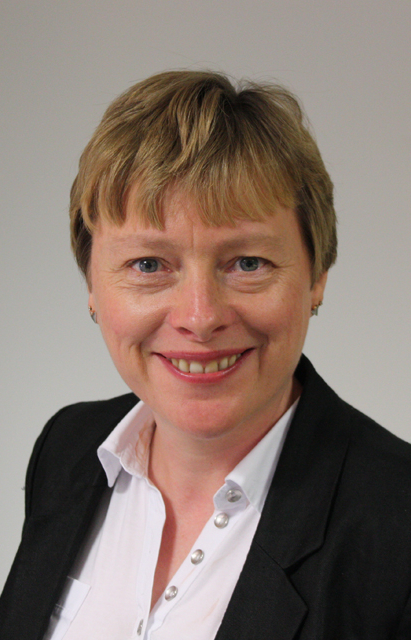
    The speech made by Angela Eagle, the Labour MP for Wallasey, in the House of Commons on 17 May 2022.

    Can we judge this Queen’s Speech to be successful in addressing the cost of living crisis? The Governor of the Bank of England warned at the Treasury Committee yesterday of an “apocalyptic” situation with food supplies and therefore with rising prices. The Bank of England’s Monetary Policy Committee’s May report warned that inflation would soon reach 10%. It also signalled lower growth than previously predicted, with a contraction in quarter 4 of this year. It also expects higher unemployment. It predicts that inflation will not return to its target of 2% for nearly three years. The squeeze in what the economists call real incomes, which take account of inflation, is the most ferocious we have seen in generations, not least because the rapid rise in inflation is being driven by soaring prices for necessities: food and energy.

    These higher costs cannot be avoided or easily minimised and, as my right hon. Friend the Member for East Ham (Stephen Timms) pointed out in his effective speech, it is well known that they cause most hardship to the poorest, who are least able to cope and have no savings. Despite what some Government Ministers seem to think, the poorest have little practical opportunity to increase their hours or their pay, at least in the short term.

    Thus, after 13 years of Conservative rule, we see soaring poverty levels, millions relying on food banks just to get by, and the lowest level of benefits since Lloyd George was Prime Minister. It means that the social safety net created to prevent destitution has been deliberately shredded by this Government, leaving many to cope with the intensifying cost of living squeeze without effective help. And we have a Tory Chancellor who has said that it would be “silly” to add any extra help until the autumn.

    Against that background, the Government’s abject refusal to alleviate suffering and use the powers at their disposal to assist those in real need is a disgraceful dereliction of their duty. Their indifference to real suffering will not be forgotten; it will be remembered as the hard times get even tougher for millions of our fellow citizens.

    Labour has suggested a one-off windfall tax on the huge unearned profits currently flooding the energy companies’ coffers, which would help alleviate some of the suffering, yet the Government refuse to enact it. Instead, we have a hotchpotch of a Queen’s Speech, with 38 Bills with no focus and no connection to the realities millions of people in this country are facing. It shows just how out of touch the Government are that they prefer to press ahead with new, repressive laws against “noisy” protests while ignoring the collapse in law enforcement and prosecution levels on their watch, hoping we will forget the shamefully low numbers of crimes that are currently prosecuted and the even lower numbers which result in convictions.

    This Government have let fraud run riot even as they under-resource and fragment any serious police response to it, while millions of our fellow citizens fall victim to scams and con merchants. This is a Government who prefer to campaign than to govern, and a Government who think that policy delivery is issuing a press release. We have a weak Primer Minister who runs No. 10 like he ran the Spectator office—as one long, chaotic, bacchanalian, irresponsible party.

    So we have today’s threat to legislate to tear up the Northern Ireland protocol, and damn the consequences for the Good Friday agreement, or for our international reputation as a country whose word can be relied upon and that respects the rule of law. This is the Northern Ireland protocol that the Prime Minister negotiated, which he hailed as an “oven-ready” triumph, and which he asserted in the 2019 general election “got Brexit done.” Only this Government could be so irresponsible as to contemplate starting a trade war with the EU in the middle of the most ferocious cost of living crisis in generations. No previous UK Government have ever regarded breaking international treaties and breaking their own solemn undertakings as a negotiating tactic, sullying our international reputation in the process, and our country will rue the day that this one did.

    This is a Government who look after their own, allowing a bonanza in dodgy covid contracts for their mates, and passing laws to wreck independent judicial oversight and clamp down on protests. The sooner they are gone, the better.

  • Theresa Villiers – 2022 Speech on the Cost of Living Crisis

    Theresa Villiers – 2022 Speech on the Cost of Living Crisis

    The speech made by Theresa Villiers, the Conservative MP for Chipping Barnet, in the House of Commons on 17 May 2022.

    There is much to welcome in the Queen’s Speech programme, but I want first to highlight a very serious concern about clauses 83 and 84 of the Levelling-up and Regeneration Bill, which could massively erode local decision making on planning. I hope that Ministers will think again about awarding themselves the power to override local development management policies, which provide such important protection against over-development.

    The main theme I want to cover today is the broader economic theme and how we ensure that we have a sustainable way to help people with the cost of living. Crucial to that is the regulatory reform envisaged in legislation such as the Brexit freedoms Bill, the financial services and markets Bill and the data reform Bill. As inflation returns to the global economy at levels not seen for 30 years, it is imperative that we have a clear, long-term economic plan to grow the economy, raise living standards, repair the public finances after covid and bring down taxes. This is the best and most sustainable way to help people with rising household bills.

    Of course, like everyone else in the Chamber, I know how urgent it is that we help people with rising household bills, which is why I very much welcome the Chancellor’s £22 billion intervention. Raising the national insurance threshold is one of the biggest personal tax cuts in decades. Increasing the amount people can earn before benefits are withdrawn has put £1,000 in the pockets of low-income families, and of course the 5p fuel tax cut can help everyone.

    In addition to this, we need a convincing programme to grow our economy out of the traumas being inflicted on us by the global rise in energy prices. That is why the regulatory reform in the Queen’s speech is crucial. I was one of the members of the taskforce on innovation, growth and regulatory reform established by the Prime Minister. Our report set out a substantial list of regulatory improvements to boost the economy and create thousands of well-paid jobs, especially in high-tech sectors such as bioscience. This kind of reform—only possible because of Brexit—is one of the most effective ways to grow our economy. It is the sustainable long-term way to ensure we have the Goldilocks combination of sound public finances, money to fund our public services and lower taxes.

    Put simply, supply-side reforms to set enterprise and innovation free are the means by which we can make the numbers add up. We cannot spend our way out of an inflation crisis and we certainly should not borrow our way out of an inflation crisis, but we can grow our way out of this inflation crisis. None of these reforms needs to jeopardise safety, consumer protection or the environment. As set out in the TIGRR report, we need regulation that is more modern, more flexible, more proportionate and more targeted. We need new rules that are rooted in our common law tradition, can be piloted and tested, and can be amended if they turn out to have unintended consequences, so that we deliver the regulatory outcomes and high standards we want, but at a lower cost and with far less of a burden on business and industry.

    Regaining the right to make our own decisions on regulation is one of the key benefits of leaving the European Union. For six years as a Member of the European Parliament, I saw at first hand how the EU legislative process works. It is slow, it is cumbersome and it gets so bogged down in political horse-trading between countries that it is no wonder it often produces such poor results. I was one of just a handful of Conservatives to vote three times against the first version of the withdrawal agreement. I did that because I did not want us locked forever in the regulatory orbit of the EU. Now we are free of that gravitational pull, we must use the opportunities it gives us. Otherwise, all those years of Brexit rows and divisions will have been for nothing.

    Only when we have charted our own course on regulation can we truly say that we have got Brexit done, so now is the time to get on and do this—for our whole country, too, and that means significant changes to the Northern Ireland protocol. Now is the time to set out a clear plan for growth that will deliver the high-wage jobs, the opportunities and the lower taxes that our constituents want to help them with the cost of living and the inflation crisis we face in this country and across the global economy.

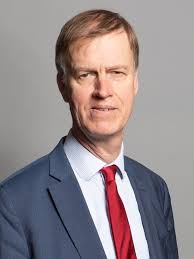
  • Stephen Timms – 2022 Speech on the Cost of Living Crisis

    Stephen Timms – 2022 Speech on the Cost of Living Crisis

    The speech made by Stephen Timms, the Labour MP for East Ham, in the House of Commons on 17 May 2022.

    I am pleased to follow the right hon. Member for Central Devon (Mel Stride), who chairs the Treasury Committee. I agree with much of what he said.

    Cost of living rises affect everybody. The Work and Pensions Committee focuses on families with the lowest incomes who depend on social security. The prospects for them at the moment are bleak. The Committee argued—unanimously, cross-party—against the removal of the £20 a week uplift in universal credit last October. The Government went ahead anyway and cut the main benefit rate to the lowest real-terms level for more than 30 years. As a proportion of average earnings, it is lower now than when Lloyd George introduced unemployment benefit in 1911. Benefits are at a historically low level and no Minister can justify that—we have asked.

    We now have a massive cost of living surge. Citizens Advice reports that a single unemployed person spent 15% of their benefit on energy bills two years ago. It is now 25% and it will be 50%—just on energy—when the cap goes up again in October. How can people pay their other bills, which are also going up? National Energy Action told the Select Committee that, after last month’s energy price rises, 6.5 million UK households are in fuel poverty. It is a disaster for families with long-term health problems; being cold at home makes respiratory and circulatory problems much worse.

    The Gracious Speech provided no help at all to people dependent on benefits. At the Liaison Committee, I asked the Prime Minister why the spring statement did nothing. His answer was that

    “we want to support people into work wherever possible”,

    but a large number of people cannot work and they have to survive too. Surely, the Government must now respond to the immense pressure on those families.

    Mike Brewer of the Resolution Foundation pointed out to our Committee the obvious problem with benefits going up by 3.1%, as they did last month, when inflation is 8% and rising. He proposed revisiting uprating, immediately for universal credit, as the Chancellor confirmed that he could and as he did at the beginning of the pandemic, and in October for those benefits needing longer—there are some of those, as he has pointed out to the House. That must surely now be done.

    Universal credit was raised by £20 a week before, so the Chancellor should do it again. I agree with the Chair of the Treasury Committee, who has just reaffirmed the case for an interim uprating, about which he pressed the Prime Minister at the Liaison Committee. The Prime Minister said that he would look at it. It is urgent.

    Crisis highlighted that local housing allowance rates have been frozen for two years in a row. Average rents went up by 8.3% just in the last three months of last year. Families on the breadline face an average £372 deficit between the local housing allowance and the cheapest rents in their area. In research just published, Lloyds Bank Foundation reports that 44% of universal credit recipients are having money deducted, averaging £78 a month—nearly a fifth of what single over-25s can claim. Deductions are for advance repayments, old tax credit overpayments, energy or rent arrears. The foundation says that that is

    “driving impoverishment and further debt, particularly hitting the most vulnerable.”

    We need major changes, especially to the five-week wait for a first regular universal credit payment, which forces people to take out an advance.

    Pensioner poverty is now surging. We know that, in 2019-20, 850,000 families entitled to pension credit did not claim it. We need real vigour behind raising take-up. The Department for Work and Pensions should have a take-up target for pension credit and a plan to deliver it. In 2010-11, the DWP trialled automatic payments of pension credit, and it should do that again.

    The least well-off in our society need urgent help. As Sir John Major said yesterday:

    “Everyone needs to believe that The State cares about them”,

    too. There is no time to lose.

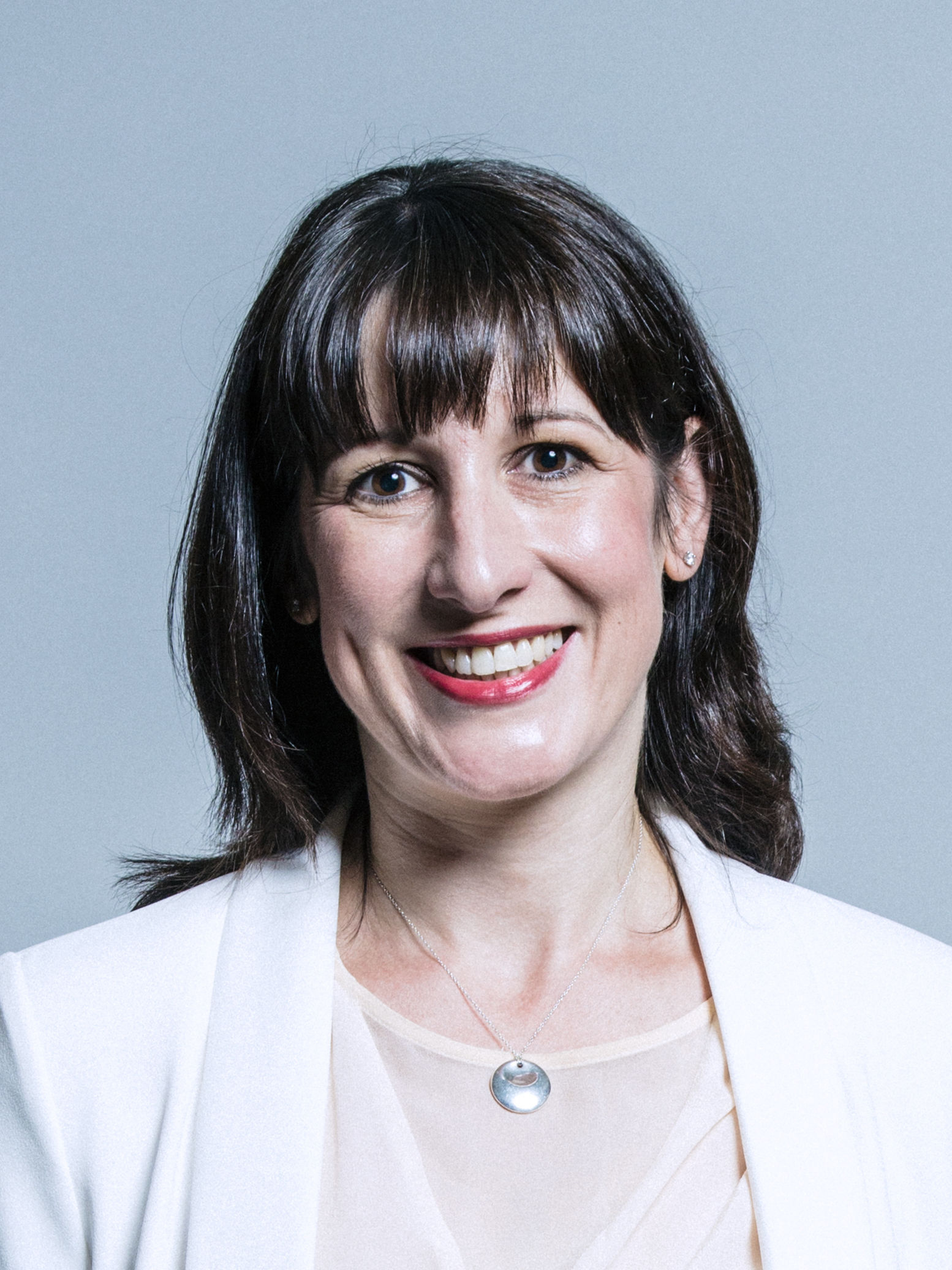
  • Rachel Reeves – 2022 Comments on Government Voting Against Windfall Tax

    Rachel Reeves – 2022 Comments on Government Voting Against Windfall Tax

    The comments made by Rachel Reeves on Twitter on 17 May 2022.

    Tonight, every Conservative MP who voted against a windfall tax on oil and gas producer profits, has sent a clear message. They will not put working people first, and they have no answer on the cost of living crisis.

  • Mel Stride – 2022 Speech on the Cost of Living Crisis

    Mel Stride – 2022 Speech on the Cost of Living Crisis

    The speech made by Mel Stride, the Conservative MP for Central Devon, in the House of Commons on 17 May 2022.

    I rise to very much welcome this debate, which addresses one of the great challenges of our time: the cost of living. Right at the centre of that lies the rate of inflation, which many Members have referenced in the debate so far, and that responsibility is with the Bank of England. In very recent times, the Bank has come in for a good deal of criticism for apparently not having got on top of that rate of inflation. It is currently above 7% and will rise to 10% in the autumn, before falling back again next year. That is well detached from its target of 2%, so the question arises: is the Bank of England culpable for having missed that target to that extent? I want to speak—partially, at least—in defence of the Bank of England, which is one of the most important independent institutions in our country, and to make the following observations.

    First, as the Chancellor has already pointed out, the level of inflation across the world is elevated. There are some exceptions to that, but most leading economies are facing very high levels of inflation. In fact, the United States, Spain and Germany have higher rates of inflation than we do in the United Kingdom, and our rate is broadly similar to that across the eurozone.

    My second point is about what one can expect from monetary policy under the current circumstances. The main drivers of inflation are a war in Ukraine; surging energy prices; surging food prices; some of the effects of the unlocking of the economy and its rapid growth, and supply chain bottlenecks that developed as a consequence; and then what played out in the labour market as the economy opened up. Very few of those factors are amenable to being controlled through interest rates and monetary policy. Of course, it takes time for monetary policy to take effect. If interest rates are put up, it typically takes about a year or more, through the transmission mechanism, to have an effect on demand and to start to bear down on inflation.

    For about 80% of the rise in inflation above the 2% target, therefore, we should not hold the Bank of England particularly culpable. The notions of those people—some of whom are on my side of the House—who have called into question the independence of the Bank of England as a consequence of high inflation are misplaced. We should firmly defend the Bank of England in that respect.

    There is one area, the other perhaps 20% of the growth in inflation, which relates to what has happened in the labour market, where the Bank is at least partially culpable, because it was slow to establish the fact that the market was getting overheated. What appeared to be isolated areas, such as among HGV drivers and other pools of labour in the labour market, soon spilled over into a more general price increase across labour. The danger now is that we will have a wage-price spiral in which wages chase prices and, in turn, drive up wages further. There is a real danger that we are in a position where future expectations of inflation have become substantially de-anchored from that 2%, which will be a challenge in the medium and longer term.

    Overall, however, it is extremely important that we have confidence in the Bank of England, imperfect though it is, and even though it is presiding over a situation in which there are high levels of price increases.

    Stephen Timms

    I agree with the right hon. Gentleman about the independence of the Bank of England. At the Liaison Committee in March, he suggested to the Prime Minister that there should be a one-off uprating of benefits, given that inflation is much higher than the 3.1% by which uprating was applied. I agree with him about that and I wonder whether he stands by that suggestion.

    Mel Stride

    I thank the right hon. Gentleman for that intervention, and I do indeed stand by that. I still believe that it is possible, in a relatively fiscally neutral manner, which would not require a fiscal loosening across the period of the Office for Budget Responsibility forecasts, to smooth the way in which benefits are indexed. It seems particularly regrettable that benefits such as universal credit are tagged to a 3.1% increase, which goes back to what inflation was in September, given that we are now facing 8%, 9% or 10%-plus inflation. There is the possibility of smoothing that out, so that on the way up it becomes less painful for people, and some of it will be taken back as it all comes out in the wash for everyone down the line. I am happy to continue to work with him with that in mind.

    That brings me to other fiscal measures that can be taken to ease things for our struggling constituents. We have heard about a windfall tax in great detail today, which I would support. Although I would not be as partisan as the way in which the right hon. Member for Doncaster North (Edward Miliband) made his case earlier at the Dispatch Box, I think the arguments that he has put forward are largely sensible. I am pleased that in turn the Chancellor has indicated that the door is at least partially open, albeit caveated on the investment performance of the companies concerned.

    Unlike the Opposition, I think that it is important to look at the size of the civil service and to have an ambition to get it back to its size in about 2016 before a number of these different crises struck and we had to gear up the numbers involved. If we were to do that, it would be possible to save a total of £3.5 billion a year, which would be a useful amount to have.

    I am sorry, Madam Deputy Speaker, but I have completely run out of time. I had much to say, as I know many other hon. Members will.