Blog

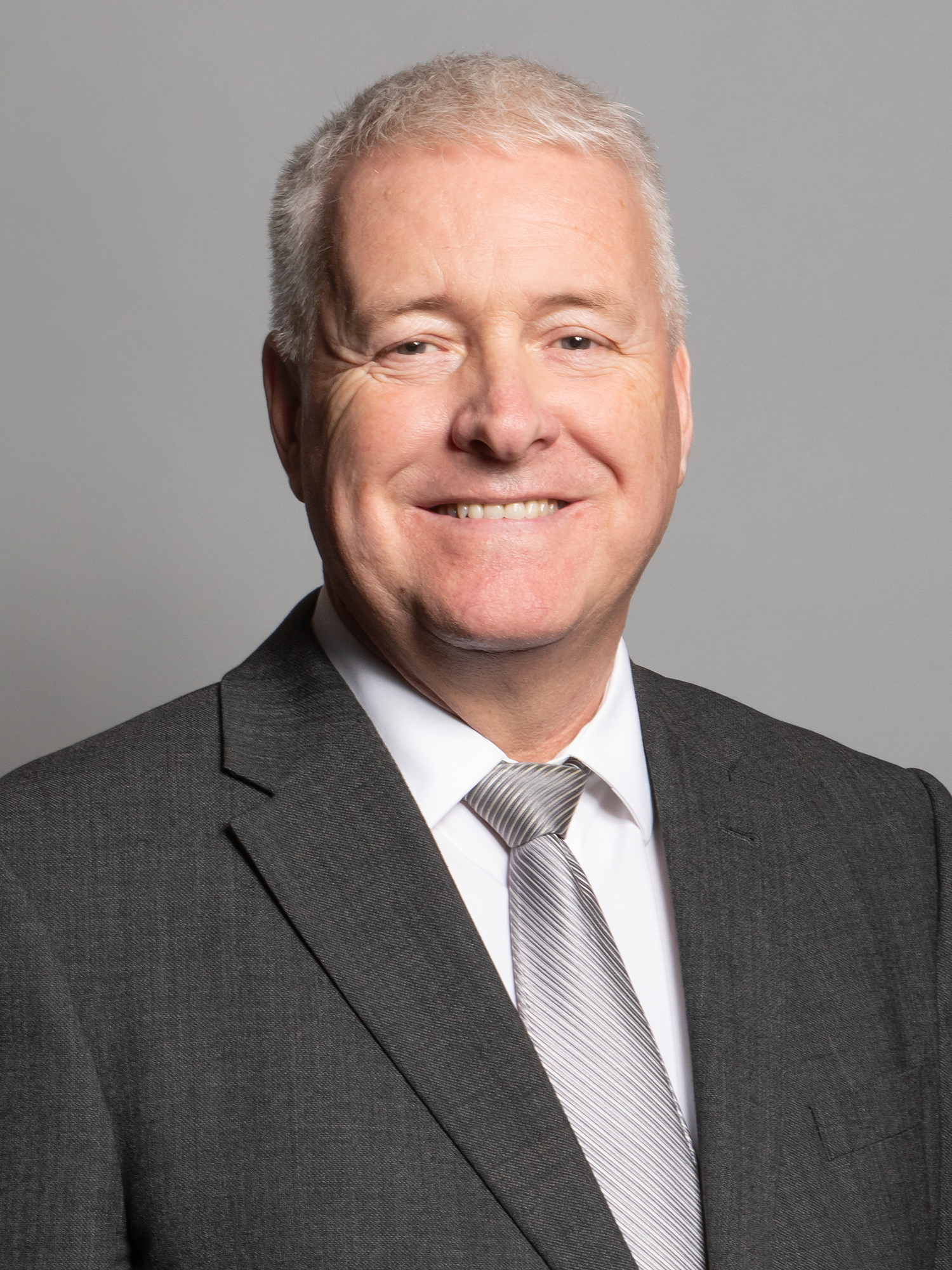
  • Ian Lavery – 2022 Speech on the Cost of Living Crisis

    Ian Lavery – 2022 Speech on the Cost of Living Crisis

    The speech made by Ian Lavery, the Labour MP for Wansbeck, in the House of Commons on 17 May 2022.

    The debate today has been really interesting. We have to realise that this is one of the richest countries on the planet and that we have got finances; it is about how we decide to distribute the wealth of this nation. If we cannot help the poorest and the people who are suffering greatly in this cost of living crisis, we are doing something sadly wrong.

    As MPs, we are here to represent individuals in our constituencies. We should not need detailed reports, professors, experts or anyone else to tell us that poverty is rife in the communities and constituencies that we represent. As MPs, we should understand that—unless I am alone. I see it in my constituency. I see that people are malnourished. There are people, including kids, in this wonderful country of ours who are suffering from malnutrition. We have record levels of kids now with rickets. Howay—this is the UK, one of the richest countries on the planet. As has been said, we have people missing meals to feed their kids and 2.5 million people are now using food banks. For heaven’s sake!

    I will tell you what is new in my constituency, Madam Deputy Speaker: there has been a rise in crime and shoplifting. People who are desperate to keep their kids clean are stealing sanitary products and soap powder. It is an absolute outrage—and it is not good enough to say that the support is there, mind. It is not good enough for the Government to abdicate their responsibility, say, “We’ve done this and that”, and talk about a £150 pay-as-you-go loan for electricity. They are abdicating their responsibility for the people who are most in need.

    This fella Bernard Looney, the chief executive of one of the richest companies on the planet, has basically done everything but take barrowloads of money to the Treasury and tip it into the hall. He is saying he is happy to have a windfall tax. Can Members imagine what a difference that could make to the people we are talking about today?

    By the way, it is no good telling me, “It’s okay—you can make a meal for 30p so you should be all right.” It is no good telling me that the way for people to get over the cost of living crisis is to find a new job somewhere, like the people who have been fired and rehired. It is no good telling me that people should be working two or three jobs so that things will be okay.

    We have to start addressing the situation. The Tories—the Conservative Government—cannot continue to turn a blind eye. They cannot continue to walk by on the other side while people are suffering greatly. We need to level up and we need to be truthful. We need to level up with the truth and to be compassionate, honest and decent as politicians. We should be acting to support the millions out there who need absolutely every single ha’penny this Government can provide.

  • Christine Jardine – 2022 Speech on the Cost of Living Crisis

    Christine Jardine – 2022 Speech on the Cost of Living Crisis

    The speech made by Christine Jardine, the Liberal Democrat MP for Edinburgh West, in the House of Commons on 17 May 2022.

    It is both a privilege and a disappointment to speak in this debate on tackling the short and long-term cost of living increases, because we are tackling those issues as we are in a crisis on a scale that we have not seen in this country for decades. We are talking about inflation moving up into double figures towards the end of the year, interest rates going up, and a cost of living that takes us back to the 1970s and a difficult time for many of us and for our parents. So we are waiting for the Government to bring forward a paradigm-changing vision of what they are going to do about this crisis—a plan. Instead, all we got today was a lecture about how the Government understand the need for long-term growth and, even more pointlessly, a reminder of what the Labour Government may or may not have done 20 years ago. There was nothing about a plan for the people who are facing a crisis today. There was no empathy for those people and no understanding from the Chancellor of the difficulty they are facing.

    There is nothing in the programme in the Queen’s Speech for the families and pensioners in my constituency and across the country who are struggling with the immediate impact of the cost of living crisis—not in the future or the long term, but now, today. I am talking about the rise in their food bills, in the price of clothes for themselves and for their children, in the cost of their petrol to get to and from work or to get their children to school. The frightening prospect, because it is that for many of them, is of a winter coping with ever-higher energy prices. We have the Chancellor’s promises about long-term growth, but unfortunately, we learned a long time ago that promises from this Government are not worth the air into which they are spoken. Pensioners do not have to be told that, because they were promised that the triple lock would continue and now they find that it has been abandoned for the moment, leaving them £500 a year worse off.

    There have been too many broken promises, just as there have been too many missed opportunities to make a difference with insulation in our houses and just as there is too much dither and delay now on a windfall tax. The Chancellor has got himself into the situation where he says today that he is considering it. If he does not do it, why has he not done it? If he does now do it, why did he not do it sooner?

    What about a cut on VAT to put money back into families’ pockets? Cutting it from 20% to 17% would make a huge difference to families up and down this country. Government Members will want to say, “It will cost how much?” Let me tell them that it will cost £19 billion. However, the Chancellor himself is in for a bit of a windfall, because the increase in prices means he will get £38 billion more than he expected from VAT. Money that families up and down the country who can ill afford it are spending today will go into the Exchequer, but rather than cut VAT and put that money back into the pockets of those families and of pensioners, what is the Chancellor going to do about it? That is what we want and need to know: what is the Chancellor going to do?

    Time is running out for families up and down the country and it is running out for this Government. They need to listen to what people are saying. It was clear from the recent election results that people are not happy. They did not get the Government they thought they were getting. It is time that the Government listened, acted and recognised that the crisis is now, not somewhere down the line.

  • Christian Wakeford – 2022 Speech on the Cost of Living Crisis

    Christian Wakeford – 2022 Speech on the Cost of Living Crisis

    The speech made by Christian Wakeford, the Labour MP for Bury South, in the House of Commons on 17 May 2022.

    I listened with great interest to the Gracious Speech last week and was left bitterly disappointed. It will go down as a speech of missed opportunities, all through the choice of the Prime Minister. Under this Government, we are heading back to a time that was simply about the haves and have nots. People can either afford the basics or they suffer.

    Workers are seeing a decline in their living standards not seen since the Victorian era and the Poor Law of 1834. We are seeing a return to that miserable time, when volunteers pulled together to plug so many holes left by the purposeful underfunding of the state. Eighty years ago, Beveridge spoke of the five giant evils that plagued society, and I am afraid that Conservative Members are propping up and presiding over a return to those evils—or they would be if they were here today.

    Beveridge spoke of want, and this could have been a Queen’s Speech that addressed the concerns about the cost of living crisis that is currently gripping the nation through an emergency Budget or a Bill to propose a windfall tax on large energy companies. Instead, food banks boom while people make the choice between heating their home and feeding themselves and their children. Imagine a world in 2022 in which one in four parents are skipping meals because they cannot afford it. What solutions have Conservative Members come up with? Learn to cook. Work harder. Work longer. It is absolutely shameful.

    Beveridge spoke of disease. This was a Queen’s Speech that showed that there is no plan for our creaking health service and NHS waiting times. There is no plan to deal with access to NHS dentistry. There is no plan to increase the number of GPs. There is no plan to tackle either the stigma or the problem of addiction, which is a matter close to my heart, as Members will know, because no one chooses to be an addict.

    Beveridge spoke of ignorance—not the kind of ignorance shown by the Prime Minister and Chancellor while they put their heads in the sand; he was speaking about the education of our children. The attainment gap is widening further still and, yet again, there is no plan in sight. Our children cannot learn properly if they are hungry, and our teachers cannot teach properly if they are not supported, yet nearly 18,000 schools are facing brutal cuts to their funding. These children are the future of our country, yet they are treated like collateral damage by this Government.

    Beveridge spoke of squalor. We have people across the country trapped in their own homes, which are covered in flammable cladding, a full five years on from the tragedy of Grenfell. This was a Queen’s Speech where housing and planning policies were not even mentioned once. Social housing waiting lists are spiralling into the decades, yet we had merely rumours of a rehash of right to buy from a Prime Minister totally bereft of ideas and increasingly out of touch. We have properties riddled with damp and mould making people ill, here in the sixth richest economy in the world.

    Beveridge spoke of idleness. This could have been a Queen’s Speech where employment rights were boosted and the shocking practice of fire and rehire was finally brought to an end. Instead, the Government issue further flimsy guidelines that allow bosses to ride roughshod over the workers. More than 20 times we were promised an employment Bill, but this was yet another empty promise for the people of this country and another win for rogue employers. This was a Queen’s Speech that will not help those in need as our country lurches from crisis to crisis. It was a Queen’s Speech where this Government are increasingly out of touch with their own people, and I predict that it is one that will unravel before the year is out. I will be voting against the Queen’s Speech for those reasons.

  • Victoria Prentis – 2022 Statement on Food Security Following Russian Invasion of Ukraine

    Victoria Prentis – 2022 Statement on Food Security Following Russian Invasion of Ukraine

    The statement made by Victoria Prentis, the Minister of State at the Department for Environment, Food and Rural Affairs, at the UN Ministerial Meeting on Global Food Security on 18 May 2022.

    We are so grateful to the US for leading this week of action.

    Food security is now at the top of all of our agendas, since Russia’s invasion of Ukraine.

    The effects of the war are brought home to me daily by the 25 year old Ukrainian woman who has come to live in our home. When we can find some phone signal, we talk to her grandparents, who are in occupied Kherson, about their daily struggles to find something to eat.

    Famine is once again being used as a weapon of war.

    This doesn’t just affect the brave people of Ukraine.

    Ukraine’s food and fertiliser exports were feeding up to 400 million people worldwide.

    The simplest solution is, of course, for Russia to end the conflict and allow Ukrainian farmers to care for their crops this year.

    We must urgently make multiple plans to export last years’ grain by both rail and sea. And I know that my friend, Minister Solsky, is full of solutions in this regard.

    We must collectively ensure that trade keeps flowing.

    I am pleased that over 50 WTO members have committed to keeping food markets open, predictable and transparent. We should agree to prohibit export restrictions on food bought for the World Food Programme.

    The G7 has a key role to play. Under our Presidency we secured the first ever famine prevention compact. I am delighted that Germany is now picking up the baton and taking this further with the Global Alliance on food security.

    We must all, including multilateral institutions, scale up our support.

    Over the next 3 years, the UK will send £3 billion worth of humanitarian aid to the most vulnerable countries, including in the Horn of Africa, Yemen and Afghanistan.

    And the World Bank must deliver the promised $170 billion over the next 15 months.

    We particularly think of small island developing states, who are so reliant on imports.

    We will continue to use British Investment Partnerships around the world to encourage the universal resilience of global food production.

    The need is urgent. We must act coherently and together, and, as they sing in the Ukrainian national anthem, ‘before the dew dies in the sunshine’. And, we need to ensure that the way we produce food remains sustainable in every sense.

  • John Glen – 2022 Comments on Access to Cash

    John Glen – 2022 Comments on Access to Cash

    The comments made by John Glen, the Economic Secretary to the Treasury, on 19 May 2022.

    Millions of people across the UK still rely on cash, particularly those in vulnerable groups, and today we are delivering on our promise to ensure that access to cash is protected in communities across the country.

    I want to make sure that people are still able to use cash as part of their daily lives, and it’s crucial to ensure that no person nor community across the UK is left behind as we embrace a more digital world.

  • Therese Coffey – 2022 Comments on Benefit Fraud

    Therese Coffey – 2022 Comments on Benefit Fraud

    The comments made by Therese Coffey, the Secretary of State for Work and Pensions, on 19 May 2022.

    The welfare system is there to help the most vulnerable. It is not a cash machine for callous criminals and it’s vital that the government ensures money is well spent.

    Fraud is an ever-present threat and before the pandemic, our efforts brought fraud and error close to record lows.

    This plan outlines what we need to fight fraud in 2022 and into the future. Thousands of trained specialists, combined with targeted new tools and powers, will mean we can keep up with fraud in today’s digital age and prevent, detect and deter those who would try to cheat the system.

  • Rishi Sunak – 2022 Speech to the CBI Annual Dinner

    Rishi Sunak – 2022 Speech to the CBI Annual Dinner

    The speech made by Rishi Sunak, the Chancellor of the Exchequer, on 18 May 2022.

    Good evening everybody, it’s fantastic to be with you here today.

    It’s a great privilege to address this distinguished audience for the first time in fact since I became Chancellor two and a half years ago.

    So let me take this opportunity to say thank you.

    Thank you for all your support. Your advice. Your challenge.

    The country is not going to become wealthy and prosperous solely because of the things that I do.

    Change doesn’t happen behind a desk in Whitehall. Not even the Chancellor’s desk. It comes from all of you.

    When your businesses invest, things get built.

    When you train someone, they excel.

    When you invent new products and services that people want to buy, you change the world.

    That insight is at the centre of my economic outlook.

    Now I know there are sometimes frustrations and frictions. We won’t always completely agree or go as far as you would like.

    But you must never, ever doubt that I and the government on your side.

    You asked for more generous capital allowances.

    So we introduced the biggest two-year business tax cut in modern British history: the super deduction.

    You asked for more flexibility over apprenticeships.

    We’re delivering, with lots of improvements including new flexible training models.

    You asked us to cut business rates.

    We’re providing a discount of 50% for shops, restaurants, gyms; any business in retail, hospitality, or leisure.

    Of course, there’s more to do.

    But I do want to take this moment to celebrate the partnership between this Government and all of you.

    This is very personal for me.

    I remember my very early days as Chancellor.

    Sitting at my desk in the Treasury in those first few days and weeks, reading the daily Covid case numbers by the light of my desk lamp.

    I was feeling an almost overwhelming sense of responsibility.

    It was a privilege and a relief to be able to call people like Carolyn and Rain at the CBI for advice.

    Just as it is a privilege and a relief now to be able to call on Tony.

    Under yours and Karan’s leadership the CBI continues to be what it has always been: a vital role and voice in our public life.

    Please join me in thanking them for their extraordinary contribution.

    Rarely has your leadership been needed more than now.

    I hardly need to tell this audience that the economic situation is extremely serious.

    A perfect storm of global supply shocks is rolling through our economy simultaneously.

    Global demand – shifting last year from services to goods and exacerbating supply chain bottlenecks.

    Russia’s invasion of Ukraine – causing energy and commodity prices to spike severely.

    And now a fresh wave of lockdowns in China – disrupting industrial production and adding to widespread backlogs in freight and in shipping.

    Now while these are global forces, they are hitting families and businesses here at home.

    Just this morning figures show that in April, CPI was 9%.

    The Bank of England now expect inflation to peak at 10% later this year.

    And those inflationary pressures are starting to weigh on growth.

    Let me set out the way through this. Let me tell you the plan.

    A plan to help people with the cost of living. And a plan for growth.

    First, our plan to help with the cost of living.

    It is the Bank of England’s role to control inflation. And they are rightly independent.

    Over the quarter century since we took monetary policy out of the hands of politicians, inflation has averaged precisely 2%.

    And I know the Governor and his team are completely focused on getting inflation back to target.

    Our role in government is to help cut costs for families.

    I cannot pretend this will be easy.

    As I told the House of Commons yesterday:

    There is no measure that any government could take, no law we could pass, that can make these global forces disappear overnight.

    The next few months will be tough.

    But where we can act, we will.

    We are providing £22 billion of direct support.

    With fuel duty – cut by 5p a litre.

    Council tax – cut by £150.

    The Warm Homes Discount – increased to £150.

    We’re making work pay by increasing the National Living Wage and cutting the Universal Taper rate.

    And in just a few weeks’ time, we’ll increase the National Insurance threshold to £12,500 – a £6billion tax cut for 30 million working people.

    Because tackling high inflation is not just an economic necessity.

    It is a social and moral necessity.

    Those who suffer most are not the wealthiest, who can find ways to protect themselves.

    It is always the poor.

    Our policy to date has focused on supporting people in work and I make no apology for that.

    There is nobility in work. It is the best way out of poverty.

    And I’m proud that under this government, it always pays to work.

    But right now, we also have a collective responsibility to help the most vulnerable in our society.

    And so, as the situation evolves our response will evolve.

    I have always been clear, we stand ready to do more.

    At the same time, we need to be careful.

    As Tony rightly warned us this week, at a time of severe supply restrictions, an unconstrained fiscal stimulus does risk making the problem worse.

    By pushing up prices still further.

    Embedding high inflation expectations.

    And creating a vicious cycle of even higher interest rates and more pain for tens of millions of mortgage holders and small businesses.

    So even as we protect people from the worst of the crisis, we must continue to be responsible with the public finances and get borrowing sustainably under control and debt falling.

    So our plan will deal with the immediate impacts of inflation.

    Cutting costs for families. Cutting the deficit.

    And we are also growing the economy.

    Over the long-term, higher productivity is the only way to raise living standards.

    To do that, we will build on our enduring strengths.

    In the UK, our children are some of the best educated in the world.

    Our incredible universities produce the third highest number of publications worldwide and we have the second most Nobel Laureates of any nation.

    Our artists, musicians, game designers, and filmmakers are creating work that is defining our era.

    Our economy has decarbonised quicker than anyone else over the last twenty years.

    Our deep and liquid capital markets finance the world’s commerce.

    Our start-ups attract more venture capital than France and Germany combined.

    Our language is the international language of business.

    Our agile and flexible regulation is the model for others.

    I could go on and on.

    But we need to be honest.

    We also need to overcome our longstanding weaknesses in investment, skills, and innovation.

    Even in the decade before the global financial crisis, capital investment had weakened.

    Research from the Resolution Foundation and the LSE shows that lower capital per hour worked explains around half our productivity gap with France and Germany.

    On skills, our school and university performance has improved dramatically.

    But four in five of our 2030 workforce are already in work.

    So if we want to raise productivity in this country we need to do more to support those already in work.

    And, since the financial crisis, the rate of increase in innovation has slowed considerably.

    A weakness that explains almost our entire productivity gap with the United States.

    So why is this happening? The problem I don’t believe is any longer the government.

    Public sector net investment is reaching its highest sustained level since the 1970s.

    Yet capital investment by UK businesses, as a % of GDP, is a lot lower than the OECD average.

    Government funding for post-16 education is increasing, the Prime Minister has announced a lifelong learning entitlement, alongside a plethora of new skills initiatives like Skills Bootcamps and T levels.

    But UK employers spend just half the European average training their employees.

    And over this Parliament, we in government are delivering our pledge to increase public investment in research and development by 50% to £22 billion.

    But businesses investment in R&D, as a % of GDP, is less than half the OECD average.

    In other words, further government action can only take us so far. We need you.

    The wealth creators. The entrepreneurs. The leaders.

    We need you to invest more, train more, and innovate more.

    And as I’ve said previously, our firm plan is to reduce and reform your taxes to encourage you to do all those things.

    That is the path to higher productivity, higher living standards, and a more prosperous and secure future.

    One of the biggest debates in economics right now is about whether the world is facing a great slowing down.

    Will we ever see again the kind of transformation that came from the introduction of railways to transport people and goods and ideas;

    Cables and pylons to carry electricity into factories and homes;

    Machines that freed people from backbreaking labour?

    It is easy to look at the challenges we face now and feel disheartened.

    But I am not. I believe our most exciting companies are still to be founded.

    Our most talented people are still to be taught.

    Our best ideas are still to be discovered.

    Our best days lie ahead.

    Government alone cannot get us there.

    It will take all of us, together.

    But we can get there. So let’s get to work.

  • Kit Malthouse – 2022 Comments on Increasing the Number of Probation Officers

    Kit Malthouse – 2022 Comments on Increasing the Number of Probation Officers

    The comments made by Kit Malthouse, the Probation Minister, on 19 May 2022.

    Making the streets safer is one of our top priorities so we are giving the Probation Service the resources they need to hold offenders to account, cut crime and reduce the number of victims.

    Probation officers play an invaluable role in protecting the public and so we are boosting their numbers – meaning there are more people keeping a watchful eye on offenders and ensuring they reform their criminal ways.

  • Grant Shapps – 2022 Comments on Russian Airlines and Slots at UK Airports

    Grant Shapps – 2022 Comments on Russian Airlines and Slots at UK Airports

    The comments made by Grant Shapps, the Secretary of State for Transport, on 19 May 2022.

    The UK was one of the first nations to implement sanctions on Putin and his allies; we forbade entrance to their ships and planes, strangling them of the privilege to benefit from global trade and commerce.

    Today, the UK Government has built on the strong action we have already taken against Russia’s flagship carrier Aeroflot, along with Rossiya and Ural Airlines. This means they will be unable to use their expensive landing slots at UK airports. Our actions will also prevent Russia from selling the slots, and cashing in on up to £50 million.

  • Liz Truss – 2022 Comments on Russian Airlines and Slots at UK Airports

    Liz Truss – 2022 Comments on Russian Airlines and Slots at UK Airports

    The comments made by Liz Truss, the Foreign Secretary, on 19 May 2022.

    As long as Putin continues his barbarous assault on Ukraine, we will continue to target the Russian economy. We’ve already closed our airspace to Russian airlines. Today we’re making sure they can’t cash in their lucrative landing slots at our airports. Every economic sanction reinforces our clear message to Putin – we will not stop until Ukraine prevails.