Blog

  • Andrew Bridgen – 2021 Speech on Covid-19 Restrictions

    Andrew Bridgen – 2021 Speech on Covid-19 Restrictions

    The speech made by Andrew Bridgen, the Conservative MP for North West Leicestershire, in the House of Commons on 14 December 2021.

    Whenever this House passes legislation, it is essential that it is effective, evidence-based and logical, and it needs to have broad public support. What I see in front of us today with regard to plan B delivers on virtually none of these items. Indeed, if I look on social media and in my constituency email inbox or just have general conversation with others, it is clear that the measures before us are being treated with strong suspicion of a wider agenda, partly because they simply will not deliver on their supposed intentions.

    Sadly, the Labour party will be supporting the Government today as legislation passes to introduce vaccine passports for the first time in this country, so it will fall to Conservative Back Benchers to be the only people who are subjecting these proposals to any sort of scrutiny. No doubt Her Majesty’s loyal Opposition would also like to take part in the discussions on proposals for mandatory vaccination, given the fact that they have supported every one of the Government’s lockdown proposals. Indeed, they have demanded longer and stronger lockdowns than we have had.

    It would be remiss of me not to highlight the risk to the NHS that both vaccine passports and mandatory vaccination would bring. Vaccine passports tell those unconvinced of the science or those who for health reasons cannot take the vaccine that they are second-class citizens: they must show their papers or be banished. Mandatory vaccination would take these things a step further, effectively imprisoning anyone who does not agree with the status quo. All these measures are being considered or may be taken to protect our NHS.

    There is all this fixation on the vaccine status of health and care workers, yet we know from the science that vaccination does not prevent transmission of the virus, so why are we going to put tens of thousands of people out of a job at a point when the NHS itself is going to be stretched to the limit and, may I add, when their vaccination status makes them little more or less dangerous to the people they work with or work for if they are tested daily?

    Indeed, the best protection of all is actually to have had the virus and then to have recovered. The scientific evidence shows that someone is probably 10 to 20 times less likely to be reinfected if they have already had and have recovered from the virus than if they are double vaccinated, yet the many thousands of individuals in key worker roles who have had and have recovered from the virus but refuse to have the vaccine will actually lose their jobs at a key time. It is an inconsistency.

    Turning to the question of the necessity of these restrictions, there have undoubtedly been far fewer deaths due to the omicron variant in South Africa despite its having been prevalent for four months and having replaced other variants that were more deadly in various ways. All the evidence we are hearing is that omicron is a milder form of covid with fewer cases of serious disease, fewer hospitalisations and, thankfully, far fewer deaths.

    In my view, the most dangerous epidemic sweeping the world and our country is an epidemic of fear. It has seriously damaged mental health and particularly damaged the mental health of our young people. It must end.
  • Mark Harper – 2021 Speech on Covid-19 Restrictions

    Mark Harper – 2021 Speech on Covid-19 Restrictions

    The speech made by Mark Harper, the Conservative MP for the Forest of Dean, in the House of Commons on 14 December 2021.

    Let me start with a few words about the big picture. My hon. Friend the Member for Winchester (Steve Brine) put this very well. We know that covid is going to be with us forever, and we know that we are going to have variants forever. The chief scientific adviser has told us that, and I agree with him. There are many people who think that we will just have to wait a bit and it will all be over, but that is not happening. We have to be realistic about what we are facing, and according to Jeremy Farrar, we are facing this challenge as probably the best protected country in the world through vaccination.

    This was effectively the first big test for the Government: how do we deal with a variant of concern in a very well vaccinated population? I am disappointed that we have quickly gone into panic and emergency mode, with late Sunday night broadcasts—not in the House of Commons where questions can be asked—scaring people witless. For example, they have been told that two doses give them no protection, which is not true. Two doses provide weakened protection from omicron against infection, but they still provide good protection against serious disease. I am concerned that many people out there who have had two doses and who are perhaps vulnerable now feel that they have no protection. That is simply not correct. If this is the first test, I do not think we are doing very well.

    Aaron Bell

    The data from South Africa that we heard this morning in the Science and Technology Committee showed that we still have good protection against severe disease from two doses of Pfizer, but it has gone down from 93% to 70% for hospitalisation. That is four times the risk of hospitalisation.

    Mr Harper

    I have seen that, and I look forward to the information from the UK. The point I have been making in my constant repetition about the House sitting next week or the week after or being recalled—my right hon. Friend the Member for South West Wiltshire (Dr Murrison) also mentioned this—is that we are learning new information every day, and when we get that information, we might need to make different decisions. The House needs to be involved in those decisions; they should not simply be made by Ministers by decree. I repeat that point, and I do not understand why Ministers will not give us that assurance. It would build a lot of trust and good will among colleagues, and I do not understand why they will not give that commitment.

    These decisions have significant economic and social impacts, as well as impacts on the NHS’s ability to deliver non-covid treatments. My hon. Friend the Member for Winchester has already pointed out that the NHS is going to scrap a whole load of elective surgeries and consultations with GPs in order to get boosters delivered. That might be the right decision, but I do not think that a proper balancing is taking place. Goodness knows how long it is going to take us to recover from the creation of this new backlog over the coming months. If the Government’s fears, as set out by the Secretary of State, are confirmed in any way, what is the exit strategy? What approach are they going to take to ensure that we do not face on-and-off seasonal restrictions forever? That is a serious question, and it has been raised by other colleagues. We need an economy that functions, people need to build lives that can function and the NHS needs to be able to function and deliver all the other healthcare we require.

    Let me turn briefly to plan B. I am happy to support the measures on self-isolation. I simply note that, two weeks ago when we were asked to vote to restrict them, I voted against that. Two weeks later, the Government have agreed that I was right to do so, because they are effectively revoking those earlier measures. I will leave that thought with colleagues for when they decide whether they wish to listen to the advice of Ministers or others.

    On vaccine passports, the Government’s plan B makes it very clear that Ministers’ preference is for vaccine-only passports. The only reason why tests have been incorporated is to buy or secure the support of the Opposition. That is the only reason. Ministers’ preference in writing is for vaccine-only certificates, so we know what they would like to do if they could get away with it.

    The Secretary of State also made some commitments about not supporting mandatory vaccination for the entire population. The only reason that needed to be said is that, two weeks ago, the Prime Minister put on the table the whole concept of mandatory vaccination and talked about having a “national conversation” about it. All I say is that, if Ministers wish to build trust and good will, they need to be careful about what they say. They should not fling these very troubling concepts around without thinking about them. Words have consequences, both in terms of what happens in the real world and of the trust that needs to be built with Members of Parliament and the public.

    What is proposed for vaccine passports is very limited, but that was the case everywhere they were introduced around the world. Everywhere they have been introduced, they have been extended. In Wales, for example, where Labour is in power, they have been extended in terms of the venues to which they apply, so anyone who thinks that Ministers will stick to what is currently on the Order Paper are, I am afraid, kidding themselves.

    The final thing I say to colleagues is this: the vote on vaccine passports is not just about the regulations on the Order Paper; it signals how we wish to treat this House, how we wish to be treated on behalf of our constituents, and the direction of travel and the approach. If my colleagues wish to send the Government a clear signal that they need to rethink their approach, then, certainly on vaccine passports, they should vote against them. Send the Government a clear message that we can do better. There is a better way, and we should send that message today.

  • Meg Hillier – 2021 Speech on Covid-19 Restrictions

    Meg Hillier – 2021 Speech on Covid-19 Restrictions

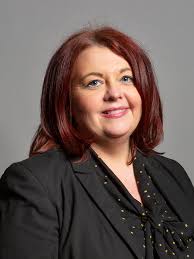
    The speech made by Meg Hillier, the Labour MP for Hackney South and Shoreditch, in the House of Commons on 14 December 2021.

    I rise to focus, in the short time available, on statutory instrument No. 1416, on entry to venues and the issue of compulsory vaccines. It feels as though I have been around this block before, because just over a decade ago I was the Minister responsible for identity cards and passports in the last Labour Government, yet I share concerns about health data being routinely required in order to access services.

    When we dealt with identity cards, we were clear that they were about verifying identity, with no health information included, despite some groups lobbying to have health information on those cards. No immigration status information was to be on them, although many of my constituents and people up and down the country, do have cards with their immigration status on, which they are happy to have to prove their rights. There was other lobbying to include things such as veteran status on cards, but the Labour Government pushed back hard on those points and there was absolutely no requirement in law to have an ID card to access any public service.

    That is very important, because tonight’s proposal does not require people to show their vaccine status in order to access a public service. It is about accessing optional large events, where they could be a spreader. In addition, ID cards were on a statutory basis, with a raft of underpinning law to make sure that we had a clear basis for them, and they were long-term. They were debated at length, including twice in this House, because the general election of 2005 interrupted the process.

    Let us be clear that a covid vaccine status document or app is a temporary measure—it expires. I have just had my booster, but had I not done so it would have been a moot point as to how long my second vaccine would still give me the status that I require. The Secretary of State has said that that booster will be required, once it is rolled out, on that pass in order for it to be valid. It is not required in order to access any public service. That is an important step, because if we were to go down that route, we would need to get this on to a statutory footing. I hope we never get to that point, but we do not know what is going to happen with coronavirus. As it stands, we have not had a version that will kill our children, and thank God for that, but we know that this is not yet over. At this stage, there is no proposal for a permanent covid pass and therefore there is no need for this to have a statutory footing, because we hope this is something that will run into the stand.

    We are also talking about a health treatment here. When I present my pass, it tells the person nothing other than my name and my date of birth; sadly, people will have probably worked out that I am no longer 21, and I do not really mind about that. If that information is needed in order to get into a venue, I am prepared to make that choice. It is a compromise, because of what happens if we do not do this. The data will show that although even vaccinated people can catch covid and spread it, this reduces it, and the booster reduces it further.

    For sceptics, let me say that 100% safety would mean a lockdown or closing down hospitality venues, events, workplaces and schools—no one wants that. So this is not a perfect solution to stop spreading omicron or any variant of the virus, but it protects our hospitality industries and events. Even though they are still hit, it protects them from complete closure. This approach of temporary and near universal coverage, limited information required to be presented and no requirement for venues to hold copies of our data is a proportionate response. It is a responsible thing to support each other. Individual freedom, as outlined by the hon. Member for Bexhill and Battle (Huw Merriman), cannot be at the expense of wider freedoms; we do have that responsibility with that freedom.

    I wish to touch on compulsory vaccines for health workers, and I congratulate my hon. Friend the Member for Ilford North (Wes Streeting) on his tour de force on that. I am concerned about pushing people forcibly to have a vaccine, but we should never have got to this point. We should rely on reliable information and education to ensure that we do not get to the point where people have to be forced. Of course, we cannot force someone to have a vaccine, so the consequences for a health worker are immense. Ultimately, for those health workers on the frontline supporting their patients, vaccination will have to be a requirement for the job, because the risk of spreading the virus or of sickness across the health service because staff are not protected would cripple our health service. Reluctantly, therefore, I have moved to the point where, having voted against it in the past, I will support the measure tonight. Spreading a virus that makes us ill, kills us and puts pressure on the NHS is not something that NHS workers can be a part of, but NHS England must work hard to convince and support people and to get rid of the disinformation about the danger of vaccines.

  • Andrew Murrison – 2021 Speech on Covid-19 Restrictions

    Andrew Murrison – 2021 Speech on Covid-19 Restrictions

    The speech made by Andrew Murrison, the Conservative MP for South West Wiltshire, in the House of Commons on 14 December 2021.

    I draw the House’s attention to my entry in the Register of Members’ Financial Interests: I am a doctor and vaccinator.

    Statutory instruments Nos. 1400, 1415 and 1416 are without question relatively modest, certainly by comparison with the restrictions that currently apply in similar jurisdictions, and it is a very good thing that they will fall on 26 January. Nevertheless, I urge Ministers to think about the rapidity with which the evidence is changing. Currently, the evidence from South Africa is relatively positive: I am particularly impressed by the fact that mean hospitalisation in this particular wave is 2.8 days—it was previously eight days with the beta variant predominant in South Africa, whereas we have had delta, which is worse. From that, we can deduce, because it is the same population with the same demographic issues, that this variant is relatively mild. That has to be our working hypothesis, but we really do not know. We are struggling for evidence and the evidence appears to be evolving by the day. It seems to me unreasonable for the public to see their representatives leave this place for two weeks when they would expect us to be here to hold the Government to account on a real-time basis, which would require the House to sit next week and the following week, inconvenient though that may be for a lot of colleagues. I urge Ministers to give that some thought so that we could consider, for example, the advice on working from home that is currently having a significant impact on sectors of the economy.

    SI No. 1415 is permissive, for which I congratulate the Government. I welcome it, and it should avoid another pingdemic. The advice about taking a lateral flow test every seven days is sensible, but only if, of course, lateral flow tests are available. I have heard that they are not available today in my constituency and hope that Ministers will attend to the issue as best they can.

    I cannot get too excited about statutory instrument No. 1400, on face coverings. The best evidence published last month in The BMJ’s meta-analysis suggested that the wearing of masks had some effect on transmission, so it is the least we can do to wear the wretched things. The measure extends the list of venues that require people to wear a mask, but as we have all seen—those of us who use public transport and shops—the prevalence of mask wearing has increased in any event, thanks to the good sense and good will of the British people. We should encourage that at all times.

    Statutory instrument No. 1416, on access to venues, starts to get a bit more sticky. The Secretary of State’s workmanlike recasting of vaccine certificates as an alternative to a negative lateral flow test yesterday was very helpful, but it was not helped terribly much by the remarks attributed to the chief medical officer earlier today that seemed to suggest that protection against transmission for vaccinated people is rather less than many of us had previously hoped. That did nothing to advance the case that the Government are trying to make, but I am more relaxed about that particular SI now.

    I am slightly concerned about the SI on regulated activities. If a recent negative lateral flow test is okay under SI No. 1416 and, to an extent, SI No. 1415, why is it not okay for healthcare workers? With respect to my colleagues, the difference between the BCG and hepatitis B vaccines for those in the national health service who perform exposure-prone procedures and the situation we are discussing here is that there is an alternative to demonstrate that a healthcare worker poses no threat to their patients: a lateral flow test conducted very recently. It seems to me that, given the Regulatory Policy Committee’s damning assessment of the measure and the likelihood that as a result we will lose quite a few people in a health and care system that can scarcely afford to lose people, we need to look at alternatives to keep people in, not least because even the vaccinated will feel the pressure of some of their unvaccinated colleagues leaving. This could be something of a perfect storm in the winter months, and I hope Ministers will look again at whether we can have lateral flow testing—on a daily basis if we like, as I have had when I have been jabbing—as an alternative to insisting on vaccination.

    I ask Ministers please to examine the issue of quarantine hotels and the requirement to bang people up. That is completely untenable, given the change in advice. I am surprised that Treasury lawyers have not already been advising Ministers that it is not appropriate, and I suspect there will be a wall of cases if those people are kept locked up when they should be released, in accordance with Ministers’ very welcome announcement today on the red list.

  • Paula Barker – 2021 Speech on Covid-19 Restrictions

    Paula Barker – 2021 Speech on Covid-19 Restrictions

    The speech made by Paula Barker, the Labour MP for Liverpool Wavertree, in the House of Commons on 14 December 2021.

    Given time, I will concentrate my comments on mandatory vaccinations for NHS staff. I find myself really torn on this emotive subject, and I also find myself trying to apply logic to what is quickly becoming an illogical argument from the Government Benches. If it is really about patient safety, the Government should already have identified workers in the NHS who are still unvaccinated and have been working with them to alleviate fears and concerns and remove barriers.

    The Secretary of State should explain to the House why it is acceptable for those in the NHS who remain unvaccinated to work on the frontline to assist with the omicron crisis but, come 1 April, to be dismissed. Quite frankly, it makes no sense.

    Comparisons have been drawn with the requirement for NHS staff to be vaccinated against hepatitis B. The reality is that chapter 12 of the Public Health England Green Book, which provides the latest information on vaccines and vaccinations, states:

    “Hepatitis B vaccination is recommended for healthcare workers who may have direct contact with patients’ blood or blood-stained body fluids.”

    It is not the law. The Government proposal will see these workers work around the clock during the next few weeks and months, only to be dismissed on 1 April if they do not succumb to mandatory vaccination.

    Andy McDonald

    Does my hon. Friend agree that if these measures will come into force at the beginning of April and the parties concerned are to participate in a framework agreement for their roll-out, there is an ideal opportunity for those parties to work through how they may be implemented? By rushing the measures today, we are being robbed of that opportunity, despite the noises from the British Medical Association, the unions and the royal colleges.

    Paula Barker

    I thank my hon. Friend for that excellent point, which I agree with wholeheartedly.

    The workers I am talking about are the workers who worked around the clock at the start of the pandemic, despite having inadequate personal protective equipment, because they were putting the nation first. They are the workers who will continue to work around the clock over Christmas and the new year. In an institution that is built on consent between patient and clinician, the Government are ripping up the rulebook to suit their own ends, while at the same time we are seeing the 17th reorganisation of the NHS since 1993.

    We clapped for our care workers and NHS staff on a Thursday, and they will get us through the latest crisis over Christmas and the new year. But now the Government, who ripped up the rulebook last Christmas while the rest of us obeyed the rules, sacrificing seeing our loved ones—some in their final moments—are going to dismiss workers in April. And all this while No. 10 and the Department for Education not only had Christmas parties but told this House and the nation that they did not. The message is inconsistent and makes no sense.

    We are told to trust the Government, but it is increasingly concerning that they are reviewing the Human Rights Act and want to replace it. We should be very afraid, because this could be a sign of things to come from a Government and a Prime Minister who believe they are above the law. Even worse, if they do not like the law and it does not serve their purpose any more, they will rip it up and start again until they get the policy or the outcome they want, irrespective of civil liberties or economic damage.

    The right to choose, particularly when it comes to our own bodies, is something we should all take very seriously. I implore everyone to get vaccinated and boosted to protect themselves and others, but the Government have set a precedent that should worry every citizen. For the first time ever, we have seen the profession of care workers singled out; they have had conditions attached to their employment status that were never there to begin with.

    There is so much that the Government could do in the weeks and months ahead, from constructive negotiations with the trade unions, which remain opposed to mandatory vaccinations, to ensuring that local authorities and health services have the resources and capacity required to deliver the ambitious daily targets for boosters, and that statutory sick pay is set at the Living Wage Foundation rate. Most importantly, they could follow the rules themselves, to give the public confidence that any measures introduced are proportionate and necessary.

    Before entering this place, I represented care workers, NHS staff and public servants, many of whom are now my constituents. I take very seriously my responsibility to ensure that their voices are heard, while trying to balance that with the unprecedented situation before us and the importance of public health. I think we can do just that by consensus rather than compulsion.

    I implore the Government to pause on the issue of mandatory vaccinations, withdraw the relevant statutory instrument and work on the issue with the trade unions, the Labour party and all those in the House who offer cross-party support. The Secretary of State himself has said that we have seen an increase in vaccination rates since the start of the consultation. Please, remove the SI and let us work together to get the country vaccinated.

  • Huw Merriman – 2021 Speech on Covid-19 Restrictions

    Huw Merriman – 2021 Speech on Covid-19 Restrictions

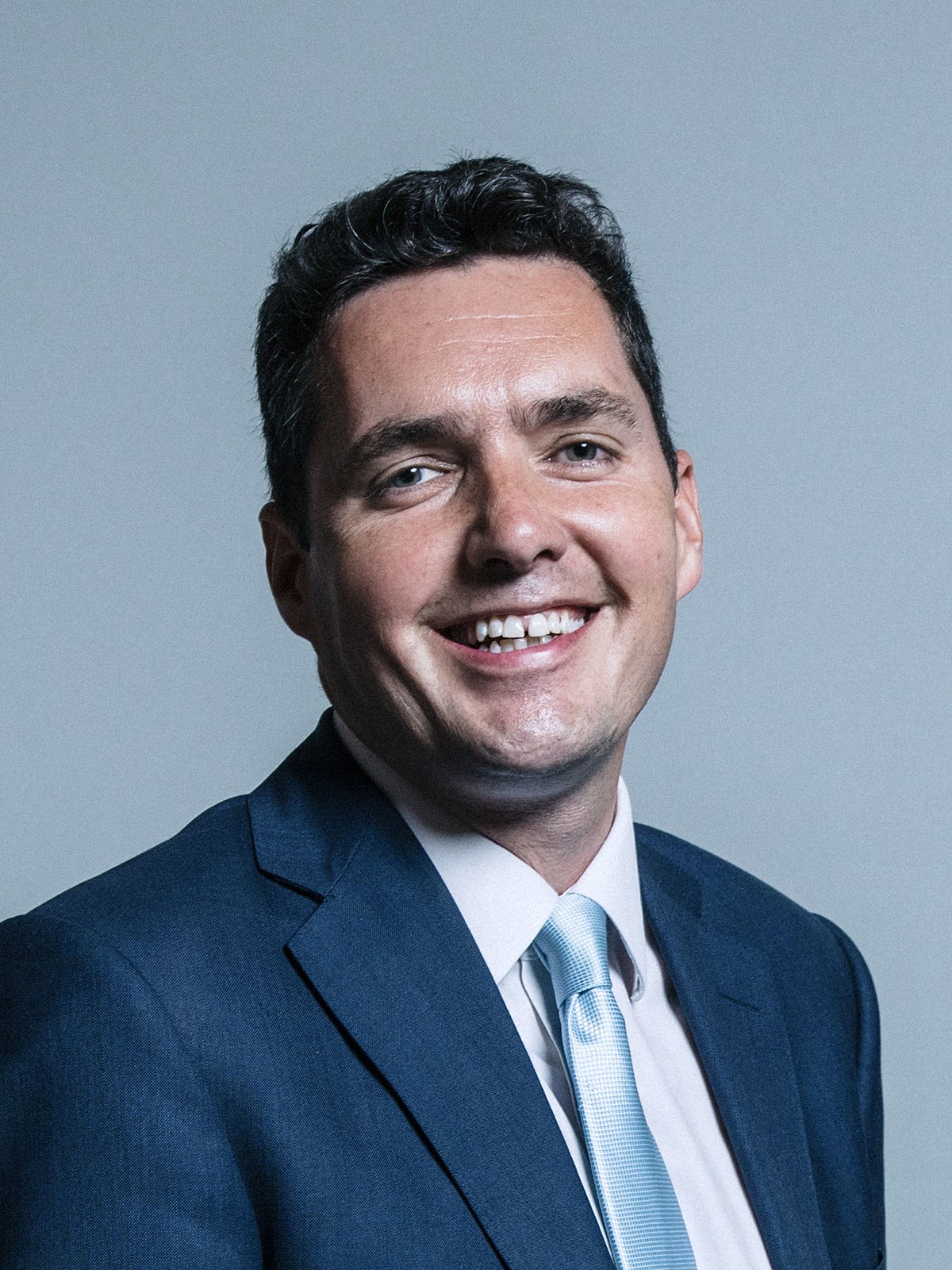
    The speech made by Huw Merriman, the Conservative MP for Bexhill and Battle, in the House of Commons on 14 December 2021.

    Over the past year I have supported some covid measures and voted against others. With that in mind, my constituents may be struggling with the logic of my voting record, but I believe it is straightforward and I hope to exemplify why that is the case.

    Where the measures have felt disproportionate to the wider harm, I have voted against their introduction. An example was putting the constituency in differing tiers when hospital admissions were low. Where the hospitals could not cope, I did support lockdowns as proportionate in those dramatic circumstances.

    Where the wording of measures felt contrary to the aims they sought to deliver, I voted against their introduction. The 10 pm curfew was a good example of that; everyone piled out of the pub and on to public transport, and the Government eventually conceded, and reversed. That was the same concept that led me to vote against last week’s self-isolation regulations. I could not understand why, when omicron was going to become the dominant variant, we were requiring people to self-isolate; it would have led to a pingdemic. I am glad that the Government are reversing that today and I will gladly support that regulation.

    As for the other three, my thoughts are as follows. For face coverings, I voted for the same outcome for retail and public transport last week. I do not want to see face coverings become a permanent feature and I do not want to see them reintroduced in the classroom, but for a limited period of time, in a settings reference, it feels right to me to extend the scope. On NHS workers being vaccinated, I voted for the same outcome for the social care workforce, and will do so again. We know that getting vaccinated reduced the delta transmission rate by 60%. We also know that patients who get vaccinated are not completely protected from serious illness or death. Surely, if care is in the DNA, it is not unreasonable to expect vaccination to be an entry point. If NHS workers believe that their own choices come before the safety of their patients, or if they do not believe that the NHS is about working for covid and working for vaccines, or that the evidence on those is true, I question if they are in the right profession.

    For vaccine certification at larger venues, I am genuinely perplexed about the outrage at, at worst, showing paperwork. Last month, I got asked for my passport when I came back into the country. I have to show evidence of purchase when I watch a football match. I was also delighted to be asked for ID showing my age when I wanted to buy a beer, only a month back. What is the issue in temporarily asking someone to evidence vaccination, or a negative lateral flow test, for certain venues? If it keeps people safe, and in jobs because we do not have to put more draconian restrictions on events and hospitality, I am happy to oblige.

    The impact of the omicron variant is not known. What we do know is that the doubling rate is two to three days; for delta it was seven days. In South Africa, where the variant emerged, the hospitalisation rate is now rising. Yes, the vaccination rate is lower in South Africa. However, it is also their summer, they have a higher level of antibodies from natural infection, and the average age is 13 years lower than in the UK. These restrictions are limited in time and scope. I ask myself, “What is it that I will not be able to do tomorrow that I could do last week?” The answer is, absolutely nothing. A little more face-mask-wearing. A little more admin to go to the football. If you are an NHS worker and are not going to vaccinate, there are a record number of jobs available for you to work somewhere else.

    There is a larger issue at play, which I find infuriating. Over 80% of my constituents have got themselves vaccinated. They are keeping themselves and their communities safe. They are minimising their own impact on the NHS. There are a small minority who are not playing by the same rules, and have the temerity to lecture me on freedom. Let me tell them this: their freedom to remain unvaccinated and then do as they choose is reducing the freedoms of those who have done the right thing for themselves and the wider community.

    As a Conservative, I believe that rights are not absolute: they have to come with responsibilities. Being a cavalier for freedoms is what we were sent to this place to be. Being cavalier about the health of the public is contrary to that principle. With that in mind, I will be supporting these proportionate and limited measures this evening.

  • Daisy Cooper – 2021 Speech on Covid-19 Restrictions

    Daisy Cooper – 2021 Speech on Covid-19 Restrictions

    The speech made by Daisy Cooper, the Liberal Democrat MP for St. Albans, in the House of Commons on 14 December 2021.

    We all know that the NHS is facing one of the toughest winters in living memory; not only is covid a very real threat, but we are also facing a potentially tough flu season. The Liberal Democrats will be supporting the statutory instruments on face coverings and self-isolation, but let us be clear: the Government should never have scrapped the use of masks on 19 July. Their obsession with removing all precautions in one go had far more to do with party management than it did with public health. We have all made tough sacrifices throughout the pandemic, and asking people to wear masks on public transport would have been a very small ask with a very large pay-off. We also support the working from home guidance, for which we have been calling for some time.

    Today we are discussing the plan B protections to reduce the spread of this disease, but there have been rumours overnight that the Government are also working on a possible plan C. It has been reported that the UK Health Security Agency has privately advised the Government that “stringent national measures” will need to be imposed by 18 December—in just four days’ time. This drip, drip of information is causing huge uncertainty and anxiety. We need clarity and we need it now. The British public are haunted by Christmas past. We know that that last-minute U-turn meant that many people ended up spending Christmas on their own last year. With just days to go, we need the Government to come clean and tell us what omicron means for Christmas this year.

    We Liberal Democrats welcome the ambition of 1 million jabs a day, and we sincerely hope that it makes up for the complacency around the booster scheme over the last few months, but the way in which the target was announced, with no scrutiny and no details, was a real insult to all those who were left to scramble to pull a plan together on Monday morning. The idea that NHS staff, GPs and their staff, local authorities, the military—none of them—had been given any prior warning of the announcement is extraordinary, and highlights the Government’s complete lack of planning. The idea that those people, whom we are now asking to vaccinate millions, were an afterthought is shocking. But here we are. As always, our NHS, the GPs and their staff, local authorities, the military and volunteers are stepping up, and as a country we are grateful.

    The Government still have not made a commitment this afternoon that if they bring in more protections of any kind, this House will have the opportunity to scrutinise them, so I want to get a few points on the record right now. If the Government are considering any further protections, they must support small businesses and our high streets. Hospitality businesses are experiencing unprecedented cancellation rates for this festive period, and they were experiencing them even before the latest protections were announced. Hospitality is technically allowed to stay open, but all of the mood music is telling people not to go, which is causing a huge problem. We have therefore called on the Government several times to call and convene an urgent hospitality summit in order to see what support businesses need right now.

    If there are further restrictions, we must also look after people’s mental health. We need supported isolation, not lone self-isolation. There must be financial and practical support for those with caring duties and for those who live alone—and for our schools. Our children have suffered so much. It was months ago that the Liberal Democrats called on the Government to ensure that there was an air purifier in every single classroom in England, but we are still nowhere near that.

    Finally, for all these measures to work, there must be trust in the Government. With that in mind, what we need now from the Prime Minister and his Cabinet is the truth. Will the Government come clean about Christmas, or will we see another last-minute U-turn that ruins the Christmas holiday and is too late to alleviate pressure on the NHS? I sincerely hope that it is the first.

  • Steve Brine – 2021 Speech on Covid-19 Restrictions

    Steve Brine – 2021 Speech on Covid-19 Restrictions

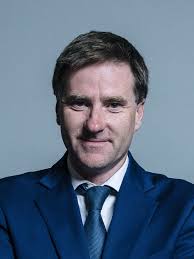
    The speech made by Steve Brine, the Conservative MP for Winchester, in the House of Commons on 14 December 2021.

    Here we are again, and this time, two weeks on, the concept of “learn to live with covid” is as dead as anything I know. In July, we were told many, many times from the Dispatch Box, and from the podium in No. 10, that we were on an irreversible road map to freedom. Do we all remember that? I thought it was an unwise hostage to fortune when it was said, and so it has proved.

    When I vote tonight, I will consider the legislation before us. I completely agree with the hon. Member for Ellesmere Port and Neston (Justin Madders) that it should have been published long before this, less than 24 hours before the debate. That is why I did not tell anybody in the media how I was going to vote today—because I am rather old-fashioned and like to actually read the legislation before I decide how I am going to vote. I wish those on the official Opposition Front Bench had done the same. I look at the legislation and I also look at the intention behind it, so what is the intention here? Is it to stop omicron? Is it to slow the spread? That is clearly not happening now, so I guess the question we then have to ask is whether these four SIs are going to do that. Working from home is not in an SI; it is guidance. We are told that people need to work from home where they can, but they can meet the very same people in the pub that evening and every evening. Is that going to slow the spread? I do not think so.

    I abstained on the SI on mask-wearing two weeks ago and I will do so again this evening. I have no issue with wearing a mask. It does not impact on my life or on my freedoms. Many of my constituents have been wearing masks in plenty of situations, indoors and out, for a long time throughout the pandemic. I think it is a bit of a crutch, but if people believe that it makes them safer, that is fine. In many ways, it is an instrument of people feeling they are safe. Today’s SI says that we have to wear a mask in certain shops but not in pubs or in restaurants, and some of the exemptions make a mockery of it, but I will not stand in its way.

    On the covid passport, if we were to put aside the practicalities and the moral arguments, which I do not, and many of my constituents writing to me certainly do not, then a vaccine still does not stop people getting this and passing it on. Professor Whitty said to MPs on a call this lunchtime that there is a minimal impact on transmission with regard to all our vaccines.

    Last Wednesday, when the Secretary of State made his late-night statement, I expected him to bring forward a devastating piece of science that basically said, “The drugs don’t work.” That is not what he said; he said that we are moving to plan B on the basis of some modelling. We have SAGE’s gloomy predictions and yet a confirmation that vaccines do work with two jabs, even better with a booster. I completely agree. Today we have a study that says that the Pfizer vaccine has 70% efficacy against the omicron variant. Last Wednesday’s statement should have been about the national booster effort that was announced in the live TV broadcast on Sunday night. I cannot say how many of my constituents have contacted me furious at the frightening nature of that broadcast that sent their children off to bed terrified.

    If we truly mean the “learn to live with covid” mantra that we continue to hear, the booster campaign is 100% where our focus should be. We should be focusing on an ongoing plan to keep immunity high. We probably need a new primary care infrastructure, because “panic stations and cancel all else” is not a plan. Yesterday I spoke to three of the four primary care networks that cover my constituency. They are going to do their absolute everything to offer the booster to all eligible over-18s by the end of this month, but it will be really difficult. They are scrabbling around for venues in the week of Christmas. This is not the long-term thinking that we need.

    I am ambivalent about regulation No. 1400 on face coverings and I will not stand in its way. On isolation moving to tests, I will support that if there is a Division, although I suspect there will not be. However, if people cannot get the lateral flow tests, as they have not been able to today and yesterday, as I raised in an intervention on the Secretary of State, then we get the pingdemic anyway, so we need to sort that supply out. I will not support the vaccine passport because it crosses a Rubicon. Italy began in exactly this way saying that it was all about providing lateral flow tests, and I think it will move, and move quite quickly. On the mandating of health staff, I will support that to be consistent with the mandating of vaccines in the care sector. If you work in the health service, working with vulnerable people, surely you have to believe in science above all else, and there is a precedent because of hepatitis B. So it is a mixed bag for me: I will support some of the measures before us today but not others.

  • Justin Madders – 2021 Speech on Covid-19 Restrictions

    Justin Madders – 2021 Speech on Covid-19 Restrictions

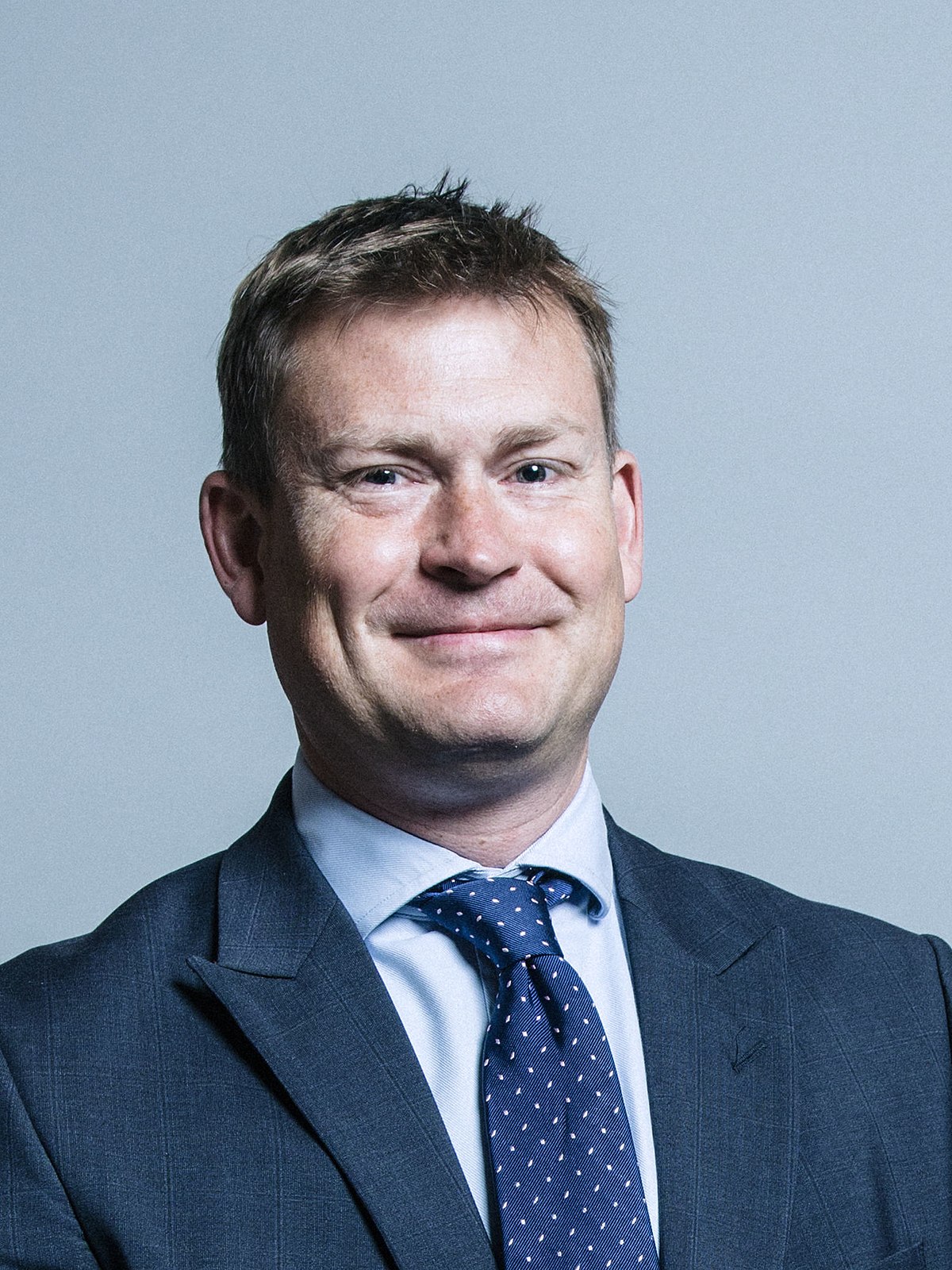
    The speech made by Justin Madders, the Labour MP for Ellesmere Port and Neston, in the House of Commons on 14 December 2021.

    Having had the dubious pleasure of spending an inordinate amount of time in various Committee Rooms over the past 18 months to scrutinise regulations introduced by the Government as part of their response to the pandemic, I must confess that I have had withdrawal symptoms following the reshuffle, so I am pleased to have the opportunity to speak on these regulations today.

    I am sorry to say that, on too many occasions, regulations were debated well after they came into force, so it is positive that at last we seem to be getting into the habit of having debates and votes before regulations become law. I would not want that to be seen as a ringing endorsement of the Government’s approach to parliamentary scrutiny, as two of these sets of regulations were published only at 3 pm yesterday, less than 24 hours before this debate began. I know things move quickly, but some of these regulations have been the subject of consultation for many months. There is no excuse for their being dropped in at the last minute.

    The decision to reveal the precise detail of these regulations at the last minute has probably generated more opposition than is warranted. I have had many representations from constituents about the entry to venues regulations on the basis that they represent a compulsory vaccine passport. Let us be clear that they do not. A negative test taken in the 48 hours before entry can be used as an alternative, which addresses many of the legitimate concerns that have been raised with me about civil liberties and discrimination. I am pleased that my party’s persistence in pushing for a negative test as an alternative has been accepted, because it gives me enough confidence to support these regulations.

    Matt Western (Warwick and Leamington) (Lab)

    Across the House, many of us have been calling for greater transparency from the Government. The more we hear from the chief medical officer, the more concerning it is. If the Government had been more transparent up front, I am sure there would be greater support across the House.

    Justin Madders

    Indeed. If we look at what has happened in Wales, there has been a similar system for some time, which seems to be working reasonably well. People have been required to produce tests when travelling abroad and several venues in England have been doing that on a voluntary basis. It is not the slide into dystopia that some people fear, but the situation has not been aided by the Government not being as up front as they should about what the regulations mean. Many people already routinely take lateral flow tests before they go out.

    However, there are some outstanding questions and concerns. There is no doubt that some constituents feel that the regulations are the start of a slippery slope and that we will soon have to show vaccination papers to get in anywhere. I will be clear: I do not support such a move. Given that the Government cannot even bring themselves to mandate wearing face coverings in pubs, I would be surprised if they moved in that direction, but I want confirmation when the Minister winds up that the Government are not planning any extensions to where the regulations will operate. We also need a clearer explanation of where the line is drawn and to which venues the regulations apply. Do places such as this, which fall into the definition of a public hall indoors with 500 or more people who stand up and move around, come within the ambit of the regulations? My reading suggests that they do. If we want to gain the public’s confidence, we should show that the rules apply to us equally.

    Another concern that has rightly been raised is whether a charge will be introduced at some point to obtain lateral flow tests. That would obviously undermine tests as an alternative to showing vaccine status. Charging people to obtain tests would be an absolute disaster from a public health perspective. That goes way beyond the remit of the regulations, but I hope we can get confirmation from the Minister that there are no plans to charge for tests.

    The Government need to do rather better at setting out what they consider the cost of the regulations to be to businesses. Again, I note there has been no impact assessment for the entry regulations. Who will pick up the cost of enforcing them? There is nothing I can see about supporting businesses to check people, let alone providing resources to local authorities, which are meant to enforce the regulations.

    What will be the position if there is a national shortage of tests? We are told that there are tens of millions of them but, as we know, there are challenges in getting them out to the people who need them. In those circumstances, will the regulations be suspended, or will people be pushed down the vaccination route?

    That said, the evidential burden for a negative test seems particularly broad. I think that will assist in reducing the burden on businesses, but it also increases the risk of fraudulent tests doing the rounds. That would undermine the whole point of the regulations. We do not want the worst of all worlds: an expensive bureaucratic system that does not actually help reduce transmission because it is not properly enforced.

    Regarding the vaccination of NHS staff, there is plenty of evidence to suggest that a small but significant proportion of covid admissions is the result of people acquiring the infection in hospital. I have seen figures to suggest that it has been as high as 15% to 20% of all covid admissions, although once staff started to receive the vaccination, the figure dropped dramatically. There is therefore evidence to show that the regulations will have an impact on covid admissions and the wider pressure on the NHS. I know it is difficult, but on balance, the regulations should be supported.

    However, that should not be the end of the story. We have had a workforce crisis for years. Covid has accelerated cases of burnout and only a few weeks ago, the Government passed up the opportunity to grasp the nettle by refusing to implement a long-term workforce strategy. That is why we need an awful lot more work on the regulations.

    The Government have an uphill struggle to earn people’s trust and explain why they consider the proposals necessary, to convince the public that what is before us will be the limit of restrictions and that we will not be talking about extensions or changes at some point in the future. Judging by the comments of many Conservative Members, the Government have failed to persuade a number of their Back Benchers, so it is little wonder that we are all being bombarded by emails from our constituents expressing concern. That exposes the wider truth that the Government have vacated the space where leadership should be. They are compromised by their own failure to follow the rules, riddled with internal disagreements about the route ahead and unable to provide the authority to persuade a sceptical public that the measures are needed.

  • Liam Fox – 2021 Speech on Covid-19 Restrictions

    Liam Fox – 2021 Speech on Covid-19 Restrictions

    The speech made by Liam Fox, the Conservative MP for North Somerset, in the House of Commons on 14 December 2021.

    Let me begin by saying a word about the vaccine programme and issuing a plea to Ministers.

    It is important that, with the emergence of omicron, we do not accidentally underplay the success of the vaccine programme to date. We know that vaccines will generate a number of immune responses—the production of neutralising antibodies, the production of marker antibodies, and a T-cell response—and, although with omicron a booster dose is required to bring about the level of neutralising antibodies that we saw following our response of two doses to the delta variant, the whole programme gives both individual and community protection; and we are starting from a very different place from the place where we were with the delta variant.

    It is very important for us to encourage people, especially young people, to get their second dose. May I make a plea that we stop hearing from Ministers the phrase “two doses don’t work, three doses do”? I think that it is undermining the Government’s own programme. May I also make a plea that we drop this constant reference to the doubling time of the current variant? The fact that the measured doubling has been two days in the very early stages is no measure whatsoever that that is something that we will see in the future. If it doubled every day, the whole population would be affected in nine days. This is not modelling; it is simple extrapolation, which does not contribute to a sensible debate on the subject.

    When it comes to the proposals before us today, lawmakers need to look at several elements. Are these measures necessary, are they proportionate, are they enforceable and will they be effective? Let me begin with the 10-day quarantine, which was a bad measure to begin with. It was disproportionate and it was likely to bring about a recurrence of the “pingdemic”, so I am glad that it is being dropped. However, the point made by the right hon. Member for Exeter (Mr Bradshaw) is a key one which must be answered by the Government. If having the red list is pointless and if enforced 10-day quarantine is pointless, why are some people still in enforced 10-day quarantine? It is incumbent on the Government, having abandoned the policy, to let those people go free, otherwise I fear that the Government may face legal action.

    Chris Bryant (Rhondda) (Lab)

    The right hon. Gentleman is making a very important point. Some Welsh rugby players who had covid in South Africa did 10 days’ quarantine there and are halfway through quarantine in England, and they are now being told that they must complete the whole of the quarantine period. When the position is as illogical as that, it brings the whole thing into dispute.

    Dr Fox

    I absolutely agree, and what we do not require is more advice from Ministers on this subject; we require decisions from Ministers on this subject.

    I also want to raise the issue of masks. I receive letters, as I imagine all Members do, from people who say, “There is no point in wearing masks because they do not stop transmission.” I assume that those people would not like their surgeons to wear masks during a surgical procedure. This is nonsense: mask wearing is a common-sense thing for us to do if it reduces transmission to some degree. It is a minor inconvenience to the vast majority of people and it is a sensible measure for the Government to introduce, and I therefore support it.

    I cannot say the same for the Government’s covid passport. I do not believe it passes the necessity test, and I think the good working of the insurance industry and the availability of civil remedy in the courts are enough to drive the behaviour of venues towards sensible public health policy. We, as a Government, should not be creating criminal offences unnecessarily. I worry about enforcement and penalties in a system that is already overloaded. There is no evidence from Scotland or elsewhere that covid passports actually work. France was mentioned earlier, and there are more than twice as many people in hospital with covid in France than in the United Kingdom.

    Siobhan Baillie (Stroud) (Con)

    Will my right hon. Friend give way?

    Dr Fox

    I have given way once. I am conscious that colleagues want to speak, so I will not give way again.

    I assume the lateral flow tests will have to be externally validated, which will add a cost to anyone who wants to go to one of these venues. That will not be the help to the hospitality industry that has been suggested by the Secretary of State and the shadow Secretary of State.

    When compulsory vaccination was introduced for care workers, many hon. Members took the view that it was the thin end of the wedge, but we were assured that it would be care workers and no one else. Now it is all NHS workers, with a few exemptions. The ground for compulsory vaccination is that these staff will be working with vulnerable members of the public. Well, so will the police and some retail and post office workers. Where does it stop?

    The hon. Member for Blackley and Broughton (Graham Stringer) made the valid point that this is a retrospective change to the terms and conditions of people who already work in the NHS, and it is likely that we will lose staff as a consequence. This is completely unnecessary when more than 91% of NHS staff have already volunteered to be vaccinated. It is disproportionate and illogical, and I do not believe it will be effective. If the logic of the Government’s position on covid passports is that people must be given a choice between being vaccinated and getting a daily lateral flow test, why does that not operate in the health service, too? The lack of logic in many of these measures diminishes support for the Government’s case.

    I end on a positive note. Many of these measures are relatively small beer compared with what we can achieve through the booster campaign, so it is essential that the one message we leave the House with tonight is that every one of us has a duty to say to every one of our constituents, “Go out, get immunised and get a booster. That is the best way you can help yourself, your family, your community and wider public health.” If there is to be unanimity in the House at this time of year, that is surely the message that must resonate.